Home Blog Page 70

Spotlight on… Air Waybill (AWB), accompanying each and every air cargo shipment

0

CargoForwarder Global’s ‘Spotlight On…’ shows a different section of the air cargo industry each week – normally bringing it to life through its people. Every now and again, CFG gives the platform to a non-human entity without which the air cargo industry would not function. The first three-letter code anyone starting out in air cargo learns is AWB* which stands for Air Waybill, though, interestingly, you’ll often hear people emphasize the first two syllables together: airway bill. Logical, but incorrect since the Waybill came first. The earliest log of the English word dates back to the 18th century. Its German equivalent, ‘Frachtbrief’ first appeared in written texts in 1610, yet the practice of registering (initially) land shipments was already happening a good half-century before that! An ancient practice, therefore, that eventually found its way into rail, sea, and finally air cargo, and over the past couple of decades has been undergoing another transition – from paper to digital registration. This week’s Spotlight gives a voice to the Air Waybill and its function in air cargo.
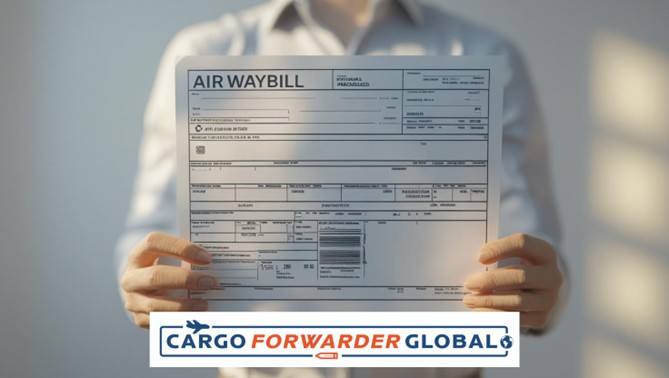
Around 15% of AWBs are still paper versions. Image: Canva/CFG

CFG: What is your current function and company? And what are your responsibilities?
AWB: I am an Air Waybill – the official record and essential travel document for every air cargo shipment. My ‘employer’ could be any international airline or freight forwarder. My main responsibility? To be the legal contract of carriage between the shipper, the carrier, and the consignee. I tell the story of every shipment – what it is, where it’s going, who’s sending it, who’s receiving it, and under what terms. Without me, nothing in the air cargo chain moves lawfully or efficiently. I used to be purely paper, and many of the accompanying documents flying with me still are, however, with the move to eAWB and more recently the push for the ONE Record data-sharing concept (where I can exist as a single, standardized digital record accessible by all parties and thus allow for smoother, faster information processing across the whole supply chain), you’ll more likely find me in digital form, these days. Around 85% of the time, according to recent statistics.

CFG: What does a normal day look like for you?
AWB: There’s never really a ‘normal’ day for me. One moment I’m in a freight forwarder’s office being carefully filled out; the next I’m making my way through airline acceptance counters, customs checkpoints, and scanning systems. I might travel digitally (as an e-AWB) or on paper, but either way, I’m constantly in motion, accompanying cargo across the globe. My preferred mode of travel – if only everyone would adopt it – is ONE Record, where I can avoid the jostle of stacks of papers or becoming lost in a chaotic system of separate electronic files. Instead, I can live as a unified digital ‘data package’ which shippers, forwarders, airlines, ground handlers, and customs can all access or update, and where my data can be shared in real time to those authorized to see it. My journey there is faster and more transparent, with has far less risk of delays or errors caused by paperwork or mismatched information.

CFG: How long have you been in the air cargo industry, and what brought you to it?
AWB: I’ve been around since the early days of air freight – in other words: decades! I was born out of necessity when airlines needed a standardized way to document international cargo movements, and my roots are found in the Warsaw Convention of 1929. Over time, I’ve evolved from stacks of carbon-paper forms to sleek digital formats that speed up processing. What brought me here? The need for trust, traceability, and legal clarity in moving goods by air.

CFG: What do you enjoy most about your job?
AWB: I love being the ‘bridge’ between people, places, and goods. From life-saving medicines to exotic flowers to critical aircraft parts – I am the link that ensures they reach where they’re needed. I get to ‘travel’ the world, connecting continents, cultures and customers. The more digital I am, the easier my role and the greater my job satisfaction!

CFG: Where do you see the greatest challenges in our industry?
AWB: Customs complexities, digital transformation, and capacity constraints are big challenges. We’re moving toward 100% electronic documents, but that means adapting systems, training people, and ensuring compliance across different international regulations. Also, the balance between speed, security, and sustainability is getting trickier. Ensuring data security, compatibility, and global acceptance all while helping people adapt from paper-based thinking to digital-first processes is no small feat. But the payoff is more than worth it. We’re looking at greater speed, accuracy, and innovation potential.

CFG: What advice would you give to people looking to get into the air cargo industry?
AWB: First – learn the rules and codes: IATA regulations, INCOTERMS, and customs procedures. Understanding documents like me is critical. Get training in freight forwarding, cargo handling, and dangerous goods handling. And always keep learning – the industry changes fast and digital skills are now as important as logistics know-how, so embrace them! Understand data management, standards, and cybersecurity. Everyone in our industry needs to be comfortable with both logistics fundamentals and digital transformation.

CFG: If the air cargo industry were a film/book, what would its title be?
AWB: ‘Around the World in 80 Air Waybills’ – because no matter the shipment, every journey has its own story, and I’ve been part of more adventures than I can count!

Thank you, AWB!


(*ULD comes a close second and has already enjoyed its 15 minutes of fame in CargoForwarder Global – see https://cargoforwarder.eu/2025/01/12/spotlight-on-ulds-across-the-world/ ).

If you would like to share your personal air cargo story with our CargoForwarder Global readers, feel free to send your answers to the above questions to cargoforwarderglobal@kopfpilot.at We look forward to shining a spotlight on your job area, views, and experiences.

Cargo communities: blessing or window dressing?

0

This key topic stood high on the agenda of the ACE Cargoland conference in Liège that took place from 08-10SEP25 in the historic Palais des Congres Liège building. Participants included leading industry experts that provided an overview of local, regional, and global air cargo developments, new global challenges, and tabled current trends. Organizer of the trade show was ACE Aircargoevent in collaboration with Liège Airport.

Are airport communities a valuable tool for the integration of the various partners within the air cargo chain or rather a fig leaf for platforms that wish to hide their lack of interest in air freight? This was discussed by experts at a panel titled: ‘From Infrastructure to Influence: Airports shaping Cargo Community Synergy’. Moderated by TIACA Chairman Steven Polmans. Sitting on stage were Torsten Wefers, VP Sales & Marketing of Liège Airport; Vitaly Smilianets, Founder and CEO of aviation software specialist AWERY.AERO; Sahil Deshpande, General Manager of Kale Logistics and Kai Domscheit, CEO of CHI Deutschland Cargo Handling GmbH.
Early this year Liege Airport launched its cargo community ‘LGG Connect’, kicking off with 8 members now en route to a membership of 15. According to Torsten Wefers, LGG has always had strong informal contacts, but now it was time to streamline this, broaden the knowledge and drive progress forward.
Sahil Deshpande was involved in the set-up of South-America’s first community at El Dorado International Airport in Bogotá. Mr Deshpande pointed to the fact that airports are at the center of the supply chains. There is a need to eliminate the paperwork but, at the same time, make sure that the data are visible, he said. “One of today’s challenges is the unfounded fear of exchanging data. A cargo community is also about educating what air cargo is about.”

Panel ‘From Infrastructure to Influence…’  (left to right):  Vitaly Smilianets, AWERY.AERO / Torsten Wefers, LGG  / Sahil Deshpande, Kale Logistics / Kai Domscheit, CHI / moderator Steven Polmans, TIACA – Picture: CFG/ms

Keep the cargo people happy
Kai Domscheit remarked that, in general, airports are passenger minded, especially the larger platforms like Frankfurt and Schiphol. “They have a huge passenger operation and cargo is not on their map. These airports may have a cargo community to keep the cargo people happy, but cargo is not their main concern.” However, this was completely different during the C-19 pandemic.
Speaking for his own kind of business Vitaly Smilianets said that a community system makes connecting easier, so that in the long run a community can bring benefits. Torsten Wefers insisted that airports must realize that the parties seize the opportunity. “If a tool is given, use it,” he said. “We will organize workshops bringing people together in digitization, collecting data and using these for decreasing processing times.”
“If you pay for something, you need to get something,” said CHI Chief Domscheit, a rather distant lover of the concept. “Community systems will help you to cope with certain issues and may help create a fair playing ground. But there may also be other underlying reasons for the set-up of some tools. A slot booking system, to name but one, is created due to a shortage of labour.”

Inter-community collaboration
Looking forward, moderator Steven Polmans suggested that collaboration between cargo communities may be the next step. That prompted the reaction of Liège manager Wefers, who said that the members of an air cargo community may also be members of communities at other airports. “As for the Belgian level, we are reaching out to Air Cargo Belgium in Brussels.”
Kai Domscheit concluded that it is imperative that communities are governed properly and that the airport must be transparent in the import and export process. “More ownership and leadership from airports are needed.”

Well-attended conference
ACE Cargoland did not communicate about the number of participants, but the sessions were well attended. The delegates represented every business sector within the industry. Apart form the collaboration issues, cross-border logistics, e-commerce and compliance stood on the agenda.

EMO Trans builds bridges in Hamburg

The EMO Trans management had invited, and 170 leading members of the logistics company from 45 countries around the globe responded to the call to attend the agent’s Global Network Meeting in Hamburg. On the occasion, the 60th anniversary of the agent was celebrated, founded by Hamburg-born Eckart Moltmann on 09SEP1965 in his apartment’s kitchen. His only “asset” was a typewriter.

The location for the delegate’s get-together was perfectly chosen. Following a harbor cruise through the port of Hamburg, the EMO community met at StrandPauli, a beach bar located directly on the shores of the Elbe River, in visual contact with the impressive assembly plant of aircraft manufacturer Airbus and about a ten-minute walk from the red-light district of St. Pauli with its world-famous Reeperbahn.

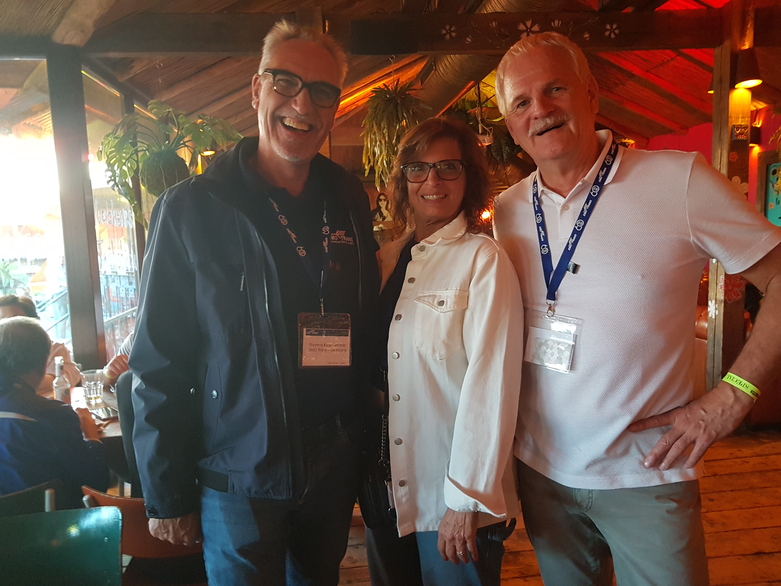
Global Network hosts Thomas Klinkhammer (left) and Stefan Ritter of EMO Germany welcomed 170 Group members, among them Connie Ash, Executive Assistant, EMO Trans Inc., USA  –  photo: CFG/hs

Perfect place
The beach bar StrandPauli proved to be an ideal place to relax, for wining and dining, chatting and exchanging the latest business information or industry rumors. “Hamburg is often called the ‘Gateway to the World’. And that is exactly what we are experiencing here during our network meeting. We know better than anyone that a port is more than ships and containers. It is a symbol of movement, of exchange, and of connections across borders,” stated Stefan Ritter, Managing Director of EMO Trans GmbH, in his welcome speech. “So let us take the opportunity to build bridges – not of steel but through conversations, a fruitful exchange of ideas, and perhaps even by making friends with those who have only recently joint our company.”
There should have been enough time to realize these wishes, as the Global Network Meeting took place between 05-09SEP.  

Broadly positioned
What began small 60 years ago has now developed into a global logistics company offering the market a full range of product segments, including standard shipments, the transport of special items such as pharmaceuticals, valuables, or dangerous goods, road feeder services, air and sea freight, project logistics, customs clearance and more. In the U.S. alone, the company runs 30 stations coast to coast, employing almost 500 people. In Europe, new offices have recently been set up in Romania and Poland. And EMO’s appetite for more remains unsatisfied. “Further network expansions are in the pipeline but can only be communicated once the contracts have been signed,” Thomas Klinkhammer, Managing Director Sales & Marketing kept his lips sealed.
It won’t be in sub-Saharan Africa. That much is certain. Thanks to the agent’s cooperation with South Africa’s Bidvest International Logistics, which has been in place since 2019, EMO Trans has access to all sub-markets on the continent. Conversely, Bidvest can utilize EMO Trans’ global network of around 250 offices in 120 countries for globalizing its own business. “The cooperation with Bidvest is working very well. It’s a win-win situation benefitting both sides equally,” summarizes Stefan Ritter.

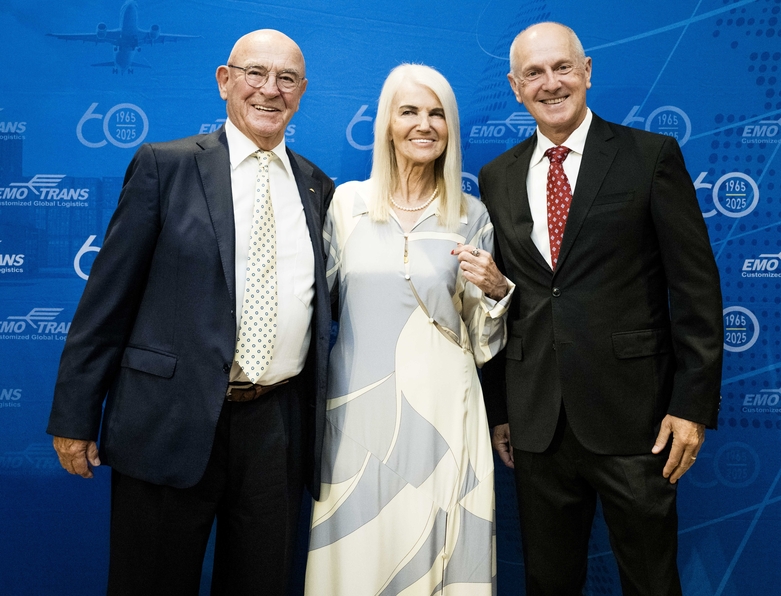
History meets the present. EMO grandees Eckhart Moltmann (left) and Karin Frigger were delighted to meet Marco Rohrer again, President and CEO of EMO Trans, USA  –  Courtesy: EMO Trans.

Solid business development
As far as the group’s current sales are concerned, there is no reason to be downbeat, says manager Klinkhammer. “Of course, we are feeling the effects of the multiple crises, but we cannot complain about developments during the first eight months in 2025. However, we will not achieve a record result like in 2023.” And Jenni Frigger adds from the U.S. perspective: “Our business runs strong and solid. We are cautiously optimistic despite the geopolitical tensions.” However, she admits that the U.S. tariffs introduced to the system have caused some instability. “But our global presence as a group and our broad product portfolio give us a great level of autonomy, so that we are not dependent on a single region or market.”
Touching possible network expansions, she mentions Southeast Asia and India. But nothing is carved in sone yet. The Global Network Meeting is a biennial event. Where and when the EMO members will meet next will be decided by mid-2026.

Drone alert forces Poland to close airports

0

Poland temporarily closed several airports last Wednesday (10SEP25) following a drone alert. The closure affected the country’s busiest airport, Warsaw Chopin, national carrier LOT’s passenger and cargo hub, interrupting air traffic for hours. Airports in Lublin and Rzeszow were also closed due to approaching drones. The latter is considered a hub for supplying Ukraine with weapons and equipment. The closures have been lifted meanwhile.

A Russian drone shot down over Poland – source: Polish police

Flagrant security violation
According to Polish authorities, 19 drones entered Polish airspace, at least three of which were drowned by air defense. Specialists identified them as Russia built and operated. Prime Minister Donald Tusk spoke of a flagrant violation of his country’s security by Russia and requested consultations under Article 4 of the NATO Treaty.
This NATO Article provides consultations when a NATO member state feels threatened from outside. It reads: “The Parties will consult together whenever, in the opinion of any of them, the territorial integrity, political independence or security of any of the Parties is threatened.” Following the consultations, airspace surveillance over the affected NATO territory, i.e., Poland and the neighboring Baltic states of Lithuania, Latvia, and Estonia, will be stepped up.

Closure of airspace
Since Friday (12SEP25) tensions between NATO and Russia have increased because in the direct geographical neighborhood of these states, Russia and its all, Belarus have started large-scale joint military exercises. For security reasons, Poland has closed its entire airspace over the eastern part of the country, bordering Belarus and has deployed 40,000 additional armed forces to secure the eastern border..
Shortly after the Polish drone alerts, German Chancellor Friedrich Merz (Conservatives) spoke of a “serious threat to Europe that endangers peace.” He added that the drone swarms sent by Putin into the national airspace of NATO member Poland “represent a new level of aggression.”

“Illegal, dangerous, unacceptable”
Following these statements, the Russian ambassador was summoned to the German Foreign Ministry and warned that Russian President Vladimir Putin’s actions were “illegal, dangerous and unacceptable. NATO stands firmly united to defend the territory of the alliance and their member’s security,” the German government told Ambassador, Sergey Y. Nechaev. In response to the drone alert, the Berlin government has upped the Bundeswehr’s participation in protecting NATO’s eastern flank. For the surveillance of the airspace over Poland, two additional Eurofighter jets will be based at Rostock-Laage Airport near the Baltic Sea and close to the polish border.

Putin – “The drone warrior”: Lead story of magazine Der Spiegel, out 12SEP25  – courtesy Spiegel

Provocations are increasing
France also summoned the Russian ambassador to Paris following the Polish drone alert. On channel Inter Radio France’s Foreign Minister Jean-Noël Barrot stated that he had told the Russian diplomat that Moscow must immediately stop testing and intimidating any NATO member state with ever new provocations.
Western security experts unanimously agree that the drone attack on Poland was by far the most serious violation of a NATO member state’s airspace by Russia to date, threatening its territorial integrity. Previously, tankers acting on Russia’s behalf had repeatedly destroyed underwater communication cables with their anchors, running across the seabed of the Baltic Sea. Some of the ships were confiscated by Swedish, Norwegian and Finnish authorities and detained. Their crew are now being prosecuted for sabotage.
In addition, “disposable agents” are increasingly recruited by the Russian secret service, to carry out acts of sabotage, like placing explosive devices on board Western cargo planes, as evidenced by the failed arson attack of DHL aircraft
(https://cargoforwarder.eu/2025/05/04/moscow-orchestrated-integrator-attacks/).

Hybrid war
Also, the GPS air navigation systems are increasingly disrupted in a targeted manner with flights across the Baltic states, Finland, and Poland mostly affected. This was also the case on 08SEP2025, when EU Commission President von der Leyen flew from Poland to Bulgaria whereby the GPS system on her flight ceased to function completely. “We have long been in a hybrid war with Russia, with ever new provocations and increasing intensity, as the drones over Poland evidence once again,” a leading security expert told CargoForwarder Global.

And another makes three! Silk Way’ third B777F has landed

0

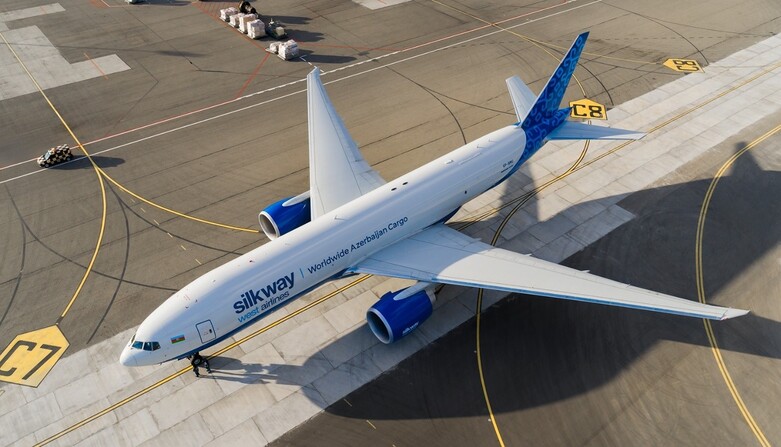
Silk Way West Airlines took delivery of its third Boeing 777 freighter, registration VP-BAA, at Heydar Aliyev International Airport (GYD) on 29AUG25, and since then the new addition has been city-hopping to Hahn (HHN), Birmingham (BHX), and Malpensa (MXP) – just three of the 40 destinations in its international cargo network. The aircraft had flown directly over from Boeing’s Seattle facilities and its flight history shows the Boeing 777-200LR as having carried out a couple of half-hour test flights around Snohomish County (PAE)/Everett in the week before. This latest B777 brings the airline another step closer to completing its fleet expansion and modernization. Currently, it operates a mix of Boeing 777F, 747-8F, and 747-400F aircraft, offering a total of 500,000 tons of cargo capacity per year. Two Boeing 777F, two Boeing 777-8F, and two Airbus A350F aircraft are still to be delivered by 2030. The total Boeing 777F order stands at 10, and they will eventually replace the aging B747Fs, creating a more environmentally friendly fleet as the airline looks to achieve the green goals it has set itself.

Silk Way West Airlines welcomes third Boeing 777 Freighter to Baku. Image: Silk Way West Airlines

Wolfgang Meier, President of Silk Way West Airlines, commented: “The arrival of our third Boeing 777F represents another important step in our long-term growth strategy. By expanding our fleet with modern, fuel-efficient aircraft, we are not only enhancing our global service offering but also reinforcing our commitment to environmental responsibility. This investment supports both our customers’ evolving needs and our vision for sustainable growth in the years ahead.”

Belimo Automation AG goes greener with Swiss WorldCargo

0

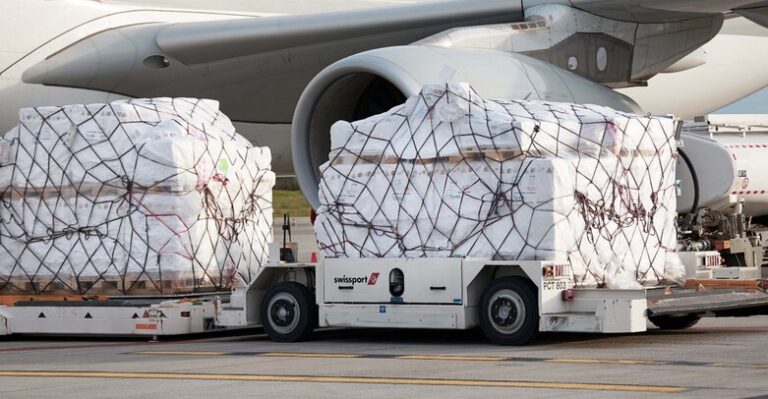
Swiss World Cargo and Lamprecht Transport have gained Belimo Automation AG, a leading heating, ventilation and air-conditioning systems (HVAC) company based in Switzerland, as the latest partner interested in ensuring more sustainable logistics. Belimo has opted to invest in Sustainable Aviation Fuel (SAF) for the transport of its international air cargo shipments. This tripartite collaboration between shipper, freight forwarder, and cargo airline will help to cut around 650 tons of CO₂e emissions in its first year. And there are plans to ramp up the SAF usage as the project develops.

Swiss company Belimo aims to reduce absolute greenhouse gas emissions (Scope 1 and 2) by 42% come 2030 compared to 2022. By 2050, the target is 90% – picture: company courtesy

Lamprecht Transport manages the logistics, while Swiss WorldCargo ensures SAF is integrated into the shipping process. Certified SAF is used, which delivers an immediate emissions drop compared to standard jet fuel. These kinds of supply chain partnerships are crucial to driving SAF adoption in the industry.

John Muncey, Head of Group Transportation at Belimo, said: “At Belimo, sustainability is an integral part of our corporate strategy. This investment in Sustainable Aviation Fuel (SAF) is not just about reducing emissions – it’s about taking direct responsibility for our environmental impact and working with our trusted partners to drive meaningful change.”

Gieri Hinnen, Head of Global Sales at Swiss WorldCargo, stated: “We are proud to be part of this joint effort. By working hand in hand with like-minded partners, we’re taking concrete steps toward our shared ambition of more sustainable air logistics.”

Korean Air chooses Swissport to operate JFK facility

0

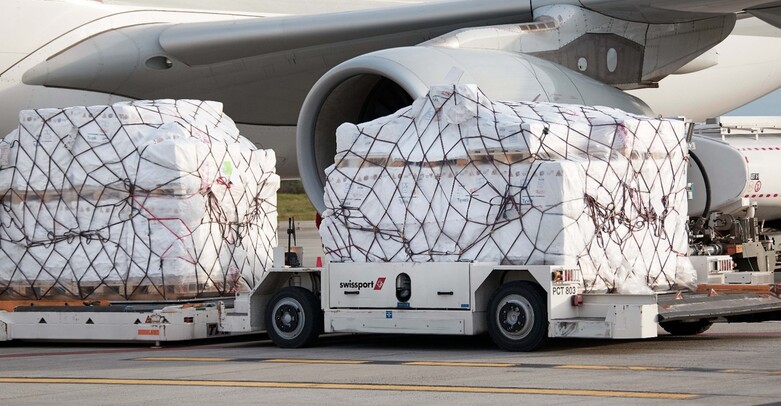
Both companies have been operational in JFK for a good half-century, yet have never before worked together – until now. On 01SEP25, the recently agreed 5-year handling contract came into effect. Korean Air’s Cargo Building 9 at John F. Kennedy International Airport (JFK), inaugurated 25 years ago, is now under full management of Swissport, including sublease responsibilities. Swissport has ambitious plans to modernize the 232,500 ft² (70,866m²) office and warehouse facility. It is investing in automation, Bionatur biodegradable products, and eco-friendly infrastructure upgrades such as a new ETV system, new temperature-controlled storage for specialized cargo, as well as new electric GSE along with a strong and reliable charging infrastructure. “Swissport will be the first handler at JFK to operate an all-electric fleet for all freighter operations from warehouse to ramp,” the release states. Once completed, the facility will be able to handle 295,000 tons per annum compared to today’s 200,000 tons. “Dedicated Korean Air Cargo operations will begin with a team of around 80 staff, eventually growing to 390+ employees once Cargo Building 9 reaches full capacity,” it says.

With Swissport, Korean Air’s JFK facilities will grow to handle almost 300,000 tons. Image: Swissport

Nelson Camacho, CEO of Swissport North America and Canada, announced: “We are delighted to partner with Korean Air Cargo on this historic contract, marking our first large-scale collaboration at a single location. […] Swissport is strongly committed to raising and further fine-tuning the standard of cargo handling at New York JFK airport and is therefore investing significantly […] while also pursuing IATA CEIV and GDP certifications. It is this perfect blend of automation and our professional team’s track-record expertise that ensures efficient, high-quality operations and the best customer service.”

Jaedong Eum, Executive Vice President and Head of the Cargo Business Division at Korean Air, stated: “Swissport has demonstrated that it shares our values of professionalism, excellence and sustainability, and our vision for the future of our JFK hub. […] Together with Swissport, we will establish a blueprint at JFK for a highly successful Cargo Path Forward over the coming years.”

Ajay Barolia, Executive Vice President Cargo Swissport North America, concluded: “Our operational strategy mirrors Korean Air Cargo’s core values and is grounded in three key pillars: Safety, Consistent Service Quality, and Full Transparency. [… Our] investments will future-proof Cargo Building 9 and ensure it is ready to meet both current demand and future growth, reinforcing Swissport’s commitment to safe, reliable, and modern cargo handling.”

TCE branches out to Morocco

0
Sarah Scheibe’s TCE team opens first African office in Morocco. Image: TCE

Those familiar with TCE’s air cargo supervision, will know that it has until now always operated out of its base at Frankfurt Airport . Open the TCE office map and you will now see a second dot – this one located in North Africa. As part of its international growth strategy, TCE has chosen to branch out, opening its first African office in Morocco. Casablanca Mohammed V Airport (CMN) was chosen because of its perfect geographical setting in between Africa, Europe and the Middle East, and the potential and ambition that the airport has to become a significant cargo hub. Already, the 5-person team there, under the management of Viktor Staroshaliev, Team Lead – Customs Reporting, is responsible for major accounts such as Canadian carriers WestJet Cargo and Air Transat. However, in its function as the primary gateway to the African market, it will serve local and global customers, going forward. “Far more than a regional base, Casablanca will function as an integral part of TCE’s worldwide network, working in close coordination with headquarters in Frankfurt and other international offices. Services will include cargo handling oversight, customs facilitation, and customer support, all delivered with the efficiency and precision that define TCE’s brand,” the press release clarifies.

Sarah Scheibe, Managing Director of TCE, reveals: “Our vision is to combine regional expertise with uniform global standards. Morocco is a natural choice for our African debut. Its strategic location connecting Africa, Europe, and the Middle East, combined with modern logistics infrastructure and a dynamic export market, makes it a key hub for air cargo flows. This is where we can create immediate value for our partners.”

Viktor Staroshaliev, Team Lead – Customs Reporting, adds: “By establishing this presence in Morocco, we extend our reach to a continent with enormous growth potential while reinforcing the global connectivity our customers rely on. And true to our commitment to sustainability and innovation, our Casablanca office is 100% paperless.”

Flying fish out of Glasgow Prestwick Airport

0

One million pounds is a significant investment for an airport to make in equipment and facilities yet pit that value against last year’s Scottish Salmon export business to China, which came in at a staggering GBP 76 million, it seems a mere drop in the ocean (pardon the pun!). China is Scotland’s third-largest export market for Salmon and that incredible figure (translating into around 8,175 tons) is the result of a 60% increase in business compared to 2023. So, Glasgow Prestwick Airport (PIK)’s million-pound investment is definitely up for some decent returns – particularly since it has gone into ensuring a dedicated cool chain team, dedicated seafood export facility (for exports to China and mainland Europe), and new equipment including high-volume metal detectors, temperature exposure and tracking systems, and four chillers with an 87-ton capacity. Business sense combines with environmental common sense: PIK is close to the fish farms where, previously, seafood producers had to truck shipments to London for international transport. They can now vastly reduce their Farm-to-Flight transit times (and their trucking costs), by shipping through their local airport. Win-win all round – an 18-hour shelf-life extension and far fewer CO2 emissions.

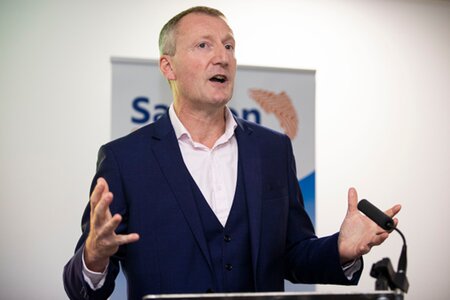
Tavish Scott, Chief Executive of Salmon Scotland. Image: Meantime Communications

In conjunction with launching its new Scotland to China seafood export service, PIK was visited by Tavish Scott, Chief Executive of Salmon Scotland, to see the facility at first hand and promote the Scotland to China perishable export service. He commented. “The new, dedicated service from Glasgow Prestwick Airport strengthens our ability to meet growing demand in China and across Asia, while supporting jobs and communities in Scotland’s coastal and rural areas. This investment is a welcome boost to our sector and will support Scotland’s already exemplary export performance.”

Ian Forgie, Chief Executive Officer, Glasgow Prestwick Airport, stated: “The value of Scottish salmon exports reached a record GBP 844 million in 2024, with the Chinese market growing by 60% in value and 107% in volume. Our in-house expertise coupled with our significant investment, makes PIK a standout hub for the Scottish seafood industry and we are prepared to meet growing demand. Creating a cool chain solution at PIK is a game-changer for Scottish seafood producers. PIK’s facilities make it an attractive destination for Chinese freighters, and the benefits of eight weekly flights to Asia make exporting perishables from PIK, rather than from London airports, an easy decision for the Scottish seafood industry to make.”

Icelandair Cargo partners with GAC Türkiye for IST-KEF flights

0

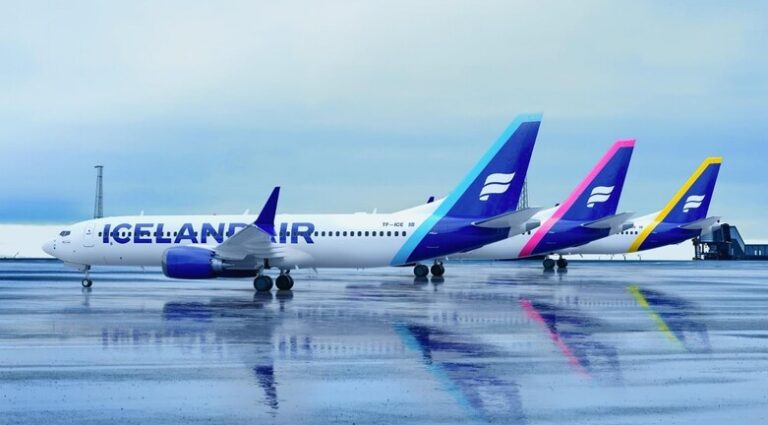
05SEP25 saw Icelandair Cargo launch its first Iceland-Türkiye routing and it has partnered with ECS Group subsidiary, Globe Air Cargo (GAC) Türkiye to ensure a professional local presence. The airline will serve Istanbul (IST) four times a week out of Keflavik (KEF), deploying a Boeing 737 MAX on the route. “These flights will provide seamless connections to the U.S. and Europe, targeting high-demand sectors such as textiles, automotive parts, and machinery,” the release explains. Globe Air Cargo Türkiye brings the local knowledge and the larger global network that is ECS Group, setting the foundation for growth on what the release considers “a new era of air freight connectivity between Turkey, Iceland, and key transatlantic markets.” It opens up new opportunities for Turkish exporters and importers.

Icelandair Cargo launches operations in Türkiye. Image: Icelandair Cargo

Einar Már Guðmundsson, Managing Director at Icelandair Cargo, announced: “This is a major milestone for us as we expand into the Turkish market for the first time. The expertise of Globe Air Cargo Türkiye, combined with ECS Group’s digital resources, ensures our customers will experience world-class service and efficiency from the very beginning.”

Jean Ceccaldi, CEO of ECS Group, stated: “This partnership is a perfect expression of our vision: connecting the global ambitions of our airline partners to strong local expertise. The Globe Air Cargo Türkiye teams have a deep understanding of the Turkish market, and it’s their daily commitment – combined with the resources and digital innovation of ECS Group – that will enable Icelandair Cargo to quickly establish itself as a key player along this new corridor.”

Ersun Guven, Managing Director of Globe Air Cargo Türkiye, commented: “We are proud to represent Icelandair Cargo in this exciting launch. Our knowledge of the local market and commitment to excellence make us the ideal GSSA partner to support their growth in the region.