Home Blog Page 73

Volga-Dnepr facing nationalization

1

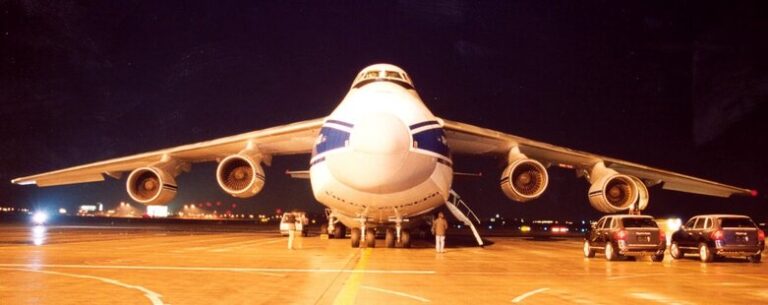
The Putin regime might soon be in command of three additional AN-124 freighters belonging to Volga-Dnepr’s fleet. They would add to the fleet of – supposedly – ten AN-124 operated by the Russian Air Force. Alexey Isaikin, founder and former owner of the Volga-Dnepr Group, made the announcement of the forthcoming asset transfer to the state during the celebration of the Russian freight carrier’s 35th anniversary at its homebase, Ulyanovsk.

AN-124 at LEJ, once Volga-Dnepr’s preferred European hub, photo: CFG/hs

There are many victims of Russia’s invasion of Ukraine. Above all, the human victims: Ukrainians, Russians, North Koreans, Colombians, and others. But those affected also include private companies whose business models have been undermined by the military attack which violates international law, provoking subsequent Western sanctions. The cargo conglomerate, Volga-Dnepr, will soon become a prominent name on the list of those who have fallen by the wayside. The official date for this to happen is 31DEC25, but sooner decisions are conceivable.

Network cuts, loss of markets
According to market analysts – there are no official figures – Volga-Dnepr is permanently incurring losses. With the adoption of sanctions against Russia and the supporters of the invasion of Ukraine, Volga-Dnepr lost its most important markets and the network of its once very profitable linehaul arm, AirBridge Cargo, became obsolete. This was based on cargo transport between China and the EU, with stopovers in Moscow or Novosibirsk, but Volga-Dnepr’s AN-124 and ABC’s B747 and B777 freighters also served the U.S. and Canada, although to a lesser degree.

The German airport, Leipzig (LEJ), was the preferred base outside its Russian home turf, where the company offered multiple MRO services. Under the name Strategic Air Lift International Solution (SALIS), up to four AN-124s were stationed there. The large freighters, partially provided by Ukraine’s SALIS partner, Antonov Airlines, were deployed on behalf of NATO and most EU members in cases of urgent humanitarian need or to supply military goods in support of ground forces operating in Afghanistan or parts of Africa. However, the Russian capacity provider withdrew from this lucrative joint venture in 2018, presumably under pressure from Moscow.

Steady decline
In recent months, Volga-Dnepr aircraft, including five Il-76 freighters, have been operating within Russia or on routes to China, the United Arab Emirates, and India: all countries that have not joined the Western sanctions regime. This crippled network was not sufficient to generate profits, especially since the AN-124 “Ruslan” aircraft are more than 30, in some cases 40 years old, which makes them very prone to repairs. Added to this is Chinese competition, which manages to secure ever larger shares of the Russian air freight market. According to Rosaviatsiya, the Russian aviation authority, cargo traffic fell by almost 7% in the first half of the year (year-on-year) to 202,000 tons. More than half of the market (52.5%) was taken by the state-owned Aeroflot group.

Submission instead of protest
Confronted with the fast-approaching end of his conglomerate and instead of blaming Moscow’s martial policy for the downfall of his company, Volga-Dnepr founder Alexey Isaikin, sends signs of loyalty to the Kremlin. During the celebration of Volga-Dnepr’s 35th anniversary, including its linehaul subsidiary, AirBridge Cargo, Isaikin said that the group “is of interest to those who need its services, [ but] this interest is manifested in light of the specifics of the current moment. There is something to take back to the motherland,” Isaikin is quoted by the Russian daily, Kommersant. Addressing the audience, he exclaimed that Volga-Dnepr has represented Russian civil aviation with dignity on the international market, where “they still mourn the company’s absence. The demand for Volga-Dnepr’s capabilities for the state has been confirmed by its partnership with the Moscow government. If the motherland says that the company must serve the motherland, then so be it: nationalization, confiscation, a fair deal, any form […].”

Isaikin is smart enough to know that a submissive attitude toward those in power in the Kremlin is equivalent to life insurance. Other fates have taught him that.
Congratulations: GoHelp turns 20

0

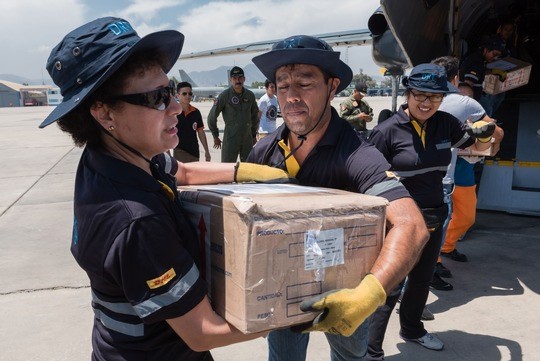
DHL’s disaster management program, established in 2005 under the name GoHelp, celebrated its 20th birthday. Over the years, the rescue and support team engaged in 77 natural catastrophes to save lives or provide affected people with essential supplies, especially clean potable water. Within the two decades and in close partnership with the UN Office for the Coordination of Humanitarian Affairs (OCHA), 70,000 tons of life-saving aid was handled by the initiative. As the longest-standing private sector partner of the UN OCHA, GoHelp has earned a reputation for reliability, speed, and innovation in humanitarian logistics. In addition, DHL Global Forwarding announces the commissioning of a new cargo terminal at Frankfurt Airport.

The general public associates DHL’s brand primarily with express transport, whether by air, ocean, rail, or road. Only insiders are likely to be aware that the Deutsche Post logistics pillar also plays a leading role in humanitarian logistics. Since the pilot program was launched in December 2024, more than1,000 trained volunteers in four regional units worldwide have been qualified to be ready for deployment within 72 hours in case of urgency.The initiative arose in response to the increasing frequency and severity of humanitarian crises, highlighting the critical need for coordinated logistics solutions in emergency situations where every second counts.

GoHelp personnel on a humanitarian mission – courtesy: GARD

Logistics coordination at airports is key
“Our work has shaped the way logistics is integrated into global emergency response efforts,” said Thomas Ogilvie, CHRO and Labor Director of DHL Group. “Our compass for the operations is our business purpose: connecting people, improving lives. We focus our offerings on our core competence and only do what we do best: organizing logistics services in every environment.” Ken Melville, VP Humanitarian Affairs and Sustainable Aviation added to this that in case of tsunamis, earthquakes, flooding or other natural catastrophes, disaster relief is flown in from all over the world. But these supplies need to be handled at the airport to which the relief supplies are flown and where they are ultimately distributed to where they’re needed most.

Here are just a few examples of many
The journey began with a pilot program in DEC2024, when DHL’s Disaster Response Team (DRT) facilitated the logistics of humanitarian aid at Colombo Airport in Sri Lanka following the Indian Ocean tsunami. Shortly after, on 08OCT2005, the team ensured swift and efficient transfer of international aid to the areas affected by a devastating earthquake in Pakistan. Also due to the aftermath of a devastating earthquake, missions followed in Haiti, where DRT experts managed the sorting and forwarding of relief supplies at the airport in Port-au-Prince and at alternative airports in the neighboring Dominican Republic. During the COVID-19 pandemic, DHL Group played a pivotal role as a logistics expert, delivering two billion vaccine doses to over 175 countries in 2021 and 2022. Since then, DHL reinforced the importance of logistics in public health responses.

Large GARD network
In the meantime, GoHelp has integrated 60 airports in 30 countries in its GARD network, the acronym stands for Get Airports Ready for Disaster. All GoHelp operations are actively managed at regional hubs located on 5 continents: Singapore, Panama, Dubai, Johannesburg, and Bonn. Which station is responsible for coordinating relief efforts depends on where a natural disaster has occurred.
“With the escalating effects of climate change, the demand for rapid, efficient, and effective disaster response is at an all-time high. Well-trained personnel are essential to the success of any humanitarian initiative,” Mayyada Ansari, Global Head of GoHelp, summarizes.

DHL Global Forwarding consolidates its freight services, which were previously spread across several locations, at Frankfurt Airport – image: DHL GF.

DHL GF gets new home in FRA
In addition to this, DHL Global Forwarding announced the commissioning of a new, state-of-the-art air freight terminal at Frankfurt Airport. The building, which can handle up to 300,000 tons of cargo annually, will consolidate the agent’s activities, which were previously spread across three locations around the airport.
“The start of full operations by DHL Global Forwarding is an important milestone in the further development of Frankfurt Airport as a leading air freight hub,” exclaimed Anke Giesen, Executive Vice President Retail and Real Estate at Fraport AG. “With the CargoHub master plan, Fraport plans to increase cargo volume by a good 50 percent to around three million tons of air freight per year by 2040. The new hall is an important project in our Fraport real estate development, which we have now completed on schedule.”

Freen energy contributes to power provision
The facility covers an area of 24,500 square meters, including 3,000 sqm of flexible office and lounge space. Road feeder service providers can use 54 gates to load or unload their shipments. In addition, there are 25 truck parking spaces and around 185 car parking spaces on the site. Twenty of these are equipped with electric charging stations. A large-scale PV system with a peak output of two megawatts is currently being installed on the roof of the facility. Once completed, the green electricity produced will be fed into the airport grid.

airBaltic maps out next phase of growth

0

New brooms sweep clean, as the saying goes. Latvian national airline airBaltic is now following this motto by placing the airline’s management in the hands of an experienced financial expert. His name: Erno Hildén. The Finnish native will take command of airBaltic on December 1, 2025. His main job will be to drive new growth.

“I appreciate the trust placed in me by the Supervisory Board. It is a privilege to take on this responsibility at airBaltic. My focus will be on ensuring continuity, supporting the Executive Board, and working together with the team to maintain operational stability and contribute to the company’s long-term objectives. I also look forward to applying my international aviation and financial experience to support the company’s next stage of development,” exclaimed Erno Hildén following his nomination.

Erno Hildén was appointed head of airBaltic – company courtesy

Tough market conditions
Until DEC25, Pauls Cālītis will lead the airline as interim CEO but will resume his duties as Chief Operating Officer (COO) once Hildén takes office. Hildén has earned a reputation in the industry as an excellent restructuring expert at Scandinavian Airline SAS, which was in serious financial trouble at the time. As a member of the SAS management team, he was also responsible for securing the company’s solvency by tapping into new sources of financing. With Air France’s recent acquisition of a majority stake in SAS, Hildén’s chapter at SAS has also come to a close. His appointment as CEO of airBaltic is evidence of the airline’s intention to grow and consolidate its market position. It has suffered setbacks in the recent past, losing part of its route network to Russia due to the Putin regime’s invasion of Ukraine and the subsequent sanctions imposed by the West.

Lufthansa is on board
But now the Latvian airline is poised to expand once again. To finance this expansion, the airline is receiving €14 million from the government in Riga. The Lufthansa Group contributes the same amount. In return, it secures itself a 10% stake in the airline which includes getting a seat on the supervisory board of the Latvian state-owned company.
Lufthansa’s investment is based on a cooperation that has existed for several years, in which Lufthansa leases aircraft and crews from AirBaltic under a wet lease agreement. According to a statement, the conversion of the previously acquired convertible shares into common shares, which has now been announced, will enable the Lufthansa Group to improve the quality of its route network and tap into additional markets.

Further investors are welcome
Lufthansa’s investment is based on a long-standing partnership in which Lufthansa leases aircraft and crews from AirBaltic under a wet lease agreement. According to a press release, the conversion of previously acquired convertible shares into common shares will enable the Lufthansa Group to improve the quality of its route network and tap into additional markets.
Latvian Transport Minister Atis Švinka stated that “having one of the aviation industry leaders as a strategic investor in airBaltic increases the value of our national airline and confirms its leading position in the market.” He added to this that this will help attract other investors since it demonstrates the sustainability of the Baltic airline’s business strategy.

Cargo is a side product
It serves more than 70 destinations from its hub Riga International (RIX), using a uniform fleet of 50 Airbus A220-300 aircraft. It has also placed 40 orders for this Canadian-built Airbus variant. The A220 has a nonstop range of 6,700 km and the belly compartments offer 28 cubic meters of space for air freight. This is slightly less than the cargo capacity of its competitor, the Boeing 737 MAX. However, ground staff is needed to load and unload both aircraft types, as the lower deck compartments are too small to fit standard ULDs. Meanwhile, investors in Estonia and Lithuania are still evaluating a financial commitment in airBaltic. In contrast, the Estonian government has rejected a stake in the carrier on the grounds that it would rather spend the money on expanding Tallinn Airport as it expects air traffic to grow successively. By 2030, 5 million passengers are expected there. Tallinn Lennart Meri Airport recorded 3.5 million passengers in 2024, an 18% increase year-on-year.

Spotlight on… Vivian Tang, Management Trainee, HACTL

0

CargoForwarder Global’s ‘Spotlight On…’ illustrates a different job and segment of the air cargo industry each week to demonstrate just how varied our industry is. While freight forwarders and airlines source and fly the cargo and are perhaps the more visible face of air cargo, many of the necessary cogs in the machinery are put into operation by air cargo terminal operators such as HACTL, based at Hong Kong International Airport. Its services range from ground handling processes including cargo handling, ramp handling and documentation, through to crew transportation, and value-added logistics services to more than 100 airlines and 1,000 freight forwarders worldwide. This week, Vivian Tang (VT), Management Trainee at HACTL, takes us through her role and shares her views.

Image: Vivian Tang

CFG: What is your current function and company? And what are your responsibilities?
VT: I’m on the Elite Management Trainee Program at Hong Kong Air Cargo Terminals Limited (HACTL), one of the leading air cargo handlers in Hong Kong. As part of the trainee program, I’ve rotated through key departments, including Operations, HACIS—HACTL’s wholly-owned subsidiary specializing in logistics solutions, and now the Safety, Sustainability, and Quality Assurance (SSQ) team. My responsibilities vary by rotation but generally involve project coordination, process optimization, cross-departmental communications to ensure seamless operations.

CFG: What does a normal day look like for you?
VT: Every day is dynamic, but it usually starts with coffee [laughs] and prioritizing tasks – checking emails, reviewing project updates, and preparing for meetings. Since my current rotation in SSQ involves cross-functional projects, I often collaborate with external partners. Between meetings, I focus on consolidating key insights and preparing reports. What makes it enjoyable is the team culture here: my colleagues are not just my supportive teammates but also very kind and fun people who’ve become friends!

CFG: How long have you been in the air cargo industry, and what brought you to it?
VT: I’ve been in the industry for nearly two years. My journey began during a university visit to HACTL, where I was captivated by the scale and precision of HACTL’s Container Storage System (CSS). Two tour leaders – now the head of Operations Terminal Services and the manager of Operations Ground Services – left a big impression on me with their professionalism and passion. When I learned about HACTL’s Elite Management Trainee Programme, I applied immediately. Looking back, it felt like destiny: what started as curiosity has turned into a career that I’m proud to pursue.

CFG: What do you enjoy most about your job?
VT: The Operations at SuperTerminal 1 are what make me feel most energized. Seeing cargo move from the warehouse to aircraft – knowing our work connects businesses and communities globally – is incredibly rewarding. Every day, I learn how even small optimizations can have a huge effect on efficiency, customer satisfaction, and even sustainability. That tangible impact is what drives me.

CFG: Where do you see the greatest challenges in our industry?
VT: Talents, in terms of the number of people entering, is the hot topic in our industry. At HACTL, we’ve tackled this through initiatives like different trainee programmes, hiring manpower from the Greater Bay Area, and investing in automation. Progress has been made, and we will continue to attract, retain and upskill talents in our industry.

CFG: What advice would you give to people looking to get into the air cargo industry?
VT: First of all, cultivate genuine curiosity and passion about supply chains and global trade because this industry thrives on problem-solvers who see the bigger picture. Technical skills are valuable, but adaptability and collaboration matter just as much.

CFG: If the air cargo industry were a film/book, what would its title be?
VT: 24/7: Race Against the Clock
The air cargo industry highlights the relentless pace and precision required to deliver everything from vaccines to e-commerce goods on time!

Thank you very much, Vivian.


If you would like to share your personal air cargo story with our CargoForwarder Global readers, feel free to send your answers to the above questions to cargoforwarderglobal@kopfpilot.at We look forward to shining a spotlight on your job area, views, and experiences.

TIACA puts e-commerce under the microscope

0

The International Air Cargo Association (TIACA) has issued an e-commerce White Paper that pays tribute to the growing impact of e-commerce on the global cargo industry. By 2024, e-commerce comprised roughly 20% of air cargo volumes and is expected to double within a decade. In its White Paper, the association not only highlights the effects of the e-commerce boom on the various participants in the supply chain but also provides specific recommendations for optimizing e-commerce management along the entire transport process. The White Paper was compiled by a 14-member international Task Force, chaired by Nicolai Schaffner, Swissport, and Independent Consultant, Carl Kent.

e-commerce has led to a paradigm shift in international air freight. Driven by lockdowns during the Covid pandemic, consumer behavior has switched from traditional retail “brick and mortar” to online marketplaces, C2C platforms, and direct sales channels. Social media-based retail activity is speeding up this evolution as retail is now available around the clock and accessible via smart phone technology no matter where someone lives. Global payment systems support this “shop anywhere, anytime” mindset.

In e-commerce, the shopping cart is right next to the notebook.

Descriptions are supplemented by recommendations for action
The white paper published by IATA is the first comprehensive approach to examining the impact of this trend on air freight. All in all, the 82-page compendium offers precise descriptions of the current situation as well as practical guidance for airlines, forwarding agents, ground handlers, airports, customs authorities, and regulators, on the hurdles that still need to be overcome to optimize the ever-increasing flow of e-commerce shipments. The great merit of the TIACA paper lies above all in these action-focused recommendations.

e-commerce impact on airlines
This is vividly illustrated in Chapter 06, which features opportunities and challenges for airlines arising from online retail.
There, the authors of the study emphasize that e-commerce has significantly changed the business activities of air cargo operators in three key ways: Firstly, online shopping has increased demand for express shipping, increasing the need for higher speed. As a consequence, carriers should shift their handling strategy, focusing on millions of small parcels rather than traditional bulk freight. Secondly, to meet the growing demand, major freight carriers need to expand their freighter fleets, with passenger airlines relying increasingly on e-commerce volumes to boost their revenues. Thirdly, carriers must be aware of increasing compliance costs and operational complexities resulting from stricter ICAO and state regulations, following the rise in undeclared lithium batteries, counterfeit goods, and customs fraud.

Industry-wide collaboration is needed
As further recommendations for airlines on how to deal with the e-commerce tsunami in a smart, efficient, and targeted manner, the authors of the white paper stress the need to streamline booking and tracking processes, as consumers now expect real-time updates on their shipments. Additionally, due to the growing requirement for last-mile delivery solutions, airlines should closely collaborate with logistics providers to ensure timely deliveries from airports to consumers’ doorsteps.
Furthermore, airlines must adopt advanced technologies, such as data analytics and automation, to enhance operational efficiency and manage the surge in volume effectively. This transformation also involves revising capacity management strategies to accommodate fluctuating e-commerce demands and ensuring adequate infrastructure is in place for handling increased cargo loads. At the same time, they point to competitive pressure from e-commerce giants such as Amazon, which are expanding their internal logistics activities and reducing their dependence on third-party carriers, and disrupting traditional air cargo business models.

Putting more focus on security issues
In a nutshell: cargo carriers should adapt their operational models to accommodate the surge in small, high-frequency e-commerce shipments. They should closely evaluate which additional infrastructure and fleet investments are required to handle the growing demand for express air freight services. Finally, keeping a close eye on security issues and compliance with customs regulations becomes increasingly important.
Subsequent chapters describe how postal services are responding to the growth in e-commerce shipments. Two adaptation strategies can be identified: some postal services are diversifying into e-commerce logistics, financial services, and digital innovations to counteract the decline in traditional mail volumes. Others are considering strategies such as reducing delivery frequency or focusing on higher-value services.

Ecological considerations
Sustainability is another chapter that is highlighted. Environmental aspects are becoming increasingly important for air freight and thus also for e-commerce logistics, the authors of the study believe. Charts and diagrams very clearly illustrate this assumption.

e-commerce and its effect on ground handlers
The impact of e-commerce on the activities of ground handling agents is also reflected. Ground handling activity is currently unregulated, with many differences existing between carriers in terms of standard ground handling operations and procedures. As such, a ground handler who represents multiple carriers is faced with managing various operational standards and deviations. As e-commerce grows, the role of the ground handler becomes even more important as volumes of small shipments often place additional burdens on facility and border management when compared to larger consolidated shipments. In addition, the quality requirements for employees are increasing.

Strategic guidance

The white paper concludes with the remark: “By adopting standardized practices, investing in digital infrastructure, and strengthening global cooperation, the air cargo industry can align with the future demands of e-commerce while ensuring safe, efficient, and environmentally responsible operations. TIACA’s strategic guidance offers a roadmap for stakeholders to navigate this evolution collaboratively and proactively.”

Those interested in the analysis should contact:

Rachael Negron, TIACA, PO Box 661510, Miami Springs, FL 33266-1510.
Phone: +1 786 265 7011  /  e-mail: press@tiaca.org

From De Minimis to De Misery…

0

They’ve been coming in thick and fast: the number of European postal services that have announced a stop or temporary suspension on parcels and commercial postal items destined for the U.S. Why? Because of the White House’s decision on 30JUL25, to delete the de minimis exemption from customs duties on parcels worth less than USD 800 for all countries, with effect 29AUG25.

The Group’s headquarters in Bonn, Germany. Image: DHL

So far, 22 European postal services have already or are planning to suspend parcel shipments to the United States due to confusion over new U.S. import tariffs scheduled to take effect on 29AUG25. They are:

  • Austria (Österreichische Post, starting 25AUG25)
  • Belgium (bpost, suspended 23AUG25)
  • Czechia (Česká pošta, suspended 22AUG25)
  • Denmark (suspended 22AUG25)
  • Estonia (Omniva, suspended 22AUG25)
  • Finland (Posti, suspended 22AUG25)
  • France (La Poste, starting 25AUG25)
  • Germany (Deutsche Post, DHL Parcel Germany, suspended 22AUG25)
  • Greece (Hellenic Post – date not specified)
  • Italy (Poste Italiane, suspended 23AUG25)
  • Latvia (Latvia Pasts, suspended 23AUG25)
  • Liechtenstein (Liechtensteinische Post, suspended 22AUG25)
  • Lithuania (Lietuvos paštas, suspended 22AUG25)
  • Malta (Malta Post, suspended 23AUG25)
  • Norway (Posten Bring, suspended 23AUG25)
  • Netherlands (PostNL, suspended 23AUG25)
  • Poland (starting 25AUG25)
  • Portugal (Correos Portugal, starting 25AUG25)
  • Slovenia (Pošta Slovenije, suspended 22AUG25)
  • Spain (Correos, starting 25AUG25)
  • Sweden (PostNord, suspended 23AUG25) – United Kingdom (Royal Mail, starting 26AUG25)

And not just the European continent. According to Value Added Resource (https://www.valueaddedresource.net/international-postal-services-de-minimis-pause-us-shipments/), other countries have also announced their temporary freeze on U.S.-bound parcels of a certain value. For example, NZ Post New Zealand declared: “There are some restrictions when sending to the United States and U.S. territories…while formal processes around the new U.S. tariffs, duties and taxes are being finalised…Our online labelling tools will be disabled for impacted services from 5 p.m., 22AUG25. We expect that this suspension will be short term.” Thailand Post (suspended 21AUG25), Korea Post (25AUG25), Singapore Post (25AUG25), India Post (25AUG25), and Canada (25AUG25) are also listed. At time of writing Australia has not yet issued its verdict.

Not the first time…
DHL’s press release sent out on 22AUG25, announcing its temporary restrictions on German postal goods destined for the U.S., is an expansion of a situation that already began earlier this year, in APR25. CFG reported: https://cargoforwarder.eu/2025/04/21/dhl-stops-package-delivery-in-the-usa/ , when U.S.-bound goods from Hong Kong and China were affected. “After 22AUG25, Deutsche Post and DHL Parcel Germany will no longer be able to accept and transport parcels and postal items containing goods from business customers destined for the U.S.,” the press release states, giving the reason that “the U.S. Executive Order ‘Suspending Duty-Free De Minimis Treatment for all Countries’ changes the basis for postal goods shipping to the U.S. for all postal and parcel service providers”. The service is therefore temporarily suspended, though DHL Express shipments are still possible. “Packages and parcels that contain only gifts from individuals to individuals with a value of up to USD100 and are declared as a ‘gift’, as well as documents, can continue to be sent as usual,” it specifies. Business customers suffer temporary restrictions. Documents sent as letters are not affected, but overall, much stricter scrutiny will be in place to uncover fraudulent abuse of the new regulations.

As clear as mud
Despite the decision having been made a while back, there are still unclarities regarding the handling process, as DHL details: “the reason for these anticipated temporary restrictions is new processes required by U.S. authorities for postal shipping, which differ from the previously applicable regulations. Key questions remain unresolved, particularly regarding how and by whom customs duties will be collected in the future, what additional data will be required, and how the data transmission to the U.S. Customs and Border Protection will be carried out.” It goes on to explain the difference between postal and commercial customs clearance – both of which are negatively affected by the 30JUL25 Executive Order, but in different ways. At the end of the day, processes are becoming more time-consuming, subject to stricter regulations, and the new regulations are adding costs to the existing supply chain: “All commercially cleared shipments, including those with a value under USD 100, are subject to customs clearance. For goods from Germany respectively the European Union, the customs rate is expected to be 15% of the goods’ value – some product categories may be subject to higher duties.” DHL assures that it, along with its European partners, is in contact with U.S. authorities, to come to solutions so as “to resume postal goods shipping to the U.S. as quickly as possible”.

A dip in traffic and profit
Quick solutions are in the interests of everyone. In a discussion regarding financial results earlier this month, DHL’s CFO stated that the end of the de minimis exemption could reduce its potential full-year operating profit by up to USD 231 million – in other words a 3.3% hit on its operating profit. Following the APR25 introduction of tariffs on previously duty-free low-value parcels from China and Hong Kong to the U.S., express shipments – particularly business-to-consumer parcels from those countries – fell by 20%. With the next chapter starting up on 29AUG25, further challenges and volume dips can be expected. And that is just one integrator in a very large air cargo industry. Not to mention the knock-on effect these changes will have on consumer behavior and the survival of small and medium-sized businesses who will suffer the brunt of the price increases and delays. What was once de minimis will cause misery for a while yet.

Riyadh Air partners with SATS Saudia Arabia for cargo operations

Riyadh Air, Saudi Arabia’s new national airline, has entered a five-year strategic partnership with SATS Saudi Arabia (a subsidiary of SATS Ltd) to enhance cargo handling at Saudi’s key airports, most notably at Riyadh’s King Khalid International Airport (RUH). The agreement supports major cargo operations not only at RUH, but also at Dammam (DMM) and Jeddah (JED) airports. A key focus is on developing advanced hub management capabilities for Riyadh Air, positioning the airline to realize Saudi Arabia’s Vision 2030 goal of handling an annual 4.5 million tons of air cargo.

Bob Chi, CEO Gateway Services Asia Pacific, SATS Ltd, and Adam Boukadida, CFO, Riyadh Air. Image: Riyadh Air

SATS Saudi Arabia will manage the existing 60,000 m² Riyadh airfreight terminal. It is equipped with special areas for sensitive cargo such as pharmaceuticals, e-commerce, live animals, valuables, and dangerous goods. Riyadh Air gains immediate access to SATS’ global network of over 225 stations and 250+ airline partners/freight forwarders. Centralized cargo and security control centers, real-time supervision and seamless cargo coordination across the airline’s expanding network should ensure quality service. SATS will also implement its COSYS+ Next Generation Cargo Management System, introducing digital and automated solutions to boost operational efficiency. This integrated approach will allow Riyadh Air to deliver a comprehensive suite of cargo products – strengthening its position in both the regional and global cargo markets.

Adam Boukadida, Chief Financial Officer at Riyadh Air, commented: “This partnership with SATS Saudi Arabia marks a pivotal milestone in Riyadh Air’s journey to become a leading global carrier. By leveraging SATS’ advanced cargo handling capabilities and global network, we are laying a strong foundation to build a world-class air cargo offering from day one. This collaboration enables us to deliver operational excellence, high-value logistics solutions, and strategic connectivity across key global trade lanes – directly supporting Saudi Arabia’s Vision 2030 aspirations to position the Kingdom as a premier global logistics hub.”

Bob Chi, CEO Gateway Services Asia Pacific, SATS Ltd., said: “We are honored that Riyadh Air has selected SATS as a trusted partner for its ambitious cargo growth journey. This partnership represents strategic alignment between Riyadh Air’s ambition to connect over 100 destinations globally by 2030 and our commitment to provide our customers with world-class air cargo solutions.

TIACA appoints Fowler Wang as Regional Rep for China

The International Air Cargo Association (TIACA) has appointed Fowler Wang as its new Regional Representative for China, aiming thus to strengthen its engagement in this vital market. Fowler brings in more than 2 decades’ worth of air cargo experience, having held positions in logistics, sales management, and event leadership. He previously founded Summit Asia Events and developed the China Cargo Summit into the country’s leading air cargo conference. During the COVID-19 pandemic, he successfully managed the operation of more than 1,000 international cargo charter flights spanning Asia, Europe, and the Americas.

More than 20 years of air cargo experience. Fowler Wang. Image: TIACA

Fowler’s background also includes senior roles in aviation self-service solutions and technology leadership, giving him broad insight into air cargo operations, including airline setup, air rights, airport coordination, and freight forwarding. At TIACA, he will represent the association across China, supporting its mission to unite the global air cargo community, foster innovation, and advocate for industry interests. His appointment reinforces TIACA’s commitment to expanding its footprint in the Chinese market and driving collaboration in one of the world’s most strategically important regions for air cargo. This move is also expected to help connect and develop the air freight ecosystem in China, furthering TIACA’s global reach and influence in the fast-evolving cargo landscape.

Steven Polmans, TIACA Chair, revealed: “China is a cornerstone of global air cargo, and TIACA’s presence there is essential. Fowler’s remarkable track record in building platforms that connect people and ideas, combined with his hands-on industry experience, makes him the ideal representative to expand TIACA’s impact and support our members in China.”

Glyn Hughes, TIACA Director General, added: “We are delighted to welcome Fowler to the TIACA team as our Regional Representative in China. His deep knowledge of the Chinese air cargo market, coupled with his extensive international network and proven leadership, will greatly enhance TIACA’s ability to serve our members, foster industry collaboration, and strengthen engagement with key stakeholders in this vital region.”

Are you heading to the Caspian Air Cargo Summit 2025?

The Caspian Air Cargo Summit 2025 will take place in Baku from 22-24SEP25. This 10th edition of the meanwhile well-established regional air freight and logistics conference will be hosted by Silk Way West Airlines. Policymakers, innovators, and executives from over 40 countries will meet at the Summit for strategic discussions, networking, and investment opportunities. Taking place at a crucial moment for global trade, it highlights the growing importance of the Middle Corridor as a secure and sustainable link between Europe, Asia, the Middle East, and the Americas.

Will you be at the Summit 22-24SEP25? Image: Caspian Air Cargo Summit

A major focus will be Silk Way Group’s ambitious expansion strategy, anchored by multi-billion-dollar investments in Baku’s infrastructure, digital supply chains, and multimodal transport. Central to these efforts is the development of a new international cargo airport within the Alat Free Economic Zone – set to open in early 2027 – featuring the Silk Way Cargo Village, a hub integrating air, sea, road, and rail connectivity across Eurasia.

In addition to discussions on the Middle Corridor’s significance in supporting global trade, and developments in the Alat Free Economic Zone, the agenda will address themes such as supply chain digitalization, sustainability in aviation and cargo, and new logistics investment opportunities in Central Eurasia. With participants spanning leading global companies including DSV, DHL Global Forwarding, Boeing, Airbus, Rolls-Royce, Atlas Air Worldwide, ACL Airshop, Hactl, Kales Group, GFS, Cargoland by Liege, the Summit promises to blend thought leadership with actionable business engagement, solidifying Baku’s role as a rising global logistics hub.

Zaur Akhundov, President of Silk Way Group, commented: “Our vision is to position the new cargo airport as a central force in the future of global cargo logistics. The Caspian Air Cargo Summit is the perfect platform to present this strategic project and to engage with the industry leaders who are shaping tomorrow’s supply chains.”

Qatar Airways Cargo and Airlink bring aid to where it’s needed

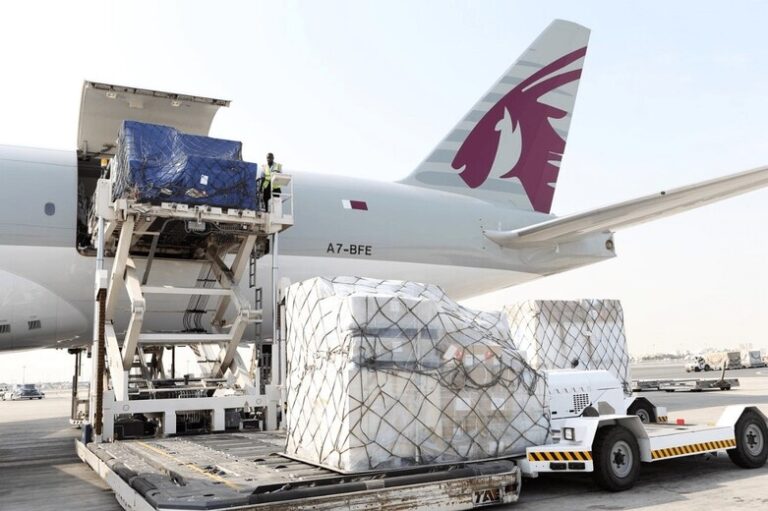
Over the past five years, Qatar Airways Cargo has played a critical role in global humanitarian relief, partnering with Airlink and 42 nonprofit organizations to deliver life-saving aid. Through its pro bono efforts, the world’s leading air cargo carrier has transported 720 tons of humanitarian supplies, reaching more than 15.5 million people across 34 countries. Last year, the airline carried 136 tons of essential goods such as medicines, clean water, and shelter materials, on behalf of Airlink and 16 NGOs in 12 countries and saving those organizations USD 2.19 million in logistics expenses. Overall, its contributions have helped NGOs save over USD 6.59 million, enabling them to direct more resources toward scaling vital response efforts.

Making a difference to over 15.5 million people. Image: Qatar Airways Cargo

Qatar Airways Cargo’s impact is driven by its ‘WeQare’ program, an initiative dedicated to creating meaningful social and environmental value, particularly through humanitarian support. Its aid flights have responded to more than 20 global emergencies, reinforcing the airline’s reputation as a reliable partner in times of crisis. In recognition of its contributions, the airline received the prestigious 2025 ATW Humanitarian Award. Beyond Airlink, Qatar Airways Cargo also collaborates with UNHCR, UNICEF, and the World Food Programme. In the 2024–2025 financial year, it transported 470,000 kg of aid, underscoring its unwavering commitment to supporting communities in need worldwide.

Mark Drusch, Chief Officer Cargo at Qatar Airways Cargo, exclaimed: “WeQare is more than a name – it’s a mission. We are committed to helping Airlink and their partners deliver the right aid to the right place, at the right time. We continue to support charitable, environmental and humanitarian initiatives across the globe, and will always step up to support our partners.”

Stephanie Steege, Vice President of Humanitarian Programs at Airlink, stated: “The partnership between Qatar Airways Cargo and Airlink is critical in swiftly delivering aid to hard-to-reach crises and supporting our health system strengthening programs, and we are proud of what we have accomplished together. For more than a third of Airlink’s 15-year history, Qatar Airways Cargo has made a transformative impact on our programs worldwide. We thank everyone at Qatar Airways Cargo for their years of support and look forward to continuing to bring hope and relief to communities in crisis for years to come.”