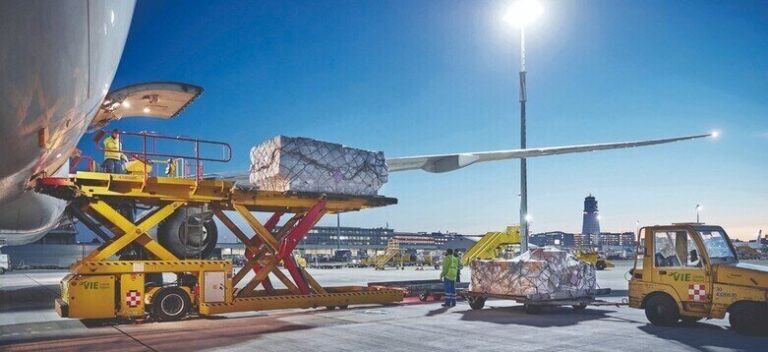
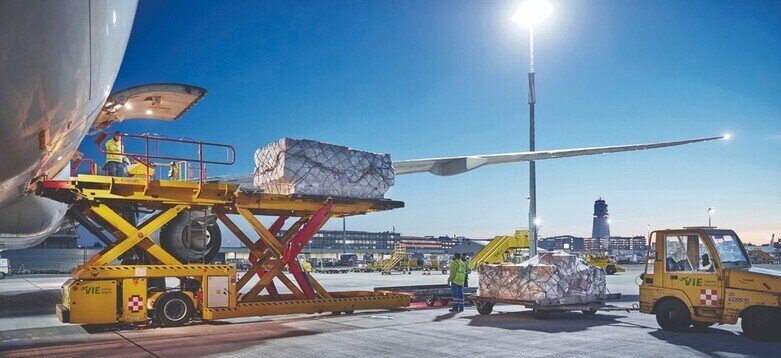
Vienna Aiport recently published its half-year results and can speak of success. At an increase of 9% in handled tonnage compared to previous year, the airport is almost seeing double-digit growth. In figures, that translates into a total handled tonnage of 154,001 thanks to an increase of 12,822 tons. The first half of the year was particularly rosy, having seen a 16% increase on the same period in 2024 when it comes to belly cargo. During the first six months of 2025, belly cargo increased by 9,476 tons to 67,070 tons, with MAY25 being the clear winner, generating 12,413 tons – a 25% increase on MAY24. The airport declares that the belly cargo increases “once again more than offset the slight decline in pure air freight tonnage.” Pharma, too, saw healthy growth at +12% compared to previous year. 2,040 tons passed through the Pharma Handling Center during JAN-JUN25. “Vienna Airport is one of the few airports in Central and Eastern Europe to offer a specialized Pharma Handling Center,” the press release emphasizes, underlining the importance of an unbroken cold chain. Overall, 81,162 tons were imported via Vienna Airport during the first half of this year. That translates into a 4% increase. The Export side saw a 15% increase, resulting in 72,839 tons handled.
Shifting cargo into a higher gear. Image: Vienna Airport
Julian Jäger, joint CEO and COO of Vienna Airport, revealed: “With an increase of 9 %, air freight at Vienna Airport grew significantly in the first half of 2025. We recorded strong growth in April (+13 %) and May (+15 %) in particular, mainly driven by the e-commerce sector and the launch of new long-haul connections from Vienna. Vienna Airport is particularly well established as a freight hub between Asia and Southeast Europe.”
Michael Zach, Senior Vice President Ground Handling & Cargo Operations at Flughafen Wien AG, added: “Vienna Airport sees further growth potential in e-commerce, especially in the area of pure cargo connections. We are well equipped for this growth: the handling equipment is in place, freighter positions have been completed and are located in the immediate vicinity of the cargo warehouse. In addition, we have highly trained and experienced personnel in ramp and cargo handling. We expect a further increase regarding imports to Europe in the second half of 2025.”
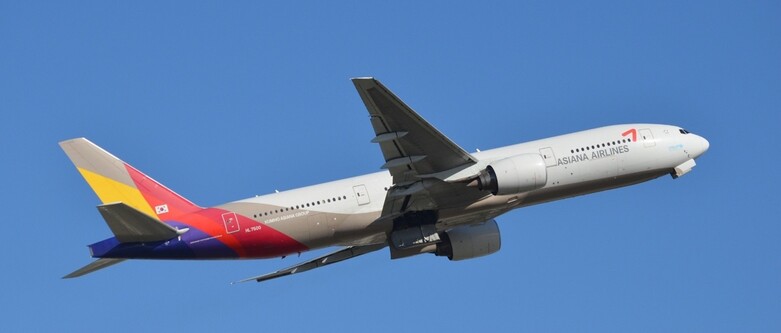
ECS Group has been appointed as the exclusive global General Sales & Service Agent (GSSA) for Asiana Airlines’ international belly cargo operations. This partnership marks a key step in Asiana’s logistics transition following the divestment of its freighter division last year, to comply with regulatory mandates in Europe and Japan. Since 01AUG25, ECS Group has been carrying out all cargo processes from sales to reservations, customer service, as well as ground handling coordination. These operations span 33 major locations across nine countries in Europe, the Americas, China, Japan, and Southeast Asia. ECS Group operates in more than 60 countries on behalf of over 100 airlines across the globe. It therefore brings extensive experience and a strong global network to support Asiana’s belly cargo business.
ECS Group will maximize Asiana’s belly capacities. Image: Asiana Airlines
Asiana Airlines has shifted its focus entirely to belly cargo, utilizing lower deck capacity on passenger aircraft like the Airbus A350-900, which offers up to 18 tons of cargo space. The airline prioritizes transporting high-demand and time-sensitive goods, including semiconductor components, fresh food, and small express parcels.
Around 158,000 tons of belly cargo flew on board of Asian Airlines, last year. By leveraging ECS Group’s operational expertise and world-class logistics solutions, Asiana aims to enhance its competitive position, expand its global reach, and deliver superior service in the evolving air cargo market. The partnership is expected to create long-term value for both parties and meet the increasing demand for efficient belly cargo transport.
Jean Ceccaldi, CEO of ECS Group, said “We are honored to partner with Asiana Airlines and proud of the expertise our teams bring to this collaboration. Leveraging ECS Group’s global network, we are committed to supporting Asiana Airlines with reliable, efficient, and tailored cargo solutions worldwide.”
An Asiana Airlines spokesperson stated: “By combining ECS Group’s global network with Asiana’s expertise, we will respond proactively to the global air cargo market. We will continue to provide systematic and specialized services going forward.”
To improve its environmental footprint, the Chinese fashion retailer has signed a deal with Lufthansa Cargo to drive the adoption of sustainable solutions for air freight transportation. The MoU, inked on 19AUG25, includes a scheme to scale up the use of sustainable aviation fuel on Lufthansa Cargo flights for SHEIN deliveries. It also includes several actions to be concluded within the next six months.
Signing the MoU (from L > R): Elodie Berthonneau, LCAG, Ethan Shen SHEIN, Ashwin Bhat LCAG and Alex Chen, SHEIN – courtesy: LCAG
If we are not mistaken, the deal is an industry first inked by a Chinese e-trader with a cargo carrier. In the Memorandum of Understanding both companies declare their intention to finalize the adoption of SAF offsetting solutions for SHEIN deliveries within the next 182 days. Further to this, they will test and promote the transition to renewable and lower-carbon energy sources for air transport operations, is stated in a press release.
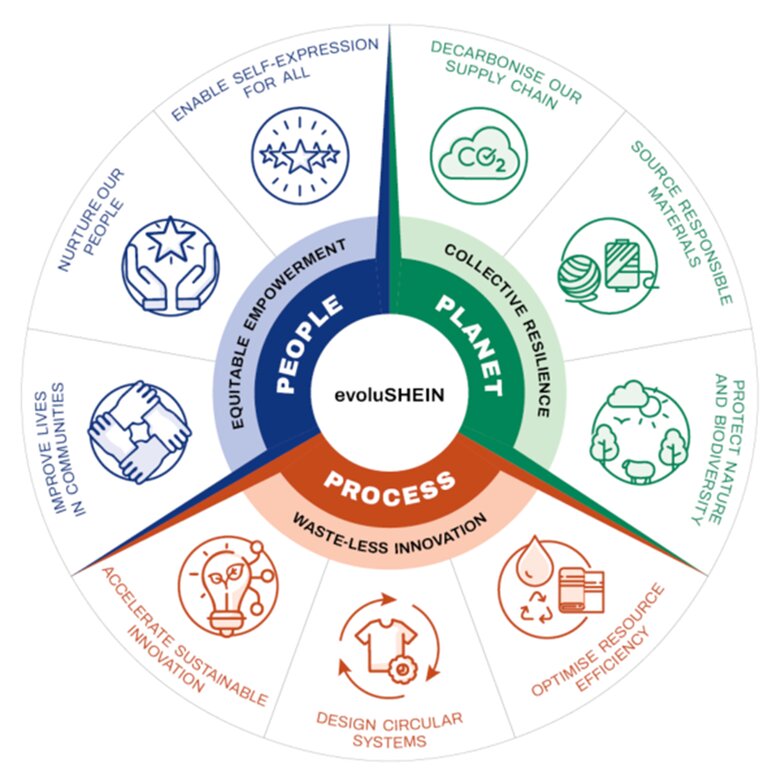
Ambitious goals The initiative is aligned with SHEIN’s commitment to address its carbon footprint from transportation, driven by the aim to reduce it. The step is part of its evoluSHEIN strategy to decarbonize supply chains, source responsible materials and protect nature and biodiversity, among other overarching criteria (see chart).
Conversely, Lufthansa Cargo will provide high-quality “Proof of Sustainability” certificates for the SAF quantities used. These certificates are based on externally verified standards and document emission reductions, compared to conventional jet fuel, in a traceable manner.
In addition to the necessary coordination of processes for compliant verification and greenhouse gas reductions, “we will jointly examine further options for integrating sustainable transport services for SHEIN. Examples of other areas of our cooperation include knowledge transfer and approaches to improving traceability and the collection of operational and environmental data. We plan to engage in ongoing dialogue on other aspects of sustainability to identify and leverage joint learning and potential synergies,” states Lufthansa Cargo’s communications department when asked by CargoForwarder Globaltospecify the areas of collaboration.
SHEIN’s roadmap to a shining future – credit: SHEIN
Broader decarbonization strategy “Through this partnership, we aim to pilot and gradually expand the use of SAF where feasible, while continuing to explore additional ways to reduce the carbon footprint across our delivery network. While the use of SAF is one step towards reducing our transportation and distribution emissions, we recognize it as part of a broader decarbonization strategy that should also include optimizing logistics, fleet efficiency, and exploring other low-carbon solutions,” commented Ethan Shen, SHEIN’s General Manager of Global Fulfillment. The manager went on to say: “Lufthansa Cargo has extensive experience in driving the adoption of SAF and will provide SHEIN with opportunities to adopt lower-carbon air cargo options.”
Costly experiences At the end of 2020, the cargo carrier teamed up with agent Schenker to introduce weekly SAF-based flight rotations between Frankfurt and Shanghai. However, about two years later, these were stopped, despite high CO2 reductions. Although well-known brands such as Siemens, Nokia, Lenovo, Merck, and Mercedes Benz had participated in the financing, medium-sized freight forwarders shied away from the additional fuel costs, which terminated the project since it became too expensive.
“Signing this memorandum with SHEIN represents Lufthansa Cargo’s commitment to implementing high-performance logistics solutions responsibly and with operational excellence. It demonstrates the importance of concrete measures and reliable implementation in the international air freight business. Together with all stakeholders within the supply chain, we are driving the development of more sustainable global supply chains in line with our purpose: Enabling Global Business,” said Ashwin Bhat, CEO of Lufthansa Cargo.
An industry first SHEIN’s air freight transport is managed by freight forwarders. Are these agents bound by any SAF agreements between SHEIN and Lufthansa Cargo, or could they opt for other carriers, we asked the airline. “Lufthansa Cargo sells SAF that meets the highest certification standards. The Proof of Sustainability (POS certificate) is only issued to Lufthansa Cargo after transport. The partnership between SHEIN and Lufthansa Cargo aims to pilot and gradually expand the use of SAF. Over the next six months, the possibilities for using sustainable aviation fuels and offsetting the corresponding costs will be examined,” the airline replied
Is the agreement an industry first or do similar MoU’s exist between Chinese e-trading platforms and cargo airlines? “We are currently not aware of any comparable agreements. At SHEIN, we are the first and currently the only airline partner to have signed an MoU on sustainability,” notes Lufthansa Cargo.
Are more MoUs on the horizon? When asked what volume SHEIN contributes to Lufthansa Cargo’s total sales, the airline refused to provide any information on sales figures or percentages for individual customers.
Since Lufthansa Cargo cooperates with many customers, the question arises as to whether there are plans for a similar MoU with Temu, Shaoke or other such e-traders. “Lufthansa Cargo is an experienced partner when it comes to the safe purchase and use of SAF. We are pleased that our very strict approach, which is based exclusively on externally audited POS, is appreciated by the market. We are happy to provide our customers, partners, and new prospects with advice and operational support when it comes to the further implementation of sustainable transport,” the cargo airline stated.
LHC and ITA intensify cargo cooperation As Lufthansa Cargo further announces, it will market the lower deck capacity of ITA Airways on continental and intercontinental routes under its own AWB number from the end of October – including flights departing from Rome Fiumicino. Thus, the LHC-ITA cooperation launched in JUN25 is almost fully rolled out, offering Lufthansa Cargo customers an additional hub in southern Europe and prospectively almost 20% more capacity. This further strengthens the freight carrier’s offering, making it the broadest network to, from and within Europe, as well as to destinations worldwide. However, due to the lack of U.S. regulatory approvals, ITA routes to and from the United States and Canada are still excluded from the sales deal for the time being.
Earlier this year, CargoForwarder Global reported on the ground-breaking lightweight Swiss Airtainer RKN and questioned how the innovative new product compared to those of heavyweight cool champions such as Envirotainer, DoKaSch, and C-Safe, for example see here. The first of that trio, Swedish cold chain solutions provider, Envirotainer, has now announced its strategic investment in Swiss Airtainer “to accelerate sustainable innovation in pharmaceutical cold chain,” according to the press release, which goes on to state that “the partnership grants Envirotainer exclusive global rights to offer the innovative Swiss Airtainer as part of its full product portfolio. Swiss Airtainer will focus on scaling up its production capabilities and accelerating its ongoing research and development efforts”.
Lighter than all of its peers. Image: Swiss Airtainer
It is obviously a win-win situation. Swiss Airtainer reaches a large and long-established portfolio of customers, while Envirotainer, which has a strong focus on sustainability – its climate targets are approved by the Science Based Targets initiative and it seeks to work with environmentally-minded partners – stands to benefit from Swiss Airtainer’s green features. “The Swiss Airtainer is the lightest active RKN container in industry, equipped with solar panels for self-sustaining energy and real-time communications to optimize logistics and reduce emissions. Its advanced design perfectly complements Envirotainer sustainability-focused portfolio, including the recently launched flagship Releye® family.” Both companies share similar interests in developing products that ensure reliable cooling while at the same time reducing their impact on the environment.
Niklas Adamsson, Interim CEO of Envirotainer, explained: “Swiss Airtainer’s technology enables significant CO₂ reductions and strengthens our commitment to sustainable innovation. Our mission has always been to ensure safe and reliable delivery of critical medicines while minimizing environmental impact.”
Eduard Seligman, CEO Swiss Airtainer, stated. “We are proud to join forces with Envirotainer, a company that shares our vision for a more sustainable future. This partnership will accelerate the development and global adoption of smart, low-impact cold chain solutions.”
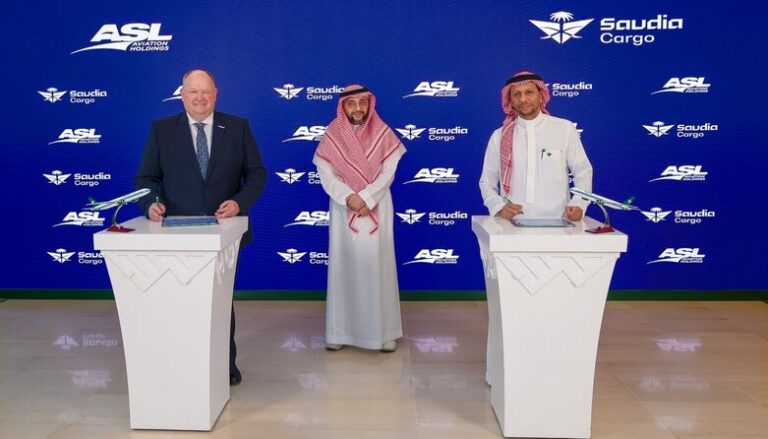
The 2011 ex-China Airlines Airbus 330-300 MSN 1272 will soon be flying for Saudia Cargo, having been bought by ASL Aviation Holdings Bolster Global Logistics and converted into a freighter. The Gulf cargo carrier has entered into a wet lease agreement with the global aviation services company, for two of these A330-300P2F freighter versions. It spent most of last year (26APR24 – 07JUN25) in Istanbul, undergoing conversion, before then flying to Shannon Airport (SNN) on 07JUN25 to receive its Saudia Cargo livery. During that time is was formerly registered as N810CM and now bears the ASL Airlines Ireland registration EI-LKD. The aircraft has been stored in Dublin since 28JUL25, where it will begin service with ASL Airlines Ireland in SEP25. Delivery to Saudia Cargo will happen during the final quarter of this year, when the second wet-leased A330-300F will also join the fleet. Saudia Cargo’s wet lease ACMI (Aircraft, Crew, Maintenance, and Insurance) agreement covers operational support (dedicated crews), maintenance, and insurance.
A330-300F will soon be flying for Saudia Cargo. Image: ASL Aviation Holdings
“The introduction of this aircraft marks the return of the A330F type to ASL Airlines Ireland’s operated fleet,” the release explains, detailing that ASL offers a fleet of 40 aircraft (mix of B737 and ATR72 freighters) and serves over 50 regular destinations in Europe, North America, and Asia. The A330-300P2F has a range of 6,850 km, a maximum payload of 62 tons.
Eng. Loay Mashabi, CEO and Managing Director of Saudia Cargo, explained: “Expanding our capacity and global reach is a strategic imperative for Saudia Cargo, ensuring uninterrupted supply chains for our customers. The integration of this A330-300P2F, in partnership with ASL Aviation Holdings, will significantly support our network capabilities, enabling us to connect markets with greater agility and efficiency. This pivotal addition directly supports our vision to solidify our position as a leading global air cargo carrier and solidifies the Kingdom’s role as a global logistics hub.”
Dave Andrew, Chief Executive of ASL Aviation Holdings, said, “We are delighted to partner with Saudia Cargo to welcome an A330-300P2F to the ASL fleet. This partnership is a positive statement for ASL as we continue to strengthen and grow. The new A330-300P2F aircraft is ideal for Saudia Cargo’s express shipping and e-commerce services, providing a flexible solution to meet the diverse shipping needs of its customers and deliver reliable, high-quality cargo services.”
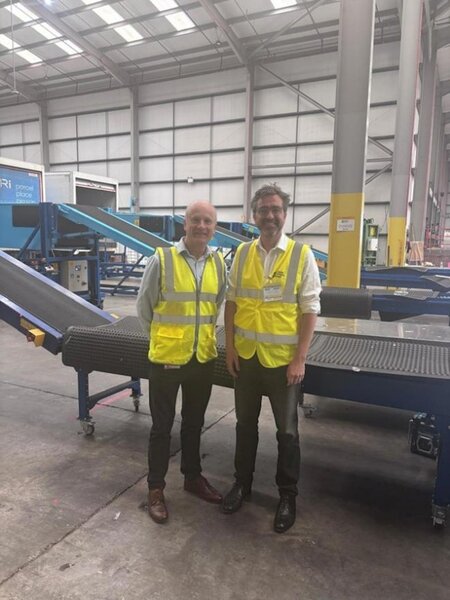
Having set its focus on e-commerce – and with success, as CargoForwarder Global has consistently reported – the result for Glasgow Prestwick Airport (PIK) has been a large and still growing increase in employees. It recently reported that its e-commerce activity has led to the creation of 150 new jobs. Another 50 are set to come before the end of this summer. Those are statistics that have triggered the awareness of local politics and therefore Central Ayrshire’s Member of Parliament (MP), Alan Gemmell, recently paid a visit to the airport to see it in operation. Meeting with PIK’s CEO, Ian Forgie, the MP was given a tour of the airport’s new e-commerce facility and equipment. The airport can look forward to continued government support.
Ian Forgie, CEO PIK, and Alan Gemmell, MP for Central Ayrshire, Scotland. Image: PIK
Ian Forgie, Chief Executive, Glasgow Prestwick Airport, commented: “This is a significant increase in headcount at the airport as we expand our services, and is great news for the Airport and the Ayrshire economy. It has been a busy few months as we have onboarded new staff for these services. The recent addition of scheduled daily e-commerce flights between China and Prestwick means we can play a greater role in Scottish salmon and whisky exports direct from Scotland to China, and I am confident that this will lead to further employment opportunities.”
Alan Gemmell, Central Ayrshire, MP, proclaimed: “It was brilliant to visit the logistics hub at Prestwick Airport and hear about the new e-commerce contracts with two Chinese flag carriers. I was impressed to learn the team process and offload up to 2 days faster than any other UK airport and now have 150 e-commerce staff. The Airport continues to go from strength to strength – I look forward to supporting Ian and the team in any way I can.”
Atlas Air Worldwide has strengthened its partnership with the University of Alaska Anchorage (UAA) to boost workforce development in aviation. At an event held at Merrill Field, Atlas leadership and UAA faculty met with U.S. Secretary of Transportation Sean Duffy, who leads President Trump’s initiative to modernize the nation’s airspace and address critical shortages of pilots, controllers, and mechanics. The move underscores the importance of aviation to Alaska’s economy, especially with Anchorage International Airport (ANC) being one of the world’s top five cargo hubs. UAA’s highly regarded aerospace program plays a key role in preparing students for these vital jobs. As part of its continued commitment, Atlas renewed its scholarship program, expanding support for students pursuing careers as maintenance technicians and pilots. These efforts aim to secure a steady talent pipeline and support national goals of strengthening and modernizing U.S. aviation infrastructure.
U.S. Transportation Secretary Sean Duffy speaks with Atlas Air Regional Chief Pilot Tyler Cresswell and University of Alaska Anchorage President Pat Pitney as he tours UAA’s Aviation Technology Center on Merrill Field and Atlas announces its continued support of needs-based scholarships to UAA, bringing its total contribution to $100,000. Image: Atlas Air
U.S. Transportation Secretary, Sean P. Duffy, promised: “President Trump and I are on a mission to make our airspace the envy of the world. We will build a brand-new air traffic control system and address a chronic shortage of controllers and pilots. President Trump’s One Big, Beautiful Bill delivered over USD 100 million into the Don Young Alaska Aviation Safety Initiative to deploy state of the art technology and train the next generation of aviation talent. I applaud Atlas Air Worldwide for doing their part to contribute to this mission.”
Michael Steen, Atlas Air Worldwide Chief Executive Officer, confirmed: “We are proud to continue our partnership with the University of Alaska Anchorage by creating opportunities to advance aviation education. By investing in workforce development locally, we are advancing our commitment to aviation in Alaska, and to the resilience of the broader aerospace industry. We are fully dedicated to supporting the efforts led by President Trump and Secretary Duffy to make our airspace the global gold standard.”
Ray Weber, Dean of UAA’s Community & Technical College, said: “We are grateful to Atlas Air Worldwide for its continued investment in UAA and our students. This generous donation is transformative, helping us build a more qualified workforce that is vital to Alaska’s economic future and the broader industry. Thanks to Atlas, our students are gaining the training and credentials needed to pursue fulfilling careers, securing brighter prospects for the state’s workforce and beyond.”
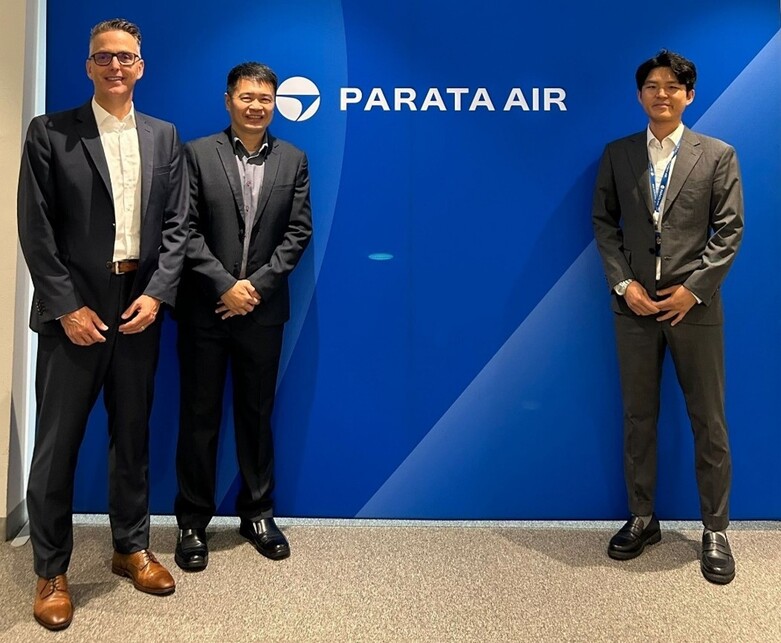
Parata Air, South Korea’s newest airline, has partnered with Jettainer to manage its unit load device (ULD) fleet for the launch of its flight operations this autumn. Jettainer will provide full management of the lightweight containers, including maintenance and advanced tracking through its JettwareNG IT solution, supporting Parata Air’s planned expansion. Initially, the airline will operate passenger flights from Incheon Airport to Japan and Vietnam using Airbus A320-200 and A330-200 aircraft. In 2026, Parata Air plans to launch transpacific routes to North America, adding more Airbus A330s, with Airbus A350s expected to join the fleet by 2028. Parata Air focuses on safety and aims to offer innovative, distinctive services that transcend traditional low-cost and full-service airline categories. The airline, formerly known as Fly Gangwon, was renamed Parata Air after its acquisition by WINIX last year and is set to commence operations this autumn. There has been no specific information on whether the airline will carry cargo, however, with Jettainer as its ULD support and smart steering, this may happen in future.
First-time partners: Parata Air and Jettainer. Image: Jettainer
Unhyung Ko of PARATA AIR, explained: “The partnership with Jettainer, a global leader in ULD management, is an important step and ensures a highly efficient supply of lightweight ULDs for our growing route network from the very first flight. We deliberately opted for the efficiency and service quality of the experts to be able to develop our operations flexibly while at the same time having an always efficiently managed fleet of ULDs that grows in line with our requirements.”
Thorsten Riekert, General Manager Asia Pacific at Jettainer, enthused: “We are very much looking forward to being part of Parata Air’s journey from day one, supporting their ambitious growth plans with the efficient management of lightweight ULDs. Adding another customer in Asia, we are also expanding our network in the region and creating valuable synergies for Parata Air and all our customers.”
The Air Cargo Community Advisory Body (ACCAB), established by the British International Freight Association (BIFA) earlier this year, recently held its second meeting to advance transformation in cargo operations at Heathrow Airport (LHR). Building on its inaugural session in MAY25, the meeting brought together over 75 stakeholders including freight forwarders, airlines, Heathrow Airport Ltd, HMRC, and ground handlers to support Heathrow’s cargo estate redevelopment plans.
Driving cargo estate redevelopment at LHR. Image: BIFA
The focus was on improving landside efficiency with updates from Heathrow Airport Ltd and BT/CCS-UK on a new slot booking system for landside freight movements. Having evaluated available options, the community selected BT’s CCS-UK Advanced Information System (AIS) for its operational flexibility, integration with customs, and Heathrow expertise. BT outlined short-term AIS deployment with plans to enhance congestion management, slot booking, virtual queuing, driver communication, and operational visibility ahead of peak seasons. Stakeholder feedback will guide AIS improvements, including driver app upgrades and integration with cargo estate redevelopment. A trial of a dedicated truck parking facility was introduced to better accommodate long-distance arrivals, offering driver welfare amenities outside the main cargo estate.
Magdalena Deitsche, Senior Cargo Manager at Heathrow Airport Ltd, stated: “With AIS, the community will be better equipped to manage landside traffic flows, reduce wait times, and improve the efficiency of cargo drop-offs and collections – especially critical for time-sensitive freight.”
Steve Parker, Director General of BIFA, confirmed: “We established this body to give BIFA members and the wider community a platform to work directly with CCS-UK and other key stakeholders and play a key role in identifying and solving the issues that matter most. That mission remains firmly in place.”
Andy Cooke, Secretariat of the Advisory Body, added: “Through this forum, stakeholders can drive the adoption of best practices, help shape modern freight systems, and support the transformation of the cargo estate. The progress we’ve seen so far demonstrates the strength of partnership across the community.”
The opening was back in MAY25, but the press release went out this week: DoKaSch Temperature Solutions announced that it had opened another new service station – this time near Hartsfield–Jackson Atlanta International Airport (ATL), in Atlanta, Georgia. It operates this in partnership with SEKO Logistics – a partnership that began when the two companies collaborated in Dublin (DUB), where SEKO set up its own location in 2019. The location was chosen strategically since it is close to key life science hubs in the Southeast, such as Raleigh–Durham. Therefore, with a service station nearby, DoKaSch can ensure prompt availability of Opticooler® containers, reducing lead times for pharmaceutical manufacturers and forwarders. It enables rapid deployment of fully charged, ready-to-use Opticoolers® which maintain the integrity of temperature-sensitive pharmaceuticals during transport. DoKaSch offers a reliable To Door Delivery service, managing all logistics with an experienced team to ease customer efforts while upholding stringent cold chain standards. The Opticooler®’s high-performance temperature control is often used to transport sensitive biologics and pharmaceuticals.
DoKaSch expands its U.S footprint. Image: DoKaSch
Andreas Seitz, Managing Director of DoKaSch Temperature Solutions, explained: “The launch of our new station in Atlanta is a strategic move to strengthen our network in the U.S. and provide quicker access to our Opticoolers® in a key logistics region. By positioning containers closer to our customers, we support their operations with enhanced reliability and responsiveness.”