Home Blog Page 75

Leaving school? Consider a career in Air Cargo!

0

This month, many young people across the UK have been receiving their A’level results – while some may have already decided on higher education, others might still be evaluating their options. Choosing a career after finishing college at 18 can be daunting, particularly in a world that is changing so rapidly. Yet, one expansive industry offering diverse opportunities, interesting career progression, and global exposure, is air cargo. Often overshadowed by passenger aviation, air cargo plays a critical role in worldwide trade, transporting everything from lifesaving medicines to high-tech components across continents. It can be the gateway to an exciting and meaningful international career. In short, Air Cargo is a growing, dynamic industry offering stability alongside innovation.

Looking for a job? Why not consider the Air Cargo industry? Image: Canva/CFG

Those within the industry know what the general public only truly realized during the recent pandemic: Air Cargo is vital to securing everyday supplies, carrying around a third of global trade by value. With the rise of e-commerce, pharmaceutical transport, and just-in-time manufacturing, the demand for people in logistics, operations, technology, and aviation is growing – also in the face of an aging workforce. From desk jobs to warehouse positions, ground operations to air crew, the industry offers a multitude of prospects for fresh school leavers who want a pretty stable yet forward-looking career.

Moreover, the industry is in the midst of transition as it embraces digitalization and sustainability, so young entrants can potentially contribute to its future as it seeks to develop and deploy AI for route optimization or green technologies to reduce its carbon footprint, for example.

A multitude of career options, matching diverse strengths and interests
Air cargo industry careers are as varied as the goods it transports. To name but a few areas that school leavers can opt build a career in:

  • Cargo Airlines: diverse positions ranging from fleet or service management to network planning, sales, marketing, pricing, procurement, not to mention pilot roles, and more.
  • Freight Forwarding: from coordinating shipments to customs clearance, customer service, and more.
  • Ground Handling Agents (GHAs): managing or supervising the physical handling, loading, and storage of cargo at airports, etc.
  • Logistics Technology: developing and working with software and systems that track and optimize freight flows, among other things.
  • Safety, Compliance, and Quality Control: auditing, training, and ensuring adherence to international regulations and cargo security, for example.

The list is by no means exhaustive, and this diversity means that regardless of whether a young person is more interested in hands-on physical work, technology, management, or flying planes, there is bound to be a suitable entry path.

Training and career pathways for School Leavers
Jumping in at the deep end is one way of learning about the industry, however, several air cargo and logistics companies offer training programs, apprenticeships, and traineeships for school leavers. These can range from work experience internships of a few months to comprehensive training spanning anything from 18 months to two or even four years (depending on the specialisation). Often, these are a combination of on-the-job training and formal study. They offer an opportunity to earn while learning, get hands-on experience, and gain industry-recognized qualifications.

For school leavers wanting to study before working full-time, universities and colleges offer degrees related to air cargo, aviation logistics, and global supply chain management. These courses provide a strong foundation in transport economics, logistics technology, and international business. Graduates from such programs often access graduate schemes with major cargo airlines, forwarders, or airport operators, where, after initial internships or rotations, they become managers or specialists.

Interesting benefits and international exposure
While competitive pay may not necessarily be a given, there is the unparalleled opportunity to work in multicultural teams and international environments, gaining exposure to cross-border business practices – often with travel opportunities. Given the many different stakeholders involved in air cargo logistics, from freight forwarders to ground handlers, general sales agents, airlines, airports, IT providers, customs authorities, regulatory authorities, road feeder services, maintenance, through to container managers and manufacturers, the first foot into the industry – wherever it may start – can lead to a highly varied career in more than just one of these segments.

Moving the world
The air cargo industry offers people a strong sense of purpose. They contribute to enabling global trade flow, delivering urgently needed supplies such as medical equipment, perishable food items, and humanitarian aid. Working in whichever segment of air cargo, means being a part of an industry that keeps the global economy moving and makes a real-world impact every day.

The best place to look to find a job? Use any of the following search words along with “career” or “job” in your online search: airline, air cargo, air freight, freight forwarder, cargo agent, air cargo operations, cargo handler, air logistics, cargo sales, warehouse agent (air cargo), air import/export, ramp agent (air cargo), cargo loadmaster, air cargo customer service, for example – there are many more possibilities, but these should take you to companies offering positions. Perhaps add your location, too, or specific key words such as “IATA” or “aviation logistics degree”, “apprenticeship” or “trainee”. What you should also do, if you don’t already have one, is set up a LinkedIn profile and follow companies and connect with people within the industry. You can also use the job alert function in LinkedIn to keep you informed of positions opening up in your region. Air Cargo is a people business – if you can find a mentor, you’ll soon find a way in!

For inspiration on which segment to choose, you may wish to read about personal experiences in CargoForwarder Global’s Spotlight On series.


German Aviation has got the blues

0

Exactly 99.4 million passengers departed from or arrived at German airports in the first half of 2025 – that is 15.8% less compared to the same period in the pre-COVID year of 2019. The latest figure puts Germany in 28th place out of 31 European countries, in terms of the recovery of air traffic following the pandemic. And real improvement is not in sight due to ongoing unfavorable competitive conditions and political inactivity.

Jens Bischof is CEO of Lufthansa Group member Eurowings since 2020 and heads the Airline Association Bundesverband der Deutschen Luftverkehrswirtschaft – BDL. Courtesy BDL

The number of aircraft based in Germany has dropped from 190 in 2019 to 130 this year, resulting in an estimated loss of 10,000 jobs and 4 billion euros (US$4.66 billion) in annual economic value added, German Aviation Association BDL warned. “Since 2019, state-imposed costs have more than doubled, and airlines are increasingly avoiding Germany,” stated BDL President Jens Bischof, urging the Berlin government to prioritize post-pandemic recovery in the aviation sector.

The lasting stagnation in air traffic is causing serious disadvantages, as a lack of connectivity and reduced capacity are hampering mobility and air freight transportation, and causing industrial slowdowns. Cargo carriers are increasingly diverting their flights to cheaper airports located in neighboring countries, such as Liège, Amsterdam or Maastricht, to avoid the excessive fees levied by German airports.

U-turn is needed, BARIG!
From these places, many of the imports are trucked to local consumer markets in Berlin, Hamburg, Dusseldorf, Stuttgart or Nuremberg and distributed there. In contrast, exports take the opposite route. Starting out from their German production plants, they are trucked to Luxembourg, Paris-CDG, or Brussels to be loaded onto an international flight connection.

In light of this situation, BDL in line with the international airline association, BARIG (Board of Airline Representatives in Germany) are calling for a U-turn in German aviation policy. The Berlin government must ensure that the exorbitant costs are reduced, for example by abolishing the controversial and much disputed aviation tax, once and for all, both associations demand. It was introduced in 2011 and was increased to 20% on 01MAY24.

Exorbitant costs are crippling the local air industry
For a short-haul flight, the state demands an additional EUR 15.53 payable per passenger. The next thresholds are EUR 39.34 for flights from Germany to North Africa or the Middle East, followed by taxes of EUR 70.83 if passengers fly to destinations in America, the Far East or Oceania. To circumvent these additional costs that come on top of the regular air fares, many passengers choose to travel from other airports outside Germany, such as Billund in Denmark, Warsaw in Poland, or Prague in the Czech Republic. The ticket taxes there are significantly lower or – as in Sweden – even non-existent. In the EU, only nine of the 27 member states levy ticket taxes. In comparison, the charges demanded by the German government are among the highest.

Germany EUR 1,481 vs Turkey EUR 72
Cargo flights are also affected by the cost avalanche, as these figures based on B777 freighter operations show:

Frankfurt, Leipzig/Halle, Cologne/Bonn, and Munich all charge EUR 1,481 per Triple Seven departure, while Brussels Zaventem demands carriers to pay EUR 938 per B777F takeoff, which is EUR 543 less, in comparison. Paris-CDG charges EUR 807, while at Milan-Malpensa it is EUR 716, and in Istanbul, B777F operators only must pay a negligible EUR 72 per departure. At Liège, no air traffic control fees are levied at all (figures based on BDL analyses).

Given these sometimes exorbitant cost differences, it is not surprising that air traffic in Germany is still in the doldrums following the COVID-19 pandemic. In contrast, in almost all other European countries, pre-COVID traffic figures have long been matched or even significantly surpassed. This persistent lag is detrimental to the country’s aviation industry and its entire economy.

Political action is needed
Against this backdrop, it is understandable that Lufthansa wants to further thin out its domestic network for cost reasons, and will increasingly operate intercontinental traffic via Brussels, Vienna, and Rome. This was recently announced by airline CEO, Carsten Spohr during an online conference. Lufthansa has a strong presence at these hubs through subsidiaries such as Brussels Airlines, Austrian Airlines, and ITA.

However, all in all, the blues that have been crippling German aviation for years continue unabated.

BARIG is therefore calling on the German government to significantly reduce the cost burden suffocating the domestic air industry, thereby creating tangible incentives for the economy and growth. International airlines would then intensify their flights to and from Germany again, which would boost exports, create new jobs and ultimately fill the tax coffers of the Berlin coalition. So far, however, the government remains inactive, BARIG complains.

Spotlight on… Annette Wiedemann, Managing Director, AWiAS

0

Each week, CargoForwarder Global’s ‘Spotlight On…’ showcases a particular field in the huge spectrum that makes up the air cargo industry. The goal? To highlight the many and varied career paths available. The ultimate rule in air cargo and aviation at all times, is safety. The industry, its operations and all goods traveling within it, are highly regulated to ensure ongoing safety and security. As not only rules but also commodities and operational aspects change and develop, this aspect of the industry can pose challenges. Security and compliance experts can help companies navigate these. One such service provider is AWiAS Aviation Services GmbH (AWiAS). Its Founder and Managing Director, Annette Wiedemann (AW), illustrates her role and shares her views and advice on our industry.

An industry with enormous potential and many strengths. Image: Annette Wiedemann

CFG: What is your current function and company? And what are your responsibilities?

AW: I am the Founder and Managing Director of AWiAS Aviation Services GmbH, which I started to provide practical and high-quality services in the aviation industry. We’re a niche player – not involved in day-to-day flight operations, but helping other companies navigate and meet complex legal and regulatory requirements. Our focus is on aviation security, compliance, and training, complemented by consulting that’s not just theoretical but truly workable in daily operations. I’m also active in various industry associations to foster exchange and bring real-world topics back into the industry.

CFG: What does a normal day look like for you?

AW: There’s hardly such a thing as a typical workday for me – and that’s exactly what I enjoy. Some days I’m in the office working on concepts or proposals, other days I’m talking with authorities – which, depending on the topic, can be very pleasant or sometimes a bit challenging. I might also be on-site with clients or attending industry events. I’m constantly in touch with partners, aligning with our team, and discussing new projects. Our team consists of 47 colleagues, divided into different departments, each headed by a department lead. And of course, there are always unexpected issues that require quick decisions. This mix of planning, coordination, communication, and often a good dose of improvisation keeps every day exciting. The flexibility this requires is not only one of my strengths – it’s also my personal spice.

CFG: How long have you been in the air cargo industry, and what brought you to it?

AW: I have been working in the aviation industry for over 30 years, including 26 years at the German Federal Aviation Office (Luftfahrt-Bundesamt). The transfer of responsibility for the approval of regulated agents eventually led me to move into the private sector. In this context, I was essentially one of the first people involved in establishing the secure supply chain for air cargo in Germany. After a few detours, this eventually led to the founding of AWiAS Aviation Services GmbH. Today, I draw on this extensive experience to help companies meet their legal obligations efficiently and in a practical way.

CFG: What do you enjoy most about your job?

AW: What I value most is the variety and the opportunity to work with so many different people and topics. No day is the same – from strategic planning to engaging with authorities and associations, to developing practical solutions for our clients. What’s especially motivating for me is when we can help companies implement complex requirements in a way that truly works in day-to-day operations. Over the years, I’ve also had the chance to meet so many wonderful people, some of whom have become close friends – and honestly, who can say that about their job?

CFG: Where do you see the greatest challenges in our industry?

AW: Our air cargo location is under pressure, but it also has enormous potential and many strengths – a fast, reliable air transport network is essential for our export-oriented economy. However, there is also a clear need for action: streamlining processes, advancing digitalization, and reducing costs and bureaucracy are crucial if we are to remain competitive internationally. Industry associations are very active, presenting various programs to strengthen the location – for example, through cost relief, harmonization of procedures, and improvements in security and customs standards.

CFG: What advice would you give to people looking to get into the air cargo industry?

AW: Anyone looking to enter the air cargo industry should above all bring curiosity and a willingness to engage in a dynamic environment. The industry is diverse, internationally oriented, and offers plenty of opportunities for growth – but it also demands flexibility and a strong sense of responsibility. From a professional standpoint, it’s always worthwhile to learn the basics of aviation security early on, for example through dedicated training courses. Depending on the area you’re aiming for, dangerous goods or customs training can also be beneficial. And most importantly: networking! Connections in the industry not only help when starting out but are often invaluable in day-to-day work.

CFG: If the air cargo industry were a film/book, what would its title be?

AW: I’d say: ‘Mission Possible – Navigating Air Cargo with Strategy, Nerve, and a Dash of Improvisation’. The industry can be as thrilling as an action movie, sometimes as chaotic as a comedy, and occasionally as tricky as a mystery. But in the end, it’s always about making the right decisions at the right moment – with a wink.

Thank you, Annette.

If you would like to share your personal air cargo story with our CargoForwarder Global readers, feel free to send your answers to the above questions to cargoforwarderglobal@kopfpilot.at We look forward to shining a spotlight on your job area, views, and experiences.

If HAUS61 did not exist it would have to be invented

0

Nonprofit entity HAUS61 has become an extremely successful launching pad for logistics startups, paving their way to business maturity. Numerous examples prove the farsighted approach of the concept which was introduced in 2019. Six selected startups per year are given the opportunity of a 12-month scholarship to fine-tune their strategy and present their concept to the market. They are supported by mentors who link the newcomers with established logistics players. This year, HAUS61 is co-organizing the upcoming Air Cargo Community Frankfurt (ACCF) trade show (02-04SEP25). CargoForwarder Global (CFG) spoke with HAUS61 initiator and CEO, Hendrik Bender (HB) about the logistics accelerator’s involvement in orchestrating parts of the event. Here are his considerations.

Hendrik Bender heads Haus61 – courtesy: Haus61

HB: HAUS61 has already been part of the Air Cargo Conference organizing committee in previous years, particularly in the area of innovation, where we brought in speakers and startups.

This year, for the 10th anniversary of ACCF, everything is on a larger scale – that’s why we decided to join forces with Air Cargo Community e.V. as co-organizers to take this anniversary conference to the next level.

CFG: Attendees might be interested to know what exactly HAUS61 intends to contribute to the trade show. Please illustrate.

HB: This year, there will be a dedicated Innovation Stage and a Startup Innovation Award, sponsored by Lufthansa Cargo.

As co-organizer of the Air Cargo Conference, we are responsible for curating and moderating presentations and panel discussions focusing on sustainability and innovation topics, as well as organizing and leading the Startup Innovation Award featuring selected startups.

CFG: What exactly does HAUS61 do to pave the way for startups to achieve business success?

HB: HAUS61 is based on four pillars:

1.) Hosting: We provide office and meeting space in the Cargo City South at Frankfurt Airport, free of charge for a certain period of time to selected startups.

2.) Connecting: Under our motto ‘Innovation meets Industry’, our main mission – and also our unique selling point compared to many other accelerators – is to bring startups with smart solutions for the air cargo industry together with established players in the air cargo industry, so that they can jointly develop practical use cases.

3.) Scouting: We offer corporations support in the targeted search for startups for topics/problems that they bring to us.

4.) Networking: Thanks to our neutrality, we offer the ideal platform for startups and corporations to engage, share ideas, and build new connections through our networking events.

All these efforts support startups on their journey from theoretical concepts to market-ready solutions.

CFG: Are there one or two illustrative examples of the successful development of individual startups that have used HAUS61 as a platform?

HB: Absolutely – there are several examples. One of our earliest success stories is logistics.cloud, led by Niko Hossain. Over five years of collaboration, the startup has managed to establish itself as a key platform for data exchange in logistics and has since merged with Lobster. It’s a tremendous success story and we’re proud that logistics.cloud – now Lobster – remains a close partner of HAUS61.

Another recent success story is Stargo AI Solutions. They reached out to us a year ago with a smart AI solution, seeking to expand their successful U.S. business into Europe, focusing on Germany. Just a year later, founder Joel Sellam and his team have secured several use cases with logistics corporations and signed their first contracts – transitioning from a startup to a scale-up.

CFG: Do you plan to establish similar HAUS61 facilities to promote logistics start-ups at other airports, such as Munich, Berlin, or Hamburg?

HB: Our base is Frankfurt Airport, which we believe is the most suitable development platform – it’s one of Europe’s largest cargo hubs.

From here, we’ve managed to establish our networking events as pre-events to international logistics trade fairs since 2024, including the TIACA Air Cargo Forum in Miami and the recent transport logistic/Air Cargo Europe in Munich.

These events were very well received, and we are expanding this series further. We’re in talks with various organizers about additional collaborations. So, while we are rooted in Frankfurt, our approach and activities are global.

CFG: How is HAUS61 financed and what are its medium-term plans?                                                                                  

HB: HAUS61 is financed by partners from industry and through networking events. These revenues enable us to provide the four pillars of HAUS61 to the start-up world free of charge.

In addition to our founding partners, Cargo Steps and Sovereign, we are very proud of our long-standing supporters and partners, such as Fraport, LUG, Condor, National Aircargo, FCS, Çelebi, Lobster, Dakosy, Aviapharm, and many more.

I don’t want to reveal too much about our medium-term plans yet, but recommend staying tuned

CFG: Hendrik, thank you for your time and the input.

Air Europa takes on a new stakeholder

0

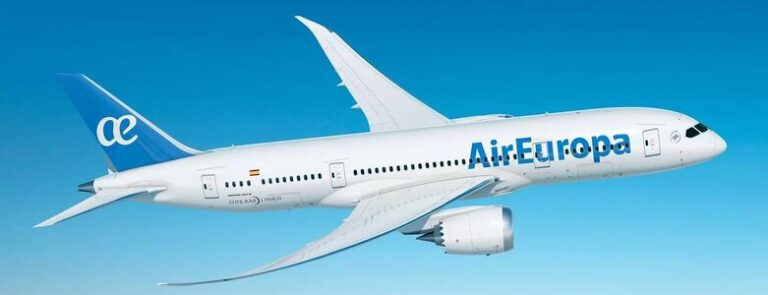
According to Spanish and Turkish news agencies this will be Turkish Airlines. The company has announced that it will grant the Spanish airline (IATA: UX) a loan of EUR 275 million in exchange for securing up to 27% of the capital shares in Air Europa. Negotiations are still ongoing, but if the agreement is finalized, the future ownership structure of Air Europa will be as follows: Spanish tourism company Globalia Business Corporation, led by UX President José Hidalgo will remain being in the driver’s seat by holding 50+% in the company, followed by newcomer Turkish Airlines (27%) and the IAG Group, which holds 20% in the Spanish carrier.

Air Europa operates 25 Boeing 787 Dreamliner aircraft. This includes both the 787-8 and 787-9 variants  –  company courtesy 

With its binding offer, the Turkish company aims to achieve rapid growth in the Latin American market, create new sources of revenue, and increase regional operational diversity, according to HavaHaber, a Turkish media outlet specializing in aviation matters. In fact, THY, in which the Turkish state has a majority stake (49.12%), has already reported its plan to the Public Disclosure Platform (KAP), an electronic business notification system operated by the Istanbul Stock Exchange and the CBM, the securities market regulator.

TK pursues a dynamic growth strategy
In a statement issued on 07AUG25 to that system, THY noted that its feasibility studies have shown that, as part of its current growth strategy, the combination of its global network of air connections with Air Europa’s strong presence in Spain and Latin America, in both the passenger and cargo segments, “can contribute to [TK’s] rapid and large-scale growth” in this region of the world.

“In this context, our company has decided to submit a binding offer to Air Europa for the acquisition of a minority stake. If any developments arise that could affect our investors’ decisions, the necessary announcements will be made public,” concluded THY’s statement to KAP.

THY prides itself of being the airline that flies to the most countries in the world.

Madrid-Barajas benefits
Provided the negotiations are successful, TK would gain access to 20 destinations in Central and South America via Air Europa’s hub in Madrid. The Iberian airline’s flight schedule focuses on tourist destinations such as Cancún, Mexico, Punta Cana and Santo Domingo in the Dominican Republic, but serves commercial centers as well like Lima, Peru, Quito, Ecuador, Buenos Aires, Argentina, Montevideo, Uruguay, and São Paulo, Brazil. In addition, UX serves two attractive destinations in the U.S.: Miami and New York. It is expected that in future TK will route some of its transatlantic traffic via UX’s Madrid-Barajas hub, which will strengthen the airport’s role as a main gateway in Southern Europe.

Which partner will TAP choose?
Only days ago, Air France-KLM and Lufthansa pulled out of the race for Air Europa, this way opening the door for TK’s advance.

It is expected that the two companies will now make intensive efforts to acquire a stake in TAP Portugal, the last legacy carrier of Southern Europe that does not yet belong to a larger aviation group and is majority state-owned. The new Portuguese government recently announced its intention to sell up to 49% in TAP Portugal. Market observers believe that Lufthansa is in a better position to win the bid. At the end of last year, its subsidiary, Lufthansa Technik announced a multi-million-euro investment in Santa Maria da Feira, 35 kilometers south of Porto, where it acquired a 230,000-square-meter plot of land. On the site, known as “Lusopark”, a facility for the repair of engine components and the maintenance of aircraft parts is to be built. It which will be equipped with the latest maintenance, repair, and overhaul technologies. The construction work is expected to be completed by the end of 2027. Lufthansa Technik speaks of 700 new jobs that will be created there.

Ethiopia builds a new mega airport

4

Bishoftu International Airport (Code: BIA) is expected to cost USD 10 billion and will be built 40 km south of the East African country’s capital city, Addis Ababa. Groundwork is scheduled to begin in late 2025, with Phase I expected to be completed by November 2029. By then, BIA will be able to accommodate 60 million passengers annually and handle 3.73 million tons of cargo.

ET CCO, Lemma Yadecha (3rd from L) and AfDB President, Akinwumi Adesina (4th from L), hold the signed mandate letter designating the Bank as mandated lead arranger for Bishoftu Int’l Airport in Ethiopia, set to be Africa’s largest by 2029 – photo: Courtesy AfDB

Bishoftu International is a flagship project for the entire African continent, emphasized Akinwumi Adesina, President of the African Development Bank (AfDB) during the presentation of the airport plans last week in Addis Ababa. It will be“a game changer for air transport in Africa and globally,”Adesina stated. His financial institution is the lead arranger, global coordinator and book runner to mobilize nearly USD 8 billion of the USD 10 billion needed for the mammoth project.

BIA will be Africa’s largest airport
“With its 75 years of operational history, Ethiopian Airlines is Africa’s oldest and best airline. It is critical for regional economic integration, connecting capitals, people and markets, thanks to its cargo services and its globally rated ground facilities,” the Bank Group chief praised his hosts, referring to its current home base, Bole Airport, and then talking of Ethiopian Airlines’ impressive flexibility during the pandemic, turning its passenger cabins into cargo facilities to move vaccines and other required goods. The airline now plans to grow its fleet by an additional 114 aircraft, bringing it to a total of 240 as it ramps up for the future. He went on to explain: “To stay dominant, the government of Ethiopia is also expanding its airport facilities, especially for international flights. The Bole International airport, which currently is at 19 million out of its 25 million passenger capacity per year is no longer enough for the ambition of Ethiopia to be on top.” Hence the investment in the new Bishoftu International Airport which will have parking for 270 aircraft and eventually be able to handle 110 million passengers per annum, once Phase 2 is completed.

The AfDB executive’s kind words were welcomed by Ethiopian Airlines Chief Commercial Officer Lemma Yadecha. He acknowledged that the signing of the mandate letter […] “marks a decisive step toward realizing a world-class pan-African gateway that will boost intra-African trade, regional integration, tourism, and global connectivity.”

Bole Airport takes on a new role
The multi-billion-dollar project includes an airport city with facilities such as shopping malls, hotels and recreation areas. Also, direct rail and expressway links will connect Bishoftu to Bole Airport, facilitating transits from international to domestic flights. Once BIA is operational, Bole Airport’s role will be scaled down, becoming the country’s hub for intra-Ethiopian air services.

Executives of the East African carrier attending the signing of the document designating the African Development Bank as mandated lead arranger for BIA, predicted that the new airport will significantly increase pan-continental and global air connectivity, boost trade, tourism and air freight activities in a competitive environment.

Funding for the relocation of residents has been secured
The good news for local residents is that Ethiopian Airlines (IATA: ET) has allocated a total of USD 350 million for livelihood restoration and resettlement of communities that will be affected by the construction of BIA.

In fiscal year ending 30JUN25, the airline reported record revenues of USD 7.6 billion, reflecting an 8% year-on-year growth. It transported 19 million passengers (15.1 million on international routes and 3.9 million within the country) and moved785,323 tons of cargo, summarized CEO, Mesfin Tasew.

However, multiple regional and global crises, including conflicts in the Middle East, Sudan, Ukraine, and the Democratic Republic of Congo, significantly disrupted the carrier’s operations over the past year. Tasew also cited U.S. government regulations as a growing challenge to international air transport services.

Air Zeta is air cargo’s new Air Incheon

0

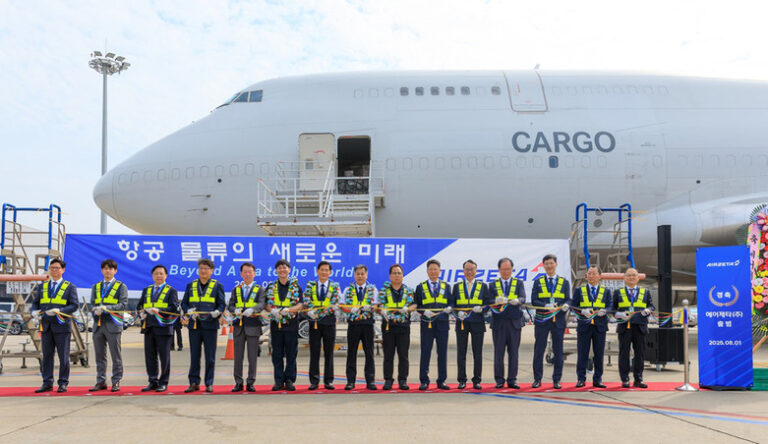
The Korean Herald reported earlier this week of the rebranding ceremony held at Incheon Airport on 01AUG25, in which Air Incheon shed its name for a new one: Air Zeta. The new brand apparently illustrates the company philosophy: “connecting global cargo destinations from start to finish, like a journey that begins with A and passes through Z”. That mission is also reflected in its new slogan: ‘Beyond Asia to the World.’ The event is the culmination of two years of adaptation ever since Asiana Airlines received board approval in NOV23 to divest of its cargo division – a move it needed to take to meet global antitrust regulators’ conditions (among them the European Commission and Japan’s Fair Trade Commission), to allow its merger with Korean Air. “Asiana Airlines also called the deal a meaningful step as it creates a unified national carrier with Korean Air, allowing Asiana to concentrate on passenger operations,” the Korean Herald explained.

Ceremony on 01AUG25, marking the launch of Air Zeta’s first trans-Pacific cargo flight at Incheon Airport. (Yonhap). Image: Yonhap/The Korean Herald

Air Incheon was revealed as preferred bidder for the cargo division (selling at USD 338 million or 470 billion won), in JUN24, and it is clearly also a highly meaningful step for the airline, as Air Zeta is now Korea’s second-largest cargo carrier. Korean Air is first, holding a market share of 67% to date. Air Zeta is set to make waves with its now 15-strong freighter fleet and 1,000 staff. It has grown significantly from previously 4 Air Incheon aircraft and 200 employees. The newly branded cargo carrier will serve 21 strategic routes out of Incheon International Airport, where it aims to positions itself as a global logistics hub, concentrating on high-value special products and e-commerce. “According to Incheon International Airport Corp., the cargo carrier successfully launched its first official flight from the airport on Friday. The airline will now operate a combined network of short-haul routes, including China and Vietnam, and Asiana’s former long-haul routes to Europe and the Americas,” the Korean Herald revealed.

Air Zeta CEO, Kim Kwan-sik, commented: “We plan to make a greater leap toward innovation through this strategic integration. Our goal is to become a leading air logistics platform by delivering faster, safer and more competitive services that offer optimized cargo solutions to our customers.”

WFS counts on Global K9 for screening in DFW and IAH

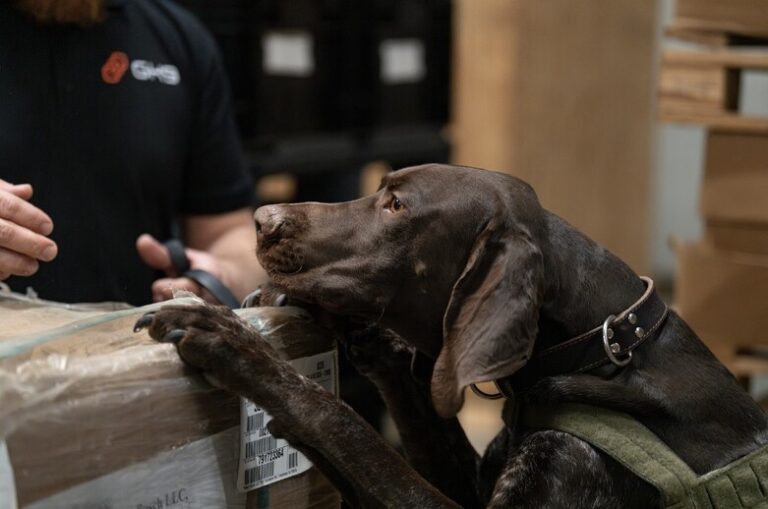
Cargo security solutions provider, Global K9 (GK9), and air cargo logistics services expert, Worldwide Flight Services (WFS) have been working together since 2021. In that time, the collaboration has grown to cover over 25 facilities in 9 U.S. cities: Atlanta, Boston, Chicago, Los Angeles, Miami, Portland, San Francisco, Dallas, and Houston. The latter two are the latest to join the portfolio, as it was announced this week that WFS has appointed Global K9 the exclusive cargo screening provider for its facilities at Dallas Fort Worth International Airport (DFW) and George Bush Intercontinental Airport (IAH). Under the new agreement, GK9 will manage all screening operations at both locations, deploying certified canine detection teams, X-ray screening, and dedicated compliance officers to ensure full adherence to regulatory requirements. 

Cargo has to pass the sniffer test first, before it can go anywhere. Image: Global K9

DFW, where WFS’ U.S. headquarters are located, ranks among its busiest North American locations by cargo tonnage. Last year, a quarter of a million tons of cargo passed through its warehouses, while IAH saw 115,000 tons of cargo traffic. From now on, all cargo passing through these hubs will be screened by GK9. 

Eric Hare, Founder and Chief Executive Officer, GK9, stated: “Our operations offer a complete detection solution for air cargo, enabling us to manage every aspect of the screening process with a high level of precision, and we’re looking forward to providing this for such a long-running customer. Being the sole screening provider for one of WFS’ most important locations in the US is a testament to the consistency of GK9’s work since the beginning of our partnership.”

Ben Dawson, Vice President Operations, WFS Americas, added: “Efficiency throughout our operations is essential to WFS and our customers, especially at our busiest locations; but this can never be at the expense of safety and security. Partnering with Global K9 allows us to deliver the high level of service our customers have come to rely on while meeting stringent compliance standards for the safe and secure movement of cargo.”

CB Customs Broker secures customs for LCAG’s PER

Every second counts when it comes to transporting perishables (PER) – that’s why they often fly air cargo, and particularly why they require quick clearance – something that is not always a given when it comes to customs. However, Lufthansa Cargo (LCAG) can rest assured – it has placed the responsibility for smooth customs processes in the hands of CB Customs Broker, which has been handling all of the carrier’s customs clearance processes since the start of last month. And it does this in three airports: Frankfurt (the home of Europe’s biggest perishables center), Munich, and Brussels, for all shipments traveling as Lufthansa Cargo’s “Perishables toDoor” service. “The Perishable toDoor service ensures fast and reliable delivery of temperature-sensitive goods from around the world. Whether it’s mangoes from Mexico, roses from Kenya or papayas from Brazil, shipments arrive by air and continue by road to destinations across Europe,” says the press release. CB Customs Broker’s responsibilities cover customs clearance for all goods staying in Germany, arranging T1 documents for transit shipments, and ensuring that all relevant documentation is available and correct. The customs broker acts on Lufthansa Cargo’s behalf when it comes to dealing with respective authorities such as the Plant Protection Service, the Federal Office for Agriculture, and the Veterinary Office.

CB Customs Broker clears perishable shipments in FRA, MUC and BRU. Image: CB Customs

Uwe Glunz, Managing Director at CB Customs Broker, explained: “Hardly any other products require the kind of precision that is required for the customs clearance of perishable goods. That precision is exactly our strength. We’re pleased to support Lufthansa Cargo and to offer this service to other customers as well, further strengthening our role in time-sensitive customs services across Europe.”

Rajan Subramanian appointed Chief Product & AI Officer at Kale

Rajan Subramanian, Chief Product and AI Officer, Kale Logistics Solutions. Image: Kale Logistics

Kale Logistics Solutions (Kale) has appointed Rajan Subramanian as Chief Product and AI Officer, thus boosting its leadership team as well as underlining its focus on advancing AI-driven and cloud-based solutions for the logistics sector. With over 20 years of experience in technology strategy, AI innovation, and product engineering at Fortune 500 companies, Rajan will help future-proof Kale’s offerings by enhancing scalability, capabilities, and global reach. This move aligns with Kale’s broader plan to expand its AI presence, following the launch of its AI-focused website showcasing use cases and solutions aimed at improving supply chain efficiency. The company continues to invest in cutting-edge technologies to strengthen product offerings and drive industry innovation. In parallel, Kale has established a new Australian team to support its Oceania expansion, reinforcing its ambition to deliver next-generation logistics solutions across global markets while leveraging AI to address evolving customer needs.

Rajesh Panicker, Co-Founder & Director, Kale, said: “Having Rajan on board really emphasizes Kale’s commitment to developing cutting-edge technological solutions; we believe his promising track record as a tech leader in fortune 500 companies worldwide will boost Kale’s brand equity further across the global stage. We look forward to our technology centric future with Rajan’s presence in our organization.”