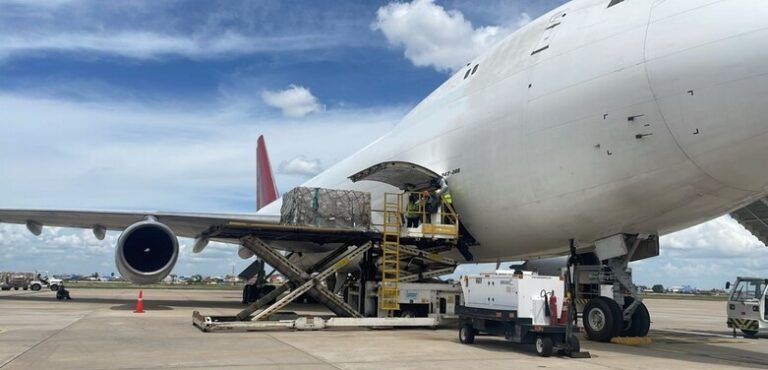
American Airlines Cargo has wrapped up the 2025 Brazilian ginger season by successfully transporting record quantities of fresh, high-quality root ginger to the U.S. Major entry points included Miami and Los Angeles. American Airlines Cargo deployed B787-8 and B777-200ER aircraft out of Rio de Janeiro and São Paulo to the U.S. gateways, carrying over 900 tons of ginger which were then onforwarded via road feeder service to inland U.S. markets. Not just any ginger. This was ‘Blue Ginger’ which came from Brazil’s top producers. Packed in cartons and not requiring refrigeration, the ginger is easy to manage and ship efficiently. Distinguished by its aromatic, spicy character and blue-grey hue, Brazilian ginger is celebrated for its high gingerol content, supporting digestion and wellness. Brazilian ginger is more fibrous and nutritious than other varieties, making it a favorite in supermarkets and restaurants, where it arrives fresh and unprocessed, maintaining its full natural benefits.
Blue Ginger sounds like an oxymoron, but it’s not. Image: American Airlines Cargo
Lorena Sandoval, American Airlines Cargo Sales Director for Florida, Caribbean and Latin America, revealed: “We are seeing the growing importance of Brazilian ginger, which is a high-quality product, with larger, cleaner roots that meet export standards with minimal processing. Additionally, because many of the producers are investing in more sustainable farming practices, including reduced pesticide use and improved soil management, this aligns well with current market trends favoring traceability and environmental responsibility. We are pleased to have been able to play a key role in bringing this special product to market.”
The Airforwarders Association (AfA) has expanded its ranks by welcoming over 20 new member companies in 2025. It now represents over 225 businesses involved in air cargo logistics. “The new members include freight forwarders and associated businesses specializing in express and e-commerce fulfilment, temperature-controlled shipping, security compliance and cargo screening technologies, as well as international and cross-border air cargo solutions,” the release explains. AfA offers support through advocacy efforts with lawmakers, as well as networking opportunities at its annual AirCargo Conference, regional events, and educational resources such as online courses and industry webinars. Of those, one opportunity is scheduled for SEP25, where AfA members have the opportunity of attending an online fireside discussion with Peter Penseel, President of Delta Air Lines Cargo, to hear his insights both on the air cargo sector as well as regarding the future of the airline. “This month, AfA has welcomed the U.S. Government Accountability Office (GAO) report on the nation’s airport air cargo infrastructure, which validates concerns the Association has repeatedly raised with legislators about the knock-on effects of inadequate investment and maintenance in this area.”
Brandon Fried, Executive Director, AfA, underlined: “This milestone reflects the trust and recognition AfA has earned through its strong advocacy, member support, and commitment to shaping the future of our industry. We provide a unified voice for our members to address the regulatory, operational, and technological challenges facing all air cargo stakeholders. Our growing membership energizes our mission to drive improvements in our industry. AfA will continue to champion meaningful improvements and provide critical insight and support to ensure air cargo continues to thrive in today’s fast-changing environment.”
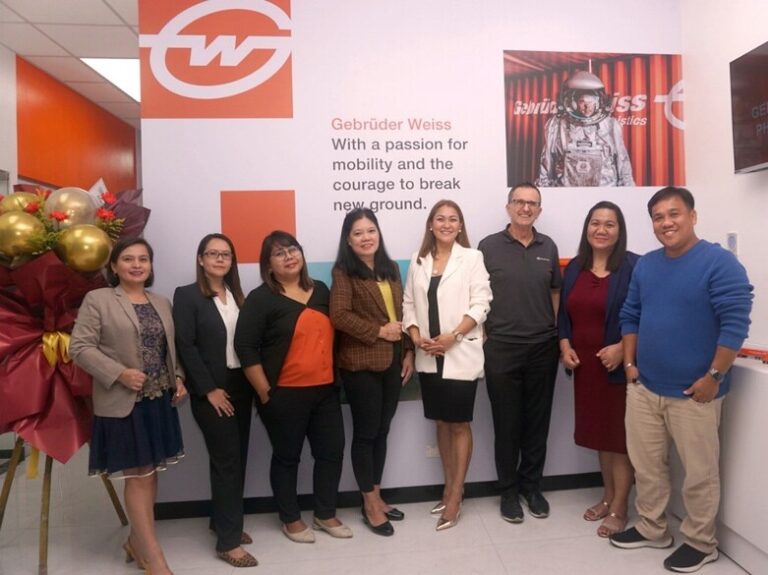
Gebrüder Weiss has added Philippines to its Asian network, having officially launched its first ever office in Manila at the beginning of this month. The move reflects the country’s increasing economic significance: “The Philippines is the tenth largest economy in Asia in terms of gross domestic product. It has close foreign trade relations with the USA, China, Japan, South Korea, and Singapore, among others – all countries in which Gebrüder Weiss has an operational presence. In 2024, the country achieved an export volume of around USD 73 billion, while imports totaled just under USD 135 billion. Electronic products, consumer goods, food, and raw materials from the Philippines are in particularly high demand,” according to the company press release. With its Manila office, which is staffed by a team of 14, Gebrüder Weiss strengthens its Asian/Oceanic footprint, bringing the number of countries where it is actively present to ten: Australia, Greater China, Japan, Malaysia, New Zealand, Singapore, South Korea, Thailand, Vietnam, and now Philippines. In total, it operates in 36 locations across the region, employing around 800 staff. The Manila team manages international air and sea freight, customs, and domestic land transport. Manila’s strategic location – close to key seaports, an airport, and several free trade zones – makes it ideal for logistics. The company sees opportunities for growth in high-tech, automotive, and consumer goods logistics.
Team of 14 in the company’ first Philippines office since 01AUG25. Image: Gebrüder Weiss
The new location follows hot on the heels of the logistics provider’s Thailand launch a few months ago.
Michael Zankel, Gebrüder Weiss’s Regional Manager for East Asia, and Oceania, explained: “The Philippines offers great economic potential. With this new country organization, we are creating additional transport connections for our customers to this high-growth market, while strengthening our network in Asia. In the coming years, we aim to expand our services, particularly offering logistics solutions for key industries such as high-tech, automotive, and consumer goods.”
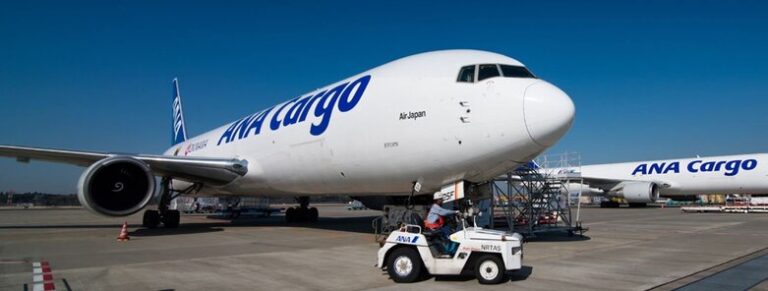
The negotiations took a long time, originally set to be completed on 31MAR25. However, on 01AUG25, the takeover was finalized: ANA Holdings has acquired all shares of former domestic rival, Nippon Cargo Airlines. Through the takeover, All Nippon Airways becomes Japan’s largest passenger and cargo carrier. The integration of NCA’s Japan-Europe and U.S. routes with ANA Group’s international network, results in an expanded global cargo reach. Lufthansa Cargo will also benefit from this step, since both carriers’ route joint venture is to be revived. It was halted temporarily following ANA’s decision to purchase NCA.
Pictured here are B777F operated by ANA Cargo – company courtesy
The intention to revitalize the route joint venture has nowbeen confirmed by Jan Paulin, spokesperson of Lufthansa Cargo, when asked by CargoForwarder Global. “Following the temporary suspension of the agreement with All Nippon Airways, we will now resume talks on restarting the paused Lufthansa Cargo/ANA Cargo joint venture and define the next steps in accordance with the legal framework,” he said. Paulin declined to comment on ongoing negotiations for reasons of principle.
It is likely that the joint venture between the cargo divisions of ANA and United Airlines will also be revived along similar lines. In addition, Swiss WorldCargo is likely to be in the starting blocks to join the air freight alliance, as recently agreed on the Atlantic routes between Swiss WorldCargo, United Cargo and the Lufthansa Group.
Tripling the capacity The takeover of competitor NCA will give ANA’s cargo aircraft fleet a significant boost. ANA currently operates six Boeing 767 freighters and two Boeing 777F, while NCA has eight Boeing 747-8F units in its fleet. This almost triples the transport capacity orchestrated by ANA from currently 550 tons to roughly 1,560 tons. This enhancement will not only significantly strengthen the Group’s position as Japan’s largest combination carrier but also elevate the ANA Group to the world’s 14th largest airline group based on cargo transport weight, reads a press release. In addition to the total capacity offered, there are seven B747-400Fs that have been leased by NCA to other airlines on a long-term basis.
“The strategic integration of NCA’s freighter network and specialized cargo expertise with the ANA Group’s existing infrastructure will greatly improve our capability to serve our customers’ needs,” said Koji Shibata, President and CEO of ANA HD. “We are committed to leveraging this expanded capacity and combined knowledge to deliver exceptional value in our cargo transport solutions globally.”
Increasing profitability By combining ANA Group’s international network with NCA’s expertise in special commodities and mass transportation of loads using large freighters, ANA will further strengthen its services to meet diverse customers’ cargo transport needs. ANA Group will also support customers in optimizing their supply chains or business opportunities, aiming to deliver added value through cargo transport.
Due to NCA’s inclusion, ANA Group’s profitability is expected to increase, as the strengthened cargo business will improve its resilience against market volatility and economic changes. An additional and important aspect is that the congested Narita Airport is expected to enhance its functions by building a new runway, which will substantially increase the number of departures and arrivals. Under such circumstances, ANA Group is committed to sustainable growth and to contributing to the wellbeing of the society as a vital logistics player supporting people in Japan and worldwide, management stresses in a statement.
With NCA as new part of the company, ANA’s financial balance sheet and income statement are planned to be consolidated from the 2nd quarter of fiscal 2025.
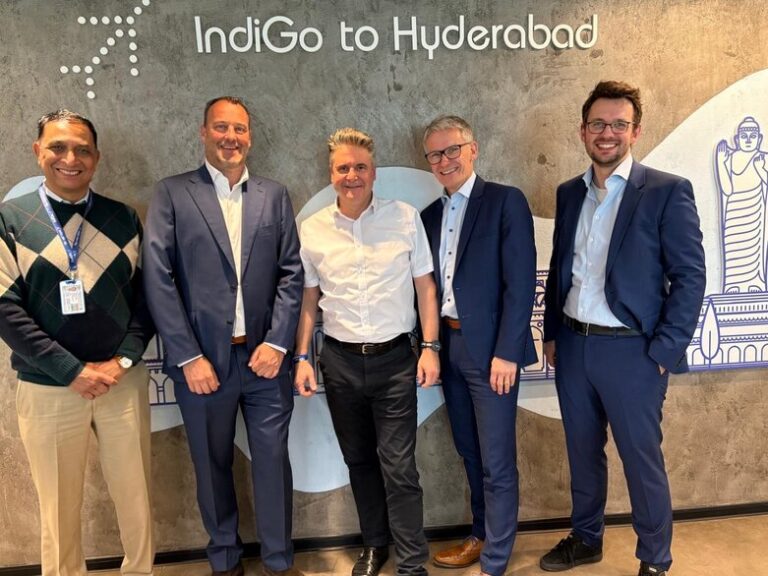
The Amsterdam-based ULD manager has secured a multi-year contract with low-cost carrier, IndiGo – India’s largest airline. The agreement comes amid IndiGo’s push to internationalize its reach, serving new destinations in Europe, Central Asia, and the Far East. It has also expanded the codeshare agreement with KLM, signed in 2022, giving travelers and cargo clients access to 30 destinations on IndiGo’s network across Europe and the UK.
Smiling faces among IndiGo and ACL Airshop managers after signing the partnership agreement – Courtesy: ACL Airshop
The partnership with ACL Airshop provides IndiGo with comprehensive ULD management and logistics services for cargo and passenger operations. The agreement now signed also includes maintenance and repair services, access to the ACL Airshop network and short-term fleet, and the introduction of next-generation tracking technology for the IndiGo ULD fleet, a press release reveals.
Crucial services Particularly due to the internationalization of the route program, the reliable provision of containers and pallets as needed by a station is a prerequisite for the seamless transport of air cargo as booked, in addition to passenger baggage. These services are crucial to maintaining an airline’s reputation, as negative examples such as stranded or misplaced cargo shipments or claims from passengers in response to lost baggage, demonstrate.
“We are very pleased to announce this strategic partnership with one of the world’s fastest-growing airlines,” said Bernhard Kindelbacher, CEO of ACL Airshop, commenting on the IndiGo deal. “This collaboration not only reinforces our position as a global ULD management services leader but also allows us to support IndiGo wherever their growth journey takes them.” Mark Sutch, Chief Commercial Officer at IndiGo, similarly stated: “As our requirement for ULDs grows, we are delighted to be partnering with ACL Airshop and appreciate that they could quickly and efficiently respond to IndiGo’s requirements and were fully operational in a short span of just two months.”
Increasing the reliability score A coordinated, one-stop ULD management service package, as now agreed between ACL and IndiGo, will certainly play a decisive role in achieving high reliability rates for air freight shipments and passenger baggage, thus avoiding errors, claims and additional costs.
The IndiGo deal opens up the Indian transport market for ACL, as the budget carrier currently serves 90 domestic destinations, accounting for 60% of domestic air traffic market. At the same time, the ULD manager is closing the gap on its competitors and industry leaders, Unilode and Jettainer.
Currently, the Indian airline serves 40 international destinations. Among them: Singapore, Istanbul, Dubai, and other cities in the Gulf region, as well as – since this year – Amsterdam and Manchester. Encouraged by the outstanding response to its long-haul flights, IndiGo will fly six times a week between Mumbai and Amsterdam, starting 20SEP25, and further increase this to a daily service from 13OCT25. Additionally, the connectivity between Mumbai and Manchester will be enhanced to four flights weekly, effective 22SEP25. IndiGo will also launch daily flights to London Heathrow – its third European point – commencing on 26OCT25. According to airline chief, Pieter Elbers, flights to Copenhagen and Athens are also on the agenda, although the manager did not specify a launch date.
Norse provides the aircraft “At IndiGo, we are committed to offering seamless global connectivity to our customers as part of our ambitious internationalization strategy. We are delighted to deepen our partnership with KLM, providing our customers with greater convenience when traveling across Europe and the UK through Schiphol Airport, one of the biggest European hubs. We are confident that our customers will value and benefit from the seamless connectivity offered through the vast combined networks of IndiGo and KLM. This collaboration aligns with our vision of giving wings to the [Indian] nation and fostering more opportunities for boosting trade and tourism between India, Europe and rest of the world,” the former KLM boss stated.
The carrier’s route expansion is enabled by a damp-lease agreement with Norwegian carrier, Norse Atlantic, securing the provision of B787-9 jetliners. Following the operation of one unit on the Amsterdam and Manchester routes, IndiGo will lease five additional Dreamliners from Norse. While passengers will be served by IndiGo cabin crew, Norse will supply the aircraft including the pilots and will provide maintenance services.
CargoForwarder Global’s ‘Spotlight On…’ shows a different section of the air cargo industry each week – usually bringing it to life through the individual working there. Every now and again, we highlight a core aspect, instead, and let an inanimate object do the talking based on industry research. Imagine the air cargo world without plastic to protect shipments (travelling on pallets) from the elements and from shifting too much during transport? The problem is, most of that plastic is Single-Use, and much of it is seriously environmentally unfriendly. Perhaps this week’s Spotlight, told from the perspective of Single-Use Plastic (SUP), might be a trigger to rethink processes in your company, invest in more bio-friendly versions, or even develop a whole new alternative that fits into a circular economy business solution? Either way, here is SUP’s Spotlight.
AI is not great at showing SUP in use and yet SUP plays such a crucial role in air cargo. Image: Canva/CFG
CFG: What is your current function and company? And what are your responsibilities?
SUP: As single-use plastic sheeting, my primary function is to protect air cargo pallets during transportation. I am lightweight, durable, and water-resistant, ensuring goods remain secure and undamaged. My responsibilities include shielding cargo from environmental elements like moisture and dust, providing hygienic coverage, and facilitating efficient handling in warehouses. While I am widely used across the air cargo industry, my disposable nature means I contribute significantly to waste after fulfilling my role.
CFG: What does a normal day look like for you?
SUP: A typical day starts in a cargo warehouse, where I am unrolled and carefully wrapped around pallets carrying goods ranging from perishables to electronics. I am then loaded onto aircraft for transit, ensuring the cargo remains intact during flight. Once the shipment reaches its destination, I am discarded – often ending up in landfills or incinerators unless recycled. My lifecycle is short but critical to ensuring smooth logistics.
CFG: How long have you been in the air cargo industry, and what brought you to it?
SUP: I have been a staple in the air cargo industry for decades due to my affordability, ease of use, and ability to meet hygiene standards. My widespread adoption was driven by the industry’s need for lightweight materials that do not add excessive weight to shipments while providing reliable protection.
CFG: What do you enjoy most about your job?
SUP: My greatest satisfaction comes from knowing that I play a vital role in ensuring goods arrive safely at their destinations. By protecting cargo from damage or contamination, I contribute to seamless global trade operations.
CFG: What do you see as the greatest challenges in our industry?
SUP: The biggest challenge lies in sustainability. 50% of global plastic waste is single-use and 98% of that is made using fossil fuels. In fact, plastic manufacturing contributes to 3.4% of global emissions (around 1.8 billion tons of greenhouse gases), which is more than what the aviation and shipping industries emit. Despite my utility, only 9% of global plastic waste is recycled, with the rest ending up in landfills or polluting ecosystems.
The air cargo industry faces increasing pressure to reduce single-use plastic waste and transition to sustainable alternatives like biodegradable plastics like BioNatur Plastics or recyclable fiber-based materials such as AirCargoRunner, for example. These are promising solutions for reducing environmental impact without compromising functionality. However, balancing cost-effectiveness with environmental responsibility remains a significant hurdle. Yet, if we all do nothing as a world community, and current trends continue, then by 2050, around 12 billion metric tons of plastic waste will accumulate in landfills.
CFG: What advice would you give to people looking to enter into the air cargo industry? Any particular training they should aim for?
SUP: For those entering the air cargo industry, understanding logistics and environmental impact is crucial. Training in sustainable practices, waste management systems, and innovative packaging solutions can make a difference. Familiarity with emerging alternatives like biodegradable plastics or recyclable pallet runners will be valuable as the industry shifts toward greener operations.
CFG: If the air cargo industry were a film/book, what would its title be?
SUP: “The Weight of Progress: Balancing Efficiency and Sustainability.” This title reflects the industry’s constant struggle between operational efficiency and its environmental footprint – an issue where single-use plastic sheeting plays a central role.
Many thanks for your input, Single-Use Plastic.
If you would like to share your personal air cargo story with our CargoForwarder Global readers, feel free to send your answers to the above questions to cargoforwarderglobal@kopfpilot.at We look forward to shining a spotlight on your job area, views, and experiences.
Temperature-controlled pharmaceutical shipments make up about 4% of all air cargo tonnage annually transported around the world. Increasingly, this commodity type comes in the form of small parcels, with forecasts predicting double-digit growth in this particular segment over the coming years. Size is just one aspect when it comes to designing transport solutions. In the following article, CargoForwarder Global’s guest author, Delphine Perridy, Chief Commercial Officer at Envirotainer, addresses why small parcels are a big test for contract pharma.
Complex requirements need professional solutions. Image: Pharma7/FiveNot10
In today’s pharmaceutical landscape, complexity is the new normal. With decentralized clinical trials, personalised medicines and direct-to-patient therapies on the rise, pharma supply chains must move faster, smarter and more precisely than ever before. As these needs grow, so too does the role of small parcel shipments.
For contract development and manufacturing organizations (CDMOs), small parcels have become an essential link between breakthrough therapies and the patients who need them. But they also introduce a unique set of risks and opportunities, especially where CDMOs are tasked with managing multiple clients’ needs at pace. Every shipment must meet meticulous temperature control and stringent regulatory compliance requirements, while also offering full visibility and risk mitigation across the entire shipment journey.
These non-negotiable requirements are driving CDMOs to increasingly rely on trusted partners to meet this evolving demand.
The rising stakes of small shipments While commercial-scale bulk shipments still form the backbone of pharmaceutical logistics, the surge in small parcel demand, particularly for clinical trials and advanced therapies, is reshaping the market. But these advancements come with added complexity.
Small parcels need to move quickly, often through multiple handovers, border checks and last-mile courier networks with zero room for error. Routes can span continents, passing through unpredictable climates and variable infrastructure. With treatments often time-sensitive and patient specific, even minor delays or temperature excursions could lead to compromised efficacy, disrupted care, costly reshipments or treatment failure.
With therapies becoming increasingly sensitive and time-critical, the margin for error is shrinking. Every shipment must deliver on precision, speed and security.
Smarter packaging technologies To protect these high-value shipments, the industry is turning to advanced packaging technologies, with a combination of hardware (PCMs and VIPs), alongside data visibility and reusable, sustainable infrastructure.
Recent innovations in the sector such as Phase Change Materials (PCMs) and Vacuum Insulated Panels (VIPs) help maintain consistent internal conditions and protect products from external shocks in transit, even when environments fluctuate.
These innovations not only improve temperature control but also support organizations to meet global GDP requirements and regulations across multiple regions. These solutions offer under-pressure CDMOs an efficient way to ensure service quality whilst maintaining efficiency.
The delicate balance required to ensure efficiency, flexibility, and sustainability Governments and healthcare providers are increasingly demanding sustainability from every part of the supply chain. CDMOs must now factor in environmental goals, regulatory compliance and client expectations with every packaging decision.
Meeting sustainability requirements is a non-negotiable, with the industry working towards achieving a green supply chain in 2030. Contract pharma organizations must include ESG within their decision making, selecting providers that offer reusable solutions which both reduce waste and minimize carbon emissions. Packaging that ensures temperature excursions and product loss is minimal, will mean that there will be fewer occasions where products need reshipping, supporting both environmental targets and cost efficiency simultaneously.
Forever-use packaging is an increasingly popular choice here. By reducing waste, limiting the need for reshipments and lowering carbon emissions, forever-use containers are often seen as the gold standard. However, they aren’t always viable, especially on complex or remote routes where infrastructure is limited or return logistics unfeasible.
In these circumstances, CDMOs should look for reliable and resilient single-use options so that vital medicines can reach even the most inaccessible areas. Smart packaging choices are at the heart of resilient and responsible small parcel supply chains.
Navigating tomorrow’s cold chain As demand for small parcel shipments grows, so does the need for close collaboration across the supply chain. For CDMOs, the ability to scale compliant, high-performing packaging quickly is a competitive advantage. But they can’t do this alone.
Strategic partnerships across the supply chain will enable CDMOs to access specialized technologies, shared insights and flexible infrastructure that adapts to shifting regulatory and patient needs. These partnerships reduce costs, drive innovation and help CDMOs respond faster and more safely to global demand.
The benefits of lasting partnerships between pharmaceutical companies, CDMOs and cold chain experts are clear: increased operational efficiency, reduced costs, stronger resilience and better patient outcomes.
Small parcels, big impact Small parcels may seem simple on the surface, but they’re often one of the most complex pieces in the supply chain. As pharmaceutical innovation accelerates and therapies become more targeted, these shipments will only grow in importance.
For CDMOs, now is the time to futureproof logistics strategies by investing in smarter packaging, embracing sustainability and building collaborative frameworks that enable safe, timely and compliant delivery. Because in today’s pharmaceutical supply chain, even the smallest shipments carry the greatest responsibility.
Early JUN25, ground handling agent dnata moved its Amsterdam operation to its new state-of-the-art facility at Schiphol Zuid-Oost. Apparently, its advanced technology does not live up to expectations, causing chaos at the airport.
dnata Cargo City Amsterdam, worth 110+ million euros, has the capacity to process more than 850,000 tons of cargo annually – company courtesy
According to the sectorial council, ‘Truckers’, within the umbrella organization, Air Cargo Netherlands (ACN), dnata’s move has led to enormously long waiting times and backlogs. “The uncoordinated implementation of the Truck Visit Management system has shifted the gate waiting times from the handler to the trucker,” the truckers say.
“Over the last few weeks, large quantities of cargo have been buffered up with the hauliers, because delivery at dnata was impossible. This is a shift of functions within the chain for which no financial agreements have been made.”
According to the truckers’ council, the problem coincides with the implementation of a new IT system at KLM, leading to flights being missed. Minor problems have also been identified with other handlers.
Bar was set too high ACN’s Director Maarten van As says that, as far as dnata is concerned, the promised far-reaching digitized system supposed to create communication between different digital systems and enabling a seamless flow is not working so far.
“dnata at the notification for the collection of import freight was not functioning well, and a lot of data had to be put in again manually in the Cargonaut port community system.”
“So, instead of the promised step into the digital future, the ground handler’s new working methods were felt as a step backward. At the same time, we saw that the new planning system linked to other internal systems led to unacceptably long waiting times at the dnata gate as well as the premises. In the meantime, an enormous backlog of import cargo was created, and airlines were complaining about a dysfunctional export flow.”
Temporary solution “At the moment, the industry is in talks with dnata to reach practical solutions. Reaching out to each other and finding solutions as colleagues is one of the strongest points of the Schiphol air cargo community, and we are pleased to act as a mediator in this.”
“We find that, at dnata, individual workers, are working very hard to find (temporary) solutions. As a system, however, dnata has failed. I expect talks about solution paths to lead to something in the days to come. Not the ‘golden bullet’, but an alleviation of the dnata system into a space to work towards genuine solutions,” ACN Chief Maarten van As told CargoForwarder Global.
The hiccups in Amsterdam are the second setback for dnata in Europe, following the announcement that it will cease all ground handling activities at Cologne/Bonn Airport at the end of 2025.
The annual trade shows orchestrated by the Air Cargo Community Frankfurt (ACCF) have meanwhile become legendary. The upcoming event, the tenth in a row, is out to set completely new standards. It will take place from 03-04SEP25, and be held at the Adler Business Club lounge of Deutsche Bank, located within the stadium of soccer club, Eintracht Frankfurt. Not only is the location unique, but the agenda is packed with hot industrial and political topics. Hence, the two days promise plenty of excitement, discussions and many new insights. And there will be ample opportunity for networking in a relaxed atmosphere.
To whet our readers’ appetite for the event, CargoForwarder Global (CFG) asked Felix Toepsch (FT), Head of ACCF, to illustrate and comment on the key points of the trade show.
Felix Toepsch of ACCF orchestrates the Frankfurt-held cargo event – courtesy: ACCF
CFG: Von der Leyen and Trump recently agreed on a tariff deal. It provides for customs duties of 15% imposed on most goods produced in the EU and sent to the U.S. Will this very controversial accord and its impact on international trade and the transport industry, be an item on the ACCF agenda?
FT: We have been observing a highly dynamic geopolitical environment for several months now. Many of these changes have a direct or indirect impact on air cargo demand, transport routes, pricing, and more. Of course, it was immediately clear to us that the dynamic shifts and their implications for international trade and the transport industry, must be addressed at the conference.
Therefore, we will begin the event with the topic block ‘General Economics and Outlook’. Dr. Vincent Stamer (Senior Economist, Group Research, Commerzbank AG) will kick off the session with ‘The Future of Europe’s Trade: Risks and Realities’. Following this, Glyn Hughes (Director General, TIACA) will provide an assessment of the developments and their impact on the air cargo industry.
What makes this topic particularly interesting is that, due to the almost daily news and developments, we cannot predict what the global landscape will look like by the time of the conference in early SEP25. These ongoing uncertainties are one reason why we expect that this year’s presentations will likely be finalized at the very last minute.
CFG: Even though many points still need to be negotiated, the question already arises as to how the U.S. – EU deal should be assessed from the perspective of air freight operators transporting goods across the Atlantic, for example: between Frankfurt (FRA) and New York (JFK).
FT: This question needs to be addressed at the conference – both during one of our panel discussions and through the various networking opportunities available throughout the event.
From our perspective, a key issue is how the European air cargo community can collaborate even more closely in the future and present a united front when engaging with other regions of the world. This is an important consideration given the increasing complexity and competitiveness of the global air freight market.
I am therefore particularly looking forward to our Airport Panel on Day Two. We are very proud to have the leading five cargo hubs in Europe live on stage. Timo Stroh will interview the responsible board and executive members from the airports of Amsterdam (AMS), Brussels (BRU), Paris Charles de Gaulle (CDG), Frankfurt (FRA), and London Heathrow (LHR). This promises to provide deep insights into how European air cargo players can respond strategically and collectively.
CFG: Airport operator, Fraport, is eager to upgrade and enlarge its cargo infrastructure: What is the status, and which construction projects are next on the agenda?
FT: As part of the Masterplan CargoHub, Fraport is reorganizing existing areas in CargoCity South to strengthen Frankfurt Airport’s role as a leading cargo hub. This smart redevelopment will significantly enhance the airport’s future viability. Negotiations for the first area are ongoing and will be finalized by the end of the year. The next areas will be available in 2026. We expect the remaining areas in CargoCity South to be available by 2028.
Meanwhile, Fraport is planning the development of a new LogisticsHub West with a sustainable, digital, and smart infrastructure on a space totaling 250,000 m². The marketing of the first logistics warehouses is scheduled to start in 2028. The second phase includes the potential for airside access and a trimodal hub with a combined transport terminal.
CFG: Regarding the upcoming event taking place from 03-04SEP25, at the Adler Business Club (Deutsche Bank Park), Frankfurt am Main: The ACCF orchestrated meeting will celebrate its tenth anniversary. How does it stand out from other cargo conferences or symposiums, i.e.: what is its USP?
FT: Just like our industry, the conference itself has evolved dynamically over the past years. To mark the tenth anniversary, we are taking a significant leap forward with many exciting innovations.
One of the highlights will be the impressive setting of Deutsche Bank Park – where the heart of the European air cargo industry will gather in the so-called ‘Heart of Europe’. For the first time, we are introducing a dedicated exhibition area, giving companies the opportunity to present themselves and their products to the community. Additionally, on the first evening, we will celebrate our anniversary with a special party featuring BBQ, cocktails, and music. Guests will also have the chance to experience exclusive areas of soccer club, Eintracht Frankfurt, during two stadium tours, and enjoy many other highlights.
Beyond that, the program includes start-up pitches, an Innovation Award, insights into Formula 1 logistics and the logistics command of the German armed forces, as well as a range of carefully curated keynotes and discussions.
Of course, we have also prepared some surprises for our guests – but I won’t reveal those just yet!
However, one thing remains unchanged: The personal, familiar, and straightforward atmosphere that defines our conference and its participants. This unique spirit is what truly sets the ACCF apart from other cargo conferences and symposiums, and we are proud to carry this tradition into our tenth anniversary edition.
CFG: The conference will be held in close cooperation with the logistics start-up Lab HAUS61, and the Mobility & Logistics division of Messe Frankfurt Exhibition GmbH. The official announcement promises that the partners will create a platform which brings together established players and innovative minds to tackle the next steps in air freight. From ACCF’s perspective, what exactly are the next steps?
FT: From ACCF’s perspective, the next steps in air freight are about tackling industry challenges through the right combination of people, technology, and financial resources. Together with Lab HAUS61 and Messe Frankfurt, we are building a platform that brings established players and innovators together to shape the future of air cargo.
At this year’s conference, we will give visibility to new ideas, technologies, and solutions for our industry. The best of these will be recognized with the Future Cargo Innovation Award, supported by Lufthansa Cargo.
Digitalization, automation, sustainability, and stronger collaboration are key priorities.
CFG: And finally, how far has Frankfurt Airport and the cargo industry come in implementing data-driven, sustainable processes? Or to put it more bluntly: when will paper be a thing of the past?
FT: To drive digitalization and implement data-driven, sustainable processes, Fraport and the software company, DAKOSY, established the joint venture, allivate. The goal of allivate is to increase transparency, accelerate processes, and optimize resource use. One current project is the ‘Smart Pickup’ initiative, developed with allivate and the Air Cargo Community Frankfurt. This initiative replaces paper-based import pick-up procedures with a digital system via FAIR@link. This enhances efficiency, reduces costs, and improves security. A central component is the ‘Digital Authorization for Pickup’, which replaces the previous collection order. Pilot operations began in MAY25, and the full rollout across Frankfurt Airport is planned for the second half of 2025.
But digital transformation doesn’t stop there: In the future, additional paperwork such as the work order and the delivery receipt will also be eliminated. This means the process is not just becoming less paper-intensive – it’s evolving into a truly paperless import process.
The value of charter services is never so visible as in a crisis, as proven by a series of Air Charter Service (ACS) operations taking place in Asia recently. It has operated nigh on 100 charters following the closure of the land border between Thailand and Cambodia in late JUN25. In total, over 5,000 tons of cargo have been transported – crucial support to ensuring that supply chains remain unbroken.
Keeping supply chains moving thanks to charters. Image: Air Charter Service
Brendan Toomey, CEO of ACS Singapore, commented: “The closure of the Thailand-Cambodia border meant that all road transport stopped immediately, leading to significant logistical disruptions across multiple industries which rely heavily on the cross-border supply chain. Just-in-time manufacturers especially started to run up costs, meaning they needed to find alternative solutions quickly to maintain operations and prevent shutdowns. It was at this point that several customers came to us for cargo charter flights as a solution to the headache. At first there was a lot of automotive cargo that needed to move, sometimes 100 tons at a time, but soon after we started receiving requests for consolidated cargo flights consisting of goods from multiple industries. To date we have arranged almost 100 charter flights between the two countries, carrying over 5,000 tons of cargo in total. The flights, which were loaded in both directions, ran between Bangkok in Thailand and either Siem Reap or Phnom Penh in Cambodia. This is another example of aircraft charters really proving their worth in extreme situations.”
In another urgent situation, recently, where a piece of gold mining equipment and other cargo was urgently required for essential repairs in Calgary, Canada, Air Charter Service (Canada) teamed up with ANTONOV Airlines, to transport the exclusively produced item from Istanbul, Türkiye. It required a bespoke frame and onboard cranes to carefully load it through the rear door of an AN-124-100.
Olha Danylova, Commercial Executive, Antonov Airlines, explained: “What began as a routine AN-124-100 flight, quickly presented unexpected technical challenges. The cargo’s attachment points did not comply with the aircraft’s lashing standards, and no immediate solution was available. Through close coordination with the manufacturer’s engineers and the determination of our team, a compliant solution was developed under time pressure. The cargo was ultimately secured to meet all safety and operational requirements. The mission was completed successfully, ensuring uninterrupted operations for the client – and providing our team with valuable operational insight.”