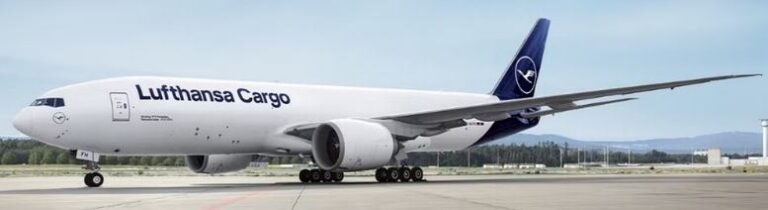
Following on from its initial cooperation ex South America to Rome, earlier this year (CFG reported), Lufthansa Cargo now speaks of hitting “another important milestone” in its logical ITA Airways marketing strategy. The cargo carrier will begin selling the Italian airline’s cargo space on its flights ex Asia to Rome, starting 01SEP25. The origins in question are Delhi (DEL), Tokyo-Haneda (HND) and Bangkok (BKK). Shipments from there to Rome-Fiumicino (FCO) will be marketed and transported under the Lufthansa Cargo AWB 020 prefix. The press release points out that eventually all of ITA Airways’ routings will be managed by Lufthansa Cargo, “subject to regulatory approval,” bringing an almost 20% increase in belly capacities on offer to its cargo customers. “In future, freight customers will thus have access to an even broader global network, including the belly capacities marketed within the Lufthansa Group, connecting all major economic centers in Europe and around the world,” the release underlines.
Marketing the Asia-Rome cargo space of its latest acquisition. Image: Lufthansa Cargo
Anand Kulkarni, Head of Global Markets at Lufthansa Cargo, announced: “We are proud to offer our customers additional capacity from Asia to Europe with these three routes. The cooperation with ITA Airways got off to a successful start in June, and we are excited to take the next step together. Our newest hub in Rome is a particularly important addition to our network, enabling us to offer even faster and more reliable connections to Europe and worldwide; truly emphasizing our purpose, enabling global business.”
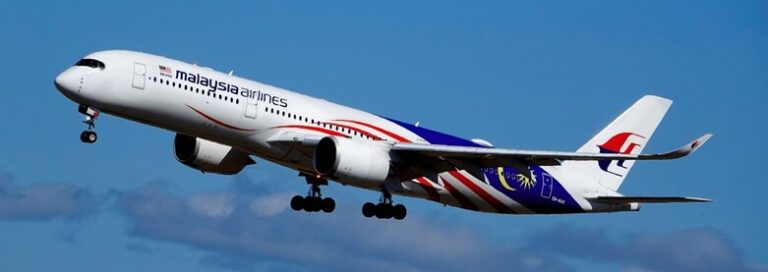
Malaysia Airlines’ cargo division, MASkargo, has chosen General Sales and Service Agent (GSSA) FlyUs as its exclusive representative in France. The partnership is the first of its kind between the airline and the independent GSSA, and – according to the press release – it “marks a significant expansion of the GSSA’s services between Europe and Southeast Asia”. In addition to marketing and selling the Malaysian carrier’s cargo capacities, FlyUs will also cover back-office administration, and the supervision of its ground handling agent as well as charter flights. MASkargo currently operates a daily flight out of Charles de Gaulle Airport (CDG), where the airline currently operates a daily Airbus A350-900 service to Malaysia. From there, cargo shipments can connect to MASkargo’s destinations across Asia and Oceania. General cargo, cold chain shipments as well as aerospace components for four leading manufacturers, are the main commodities travelling on board of MASkargo out of France.
From Paris with FlyUs… Image: MASkargo
Emmanuèle Deleau, Branch Manager – France, FlyUs, said: “This partnership gives our customers reliable daily access into Malaysia, with seamless onward connections to key markets, including Australia, Japan, and Vietnam. It’s a strong addition to our network and provides a practical and reliable option for French forwarders moving luxury goods and time-sensitive cargo to Southeast Asia. We’re also looking forward to leveraging our expertise in cold chain operations to support the transport of pharmaceuticals, and perishables out of the Rungis International Market.”
Carlo de Haas, President and Chief Executive Officer, FlyUs, added: “This partnership strengthens our presence in a key European export market, connecting directly with strategic destinations across Asia and Oceania. As we continue to grow our global footprint, adding daily widebody capacity from Paris enables us to better support high-value sectors.”
Cargoland is set to welcome the ACE 2025 conference for the very first time. Taking place from 08-10SEP25, at the Palais des Congrès in Liège, Belgium, the event will gather more than 400 global air cargo leaders and experts. Attendees can look forward to three days filled with executive networking, insightful panel discussions, and valuable knowledge exchange. In focus are local, regional, and global developments, innovations, industry challenges, digital transformation, and sustainability There’s also an additional NeX eCommerce hub day scheduled for 11SEP25, focusing specifically on eCommerce in air freight. “Liège stands ready to transform into a productive epicentre of forward-thinking collaboration and logistics excellence,” the release promises.
Determined to bring Cargoland magic to the ACE 2025 this SEP25. Image: Cargoland
Frederic Brun, Head of Commercial Cargo & Logistics at Liège Airport, stated: “Liège has firmly established itself as a leading European air cargo hub. From major cargo airlines and global eCommerce giants such as Amazon, Alibaba, Temu, and Shein to specialized sectors such as Pharma and Live Animal logistics, our Cargoland continues to grow with excellence. To have been chosen by NAP as an ACE host is a strong mark of recognition for us, since NAP’s events are highly regarding in the global cargo logistics and freight forwarding industries. We are therefore honoured and truly excited to host the ACE 2025 and look forward to welcoming the international logistics community to our fascinating Palais des Congrès. Just like Cargoland, it combines professionalism, flexibility, and experience, and is so much more than just a venue – it’s a true gateway to the vibrant spirit of Liège.”
Torsten Wefers, Vice President Sales & Marketing at Liège Airport, announced: “Cargoland is proud to host the upcoming ACE event, a perfect complement to our successful strategy of fostering connections between forwarders, cargo airlines, and key supply chain stakeholders. Like Neutral Air Partners, Cargoland offers a unique platform to bring together small and medium-sized forwarders, integrating them seamlessly into our growing logistics ecosystem and reinforcing our role as a dynamic cargo marketplace. Given the strong relationship between NAP and our airport teams, the decision to host ACE was a logical step and is well-aligned with our ambition to position Cargoland as a key player in the cargo and e-commerce landscape. It will allow us to connect with leading industry players, strengthen existing partnerships, and further showcase Cargoland’s unique ecosystem as it strives to be among Europe’s top three cargo hubs in the coming years.”
WestJet Cargo’s 2025/2026 winter schedule includes new destinations and more flights to existing destinations across Canada, Latin America, the US, the Caribbean, and Asia. It’s all about growth in the coming season – 3% on previous year, to be precise. That translates into 305 routes and services to 62 global destinations, “WestJet Cargo is providing Canadian businesses with more affordable and flexible shipping options than ever before. The company is also increasing capacity across the Latin America and Caribbean region by 6%, focusing on high-demand markets such as Costa Rica, the Dominican Republic, and Mexico to support growing trade volumes,” the release states. Based on import/export customer requirements, the airline is launching five new destinations: Panama City (Panama), Guadalajara and Tepic in Mexico, Havana (Cuba), and Managua (Nicaragua). Its Mexico City service will continue into the winter season, making it the first complete year of service for the busy North American trade route. “These additions will help Canadian businesses reach new markets and strengthen trade ties with key regions, while also supporting the flow of goods to and from popular sun destinations. These new passenger routes will provide enhanced belly cargo opportunities in select markets, allowing us to support even more Canadian exporters and importers during the peak season,” it explains. Service quality and reliability are key and WestJet Cargo customers will also benefit from the airline’s acquisition of Sunwing and Swoop, whose fleets are currently being reconfigured to match WestJet’s standard cargo-friendly layout before the start of the season.
WestJet operates 7 Boeing B787 Dreamliners, capable of accommodating 20+ tons of cargo in the lower decks – courtesy: WestJet
Amanda Ierfino, Vice President Sales & Cargo, commented: “WestJet Cargo’s expanded winter schedule is a direct response to our customers’ needs for greater connectivity and reliable service to sun destinations and beyond. By strengthening our cargo network and investing in key routes, we are enabling Canadian businesses to grow and thrive, whether shipping domestically or internationally. Our commitment is to deliver value, flexibility, and world-class service every step of the way.”
Maastricht Aachen Airport (MST) recently announced its partnership with FlowerWatch, a consultancy specializing in monitoring and improving supply chain performance for flowers and other sensitive cargo. The two will work on ensuring that perishables transiting the airport will be protected as best as possible against temperature fluctuations, so as to maintain their shelf-life. FlowerWatch provides data loggers and tracking tools which closely monitor environmental conditions such as temperature. Its technology will allow MST to quickly respond to any fluctuations and optimize cargo handling, reducing waste and preserving product quality from pickup in Africa through to the consignee in Europe.
Flexible, uncongested and with a focus on top quality service. Image: MST
Unlike the Netherlands’ largest cargo airport, MST – in second place – is unencumbered by slot restrictions, and is on a focused mission to attract more cargo customers. It offers high service standards and rapid cargo processing. Perishable shipments are handed out within two hours of arrival, and the airport has an excellent supporting infrastructure thanks to direct motorway access.
Dean Boljuncic, Head of Commercial Development at Maastricht Aachen Airport, said: “We know that temperature inconsistencies can drive up to 20% waste in flower freight. By making these fluctuations transparent and actionable, we can drastically reduce losses, increase profitability for our customers, and ensure flowers arrive fresher and last longer for the end consumer. This partnership with FlowerWatch is a game-changer for our perishable cargo operations – optimising handling processes is central to our strategy, and this innovative step reinforces our competitive edge, ensuring MST remains the preferred gateway for high-value, sensitive cargo, now and into the future.”
Hapag-Lloyd entity, Hanseatic Global Terminals, has established its own subsidiary in Latin America, marking the brand’s first-ever regional expansion. It is a significant step in the company’s mission to strengthen its global terminal network and enhance service offerings worldwide.
Mauricio Carrasco, CEO of Hanseatic Global Terminals Latin America S.A. – company courtesy
The step includes the creation of Hanseatic Global Terminals Latin America S.A. and the incorporation of two new business units under its Inland Services division: Hanseatic Global Terminals Chile Logistics S.A., and Hanseatic Global Terminals Chile Extraportuarios S.A. Both Inland Services units, along with the port subsidiaries, provide comprehensive port and logistics services to foreign trade players throughout the entire region.
“The launch of Hanseatic Global Terminals Latin America marks a significant step in the realization of our Strategy 2030 and our aspiration to serve our customers as a global terminal operator,” said Dheeraj Bhatia, CEO of Hanseatic Global Terminals.
“Today, we move forward as Hanseatic Global Terminals Latin America and become a vital part of a global network of terminals driving operational excellence across the Americas. We remain committed to delivering high quality service – now strengthened with access to a global network,” added Mauricio Carrasco, CEO of Hanseatic Global Terminals Latin America S.A.
Increased punctuality through hub-and-spoke scheme According to its Strategy 2030, the number of seaport terminals operated worldwide will grow from currently 21 to approximately 30 units globally. Own facilities simplify the handling of the shipping company’s container vessels, especially in ports affected by congestion. This significantly increases the punctuality rate of the Hapag-Lloyd fleet.
According to the British maritime analyst Drewry, the punctuality rate in JUN25 was already 87-89%, at least for those ships belonging to the mainline which are part of the Gemini Alliance with Maersk. A key factor in schedule adherence is the hub-and-spoke system which has been tried and tested in aviation and involves calling at central ports where goods are transferred to feeder ships for regional distribution. Drewry emphasizes that delays can be avoided in particular when shipping companies control their own terminal capacities and can thus better manage coordination and processes. The establishment of Hanseatic Global Terminals Latin America is a further step in this direction.
Jeroen Eijsink was appointed as the new head of logistics company HHLA – credit HHLA
HHLA gets new boss As was announced on 30JUN25, Dutchman Jeroen Eijsink (52) will become the new CEO of terminal operator, Hamburger Hafen und Logistik AG (HHLA). The position will become vacant on 01OCT25 when the current CEO, Angela Titzrath, leaves the company after heading HHLA for nine years. Her step was preceded by strong opposition against selling 49% of HHLA’s shares to the Swiss shipping company MSC, initiated by Hamburg City as HHLA’s majority owner. Dutchman Eijsink has held leading positions at DHL, the freight forwarding service provider C.H. Robinson, and the logistics company Girteka Group.
With Jeroen Eijsink, HHLA is gaining an internationally experienced leader with a deep understanding of the challenges and opportunities of global logistics, said Rüdiger Grube, Chairman of the Supervisory Board. “His proven track record in leading and transforming complex organizations, as well as his clear vision for efficiency and innovation, will strengthen HHLA in a crucial phase of its further development.”
This means that, following Hapag-Lloyd boss, Rolf Habben Jansen, another Dutchman is now at the helm of Hamburg’s maritime affairs.
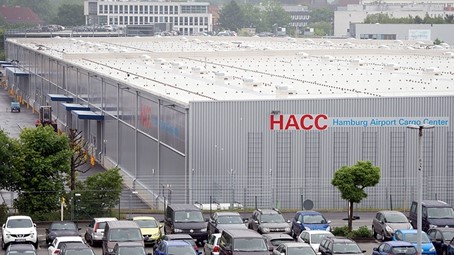
Air freight handling at Hamburg Airport (HAM) is being fully digitized. The symbolic start button will be pressed tomorrow, on 04AUG25. In close coordination with the airport’s cargo division, the three local handling agents, LUG aircargo handling, Swissport International, and WISAG Cargo Service Hamburg have now reached a consensus on the electronic system to be implemented and used.
Starting tomorrow (04AUG), the digital age for air freight begins at Hamburg’s cargo center HACC – photo: CFG/hs
Paper is a thing of the past. In future, freight operations at Hamburg Airport will be 100% digital. This means retraining for some ground staff, but it is unavoidable because there is no alternative. Trucking companies and their drivers are also affected, as they will have to book their delivery and collection slots electronically. Most importantly: the local customs authorities also support the step. Without their cooperation, the project would have no chance of being realized.
Customs authorities participate Frankfurt Airport and its FAIR@Link Cargo system called Allivate, served as the role model (CFG reported). Allivate is a 50/50 joint venture between airport operator, Fraport, and Hamburg-based IT provider, Dakosy. Based on the vision of “one location, one digital standard”, it will lay the groundwork for the end-to-end digitalization of handling and customs processes at the Hamburg Cargo Center, which is located within the airport fence in direct reach to the apron.
Important step forward For HAM Airport and particularly the local handling agents based there, the use of the Allivate tool is an important step forward, states Alexander Müller, Head of Office & Logistics at Hamburg Airport. When asked about the turnover of the three agents, he kept tight lipped. He only reveals that all three have major cargo airlines as customers. In the case of LUG, it is Turkish Cargo, WISAG serves Emirates and Lufthansa Cargo, while Swissport manages the cargo business of Qatar Cargo.
Meanwhile, LUG and Swissport have already adapted the electronic system, with agent WISAG now following suit. According to Ingo Veihl, Managing Director of WISAG Cargo, the main impetus for joining is the growing shortage of skilled workers and the increasing handling volumes. “Instead of waiting until we receive the goods to see which consignments are arriving, we will be able to see this step much earlier, and we’ll avoid double entries and paper.”
Reducing bureaucratic procedures… Managing Director, Dirk Gladiator of Allivate, added: “Connecting all handling agents is the basis for the binding introduction of location-wide digital and standardized air cargo processes.” The mandatory adoption of the FAIR@Link platform is also an important step in view of the growing volume of air freight handled at HAM. Last year alone, volume jumped by 39% to 65,400 tons. “This favorable development, in part due to new carriers, is quickly pushing our ground handling to a new dimension. With the Cargo Community System, we are enabling a more efficient use of existing capacities through foresighted planning and digital collaboration. We are thus positioning Hamburg Airport as an efficient and future-oriented air freight location,” enthuses Alexander Müller, Head of Office & Logistics at Hamburg Airport.
… and speeding up flows Once the system is in full swing, all parties involved will benefit from reduced administrative work, shorter waiting and handling times, and optimized traffic management solutions. In addition, export customs declarations can be prepared via FAIR@Link and automatically transmitted electronically to the customs office when the goods arrive, which further speeds up processes.
The joint approach is the focal point for Jens Sorgenfrei, Board Member of the Hamburg Freight Forwarders Association (VHSp): “With FAIR@Link, we are creating a robust foundation for modern, interlinked air freight processing, in which all parties involved – from freight forwarders and handling agents to authorities – can work together using a common platform.”
Every week, CargoForwarder Global’s ‘Spotlight On…’ looks at a single individual and segment of the air cargo industry to showcase the multitude of careers it offers. General Sales and Service Agents (GSSA) play an important role for airlines looking to expand to locations where they may not have their own local office. GSSA act as a strategic partner between airlines and the market. They provide essential support, marketing and selling an airline’s cargo capacity, combining efficiency and local expertise to generate growth for their customers. Tiffany Tam, AVP Commercial and Head of Marketing at TAM Group, takes us through her everyday responsibilities and shares views and advice on the air cargo industry.
Making global trade possible, one pallet at a time. Image: Tiffany Tam
CFG: What is your current function and company? And what are your responsibilities?
TT: I am the AVP Commercial at TAM Group, a global GSSA for both cargo and passenger, headquartered in Hong Kong. I get to wear another hat as Head of Marketing, steering our brand on a global level. I oversee marketing campaigns that showcase our TAM personality, while rallying support for business partners and airline clients. My days mix strategy with creativity, one moment workshopping the perfect campaign tagline, the next refining client touchpoints to ensure we deliver seamless experience as smooth as the cargo flow!
CFG: What does a normal day look like for you?
TT: A ‘normal’ day? It is a bit of a myth in marketing – Every day brings something new! Nevertheless, my mornings usually kick off with a coffee and a scroll through my morning newsfeed – LinkedIn and other industry updates, followed by team syncs and a parade of meetings, from finalizing trade event menus (yes, we debate dessert options!) to calibrating the perfect pantones. Through it all, my matcha latte is my sidekick, it’s my little productivity ritual!
CFG: How long have you been in the air cargo industry, and what brought you to it?
TT: I’ve clocked in over a decade in aviation, starting in passenger before expanding into the world of cargo. My path wound through airport ops, sales, and now marketing, giving me a birds-eye view of what makes this industry tick. When COVID grounded half the world, I led TAM’s rebranding and dove deeper into cargo – a move that showed me just how essential and resilient the industry is. Nothing beats learning firsthand at trade events, chatting with airline partners and global shippers, and realizing how every shipment tells a story.
CFG: What do you enjoy most about your job?
TT: What I love most is transforming scattershot ideas into campaigns that truly land! There’s no one-size-fits-all. Tailoring creative solutions to different markets and clients, then seeing your campaign “take off” in another continent never gets old. The best ideas sometimes arrive just like urgent cargo: last minute, but exactly what’s needed!
CFG: Where do you see the greatest challenges in our industry?
TT: People – always the industry’s wildcard! As much as AI and technology speed up supply chains, air cargo runs on grit and know-how, especially when a shipment goes awry or a global crisis scrambles flight schedules overnight. Younger talent might prefer screen time over airport sprints, but sky’s the limit when we could hit that sweet spot by blending their tech fluency with the hands-on problem-solving that keeps cargo moving. After all, no bot can replace a handshake that seals a deal!
CFG: What advice would you give to people looking to enter into the air cargo industry? Any particular training they should aim for?
TT: Air cargo is a fascinating mix of logistics, commerce, and people skills. My advice: stay curious and agile! The landscape is always shifting – new regulations, new technologies, new trade lanes… Some background in logistics or supply chain management helps, but adaptability and a willingness to learn will take you far. At the end of the day, soft skills open doors – air cargo is all about connecting people and possibilities!
CFG: If the air cargo industry were a film/book, what would its title be?
TT: “While The World Sleeps…”, because while most are dreaming, we are making global trade possible one pallet at a time!
Thank you, Tiffany!
If you would like to share your personal air cargo story with our CargoForwarder Global readers, feel free to send your answers to the above questions to cargoforwarderglobal@kopfpilot.at We look forward to shining a spotlight on your job area, views, and experiences.
This development comes as quite a surprise and has hardly been mentioned in the media so far. The Turkish Civil Aviation Authority (SHGM) wants to make the production and utilization of SAF mandatory. This affects not only passenger and cargo airlines, but also upstream and downstream transport processes. The goal is to reduce emissions in aviation by 5% come 2030.
Executives of DB Tarimsal Enerji, Honeywell and TTCL Public Company congratulate each other on the agreed SAF project – courtesy: DB Tarimsal Enerji.
Once the large SAF refinery is operational, it will catapult Türkiye at the top of global providers of a sustainable aviation fuel. The SHGM advance is in line with the Civil Aviation Organization’s (ICAO) CORSIA scheme for the gradual decarbonization of aviation, which envisages a new, more stringent phase come 2027. The Turkish initiative also stipulates that 90% of the specified amount of SAF for international flights must be refueled in Istanbul or another Turkish airport. This is intended to prevent regulatory compliance and, above all, to up the proportion of biofuel production within the country to grow this industry from little to big at a scaling rate.
Close collaboration is a prerequisite In addition to airlines as the main addressees, the SHGM measure applies to everyone involved in the supply chain. After all, a consistent reduction in CO2 values cannot be achieved if only individual players reduce their greenhouse gas emissions, but also forwarders, ground handling agents, airports, warehouse operators and all companies involved in cargo and passenger transportation.
Close cooperation of the energy producers is a prerequisite for the plan to work. They must ensure that SAF is available in sufficient quantities at prices that are affordable and do not put Turkish airlines at a competitive disadvantage due to high costs.
The local player, DB Tarımsal Enerji, has already agreed to build a refinery that can produce 100,000 tons of SAF per year. This is to be done in close coordination with other Turkish companies and, above all, Honeywell, which joint the alliance of three last fall.
Stark air traffic growth expected The cooperation is based on traffic analyses, prediction a 109% growth of the Turkish air transport market over the next 20 years. This figure is in line with IATA traffic forecasts.
Honeywell licensed UOP’s Ecofining process, is a proven technology that has been used globally since 2016 to produce SAF. It can reduce greenhouse gas emissions by 80% compared to Jet -A1 fossil fuels. DB Tarımsal Enerji is a market leader in Türkiye’s biodiesel industry and has established a procurement network for wastes, which will serve as raw materials in the development of SAF. The company plans to expand its product portfolio by stepping into the manufacturing and sales of next-generation aviation and marine fuels.
Once erected and operational, the company’s plant will use 100% of domestically sourced waste and raw material, with a production capacity of almost 400,000 liters per day. In addition to SAF, it will also produce bio-naphtha and renewable diesel. DB will handle raw material procurement. In addition, a project for a pre-treatment plant is already underway.
According to the latest IATA data from JUN25, North America reported an 8.3% contraction in monthly cargo ton kilometers (TKM), contrasting Asia-Pacific’s 9% growth in volumes. Although this is only a current picture, it already evidences the ongoing shift in air freight that is accelerating month after month. If this trend continues, cargo airlines will respond with network adjustments sooner rather than later.
15 Iconic American Brands have said Goodbye to the USA in 2025. Among them is guitar maker Gibson which moved its manufacturing to Indonesia – credit: TT Zop/Pexels
While commenting the figures, Willie Walsh, IATA’s Director General, pointed out many factors causing this development, but indirectly blamed tariff disputes triggered by the U.S. government as the main cause of the latest slump of the North American cargo traffic. The Far East-US trade corridor, which stands for 24.4% of the global industry, fell again in JUN25 (-4,8%). It was the seventh month of ongoing decline.
Appealing markets This consolidates the trend away from the U.S. as an attractive air freight market, which is likely to accelerate in the coming weeks and months due to Trump’s erratic tariff policy. Business associations in Germany, France, and other European countries, are increasingly frustrated and are tabling strategies aimed at turning away from the U.S. step by step, and recommending politicians to prioritize new trade agreements with countries such as Indonesia, India, Brazil, or Mexico. A leading representative of the European automotive industry said it quite openly at the beginning of last week: “The U.S. can no longer be relied upon, which makes long-term industrial planning almost impossible and shifts the focus of investment decisions to other markets.”
U.S. cargo carriers lose business The main beneficiary of this general shift in business is the Asia-Pacific region, where the month-long boom in freight traffic continues unabated, as evidenced by the 9% TKM increase in JUN25. Consequently, APAC carriers consolidated their position due to high load volumes in their home markets. High cargo volumes are also attributable to airlines that offer either nonstop services between Europe and countries in the APAC region or air carriage with stopovers at hubs such as Baku, Istanbul, Doha, or Dubai.
Stability and predictability are essential, says Willie Walsh In Europe, air freight only grew marginally in JUN25 (+0.8%) while the Middle East suffered a setback with a drop of 3.2%. According to IATA, the contraction in tonnage was caused by political tensions and military conflicts in the region, leading to market uncertainties and restraint business activities.
Africa grew as well (+3.9%) but based on a modest level, as did Latin America, including the Caribbean area (+3.5%).
Global air cargo demand grew modestly in JUN25 (0.8% y-o-y) with intercontinental traffic growing by 1.6%. Capacity offered to the market was slightly higher, reaching 1.7% growth, which has put some pressure on rates.
In his comment, IATA Chief Walsh reminded that “stability and predictability are essential underpinnings for trade,” which must be understood as a clear signal to the U.S. government. At the same time, he urged governments to step up digitalization efforts, allowing trade and air transport to become simpler, faster, safer and more accurate, benefiting producers, consumers and the entire air cargo industry.