Home Blog Page 78

ONE Record: Communication is a 24-way street

0

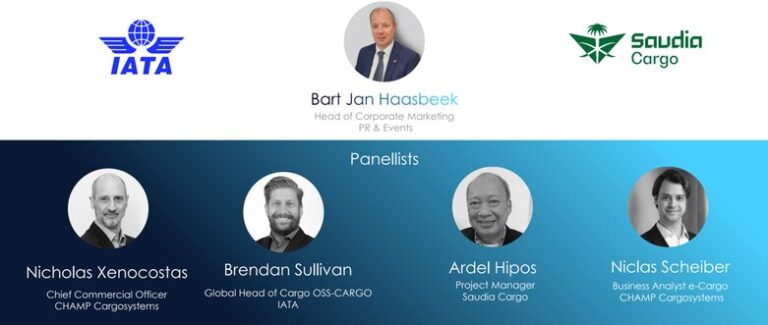
In our industry, communication is always a 2-way street – or maybe even a 24-way street,” moderator Bart Jan Haasbeek stated in the third CHAMP – ONE Record Webinar in the series, which took place on 23JUL25*, “Please adopt ONE Record!” he encouraged. IATA’s ONE Record concept is the solution for free-flowing, real-time data exchange based on original source data, regardless of the number of streets involved. Yet, eight years in and with five months to go until the 01JAN26 target for industry-wide ONE Record adoption, progress is still slow as companies representing a good quarter of all global AWB volume are not yet on track. CargoForwarder Global (CFG) wanted to know more about its status and put a number of questions to CHAMP’s Business Analyst e-Cargo CHAMP Cargosystems, Niclas Scheiber. Here’s the summary.

Look forward to new use cases and opportunities. Image: CHAMP webinar PPT

The first question naturally revolved around the ONE Record 01JAN26 target. While airlines representing 72% of all global AWB volume are apparently on track to meet target, according to IATA, more than 1 in 4 AWBs are not. What does that mean for the success of ONE Record come 01JAN26? CFG asked. Niclas Scheiber pointed out that “ONE Record is not just a replacement for AWB data exchange, it covers a variety of use cases.” Use cases were often cited in the 23JUL25 webinar and it seems the full potential here has yet to be unlocked. Indeed, during that panel, Nicholas Xenocostas, CCO of CHAMP Cargosystems, declared: “This is the beginning of the journey and there is lots to iron out.” Scheiber told CFG: “Our industry is typically slow and reactive, so it will take time until it will be fully established,” but also revealed “We are observing that interest and is gradually increasing.”

Where adoption is (and isn’t) happening
In answer to the question as to which segments of the supply chain have shown the fastest or slowest uptake of ONE Record, Scheiber pointed to carriers, GHAs, and IT providers as being the fast movers, whilst freight forwarders and customs authorities have been slower to adopt. His verdict: “Benefits can already be achieved between GHAs and carriers. ONE Record does not depend on forwarders.”

Tangible benefits
Despite the slower uptake from some segments, tangible benefits are already visible where partners engage. In the webinar, Nicholas Xenocostas summarized this as “Correct data, correct status, and all that in real time – this is a real game-changer.” The advice to the audience was always to start with a small use-case and expand from there, since ONE Record’s architecture inherently allows for incremental wins, even before the entire ecosystem is connected.

Scheiber listed a number of benefits that early adopters have experienced. First and foremost: “speed, accuracy, and richer data”. With cleaner data on hand more quickly, stakeholders can operate faster and more efficiently. Secondly, “the ONE Record booking pre-advice contains a lot more information compared to an FBL message, for example.” Because of that, accuracy and visibility is improved. With the information “being centrally available in ONE Record, there is also no version mismatch, and everyone involved in fulfillment can always verify the latest status of a booking straight from the carrier’s system.” That transparency does away with information silos, and creates a single shared, trustworthy data source. Lastly, early movers benefit from a clear marketing advantage. They gain a competitive edge by positioning themselves as digital leaders in an industry that is undergoing transition.

Challenges and concerns holding back adoption
CFG assumed that it is the smaller companies that are finding it a challenge to adopt ONE Record due to resource limitations and asked what IATA was doing to support them in their transition/adoption? Scheiber pointed out “ONE Record is open source, and its resources are available for free. This is in stark contrast to Cargo-IMP and Cargo-XML which are sold by IATA.

And what feedback or concerns have freight forwarders, shippers, or customs authorities raised during the transition? CFG asked. Scheiber explained that they often cite the complexity of ONE Record and the necessity for sophisticated IT understanding. There’s also a perception – sometimes misplaced – that ONE Record is just another AWB digitization exercise, following on the heels of Cargo-IMP and Cargo-XML. As Cargo-XML met with limited or mixed success at scale, this leads to skepticism as to ONE Record’s added value. That misunderstanding can obscure its transformative potential, including new business models and deeper data integration, since the focus remains purely on messaging.

Persisting myths: setting the record straight
What are persisting myths about ONE Record that need laying to rest? CFG asked. Scheiber stated three points: First up – ‘Not just messaging’. Unlike prior standards, ONE Record is not just another messaging protocol, nor is it limited to AWB transmission. It supports a broad, API-based, decentralized data-sharing ecosystem. Secondly, it is ‘Decentralized by design’: There is no single, central IATA server. Instead, ONE Record is distributed, with many interoperable nodes – similar to blockchain networks. And lastly, it is ‘more than just AWBs’: Its scope and flexibility grant the industry tools to digitize every facet of air cargo processes.

Security: Protecting sensitive data
CFG wanted to know: What security measures are in place to protect proprietary or sensitive shipping data across a distributed supply chain? Security has been baked in from day one. Scheiber explained: “State-of-the-art API security mechanisms based on OpenID Connect standard of the OAuth 2.0 Authorization Framework are in place. This is widely used and considered to be very secure. Access can be given on a way more granular level compared to messages. For example, shipper and agent contact details or pricing and rating information can be hidden from a GHA who does not need this information from an AWB. Additionally, access can be revoked at any time.”

Future-proofing Air Cargo: AI, visibility, and sustainability
In what ways does ONE Record prepare the sector for future innovation, including AI-driven logistics, real-time visibility, and sustainability goals? This was CFG’s closing question. Niclas Scheiber summarized: “ONE Record is the IATA-standard API specification for machine-to-machine communication in air cargo for the coming years or decades.” Its extensible specification supports seamless integration with real-time tracking systems, AI applications, and sustainability frameworks – such as CO2 emissions reporting via integration with the GLEC methodology. With its API-first model, applications can retrieve the latest data or be instantly notified of changes, preparing the industry for whatever innovations the future brings. “Data sharing does not depend on the envelope or corset of a message with ONE Record. ONE Record is real-time by design, as every participant in shipment fulfillment (or any other logistics process!) can at any point retrieve the latest agreed-on status at any time (and will be instantly notified about relevant changes),” he concluded.

Nothing to lose and a great deal to gain
Though CFG feels it is unlikely that 100% ONE Record readiness will have been achieved by IATA’s 01JAN26 deadline, the message from the webinar (which also centered around CHAMP’s 1Neo Connect product that offers a “sandbox” in which to test ONE Record without risk), is that ONE Record is robust, extensible, and already delivering value. Brendan Sullivan, IATA’s Global Head of Cargo emphasized that “ONE Record unlocks new use cases and supports regulatory requirements of the future.”

To repeat Bart Jan Haasbeck’s appeal: “Please adopt ONE Record!

*The webinar recording along with the previous events, can be found on the champ.aero website.

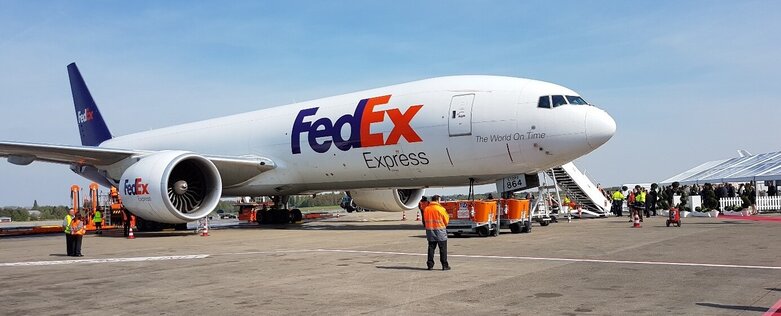
Liège Airport is FedEx’s strong secondary hub in Europe

The take-over of TNT in 2016, brought FedEx a second European hub at Liège Airport (LGG). Over the years, the airport has acquired a role of its own, especially after the introduction of the ‘tricolor’ strategy, says Managing Director Hub Operations, Rudi Loontiens (RL), in an exclusive interview with CargoForwarder Global (CFG).

The tricolor strategy paid off, states Rudi Loontiens, Managing Director Hub Operations FedEx Liège Airport – photos: CFG/ms

FedEx effectively landed in LGG in 2017. The honeymoon was soon distorted by a cyber-attack aimed at TNT, recalls Mr. Loontiens, who joined TNT in 2015, as a Project Manager. “Due to this attack, all TNT systems were out for several months, and we were compelled to speed up bringing in the FedEx systems.”

CFG: Has this process been completed?

RL: The crux of the matter is to have the two systems talk to one another, which is completed.The physical integration of our customers onto the FedEx platform has not been 100% completed yet. It is part of a large exercise that is going on. We have clients who still work with the TNT shipping system. IT-wise there is no new development on the TNT level.

CFG: Then in 2021, the European organization was copy-pasted from the US: one main hub, Paris-CDG, and a secondary hub, Liège Airport. Is there an allocation of functions between them?

RL: Liège Airport was the European hub for TNT, and CDG was the European hub for FedEx. Both served the same airports in and outside of Europe, with different aircraft. You will understand that this is not an efficient way of working.

We were weighing different options. Do we need 2 hubs in Europe? How big should each one be? In LGG, in the north of the airport, we had opportunities for growth, that were lacking at CDG. But then came Alibaba, which took a great part of the available land, so we had to abandon our plans for a mega hub. So, Plan B: primary hub, secondary hub.

At a certain moment, in 2021, we downgraded LGG and optimized CDG. At that moment, we worked 24/7. We went from 2,000 staff down to 1,300, approximately.

We ceased our weekend and daytime activities, in which mainly economy products were sorted. The number of flights were reduced from 35 to 15, and night operations were cancelled. From handling 100,000 pieces per 24 hours, we went to 35,000. It was a rather far-reaching restructuring operation. But we kept a fixed pool of workers.

CFG: But before that, in 2020, came Covid, which brought another challenge.

RL: The challenge was not so much in the number of pieces, but in the logistics landscape as a whole. Under normal circumstances, we used to put our low-yield products as belly on passenger planes, but these were annulled overnight. So, we had to put all flows on cargo and express planes. Customers moved from an economy to a more high-yield express product. A lot was shipped by ocean freight, too.

From Asia and intra-Europe, we experienced huge growth and a maximization of the flights. In the U.S., we flew a lot of vaccines and medical equipment. As we were able to sell more profitable products, this was very good business for FedEx on the financial side. From the operational point of view, however, it was a very difficult period. There was a lot of fear with our staff, and we had to adjust our processes.

Flying the colors

CFG: So, what connections does FedEx offer ex LGG?

RL: In the beginning, we served the larger part of the European Blue Banana market by air, and Cologne and CDG by road, with 5 weekly Memphis flights as our only intercontinental route. Instead of expanding the hubs, our legendary Founder and Chairman, the late Fred Smith, suggested letting the business grow by making better use of our network and our assets. One of the things was to stop putting miscellaneous products on one single plane.

On 20APR2017 the first FedEx freighter landed at LGG.

That’s when our ‘tricolor’ strategy was born, reflecting the three colors of our brand. ‘Purple’ stands for time-critical express, called ‘International Priority’ or ‘IP’. This is forwarded mainly on the route CDG-Memphis.

‘Orange’ stands for freight over 68 kg, an express product as well that requires specific handling, flown intercontinentally, mainly from LGG. ‘White’ is for non-time-critical consignments, flown point to point, avoiding re-sorting and the like. For these we use belly capacity.

This system creates space and is in line with the needs of our clients and our products.

Our daily Memphis flight has been converted to Orange. Since FEB24, we fly daily from Liège to Indianapolis. Since SEP24, three times a week to Oakland – a unique connection for Europe. And last April, we added an extra Memphis flight.

This has brought Liège Airport a new function as an intercontinental gateway for Europe, besides CDG as the universal express hub for Europe. Apart from this, Liège Airport has kept its role as a hub for intra-European services.

CFG: How many intra-European flights do you operate and where to?

RL: 15 or so, to all the large sales markets. The flights are operated on a fixed schedule that we revise if necessary. LGG and CDG operate as communicating vessels. Everything within a 5-hour driving time ends up in LGG. To enable our clients to catch the first flight out of CDG, they can deliver the night before at LGG.

CFG: Some years back there was a dispute with the Belgian Cockpit Association that accused FedEx of flying European routes with its own aircraft, thus violating the EU-AS Aviation Agreement. Has that matter been settled?

RL: ASL operates all our European traffic, but not exclusively. Our own B777s may, however, be used to fly ‘extended legs’ such as from LGG to Dubai and service a second leg taking from Memphis to LGG and CDG.

CFG: What sort of products do you fly from LGG on the intercontinental route?

RL: Verticals with a large production, such as pharma and automotive to name but a few, but no retail.

Trump’s tariffs

CFG: Does FedEx fear an impact from Donald Trump’s tariff strategy?

RL: We have a bit of a double feeling about that. I know that FedEx does not fear them. I like, again, to quote Fred Smith, who once said: ‘If you don’t like change, you will hate extinction’. When you work in a world of global logistics and commerce, you know that it is always on the move, and you will always have to provide an answer.

A company like FedEx has to adjust to the changing geopolitical landscape.

To get back to your question: if something is bound to change, on the positive or on the negative side, FedEx will adjust to the new situation. Maybe there will be more traffic between Asia and Europe, who knows? We are a flexible organization, especially since the tricolor system.

CFG: Have all these strategy changes had an impact on the FedEx staff here in LGG?

RL: At the moment, we employ 1,354 contractual staff and 130 temporary workers. Over the different stages, some 285 contracts have been changed. We are the largest employer at Liège Airport. The Orange product has also reinstated the daytime operation. So, if need be, we will certainly expand at Liège Airport.

CFG: Thank you for your time and input.

Marcel Schoeters in Liège

Spotlight on… Jessica Panigari, CEO, Founder & Strategic Leader, Goods2Load

0

Each week, CargoForwarder Global’s ‘Spotlight On…’ looks at a different cog in the complex machinery that is the air cargo industry. Not only do industry players differ in their roles and scope, but also in size and digital development. The latter has the potential to transform a business’ efficiency and reach, yet smaller companies are often at a disadvantage compared to their larger peers, due to resource and budget limitations. A growing number of freight tech start-ups are addressing the industry’s digital pain points and providing more accessible digital solutions to these stakeholders. One of these is Goods2Load, and this week, Jessica Panigari, its CEO, Founder & Strategic Leader, illustrates the responsibilities and views of someone in an air cargo industry focused digital start-up.

Solving real-world problems for real businesses. Image: Jessica Panigari

CFG: What is your current function and company? And what are your responsibilities?

JP: I’m the Founder and CEO of Goods2Load, a UAE-based digital logistics platform built to empower small and medium-sized freight forwarders. We help them digitize, centralize, and connect with global shipper demand. My responsibilities span across product strategy, international partnerships, fundraising, vision-setting, and leading the growth of a sustainable, impact-driven business.

CFG: What does a normal day look like for you?

JP: There’s rarely such a thing as a ‘typical’ day in a startup – at least not in mine! But one constant is my strong coffee ritual (two moka pots!) right before a 30-minute morning workout around 6.00–6.30 a.m., which helps keep my mind and body grounded – especially during inevitable ups and downs. Depending on the mood, I’ll start the day with a podcast or music, and then jump into a fast-paced mix of strategic calls, platform development, and meetings with trading and freight companies. Much of my time is focused on building international partnerships and shaping a better logistics experience. I usually wrap up my day around 8.00 p.m.

CFG: How long have you been in the air cargo industry, and what brought you to it?

JP: I entered the logistics space over five years ago with my first company in medical import-export, which scaled quickly across Europe during the COVID-19 pandemic. Air cargo was a key component in that growth. Experiencing both its potential and its pain points firsthand led me to launch Goods2Load – a platform designed to make logistics more transparent, accessible, and future-ready.

CFG: What do you enjoy most about your job?

JP: I love solving real-world problems for real businesses. It’s incredibly rewarding to know that a small freight forwarder – previously invisible online – now has access to digitalization, generating leads, connecting globally with an emerging business demand, and tracking real-time data through our platform, all without paying commissions. Being part of the transformation of such a traditionally offline industry is both challenging and deeply inspiring. There hasn’t been a single day when I stopped learning.

CFG: What do you see as the greatest challenges in our industry?

JP: One of the biggest challenges today is trust – especially when it comes to discovering and working with freight forwarders you’ve never met. Many SMEs still operate with little or no digital presence.

At Goods2Load, we’re addressing this through our onboarding process: we automatically generate detailed ID pages for each logistics partner, based on their service capacity and industry focus. These pages include video interviews with founders, certifications from recognized associations, and verification badges. This approach fosters transparency and helps users connect not only with verified companies but also with the people behind them. We believe trust and visibility are the cornerstones of a more inclusive and efficient logistics ecosystem.

CFG: What advice would you give to people looking to enter into the air cargo industry? Any particular training they should aim for?

JP: Start small. Stay curious. Never stop learning. Question yourself. Be bold.

This industry is undergoing rapid transformation with digitization, sustainability goals, and AI reshaping how goods exist and move across the globe. While traditional logistics knowledge is essential, combining it with digital skills like data analytics – like supply chain tech, or platform thinking – will set you apart. And don’t underestimate the value of soft skills like adaptability and cross-cultural communication.

CFG: If the air cargo industry were a film/book, what would its title be?

JP: “Above Borders”

Because air cargo transcends borders, time zones, and regulations.

The title reflects the industry’s limitless potential and aligns with our mission at Goods2Load – to make logistics more connected, transparent, and accessible, worldwide.

Many thanks, Jessica.

If you would like to share your personal air cargo story with our CargoForwarder Global readers, feel free to send your answers to the above questions to cargoforwarderglobal@kopfpilot.at We look forward to shining a spotlight on your job area, views, and experiences.

Lidl invests in box ships

Europe’s largest discounter, Lidl, which operates around 12,000 supermarkets in Europe, is building its own fleet of cargo vessels. The decision is a reaction to the coronavirus pandemic causing the collapse of key global supply chains and container price fluctuations, followed by ongoing multiple, overlapping crises. The critical situation is exacerbated by the uncertainties of future economic and political developments.

“If you want a job done properly, do it yourself,” could be Lidl’s fleet motive. Image: CFG/hs

Lidl’s operational motto is Everything from a Single Source – from sourcing the products in the country of origin to selling them in the discounter’s own European supermarkets. This approach is a reaction to the recent global turbulences prompting management to redefine the wholesaler’s business processes. In the past, the discounter used to work with shipping companies to transport many goods by sea, however, this phase came to an end in 2022. In that year, Lidl incepted the shipping company, Tailwind Shipping Lines, and registered the brand at the European Trademark Office.

Building its own maritime assets
The maritime newcomer is based in Hamburg. During the past three years, the wholesaler chartered ships with a capacity of between 3,800 and 5,500 TEU. It has now embarked on the second phase of its strategy: building its own assets. Consequently, Lidl awarded a contract to the Chinese shipyard Guangzhou Shipyard International, to build five box ships with a transport capacity of 8,400 standard TEU each. Industry experts estimate the total value of the order to be something between 530 million and 600 million euros. Lidl owner, Schwarz Group, does not provide any information on financial figures.

New routing
Since 17JUN25, the chartered vessels no longer sail from China via Bangladesh to Europe, but serve the hub Port Kelang, in Malaysia, from where they sail to Koper in Slovenia, and Barcelona on the Spanish east coast of the Mediterranean Sea, ending their maritime journey in Rotterdam. The ordered Chinese vessels are powered by LNG dual-fuel propulsion, which significantly reduces the environmental impact of emissions compared to Lidl’s current fleet.

Competitors are invited to use Tailwind capacity
In order to operate the vessels profitably, Tailwind also offers its capacity to competitors, as its own shipment volume is not sufficient to cover the costs. Hence, in addition to its own imports, a Lidl-owned vessel could also be carrying shipments from its competitors, Aldi, Carrefour, Tesco or Sainsbury’s. However, 50% of the cargo capacity offered by a Tailwind box ship is reserved for Lidl’s own consignments.

Tailwind Shipping operated vessels secure Lidl’s own supply chain – photo: Lidl

So far, the move of the wholesaler to manage maritime transports by itself, has paid off. Meanwhile, Tailwind Shipping has taken second position in the ranking of shipping companies registered in Germany, surpassed only by local giant, Hapag-Lloyd. Another positive aspect is that the fleet has achieved an average punctuality rate of 85%, according to available data. This is a very high figure in the maritime industry.

DoT on way to crushing Delta-Aeroméxico alliance

0

Washington’s Department of Transport (DoT) has taken steps to withdraw antitrust immunity from the aviation alliance of SkyTeam members: Delta Air Lines and Aeroméxico. In a first reaction, Mexican policymakers speak of a “direct attack on the existing and long-proven trade partnership in the cross-border aviation market,” should DoT’s plans be executed and implemented in OCT25.

A state of shock, paralyzing management, is almost a belittling picture to describe the reaction of those responsible at Aeroméxico after DoT announced that it would execute its regulatory maneuver. Should the Delta-Aeroméxico alliance ultimately be crashed, the Mexican flag carrier’s business will be crippled, since the USA are its most important aviation market, both in passenger and cargo traffic.

Does this announcement fully satisfy DoT who complains about the lack of modernization of AICM  –  courtesy: airport authority

Violating ATC accord
Market observers believe that Washington’s intended move is the latest step in a growing frustration over a series of actions by the Mexican government that, according to DoT, violate the spirit of the bilateral Air Transport Agreement signed in 2015. In blunt statements, Transportation Secretary, Sean P. Duffy asserted that the era of complacency is over, noting that the previous transportation administration “deliberately allowed Mexico to break our bilateral aviation agreement. That ends now.” The move catapults a dispute over airport slots and traffic rights on a geopolitical level, with the Delta-Aeroméxico alliance as the main target.
The Air Transport Convention of 2015 terminated decades of protectionism with governments defining which routes U.S. carriers and their Mexican peers are allowed to serve between both countries, how often they wish. Particularly in the case of Aeromèxico, the rulers in Ciudad de Mexico wanted to shield their flag carrier from the dominant competition of U.S. airlines, thus securing its survival.
This ended when the ATC was signed in 2015, eliminating state interference in the commercial decisions of airlines, leaving it up to the market to define fares and routing decisions. Since then, the time when traffic volumes between Mexico and the U.S. could be limited by governments, was over.

Slot cuts
But now Washington’s aviation watchdogs are accusing the Mexican side of repeatedly violating the ATC treaty by cutting movements at the country’s main gateway, Aeropuerto International Ciudad de Mexico (AICM), from 61 per hour to 52 and shortly after to 43. The traffic restrictions at the central airport were preceded by the opening of the Aeropuerto Internacional Felipe Ángeles (AIFA) on 21MAR22. It is located around 35 kilometers north of Mexico City’s city center. Mexico justified the cuts with “essential and urgent construction works” at AICM, to ensure safe operations. However, DoT qualifies this reason as an “excuse” and argues that, three years later, the promised infrastructure updates have not materialized and the measure was arbitrary.
The fact is that the slot cuts at AICM affected all airlines, including Mexican carriers, but it keeps benefitting Aeroméxico’s cargo business disproportionally since Aeroméxico is the only network carrier that was allowed to remain at AICM. All the others were forced by the country’s aviation authority to move their operations to the newly built AIFA. This fuels the U.S. view that, behind an appearance of fairness, lies an anti-competitive strategy, suspects Latin American aviation journal, Aviacionline, in a commentary.

Costly crash
The ball is now in the Palacio Nacional of Mexico’s, President, Claudia Sheinbaum, and her government to reach a diplomatic deal with their U.S. counterparts. For example, some of the slot cuts could be reversed or U.S. and other airlines be allowed to operate a certain number of flights via AICM again. At present, however, there is no sign of a friendly deal benefiting both sides. Should the Delta-Aeroméxico alliance be crushed, the consequences would be tough for both partners. Their partnership would be scaled back to a simple code-sharing concept, without the option of setting up a joint network, and forbidding them a coordinated price policy. It would have a negative impact on visitor spending on both sides of the border, harming the local economy and analysts forecast that it could cost 16,000 jobs in Mexico and 4,000 workplaces in the U.S., respectively.

Etihad Airways takes the fast lane

0

The ongoing growth of the Gulf airlines is breathtaking. Their European competitors, once their role models, are meanwhile only seeing the tail fins of their competitors from the Middle East. Following the ascent of the industry leaders, Qatar Airways and Emirates, Etihad Airways (EY) now rallies to catch up in passenger and cargo traffic. This is evidenced by its network expansion and forthcoming fleet growth.

On the African continent, four new destinations are listed on Etihad’s flight program. These are Algiers (ALG), Addis Ababa (ADD), Tunis (TUN), and Al Alamein (DBB). Until the end of 2025, the Abu Dhabi-based carrier plans to increase its African frequencies from currently 39 flights per week to 57. This includes more flights on existing routes between Abu Dhabi (AUH) and Johannesburg (JNB), Nairobi (NBO), and Casablanca (CAS).

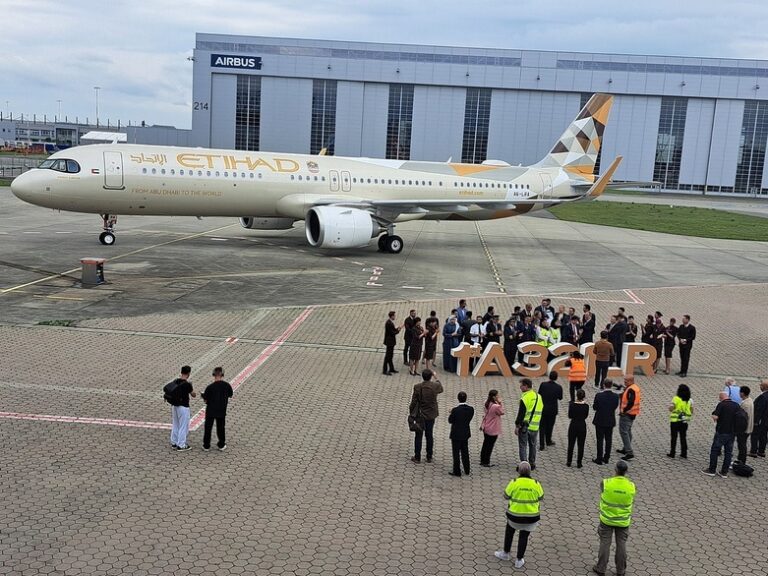
Delivery of Etihad’s first A321LR at the Airbus plant in Hamburg – courtesy: Airbus

New destinations in northern Africa
And these are the specifics of the new services: EY already flies twice weekly to Al Alamein in Egypt, since 17JUL25. It operates an Airbus A320 on the route, thus expanding its presence on the Egyptian market.
Addis Ababa, a key destination for cargo shipments, is next in line with the first flight scheduled to land at Bole International Airport on 01OCT25. The AUH-ADD route will be operated in collaboration with Ethiopian Airlines, based on a codeshare agreement that allows seamless travel and freight carriage between the two carriers.
As of 01NOV25, EY will commence flying to the Tunisian capital, Tunis, operating an Airbus A321LR. According to the flight plan, this route will be available to travelers and cargo clients three times a week.
Right after, on 07NOV25, Etihad will kick off flights to Algiers, marking its entry into the Algerian passenger and cargo market. As in the case of Tunis, an Airbus A321LR will also be operated on the AUH-ALG route, connecting both cities four times a week.

The A321LR becomes the backbone of EY’s fleet
On Thursday (24JUL25), Etihad Airways received its first Airbus A321LR jetliner at the Airbus production plant in Hamburg, Germany. The UAE national carrier continues to aggressively grow its route network. On the occasion of the delivery, Benoît de Saint-Exupéry, Executive VP Sales of the Commercial Aircraft Unit, Airbus, stated that the A321LR paves the way for increased connectivity as Etihad expands its operations from its Abu Dhabi home base. “The delivery of Etihad’s first Airbus A321LR, on lease from AerCap, is a powerful symbol of innovation and partnership, strengthening the long-standing relationship between Airbus and the UAE,” the Airbus executive said.
During the event, Etihad officials unveiled plans to launch 27 new routes in a single year as part of the carrier’s ambitious growth trajectory. Its first A321LR will enter commercial service on 01AUG25, first serving Phuket, followed by flights to Algiers, Bangkok, Chiang Mai, Copenhagen, Düsseldorf, Kolkata, Krabi, Krakow, Medan, Milan, Paris, Phnom Penh, Phuket, Tunis and Zurich.
“Receiving our first A321LR is an extraordinary moment for Etihad as we welcome an aircraft that changes everything we thought possible on a single-aisle plane. The A321LR enables us to serve more destinations with the same premium experience our guests expect across all cabins,” Antonoaldo Neves, CEO of Etihad Airways stated. He concluded his remarks by saying that “this new aircraft is going to shape the growth of the airline and is going to be the backbone of its ascent.” By 31DEC25, Etihad Airways plans to have taken delivery of nine more units of this Airbus variant. Another ten are to follow in 2026. And in 2027 and 2028, the Gulf airline intends to take delivery of five additional A321LRs each year.

From Duo to Trio: Swiss WorldCargo joins U.S.-Europe agreement

Strength (and flexibility) in numbers – in this case, number of flights and destinations. Swiss WorldCargo announced this week that it has joined the transatlantic agreement that already existed between Lufthansa Cargo and United Cargo. The result, once it officially gets underway on 01AUG25, will be an attractive cargo network comprising a total of over 200 U.S. destinations connecting with Zurich in Switzerland in addition to the existing Frankfurt/Germany services.

The original United Cargo–Lufthansa Cargo joint business agreement(limited to standard cargo), was launched in 2018, after three years of negotiations. Since then, the two airlines have cooperated on sales, customer relations, product enlargements and network topics. That success will now be augmented with Swiss WorldCargo joining the fold and the trio focusing on delivering “even greater value to customers through enhanced connectivity, coordinated services, and a seamless cargo experience across the transatlantic network,” as the press release states. It emphasizes that all joint activities will be carried out in full compliance with all applicable laws such as European Union and United States competition regulations.

From left: Ashwin Bhat (CEO of Lufthansa Cargo), Alain Chisari (Head of Swiss WorldCargo), Jan Krems (President United Cargo)

Important milestone
Alain Chisari, Head of Swiss WorldCargo, stated: “We are pleased to announce our participation in the joint business agreement between Lufthansa Cargo and United Cargo. This agreement marks an important milestone in strengthening our collaboration, broadening our global network, and offering our customers increased flexibility and connectivity. By joining this partnership, we reaffirm our commitment to delivering high-quality, reliable, and efficient air cargo solutions worldwide.”

Combining synergies
Ashwin Bhat, CEO of Lufthansa Cargo, commented: “The entry of Swiss WorldCargo into Lufthansa Cargo’s successful joint venture with United Cargo marks a significant milestone in enhancing collaboration and adding value for our customers. This expanded business agreement offers customers benefits especially of an even denser network and more seamless booking possibilities ensuring greater flexibility and reliability for their shipments. The combined synergies further enhance service quality and represent a step towards sustainable growth in a volatile and very competitive market for Lufthansa Cargo and its partners.”

Creating a seamless experience
Jan Krems, President United Cargo, concluded: “We are proud to welcome Swiss WorldCargo into our transatlantic joint venture with Lufthansa Cargo and United Cargo. This expanded collaboration brings together three premium carriers with complementary networks, operational expertise, and shared values. By coordinating schedules, aligning handling processes, and streamlining booking and tracking systems, we’re creating a more seamless experience for our customers – offering greater capacity, more consistent service, and improved access across key U.S. and European markets. This partnership strengthens our ability to meet growing demand and deliver smarter, more efficient solutions across the air cargo supply chain.”

More than a trio, in fact
The transatlantic cargo joint venture also includes the belly capacities of the passenger fleets of Brussels Airlines (IATA: SN) and Austrian Airlines (OS). That space is managed by Lufthansa Cargo, meaning that shipments transported by OS or SN fly under the Lufthansa Cargo code, Jan Paulin, Senior Manager Corporate Communication Lufthansa Cargo, confirmed to CargoForwarder Global. The same should soon also apply to the Italian ITA Airways, in which the Lufthansa Group has a 41% stake since mid-JAN25. Intensive talks are currently underway to integrate ITA’s freight activities into Lufthansa Cargo. If you include Brussels Airlines and Austrian Airlines, the new United Cargo, Lufthansa Cargo, SwissWorld Cargo trio, is in fact a quintet which is on the verge of becoming a sextet once ITA’s capacity is added.

AfA applauds U.S. GAO report

Brandon Fried, Executive Director of the Airforwarders Association. Image: Meantime Communications

The Airforwarders Association (AfA) has expressed strong support for the U.S. Government Accountability Office (GAO) report released on 24JUL25, as it spotlights the country’s critical air cargo infrastructure challenges – something that AfA has long raised with legislators. Alongside aging infrastructure, it illustrates other, resulting areas of concern: operational bottlenecks, data gaps, and insufficient federal engagement. Mandated by the FAA Reauthorization Law, the report offers a black-on-white validation of long-standing problems that AfA has consistently voiced on Capitol Hill.
In its 82 pages, it reports on key findings such as outdated cargo facilities struggling with modern demands, congested cargo aprons, limited truck parking, and poorly designed roadways that create delays and inefficiencies. The report also points to significant deficiencies in the Department of Transportation’s air cargo data, which hinder effective infrastructure planning. Additionally, it criticizes DOT’s limited communication with air cargo stakeholders, reflecting a lack of understanding and responsiveness towards industry needs.
These infrastructure problems lead to increased costs for freight forwarders, disrupt timely goods movement, and threaten the competitiveness of U.S. businesses globally. AfA sees the report as a critical validation to push for dedicated federal investments to modernize and expand air cargo facilities, improving the supply chain’s efficiency. AfA’s Executive Director, Brandon Fried, acknowledged key advocacy efforts and emphasized the association’s commitment to working with policymakers and industry partners to translate these insights into actionable improvements for the country’s air cargo infrastructure and commerce.
Brandon Fried, Executive Director of the Airforwarders Association, announced: “The release of this GAO report marks a truly significant moment for the entire air cargo and logistics industry. For years, we have highlighted the critical need for investment in our ground-based air cargo infrastructure. This report provides the irrefutable, government-backed evidence we need to drive real change and secure essential federal funding. [It] is more than just an analysis; it’s a critical tool that empowers the Airforwarders Association to intensify our efforts to seek dedicated Federal funding. Our goal is clear: to reduce airport truck lines, modernize facilities, and ultimately lower operational costs for our members, ensuring a more efficient and resilient supply chain for all U.S. commerce. We also thank our coalition partner, the National Customs Brokers and Forwarders Association of America (NCBFAA), and acknowledge all contributors to our 65-page briefing paper, especially the late Dan Muscatello, whose foundational insights were instrumental in making this report a reality.”

Air Serbia represented by GSA FlyUs in The Netherlands

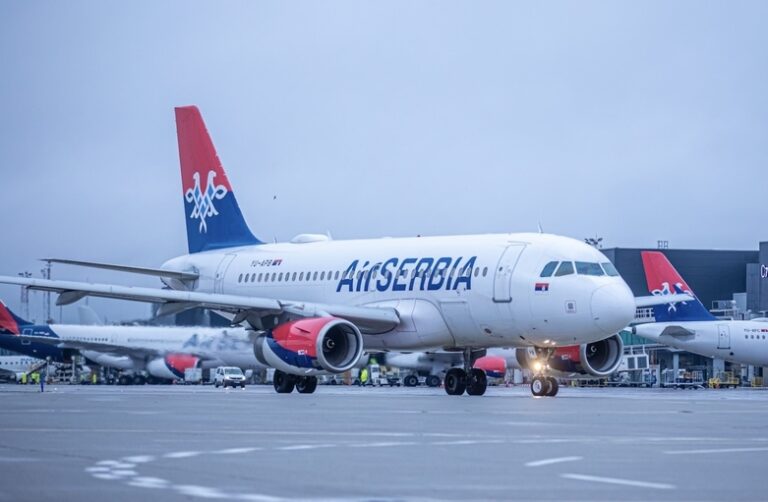
FlyUs serves Air Serbia in Austria, Belgium, and The Netherlands. Image: Air Serbia

And then there were three… FlyUs Aviation Group and Air Serbia are established partners in Belgium and Austria, already. Now The Netherlands is the third country in which FlyUs is the Air Serbia’s chosen representative. An exclusive, full-service representation General Sales Agent (GSA) contract was recently signed, wherein “the global GSA will support Air Serbia Cargo with sales, marketing, operations, administration, and back-office services, promoting daily services from Amsterdam Schiphol Airport (AMS) to Belgrade Airport (BEG), with onward connections across the airline’s network”. The airline is looking to expand its European cargo operations and FlyUs will look to fill the bellies of its daily Airbus A319 services from AMS to BEG, also focusing on connections beyond its hub to key destinations across Europe and further. “The appointment supports FlyUs’ strategy to grow its European GSA portfolio in close partnership with flagship carriers,” the press release admits. A strategic win-win, therefore.
Carlo de Haas, President and Chief Executive Officer, FlyUs, explained: “With Air Serbia’s daily service from Schiphol, we’re offering forwarders a reliable, high-frequency gateway to key designations across Air Serbia’s network. Headquartered at Schiphol and with a strong local presence, we’re uniquely positioned to drive growth for Air Serbia across the Netherlands, working closely with Dutch forwarders to deliver tailored solutions to meet their exact needs.” Veselin Đorđević, Air Serbia Head of Cargo, said: “Air Serbia’s services are already well recognized in the Dutch market. Through the partnership with FlyUs, we aim to further strengthen our presence and expand market penetration. In addition to our established operations in Europe, China, and the United States, we provide direct access to several niche and traditionally underserved destinations across Europe and Southeast Europe, where we hold a leading position. With the continuous growth of our network and increased flight frequencies, including the recent launch of direct services to Tbilisi, we anticipate even greater reliance on our offerings from the Netherlands.”

WestJet appoints Amanda Ierfino as Vice President, Sales & Cargo

Amanda Ierfino is VP Sales & Cargo at WestJet. Image: WestJet

WestJet has a new Vice President Sales and Cargo since 01JUN25, as it strives for long-term strategic development by focusing business and opportunity growth, and continued high-quality service. Amanda Ierfino has been appointed to the role. She brings around a decade of WestJet experience, having held various positions in network planning, loyalty strategy and partnerships, and advising on commercial projects, for example. Her most recent position was Director Sales from DEC22, before moving to Vice President, Sales and Cargo, last month. “Amanda has been a key driver in the development and execution of WestJet’s corporate and agency sales strategy, leveraging the airline’s strong presence in Calgary and building valuable partnerships across the industry. In her expanded role, Amanda continues to lead the Sales team while also taking on leadership of WestJet’s Cargo operations,” the release lauds. Her appointment comes in time for the planned transition away from dedicated freighter operations which will happen in the second half of 2025. Therefore, her focus will be on bringing Sales and Cargo together as the airline seeks to maximize on its belly cargo capacities. The plan is for a more unified approach to WestJet’s B2B strategy and therefore strong partnerships. Amanda Ierfino, Vice-President, Sales & Cargo, said: “Our partnerships have always been an essential part of WestJet’s success. Both our Sales and Cargo teams are united by a strong commitment to supporting our valued partners, and that focus will remain at the core of everything we do. I’m excited to lead this next chapter with an emphasis on partnership, new opportunities and shared growth.”