Home Blog Page 79

Abu Dhabi’s vaccine distribution hub starts up

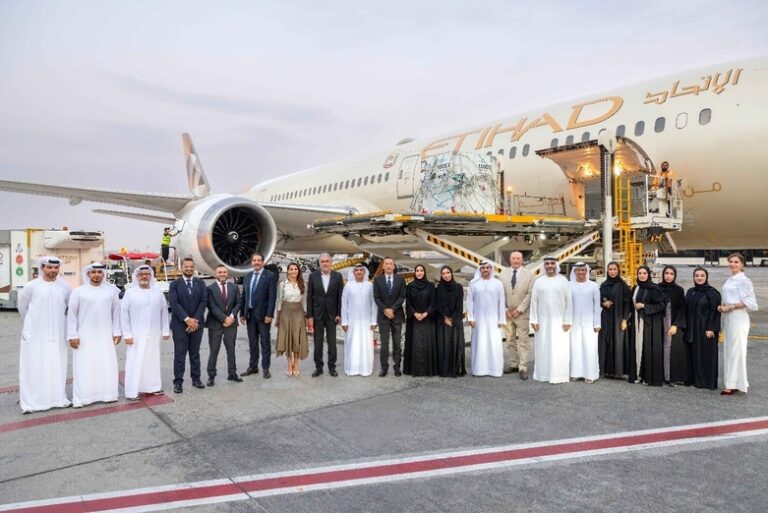
Ensuring a resilient and safe global health supply chain. Image: Etihad

Abu Dhabi has officially launched operations at its new regional vaccine distribution hub following an agreement signed in 2024. This marks a strategic step in bolstering global health security and supply chain resilience. The facility is located in Khalifa Economic Zones Abu Dhabi (KEZAD) and operated by PureHealth subsidiary, Rafed. Jointly developed by the Department of Health – Abu Dhabi (DoH), Abu Dhabi Investment Office, GSK, AD Ports Group, Etihad Cargo, and KEZAD Group, the hub’s advanced cold-chain logistics and innovative regulatory framework leverage Abu Dhabi’s geographic advantages to improve vaccine access regionally and support lifelong immunization strategies. It is the GSK’s first vaccine distribution center in the Middle East and the fourth internationally. The hub is also a flagship achievement of HELM, Abu Dhabi’s Life Science Cluster, designed to accelerate investment and innovation in biopharma and precision health.
More than 20 vaccine types will be managed at the facility, using cutting-edge technologies to maintain product integrity and end-to-end visibility. Fully integrated with Etihad Cargo’s PharmaLife network, it can distribute millions of doses annually to more than 100 destinations, speeding up delivery and strengthening Abu Dhabi’s role as a center for innovation-driven healthcare and logistics.
H.E Dr. Noura Khamis Al Ghaithi, Undersecretary of the Department of Health – Abu Dhabi, said: “The operational launch of Abu Dhabi’s regional vaccine hub signals our readiness to serve the region with speed, precision, and reliability. […] Through this hub, we are making vaccines more accessible to communities across borders and strengthening the UAE’s leadership in preventive, future-ready healthcare.”
Boyd Chongphaisal, Vice President and General Manager, GSK Gulf, commented: “The launch of our vaccine distribution hub in Abu Dhabi represents a shared commitment to health security, innovation, and access. Through our strategic partnership with DoH and local stakeholders, we are combining scientific excellence with operational strength to ensure timely, efficient delivery of vaccines across the region.
Mohammad Mustafa Saeed, Chief Executive Officer of Rafed, said: “The launch of this regional vaccine distribution hub is a tangible expression of our strategy to strengthen health systems, improve access, and build resilience across borders. By deploying advanced cold-chain and smart distribution technologies, we are enabling real-time, end-to-end visibility.” Stanislas Brun, Chief Cargo Officer at Etihad Airways, stated: “Etihad Cargo’s participation in this initiative reflects our continued investment in healthcare logistics. Our network and specialized PharmaLife product play a critical role in transporting temperature-sensitive vaccines reliably and efficiently across the region. We are proud to support Abu Dhabi’s vision of becoming a global leader in life sciences and supply chain excellence.

ECS Group and Global GSA Group are EcoVadis-audited

Auditor EcoVadis provides data-driven sustainability ratings – illustration: courtesy EcoVadis

EcoVadis is the world’s largest and most trusted provider of business sustainability ratings. It evaluates companies on their environmental, social, and ethical performance. So far over 3 million companies have been screened and more than 150,000 companies across the world have been rated. Organizations are helped to measure and improve their sustainability practices, as well as manage risks across the supply chain. EcoVadis assesses a company on areas such as environment, labor and human rights, ethics, and sustainable procurement. The points scored determine the company’s eligibility for EcoVadis medal categories: Bronze, Silver, Gold, and Platinum. So far, only a few air cargo industry companies are among those to have been rated. ECS Group and Global GSA Group are the newest ones – they were recently awarded the EcoVadis Bronze Medal. This means that they rank among the top 35% of all companies assessed, when it comes to their environmental, social, and governance (ESG) performance.
It is largely thanks to the support and coordination by ECS Group and Global GSA Group’s Sustainability Department. This helps to encourage, develop and promote ESG policies across ES Group, Global GSA Group and other affiliates, using structured, data-driven sustainability practices. “This recognition is especially meaningful given that the group has already established strong ESG policies aligned with global standards, initiated audit-ready reporting practices, and launched a climate action plan supported by concrete KPIs and deeply engaged teams,” the press release explains, emphasizing that “As the air cargo industry continues to evolve, ECS Group and Global GSA Group remain committed to supporting a meaningful and lasting transition toward more sustainable operations in partnership with clients, stakeholders, and industry leaders.”
Jean Ceccaldi, CEO of ECS Group, underlined: “This is a significant achievement for our group and all the teams behind it. It validates the work we’ve done to establish a strong ESG foundation and positions us as a forward-thinking player in air cargo.”
Aytekin Saray, CEO of Global GSA Group, added: “We are proud to contribute to this shared success. The EcoVadis Bronze Medal confirms that our approach to sustainability is both credible and impactful. It also motivates us to keep improving and expanding our efforts.”

AI has entered the building over at cargo.one

Benefiting from an AI-native database. Image: cargo.one

cargo.one announced this week that it has launched AI-powered features in it that improve quoting and rate management processes. It’s no secret that AI, done right and working from clean, correct data, can greatly improve business efficiency. And speed can win customers. Shipment details and rate requests are automatically extracted from emails, avoiding the need for manual, error-prone data entry. The result is a quicker quote. Further, requests are dealt with in a unified queue system, which supports improved team interaction, and all details are synced with the respective Transport Management Systems (TMS). cargo.one consolidates all rates, be they ad hoc, consol, or gateway, into one workspace for complete end-to-end quoting and easy comparison. This AI-driven solution reduces manual tasks, accelerates quoting, improves conversion rates, and allows forwarders to focus on customer relationships and complex shipments.
Moritz Claussen, Founder and Co-CEO of cargo.one, explained: “cargo.one focuses its AI where we can unlock significant, everyday value for our customers. By eliminating manual work from quoting, we enable freight forwarders to focus on their core expertise – understanding customer needs and providing exceptional solutions. Our latest step in combining AI automation, comprehensive rate coverage, and unified workflows, unlocks a new level of efficiency that wasn’t achievable before.”
Hylton Gray, CEO Air Freight, Sea Freight, Contract Logistics & Sales, at Röhlig Logistics, stated: “The future of freight forwarding lies in intelligent automation that enhances human capabilities rather than replacing them. cargo.one’s approach of building AI on top of its robust rate data represents exactly the kind of foundation our industry needs. We are excited about the possibilities this creates for our teams to focus on customer-facing and strategic activities, while the platform can handle more routine work.”
Andy Schaefer, Senior Vice President, Global Head of Airfreight at Toll, confirmed: “Every customer has unique shipping needs that demand tailored solutions. cargo.one’s comprehensive airline network, state-of-the-art data quality and simple interface enable our teams to quickly find the right option for every customer – exactly the kind of technological advancement that drives our competitive edge.”
Alexander Bang, Director, Airfreight Product Management at Logwin, said: “In today’s competitive freight market, comprehensive rate access and quoting speed have become essential, strategic capabilities. cargo.one connects our global offices and integrates with our systems, eliminating the fragmented workflows that can slow operations and allowing our teams to respond with the speed and accuracy our customers increasingly expect.”

BARIG welcomes MSC Air Cargo as a new member

The Board of Airlines Representatives in Germany referred to as BARIG, announced that MSC Air Cargo has joined the international airline association as its latest member. MSC Air Cargo brings the number of freight carrying members to over 30 in an association representing more than 100 airlines. BARIG recently increased its cargo focus, restructuring its Air Cargo Committee, and appointing Jorge Carretero of LATAM Cargo and Thilo Schäfer of Condor as co-chairmen alongside BARIG Chairman and Executive Director, Michael Hoppe. The Air Cargo Committee coordinates the association’s activities and initiatives in the field of air freight, supporting its members in navigating changes and challenges facing the industry.

Another cargo member joins the BARIG fold. Image: MSC Air Cargo

Michael Hoppe, BARIG Chairman and Executive Director, said: “We are delighted that MSC Air Cargo joins our BARIG community and brings a high level of expertise in the air freight sector. The industry in Germany has been facing numerous challenges, such as high location costs, complex processes, and a high level of bureaucracy. With the practical knowledge of our more than 30 international cargo airlines, we are committed to achieving measurable relief, accelerating processes, and improving the overall framework conditions for air freight in Germany.”

MSC Group’s air cargo subsidiary operates a modern fleet of Boeing 777-200 freighters serving European, Asian and American (North and South continents) destinations. Jannie Davel, CEO of MSC Air Cargo, commented: “With the third highest gross domestic product in the world, Germany is an important business location. Therefore, it is important for us, as a BARIG member, to be even more closely connected within Germany’s air cargo industry. We look forward to the constructive exchange and project development in the community.”

The drinks are on Air Charter Service – literally

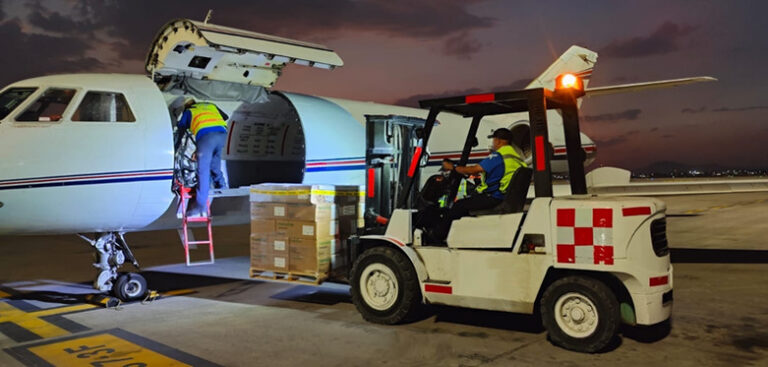
Or rather: the HOPS was on Air Charter Service – almost as soon as ACS Mexico received the urgent request from a key alcoholic beverage manufacturer in Mexico. They were calling to book a charter to ensure the quick delivery of half a ton of beer hops within the next 24 hours, otherwise the brewery would grind to a halt. No beer, no cheer – ACS Mexico understood the assignment perfectly and dashed in to prevent a national depression. All 561 kg of the precious cargo were loaded into a Dassault Falcon 20 in Washington State, USA, and flown 2,500+ miles to Mexico City.

One short hop[s] for Air Charter Service, one giant relief for the brewery. Image: Air Charter Service

It’s not the first time that ACS has proven to be the beer angel of the air – last summer, it carried out a similar, slightly larger hops mission for a Mexican brewery [same one?] at risk of running out of hops: that time from Liège to Mexico City – a shipment of 100 tons of hops on board of a Boeing 747-400BCF (sourced within 4 hours of the urgent charter request coming in!). And temperature-controlled too, at 0-7°C throughout.

Though a smaller consignment this time, the urgency was the same. Marco Circosta, ACS Mexico’s CEO, commented: “We were contacted by our freight forwarder customer in Mexico whose client’s brewery urgently needed a delivery of hops to avoid a production line shut down. The hops needed to be in Mexico within 24 hours of the customer first contacting us, so we quickly got to work sourcing an aircraft and found a Falcon 20, that was available nearby and was easily loadable, as it had a side cargo door that could fit the 561-kilogram load in on just one pallet. A complication was that, as the cargo was not traveling under refrigeration, we needed to coordinate with all relevant parties in order to minimize exposure to external conditions, by expediting the customs, loading and offloading processes. From initial phone call to completion of the charter was just under 20 hours, ensuring the production line could keep on running.”

Silicon Saxony: 600+ members including an airline

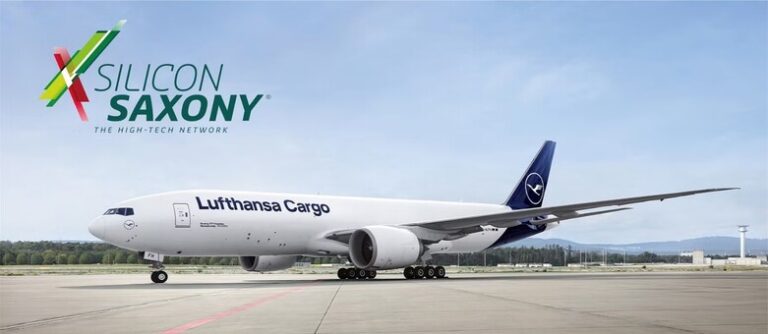
Dresden’s version of Silicon Valley, Silicon Saxony (a term first appearing in Time magazine back in 1998, but apparently not quite reaching the same level of visibility as its namesake despite being Europe’s largest cluster of IT and microelectronics companies – over 600 in total), recently welcomed its first airline to the fold. A long-term German expert in the international transport of semiconductor equipment and goods (from wafers to microchips), it comes as no surprise that this is should be Lufthansa Cargo. The move to become a Silicon Saxony member brings the airline in closer contact with the many players in the high-tech industry and enables knowledge exchange to ensure that these sensitive and valuable shipments are carried safely and reliably to their end destinations.

Silicon Saxony flies Lufthansa Cargo. Image: Lufthansa Cargo

Carolin Gerstenmaier, Head of Industry Development at Lufthansa Cargo, explained: “The semiconductor industry is characterized by highly sensitive, time-critical supply chains. Our customers expect reliable, flexible logistics solutions – and this is precisely where we want to continuously develop through active exchange. With our expertise in international air freight, we want to help make logistics processes along the value chain even more resilient and efficient. In doing so, we are supporting our mission: Enabling Global Business.”

Frank Bösenberg, Managing Director of Silicon Saxony, enthused: “We are delighted to welcome Lufthansa Cargo, one of the world’s leading companies in the air freight sector, as a new member of the Silicon Saxony high-tech network. This partnership will enable us to strengthen our focus on transport and logistics. Reliable and efficient logistics are a decisive competitive factor for the globally interconnected semiconductor industry. The exchange with Lufthansa Cargo opens up new perspectives on intelligent supply chains and resilient infrastructures. Together, we want to work on further improving Saxony’s international position as a technology location and further improving the conditions for research, development, and production.

BIG at PIK: Thank goodness for a nose-loader

Big is beautiful – and technically tricky. Image: Chapman Freeborn

The nose-door freighter is an aircraft breed in danger of becoming extinct, and yet for shipments such as the one Chapman Freeborn transported to Glasgow Prestwick Airport (PIK) recently, it is the only one up to the game. And at 67 feet long (20.4 meters), it is no surprise that this was the longest piece of cargo ever to be handled at the Scottish airport. But it had to get there first and it did this on board of a Chapman Freeborn chartered Boeing 747F, starting out in Kuala Lumpur, Malaysia, and travelling via Liège Airport (LGG) for a stopover and security screening. Despite its extraordinary length, unloading in Glasgow was a very quick affair – half and hour, with the involvement of three main deck loaders and two cranes. Weighing 24 tons, the cargo had been built up and loaded on three 20-foot connecting pallets. It travelled with two other 40-foot oil and gas components on board the B747F nose loader.

Adam Duckworth, Cargo Charter Broker at Chapman Freeborn “This operation required close coordination between our UK team and the airline, working alongside the CAA to ensure the cargo arrived on schedule,” said. “The handling agent’s team, Prestwick Cargo Services, did an exceptional job coordinating the offloading operation. We’re proud to have transported Prestwick’s longest piece of cargo to date, and remain dedicated to supporting our clients and the industries they serve, regardless of shipment size or complexity.”

WFS opens its fourth warehouse facility in CPH

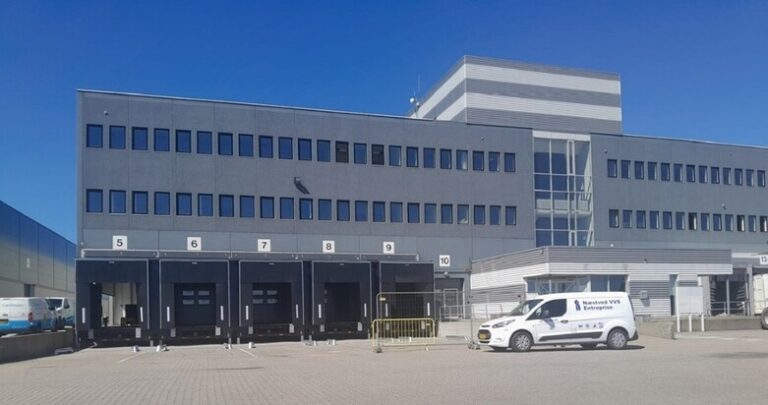
Worldwide Flight Services (WFS) has opened its fourth warehouse at Copenhagen Airport (CPH) as it seeks to expand its specialized e-commerce and freight forwarder handling (EFFH) services in Scandinavia. The additional 4,800m² of cargo space that it offers, brings WFS’s total CPH Airport footprint to 21,500m²+, (including its dedicated temperature-controlled pharma center). It also means that WFS can extend its service portfolio, offering a wide range of enhanced products covering import, export, and e-commerce freight moving through Copenhagen. These EFFH services include preparing shipments to be ready-for-carriage, recording cargo weights and dimensions, security screening, consolidation, transportation to and from handling agents, as well as deconsolidation, sorting, customs clearance preparation, road transport, labeling, repacking, crating, and tailored screening services. WFS reports that its e-commerce solutions speed up the process for international shipments bound for Scandinavia, cutting overall delivery times by one day thanks to rapid import sorting and scanning that accelerates customs clearance.

Part of a huge 21,500m²+ complex at CPH Airport. Image: WFS

Inge Briand de Crevecoeur, Managing Director Copenhagen at WFS, explained: “This is the latest expansion of our presence at Copenhagen Airport to support its growing cargo volumes and thriving freight forwarding community. We know from WFS’ experience at other major cargo gateways that forwarders are increasingly seeing value in outsourcing more of the physical handling aspects of their business to trusted partners like WFS.”

Marc Claesen, SVP Northern Europe & Africa at WFS, added: “Our expansion in Copenhagen aligns perfectly with our strategy to grow our e-commerce and freight forwarder handling product across our network. We are diversifying our services in an increasingly challenging environment, where speed of handling and real-time information sharing are critical. Copenhagen joins our dedicated E-Commerce & Freight Forwarder Handling facilities in key European gateways such as Belgium, France, the Netherlands, Germany, Spain, and Sweden and we will continue to seek new opportunities.”

Lufthansa Cargo developing VR training for loading supervisors

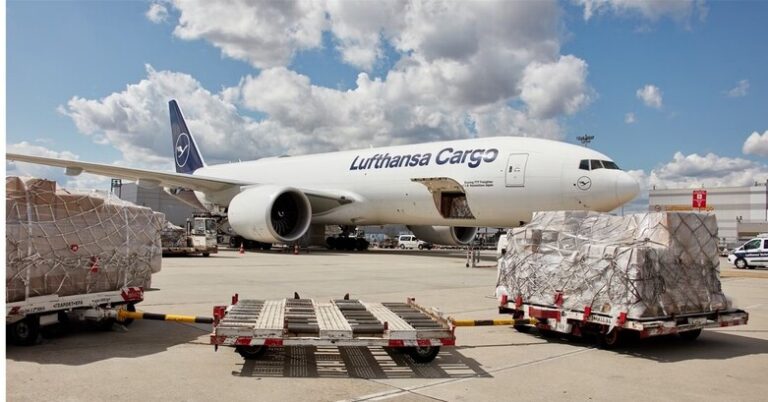
Lufthansa Aviation Training has incorporated Virtual Reality (VR) into its pilot and crew training programs since around 2023 and 2019, respectively. Airport College International launched Virtual Reality ULD training back in 2020. Now Lufthansa Cargo is joining the growing trend and beginning to create virtual reality training specifically for aircraft loading supervisors. VR is an excellent tool since it offers users the possibility to prepare for all kinds of scenarios – including ones that would otherwise be difficult to simulate or imagine in an analog setting. This broad spectrum of situations allows people to develop confidence and greatly expand their skills without having to be exposed to danger, and at a time and place of their choosing. Lufthansa Cargo’s aircraft loading VR training will cover all aircraft handling tasks, as well as the many related processes, safety regulations and required communication. “The immersive nature of VR technology allows learning content to be conveyed more intensively and promotes a lasting practical understanding of the processes. In addition, learning content is internalized much more quickly, as training participants can focus better on the content,” the press release states, revealing that the first module of the training is scheduled for OCT25. CFG recalls speaking to an insider during the about the possible applications of VR in Lufthansa Cargo warehouse and operations training back in MAY21, so it’s good to see one of the uses now become ‘Actual Reality’. According to the press release: “Lufthansa Cargo is one of the first companies in the air freight industry to use this innovative technology to train aircraft loading supervisors, underlining its claim to be a pioneer in digital solutions and training methods. The use of VR not only offers a cost-efficient and flexible training option, but also an environmentally friendly alternative to conventional training methods, as fewer physical resources are required and the learning content can be delivered in a consistently high quality.”

The first application of VR in loading training is about to happen. Image: Lufthansa Cargo

Momo Ruzic, Station Manager Frankfurt at Lufthansa Cargo, said: “With this project, we are not only strengthening the qualifications of our Aircraft Loading Supervisors, but also our role as an innovation driver in the industry. This technology allows us to train our employees in a practical manner while ensuring the highest safety and efficiency standards.”

BRU’s operations can continue despite annulled permit

The Council for Permit Disputes, an independent administrative law board accountable to the Flemish Government, has annulled the environmental permit for Brussels Airport (BRU). Air Cargo Belgium (ACB) is not dissatisfied with the decision as it paves the way for a more satisfying alternative. The current permit, renewed in JUL24, contains more stringent environmental rules, such as a curb on movements to 240,000 by 2032 and fewer night operations during the weekends. According to home carrier, Brussels Airlines, these rules harm the airport and, moreover, are a violation of European law.

Freek De Witte, Director Air Cargo Belgium. Image: ACB courtesy

Before resorting to the new environmental rules, the Flemish Government should have gone through the ‘balanced approach’ procedure, Brussels Airlines claims. The ‘balanced approach’ concept states that noise reduction cannot be achieved by just capping capacity. First, it must be demonstrated that all other options have been tried and proven to be unworkable. “The argument of the Flemish Government that it had no time to follow this procedure, does not justify the illegality,” says the airline.

Air Cargo Belgium has not been an ardent supporter of the permit from the beginning, its Director Freek De Witte admits, CFG reported. “The guarantee that we may continue the operations till 2029 is positive. We are surprised about the ‘balanced approach’, which has not been applied before. We hope that we can work on a more satisfying framework, including the night operation.”

Brussels Airport says: “In its decision, the Council for Permit Disputes gave the Flemish Minister for the Environment until 30JUN29 to follow the European Balanced Approach procedure and deliver an amended permit. Brussels Airport will take all necessary steps to obtain a suitable permit in time to ensure the continuity of operations after 2029 but also the long-term development of the airport. Brussels Airport always strives to respect the balance between its connectivity and economic role on the one hand, and its impact on the environment on the other. The airport remains committed to its efforts for sustainable growth within its surroundings.