Home Blog Page 114

Swiss Airtainer lifts Cool Containers to a new level

The presentation shows a lot of self-confidence: Swiss Airtainer intends to reinvent the pharma cold chain with its high-performance cool boxes. This is stated in a presentation by the Swiss company. The facts and data from the first 50 commercial shipments of high-value life science products, which were flown in the company’s RKN containers, prove that this claim is not without substance.

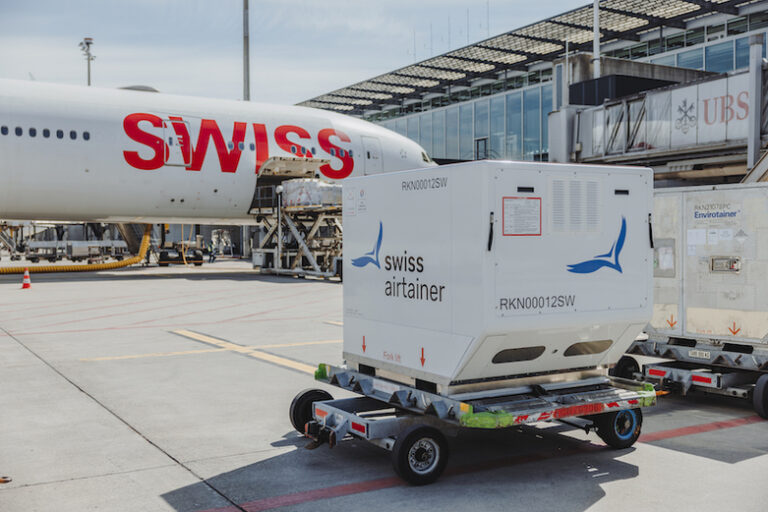
Swiss WorldCargo is launching partner of the ULD provider’s Airtainers  –  courtesy: Swiss Airtainer

These shipments have demonstrated the stunning performance, temperature and energy reliability of the active temperature-controlled air cargo containers offered the market by newcomer Swiss Airtainer. The RKN transport boxes mark a significant achievement in the company’s mission to provide the pharmaceutical industry with sustainable and reliable cold chain logistics solutions, reads a release. It could also trigger new initiatives by its competitors to lift their own products to a new level.

Some similarities…
But how exactly do the newcomer’s transport boxes differ from those of the leading top dogs Envirotainer, C-Safe and DoKaSch? The question comes up, because the products of the three providers mentioned above also offer a high degree of reliability. They are the result of decades of market experience and constant customer feedback.

… many differences
What the quartet have in common is that they only lease their cool boxes without selling them. They therefore have complete control over the use of the items, from filling them at the customer’s premises to returning them to their service centers. However, this is where the similarities end, as a comparison of the products shows, based on data captured during a return flight from Frankfurt to Hong Kong. The differences measured in terms of empty weights, working hours and CO2 savings are significant. And in total also in the operational costs.

The empty weight RKN boxes operated by Envirotainer, C-Safe and DoKaSch only varies very little and is between 635 kg (Envirotainer) and 670 kg (DoKaSch). In comparison, however, the Swiss Airtainer is much lighter (390 kg). This also has an impact on CO2  emissions. In case of C-Safe, DoKaSch and Envirotainer, this amounted to between 7,200 and 7,400 kg on the Frankfurt-Hong Kong round trip. In contrast, 4,400 kg were measured for the Airtainer (rounded figures). This is a grave difference in terms of the emissions of ozone depleting substances (ODS).

Ahead of the pack
The Airtainer is also ahead in terms of working hours, as its use is not limited in time and the cooling process is permanently guaranteed. For the three competitors it is 100 hours in unison, which is a respectable time span and sufficient to ensure the quality and integrity of sensitive pharmaceutical or other temp critical products.

The key competitive factor is integrated solar panels which provide energy autonomy and minimize reliance on external power sources, hence the unlimited working hours. Taken together, these parameters result in considerable cost savings for RKN applications. 

CO2 data collected by Swiss Airtainer.

All operations are monitored by a control tower built into the container. It constantly monitors important parameters such as temperature, humidity and vibrations in real time. Automatic alerts and a proactive management system ensure compliance with strict pharmaceutical standards and reduce risks and costly disruptions.

Swiss WorldCargo is launching partner
“With this solution, shippers can access cutting-edge technology that reduces carbon footprint and costs while improving operational efficiency. Swiss Airtainer’s proven success positions the company to scale its operations and expand its impact, setting a new standard for sustainable and cost-effective logistics solutions,” states Eduard Seligman, Founder and CEO of Swiss Airtainer.

First user of the Airtainer is Swiss WorldCargo. The carrier stresses in a press release that the product has received the full certifications required, including the one from the European Aviation Safety Agency (EASA), which confirms its safety and reliability. Swiss Airtainer has also received strong support from the Swiss Federal Office of Civil Aviation (FOCA) and from the State Secretariat for Economic Affairs SECO, further validating the company’s efforts to innovate and improve the air freight industry.

Spotlight on… Francine Carron, Founder & Director, ESG Consultancy

0

CargoForwarder Global’s ‘Spotlight On…’ series showcases a different area of the air cargo industry each week, to illustrate the multitude of careers on offer. With an ever-increasing focus on environmental, social, and governance topics within the industry, companies are well-advised to seek the help of specialized consultants when establishing and implementing their ESG strategies. This week, therefore, CargoForwarder Global bids Francine Carron, Founder and Director of ESG Consultancy, to the fore, to take us through her day, her responsibilities, and her advice on how to seek a career in the air cargo industry.

Networking within industry bodies is essential. Image: Francine Carron

CFG: What is your current function and company? And what are your responsibilities?

FC: I am the Founder and Director of ESG Consultancy, a company specializing in providing tailored Environmental, Social, and Governance (ESG) solutions for the aviation and aerospace, logistic and material handling sector. My responsibilities include developing sustainability and ESG strategies, conducting sustainability assessments, supporting compliance with frameworks such as CORSIA, CSRD, CSDDD, EU Taxonomy, GRI, SDG, and guiding companies in achieving decarbonization goals.

CFG: What does a normal day look like for you?

FC: There’s no such thing as a ‘normal’ day in my role, and that’s what makes it so exciting. My days often include collaborating with clients on sustainability projects, conducting gap analyses for compliance, preparing ESG strategies, conducting sustainability assessments for TIACA’s Blue Sky program, or helping air navigation service providers submit their Green ATM – those are just a few examples. Everything I do is tailored to the aviation and cargo sectors. I also spend time mentoring teams, conducting ESG training sessions, and working on initiatives like premium carbon credits development (CORSIA) and biodiversity offsets.

CFG: How long have you been in the air cargo industry, and what brought you to it?

FC: My journey began with a passion for sustainability and a desire to address the environmental challenges within high-impact sectors. My experience in CSR roles, particularly with skeyes (Belgium Air Traffic Control) and as former PM of the Global Aviation Aerospace Skills Taskforce at ACI World, naturally aligned with the needs of the air cargo industry, where ESG practices are increasingly critical.

CFG: What do you enjoy most about your job?

FC: I find immense satisfaction in driving measurable change. The ability to guide organizations toward achieving their sustainability goals, reducing their environmental footprint, and aligning with global standards is incredibly rewarding. I also love the collaboration aspect — working with diverse stakeholders and seeing the industry come together to tackle shared challenges.

CFG: What do you see as the greatest challenges in our industry?

FC: One of the biggest challenges is achieving meaningful decarbonization while balancing operational efficiency. The industry also faces increasing pressure to comply with regulatory requirements such as CORSIA, CSRD, and the EU Taxonomy, which can be complex to navigate. Additionally, fostering sustainability across global supply chains and addressing scope 3 emissions present ongoing hurdles.

CFG: What advice would you give to people looking to enter into the air cargo industry? Any particular training they should aim for?

FC: My advice is to focus on developing a strong foundation in sustainability. Training in areas like ESG reporting, decarbonization strategies, and regulatory compliance (e.g., CSRD, CORSIA) will be increasingly valuable. Certifications such as ISO 14001 or training in environmental management can also give aspiring professionals a competitive edge. Networking within industry bodies such as TIACA is essential, as it helps you build relationships and stay updated on industry trends.

CFG: If the air cargo industry were a film/book, what would its title be?

FC: “The Weight of the World: Balancing Progress and Responsibility.” This reflects the air cargo industry’s essential role in global trade and its ongoing journey to balance efficiency, innovation, and sustainability.

Many thanks, Francine, for your views!

If you would like to share your personal air cargo story with our CargoForwarder Global readers, feel free to send your answers to the above questions to cargoforwarderglobal@kopfpilot.at We look forward to shining a spotlight on your job area, views, and experiences.

Suez-Canal – box carriers remain hesitant

0

The ceasefire between Israel and the Hamas, in place since last weekend, has so far had no influence on the network decisions of the major box carriers: MSC, Maersk, Hapag-Lloyd, Yang Ming or Evergreen. They continue to navigate around Africa on their way between East Asia and Europe. Resuming routes through the Red Sea and the Suez Canal is still too risky, they believe, despite the Yemeni Houthi regime’s call for an end of shelling any European or Asian merchant ship at the Gulf of Aden. “We are closely monitoring developments and will make a decision as soon as the situation is clearer and there is no longer any fear of attacks on our ships, seafarers, and cargo,” said the spokesperson of a leading shipping company when asked.

Courtesy: openpr.com

Passing through the Suez Canal saves up to 3 weeks compared to sailing around the African continent on voyages between the Far East and Europe. However, the only shipping company that started using the waterway connecting the Mediterranean with the Red Sea again, is CMA CGM from Marseille. It belongs to the French Lebanese businessman, Rodolphe Saadé, who prides himself of having close ties to the Élysée Palace which, in turn, enjoys friendly relations to the Arab world. Rumor has it that CMA CGM has agreed a ‘non-aggression pact’ with the Yemenite Houthis, indirectly supported by the Parisian government. However, there is no official evidence or any political confirmation.

The ceasefire is still fragile
So why do the box carriers still shy away from using the Suez Canal despite the fact that the Houthi regime has stopped its shelling of merchant vessels registered in Europe or the Far East?

There are various reasons. Firstly, it takes 3 to 4 months to draw up new schedules, including complementary services. Secondly, the longer voyage around Africa ties up a lot of capacity compared to the Canal passage, which keeps rate levels high. If, on the other hand, more cargo space were available, rates would fall with box carriers earning less money. A third factor is the fragile security situation for passages through the Gulf of Aden and the Red Sea. As long as the ceasefire between Israel and its opponents is not carved in stone, the sudden outbreak of new hostilities poses an incalculable risk for crews, cargoes and ships passing through the Suez Canal.

Risk avoidance strategy
The ceasefire agreed between Israel and the Hamas is tied to conditions. Both parties keep on accusing each other of violations, which makes the situation unstable. Added to this is the influence of external actors: The Iranian mullah regime continues to support the Hamas both militarily and financially, while Israel pursues alliances with Arab states and Western powers. These geopolitical dynamics contribute to the fragility of the ceasefire deal.

A spokesperson for Maersk told Shippingwatch.com that the safety of the crew is top priority and that its vessels will continue to circumnavigate Africa for the time being. Similarly, Hapag Lloyd emphasized to Reuters that it is closely monitoring the security situation and will only return to the Red Sea when it is safe to do so.

Chinese rushed in
The beneficiaries of the conflict were dozens of smaller Chinese shipping companies, which popped up like mushrooms in recent times. Undisturbed by the Houthis, they constantly used and continue to use the Suez Canal on voyages between China and Russia. Their vessels can accommodate between 2,000 and 4,000 TEU, so they are relatively small. The crews are all Chinese nationals. As part of a political deal between China and Russia, they are presumably transporting Chinese military goods to St. Petersburg, in this way supporting Putin’s war on Ukraine. In contrast, the major Chinese shipping company, Cosco continues to sail around Africa.

60 vessels per day
The prevailing wait-and-see attitude of the major shipping companies regarding the canal passage, is likely to displease the Egyptian government. The revenue from the Suez Canal covers around 15% of its entire national budget. Before the Houthis started shelling merchant vessels, around 60 ships passed through the canal every day. The fees charged by the Suez Canal Authority average 300,000 dollars per passage but can also amount to 1.15 million USD for a 20,000 TEU container ship. A lot of money. However, compared to sailing around Africa, the advantages outweigh the disadvantages: considerable time savings of around two weeks, lower fuel costs and reduced CO2 emissions, comparatively faster market capitalization of the transported goods and the optimization of global supply chains. Market analysts forecast that most box carriers will send their ships through the Suez Canal again, come summer 2025 – provided no new military conflicts break out around the Red Sea.

Trump decapitates TSA

0

The U.S. Transportation Security Administration (TSA) has been without leadership since Monday (20JAN25). After Trump was sworn in as President, he fired TSA Administrator David Pekoske. Simultaneously, FAA Chief Mike Whitaker made good on his earlier announcement and resigned from his post. This deprived the two agencies of their leading figures.

TSA Administrator David Pekoske was ousted by Trump following his inauguration –  photo: courtesy TSA

For the time being, Pekoske will be replaced by Deputy Administrator Holly Canevari, who will head the agency until the vacancy is filled with a loyal Trump supporter. The names of potential candidates for the top TSA management position have not yet been communicated. The same applies to the staffing of the top position at the FAA.

His term ended with the beginning of Trump’s presidency
In his role as administrator Pekoske was responsible for a workforce of roughly 60,000 spread across the entire nation liable for supervising and protecting the entire U.S. transportation systems, including cargo traffic, and the traveling public. He said in a memo reported by CNN and confirmed by Reuters that he was advised by Trump’s transition team “that my time as your administrator will end at noon ET today.”

Before leaving his chair, Pekoske issued a farewell message to TSA employees, saying that he was advised to resign by Trump’s transition team. “I will sincerely miss being part of this agency and having the opportunity to serve alongside this incredible team,” Mr. Pekoske wrote. “It has been an honor of a lifetime! I leave with the utmost respect for you and immense pride in what we have accomplished together since August 2017.” 

Mike Whitaker resigned on 20JAN, enabling Trump to pick one of his loyal followers as successor – photo: Courtesy AP

No MAGA, no job
The official added: “People place their trust in you no matter what your job is in TSA, so they can travel and the goods they rely on can reach them via our transportation systems. It’s an incredible responsibility that each of you has been entrusted with, and you carry it out in a manner that is an example of the best of America.” 

Following his inauguration, Trump fired four more senior government officials appointed by his predecessor Biden and warned that “over a thousand” others might face the same fate. 

“My Presidential Personnel Office is actively in the process of identifying and removing over a thousand Presidential Appointees from the previous Administration, who are not aligned with our vision to Make America Great Again,” Trump confirmed in a post on his platform Truth Social.

Whitaker’s resignation comes at a time when the FAA is facing a major probe into safety problems at Boeing and amid ongoing challenges with air traffic controller shortages and aging equipment. The FAA Administrator, who has earned bipartisan respect, took over the position in OCT23 at a troubled moment for the agency as it grappled with major challenges in replenishing its depleted air traffic controller workforce — all before an Alaskan Airlines operated Boeing 737 MAX door blew off midair alarming passengers and the FAA. 

Until the Trump administration appoints a successor to Whitaker, the FAA is now leaderless.

McCarthy as role model
Critics are already talking about the start of a witch hunt that is likely to further divide American society. A leading Chicago businessman told CargoForwarder Global that Trump’s first actions are reminiscent of the unholy times of communist hunter Joseph McCarthy in the early 1950s, who claimed to have identified 200+ Communists working incognito within the U.S. Department of State. From that moment Senator McCarthy became a tireless crusader against Communism and conducted hearings on communist subversion in America and investigated alleged communist infiltration of the Armed Forces.

According to his own announcements, Trump intends to fire thousands of civil servants who are critical of his MAGA policy.

VIE Airport surpasses 2019 cargo figures

0

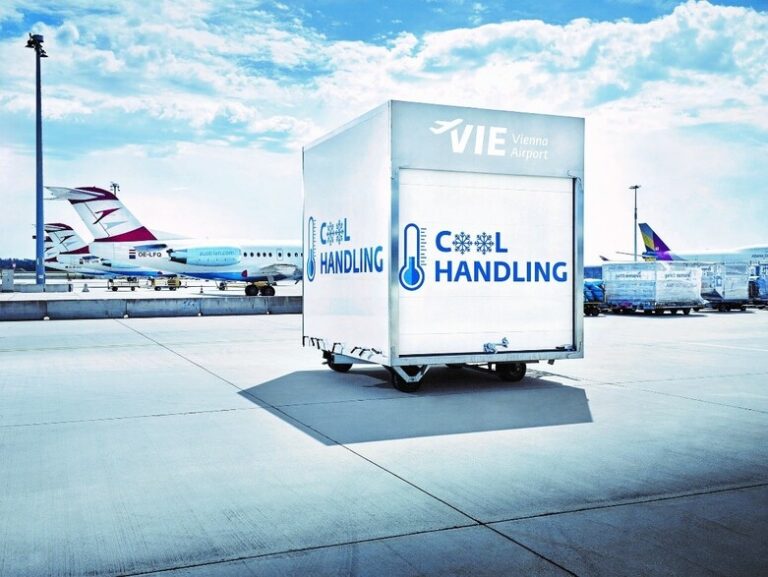
“Belly up” is a good thing over at Vienna International Airport. Thanks to an increase in long-haul passenger services, the airport closed the year on an absolute cargo high. Not many can boast 22% cargo growth on previous year, nor a 5% increase on pre-pandemic 2019. That translates into a total of 297,945 tons of cargo handled, last year. And given that pharma handling registered a 15.3% increase, coming in at 4,238 tons handled, the airport is in the money with its 2024 record air cargo year.

Cargo – particularly pharma, is on the up at VIE. Image: Vienna International Airport

It was the return of Asian carriers such as Hainan Airlines and All Nippon Airways (ANA), that enabled capacity growth with their services to Shenzhen, Chengdu and Tokyo. Qatar Airways, too, increased its frequencies to Vienna, as did a number of other airlines. In total, cargo carried in passenger bellies saw an increase of 44% – in absolute terms, 125,103 tons of cargo were transported on these services in 2024. Freighter-carried cargo saw a slight -3% decline to the previous year, at 82,610 tons transported. Whereas trucking volumes grew 24% to 90,199 tons, contributing significantly to the 2024 air cargo record. In terms of import/export, import was the winner at 163,026 tons (20% up on previous year – with much of it being e-commerce) flying in to VIE and being forwarded either domestically or across CEE. Exports (up 23% on previous year) totaled 134,918 tons of cargo and were headed mostly for Asia and the USA.

Julian Jäger, joint CEO and COO of Vienna Airport, commented: “With the best cargo results in the history of Vienna Airport, we are strengthening our position as a central hub for air cargo services in Central and Eastern Europe. This record clearly proves our first-class infrastructure and high quality of service, convincing customers worldwide. The strong growth is evident in both imported goods and global exports. The record regarding pharmaceutical handling is particularly pleasing: Vienna Airport is thus establishing itself even more strongly as a leading logistics expert for pharmaceutical shipments.”

Michael Zach, Senior Vice President Ground Handling & Cargo Operations of Vienna Airport, added: “The record result for 2024 marks an impressive achievement by our cargo handling team. At the same time, we have set the course for further positive development. With the extension of the handling contract with Lufthansa Cargo and the IATA certification for the handling of lithium batteries, we have already taken the next steps to maintain a sustained growth path.”

Chapman Freeborn and AJEX Logistics sign agreement

0

Global air charter specialist, Chapman Freeborn, has strengthened its presence in Saudi Arabia through a strategic partnership with AJEX Logistics Services. The agreement, signed on 15JAN25, expands Chapman Freeborn’s cargo operations in the Kingdom, aligning with Saudi Arabia’s Vision 2030 program.

Gerhard Coetzee, VP Cargo – IMEA, Chapman Freeborn, & Mohammed Albayati, CEO, AJEX Logistics Services. Image: Meantime Communications

This collaboration aims to enhance airport ground and cargo handling services, as well as manage special cargo projects. The partnership is a response to Saudi Arabia’s ambitious goal of increasing air freight capacity to 4.5 million tonnes annually by 2030. This collaboration is expected to deliver enhanced aviation and cargo solutions, supporting Saudi Arabia’s growth objectives. The move reflects Chapman Freeborn’s commitment to the region, marked by recent investments in personnel, including Linas Dovydenas as President of IMEA, back in NOV24.

Gerhard Coetzee, Vice President Cargo at Chapman Freeborn, said: “This collaboration aligns with our mission to provide world-class aviation services and reflects our dedication to supporting the Kingdom’s Vision 2030. Together, we will drive innovation and excellence in aviation and cargo operations, ensuring that our clients benefit from the best possible service.”

Mohammed Albayati, Chief Executive Officer, AJEX Logistics Services, stated: “By combining our regional strengths with Chapman Freeborn’s extensive global network, we are committed to delivering enhanced aviation and cargo solutions that support the Kingdom’s ambitious growth objectives.”

EFIS Maroc and China Eastern Airlines enter partnership

0

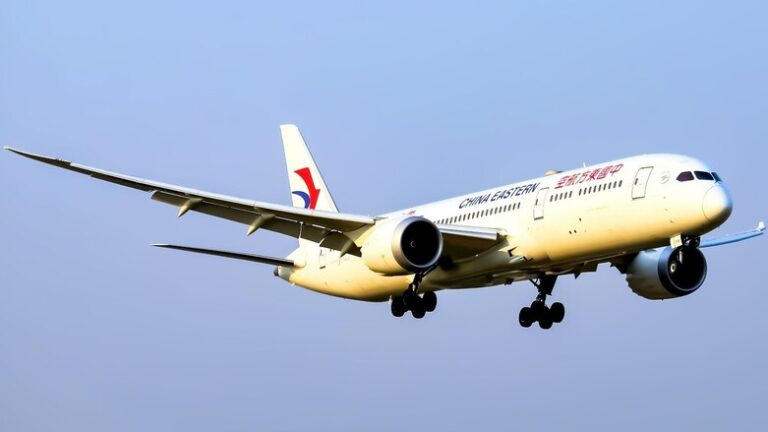
Today, 19JAN25, sees the start of a new, regular service between Casablanca (CMN) and Shanghai (PVG) via Marseille (MRS). The Moroccan ECS Group subsidiary, EFIS Maroc, has signed a strategic partnership agreement with China Eastern Airlines, and takes on the responsibility for filling its aircraft with freight. China Eastern Airlines operates three flights per week, leaving Casablanca on Tuesdays, Fridays and Sundays. Its Boeing 787-900 aircraft offers 18 tons of cargo capacity. In the first instance, the connection has been created “to support the automotive industry by ensuring the timely and secure transport of high-value components between Morocco and China. It not only strengthens supply chains but also plays a key role in fostering deeper trade relations and economic growth between the two regions,” the press release reveals.

Sino-Africa cargo relations take another step forward. Image: Lemon Queen

For ECS Group, the agreement is a solid milestone in its strategy of developing Morocco as a strategic gateway to Africa, and promoting its strength and expertise in African cargo logistics. China Eastern Airlines is set to benefit from the leading qualities that EFIS Maroc enjoys through ECS Group’s international network as well as its in-house state-of-the-art technology and services. “Squair, ECS Group’s proprietary solution for optimizing customs reporting, combined with CargoAi’s advanced digital booking platform, will streamline operations and enhance transparency. This comprehensive approach enables EFIS Maroc to provide a tailored cargo management solution for China Eastern Airlines, enhancing both operational efficiency and customer satisfaction,” the release continues.

Jean Ceccaldi, CEO of ECS Group, stated: “This partnership with China Eastern Airlines marks a key milestone for EFIS Maroc and ECS Group. Combining our regional expertise with innovative tools, we aim to redefine standards in efficiency and reliability for cargo logistics.”

The largest ULD digitalization move ever for an airline

0

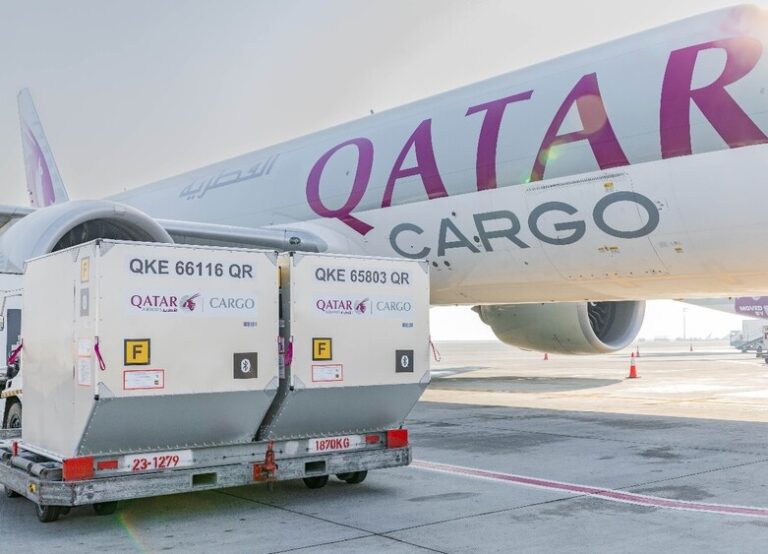
Qatar Airways Cargo and Unilode announced a record-breaking partnership activity last week: talk is of the digitalization of the airline’s entire fleet of Unit Load Devices (ULDs). That means a total of more than 42,000 ULDs that Unilode Aviation Solutions outsources to Qatar Airways Cargo, and for which it ensures ULD management, repair and digital services, will undergo e-tagging expansion. This means that the two companies will work on ensuring that Unilode’s tag and reader network covers Qatar Airways’ complete global passenger and cargo network. Unilode’s in-house E-ULD tracking app (available online and via smartphone) will then be able to provide real time visibility of where each ULD is. Unilode’s Enterprise Data Warehouse and customer portal will also generate enhanced data analytics, so that ULD utilization can be improved and unnecessary costs reduced.

Digitalizing more than 42,000 ULDs together. Image: Qatar Airways Cargo

Qatar Airways Cargo’s Chief Officer Cargo, Mark Drusch, announced: “We are excited to join forces with Unilode to embark on this groundbreaking transformative digital journey. Our shared vision for ULD digitalization and innovation will undoubtedly set new benchmarks in the air cargo industry for operational excellence, enabling us to elevate our customer experience and further optimize our resources. By implementing Unilode’s innovative digital solutions, we are able to allocate ULDs more effectively across our vast network of destinations and this, in turn, will increase asset utilization, reduce costs, and contribute to a more sustainable and environmentally-friendly operation.”

Unilode, Chief Executive Officer, Ross Marino, declared: “Our collaboration with Qatar Airways Cargo represents a major digital milestone in the industry. This reinforces our commitment to our digital journey and providing our customers with technology-based solutions for their own fleet, or as part of our full service ULD management solutions. With this partnership we are confident that it will reshape ULD digitalization across the industry and contribute to a more connected, efficient, and sustainable aviation ecosystem. With Qatar Airways Cargo as our partner, we look forward to working together on developing and enhancing our digital solutions further.”

ABU set to host annual Pharma Logistics Winter University

0

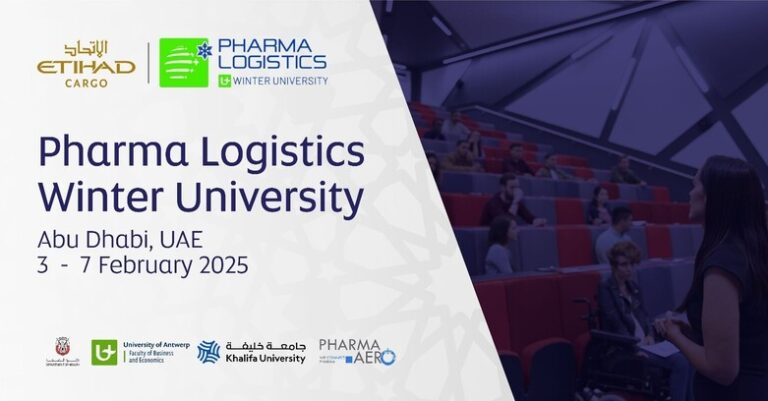
03-07FEB25 sees ABU’s Khalifa University of Science and Technology open up for the first time to regional and international students, management trainees and junior professionals for a five-day immersion into pharmaceutical logistics. The ‘Pharma Logistics Winter University’ is a joint effort between the Department of Health – Abu Dhabi, Etihad Cargo, Pharma.Aero, the University of Antwerp, and Khalifa University of Science and Technology, and aims to “bridge academic learning with practical application to cultivate future global leaders in pharmaceutical logistics”. It tackles the challenges faced in pharma logistics, and explores cold-chain innovations, offering workshops, case studies, and expert-led discussions. It builds on the Pharma Logistics Masterclass held in ABU in 2022, which was aimed at senior professionals. This course intends to attract and develop young talent, students and management trainees within pharmaceutical logistics. Participants earn 3 European Credit Transfers (ECTs) and receive a micro-credential certificate upon successful program completion.

Set to become an annual event to prepare pharma logistics talents. Image: Etihad

Frank Van Gelder, Secretary General at Pharma.Aero, said: “This international initiative unites academic students, postgraduates and young professionals in a unique program designed to identify emerging talent and foster long-term job retention across the pharma logistics industry. By emphasizing cross-sector collaboration and internal multidisciplinary synergy — the very essence of Pharma.Aero’s mission — this program sets a new standard for professional development in the field.

H.E. Dr. Rashed Alsuwaidi, the Acting Director General of Healthcare Regulatory at the Department of Health – Abu Dhabi (DoH), added: “Pharma Logistics Winter University reinforces Abu Dhabi’s dedication to driving innovation and nurturing future leaders in unique fields, specifically pharmaceutical logistics. […] This program aligns with our vision of fostering a resilient and forward-thinking health ecosystem by equipping professionals with the tools to drive meaningful change and addressing critical challenges like cold chain logistics.”

Stanislas Brun, Vice President Cargo at Etihad Cargo, commented: “Etihad Cargo is proud to cofound this transformative program, which reflects the carrier’s dedication to fostering innovation and talent in pharmaceutical logistics. Through collaboration with industry-leading partners, Etihad Cargo aims to support Abu Dhabi’s development as a global hub for healthcare and life sciences and ensure the right talent is in place for the future.

Professor Dr Roel Gevaers, Professor at the University of Antwerp and Chair of the Pharma Logistics Winter University, stated: “I am very proud that we will organize the first-ever Pharma Logistics Winter University in Abu Dhabi in FEB25. […] We are also very proud as University of Antwerp that this course is not a one-time event: It will be organized yearly in Abu Dhabi.”

329 flights and growing: Etihad Cargo’s Ezhou operations

0

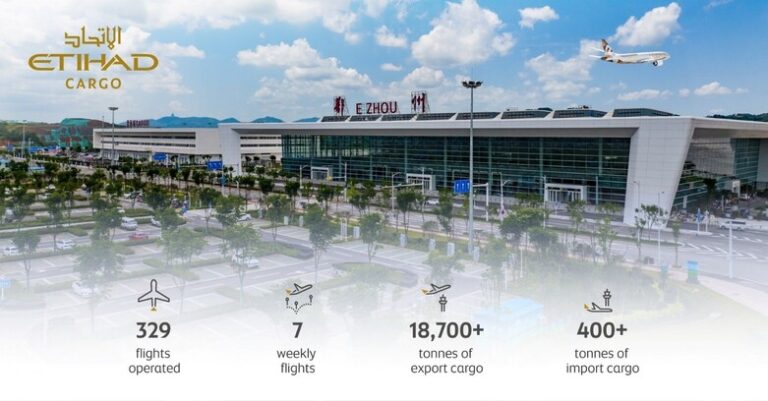
Etihad Cargo has significantly expanded its operations between Ezhou Huahu Airport, Asia’s first dedicated freighter hub, and Abu Dhabi’s Zayed International Airport. Since 18AUG23, the carrier has operated 329 flights on this route, transporting more than 18,700 tons in export cargo (in partnership with SF Airlines), as well as 400 tons in imports. In JUL24, the carrier increased its weekly flights from Ezhou to Abu Dhabi to six and introduced a seventh frequency this year. In 2025, it plans to offer 23 weekly freighters and 26 weekly passenger flights to destinations in Greater China, as part of its strategy to strengthen connectivity between Abu Dhabi and key Asian markets.

Booming freighter services out of China. Image: Etihad

Ezhou Huahu Airport’s recent IATA CEIV Pharma certification has enhanced its ability to handle specialized cargo, particularly pharmaceuticals. This certification, combined with Etihad Cargo’s extensive network, provides efficient logistics solutions for industries such as pharmaceuticals, e-commerce, and perishables.

Stanislas Brun, Vice President Cargo at Etihad Cargo, said: “As the first international carrier to operate from Ezhou, Etihad Cargo is proud to have played a pivotal role in demonstrating the airport’s superior capabilities and strategic importance within just one year of operations. Etihad Cargo’s customers have expressed high satisfaction with the reliability and efficiency of the service, validating the carrier’s decision to partner with Ezhou and recognizing its potential as a global cargo hub. Ezhou Huahu Airport’s advanced infrastructure has impressed exporters and local customers alike, especially in facilitating seamless imports, while Etihad Cargo’s efforts to showcase Ezhou’s connectivity and capabilities to exporters in Europe and beyond, are paving the way for even greater opportunities.”

Li Wei, Deputy General Manager of Ezhou Huahu International Airport, commented: “Ezhou Huahu International Airport is located in central China, boasting a strategic geographical advantage and solid foundational conditions. A domestic hub-and-spoke route network is already established, while international logistics channels are rapidly taking shape. Port functionalities are continuously improving, and operational capabilities are steadily advancing. In 2024, the airport’s cargo and mail throughput is projected to rank fifth nationwide, with 36 international cargo routes already operational. Ezhou Huahu International Airport regards Etihad Cargo as a key strategic partner and supports the launch of more cargo routes at the airport, achieving even greater milestones in the future.”