Home Blog Page 115

I want to be like Dieter

0

Exactly ten years ago, Ram Menen, Emirates SkyCargo’s former visionary divisional senior vice president, exclaimed these words: “When I’m older, I want to be like Dieter.” The occasion was the 80th birthday of Dieter Haltmayer, the legendary founder of Quick Cargo Service. Now, precisely a decade on, they met again on the occasion of a double jubilee: Dieter’s 90th birthday and QCS’s 50th anniversary. And just like ten years ago, it was a record-breaking party full of highlights and superlatives.

How should a tribute to a legend of the German and European forwarding world begin? The best way is with a characterization of Dieter Haltmayer by Thorsten Hoelser, Managing Director of the forwarding association in the federal states of Hesse and Rhineland-Palatinate (SLV): “When most top managers were sometimes shy to address hot topics for fear of getting burned, Dieter was and still is the one not afraid to be the mouthpiece for air freight forwarders, and he has never been one to mince his words.”

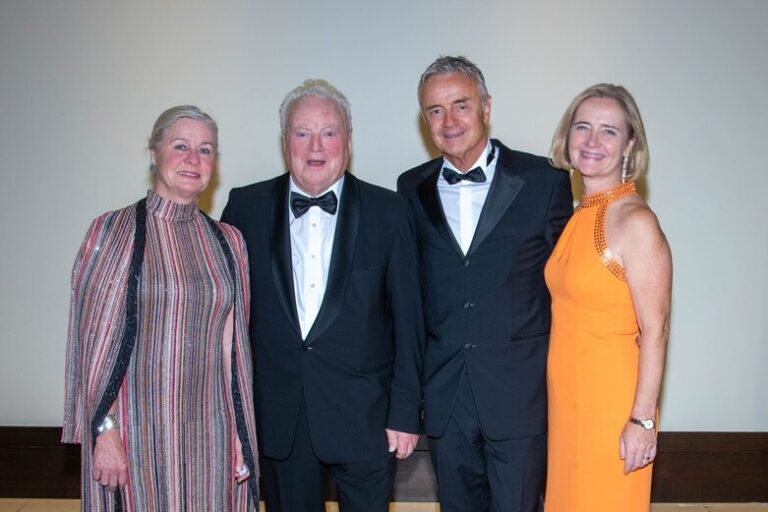
QCS is a classic family-run company. Pictured here are Dieter and his son Stephan, flanked by Heidi Haltmayer (far left) and Jennifer Melnyk  –  pictures: courtesy QCS

Self-made man and team player
In fact, that’s how the air freight industry knows this distinctive character: always clear, always straightforward, always solution focused. And at the same time constantly charming. The secret of his success: he is a typical self-made man, but also a team player. This combination, coupled with an unerring instinct for the freight forwarding business, has made Quick Cargo one of the leading family-run IATA freight forwarding agencies in Germany and Europe. The stages covered along the way are described and illustrated in Wolfgang Schubert’s recently published and remarkable book: “50 Years of Quick Cargo Service”.*

Here are five of 230 guests attending the QCS party. Bottom row: Christopher Stoller, ACD president, Des Vertannes, former prominent head of IATA Cargo. Upper row: CFG editor Heiner Siegmund, QCS patron Dieter Haltmayer and Ram Menen, retired iconic helm of EK Cargo.

It all started with a Volkswagen
An orange Volkswagen minivan and thousands of empty suitcases played a key role in the company’s rise. Following the inception of the firm in 1974, QCS bought the VW transporter to carry textile shipments flown in from Hong Kong in overnight trips from Frankfurt to a consignee near Hanover. “In those early days, working 12 or even 14 hours each day was more the rule than the exception,” he recalls. Two years later, the first really big deal followed: the government of Nigeria ordered 450,000 suitcases and the same number of travel bags for pilgrims heading to Mecca. Dieter chartered Boeing 707s and DC-8s to fly the items from Frankfurt to Lagos, this way earning his first 100,000 Deutschmarks. Supported by his young family, the Haltmayers personally handled shipments on the apron by hand and stowed the items into the aircraft. Back then, “security” and “inspections” were foreign words, he reminds of the wild times in cargo. The surplus he mainly reinvested in the company by moving into a bigger office at Frankfurt airport and doubling the staff.

Even at 90, Dieter cuts a fine figure on the dance floor.

Combining business and fun
Now, 50 years later, Quick Cargo Service has become a brand with offices across Europe. According to business data, the firm is in excellent shape. The family-run company is a well-known and highly respected name in air and ocean freight and active in niche markets like time critical shipments, including OBC services.
One USP must also be mentioned: QCS can party. In this discipline, they are German, if not European, champions among freight forwarders. This was once again the case at the end of NOV24 at the Hilton Hotel Frankfurt-Gravenbruch. 230 invitees showed up and partied into the early hours of the morning to the stirring samba rhythms of a Brazilian dance group and some rock bands. The guests came from practically everywhere, including a business partner from New Zealand, who had the longest journey. Also present: all leading managers of the 30 QCS offices in Germany and Europe, family members, retirees and personal friends. And company patron Dieter? He passed the baton to his son Stephan and his daughters Heidi and Jenny years ago. But that doesn’t stop him from regularly visiting the company headquarters in person to take a look at business developments. The ninety-year-old is a man who can’t let go!

*“50 Years of Quick Cargo Service” is available from Heidi.Haltmayer@quick-cargo-service.de .  It is free of charge.

Niedermeyer joins freight carrier AeroLogic

0

What is the world’s least known air freight airline operating a fleet of more than 20 cargo aircraft? The answer is probably Leipzig-Halle-based AeroLogic. The cargo carrier is a joint venture of DHL Express and Lufthansa Cargo (each owns 50%). Unlike other cargo companies, Aerologic does not have its own sales department as DHL and Lufthansa Cargo fill its fleet’s main decks with their own shipments.In addition to the appointment of Niedermeyer to Aerologic, the Lufthansa Group announced further personnel decisions last week.

AeroLogic does not need any publicity or headlines to improve its market position. Its owners take care of the freight volumes, filling the jetliner’s main decks, and AeroLogic’s pilots fly the shipments on routes pre-defined by DHL Express and Lufthansa Cargo.

Markus Niedermeyer,  source: Lufthansa Cargo

Two directors but no sales manager
A straightforward business model and evidently a very successful one as seen by the constantly growing number of B777F. Aerologic’s fleet currently comprises of 22 Triple-Seven freighters; six of which serve the Lufthansa Cargo network, while the other 16 operate predominantly on behalf of the Leipzig-based Deutsche Post subsidiary.
The dual ownership is also reflected in the composition of the management team, which is made up of two Managing Directors: Former pilot, Josef Moser (DHL) has been a member of the management team since 2007, while Lufthansa executive, Markus Niedermeyer joined the carrier on 01JAN25.

Impressive success story
Before moving to Leipzig, Markus headed the Air Mail Center Frankfurt from 2018 until mid-2024, when Lufthansa Cargo sold its 40% stake to Deutsche Post-DHL. At AeroLogic, Niedermeyer will be responsible for Finance, Human Resources, IT and Administration – a position he has held on an interim basis since he exited the Air Mail Center.
Frank Bauer, CFO of Lufthansa Cargo, commented the personnel decision: “Marcus Niedermeyer’s extensive expertise and commitment will undoubtedly help to drive the company forward and strengthen AeroLogic’s position in the market. As we look back on nearly 18 years of our joint venture, we are extremely proud of our shared accomplishments: safe, reliable and highly efficient flight operations and steady fleet growth for both partners.” Travis Cobb, EVP Global Network Operations and Aviation at DHL Express, added to this: “Aerologic is of great strategic importance to DHL Express. With Marcus Niedermeyer, we welcome back an experienced and accomplished expert to the ranks of Aerologic.”

Joerg Eberhard  /  Lorenza Maggio, courtesy: Lufthansa Group

ITA joins Lufthansa, gets new management
1400 km further south of Leipzig, in Italy’s capital, Rome, another personnel decision was announced by the Italian Ministry of Economy and Finance (MEF), last week: The authority confirmed the appointments of Joerg Eberhart and Lorenza Maggio to the Board of Directors of ITA Airways. Eberhart (54), a long-term resident in Italy, has been responsible for the strategic development of the Lufthansa Group since 2021, and headed the Italian Lufthansa feeder airline, Air Dolomiti.
Maggio (47) has been Vice President Sales Europe/Middle East/Africa at Lufthansa Group Airlines since JAN24, and is responsible for sales activities in Europe, the Middle East and Africa. She previously headed the brand and customer strategy of Eurowings, and held various management positions within the Lufthansa Group.
In addition to the aforementioned executives, the Supervisory Board of ITA also includes Antonella Ballone, Sandro Pappalardo (President) and Efrem Angelo Valeriani.

Spotlight on… Denis Ilin, CEO, e-Smart Logistics

0

CargoForwarder Global’s ‘Spotlight On…’ series inspects a different area of the air cargo industry every week. In the past 5-10 years, the industry has been pushed to change to accommodate the rapidly evolving world market. e-commerce is one of the biggest triggers forcing it to reconsider its commercial and operational processes. A greenfield approach in the shape of a start-up might just be the best way to bridge the gap between traditional air cargo and e-commerce. Such is Denis Ilin’s consideration as he pools his decades of air cargo and recent 4 years of postal services experience, and works on launching an e-commerce-focused start-up: e-Smart Logistics. He takes us through his tasks and endeavors, and offers advice to those looking to enter the air cargo industry.

Air cargo logistics is all about movement – including one’s lifestyle. Image: Denis Ilin

CFG: What is your current function and company? And what are your responsibilities?
DI: I have recently started a new Dubai-based company, e-Smart Logistics, where I am a managing partner and CEO. As is true for any start-up in its early stage, my hands are full of all kinds of matters – building up a team, talking to potential customers, preparing our product for the launch, as well as wrapping up the investment agreements with my other partners and investors.
e-Smart Logistics (or e-SL) is an e-commerce logistics specialist delivering, in partnership with major air cargo carriers, fully integrated end-to-end logistics solutions to e-tailers and e-shippers. Our services are supported by an IT platform provided by our strategic IT partner, KALE Logistics.
We target to launch in Q2 this year, so it is currently a very dynamic period for both e-SL and myself.

CFG: What does a normal day look like for you?
DI: I would rather say what my normal year looks like. On average, over the last decade, it has been from 110 to 130 flights a year, which is probably not far away from some pilot’s numbers. And, as I can judge by my friends and colleagues, this is not unusual in air cargo. This industry is global, so you are constantly on the road to see your clients, business partners, vendors, checking out your own stations and talking to your team.
Of course, now we all use video calls as a routine, however, this has not eliminated the travel but just added dynamics to our work. More meetings per day and the schedule is much tighter as now you squeeze a video call in between your face-to-face ones or just have one call after another with (at best) a few spare minutes in between.
So, it is quite common to have a video call before your flight, another one upon arrival, then a few normal calls while you are in a taxi, and so on and on and on. Ah, not to forget to sort out your emails either on the flight or in between meetings.
Air cargo and logistics is about movement, so is my (our) lifestyle.

CFG: How long have you been in the air cargo industry, and what brought you to it?
DI: I started in 1995 as Duty Ops Controller in 24/7 flight operations of a cargo airline, right after university. This year is 30 years of my career, of which I spent 26 years in air cargo and logistics.
I graduated as a math student with a degree in Applied Mathematics from the Moscow State University. However, the mid-nineties were quite a challenging period for the Russian science and economy, so to continue my academic career would have meant having barely enough money to live on, thus young people were moving elsewhere. There was an international cargo airline, Volga-Dnepr, based in my hometown of Ulyanovsk, in Central Russia, operating a fleet of giant Antonov and Ilyushin freighters around the world. That was a very dynamic, growing business, interesting international prospects, so I said to myself: why not try it?
Twenty years later, I left Volga-Dnepr Group as President and CEO of Air Bridge Cargo airlines. And I never regretted my decision back in 1995, not for a single day.

CFG: What do you enjoy most about your job?
DI: Probably, its global nature. Visiting different countries, meeting people from different cultures – a privilege which probably not many people in the world have an opportunity to experience in life. Besides, the industry is never the same; one has to adapt to a new reality every day – especially in the charter business. However, scheduled services and contractual logistics are not far away from this in terms of new circumstances and operational challenges.
It is never boring, that’s for sure – both professionally and personally.

CFG: What do you see as the greatest challenges in our industry?
DI: Safety. The growing dynamics of global logistics and external factors bring serious challenges to keep our industry and customers safe and sound. New-era technologies bring huge opportunities. However, when misused, they create serious safety and security concerns.

CFG: What advice would you give to people looking to get into the air cargo industry? Any particular training they should aim for?
DI: Ability to quickly adapt to the new technologies. Not sure how to train people to learn that, however, a company’s agility and openness to accommodate new technological opportunities is becoming its serious competitive advantage. Unfortunately, the air cargo industry sometimes is too stuck in its own old practices. Paperwork, manual processes, lack of transparency of the shipments, etc.
And, by the way, that is what e-Smart Logistics is doing – helping air cargo to talk to its growing e-commerce clients in the modern e-commerce language, rather than using traditional ‘air cargo’ manners. The latter works, but at the price of a low margin to the air carriers.

CFG: If the air cargo industry were a film/book, what would its title be?

DI: It is probably “Passion”: a never-ending love story of a happy life.

Thank you, Denis, for your insights!


If you would like to share your personal air cargo story with our CargoForwarder Global readers, feel free to send your answers to the above questions to cargoforwarderglobal@kopfpilot.at We look forward to shining a spotlight on your job area, views, and experiences.

JetSMART and ECS give cargo a new spin

0

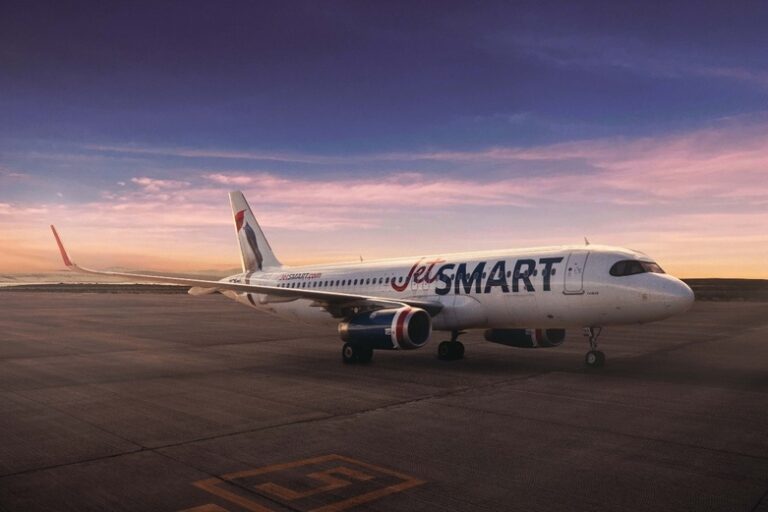
In our last CFG issue, we featured the groundbreaking Total Management Contract (TCM) which the Paris-based ECS Group recently signed with South America’s leading low-cost carrier group: JetSMART Airlines.*
In a joint release, both companies stressed that the partnership will strengthen South America’s cargo connectivity to global markets by focusing on high-demand commodities such as salmon, perishables, minerals, and mail services. CargoForwarder Global (CFG) wanted more specific details and asked the two companies additional questions to discover more about the scope of the future cooperation and the resulting benefits for the air freight market. Here are the answers from Adrien Thominet (AT), Executive Chairman of the ECS Group, and Víctor Mejía (VM), Chief Commercial Officer of JetSMART Airlines.

Adrien Thominet, source: ECS Group

CFG: Adrien, the ECS Group intends to establish dedicated commercial and operational teams in each country serviced by JetSMART. This supposedly includes Sales, Operations, Customer Service, IT, Road Feeder responsibilities, and administrative tasks. Is this correct?
AT: Yes, this is correct. As part of the TCM model, we provide three key services. First to mention is Operational Expertisefor daily operational needs. To implement this, we rely on the proven expertise of TCE [Total Cargo Expertise, hs], a specialized entity renowned for its high standards in safety, security, and quality. This goes hand in hand with Sales and Performance: Dedicated teams in each country will focus on maximizing domestic and international sales, while ensuring alignment with JetSMART’s structure across its four Latin American AOCs. Another major aspect is the integration of technology: JetSMART will benefit from advanced digital tools like Apollo, Rotate’s Sales Cockpit, and Wiremind’s CargoStack, which enhance revenue optimization and decision-making.

CFG: How many headcounts will be required to cover all these tasks?
AT: The exact number is not finalized yet, as we aim to remain as close as possible to JetSMART’s needs and adjust accordingly. However, the structure is clear: Each country will have a dedicated operations and sales team to ensure localized support. These teams will be coordinated through our state-of-the-art control tower in San José, Costa Rica, which centralizes planning, monitoring, and decision-making to optimize results and maintain alignment across the region.

CFG: What is the volume of the investment to get these aims on track?
AT: The investment details remain confidential. However, ECS Group is fully committed to deploying the necessary resources and leveraging advanced digital tools to meet JetSMART’s cargo ambitions efficiently.

Victor Mejía, JetSMART  –  courtesy: Marketers, Buenos Aires

CFG: Turning to you, Victor: Your core business is serving passengers, but you also carry air freight. How come cargo is not explicitly mentioned on JetSMART’s website?
VM: We do have information on our site. Companies interested in shipping cargo with JetSMART, are invited to visit our dedicated cargo webpage at https://jetsmart.com/us/en/cargo/home. There, they’ll find all the information they need and can contact us directly.

CFG: Are there any considerations to add freighter aircraft to your fleet?
VM: As you mentioned, at JetSMART, our primary focus is providing low fares and efficient service to our passengers. By utilizing the available space on our aircraft for cargo, we maximize operational efficiency and generate additional revenue. Incorporating dedicated cargo aircraft would represent a significant shift in our operational model and is not part of our current plans.

CFG: Adrien, which effect does the JetSMART deal have on ECS Group’s role as a global acting GSSA?
AT: This partnership highlights two significant points:
It underscores ECS Group’s advanced capabilities in Total Cargo Management, combining expertise in sales, operations, and administration.
Our robust regional network, paired with interline connectivity, ensures maximum sales efficiency. ECS Group remains the only GSSA with a fully integrated network across South America, further solidifying its position as a global leader.

CFG: Does JetSMART’s existing partnership with American Airlines also include cargo?
VM: Our partnership with American Airlines enhances global connectivity for our travelers. While the partnership focuses on passenger transportation, there are no specific agreements related to cargo operations at this time.

CFG: Gentlemen, thank you for your time and explanations.


* See: https://cargoforwarder.eu/2025/01/12/jetsmart-airlines-awards-tcm-contract-to-ecs-group/ 

Ostend becomes the center of the cargo world

2

At least temporarily, because on the initiative of Ostend-Bruges International Airport, this year’s World Cargo Summit will take place in the Belgian city from 27-29JAN25. A total of 110+ companies from the air cargo industry have registered, including world-famous players as well as smaller firms and specialists. The event is being organized by the Swedish trade fair planner, Euroavia International, which specializes in air cargo events. CargoForwarder Global (CFG) spoke to its founder and CEO, Lars-Gunnar Comén (LGC) about the event and why it might be worth attending.

Visual on Euro Avia International’s website to promote its upcoming Trade Show in Ostend  –  company courtesy

CFG: Ostend is, with all due respect, a small name on the cargo industry’s list of major addresses. Why is the event being held there and not in Brussels, Liège, or Amsterdam, to name just three attractive and world-renowned locations in Benelux?
LGC: Ostend Airport invited us to arrange World Cargo Summit 2025 in their beautiful city. The others you mention did not. That’s one simple answer. However, you must understand that Ostend has a long history as the European continent’s gateway for the UK. Many classic air carriers have flown cars, passengers and lots of cargo to the British Isles in the past. Ostend has the perfect location for cargo operations in Western Europe. It is close to major hubs such as LHR, CDG, AMS, BRU, LUX, FRA, etc., and we notice a lot of registrations coming in from what we can call the heart of Europe. Good to see that our event will attract several delegates from North America, the Middle East and Asia as well. They are eager to see what Ostend has to offer and meet our distinguished speakers.

CFG: The panel ‘The Role of Regional/Secondary Airports’ should be exciting. In the run-up to the symposium, are there any indications as to whether they can continue to fulfill their complementary function, or will international freight traffic increasingly concentrate on the major hubs?
LGC: This year’s World Cargo Summit is a must for all airport executives. We have two panels focusing on airports, both moderated by experts belonging to Netherlands Airport Consultants (NACO). Panelists will discuss, for instance, how regional/secondary airports can step up cargo operations, the role of intra-modality, and how to create excellence in their competitive edge. This said, I am delighted that Airport Directors from Central Asia and the USA will join the discussion.

CFG: Sustainability is an important topic mentioned in the program. However, it lacks any reference to the prospect of electric or H2-powered freighters. Is this gap deliberately intended and if so, why?
LGC: Important indeed. We have a great panel moderated by Glyn Hughes, and three really interesting speakers; Francine Carron, ESG, Anna-Maria Kirchner, Finnair Cargo, and Dr. Fabio Piccinno, Kuehne+Nagel. Have given them pretty free hands to assess the most relevant sustainability issues for the moment, so I cannot say what will be highlighted or not. Maybe even H2 freighters…

Lars-Gunnar Comén is one of the leading trade fair organizers for air freight in Europe, if not the world  –  photo: courtesy Euro Avia Int’l.

CFG: Cargo handling is facing many challenges since e-commerce is constantly outgrowing general freight and also special cargo products. What new insights can participants expect?
LGC: Our e-commerce and Cargo Handling panels will address the current challenges and what can be done in order to facilitate increased volumes in our cargo terminals around Europe and worldwide.

CFG: Does the industry need ‘Influencers’ to better its reputation?
LGC: Well, our ‘reputation’? Do we have any issues? Air cargo and air logistics are enablers for globalization, trade, prosperity, job creation, peaceful relations between countries, making lives for millions and millions consumers better and happier. Industry people should be proud of the highly important role we play in connecting business and trade. If there is a really cool influencer out there who can highlight all the good we do, why not? But not sure if it is a big thing.

CFG: And finally: The Air Cargo Executive Networking Party on the evening of the first conference day, held in the breathtaking ancient city of Bruges, should not be missed, should it?
LGC: Right! This year’s Air Cargo Executive Networking Party will be very special. Our host, Ostend Airport, and their co-partners have prepared a truly remarkable happening in the Provinciaal Hof (Provincial Court) in the heart of medieval center of Bruges, Europe’s most beautiful city! Night walk in historical surroundings, food, entertainment. A spectacular place for networking!

CFG: Lars-Gunnar, thank you for this input and much success in Ostend.

The ticking of the TikTok ban…

2

170 million U.S. TikTok users – many of them small businesses – are facing a potentially life-changing situation, today, 19JAN25, given the Supreme Court’s rejection of the TikTok Ban appeal, this weekend – despite the U.S. being unable to present evidence that China has attempted to manipulate content on its U.S. platform or gather American user data through TikTok. The Supreme Court’s unanimous rejection means that the platform now either has to source an approved buyer for the app’s U.S. version, or face removal from app stores and web hosting services. Today would be the day the ban goes into effect. Yet, what is the Butterfly Effect of such a ban – and does it also impact air cargo?

Trump will get his way, no doubt – as nonsensical and hypocritical as it all is, right now. Let’s leave aside the implications for ‘Free Speech’ that this throws up. The world’s fifth largest and fastest growing (since its launch in 2017) social media platform is in danger of being shut down in the U.S. The only one in the Top Five, by the way, that is not U.S.-based… YouTube is the second largest, while Facebook, Instagram and WhatsApp come in on first, third, and fourth place. What do the latter three have in common? They are all owned by Meta. And what was the biggest Meta news ripple last week? That’s right, Zuckerberg has decided “no more fact-checking” on its platforms – another Trump-appeasement move with different, even more warped implications for ‘Free Speech’. But let’s not go into all that – it’s too depressing to think about over your Monday morning coffee. (And that’s even without factoring Musk and his X platform into the equation.)

TikTok is more than just an entertainment channel. Image: Canva/CFG

So, what about TikTok and air cargo?
The U.S. TikTok ban, set to take effect on 19JAN25, could potentially impact air cargo in several ways. The primary impact may be on e-commerce volumes. e-commerce has been a major driver of growth in the air cargo sector. Today, one in every five parceled items stems from an online purchase, and predictions see this rising to one in three in just the next two years. As we have seen since the pandemic, e-commerce has led to a surge in air cargo demand and has also become one of the main triggers for change in the industry.
TikTok’s influence on e-commerce cannot be understated. Many brands leverage the platform’s massive user base to promote their products and drive sales. The viral nature of TikTok videos often leads to sudden spikes in demand for specific products, necessitating swift logistics solutions to meet consumer expectations. Air cargo plays a critical role in fulfilling these demands by providing rapid transportation of goods across long distances.

2025 – the year that TikTok provides seamless sales
The platform is continuously improving its shopping features and 2025 is expected to be the year where it is able to offer a completely seamless shopping experience, thus further opening up revenue streams for those brands using it. It is a far simpler and cheaper medium on which to do business than the Meta alternatives. To date, more than 7 million U.S. businesses use TikTok for customer engagement, with 69% reporting increased sales. (After all, the average U.S. TikTok user spends 80 minutes a day on the channel – longer than on its Meta counterparts.) Yet that is about to come to a halt in the U.S. Thus, while the rest of the world will continue to have access to a major e-commerce facilitator and the resulting air cargo shipments (whether these are from China, domestic shipments or from other international locations), the U.S. will miss out.

Economic impact?
What is the U.S. missing out on, money-wise, with a TikTok ban? According to an Oxford Economics’ commissioned study: in 2023, TikTok contributed USD 24.2 billion to the U.S. GDP, and looks back on an impressive growth trajectory since it launched in 2017. Its own operations added another USD 8.5 billion to the U.S. GDP that year – not to mention bringing in USD 2 billion in taxes, and 59,000 jobs across the U.S. The same study also spoke of around a quarter of a million (224,000) US jobs being created via the platform – particularly through small and medium-sized businesses. TikTok’s algorithm is particularly adept at turning local trends into global sensations, which benefits niche creators and small businesses, who achieved around USD 14.7 billion in revenue in 2023. They, in turn, by using TikTok as an advertising and marketing platform, supported a total of USD 5.3 billion in taxes to the U.S. government, that year. These figures highlight TikTok’s substantial economic impact, particularly for small businesses and job creation in the United States. The platform has become a crucial tool for many entrepreneurs and businesses to reach customers and grow their operations.

Ripple on international trade?
It also doesn’t take a professional mathematician to work out that this GDP would disappear, 224,000 individuals would lose their jobs and income, and hence also their buying power as well as that of their dependents, in an economy still facing negative impact risks of inflation and proposed tariffs. Hence, potential air cargo volumes in other areas, not just e-commerce, may also be affected. In fact, TikTok itself has warned that a ban could result in a USD 1.3 billion financial hit to U.S. small businesses and creators within the first month. This loss could slow down e-commerce growth, indirectly affecting air cargo demand.
And then there are the implications for global trade. The TikTok ban could have ripple effects on international trade relations, particularly with China, which might indirectly impact global air cargo flows. The interconnected nature of global supply chains means that disruptions in one sector can have a knock-on effect across others. A decline in demand for air cargo services due to reduced e-commerce activity could affect related industries, such as warehousing, freight forwarding, and customs brokerage. These disruptions could lead to inefficiencies and increased costs for businesses relying on air cargo.

And on new talent?
Quite aside from e-commerce sales and marketing purposes, TikTok has not only reshaped how brands engage with audiences, particularly younger demographics, in more authentic and interactive ways, but it is also instrumental in education, with its increasing focus on sustainability, ethical practices, and social responsibility content. That makes it a perfect tool for demonstrating the benefits of working in the air cargo industry, and a strong potential recruiting channel. One that certain companies in the industry are already making use of to attract new talent. By highlighting job roles and functions in bite-sized videos, companies are benefiting from TikTok’s unique and powerful force, in particular its success in trendsetting, in the global social media landscape. Airlines and air cargo companies in the U.S. will need to find an alternative, if the ban goes ahead.

TikTok go…
TikTok is more than just a social media entertainment channel and the U.S. ban could lead to a significant influence on e-commerce and consumer behavior, which – in turn – may alter the demand for expedited shipping services.
Let’s see what happens. In the meantime, it is highly ironic that the so-called ‘U.S. TikTok Refugees’ are shifting their attention to RedNote (which is very much Chinese controlled – even to the extent of post censorship), while on the other hand, Zuckerberg’s “no more fact-checking” statement (which – let’s be honest, is simply owning up to what Meta has anyhow been failing in since years) has led to a tsunami of users looking to delete their accounts. So much for MAGA, eh? At the end of the day, remember: every social media channel that you use, uses you and your data, regardless. Always be mindful of what you decide to share and where. Nothing in life is free.

KUB Air Cargo partners with CargoAi

0
KUB Air Cargo offers capacity from Europe to China. Image: CargoAi

The German, independent cargo sales agent, KUB Air Cargo GmbH, focused on air freight to Asia/China, founded in 2011 with headquarters in Frankfurt am Main (and European offices in Berlin, Paris, and Amsterdam), has now also partnered with digital air freight solutions provider, CargoAi – one month after going live on cargo.one. It will be offering booking capacity from its key European Gateways to China, on board or Air China Cargo and China Southern Airlines, and giving its customers as well as new freight forwarders using CargoAi but not yet aware of KUB Air Cargo, a greater choice in digital booking channel options. KUB Air Cargo is being linked to CargoAi’s platform via API, which will ensure streamlined, seamless booking processes. “This collaboration strengthens the digital transformation in air cargo logistics, particularly between Europe and China. By integrating KUB Air Cargo into CargoAi’s platform, users gain access to efficient and transparent booking, tracking, and rate management for freight shipments bound for key Chinese destinations,” the press release states speaking of an important step toward a fully digital airfreight ecosystem. With the shift onto CargoAi, KUB Air Cargo is able to provide transparency on real-time capacity, rates, and end-to-end shipment tracking. Thus, users experience more flexibility and gain better control over their shipments, along with improved operational efficiency and reduced booking times. Matt Petot, CEO of CargoAi, said: “Our partnership with KUB Air Cargo is a testament to CargoAi’s commitment to streamlining global air cargo booking processes. By leveraging our platform, KUB customers benefit from unprecedented access to China-bound flights. We’re thrilled to facilitate this connectivity, supporting freight forwarders and shippers alike.”

DB Schenker launches Ford Parts Distribution Center in DXB

0
Cutting the ribbon at the new PDC in Dubai South on 09JAN25. Image: DB Schenker

DB Schenker and Ford inaugurated a state-of-the-art 42,000 m² Parts Distribution Center (PDC) in Dubai South on 09JAN25. According to the press release, the facility “marks a significant advancement in automotive logistics for the Middle East and Africa region”. The PDC features cutting-edge Material Handling Equipment, including Very Narrow Aisle systems, Multi-Tier Mezzanines, and Deep Selective Racking, all designed to maximize efficiency and storage capacity. It also deploys SAP S/4HANA warehouse management software for paperless picking and barcode scanning, and ensuring precision and speed in operations. 20 container docks, enable the simultaneous handling of inbound and outbound goods, which further accelerates delivery times. This PDC consolidates Ford’s storage and distribution into a single hub, serving markets across the GCC and Sub-Saharan Africa. It is capable of handling 20% more capacity than its predecessor.
Naturally, sustainability is also a key focus. A 400kW solar panel system is due to be installed later this year, to bring down the site’s energy consumption by 35%, as well as lower the carbon footprint by 290 tons annually. Responsible waste management practices are in place, setting new standards in operational efficiency and environmental responsibility in the automotive supply chain.
Ako Djaf, VP of Contract Logistics and SCM of DB Schenker in the Middle East and Africa, stated: “[W]e take immense pride in supporting Ford’s ambitious vision for operational excellence in the Middle East. The new Parts Distribution Center is a testament to the power of collaboration and innovation, designed to streamline supply chain processes, enhance customer satisfaction, and contribute to sustainability goals. By leveraging our global expertise and advanced logistics solutions, we are excited to play a pivotal role in Ford’s journey to deliver unparalleled service to its customers across the region.”
Mohsen Ahmad, CEO of the Logistics District, Dubai South, commented: “We are pleased to welcome Ford to Dubai South with the launch of its new facility. With the expertise and capabilities of DB Schenker, we are confident that this collaboration will bolster Ford’s expansion endeavors while delivering premium services to its customers across the region.
Ravi Ravichandran, President, Ford Middle East, added: “The new PDC will enable us to create a more streamlined and efficient process that enhances parts availability, optimizes inventory management, and elevates customer service. By unlocking these operational efficiencies, we are delivering on our commitment to improve service and delivery times in the region, and we are thrilled to see this latest Ford project in Dubai come to fruition.”

JetSMART Airlines awards TCM Contract to ECS Group

0
The first TCM Contract for ECS Group with JetSMART. Image: ECS Group

The new year started with a new responsibility for ECS Group: 01JAN25 signaled that start of a ‘groundbreaking’, four-year Total Cargo Management (TCM) contract that it recently signed with South America’s leading low-cost carrier group: JetSMART Airlines. It is the first of its kind in the region with a regional airline, and covers JetSMART’s operations across four countries: Chile, Colombia, Peru, and Argentina. The carrier holds national Air Operator Certificates (AOCs) in each of these countries. Under this agreement, ECS Group will manage approximately 25,000 flights annually, focusing on developing each of JetSMART’s four domestic markets. The GSSA will establish dedicated commercial and operational teams in each country and coordinate these through a control tower based in San José, Costa Rica.
Indigo Partners group member, JetSMART Airlines, deploys a fleet of A320 and A321 aircraft on its domestic and international routes. It can now look forward to drawing full benefit from ECS Group’s Total Cargo Expertise (TCE) and advanced digital tools, including eBooking via CargoAI, capacity management, and revenue optimization platforms.
The partnership sets out to strengthen South America’s cargo connectivity to global markets by focusing on high-demand commodities such as salmon, perishables, minerals, and mail services.
Adrien Thominet, Executive Chairman of ECS Group, declared: “This partnership is a landmark achievement for ECS Group. Being entrusted by JetSMART Airlines reinforces our reputation as a global leader in Total Cargo Management. It reflects our proven expertise, innovative digital solutions, and ability to deliver exceptional results across continents. We are proud to see airlines worldwide placing their confidence in our capabilities.”

DB Schenker now offers Ezhou-Frankfurt connection

0
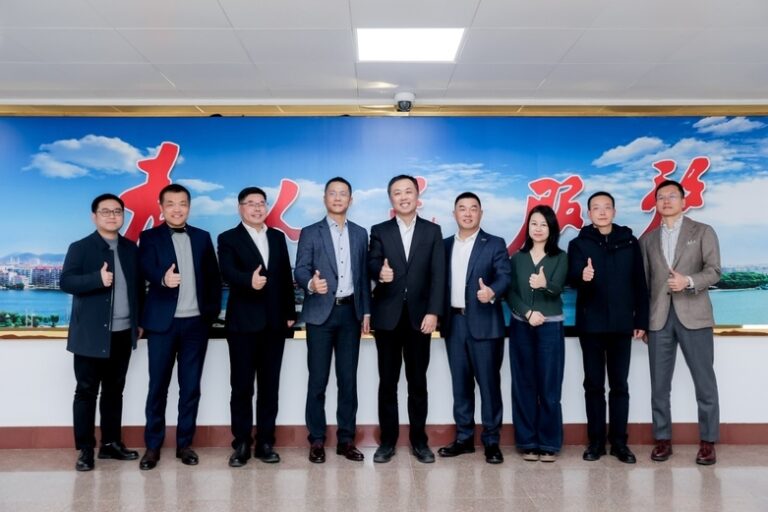
On the occasion of the inaugural Ezhou-Frankfurt flight on 07JAN25. Image: DB Schenker

DB Schenker began the new year with a new air cargo route. On 07JAN25, an inaugural Boeing 777F flight, operated by Etihad Cargo, set off from Ezhou, China, destined for to Frankfurt, Germany. It kicked off the start of scheduled weekly operations that will run every Tuesday, linking China with Germany and including a stopover in Abu Dhabi. The route will cater to a varied selection of commodities including e-commerce, high-tech, electronics, industrial goods, consumer and retail products, and automotive parts. DB Schenker estimates annual cargo volumes of 5,200 tons.
Ezhou Huahu International Airport, which opened in July 2022, has shown impressive growth and now offers 30 international and 53 domestic cargo routes. In 2024, it ranked fifth in cargo throughput nationwide, processing over 1.2 million tons.
DB Schenker chose Ezhou for its strategic location, as it is just 75 kilometers away from Wuhan and within a 1.5-hour flight radius of five major national urban agglomerations. The airport’s proximity to key transportation networks and emerging industry clusters aligns with DB Schenker’s goal of expanding integrated logistics services in the region.
Shengze Wang, Member of Party Leadership Group of Ezhou Municipal People’s Government, remarked: “DB Schenker’s decision to establish operations at Ezhou Huahu International Airport represents a strong endorsement of Ezhou’s business environment and development prospects. We will continue to optimize the business environment and fully support the development of international logistics enterprises such as DB Schenker in Ezhou. Together, we aim to transform Ezhou Huahu International Airport into an aviation cargo hub with global influence.”
Ramon He, Senior Vice President and Head of Air Freight of DB Schenker Greater China, said: “The launch of the Ezhou-Frankfurt route is a significant measure for DB Schenker to deepen its layout in the Chinese market. [It] not only boasts advanced infrastructure and efficient operational systems but also serves as strategic node advantages in connecting international industrial and supply chains. We are optimistic about its development potential and have chosen it as our key air freight hub in Central China, enabling us to provide more efficient and reliable professional logistics and transportation solutions to our customers.” Stanislas Brun, Vice President Cargo at Etihad Cargo, commented: “Etihad Cargo works closely with DB Schenker to address its capacity needs, ensuring the seamless operation of the Ezhou-Frankfurt route. […] This partnership enables businesses to optimize supply chains, connecting key markets in Central China and Europe with efficiency and ease.”