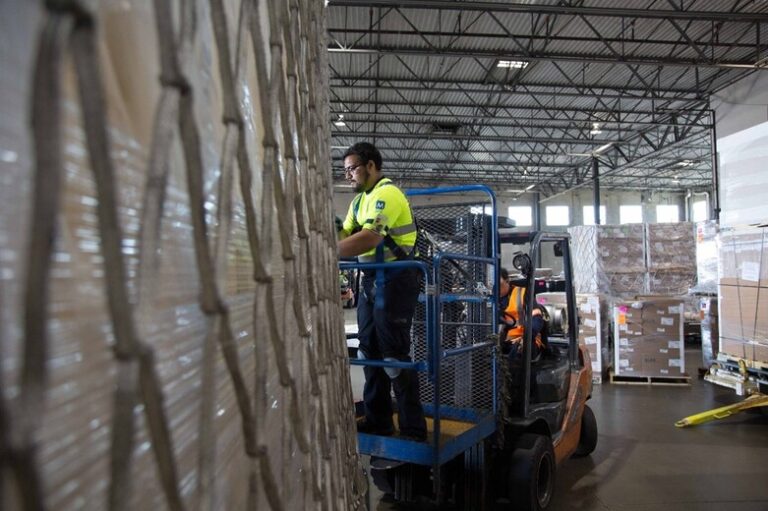
This time, the aviation service partner has gone for the software solution provider’s customs features: CHAMP Cargosystems’ Traxon Global Customs (TGC) solution is a standard platform that supports in actioning customs filing processes and ensuring customs compliance. The module serves to enhance Menzies Aviation’s recently launched Cargo Handling (MACH) cargo management system, wherein it will be embedded and integrated. TGC helps to efficiently process import, export and transit controls, and minimizes the risk of customs ‘holds’. With TGC, Menzies is in a position to quickly respond and adapt to specific country customs requirements. The tool facilitates customs reporting to more than 65 customs authorities worldwide. It will initially be launched at Menzies’ Los Angeles International Airport (LAX) cargo operation, and – once successful – will then be implemented across the service provider’s global network and fully integrated into MACH before the end of this year.
Menzies relies on CHAMP for customs compliance. Image: Menzies
Rory Fidler, SVP Cargo Technology, Menzies Aviation, said: “We’re looking forward to working with CHAMP as we integrate Traxon Global Customs with our pioneering MACH cargo management system. This upgrade will further streamline our cargo operations, providing customers with seamless and efficient customs and security processes. We are grateful to the team at CHAMP, who are working hard to support an ambitious roll-out program over the coming months.”
Dirk Thorwirth, Head of Sales – Global Distribution Services, CHAMP said: “It’s our pleasure to support Menzies Aviation’s global operations and cargo handling system, and we are glad they’ve found streamlined solutions in Traxon Global Customs. It is a fantastic tool that easily integrates into third-party platforms and drives efficiency through open and interconnected operations. By ensuring compliance with the constantly evolving regulatory landscape, Menzies Aviation is well positioned for growth in the years to come.”
Kale Logistics Solutions (Kale) has brought Shripid Inamdar on board as its new Chief Financial Officer, as it focuses on revenue growth and global expansion. The leading software company is already present and known across the USA, Canada, Colombia, Netherlands, Republic of Congo, Kenya, UAE, India, Malaysia, and Japan.
CFO of Kale Logistics since 01AUG24. Image: Kale
Inamdar comes over from revenue software company, Mindtickle, where he was Senior Director Finance since 2021. He brings more than 20 years of SaaS and IT experience and expertise, having held various Finance and Controlling positions in other software companies. “Inamdar brings extensive executive-level financial expertise from complex, multinational organizations. His experience ranges from consulting to IT industry as a qualified chartered accountant, managing turnovers of USD200 million and working for big fours for nearly a decade,” the release reveals.
His responsibilities at Kale include the implementation of digitalization projects beginning with the automation of workflows to increase the company’s efficiency and strengthen its global compliance framework, as it prepares for greater international expansion.
Shripad Inamdar, CFO, Kale Logistics Solutions, commented: “Joining Kale’s strong value driven environment has been a rewarding journey already as I was able to play a role in our finance road map for the year. Kale’s leadership has a deep understanding of customers’ needs and very strong domain expertise, which is enabling them to define the market and create history. Kale is taking-off in even more directions for both customers and investors across the world and I think with my diverse professional experience I am ready to play a key role in this journey.”
Rajesh Panicker, COO, Kale Logistics Solutions, stated: “We are excited to have Inamdar join us to further our ambitious plans for this and coming years as we continue to revolutionize the global logistics industry with our innovative deep tech. Shripad Inamdar has the expertise and experience to continue driving our growth and fully understands how important our ethos is and what we aim to achieve within our team.”
The press release states his starting date as 01SEP24, whilst according to LinkedIn, he is already in these positions since JUL24. Either way, Bruno De Saegher has been appointed by EGIS (the French company operating these airports) to succeed Eric Dumas as the new CEO of Antwerp Airport and Ostend-Bruges Airport. Dumas, who actively shares the airports’ cargo and sustainability updates on LinkedIn, has led both airports since late 2020. The release makes no mention of Dumas’ next step, nor does it include thanks or a statement.
Bruno de Saegher is the new CEO. Image: Ostend-Bruges Airport
In addition to airport development experience (as Chairman of the Airport Development Company Flanders [LOM Flanders] since 2015), De Saegher is locally well-connected through his work as a district councilor in Berchem. “He had previously indicated that he would step down from politics after this term and would not run again in the municipal elections on 13OCT24,” the release states, also pointing out that, with this appointment, the airports once again gain a Dutch speaker as CEO. One who has “in-depth knowledge of the dossiers and a good understanding of the socio-economic situation and societal sensitivities surrounding the airports.” De Saegher has an interesting career history which includes roles in regional transport provider De Lijn, tunnels and infrastructural engineering, clay products, consultancy, and the Belgian Airforce. He holds degrees in Physics and Business Administration. According to the release. “[De Saegher’s] appointment comes at a strategic time, right after the granting of a new environmental permit for Antwerp Airport and during the advanced stage of the application for Ostend-Bruges Airport. The new CEO has an immediate prospect to implement the new environmental permit and build on the future development of both airports.”
Bruno De Saegher stated: “I look forward to working with my colleagues and all involved parties on the further development of Antwerp Airport and Ostend-Bruges Airport. Both airports have great potential and are essential for supporting the economy. I am confident that we can develop the airports in a sustainably responsible manner.”
The International Airline Group (IAG), parent of British Airways, Iberia, Vueling, and Aer Lingus, has decided against taking over the majority in Spanish carrier, Air Europa, in which IAG holds a 20% stake since mid-AUG22. The withdrawal follows EU concerns claiming that the deal would give the group an extremely strong market position in passenger and cargo traffic, particularly to and from Spain but also between the Iberian Peninsula and Latin America.
After IAG shelved takeover plans, Air Europa needs to fine tune its future strategy – photo: company courtesy
A pending decision for or against the intended takeover has been apparent since 25APR24. On that day, the EU Commission informed all parties involved of its concerns about the requested merger. Two main criteria stand out in the letter:
Does less competition equal higher prices? The takeover may restrict competition in the market for passenger and cargo air transport services, in particular on routes within, to and from Spain. In its statement, the Commission spoke of price hike risks and/or decreased quality of services once Brussels approves the deal. It cannot be excluded that on several long-haul routes, particularly those connecting the Iberian Peninsula with South and North America, competition would be reduced sharply. For some of these routes, there is a growing risk that passengers would no longer be able to obtain tickets at standard market prices. And cargo customers might have to pay more to get their goods flown on routes served only by Iberia or one of its group members. On many other sectors, the IAG Group members may push competitors over the cliff due to their relatively high market shares.
Brussels speaks of negative market effects In the EU Commission’s statement of objections, the Brussel policymakers argue that every year, millions of passengers travel on routes served today by Iberia and Air Europa, for a total annual expenditure of over EUR 3 billion. The Commission’s main objective is to ensure that the transaction does not lead to adverse effects for customers – consumers and businesses alike – including price hikes in cargo transportation. In its APR24 warning, the Commission expressed its worries that the disappearance of Air Europa as an independent airline may have negative effects on competition in these already concentrated markets. Despite these concerns, the airline has failed to present suitable remedies revealing how it intends to dispel fears of future price manipulations to the disadvantage of competitors, the Commission’s Statement of Objections reads. It is a formal step in an investigation, where the Commission informs the companies concerned in writing of the objections raised against them. As it now appears, the IAG Group obviously failed to dispel the EU Commission’s concerns.
With the end of the merger talks, the consolidation of Europe’s still fragmented air traffic suffered a setback. However, Lufthansa did recently receive the green light to take over Italian ITA Airways but had to accept many concessions demanded by Brussels competition watchdogs.
Air Europa and My Freighter partner In JUN24, Air Europa and My Freighter Airlines have inked an interline agreement, giving both carriers access to each other’s networks. Trough this pact, Air Europa started selling cargo consignments to Uzbekistan and other destinations served by My Freighter in the Central Asian region. Conversely, the Tashkent-based freight carrier has added several Caribbean airports to its sales area, as well as Bogotá, Sao Paulo, Panama City, Miami, and New York. This partnership between a passenger airline that does not operate any freighter aircraft and a cargo carrier benefits both equally.
TAP would be a welcome addition Following the crush of its Air Europa merger dreams, the IAG Group is likely to try to intensify takeover plans of the Portuguese carrier TAP. Yet, Lufthansa and Air France-KLM also have a keen an eye on this airline, predominantly because of its strong route network to Brazil.
Last week, Lufthansa CEO, Carsten Spohr announced plans to set up an additional MRO location. The favorite for this is Portugal. “The decision will be made shortly,” announced Spohr. The aim is “to expand our own production and maintenance capacity, but also to recruit additional skilled workers in the southwestern part of Europe”, the executive reasoned. Thus, TAP would certainly be a nice addition, in that case.
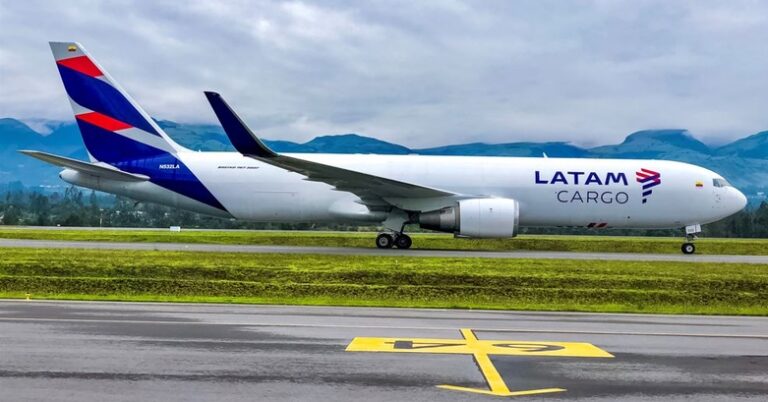
On 28JUL24, CargoForwarder reported exclusively about the cargo flight suspensions between the EU and South America planned by Qatar Airways Cargo and Martinair Cargo, coming into effect during the course of SEP24. In a LinkedIn post published yesterday (03AUG24), LATAM Cargo announced that it would be filling the gap by adding additional capacity to its currently ten weekly flights between Europe and South America.
LATAM Cargo operates 10 weekly B767F flights to / from Europe, with two more coming soon – courtesy: LATAM Cargo
The cargo airline did not specify the routing but according to information provided by market participants, the B767-300F will be operated weekly between Amsterdam, Viracopos, and Santiago de Chile. This additional capacity offered by LATAM Cargo as of 01OCT24, represents a 20% increase in its current offering to the markets on both sides of the Atlantic Ocean. “It is one step forward,” conciselyAlfredo Noguerales Fraguas, Senior Manager EMEA LATAM Cargo commented succinctly, applauding the management decision.
Fast closing of a gap The carrier’s move was foreseeable, even if not necessarily expected at this speed. Ultimately, however, LATAM Cargo has seized the opportunity enabled by the partial withdrawal of QR and MP, to up its market share and gain new customers. Soon, the airline will operate 12 weekly flights across the South Atlantic, up 2 from currently 10, offering its customers a weekly capacity of more than 600 tons. In a LinkedIn post, LATAM Cargo management points out that the decision further strengthens the airline’s leading position. This particularly benefits those forwarders looking to transport general cargo and pharmaceuticals between Europe and South America, as well as those shipping flowers, vegetables and fruit out of South America.
MP and QR shift operations from Latin America to East Asia Currently, the Santiago, Chile-based carrier operates a fleet of 19 Boeing 767-300 freighter aircraft. In addition, it offers ample lower deck capacity on its passenger B777, B787-9 and B787-8 jetliners, totaling 1,700 tons serving eight destinations in South America and ten in Europe.
As reported, the cargo airlines MP and QR had recently announced that they would be discontinuing some of their cargo flights to South America and shifting them to East Asia instead. The rates there are comparatively higher and the utilization of the routes between East Asia and Europe is more balanced, according to MP representatives.
Favorable timing The fact that some of their routes are now being taken over by LATAM Cargo was to be expected and should not come as a great surprise. After all, where there is a gap in air traffic, there are usually others queuing up to fill it.
For LATAM Cargo, however, the timing of the increase in capacity is extremely favorable: “We are approaching the beginning of the peak season, so the increase in our flights comes just in time,” said an airline representative. Yet, he qualified that his market division expects just a small to medium peak by the end of the year, rather than a really big boost.
CargoForwarder Global’s ‘Spotlight On…’ series showcases a different aspect of the air cargo industry every week to highlight its manifold career opportunities. Air cargo needs airports in order to function. Not all airports are the same – neither in size nor focus. This week, we hear from Bournemouth Airport’s Head of Cargo, Bob Matharoo (BM). What does cargo development look like at an English up-and-coming regional airport, what does he enjoy about the air cargo industry and what is his advice to those considering joining it?
Spinning plates and planning ahead at all times. Image: Bob Matharoo
CFG: What is your current function and company? And what are your responsibilities?
BM: Head of Cargo Development at Cargo First, which is the in-house cargo operations brand of Bournemouth Airport in the South of England.
As you’d expect, my role is focussed on business development with the core of that being relationship management; to be effective, it’s imperative that I generate strong engagement with existing and potential new clients but also the whole breadth of internal and external stakeholders to successfully achieve our business aims.
As a new and growing name in the industry, it’s really important for Cargo First that I have my ‘finger on the pulse’ at all times; to ensure we’re abreast of all the latest industry developments and are taking full advantage of our capacity to nimbly react to new trends and deliver effective solutions.
CFG: What does a normal day look like for you? (Or is there such a thing?)
BM: To coin a phrase: it’s very much like spinning plates! On any given day, I’ll be simultaneously planning what I’m doing that day, but also next week and even months ahead, and reacting to new opportunities as they come along – which is challenging but exciting.
Plus, the old adage that no two days are the same is absolutely spot on for my role: one day, I’ll be jumping in the car to make the 90-minute hop to London to meet with the myriad of freight forwarders, agents and brokers based there, the next, I’ll be found mucking in with the operation on site at Bournemouth Airport, and the following, I might be at a key trade conference or visiting an overseas client.
Being at the front end of the sales development function is really what it is all about – so no matter what my day entails, being out there and visible representing Cargo First is always the priority.
CFG: How long have you been in the air cargo industry, and what brought you to it?
BM: I first joined the aviation industry in 1986. Since then, I’ve I worked for a combination of industry-related companies including cargo agents, handling agents, airlines, GSAs and now an airport.
There’s no question that the diversity and fast pace of the sector is what made it such an attractive industry to work in; and that’s something that continues to be true to this day.
Having taken on this new role on the airport side three years ago, it’s great to be able to bring the benefit of that broad past experience to Bournemouth Airport.
CFG: What do you enjoy most about your job?
BM: I love working with people – having the opportunity to experience different countries, different working cultures, different ways of life, really makes me tick. There’s always something new to learn, and frequently elements of the way other people do things that can be applied to your own work.
For me, that’s what has made the industry so appealing for nearly 40 years!
CFG: Where do you see the greatest challenges in our industry?
BM: I’d say that the three biggest challenges are infrastructure, digitization and sustainability.
Particularly in the West, ability to deliver the physical infrastructure is equally as difficult as it is paramount to the continued success of the air cargo sector. I’m privileged to work for an airport that is forward-thinking with a highly supportive owner keen to help our clients grow and capitalize on the huge market potential we see for Bournemouth Airport as prime gateway for e-commerce goods to and from the UK.
Plus, as a regional airport with fast access to London, we’re really well positioned to be able to offer up the advantage of uncongested facilities to a market that, on the whole, finds itself with acute capacity shortage issues.
Digitization is clearly as much an opportunity as it is a challenge. There are obviously costs and complexities to developing and installing such technologies, but on the other hand, elements such as AI will offer us significant ability to find efficiencies that we simply can’t decipher at present.
Finally, sustainability is by far the biggest challenge which impacts every aspect of everything we do. As an industry, we accept our responsibility to be carbon neutral (a goal we, at Bournemouth Airport, have set ourselves to reach not later than 2040). Again, with challenge comes opportunity – for example: we’re committed to developing a PV solar array on site at the airport which, once running, will deliver up to 100% of the site’s power needs. It is truly exciting to think that we’ll become one of the UK’s first ‘off grid’ airports!
CFG: What advice would you give to people looking to get into the air cargo industry? Any particular training they should aim for?
BM: Since the pandemic, the eyes of the world have been truly opened to the important of logistics – with the air cargo industry being central to this. It is great that there’s now a much better understanding out there of the career opportunities that exist within the sector.
As per my own career, the best piece of advice I can give is to join a company that’ll give you an introduction to air cargo from as many sides as possible: operations, commercial, finance and so forth. That’s a great starting point from which to figure out where your interests and skills can take you. We’re very proud that Cargo First offers just such opportunities to get in, experience and learn.
Good luck – you will never look back; I didn’t!
CFG: If the air cargo industry were a film/book, what would its title be?
BM: King Kong – not to be underestimated, with strengths and intelligence far beyond that which the average person would appreciate!
Many thanks for your insights, Bob.
If you would like to share your personal air cargo story with our CargoForwarder Global readers, feel free to send your answers to the above questions to cargoforwarderglobal@kopfpilot.at We look forward to shining a spotlight on your job area, views, and experiences.
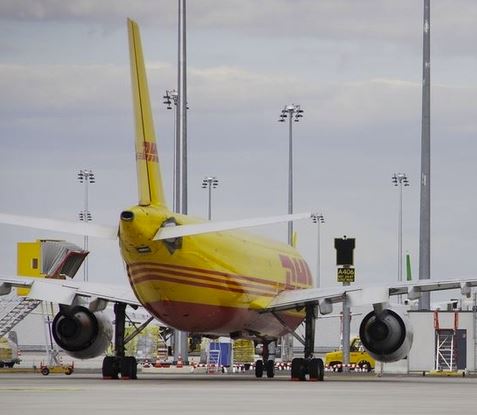
The DHL Group has been using Leipzig/Halle Airport (LEJ) since 2008. Meanwhile, LEJ has become the integrator’s largest global hub. On average, 2,000 tons of freight are handled every night. That translates into 350,000 single shipments being handled and flown to more than 50 destinations worldwide. Last Thursday (01AUG24), however, there were significantly fewer volumes handled at LEJ. Climate activists had infiltrated the security area and paralyzed air traffic for hours.
On behalf of DHL Express, between 80 and 90 freighters land at LEJ every night from Monday to Friday. The movements double when considering takeoffs – courtesy: DHL
Ahead of schedule, operator Leipzig Airport and DHL have extended their partnership to 2053. As DHL CEO, Tobias Meyer said at the signing of the contract, the prolongation of the deal paves the way for further investment in the site and it guarantees long-term job security. “Even though the fees have not been raised significantly, the result is economically viable,” stated Mr. Meyer.
According to the executive, DHL will pay around 20% higher operational fees than done so far. In the past, this amounted to EUR 61 million per year. The new accord also includes an adjustment to night flight operations, although neither DHL nor Leipzig management revealed specifics.
Upping LEJ’s cashflow The expected higher cashflow is essential for the airport, as it has accumulated millions in losses over the past few years. Although management denies debts amounting to EUR145 million according to local media reports, it feels compelled to take a tough restructuring course in order to improve the dire situation.
In addition to new financial conditions, the deal between LEJ and DHL apparently also includes a commitment to expand the number of parking positions for freighter aircraft. Insiders say that these are to be increased from the current 60 to 100. This will enable more traffic, thus increasing DHL’s revenue and at the same time upping the airport’s income, nurtured by additional landing fees.
Long-term perspective Majority shareholder of the airport company, which includes the two airports Leipzig and Dresden and the ground handling company PortGround, is the federal state of Saxony (80%). Its President, Michael Kretschmer, praised the deal with DHL, saying: “The DHL Hub in Leipzig stands for the Saxon success story of which we in Saxony are proud. In just 16 years, Leipzig/Halle Airport has grown into one of the world’s most important hubs for air freight. Saxony successfully campaigned for the establishment of the hub in 2008. Today, we have created a long-term perspective for further investment in Leipzig as an outstanding logistics location. The extended partnership with DHL ensures that Saxony will play a leading role in the growing international trade.”
The Last Generation’s aberrations However, as soon as the new contract was signed, Leipzig suffered a setback. Climate activists from the ‘Letzte Generation / Last Generation’ group managed to penetrate the security area and paralyzed cargo flight operations for several hours. The activists called for a rethink of aviation policy and criticized the planned expansion of airport capacity.
Their gluing campaign led to a temporary suspension of cargo flight lasting three hours and affecting 19 DHL flights which had to be diverted to other airports. “We reserve the right to take legal action against the activists,” said the airport’s Head of Communications, Uwe Schuhart, when approached by CargoForwarder Global.
Lately, the radical climate campaigners have become a hazard for civil aviation in Germany. They gained illegal access to the security areas of a variety of airports, including Hamburg, Berlin, Düsseldorf and Frankfurt, causing cancellations or diversions of hundreds of flights, leaving thousands of passengers stranded, and causing severe delays to cargo shipments. Lufthansa has now decided to take action: The carrier announced that it is filing claims for losses suffered by the actions of ‘Last Generation’ members, amounting to 740,000 euros.
That is the question these days, when it comes to pets in cabin. The modification of the Shakespeare quote came about following the pet discussion recently triggered by the United States Center for Disease Control (CDC). In their initial decree, issued just a few weeks ago, the agency demanded a stop to transporting pets next to their owners in the passenger cabins of aircraft. Instead, the authority called for all pets to fly in the cargo hold, without exception. However, the strict new rule was stopped on 30JUL24. We shed light on this bizarre and highly emotional topic.
The protest by IATA, supported by numerous airlines, has had an effect. The CDC has stepped back from its strict course forbidding pets to sit next to their owners in passenger cabins of jetliners. A successful pushback, much to the delight of Marie Louise Baillargeon. The Frenchwoman from Normandy visits relatives in the USA several times a year. She is the owner of a Bernedoodle, which she used to book as pet in cabin whenever she traveled. “I fear flying and the dog is my emotional companion who transmits his calmness to me during the journey,” explains Ms. Baillargeon.
Bernedoodles are generally considered to be very sociable, less aggressive and benign – photo: private
Separation of passengers and pets only in exceptional cases Just like her, every day, hundreds of travelers take a pet into the passenger cabin of an airplane, sometimes for similar reasons, but mostly out of sheer love for their animals. More than 90% are dogs, but these emotional support companions can sometimes be hamsters, guinea pigs, cats or even birds. For example, a lady in the USA once wanted to check in for a domestic flight with a parrot sitting on her shoulder, but was refused boarding by airline staff. Instead of flying, she and her bird had to use the train to make their trip.
These are now the new requirements prescribed by the CDC in close coordination with IATA and Washington’s Transportation Security Administration (TSA):
Before accepting a dog for transport, Aircraft Operators must confirm that the owner is in possession of all the required key documentation for the dog, based on the country of origin and including the date of its last rabies vaccination. They are required to issue an air waybill for all dogs entering the U.S. via air, including dogs transported as cargo, as hand-carried or as checked-baggage prior to their arrival.
Carriers are responsible for returning pets considered inadmissible, to the country of departure within 72 hours of arrival. If the dog is from a high-risk country, the aircraft operator/air carrier must ensure that the animal will only enter the U.S. through a designated U.S. airport with both a CDC quarantine station and a CDC-registered Air Cargo Facility (ACF). Of these, there are only six in the USA.
Finally, CDC points out that airlines which lack the technical ability to generate a bill of lading to transport dogs as checked baggage or as hand-carried baggage, may request a waiver from the agency.
High risk … CDC justifies the amended rules to protect America’s pets by preventing the reintroduction of dog rabies into the United States, allowing only vaccinated dogs to enter the country. A CDC bulletin names the high-risk countries where rabies has not been eradicated. These range from Afghanistan to Zimbabwe and include countries such as Brazil, South Africa, Türkiye, the United Arab Emirates, China (excluding Hong Kong, Macau), India, Qatar, Egypt or Israel, among others.
…and moderate risk countries In a second document, the CDC identifies countries with a lower risk of rabies, such as Belgium, Japan, Ireland, Singapore, Australia, England, Scotland, and Australia. Dogs arriving from these states must be vaccinated and be at least 6 months old. They must have an implanted microchip that can be detected with a universal scanner, to identify them upon their entry into the U.S.
Swiss WorldCargo, KLM Cargo urge customers to comply with the new rules In a note to customers, Swiss World Cargo points out that shippers and pet owners are responsible for ensuring compliance with the CDC criteria and submitting the necessary documentation before their dogs are accepted for air travel by Swiss WorldCargo. “General requirements apply universally, with additional specific rules based on the dog’s travel history and the origin of its current rabies vaccination. Dogs that do not fulfill all requirements will be denied entry and returned to the country of departure at the shipper’s/owner’s expense,” the Swiss statement reads. KLM Cargo has just sent a very similar letter to its customers in order to alert them. In this way, the carriers protect themselves from the risk of having to fly back animals rejected by the U.S. authorities upon arrival, at their own expense.
IATA stepped in When asked about the new rules, the Head of Cargo of a leading European airline said that IATA had done an extremely good job on behalf of all airlines by managing to relativize the original AWB requirement in negotiations with the CDC. It has also succeeded in ensuring that carriers can submit a waiver application that suspends the AWB requirement for an initial period of 3 months.
The priority for the next three months is to define a regulation that takes into account the interests of all parties involved.
Until then, passengers from low-risk countries will be able to take their pets back into cabin or cargo holds as they always have done, as long as they follow the instructions listed in the CDC’s new Dog Import Form.
Surely, if you’re wanting to push your cause, the best strategy is to win over as many supporters as possible? The Last Generation activists consistently appear to take the opposite approach. The upheaval at various European airports over the past 10 days, succeeded in showing up a number of failures – both on the activists’ part, as well as on the part of airport management and security. Though if the objective was to irritate as many travelers and logisticians as possible, then the actions were certainly a success. Yet while a micro-minority of the public may laud the Last Generation’s extreme measures, at the end of the day, wanton disruption, trespassing, and vandalism are wrong – not to mention hypocritical – and cannot be the way forward.
Alienating your cause. Image: AI recreation of a Last Generation image
Certainly, that was underlined by the Austrian Governor for Lower Austria, Johanna Mikl-Leitner (ÖVP), who issued a very critical statement calling the protesters criminals as opposed to climate heroes, and clearly annunciating that those who disrupt air traffic, should be jailed. No one is above the law, never mind the cause.
Around 50 activists had attempted to cause havoc at Vienna International Airport, Saturday a week ago, but a few had also met with good old Viennese stubbornness and ‘suffered’ a few suitcases rolling over them as people pushed past the human barrier. Vienna was just one of the airports targeted by the Last Generation. Germany saw a number of disruptions, in part leading to major flight delays/cancellations, and attempts were made in the UK, Finland, Norway, Switzerland, and Spain. Possibly not the last of this kind of disruption, since environmental activists have said that they plan to target European airports throughout the summer in an effort to remind the public of the link between fossil fuels used in aviation, and climate change, and to push governments to end the extraction and burning of fossil fuels by 2030.
Lost cause already? 2030 is just five and a half years away, now. Unfortunately, just last week, Air New Zealand issued a statement explaining why it has now dropped its 2030 carbon target: “Many of the levers needed to meet the target, including the availability of new aircraft, the affordability and availability of alternative jet fuels, and global and domestic regulatory and policy support, are outside the airline’s direct control and remain challenging.” The main reason, according to a Reuters article on the airline: aircraft delivery and maintenance delays. The publication also pointed out: “This is the first major airline to row back on climate aspirations, but the carrier said it was committed to an industry-wide target of net zero emissions by 2050 and was working on a new near-term goal.”
Add to this, the UN’s 9th edition of its Sustainable Development Report (SDR), revealing in JUN24, that “none of the seventeen Sustainable Development Goals (SDGs) are on track to be achieved by 2030, and only an estimated 16% of the SDG targets are progressing,” and the outlook appears pretty bleak.
Lack of practical solutions That said, things are happening and the air cargo industry and aviation industry as a whole need to ensure that the positive messages are getting across and, above all, are true and tangible.
Similar criticism can be applied to the Last Generation, however. Its approach to addressing sustainability in the air cargo industry fails on many levels – not least, its failure to propose practical and actionable solutions for sustainability in air cargo. Most likely due to its ignorance of how the industry functions, overall. So, while Last Generation may be effective in highlighting certain environmental issues associated with the industry, it fails to suggest any concrete and feasible proposals for positive change, and this largely limits its influence on those policymakers and industry stakeholders seeking to adopt realistic strategies to reduce carbon emissions.
Disruption over Dialogue – regardless of the consequences Instead, through its disruptive tactics such as airport blockades and public protests, the Last Generation draws attention to its cause, but not in a constructive manner. While these actions generate media coverage and public awareness, they also largely alienate potential allies within the industry and government. Effective climate activism requires engaging with and influencing key stakeholders within the industry. The Last Generation group, however, shows only very limited constructive engagement with airlines, logistics companies, and regulatory bodies. Its confrontational nature creates an ‘us versus them’ mentality, as opposed to fostering a collaborative environment where all parties work together towards common sustainability goals.
Because of this lack of collaboration, the Last Generation appears unaware that a crucial aspect of achieving sustainability in air cargo is the development of appropriate infrastructure to support new technologies and practices. Its activism seldom addresses the infrastructural investments required to implement solutions such as sustainable aviation fuels, energy-efficient ground operations, and improved logistics networks. For it to be taken seriously, the Last Generation would need to resort to more founded and constructive criticism.
Neglecting Economic and Social Impacts Not only that, but another significant failing of the Last Generation is its apparent disregard for the economic and social implications of its activities. Air cargo is a vital component of global trade and commerce. It supports millions of jobs and contributes significantly to national economies. Last Generation’s disruptive actions and calls for drastic reductions in air cargo operations overlook the potential economic fallout and job losses that could ensue, particularly in those regions heavily dependent on aviation and logistics.
Underestimating Technological Advancements and Infrastructure Likely due to a lack of understanding as to how the air cargo industry works, the Last Generation activists may not be aware of or may largely undervalue the technological advancements already being made to enhance sustainability. Though Sustainable Aviation Fuels might be more publicized, there are also a number of other efforts under implementation or on the horizon, that will continue to promote a healthier aviation industry. Measures such as more fuel-efficient aircraft, and advanced logistics software are gradually reducing the sector’s carbon footprint. Already, the aircraft of today are not the same as those flying twenty, thirty years ago. Engines have become more efficient and quieter, for example. In not acknowledging these efforts, the group risks appearing out of touch with the industry’s current trajectory, and undermines the progress being made by those stakeholders genuinely committed to sustainability.
A Shot in the Foot The methods employed by the Last Generation activists polarize public opinion. Although their intentions are to rally support for urgent climate action, their radical tactics result either in public backlash or apathy. Polarization is detrimental to progress as it drives a wedge between those wanting change and those with the power to implement it. While the Last Generation may have played a role in raising awareness about the environmental impacts of the air cargo industry, its approach is marked by the several failings listed: lack of practical solutions, disruptive tactics, neglect of economic and social impacts, underestimation of technological advancements, failure to address infrastructure challenges, insufficient stakeholder engagement, and the potential to polarize public opinion.
This time, it has also resulted in reactions that will have negative consequences for its members: The German Cabinet has drawn up a bill that, once approved by lawmakers, will enable punishment of up to two (possibly five) years’ imprisonment for those who intentionally trespass on airside areas of airports, endanger civil aviation, or facilitate others to do so. Some airlines are already looking to press charges on last week’s activists.
Do Better While airports and airport security need to examine how they deal with disruptive actors to prevent gross disruption, in future – particularly if notified in advance, as was the case in many of the recent protests – the Last Generation should also reconsider its approach. It would be far better off channeling its passion for the cause into constructive dialogue and collaborative change.
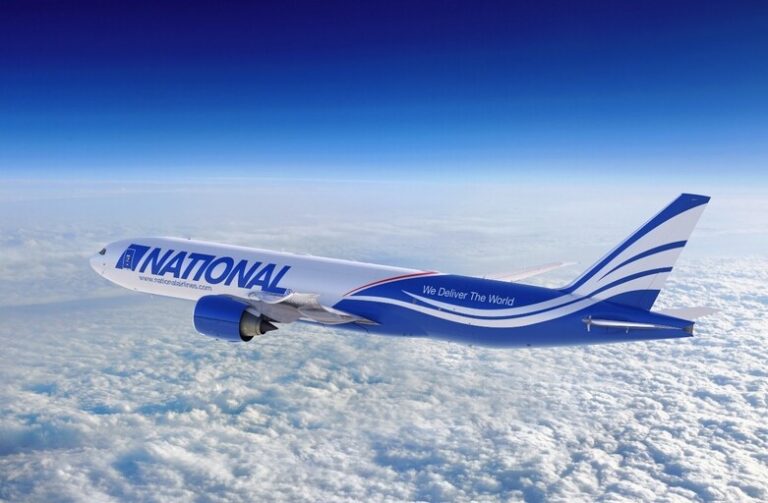
Boeing and National Airlines chose the backdrop of the Farnborough International Airshow to announce that the airline has committed to ordering four Boeing 777 freighters. The carrier already operates nine B747-400 freighters, and the new additions to its expanding fleet will complement them. As Boeing states in its press release: “Designed to integrate seamlessly with existing 747 operations, the 777 Freighter allows carriers to easily transfer cargo between the two airplanes to streamline ground logistics and leverage additional cost savings through fleet commonality.”
For National Airlines, the B777F, which currently offers the longest range (at 9,200 km) for a twin-engine aircraft, plus a payload of 107 tons, will enhance its cargo service and help grow its market share across its global operations.
Christopher Alf, Chairman of National Airlines, commented: “We are elated by this remarkable order of four Boeing 777 Freighters. This demonstrates our commitment to offering efficient, resourceful, and modern air freight services to support our global customers’ increasing transportation demands. The order affirms our fleet growth plan as we enter into the next chapter of National. We sincerely appreciate the support by Boeing and all its associated teams in this journey ahead.”
Stephanie Pope, President and CEO of Boeing Commercial Airplanes, said: “We appreciate National Airlines for its trust in Boeing and the 777 Freighter to grow the carrier’s global fleet and deliver greater value for its customers. With its cargo capacity, range and reliability, operators continue to rely on the 777 Freighter to build their future fleets, making it the best-selling freighter of all time.”