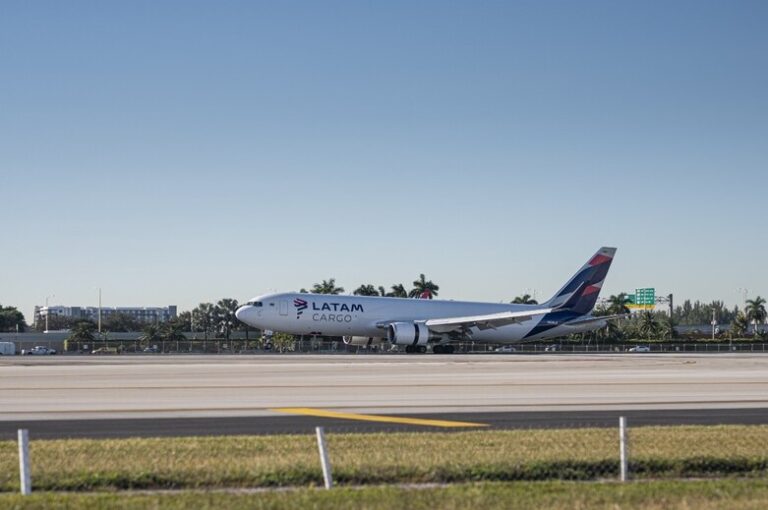
The Latin American cargo carrier announced last week, that it is increasing its frequency on the Miami (MIA) – São José dos Campos (SJK) cargo route to three times per week. The service was just launched in JUN23 and has facilitated the import of supplies and electronic equipment for the entire industrial chain in the Vale do Paraíba region of São Paulo, as it connects with cargo from the U.S. and Europe through Miami hub. It previously ran twice a week, but will now operate on Mondays, Wednesdays, and Fridays, with its B767-300F freighters offering a weekly total of more than 150 tons of cargo capacity between the U.S. and the São Paulo interior.
National orders first four B777F – image: Boeing
São José dos Campos Airport is located in Vale do Paraíba which is Brazil’s second-largest industrial hub. It boasts having the state’s third-longest runway, and enjoys a modernized cargo terminal, offering surrounding industries an efficient, good value service. SJK is one of 50 destinations in Brazil and 166 destinations in 33 countries in LATAM Cargo’s flight schedule. The carrier operates 18 exclusively cargo destinations, and has a 20-strong freighter fleet made up of Boeing 767-300F and Boeing 767-300BCF variants. It is committed to improving cargo services and recently introduced a new product portfolio for domestic flights in Brazil, offering four new services and specific care options. Since last year, it has launched and increased its services to several international cargo routes: Miami-Brasília, Amsterdam-Curitiba, Miami-Florianópolis, Guarulhos-Belém-Manaus, among others, plus a Europe-Florianópolis connection. Cargo customers also benefit from LATAM’s Brazilian passenger operations that are expected to grow by 7% to 9% in Available Seat Kilometers, thus offering greater belly capacity on the domestic market, too.
Otávio Meneguette, Commercial Director of LATAM Cargo Brazil, stated: “We are very pleased with this announcement, which reinforces our commitment to our customers in Brazil. This international route is crucial for São José dos Campos and the São Paulo interior, as it facilitates the import of supplies and electronic equipment for the Vale do Paraíba industrial chain.”
Following a contract signed earlier this year between Georgi Group and Hermes Logistics Technologies (HLT), to switchover to Hermes 5 SaaS at Georgi’s Frankfurt and Leipzig/Halle cargo handling facilities, the SaaS provider has now completed the switchover in Frankfurt. The previously existing cargo management system (CMS) was fully replaced by the latest version of Hermes 5 CMS in a process that took just a little more than two months. Both companies report that the service is now live and fully functional at Georgi’s Frankfurt facility. The smooth rollover was thanks to a fully automated implementation process supported by a new German-language version of the Hermes Learning Management System (LMS). “HLT’s latest SaaS software is delivered entirely through automated coding and scripts, facilitating fast deployment; plus, with staff training through the new German-language version of the Hermes Learning Management System, the Georgi team could quickly get up to speed on the new CMS,” the release explains. It details that the on-demand LMS offers courses, videos, user guides, and FAQs, which have all been designed to improve knowledge of the Hermes CMS and enhance digital proficiency in the air cargo industry. Leipzig/Halle airport is currently also undergoing a switchover to Hermes 5, and should see completion in the next few weeks.
Benjamin Weil, CEO of Georgi Handling – image: Meantime Communications
Yuval Baruch, CEO of Hermes Logistics Technologies, said: “The CMS implementation for Georgi was our quickest to date for a new customer, thanks to our new, automated rollout capabilities, Georgi’s openness to collaboration, and a German version of our learning management system. Georgi’s Frankfurt handling operation is a medium-sized terminal, and we have been able to install and stabilize the Hermes 5 SaaS CMS within a matter of weeks, which gives Georgi all the benefits of our cloud-based services sooner.”
Benjamin Weil, CEO of Georgi Handling, commented: “We were able to opt for an out-of-the-box solution from HLT, as it offered everything we needed to enhance our operations and the option to add further functionality in the future if needed. I am impressed by the speed and efficiency of the implementation, which was in part facilitated by the Hermes LMS–the German language version allowed us to train staff quickly so they could use the new CMS without delay, saving us time and ensuring a smoother transition to a new system.”
Mahendra Pokhriyal was appointed Regional Representative – India for The International Air Cargo Association (TIACA), last week. With this latest appointment, the association achieves another milestone in its mandate to foster a regional presence in the different corners of the earth. “Mahendra Pokhriyal will enhance member relations within India, Bangladesh, Nepal, Bhutan and Sri Lanka by networking and building relationships with current and prospective members, regional bodies and the respective government agencies,” the release states, underlining that he will also be responsible for promoting and implementing TIACA policies and positions within the region.
Mahendra Pokhriyal is TIACA Regional Representative – India – image: TIACA
The aviation professional who is currently part-time Vice President Global Air Freight for Shree Shakti Air Cargo Private Limited, can draw from more than three decades of experience in air cargo, including leadership positions with Emirates, Jet Airways, and Jetair Pvt Ltd (GSA – Gulf Air). He has covered air cargo sales and marketing, airport cargo operations, business development, ground handling and freight forwarding.
Steven Polmans, TIACA Chair, announced: “We are excited to welcome Mahendra Pokhriyal to the TIACA Team. Mahendra has an extensive resume that is a perfect fit for the needs of the association and its membership. We look forward to seeing how he can connect us further with the Indian community.”
Mahendra Pokhriyal said: “I am honored to be part of TIACA and would be happy to contribute to further strengthening its presence in the Indian sub-continent. My primary objective is to support TIACA’s initiatives and fortify our industry’s network in this region. Together, we can enhance the efficiency, sustainability, and growth of the air cargo industry in the region. I look forward to working with all of you and making significant strides in our shared mission.”
Glyn Hughes, Director General of TIACA, said: “India has experienced amazing growth in recent years as it seeks to achieve the government’s economic objective of moving 10 m tons of cargo as part of a USD 5trillion-dollar economy. We are proud to support the air cargo industry across the region and this appointment is a strong commitment towards that objective.”
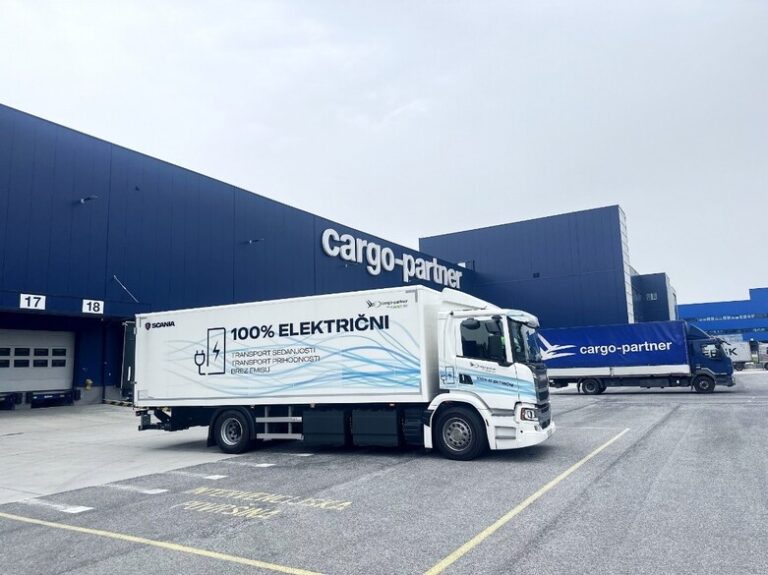
Austria and Slovakia already successfully piloted e-trucks earlier this year, as forerunners in cargo-partner’s European e-truck testing program. The Nippon Express Holdings, Inc. company has therefore now also launched the initiative in Slovenia. cargo-partner’s “ROAD (Reducing Our Atmospheric Dependencies)” program was launched in MAY24, as part of its focus on sustainability. Slovenia joined in JUN24, testing electric trucks on first- and last-mile operations. The Scania P25 electric truck is being deployed in the country. It has been specially developed for use in urban, suburban and intercity traffic, and has a payload of around 20 tons of cargo, with a capacity of up to 18 pallet places. The truck can travel between 200 to 250 km on a single charge.
Slovenia is the third country to test e-trucks – image: cargo-partner
“The test period was mainly focused on daily collections and deliveries and around the cargo-partner iLogistics Center Ljubljana, which provides more than 35,000 m² of storage space. In terms of energy efficiency, the results were comparable to the test runs in Austria and Slovakia, with an average consumption of 1 kWh/km, which is cost-equivalent to conventional trucks,” the press release states.
Thomas Schledorn, Chief Operating Officer Overland at cargo-partner, explained: “This comprehensive testing phase is a key step in understanding and reducing the environmental impact of our freight movements. After Austria, Slovakia, and Slovenia, we aim to expand this program to other countries in the region by the end of the year. By incorporating advanced electric vehicle technologies, we can foster more sustainable logistics solutions.”
Professional cargo service starts with professional staff – and that is the result of good quality training programs and regular refreshers. Since 2020, ECS Group provides its staff has digital access to all the information required to carry out their job, as well as advance in their career. Discovery is the group’s internal training platform designed to elevate skills and expertise within its organization. It serves more than 1,200 people who have completed over 5,600 courses since its launch, four years ago. Users are offered a palette of 77 courses covering everything from job skills to air cargo industry knowledge, sustainability topics and IT and digital solutions. ECS Group is committed to ensuring that Discovery continues to evolve to meet emerging technologies and industry trends. As a member of the digital one-stop-shop provider, CargoTech, ECS Group’s training tool complements CargoTech’s digital tools to offer its employees the optimum support in their work. To date, learners have altogether invested over 10,000 hours in Discovery across the group’s network, but with a particularly strong user-presence in Europe. According to ECS Group, its employees welcome the opportunity for life-long-learning and feel that Discovery has positively impacted their skills and job performance.
Dimitri Arnaudin, Director of Digital and Innovation, ECS Group – image: ECS Group
The tool is user-friendly, well-organized and easy to use, offering an interactive and personalized learning experience. “Incorporating multimedia elements like videos and quizzes accommodates diverse learning styles, its compatibility across devices ensures flexibility, and [offers] personalized modules cater to specific job roles. Robust assessment and certification features validate employee proficiency, effectively recognizing their learning achievements,” the release states.
Dimitri Arnaudin, Director of Digital and Innovation at ECS Group, underlined: “Discovery represents a crucial step in our digitalization journey, empowering employees to adapt to the changing landscape of the air cargo industry. By providing accessible, interactive, and personalized training experiences, we are equipping our teams with the skills and knowledge needed to excel in today’s dynamic environment.”
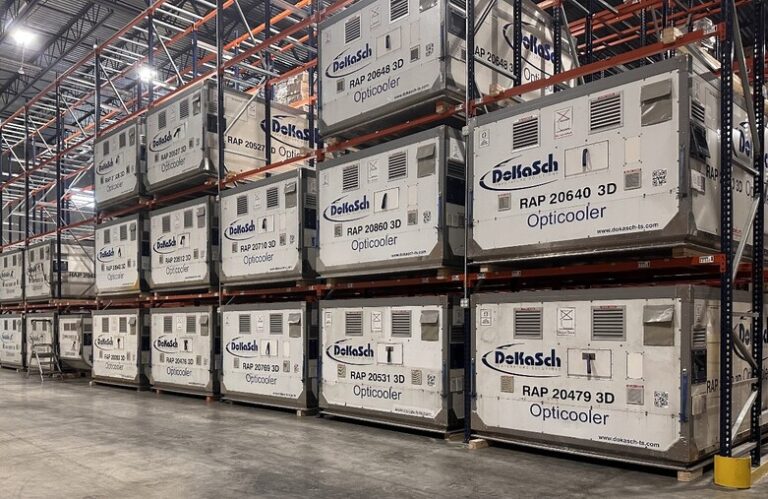
Ok, possibly that, too, but it is a good way to recall where DoKaSch Temperature Solutions has just opened its new Opticooler® stations. Beach means Miami, in this case, and the birthplace of Guinness is, of course, Dublin. The latest additions are part of the temperature-controlled packaging solutions company’s global expansion strategy. The new station in the vicinity of Miami International Airport (MIA), USA, will ensure greater supply of Opticooler® ULDs across the south of the United States, as well as offer more flexibility to customers in Latin America. Starting with a capacity of 30 containers, Miami station is planned to grow in future as it serves the tenth busiest airport in the U.S., which is also the main cargo hub for shipments travelling between the Americas and Latin America. With 3,800 m² of cargo space at the airport dedicated to handling temperature-sensitive goods, the strong focus on pharmaceutical distribution makes it an ideal Opticooler® catchment area. “In 2023 alone, USD 3.9 billion worth of medical products were managed at MIA,” the press release reveals.
30-container-capacity, with more to come in future. MIA Station – image: DoKaSch
Over in Dublin, the station already starts a little larger. Its initial capacity is 40 containers, since Ireland hosts manufacturing facilities for the world’s top ten pharmaceutical and biopharma companies, is the fifth-largest exporter of pharmaceutical products (according to the OECD), and growing.
“The new Opticooler® stations in Miami and Dublin align perfectly with DoKaSch Temperature Solutions’ comprehensive Free Delivery Areas. This service ensures that the Opticooler® RAP and RKN containers are delivered directly to the loading point, with DoKaSch handling the organization and coordination. Large Free Delivery Areas are available in Europe and the United States, with smaller regions covered in Asia, offering significant transport cost savings. Our goal is to deliver the Opticooler® the evening before the rental period starts, ensuring the container is fully conditioned and ready for use,” the release continues.
Andreas Seitz, Managing Director of DoKaSch Temperature Solutions, commented: “The new stations in Miami and Dublin are significant milestones in our expansion strategy. Our goal is to ensure the best availability of our Opticooler® worldwide and provide a reliable cold chain. These new locations will enhance our reach to customers in the Americas and Europe.”
Condor has been transporting passengers to leisure destinations since 1956. Back then, it was called Deutsche Flugdienst GmbH. Its current brand, Condor, was launched in 1961. Although the company has also flown air freight shipments from day one, for decades the package and pallet business only played a marginal role in the carrier’s product portfolio. However, things have been different for several months now.
Condor operates 17 Airbus A330 aircraft – picture: company courtesy
There are a number of reasons for Condor’s increased focus on cargo. The nomination of Peter Gerber as CEO, for example. The proven air freight expert who, among other things, was CEO of Lufthansa Cargo, heads the airline since 01FEB24. Since fall 2023, Thilo Schäfer, who also held leading positions at Lufthansa Cargo, is responsible for Condor’s cargo business.
Evolution of Condor Cargo Yet capable and experienced personnel alone do not ensure more tonnage. The rollover of the fleet is at least as important for the upswing in capacity demand by freight forwarders and general sales agents. Schäfer compares the shift from the aging Boeing 767 aircraft that his airline had been using for years, to the more efficient Airbus A330neo, as kind of celestial big bang. Currently, the carrier operates 17 units of this Airbus variant. Each of them can carry up to 14 tons per flight, depending on the number of passengers and their luggage. In contrast, the B767 was limited to 6 tons per take-off. “The rollover of our long-haul fleet has greatly stabilized our business, conversely visibly reducing the number of ad hoc shipments,” notes Schäfer.
Non-stop routes via non-stop bookings Another factor is that the non-stop routes, taking off, for instance, from Germany to New York, Seattle, Toronto or Cancún on the Mexican peninsula of Yucatan, are enjoying high cargo demand, leading to satisfying capacity utilization. Flights to the Dominican Republic with commuting transports from interline partner, Copa Airlines, to final destinations in Brazil, Panama or Ecuador “are also running very well from an air freight perspective,” says Manager Schäfer.
Condor Cargo’s product range is quite broad and includes foodstuffs such as fruit and vegetables, flowers, electronics, spare parts, tools, machinery items, among others. Since last week, customers can book capacity online via all relevant electronic channels, including cargo.one. “That contributes significantly to our digitalization strategy,” adds Schäfer.
WestJet collaboration Similar to the agreement with Panama-based Copa Airlines, Condor has now signed an interline agreement with Canada’s WestJet, including freight transportation. This allows providers to share the capacities offered by their fleets. “This substantially expands our reach and enables us to offer transportation to multiple destinations served by WestJet, within Canada and beyond. This includes transpac flights operated by WestJet to Japan, by transiting exports in Toronto or Calgary.” With Kirsten de Bruijn, Head of Cargo, an extremely knowledgeable and assertive leader is sitting in the driver’s seat of WestJet Cargo, who will ensure that the relationship between the two cargo divisions will be dynamic also on the part of the Canadian airline.
CargoForwarder Global’s ‘Spotlight On…’ series looks at the multitude of career possibilities across the air cargo industry, and invites a different individual each week to talk about their role, industry experience, insights and advice to potential newcomers. Continuous improvement, quality management, and adapting to ever-changing digital and regulatory requirements, are important aspects when it comes to ensuring smooth and safe air cargo logistics. This week, therefore, we hear from Oliver Suchanek (OS), Operations Engineering Manager at Air Canada Cargo.
Perfecting ‘Promise Maker’ and ‘Promise Keeper’ alignment. Image: Oliver Suchanek
CFG: What is your current function? And what are your responsibilities?
OS: I am the Operations Engineering Manager covering the European region for Air Canada Cargo, based in London. I sit as the focal point for stations in Europe for process architecture and operation engineering.
As a team, we use continuous improvement techniques (L6S, DMAIC, PDCA) to tackle challenges within our operation, to find those wins and incremental performance benefits, working closely with both the commercial and operational sides of the cargo team to bridge that gap between what we call the ‘promise makers’ (Commercial) and the ‘promise keepers’ (the Operation). A core responsibility is the focus and upkeep of our strong quality management system, which is the key to my team’s success. We leverage this to drive standardization and foster engagement with our operational teams to implement sustainable process improvements.
These projects vary in scope and topic from one assignment to the next, which gives an inspiring and exciting breadth to my role – simultaneously working on introducing new facility developments while also working closely with regulative bodies on animal transportation, through to introducing new digital working practices and techniques – no two projects are ever the same!
CFG: What does a normal day look like for you? Or is there such a thing?
OS: Potentially the best thing about my position is that there is no such thing as a normal day. The fluidity and variation to the role really banishes the mundane from the simple 9-to-5. However, I do recognize the need for structure to complement that – I always start by building my day around the two hats I wear: London and Toronto. Being the only member on my team outside of Canada, has its pros and cons! From there, I work on project deliverables, peer-review work for my colleagues or provide operational support to either side of the Atlantic. Additionally, I could be further afield than London, with time spent in any of the Canadian or European stations, supporting where required.
CFG: How long have you been in the air cargo industry, and what brought you to it?
OS: I joined Air Cargo relatively recently, taking my position at Air Canada in August 2022, although my history within aviation as a whole, spans my entire career. I came up through the ranks of Aircraft Maintenance, where I started as a Technical Apprentice in 2012. There wasn’t much to not be fascinated with about aircraft and air travel, and I was drawn to the industry to upgrade the toys I was playing with… Lego to 747s! Moving on from there, was an abundance of opportunities to continually expand and hone my skillset which has allowed me to grow into Cargo and the person I am today.
CFG: What do you enjoy most about your job?
OS: Being in such a huge organization allows me to interact and work with an amazing, varied group of people and there is nothing better than the opportunity to travel and work alongside them in person after countless virtual meetings! Air Canada is a place where growth and expression is really championed and embraced, and learning from all of the people I interact with every day, makes it a very special and enjoyable experience.
CFG: Where do you see the greatest challenges in our industry?
OS: Not only for Cargo, but across the wider industry, we’ve seen over the past 5 years how tumultuous an environment it can be. Retaining and nurturing young talent has become more of a challenge as the aviation industry has become a more unsettled landscape to work in. It’s crucial, as an industry, that those hurdles can be overcome and the hearts and minds of the up-and-coming generations can be captivated as mine was.
CFG: What advice would you give to people looking to get into the air cargo industry? Any particular training they should aim for?
OS: Be a sponge! There is a never-ending list of things to learn – but don’t let that be discouraging. A thirst for knowledge and those that push to expand their horizons and increase their skillset is rewarded. It’s an environment where its ok to make mistakes, and those learning opportunities can be embraced to improve day after day. Continuous improvement!
CFG: If the air cargo industry were a film/book, what would its title be?
OS: Around the world in 80 days ULDs.
Many thanks, Oliver, for your insights.
If you would like to share your personal air cargo story with our CargoForwarder Global readers, feel free to send your answers to the above questions to cargoforwarderglobal@kopfpilot.at We look forward to shining a spotlight on your job area, views, and experiences.
“He who journeys, has stories to tell” is a classic quote often heard. Jozsef Kossuth, Director Cargo, Budapest Airport, provides the latest proof that this sentence applies from beginning to end. He recently visited China, where the executives met with leading airline managers and spoke to airport decision-makers. A worthwhile trip, as the outcome of the journey clearly evidences.
Jozsef Kossuth’s trip to China has paid off, picture: CFG/hs
BUD – PVG The number of Chinese cargo and passenger airlines serving Budapest is constantly growing. Thanks to China Cargo Airlines, China Southern, and Shanghai Airlines, there are three new airlines flying to BUD for the first time or increasing existing frequencies. China Cargo Airlines, a subsidiary of China Eastern Airlines, launched its first dedicated cargo flight from Shanghai Pudong (PVG) to Budapest (BUD) just a few days ago. The sector will be served by B777 freighters every Monday, Wednesday, and Friday, from 30JUL24 onwards. “This connection marks a significant milestone in our intercontinental cargo network development, further cementing trade relations between Chinese and Hungarian enterprises,” commented Mr. Kossuth following a meeting with the freight carrier’s management.
Budapest is outpacing its European peers – credit: BUD
BUD – CAN In 1,200 km distant Guangzhou, China Southern Airlines started passenger services to the Hungarian capital city four weeks ago, operating a Boeing B787-9 jetliner that offers cargo clients ample space in the aircraft’s lower deck compartments. On the occasion, Han Wensheng, President of China Southern Air Holding Co, pointed out that the route is the first direct flight linking the heavily industrialized and populated Guangdong-Hong Kong-Macao Greater Bay Area with Hungary, and will strengthen ties between China and the European Union. The services will be offered four times a week — on Tuesdays, Thursdays, Saturdays and Sundays, with intra-European commuting options for travelers.
Guangdong Province generates 10% of China’s GDP, so the connection is also of key importance for the Hungarian economy, emphasized François Berisot, CEO of Budapest Airport. It is the world’s largest R&D hub for information technology and renewable energy. The metropolis of more than 15 million inhabitants is home to major investors in Hungary, such as BYD, Huawei, ZTE, Sunwoda, and Eve Energy. The flights will further strengthen BUD’s position as leading cargo hub in Central and Eastern Europe, and become a door-opener for export and import flows, benefitting both SMEs and multinational companies, the executive stated.
Francois Berisot heads Budapest Airport since 06JUN24 – photo: courtesy BUD
BUD – XIY Alongside the Shanghai and Guangzhou flights, Budapest Airport welcomes a direct route to Xi’an, operated by Shanghai Airlines – China Eastern. The route will be operated on Saturdays with B787 Dreamliner aircraft.
Just back from China, there was more positive news for Kossuth, Berisot, and their cargo team. Gökçe Çuhadar, Regional Cargo Operations Manager Turkish Airlines Cargo, announced that in addition to the existing 5 freighter flights between BUD and IST, an A321F will be deployed, which will increase the capacity offered to the market by around 28 tons. Cargolux said its B747F services would be upped from twice to thrice weekly.
In a nutshell: the second quarter of 2024 is likely to have been one of the best in the history of Budapest Airport. CEO Berisot could hardly have wished for a more successful beginning of his term as helmsman of Budapest Liszt Ferenc Airport.
Sustainability is one the few key staples on every air cargo conference agenda. While much is discussed in panels and presentations, a few companies out there can actually showcase well-thought-out sustainable activity. Changi Airport Group (CAG)’s Vice President of Cargo Business Division, Jaisey Yip, has written the following guest article for CargoForwarder Global, to illustrate the airport’s manifold approaches to building a more sustainable air cargo hub:
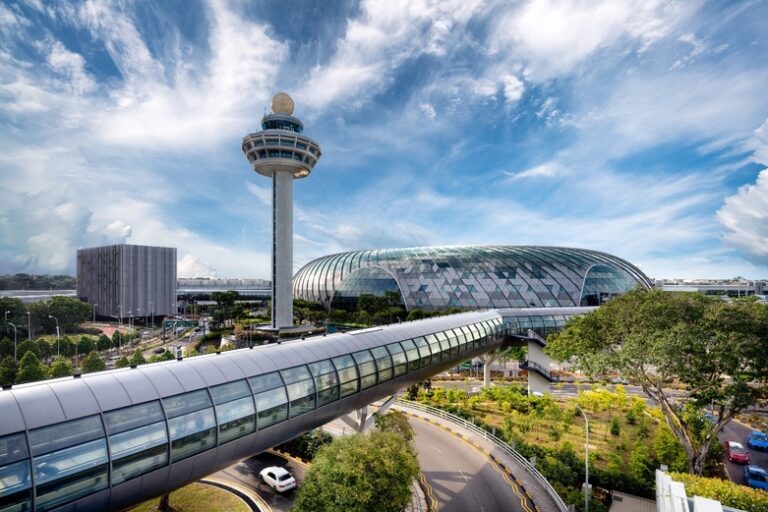
Committed to becoming a more sustainable hub. Image: Changi Airport
Ramping up Changi Airport’s sustainability efforts Changi Airport ranks 12th globally based on international cargo traffic and is the busiest air cargo hub in Southeast Asia. As we scale our air cargo business and continue to grow Changi as a leading air cargo hub, we remain committed to our sustainability goals.
In line with the Singapore Sustainable Air Hub Blueprint launched in February 2024, Changi Airport is committed to reducing our Scope 1 and 2 emissions by 20% by 2030 compared to 2019 levels. In the longer term, we strive towards Net Zero by 2050, enabled by advancements in building energy efficiency technologies, availability of off-site renewable energy and national grid de-carbonization.
A broad, ecosystem-based approach We are undertaking a broad and ecosystem-based approach towards building a sustainable air cargo hub, which includes 1) promoting the uplift of sustainable aviation fuel; 2) reducing energy consumption and transitioning to cleaner energy, 3) digitalization and technology; 4) enhancing waste management; and 5) intensifying projects with our global and local industry partners.
Recognizing the role of SAF in decarbonizing the aviation sector, Changi has been supporting our airlines’ transition by facilitating uplift trials and pilots over the past years. CAG welcomes the Singapore Government’s announcement of a SAF levy in 2026 to achieve a 1% SAF uplift target for all flights departing Singapore, and will continue to work closely with our airline partners to work towards this target.
Clean energy on a large scale In expanding the use of renewable energy, Changi Airport has started work on a large-scale installation of solar panels on the roofs of the airport buildings, including the Cargo Agent Buildings in Changi Airfreight Centre (CAC). When completed in 2025, this will be Singapore’s largest single-site rooftop solar panel system.
From 2025, all new airside light vehicles and certain new heavy vehicles like tractors and forklifts will have to be electric, and all airside vehicles will be fueled by cleaner energy by 2040. To this end, we are expanding our EV charging network to over 300 points, in tandem with the needs of our airport partners. For select vehicles and equipment that do not have viable electric alternatives, Changi is conducting trials for these vehicles to be powered by renewable diesel.
Enhanced efficiency through digitalization By harnessing technology and digitalization, Changi Airport is not only able to streamline processes and enhance efficiency, but also reduce the environmental impact of air cargo operations. For example, the Truck Dock Slot Booking initiative that Changi is rolling out will optimize landside operations at our cargo terminals, reduce truck waiting times, and significantly lower tailpipe and carbon emissions from ground transportation. We are also collaborating with our partners to trial autonomous solutions, like autonomous tractors and tugs which run on cleaner energy, to increase operation efficiency.
Developing circular economy Changi Airport is dedicated to improving waste management practices and progressing towards a circular economy. At the CAC, we are actively implementing strategies to minimize waste going into landfills. Designated recycling containers have been positioned at each Cargo Agent Building to facilitate the recycling of the waste generated from our tenants’ cargo business and operations. Regular E-waste collection drives are also conducted. Recyclability rate is also closely tracked and monitored.
Decarbonizing pharma transports As a founding and strategic member of Pharma.Aero, we play an active role in developing and driving projects to decarbonize air pharma transportation. Changi Airport was excited to co-lead Pharma.Aero’s Green Air Pharma Logistics (GAPL) project, which set out the building blocks of a Lane Sustainability Readiness Index (LSRI). Through this project and the White Paper developed, we hope to support global shippers and freight forwarders in their sustainability considerations during their freight procurement and lane assessment process, and towards achieving their Scope 3 emission targets. As a next step, we will also be co-leading the GAPL Air Transport System (Packaging) project to examine the sustainability impact of tertiary packaging, active/passive systems and air cargo consumables on the transportation of pharmaceutical shipment.
Stronger together More important than ever, multi-stakeholder collaboration is imperative in pursuing greener air logistics and decarbonizing air transportation. Through our monthly e-publication, Changi Cargo Insights, we share best practices and updates on greener air cargo logistics with our local and global air cargo community. We invite our partners to join us in this endeavor, and also support them in their efforts towards enhancing sustainability in air logistics
Jaisey Yip, Vice President of Cargo Business Division at Changi Airport Group