Home Blog Page 160

Philip Rauchhaus is LCAG’s new DACH & KAM EMEA Head

0

Philip Rauchhaus succeeds Achim Martinka as Head of Region HACH & KAM EMEA. Martinka had previously left Lufthansa Cargo on his own volition on 31OCT23. The press release states Rauchhaus’ official start as “the next possible date” an interesting formulation for a position that has already been vacant for almost three months. As they say in German, it would appear that “Gut Ding braucht Weil.” [“The best things come to those who wait”, would be a rough match in English.] Rauchhaus, who until now has held the position of Head of Sales Frankfurt, will then be responsible for Germany, Austria, and Switzerland, plus act as key account management for the regions of Europe, the Middle East and Africa. The European, Middle East and Africa sales regions will remain under the management of Oliver von Goetz and Dr. André Schulz, respectively.

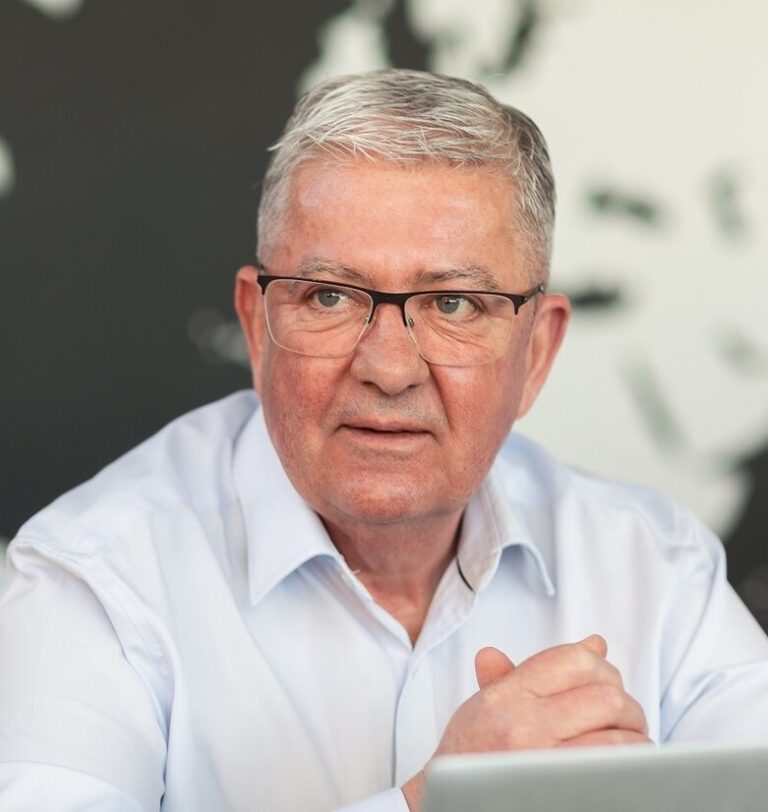
The German sales department finally has a new face. Image: Lufthansa Cargo

Rauchhaus, who holds a degree in business administration, has been with Lufthansa Cargo since 2009, and has seen a rapid ascension on the career ladder. Starting out in sales, he soon took over the position of Head of Handling, Process and Quality Management Germany. Head of Revenue Management was his next post in 2014, after which he became Senior Director Market and Network Planning in 2017. He has held his current position of Senior Director Sales Frankfurt since 2022. Though he delivered no formal statement, his LinkedIn page has been full of well wishers and it is clear that he is delighted with the promotion.

Ashwin Bhat, CEO of Lufthansa Cargo, announced: “With Philip Rauchhaus, we are delighted to have gained an experienced manager for this position who knows the air freight industry inside out. Thanks to his expertise within the company and the experience he brings with him, he will provide new impulses in the marketing of our airfreight capacities and the cooperation with our customers, especially in our home market.”

Martin Kraemer is DoKaSch’s new Sales & Marketing VP

0
Doing what he enjoys, but over in a new company. Image: DoKaSch

The year, and Martin Kraemer’s new position is already four weeks old, but the official communication only came out this week. Kraemer is Dokasch GmbH’s new Vice President Sales & Marketing since 01JAN24. He came over from Jettainer, where he was Head of Marketing and PR since 2010: a logical move from a ULD management company to a ULD manufacturer. Dokasch is known for its high-quality air cargo equipment and related services, and is headquartered in Staudt, Rhineland-Palatine in Germany. Prior to Jettainer, Kraemer, who holds a master’s degree in management and economics, held a number of positions within the Lufthansa Group. He began with Lufthansa in Frankfurt in 1999, and then joined Lufthansa Cargo in 2000, posted in sales and marketing positions in Paris, Stockholm, Singapore, and Shanghai, before moving on to Jettainer in 2010.

Dr. Stefanie Dommermuth, Managing Director at Dokasch stated: “We are pleased that we welcome Martin Kraemer, a long-experienced expert in the airline and air cargo industry. His expertise in both sales and marketing will further strengthen our global market position and expansion.”

Customs at Hong Kong airport reports 2 successful searches

0

The two cases involve the attempted import of illegal animal products and the smuggling of a large consignment of cocaine. The perpetrators now face significant penalties if they are found guilty by the local courts. The official investigations are still ongoing, so the trials against the suspects have not yet begun.

Hong Kong Customs seized over 800 kg of dried shark fins with an estimated market value of about HK$4 million at Chep Lap Kok Airport  –  courtesy: Hong Kong Customs

Despite strict international sanctions, the international trade in protected animals and banned animal products is flourishing unabated. During a routine inspection at Hong Kong’s Check Lap Kok airport, customs officials discovered a large consignment of dried shark fins. The packages were processed in Dubai and loaded on board of a Hong Kong bound airline, apparently unnoticed by local controllers.

The fins of most sharks are cut off while they are still alive
The sharks are then usually thrown overboard of the fishing vessels, where the largely immobile animals are left to die in extreme agony.

The quantity now detected and seized at Check Lap Kok is considerable: 800 kg of dried shark fins, packed separately and mixed with other seafood consignments, stored in 25 boxes. Estimated total value of the shipment: 4 million HK dollars. The goods in question were smuggled because the shipment did not appear in any of the accompanying documents. After a thorough investigation, customs officials arrested a 56-year-old female manager of the recipient company, who is suspected of being connected to the crime. The investigation is ongoing, and the arrested person has been released on bail, pending further investigation.

Fourth largest criminal offense worldwide
The penalties for such offenses can be drastic. Under the Endangered Species Protection Ordinance, any person found guilty of importing or exporting an endangered species without a permit, is liable to a maximum fine of HKD 10 million (US$1.275 million), and imprisonment for ten years.

The case now discovered in Hong Kong, is just the tip of the iceberg. With an estimated annual value of up to 20 billion euros, the illegal trade in wild animals is part of the fourth largest crime worldwide – after drug trafficking, human trafficking, and arms trafficking.

Shark fins achieve high prices on the black market
According to the World Wide Fund of Nature (WWF), more than 80 million sharks are currently killed by fishing every year, often just for the value of their fins, which mostly end up on Asian plates as shark fin soup.

Usually traded secretly, fins reach peak prices of 1,000 USD per kilogram. As a result of massive overexploitation, more than a third of all sharks and also some ray species worldwide, are now threatened with extinction. To prevent this, the WWF is urging an expansion of marine zones in which shark and ray hunting is completely banned. This should go hand in hand with an intensification of controls by customs officials or water police squads.

Cocaine instead of wine
At the same time, customs officials at Hong Kong’s Chek Lap Kok Airport detected another attempt to illegally smuggle goods into the country. They discovered 12 wine bottles hidden in the luggage of two passengers. But instead of wine, the bottles contained a total of around 18 liters of liquid cocaine. According to Hong Kong Customs, the market value of the drugs is in the region of HKD 18 million. The owners of the luggage, a 37-year-old female passenger and a 59-year-old male traveler, were arrested. They had boarded the plane in Kuala Lumpur, Malaysia, and were detained after customs discovered the drugs in their belongings. Now, they face significant penalties. Under the Dangerous Drugs Ordinance, trafficking in drugs such as cocaine, is a serious offense. The maximum penalty on conviction is a fine of HK$5 million and life imprisonment.

Danzas: an era ends – after 210 years

0

Danzas, a once widespread name in the global transport industry, will henceforth only exist in history books. The last offshoot, Danzas AEI Emirates, has now been completely taken over by DHL. All branches in Dubai and the Emirates, 20 in total, will now be rebranded as DHL Global Forwarding.

DHL GF’s headquarters for the MEA region is located in Dubai’s Jebel Ali Freezone  – photo: company courtesy

DHL has held a 40% stake in Danzas AEI since 1995, as part of a Joint Venture (JV). The majority of 60% was held by the Arab Al Tayer Group, which belongs to the Investment Trading Group. Last week, DHL took over the joint company completely. Prior to this, the regulatory bodies fully approved the deal. Asked about financial details, the DHL speaker remained tight-lipped, saying only that both sides decided this move.

“Marrying the best of two worlds”
1,100 employees are affected by the transfer of ownership, however DHL Global Forwarding will take over all of them. “We do not expect any layoffs resulting from Al Tayer Group’s exit of the JV, as the work processes are well established thanks to the many years of cooperation between the two companies, spanning almost 30 years,” DHL GF told CargoForwarder Global.

Amadou Diallo, CEO of DHL Global Forwarding Middle East, and Africa (MEA), commented on the integration of Danzas AEI Emirates with these words: “We are proud to carry the Danzas lineage forward and build on its distinction as the leading logistics provider in Dubai and the Northern Emirates. This acquisition will allow us to marry the best of both worlds – DHL’s global expertise with Danzas’ local heritage, to foster innovation and sustainability, and create value for our customers, employees, and stakeholders.”

Focusing on project logistics
Further to this, the executive emphasized that the Danzas integration “will enable us to expand our reach and support the growth of the logistics business in the GCC, while enhancing regional competitiveness as an economic hub.” Local market experts forecast that the step cements DHL GF’s position as a leading provider of air and ocean freight, including road and rail services in the GCC States, and paves the way for the further growth of its logistics activities in the entire Gulf area as well as parts of Africa (MEA region). In 2022, DHL Group generated a revenue of €4,161 million in MEA. The company announced new initiatives in project logistics, which is an increasingly important growth sector, especially in the UAE, but also in Saudi Arabia.

Economic transformation
In a call with CargoForwarder Global, a DHL GF manager pointed to an ongoing industrial transformation in the Gulf States. In addition to the traditional oil and gas business, the region is increasingly developing into a trade, finance and logistics center. Both local and international companies are increasingly investing in renewable energies, wind and solar farms, he explained. This fast-progressing economic transformation spurs the demand for targeted transport services, notes DHL GF. A point that is demonstrated – for instance – by plans recently tabled by drone developer, Dronamics, to set up a drone delivery network across the GCC States in collaboration with the Emirates Post Group, centered in the UAE. 

DHL GF also cooperates with Etihad Rail. In MAY23, both parties concluded a long-term agreement on the use of rail capacity. As part of a JV, the logistics group can utilize the rail capacity to conduct its main operations within the UAE.

Already at the time of this decision, the name Danzas no longer played any role.

ECS Group expands in Africa

The French cargo sales and service agent sees considerable growth opportunities in parts of Africa. The Kingdom of Morocco serves as a springboard for its planned market penetration. There, it has just taken over the leading local GSA, EFIS Maroc (100%). EFIS is represented at all major airports in the country and has built up a leading position over the years, particularly in air freight. CargoForwarder Global (CFG) spoke to Adrien Thominet (AT), CEO of ECS Group.

Adrien Thominet is heading the ECS Group – picture: company courtesy

Adrien Thominet (AT), CEO of ECS Group, does not want to reveal any financial matters. It therefore remains unclear how much his company paid for the acquisition of the Moroccan company. Both companies have been working closely together since 2001, with EFIS acting as a sub-agent for ECS in Morocco. Based in Marrakesh, the GSA is strategically well positioned since it covers all major Moroccan airports such as Casablanca, Agadir, and Tangier, providing extensive commercial coverage to its customers.

Leading market position
It is not just because of this broad presence in the northwest African country that ECS gains a dominant market position, but especially because EFIS Maroc is the only local agent there that is fully focused on the air freight business. Others offer cargo services en passant, as subdivisions of forwarding agents.

EFIS Maroc Chief Pierre Fougerouse knows all facets of the GSSA business  – image: Pierre Fougerouse, Linkedin

Pierre Fougerouse, Founder of EFIS MAROC, stated: “Our journey began with ECS Group’s support in 2001, and after becoming self-owned in 2003, merging into ECS Group now feels like a fitting evolution of our partnership. I am also pleased to welcome Bouazza El Hantiti as Managing Director, bringing valuable experience from North Africa and Europe to enhance network synergies between Morocco and ECS Group’s European representations.”

CFG: So, does the acquisition of EFIS Maroc give ECS a monopoly position in the country?

AT: No, because there are other players out there. But our position is very strong. Especially because EFIS MAROC has emerged as the market leader in commercial air cargo services, uniquely positioned as the region’s sole GSA with substantial air freight experience and a loyal customer base. Others have multi-functions, so are less focused on air freight matters.

CFG: What are the main products exported by the Moroccan economy, that will play a significant role in ECS’s cargo business?

AT: These are of course perishables, but increasingly also electronic goods, automotive parts, and components for the aviation industry. Economic development is progressing rapidly, which is illustrated by the establishment of industrial companies. In addition, and this should not be concealed for reasons of piety, human remains are an important factor for air freight.

CFG: What distinguishes Morocco from the situation in some of the neighboring countries?

AT: Morocco stands out due to its economic expansion. It’s a country with a young and highly dynamic population. Consequently, it offers fertile ground for rich and promising partnerships. With its vibrant energy and potential, Morocco presents an enticing prospect for long-term economic growth.

CFG: Is aviation also a beneficial factor?

AT: Absolutely. Royal Air Maroc, for which we have a GSA mandate in some markets, has an outstanding position, which also applies to its air freight business. According to our analyses, the country will successively develop into a hub for air traffic. This also applies to international and intercontinental connections.

Outsourcing tasks
Monsieur Thominet further emphasizes that part of his company’s diversification strategy is to outsource some tasks by transferring them to Morocco. These include administrative responsibilities, invoice controlling or customs issues. Due to the favorable framework conditions, the country will act as a springboard for ECS Group to penetrate other African sub-markets. In this context, the executive mentions the Ivory Coast and Senegal, i.e. countries in West and Central Africa. “Now that we have become the market leader in Morocco, thanks to the acquisition of EFIS, we intend to become active in the neighboring regions as well. This will take time, but our analyses show that it offers good growth prospects,” he reasons.

Green Airports Silicon Valley in jeopardy

0

What was created as a role model for all future green airports, is now on hold due to sudden budget cuts of dedicated state funds. Germany had granted that funding with the objective of enabling aviation to start using sustainable fuels in the near future. However, struggling with budget problems, Berlin has frozen the financial resources originally promised to support the project. As result of the funding cuts, participating companies are considering migrating abroad.  

Spark e-Fuels experts Julia Bauer, Arno Zimmermann and Mathias Bögl intend to revolutionize the production of e-fuels – image: courtesy Sparks e-Fuel

Speeding up SAF availability
The regional airport, Schönhagen near Berlin, was previously referred to as “Aviation Silicon Valley” in this publication, due to its innovative drive and first mover qualities. While larger airports are creating scenarios to be turned into reality sometime in the 2030s, when petrol giants finally transition to sustainable e-fuels for major airlines, the pioneer Schönhagen was planning to start rolling out its infrastructure this very year, 2024. As a key element of this concept, the start-up, Spark e-Fuels, co-financed by BASF among others, has the role of delivering Sustainable Aviation Fuel (SAF), for use by all regional and business aircraft flying from Schönhagen. Home to flight schools and even creators of (hydrogen) electric aircraft, Schönhagen and its twin airport, Strausberg, have significantly increased in flight movements during the pandemic due to lack of commercial line flights, but also because Berlin’s international airport ‘Willy Brandt’ (BER), needs to concentrate its capacities on long-haul flights of global airline operators.

Silicon Valley not so far away
Spark e-Fuels was founded in 2021 by the climate tech expert, Dr. Arno Zimmermann, who already extensively analyzed the techno-economics of e-fuels at the prestigious MIT Energy Initiative in 2018. Together with co-founders, Dr. Mathias Bösl, an Ex-BCG consultant and experienced climate tech business builder, and Dr. Julia Bauer, a brilliant chemist and e-fuels enthusiast, they made it to the next level. Together, the young German team has the proper setup to start its journey into revolutionizing how e-fuels are produced.

Key factors: Local beats Global
The locally generated renewable energy is produced using a process that can cover fluctuating electricity levels, and green hydrogen in combination with sustainable CO2. The technology makes e-fuel an affordable alternative to fossil kerosene and will demonstrate that Europe has the capabilities to reach the climate objectives for aviation, starting in 2025 with minimum 2% SAF on all flights that touch the continent, and rapidly increasing that proportion over the following years.

Will EAGLE fly?
E-fuels for Aviation, Generated from Local renewable Energy, in short EAGLE, started as a 180-page feasibility study in 2021, financed by the state of Brandenburg and the European Union. Like Otto Lilienthal with his first flight, EAGLE must move from theory into reality, and show that it can be done. Lilienthal’s tragic accident happened after he proved to the world that humans can make it off the ground. Will EAGLE die before it even flies? “That would be a tragedy”, says Prof. Dr. Andreas Timmermann, Managing Director of Berlin-Brandenburg Aerospace Allianz (BBAA), the organization that groups sustainable aircraft and engine manufacturers such as APUS, RS.aero and Rolls-Royce, amongst other companies and institutions. EAGLE was presented by the professor and his team of experts at the ILA Berlin International Airshow in 2022, resulting in growing interest all over Europe. Regions and their airports in France, The Netherlands and Norway, started building a consortium to speed up their own local SAF production based on the model created in Berlin.

Sustainable propulsion
On top of SAF, hydrogen aviation will also benefit from such an international network of innovative regional airports. Locally produced green hydrogen is part of the concept. Fueling standards will be developed, so that flying hydrogen pioneers like APUS, ZeroAvia and Dronamics can establish regular routes for individual flights and commercial services. Hydrogen Experts such as the authors, Dr Klaus Herwig and Erik Schäfer, with their newly published ‘Hydrogen Horizons’, promote the idea of leading by example when it comes to implementing hydrogen infrastructures. Change management is the hardest part of the energy transition, and inertia has caused many brilliant concepts to remain in the drawer for far too long. But, as was mentioned by a panelist at the EU Hydrogen Forum last June: “to create innovation we need real Power Plants, not just PowerPoint.” To which one could add: “and to introduce a realistic way of significantly reducing carbon emissions in aviation”.

Hugo Duchemin

The author is Managing Director Comworxx S.A.S., France

A breath of fresh air…

A glimmer of hope this week, and a celebration of innovation and science which will increasingly benefit the aviation world, all going well: Congratulations go to the sustainable fuels technology company, LanzaJet, which opened the world’s first ethanol-based SAF plant over in the U.S. on 24JAN24.

A tangible first step for a better future. Image: LanzaJet

If ethanol-SAF literally takes off, the world can look forward to fresher air in future. The name of the world’s first ethanol-SAF production facility also incites thoughts of air fresheners: Freedom Pines Fuels Plant. An historic moment on 24JAN24, and one that is hopefully a solid foundation on which to build an adequate production network. As Haldane Dodd, Executive Director, Air Transport Action Group (ATAG), pointed out: “We will need around 23 Mt of SAF production capacity by 2030 and almost 500 Mt by 2050. Every production facility that opens – such as LanzaJet’s Freedom Pines plant – helps us get closer to those objectives,” if the industry is to meet its Net Zero goals by 2050.

Not just SAF production, but also jobs and revenue
LanzaJet’s Freedom Pines Fuels production plant, the first in the world to generate alcohol-to-jet (ATJ) SAF using low-carbon-intensity ethanol, will start producing 10 million gallons of SAF and renewable diesel per annum, for the United States. Used as drop-in fuel for existing aircraft in an aviation industry, this particular SAF is capable of reducing greenhouse gas emissions by more than 70% and is produced from a variety of sustainable feedstocks including agricultural waste, municipal solid waste, energy crops, or carbon captured from industrial processes, for example.

The plant is fully funded and has committed offtake agreements for all fuel produced in the next 10 years. The plant in Treutlen County, Georgia, will also employ more than 250 staff and is estimated to annually generate around USD 70 million for the local economy.

Jennifer Holmgren, LanzaJet Board Director and Chief Executive Officer, LanzaTech, commented: “LanzaJet Freedom Pines Fuels is proof of the energy transition accelerating in real time. We are demonstrating the ability to establish secure supply chains domestically, create new jobs locally, and produce sustainable aviation fuel globally. This historic facility is an important pillar of a growing SAF economy in the United States and is a significant decarbonization milestone in the world.”

Tried and tested
LanzaJet Freedom Pines Fuels plant represents the culmination of a history of firsts within the SAF industry, dating back to its origin in 2010 as the first ethanol to SAF technology to have derived in collaboration with the Pacific Northwest National Lab (PNNL). The technology’s first commercial flights were completed with Virgin Atlantic and All Nippon Airways (ANA) in 2018 and 2019, respectively,” the press release points out.

British Airways and IAG Cargo have a keen interest in the LanzaJet’s pioneering ethanol to SAF technology, as Luis Gallego, CEO, International Airlines Group (IAG), expressed: “The LanzaJet ethanol-to-jet fuel plant in the US is a demonstration of how government support and investment in green technologies can help make aviation more sustainable. At IAG, we look forward to bringing LanzaJet’s technology to the UK, with Nova Pangaea, to help the UK meet its target of five Sustainable Aviation Fuel plants in construction by 2025.”

Sean Doyle, Chairman and CEO, British Airways, urging speed in implementation, added: “SAF will play a critical role in meeting our net zero targets and especially in reducing aviation’s emissions this decade. It is the only viable solution for long-haul flights. […] This project acts as the blueprint for using this innovative technology right here in the UK, starting with Project Speedbird, and shows how quickly the US is moving ahead. We must continue to work with the UK Government to encourage investors to put money into SAF production and meet its own targets of having five commercial-scale SAF plants under construction in the UK by 2025. The Government has already started on this journey, and we welcome this, but what we need now is pace.”

A grand opening ceremony
Government officials, shareholders International Airlines Group (IAG), LanzaTech, Mitsui & Co, Shell, and Suncor Energy, and a number of investors including the Microsoft Climate Innovation Fund, Breakthrough Energy, British Airways, and All Nippon Airways (ANA), attended the opening ceremony on 24JAN24. LanzaJet’s CEO, Jimmy Samartzis, announced: “Today is testament to the conviction required by industry, government, and funders to advance innovation and stretch the boundaries of what is achievable to address decarbonization and tackle climate change. This is a historic milestone in a long history of firsts for LanzaJet, the United States, and the SAF industry globally Our novel LanzaJet ethanol to SAF process technology is now deployed at our commercial plant in Georgia which will convert ethanol into drop-in SAF. As we start-up the plant, we will continue to refine our technology, while launching our efforts to advance new sustainable fuels projects globally. Between feedstock versatility, efficiency, and economics that enable scale in the US and globally, we stand ready to meet aviation’s decarbonization goals established at the United Nations and country ambitions, such as the U.S. SAF Grand Challenge.

Sir David King, LanzaJet Board Director, Emeritus Professor of Chemistry, University of Cambridge, Former UK Government Chief Scientific Adviser (2000−2007), summarized the historic moment: “LanzaJet is serious about urgently meeting the moment to decarbonize aviation and Freedom Pines Fuels is evidence of that. This facility will use innovative ethanol-to-jet technology and substantially increase the amount of SAF produced for the world’s airlines and aviation industry. In large part due to projects such as this one, we are making real climate progress in aviation.”

A positive step at the start of what will hopefully be a more positive year for SAF and the aviation industry.

MFAG is downsizing

0

The Central German Airport Holding (MFAG), parent company of Leipzig/Halle and Dresden Airports, is in the red and needs to be restructured. This might lead to job cuts and the cancellation of allowances. The trade union ver.di blames the management for the financial misery. In order to persuade the MFAG bosses to shelve their cost-cutting plans, the union called on airport employees to go on a warning strike which lasted from Thursday afternoon until Friday morning (25-26JAN24). Cargo flights operated by DHL Express, AeroLogic and other freight carriers were not affected.  

The walkout of ver.di  unionists last Thursday and Friday disrupted passenger flights at LEJ, not cargo ops – picture: courtesy  LEJ

“The Central German Airport Holding is a fascinating place for your career,” the management trumpets on MFAG’s own website, eager to attract capable candidates to fill existing vacancies. However, recruiting new staff is currently not listed high on the agenda of its East German airports. Instead, topics like salary and even job cuts prevail.

Downsizing is the current motto.
It is unclear how many of the approximately 1,400 employees at Leipzig-Halle Airport and its smaller sister Dresden Airport, could be affected by job axing. Much will depend on whether the employees reluctantly accept the management’s cost-cutting program dubbed “Z30”.

“They will not!” emphasizes trade unionist, Paul Schmidt. He points out that the starting wage at MFAG is 12.50 euros per hour, which is only 9 cents above the statutory national minimum salary payable to any employee. Conversely, the Management Board recently approved a salary increase of a whopping 26%. “That doesn’t go together: less money and more work for the employees, higher salaries combined with bonuses for the already richly paid board members,” remarks unionist Schmidt indignantly.

The conflict is not just about wage issues
“The management is responsible for steering the business processes; the employees’ job is to do their daily work. For this, they deserve to be paid a decent wage and be part of social programs. The fact that it has not been possible to put the MFAG airports on a solid financial footing despite below-average wages is not the fault of the staff. Instead, the responsibility lies with the Executive Board,” is the trade union’s message. ver.di is demanding a one-off wage increase of EUR 650, followed by an annual percentage salary increase thereafter, with the amount still pending tariff negotiations.

Prime Air came – and exited LEJ again, shortly after
The dispute was preceded by a transformation concept called “Zukunft” (Future), on which auditor KPMG tabled a comprehensive report asked for by banks (around 300 pages), concluding that the planned restructuring of the airport holding company opens promising business avenues for the future despite MFAG’s current deficit of 145 mn euros. This assessment is based on the high growth potential in the areas of logistics and space development as well as moderate growth in passenger volumes – particularly in tourist traffic at Dresden Airport, states KPMG. But the assumptions were already clouded by the exit of Prime Air, which only used LEJ as a hub for a short time.

This put additional pressure on MFAG’s finances. To get out of the red in the long or even medium term, the management is now considering “targeted measures to increase profitability. These include optimizing existing structures as well as streamlining strategic and operational processes,” reads a statement. However, the MFAG executives do not clarify exactly what these measures are.

According to ver.di’s Paul Schmidt, management intends to increase weekly working hours, cut vacation pay and reduce the number of free Sundays from 24 to 21 per year. In return, it offers staff a salary increase of 6.5% over a staggered five-year period.

A strike is looming
This lack of transparency is fueling mistrust among employees, an airport employee told CargoForwarder Global. In any case, the union insists on its claim for a wage raise of 650 euros for every MFAG headcount. Simultaneously, it turns down the extension of working hours or cuts in vacation. The next round of negotiations on collective bargaining and labor law issues, is scheduled for 08FEB24. However, according to information obtained by CargoForwarder Global, strike action is likely to take place before then.

If so, DHL Express, which operates its largest global hub at Leipzig/Halle, will only be affected indirectly at best. And only if the airport fire department joins the walkout or air traffic controllers take solidarity action. However, this is not to be expected.

At the moment, MFAG management and the ver.di union behave like two trains on a collision course – rushing towards each other at high velocity. Hopefully, both sides will still find a way to avoid a total crash which would not only harm the two airports, but also the country’s entire economy.

Fraport and Dakosy ink JV

1

The founders of the joint venture (50/50%), allivate GmbH, have set themselves the goal of establishing, operating, and further developing cargo community systems for air freight handled at Rhine-Main Airport. In addition to this, they intend to drive the digitalization of air freight processes swiftly ahead – both at Frankfurt Airport and beyond.

Dirk Gladiator and Martina Schikorr head the new JV  –  photo: courtesy “allivate”.

Dakosy is a household name within the European IT landscape as an enabler of advanced cargo communications systems, digital processes at airports and seaports, as well as for providing automated and tailored customs processes (eDeclarations) for clearing goods, entering or leaving the EU. The company is operator of the Port Community Systems that manages most processes at the seaport of Hamburg, and it runs the cargo platform FAIR@Link on behalf of its users, Hamburg and Frankfurt Airport.

Serving 1000 users
As far as Frankfurt is concerned, newcomer “allivate” will be managed on an equal footing by Martina Schikorr (Fraport) and Dirk Gladiator (DAKOSY) who have been appointed as Managing Directors. According to MD Schikorr “allivate” sends a strong signal to the cargo community: “A well-functioning digital infrastructure is a must-have for every modern cargo hub. We want to offer our customers the most efficient cargo community system possible so that their processes keep running simply, smoothly, and quickly 24/7.” She adds, that roughly 1,000 forwarding agents, trucking companies, ground handlers, airlines and general sales agents utilizing Frankfurt, will benefit because thanks to “allivate”, they all are offered a single point of contact onsite.

Processes will be faster and more efficient, claim the JV managers
Both executives emphasize that, the use of the cargo community system is not mandatory for Fraport’s freight customers. As soon as the scheme is established, the digital basis for even more efficient ramp control will be in place. Imports will be accelerated thanks to electronically transmitted authorization to pick up shipments, landside delivery processes will be coordinated more effectively, and the transport of paper documents by vehicle within the airport between the various interfaces would be eliminated completely. “In future, data will be transmitted via the new platform at the speed of light, with a single click,” enthuses Max Conrady, Head of Cargo Development at Fraport.

Not starting from scratch
Customers will benefit from the synergies resulting from “allivate”, predict Schikorr and Gladiator. Thanks to its long-time experience, operator Fraport contributes comprehensive airport know-how to the JV and acts as a neutral link between the local cargo players and the authorities. DAKOSY adds its wide-ranging IT expertise in all aspects of cargo handling and customs clearance, as well as many years of experience in the development, operation, and technical support of the Cargo Community System; states the company in a release.

“Pooling our strength”
MD Dirk Gladiator emphasizes that air freight handling and digital infrastructure are inextricably linked: “We are pooling our strengths and can therefore launch innovations and digital solutions onto the market faster. The active role of the Air Cargo Community in Frankfurt plays an important part, as together we jointly develop all digital processes along the supply chain right on the spot.” The community he mentions is growing continuously; it currently has 70 members from all sectors of the air freight industry.

e-Commerce is main beneficiary
According to the “allivate” managers, the platform has already taken a vital role in enhancing the processes in Frankfurt and will significantly improve the hub performance thanks to increased digital data transparency. Existing DAKOSY contracts with freight companies will be transferred to “allivate”. Especially for incoming e-commerce shipments on the East Asia-Europe Trade Lane, it will become a useful tool for deconsolidating and forwarding the packages thanks to the digitalization of processes, emphasizes Fraport manager Conrady.

There is no location exclusivity for “allivate”. The platform could also be established at other airports to optimize freight processes there.

Chapman Freeborn’s year of European expansion in 2023

0

‘Fighting fit and fifty’ could have been Chapman Freeborn’s 2023 tagline. In the year of its 50th anniversary, the global air charter specialist and member of Avia Solutions Group grew its sales team by almost one third. 29%, to be exact. In other words, it brought on 30 new employees, all within Europe and dispersed over its cargo, group passenger, and business aviation divisions. Eight new cities entered the Chapman Freeborn branch network, located in Austria, Finland, France, Italy, the Netherlands, Spain, Sweden, and Switzerland, thus increasing its European foothold.

Reto Hunziker, President – Europe,  Chapman Freeborn – Image: Chapman Freeborn

It also ended the year with successful ISO 9001:2015 certification for Chapman Freeborn Germany in December – proving the branch’s quality management. And the company has begun the new year with a host of award nominations and conference travel plans, as its active LinkedIn profile shows.

Eric Erbacher, Chief Executive Officer at Chapman Freeborn, explained: “We are investing significantly in the expansion of our international office network and teams to strengthen our truly global business. As well as this, we are always intensifying our network of partners, driving added value for our customers.”

Reto Hunziker, President – Europe at Chapman Freeborn, revealed: “As part of our 2030 strategy, we further invested and strengthened our commercial setup in Europe both for brokers and salespeople. This approach will also be integral this year as we will continue to expand into new markets and geographies to make sure we cover the needs of our customers and partners. At the same time, we will strengthen our existing setups in key markets such as the DACH region (Germany, Austria, and Switzerland), the UK, and Benelux (Belgium, the Netherlands, and Luxembourg).”