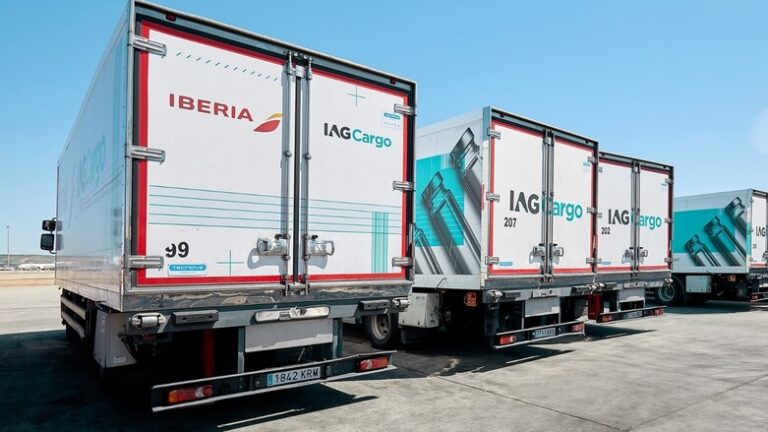
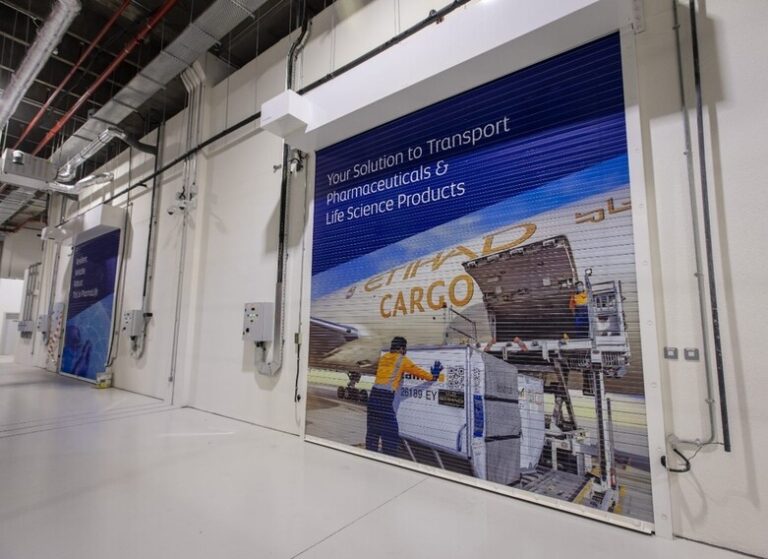
In total, €12 million have been invested in IAG Cargo’s Spanish hub over the past 6 years. The latest €1.5 million of those have gone into an expanded perishables facility at Madrid (MAD) Airport, including state-of-the-art cool chambers – the largest at Madrid airport, in fact. They ensure even more reliable and efficient cold chain operations, and temperatures are monitored 24/7. The hub can now cope with increasing volumes of fruit, vegetables, meat, and fish, travelling between Latin America and Europe. Already the hub sees much asparagus coming in from Peru and Los Angeles, papayas from Brazil, mangos from Dominican Republic, meat from Argentina and Uruguay, and hake, salmon, and other fish from Chile. All these products touch EU soil for the first time as, according to the press release, the Madrid hub is the first point of entry into the EU for perishables, thanks to the many IAG Cargo connections from Latin America. The new perishables extension brings the facility’s total capacity to 1,340 m² – in increase of 45%.
State-of-the-art cooling chambers to keep things fresh in MAD. Image: IAG Cargo
Fernando Terol Armas, Director of Spanish Hub and Operations at IAG Cargo, commented: “We are thrilled to announce this latest investment in our Madrid facility, which further demonstrates our commitment to providing the highest quality service to our customers. With the expansion of our temperature-controlled space and state-of-the-art cooling chambers, we can now offer even greater capacity for perishable goods, ensuring their integrity is maintained throughout the supply chain. This investment will enable us to continue to serve as a vital link between Latin America and Europe, and we look forward to supporting our customers’ growth in this region.”
Ramon Rey, International Director of Eurobanan (includes Isla Bonita fruits), stated: “We are delighted by the additional capacity IAG Cargo has created at their perishables facility in Madrid. This development will allow us to continue delivering premium quality fruits and vegetables to consumers across Spain year-round. With enhanced logistics, IAG Cargo enables us to ensure that freshness is never compromised.”
This week, dnata announced – with immediate effect – the appointment of a new Managing Director in Singapore: Su Yin Neo, herself Singaporean, is now tasked with managing the company’s 1,500 employees in the region, and keeping things running smoothly for the more than 50 airlines that dnata provides ground handling and cargo operations for at Changi Airport (SIN). Su Yin is no stranger to air cargo and aviation and enjoys good standing in the industry, judging be all the congratulatory messages on LinkedIn. She comes over from Singapore Post Ltd where she spent the past five years – most recently as Chief Executive Officer since NOV21. Singapore Post is one of Asia Pacific’s leading postal and e-commerce logistics providers. Before that, she spent almost three years at Changi Airport Group, in the function of General Manager, managing ground operations and customer experience within the terminals. Prior to that Su Yin spent eight years with the Republic of Singapore Navy.
Charles Galloway, Regional CEO for dnata in Asia Pacific, to whom Su Yin will report directly, said: “We are delighted to welcome Su Yin to our APAC management team. With an impressive background in the logistics and aviation industries, she brings a wealth of experience and expertise to dnata Singapore. Her leadership will play a key role in driving our efforts to further enhance our reputation for excellence in the industry. We look forward to working closely with Su Yin to deliver the promises our customers make.”
Posting an image of the view from her new office window on LinkedIn, Su Yin Neo, commented: “Truly enjoying the view from my office as well as the warm welcome from the dnata global, SG and APAC teams. Look forward to helping Singapore take flight to new heights!”
Raymond Lo is Chief Executive of Menzies CNAC. Image: Menzies
Earlier this year, Jardine Aviation Services Group was acquired to 50% by Menzies (in joint venture with China National Aviation Corporation [CNAC]), and is being rebranded as Menzies CNAC Aviation Services Limited. This week, its Chief Executive was announced: Raymond Lo, who has been with Menzies for the better part of a quarter of a century, starting out as Finance Director for China operating out of Hong Kong, and eventually taking up the post of Managing Director of Menzies Macau Airport Services Ltd, ten years ago. He took up new new role as Chief Executive on 01MAY24, taking over from Vivien Lau who was acting as Interim Chief Executive in the meantime. She will resume her permanent position at Jardine Matheson at the end of JUN24, to allow for a smooth handover.
Darren Masters, EVP – Oceania, SE Asia and China, Menzies Aviation, said: “We are thrilled that Raymond will be at the forefront of Menzies CNAC – an exciting new joint venture that’s set to broaden our footprint in Asia. Raymond’s extensive experience and proven track record means that he is perfectly placed to lead our efforts in supporting Hong Kong’s rapidly expanding aviation sector. We look forward to working with Raymond as we embark on this exciting new chapter.”
Hermes Logistics Technologies (HLT) announced this week, that the upgrade to Hermes 5 at Etihad Airport Services Cargo (EASC)’s hub in Abu Dhabi, went well. As well as running on the newest cargo management system (CMS), the airline will soon also benefit from Hermes’ Business Intelligence add-on, which is planned to go live next month. Both companies worked intensively together – both on and offsite – with the aim of ensuring minimum downtime during hub operations as the CMS switchover went live.
Soon to benefit from digital business intelligence. Image: Etihad
Yuval Baruch, Chief Executive Officer of Hermes Logistics Technologies, commented: “We are pleased to see Etihad Airport Services Cargo going live with our latest Hermes 5 on-premises in Abu Dhabi. We have worked with the company since 2015, and our teams have collaborated closely on this implementation to ensure a smooth switch-over. In addition to the operational efficiency and new functionality of the upgraded CMS, EASC will benefit from an enhanced version of Hermes Business Intelligence, a comprehensive dashboard reporting tool based on Hermes’ extensive data lakes. The combination of these solutions will help the company with operational insight so it can make better-informed decisions.”
Naresh Ranganathan, Acting Vice President at Etihad Airport Services Cargo, said: “Our upgrade to Hermes 5 has been a success, owing to the strong collaboration between Hermes Logistics Technologies and our teams. We were able to complete the process ahead of schedule, thereby minimizing downtime for our air cargo operations and enabling us to seamlessly resume normal business operations. The inclusion of the Business Intelligence function will help us better understand where operational efficiencies can be made, so we can provide efficient cargo handling services at our hub for all airlines operating into Zayed International Airport.”
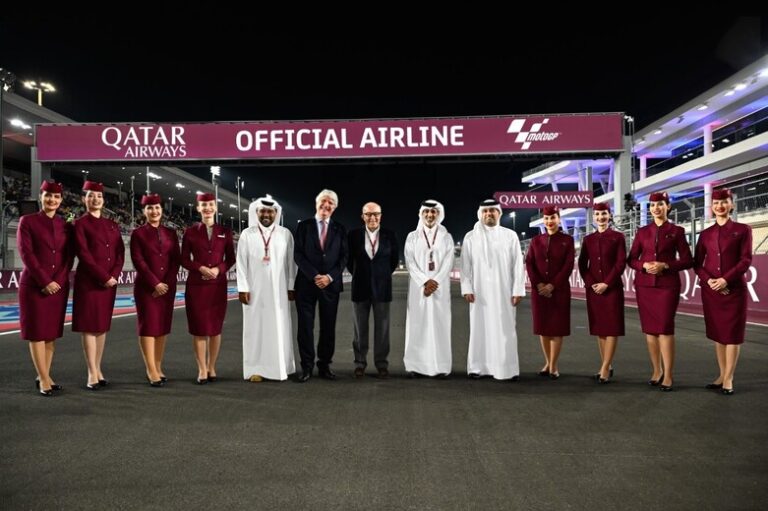
“Qatar Airways takes pole position, commencing its three-year partnership as the Official Airline Partner and Qatar Airways Cargo as the Official Cargo Airline Partner of MotoGP,” the press release announces. Given the recent successes – the airline’s first Grand Prix last year, and earlier this year (the Qatar’s Lusail International Circuit, 08-10MAR24), it has now been chosen to provide air transport of race and bike equipment for all MotoGP races around the world, as the Official Cargo Airline of the MotoGP. Announced on the eve of the 2024 French Grand Prix, with the signing ceremony taking place before the start of the Qatar Airways Grand Prix 2024, the partnership will particularly aid “MotoGP in catering for Asian fans – a market where the sport continues to grow exponentially.”
The fastest wheels fly Qatar Airways Cargo. Image: Qatar Airways Group
Qatar Airways Group Chief Executive Officer, Engr. Badr Mohammed Al-Meer, said: “Qatar continues to demonstrate its commitment to being a prominent hub for motorsports, and our new partnership with MotoGP only propels us forward. The Qatar Airways Grand Prix of Qatar was the perfect season opener for us to welcome this unique partnership that combines the worlds of aviation and motorsports. Qatar Airways’ and Qatar Airways Cargo’s global networks will serve as the perfect medium for fans to connect with their favorite racing teams and make the upcoming seasons truly exceptional.”
Mark Drusch, Chief Officer Cargo at Qatar Airways Cargo, stated: “Whether it is a classic, a prototype or your favorite set of wheels, Qatar Airways Cargo offers specific solutions to transport automobiles by air. As the largest air cargo carrier in the world, operating an extensive global network on a young modern fleet and bespoke charter solutions in place, we meet the requirements to be dedicated air cargo carrier for the MotoGP. The cargo team and I are thrilled with our first major sports partnership with Dorna Sports and look forward to bringing motorcyles to their global events.”
Carmelo Ezpeleta, Chief Executive Officer of MotoGP rights holder Dorna Sports, commented: “We’re very happy to welcome Qatar Airways as official airline and confirm this new agreement. MotoGP is a global sport and to move across the world as we do, a partner like Qatar Airways has overwhelming value for our personnel, our freight and the whole paddock. Efficiency and excellence are words we live by and the same is true for Qatar Airways. There is no better partner to become the official airline of MotoGP.”
The Benelux subsidiary of Kintetsu World Express (KWE) is looking forward to operating a new Container Freight Station (CFS) by the end of this year. Construction on the new air cargo terminal will start soon, adding to the two existing warehouses on the Westpoort industrial estate, just 10 km distant from Schiphol Airport: Warehouse 1 measures 10,811 m², while Warehouse 2 brings another 4,423 m² capacity. The latter will be merged into Warehouse 1 and the new CFS, in the course of the expansion. Greater capacity and more streamlined operations are the aim of the project. Services will include in-house Unit Load Device (ULD) build-up and breakdown of air consolidation cargo for various commodities, including medical goods and pharmaceuticals. Hence, it will contain a GDP-certified temperature control facility, and is applying for TAPA certification to prove that shipments will be secure.
Artist’s impression of planned new warehouse in Amsterdam. Image: WDP
As with many new builds these days, sustainability and energy efficiency play an important role. The press release explains that the facility will be equipped with solar panels, and feature construction using wood and XCarb™ steel – this is recycled and renewable low-carbon emission steel produced by ArcelorMittal. Once complete, it can look forward to receiving BREEAM® certification -Excellent.
“By initiating cargo handling at our own terminal, we aim to expand our air import/export business, enhance our presence in Europe, and increase the volume of cargo handled between Europe, Asia and the Americas,” the release explains.
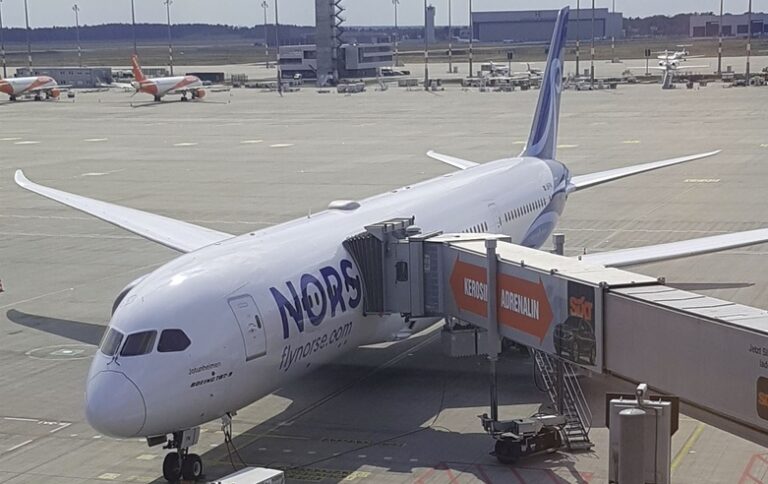
European wine connoisseur should be delighted. From 28OCT24, the Norwegian airline Norse Atlantic Airways will be connecting Europe with South Africa utilizing a Boeing 787. On board the aircraft on their northbound return flights: many types of local wines grown in the Cape region, known for their super quality and flavor.
Norse Atlantic Airways plans to connect London with Cape Town. The first Dreamliner will take off on 28OCT24 – picture CFG/hs
The brands and their producers are worldwide well known, like Anthonij Rupert Cabernet Sauvignon from Franschhoeck, Chenin Blanc from Allesverloren in the Swartland or Stellenbosch-produced Sauvignon Blanc, to name just three examples. The fact that South Africa is a highly recognized winemaker benefits not only the passengers that Norse will soon be flying to Cape Town and back to London Gatwick, but also the budget airline itself. Even though most wines are transported by ocean freight, their share of air freight is substantial.
Two-way cargo traffic Currently, it is still too early to speculate on volumes, which will level off, but the first Norse flight to Africa is also interesting from an air freight perspective. Above all, it is two-way traffic. This is because mainly European industrial goods such as automotive parts, machinery, tools and pharmaceutical products are traveling southbound transported, while tropical fruits, fishery products, gold, platinum and diamonds are exported from South Africa to many parts of the world, including Europe and the UK. According to the National Bureau of Statistics, key markets for goods made in South Africa are China (USD 23.4 billion in 2023), the United States (USD 11 billion), Germany (USD 10 billion), India (USD 9 billion) and Japan (USD 8.85 billion).
Cape Town and beyond Alongside domestic and intra-African flights, the UK is the most popular destination for South Africans, evidenced by steadily growing traffic figures following the C19 pandemic. For passengers traveling southbound, Norse has partnered with local service provider Cape Town Air Access to enable their guests who desire to explore larger parts of South Africa convenient connectivity. The overarching aim of the organization, existing since 2015 is driving economic growth, bolstering tourism, and increasing air cargo capacity to and from the Cape region. This is achieved through partnerships with local airlines that operate feeder flights to and from Cape Town International.
Politician predicts the flights a “great success” Asked about the upcoming Norse flights, Provincial Minister for Finance and Economic Opportunities, Mireille Wenger, lauded the carrier’s intend. “As a world-class tourism destination, and home to some of the best wines, culinary delights, adventure, and leisure options in the world, as well as breath-taking natural beauty, I am certain that this new route will be a great success, offering international visitors the opportunity to enjoy the many and diverse offerings we have across the Western Cape. This is also excellent news for our economy because more tourists mean more jobs in the province.”
Mark Maclean, Regional General Manager for Cape Town International Airport stated: “New routes solidify renewed confidence in the City, the region and country’s appeal, and contributes to bolstering its economic growth.”
Finally, Bjorn Tore Larsen, CEO and Founder of Norse Atlantic Airways said: “Norse Atlantic is committed to delivering exceptional value without compromising on quality and we believe that everyone deserves the opportunity to experience the wonders of the world and our new route between London and Cape Town will allow many more people to visit these amazing destinations.” Norse Atlantic’s fleet consists of 14 Dreamliners, with two of the jetliners operates 14 Dreamliners, of which two have been leased to Spanish airline Air Europa.
Dozens of freighter aircraft are lined up at Oslo Gardermoen Airport – from very large to rather small. Their common operational reason is the salmon business as Norway is the global hotspot of aquacultures. However, a rapidly spreading parasite is causing increasing concern in the industry. Sea floor pollution is another item raising growing criticism. This became clear during the Nordic Air Cargo Symposium held in Stockholm from 22-23APR2024.
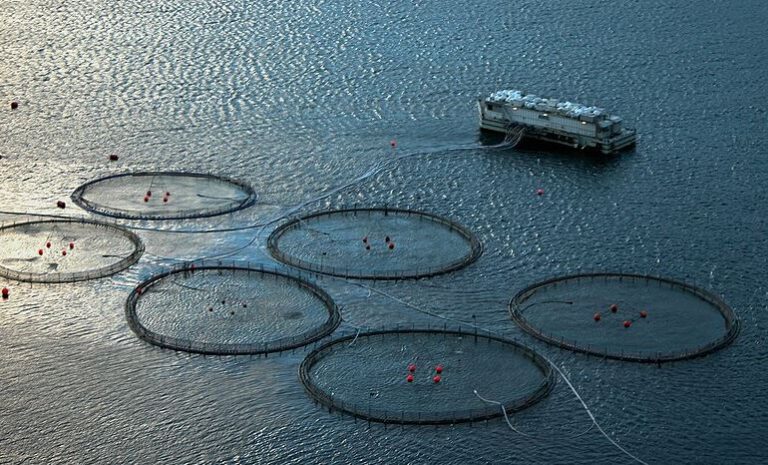
Salmon aquaculture is the fastest growing food production system in the world, but it is becoming increasingly controversial – image: Færøsk havbrug
Scheduled carriers serving Oslo Airport with full freighters:
AeroLogic
Air Atlanta
Airest
Amapola Flyg
Antonov Airlines
ASL Airlines Belgium
ASL Airlines France
BRA
C.A.L. Cargo Air Lines Ltd
Cavok Air
Challenge Airlines
Dhl Air Ltd
Emirates
Ethiopian Airlines
European Air Transport
Fleet Air
Kalitta Air LLC
Korean Airlines
Lufthansa Cargo Airlines
Motor Sich Aviakompania
National Air Cargo
Qatar Airways
Silk Way West Airlines
Sprintair
Swiftair
Trans Wing
Turkish Airlines
Capital Airlines
Source: Monica Iren Fasting, Head of Communication, Oslo Lufthavn
The growth rate of salmon farming is enormous. Expert Tom Erling Mikkelsen from Oslo-based Mikkelsen Consulting, tabled comparative figures at the latest Nordic Air Cargo event: While 201,941 tons of salmon were flown out of Norway by plane in 2018, last year it was already 264,408 tons. Of this, 60,604 were exported to the USA, which corresponds to a weekly volume of 1,165 tons; 49,379 tons went to China (950 tons), to Korea it was 32,005 tons (615 tons), and Japan imported 26,758 tons from Norway (515 tons per week). Even Canada, a country that has plenty of its own wild-caught salmon, imported 583 tons in 2023, stemming from Norwegian farms.
Feeding half of Scandinavia – statistically The forwarder ranking is led by three local Norwegian companies: Air Cargo Logistics AS (21.23%), Air Trade Support AS (18.40%) and Salmonsped AS (17.44%), followed by DSV Air and Sea (13.33%), DB Schenker (7.89%), and Blue Water Shipping (4.62%).
This statement by Mikkelsen shows the dimension that salmon farming has meanwhile achieved: “Norway could feed the entire population of Denmark and Sweden exclusively with salmon day by day for as long as a year,” the expert illustrated. According to the latest census, a total of 16.5 million people live in the two Scandinavian countries.
More fish farms are to come Salmon is a very welcome commodity, for air freight in particular, as its shipments are of high density and can easily be accommodated on the main decks of freighter aircraft.
However, the cold chain must be maintained during the entire transport to prevent the fish from getting spoiled. This also applies to shipments traveling by truck to European consumer markets, the total volume of which Mikkelsen described somewhat vaguely as “very high”.
All in all, he painted a rosy picture of the salmon business, but also warned of some challenges that the industry needs to tackle. The world population will grow from 8.2 billion people today to 9.6 billion by 2050. Their protein requirements will not be met by commercial fishing, especially as large regions of the world’s oceans are already overfished. Hence, aquaculture will increase, despite growing concerns from conservationists about the pollution of the sea floor below the farms. Yet, the tanks can be moved and are regularly towed to new locations, was Mikkelsen’s answer to environmental concerns.
Success stimulates To cargo airlines, he sent an encouraging message: Due to the growing global demand for farmed salmon, airlines need to provide more capacity to overseas destinations, he urged.
The Norwegian aquacultures have long been copied by other countries due to their commercial success. Meanwhile, there are salmon farms along the coastlines of Chile, Canada, Scotland, the Faroe Islands, and Iceland.
Tiny parasite causes great damage But where there is light, there is also shadow. The industry is increasingly concerned about the mortality rate of salmon farmed from aquaculture. This now averages 20% in Norway, said expert Mikkelsen. The culprit is a parasite: the salmon louse. Biologically speaking, it is not a louse, but a small crab. It penetrates the skin of the fish and draws mucus and blood from it, which feed the pest. In salmon-crowded aquacultures, the tiny crabs find ideal feeding and propagation conditions. Heavily-infested fish are sorted out after being caught, and are not marketed as food. An animal whose head was half devoured by salmon lice has now been filmed on an Icelandic farm. In this context, the world-famous singer, Björk, spoke of a “zombie fish” and protested against the fact that parts of the waters around the island are being permanently damaged by aquaculture. This is because the salmon’s feed contains antibodies against diseases and the seabed is flooded with their excrement. “Aquacultures are an ecological disaster, comparable to factory farming of pigs or chickens,” argues Greenpeace marine biologist, Franziska Saalmann. “The sea floor beneath them is a cesspit full of feces.”
CargoForwarder Global’s ‘Spotlight On…’ series highlights the many different careers within the huge machinery that is global air cargo, whether they are directly involved in air cargo transportation, or have a role in one of the many supporting services keeping the industry running. Air cargo hubs are where everything comes together and distributes – many beating industry hearts dotted around the globe – and CargoForwarder Global is delighted to hear from KLM Cargo’s Director Cargo Hub Amsterdam, Vincent van Donk, this week, who gives insights into his daily work and shares advice to those looking to join the air cargo industry.
We have a significant responsibility to improve and make things better. Image. KLM Cargo
CFG: What is your current function and company? And what are your responsibilities?
VvD: My name is Vincent van Donk. Since 01MAY23, I’m Director Cargo Hub Amsterdam at KLM Cargo. I hold accountability for overseeing the Cargo warehouse activities at our Schiphol Airport hub.
CFG: What does a normal day look like for you? (Or is there such a thing?)
VvD: An operational manager at KLM Cargo doesn’t have a fixed daily routine. The cargo industry is dynamic and so is a day in my role, along with the management team. Our primary objective is to enhance our operations on a daily basis. It’s not an easy task; nonetheless, safety and compliance are the utmost priorities. We have regular safety meetings to monitor our processes and steer our business in a safe and compliant way. Following that, my focus is on streamlining and improving our business processes and managing our workforce of over 700 employees who work in shifts. Although many processes are automated, the intricate nature and complexity of our work necessitates staff involvement. Therefore, I strive to motivate and organize our team efficiently. In addition, we have a ‘flight plan’ as our business strategy at KLM Cargo, and we work towards achieving our strategic goals every day. Consequently, my day is packed with meetings about the progress of our strategic pillars and operational and organizational processes.
CFG: How long have you been in the air cargo industry, and what brought you to it?
VvD: I work in the air cargo industry for 7 years now. Previously, I worked in other operational divisions at KLM. The air cargo industry was completely new for me. I started as the manager of our customer service in the Netherlands at Schiphol. At first, it was challenging to become familiar with the industry. It provided me with valuable insights into the air cargo industry’s importance in many supply chains. It’s easy to forget how vulnerable the global supply chain is and how crucial it is to support it. The insights I’ve gained in the last 7 years have made me realize that we shouldn’t take our daily lives for granted. Every single day we transport essential goods all around the world. Medicine, food, and a wide range of crucial components that keep our society running, all from our unique hub at Schiphol.
AdditionalIy, I firmly believe that we can conduct our business and have a significant responsibility to improve and make things better — not just for our people, but for the environment we inhabit. Simply operating fewer flights or suspending air travel altogether is not the solution, because air travel is a crucial means of transport. But we have to do things better. We want to operate cleaner, quieter and more fuel-efficient flights. We want to be a leader in the industry.
CFG: What do you enjoy most about your job?
VvD: My greatest pleasure lies in collaborating with our staff and striving to continuously enhance our operations. Establishing a connection with our employees is crucial, but it’s not always a straightforward task. We aim to make the work of our operational warehouse employees easier and more efficient. This is essential for improving our processes and, in turn, our business. However, it can be challenging to communicate our ideas about vision, strategy, and cost efficiency to our employees in a way that’s easy to understand.
CFG: Where do you see the greatest challenges in our industry?
VvD: The greatest challenges in our industry are sustainability, digitization, and efficiency. Our industry is heavily impacted by the worldwide economic situation, and it is a low-margin business. All three of these areas require significant investment to achieve results. I believe that these areas are interconnected. However, we must take these steps, which come with a high cost. Funds that are not easily earned in our industry. If we intend to rely on our full strength in the next 100 years, we must continue to lead the way and pioneer. In the meantime, each and every day we take a step closer to the future. With a better and improved KLM Cargo for our people, our customers, and our network.
CFG: What advice would you give to people looking to get into the air cargo industry? Any particular training they should aim for?
VvD: If you’re looking to get into the air cargo industry, my advice would be to learn, enjoy, and be open to everything you see in this industry. Everything is interconnected, and there is a reason for almost everything. A job in logistics, and especially the air cargo industry, requires knowledge of the air industry and its logistical processes. To become familiar with the air industry, there are many courses and trainings available. For logistics, I would recommend a logistic training in combination with a Lean training and/or taking courses in Operational Excellence. This can help you to advance in your career.
CFG: If the air cargo industry were a film/book, what would its title be?
VvD: “Around the World in Eighty Days”. We have brought cargo around the world for decades. We do it with passion and dedication. It’s not easy and sometimes we were confronted with delays and unforeseen situations. In the end we will ensure safe and smooth operations, every day, every time, although it might be ambitious sometimes.
Thank you, Vincent, in particular for underlining how important our industry is when it comes to keeping our societies running.
If you would like to share your personal air cargo story with our CargoForwarder Global readers, feel free to send your answers to the above questions to cargoforwarderglobal@kopfpilot.at We look forward to shining a spotlight on your job area, views, and experiences.
The company has been operating under the name Universal Translink Airline Hungary (UTA) since APR21. It has now applied for a name change to Hungary Cargo Airlines. The new name was confirmed by the Budapest Environs Regional Court at the end of MAR24.
The sense of this renaming only becomes clear at second glance, because initially nothing changes. The A330-200 freighter used by UTA continues to fly on a charter basis multiple times per week between Budapest (BUD) and Zhengzhou (CGO). The aircraft originally came from Qatar Airways and was acquired by the Hungarian government during the pandemic for USD 57.5 million. The main aim of the deal was to quickly supply Hungarians with hygiene materials produced in China. As the state is not an airline, the Orban administration transferred the freighter to the Hungarian low-cost airline Wizz Air, which in turn cooperates with UTA, with the latter managing the China flights.
Hungary registered Chinese airline? The recent name change indicates two things: a shift in the company’s ownership structure and the cargo airline’s expansive plans for the future.
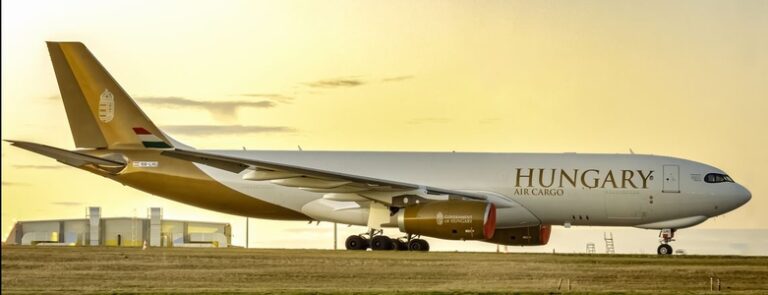
Hungary Air Cargo / Hungary Cargo Airlines – two (different) names for one airline – courtesy Universal Translink Group
According to the local commercial register, the new majority owner of Hungary Cargo Airlines is an investor named Jiang Wu. He originates from China and has acquired Hungarian citizenship. He holds over 50% of the voting rights in the cargo airline, while Universal Translink Airlines Co. Ltd. is now only a minority shareholder.
Secondly, the move signals the stronger integration of Hungary Cargo Airlines into the Chinese Universal Translink Group. This is also indicated by the group’s homepage, in which the carrier is already presented as part of the Translink fleet in a short video clip, although with its name somewhat distorted. Due to the ownership structure, however, the company will continue to be based in Budapest. According to local sources, it will also apply for its own Air Operator Certificate (AOC) in Hungary.
The freight airline is likely to benefit from the close relationship between Budapest and Beijing. After all, the Orban government is the only EU country to have signed China’s Belt & Road Initiative.
Meanwhile, the local cargo community is asking itself, if the freight carrier will only bear a Hungarian registration and manage its business according to own requirements or rather become part of the Translink fleet despite its Hungarian registration. The second version seems to be the more plausible consequence.
BUD not sold yet As CargoForwarder Global learned on the sidelines, negotiations on the sale of Budapest’s Ferihegy International Airport from the AviAlliance to the Hungarian state or local investors appointed by the Orban government, are dragging on. Originally, the change of ownership was supposed to take place at the end of last year, then the date 29FEB24 was announced. However, nothing has happened until now. Local observers suspect that the financial demands of the two sides are too different.