UN High Commissioner, Filippo Grandi (left) and Qatar Airways Group CEO, Engr. Badr Mohammed Al-Meer, ink pact – courtesy QR.
Just days after inviting pres and customers to see the new Animal Center in Doha, Qatar Airways announced that it has renewed its partnership with the UN Refugee Agency (UNHCR) and supports communities in need. The agreement signing ceremony was attended by Qatar Airways Group Chief Executive Officer, Engr. Badr Mohammed Al-Meer, (who gave a speech), and the UN High Commissioner for Refugees, Mr. Filippo Grandi, alongside the UNHCR’s Representative to the State of Qatar, Mr. Ahmed Mohsen, and Qatar Airways, Chief Cargo Officer, Mr. Mark Drusch. The two have agreed an extension of another two years, taking the partnership through to 2025. The agreement supports the shipment of relief items to the most vulnerable refugees and internally displaced people worldwide. Already over the past two years, Qatar Airways Cargo collaborated closely with UNHCR, helping to get humanitarian aid to where it is most needed. The new partnership agreement foresees Qatar Airways providing 400 tons of free tonnage to UNHCR, helping those in need in through the distribution of crucial aid supplies. The airlines 28 freighters are on standby. “By working with Qatar Airways, UNHCR has wide access to deliver life-saving support including water, medical care and hygiene materials to keep refugees, internally displaced people, and host community members safe around the world,” the release states.
Qatar Airways Group Chief Executive Officer, Engr. Badr Mohammed Al-Meer, stated: “We are proud of what we have accomplished through our relationship with UNHCR over the past four years, which has helped support displaced communities around the world. We look forward to the significant renewal of our partnership and in continuing to aid those who are most vulnerable. Qatar Airways Group is committed to fulfilling its humanitarian role by helping refugees and internally displaced people worldwide.”
Ahmed Mohsen, UNHCR’s Representative to the State of Qatar, said: “We highly appreciate this vital partnership and are proud to renew it for two additional years, which reflects Qatar Airways’ solid commitment towards supporting our humanitarian efforts, in terms of delivering essential relief items to those most in need. Since establishing our partnership with Qatar Airways in May 2020, amid a critical time during the emergence of Covid-19, Qatar Airways has lent us a helping hand to support refugees and displaced communities with vital relief items and medical supplies.”
Welcome Back to CargoForwarder Global’s ‘Spotlight On…’ Series: Exploring the Appeal of the Air Cargo Industry Through Stories of Young Talent. Today, we’re talking to Janina Meininger, Business Development Manager at CHI Deutschland Cargo Handling.
Janina Meininger: “a broad network is crucial in our industry.” – Photo: private
CFG: What brought you to the air cargo industry? How did you discover it?
JM: I´ve always had a passion for aviation and entered the aviation industry in 2016 when I started the dual study program B.A. Aviation Management in cooperation with Fraport AG at Frankfurt Airport. Besides my experiences in general aviation, my perception of air cargo was quite limited. It was during my time at Frankfurt Airport that I developed an interest for the air cargo industry and therefore did my masters degree in Global Logistics. During my studies I had the opportunity to connect with the right individuals, paving the way to my current role as Business Development Manager at CHI Group.
CFG: Why would you recommend others to join?
JM: From my experience, our industry offers the opportunity to work in an international environment and to benefit from the diversity of a multicultural workplace. Additionally, the air cargo industry is known for its fast-paced work environment, which presents ongoing new challenges and ensures that things never get dull. Given that many companies in our industry have a global presence, it also enables international rotation programs for those who are passionate about travelling.
CFG: What strategies do you propose for raising the awareness of our industry and to make it more attractive to individuals with no prior experience in Air Cargo?
JM: Given the nature of the air cargo industry being mostly invisible when it comes to attracting new talent, I believe there are several actions that individual organizations can take to enhance their attractiveness and visibility. Firstly, companies may establish partnerships with educational institutions such as universities, colleges, and vocational schools in form of specialized programs, internships, and workshops. Moreover, highlighting the company’s range of career opportunities empowers candidates to find positions that align perfectly with their skills and interests. Additionally, offering rotation programs and traineeships allows young talents to gain practical experience across various areas of the company. Lastly, companies may offer competitive benefits and perks such as opportunities to work internationally, gain experience in different countries, flight benefits, and international mobility programs. These offerings can motivate to choose the air cargo industry and foster long-term commitment among employees.
CFG: What strategies do you propose for integrating individuals with no prior experience in Air Cargo?
JM: In my opinion, Training, Traineeships and Networking are effective strategies to integrate individuals with no prior experience into the air cargo industry. Training is crucial to give insights into specific processes, so called “basic cargo trainings” can help to provide orientation within the industry by teaching the basics of the industry. Traineeships enable young people to explore different facets of the respective company and to find the right department for themselves, while also gaining an understanding of basic processes and ideas. A positive example how networking can help to integrate individuals with no prior experience in Air Cargo is the initiative of the Air Cargo Community Frankfurt e.V. with their YACE initiative. YACE (Young Air Cargo Executives) supports young individuals in navigating the complex world of air cargo and in connecting with like-minded peers from other air cargo companies.
CFG: What are the most important skills needed in air cargo?
JM: I believe that flexibility is a critical requisite in our industry, given that air cargo operations operate around the clock and extend the typical nine to five workday. Furthermore, knowledge in multiple languages is relevant, as our operations involve collaboration with colleagues and stakeholders from all around the world. Additionally, the ability to adapt to the fast-paced environment of our industry is crucial. As already noted, our industry is dynamic and frequently presenting new challenges that require quick adaptation and problem-solving skills.
CFG: Where do you find support doing your job? Any training / networking / mentoring you would recommend?
JM: At CHI Group, I am fortunate to work closely with the senior management of which some view themselves as mentors and dedicate lots of time to my development and support me in my career path. This commitment greatly motivates me to excel daily. Additionally, networking events provide an opportunity for me to engage with like-minded people and broaden my connections. In my opinion a broad network is crucial in our industry, as most challenges necessitate the collaboration of different stakeholders.
CFG: What do you do, when you’re not working in air cargo?
JM: One passion of mine is traveling, which allows me to experience adventures and explore new cultures, people and landscapes. I particularly enjoy international cuisine, to always try new things and challenge my taste buds. Additionally, I do really enjoy cycling in my everyday life to clear my mind after a hectic day.
CFG: Janina, thank you for your time and the input.
At the Nordic Air Cargo Symposium in Stockholm, Frank Van Gelder (FVG) gave around 140 participants a look through the keyhole at future trends in the life science landscape.*** Frank is Secretary of the association Pharma.Aero, guest lecturer at a Belgian University and at the same time Managing Director of Mediconed, a company that provides complex project management related to enhanced training for pharmaceutical, medical and supply chain industries. His outlook contained both hopeful and worrying trends that will have a major impact on global supply chains. We spoke to the expert.
Advanced medical products demand tailored application procedures and individualized supply chains, says Frank Van Gelder – photo: CFG/hs
CFG: Frank, let’s start with a very positive outlook: one of your key messages at the Stockholm-held Nordic Air Cargo Symposium was that cancer, an old scourge of mankind, can be defeated through individualized medicine and treatments. What is this assumption based on and on what time horizon?
FVG: Currently many different new generation cancer treatments are leaving the research pipeline and entering in the wider range of clinical applications. Especially the CAR-T (Chimeric Antigen receptor) treatments have reached a new era of applications with very promising results, realizing that today these treatments are mostly used in patients with stadium IV cancers, categorized as untreatable and uncurable. It is a mechanism where the T-cel leucocytes of the sick patient are treated outside the body to be re-infused and target the cancer cells. Also, within the ATMP (Advanced Therapy Medicinal Products) there are different other products and mechanisms now tested and explored to treat cancer. One of them is based on the mRNA technology, better known form the Covid vaccine technology, in which the body itself creates the vaccine.
The so-called Spike protein identification of the cancer cells helps the body to initially kill the tumor but also to build antibodies against the cancer for the future. It is one of the most groundbreaking technologies and clinical applications of the past century in healthcare. Seeing the different promising results there is a 15-to-20-fold market growth projected in the next 5 years. One should realize these are still low volume settings and very critical lead-times. As every year around, 4.2 million new cancers are discovered, and with the aging population, will only grow, this will be a big market where U.S., Europe and Asia are investing billions of dollars.
3P’s of Sustainability
CFG: In contrast to the positive cancer perspective, it is worrying that 40% of all medical treatments produced never reach patients. What is the reason for this enormous waste of resources and what needs to change in the supply chains so that this scandal can be ended or at least greatly reduced?
FVG: I think the basis of this is caused by the very strict and unique serialization policies within drug production internationally. Let me give you an example: if we ship drugs currently and at the other end of the supply chain there is an issue, we can’t re-allocate these shipments in the current setting. In other words, the shipments need to come back and be destroyed. And that is in a way understandable as we need to always avoid, that such drugs enter in black markets, counterfeit, and thefts, with a potential uncontrollable quality and danger for humanity. Therefore, it is important to internationally collaborate on higher level and wider scale with the regulators, the drug production authorities, the supply chain and logistic stakeholders and life science manufacturers. It is an issue that would hit the 3P’s of Sustainability, 1) Profit (less drug loss of produced and manufactured drugs) 2) Planet (less waste and destruction of produced drugs and chemicals) and 3) People (higher availability of treatments to people not accessible today and in the need of medical treatment). Supply chain flexibility and resilience is needed to assist and secure a better way of tackling this.
Ticking time bomb
CFG: The Covid crisis is just over. Thanks to innovative medical products and the rapid transportation of serums, hygiene materials etc. by air freight, it was possible to prevent worse things from happening. Now you are assuming that the next pandemic is practically just around the corner. So is humanity experiencing an endless chain of successive pandemics? And if so, why?
FVG: It would be very naïve from humans, that the Covid pandemic was unique and only one to happen. We have had many in human history and examples of what we call zoonotic diseases, where viruses and or micro-organisms of an animal host, jump over on human (the plague in the Middle Ages, Ebola, dengue, malaria, HIV, covid, bird flu, and we can on …). The incidence only increases when animal lines and human lines cross each other too frequently, and when the pathogen mutates from an animal-to-human, to a human-to-human situation. At such a moment, and what happened with the plague and now the covid, the frequency with passing on the micro-organism accelerates. The fact that global population is growing, that many humans live in very basic and unhygienic conditions, it is only a ticking time bomb for the next one to happen. The only good news after covid is that we have created new systems, new policies, and new levels of authorities, to handle more accurate and faster even. It is not a secret that the European commission has asked pharma companies to be able to produce a vaccine within a year for any future potential pandemic outbreak.
Grey tsunami
CFG: Japan, China and to some extent Europe are ageing societies, as are parts of America. What are the foreseeable consequences of this biological development for the global life science industry and the supply chains of tomorrow and beyond?
FVG: The aging population phenomenon is a very multi-factorial impacting trend. Due to better hygiene, better healthcare and better treatments, the population keeps on growing older. On the other hand, in Western societies where this is happening, there is less and less inflow of young children. This will drive us to a societal model, with an increasing need for healthcare, and a lower availability of young healthcare workers. Like we would call it the “grey” tsunami, it will challenge the economy from different sides. In relation to Life Science supply chains, and based on new healthcare model innovations, you will notice a shift to higher chronic home care. This implies e-commerce like models for homedelivery, IoT interconnected patients to a virtual patient control tower, and highly-specialized care centers only for acute care. In other words, the hub-and-spoke distribution model will only be more applicable and e-commerce giants will only enter more and more in drug delivery models and digital management platforms.
CFG: Africa’s population, on the other hand, is very young and growing rapidly. Given this demographic trend, wouldn’t it be logical to shift research, development and production of healthcare products from the industrialized countries to Africa?
FVG: For sure this is a very plausible trajectory that is already explored. Africa should less depend on full external import and production, as it weakens their development and population safety. During the pandemic there were again more HIV cases due to lack of anti-HIV drugs available as there was no uplift capacity. The biggest enemy is the quality in production and logistics. Drugs are often produced from out of different ingredients and therefore often a complex upstream logistics. Also, the quality of producing the drugs is a very big challenge. Recently India came in the news negatively because of quality issues of some coughing sirups with child death as a result. One should not forget, although investments can drive decentralized production from a financial perspective, the experience and track record is important to assure quality. It will happen, within the next decade where countries like Senegal, Rwanda, Kenya and South Africa are interesting markets to look at. I see personally a direct starting market for generic drugs which are currently and almost exclusively produced in India. When it comes down to more complex molecules and therapies, you need a strong research-based experience.
From designs for a huge, additional cargo warehouse, to two WeQare chapters lined up for this year, to views on Net Zero, the Boeing freighters to come, and Qatar Airways Cargo’s Next Generation strategy, Mark Drusch, Chief Officer Cargo, provided input on the airline’s achievements and plans in a one-to-one CargoForwarder Global interview in Doha, last week.
Despite my being the fourth journalist in a back-to-back line-up that morning, Mark Drusch still exuded the same dynamic energy he had shown when introducing the Animal Center the previous day. After congratulating him on the new Animal Center (as well as taking up his offer of providing a suggestion for improvement and delivering an idea that will now be analyzed and perhaps communicated through CargoForwarder Global at a later stage – let’s see!), my first question was centered around the ‘Bigger Plan’, he had hinted at, the previous day.
Enjoying cargo to the full. Image: Qatar Airways Cargo
Part of a bigger plan
The decommissioning of the old Animal Center is ‘part of a bigger plan’. While local inbound and outbound operations may be under consideration for the old facility, Qatar Airways Cargo and the airport are working on Phase B of the airport’s expansion. Mark Drusch confirms: “We are right now evaluating building a brand new, additional cargo center that could significantly increase our footprint,” he says. Currently around 9 different options are being analyzed that will allow for significant cargo growth. “Up to three times the size of the existing facility?” I ask. He laughs, stressing the significant growth, but that thrice the size is not the aim, though “Let me be clear: we have the opportunity to go to 3X if we need to, if we felt there is a business case or a partnership that supported that.” During our half-hour chat, the emphasis is often on finding the right business partners and creating financially sound business cases, accompanied by his clear willingness to consider new concepts and innovations.
And much of that is present in the Bigger Plan: The go-live date of the new warehouse is dependent on its size and the models eventually agreed upon. “And what we’re looking at is not just warehouse space,” he tells me. “It’s adding brand new technologies to operate the warehouse more effectively, as well as some good and exciting things for our employees to make their lives more enjoyable when they are at work. Until you’ve gone through a warehouse, you don’t appreciate what hard work that is,” he explains, describing that aside from the actual physical work involved, there are also the emotional stress aspects of having to work to a tight schedule, to stringent safety standards, and the responsibility that comes with handling air cargo. “It’s not easy stuff,” and that is why the emphasis is on providing an environment where employees know “I’m getting the best work environment possible because people respect the work I do.”
What’s next with the Next Generation?
I refer to an interview that Air Cargo News’ Rebecca Jeffrey conducted with Mark Drusch right at the start of the year, 16 days into his new role, where he stated that “what Guillaume and the team have built, has given me this fantastic platform to take it to the next level,” and ask what the next level in the airline’s Next Generation strategy is now. “We are actually refreshing the strategy,” he says, stating that a meeting had been held the previous week with the VP of transformation, and detailing the components that are being integrated internally before the next phase of the strategy in three to four months: “In particular, it is Leading, Digitization, our Commitment to our WeQare program, the Commitment to our own People, as well as the Partnerships, I mentioned before.”
And he emphasizes again: “I am now even more convinced of what I said at the start of the year: It’s a great foundation that I have inherited. I am very, very fortunate that I inherited an organization that runs so efficiently already, incredibly safely – a group of people who are very dedicated to what we do and to getting even better. It’s a gift to start from such a great platform,” he enthuses.
WeQare and Net Zero
I pick up on WeQare, and ask when we will see a Chapter 5? “It’s already in the works and will be announced in the next few weeks,” he laughs, and reveals that a Chapter 6, too, will be launched before the end of the year. While he hints at the intensity he expects with the next two chapters, he does not disclose details. Instead, we digress into the importance of air cargo and how it still remains largely unrecognized in the shadow of much more publicly present passenger operations within the aviation world. “I want to raise the consciousness, globally, of how critical we are to the global economy and our lifestyles, and improving our lifestyles,” he urges, mentioning a number of tangible examples, and stressing the need to “lead and elevate the industry so that everyone realizes this is something important to invest in.”
“How realistic is Net Zero 2050 for Qatar Airways Cargo?” I ask. He states that while 2050 is still a long way off, he is a very optimistic person and that “I am confident that the industry is taking it seriously. I believe we will get there because the drive is there, and the commitment is real. The problems are big, but everybody now is putting their energy into solving those problems.”
99% of all Qatar Airways’ ground vehicles in Doha are electric, the company is recycling as much as possible, and has a ‘game-changing’ idea in the pipeline that he hints will be revealed soon. “When you start discussing with people who want to change things for the better, you get inspired and find solutions,” he says, concluding: “If you have the desire to do it, we generally are able to achieve it.”
Boeing freighter fleet still on the books?
With Boeing having been in the news so much recently, regarding quality and product issues, I ask if Qatar Airways Cargo has any thoughts of changing their order for 34 Boeing 777-8 freighters (and an option for a further 16)? Mark Drusch is very clear in his answer: “No. We are absolutely committed to the Boeing 777-8 fleet.” As the launch customer, he tells me that he is in daily contact with Boeing and that both companies are working very closely together on what that aircraft will look like, particularly regarding the onboard digitization. Again, emphasizing his company’s 100% commitment to the Boeing freighter, he does also add that, as a businessperson, one will always talk to all manufacturers to understand and discuss the products on offer, as the aim is to select the best product for the customer – and those discussions ultimately lead to a better product.
“I’m lovin’ it!” Mark Drusch’s enthusiasm for cargo is endless and he himself says that, had I asked him if he was enjoying his new role, the answer would have been “I’m loving it! Cargo is so exciting!” I ask him what he sees are the differences to the passenger side? It is much more complex than passenger, he says, pointing out that it is therefore even more important to have better business intelligence to understand where markets are moving. It is so much more dynamic, and agility is important: agility is a core trait of Qatar Airways Cargo, he adds, again stressing his fortune in having inherited a team of extraordinarily motivated and committed people. “I am excited about achieving all aspects of our business. We have new energy, everyone is on board,” he says, pointing out the airline’s growth and achievements over the past 10 years, and particularly its performance during the pandemic. “We have done things that nobody else did. Our people always rise to the challenge to exceed, deliver, and to lead. It’s in our DNA!”
Years ago, leading managers of established airlines and journalists placed bets on this topic: will there be European low-cost airlines offering transatlantic flights and earning money with them?Of the 11 people involved in the discussion at the time, the (unofficial) vote was: 8 no, 3 yes. Two of the three representatives were journalists. A look at the situation today: the three were right.
Admittedly, there have been failures; Norwegian has withdrawn from transatlantic crossings following its bankruptcy and relaunch. Iceland’s WOW has disappeared completely, only to be replaced by budget carrier, PLAY Airlines. And in Norway, a new player, Norse Atlantic Airways, founded in 2021, has set out to serve long-haul routes on a budget basis.
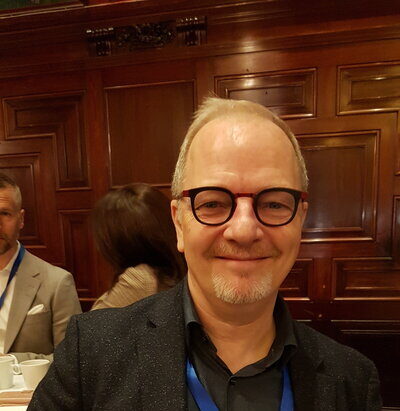
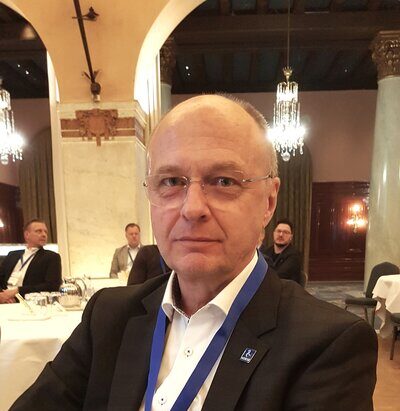
Markus Engstroem is Director Cargo at Norse Atlantic Airways AS – photo: CFG/hs
Growing intercontinental network
The Viking airline’s main market is North America, served from its European hubs in Oslo, Gatwick, and Berlin. The long-haul network further includes Paris CDG and Rome. Flights from Athens to New York will be added from the end of May and Las Vegas will be served from Gatwick commencing in SEP24.The first commercial flight operated by Norse took place on 04JUN22, connecting Oslo with New York JFK. Today, the newcomer serves JFK, MIA, LAX, MCO, and IAD in the U.S. In the Caribbean, MBJ and BGI are part of its network, as is BKK in Thailand.
Keeping the flight schedule stable
At the end of OCT24, Cape Town will become the first destination in Africa to be served seasonally. “Our aim is to keep flight schedules stable on core routes, which means year-round traffic, partly combined with frequency increases,” explains Magnus Engström, Director Cargo
Uniform long-haul fleet.
Norse operates 14 Dreamliners, 12 of which it uses itself with two currently leased to Spanish Air Europa. All aircraft come from the former Norwegian fleet and were taken over by Norse from lessor BOC Aviation. Cargo is an important sales factor, confirms Mr. Engström. It can make the difference between a profitable or loss-making route, says the manager. “The cargo business opportunities represent an important part of our route selection criteria and remains a growing part of our business.” However, he does not reveal how much air freight contributes to overall sales. By using a uniform B787-900 fleet, the airline can carry 18 or even more tons per flight in the lower decks of the aircraft, depending on the number of passengers and the weight of their baggage.
GSA Kales manages the cargo business
In Europe, Kales was contracted by the management as the airline’s general sales agent. The Dutch GSA has concluded a Total Cargo Management agreement with Norse, which includes all sales activities as well as operational and commercial issues. The individual national representations of agent Kales are responsible for the everyday business coordinated by the Gatwick-based team. Finally, regarding the bet mentioned at the beginning: each of the losers had to send a bottle of tasty red wine to the winners.
To achieve this goal, the Hamburg-based express logistics service provider is relying on the use of the biofuel Hydrotreated Vegetable Oil (HVO). This will be used to fuel the fleet of vehicles operated on domestic German and trans-European routes. Depending on the location and mission, emission reductions of between 50% and 90% compared to conventional fuel, can be achieved. The somewhat extraordinary name of the new product is ‘OWTZ Boost’. OWTZ stands for ‘Our Way to Zero’.
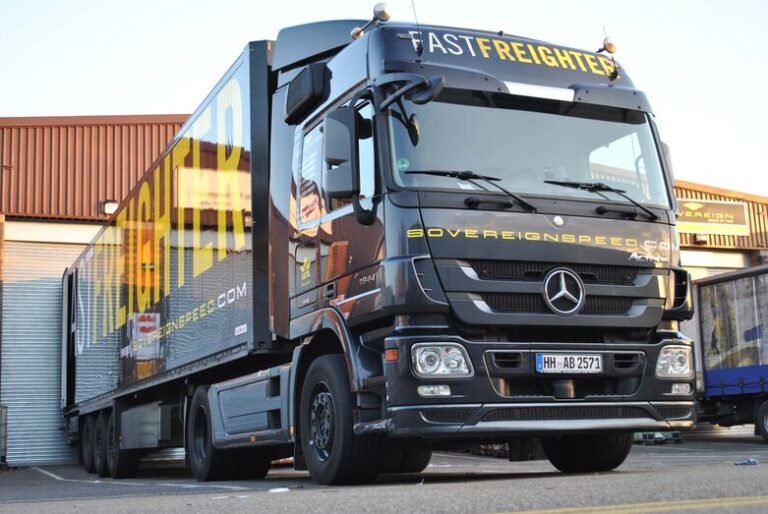
Thanks to the new ‘OWTZ Boost’ product, Sovereign Speed’s fleet will emit 50% less CO2 compared to today – photo: CFG/hs
Togetherness is key
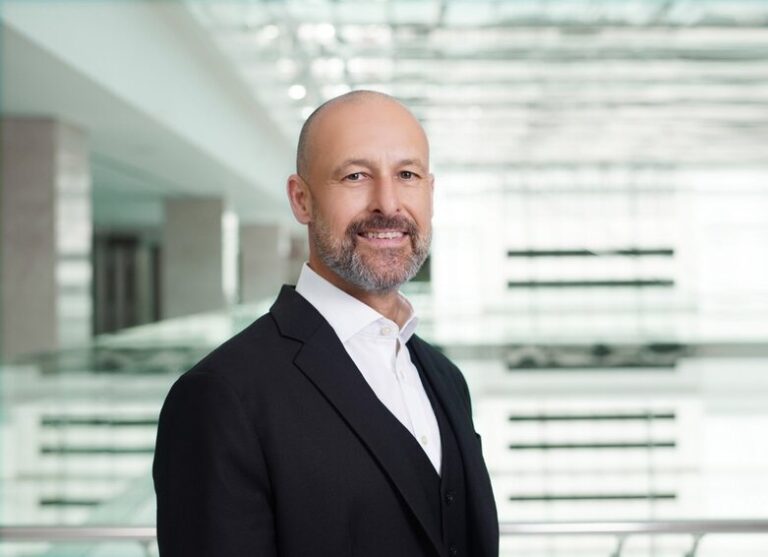
However, filling up the vehicles with HVO is slightly more expensive than diesel fuel. Depending on the country and routes served, the costs go up between 0.20 to 0.40 eurocents per liter, compared to traditional diesel fuel, says Hendrik Bender, CCO Sovereign Speed. Hence, switching from diesel to HVO results in an increase of operational expenditures that the logistics company with its fleet of 300+ vehicles, cannot bear alone. Therefore, the scaling of this well-intended project can only happen with customer support.
LTLS becomes launching customer
A Sustainability Matters Day recently organized by Sovereign Speed in Frankfurt showed that this is manageable. Around 60 customers showed up, including executives of major freight forwarders, airlines, handling agents, truck manufacturers and leading representatives of transport associations. In the meantime, Lufthansa Technik Logistik Services (LTLS) has become the first major OWTZ user. “LTLS is pleased to be a pilot customer in the OWTZ-Boost program. It allows us to achieve important emission reductions directly within our transportation network and take the first steps in the use of renewable diesel – HVO100 – into practice,” states Mareike Krowicki, Commodity Manager Green Team Transport of LTLS. She goes on to say: “We expect HVO to play a central role for us in the coming years in achieving our goal of becoming climate-neutral in our road transportation by 2030.”
Thorough preparation
It took a lot of preparation, consultation with suppliers such as Shell and, of course, business partners before the new product could be launched. Frank Liebelt, CEO Sovereign Speed, recalls: “We started proactively offsetting the unavoidable greenhouse gas emissions originating from our network three years ago. Now we have the opportunity to avoid more and more emissions directly. Hence, our OWTZ-Boost offer to the market is exactly in line with our strategy towards emission-free transportation. However, we will continue to work on our offsetting strategy in the future. Because even when using HVO, there are still climate harming gases that are emitted.”
50% is only an interim target
CCO Henrik Bender emphasizes that customers using the OWTZ-Boost product are guaranteed a CO2 reduction rate of 50% at shipment level for the entire transport from A to Z, compared to traditional diesel burn. To achieve this, Sovereign refuels the required quantities needed within the company’s hub-to-hub network continuously. “However, we want more, because 50% is only an interim target,” the executive says, expecting scaling effects. He reminds that in principle, HVO has a reduction potential of 80% to 90%: “Particularly express logistics service providers have the option of individually increasing the HVO share via a book & claim model and achieving a higher reduction.” The management intends to present the first interim results of HVO and OWTZ-Boost in about three months.
The current year began on a sad note when the German government froze the funding of SAF projects previously supported by the state. This also affected the Berlin-Brandenburg initiated EAGLE project, including the SAF-startup, Spark e-Fuels. But “standstill” is not part of Berlin-Brandenburg Aerospace Alliance’s (BBAA) genes as is shown now. While the EAGLE mission took off in 2022, at the Berlin-held air show ILA, the upcoming ILA 2024 (05-09JUN24) will unveil its successor, EGAN: European Green Airport Network.
New hope for Green Airports “Silicon Valley”
Four European regions which support the decarbonization targets of previously selected airports in France, Germany, the Netherlands, and Norway, have signed an LOI. The common goal is to align and agree on optimized carbon-free fuel pathways to achieve the zero CO2 emissions target. It is no coincidence that the Berlin-Brandenburg region first reached out to their French partners in the Occitanic region with their local cluster Aerospace Valley, centered in Toulouse (Francazal Airport). Both regions had presented their joint strategy to a broader aviation public already at ILA 2022.
H2 maiden flight
This presentation triggered further interest from the now partnering regions Northern Norway (Bodø Airport) and the Dutch province Flevoland (Lelystad Airport). Besides their joint objectives, these regions are complementary in their capabilities, offering and achieving mutual collaborative benefits and learning from each other. Norway holds the uncontestable championship in renewable energy supply, the Netherlands has the most advanced hydrogen valley and energy storage systems, and Toulouse is the natural cradle of several H2 (hydrogen) and hybrid-electric aircraft manufacturers. One of them recently performed the first maiden flight of a French-made H2 aircraft: France’s First Manned Hydrogen-Electric Flight (also see photo).
Beyond Aero’s “Blériot”, France’s 1st H2 aircraft following its maiden flight. Pictured are Mrs. Irwin Kerboriou, Lead H2 Airport Ops Manager, Beyond Aero (centered). Flanked by Einar Sørensen, Norway (left), Hugo Duchemin, France (right), strategic advisors to the European Green Airport Network.
Sector coupling with H2 for multiple offtake
Back to Berlin-Brandenburg: With the H2 hub concept at their two airports Schönhagen and Strausberg, the BBAA developers have created a model that is inspiring more regions and partners to participate in this project. Backed by an EU-financed study, a coherent system of locally generated renewable energy was established. This includes the production and supply of green hydrogen for air- and landside use, sector coupling for regional mobility, and SAF production for regional and business aviation. The entire package is aimed at developing low to zero greenhouse gas emission aviation. The European network partners intend to implement upcoming H2 safety and refueling standards for aviation as soon as their jointly achieved results are ratified. This said, it is expected that Berlin’s H2 aircraft manufacturer, APUS Zero Emissions, will soon be joined by its Toulouse-based peers, Beyond Aero and Blue Spirit Aero, with the latter planning a zero emissions aircraft version for transporting express shipments.
Airfreight as innovation driver
As proven by existing SAF projects, exemplified for instance by Schenker-supported Lufthansa Cargo freighter flights between Frankfurt and Shanghai, H2 Aviation can benefit from a first mover effect once the concept allows for transporting cargo consignments. A role model could be played by the APUS i-5 “Hydrogen” aircraft, because the manufacturer plans to construct a cargo variant. Another hot candidate is drone airline, Dronamics, that intends to use a fuel cell propulsion system in its Black Swan cargo drone aircraft. When it comes to air freight, there is no “chicken vs egg” problem in the use of hydrogen technology. Airport areas will naturally grow into hydrogen valleys capable of locally producing SAF out of green hydrogen based on a Fischer-Tropsch process. Meanwhile, service stations in those areas will be used by cargo trucks that feed into freighter airports. The cargo community is well aware of the fact that air freight spends much more time on the road than in the air, due to the fact that the catchment area of each major airline covers an entire continent by road, with only a few hubs allowing for large-scale freighter uplift. Hence, it can be expected that air freight will embark on the green avenue beginning on roads, followed by air uplifts. D
Green trucking
This also because the recent vote by the European Parliament is increasing the pressure on truck operators. CO2 emissions from large trucks will have to be reduced by 45% for the period 2030-2034, 65% for 2035-2039, and 90% as of 2040. Conveniently, some truck manufacturers have found a way to install the H2 tanks underneath the cargo area, this way freeing them from their place behind the driver’s cab. Hence, the needed standard length for accommodating four cargo ULDs can be maintained. This “green road” concept is part of the EGAN advance.
Lions arriving in Johannesburg Image: Rock-It Cargo
On 25APR24 and on behalf of FOUR PAWS both in the Netherlands and South Africa, Air France KLM Martinair Cargo carried a very special cargo this time consisting of two lions, Vasylyna and Nikola. Last week, it had transported three Koalas. Both majestic cats had been illegally held as pets in their home countries. The lioness Vasylyna had originally broken free of her house in Ukraine, roaming the streets of a village near Kharkiv as war carried on around her and until she was caught. She was kept in a Ukrainian temporary wildlife shelter before being taken to the FELIDA big cat sanctuary in the Netherlands on 07JUN24. Nikola, on the other hand, was roaming wild in Budva, Adriatic coast, before he also was caught and taken to the safe heaven of FELIDA. FELIDA is a specialized sanctuary for big cats run by the animal welfare organization, FOUR PAWS in Friesland, the Netherlands. The desired destination for those two cats: LIONSROCK’s large, 1250-hectare sanctuary in South Africa
Vasylyna and Nikola’s journey began on 25APR24, when they were carefully loaded onto a Martinair Cargo 747 freighter aircraft. Leaving FELIDA* (* the specialized sanctuary for big cats run by animal welfare organization, FOUR PAWS, in Friesland, the Netherlands, to LIONSROCK, an expansive 1250-hectare sanctuary managed by the same organization in South Africa.
Mirjam Scherer, Global Head of Specials Logistics at Air France KLM Martinair Cargo, commented: “At our animal hotel at Schiphol, we prioritize dedication to providing the best care for our animal passengers. We ensure the highest level of attention and care for every animal under our care, from the moment of arrival to departure. Our team of seasoned professionals is ready to deliver the best service and care, including special diets, administering medication, and, of course, plenty of love and attention. We strive to ensure that every animal with us is happy, healthy, and well-cared for.” Petra Sleven, Director of FOUR PAWS, said: “The relocation of Vasylyna and Nikola to LIONSROCK means they finally have the opportunity to live in a large sanctuary, surrounded by other lions. While it’s saddening that they never had the chance to be released into the wild due to illegal trade, we are glad to offer them a more natural life here.”
Aerospace Software Developments is based in Dublin, Ireland – photo: company courtesy
Descartes Systems Group has just closed its 31st purchasing deal in 9 years – this time it has invested 57 million euros (USD 61 million) in the acquisition of Aerospace Software Developments (ASD). Of those, 54 million euros were paid cash in hand upon closing, while the small rest is expected to be handed over to Descartes in the fourth quarter of this ear. ASD has its headquarters in Ireland and provides customs and regulatory compliance solutions aimed at facilitating customs processes for importers, exporters, and LSPs and helping them comply with Irish regulatory requirements, when looking to import or export their shipments. Descartes thus gains intelligent customs filing solutions all about Irish customs procedures. “Additionally, ASD’s RFID solutions complement Descartes’ CORE BLE real-time tracking platform for the air cargo industry – helping global airlines and ground handlers eliminate manual tasks and comply with various airline regulations more efficiently through the unique identification, tagging, and tracking of assets,” the release states.
Ken Wood, EVP Product Management at Descartes, said: “Descartes’ Global Logistics Network (“GLN”) was built to help shippers, carriers, and LSPs connect and collaborate to manage the complete lifecycle of shipments. This combination with ASD is highly complementary to our current product footprint. ASD adds deep Irish customs domain expertise and a modern multi-country customs technology platform. We also see great synergies for the airline community by combining ASD’s RFID-based solutions with Descartes’ CORE BLE real-time tracking platform.” Edward J. Ryan, CEO of Descartes, stated: “As customers increasingly look to cover more business processes with one provider, we continue to add solutions to the GLN for them to do so. ASD shares a common vision to serve the wider global logistics community of shippers, carriers and LSPs. We’re excited to welcome the ASD employees, customers, and partners into the Descartes family.”
Global Head of Airport Operations, Clive Sauvé-Hopkins. Image: dnata
dnata has named Clive Sauvé-Hopkins as its new Global Head of Airport Operations, or Divisional Senior Vice President (DSVP), Airport Operations, given that the press release states two differing titles. Nevertheless, he will be responsible for the supervision of dnata’s ground handling and cargo businesses at 97 airports across 16 countries. Working out of Dubai, UAE, and reporting to Steve Allen, CEO at dnata Group, he will be managing a team of more than 37,000 “customer-centric aviation professionals”, who ensure that over 330 airlines are handled properly, according to their contracted operations.
Strating out with a military and administrative background, Clive came to the air cargo industry in 2009, and has amassed extensive international experience in commercial strategy and business transformation, working for several large names such as Swissport, Servisair, Aviapartner, Qatar Airways, and, most recently, the Abu Dhabi Developmental Holding Company (ADQ) where he held the position of Chief Transformation Officer.
Steve Allen commented: “I’m pleased to have Clive on board our global management team. Clive has all the experience and skills to drive our growth strategy and ensure consistent quality and safe services, with a continued focus on people and sustainability across our global operations. I look forward to working together as we enhance our business and offering.”
Meanwhile, the handler has been busy. On 18APR24, it inaugurated a new office at Terminal 3 of Rome Fiumicino airport (FCO) – part of a multi-million euro investment, of which more than €20 million are going into purchasing advanced ground support equipment (GSE) at the airport. Alberto Morosi, CEO of Airport Handling, said: “The opening of our new office marks an important milestone, underscoring our commitment to commencing services in Rome as soon as possible. We will continue our long-term investments in team, infrastructure, and equipment as we establish operations at the airport. We look forward to providing our world-class services to our existing and new customers at another major Italian aviation hub.” And it announced on 26APR24, that it had renewed its contract with Air Arabia in Switzerland, to handle the airline’s weekly flight from Casablanca to Geneva.