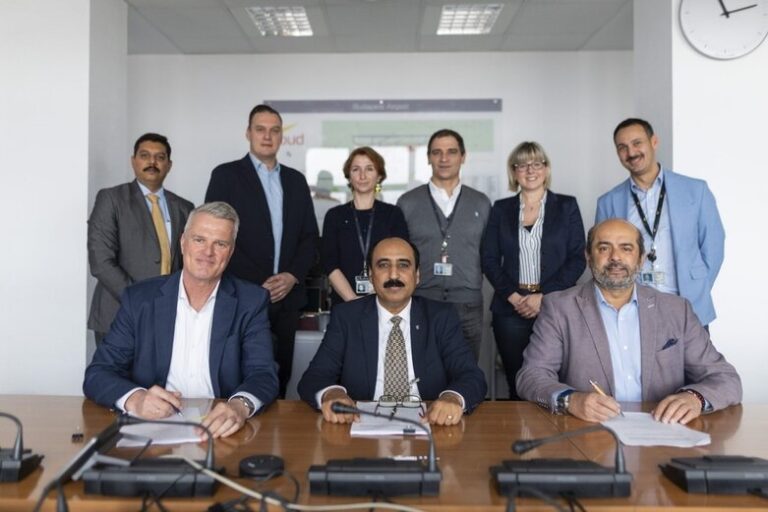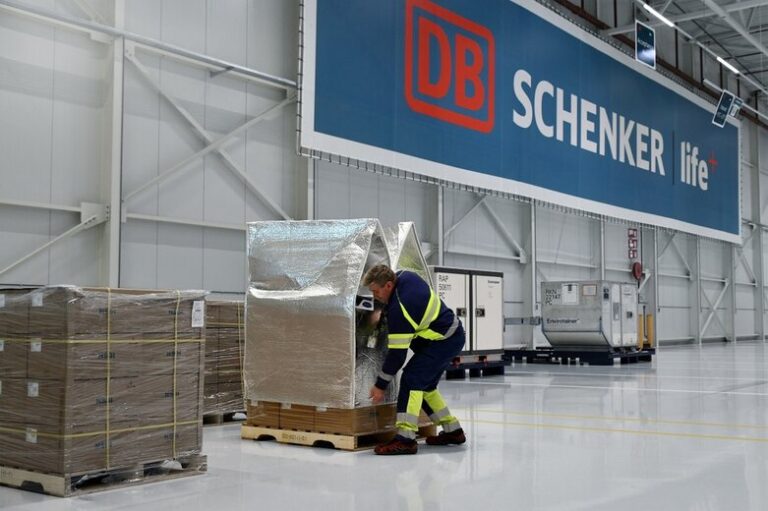
Cargolux announced last week that its subsidiary, Luxcargo Handling S.A. (LCH), had won the tender to carry out Luxair’s ramp and warehouse handling activities at Luxembourg Airport. It was awarded a license to also allow it to handle third party airlines.
Will the Luxcargo Handling operation start on time? Image: Cargolux
Richard Forson, Cargolux President & CEO, explained: “The takeover of Luxair’s ramp and warehouse handling services by LCH, is a great opportunity for Cargolux to strengthen its position in the air cargo industry and to further enhance its service offering to its customers. LCH also looks forward to continuing the relationship Luxair had with other airlines besides Cargolux. We look forward to commencing operations in 2024. Cargolux’ and Luxair’s cargo ramp and warehouse handling teams have been working hand in hand for decades and I am confident that the transition will proceed smoothly.”
Interestingly, whilst Forson is convinced the transition will be smooth, the Luxembourg Times warned on the same day, of a possible delay in transition, since it was still not clear what would happen to Luxair staff. “Unions concerned after ministry awards cargo ground handling licenses,” was the title of the article, summarizing: “Transportation Minister Yuriko Backes has given licenses to Luxcargo Handling SA, a six-month-old subsidiary of state-owned freight airline Cargolux, and Goldair Handling SA [whilst] unions say some 1,200 employees at the [Luxair] cargo center continue to be completely in the dark about their future.” Should the situation continue, there is a risk that employees will strike [again]. The unions therefore want Beckes to intervene, since the State holds a share in both Luxair and Cargolux. Trouble has been brewing ever since SEP23, when Luxair stated that it would not be tendering for the for new ground handling cargo licenses, this time. Its staff are therefore waiting for answers as to their fate once the transfer of ground handling operations to Luxcargo Handling is complete.
Due to formal restrictions, LATAM Cargo was not able to offer the market its FRESH and FRESH Active product on westbound flights taking from Europe to Latin America. However, the hurdles have been set aside now so the embargo is history, illustrates Jorge Carretero (JC), Sales Director Central Europe, LATAM Cargo. Hence, both products can now be booked on transatlantic flights operated by the Santiago, Chile-based cargo carrier.
Jorge Carretero, Sales Director Central Europe, LATAM Cargo, welcomes the rebranding of FRESH and FRESH ACTIVE. It increases transparency, he states – picture: courtesy of LATAM Cargo
CFG: Jorge, what was the problem with your Fresh product in Europe?
JC: We have offered FRESH in the past. But mentioning precise temperature data on the Air Waybill for perishables and other critical goods flying westbound was not permitted. Hence, in Europe we accepted and transported the consignments under the product name KEEP Cool.
But since 27NOV, customers can specify the required temperatures for their product on the AWB, i.e. 2C-8C or 15C-25C. This creates transparency and simplifies the processes for everyone involved. In line with this change, we have decided to rebrand this product segment, i.e. FRESH and FRESH Active.
CFG: What exactly is the difference between FRESH and FRESH ACTIVE? For outsiders, this double freshness sounds a bit confusing.
JC: The reason for the availability of two FRESH care options is because each of them caters to different needs. Also, they differ in the types of packaging that is required, comparable to shipments from the pharmaceutical and healthcare industries. To better explain this: When cargo is tendered in passive packaging, we provide FRESH 2C-8C or FRESH 15C-25C. This way, we offer a robust solution within the temperature range requested. Secondly, we minimize the times in which temperature sensitive cargo shipments may be placed outside of cool chambers or temperature-controlled areas, when processed on tarmacs, for instance.
However, when it comes to FRESH ACTIVE, the product requires that our clients ship their perishables on active temperature-controlled containers to ensure an uninterrupted cold chain. This we enable through our agreements with international container suppliers such as Envirotainer, DoKaSch, and CSafe.
CFG: Can pharma shipments be booked as FRESH or FRESH Active respectively, or only in combination with Express?
JC: No, our FRESH care is specialized for the transportation of perishable cargo, following the IATA recommendations in the perishable cargo regulations (PCR). For the transportation of pharmaceutical and healthcare products, we offer our CEIV Pharma certified care options of PHARMA and PHARMA ACTIVE.
CFG: Understood. So FRESH Active shipments require a special container for transportation to ensure a constant climate during the entire trip. Does LATAM Cargo intend to purchase cool boxes, managing the ULD fleet on its own, or is leasing, implying additional fees, the preferred option fitting individual transport needs?
JC: In the case of FRESH Active, at LATAM Cargo we offer the alternative of managing the container lease by collaborating with the above-mentioned providers of cool boxes. The cost of the lease itself depends on the type of container and duration of the lease. These specifics are fully clarified with our clients before booking. So they can sit back and relax knowing that their product fits the cool box it requires for safe air transportation.
CFG: Are all international stations currently serviced by LATAM Cargo capable of managing the demanding FRESH Active product? After all, the ULD’s temperatures have to be monitored, batteries recharged, local handling personnel must be trained and certified, tarmac times must be held extremely limited etc.
JC: We offer this service at most of our stations within our international network. This depends on the local infrastructure, the capacity and the personnel whether they have been trained and certified for handling this demanding commodity. Hence, it depends on various factors as to whether we activate a station for the FRESH product. After all, we don’t compromise on safety and performance because we ensure our customers that we deliver a reliable and scalable transportation solution. To avoid mistakes, it is recommendable to visit the FRESH section on our website, where the stations are listed that handle the product.
CFG: In case of hiccups, active communication with customers is key. Is LATAM Cargo setting up a dedicated team always monitoring the transport of the cool boxes to prevent errors, mismanagement, and claims?
JC: At LATAM Cargo we strive to reduce temperature changes jeopardizing the integrity of a sensitive FRESH shipment to the best of our ability. In the case of contingencies, we have clearly defined processes to handle the hiccups right on the spot, this way limiting the time the goods are exposed to heat or frost. It goes without saying that in such a case the consignment is stored in a proper cooler while the contingency is resolved. Let me emphasize that our warehouses are technically also equipped to monitor any temperature deviations. This assures to keep the storage temperature within the required ranges and allows immediate action in case of deviations.
CFG: Cargo shipments travel one way. RAP or RKN cool containers must be brought back following a mission. How does LATAM Cargo organize the timely return of the boxes?
JC: Right at the booking process, the return of a cool box is taken care of by a dedicated team within LATAM Cargo. The client is informed about the estimated time the return process needs, so that he knows when the container is available again after the box has been thoroughly cleaned upon arrival. The entire return process is coordinated by our ULD team, whose experts are monitoring all container movements within our network. It is them who organize the return process of leased DoKaSch, Envirotainer or CSafe cool boxes utilized by LATAM Cargo for our FRESH products.
CFG: Jorge, thank you for your time and the information provided.
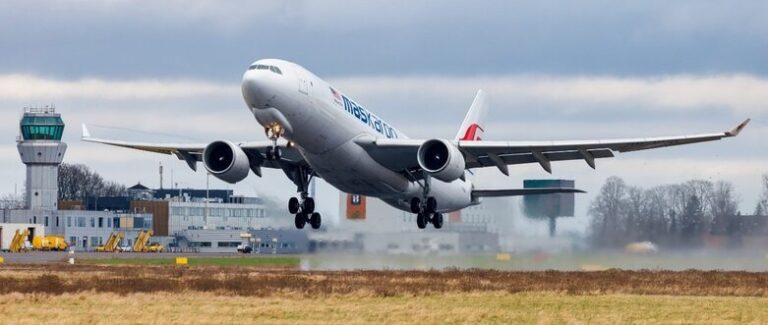
The world’s largest ACMI provider, the Avia Solutions Group, has translocated some of its cargo flights from Hahn Airport to nearby Cologne-Bonn Airport. This means that the virtual carrier now uses two airports in Central Europe that are both licensed to operate 24/7. The contractor is Danish shipping giant, Maersk, and its freight arm, Maersk Air Cargo. The Cologne flights fly to Greenville-Spartanburg (GSP), South Carolina, to supply parts and component to the U.S. production plant of car maker BMW.
dnata handles all shipments flown on behalf of Maersk Air Cargo from Cologne to Greenville/Spartanburg – credit dnata
The cargo flights ex Cologne-Bonn, scheduled on Thursdays and Sundays, are operated either by Air Atlanta Icelandic or ASL Airlines Belgium. While Cologne-Bonn airport is responsible for the operational processes, dnata’s local station is contracted to handles the cargo shipments (See: dnata wins Maersk Air Cargo business for CGN).
“We are proud that our freight sales team, led by Andrea Tony Geslao, has gained a strong new partner for Cologne/Bonn Airport in Maersk,” says Tobias Lyssy, Head of Sales and Marketing, Cologne-Bonn Airport.
Tobias Lyssy heads the marketing and Sales division of CGN Airport – courtesy: LinkedIn
Final decision on the CGN flights is still pending, HHN maintains When asked about the loss of the two transatlantic flights, Hahn Airport Head of Sales, Roger Scheifele, said that Maersk and the Avia Solutions Group would initially only operate test flights in Cologne. To his knowledge, no final decision had yet been made regarding the migration. Although CGN is significantly more expensive for airlines than HHN, Magma has a maintenance base at CGN, which is supportive for flight operations, admitted Scheifele. At the same time, he pointed out that six to seven B747 cargo flights a week would continue to take off from HHN to GSP on behalf of Magma / Maersk.
The airport is located in a scenically attractive but very sparsely populated area. HHN was bought out of insolvency in MAY23 by the nearby located company, Triwo AG. On the occasion of the change of ownership, Triwo owner, Peter Adrian announced that he would invest 20 million euros by mid-2024, to bring the airport up to the latest technical standards and renovate the apron areas.
Andrea Tony Geslao heads the Cargo Sales unit of CGN – courtesy: CGN
More Maersk flights expected at CGN According to information obtained by CargoForwarder Global, Maersk/Magma are now planning to set up a third weekly frequency between CGN and GSP. However, it is still unclear as to when this will happen. Maersk’s air division is already active at CGN for some time, seen by the local maintenance station and a CGN-based B767F that flies within integrator, UPS’ network. The U.S. package giant uses Cologne-Bonn as its central European hub. According to the CGN management, Maersk is also looking into expanding its commitment by serving other routes to and from CGN. This was the outcome of a meeting between both sides that took place last Wednesday (06DEC23). “In our opinion, serving another destination in the USA would be a feasible option,” says Andrea Tony Geslao, Head of Sales CGN, without naming a specific airport. In his opinion, feeder flights between CGN and Billund in central Denmark are also an option, as road feeder transports on the approximately 550 km long route are a lottery due to permanent building sites around the Hamburg Elbe Tunnel. However, large freighters such as the B747 or the future B77 ordered by Maersk Air Cargo would be too big for this. Instead, the smaller B767F could be a very practical solution, says the manager.
Maersk wants to transport 1/3 of all shipments with its own freighters Currently, the freighter fleet of Maersk Air Cargo is still in the process of being established. The unit’s vision is that roughly one third of its total annual tonnage will be carried by its own freighters and within its own controlled cargo network. This the newcomer aims to achieve by combining leased and self-owned assets.
The remaining capacity will be provided by commercial airlines and charter flight operators, says Maersk.
Back to Cologne-Bonn and the airport’s 2023 performance. Its management estimates a throughput of 875,000 tons in the current year, which would be slightly above 2019 pre-pandemic results. CGN is the third-largest cargo airport in Germany after Frankfurt and Leipzig-Halle. Its excellent freeway access, highly industrialized environment, and approval for 24/7 operations, make it attractive for cargo airlines and integrators, as evidenced by newcomers such as Maersk but also existing customers like UPS, FedEx and DHL Express.
The Lufthansa Group made headlines in the past week with 3 reports.Firstly, Lufthansa Cargo announced the acquisition of another A321 freighter. It is the fourth in the carrier’s short and medium-haul fleet.This was followed by a release in which the Lufthansa Group informs of its joining Airbus’ ‘Carbon Removal’ initiative which benefits the climate but is technically highly ambitious.Finally, a Memorandum of Understanding was signed by Lufthansa and eVOL provider, Lilium, to better feed passengers into the carrier’s major hubs using electrically powered aircraft.CargoForwarder Global sheds light on all three topics:
Lufthansa Cargo’s 4th A321F bears the name ‘¡Hola España!’ on the fuselage. It can accommodate up to 28 tons per flight – courtesy LH Cargo
Fourth A321-P2F added to Lufthansa Cargo’s fleet Lufthansa Cargo took delivery of its first A321 freighter on 15MAR22. It is operated by Munich-based Lufthansa City Line, but marketed by the Frankfurt-headquartered cargo carrier. Just 8 months later, at the end of November, the carrier welcomed its fourth leased A321P2F: ‘¡Hola España!’ (reg: D-AEUJ) arrived and has already commenced commercial operations within the carrier’s regional network.
With now four A321 freighters in its fleet, each capable of accommodating up to 28 tons per flight, “we will serve 18 destinations in the short- and medium-haul network on more than 32 weekly flights” says Ashwin Bhat, CEO of Lufthansa Cargo. The executive added to this that high demand coupled with positive customer feedback confirms the carrier’s strategy to further expand its transport capacity. Since the start of the winter flight schedule, three new destinations have been added to the A321 fleet’s flight program: Amman, Jordan / Stockholm Arlanda, Sweden / and Stavanger, Norway. “We are constantly evaluating our network to create and adapt new capacities,” states Mr. Bhat.
There are currently no plans to acquire any further conversions of this Airbus variant, stated Lufthansa Cargo Head of Communications and Marketing, Nicole Mies, in response to an inquiry.
Instead, the carrier’s intercontinental fleet of Boeing B777F is expected to grow from 16 to 18 units during Q1, 2024. The expansion of the feeder network shortens the transit times of shipments addressed to customers in North or Latin America, or the Far East.
Lufthansa joins Airbus’ carbon capture initiative Two further trailblazing announcements have come from the headquarters of the Frankfurt-based Lufthansa Group. Firstly, Lufthansa and its affiliates, Swiss, Austrian Airlines, Lufthansa Cargo, Eurowings, and others, have joined the ‘Direct Air Carbon Capture and Storage’ (DACCS) project pushed forward by aircraft manufacturer, Airbus. In this process, CO2 is filtered out of the air and then deposited to neutralize its climate-harming effects. One option is to use the carbon gas to scale up the production of much needed Sustainable Aviation Fuels.
However, the technology is still in its infancy. This is demonstrated by tests conducted in Iceland. The biggest obstacle: an enormous amount of energy is needed to operate a large plant. This is not a major problem for Iceland, as the volcano-ridden country has plenty of geothermal springs that can be utilized. In contrast, Europe and most other regions do not possess these geothermal resources. So, they have to siphon off energy from other sources to capture greenhouse gases on a large scale. Hence, it cannot be ruled out that the net result of carbon capture is rather sobering if major plants are powered with energy based on conventional sources, i.e. oil or gas.
The devil is in the details Another unsolved issue is the storing of the captured gases. In an Airbus presentation, they are pressed into the spoil. An option is to store them in saline reservoirs or in cavities under the seabed. But this requires approval from the authorities and, above all, social acceptance.
Taken together, there are still many technical, infrastructural, and social issues that have to be straightened out before the first ton of captured CO2 can be deposited. Airbus partner, 1PointFive, names 2025 as the target year. The Houston, Texas-based company is currently building a large demonstration plant in the U.S., in close cooperation with another partner.
The entire process will be financed by carbon credits. “A carbon credit is issued for every single ton of CO2 that is saved or removed from the atmosphere. By purchasing these certificates, a company can offset unavoidable CO2 emissions,” Lufthansa spokesperson, Anne Hahn, illustrates the financial pillar of the project.
The Lufthansa Group has signed a contract with Airbus on the pre-purchase of verified and durable carbon-removal credits of 40,000 tons of CO2. The carbon-removal credits will be issued by Airbus through its Airbus Carbon Capture Offer (ACCO) service. In addition, the Lufthansa Group has secured additional carbon-removal credits of 10,000 tons of CO2 for four years. “We do not provide any financial details,” said Ms. Hahn when being asked by CargoForwarder Global.
What looks simple on the graphic is highly complex in reality – courtesy Airbus
Lufthansa partners with Lilium The third news from Lufthansa forwarded last week, was the signing of a MoU with eVTOL provider, Lilium. The aim is to use the Vertical Take-Off and Landing (eVTOL) aircraft developed by Lilium for passenger shuttles to and from major airports. In doing so, both companies intend to explore innovation opportunities in aviation, discussing areas such as ground and flight operations, future aircraft maintenance, as well as crewing and flight training. In a possible strategic partnership, Lilium and Lufthansa also want to analyze the opportunities for collaboration with third parties such as airports and regional partners, for instance on the advancement of infrastructure such as vertiports, airspace integration and the definition of required operation processes.
Lufthansa does not provide any information on the financing of this project either.
With this in mind, the cargo airline has created the position of Vice President Customer Experience. Faisal Karamat (FK), who comes from Canada, was entrusted with this position. Thanks to his leadership role and the commitment of Qatar Airways Cargo’s entire headcount, the course has been set to ensure that customer-centricity remains at the forefront of the carrier’s operational and strategic priorities. CargoForwarder Global (CFG) spoke with the executive at the fringes of the 8th ONE Record Hackathon that took place in Doha at the end of NOV23.
In his role as VP Customer Experience Faisal Karamat is responsible for a wide range of tasks – credit: Qatar Airways
CFG: To our knowledge, there is no VP Cargo Customer Experience at any cargo airline worldwide. Why did Qatar Airways Cargo create this position?
FK: Qatar Airways Cargo created this position to underscore our commitment to elevating customer experience standards within the air cargo sector.
Recognizing the pivotal role customer experience and customer satisfaction plays in the success of our operations, the establishment of the VP Cargo Customer Experience position demonstrates our proactive approach to enhancing services, addressing unique customer needs, and setting a new benchmark for excellence in the air cargo industry.
The goal is to create a more customer-centric approach that aligns with our commitment to innovation, efficiency, and delivering unparalleled value to our clients.
CFG: What influence do you have on a) the operational activities of Qatar Airways Cargo and b) the airline’s relationship with its customers, i.e. the carrier’s global credibility and reputation? Any illustrative examples?
FK: a) In the realm of operational activities at Qatar Airways Cargo, the influence of my role extends to optimizing processes and workflows to enhance overall efficiency. By closely aligning with operational teams, we aim to implement customer-centric strategies that not only meet but exceed expectations.
One key example is the Next Generation approach which I was a part of creating. This strategy induces a corporate mindset shift through digital enhancements, new products, a new website, and a new business approach in perfect alignment with today’s requirements.
b) Regarding the airline’s relationship with customers and its global credibility, the team who work under me play a crucial role in shaping and maintaining strong relationships with customers. By addressing feedback, and proactively resolving issues, we contribute to building trust and credibility.
One illustrative example is The Digital Lounge, our intuitive cargo customer portal which provides customers a host of online booking features at their fingertips. In 2022, we launched The Digital Lounge. This cargo customer portal is built on the Salesforce platform and provides Qatar Airways Cargo’s customers with a seamless digital experience, leveraging Salesforce Customer 360 features integrated with its native Experience and Analytics platform. The Digital Lounge will give customers full access to a broad range of activities with a single access. The platform offers instant confirmation for General Cargo bookings subject to availability and required validations. The airline’s customers can book free sale and allotments with dimensions (excluding BUP).
CFG: Basically, isn’t every Qatar Airways Cargo employee responsible for customer satisfaction and positive feedback from the market in his or her day-to-day work, i.e. ongoing customer loyalty? If so, it brings up the question why Qatar Airways Cargo needs a VP Customer Experience in addition?
FK: Customer-centricity is embedded in our culture and DNA, and each team member plays a crucial role in ensuring ongoing customer loyalty. The presence of a VP Cargo Customer Experience enhances this commitment by providing strategic oversight and dedicated focus on elevating the overall customer journey.
The role of the VP Customer Experience goes beyond individual interactions and operational aspects. It involves shaping a holistic, organization-wide approach to customer satisfaction, implementing long-term strategies, and fostering a culture that prioritizes continuous improvement in customer experience. This leadership position ensures that customer-centric initiatives are integrated into the broader organizational strategy, driving innovation and setting industry benchmarks for excellence.
In essence, while every employee contributes to customer satisfaction in their respective roles, the VP Customer Experience provides overarching leadership, strategic direction, and a dedicated focus on evolving and optimizing the entire customer experience landscape. This ensures that customer-centricity remains at the forefront of our operational and strategic priorities.
CFG: From 24 to 26NOV23, the 8th IATA Cargo #Hackathon took place in Doha with strong support from Qatar Airways Cargo, and 117 attendees coming from a variety of countries. How would you rate the ‘yield’ of this event from Qatar Airways Cargo’s point of view?
FK: IATA’s ONE Record Hackathon event took place for the first time in the Middle East, hosted by a Middle Eastern carrier, and this edition hosted the second largest number of participants. The hackathon attracted a diverse pool of talent and perspectives. This global participation suggests that the event had a broad reach and was successful in bringing together professionals from different parts of the world.
Hosting an IATA Cargo Hackathon indicates our commitment to fostering collaboration and innovation within the air cargo industry. The participation of developers, and exposure to the IATA data sharing standard ONE Record, demonstrates commitment to industry standards and digital leadership. Our commitment to digitalization and operational efficiency aligns with the strategic goals of IATA and the ONE Record Hackathon.
CFG: 2024 is just around the corner. What are the priorities on the agenda of Qatar Airways Cargo’s VP Cargo Customer Experience for the coming year?
FK: We will continue to enhance the overall customer experience by streamlining processes. We will also focus on bringing the expertise of our employees to new heights through training and development programs to enhance their skills in customer service, communication, and problem-solving, ensuring a high standard of service across all touchpoints. Additional enhancements are being added to our online booking platform, Digital Lounge, and investments are being made to digitalize many of our processes, all for the benefit of our customers.
CFG: Faisal, thank you for your time and this input.
… As in BETA Technologies’ all electric aircraft, ALIA. LinkedIn is buzzing with the news published on 06DEC23, that Air New Zealand has placed a firm order for one conventional take-off and landing (CTOL) version of the ALIA aircraft, with options for an additional two aircraft, and rights for a further 20 aircraft, reaching a solid milestone in its Mission Next Gen Aircraft.
An all-electric powered ALIA CTOL cargo aircraft will be put into operation in 2026 by Air NZ in partnership with New Zealand Post – photo: Beta Technologies
The airline’s Chief Sustainability Officer, Kiri Hannifin, was refreshingly honest in her LinkedIn announcement regarding the initial non-decarbonization, where she thanked the entire team involved in the 18-month-long project thus far: “I am very proud and pleased to announce that today Air NZ confirmed the purchase of our first lower emissions aircraft – the battery powered all electric ALIA CTOL by the amazing heroes at BETA TECHNOLOGIES. We are aiming to have this aircraft flying cargo in 2026. While this aircraft will add to our fleet and therefore not remove any carbon, it’s the aircraft we will use to demonstrate that next generation aircraft is possible for Aotearoa and Air NZ. In terms of being key to the transition we need to undertake, and getting the aviation eco system ready, this special aircraft will do so much heavy lifting. So, while a very small step – its task is immense.
It already has a huge place in the hearts of the Air NZ team who’ve been working so hard to get it across the line. Working with Beta has also been humbling. It’s companies like this who will change the world.”
[Beta also works very closely with UPS, for example, who expect their first aircraft next year: CFG reported]
Commercial demonstrator for cargo What is also refreshing, is the fact that the ALIA CTOL has been purchased first and foremost for cargo. Considerations to also use it for passenger transport began appearing in the media a couple of days later, but the initial commercial demonstrator project is one between Air New Zealand and NZ Post, with more details promised in early 2024 as to which two frontrunner airports will be home to the next generation aircraft. “Air New Zealand will initially operate the aircraft as a cargo only service in partnership with New Zealand Post, on a route being selected through an expressions of interest (EOI) process with airports across Aotearoa,” the release states, adding that the battery-powered all-electric aircraft is planned to join Air New Zealand’s fleet in 2026. Considerable deliberation went into the selection of partners with which to venture into next generation air logistics, as the release reveals: “The [purchase] announcement follows an 18-month period of evaluation and diligence by Air New Zealand. Through the airline’s Mission Next Gen Aircraft program, it sought and received ideas and insights from 30 organizations, selecting four partners to work closely with on its goal of launching commercial flights using next generation aircraft in 2026. BETA’s ALIA is the first commercial order in the program.”
Greg Foran has been appointed Chief Executive Officer of Air New Zealand on 03FEB20 – picture: courtesy Air NZ
One small, but significant step Air New Zealand Chief Executive Officer Greg Foran commented on his company’s commitment to flying lower-emissions aircraft in New Zealand: “This is a small but important step in a much larger journey for Air New Zealand. There is a lot of work ahead of us, but we are incredibly committed, and this purchase marks a new chapter for the airline. Decarbonizing aviation isn’t easy, and we have a lot of work to do. We need to accelerate the pace of change in the technology, infrastructure, operations, and regulation. While this aircraft will add to, not replace our existing fleet, it is a catalyst for that change. By flying the ALIA, we hope to advance our knowledge and the transformation needed in the aviation system in Aotearoa for us to fly larger, fleet replacing, next generation aircraft from 2030.”
Many stakeholders needed to make it work With great exuberance in his LinkedIn post, Jacob Snelgrove, Next Generation Aircraft and Sustainability at Air New Zealand, mentioned the many stakeholders involved in bringing the project thus far: “That’s a wrap – a huge week I’ll treasure forever. Air New Zealand has ordered its first next gen aircraft from BETA TECHNOLOGIES! We’re lucky to be working with the incredible team at BETA Technologies. Patrick Buckles, Ryan Barta, Blain Newton and Jake Goldman, you have made the last two years of working together fun, inspiring and full of many laughs, you guys rock. Kyle Clark, thanks for agreeing to build us this epic new aircraft – you’re a true pioneer,” going on to thank his contacts at the Civil Aviation Authority for the positive outlook to 2026, and NZ Post “for agreeing to be the ‘commercial’ in our commercial demonstrator, you are real leaders pushing the transport sector to decarbonize and we’re lucky to be partnering with you. We have much to learn!” closing with: “While this is an important milestone, the reality is that the hard work starts now, and many challenges lay ahead. This is only one small plane, flying short distances, carrying cargo [but] we have to start somewhere, and I would rather be learning from doing than sitting on the side lines wondering what if.”
Bringing new technologies to scale BETA Chief Executive Officer, Kyle Clark, commented: “Air New Zealand is hyper focused on bringing technologies to scale as quickly as possible, both to meet its own ambitions to decarbonize and to change the broader aviation landscape. Over the past year plus of partnership, collaboration, and diligence, we’ve seen Air New Zealand’s forward-thinking, yet pragmatic and methodical approach to innovation. We are gratified by the airline’s confidence in our technology as a solution that will meet their operational needs and look forward to continuing to work hand-in-hand as we bring the ALIA to market for 2026.”
The current 3-ton, 12-meter-long ALIA has achieved a test range of more than 480kms in one flight, which is more than sufficient for the 150 km routes planned for Air New Zealand’s first flights. The airline will also fly at a lower altitude of between 1500 to 3000 meters. The aircraft can fly at speeds of up to 270kms an hour and its battery will take around 40-60 minutes to fully charge. “Aviation has a rigorous safety and risk management culture. The aircraft will only be brought into service once it has passed testing and is certified as safe to fly by the New Zealand Civil Aviation Authority,” the release emphasizes.
According to the producer, its “Alice” named aircraft can fly 815 km with a single battery charge and carry 1.2 tons of cargo. The zero-emission turboprop is ideal for feeder routes and requires less investment in ground infrastructure, notes DHL.
The airport, India’s third busiest after Delhi and Mumbai, was flooded at the beginning of this week when Cyclone Michaung hit the southern Indian state of Andhra Pradesh. Chennai Airport (MAA) was forced to halt operations as heavy rain submerged its runways, and strong winds whipped up. Airport authorities cancelled 70 flights and diverted many others to Kempegowda airport in neighboring Bengaluru City.
The masses of water that brought flight operations to a standstill are the fourth severe weather event in just a few weeks to hit a major airport and massively impact flight operations. This was previously the case in Nairobi and Dubai which both battled flooding, internally (NBO) and externally (DXB), CargoForwarder Global reported. Meanwhile, over in Europe, Munich has been struggling with the onset of heavy snow, leaving passengers stranded for almost one week. Winter should not have come as such as surprise, however, in this case.
Clogged drains The flooding of MAA was caused by the blockage of the sewage system in parts of the city that is home to 12 million inhabitants. This caused rainwater to mix with dirty water, resulting in feces and waste flooding the airport. The clogging of the drains was caused by mountains of garbage that usually lie on the sides of the streets and which were washed into the city’s sewage system as a result of the massive rainfall.
Severe cyclonic storm Cyclone Michaung was categorized as a “severe cyclonic storm”, with sustained winds of 90-100 km/h (56-62 mph) and gusts of up to 110 km/h. Thousands of people had to leave the coastal areas and were brought to relief camps on higher ground.
The warm waters of the Bay of Bengal have spawned several deadly cyclones over the past few years, causing massive destruction in both India and Bangladesh.
In 2020, Cyclone Amphan killed at least 80 people in India and left thousands homeless. In 2019, Cyclone Fani claimed at least 89 lives and displaced millions in Odisha, another coastal Indian state. In 1999, a super cyclone killed about 10,000 people when it struck Odisha.
Putting the brakes on global warming? Delegations from over 200 countries are currently discussing ways to reduce or partially stop global warming at the climate conference in Dubai. The United Arab Emirates, together with other Gulf states such as Saudi Arabia, but also India, Russia, and China, are opposed to phasing out the burning of fossil fuels. According to scientific findings, this is the main cause of the climate crisis heating up the globe.
After the military took power last July in Niger, the new rulers embargoed flight activities, including cargo services. However, meanwhile the new rulers have lifted the ban partially. An opportunity used by the Paris-headquartered general sales and service agent ECS in close collaboration with its Niamey-based Group member Niger Air Cargo to resume cargo flights to the landlocked African country (www.cargoforwarder.eu ….. 12NOV23).
Adrian Thominet heads the ECS Group – picture: Company courtesy.
The ECS Group is a household name within the wider air freight community of Niger. This primarily because already a decade ago ECS obtained an AOC from the authorities in Niamey – the only one provided to a company whose parent is headquartered in Europe.
The first flight following the seizure of power by the local militia, took place on 08OCT. Since then, a B747-400F belonging to the fleet of UK lessor Allied Aviation, is connecting Liège in Belgium with Niger’s capital Niamey once a week.
Niche product Although the aircraft is capable of accommodating up to 120 tons per flight, the Niamey-bound capacity is limited to max 40 tons because the freighter continues its journey to Nigeria and Kenya unloading exports there before returning to Europe filled with Kenya harvested flowers.
“Our Niamey service is a niche product,” admits ECS CEO Adrien Thominet frankly. But one that is highly attractive “due to the current rate level of cargo consignments traveling from Western Europe to Central African destinations.” The agent’s flights are almost unrivaled, with only Azeri cargo carrier Silkway West serving Niger twice weekly, primarily for supplying relief goods to the local Red Cross and alike humanitarian organizations. “We are happy about the re-start of the weekly freighter link between Liege Airport and Niamey. This regular service is another important step to further grow the African network from LGG,” comments Torsten Wefers, VP Sales and Marketing,Liège Airport.
Foreigners keep exiting Niger Following the lifting of the embargo, a couple of airlines from neighboring Arabian states like Morocco or Algeria also resumed their flight activities. But their contribution to cargo services is only marginal due to limited space for freight consignments offered by their passenger aircraft’s lower deck compartments. However, keeping supplies of medicines, technical equipment, food or consumer goods running to a certain degree is essential for keeping life going in one of the earth’s poorest countries. Since the generals seized power, the EU policymakers and many businessmen are circumventing the country. French and German soldiers, based on UN mandate to prevent the spread of Islamic terrorism, are pulling out with Russian mercenaries from the notorious Prigozhin force stepping in helping the new military regime to stay in power. This worsened the situation for a large number of local people who are exploited and deprived of any political and civilian rights.
To call Niger’s situation challenging is an understatement Despite this rather gloomy situation it is instrumental to keep the lifeline running by supplying technical items, medicines, food and other crucial produce to Niger by air, emphasizes Mr. Thominet. And the executive mentions another rather social consideration that should be rated high: “The local team of our group member Air Cargo Niger engages for long in social activities, establishes new business relations or fortifies existing ones. Also, they organize reliable onforwarding solutions for goods that travel by road from Niamey Airport to remote locations.” Particularly the latter aspect is a daily challenge for many in a state where peace has become an almost unknown word.
While many heads of state are currently haggling over concepts on how to limit global warming on the global stage at the climate conference in Dubai, resourceful companies are silently working on revolutionary, practical concepts to reduce greenhouse gas emissions. This is the case, for example, with Qaptis; a spin-off from the Ecole Polytechnique Fédérale de Lausanne (EPFL) in Switzerland. Its experts have developed a mechanism that can capture up to 90% of a freight truck exhaust’s emission and store the gases as liquid CO2 whilst the vehicle is en route.
Research facility for collecting CO2 emissions from trucks – company courtesy
In 2022, according to official figures provided by the Swiss Federal Statistical Office, trucks operating in Switzerland emitted over one million tons of CO2. In the long term, this will likely go down as electric trucks will replace diesel-powered ones. Today, however, the number of electric trucks on the road is still very limited. In the first quarter of this year, a mere 600 e-trucks weighing more than 16 metric tons were registered in the entire EU, compared to 86,455 diesel vehicles.
From gas to liquid… And this is where the start-up Qaptis comes into play. Its experts have developed a new decarbonizing mechanism which traps carbon gases coming out of the exhaust pipe and stores them in a liquid state. Following collection, the CO2 is cooled and separated from other gases such as nitrogen and oxygen, by passing over an absorbent powder. Once full, it is heated using the heat from the combustion engine. This releases the CO2, which high-speed turbochargers then compress into a liquid so that it takes up less volume. “We’ve finally completed the first step, which was transferring our core technology from the lab to industry,” says Théodore Caby, Qaptis Co-Founder and COO. “Now, we’ll focus on developing a device that can be installed directly in trucks.”
This said, much research and work are still to be done before conventional trucks are able to operate more sustainably and contribute to capping CO2 emissions. The first milestone was achieved in spring 2023, when a prototype produced the first drops of liquid CO2. The next technical challenge is to reduce the size of the device and shape it to fit different types of trucks. Once this has been accomplished, which is not a too herculean task, say the Qaptis experts, the liquid CO2 will be stored in a tank behind the cab, that can be drained when the truck returns to its starting point. “We initially plan to target local freight carriers that want to reduce their environmental impact,” says Caby.
… to fertilizer or carbon-neutral e-fuels Next on the agenda is a recovery system allowing drivers to empty their CO2 tanks at gas stations, so that the technology can be employed more broadly. Industries in a variety of countries are currently developing and adopting carbon-capture technology, while others are concentrating on finding solutions for smart carbon utilization and storage. For instance, captured CO2 has applications in the production of food, fertilizer, energy, building materials and synthetic fuels.
Qaptis raised CHF 1.3 million (USD 1.5 million) from business angels and venture-capital funds in a successful funding round in spring. This has enabled the start-up to embark on its next phase of development. “We’re currently in talks with a large local freight carrier that would like to implement our technology soon,” says Caby. “We’ve also been contacted by businesses in Asia; but for now, we’re focused on the Swiss, German and Austrian markets.” One day, Qaptis’ technology could be used for other types of vehicles too, such as ocean vessels, he indicates.
Hellmann partners with shipzero Meanwhile, 900 km north of Lausanne, the logistics company, Hellmann, based in northern Germany, has signed a partnership agreement with shipzero. That company specializes in measuring and reducing CO2 emissions in global freight transport. As part of the co-operation, shipzero supports the entire data management process and determines the CO2 emissions for Hellmann’s global road transportation. In doing so, shipzero also includes primary data from external logistics partners in the calculation, thus ensuring that the CO2 measurements are based on actual consumption data and not simply on extrapolations and average values, as has been customary in the market to date.
In order to determine precise emission volumes, data is exchanged between Hellmann and its transport partners via the shipzero platform. Consequently, exact Scope 3 emissions are collected per customer, shipment, and route selected. These are then integrated into the calculation of the corporate carbon footprint, external audits, and sustainability reports, thus supporting compliance with new regulatory requirements that will come into effect from 2024. The data-based processing and analysis of transport data enables Hellmann to identify specific decarbonization projects within the supply chain and implement them together with its partners.
Around 80,000 [!] people have registered for the COP28 in Dubai, which began on 30NOV23 and runs through to 12DEC23. This will make it the largest COP summit yet in a host state that also happens to be one of the world’s top 10 fossil fuel exporters. However, leaving the recent controversy uncovered by independent journalists at the Centre for Climate Reporting aside, this COP28, attended by almost 200 heads of state, will be the first one to undergo a “Global Stocktake”, and take a serious look at how far the world has come in tackling the climate crisis and how much of a course correction is needed.
Encouraging industry discussion – Pledge Co-Founder David de Picciotto – Image: Pledge
It will also be the first time that climate tech specialist, Pledge, will co-host a round table with Smart Freight Centre (an international non-profit organisation focused on reducing greenhouse gas emissions from freight transportation), inviting shippers, freight forwarders, and carriers to share best practices and exchange ideas that can help accelerate the pace of decarbonisation in the industry. CargoForwarder Global (CFG) asked David de Picciotto (DdP), CEO and Co-Founder, of Pledge, to expand.
“The OECD has predicted that global logistics emissions are set to increase 42% by 2050 – the same year the Paris Agreement has tasked the EU to achieve net zero carbon. If we’re going to meet this challenging goal, the industry needs to come together and collaborate.” – David de Picciotto, Chief Executive Officer (CEO) and Co-founder, Pledge.
CFG: I believe this is the first time that Pledge and Smart Freight Centre are hosting a table at COP28 on 06DEC23. What motivated the idea?
DdP: Indeed, this marks the first collaboration between Pledge and the Smart Freight Centre (SFC) in hosting a table at this prestigious event.
The motivation behind this initiative is rooted in our commitment to driving impactful change in the freight industry’s sustainability landscape. COP28 provides an opportune platform, bringing together public and private sector players to engage in meaningful discussions and collaborative efforts aimed at decarbonising logistics supply chains.
CFG: And how did the Pledge / Smart Freight Centre partnership come about? Have you collaborated before?
DdP: This collaboration between Pledge and the Smart Freight Centre (SFC) has evolved through a shared commitment to advancing sustainability in the logistics and freight industry. It initially stems from Pledge’s accreditation as a vendor adhering to the Global Logistics Emissions Council (GLEC) framework, promoted by the SFC. This framework has formed the basis of the recently published ISO 14083, a standard for the quantification and reporting of greenhouse gas emissions arising from transport chain operations.
The GLEC framework is a cornerstone in the industry’s efforts to standardise and enhance the measurement and reporting of logistics emissions. Pledge’s commitment to and compliance with this framework aligns seamlessly with the SFC’s mission to drive sustainable practices in global freight and logistics.
While this marks our first joint initiative in co-hosting an Executive Roundtable at COP28, our collaboration extends beyond this event. As an accredited vendor, Pledge has actively engaged with the SFC, contributing to the ongoing dialogue and efforts to promote sustainable practices within the industry.
CFG: How do you feel air cargo was positioned in previous COPs until now?
DdP: In previous COPs, the positioning of air cargo in the sustainability discourse has grown increasingly prominent, with a notable emphasis on addressing the environmental impact of aviation. The industry has recognised the imperative to navigate towards a more sustainable future, acknowledging its role in global emissions.
One significant aspect that has gained traction is the discussion around sustainable aviation fuel (SAF) and book & claim mechanisms to account for its use and reporting. Sustainable aviation fuel has emerged as a pivotal component in the industry’s commitment to mitigating its environmental footprint.
As the demand for air travel and cargo services continues to rise, SAF presents a tangible solution to reduce carbon emissions. Industry stakeholders, including carriers, are increasingly investing in, and exploring the integration of sustainable aviation fuels into their operations, both for freight and passenger transport. This shift signifies a collective commitment to fostering a more sustainable and environmentally responsible air cargo sector.
CFG: What will your main topics be for the table?
DdP: By bringing together key stakeholders, including industry leaders, policymakers, and experts, we aim to foster a dynamic dialogue focused on pressing topics such as data-driven sustainability, emission calculation methodologies, and the path forward for the decarbonisation of the industry. Our goal is to create a space where participants can share experiences, discuss challenges, and explore innovative solutions that contribute to a more sustainable future.
CFG: What do you hope will be the outcomes of the COP28?
Additionally, I hope to see advocacy for policy advancements that specifically address the fossil fuel transition, incentivise climate action, support the adoption of innovative solutions, and foster the development of technologies and practices that reduce environmental impact in the freight industry.
CFG: Where do you see the biggest challenges for the air cargo industry with regard to Sustainable Development Goals?
DdP: Identifying and addressing challenges is crucial for the air cargo industry to align with Sustainable Development Goals (SDGs).
Mitigating carbon emissions remains a significant challenge, as achieving ambitious reduction targets while meeting the increasing demand for air cargo services will require innovative solutions over time. While innovations including alternative fuels as well as electric and hybrid aircraft pose challenges in terms of feasibility, scalability, and infrastructure development, it will be interesting to monitor their developments over the years.
CFG: Standardising data collection methods for emissions reporting is pivotal and indispensable. This not only ensures accuracy but also fosters alignment with Sustainable Development Goals across diverse industries, contributing to a unified and transparent approach to sustainability efforts.
DdP: Establishing consistent metrics and methodologies industry-wide is challenging but crucial for meaningful progress. This will necessitate collaboration across borders, aligning diverse stakeholders, including governments, carriers, and logistics providers.
Note that these points touch mostly on the environmental SDGs; besides these, the air cargo industry is also impacting social SDGs amongst others.
CFG: Smart Freight Centre does not seem quite so well-known in the air cargo industry – is this because it is mostly focused on road and sea? What are air cargo initiatives that we could highlight, or where we could encourage more involvement?
CFG: What will Pledge and SFC be doing with the outcomes of the discussions at the table?
DdP: You’ll see soon enough! [Smiles]
Intriguiging. Thank you, David de Picciotto.
One outcome already, is Pledge’s latest data solution: Developed in accordance with Smart Freight Centre (SFC) guidance and launched on 30NOV23, its Accuracy™ feature furnishes forwarders with accurate Data Quality Indicator (DQI) emissions levels that they can share with shippers, so that these can make informed emissions-based supply chain decisions.
André Mohamed, Chief Product Officer and Co-Founder, Pledge, explained: “Shippers are looking for freight partners who can offer transparent and actionable insights into their supply chain emissions, and it’s becoming increasingly common for shippers to compare forwarders based on their ability to provide quality sustainability data when putting business up for tender. We’re the first accredited vendor to include a feature that helps forwarders and their clients understand the quality of their supply chain emissions calculations by providing SFC DQI levels for every multimodal end-to-end shipment.”