Home Blog Page 176

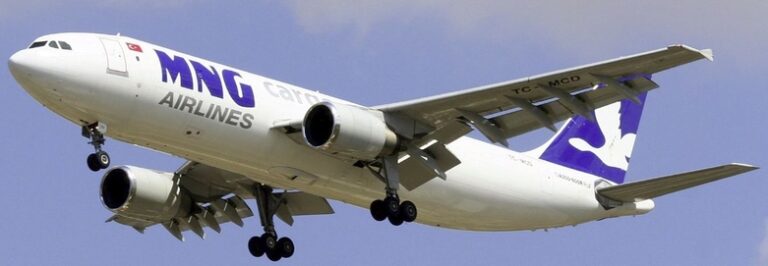
Arabian investor buys into MNG

0

Ghitha Aeroinvest Holding has acquired 44% of the shares of the private Turkish cargo carrier MNG Airlines for USD 211.2 million. The deal is signed and sealed, confirmed the investor’s parent company, Abu Dhabi-based Ghitha Holding PJSC. The acquisition, widely ignored by media and the aviation industry, applies retroactively from 01FEB24.

M&A experts point out that two key reasons may have prompted investor Ghitha to buy a large stake in MNG: one is based on financial, the other on strategic considerations. Abu Dhabi-headquartered Ghitha Aeroinvest does not provide backgrounds of its move.

Significant milestone
However, local experts estimate that financial considerations are the main driver of the deal. MNG is well established in the market, growth driven and a solidly managed private cargo airline. Founded in FEB96 by Mehmet Nazif Günal, MNG Havayollari ve Tasimacilik A.S. is profitable, ending fiscal 2022 with a surplus of USD 67 million, which represents a y-o-y growth of 32%. It operates its main hub in Istanbul, has a fleet of 11 freighters with an average age of 23+ years and serves a global network spanning 41 countries. In addition to scheduled flights, it offers charter services to interested parties. Main items transported are perishable products, dangerous goods and a broad variety of standard shipment.

On the occasion of the signing ceremony, Gokay Ozdemir, Vice Chairman of the Board stated, “MNG Airlines is committed to further enhancing the global aviation landscape, and this partnership [with Ghitha] marks a significant milestone on our journey. We look forward to a fruitful collaboration and endless skies ahead.”

Strategic considerations
That will commence slightly above zero level because the US$211.2 million filling MNG’s coffers do not suffice to roll over the aging fleet. However, the funds should form the basis for leasing modern, fuel-efficient freighters. In his speech following the signing of the contract, Falal Ameen, Group Chief Executive Officer of Ghitha Holding, highlighted another important aspect – the investor’s strategic motive: “The integration of MNG Airlines into our portfolio is a significant step on our way to becoming a regional powerhouse in the food trade. This partnership not only expands our logistical capabilities, but also strengthens our commitment to providing our customers with the highest quality products sourced from around the world. We are proud to utilize MNG’s expertise in freight and logistics to further enhance our service offering and evolve in line with our customers’ needs and preferences.”

Freighter fleet needs to be revamped
However, embarking on the “endless skies ahead” mentioned by the executive can only be achieved if the carrier modernizes and expands its fleet. This is an urgent must since progressively rising CO2 taxes tend to jeopardize MNG’s profits. This aspect was indirectly confirmed by Murathan Günal, Chairman of the Board of MNG Airlines, when signing the deal with Ghitha Aeroinvest Holding. “We are delighted to join forces with Ghitha Holding PJSC, […] This collaboration opens up new horizons for us in terms of operational capabilities and geographical reach. Together with Ghitha Holding, we look forward to setting new benchmarks in the cargo and logistics sector and to a future of mutual success.”

It’s MNG’s choice: Either modernizing the fleet or paying rising fees for CO2 emissions – photo: company courtesy.

The share of perishables will go up
Food trading is one of the investor’s hallmarks. This was confirmed by company representatives following the announcement of the MNG deal. “Ghitha Holding, with a portfolio that spans across food, agriculture, fish, dairy, poultry, vegetable oil, retail, distribution and catering services, views this acquisition as a strategic move to expand its capabilities and reach in the global supply chain.”

Two consequences are becoming apparent: firstly, MNG is likely to be heavily integrated into the Ghitha Group’s supply chain. Market observers point out a second aspect: The share of food products flown by MNG will increase significantly.
NEO Air Charter and Blue Water heat up Iceland

0

Frankfurt-based Broker NEO Air Charter and its project partner Blue Water Shipping of Billund, Denmark delivered urgently needed heat pipes to Reykjanes Pensinsula in the southwest of Iceland. The pipes were badly needed to repair Iceland’s geothermal heating infrastructure and to warm up the homes of many dwellers again.

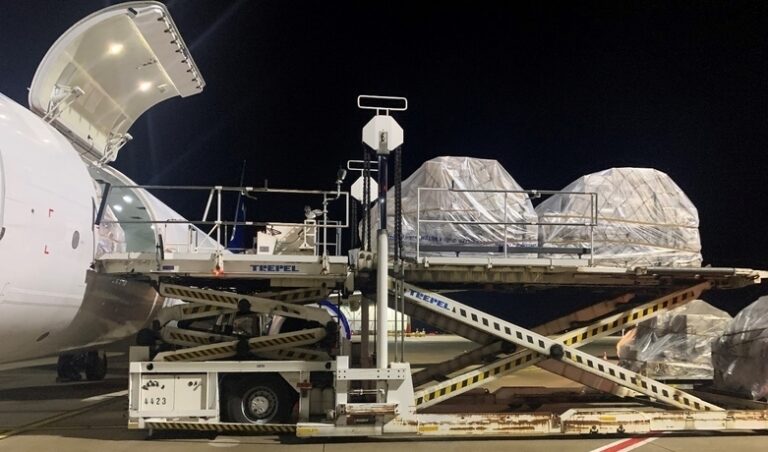
Heating equipment on way from Cologne to Keflavik – photo: courtesy NEO Air Charter

Thousands of people were freezing
The tubes fell victim to repeated earthquakes, followed by eruptions of the Fagradalsfjall volcano and large lava flows cutting off 20,000 households from Iceland’s heating system at temperatures well below the frost line.

The relief shipments were loaded at Cologne Bonn Airport on board a Bluebird Airlines B737 freighter that flew them to Keflavik Airport. The entire project took place under enormous time pressure due to extremely demanding external conditions.

Tough timing
Blue Water Shipping of Billund, Denmark and NEO staff worked throughout a Sunday to locate and book a suitable aircraft – a Bluebird Airlines B737F – to operate the emergency flight from Cologne to Keflavik. Prior to that, experts had arranged ground transport for the 90-minute journey from the pipe manufacturer to CGN. Despite cargo ground handler- and Customs staff shortages caused by the local Rose Monday public holiday in the Rhine region, and an error in the declared size of the packages, NEO succeeded in having the pallets broken down, the 1,000 boxes of pipes individually X-ray scanned and re-packed onto 41 pallets, and then the shipment loaded onto the waiting freighter.

Many obstacles had to be set aside
The broker’s staff were on hand in Cologne to oversee the whole ground handling and loading process. In the end, the flight took off just two hours later than originally scheduled, and less than 24 hours after the initial (Sunday) booking. The goods arrived in Keflavik the same evening.

“This was one of those jobs where we hit one obstacle after another, but – through perseverance and close collaboration with all parties – it all worked out fine in the end,” says NEO’s General Manager Brian Davis. “We’d like to particularly thank both ground handler dnata for putting an extra team on the job at extremely short notice, and Customs in Cologne for giving the complex procedures for this critically urgent, high-value shipment their top priority.”

The partnership has proven its worth
Nicolai Nørgaard, Head of Air Charter for Blue Water Shipping, added: “We were very pleased to be asked to assist the effort to restore heating to Icelandic homes in such cold weather, and the partnership between Blue Water and NEO certainly delivered.”

Neo Air Charter is a member of the NEO Air Group GmbH, which also provides onboard courier and ad hoc air cargo solutions, for a strictly trade-only group of customers.

This Neo Air Charter / Blue Water Shipping example shows once again what air freight can accomplish when urgent need arises.

Spotlight on… Donna Mullins, Vice President, Kale Info Solutions

0

CargoForwarder Global’s ‘Spotlight On…’ series hears from people working in one of the multitude of jobs within the air cargo industry. There are so many different stakeholders involved in ensuring that cargo flies from A to B safely, efficiently, and on time. This week, Donna Mullins (DM) from Kale Info Solutions, explains what her function entails, who brought her to our industry, and what advice she has for those considering a career in air cargo.

Dedication and willingness to learn are important. Image: Donna Mullins

CFG: What is your current function? And what are your responsibilities?

DM: Vice President, Kale Info Solutions. My responsibilities include the overseeing and implementation of logistics software – specifically Airport Community Systems; revenue generation and expense budgeting; customer success; employee training and retention; marketing; sales; sales support; basically everything! [Laughs]

CFG: What does a normal day look like for you? Or is there such a thing?

DM: My day starts with a team meeting to review and discuss the internal and external successes and concerns of the previous day and how to address any challenges to the techno world we all have come accustomed to working and living in. Research and proposal preparation are regular parts of the day. Training, training, and more training – with technology we are constantly evolving, enhancing, or modifying to keep up with a very fluid environment, therefore training is an ever going part of the success process.

CFG: How long have you been in the air cargo industry, and what brought you to it?

DM: Well, to tell you how long, I would have to give away my age… which I don’t mind doing because I’ve earned every year of it. [Smiles] I’ve been in the international trade and logistics industry for 40 years. I started with an importer of record right out of high school. Janet Jenkins, my aunt, worked for them and she got me in this business. I thank her every day for introducing me to such a wonderful and exciting career.

CFG: What do you enjoy most about your job?

DM: Helping people. I know that sounds cliché. But since I was a young girl, I wanted to be a teacher. Although I did not go into the teaching system, I am an Adjunct Professor at a local college, and I do have an online course for Customs Brokers under my Mullins International Academy LMS. With Kale’s Cargo Community Systems, I am able to help vast numbers of people in the value chain immediately with cargo throughput efficiencies. Being a recovering Customs Broker myself, this is something that makes me very happy as I am intimately aware of the struggles to keeping legitimate cargo moving rapidly.

CFG: Where do you see the greatest challenges in our industry?

DM: Work ethics. This has been a diminishing value in the workplace. I’m not talking about diversity and inclusion work ethics, I’m talking about work ethics that push individuals to be the very best they can in whatever position they hold. Workable.com describes work ethic as: a set of values guiding professional behavior, encompassing integrity, responsibility, quality, discipline, and teamwork. Our work ethics range in many categories such as appearance, attendance, attitude, character, communication, cooperation, organizational skills, productivity, respect, and teamwork. Work ethics also include honesty, trustworthiness, transparency, accountability, confidentiality, objectivity, obedience to the law, and loyalty.

CFG: What advice would you give to people looking to get into the air cargo industry? Any particular training they should aim for?

DM: I tell everyone I meet, to be successful in the international logistics and trade industry, you need two specific skill sets: dedication and willingness to learn. I, myself, attended the ‘school of hard knocks’ as when I was just getting into the logistics and trade industry, there were no classes geared toward this specific industry. Therefore, these two skill sets helped me to be successful. Actually, I was 54 years old when I obtained my college degree – after owning a successful 3PL, Alpha Sun International, and a compliance training and consulting firm, Mullins International Solutions – and it was in Theology. Kale Logistics hired me, not because of the technology knowledge, but because of the logistics knowledge I had acquired using these skill sets, and they knew I would apply them in my position with Kale Info Solutions, too.

CFG: If the air cargo industry were a film/book, what would its title be?

DM: Airplane on a Roller Coaster

Many thanks for your insights, Donna!

If you would like to share your personal air cargo story with our CargoForwarder Global readers, feel free to send your answers to the above questions to cargoforwarderglobal@kopfpilot.at We look forward to shining a spotlight on your job area, views, and experiences.

Germany okays fully automated drone flights – it’s a first

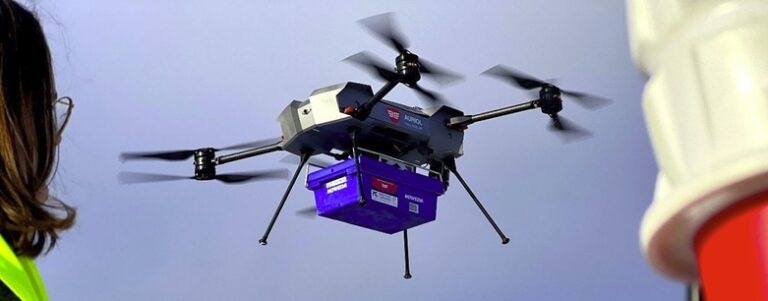
Since last week, drones with a maximum weight of 25 kg have been flying on defined air routes over municipalities in western Germany. It is a breakthrough for aerial supplies operated above highly populated areas. To start with, 20 aerial routes have been identified but will be extended once the project is gaining traction.

Drone built by Third Element Aviation on way to a customer – image: company courtesy.

Lüdenscheid – a pioneer
The first results show that the drones beat terrestrial transports in many aspects: time efficiency, costs, and CO2 emissions. Although these are only preliminary results after 2 weeks of drone deployment, they are very encouraging for all the parties involved in the project.

The AURIOL transport drones (band name) operate across and about Lüdenscheid. This city’s name may not be immediately familiar to everyone, but with 72,000 inhabitants it belongs to the densely populated areas in North Rhine-Westphalia totaling 18.1 million, Germany’s traditional industrial heart. The AURIOLs are produced by nearby located startup Third Element Aviation (3EA). Operator is the company’s project partner, Lüdenscheid-based Koerschulte Group.

“Drone-as-a-service”
Thanks to the AURIOL drones purchased from provider Third Element, the wholesaler markets the arial supply of its large selection of assortments under the product name “Drone-as-a-Service”. The Group’s management has identified 20 different air routes for fast and fully automated delivery. It estimates that up to 80 flights per day can be operated once the project is in full swing. We plan all routes, organize the entire flight operation and fly our drones from destination to destination at the customer’s request, in a targeted manner and in the shortest possible time,” is the clear message to the market voiced by the Koerschulte Group.  

Typical products offered by the wholesaler fitting aerial supply are small industrial and consumer goods, medicines, laboratory samples, and urgent shipments.

End-to-end solution
The AURIOLs, while airborne, can fly max 45 minutes. They operate fully automatically and are certified by the German regulator Luftfahrt Bundesamt (LBA) for transporting shipments weighing up to 6.5 kg. Launching commercial flights with this specific drone is currently “the best just-in-time logistics obtainable in densely populated areas,” enthuses Marius Schröder, co-partner and Managing Director of drone manufacturer Third Element Aviation.

He adds to this that four rechargeable batteries make deliveries more sustainable than transporting shipments by road. The AURIOL has an integrated parachute for safety reasons – keyword: bird strike. Its average cruising speed is 65 km/h. 

Five euros per flight
“The last mile is always the most expensive and operational complicated because of the many roadworks, deviations, traffic jams, and speed limits. 50 meters above that, everything is free,” advocates Marius Schröder the use of eVTOLs (electric vertical takeoff and landing vehicle). His project partner, Norman Koerschulte, adds to this: “The fully automated logistics from collection to delivery simply makes all further processes more efficient for our customers. The civilian fields of application for the drone are almost unlimited, from B2B logistics to emergency logistics and far beyond.”

Koerschulte charges customers who book his drone delivery service five euros per mission. With the target of 80 fully automated flights per working day and very limited costs, this adds up to considerable sums at the end of a month.

Innovative Drone Control Center
The cooperation between the two project partners is based on a clear division of labor: Third Element manufactures the drones, Koerschulte buys and operates them commercially. The price range of Third Element’s eVTOL’s is between 20k and 50k euros, depending on model.

HHLA Sky, a subsidiary of Hamburg’s largest logistics company, HHLA, holds a 30% stake in Third Element. HHLA Sky uses the drones to monitor the port area beyond visual line of sight including logistics and traffic processes. In 2021, it won the German Innovation Award in the start-up category. It developed the first scalable Drone Control Center, which can simultaneously monitor and control more than 100 autonomous operating industrial drones.

Exclusive – WISSKIRCHEN acquires Hahn Cargo Services

0

Service agent WISSKIRCHEN Management and Consulting GmbH has taken over ground handler Hahn Cargo Services GmbH for an undisclosed amount. The deal was inked last Wednesday and entered into force on Friday (01MAR24). The recent decline of freight volumes at Frankfurt Hahn Airport did not deter WISSKIRCHEN owner Oliver Hellwig from investing. He is convinced of an imminent turnaround.

Silkway West Airlines is one of Wisskirchen’s key customers at Hahn Airport – © psh / hdca

Oliver Hellwig is back in business again. After selling the exclusive Cargo-Handling-Business at Cologne (Cologne Bonn Cargo Center) to DNATA in mid-2022 he has struck a deal again, as he himself says. “We have acquired ground handler Hahn Cargo Services GmbH,” the entrepreneur told CargoForwarder Global exclusively. “I decided to approach you and no other publication because you report very credibly and profoundly,” he explained.

The centerpiece of the deal is the 7,000 m2 freight terminal, with an adjacent located roofed space of 5,000 m2. Around 30,000 tons were handled there in 2023, but the hall offers capacity for the throughput of 100,000 tons per year, Mr. Hellwig states. WISSKIRCHEN’s first new customer at Hahn is Air Arabia and some other carriers will follow in the next weeks, he indicates. For the time being he has leased the facility for a period of 25 years but has signed two other contracts with the option to buy the Cargo-Terminal (building 870) and additional undeveloped land of 21,163 square meters for a second warehouse.

When asked, market observers speak of a very courageous step. After all, Hahn Airport, located 114 km southwest of big Rhine-Main Airport, has seen many investors burning their money. Several insolvencies are proof of this.

Since APR23, Hahn has been owned by Triwo AG, a real estate developer based in the vicinity, who bought the airport out of insolvency. With the change of ownership, freight traffic was supposed to be picking up again leading to higher cargo throughput. However, the hoped-for turnaround has yet to materialize.

Against this backdrop, the question arises as to why a cargo veteran like Oliver Hellwig (OH), decided to purchase a ground handling agent based at Hahn, a financially and operationally troubled airport. Here are his arguments:

Oliver Hellwig is back on the cargo stage again, following a pause of nearly two years.

OH: Because according to my information freight throughput at Hahn will turn into a new upswing soon. 

CFG: What is your assumption based on?

OH: Unlike its big neighbors Frankfurt or Düsseldorf, for example, the airport has a 24/7/365 operating permit, a rare privilege in the German airport landscape. This enables round-the-clock flights which makes Hahn extremely interesting for cargo airlines, whether scheduled or charter. In addition, the new owner Triwo AG, including its management is extremely professional. Last but not least, most local residents are in favor of the airport and not against it. After all, Hahn is an extremely important employer in the region.

CFG: The 24/7 operating permit is nothing new. However, despite this attractive fact, air freight throughput declined in recent times. For instance, Azeri carrier Silkway West Airlines transferred most of its cargo flights from Hahn to Liège.

OH: This they did because the German regulator has limited the number of weekly flights to five. After the pandemic, Silkway had to considerably reduce again their freighter frequencies to Hahn Airport. However, we are confident that the flight operations to Hahn can be developed again by Silkway in the near future since the market served by those flights is the German market and forcing the carrier to feed this freight via neighboring countries is certainly not in the interest of the German economy.

CFG: Did you get this Silkway information from ASG, the previous owner of Hahn Cargo Services? After all, they are headquartered in Baku as is the cargo airline.

OH: My information channels I don’t disclose. What we will work hard on is ending cargo tourism to the Benelux countries. Their airports, from Amsterdam in the northwest to Paris Charles de Gaulle in France, live mainly from air freight produced by the German industry and trucked across the borders to those airports. This causes jams on roads and high greenhouse gas emissions. In contrast, Hahn is located much closer to the German industrial centers, enabling sustainable supply chains. In addition, there is the European discussion about slot reductions in Amsterdam. Some of the cargo airlines operating there will have to redirect their European traffic.

CFG: Why do you think Hahn would be a smart option?

Since the lifting of the covid travel restrictions, passenger markets are booming beyond pre-covid levels and market trends indicate this will continue. Most major airports have shifted their focus to the passenger market considering the potential of non-aviation revenues and the freighter traffic is likely to face increasing restrictions at those airports. As a consequence, the availability of airports focused on air freight operations is becoming crucial to guarantee schedule flexibility, efficient ground services demanded by the freight markets, supply chains and the e-commerce business.

CFG: Final question: How much did you pay for Hahn Cargo Services GmbH?

OH: The amount was within reasonable limits. Hope for your understanding but financial details remain under wraps. But we will have to invest about one million euros to upgrade the actual setup.

Hellwig went on to say that Hahn is not the only airport Wisskirchen has on its radar. His company is in talks with Liège Airport to become active there as well. “Warsaw in Poland would be another option we are closely looking at,” the manager indicates.

MUC seeks buyer or partner for ground handler Cargogate
On another note, CargoForwarder Global has learned that Munich Airport is looking for an investor for its ground handling agent Cargogate. In JAN2, a tender was launched for the sale of shares in Cargogate Munich Airport GmbH to a strategic partner, confirmed MUC speaker Florian Steuer to CargoForwarder Global. “The aim is to gain a strong partner who will provide further opportunities for the location and the [airport] company,” he states.

A final decision on the scope of the shares has not yet been made; rather, this will happen within this year, he confirms.

In 2023, at Munich Airport 280,000 tons were processed, with Cargogate handling a significant share of the volumes.

Rock-It Cargo pilots first US eATA Carnet

0

Globally, work on digitalizing the ATA Carnet [ATA is a combination of French and English terms “Admission Temporaire/Temporary Admission”], also known as the “passport for goods”, has been ongoing since 2018. The first international eATA was accepted on 01NOV19, for a shipment from Switzerland to Canada. Now, the U.S. has also finally processed its first digital version of the international Customs document used for the temporary, duty-free, and tax-free import of commercial goods.

Digital ATAs are crucial for media/showbiz transports, in particular. Image: Rock-It Cargo

And Rock-It Cargo was the one to issue it. The company was chosen as a pilot by the United States Council for International Business (USCIB), because it is one of the country’s largest ATA Carnet users. Rock-it Cargo issued and processed the first U.S. eATA Carnet for a time-critical, hand-carry shipment from John F Kennedy International Airport in New York, U.S. to London Heathrow Airport in the UK on 22FEB24. It was used for a shipment of microphones destined for the TPi Awards Ceremony in London, UK, on 26FEB24. Incidentally, another GCL subsidiary, Dynamic International, already processed the UK’s first eATA Carnet at London’s Heathrow Airport back in 2022. “ATA Carnets are essential to the success of live event tours, as they provide the ability to clear Customs in over 100 territories expeditiously and efficiently, to make sure production equipment and gear arrives on time and ready for the show,” the press release explains.

Declan Daly, Chief Operating Officer (CEO), United States Council for International Business (USCIB), said: “We’re thrilled to launch the official test-phase for e-ATA Carnet processing in the United States. With the help of our partners, including U.S. Customs and Border Protection (CBP), the International Chamber of Commerce World Chamber Federation (ICC WCF), our service providers, and Rock-it Cargo, we’ve taken a crucial and exciting first step to finally bring the ATA Carnet into the 21st century.”

Amanda Barlow, Vice President of Risk Management and Business Affairs, Rock-it Cargo, explained: “Like other legacy paper processes, if the ATA Carnet does not modernize and become a digital solution, then touring artists and other traditional ATA Carnet users will no longer experience the positive benefits from using ATA Carnets. We are grateful for the forward-thinking efforts of the ICC WCF, USCIB, London Chamber of Commerce and Industry (LCCI) and other ATA Carnet guarantee associations who have created the digital ATA Carnet solution, and for their tireless efforts to achieve the implementation of the eATA Carnet across all accepting Customs administrations.”

Menzies’ cargo extension at BUD officially opened

0

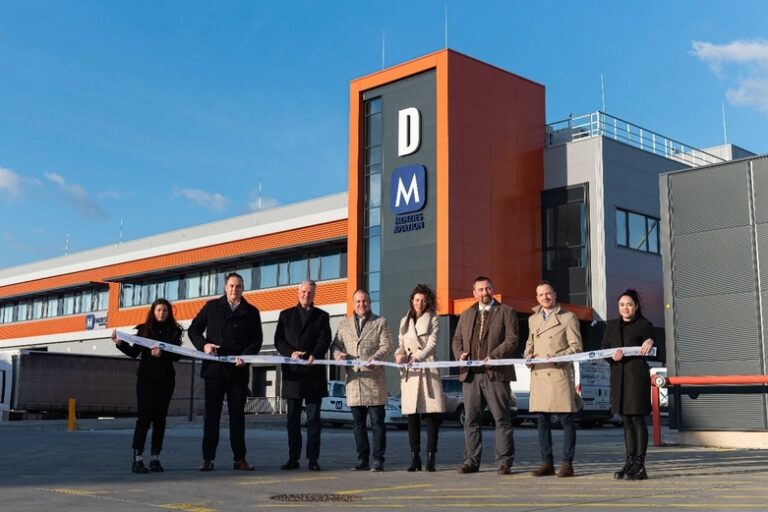
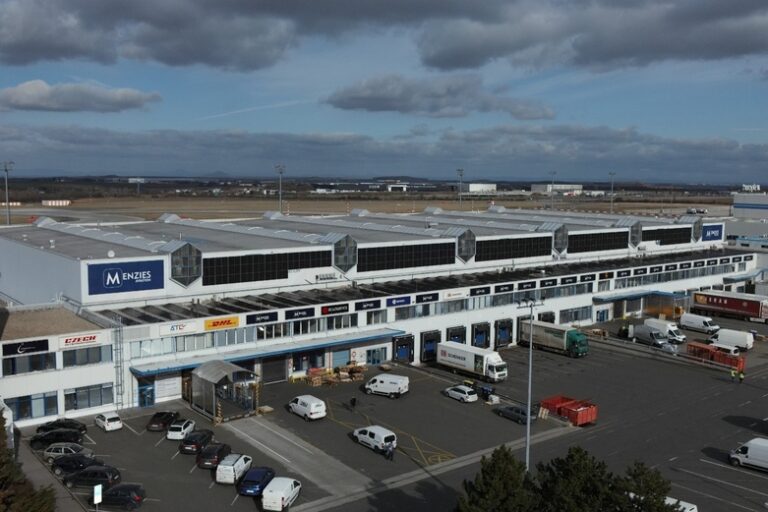
Menzies Aviation’s Tibor Fazekas, Managing Director Cargo and Levente Varga (Quality & CEIV Manager), Bud Airport’s René Droese, Chief Development Officer and Deputy CEO, Réka Sebestyén, Property Development Director, and József Kossuth, Cargo Director, joined with other BUD stakeholders on 13FEB24, to celebrate the ribbon-cutting ceremony at Budapest Cargo City, and thus officially open Menzies’ facility extension. Already operational since DEC23, the extension in which the aviation services provider invested over USD 1 million for its construction and another USD 6 million on the ongoing lease, has increased Menzies’ European freight capacity. Less than 5 years after it first moved in to Budapest Airport’s (BUD) Cargo City, which opened in NOV19, Menzies already needed to expand. Thus a 10,000 m² extension was added, which has almost doubled the company’s warehouse space from previously 4,000 m² to 7,000 m², and enables a cargo handling capacity of 85,000 tons/year as opposed to the previous 49,000 tons/year. The state-of-the-art facility includes new temperature controlled, animal and valuable cargo rooms, a 1,500 m² maneuvering area for truck and ground support equipment (GSE), and a 300 m² office and social space.

Cutting the ribbon at BUD Cargo City’s newest facility. Image: Menzies

Beau Paine, Global Head of Cargo, Menzies Aviation, said: “BUD Cargo City has established itself as a key gateway to Central and Eastern Europe, and this exciting expansion cements the facility’s position at the heart of the regional cargo network. The increased capacity provided by this extension forms an important part of Menzies’ ambitious cargo expansion strategy, which has seen us build strong partnerships across the world. We’re excited to expand our cargo footprint across Europe and beyond over the coming months and years.”

René Droese, Chief Development Officer and Deputy CEO of Budapest Airport, added: “Thanks to nearly a decade of dedicated work, BUD is now one of the most dynamic airports in cargo traffic development in the CEE region. One of the keys to our success is the cohesive cargo community we have consciously built up, which gives us the opportunity to think together with our partners and develop fully in line with their needs. An excellent example of this forward-looking collaboration is the newly expanded Cargo Handling Building, which we implemented in close cooperation with Menzies.”

USD 350 million investment by FedEx in Dubai hub

0

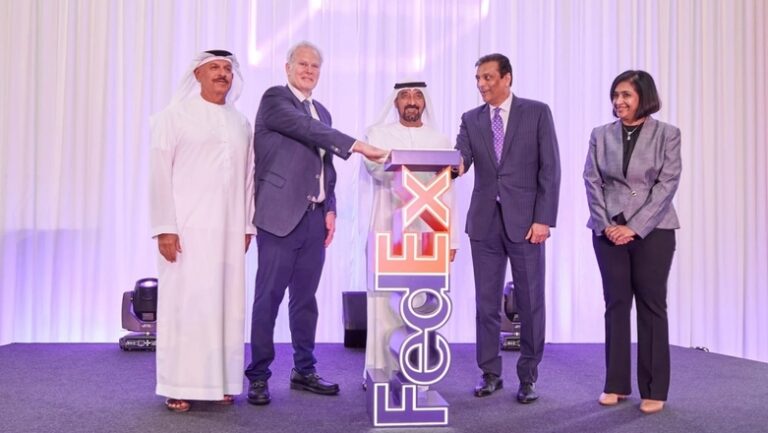
The official inauguration of FedEx Express’ new, Middle East, Indian Subcontinent and Africa (MEISA) state-of-the-art hub at Dubai World Central Airport (DWC) took place on 20FEB24, and was carried out by Sheikh Ahmed bin Saeed Al Maktoum, President of the Dubai Civil Aviation Authority, Chairman of Dubai Airports and Chairman and Chief Executive of Emirates Airline and Group, in the company of Raj Subramaniam, FedEx Corporation President and CEO, Richard W. Smith, FedEx Express President and CEO, Airline and International, and Kami Viswanathan, FedEx Express MEISA President.

Big money for a larger Middle East footprint. Image: FedEx

In its effort to expand its footprint in the MEISA region, FedEx is investing USD 350 million in the hub in Dubai South and thus the UAE economy, supporting the nation’s ‘National Agenda for Non-oil Export Development’, aimed at increasing the UAE’s foreign trade.

The 57,000 m² hub has been designed with sustainability (FedEx aims to be carbon neutral by 2040) and technology in mind. Automated sort systems enable faster, more accurate package processing and distribution, and two automated high-speed x-ray machines equipped with artificial intelligence ensure efficient scanning and improved security. The hub offers a 170 m² cold storage area for temperature-sensitive shipments. Solar power and a smart building management system ensure efficient energy use, and electric ground service vehicles and charging infrastructures enable cleaner logistics.

Richard W. Smith, FedEx Express President and Chief Executive Officer, Airline and International, stated: “The establishment of our new hub in the UAE is a strategic move that significantly boosts our presence and capabilities in the MEISA region. This investment is not just about expanding our network; it’s about enhancing the region’s connectivity and playing a key role in facilitating trade and commerce across the world. Given the UAE’s current status among the top five countries in global re-export operations, our regional hub not only aims to serve the MEISA region, which accounts for approximately 45% of the world’s population, but is also a crucial part of our global air network that connects 220 countries and territories.”

Kami Viswanathan, President of FedEx Express Middle East, Indian Subcontinent and Africa, added: “The new FedEx hub marks a pivotal stride in our growth strategy to build a more flexible, efficient, and smart network, to deliver outstanding services that fit our customers’ needs [and] exemplifies our commitment to transforming our operations through automation and building a smarter and more sustainable logistics network.

STARLUX places A350F and A330neo order

0
Signing the intention to buy new Airbus planes. Image: Starlux

At the Singapore Airshow last week, Taiwanese airline, STARLUX, placed a firm order for five production A350F freighters and three additional A330neo widebody aircraft, adding to its all-Airbus passenger fleet of 21: 13 A321neo, 4 A330neo, and 4 A350-900. (4 further A330neo and 14 A350 aircraft are already in the pipeline). The agreement was signed by KW Chang, Chairman of STARLUX Airlines, and Christian Scherer, CEO of Commercial Aircraft business at Airbus. Once delivered from 2027, STARLUX Cargo will operate the A350F with its payload of 111 tons and 8,700 km range, on some of the world’s busiest cargo routes. The new freighter which will sport the latest Rolls-Royce Trent-XWB97 engines, will be the more fuel-efficient cargo plane on the market. It will generate up to 40% less carbon emissions than an older 747F and is at least 20% more efficient than its competitor. “Over 70% of the airframe is made of advanced materials, resulting in a 46-ton lighter take-off weight than the competing derivative. The A350F is also the only freighter aircraft that will fully meet ICAO’s enhanced CO emissions standards, coming into effect in 2027,” the release states, also pointing out that it “features the largest main deck cargo door in the industry, with fuselage length and capacity optimized around the industry’s standard pallets and containers”.

STARLUX CEO, Glenn Chai, said: “STARLUX Airlines has continuously nurtured the cargo market since its inception, capitalizing on the strategic advantages offered by Taiwan’s geographical location. With this order, STARLUX becomes the first Taiwanese airline to operate the next-generation A350F widebody freighter. In an era of climate change, the A350F with Rolls-Royce Trent engine has unbeatable efficiency in terms of fuel burn, CO2 emissions, and economics, offering significant energy-saving and carbon reduction benefits. It not only meets customer requirements for carbon reduction but also aligns with STARLUX’s ESG plan to achieve zero emissions by 2050.”

Benoît de Saint-Exupéry, Airbus EVP Sales, Commercial Aircraft, exclaimed: “We love working with STARLUX Airlines in building and strengthening its fleet. Operating both the latest generation Airbus single aisle and widebody aircraft brings the airline enormous benefits. It significantly reduces fuel consumption and carbon emission and offers unrivalled levels of technical commonality, benefits in maintenance and training. The A350F, the only new generation large freighter, will fit seamlessly into this all-Airbus fleet and enable STARLUX Airlines to compete effectively with the leading players in key cargo markets.”

Menzies implements solar panels in PRG

0

With the installation of around 900 solar panels on Menzies’ 14,000 m² cargo warehouse and admin buildings at Prague Airport (PRG), Menzies Aviation, hopes to save in the region of 140 tons of CO2 every year. They should achieve an annual output of more than 350 megawatt hours (MWh), and contribute to a 25% reduction in emissions across Menzies’ Prague operations. The electricity generated will go towards powering warehouse operations and charging the company’s fleet of electric ground support equipment (GSE).

Solar panels installed to reduce CO2 emissions. Image: Menzies

The measure is part of Menzies’ All In sustainability plan, which includes science-based targets to reach net-zero across scope 1, 2 and 3 by 2045. Menzies aims to achieve 25% electric GSE globally by 2025. At PRG, GSE powered by electricity already makes up 53% of the fleet. Other measures include reducing energy and fuel use, reducing waste, increasing recycling, and returning, reusing, or recycling IT equipment. Prague Airport, too, follows an ESG strategy since 2010, when it was certified under the Airport Carbon Accreditation (ACA) initiative.

Katy Reid, Head of Sustainability & Corporate Responsibility, Menzies Aviation, commented: “Building a fair and sustainable future is a key priority for Menzies, which is why we’re working hard to achieve the ambitious targets set out in our All In sustainability plan. The installation of nearly 900 solar panels at Prague Airport is just one example of how we’re matching our ambition with action by taking practical steps to slash emissions and meet our Net-Zero targets. We look forward to working with our airport partners and airline customers across the globe to ensure that aviation becomes the truly sustainable sector that our stakeholders expect it to be.”

Soňa Hykyšová, Sustainability, Environment, and ESG Director, Prague Airport, said: “We are glad that Menzies Aviation is also trying to reduce emissions and, like Prague Airport, is committed to net carbon neutrality. Last year, we achieved a 59.5% reduction in emissions compared to 2009. We expect to reach carbon neutrality by 2030 and net carbon neutrality by 2050. However, we know that the road ahead is not easy. Roughly 85% of emissions are generated by third parties – i.e., our suppliers and airlines. Therefore, we also motivate them to reduce emissions, for example, by offering green electricity. We are very pleased that Menzies Aviation decided to install a photovoltaic power plant in Prague. We are also active in this direction and plan to expand the use of photovoltaic panels on more suitable buildings at the airport.