Envirotainer has solid plans to reduce its carbon emissions. Image: Envirotainer
Its press release claims that Envirotainer is the first company in the [ULD?] industry “to set such extensive science-based targets aimed at reducing emissions not just from its direct operations but also, crucially, from its entire supply chain.” In line with the Paris Agreement, Envirotainer is set on achieving net-zero by 2050, not just on its own activities, but also those of its suppliers and partners. It has now established goals and submitted them to the Science Based Targets initiative (SBTi) for review and validation to check that they make sense and meet global standards. They include a 2030 goal of a 42% reduction in direct (Scope 1) and indirect (Scope 2) GHG emissions (compared to 2023 results). This should be achieved by implementing energy-efficient measures at its production site plus own network stations, where it looks to carry out energy retrofits and upgrade its equipment. 100% renewable energy sourced directly from suppliers is used at its production plant. In addition, the company’s one-way container lease strategy already helps to improve efficiency, as this avoids having to return containers empty.
Envirotainer will be working together with its network of 60 outsourced stations to achieve its Scope 3 (supply chain) target of a 52% reduction per value added from purchased goods and upstream transport, and a 19.3% reduction per ton-kilometer air freight from downstream transport by 2030.
David Simonsson, CEO of Envirotainer, stated: “Sustainability is woven into everything we do. We understand that real change comes from taking full responsibility for our environmental impact, which is why we’re the first amongst our competitors to commit to such a substantial reduction in Scope 3 emissions, the most significant and challenging area. Aligning with our pharmaceutical customers’ priorities, we’re sparking change across our industry, and we eagerly await the target validation from SBTi. Our sustainability journey is an ongoing and deeply collaborative process. Setting ambitious targets is just the start. We’re constantly refining how we measure our impact to ensure our approach is as effective as possible. More than just leading by example, we’re actively working with our partners across the industry to share knowledge, drive change and collectively move towards a sustainable future.”
With Stanislas Brun as Vice President Cargo, Etihad Airways gains a cargo veteran. Brun joins the airline from Geodis, where he held the position of Senior Vice President Global Airfreight since 2019, overseeing the company’s global air cargo operations. Prior to that, he was at Challenge Air Cargo Limited and spent more than a decade with Air France KLM Martinair Cargo in roles in Europe and Asia.
Stanislas Brun is Etihad’s Vice President Cargo. Image: Etihad
Now, in his new role of Vice President Cargo of Etihad Cargo based at the carrier’s Abu Dhabi headquarters, his responsibilities include everything related to commercial cargo operations, including revenue management and network planning. He reports to Etihad Airways’ Chief Operating Officer, Mohammad Al Bulooki.
Mohammad Al Bulooki, said: “Etihad Cargo has embarked on an exciting period of growth, innovation, adding more destinations, increasing frequencies and significantly growing the airline’s cargo operations both here in the UAE and internationally. Etihad Cargo will continue to play a crucial role in Etihad Airways’ ability to achieve these ambitious growth plans. I have every confidence that the passion and expertise Stanislas brings to this role will enable Etihad Cargo to continue the impressive growth trajectory it has achieved in recent years. I would like to thank Leonard Rodrigues, Head of Revenue Management & Network Planning, for his commitment and hard work during this transition period for the carrier. In his time as Acting Managing Director, Leonard has played a pivotal role in enabling Etihad Cargo to navigate challenging market conditions to deliver operational efficiencies, innovation and technology initiatives, and customer service excellence to partners and customers.”
Stanislas Brun stated: “It is a privilege to take on this new challenge at Etihad Cargo. The carrier has consistently demonstrated professionalism, agility, and commitment to customer service excellence, which are very much aligned with my values. As the airline enters this next exciting period of growth, I look forward to working closely with the team, our partners and customers and continuing to deliver innovative end-to-end solutions so Etihad Cargo can remain the air cargo partner of choice.”
The U.S. integrator, United Parcel Service, will no longer fly to Europe with MD-11 freighters on scheduled services. This was confirmed by company spokesman, Holger Ostwald, when asked by CargoForwarder Global. However, he did not give a specific date for the final continental cargo flight of the ‘ELEVEN’. In a first reaction, the airport management at Cologne-Bonn has warmly welcomed the decision.
Soon, MD-11 freighters operated by UPS will no longer be seen in Europe except on charter missions – courtesy UPS
Cologne-Bonn is the integrator’s largest international hub after Louisville, Kentucky. There, its MD-11F workhorses will soon be replaced by the significantly larger Boeing 747-8F. The aircraft is much more modern and offers key advantages as shown by the uplift capacity of 133 tons versus the 94 tons that an ELEVEN accommodates. Another benefit is the capability of burning sustainable aviation fuel to power 4 turbines whereas the tanks of the three-engined MF-11F are filled with traditional Jet-A1 kerosene. Hence, the B747-8F emits 90% less greenhouse gas when using SAF compared to the emissions of its forerunner manufactured by airframer McDonnell Douglas in Long Beach, California. However, the prerequisite is that sufficient quantities of SAF are available and customers are willing to pay the higher price compared to fossil kerosene.
B747-8F as a testing ground “We have very close ties to the city of Cologne, where we have been involved with the Air Hub since 1986,” says Laura Lane, UPS Chief Corporate Affairs and Sustainability Officer.
She indicated that the B747-8F will soon become the integrator’s testing ground for new sustainable logistics solutions. “Similar to the introduction of our latest cargo bikes and electric delivery vehicles in the city center, the switch to quieter and more fuel-efficient aircraft is evidence of our commitment to achieving the global goal of carbon neutrality by 2050,” emphasizes Ms. Lane.
Less noise In addition to this specific beneficial environmental aspect, Thilo Schmid, CEO of Flughafen Cologne/Bonn GmbH, points to another advantage resulting from the fleet modernization: lower noise emissions. “Our airport is a modern hub that is not only efficient and customer-friendly, but also sustainable and environmentally conscious,” emphasizesthe executive. He goes on to say: “We are therefore delighted that, together with our long-standing and close partner UPS, we are now achieving the joint goal of no longer using the MD 11F in regular operations, and replacing them with quieter aircraft of the latest generation. This shows that progress and a focus on sustainability and good neighborly relations can go hand in hand.”
The airport possesses a 24/7/365 operating permit, but there are repeated complaints from local residents about aircraft noise. This is even more remarkable given that the latest generation of aircraft is significantly quieter than previous models, which caused a much greater noise footprint.
Lowering emissions on the ground In addition to UPS, its direct competitors, FedEx Express and DHL Airways, also use Cologne-Bonn as a hub for their scheduled flights. This traffic is complemented by traditional cargo airlines such as Istanbul-based MNG, for instance, which offer main deck capacity, as well as passenger airlines that carry air freight in the lower deck compartments of their jetliners.
As part of the U.S. integrator’s broader commitment to sustainable operations at CGN, UPS now uses 100% hydrogenated vegetable oil (HVO), to power large ground support equipment such as hoists, belt loaders, tankers and de-icing vehicles. All electrical processes at the package delivery company’s Air Hub, such as the 38 km conveyor system, are powered by electricity from renewable sources.
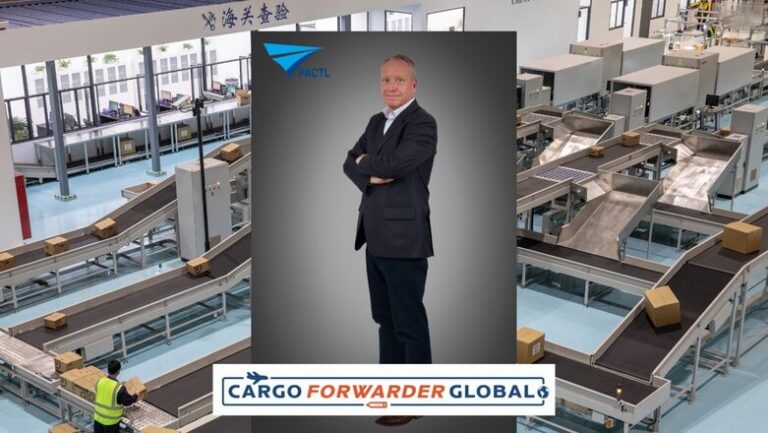
The Shanghai Pudong International Airport Cargo Terminal (PVG), PACTL for short, is a Sino-German joint venture that has grown into one of the world’s top cargo terminals since it was founded in 1999. This year will see the air cargo terminal operator celebrate its 25th anniversary, so CargoForwarder Global spoke to its Deputy General Manager and VP Sales & Marketing and Production, Carsten Hernig, to learn more about what has happened in those 25 years.
Carsten Hernig shares PACTL’s journey and plans. Image: PACTL/CFG
Three shareholders: SAA Logistics Development Co., Ltd. (51%), Lufthansa Cargo AG (29%) and JHJ Logistics Management Co., Ltd. (20%), stand behind the now well-established cargo terminal operator. While Lufthansa Cargo was one of PACTL’s first customers from the outset and the two enjoy a strong partnership, having developed PVG as the cargo airline’s largest and busiest station in Asia-Pacific (it operates 21 passenger, 11 cargo and up to 14 other scheduled flights each week), PACTL prides itself as being a neutral service provider. “It is part of PACTL’s DNA that PACTL is a neutral service provider, and our credo is that we treat every customer as individually as possible,” Hernig emphasizes. The company also distinguishes between customer and shareholder roles, and has this to say about the shareholders: “The combination of Airport-, Airline- and logistic know-how in this shareholder combination has been the recipe for PACTL’s success.”
PACTL’s 25th Birthday and the years leading up to it The second half of this year will see PACTL invite customers and partners to celebrate its milestone, Hernig reveals. CFG asks about PACTL’s development over the years. “From a moderate start in 1999 with 10,000 tons in one terminal building, PACTL has continuously developed and is able to handle, in total, over 2 million tons per year in a multiple terminal system,” he says, listing other milestones in the company’s history. These include the opening of a second PACTL cargo handling terminal in Pudong, in 2005, to offer domestic cargo and certain international customer airlines. A decade later, in 2016, PACTL took a share in the cargo handling terminal in Nantong airport (also a combination of domestic and international flights, and with a strong potential for e-commerce and charter operations). Then, just two years ago, PACTL took over the operation of one international and one domestic freight terminal in Hongqiao, Shanghai’s second airport. Overall, PACTL today serves around 70 airline customers, including around 20 freighter or combination airline customers.
The effect of the pandemic “Obviously the pandemic has had a steep influence,” Hernig responds to CFG. “From 1.8 million tons in 2019, we droppedto 1.3 million tons in 2022 – the lowest in PVG. Operational restrictions made processes significantly longer and more labor intensive. Literally nothing could be processed in the way it had been done before. Every process had to be redesigned according to the health regulations in place. I think our team is proud that PVG – and, in particular, PACTL – has kept many supply chains of the globe up and running, while many other transportation alternatives had collapsed. One of our customers wrote very nicely to us: ‘You kept the world alive’”.
Last year, PACTL managed a slightly higher than 50% market share in PVG; also redeeming part of the tonnage lost during the pandemic. Hernig reported a figure of 1.5 million tons of cargo for Pudong Airport and reasoned that the increasing trend was mainly driven by the upswing in the second half of the year. And the outlook for this year? “Operations are now back to normal. During 2024, we expect that also the number of passenger flights will get back to pre-covid levels. In terms of quality level, we are proud to say that, despite increased volumes, we have reached a historically high performance which is also reflected in the best-ever value of our customer satisfaction index,” he says.
The biggest challenges/learnings during that time? The logistics behind the logistics were challenging during the pandemic, with a detrimental economic effect. Given that passenger business had been suspended, much-needed belly capacity simply disappeared. From an operational point of view, the many health management restrictions complicated cargo handling processes and time. “Our team members had to stay in long quarantine periods after work and the teams had to work in so called bubbles in order to minimize potentially infectious contacts among people. A lot of infrastructure needed to be set up, such as testing and quarantine facilities, etc.,” Hernig details. But aside from the challenges, there was also the positive shift in airport mindset: “Before, many airports mainly focused on passenger business but, during the pandemic situation, the focus had clearly shifted on cargo activities. In consequence, many other airports in China have developed cargo development strategies. This is leading to a competitive situation among several airports, which encourages and motivates our team to be better than our competition. The pandemic has proven that with a strong team, we can handle any challenge,” he comments.
And touching on that strong team, CFG asks if PACTL has any issues when sourcing new staff? Hernig underlines that while a candidate’s education degree, former employer, position, etc., are of interest, along with related industrial backgrounds, there is a scarcity of people with air cargo experience. Because of that challenge, he points out: “Now, we decided to expand our vision. After all, there’re a lot of excellent candidates in other industries and even other countries. Some positions are not limited to cargo industry, for example, finance, IT, procurement, etc. We welcome candidates from different industrial backgrounds. One can learn the air cargo business if one’s mindset is right.”
Partners, Digitalization and… PACTL continues to grow its services. One such example is the strategic cooperation agreement with Jettainer, signed in NOV23, detailing the intention to open a new hub for the lease&fly ULD leasing service at Shanghai Pudong International Airport (PVG). “The operation has started and Jettainer is able to lease equipment to their customers in Pudong. Similarly other ULD providers are operational at PACTL. For us as a handling terminal, this is an important value addition, as our airline and forwarder customers can flexibly lease additional standard or special equipment according to their needs, under one roof,” Hernig reports. On digitalization, he reveals the intention to follow IATA’s ONE record initiative: “…in China, where digitalization has reached a higher degree than in many other countries, PACTL is further developing its operation system, Easy Cargo, for export and import. The aim is to digitize the entire documentation. During the current Easy Cargo Phase 2 project, additional functionalities are being added, in order to further facilitate and streamline the paperless data exchange along the supply chain.”
…Sustainability Digitalization is already a lever for greater sustainability and is thus part of PACTL’s strategy. “We have managed to reduce paper by more than 25%, already – that is a success, but there is a way to go,” Hernig states, going on to list other green measures: “Since 2013, we are pushing forward our e-driven forklifts project and have replaced 80% own-used diesel forklifts with electric ones. Since 2021, we are introducing energy-saving lamps, expecting to reduce electricity consumption by more than 15%. Solar Power is being collected on the roof of the handling facility in order to generate green energy. China has developed a very eager path to achieve significant improvements of CO2 emissions. Consequently, we are actively motivated to further improve.”
CfG: Where do you see PACTL in 5 years’ time? And what is your outlook on the air cargo industry in general for the future?
“Of course, we all don’t have a crystal ball, but I feel that the outlook over the next five years for air cargo in China will be rather positive. The Chinese government has launched a series of activities to promote the economic growth and competitiveness. These measures will certainly show some positive effect and will in total overcompensate for the tonnage reduction, which is resulting from global dual-sourcing strategies. At the same time, the global economy faces a number of challenges, such as inflation, conflicts etc., which will have some kind of a counter effect. Overall, we do however foresee a rather positive outlook.”
Hernig says that the main short-term growth driver is the return of international passenger flights, which leads to increased tonnage. e-commerce is another great potential, which will continue to grow. “In our expectation, we have a chance in Shanghai to over proportionally grow in this segment, due to the fact that this commodity has a high growth rate by itself, but moreover, the airports in the south of China, where the majority of the production sites are located, are saturated, and this cargo will find ways to other airports. We have an excellent cross-border-e-commerce terminal facility, which allows our customers to rapidly deliver e-commerce shipments in fully customs-compliant manner. Being the Chinese airport with the best global connectivity makes Pudong an attractive gateway for these volumes.”
Teaming up with international partners will help to expand services related to e-commerce demands, and substantially improve the time-to-market. PACTL has identified many levers to optimize and accelerate the customer experience and shipment journey, and is continuously working to increase the attractivity of PACTL and PVG. It plans to implement transit possibilities domestic/international and international/international, to transform PACTL to a transit hub. Remote cargo acceptance terminals in industrial hubs, are being established to facilitate cargo delivery and better integrate the Yangtse River Delta economic region. “The first one has already opened in Suzhou, and more are to follow.”
“In order to prepare for the future, we will be significantly upgrading PACTL West. Part of this upgrade will be a new and even better e-commerce terminal as well as a cool center in order to specifically promote the two growing market segments,” Hernig concludes.
Thank you for the update, Carsten Hernig, and Happy 25th Anniversary year.
On 13FEB24, the EU Commission approved the 1.8-trillion-won (USD 1.4 billion) merger deal between Korean Air and Asiana Airlines, announced in 2020. As a precondition for okaying the deal, Brussels competition watchdogs demanded Asiana Airlines to sell its cargo arm. Under the control of Switzerland-based UBS, one of the world’s largest asset managers and investment banking service providers, the bidding process for Asiana Cargo has now begun.
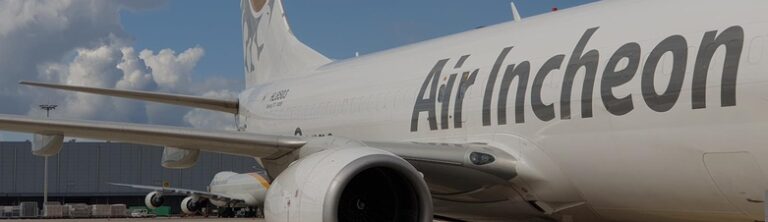
There are well-known applicants standing on the list of potential buyers, that has been open for interested parties since the middle of last week. In addition to cargo-minded Air Incheon, the file includes the names of the domestic Korean low-cost carriers, Eastar Jet and Air Premia. According to local market observers, Juju Air has given up its original intention to place a bid.
Bids must be submitted before FEB ends How serious the interests of the applicants are, remains to be seen. Local experts indicate that some of them might have thrown their company’s hats into the ring to take a look into Asiana Airline Cargo’s books and learn business specifics. Whether it is an intended act of legal industrial espionage, will become clear at the moment when they have to submit a proposal aimed at fully taking over the cargo arm of Asiana Airlines. UBS and seller, Korean Air, have given the bidders an extremely short timeframe to submit their preliminary bid proposals – until the end of February, so within the next five days. This includes submitting detailed plans how they intend to finance the takeover and what role Asiana’s cargo arm will play in their corporate business considerations, among others.
Asiana Cargo will be history come OCT24 Once this task is accomplished, seller Korean Air plans to put together a shortlist of the final group of preferred buyers, followed by finalizing the entire sales process by OCT24 – at the latest.
Asiana Cargo operates 11 freighters, mostly B747-400F, including three chartered cargo-only aircraft, and earned 1.6 trillion won last year, accounting for 25% of the company’s overall sales. However, despite the latest earnings, the cargo arm is heavily in debt. This means that, in addition to paying the purchase price, a buyer would also have to cover the accumulated debts. Meanwhile, these have gone through the roof, amounting to the equivalent of 702 million euros. A sum that puts enormous pressure on the purchase price, which market analysts estimate to be in the range of 500 and 700 billion won. For comparison: 100 euros equals 143,000 Korean won.
Air Incheon is considered the favorite bidder Currently, the airlines mentioned as prospective buyers are considering various methods to source funding, including utilizing the financial strength of their major shareholders or forming consortia with strategic investors to proceed with the acquisition plans.
Cargo-minded Air Incheon is considered being the hottest candidate for taking over Asiana Cargo – picture: company courtesy
In terms of operational and strategic requirements, local Korean aviation experts consider Air Incheon to be the most suitable candidate. The airline intends to expand its cargo business and position itself as the clear number two in Korea, alongside top dog, Korean Air, not only for passenger transports but also for cargo ground and air services.
Taxiing in 2022, taking off in 2023, the Calgary-based cargo carrier is now heading for cruise level in 2024, Kirsten de Bruijn (KdB), Executive Vice-President, Cargo, illustrates the company’s next stage and details its intermediate goals for the months ahead.
WestJet Cargo’s converted freighters can accommodate up to 25 tons – photos: company courtesy
WestJet Cargo’s development is progressing rapidly. The past year was characterized by the delivery of the first cargo aircraft, the network expansion, and the recruitment of motivated employees who are passionate about their job in air freight. Naturally, this also led to cultural changes at the airline, which was previously only active in passenger traffic, including new impulses and strategic considerations. In 2024, the focus is on three main topics: building and expanding the carrier’s strategic partnerships, further diversifying and finetuning its product mix, and implementing the digital roadmap with respect to online marketplaces and based on a new website, announces Ms. de Bruijn.
Incheon and Narita are calling Touching the issue of new routes complementing the carrier’s current network, she mentions the Korean Capital Seoul, and Japan’s Tokyo Narita Airport that will be served by the airline as of 17MAY24. The flights will offer the market belly cargo capacity, complemented by main deck options through strategic partnerships with carriers operating freighters on sectors connecting North America and the Far East. The situation is similar for existing transatlantic connections between Canada and Western Europe, served by WestJet.
New cargo website The mentioned network enlargement goes hand in hand with a continued strategic planning approach to effectively navigating market dynamics together with the right partners and strengthening WestJet Cargo’s position in the global air freight sector.
The launch of a new cargo website is at the top of the agenda of the freight carrier’s intended digital innovation initiative stands. This step is done in anticipation of a shift towards more self-service options. A statement that calls for questions:
Kirsten de Bruin joined WestJet in APR22, becoming Executive VP Cargo
CFG: Does this mean that WestJet Cargo has no plans to cooperate with e-booking platforms such as cargo.one, WebCargo, CargoAI, or similar portals?
KdB: One of WestJet Cargo’s key objectives for 2024, is to enhance accessibility and ease of contact, notably through the development of our new website.
CFG: In a press release, you emphasize that the project is complemented by digital partnerships. What makes a partner the right partner – which specific criteria are essential for this?
KdB: It’s crucial to have the appropriate partner since everyone aims to contribute to the success and accomplishments of the collaboration. Key factors to consider in selecting a partner include:
Their reputation and trustworthiness
Operational excellence
Network compatibility
Customer focus
The quality of human resources is a key success factor Further to this, Kirsten emphasizes that digital innovation coupled with automation and advanced technologies within WestJet Cargo’s operations, depends on human acceptance and support or else it won’t work. “Since the core element for company success in all these areas is human capital, WestJet Cargo will continue to invest in its people, focusing on career development, diversity, and inclusion.”
Kirsten de Bruijn concludes: “In 2022, we were taxiing and, in 2023, we successfully took off as a cargo airline. WestJet Cargo has no intention of slowing down at all in 2024. We’re climbing and aiming for cruising altitude on our company flight path, this year.”
A statement that should make competitors pause and think.
CargoForwarder Global’s ‘Spotlight On…’ takes a look at the many different people and functions that make up the air cargo industry. Communication plays a major part in the industry’s perceived image and success, as well as in education, safety, promotion, collaboration, and customer relationships. So, this week, we get a dynamic insight into what Richard Stevenson (RS) does in his role as PR & Communications Lead at cargo.one, and how he feels about our industry.
Collaboration is key for air cargo industry success. Image: Richard Stevenson
CFG: What is your current function and company? And what are your responsibilities?
RS: Hello Mrs! [cheeky smile]. My name is Richard Stevenson, and I’m PR & Communications Lead at the leading air freight platform, cargo.one. I head up cargo.one’s corporate and marketing content, communications and global PR. It happens to be a great gig, because there are so many success stories from our global community to share.
I am indeed very British…I know, you can hardly tell from my BBC News voice…I’m based in London although I travel quite a lot due to the global nature of our business. We are currently available in 116 markets, so it gets busy.
I have been in technology PR for 22 years now, but we’ll move swiftly on from the age topic! It does always feel rather strange to be the interviewee myself – I much prefer being ‘off camera’, usually pacing up and down, clutching my phone and chewing my lip.
CFG: What does a normal day look like for you? (Or is there such a thing?)
RS: That’s a great question. Well, at times I do need to be flexible depending on the time zones we’re doing activities in, such as Asia and the Americas. That’s one of the special characteristics of air cargo – you get to work with colleagues, customers and partners in all corners of the world.
In the morning, we will post our social posts and send out texts or publish online whatever was planned. The rest of the day is typically spent writing long form copy, interviewing internally and externally, a lot of coordination for industry events, webinars and meetings, and of course liaising with our stellar air cargo media.
CFG: How long have you been in the air cargo industry, and what brought you to it?
RS: I’m pretty new to air freight, I’m of course still learning the ropes after only about two and a half years. But I do have the advantage of being a HUGE aviation geek. That’s how I spend most Saturdays. In previous roles, I loved PRing supply chain management, but the addition of aviation into the mix is a dream mission for me.
I’ve worked across a super wide range of SaaS sectors, but the air transportation industry is truly global and also plucks at my heartstrings like nothing before. It wasn’t long before I had a few moments when I realized I’ve arrived in the industry in which I properly belong.
CFG: What do you enjoy most about your job?
RS: So, I have zero poker-face, when I’m happy you know about it. Since joining air cargo, I have never been prouder about the industry and company I belong to – it’s vital to society and our work delivering digital superpowers to freight forwarders and airlines is a cause worth living and breathing every day.
I think it’s the people in our industry that make all the early mornings and long flights worthwhile. I was just in Louisville at Air Cargo 2024 and the community was so warm, collaborative and impressive in many ways. Only my feet were tired, the rest of me was energized by them!
Just last week, cargo.one won the ‘Air Cargo Marketing Award’ at AirCargoIndia, which meant the world to our team. Our campaigns are educative in nature, and so it’s a great feeling to see that we’re helping to inspire and deliver digitalization gains. There’s nothing more satisfying than sitting inside a forwarding branch, watching all the action around shipments, and knowing that what we do is making a substantial difference.
CFG: Where do you see the greatest challenges in our industry?
RS: Well, that’s a huge question, but my back-yard surrounds digital adoption. Air cargo is an industry powered by expertise and trusted human connections, and we must ensure that all technology delivers as a key enabler of these. Digital must elevate all our teams to enable the maximum value from their talents.
Widespread and meaningful digitalization progress on all levels of the industry does require a laser focus on maximizing user value and user experiences. Digital methods of working must outshine the past as the most secure, productive and enjoyable methods for the entire community. This challenge is so exciting to be involved in daily.
CFG: What advice would you give to people looking to get into the air cargo industry? Any particular training they should aim for?
RS: Absolutely do it! You’ll work probably the hardest you’ve ever worked, but you’ll love it. There are so many ways to meet impressive people and grow. For example, there are excellent logistics bodies in all corners of the globe, and often community groups located around hub airports.
CFG: If the air cargo industry were a film/book, what would its title be?
RS: Is this where I plug my autobiography? [laughs]. I would call it, ‘You, me, and us’… because collaboration really is the process that transforms the future of our industry. At cargo.one, we often call it ‘the coalition of the willing’, and when we make coordinated progress together it can be a valuable step-change for the entire ecosystem, and personally super rewarding to be part of.
Thank you, Richard, for taking us behind the scenes!
Budget carrier, Thai Vietjet Air, has awarded the tender of its cargo business to ECS Group. The partnership is based on a Master GSSA agreement signed with ECS Group member, Aviation Solutions Services (AVS GSA). Thanks to the deal, the Bangkok-based airline can now look forward to further increasing its cargo revenue and export volumes across Thailand and various Asian countries, AVS announces, self-assured. The GSA runs offices in Singapore, Vietnam, Thailand, and Cambodia.
2024 is off to a good start for ECS Group CEO Adrien Thominet. Following the takeover of GSA EFIS Maroc, he has now welcomed Thai Vietjet Air as a new customer. Credit: ECS
Currently, Thai Vietjet Air operates a uniform Airbus fleet of passenger aircraft consisting of 18 A320-200 and A321-200 jetliners. Regarding freight activities, the carrier focusses primarily on transporting general cargo shipments and perishables in the bellies of its fleet. Established in 2014, the Thai airline is a subsidiary of Vietnamese parent, Vietjet Air. Vietjet Air was incepted in 2007, with the aim of establishing a network across Southeast Asia by setting up daughter companies in neighboring countries, thus enabling interconnectivity for both travelers and freight transportation.
Improving cargo sales performance “Thai Vietjet Air has carved a solid cargo market share for itself on the Thai domestic market, and offers an impressive international network across Asia – and all that without a freighter in its fleet,” applauds Monchai Jirakiertivadhana, AVS GSA CEO Indochina region. Therefore, AVS GSA has an excellent base on which to further develop the airline’s freight activities and improve its cargo sales performance, the manager added. This strategic partnership allows Thai Vietjet Air to leverage ECS Group’s in-house digital tools and expert knowledge to promote its cargo business effectively, Mr. Jirakiertivadhana illustrates.
Impressive cargo market dynamic Seen from a holistic perspective, Adrien Thominet, Chairman and Chief Executive Officer, ECS Group expects great opportunities for his company in Southeast Asia since the cargo business is developing very rapidly. “We see lot of market dynamics, intra-Asia and connectivity with Europe, and Americas. This is clearly a very dynamic region and hence, as leader organization, we need to be strongly involved in this region.”
The neos are coming An Airbus release aired on 22FEB24, shows how fast aviation is developing in the region. According to the announcement, Vietjet Air, has signed a letter of intent to acquire 20 A330-900 widebody aircraft. Once delivered, the jetliners will be operated on the carrier’s growing long-range network, but also on regional routes demanding greater capacity. The aircraft will replace the carrier’s current fleet of leased A330-300s, as well as provide for network expansion.
Thai Vietjet Air parent company Vietjet Air intends to acquire 20 A33ß-900 neo long range aircraft – courtesy Vietjet Air
Longer range, less emissions Vietjet Chief Executive Officer, Dinh Viet Phuong said, “The new A330neo aircraft is a strategic addition to comprehensively modernize Vietjet’s fleet, enhancing operational capabilities to support our global flight network expansion plan. Its fuel-efficient new-generation design aligns with our sustainable development strategy and ESG goals, aiming for net-zero emissions by 2050. With the introduction of the A330neo, passengers can look forward to longer-range, well-equipped flights with excellent services at more competitive fares.”
So can cargo customers. Whether they will be offered competitive fares when booking capacity for their shipments in the belly-holds of the A330 neos remains to be seen.
Via the Ho Chi Minh City hub, which is jointly used by Vietjet and its Thai subsidiary, ECS will also be able to offer its cargo customers additional long-haul destinations as soon as the A330-900s are operational.
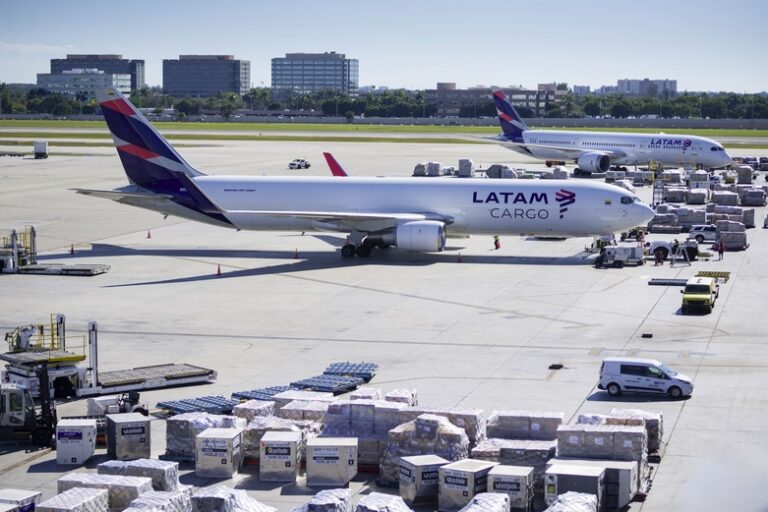
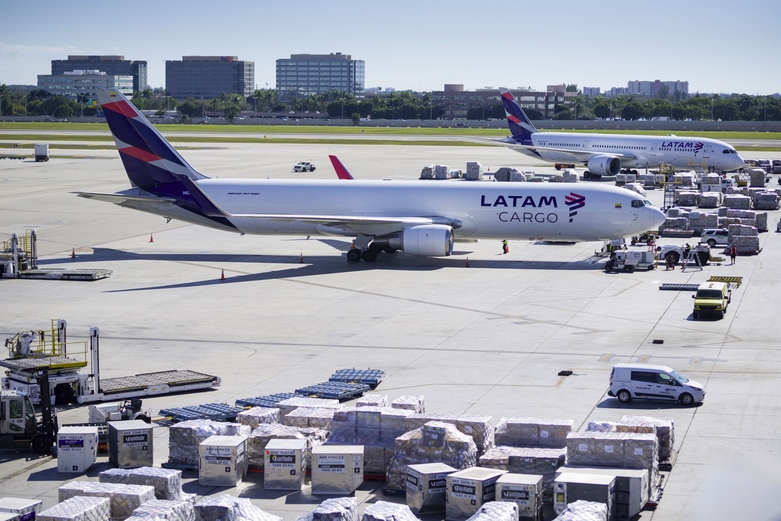
The Santiago, Chile-headquartered freight carrier has successfully been recertified by IATA’s Center of Excellence for Independent Validators in Pharmaceutical Logistics (CEIV Pharma) at its Miami hub. Back in 2017, LATAM Cargo was the first carrier in the Americas to ever achieve this certification. With its renewal, the airline reaffirms its commitment to maintaining high operational and ground handling standards when transporting this sensitive, often lifesaving, time critical product.
LATAM aircraft pictured at MIA Airport, the carrier’s largest hub for U.S. and transatlantic flights – company courtesy
The renewed CEIV certification of LATAM Cargo doubly benefits the carrier’s team: Firstly, it means that staff have succeeded to meet the program’s high requirements based on demanding IATA specifications – from 2017 to date. Secondly, it sends a strong signal to the outside world, i.e. to the market, indirectly reflecting core achievements such as: consistency, product quality, and professionalism. These aspects were proudly pronounced by Diego Garcia, COO LATAM Cargo Chile, while announcing the recognition: “This recertification is not just about our achievements, but it underscores the spirit of collaboration that defines LATAM Cargo, solidifying our position as trusted leaders in pharmaceutical transportation in the Latin American region. This reaffirmed commitment aims to satisfy our clients better, ensuring that their needs are met with the highest standards of safety and reliability.”
Outstanding assessment results The executive went on to say that the assessment was concluded with 100% compliance and zero findings. It validated the carrier’s approach to effectiveness of its quality management systems.
The freight division of the airline has made significant investments in quality control and continuous improvement by closely monitoring the product’s cold chain processes using its own monitoring devices. By harnessing this data, the carrier has been able to identify weak points in the cold chain and implement corrective actions and best practices to ensure the integrity and safety of pharmaceutical shipments. This has allowed LATAM Group to also expand its pharma network by 45% and to more than triple the transportation of pharmaceuticals that require a cold chain versus shipments flown in pre Covid times.
Vital role In general terms, air cargo plays a vital role for both exports and imports for many industries in Latin America, especially since other modes of transport often are not viable alternatives, reminded Peter Cerda, IATA’s Regional Vice President The Americas. Pharmaceuticals in particular “rely on air transport for speed, consistency, and efficiency in ensuring that these high-value, time-sensitive, temperature-controlled products reach their destination safe and sound. It is wonderful to see LATAM Cargo’s CEIV Pharma’s recertification as it demonstrates the industry’s commitment to offering safe and secure air cargo transportation.”
IATA’s CEIV Pharma Certification addresses the industry’s need for more safety, security, compliance, and efficiency, through a globally consistent and recognized pharmaceutical-product handling certification.
An IATA success model The CEIV program was initiated by IATA to eliminate costly sources of error, to introduce and ensure comparable quality standards in both handling and physical transport of pharmaceuticals, and to raise awareness among airline staff, freight forwarders and ground handling agents to pay utmost care to this temperature sensitive product family. Meanwhile, dozens of airlines have obtained CEIV certification along with forwarding agents and warehouse operators. It has developed into an IATA-initiated industrial success model.
Qatar Airways Cargo, the Animal Care and Inspection Center (ACIC), Nippon Express, and United Airlines Cargo each took home a Brussels Airport Award 2023 at the 17th edition of the event, for their contribution to the cargo business. The cargo zone will also more than double its share of green power generation.
ACIC Team: Pictured are Geert Aerts, Director Cargo BRU Airport, Ann Goovaerts, Supervisor Animal Care & Inspection, Stefanie De Man, Head of HR – all photos: CFG/ms
Qatar Airways Cargo beat Air Belgium, Ethiopian Airlines Cargo, Sichuan Airlines and Singapore Airlines Cargo in the category Cargo Airline Performance Award. The motivation behind this decision was that the airline is deeply committed to Brussels Airport, thanks to its worldwide network.
ACIC was given the BRUcargo Award, honoring stakeholders and partners in the cargo sector, and recognizing innovation, growth and partnership. “This is a recognition of the work we have done over the past three years,” said Supervisor Animal Care & Inspection Center, Ann Goovaerts. ACIC’s competitors were Aviapartner Cargo, Belgian Customs, and Hazgo.
Transition pays off for Nippon Express Nippon Express came out as the winner of the Logistic Service Provider Award. The other hopefuls were Deny Cargo, Expeditors International, as well as Herfurth and Kuehne+Nagel. Nippon Express won for its ongoing cooperation and shared vision of future Japanese connectivity, as well as for its active participation in pharma.aero and Air Cargo Belgium.
According to Managing Director, Michael Kamm, Nippon Express has gone through an enormous transition these past five years. “In Belgium, we increased our staff from 70 to 240, especially in healthcare. This is the result of a change in strategy, from a Japan-steered to a more local approach. This has led to a better focus on growth.”
Overall joy as well at United Airlines Cargo, which got the Cargo Airline Award, recognizing airlines that started new routes or achieved significant growth in volumes. Also in the running were Air Belgium, Qatar Airways Cargo, Sichuan Airlines and Singapore Airlines Cargo.
BRU CEO Arnaud Feist (far left) and UA Cargo Team (l > r): Alex Vanrijckeghem, Eliane Swinnen, Manu Jacobs, Jan Wyns, Ira Temmerman and Nancy Coolen.
United was said to have been instrumental in establishing a gateway for pharma products in the U.S. by promoting Brussels Airport among pharma shippers at every opportunity on the strength of its three daily passenger flights.
Manu Jacobs, Global Director Specialty Products commented: “Ever since Covid, we have indeed set up an airbridge between Europe and America for valuable products, notably supporting the Brussels pharma gateway. These efforts have now paid off.”
Additional solar panels The Brussels cargo zone not only brings a major contribution to the airport’s business strategy, it also plays a role in its 2030 CO²-elimination goal. Currently, the newest buildings erected at the Brucargo zone, are being fitted with some 65,000 m² in solar panels, accounting for a total of 7,300 megawatt/hours in green power.
The additional panels will increase their current 4% share of power production at the airport to 9%.Half of what is generated will be used by Brussels Airport, the other half will be made available to the operator’s cargo partners.