Air freight capacity between 70,000 airport pairs across more than 90 countries can now be sourced and booked on Maersk.com. The company’s new digital solution offers instant pricing as well as a pallet of value-added services that can be added to the booking. Maersk Customs Services are also part of the parcel, should customers opt for this, and once booked, shipments can be tracked around the clock, around the globe. The online solution is part of Maersk’s integrated logistics strategy and is designed with simplicity in mind, so that customers can quickly and easily complete all the required steps digitally, from anywhere in the world. “With the launch of this new solution, Maersk takes further steps towards connecting and truly simplifying its customers’ supply chains,” the release states, going on to add: “Maersk’s air freight solutions offer cargo movement from most of India’s international airports. Combined with Maersk’s integrated logistics solutions that include a robust hinterland coverage of distribution network, Maersk allows such cargo movement to and from 80% of India’s postal/ZIP codes with end-to-end pick-up and deliveries.”
Maersk.com offers air cargo booking, customs and tracking. Image: Maersk
Darryl Judd, Regional Head of Air Freight for Maersk in the Indian Subcontinent, Middle East and Africa, commented: “In today’s age, where volatility and uncertainty have become perpetual potential threats to the global supply chains, our customers are looking for agility and resilience that allows them to make quick decisions around the movement of their cargo across borders. By booking with us on Maersk.com, our customers get instant prices, and the transparency allows them to make informed decisions. Today, manufacturing has truly diversified with global value chains. We are noticing that customers sitting in one part of the world need to move raw material from origin to destination without being at either of the locations. Our digital air freight solution allows them to make such bookings seamlessly.”
PCS stands for Port Community System and is the tech platform that connects all cargo players at the airport, whether they are internally, directly involved with the shipment transport, or external functions needing receive and send information, such as Customs, for example. It has taken four years of collaborative development by Amsterdam Airport Schiphol together with Cargonaut, its fully owned cargo information platform since 01NOV20, to come up with the PCS upgrade. The system now offers faster data processing, greater transparency, is fully compliant the latest IATA standards and guidelines, and has been adapted to ensure that it can integrate further technological modules or functions once developed. One such upcoming development is the Secure Import System, scheduled for later this year. “The system informs forwarders when an import shipment is ready for collection by an air cargo handler, at the same time cross referencing data to improve security,” the release illustrates. Its Truck Visited Management System is also being enhanced in order to significantly reduce waiting times for cargo delivery or collection.
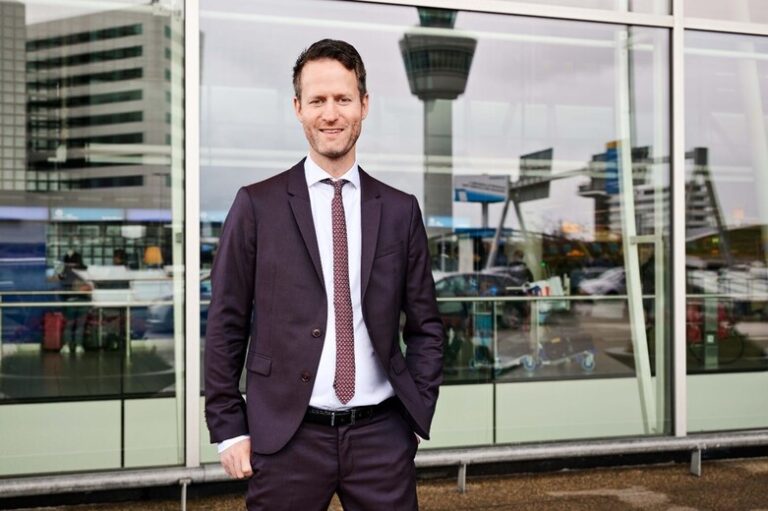
Joost van Doesburg, Head of Cargo, Schiphol. Image: Schiphol
Joost van Doesburg, Head of Cargo, Schiphol, stated: “By upgrading specific parts of the PCS, the system is more robust and future-proof. This means we can continue to safely ensure the smooth import and export of a large amount of cargo.”
Marco van Katwijk, Head of Cargonaut, explained: “The upgraded system facilitates the use of new technologies, including API Connections (software), XML (data migration) and the ONE Record data model. This model allows air cargo partners within this digital ecosystem to exchange data easily and transparently. We are currently carrying out a migration of the first clients to the updated PCS.”
SriLankan Cargo and cargo.one announced their partnership on 14FEB24. cargo.one thus gains its first South Asian carrier, whilst SriLankan Cargo customers can look forward to a user-friendly, quick and easy digital booking channel, and all freight forwarders active on cargo.one will be able to access the carrier’s cargo capacity all over the world. This translates into a global network of 37 destinations in 21 countries across Europe, the Middle East, South Asia, Southeast Asia, the Far East and Australia, and includes direct flight connections to key hubs in Europe, alongside good capacity solutions to India and the Gulf region. SriLankan Cargo’s air network is further complemented by road and interline services that, combined, serve more than 200 destinations worldwide.
The partnership was signed on Valentine’s Day. Image: cargo.one
Through cargo.one’s digital platform, SriLankan Cargo will benefit from much greater visibility of how and who books with the airline, how they perform and update their data, and thus the airline will gain useful information that can be used in marketing of its network and adapting its routing or pricing offers. cargo.one meanwhile works with more than 50 airline partners across the globe. “From Summer 2024, freight forwarders using cargo.one can book SriLankan Cargo capacity, for both general cargo and perishables, across its entire network including important destinations such as London, Frankfurt, Paris, Chennai, Delhi, Singapore, Shanghai, Canton, Tokyo, Melbourne, and Sydney,” the release reveals.
Chaminda Perera, Head of Cargo at SriLankan Cargo, said: “Our digital sales progression is now a key driver of our growth, and cargo.one is a logical expert to expedite our transition. We can have total confidence that every SriLankan Cargo customer will enjoy a top-class digital experience. It is excellent to see that our teams are already kick-starting smart initiatives to maximize our market opportunities.”
Moritz Claussen, Founder and Co-CEO of cargo.one, announced: “We are proud to play an important role in fueling the exciting growth of SriLankan Cargo, our first South Asian carrier. By entering the digital market strongly with a world class, customer centric sales channel, SriLankan Cargo is best placed to leverage its valuable strengths and deliver for many more forwarders globally.”
From 01MAR24, customers choosing Etihad Cargo to carry their consumer electronics, will be able to select its SecureTech product. The ninth in the cargo carrier’s product pallet, SecureTech has been designed with commodities such as mobile phones, laptops, tablets and other lithium battery-powered devices, in mind. It consolidates the airline’s long expertise in the transport of consumer electronics and offers safe and secure transport. Demand has rapidly increased in recent years in this area, and Etihad has acted on customer feedback for a dedicated solution. It already holds IATA CEIV Li-batt certification, which demonstrates the carrier’s professional handling of electronics in accordance with the highest safety and efficiency standards. Other SecureTech features include: a monitored build-up/break-down of palettes in secure and controlled storage areas at all points of the air cargo supply chain, and continuous surveillance through security personnel or CCTV systems. The carrier also ensures strict training programs for its staff.
Keeping consumer electronics safe during transportation. Image: Etihad
Leonard Rodrigues, Acting Managing Director at Etihad Cargo, said: “Etihad Cargo has launched SecureTech based on feedback from the carrier’s partners and customers and the growing demand for a dedicated product to make the transportation of consumer electronics safer and more secure. Over the years, Etihad Cargo has developed expertise in handling specialized products, and moving lithium battery-powered devices comes with unique challenges. Etihad Cargo is well-equipped to overcome these challenges thanks to its experience in transporting high-value, fragile, time- and temperature-sensitive, and dangerous goods. The latest market data suggests India’s electronic exports exceeded $20 billion in 2023, with mobile phones making up 52% of all electronic exports. Other top exporters of electronic devices included China and Vietnam. The launch of SecureTech, in combination with the introduction of new routes and increased frequencies for these key markets, will enable Etihad Cargo to fully meet the growing capacity demand for electronic shipments while giving customers and partners confidence that their products will arrive safely at their final destination on time and as promised.”
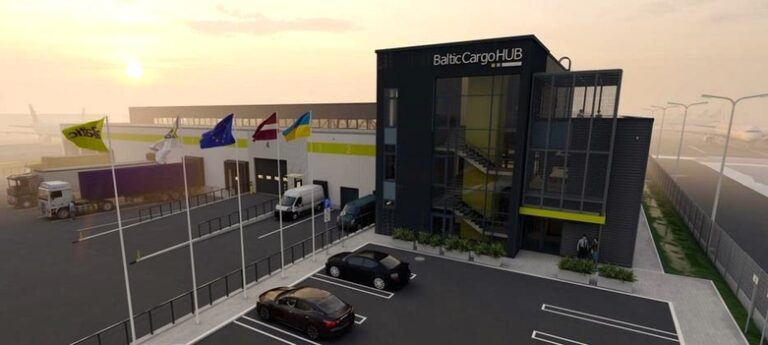
Latvian airline airBaltic and Riga Airport already signed the land reservation agreement for the construction of a new Baltic Cargo Hub at the airport, back in 2021. Now, the airline has finally announced the construction kick-off for what is planned open as the Baltics’ largest dedicated air cargo handling center in 12 months’ from now, cementing Riga Airport’s position as a leading air cargo hub. Alongside sustainable, BREEAM certified construction and state-of-the-art facilities such as semi-automatic cargo handling equipment (Material Handling System), a mail sorter, full special cargo handling capabilities including temperature-controlled rooms for pharmaceuticals and perishables, and dedicated dangerous goods, live animals and valuable shipment areas, the building will also have direct access to the apron for fast and efficient cargo import, export, and transit processes. Food and Veterinary Services and a Customs checkpoint will also be nearby. Measuring 6 895 m² in total, the hub is split into 5 000 m² of cargo handling facilities, and roughly 2 000 m² for office spaces.
The best things come to those who wait. Image: Riga Airport
Kaspars Briškens, Minister of Transport of the Republic of Latvia, proclaimed: “The Baltic Cargo Hub marks an important milestone for Latvia’s aviation sector, strengthening our position on the regional airfreight and logistics map. This state-of-the-art facility not only exemplifies our commitment to enhancing Latvia’s logistics capabilities but also reinforces our strategic vision of leveraging aviation as a catalyst for economic growth and international trade.”
Martin Gauss, President and CEO of airBaltic, detailed: “In 2023, airBaltic delivered over 9 400 tons of cargo and mail, maintaining its status as the largest air cargo and mail carrier at RIX Riga Airport to date. However, our existing cargo hangar, fundamental for our operations, will soon be replaced by the Rail Baltica railway track. The upcoming Baltic Cargo Hub will significantly increase our handling capacity at Riga hub, allowing to handle up to 45 000 tons of cargo annually.”
Laila Odiņa, Chairperson of the Board of RIX Riga Airport, pointed out: “Our national airline, airBaltic, is currently the largest aviation cargo and mail carrier at Riga Airport. We are confident that the new cargo handling center will optimize and enhance cargo service processes, providing additional benefits to both the airline and its customers.”
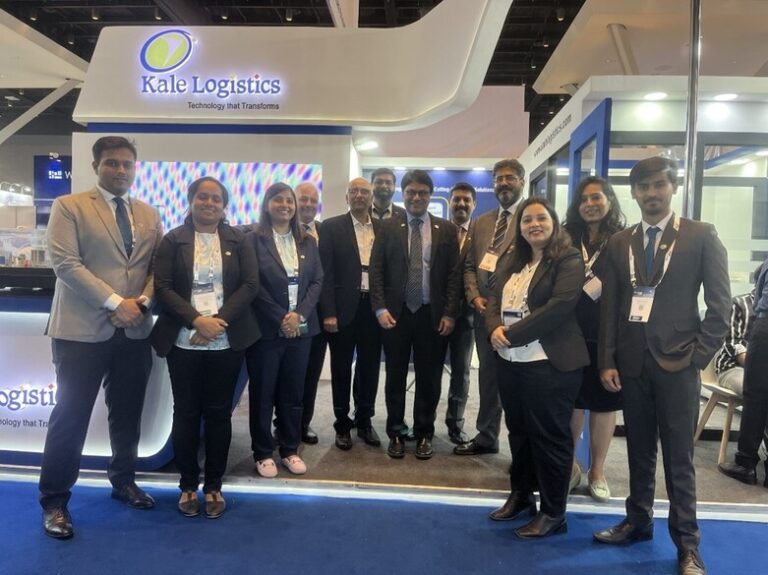
It was at the Air Cargo India Conference in Mumbai last week, attended by over 600 participants, that Kale’s Amar More underlined the benefits and need for air cargo community systems. Speaking during a panel on digitalization which included Ashok Rajan from IBS Software, Moritz Claussen from cargo.one, Prithviraj Chug from Group Concorde, Ashwin Bhat from Lufthansa Cargo, Leonard Rodrigues from Etihad Cargo and Michel Pozas Lucic from AP Moller Maersk, he referred to a ‘game changer’ given that air cargo communities drive profitability and sustainability. By working together at airports, stakeholders can vastly improve their processes, collaboration, transparency, as well as reduce waste, costs, and resources. In a similar way, experts and thought-leaders working together and sharing best demonstrated practices in digitalization, can bring about faster digitalization in the industry. To that end, Kale is hosting an invitation-only CLEAR VIEW event on 17-18MAY24 in Istanbul, Türkiye.
Inviting the air cargo industry to Kale’s CLEAR VIEW event in MAY24. Image: Kale
During the panel discussion on digitalization are a core component for air cargo operations, Amar More, CEO of Kale Logistics Solutions, emphasized: “Air Cargo Community systems act as an ‘Air Cargo Single Window’, that facilitates ease of business and global trade by eliminating duplication of data entry, reducing unnecessary paperwork, tackling airport congestion issues, and bringing shipment visibility to all stakeholders. Delivering end-to-end collaboration through a single platform is imperative to ensuring our industry fully embraces digitalization, as it is essential for facilitating better coordination, resource optimization, and rapid information exchange between all parties involved. The true benefits of digitalization emerge only when an entire ecosystem embraces it – partial adoption falls short. Operational efficiency driven by faster processing and the ability to provide real-time visibility and accurate tracking are all perks now expected by customers, making adopting digital solutions a necessity to compete in our industry.”
Where to, DB Schenker? The intended sale of the logistics giant, DB Schenker, has reached a decisive stage as demonstrated by roughly 20 potential buyers that have expressed their interest. The registration deadline for this step was 10FEB24. Among the interested parties are the usual suspects such as DSV, Kuehne+Nagel, DHL Group, shipping lines MSC and Maersk, as well as various private equity funds, according to the German newspaper, Handelsblatt.
How long will the logistics company’s flags continue to display its name? courtesy – DB Schenker
So far, so predictable. However, the entire exercise is extremely complicated because of conflicting interests. Hence, it cannot be ruled out that the project might go to ashes. In a nutshell, this is the current situation:
Chief sales lobbyist is the Minister of Transport, Volker Wissing – a member of the German Liberal Party (FDP). The FDP is the smallest of the three parliamentary groups in the Berlin government, trailing the Social Democrats (SPD), and the Green party. Its basic political conviction is that the market should be given priority over state decisions, combined with strict budgetary discipline.
Conflicting parties In this specific case, the Liberals want to separate DB Schenker and its subsidiary, DB Cargo, from the state-owned Deutsche Bahn, and sell them at best price. Preference will be given to a German or European bidder, or a consortium based in the EU. Firms from China or the Gulf States are unlikely to be considered, Wissing indicated. The proceeds from the deal, estimated at between 10 and 15 billion euros, are to be used entirely for the restructuring of Schenker parent, Deutsche Bahn, and not channeled into any other projects. The railway company is 32 billion in debt.
On the other side of the government table sit the Social Democrats and the Green party. Both are rather cautious or even skeptical concerning the intended sale of DB Schenker. This is due to two basic convictions: for strategic reasons and military supply chain considerations. Critical infrastructure belongs in national hands or at least in European hands, they hold. This includes a transnational rail network and its main user – Deutsche Bahn together with its forwarding arm of the industry deliver vital goods to the county’s citizens.
Strategically important carrier This argument is solidified by the fact that Schenker’s rail freight division, DB Cargo, constantly transports military equipment on behalf of the German Army and some other NATO members to Ukraine, constituting a lifeline for the eastern European country under constant attack by the Russians.
Despite DB Cargo’s strategic importance, the rail company is heavily in debt. According to a Reuters report, the loss in 2023 is expected to be almost half a billion euros. Final figures are still pending.
DB is €32 billion in debt The trade unions also have a say concerning Schenker’s future fate. They fear job losses and refer to the takeover of Panalpina by the Danish logistics giant, DSV. Since the fusion, the number of former Panalpina employees at DSV can practically be counted on one hand, a leading official of the German railroad workers’ union, EVG, told CargoForwarder Global.
Therefore, the Transport Ministry’s intended sale of DB Schenker resembles a Gordian knot: Many conflicting interests, ideological differences, employment issues, and military security aspects still need to be discussed before a decision emerges. An attractive sales price is therefore an important aspect, but only one of several. This said, only the head of State, Olaf Scholz, has the constitutional right to take a final decision. The problem is that he is a good moderator but a lousy decision maker. So, the question ‘quo vadis, Schenker?’ will probably remain open for some time yet to come.
Well, the past week was likely spent wining and dining either in romantic pairs or welcoming in the Year of the Dragon – all depending on where you are in the world and where your personal or cultural interests lie. Certainly, a busy time in air cargo in the run-up to these events. Whilst Valentine’s Day is now over, Chinese New Year celebrations are still in full swing. Will this be an auspicious year for air cargo?
Wood Dragons and sweet-smelling roses.
Valentine’s Day is its very own recurring Peak Season. It is the time of year where LinkedIn is full of images of pallets of roses in cool warehouses or awaiting loading at the aircraft, and logistics companies and airlines churn out press releases with incredible statistics of tonnages shifted, extra flights being planned, and the increase in ULDs needed in the run-up to the actual day. All along with flowery texts such as Air France KLM Martinair Cargo’s post stating “Just as Cupid prepares his arrows, we too have aimed to spread love across the miles, ensuring that these flowers from the heart of Kenya find their way to brighten many a romantic gesture.” The group deployed three additional freighters to fly part of the 9000 tons of Kenyan flowers exported in 2024, straight to the heart of Europe’s flower capital: Amsterdam.
Swissport’s Flower Corridor While the Kenyan domestic market almost suffered a flower shortage because of the increase in exports for Valentine’s Day, Swissport, as the main player in air cargo flower logistics out of Kenya via its “Flower Corridor” [commodity-specific cold-chain handling for major airline carriers] to Europe, Middle East and Far East, reported a slight dip in figures. Edwin Musungu, Head of Cargo Services at Swissport Nairobi, explained: “Every year Swissport successfully handles millions of fresh-cut flowers between January and February, aligning with peak demand during the Valentine’s Day season, which begins in late January. For the current year, we anticipate[d] to handle approximately 9,000 tons of flowers, a slight decrease from previous years attributed to aircraft capacity constraints, with carriers prioritizing the lucrative Chinese market due to the overlap with the Lunar New Year in 2024.”
A brief window with a big impact “Valentine’s Day is the first notable date in the year where American sees flower volumes peak across its cargo network,” American Airlines Cargo’s PR pointed out, revealing that between 01FEB-10FEB24, the carrier had transported over 500 tons of flowers – mostly out of Amsterdam in Europe, plus Latin America. And Latin America is where it is all at, too. “In the United States, 80% of flowers imported are from Colombia,” said Atlas Air’s release reporting that the carrier had expanded its flower business by adding 5-weekly Medellín flights to its network alongside its existing Bogotá connection which is served with a B747: “This year, there’s more love in the air, when it comes to Atlas’ operation. On 17JAN24, Atlas began operating a B767 filled with flowers out of José María Córdova International Airport (MDE) and into Miami International Airport (MIA).”
Flowers on the inside and outside of the plane Avianca Cargo as the leading cargo airline for flower transports from Colombia to North America, published that it had operated around 300 flights between 16JAN24 and 08FEB24 (doubling its normal capacity) and carried in the region of 18,000 tons of mainly “roses and carnations from Bogota; pompons, hydrangeas and chrysanthemums from Medellin; and roses, carnations and gypsophila from Quito.” As a tribute to its flower business, one of its aircraft now bears an exclusive flower livery. Investments in its Miami infrastructure, personnel, and process improvements led to new records in processing and delivery times, and consistently high service levels.
Offset to Conserve Over at LATAM Group, the emphasis was also on sustainable flower transport. Together with María Flowers, the first flower client to participate in LATAM Group’s ‘1+1: Offset to Conserve’ program, the group offset over 1,290 tons of CO2 – a figure equivalent to all flowers transported in 2023. The initiative supports the conservation of strategic ecosystems in South America. Customers cover 50% of their compensation costs, and LATAM Cargo covers the remaining 50%.
Not just any Dragon – 2024 is the year of the Wood Dragon The Chinese Lunar New Year began four days prior to Valentine’s Day, on 10FEB24, and lasts 15 days. Given that everything shuts down in China, the pressure to get cargo shifted prior to the celebrations, pushes a natural surge in tonnage. One that this year was exacerbated by ongoing problems in shipping through the Red Sea. Details on air cargo tonnage figures will be clearer once factories open again, so instead, let us look at the Chinese Horoscope prediction for this new Year of the Dragon, which is actually a Wood Dragon in 2024. “The Year of the Wood Dragon is believed to be able to foster growth, progress and abundance, and this year will be good to build a solid foundation for something new with long-term potential. The last Year of the Wood Dragon was 60 years ago, in 1964,” writes Lily Zi in South China Morning Post. Sounds good. What did the last Year of the Wood Dragon look like for cargo?
The last Year of the Wood Dragon in air cargo 60 years ago was a glory period for air cargo, judging by reports from the Air Transport Association of America (ATA). Whilst researching air cargo in 1964, I found this excerpt from The New York Times, 27FEB64. Bearing the title ‘Air Cargo Traffic Rising’, it stated that “domestic air cargo traffic last month was 14% greater than in JAN63, the Air Transport Association said today. The 11 trunk airlines and three all‐cargo airlines carried 73.5 million-ton miles of air freight, mail and express in the first month of 1964. A ton mile is a ton of cargo carried one mile.” Just half a year previously, airlines had begun adding ‘all-cargo jet freighters’ to their fleets, and ATA wrote in its Facts & Figures paper (published 1965) that “The total [American] jet freighter fleet now stands at 32, with 38 more on order for delivery during 1965 and beyond. This represents an investment of about USD 475 million.”
Air cargo managers are experts in distribution… 1964 was the year that saw United become the first US airline to offer a nonstop transcontinental all-cargo service (MAR64). By the end of that year, ATA reported that “Cargo traffic (freight, mail and express) continued to show strong growth. The industry preformed a total of 1.8-billion-ton miles, up 20.5% from 1963. Freight registered the strongest gain in this category. The airlines performed 1.3-billion-ton miles, a gain of 27% over the previous year. 1964 was the best year in a ten-year upward trend in demand for freight service. The average annual rate of increase for freight has been 16%.” It also stated that “Air cargo is growing at a much faster rate than passenger service and seems likely one day to overtake the passenger business. Air cargo managers are experts in the total cost of distributing commodities and must therefore understand and help modify the distribution patterns of the nation’s industries.” To that end, it was also the year that “airlines are building a totally new mechanical jet-age loading system on the ground”. They were channelling investments into new cargo terminal facilities at airports, and discovered the magic of moving live cattle (100,000 heads of calves were transported over a 4-month period from New York to Milan that year), and fresh fruit and vegetables – at the time, the fastest-growing segment [20% increase to previous year] of the air cargo industry, while machine parts maintained the number one position in volume ranking.
1964 was solid oak – will 2024 be more matchstick or roof beam? An auspicious year for air cargo then. 2024 has its own battles to fight and can only dream of the growth figures from 60 years ago. After a mostly soggy 2023, with recovery only happening towards the Christmas peak at the end, 2024 may have seen a stronger start, but looks set to weaken again after this Valentine’s Day/Chinese New Year peak as various economies struggle and geopolitical issues continue to dominate. Air cargo needs to push its way into the limelight again, to fully benefit from investments into ongoing innovation and positive change – i.e. bring about the “growth, progress and abundance” associated with the Year of the Dragon.
The airport investor, AviAlliance, has been managing Budapest Airport (BUD) since 2007. Now, after a long tug-of-war, a change of ownership is imminent. The Hungarian state-run investor, Corvinus International, is to take over 51% of the shares, 29% go to a Qatari state investor, and the French Vinci Group will own the remaining 20%. According to the Hungarian government, the transaction is expected to be completed by 29FEB24, at the latest.
However, it is currently unclear whether this schedule will be adhered to. During Q4 of 2023, the Hungarian Minister of Economy, Márton Nagy, announced that the change of ownership would be completed by the end of DEC23. Obviously then as now, unresolved financing issues were the reason for the delay. This was indirectly confirmed by Mr. Nagy who spoke of “very complex negotiations,” since his government intends to achieve “a competitive, market-based price.”
According to local sources, the Hungarian government’s offer to the potential buyers is said to be around 4 billion euros. The Orban administration and its financial arm, Corvinus International, will have to shoulder slightly more than half of this sum for the intended acquisition of the majority share of 51%.
Financial gap needs to be closed Two state-owned insurance companies were sold so as to raise the necessary funds despite empty government coffers. However, according to insiders, this deal could raise a maximum of 480 million euros. In order to close the financial gap, the Hungarian government intends to issue Eurobonds. In addition, it has applied for a French loan, local sources report. Hence, despite growing budget deficits, the Orban cabinet seems to have decided to nationalize the airport, regardless of the cost.
Brussels finally consented the change in shareholder structure Following lengthy discussions, the EU Commission gave the green light for the intended change of ownership in DEC23. The Brussels policy makers argue that the deal would not infringe the block’s competition rules. It mainly concerns the airport management, not traffic issues.
Orban has long been trying to bring the airport back under national control. Now he is apparently very close to achieving this goal. Why this is so important to him can probably only be explained by reasons of prestige. Despite it being profitable, calling the airport a cash cow would be an exaggeration because the ongoing modernization and expansion require a high level of funds.
BUD’s Cargo City is the airport’s flagship Under the management of the Avi Alliance and thanks to high investments, BUD has developed into a thriving hub for freight and passenger traffic, located right at the crossroads of Eastern and Western Europe. In particular, the 32,000 m² BUD Cargo City and adjacent apron, inaugurated in 2020, have proved to be a driver of cargo throughput. Since then, the expansion of the ground infrastructure continues unabated.
Since its opening in 2019, BUD Cargo City has developed into a magnet for air freight in Central Europe – photos: courtesy BUD Cargo.
It remains to be seen whether BUD will continue on its successful path once the government steers its fate, or if strategical and organizational changes will be implemented.
State coffers are empty The question is based on concerns, because local sources suspect that the Orban government is likely to channel the surpluses generated by the airport primarily into projects that promise political advantages. This is all the more likely since the state coffers are yawningly empty. At the end of 2022, Hungary had accumulated a deficit or 121.4 billion euros. This corresponds to 76% of gross domestic product. Per capita, this means that every Hungarian is statistically 31,200 euros in debt. However, it might comfort the Magyars that Greeks, Italians, and Spaniards are having to shoulder higher debts.
Passenger traffic recovers, cargo sets a new record 2023 was one of the most successful years in the history of Budapest Airport. Passenger traffic exceeded expectations, reaching 14.7 million travelers – a 91% recovery from pre-pandemic levels. And cargo volumes went through the roof, surpassing 200,000 tons.
These figures raise the question as to why the Avi Alliance has apparently agreed to sell the airport, as it is losing a cash-generating investment. The alleged price of around 4 billion euros is certainly an argument. On the other hand, Budapest promises long-term profits. This is an aspect that is of particular interest to the Canadian Avi Alliance shareholder, Public Sector Pension Investment Board (PSP Investments). Its policy is to provide long-term financial security for the pension entitlements of its members by investing in potentially profitable enterprises.
When asked by CargoForwarder Global to comment on these issues, the Dusseldorf-based management of AviAlliance did not respond.
In addition to Budapest, the airport manager also holds stakes in the airports of Athens, Dusseldorf, Hamburg, and San Juan, Puerto Rico. Except for Budapest Ferenc Liszt International, it is not known if any ownership changes are imminent at any of these other airports.
Çelebi grows its handling capacity Ground handling agent Çelebi Aviation has just added 3,500 square meters to its existing 12.300 m2 of warehouse space in BUD’s Cargo City. “This strategic infrastructure development not only strengthens our cargo handling capacities, but also demonstrates our commitment to excellence in the aviation logistics industry,” reads a press release.
“Together we are strong!” – Çelebi and BUD Cargo managers celebrate the enlargement of the agent’s existing warehouse.
Çelebi, together with Budapest Airport, share a vision of aligning infrastructure with the market demands. Given the recent boost in air cargo volumes, which indicates the sector’s dynamic expansion, the agent speaks of a changing landscape enabling opportunities to capture additional business and redefine its capabilities. The Hungarian subsidiary of Turkey-headquartered Çelebi Aviation regards BUD as a vital logistics hub in the geographical interface between Western and Eastern Europe, nurturing further growth in the air freight business.
This week’s contribution to CargoForwarder Global’s ‘Spotlight On…’ series which highlights the many different roles involved in ensuring that cargo flies from A to B safely, efficiently, and on time, centers on an important, ancillary function: bringing out the best performance in air cargo teams and individual employees. Sadiya Khan (SK) shares her insights to her job, how she came to the industry, and what advice she has for anyone considering a career in air cargo.
Passionate about unlocking the power of human and business performance. Image: Sadiya Khan
CFG: What is your current function? And what are your responsibilities?
SK: I am the owner and founder of SK Solutions – a business whose aim is to take the Air Cargo and Logistics industry to the next level when it comes to people and business performance. SK Solutions is all about unlocking individual, team, and organizational potential through 1:1 and group coaching, business consulting and targeted training. Backed by 20 years of industry and senior leadership experience, as well as professional coaching qualifications, my responsibilities include partnering with companies to fully uncover what’s holding their people back from achieving their goals. I get very excited about designing and delivering effective solutions to boost performance. I feel very privileged and grateful to help individuals to amplify their performance and unlock their talent as well as collaborating with businesses to create a culture where people can develop and flourish.
CFG: What does a normal day look like for you? Or is there such a thing?
SK: There’s no such thing as a normal day really. I speak to businesses and heads of companies about their current challenges and think creatively about how we can solve them together. For me, it’s not just a tick-box exercise. I am keen to always be effective in what we do. I coach individuals through personal and work challenges to empower and enable them to take charge, take responsibility and move forward. I create and design programs and games to boost team performance. I deliver workshops online, in person and abroad. I chat with fellow coaches and partners to exchange knowledge, bring ideas to life, and see how we can make the world better through what we do together. I read, write, and research. I log on to complete the modules for the course I’m usually doing for personal and professional growth. I complete admin. I eat (too many cashew nuts), go for a walk, and do some fitness training. I do the laundry, pick up the kids from school and empty the dishwasher!
CFG: How long have you been in the air cargo industry, and what brought you to it?
SK: I’ve been in air cargo for nearly 20 years, having first fallen into it by chance. After my postgraduate degree in International Management, I landed a job with Virgin Atlantic and spent a year in passenger marketing. A commercial analyst role then came up within the cargo department. I applied and there it all began! I was very lucky to be part of a growing team and extremely fortunate to work with some awesome minds. I feel very fortunate for the opportunities and the people I met along the way. We worked through the rough and the smooth together and cemented our friendships over the years with good memories. It was in these early years of my career that I learned the value of great teams and the power of coaching, active listening, and empathetic leadership.
CFG: What do you enjoy most about your job?
SK: My job allows me to meet and have conversations with lots of incredibly interesting people. Through open and thought-provoking discussions, I get to access new ideas, collaborate on challenges and propose solutions that can really make a difference to how people feel about their work, and also in their lives. I am fascinated by human behavior. What makes us tick and how we can get the best out of ourselves is the theme for the research I do throughout my week. I really believe that we all have gifts and talents, and with greater self-awareness through reflective practice, we can define these with clarity and feel the benefit of the confidence that ensues. When people know who they are, what they want and why they are doing it, they can show up at full power and consequently businesses become unstoppable. I feel incredibly privileged because my work enables me to spend time doing something I am passionate about – unlocking the power of human and business performance.
CFG: Where do you see the greatest challenges in our industry?
SK: I have no doubt that if digitalization is done right, it will bring efficiency gains and better customer experience to our industry. However, given the nature of the business, there will always be a place for conversation and discussion. Ensuring that the people in our organizations are top priority through the challenging and changing environment is what will give a business the edge. When people feel supported, are given the knowledge they need and feel safe to contribute, then rock solid teams are formed. As an industry, we can sometimes suffer from short-termism – looking at the next flight, the next 3 months, the next season. The challenge for our industry is to refocus on the long term and to think about building great places to work through recognizing that people are the spine of it all. Companies that invest in their people early will be the unshakeable organizations for the future.
CFG: What advice would you give to people looking to get into the air cargo industry? Any particular training they should aim for?
SK: For people curious about air cargo, I would say just get involved, do some research and see what happens. Gravitate towards what interests you and connect with people in those roles. The best way to learn is to try. Ask questions…lots of them! Be curious. You just never know… you might be the first one to ever ask it… and it might just change the business for the better. Thinking about when I first entered the industry and what would have helped me, I decided to create a 2.5-hour training course to give a birds-eye view of how air cargo works. Having delivered this for a few years now, participants often say that seeing things from an end-to-end perspective can be a great first look as an overview to then choose where to dive deeper. Fear prevents change and stifles action, so the best thing you can do is take a deep breath and apply for something that piques your interest. There are so many options in air cargo that I’m sure you’ll find something to light your inner spark as you go along your career journey… and don’t stop until you do.
CFG: If the air cargo industry were a film/book, what would its title be?
SK: The title would be ‘The Greatest Secret’. I fell into the air cargo industry, and then fell in love with it. If I hadn’t stumbled into it by chance, who knows where I would be now! It seems like our industry is a very well-kept secret as I hadn’t even realized that it was available as a career option. If we want our industry to advance, we need to attract even brighter minds into it, so we can do even greater things. It’s time to share the secret and let everyone know that air cargo is available for business and is an exciting career option where you can most definitely find something that you will be GREAT at!
Wonderful! Thank you, Sadiya!
If you would like to share your personal air cargo story with our CargoForwarder Global readers, feel free to send your answers to the above questions to cargoforwarderglobal@kopfpilot.at We look forward to shining a spotlight on your job area, views, and experiences.