A partnership that hits the mark in more than one sense. Images: TCE/Virgin Atlantic Cargo
Time flies when you’re having fun, they say. It also flies when you’re focused on building up a solid cargo presence in Europe – which is why Virgin Atlantic Cargo opted to partner with specialist air cargo operations and compliance partner, TCE, last year. In the first 12 months of collaboration which the airline and TCE recently celebrated with customers at an exclusive event in Amsterdam, the partners have seen commercial growth and improved process efficiency. The partners have also entered into a unique joint sponsorship, electing to support Dutch darts player, Gian Van Veen on his professional journey.
24-year-old Gian Van Veen, known as ‘The Giant’ (he is 1.93 m/6’ 4” talls), who was 8 when he first picked up a dart, also has a connection to the air cargo industry. Alongside his first forays into youth darts competitions from the age of 13 on, his career interests led him to study aviation operations at the Amsterdam University of Applied Sciences (he completed his bachelor’s in the subject), and subsequently work in logistics for a Global GSA Group subsidiary at Hoofddorp, close to Schiphol Airport. Two years ago, he decided to put that career on hold and focus fully on professional darts. Since then, his calm, analytical and fearless approach has resulted in him being ranked World Number 3. Sarah Scheibe, Managing Director of TCE, explained: “At TCE, we go far beyond what is expected of a traditional GSA. Not only is our product portfolio unique in the air cargo industry, but we also take our partnerships to another level. Together with Virgin Atlantic Cargo, we began sponsoring Gian Van Veen this year. Gian is currently the world’s Number 3 and Dutch Number 1 professional darts player, following his impressive games in the 2026 World Championship Finals. And he is a true aviation enthusiast, having studied aviation in Amsterdam and even worked within AERION before focusing on the sport as a professional. That we can support Gian together with our Virgin Atlantic Cargo partner, is particularly meaningful for us. And we are keen to see what the future holds, both for Gian, and, of course, for Virgin Atlantic Cargo’s ongoing European expansion. Our first year has resulted in a strong partnership, a broad network, and exciting growth ahead. We’re proud that TCE now represents Virgin Atlantic Cargo across 14 European countries and manages a fully integrated trucking network into the UK’s London Heathrow airport. May we chalk up many more successes together.”
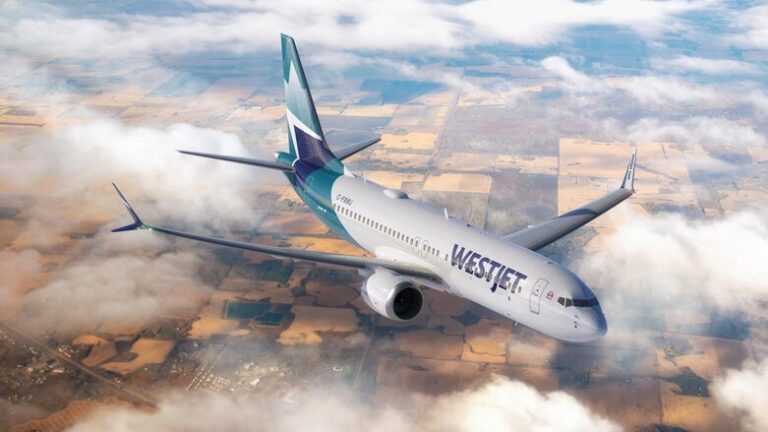
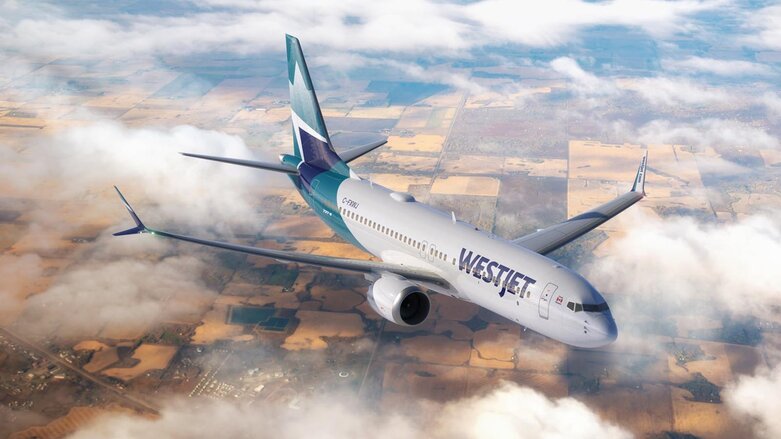
The Canadian airline will add three additional European destinations to its existing six transatlantic routes to and from Halifax. These are Lisbon, Madrid, and Copenhagen. WestJet will operate Boeing 737 MAX 8 jetliners on all three routes. According to the manufacturer, their range is 6,510 km (3,500 nautical miles) at maximum passenger capacity and cargo load. The distance between Nova Scotia and Copenhagen, the longest of the three new routes, is 5,300 km.
WestJet operates B737 MAX 8 between Halifax and Copenhagen, Lisbon and Madrid – photo: Courtesy of WestJet
While flights to Lisbon have been operating since 01MAY26 (5/7), Madrid and Copenhagen will follow on 15MAY26 and 28MAY26, respectively – each with four weekly flights. However, all these routes are limited to the summer season and will not be served during the winter schedule 26/27. In doing so, WestJet is, to some extent, following the business model of its Canadian peer, Air Transat. The Montreal-based carrier primarily serves routes between Canada and Europe in the summer and routes to the Caribbean and Central America in the winter.
Nova Scotia sees an upturn in air traffic In addition to the three new European connections, WestJet operates transatlantic routes from Halifax to Barcelona, Amsterdam, Dublin, Edinburgh, London Gatwick and Paris.Halifax is massively benefitting from the new WestJet flights, strengthening its status as a gateway for passenger and cargo traffic between Europe and Canada’s East Coast, at least for the current summer season. The response from Nova Scotia has been correspondingly positive following the WestJet announcement: “These new non-stop services will complement WestJet’s six existing European destinations from Halifax Stanfield, reinforcing our status as North America’s most internationally connected airport of our size and a key Canadian gateway. Each new route strengthens our global reach, offers travelers more choice, and fuels economic opportunity here at home,” enthusedJoyce Carter, President & CEO of Halifax International Airport Authority.
Colton LeBlanc, Minister of Growth and Development for the Province of Nova Scotia, made a similar statement: “WestJet’s expansion of their international routes between Halifax and Europe will help the province establish new markets for our products and services, grow our economy and make it easier for more people to visit our province than ever before. The new direct WestJet routes between Halifax and Madrid, Copenhagen and Lisbon, in addition to Detroit and in combination with their other routes, illustrates the airline’s acknowledgement that Nova Scotia is a province that is open for business, and our economy is taking off.”
Canada instead of USA WestJet’s operational growth has a direct impact on air traffic in Nova Scotia. This is also evident in domestic flights, which have also seen a sharp increase – a remarkable 50% compared to the previous year. This is partly because Europeans are increasingly avoiding the U.S. and preferring to fly to Canada instead, where they feel welcome.
“Strengthening our direct connections to key markets, including Europe and the northeastern United States, enhances tourism, creates economic opportunities, and makes it easier for our residents and businesses to connect with the world. These new routes will bring more visitors to Halifax, support our local economy, and further position our city as a gateway to Atlantic Canada,”Mayor Andy Fillmore, Halifax Regional Municipality, enthused. Codeshare agreements with SkyTeam partners SAS, KLM, and Air France, ensure seamless connections for passenger and cargo traffic to and from Europe, enabling WestJet to offer its customers destinations in virtually every region of the EU.
Flights to South America have been put on the backburner Final word from Samantha Taylor, WestJet Group Executive Vice President and Chief Experience Officer: “WestJet is proud to invest in Halifax and to help open Europe to Canadians, and Canada to the world. With shorter flight times, competitive fares and direct access to Europe’s cultural heartlands, Halifax is uniquely positioned to serve as Canada’s Atlantic gateway.”
Simultaneously to its transatlantic expansion, WestJet has postponed its entry into the South American market by canceling the launch of its direct service between Toronto and Medellín, which was scheduled to begin in late April 2026. So far, there have been no changes to the launch of its scheduled flights between Calgary and São Paulo-Guarulhos, set to begin on 09NOV26.
With this new subsidiary, the freight carrier is taking a further step in its strategy to widen its business activities beyond traditional air freight operations and thus becoming a logistics orchestrator. The new company, created through the merger of heyworld GmbH and CB Customs Broker GmbH, was legally completed on 06MAY26 and will operate as an independent entity within the group’s broader logistics environment.
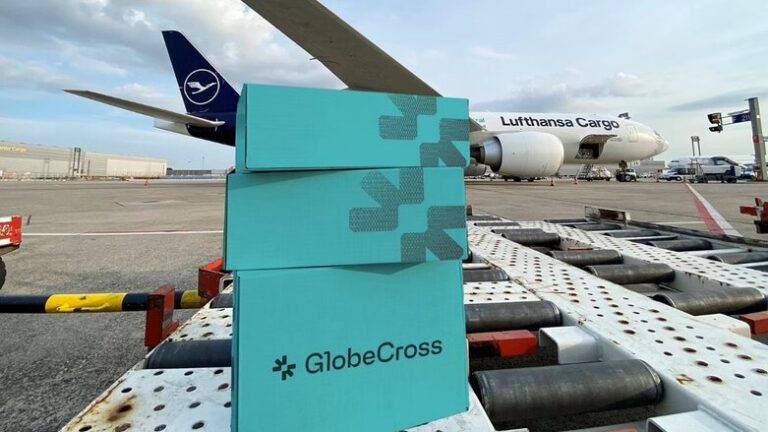
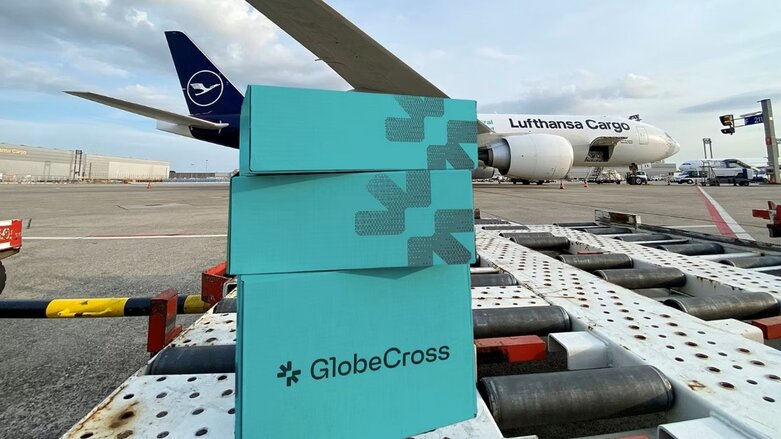
GlobeCross is Lufthansa Cargo’s new kid on the block – courtesy of LHC.
Rather than functioning as a simple consolidation of existing activities, GlobeCross reflects a broader repositioning. It comes at a time when air cargo providers are increasingly required to extend their value proposition beyond airport-to-airport transport, as cross-border e-commerce, regulatory pressure, and customer demand for end-to-end visibility continue to reshape the market.
Bringing together what belongs together The traditional model of air cargo as a primarily capacity-driven business is gradually giving way to integrated service structures that combine transportation, customs handling, and digital process management.
With the new setup, Lufthansa Cargo is effectively bringing together two previously separate but complementary business areas: digital e-commerce logistics and certified customs brokerage.
“By launching GlobeCross, we are significantly expanding our cross-border logistics capabilities and taking a decisive step toward offering our customers solutions beyond traditional airport-to-airport transportation,” said Ashwin Bhat, CEO of Lufthansa Cargo. The executive went on to say: “By combining deep customs expertise with digital e-commerce solutions, as well as bringing together the complementary strengths of CB Customs Broker and heyworld, we are creating a unique, fully integrated platform for cross-border parcel logistics. This strengthens our market position and enables us to deliver faster, compliant, and fully transparent processes, creating measurable added value and greater precision for our customers.”
While the statement underscores the strategic intent, the underlying direction is equally clear: Lufthansa Cargo is continuing to shift closer to the operational core of cross-border trade flows, where customs, data, and transport increasingly converge.
From fragmented processes to integrated logistics flows At the center of GlobeCross is the attempt to reduce fragmentation in cross-border logistics chains. Until now, e-commerce shipments moving across borders have typically required coordination between multiple parties, carriers, customs brokers, IT platforms, and last-mile providers, often operating in parallel rather than in sync.
The company is designed to consolidate these steps within a more unified structure. The objective is not only operational efficiency, but also greater predictability in environments where customs requirements and regulatory checks continue to increase in complexity.
“The merger of heyworld and CB Customs Broker is the next logical step in making cross-border logistics simpler, faster, and more reliable for our customers,” said Nikola Todic, Managing Director of GlobeCross. “By combining e-commerce logistics and customs expertise within one integrated solution, we eliminate interfaces, reduce border delays, and enable scalable end-to-end processing from origin to doorstep.”
Existing customers of both entities will face no immediate changes to contracts or operational processes, Lufthansa Cargo emphasized in a release. The integration is expected to take place primarily on the backend, with longer-term effects focused on coordination efficiency and process speed.
Three pillars for cross-border operations GlobeCross is structured around three core service areas, each targeting different points within the cross-border logistics chain.
The first pillar focuses on end-to-end e-commerce logistics, integrating transport, customs clearance, and last-mile delivery into a single operational flow. The aim is to reduce handover points and improve visibility across international shipments.
The second pillar centers on dedicated e-commerce import terminals at key air cargo hubs. These facilities are supported by proprietary handling and customs software, intended to streamline parcel processing and reduce clearance bottlenecks at gateway locations.
The third pillar covers digital customs clearance services for EU imports and exports across multiple industries. According to the company, this segment is supported by more than 20 years of customs experience and AEO-C/S certification.
“Our focus is on reliability and predictability, especially in today’s environment,” said Murat Odabas, Managing Director of GlobeCross. “By structuring information flows and integrating regulatory requirements directly into our software and solutions, we reduce complexity, minimize delays at borders, and eliminate friction in cross-border logistics.”
Asset-light model and structural positioning The company will operate on an asset-light model, relying primarily on software, process design, and operational expertise rather than large-scale physical infrastructure investments. This approach is intended to allow faster scaling and greater flexibility in adapting to regulatory and market developments.
At the same time, the company remains embedded within Lufthansa Cargo’s global network and the broader Lufthansa Group logistics ecosystem, providing access to established infrastructure and international market reach.
The launch also reflects a wider structural shift within the air cargo industry. As digitalization, customs integration, and end-to-end supply chain visibility become more central to customer requirements, airlines are increasingly positioning themselves as logistics orchestrators rather than pure capacity providers.
Each week, CargoForwarder Global shines its ‘Spotlight On…’ a particular segment of the air cargo industry to show just how many factors interact with each other to move shipments across the globe. General Sales and Service Agents (GSSA) act as commercial and operational representatives of airlines in specific regions where the airline has no direct presence or limited infrastructure. They are an important intermediary between airlines and freight forwarders, and often have a very varied range of tasks from sales and marketing to cargo booking and documentation, regulatory compliance, operational oversight, market intelligence, and much more. This week, Olga Palec-Furga (OP), Chief Operating Officer, 4RCargo, explains her role and shares her views and advice to anyone considering a career in air cargo.
Air cargo is not an industry for spectators. Image: Olga Palec-Furga
CFG: What is your current function and company? And what are your responsibilities?
OP: I currently serve in a senior leadership role at 4RCargo, where I combine strategic leadership with operational oversight across a diverse and complex region. I am responsible for Poland, the Czech Republic, Slovakia, Hungary, Austria, and the Baltic States, including Lithuania, Latvia, and Estonia.
This region represents a highly diverse mix of markets at different stages of maturity, with varying customer expectations, regulatory environments, and competitive dynamics, which adds both scale and complexity to the role.
In this capacity, I focus on driving commercial growth, strengthening long-term customer partnerships, and ensuring operational excellence across the cargo value chain. I am also deeply involved in aligning regional strategies with global market dynamics, navigating geopolitical and economic volatility, and building resilient, high-performing teams prepared for the future of air cargo.
CFG: What does a normal day look like for you?
OP: In air cargo, there is rarely such a thing as a ‘normal’ day. The industry is highly dynamic and sensitive to global events, so flexibility and clarity of thinking are essential. My day typically spans strategic discussions, operational decision-making, and close collaboration with partners and teams across different markets. It is a constant balance between long-term vision and immediate, often time-critical execution.
At the same time, one of my key priorities is to create the conditions for others to perform at their best. This means removing obstacles, simplifying complexity, and ensuring that teams can stay focused on what truly matters. Leadership is not about control – it is about removing obstacles, enabling people to succeed, and helping them grow.
CFG: How long have you been in the air cargo industry, and what brought you to it?
OP: I have been professionally connected with the aviation industry since 2001, and closely involved in air cargo since 2014. My career path has given me a broad perspective, from airline operations, including my role as Station Manager for Austrian Airlines in Warsaw, to cargo-focused leadership positions and the GHA (WELCOME Airport Services) & GSA environment.
What has consistently drawn me to air cargo is its unique position at the intersection of global trade, logistics, and aviation, a space where strategic thinking meets real-time execution and where decisions have immediate, tangible impact.
CFG: What do you enjoy most about your job?
OP: What I value most is the combination of impact and people. Air cargo plays a critical, often invisible role in keeping global supply chains moving, and being part of that ecosystem brings a strong sense of purpose.
At the same time, I deeply appreciate working with diverse, international teams and shaping organizational cultures built on trust, respect, and shared accountability. For me, leadership is as much about results as it is about creating an environment where people feel empowered to contribute and grow.
CFG: Where do you see the greatest challenges in our industry?
OP: The industry is currently navigating a complex landscape shaped by geopolitical uncertainty, market volatility, and increasing expectations around efficiency and sustainability. One of the most critical challenges is building true resilience, not only operational, but also organizational and human.
At the same time, we are in the middle of a profound technological shift. The real challenge is not simply adopting new technologies, but integrating them in a way that enhances, rather than replaces human expertise, judgment, and experience.
CFG: What advice would you give to people looking to get into the air cargo industry?
OP: Air cargo is not an industry for spectators – it requires curiosity, resilience, and the ability to operate under constant pressure. Building strong technical foundations and understanding global supply chains is important, but what truly differentiates people today is mindset, adaptability, and the ability to continuously evolve.
Today, perhaps more than ever, authenticity in business truly matters. In a world increasingly supported, and at times overwhelmed by artificial intelligence, genuine human connection, integrity, and the courage to take responsibility are becoming rare and therefore highly valuable.
At 4RCargo, we actively cultivate a culture of continuous learning. We believe that staying relevant is not a one-time effort, but an ongoing process of growth, professionally, intellectually, and personally. The ability to learn, unlearn, and relearn is no longer optional. It is essential indeed.
In an industry driven by speed and technology, those who combine expertise with authenticity and the courage to think independently will not only succeed – they will shape its future.
CFG: If the air cargo industry were a film/book, what would its title be?
OP: ‘The Invisible Engine of Global Trade’
Many thanks, Olga!
If you would like to share your personal air cargo story with our CargoForwarder Global readers, feel free to send your answers to the above questions to cargoforwarderglobal@kopfpilot.at We look forward to shining a spotlight on your job area, views, and experiences.
Air cargo has lost its engine. E-commerce is no longer in hyper-growth, and without it, the market has no single dominant driver. According to IATA, global air cargo demand, measured in cargo ton-kilometers (CTK), fell by 4.8% compared with MAR25 levels. While APR26 results should show some growth, supported by seasonal flower exports from Central and South America, the core challenge is structural: capacity is constrained, rate pressure is increasing, and geopolitical volatility is forcing network shifts. Aircraft are still full. But they are no longer filled with cargo that sets the price.
The market is not short of cargo. It is short of cargo that pays – photo: CFG/ct
What is filling aircraft in 2026 Air cargo demand has shifted structurally. Aircraft are no longer filled by a single dominant segment, but by a fragmented mix of cargo flows. Today, the mix typically consists of 30–40% e-commerce, 20–30% general cargo, and 10–20% tech and industrial goods, with the rest coming from smaller niche flows.
This mix is neither clean nor predictable, and load factors are more fragile: planes are full, but the cargo is composed of price-sensitive shipments.
When everything began When COVID-19 hit, belly capacity disappeared almost overnight. Borders closed, passenger flights were grounded at scale, and demand for air cargo spiked exactly as capacity collapsed. Rates surged two to five times on major lanes such as Asia–Europe and the Transpacific, turning the market into a seller’s market with unprecedented pricing power.
The reset accelerated e-commerce, increased reliance on air cargo for critical goods, and exposed the industry’s dependency on belly capacity. Many of today’s challenges – capacity sensitivity and volatility – are direct consequences of that period.
COVID created a perfect storm: demand surged while capacity collapsed, transforming air cargo into a high-margin, high-volatility market. Airlines generated record cargo revenues, with cargo becoming the main revenue stream while passenger operations were largely inactive.
Demand correction and normalization phase In 2023, rates dropped sharply and overcapacity began to appear on some lanes. Aircraft were filled with less urgent, more price-sensitive cargo as demand softened.
E-commerce growth slowed as consumer demand weakened amid inflation and inventory correction, a trend widely reflected in IATA market data and forwarder reports. The market gradually stabilized after this adjustment, with a clearer balance between supply and demand, but at lower yield levels than during the COVID period.
By 2024, aircraft were filled with a more balanced mix of e-commerce, general cargo, and electronics. Passenger belly capacity was largely restored, marking a return to more normalized operating conditions.
Fragmentation takes hold The early signs of capacity constraints, driven by engine issues and maintenance, repair and overhaul (MRO) limitations, were already visible in 2025. Demand was inconsistent, with week-to-week swings, while e-commerce remained large but more optimized. According to the Rotate Report Q1, e-commerce added 727,000 tons to demand in 2025, equivalent to roughly 20% of global air cargo capacity.
Capacity constraints, geopolitical disruption, and fuel risk rising The market is defined by limited available lift. Volumes are down between 7% and 12% due to reduced capacity in the Middle East and seasonality, resulting in increased demand for charter solutions, according to Q1 reports from DSV, Kuehne+Nagel and DHL. At the same time, structural capacity constraints continue, as highlighted in Airbus and Boeing forecasts, both of which are also affected by the maintenance, repair and overhaul (MRO) backlog.
Geopolitical disruption is driving rerouting and last-minute cancellations, with Europe–Middle East lanes heavily impacted. Capacity is being removed suddenly and unevenly, pushing more cargo into ad hoc charter solutions and increasing cost volatility for forwarders.
“All eyes are on fuel supply and price, which are expected to test the industry’s resilience in the coming months,” said Willie Walsh, Director General of the International Air Transport Association. With this warning, IATA highlights fuel scarcity risks in parts of the world and rising fuel costs impacting cargo operations. Europe could face flight cancellations due to jet fuel shortages linked to the Iran conflict. Fuel has moved into operational risk territory.
E-commerce maturity E-commerce continues to dominate aircraft cargo, but its behavior is changing. Platforms such as Shein and Temu have become major drivers of cross-border e-commerce air cargo flows, particularly on Asia-US and Asia-Europe lanes, and they are increasingly learning how to maximize profitability through better planning and a clearer understanding of urgency. Yields are declining and modal flexibility is increasing, with greater use of sea-air and deferred air solutions.
This shift is compressing yields and making demand more predictable but less urgent, reducing the premium traditionally associated with e-commerce air freight.
Higher dependence on mixed loads No single commodity can replace e-commerce volume. Alternatives are limited: industrial cargo is cyclical, pharma is niche – reliable but limited in volume and highly specialized – automotive is volatile with frequent production disruptions, and tech is inventory-driven with inconsistent flows.
Integrators such as FedEx and UPS are prioritizing premium, time-definite products and high-margin verticals, directly reshaping what moves by air. Lower-yield, deferred e-commerce is increasingly diverted to slower modes, while healthcare, technology, and urgent B2B shipments dominate the air network. The result is a structurally higher-yield cargo mix without explicitly targeting air cargo volumes.
DHL Group’s recent results illustrate the shift toward yield discipline, with profitability increasingly driven by cost control and revenue quality rather than volume growth. Lufthansa Cargo’s BOLD MOVES reflects the same direction, with growth and margin performance driven by a focus on profitable, high-value cargo segments rather than volume alone.
The path to success Carriers and forwarders heavily dependent on e-commerce without pricing power are the most exposed – runnin high load factors, weak yields, and little control over timing. That’s a fragile position in a volatile market.
Chasing volume fills aircraft, but it doesn’t generate margin. That model is already breaking. The shift has to be toward cargo that pays: time-critical, high-value, and less price-sensitive flows. Protect yield, not load factor.
General cargo still matters, but as support – filling space and stabilizing the mix, not driving profitability.
The market is not short of cargo. It is short of cargo that pays.
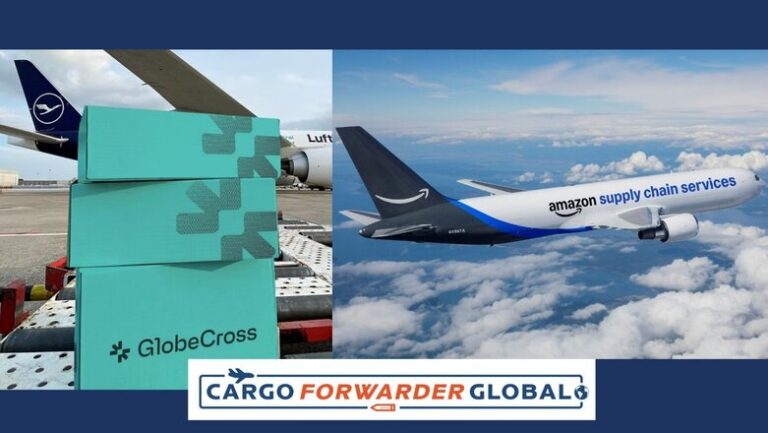
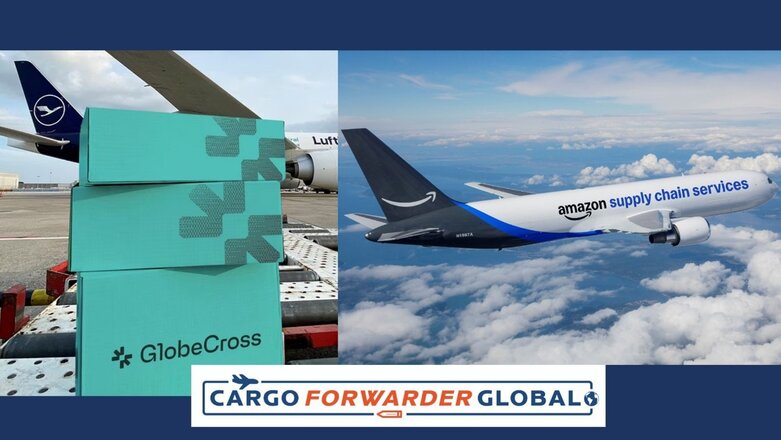
Within days of each other in the first week of MAY26, the global household name in e-commerce and a veteran air cargo airline both made announcements that reflect the shifting face of global logistics. Amazon launched Amazon Supply Chain Services (ASCS) on 04MAY26, throwing open the doors of its massive logistics empire to practically any business on the planet. Two days later, Lufthansa Cargo finally unveiled GlobeCross GmbH, a wholly owned subsidiary born from the merger of heyworld GmbH and CB Customs Broker GmbH, and designed to tackle the growing complexity of cross-border e-commerce. Both moves are direct responses to a changing global trade environment, yet the two solutions are very different in scale, scope and approach.
Unboxing the e-commerce business. Image: LCAG excerpt/Amazon
“Amazon is bringing the infrastructure, intelligence, and scale of its supply chain services – proven over decades – to businesses everywhere, much like Amazon Web Services did for cloud computing,” Peter Larsen, Vice President of Amazon Supply Chain Services announced on 04MAY26. “Supply chain wasn’t just a function at Amazon. It was core to providing an exceptional shopping experience. Our differentiator. The reason we could offer fast, dependable delivery that nobody else could. And with the launch of ASCS, we’re confident we can give any other business access to the same cost efficiency, reliability, and speed that we’ve built for Amazon customers.”
“One network to move, store and deliver goods for any business” Basically, Amazon is doing what it does best – having built up a highly-sophisticated internal infrastructure to support a vision – in this case, fast delivery of goods – it is now commoditizing that asset by opening it up to the market, with a view to embedding it as the global logistics default pretty much in the same way as online shopping is synonymous with its name. The scale of Amazon’s logistics operations which now include over 200 fulfillment centers in the U.S. alone, a fleet of over 100 freighter aircraft, 80,000 trailers, and 24,000 intermodal containers – all built up in a relative short period (it began investing in its own aircraft just 10 years ago), is unparalleled in its scope. That infrastructure has served its own retail operations and marketplace sellers, to date. Now, that same infrastructure is open to any business, regardless of whether they sell a single product on Amazon.com, and is being offered as: ‘One network to move, store and deliver goods for any business’.
ASCS’s huge scope ASCS covers three pillars: global freight – which is not just road and air, but also ocean, and includes customs clearance from China to the U.S.; distribution and storage (with AI-powered demand forecasting); and parcel delivery within two to five days, seven days a week. Its solution covers all customers’ requirements: capacity, speed, and reliability all in one, for a wide pallet of services including time-sensitive shipments, simplified booking, customs clearance, and end-to-end shipment visibility. Businesses can choose to import, store, and position inventory closer to where it is required, so as to swiftly respond to customer orders across their sales channels. “By using a unified inventory pool and advanced forecasting capabilities, businesses can improve delivery speed and accuracy across their own website, ecommerce marketplaces, social media channels, and physical stores,” Amazon’s release underlines, going on to point out that “Businesses can benefit from flexible pickup from their own warehouses or third-party providers and track shipments from label creation to customer doorsteps.”
Early adopters have already stepped in: Procter & Gamble, 3M, Lands’ End, and American Eagle Outfitters – names that lend instant credibility and signal that ASCS is already competing at the enterprise level, not just with SMEs. Plus, with this launch, Amazon is expanding its third-party logistics capacity to support businesses in industries such as healthcare, automotive, manufacturing, and retail.
From behemoth to bijou Where Amazon is selling scale, GlobeCross aims to sell precision. Over on LinkedIn, following the GlobeCross GmbH announcement, its Managing Director, Murat Odabas, revealed with a wink: “Took a little longer than expected … but hey, mergers aren’t built overnight. It’s official:
We have merged.
Stronger together.
Same direction.
One future.”
Originally, talk at Lufthansa Cargo had been of the merger launching at the start of the year (CFG reported). As it is, Lufthansa Cargo’s digital e-commerce subsidiary, heyworld (founded in 2019], and CB Customs Broker which its 20+ years of customs expertise, have now finally joined together to become GlobeCross. (See the full launch story here)
The press release explains that the subsidiary’s name “reflects the company’s role in global cross border trade. ‘Globe’ stands for international reach, while ‘Cross’ represents the ability to overcome geographic and regulatory boundaries by connecting markets, partners and systems into seamless, compliant logistics flows.”
While ASCS targets three main transport modes, and is asset-heavy (infrastructure), Globecross is deliberately asset-light – focusing on software, processes and expertise, is air-centric, and is particularly relevant in the EU regulatory environment. As its tagline on its website states: ‘Turning Borders into Gateways’, it is solving a specific e-commerce pain point: the regulatory friction of cross-border trade.
Murat Odabas explains in the press release: “By organizing information flows and embedding regulatory requirements into our software and solutions, we reduce complexity, minimize delays at borders, and remove friction from cross-border logistics.”
Blurring lines While ASCS is an e-commerce platform and infrastructure open to all kinds of businesses and thus offering change and opportunity, for existing customers of heyworld and CB Customs Broker, it is business as usual but under the new and unified label ‘GlobeCross’. That said, in this case, we have an airline strengthening its portfolio in cross-border logistics and customs services. The one company is e-commerce with airline fleet, the other is airline with e-commerce solution. What both launches this week therefore confirm, is that the traditional lines separating carrier, forwarder, broker, and 3PL are dissolving. The logistics industry is entering a new era of platform competition, and companies that can offer seamless, transparent, end-to-end execution – regardless of who owns the aircraft or the warehouse – will define what supply chain services mean in the decade ahead.
At the fringes of the Nordic Air Cargo Symposium, orchestrated by Euroavia International and held in Riga, Latvia on 28APR26, we conducted an exclusive interview with Laila Odina, Chairperson of the Board and CEO of Riga Airport. She told us that cargo issues have become increasingly important in recent times and stand firmly on the airport’s strategic agenda.
This is evidenced when taking a closer look at the cargo facilities on airport that have been modernized lately. Simultaneously, airport management has engaged in close cooperation with airlines, freight forwarders, integrators, and coordinates activities closely with the local customs authorities. “It’s like a tug-of-war. Except we’re all pulling on the same end of the rope together,” the CEO illustrates.
The objective is clear: to establish a cost-effective and well-functioning cargo hub in the Baltic region offering users high quality and reliable services. This approach underlines very clearly that cargo is not a by-product at Riga Airport but a key pillar of the masterplan. The development of the ground infrastructure is based on sustainable principles which serve as a guiding principle for all activities.
Laila Odina heads Riga Airport, photo: courtesy of Air Baltic
Position within the Baltic Region When asked how Riga positions itself compared to neighboring airports such as Tallinn and Vilnius, Mrs. Odina was clear: “In comparison, Riga is the largest airport in the Baltic region in terms of both passenger numbers and cargo volumes. In 2025, we handled 7.1 million passengers and 20,000 tons of cargo. With Air Baltic as our home carrier and Riga as its main hub, we share a joint ambition for growth. This close and coordinated development is a key unique selling point.” At the same time she stresses that other airlines are offered the same service; as a neutral party, the airport does not give preferential treatment to anyone. This would also violate European principles of equality and put RIX at odds with the European Commission’s competition watchdogs.
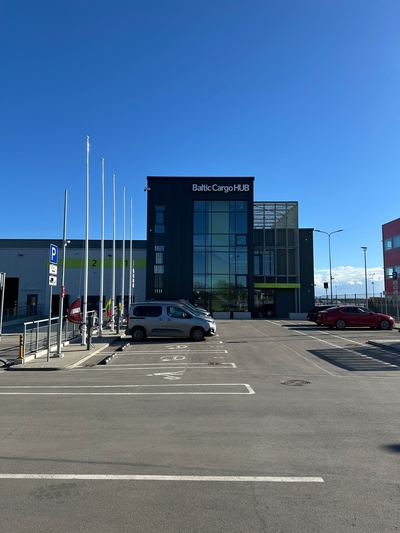
Growth enabler: Newly built Baltic Cargo Hub at RIX Airport – photo: CFG/gh
Airport City Development Currently, the airport is undergoing significant transformation triggered by its ambitious Airport City concept that addresses both passenger and cargo needs. For travelers, a new terminal is planned. Once completed it will make the passenger journey more comfortable and operations smoother, she says. “This includes an air-to-rail connection, which will be the first high-speed rail and air traffic connection center in the Baltic region, as well as the introduction of check-in robots and the development of a hotel.” On the cargo side, investments are equally ambitious, Laila states: “We have developed a new cargo terminal, the Air Baltic Cargo Hub, along with warehouse facilities for integrators such as UPS, DHL, and FedEx.” This infrastructure is designed to optimize connectivity and speed up flows. The concept, developed and implemented by family-owned logistics provider BeCon Projects GmbH, puts Riga on the cargo map of the Baltic region. The freight terminal encompasses 6,900 sqm of handling area and allows for processing 45000 tons of cargo annually. The facility offers users different temperature-controlled rooms ranging from -18°Centigrade to ambient. Strong rooms for securing valuables or storing radioactive materials are included, as are vet services and a customs office. The overall development plan is designed to span a 10-year period, enabling private investors to step in. The landside offers ample space for real estate development, while airside activities remain under the airport’s responsibility. “We are also improving facilities for truck operators, including enhanced parking and a new fuel station opening at the end of May,” announced Mrs. Odina.
Future Outlook Looking ahead, the CEO remains realistic yet optimistic: “Due to geopolitical challenges, particularly the war in Ukraine, transfer passenger numbers have declined. However, once the situation improves and with our new terminal, we expect passenger volumes to reach between 10 and 15 million annually.” Cargo growth is also expected to accelerate: “With the new Air Baltic Cargo facility, we anticipate throughput to grow. We are already seeing cargo aircraft from China operating into Riga, mainly driven by e-commerce, currently using B767 freighters.” A unique feature of Riga’s cargo proposition is its integration with postal logistics: “We offer a post facility within our cargo terminal, enabling air freight arriving under airway bills to be efficiently distributed as parcels across the Baltic region.” Prior to recent geopolitical disruptions, Riga Airport had projected reaching 9 million passengers by 2027 – targets that remain achievable in the longer term, she holds.
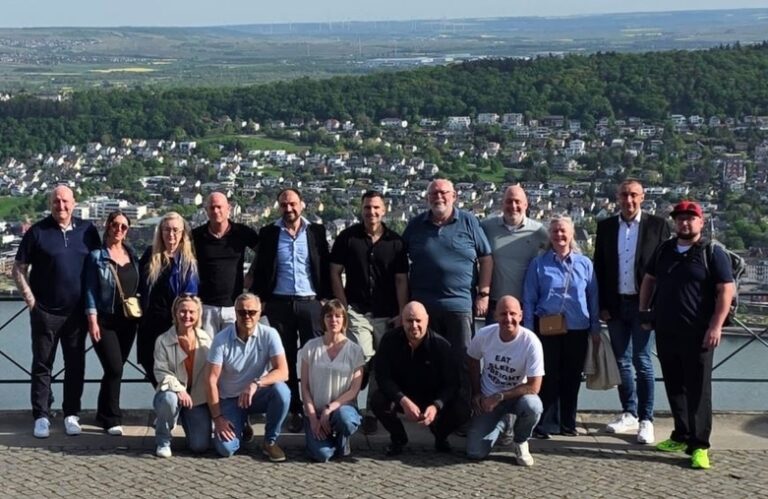
Nestled alongside one of Europe’s oldest transport routes – the beautiful and legendary Rhine River – the idyllic town of Rüdesheim played host to QCS’ annual kick-off meeting for 2026. Yet neither sunshine nor scenery can shield the company from the geopolitical impacts that all forwarders, airlines and the entire transport sector are having to face these days. However, thanks to the broad network of subsidiaries built up across Europe in recent years, QCS has achieved a high degree of resilience. This was evident at the Rüdesheim meeting last week.
“Times are tough”, said Stephan Haltmayer, QCS’ Managing Director. With that, he was not only referring to the worldwide crises that are impeding business in an already weakened sector. In the first days of 2026, the mid-sized, family-owned forwarding agency lost its founder, Dieter Haltmayer, at the age of 91, which made this the first ever meeting without him.
There was much to discuss at Quick Cargo’s Rüdesheim meeting – courtesy QCS
First meeting ever without patron, Dieter “My dad had lately taken on a more passive role, though he was still pretty eager to engage in many topics. There are rarely changes in day-to-day operations – but his passing is a great loss to all of us.” The best way to honor his life’s work is to continue what he had built, so QCS began the year very actively, attending many conferences and transport fairs, and showing its face to customers and agents not only in Europe but also beyond. In person, it should be emphasized, because the focus in the early weeks of 2026, was on training new sales representatives. They accompanied experienced ‘veterans’ in the field, to directly get to know how business is managed at QCS. “QCS is concentrating on young, in-house talent. We are supporting them to the best of our abilities, because losing capable young professionals is no option,” Stephan Haltmayer and Olive Krautter, COO Air at QCS, both stated.
Three key priorities Besides the focus on promoting and retaining young talent, understanding and keeping up with the rapid development of AI development was the second takeaway of this meeting. With Lukas Adt of booking portal, cargo.one, as one of the guest speakers, QCS members strengthened their take on AI tools to optimize workflows. This translates into time saving, placing early-bird quotations, or enhanced product quality since the time saved through AI results in optimized service offerings. A third major topic tabled at the Rüdesheim gathering, was efficiency. Centralized pricing combined with a swift, friendly service makes a difference in days where more and more people are becoming accustomed to artificial, generalized replies. Patrick Eberhard, Head of BDM (Business Development Management), highlighted promising trade lanes such as India, for centralized pricing throughout QCS Germany. Taking the workload away from single branches while using the knowledge and competence of a few to secure new business, or satisfying partners with a quick service that is not just a slogan but part of the company’s identity, are areas of responsibility that should be put on the agenda, he recommended.
Ever increasing tasks Nowadays, however, executives and leading managers not only run, create, and maintain their company’s daily businesses. They also have to fulfil the roles of ‘Masters in Administration’ and project management, and need become well-versed in the many laws and restrictions which are currently changing at an increasing pace. Since the 1970s, German governments have proclaimed a ‘significant’ reduction of bureaucracy, yet each year more regulations are added to the pile. The latest is NIS-2 – an EU-Directive aimed at establishing a unified, legal cybersecurity framework across the EU. Along with QM/Quality management, LBA/Aviation Security, and many other stipulations, these topics are not the core competencies of forwarding agents, yet regulators expect them to shoulder these tasks. The fact is that these additional bureaucratic and regulatory hurdles take up more time at each meeting, forcing the participants to adapt their already packed agenda to address these issues and keep the company running in accordance with legal requirements.
The vision lives on QCS decided, a few years ago, to invest in a broad setting across Europe. By building its own network, with Slovenia as latest addition, the vision of being ‘the number one family-owned independent freight forwarding company in Europe’ is increasingly becoming reality. Latest sales figures presented at Rüdesheim, point in a positive direction, with leniency towards the newest members of the QCS family, primarily established in Eastern Europe. Healthy growth requires investment and patience. Stephan Haltmayer concluded the meeting with a statement of reassurance to his staff: “QCS will continue to exist. There are no intentions of selling our company that we, as a family together with our employees, have built up over decades. The daily challenges are not burdens, but rather inspiration and fun. As always, we will overcome the ups and downs.”
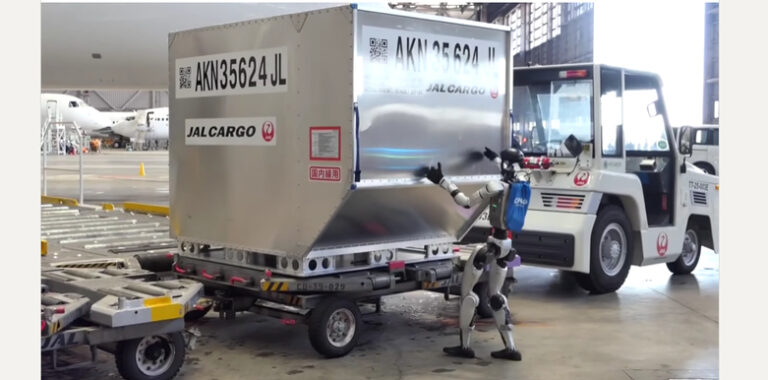
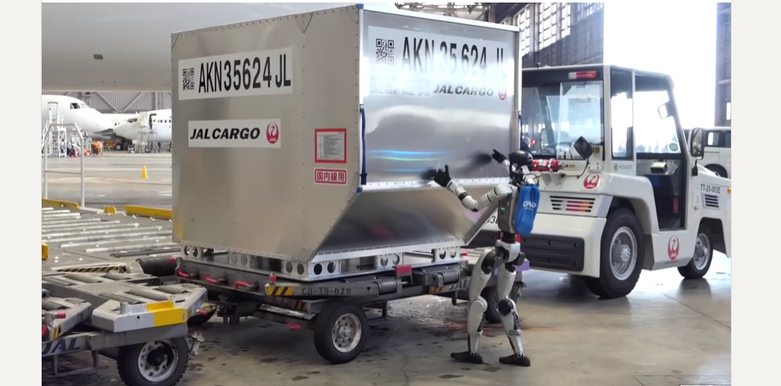
He still needs a little training to avoid damaging the ULD. Image: JAL
There have been a few amusing videos making the LinkedIn rounds this week, illustrating what might become commonplace in the next decade. Japan Airlines (JAL) announced on 27APR26, that it has commenced a pilot project at Tokyo’s Haneda Airport, to test the feasibility of humanoid robots in airport ground handling. If it is a success, it could go a long way to solving the growing manpower shortage come 2028. The humanoid robots will be trialed over a period of two years. It is the first such experiment to be carried out in Japan. Japan Ground Service Co., Ltd., which is responsible for JAL Group’s ground handling operations (aircraft towing and baggage/cargo loading and unloading) at major domestic airports, is working together with GMO AI & Robotics, aiming to improve efficiency in ground handling operations and save on labor resources. The country is seeing its working-age population shrink and at the same time experiencing a rising influx of tourists.
The Chinese-built, Unitree G1, silver, humanoid robot [meaning his range of motion and adaptability is comparable to that of a human], measures 130 cm in height and weighs 35 kg. On the videos, he is seen working in a hangar, pushing cargo containers from trolleys towards an aircraft high-loader. Since he has two legs, he can work in much the same way as a human, and this is an advantage over wheeled bots, which would require facility adaptions for them to be able to function properly. That said, the video shows that his movements are still somewhat unsteady, his feet require better traction, and he needs to be taught how to touch the container so as not to damage it by accident.
From now until 2028, he will be tested in scenarios where he can operate safely, with a view to then being deployed in baggage loading/unloading, aircraft cleaning, and possibly even operating GSE, as these are areas where employees are short-staffed. JAL’s aim is to automate wherever possible to remove the burden from its human staff.
“Ground handling operations require highly skilled personnel to maintain safety, such as aircraft marshalling and baggage/cargo handling, while also imposing significant physical burdens. […] Both companies aim to establish an environment in which humanoid robots can operate safely and effectively on the frontlines of airport operations. […] This initiative will contribute to sustainable development in the aviation industry and promote work-style reform at airports,” JAL’s press release concludes.
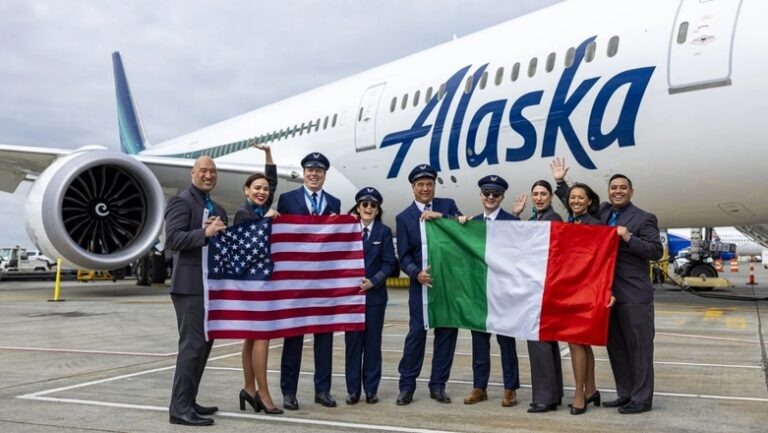
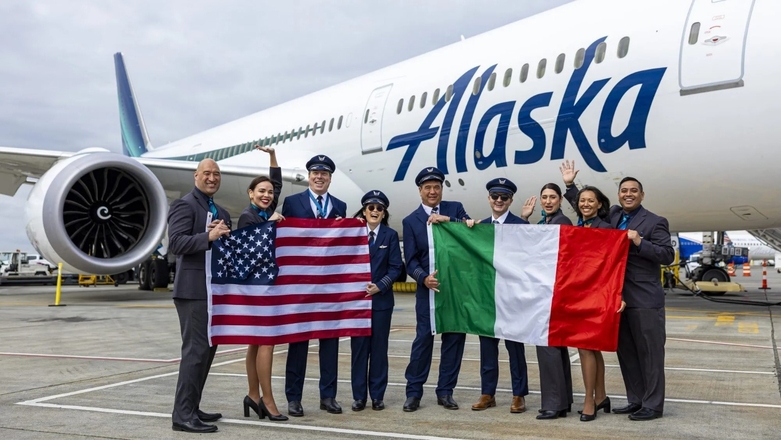
Boeing 787 dreamliner departure from SEA. Image: Alaska Airlines
History was made on 28APR26, when Alaska Airlines launched “the first-ever direct connection between the Emerald City and the Eternal City” – in other words, connecting Seattle-Tacoma International Airport (SEA) and Rome’s Leonardo da Vinci Rome Fiumicino Airport (FCO) with a first‑ever nonstop flight. The service, part of the airline’s expansion strategy into Europe, will run daily until 23OCT26. It departs Seattle at 17:30, and lands in Rome at 13:15, on the way out. Coming back, it leaves Rome at 15:25, and arrives in Seattle at 17:45, enabling easy connections to the Hawaiian Islands. The timings are good on both ends for efficient freight forwarding therefore offers interesting cargo opportunities – an area that Alaska Airlines is focused on developing further. “Beginning 28APR26, Alaska will become the first U.S. passenger airline to offer daily nonstop cargo service between Seattle and Rome, strengthening trade connections between the Pacific Northwest and Italy and expanding the airline’s cargo network to 109 destinations worldwide,” the release emphasizes.
Ben Minicucci, CEO of Alaska Air Group, said: “Launching our first flight to Europe is a significant step in executing our long-term growth strategy. Service to Rome […] strengthens Seattle’s role as a global gateway and is made possible by our people who deliver safety, care and performance with every flight. Andiamo!” Ivan Bassato, Chief Aviation Officer of Aeroporti di Roma, stated: “We are pleased to welcome Alaska Airlines to Rome Fiumicino, marking an important milestone as the airline launches its first European destination. This new nonstop service to Seattle, the first-ever scheduled connection between the two cities, strengthens our position as a leading gateway between Europe and North America, particularly to the U.S. Pacific region. The route reflects our continued focus on growing high-value intercontinental connectivity that supports economic development, benefits local communities and enhances the competitiveness of Italy’s national economy.”