Home Blog Page 26

How airmail gave flight to United Airlines

0

With 2026, United Airlines is proudly kicking off its centenary year. Very few carriers can look back on 100 years of operation – and when your airline company happens to have the world’s biggest fleet and largest workforce, then the contrast to how it all began, cannot be greater. Particularly since those beginnings were in cargo rather than passenger; more specifically, in airmail, and markedly so.

How it all began, back in 1926. Image: United Airlines

It all began with airmail. Walter Varney, the founder of United Airlines’ precursor, Varney Air Lines, had the original intention simply of offering a service to move mail by air, reliably and on time. This was in response to the 1925 Contract Air Mail (Kelly) Act, which sought to establish a transport network together with private firms, to shoulder a growing demand for airmail that, since 1918, had first been flown by U.S. army pilots and then by a dedicated Post Office Aerial Mail Service.

It all began on 6 April 1926
The first Varney Air Lines flight, as part of the CAM-5 airmail service, set off on 06APR26, from Pasco (WA) via Boise (ID) to Elko (NV) – a route that sowed the seed for what would become today’s United Airlines. CAM-5 stood for Contract Air Mail Route No. 5, and was the fifth route awarded by the U.S. Post Office under the Kelly Act – a route that Varney Air Lines apparently won because it was the sole bidder for it at the time. It did not take long for the airline to expand its network to Salt Lake City, Portland and Seattle, nor for it to gradually evolve into a passenger carrying airline – originally with aircraft such as the Boeing 80, designed to carry up to 12 passengers as well as mail, where passenger revenue was seen as a supplement to mail income. Today, the opposite holds true: profitable cargo forms the baseload for passenger routes in most cases – not just for United Airlines.

Passengers and post
People think of United as a passenger airline,” says Kelly Feeney, Manager of Domestic and AMOT Postal Sales and Operations. “But there’s a whole world moving underneath those flights that most people never see.” For United Airlines, today, that world now consists of all kinds of cargo. Mail still plays a major role, and Varney’s original vision continues to steer its management, as Stephanie Giraldi, Senior Manager of Postal Network Optimization & Performance at United Cargo, confirms: “We take mail very seriously at United. This isn’t something we treat as an afterthought. It’s about performance. It’s about doing it right, every time. One of United’s earliest flights carried U.S. mail. That partnership with the Postal Service isn’t just part of our history. It’s the foundation of it.

Bigger and even better
The scale of mail operations today, and how they are handled, are a far cry from what they were when Varney and his pilots started out, one hundred years ago. The initial CAM-5 flight has developed into an intricate and extensive network of domestic, and international routes, contractually supporting the United States Postal Services and over 20 postal authorities across the world. A business that, in the past 5 years alone, brought in over USD 970 million in postal revenue from the transport of over 340 million kilograms of mail. And processes have evolved to support its growth. In 1926, mailbags were strapped into open cockpits of planes that were largely flown on pilot instinct and experience. Today, pilots and mail processes are hugely supported by digitalization and enhanced technology – from asphalted and illuminated landing strips, through to intelligent cockpit systems, to each mail item being carefully labeled, scanned, tracked, and delivered as expected – and far more quickly than ever before.

Mail matters
While so much these days is now communicated by email, nothing beats the joy of receiving a physical letter or parcel from home. Much of what United Airlines transports when it comes to mail is destined for military service members, often stationed thousands of miles from home. Kate Hurley, International Postal Operations and Sales Manager, explains the emotional importance of running an airmail service: “Mail is often the strongest physical connection to home for military members overseas,” she said. “Care packages. Letters. Familiar things. That matters.

In 1926, airmail flew in small aircraft across short routes. Today, those mailbags are loaded into modern, high-tech, widebody planes that traverse time zones and continents at speeds unheard of 100 years ago. While the scale has changed, Hurley underlines that: “The purpose is still the same. You’re moving something people are waiting for.”

The Elephant in the Room: Defense is Reshaping Global Logistics

0

While civilian supply chains continue to debate optimization, sustainability, and digitalization, defense logistics is expanding rapidly and largely outside the public discussion, operating under different rules – absorbing capacity, talent, infrastructure, and risk tolerance at a scale that is increasingly visible across global logistics networks.

Loading of a Sikorsky CH-53 onto an Airbus Beluga, photo: courtesy Airbus

Modern conflict no longer follows the 20th-century definition of war. What is now commonly referred to as hybrid warfare, combines conventional military action with cyber operations, economic pressure, psychological tactics, and sustained information campaigns.

The impact on civil and cargo aviation is steadily growing, affecting not only supply chains but also logistics and execution end-to-end.

Capacity pressure: the demand shift no one talks about
Military transport aircraft are specialized assets owned by the armed forces and designed to move troops, equipment, and supplies. They play a crucial role in military operations and humanitarian missions. According to the Fortune Business Insights study dated 29DEC25, the global military transport aircraft market was projected to grow from USD 10.27 billion in 2024 to USD 10.87 billion in 2025, with a further projection of USD 16.13 billion by 2032.

At the same time, commercial air cargo demand continues to outpace capacity growth. According to IATA industry data, demand is rising faster than available capacity. In NOV25, global air cargo demand rose by 5.5% year-on-year, while capacity increased by only 4.7% over the same period. That means more cargo chasing a tighter pool of available space.

In a market where demand already exceeds capacity, defense logistics does not compete with commercial cargo on price or reliability, but on urgency – and when both depend on the same aircraft, crews, and infrastructure, urgency takes precedence.

Talent: the quiet exodus
A review of major job platforms shows a growing presence of defense-related roles that closely mirror traditional air cargo positions such as pilots, engineers, operations staff, and commercial roles. The job descriptions usually include transparent salary offers that significantly exceed average earnings for similar positions in the commercial air cargo industry. Defense contractors are pulling people, not just aircraft.

At the same time, the industry faces a generational challenge. Younger professionals entering the workforce as Baby Boomers and Gen X approach retirement, are attracted by these defense roles, which look financially stable and engaging, and work that can be perceived as rewarding. Most of the skills are easily transferable, allowing professionals to enter or return to commercial cargo using that experience.

Infrastructure: built for civilian flow, used for strategic urgency
Civil aviation infrastructure is largely designed for predictable civilian flows. Increasingly, it is being used to support strategic military urgency.

Military affairs outlet Voenndelo reports a marked rise in NATO military transport aviation activity at Rzeszów airport in Poland. Since 10JAN26, the facility has seen a series of aircraft movements linked to the transport of military cargo and personnel.

Rzeszów has long played a central role in NATO logistics, serving as a major hub for the movement of weapons, ammunition, and other military supplies to Ukraine. The rise in activity suggests an increase in deliveries and a broader escalation of logistics operations in support of Ukrainian forces.

As a result, the Polish Air Navigation Services Agency (as reported publicly) is advising civil and business aviation operators to file flight plans well in advance and to remain up to date on Notices to Air Missions (NOTAMs).

Two logistics worlds, one aircraft pool
In the United States, programs such as the Civil Reserve Air Fleet (CRAF) explicitly allow governments to pull commercial aircraft into defense service during periods of heightened demand. When this happens, aircraft exit commercial service, followed by crews and maintenance resources. This is legal, planned, and disruptive by design.

Europe does not have a direct CRAF program like the United States, but it is effectively building similar capabilities through multinational arrangements. Recent EU strategy papers even explicitly consider creating a civilian reserve airlift concept to fill gaps in heavy airlift capability – signaling that Europe is moving toward a more CRAF-like model. The recent European Commission proposal on Military Mobility certainly aims to establish a framework of measures to facilitate the transport of military equipment, goods, and personnel across the Union. (SWD (2025) 847, Brussels November 19, 2025).

Repercussions in connected industries
Capacity drain is already happening, resulting in higher costs, less availability, and longer lead times. The impact is particularly acute for sensitive and high-value cargo. Medical supplies, blood plasma, vaccines, biologics, specialty chemicals, and sensitive electronics are all affected. These categories are temperature-critical, time-critical, and operationally non-negotiable.

Insurance markets are responding accordingly. Cargo exposed to geopolitical conflict is facing higher premiums, narrower temperature deviation coverage, more exclusions linked to political risk, and stricter documentation demands. According to GlobalData’s second-quarter 2025 ESG Sentiment Poll, geopolitical conflict is perceived as the business risk most likely to impact companies over the next 12 months, with 40% of respondents selecting it as the top concern.

European airline network adjustments
On 20JAN26, Lufthansa Group announced on its Expert website a reduction and cancellation of flight offerings to and from the Middle East, further tightening available capacity. According to Reuters, other European airlines like Wizz Air and British Airways are adjusting routes to mitigate risks linked to ongoing geopolitical turmoil in Iran and the Middle East. Carriers such as Ryanair have moved routes away from the region in recent months, while others, including Air France, have long avoided Iranian airspace. These decisions reduce effective capacity through longer routings and fewer rotations, even when the fleet size remains unchanged.

The global interconnection of goods and people is now inseparable from the expansion of military and defense logistics. For air cargo, this is no longer a temporary disruption to manage, but a structural condition that must be planned around. Capacity, labor, infrastructure access, and risk exposure are increasingly shaped by defense priorities, compressing flexibility across the system. Forwarders are operating in an environment where volatility is permanent, buffers are thinner, and competition for assets extends beyond the commercial market – forcing tougher decisions on pricing, contract structures, network design, and customer commitments.

Flying a zoo-load of animals to a better life

0

Of all the different kinds of cargo that take to the air, flying animals is a particularly special operation – more so, when they are rescue animals being offered a better life either in their native region, or in specialized conservation facilities. Air Charter Service was recently tasked with one such extraordinary mission. Over 100 animals were carefully loaded onto a specially chartered Boeing 747, and flown from Thailand to a newly built sanctuary ‘near the eastern coast of India’, according to the press release. Could this be Vantara, a major 3,000-3,500-acre center in Gujarat that was inaugurated MAR25 near Jamnagar? In any case, the 3,000-acre facility indicated is specialized in wildlife rescue, rehabilitation, and conservation.

A very varied range of wildlife recently flew with Air Charter Service. Image: Air Charter Service

Brendan Toomey, CEO of ACS Singapore, illustrated: “We received a call from our client who was looking to transport a whole host of animals from Bangkok to Ahmedabad, to a sanctuary hosting thousands of similar animals – many rescued from circuses, zoos, or trafficking networks. There was a wide range of different animals that needed to fly on the charter, including zebras, sloths, wallabies, hawks, pacas and raccoons, all of which needed to be monitored by onboard vets throughout the flight. The total weight of the animals, their enclosures, their food and the vets came to 50 tons, meaning a B747 was the best choice for the flight. Initially we worked closely with the Thai Civil Aviation Association and the client to ensure all correct export documents were provided, in order to get the permits in a timely manner, as we were given less than two weeks’ notice to get the job done. The representative from our Singapore office on the ground helped coordinate the airport warehouse, a dedicated area and necessary equipment in order to load the animals safely and as swiftly as possible. He then travelled on the charter to help manage the offloading process in India, before the animals’ onward journey to their new home.”

VIE scores five-year handling contract with Turkish Airlines

0

The relationship between the Turkish carrier and the Viennese airport dates back to 1961. 65 years on, and good things are still happening. The two have just signed a comprehensive ground handling contract covering everything from passenger care to baggage and aircraft handling. It is a five-year contract, running until 2030, that ensures Turkish Airlines’ five daily flights between Vienna and Istanbul, run smoothly, safely and efficiently. As the press release states, those flights link Austria to meanwhile one of the world’s largest aviation hubs, not to mention ‘smartIST’ cargo hubs. Quite aside from the over half a million passengers flying with Turkish Airlines via Vienna every year, the opportunities the airline’s belly capacity offers for cargo are very attractive and Vienna Airport will be kept busy delivering cargo handling services, including temperature-controlled freight such as pharmaceutical products – something it prides itself on, given its specialized pharma infrastructure.

From left: Michael Zach, SVP Ground Hdlg & Cargo Ops, VIE, Serkan Özbüyükyörük, GM Turkish Airlines – Austria, Julian Jäger, CEO & COO of VIE. Image: Vienna Airport (VIE)

Julian Jäger, Joint CEO and COO of Vienna Airport, stated: “Turkish Airlines is one of our most valued airline partners and the fifth-largest airline at Vienna Airport. The decision to choose Vienna Airport as its handling partner is a clear sign of confidence in the quality and reliability of our operational services. As the largest ground handling provider on site, we stand for efficient processes, our ground handling teams deliver top performance every day – which is precisely what makes Vienna one of the most punctual hubs in Europe.”

Serkan Özbüyükyörük, General Manager Austria at Turkish Airlines, commented: “As the airline connecting Vienna to more countries than any other carrier through our İstanbul hub, we see this five-year ground handling agreement as a strategic enabler of reliability and service excellence. We are glad to deepen our long-standing partnership with Vienna Airport and continue setting the standard for premium aviation in Europe, as the Best Airline in Europe. Turkish Airlines is committed to delivering superior quality at every touchpoint, and this expanded partnership reinforces that commitment through 2030.”

Michael Zach, Senior Vice President Ground Handling and Cargo Operations at Vienna Airport, concluded: “Turkish Airlines stands for premium quality in international aviation, a claim which perfectly fits our performance orientation. We ensure smooth-running operations daily at a constantly high level, thanks to well-harmonized processes and a committed team.

MST almost doubled its cargo throughput in 2025

0

Impressive 2025 results that Maastricht Aachen Airport (MST) published earlier this week – and ones that other airports likely can only dream of. After all, how many can claim a 40% increase in air freight volumes in one year? The Dutch regional hub’s renewed focus on cargo development has more than paid off. It handled 41,636 tons of cargo, last year, across 7,549 aircraft movements (1,737 cargo flights and 994 passenger flights); a significant recovery from 2024’s 28,448 tons following runway renovations to the cost of EUR 35 million in 2023. If it continues in a similar vein, then its 2024 target of 200,000 tons by 2030 should be doable. In a first step towards seriously becoming a leading, specialized cargo hub, MST appointed its first cargo sales executive last year in the shape of Pascale de Mieter, CFG reported. Looking ahead, the airport’s application for a new Airport License and a proposed runway extension to 2,750 meters promise to further support growth in both cargo capacity [since it would enable larger cargo loads on freighters] and international connectivity.

Dean Boljuncic, Head of Commercial Development, MST. Image: Maastricht Aachen Airport

Dean Boljuncic, Head of Commercial Development, Maastricht Aachen Airport, stated: “The strong growth in cargo volume last year is down to MST’s continued investment in cargo handling facilities at the airport, particularly in the second half of 2025. We have invested in optimizing our handling processes and improving our facilities in the past 12 months, including redeveloping MST’s AnimalPort and partnering with FlowerWatch to modernize perishable cargo operations. Both cargo and passengers are important for MST; however, we expect to see higher and faster returns from our cargo operations, and our strategic focus in this area is clearly paying off.”

Korean Air modernizing JFK with Lödige

0

Korean Air has partnered with Lödige Industries to carry out a major modernization of its cargo terminal at New York JFK. The project aims to boost service quality, operational efficiency, and sustainability at the airline’s U.S. East Coast hub – incidentally one of the biggest cargo terminals in the region. Opened in DEC20, the 17,065 m² facility handles around 200,000 tons of cargo annually and will now undergo a comprehensive technical upgrade. Key improvements include two fully automated Elevating Transfer Vehicles (ETVs) for higher ULD handling capacity and the introduction of Cargo Pallet Movers to replace fixed transfer vehicles, enhancing flexibility and space use. Fourteen workstations will be renewed, and major upgrades to the Cool Chain area will add a new refrigerated warehouse and modernized temperature-controlled storage systems. The four existing temperature-controlled warehouse areas will be equipped with new temperature controllers, roller conveyors, shutters and various other components, so as to increase reliability and efficiency. Overall, the makeover and renovation will improve productivity and provide for an even safer working environment.

Sleek and efficiently handled at JFK, thanks to modernization investments. Image: Korean Air

Junho Choi, Regional Manager, Cargo Office in New York, Washington and Boston, at Korean Air Cargo, said: “JFK is our gateway for cargo services along the East Coast and a key hub in our growing global network. By modernizing the terminal with state-of-the-art automation technology, we are ensuring long-term efficiency, higher safety standards, and increased sustainability of our operations.”

Jonathan Hardy, Managing Director North America at Lödige Industries, added: “Korean Air Cargo is renowned worldwide for its high-quality cargo service. With the modernized terminal, all requirements are met to satisfy the highest customer demands at JFK for years to come. As the airport plays an increasingly important role in global commerce, the modernized cargo center will further strengthen the airline’s leading market position.”

First-ever B737-800NG combi flies for Air Inuit

0

It isn’t all that long ago that KLM retired its well-known Boeing 747 passenger-cargo-combi-aircraft, and now a similar version on a smaller scale has taken to the skies. The inaugural flight of the world’s first Boeing 737-800NG combi was scheduled for 13JAN26, from Montréal to Kuujjuaq. This latest Boeing passenger and cargo combi aircraft belongs to Air Inuit – the wholly-owned airline of the Inuit of Nunavik [since 1978] and a subsidiary of the Makivvik Corporation. Newly reengineered and converted by KF Aerospace, and fully certified by Transport Canada, the Boeing 737-800NG combi will serve the people living in the Nunavik region, connecting them to the South. The aircraft has a forward cargo compartment that can hold five pallets, and seats 90 passengers in a cabin in the aft section. “This world-first is part of Air Inuit’s broader fleet-modernization strategy, which began with the acquisition of three Boeing Next-Generation 737-800s to eventually replace its 737-200 fleet. The new aircraft offer improved passenger comfort, inflight wifi powered by Starlink, better fuel efficiency, modern avionics, and increased passenger-cargo capacity to respond to the essential needs of communities in Nunavik and beyond,” the release reveals. Another combi conversion is due to be delivered next month – the third of three 737-800s acquired by Air Inuit in 2023.

Combi-aircraft are a thing again. Image: Air Inuit

Christian Busch, President and CEO of Air Inuit, commented: “Our investment in this next-generation combi reflects Air Inuit’s commitment to innovation that directly serves the unique passenger and freight needs of the communities and the people we serve. This aircraft allows us to modernize northern jet service while preserving the flexibility that is essential to our mission.

Noah Tayara, Executive Chairman of Air Inuit, said: “Air Inuit plays a vital role in connecting and supporting the communities of Nunavik, and this new aircraft strengthens our ability to fulfill that mission.”

Pita Aatami, President of Makivvik Corporation, stated: “This achievement is another example of the people of Nunavik demonstrating the ingenuity that has been part of our story for millennia, ensuring our region continues to thrive and remain connected.”

Oman Air to launch Muscat-Kigali service

0

The new year kicked off with Oman Air announcing its expansion into East Africa. The airline will commence direct flight operations between Oman’s city of Muscat and Rwanda’s capital, Kigali. The 5.5-hour passenger service will begin in JUN26, connecting the two cities twice a week, using Boeing 737 aircraft. It is Oman Air’s first sub-Saharan connection and enables Oman Air Cargo to offer attractive freight links between East Africa, the Middle East, and Europe – particularly for perishables and time-sensitive commodities. The service is currently still subject to regulatory approvals.

Oman Air will operate direct flights to Kigali, Rwanda. Image: Oman Air Cargo

The passenger version of the airline’s press release points out that: “Oman and Rwanda have shared diplomatic relations for over 28 years as well as a long-established trade relationship. Rwanda’s tourism and business travel market has expanded steadily in recent years with growing demand for the country’s eco-tourism and premium travel offerings. Kigali has also positioned itself as a regional hub for conferences and investment, supported by government-led initiatives to attract international events.” In addition to Oman serving as a “key regional aviation hub”, Oman Air Cargo, has been focusing on network expansion across the Middle East, Asia [Indian Subcontinent], and Europe, alongside the latest East Africa announcement. “The Muscat-Kigali service will support the movement of fresh produce, including fruit, vegetables, and flowers, alongside pharmaceuticals, general cargo, and express shipments originating in East Africa,” the cargo release states, underlining the many network connections out of Oman that position it “as an efficient transit hub for African exports destined for global markets”.

Michael Duggan, Head of Cargo, Oman Air, explained: “We are seeing sustained growth in demand between the Middle East and Africa, particularly for perishables and specialist cargo, and this new route allows us to respond with additional capacity and reach. By expanding our network into East Africa, we are providing exporters with reliable access to our global network and strengthening Muscat’s position as a dependable cargo hub.”

Volga-Dnepr awaiting revival

0

The heavily indebted Volga-Dnepr Group is to be taken over by the EAS Group (Evraz Avia Service LLC) during the course of Q1, 2026. It is a rescue plan to stabilize Russia’s largest cargo conglomerate. Volga-Dnepr became one of the main victims of the international sanctions imposed since 2022, following the Kremlin’s war on Ukraine.

Behind the EAS Group is Evgeny Solodilin, CEO of Red Wings Airlines and former head of Zhukovsky Airport, located east of Moscow. However, market experts are skeptical about whether the relaunch will be financially viable.
The sanctions caused the Volga-Dnepr Group’s business model to collapse. This scheme was based primarily on scheduled flights operated by group member, AirBridge Cargo (ABC) between the Far East and Europe, with stopovers in Moscow or Novosibirsk, as well as charter missions using AN-124 freighters for oversized and heavy items, most of which were commissioned by non-Russian customers.

Under Solodilin’s leadership, the VD Group is to be given a new perspective – courtesy: Kommersant

Main task: driving debts down – fast
Today, all 14 of ABC’s Boeing freighters have been grounded, and only three of the 11 AN-124 Antonov freighters are still operational. In addition, the group’s subsidiary, Atran, now operates only two AN-12 turboprop freighters. One of its former B737-800Fs is chained at Cologne Airport in Germany.
Evgeny Solodilin has now been called in by the Kremlin’s aviation authorities that assigned him the role of a white knight, to save what can still be saved. His job is to draw up a restructuring plan that will reduce the huge amount of debt as quickly as possible. According to reports, the group owes more than USD 500 million to leasing companies. This mainly concerns nine Boeing B747-8 freighters owned by foreign leasing companies.

Fleet decision in favor of Russian aircraft
Since the Western sanctions regime will remain in place for the foreseeable future due to Russia’s continued attacks on Ukraine, Solodilin intends to operate Russia-built aircraft, such as the Tu-204, Tu-214, and IL96. They are to serve domestic routes as well as flights to neighboring countries that belong to the Eurasian Economic Union. This alliance, founded in 2015, consists of Russia, Kazakhstan, Kyrgyzstan, Belarus, and Armenia. Cargo flights to China are also planned. However, Chinese cargo airlines now carry more than 90% of the tonnage transported by air between Russia and China. It is therefore likely to be difficult for Solodilin and his crew to regain their former market share.
Prior to this, Volga-Dnepr founder, Alexey Isaykin, offered the Russian government to take over his aviation conglomerate in a patriotic, some say submissive step. However, Moscow’s Ministry of Transport turned down the proposal to prevent state property violating sanctions requirements.
Should Solodilin’s contingency plan be successful, nearly 1,500 jobs will be preserved. And the technical viability of a fleet can be maintained – one that remains crucial to the Russian aviation industry.

DME for sale
Moscow’s Domodedovo Airport (DME) will be put up for auction on 20JAN26, with a starting price of 132.3 billion rubles. The process involves the sale of 100% of the shares of DME Holding LLC and other companies in the group, the Russian agency, Interfax, reports with reference to the state auction information system.
This sale comes amid an operational downturn for the airport. In 2025, DME handled 13.86 million passengers, representing an 11% decline compared to 15.6 million in 2024.
Domodedovo management declined to comment on the sales process. According to the published terms, the purchase agreement will be signed within five business days after the winner is announced, and the transfer of ownership will be completed within a maximum of 30 days after payment.
In 2025, Domodedovo Airport significantly expanded its cargo handling capacity, with an additional 15,600 m² of storage space. This more than doubled the terminal’s handling capacity to approximately 440,000 tons per year. However, exact throughput figures for cargo volumes handled in 2025 are not available. DME was completely closed down several times in recent months due to Ukrainian drone attacks as a reaction to Russian air strikes.

CARGOLAND – The finals is good, bronze is better

0

Liège Airport (LGG) takes its inspiration and ambitions from the Olympic Games. Just being part of the show is not enough; the aspiration is to stand on the podium. The Belgian airport, which focuses entirely on the cargo business, achieved this in the past financial year by becoming the fifth largest European airport in cargo handling. Among its many fathers, this success has one specific name: Torsten Wefers (TW). And he has his eyes on the bronze medal.

Wefers has been managing the air freight business at the Walloon airport for four years. Since then, volumes have been growing steadily and the number of airlines serving the airport has continued to increase. LGG is now number three in air freight throughput in Europe, with 1,324,579 tons handled in 2025 (+14% year-over-year). Just a few days ago, the airport gained another customer in the Chinese cargo airline, Suparna Airlines, which operates the Chongqing–Liège route with a B777F. CargoForwarder Global (CFG) spoke to the manager about the recipe for success at the airport in eastern Belgium.

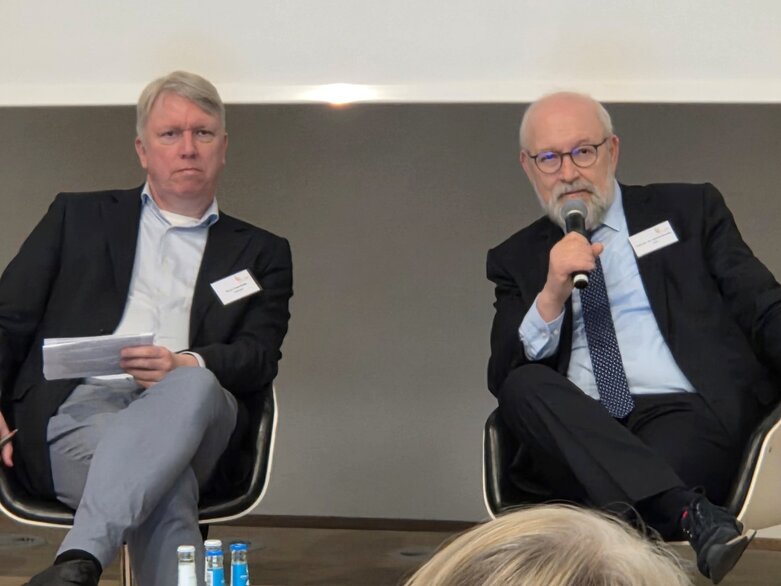
Torsten Wefers and his LGG cargo team are doing their utmost to join the ranks of Europe’s top three cargo airports in terms of tonnage handled – photo: CFG/hs

CFG: Anyone working in the French-speaking part of Belgium should be able to speak French. How would you rate your knowledge of the language?
TW: I would say my French is in progress, but at a rather low level. I can get by reasonably well with my French in everyday life. But since the lingua franca of the air freight industry is English, I don’t need French very much for work. Incidentally, Belgium has three official languages: French, Flemish, and German.

CFG: In a nutshell, what is the secret to LGG’s success?
TW: It is based on several pillars: the demand-driven expansion of ground infrastructure, i.e.: a forward-looking ex ante rather than ex post strategy; the growing partnership with freight forwarders, which has greatly stimulated import and export volumes and has been and continues to be a magnet for cargo airlines; and our verticals strategy, especially for perishables, pharmaceuticals, and flowers. However, there are also other criteria that make the overall LGG package attractive for the industry. For example, we have worked closely with local authorities such as customs, to speed up shipment flows between the first and second lines of warehouses on-airport. We operate internationally under the brand name, Cargoland, which highlights our focus on air freight, our ambition to create a state-of-the-art cargo hub, and makes us better known. Finally, our handling agents have invested in temperature-controlled storage facilities and capacities, which increases the airport’s overall attractiveness.

CFG: Liège is open 24/7/365, so unlike Frankfurt, Amsterdam, or Luxembourg, air traffic is not limited by a night flight ban. Has the airport benefited from the slot discussion in Amsterdam?
TW: First, let’s talk about night flights. We received our new operating and environment permit in 2024, which is valid until 2040, so this issue is settled for the next decade and a half. That said, we are increasingly focusing on the development of daytime traffic. As for Amsterdam, I don’t comment on competitors, but I will say this much: the controversial discussion about slot limitations at Schiphol has had a positive impact on our business.

CFG: e-commerce has been a key driver of growth in imports to date. Now, from 01JUL26, the EU wants to impose a duty of EUR 3 per item on Alibaba, Temu, Taobao, and Amazon e-commerce shipments valued below EUR 150, that do not originate in the EU. What impact do you expect these tariffs to have on your airport’s business?
TW: It will have an impact, no question about it. This statement is in line with the predictions echoed by major trade associations. On the other hand, this is a tax that will be levied across the EU, so all airports from A to Z will be affected. The example of the Trump administration’s de minimis rule, which eliminated the USD 800 de minimis threshold for commercial shipments across all countries, shows that after a short-term decline in volumes, they quickly rise again. In any case, it is too early to discuss concrete impact scenarios, especially since the details of the planned regulation have not yet been communicated.

CFG: What are your primary goals for 2026?
TW: There are three main goals: We want to significantly increase our export volumes; the 11% growth in 2025 – the highest at any major European cargo hub – was already an important step. Our strategic partnerships with the global forwarder powerhouses will certainly help us achieve this. This also applies – as our second priority – to the acquisition of additional network carriers so that we can offer hub-to-hub transport. Last but not least, we will intensify our verticals strategy, with a very strong focus on pharma.

CFG: Are you thinking of Air France-KLM-Martinair Cargo?
TW: There are various options, but I don’t want to comment on that in detail. But I assume it will not be Lufthansa Cargo, although – as a German – I would like to see the ‘Kranich’ landing in LGG.

CFG: You are now number five in Europe in terms of cargo volumes. When will you be number three, i.e. win the bronze medal?TW: This is a clearly defined goal for us, and we are doing our best to achieve that. But the competition never sleeps, so it will be more of a long race, I believe.