Home Blog Page 37

TIACA and HAUS61 join forces to accelerate air cargo innovation

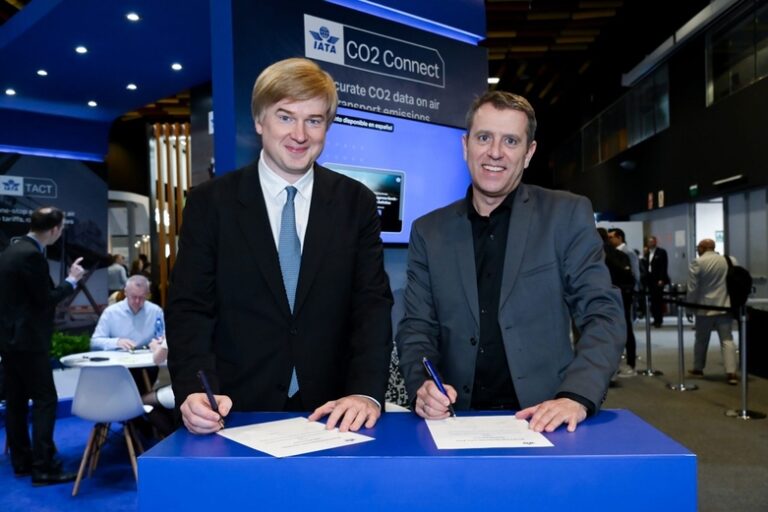
L > r:  Rachid Touzani, Glyn Hughes and Hendrik Bender –  courtesy: Haus 61

Speaking at the signing ceremony in Abu Dhabi on 5NOV25, Roos Bakker, Chair of The International Air Cargo Association (TIACA), announced a new Memorandum of Understanding with HAUS61 GmbH to strengthen cooperation and foster innovation across the global air cargo and logistics industry.

The agreement officially names HAUS61 as TIACA’s Innovation and Start-Up Partner and introduces initiatives such as a dedicated Start-Up Pavilion at the TIACA Air Cargo Forum, exclusive investor pitch sessions, and joint workshops and mentorship programs.

“Our partnership with HAUS61 will help bridge the gap between start-ups with fresh ideas and the industry stakeholders who can bring those ideas to life,” Bakker stated. TIACA Director General Glyn Hughes added that the collaboration “will accelerate innovation and ensure that the industry continues to evolve with agility, creativity, and value creation for global supply chains.”

L.I.T. Group expands Asia focus with first Logitrans appearance

The Istanbul-held trade show is a strategic bridgehead between Europe and Asia – courtesy: logitransturkiyegroupltd.com

L.I.T. Group is strengthening its position in the Turkish logistics market with its debut at Logitrans Istanbul from 19–21NOV. Positioned in Hall 3, Stand 327 at the German Pavilion, the company will showcase its full portfolio across the Europe–Asia corridor.

“Turkey is a strategic bridgehead between Europe and Asia, offering crucial access to emerging markets,” said Andreas Janetzko, Managing Director of L.I.T. Air & Sea.

The logistics provider, active in Turkey for about a year, aims to expand its intermodal services and deepen local partnerships. As the country continues investing in infrastructure and industry, L.I.T. sees major growth opportunities in road and multimodal transport solutions while further establishing its brand as a reliable logistics partner in the region.

Logitrans Turkey in Istanbul is one of the most prominent trade fairs in the region and serves as a key meeting point for professionals in the transport and logistics industry. Held annually, the event attracts participants not only from Turkey but also from many other countries around the world.  It offers an outstanding platform for networking, innovation, and business development in a dynamic and future-focused environment.

Etihad Cargo partners with LODD Autonomous for smart middle-mile delivery

Etihad Cargo and LODD Autonomous aim to jointly transform the future of air mobility. Photo: credit: Etihad

Etihad Cargo has entered a strategic partnership with Abu Dhabi-based LODD Autonomous, a leader in advanced air mobility and autonomous logistics. Both companies aim to explore the integration of next-generation ‘Hili’ hybrid VTOL aircraft to advance the use of self-driving technology for middle-mile logistics in the UAE and beyond. The collaboration focuses on deploying autonomous electric vehicles to streamline cargo movement between Etihad Cargo’s hubs, warehouses, and partner facilities.

By integrating AI-based routing and data-driven fleet management, both companies aim to enhance efficiency, sustainability, and cost-effectiveness in the air cargo supply chain. The partnership marks another step in Etihad Cargo’s long-term innovation roadmap, reinforcing its commitment to digital transformation and environmentally responsible logistics solutions.

Stanislas Brun, Chief Cargo Officer of Etihad Airways, said, “As a fellow Abu Dhabi-based company, LODD Services shares Etihad Cargo’s ambition to transform the future of air mobility. We’re continuously looking for new ways to enhance connectivity within the UAE, empowering both the people and businesses behind every shipment. Together with LODD Autonomous, we hope to open up new possibilities for air cargo, creating smarter, faster, and more sustainable ways to move goods across the country.”

Rashid Al Manai, Chief Executive Officer of LODD Autonomous, explained: “We designed the ‘Hili’ Hybrid VTOL UAV to address the gaps in traditional logistics, particularly in the middle-mile sector. By creating direct air corridors between logistic hubs and warehouses, it enables seamless and rapid transfers. This is especially important for high-value, time-sensitive shipments such as pharmaceuticals and industrial components, where even minor delays can disrupt operations and lead to substantial financial losses.’

Logistics companies are increasingly targeted by cybercriminals

Beware of Remote Access Trojans (RATs) !! – picture: credit Proofpoint.

A recent Proofpoint report has revealed a growing wave of cyberattacks targeting trucking and logistics companies through malicious remote access software. Cybercriminals are using fake logistics job postings and supplier correspondence to trick employees into downloading Remote Access Trojans (RATs), giving attackers full system control. Once inside, threat actors have leveraged these tools to steal credentials, manipulate shipping data, and disrupt operations. Proofpoint warns that the logistics industry’s increasing digital connectivity makes it a prime target for such threats, urging firms to strengthen employee awareness, email authentication, and endpoint security to protect their supply chains against evolving cyber risks.

AVS GSA appointed as DHL Aviation’s General Sales Agent in Malaysia

In Malaysia, DHL has selected AVS GSA Services as its GSA – photo: DHL Aviation

ECS Group subsidiary AVS GSA Services (M) Sdn. Bhd. has been selected as the General Sales Agent for DHL Aviation in Malaysia, taking responsibility for commercial representation and sales of the carrier’s dedicated freighter services in the market. The appointment covers scheduled operations from Kuala Lumpur and Penang into Singapore and Hong Kong, with additional capacity provided through road feeder service connections via Singapore.
ECS Group says the move supports DHL Aviation’s strategy to leverage Malaysia’s role as a fast-growing manufacturing and transshipment hub. Jean Ceccaldi, CEO of ECS Group, highlighted Malaysia among DHL’s top growth markets and pointed to significant recent investments in cargo infrastructure at Kuala Lumpur and Penang. AVS GSA’s remit will include optimizing load factors, expanding commercial reach and supporting onward connections to major export markets across Asia, the Middle East, Europe and the United States.
AVS GSA Managing Director Yussof Amiroel underlined the team’s local market expertise combined with digital commercial tools as central to delivering reliable sales performance for high-value export commodities such as electronics, pharmaceuticals and e-commerce shipments.

CargoAi appoints Wayne Tyndall as Strategic Advisor to accelerate global growth

Wayne Tyndall “is impressed by CargoAi’s customer-first culture”  – picture: Cargo Ai CargoAi

CargoAi has added Wayne Tyndall to its advisory ranks as Strategic Advisor to support the company’s scaling and product development efforts. Tyndall brings sector experience from roles at WebCargo by Freightos and 7LFreight, where he helped build commercial and product capabilities for digital freight services. At CargoAi he will advise on organizational scaling, product strategy and customer-success initiatives as the platform broadens its global footprint.
CargoAi positions the appointment as part of a broader push to consolidate its modular SaaS offering, spanning bookings, payments, interline connectivity and predictive visibility while accelerating adoption among forwarders and airlines. CEO Matt Petot noted Tyndall’s track record in combining product focus with customer-centric growth, calling the hire “a strategic fit” for CargoAi’s ambitions.
Tyndall said he was “impressed by CargoAi’s customer-first culture and innovation pace and will work with leadership to refine go-to-market approaches, support product excellence and help ensure the platform meets escalating operational requirements across diverse markets.”

Lödige Industries recognized as global market leader in air cargo terminal technology

Lödige is a secret global market leader in automated material-handling systems  –  picture: Lödige systems.

Lödige Industries has again been named a global market leader in air cargo terminal technology, reinforcing the company’s longstanding position in automated material-handling systems. The recognition highlights Lödige’s portfolio of automation, high-bay storage, intelligent conveyor systems and driverless transport solutions that underpin cargo operations at major international hubs.
Lödige points to its global reach and the scale of its deployments, technologies that currently support the handling of tens of millions of tons of air cargo annually, as evidence of sustained market leadership. CEO Philippe De Backer framed the accolade as validation of the company’s focus on scalable automation that addresses capacity constraints and labor shortages while lowering operating costs for operators and terminal owners.
Recent projects and ongoing developments, including large-scale terminal installations and integrated IT-control systems, illustrate Lödige’s strategy of combining mechanical engineering with software-driven orchestration to deliver fully connected, resilient cargo terminals.

Hellmann integrates cargo.one to modernize air freight procurement and quoting

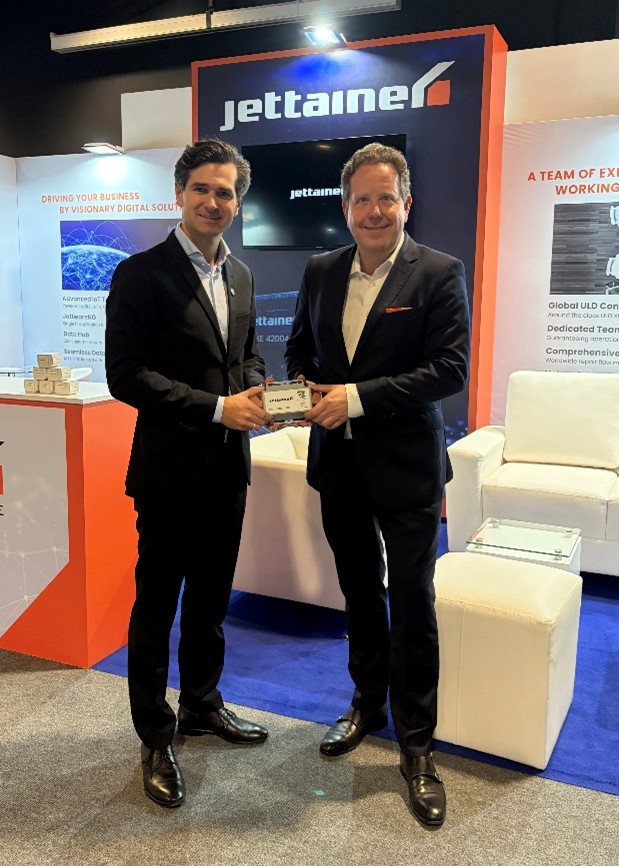
Announcing the new global technology partnership between Hellmann and cargo.one: Oliver Marschall, VP Global Airfreight Operations & Procurement Hellmann, Martin Habisreitinger, COO Airfreight Hellmann, and Moritz Claussen, Founder & Co-CEO cargo.one  –  picture: courtesy Hellmann

Hellmann Worldwide Logistics has implemented cargo.one’s suite of commercial tools to upgrade its global air procurement and sales workflows. The integration includes Advanced Rate Management, Live Rates, the Quotes API and cargo.one pro, consolidating rate and charge management across Hellmann’s buy-and-sell processes and enabling faster, more accurate quoting.
By embedding cargo.one into its internal quotation system and connecting to its CargoWise One TMS, Hellmann aims to reduce complexity in rate management, improve response times and provide more consistent customer pricing. The initiative is presented as a strategic step to harness structured rate data, enhance procurement precision and scale digital quoting across its global network.
Hellmann executives said the new infrastructure will strengthen carrier negotiations, improve market responsiveness and deliver measurable productivity gains for sales and procurement teams positioning the forwarder to better meet customer demand in a volatile airfreight market.

Spotlight on… Antonia Ambrozy, Director Revenue Operations, Freightos

0

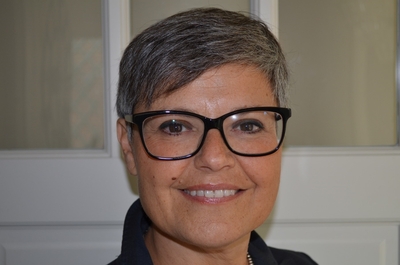
CargoForwarder Global’s ‘Spotlight On…’ series illustrates the wide range of careers that exist within the air cargo industry. One previously sluggish segment that really began taking off when the pandemic began, is digital services. Digital marketplaces and processes bring efficiency and opportunities to the air cargo industry – in the areas of collaboration, pricing, load-planning, booking, resource-planning, sustainability, and so much more. When data meets technology, innovation, and the right mindset, air cargo gets to move faster, smarter, and – in this particular case – at the right price. Antonia Ambrozy, Director Revenue Operations, Freightos, takes us through her responsibilities, experiences and thoughts on the industry.

Go digital, one click at a time – to infinity and beyond. Image: Antonia Ambrozy

CFG: What is your current function and company? And what are your responsibilities?

AA: I’m the Revenue Operations Director at Freightos, which connects carriers, forwarders, and shippers on a global freight procurement, pricing and booking platform. In other words, I connect the people and data points inside the organization to help us connect the global logistics players globally. I am also very much involved with our digital booking and software side, engaging with customers and partners all over the world to help them move freight faster. I love wearing many different hats and having the opportunity to own many responsibilities. For example, I bridge the gap between our brilliant backend teams and the logistics experts on the ground. Whether it’s through marketing, product strategy, or just getting people excited about the future, my job is to help our industry go digital, one click at a time and to infinity and beyond. When I’m not working, I love traveling, running, Broadway plays and running a little more.

CFG: What does a normal day look like for you?

AA: A ‘normal’ day in our industry? That’s a lovely idea! The only real constant is the coffee (and I don’t even drink coffee). My days are a whirlwind mix: I could be in back-to-back meetings with our teams and customers from all over the world, brainstorming a new marketing campaign, working with forwarders to understand their biggest daily headaches, diving into data to see how we can make our platforms even more intuitive, and shaping the strategic planning of our company. It’s fast, it’s global, and it’s never boring.

CFG: How long have you been in the air cargo industry, and what brought you to it?

AA: I’ve been in the logistics space through my entire career. I truly grew up in the industry, starting with an internship at one of the biggest airlines in the world, exactly 10 years ago. The cargo industry enabled me to find my place in working life and work all over the world, in places like JFK in New York, which I will always be grateful for. I never had a reason or even saw a reason to leave this massive, vitally important global industry that was still running on faxes (did I mention pneumatic tubes?), spreadsheets, and decade-old systems. The sheer scale of the opportunity to make a real, tangible impact was just too compelling to ignore. I love a good transformation story! And my current company allows me to spread my wings to other modes of transportation including ground and ocean. What more could I possibly ask for?

CFG: What do you enjoy most about your job?

AA: The people, without question. This industry is built on experience and relationships, and I feel so lucky that I get to work with some of the most passionate, knowledgeable, and genuinely wonderful people from all over the world. A very close second is that ‘lightbulb moment’. It’s that instance in a demo or a conversation when you see it click for a forwarder or a carrier or a partner, like a TMS, how much time and frustration they’re about to save. Helping make their day-to-day work easier is incredibly rewarding.

CFG: Where do you see the greatest challenges in our industry?

AA: Our biggest challenge is simply moving past the ‘but this is how we’ve always done it’ mindset. We’re not just changing software; we’re changing decades of habit. The technology is here, but the human element of change management is the real mountain to climb. Beyond that, sustainability is a huge one. We have a massive responsibility to make cargo more efficient, and digital tools are a key part of that – not just for booking greener routes, but for using data to optimize every single kilogram of capacity so we can reduce waste and fly smarter. And we have a responsibility to never stop. The world doesn’t either. There are so many areas that have barely moved forward – looking at cross-border and import bookings or payment methods in the industry. We owe it to ourselves to keep changing and continuously innovating.

CFG: What advice would you give to people looking to get into the air cargo industry?

AA: Just jump in! My best advice is to be relentlessly curious and ask ‘why?’… a lot. You don’t need to memorize every IATA code on day one to be successful. This industry is hungry for fresh perspectives. At the same time, it’s extremely happy to share knowledge and give best-practice examples. So, if you’re a natural problem-solver, you’ll be invaluable. But the industry is so much more. There are so many different paths, and no matter what you enjoy doing, you will very likely find the right fit. And imagine how awesome it is to know that you could be part of the bigger picture, like ensuring that disaster relief or urgently-needed medication gets to where it is most needed.

CFG: If the air cargo industry were a film/book, what would its title be?

AA: Oh, that’s a great question! I’d go with: It’s a Marathon, Not a Sprint. I love running, and I am definitely in it for the long haul to revolutionize the industry.

Many thanks, Antonia!

If you would like to share your personal air cargo story with our CargoForwarder Global readers, feel free to send your answers to the above questions to cargoforwarderglobal@kopfpilot.at We look forward to shining a spotlight on your job area, views, and experiences.

The Digitalization Pressure

0

Digitalization has become one of the most persistent themes in the air cargo industry. From automation and data integration to customer visibility and sustainability goals, every company recognizes the need to evolve. Yet, while the conversation around technology is constant, the real challenge lies in turning strategy into action, reports Cristina Toscano.

Courtesy: Digital Evolution Index 2025 – Interactive Dashboard

Having worked closely with airports, airlines, handlers, and freight forwarders, I have seen that digital transformation is not just a matter of implementing new systems, it is far more, it is about people, communication, and collaboration. The following reflections come from those experiences where the pressure to “go digital” meets the operational realities that determine success or failure.  

The Reality Behind the Rhetoric
Anyone who has worked in sales for a leading solutions provider in the air cargo sector will recognize the pattern: digitalization dominates every strategic discussion. Every customer refers to it as a cornerstone of their long-term vision. At international conferences, it remains one of the main themes – and has been for many years.

However, the tone changes once the conference panels end and the one-to-one customer meetings begin.

What happens behind the scenes depends largely on the organization’s size and level of digital maturity. Some may already have a roadmap in place, but after a short conversation, you often realize one thing: you are not going to sell anything – at least, not yet.

In many cases, the customer is not seeking to purchase; they are seeking to understand and learn. They want to assess what your solutions can enable and whether they merit inclusion in the roadmap they are still shaping. And very often, that roadmap begins immediately after your discussion.

The Value of Consultative Sales
This is where the real work begins — and why I have always valued a consultative sales approach. Digitalization cannot be achieved through transactional selling; it demands a holistic dialogue that brings together operations, IT, management, and every department that will ultimately be impacted.

At this stage, active and analytical listening becomes the most critical skill. It is about identifying the underlying challenges through the right questions, understanding where you can add genuine value and recognizing where operational improvements are achievable.

Sometimes, the right fit is an off-the-shelf solution. In other instances, creativity – combined with your ability to act as a translator within your own organization – can give rise to a new project or idea that addresses an unrecognized need. Those initiatives often evolve into solutions with wider industry relevance.

When Change Becomes the Challenge
In the best-case scenario, you and the customer reach an agreement. That short phrase may represent months — sometimes years — of discussions, cross-functional alignment, and multiple approval cycles. Yet once the contract is signed, the most demanding phase begins: change management.

It matters little how positive the sales experience was or how efficiently the cycle was managed. When a core system changes, the stakes are high. Systems may fail to communicate as expected, operational teams may struggle to adapt, and initial results may fall short of projections.

But is it only the technical side that can falter? Not entirely. Sales can make an equally decisive difference. Perhaps a requirement was never properly defined. A potential scenario was overlooked. The proposed system might have been too sophisticated for the customer’s real needs. Or an omission – intentional or otherwise – created a gap that only became visible later.

Sound familiar?

If You’re Considering Digitalization
If your company is planning to go digital, consider these basic principles:

  • Create a roadmap with a clear direction, yet one that remains flexible. Emerging technologies and market shifts will inevitably reshape priorities.  
  • Engage (early) all affected departments not just IT or management. Digitalization is not an IT initiative, it is an organizational transformation.
  • Expect your salesperson to act as a consultant: challenge them, ask questions, request demos, define targets and measurable outcomes. Your KPIs are important internally, but the salesperson’s industry knowledge comes from real experience with other customers and evolving trends.
  • Start with quick and achievable wins: pilot small projects that show tangible results.
  • Prioritize data quality and integration: a new systems is only as good as the data it receives.
  • Invest in change management: communicate the “why”, train users, and empower early adopters as ambassadors of change.
  • Define clear ownership and accountability: assign responsibility beyond project manager; every department has to play a role.
  • Measure progress, not just outcomes. Track milestones, adoption, and ROI, but also capture feedback.
  • Think about scalability: Choose systems and partners that can evolve alongside your business.
  • Foster a culture of continuous learning: encorage experimentation, technology will keep evolving. Your team should too.
  • Collaborate with industry partners: The air cargo industry is interconnected. Sharing standards, data, and best practices benefits everyone.

Digitalization is not just about technology; it’s about mindset, communication, and adaptability. Success depends not only on the quality of the solution but on the partnership forged between the provider and the customer, and on how effectively both navigate the journey of change together.

As the air cargo industry continuous to evolve, recognizing salespeople as strategic partners – rather than simple vendors – can make all the difference in your digitalization journey.

This said, how is your organization balancing strategy and execution in its digital journey?