Home Blog Page 36

Rhenus Group is building up Southeast Asia air cargo network

0

Rhenus Group is boosting its air freight presence in Southeast Asia to better support global trade as cargo flows increasingly shift toward the region. This expansion aligns with the ‘China+1’ strategy, where manufacturers are prioritizing Southeast Asia when it comes to sourcing, which is leading to increased cargo volumes and therefore also demand for more flexible, cost-effective logistics. Despite challenges such as weaker external demand and tariffs, Asia remains the fastest-growing segment in global trade, expected to contribute about 60% of growth in 2025 and 2026.

Rhenus sees Southeast Asia as a key air freight growth market. Image: Rhenus

This year, Rhenus established new air freight gateways in Singapore and Bangkok, complementing its existing hub in Kuala Lumpur. These gateways optimize cargo flows across Southeast Asia and key global corridors. Kuala Lumpur focuses on inbound cargo from Europe and outbound shipments to Oceania. Singapore deals with inbound cargo from Asia and Oceania and outbound to the Americas, while Bangkok handles outbound freight to Europe, and acts as a multimodal hub supporting intra-Asia trade via air and trucking. These gateways offer comprehensive services including door-to-door transport, customs clearance, cargo consolidation, and value-added solutions. Digital tools such as real-time tracking and paperless documentation to streamline operations ensure smart efficiency. Sustainability is also a major focus: Rhenus deploys electric vehicles for local delivery and optimized routing and low-emission transport options. The company has committed to continued investment in Southeast Asia to ensure it meets customer requirements across the globe.

Chris Bode, Vice President Global Air Freight, Rhenus Air & Ocean, explained: “Southeast Asia is a focus growth area for Air Freight in Rhenus. The gateways are at the center of the company’s latest expansion plans, and go beyond delivering the global promise of reliable, customer-centric logistics solutions. They are designed with scalability in mind, and integrate the latest digital and sustainable logistics solutions, to give our global customers flexibility and efficiency.”

Joachim Hanssen, CEO APAC, Rhenus Air & Ocean, said, “With recent global developments, including the China +1 strategy, more businesses are set to include the Southeast Asian region as an increasingly important piece of their global logistics plans. Rhenus has been and remains committed to support our customers in these fast-growing markets. We are confident that our strategic plans to grow our capabilities in this region, by enhancing resilience and operational agility, will position us as a preferred partner to meet evolving regional and global trade needs.”

LATAM welcomes Carmen, Farellón, and Auquinco on board

0

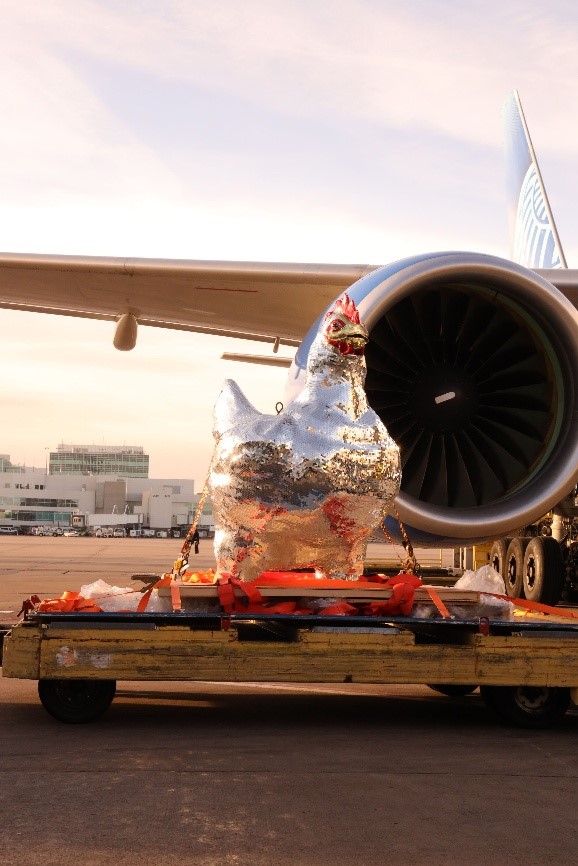
Today [10NOV25], Carmen, Farellón, and Auquinco – the three Andean condors – departed from CRAR in Talagante on their way to Patagonia National Park in the Aysén region. Initiatives of this magnitude, and with such important objectives as conserving our native species, require collaborative effort. That’s why we are so grateful to now have the support of LATAM’s Solidarity Plane,” said Eduardo Pavéz, Director of Proyecto Manku.

LATAM’s Solidarity Plane recently transported three condors. Image: LATAM

The Chilean conservation initiative dedicated to the protection of the Andean Condor, recently collaborated with LATAM’s Solidarity Plane program to relocate three Andean condors from the Birds of Prey Rehabilitation Center (CRAR) in Talagante to Patagonia National Park in the Aysén region, Chile. LATAM Cargo carried the precious trio to Balmaceda, followed by a land transfer to the park. The birds will undergo a two-month acclimation before being released into the wild. Patagonia National Park is a strategic release site because it hosts one of the largest populations of Andean condors, with 70% of the species living between central Chile and Patagonia. Despite being the largest flying bird globally, the Andean condor faces a precarious conservation status with only about 1,500 to 2,000 remaining in the wild in Chile. Threats include habitat loss, lead poisoning, collisions with power lines, and insufficient food availability. It is nationally classified as “Near Threatened”, thus initiatives such as Proyecto Manku and Rewilding Chile focus on rescue, rehabilitation, and population restoration. LATAM’s own Solidarity Plane program, now over 14 years old, supports such social and environmental initiatives, offering free transport across South America. Last year, the program transported over 1,600 people and 400,000 kg of cargo free of charge in Chile, marking a significant commitment to regional biodiversity and community support.

Cristián Saucedo, Director of the Wildlife Program at Rewilding Chile, commented: “Releasing condors in the far south is highly beneficial, as they have abundant food sources and it allows us to study their ecology in an almost pristine environment. In central Chile, which is more densely populated, we continue to rehabilitate and monitor them as well. Understanding these differences is key to addressing the challenges of their conservation.”

Constanza Pizarro, Corporate Communications Manager at LATAM Airlines Group, added: “Our collaboration with Proyecto Manku reinforces the purpose of Solidarity Plane: using LATAM’s connectivity to generate positive impact in the regions where we operate. Supporting the transport of native wildlife during rehabilitation – such as these condors – is a tangible way to contribute to biodiversity conservation and ecosystem balance in Chile.

Envirotainer launches Live Monitoring solution

0

Envirotainer has launched a next-generation Live Monitoring solution for its E-Tech RAP e2 temperature-controlled containers, enhancing real-time visibility across the cold chain for pharmaceuticals. This upgrade allows customers to track temperature, location, and door status live during shipments. This means that, in the event of any irregularity or deviation, the responsible logistics team can quickly respond to reduce the risk of product loss. As of NOV25, Envirotainer’s connected fleet totals 3,800 pallet-sized units, making it the largest digitally enabled active ULD fleet in the industry. The Live Monitoring service is included as standard with the RAP e2 container and integrates smoothly with customers’ existing systems to speed up product release and improve supply chain transparency. The RAP e2 container is highly regarded for its thermal insulation and precise temperature control, offering reliable protection for sensitive medicines while now adding enhanced digital tracking.

E-Tech RAP e2 Image: Envirotainer

Recent related advances include Envirotainer’s strategic investment in Swiss Airtainer (CFG reported), a pioneer in lightweight, solar-powered active containers with IoT-enabled communication. This partnership expands Envirotainer’s sustainable portfolio (see also here), and focuses on reducing carbon emissions in pharmaceutical logistics.

Niklas Adamsson, Interim CEO and COO at Envirotainer, stated: “With Live Monitoring now standard in our E-Tech RAP e2 containers, we’re taking another step forward in delivering smarter, safer, and more connected cold chain solutions. This upgrade empowers our customers with real-time visibility and control, helping them protect life-saving pharmaceuticals with greater confidence and efficiency across the globe.”

Maritime sector on the rise in Hamburg

0

The maritime industry in Hamburg announced three positive news last week. First, CMA CGM, the world’s third-largest shipping company, will acquire a 20% stake in a large container terminal in the port of Hamburg, belonging to operator Eurogate. Secondly, Eurogate competitor HHLA reported a significant increase in TEU volumes processed during the first three quarters of the year, despite U.S. tariff policy and its dampening impact on international trade and global supply chains. Thirdly, shipping line Hapag-Lloyd announced the order of up to 22 new vessels and a significant leap in schedule reliability on those hub-and-spoke routes served by the Gemini Alliance, jointly managed by H-L and its partner Maersk.

“Germany is an important part of our European network,” stated Rodolphe Saadé, CEO of CMA CGM, prior to inking the pact with Eurogate – photo: Eurogate.

The fact that the city also praised plans to construct a new, futuristic opera house at the shores of the Elbe River, privately co-financed by Hamburg billionaire Michael Kühne (K+N), rounded off the good news coming from Germany’s second-largest metropolis after Berlin.

Further TEU growth
As for the deal between CMA CGM and Eurogate, the French shipping company will call at the port of Hamburg more frequently in the future, significantly increasing import and export volumes from four million to an estimated six million standard containers (TEU) per year. In addition, the investment will also be used to expand the infrastructure. This said, 38 hectares of a deepwater area will be added to Eurogate’s premises in the harbor, creating more space for next-generation container ships. To ensure that CMA CGM vessels can dock without any problems, there are also plans to build a new quay measuring 1,050 meters in the western part of the harbor.

A deal based on personal relations
In addition to financial and strategic considerations, the agreement now announced between CMA CGM and Eurogate is based on a long-standing friendship between the two owner families. Thomas Eckelmann from Eurogate subsidiary Eurokai indicated this in a statement: “Our friendship with the Rodolphe Saadé family, owners of CMA CGM, is lasting for years. So we have been discussing a close collaboration for some time.”

Simultaneously to the above deal, the Hamburg-based logistics group and terminal operator HHLA announced a 12.5% increase in revenue and profit for the first nine months of the year, from €1.18 billion in the previous year to €1.33 billion in 2025. To the delight of the Hamburg city government, operating profit rose by 25.7% to €117.1 million. Hamburg holds a 50.1% stake in HHLA. The difference is owned by MSC, the world’s largest shipping company, based in Geneva, Switzerland. In addition, the Chinese state-owned company Cosco Shipping Ports has held a 24.9% stake in an HHLA terminal in the Port of Hamburg since June 2023.

Shipping lines invest increasingly in terminals
CMA CGM’s entry into Eurogate illustrates a growing trend: Shipping lines acquire increasingly stakes in terminal operators in key ports in order to stabilize their fleet’s schedules. Recent figures from Hapag-Lloyd show how successful this strategy is. Last August, schedule adherence on routes jointly operated under the Gemini flag (H-L + Maersk) was just under 90%, setting new standards in the industry. Hapag-Lloyd manages around 20 terminals worldwide through its subsidiary Hanseatic Global Terminals, including nine on the Pacific coast of Latin America. “We will continue to pursue this investment strategy consistently,” announced CEO Habben Jansen in a call with media people last Thursday (13NOV25).

Carbon neutral by 2025
In addition, the fleet will grow by 22 new container ships below the 5,000 TEU threshold in order to strengthen the feeder network of the hubs jointly operated by H-L and its partner Maersk and to decommission older ships that burden H-L’s environmental balance sheet due to their greenhouse gas emissions, the manager said. “We will operate our fleet in a climate-neutral manner by 2045,” the group’s CEO assured. Words that were certainly welcomed by delegates attending the COP 30 climate conference which took place at the same time in the Brazilian city of Belem, Brazil, 8,100 km away from Hapag-Lloyd’s HQ in Hamburg. Especially after the International Maritime Organization’s (IMO) Net Zero agreement for a global fuel standard and a global price on shipping emissions failed at the end of October due to opposition from the Trump administration. Now, the agreement is to be voted on again by IMO member countries in a year’s time.

Editor’s note: Lufthansa Cargo: Green Fuel, Empty Trucks?

0

Regarding this report published on October 19, 2025, the press department of Lufthansa Cargo has asked us to correct various statements contained therein by correcting and clarifying statements. We hereby comply with this request.

Trucks parked at Fraport’s Cargo City North, waiting for LHC shipments – photo: CFG/hs

The statement that Lufthansa Cargo operates trans-border RFS, namely to the Netherlands and France, in order to secure air freight there based on the RAS CargO procedure prohibited in Germany (sniffer dogs), as stated in our report is incorrect, says Lufthansa Cargo. “Such a practice does not take place in our own operational processes and contradicts our established security and compliance schemes,” the airline writes.

In addition, Lufthansa Cargo refutes the statement that an interdependence exists between the night flight curfew in Frankfurt and the RFS operated under an Lufthansa Cargo flight number. “The alleged connection between the night flight ban and RFS schedules is unsubstantiated,” the airline notes. Furthermore, the correlation mentioned in the article between RFS and the airline’s total emissions is not based on facts. The greenhouse gas emissions resulting from trucking services are fully included in Lufthansa Cargo’s environmental balances and reporting. Otherwise, it would not be compliant with regulatory requirements, states the airline. The share of its RFS operations accounts for only 0.36% of flight-related CO₂ emissions.

The airline also questions the market-related statement made by a former senior manager at Liège Airport, according to which approximately 30% of cargo arriving by truck at the airport comes from Germany. However, we did not state in our report that trucks operated by Lufthansa Cargo transported the volumes mentioned in the article.

Finally, the Lufthansa Cargo Communications Department closes this chapter by announcing: “We are piloting e-trucks for local airport logistics and jet-hub connections, reducing emissions even further.”

In conclusion: CargoForwarder Global hopes that this note will clear up any misunderstandings regarding the above-mentioned article and regrets any misinformation in our reporting. At the request of Lufthansa Cargo’s Media Department, we have removed the original report from our website to avoid further irritation.

Gabriel Oliva becomes President of Avianca

0

The position was newly created following Frederico Pedreira’s announcement that he would be stepping down as CEO effective 28FEB26. To ensure a smooth transition in leadership, Oliva will assume his new role with immediate effect. In addition to his tasks as airline President, the Argentine national will remain Chief Operating Officer of Avianca, thus holding a dual position.

Gabriel Oliva has taken another step on Avianca’s ladder to success – photo: CFG/hs

Founded more than 100 years ago, on 05DEC19 as SCADTA – Sociedad Colombo-Alemana de Transporte Aéreo, today known as Avianca, the airline has never had a President. Until now. In creating this new position, management intends to ensure continuity and alignment throughout the organization during the succession process, says Avianca. Shortly before Pedreira’s arrival in 2021, the Bogota-headquartered carrier had exited Chapter 11 proceedings based on a reorganization concept, and managed to raise fresh investments of USD 1.7 billion. Emerging from insolvency with a solid balance sheet and over USD 1 billion in liquidity, Pedreira managed to optimize its route network, consolidating and strengthening the airline’s financial position and cementing its role as a leading passenger and cargo carrier in Latin America. During this restructuring phase, Pedreira stepped up from COO to CEO and will remain at the helm until his departure in FEB26.

Mix of passenger and freighter fleet
Currently, Avianca serves more than 150 routes, with most of them point-to-point. It operates 700 daily flights and manages a fleet of 140 Airbus A320 passenger jetliners and Boeing 787 Dreamliner aircraft, connecting more than 80 destinations in 25 countries in the Americas and Europe. The fleet includes 5 Airbus A330-200F and 4 Boeing 767-300F. The A330-200F can carry up to 65 tons of cargo per take-off, making it ideal for long-haul flights, while the Boeing 767-300F has a payload capacity of 58 tons, suitable for medium or long-haul routes. Avianca Cargo operates a state-of-the-art cargo terminal at Bogota’s El Dorado International Airport, equipped with advanced handling and storage facilities.

Pedreira has put Avianca on a growth path
The Board of Directors of the Abra Group (Avianca’s shareholders) expressed its appreciation for Fred Pedreira’s tenure. Roberto Kriete, Chairman of the Avianca Board and member of the Abra Group Board of Directors, said: “In recent years, Fred has led Avianca through an extraordinary transformation, making it more efficient, competitive, and connected. His dedication and leadership have left a lasting mark on our company and our people. We are excited about the future that lies ahead for Avianca and warmly welcome Gabriel in his new role.”

Strengthening performance indicators
On behalf of Grupo Abra, CEO Adrián Neuhauser underscored the importance of this succession process and the continuity of the transformative momentum: “We continue to strengthen Avianca’s leadership team while executing the succession plan designed for our talent. I want to thank Fred for his leadership and the transformation he has driven, and welcome Gabriel as President to continue this momentum. We are confident that, as a team, we will continue to strengthen our performance indicators, as well as the product and service offered to our customers, ensuring that they continue to choose us for their travel needs. Avianca enters this new phase from a position of strength and stability.”

Gabriel Oliva’s career spans more than twenty years in leadership positions, fourteen of them in the aviation industry, including LATAM Cargo. He joined Avianca in 2021 as CEO of Avianca Cargo, where the Argentine national repositioned the unit as a regional leader, and later assumed the role of COO. “Under his leadership, and with an integrated vision of the cargo and passenger business, he strengthened operational safety, efficiency, and customer experiences,” the company applauded.

AeroUnion became Avianca Cargo Mexico
Upon assuming his new position, Oliva expressed his commitment to the company’s future: “I am very grateful, excited, and motivated by this appointment. Together with the more than 15,000 members of the Avianca team, we will continue to strengthen this company, hand in hand with the Abra group.”

AeroUnion has rebranded as Avianca Cargo México – photo: company courtesy

Under his leadership, the Mexican cargo airline, AeroUnion, was also integrated into the parent company, Avianca, and renamed Avianca Cargo Mexico.The rebranding of the freight carrier, which took place in early SEP25, kicks off a new phase focused on fleet growth combined with regional and international network expansions.

For more information, please see: https://cargoforwarder.eu/2025/06/29/aerounion-becomes-avianca-cargo-mexico/

Condor Cargo is soaring to new heights

0

In 2022, Condor revolutionized its look, changing the plain white fuselages of its fleet to a striped livery. “When I saw the first aircraft with this design, I was slightly shocked,” recalls the then CEO, Ralf Teckentrup, now retired. Former Lufthansa Cargo manager, Peter Gerber is now at the helm of the airline. And he probably owes his predecessor, Ralf Teckentrup, a debt of gratitude for the exceptional and bold aircraft branding. Thanks to the design, Condor’s aircraft are unmistakable, which not only has a positive effect on passenger numbers but also stimulates its air freight business.

Pictured is one of Condor’s 18 A330 neo jetliners displaying the new outlook – courtesy: DE

This is confirmed by Thilo Schäfer, the airline’s Director Cargo. “Our striped aircraft are clearly different in design from other airlines, have a high recognition value, and attract attention also from our cargo customers, both shippers and freight forwarders.” Revenue figures back up this statement. Since he took office on 01NOV23, volumes of air freight carried have almost doubled to over 35,000 tons.

Fleet rollover
In addition to the emotional aspect triggered by the design, the modernization of the fleet is the key growth criterion. Just a week and a half ago, Condor’s last B757-300 was retired. This Boeing variant had been the workhorse of the airline’s fleet since 1990. It operated a total of 33 units of the B757-200 and B757-300 variants. Meanwhile, the airline’s long-haul fleet consists of 18 Airbus A330neo aircraft, which offer a cargo capacity, depending on passenger luggage, of between 10 and 16 tons per flight in the belly compartments.

The decommissioning of the B757 also led to a change in the carrier’s network strategy. In addition to long-haul flights, Condor (IATA: DE) is increasingly offering passengers and cargo customers flights within Europe and on domestic German routes. For example: between Hamburg, Munich, Berlin, and Frankfurt. There are now three flights per route per day available for travelers and freight.

Network adjustments
These city flights also feed the airline’s long-haul network, as an alternative to the former Lufthansa feeder flights. Without these shuttle services, however, Condor can hardly fill its own long-haul aircraft based in Frankfurt.

In addition, Condor has set new standards in its long-haul network, illustrates Thilo Schäfer: “In Cancun, in the Dominican Republic, we have set up a hub in close cooperation with Panama’s Copa Airlines, enabling us to offer our customers onward transport of their shipments to Mexico and other destinations in Central America.” While westbound flights are mainly filled with machinery items, car parts, instruments, and high-tech products, the return journey carries loads of flowers, fruit, and other agricultural products.

More hubs are to come
As in Cancun, Condor Cargo also operates a hub in Seattle with its partner, Air New Zealand, thus covering transpacific routes to and from Australia. The same applies to EAT/DHL in the Dominican Republic and Philippine Airlines also via SEA in the APAC region. “From a freight perspective, the vast majority of routes are two-way businesses, meaning that Condor aircraft have a high load factor on both outbound and return flights,” summarizes Manager Schäfer.

Photo and striped activities
He also says that there is still room for improvement in terms of public perception of the stripe logo. Passengers and other aviation enthusiasts are always invited to take photos and share them with the airline. “We are delighted to receive every submission because it shows us that the design of our fleet is attracting attention in people’s everyday lives,” explains Condor’s Director Cargo. In addition, every year on the anniversary of the striped branding, there is a ‘Match the Stripes’ promotion for all guests, encouraging them to wear striped clothes matching the aircraft colors.

Owner seeking suitable partner
According to market information available to CFG, Condor owner and financial investor, Attestor (51%), is looking for a suitable partner for the airline in order to further consolidate and expand the business. When asked about this point, the airline’s response to our question was as follows:

“Condor does not comment on rumors or speculation about a possible strategic partnership. As Germany’s second-largest airline, Condor has grown significantly in recent years and has gradually developed from a holiday airline into a network airline with its own city connections. Condor has thus demonstrated that it is capable of developing successfully on its own. At the same time, thanks to its new route network, a strategic partner could be a useful addition to Condor enabling mutual growth.”

Spotlight on… Manuel Wehner, Project Manager, Fraunhofer IML

0

Each week, CargoForwarder Global’s ‘Spotlight On…’ puts a focus on a different section of the air cargo industry, to show how varied careers here can be. While most segments of the industry are focused on actively getting shipments from A to B on time and in one piece, one segment is designing part of the workforce of tomorrow. And that workforce will be a mix of humans and robots, where robots work alongside humans, taking over dexterous, repetitive, or labor-intensive tasks, and enhancing and improving operations in terms of efficiency, safety, and cost. This week, Manuel Wehner, Project Manager/Research Associate – Aviation Logistics, Autonomous Air Cargo Handling at Fraunhofer IML, describes his work and shares his views and advice for people considering joining the air cargo industry.

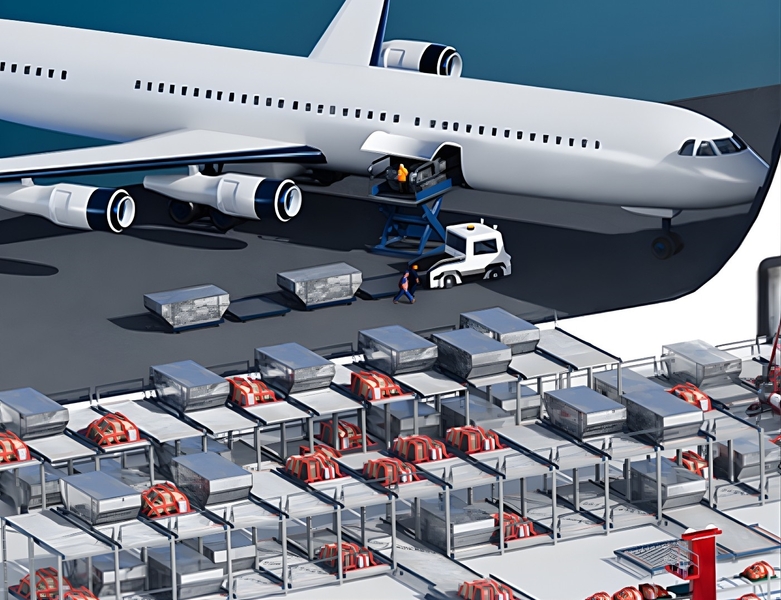
Time to get new technologies rolling. Image: Fraunhofer IML, V. Neugebauer

CFG: What is your current function and company? And what are your responsibilities?

MW: Recently, someone introduced me to a group of air cargo managers with the words: “Oh, and here is the research guy with the robots I told you about last week.” That pretty much sums it up, I guess… I work within the Fraunhofer Society, Europe’s largest applied research organization, where I specialize in autonomous air cargo handling. As part of the Digital Testbed Air Cargo (DTAC), I coordinate the development and testing of robots for airport operations. Funded by the German Federal Ministry for Digitalization and Government Modernization (BMDS) with €13.7 million and led by Fraunhofer IML, we have already tested five different robots at MUC and STR airports as part of the DTAC. Currently, we are developing a new ULD robot from scratch, aiming for more trials starting at the end of 2026. I oversee the involved hardware and software teams, and I coordinate a project team consisting of industry and research partners to create an ecosystem that empowers airports and airlines. With our open-source approach, users remain in charge of their robot operations instead of relinquishing power and data to external parties. Recently, we were recognized for our R&D efforts in the DTAC with international awards from both TIACA and STAT Times, and we achieved a top 5 position at the World Air Cargo Awards by ACW.

CFG: What does a normal day look like for you?

MW: In almost four years of working in the DTAC, I have hardly noticed any daily routine, aside from the regular project meetings, the overall structure, and reporting to the Ministry. Don’t get me wrong, I am not complaining about a lack of routine. My work involves a lot of travel, visiting partners and speaking at events somewhere between San Francisco, Nairobi and Hong Kong. Each day brings new ideas, destinations and people. I usually start my day at an airport for travels or with a video call discussing the next project steps and upcoming events. On Monday mornings, I can never predict how my Friday afternoon will look. Throughout the day, I try to balance progress in my job with my PhD studies, taking little steps towards my goals every day. It is an exciting journey.

CFG: How long have you been in the air cargo industry, and what brought you to it?

MW: I began my aviation career in 2011, working with Fraport at Frankfurt Airport, while studying for my dual Bachelor’s degree in Aviation Management. My passion for the industry started early, influenced by a school internship and family connections. Airports are just so fascinating, so international, and so… busy! For a long time, cargo was not my focus; I did my Master’s and also enjoyed working in various fields like passenger flow, mobility innovations, and tourism research. Cargo was not much more than brown cardboard boxes being loaded onto planes, with some horses or fancy racing cars in between, every now and then. It wasn’t until I explored PhD positions that I discovered how exciting the opportunities for applied research in air cargo automation could be. Looking back, it is hard to believe how much I overlooked the cargo sector for over a decade. From day one, developing and testing robots for this industry has provided me with a fulfilling sense of purpose.

CFG: What do you enjoy most about your job?

MW: I love the incredible innovation potential in this industry, no matter which process you look at, and I appreciate the chance to explore the potential together with the employees, not against them. When I first visited several air cargo warehouses starting in February 2022, I was baffled by the manual nature of the operations. Despite being born in the early 1990s, it gave me 1970s vibes without having even lived back then. They should have played the Bee Gees during my first walk through some facilities! It is fascinating; so many people know every detail of their work, and there’s so much passion for aviation and for their airports. Most of them have welcomed me and our ideas with open arms. They understand how important innovation is to keep the industry running and they are not afraid that we will replace them. Instead, they are aware that we can make their jobs much more interesting and convenient by gradually handing over the most repetitive and exhausting tasks to machines. I have made many friends in this industry over the past four years, and I always enjoy walking through airports and warehouses, stopping here and there to discuss ideas with those who ensure everything runs smoothly 365 days a year and (almost) around the clock.

CFG: Where do you see the greatest challenges in our industry?

MW: The industry needs to stop trying to optimize established but outdated operations to the very last detail. This sector is decades behind others in terms of adopting state-of-the-art technologies. There are good reasons for this delay (including dynamic traffic, flexibility needs, just-in-time consolidation, etc.), and it is not the end of the world. The 2020s offer a chance to finally get new technologies rolling and re-design outdated processes. It truly is hard for individual companies to take expensive steps; however, I am sure that R&D investments could not be spent at a better time. Furthermore, there are industry and research initiatives, such as our DTAC. Projects like these enable even SMEs to engage in industry transformation with little to no risk, including not only robots but also AI-enabled solutions and applications for IATA’s new ONE Record data standard.

CFG: What advice would you give to people looking to get into the air cargo industry?

MW: If you have a managerial or an administrative focus, make sure to pull up your sleeves and get a firsthand look at what really keeps this industry running. It is mostly about hard work. Talking smart does not load aircraft bellies with cargo. This experience will surely make your advice more authentic and your ideas for improvement more welcome. Early in my career, Fraport gave me the chance to help the ops teams with baggage loading, belly loading and winter services on certain days. It was all about getting to know the operations better – and those comfy blue overalls! Saying yes to that offer was a great decision. If you are interested in operations, instead, be sure to look at the major strategic disruption potential beyond small improvements. Do not get too comfortable with outdated operations, as it is mainly the complex brownfield that hinders innovation for now.

CFG: If the air cargo industry were a film/book, what would its title be?

MW: ‘The Beautiful Secrets of the Countless Cardboard Boxes.’

Many thanks, Manuel!

If you would like to share your personal air cargo story with our CargoForwarder Global readers, feel free to send your answers to the above Questions to cargoforwarderglobal@kopfpilot.at We look forward to shining a spotlight on your job area, views, and experiences.

DHL Group invests massively in India

0

The DHL Group plans to invest around €1 billion in expanding its infrastructure in India by 2030. This was announced by the Deutsche Post subsidiary. The investments will focus on key industrial sectors, in which DHL expects above-average growth in the coming years.

India is an important growth market for DHL – company courtesy

The multi-year investment program spans key sectors and reflects DHL’s confidence in India’s dynamic market development, emphasizes the company. It aligns with the integrator’s Strategy 2030 to accelerate sustainable growth in emerging markets that are on the verge of maturity. These include Mexico, the Gulf countries, Saudi Arabia, Sub-Saharan Africa and India. As far as the latter country is concerned, DHL’s strategic expansion focuses on four industrial sectors: life sciences + healthcare, new energy, e-commerce, and digitalization.

Cluster policy
“We concentrate our investments on regional clusters that already exist,” illustrates DHL spokesperson, Sabine Hartmann, when asked by Cargo Forwarder Global. For instance, in Bhiwandi, in the state of Maharashtra, where DHL Supply Chain is setting up its first health logistics hub in India. In neighboring New Delhi, DHL Express India is building its first automatic sorting center for packages and parcels. Electric Vehicle (EV) and Battery Logistics Centers of Excellence (COE) will be erected in Mumbai and Chennai respectively, and in Indore, located in the state of Madhya Pradesh, an additional DHL IT service center is to be built – its fifth in India. Last, but not least, DHL intends to build a low-emission integrated ground hub for Blue Dart door-to-door deliveries. This will happen in the northern Indian state of Haryana, adjacent to the state capital New Delhi.

Reservoir of qualified manpower
“Global trade is facing headwinds, but we remain confident in India’s dynamic market. With our investment, we are expanding reliable and more sustainable logistics solutions for our customers in India. The country’s diversification strategy and business-friendly policies provide a solid foundation for long-term investments,” stated Tobias Meyer, CEO of DHL Group, explaining the financial and infrastructural decision.

Global technological hub
Its press release further emphasizes that India is also emerging as a global technology hub for DHL Group, where 1,300+ digital and logistics experts are listed on the company’s payroll. The new IT Services Center and training academy in Indore will equip employees with skills in automation and AI, reinforcing DHL’s digitalization program and strategic ambitions.

Strategy 2030 is driven by sustainability and digitalization
As repeatedly publicized, DHL Group is committed to reducing CO₂ emissions to 29 million metric tons by 2030, and to achieving net-zero emissions by 2050. In India, this includes fleet electrification, low-emission facilities, and the GoGreen Plus program, which enables more sustainable shipping through renewable fuels and electric vehicles.

The impact of the massive investments on air freight transport by DHL and its partners to and from India, as well as on the integrator’s global flight network, cannot yet be precisely predicted, a spokesperson answered to a question raised by CFG.

According to DHL’s Global Connectedness Tracker, the average distance of goods trade in India is expected to reach 6,190 kilometers in 2025 (2024: 6,090 kilometers). This reflects India’s increasing trade with 24 countries across Asia, the Middle East, Europe, Africa, and the Americas. Currently, DHL’s global flight network comprises 220 countries.

ONE Record, KPIs and Freight Forwarders

1

… or ‘Why the Air Cargo Industry Must Fix Its Broken KPI System – and Why ONE Record Also Matters for Freight Forwarders’.

Freight forwarders seem not to be the first priority in the adoption of IATA’s ONE Record standard. Yet overlooking them risks undermining the credibility of the entire air cargo ecosystem. Forwarders are often the direct interface with industries such as automotive, technology, and pharmaceuticals; sectors that demand accuracy, transparency, and accountability.

Often, in freight forwarding, data  are little more than decoration – photo: CFG

Have you been there?
A Freight Forwarder shares a familiar story: its customer sets specific KPIs that everyone knows are unrealistic. During the Quarterly Business Review (QBR), the discussion turns tense – especially when air cargo performance comes up. The KPIs are predefined and disconnected from operational reality. Everyone in the room knows it, yet the routine continues: polite words, vague commitments, and promises of future improvement.

Escalations to management on both sides often end with ‘special meetings’ to negotiate better terms. The next RFQ introduces even stricter criteria, but the underlying issue remains unchanged – unreliable data.

The real problem: data without substance
Today, data is the foundation for every strategic decision. Yet too often, in freight forwarding, the numbers are little more than decoration. Customers receive reports that ‘tick the box’, but those reports are often inaccurate, incomplete, or selectively adjusted to mask weak performance – later dismissed as ‘typing errors’.

The consequences are clear:

  • Decision-makers lose confidence in the data.
  • Corrective actions are delayed or misguided.
  • Relationships between forwarders and their customers become transactional and defensive.

Why technology alone isn’t enough
Many Freight Forwarders rely on EDI connections and legacy Cargo Management Systems (CMS). While these enable basic data exchange, they rarely solve the underlying problems: ensuring data quality and accountability.

Customizing a CMS for a specific customer is often seen as too costly or complex. Optional fields go unfilled, operational data is inconsistent, and smaller stations lack the traffic or incentive to justify dedicated training.

In many cases, the data requested by its customers isn’t even within the forwarder’s control – it must come from other parties across the air cargo supply chain.

This isn’t negligence; it’s a symptom of a fragmented system that no longer fits today’s operational needs.

Air Cargo’s unique challenge
Air cargo magnifies the issue. Its speed, complexity, and cost structure demand accurate, timely, and complete information. When data is missing or inconsistent, visibility is lost, corrective actions are delayed, and KPIs fail to reflect the true performance.

For a sector built on precision and trust, poor data is more than an operational nuisance – it’s a credibility risk.

ONE Record: A path forward
IATA’s ONE Record standard offers a way out of this cycle. It replaces fragmented, message-based exchanges with a single, standardized data model that connects every stakeholder in real time. Missing fields, inconsistent updates, and reliance on electronic AWB (eAWB) tracking could finally become issues of the past.

Several pilot programs are already proving ONE Record’s potential – bringing transparency, traceability, and trust back to the entire data chain.

Not long ago, the transition from manual Air Waybills (AWBs) to electronic AWBs (eAWBs) faced strong resistance in many markets. Some airlines enforced compliance through penalties, while others incentivized early adopters with financial rewards. Over time, the industry adapted and benefited.

Today, the industry faces a similar turning point. ONE Record has the potential to redefine how information moves through the supply chain. But adoption will only succeed if freight forwarders are included as full partners, not afterthoughts.

After all, forwarders are often the ones representing the industry’s face to global manufacturers and shippers. Their ability to provide credible, consistent data is essential to maintaining trust and competitiveness.

Adoption will require investment, collaboration, and a cultural shift towards transparency. Yet the payoff (real visibility, accurate benchmarking, and stronger customer confidence) will far outweigh the cost.

The question is no longer if this transformation will happen, but how ready the industry is to move beyond traditional EDI and fully embrace a data-driven future where every link in the air cargo chain is connected.