Home Blog Page 57

DHL Express and Phillips 66 sign major SAF deal

0

Houston, Texas-based energy provider, Phillips 66 will deliver 240,000 metric tons (83 million gallons) of Sustainable Aviation Fuel (SAF) to DHL Express over the next three years. Thanks to the agreement, the parcel delivery company will be able to reduce its cargo fleet’s greenhouse gas emissions by approximately 737,000 metric tons compared to conventional jet fuel burn. In addition to this news, DHL announced the commissioning of a new carbon neutral logistics center near its global hub, Leipzig-Halle Airport.

DHL expects 737,000 metric tons of SAF more to come to decarbonize its flight ops at LAX, Courtesy DHL

The SAF purchased by DHL will be produced at Phillips 66’s Rodeo Renewable Energy plant in California, one of the world’s largest renewable fuels facilities. It has a production capacity of 150 million gallons per year of neat SAF, i.e. SAF that is not blended with conventional jet fuel. The largest amount of the fuel will be delivered to DHL at Los Angeles International Airport (LAX), the integrator’s U.S. West Coast Gateway. Further supplies include San Francisco International (SFO), and other West Coast Airports that are part of DHL’s widespread air network. Currently, DHL operates 10 to 15 daily flights to LAX, a mix of domestic and intercontinental services. Based on a cargo flight from Frankfurt to Los Angeles, where a B777F or A330F consumes an average of roughly 80 tons of kerosene, the quantity of 240,000 liters of SAF would enable around 3,000 transatlantic flights to be powered by pure biofuel.

Setting a precedent
During the contract signing ceremony, Travis Cobb, EVP Global Operations and Aviation at DHL Express, stated: “By securing a reliable supply of SAF, we are not only reducing our carbon emissions – and those within our customers’ supply chains – but also setting a precedent for the logistics and air cargo industries in the U.S. Our collaboration with Phillips 66 underscores our commitment to a lower-carbon future and demonstrates the importance of sustainable practices in our operations.”
The agreement between DHL and Phillips 66 represents one of the largest SAF deals by a U.S. producer of renewable energy and for the overall air cargo sector, paving the way for future collaborations in the SAF space, both companies state in a press release. Brian Mandell, EVP Marketing and Commercial at Phillips 66, added to the announcement: “This agreement […]  demonstrates our shared commitment to SAF market leadership and credible action in the growing SAF industry. Through our global renewable fuel business, we are committed to supporting DHL and our customers in achieving their decarbonization goals. Our agreement with DHL showcases cross-industry collaboration, and together, we aim to drive progress toward sustainable solutions in the aviation sector.”

Lowering the carbon footprint
The contract now agreed with Phillips is one of a whole series of similar agreements between DHL and energy suppliers in Asia Pacific, America and Europe. It exemplifies DHL’s ambitions to lower its air freight carbon footprint effectively. By including the SAF choice in the integrator’s GoGreen Plus service, customers are enabled to reduce their Scope 3 greenhouse gas emissions substantially, thus lowering their carbon footprint.

Headquartered in Houston, Texas, Phillips 66 is a leading integrated downstream energy provider that manufactures, transports and trades chemicals and renewable fuels.

Pushing lower carbon solutions up front
Only recently, Phillips 66 and British Airways signed a deal, guaranteeing the airline the supply of 5 million gallons of SAF (3,525 metric tons). It followed an earlier agreement with United Airlines at Chicago O’Hare Airport over 3 million gallons of SAF, signed 06DEC24.

“We’re focused on both traditional energies and also emerging energies, particularly renewable fuels,” Manager Mandell noted. He also highlighted the transformation of the company’s San Francisco refinery, which now runs 50,000 barrels a day of feedstock.

“We saw an opportunity to convert that refinery into a renewable diesel and sustainable aviation fuel refiner,” said Mandell, referring to the renamed Rodeo Renewable Energy Complex. “Rodeo is part of our newest segment, our renewables segment, and is a great example of how we are evaluating opportunities for lower-carbon solutions.”

New Logistics Center inaugurated
9,200 km east of San Francisco, near Leipzig-Halle Airport, DHL Supply Chain has opened a 34,000 m² logistics center. It supports the company’s ongoing growth and offers strategic capacity for future customers that utilize the nearby Leipzig-Halle airport, DHL’s largest global hub. The Logistics Center is equipped with 27 loading docks. Built to meet the highest sustainability standards (DGNB Gold), the site features photovoltaic systems and energy-efficient LED lighting, reflecting DHL’s goals to support customers with reduced emission logistics.

DHL’s new Logistic Center near Leipzig-Halle Airport employs 450+ people, with an additional 100 jobs to come once the extension building is fully operational – company courtesy.

The facility benefits from well-developed multi-modal transport connections, including access to DHL’s parcel and express network at Leipzig-Halle Airport – home to the world’s largest DHL Express air freight hub for global air freight shipments.

Future-proofing the air cargo industry

0

One keynote in particular stood out at the ACHL/Aviation Connect conference in Copenhagen, on 15OCT25: ‘Future-proofing air cargo handling’. Arpad Szakal, Partner at Cormis Partners (specialized in international executive search and talent mapping for global aviation and civil aerospace) shared his insights and views on the industry’s current readiness in facing the disruptions and challenges of a future that is already happening. Automation, digitization, e-commerce, sustainability and new generations with different expectations when it comes to work and career progression, are all changing how we work and demanding a mindset shift when it comes to ‘future-proofing’ our companies. What does that mean? Where is the real skills gap? What is the new leadership playbook and what mistakes are being made in leadership hire? These are some of the questions that Arpad Szakal addresses in his guest piece for CargoForwarder Global:

Beyond Automation: Building the Leadership That Will Transform Air Cargo.

Arpad Szakal speaking at the ACHL/Aviation Connect, 15OCT25. Image: CFG/Cormis Partners

Spend enough time speaking with senior figures across the air cargo handling ecosystem, and you start to notice a pattern. Everyone is talking about ‘future-proofing’ – but ask what that really means, and the answers become vague. For many, it’s about digitization, automation, or sustainability. But after dozens of conversations with CEOs, COOs, HR leaders, and digital transformation specialists, one thing is clear: the real challenge of future-proofing isn’t technological at all. It’s human. It’s about leadership.

Future-proofing means building the leadership pipeline – not waiting for it to emerge
Disruption is no longer something on the horizon; it’s already embedded in the day-to-day work of this industry. E-commerce has transformed the cargo landscape. Automation is accelerating. The pressure for greener, smarter operations is relentless. Yet despite this, too many organizations are operating with fragile leadership pipelines.

Everyone acknowledges the talent gap, especially around digital fluency, but few are taking decisive steps to close it. The leaders who can connect operational realities with technological innovation are in dangerously short supply – and they’re being poached by sectors that tell a more compelling story. The irony is that air cargo has a great story to tell: it sits at the intersection of global trade, technology, and logistics resilience. But it’s not telling that story boldly enough to attract the next generation of leadership talent.

The real Skills Gap
When I ask executives where their most pressing capability shortfalls lie, the answer isn’t just ‘digital skills’. It’s digital literacy at the top. Many leaders can hold a conversation about AI, automation, or blockchain – but scratch the surface, and understanding thins out quickly. Sustainability follows a similar pattern: the language is there, but the applied knowledge isn’t.

Equally worrying is the growing deficit in people management skills. AI can take over process work, but it can’t motivate, coach, or retain. And in today’s job market, where digitally skilled professionals have choices, leadership that inspires and develops people is the single most decisive differentiator. As one HR Director told me recently, “We’re not losing people to better companies – we’re losing them to better managers”.

The new Leadership Playbook
The leaders who will drive this sector forward are already starting to look different. They combine operational acumen with digital curiosity and the courage to experiment. They can connect the technical with the human – understanding how automation or AI fits into operations without losing sight of the people who make it work.

The playbook for leadership has changed. Hard skills now include digital fluency, integration experience, and cybersecurity awareness. But the real edge lies in soft skills – critical thinking, ethical judgment, creativity, and emotional intelligence. The irony is that, as the industry becomes more automated, the qualities that matter most in leaders are the most human.

Where organizations keep getting it wrong
Here’s the uncomfortable part – many companies in this space are still making the same hiring mistakes. Too many leadership searches are built around narrow job descriptions that prioritize industry experience over adaptability. It’s a formula that feels safe, but it’s also how transformation stalls. The best future leaders might not come from air cargo at all; they might come from logistics tech, retail, or manufacturing – sectors that already think digitally and move at speed.

Another recurring issue is that executive search is still treated as an emergency measure rather than a strategic process. Too often, leadership hiring happens reactively, when it should be part of a deliberate, long-term talent pipeline. By the time companies pick up the phone to start a search, the problem is already acute.

Then there’s the candidate experience. In a small, interconnected market, how you treat candidates matters enormously. Every conversation shapes your employer brand – and top talent will remember whether they were treated as a number or as a person. Add to that the growing gap between compensation expectations and industry reality: air cargo can’t outbid tech or finance, but it can outshine them in purpose, complexity, and global impact. The problem is, the industry isn’t selling that story nearly well enough.

Building a workforce fit for the future
Future-proofing the workforce starts with broadening the target pool. The next generation of cargo leaders may not come from within the industry – and that’s not a weakness, it’s a strength. Bringing in talent from sectors where innovation cycles move faster injects the kind of perspective this industry needs.

Organizations also need to rethink how they assess potential. Hiring shouldn’t just reward years of experience; it should value learning agility, adaptability, and resilience. The leaders who will thrive aren’t necessarily the ones who’ve ‘done it before’ – they’re the ones who can learn, pivot, and lead through uncertainty.

The Leader of 2030
So, what will the air cargo leader of 2030 look like? Based on the hundreds of conversations we’ve had with leaders across the industry, the profile is starting to take shape. They’ll be digitally fluent but commercially grounded, sustainability-minded but pragmatic, and capable of blending data-driven decision-making with human empathy. They’ll lead across borders, generations, and technologies – not just managing disruption, but turning it into an advantage.

They won’t be asking how to survive the next wave of change; they’ll be asking how to use it to win.

Raising the bar in Leadership Hiring
The smartest organizations in this sector are already moving. They’re working with search partners to identify emerging talent before they’re needed, not after. They’re using assessment tools to measure leadership potential rather than just experience. And crucially, they’re treating every search as a brand moment – an opportunity to demonstrate what kind of organization they are.

Future-proofing the industry won’t come from systems, sensors, or automation alone. Those are enablers. The real differentiator will be leadership – leaders who can integrate technology, inspire people, and carry the sector forward with conviction. The future isn’t coming. It’s already here. The only question is whether the industry’s leadership is ready for it.

Arpad Szakal

Oman Air Cargo ramps up global reach with new GSAs

0

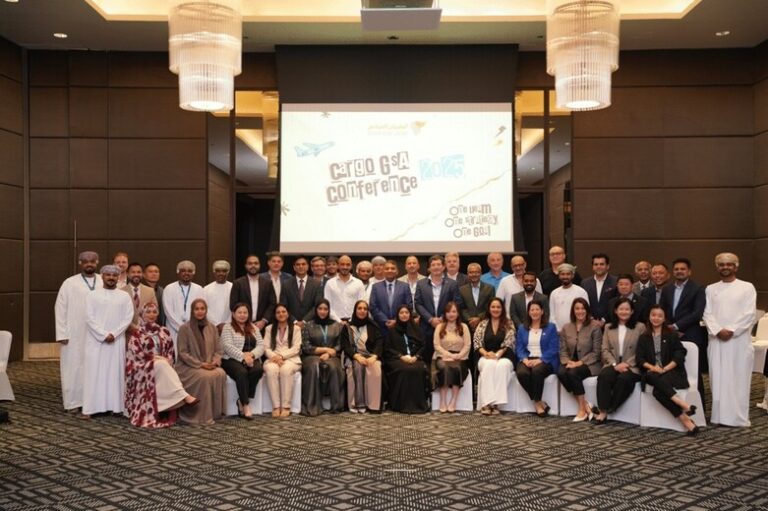
Oman Air Cargo recently expanded its global footprint by appointing five new General Sales Agents (GSAs) and launching two new offline routes connecting to Australia and Japan. GSA Australia Cargo and World Prime Services are the respective GSA representatives in these two countries. The airline has also signed up three more new GSAs to manage online routes to certain Middle East countries. These are: Al Madinah Travel Company for Kuwait, MGH Logistics for Qatar, and APG for Saudi Arabia. All new agreements are for a duration of two years. A number of already existing GSA contracts have also been newly renewed – each for a period of one year. Oman Air Cargo brought together 27 representatives from its GSA network at a milestone event in Muscat to celebrate these developments.

Oman Air Cargo welcomes 27 GSAs to its Cargo GSA Conference in Muscat, Oman, to mark the new contracts. Image: Meantime Communications

Oman Air Cargo operates from an advanced, CEIV-certified (Fresh & Pharma) facility in Muscat and serves over 200 worldwide destinations with a fleet of Boeing 737 MAX and 787-9 aircraft. It is currently focused on growth and broader global connectivity, particularly in Asia-Pacific and Gulf markets.

Michael Duggan, Head of Cargo, Oman Air, commented: “The expansion of our GSA network, including the launch of new offline routes to Australia and Japan, reflects the strong momentum behind Oman Air Cargo. These new partnerships enable us to serve our customers more effectively, extend our global reach, and build on the transformation of the airline.”

Jettainer keeps tabs on its ULDs thanks to Trackonomy

0

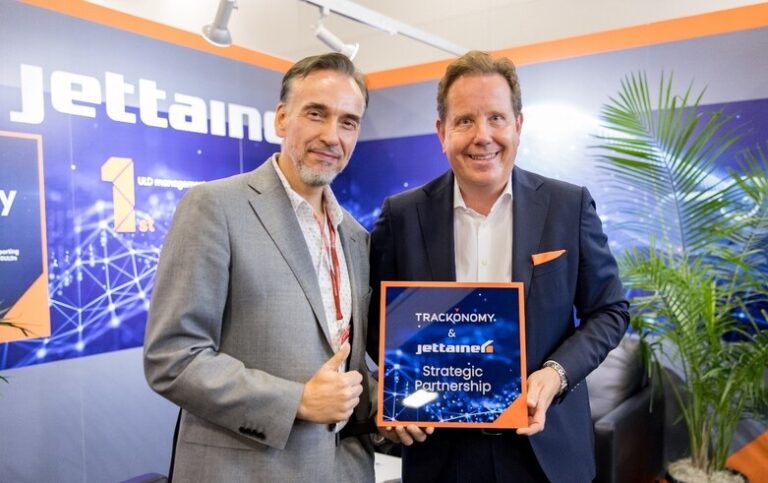
ULD management service provider, Jettainer, is reaching into the future and deploying IoT (Internet of Things) tracking technology developed by Trackonomy. It signed a long-term, strategic partnership agreement wherein Trackonomy will equip Jettainer’s global ULD fleet with its next-generation IoT tracking technology. This will provide real-time, end-to-end visibility throughout the container’s journey, with greater precision than ever before, meaning that Jettainer should know at all times where each of its containers are. Unlike traditional tracking systems that rely heavily on fixed airport infrastructure causing coverage gaps, Trackonomy’s hybrid solution integrates LoRa and BLE fixed readers with cellular-enabled mobile readers that form a dynamic and self-expanding mesh network. This innovation enables Jettainer to pinpoint the exact location and duration of each ULD at any given site, drastically cutting search times and accelerating the recovery of lost equipment. Additionally, the enhanced data gathered opens new possibilities for optimizing ULD fleet management and lifecycle processes. Another digitalization milestone for Jettainer as it seeks to improve efficiency and transparency across its processes. Trackonomy’s IoT solution joins Jettainer’s JettWareNG cloud platform and API integrations in Jettainer’s digital set-up.

Erik Volkerink, CEO Trackonomy, and Dr. Jan-Wilhelm Breithaupt, CEO Jettainer. Image: Jettainer

Dr. Jan-Wilhelm Breithaupt, CEO of Jettainer, said: “Tracking has become a critical factor in air cargo operations to monitor and control supply chains and respond proactively to irregularities. It’s essential for us to lead with reliable and forward-looking technology. While BLE and LoRa have been the standard so far, the integration of cellular connectivity and meshing technology marks a significant step forward. Together with Trackonomy, we are driving innovation in ULD tracking to deliver more transparency, efficiency, and intelligence to our customers. Trackonomy, based in Silicon Valley, the globally leading ecosystem of innovative companies, start-ups, venture capitalists, and research institutions, is the ideal partner for this journey.

Erik Volkerink, CEO of Trackonomy, detailed: “Our platform today orchestrates over 15 million shipments every day. The scale of growth we’re experiencing is mind-boggling – based on signed contracts, our technology will soon power more than 200 million reusable transportation items, including close to 20% of all ULDs worldwide. Behind the scenes, we’re becoming the de-facto standard for scalable, reliable, and industrial-grade digital transformation across logistics. Collaborations with forward-thinking partners like Jettainer are key to realizing that vision.”

BioNatur Plastics price-matches greener cargo wraps in U.S.

0

Companies shouldn’t have to pay more for a greener solution – price should not hinder people in choosing the cleaner, more environmentally friendly solution. In fact, if anything, it should be the other way around – nonbiodegradable, damaging products should come at a higher price. BioNatur Plastics has taken the cost excuse out of the equation and made sustainable cargo wrapping more accessible in the U.S. by matching the price of its biodegradable and 100% recyclable stretch wrap with traditional plastic films. Thus, that final cost barrier for manufacturers and logistics providers looking to switch to eco-friendly packaging without increasing operating expenses, has been removed. BioNatur’s stretch wrap is unique because it biodegrades in anaerobic environments like most landfills, thanks to a small amount of a “proprietary, food-safe organic additive that attracts anaerobic bacteria” to break down the plastic without leaving microplastics or harmful residues. This innovation helps shippers and forwarders meet current environmental regulations and prepares them for future rules tightening emissions reporting standards in the U.S. and Europe. Earlier in 2025, BioNatur partnered with a European manufacturer to produce this wrap locally at competitive prices, ensuring a steady supply across both continents.

Chris Paladino (left), President and CEO, BioNatur Plastics, and Charles Rick, VP Sales, BioNatur Plastics. Image: Meantime Communications

Chris Paladino, President and Chief Executive Officer, BioNatur Plastics, explained: “By matching the cost of conventional stretch wrap, we are making the sustainable option the obvious one. U.S. manufacturers and cargo operators exporting to the European Union can protect their cargo and their reputation by switching to a film that performs the same, remains recyclable in the normal polyethylene recycling stream, but biodegrades in a fraction of the time.”

Rhenus Group is building up Southeast Asia air cargo network

0

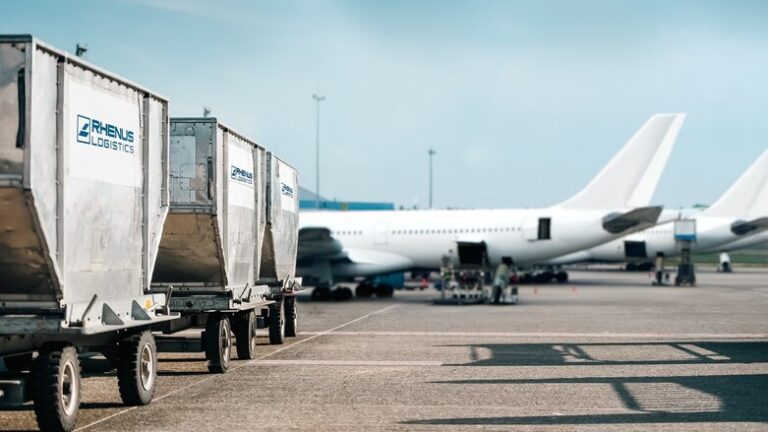
Rhenus Group is boosting its air freight presence in Southeast Asia to better support global trade as cargo flows increasingly shift toward the region. This expansion aligns with the ‘China+1’ strategy, where manufacturers are prioritizing Southeast Asia when it comes to sourcing, which is leading to increased cargo volumes and therefore also demand for more flexible, cost-effective logistics. Despite challenges such as weaker external demand and tariffs, Asia remains the fastest-growing segment in global trade, expected to contribute about 60% of growth in 2025 and 2026.

Rhenus sees Southeast Asia as a key air freight growth market. Image: Rhenus

This year, Rhenus established new air freight gateways in Singapore and Bangkok, complementing its existing hub in Kuala Lumpur. These gateways optimize cargo flows across Southeast Asia and key global corridors. Kuala Lumpur focuses on inbound cargo from Europe and outbound shipments to Oceania. Singapore deals with inbound cargo from Asia and Oceania and outbound to the Americas, while Bangkok handles outbound freight to Europe, and acts as a multimodal hub supporting intra-Asia trade via air and trucking. These gateways offer comprehensive services including door-to-door transport, customs clearance, cargo consolidation, and value-added solutions. Digital tools such as real-time tracking and paperless documentation to streamline operations ensure smart efficiency. Sustainability is also a major focus: Rhenus deploys electric vehicles for local delivery and optimized routing and low-emission transport options. The company has committed to continued investment in Southeast Asia to ensure it meets customer requirements across the globe.

Chris Bode, Vice President Global Air Freight, Rhenus Air & Ocean, explained: “Southeast Asia is a focus growth area for Air Freight in Rhenus. The gateways are at the center of the company’s latest expansion plans, and go beyond delivering the global promise of reliable, customer-centric logistics solutions. They are designed with scalability in mind, and integrate the latest digital and sustainable logistics solutions, to give our global customers flexibility and efficiency.”

Joachim Hanssen, CEO APAC, Rhenus Air & Ocean, said, “With recent global developments, including the China +1 strategy, more businesses are set to include the Southeast Asian region as an increasingly important piece of their global logistics plans. Rhenus has been and remains committed to support our customers in these fast-growing markets. We are confident that our strategic plans to grow our capabilities in this region, by enhancing resilience and operational agility, will position us as a preferred partner to meet evolving regional and global trade needs.”

LATAM welcomes Carmen, Farellón, and Auquinco on board

0

Today [10NOV25], Carmen, Farellón, and Auquinco – the three Andean condors – departed from CRAR in Talagante on their way to Patagonia National Park in the Aysén region. Initiatives of this magnitude, and with such important objectives as conserving our native species, require collaborative effort. That’s why we are so grateful to now have the support of LATAM’s Solidarity Plane,” said Eduardo Pavéz, Director of Proyecto Manku.

LATAM’s Solidarity Plane recently transported three condors. Image: LATAM

The Chilean conservation initiative dedicated to the protection of the Andean Condor, recently collaborated with LATAM’s Solidarity Plane program to relocate three Andean condors from the Birds of Prey Rehabilitation Center (CRAR) in Talagante to Patagonia National Park in the Aysén region, Chile. LATAM Cargo carried the precious trio to Balmaceda, followed by a land transfer to the park. The birds will undergo a two-month acclimation before being released into the wild. Patagonia National Park is a strategic release site because it hosts one of the largest populations of Andean condors, with 70% of the species living between central Chile and Patagonia. Despite being the largest flying bird globally, the Andean condor faces a precarious conservation status with only about 1,500 to 2,000 remaining in the wild in Chile. Threats include habitat loss, lead poisoning, collisions with power lines, and insufficient food availability. It is nationally classified as “Near Threatened”, thus initiatives such as Proyecto Manku and Rewilding Chile focus on rescue, rehabilitation, and population restoration. LATAM’s own Solidarity Plane program, now over 14 years old, supports such social and environmental initiatives, offering free transport across South America. Last year, the program transported over 1,600 people and 400,000 kg of cargo free of charge in Chile, marking a significant commitment to regional biodiversity and community support.

Cristián Saucedo, Director of the Wildlife Program at Rewilding Chile, commented: “Releasing condors in the far south is highly beneficial, as they have abundant food sources and it allows us to study their ecology in an almost pristine environment. In central Chile, which is more densely populated, we continue to rehabilitate and monitor them as well. Understanding these differences is key to addressing the challenges of their conservation.”

Constanza Pizarro, Corporate Communications Manager at LATAM Airlines Group, added: “Our collaboration with Proyecto Manku reinforces the purpose of Solidarity Plane: using LATAM’s connectivity to generate positive impact in the regions where we operate. Supporting the transport of native wildlife during rehabilitation – such as these condors – is a tangible way to contribute to biodiversity conservation and ecosystem balance in Chile.

Envirotainer launches Live Monitoring solution

0

Envirotainer has launched a next-generation Live Monitoring solution for its E-Tech RAP e2 temperature-controlled containers, enhancing real-time visibility across the cold chain for pharmaceuticals. This upgrade allows customers to track temperature, location, and door status live during shipments. This means that, in the event of any irregularity or deviation, the responsible logistics team can quickly respond to reduce the risk of product loss. As of NOV25, Envirotainer’s connected fleet totals 3,800 pallet-sized units, making it the largest digitally enabled active ULD fleet in the industry. The Live Monitoring service is included as standard with the RAP e2 container and integrates smoothly with customers’ existing systems to speed up product release and improve supply chain transparency. The RAP e2 container is highly regarded for its thermal insulation and precise temperature control, offering reliable protection for sensitive medicines while now adding enhanced digital tracking.

E-Tech RAP e2 Image: Envirotainer

Recent related advances include Envirotainer’s strategic investment in Swiss Airtainer (CFG reported), a pioneer in lightweight, solar-powered active containers with IoT-enabled communication. This partnership expands Envirotainer’s sustainable portfolio (see also here), and focuses on reducing carbon emissions in pharmaceutical logistics.

Niklas Adamsson, Interim CEO and COO at Envirotainer, stated: “With Live Monitoring now standard in our E-Tech RAP e2 containers, we’re taking another step forward in delivering smarter, safer, and more connected cold chain solutions. This upgrade empowers our customers with real-time visibility and control, helping them protect life-saving pharmaceuticals with greater confidence and efficiency across the globe.”

Maritime sector on the rise in Hamburg

0

The maritime industry in Hamburg announced three positive news last week. First, CMA CGM, the world’s third-largest shipping company, will acquire a 20% stake in a large container terminal in the port of Hamburg, belonging to operator Eurogate. Secondly, Eurogate competitor HHLA reported a significant increase in TEU volumes processed during the first three quarters of the year, despite U.S. tariff policy and its dampening impact on international trade and global supply chains. Thirdly, shipping line Hapag-Lloyd announced the order of up to 22 new vessels and a significant leap in schedule reliability on those hub-and-spoke routes served by the Gemini Alliance, jointly managed by H-L and its partner Maersk.

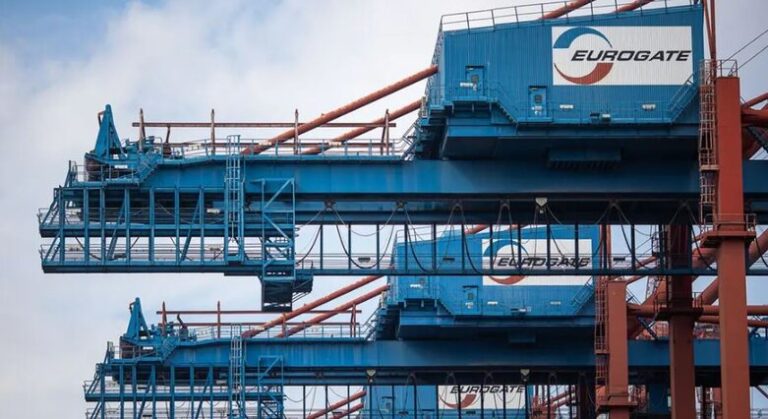
“Germany is an important part of our European network,” stated Rodolphe Saadé, CEO of CMA CGM, prior to inking the pact with Eurogate – photo: Eurogate.

The fact that the city also praised plans to construct a new, futuristic opera house at the shores of the Elbe River, privately co-financed by Hamburg billionaire Michael Kühne (K+N), rounded off the good news coming from Germany’s second-largest metropolis after Berlin.

Further TEU growth
As for the deal between CMA CGM and Eurogate, the French shipping company will call at the port of Hamburg more frequently in the future, significantly increasing import and export volumes from four million to an estimated six million standard containers (TEU) per year. In addition, the investment will also be used to expand the infrastructure. This said, 38 hectares of a deepwater area will be added to Eurogate’s premises in the harbor, creating more space for next-generation container ships. To ensure that CMA CGM vessels can dock without any problems, there are also plans to build a new quay measuring 1,050 meters in the western part of the harbor.

A deal based on personal relations
In addition to financial and strategic considerations, the agreement now announced between CMA CGM and Eurogate is based on a long-standing friendship between the two owner families. Thomas Eckelmann from Eurogate subsidiary Eurokai indicated this in a statement: “Our friendship with the Rodolphe Saadé family, owners of CMA CGM, is lasting for years. So we have been discussing a close collaboration for some time.”

Simultaneously to the above deal, the Hamburg-based logistics group and terminal operator HHLA announced a 12.5% increase in revenue and profit for the first nine months of the year, from €1.18 billion in the previous year to €1.33 billion in 2025. To the delight of the Hamburg city government, operating profit rose by 25.7% to €117.1 million. Hamburg holds a 50.1% stake in HHLA. The difference is owned by MSC, the world’s largest shipping company, based in Geneva, Switzerland. In addition, the Chinese state-owned company Cosco Shipping Ports has held a 24.9% stake in an HHLA terminal in the Port of Hamburg since June 2023.

Shipping lines invest increasingly in terminals
CMA CGM’s entry into Eurogate illustrates a growing trend: Shipping lines acquire increasingly stakes in terminal operators in key ports in order to stabilize their fleet’s schedules. Recent figures from Hapag-Lloyd show how successful this strategy is. Last August, schedule adherence on routes jointly operated under the Gemini flag (H-L + Maersk) was just under 90%, setting new standards in the industry. Hapag-Lloyd manages around 20 terminals worldwide through its subsidiary Hanseatic Global Terminals, including nine on the Pacific coast of Latin America. “We will continue to pursue this investment strategy consistently,” announced CEO Habben Jansen in a call with media people last Thursday (13NOV25).

Carbon neutral by 2025
In addition, the fleet will grow by 22 new container ships below the 5,000 TEU threshold in order to strengthen the feeder network of the hubs jointly operated by H-L and its partner Maersk and to decommission older ships that burden H-L’s environmental balance sheet due to their greenhouse gas emissions, the manager said. “We will operate our fleet in a climate-neutral manner by 2045,” the group’s CEO assured. Words that were certainly welcomed by delegates attending the COP 30 climate conference which took place at the same time in the Brazilian city of Belem, Brazil, 8,100 km away from Hapag-Lloyd’s HQ in Hamburg. Especially after the International Maritime Organization’s (IMO) Net Zero agreement for a global fuel standard and a global price on shipping emissions failed at the end of October due to opposition from the Trump administration. Now, the agreement is to be voted on again by IMO member countries in a year’s time.

Editor’s note: Lufthansa Cargo: Green Fuel, Empty Trucks?

0

Regarding this report published on October 19, 2025, the press department of Lufthansa Cargo has asked us to correct various statements contained therein by correcting and clarifying statements. We hereby comply with this request.

Trucks parked at Fraport’s Cargo City North, waiting for LHC shipments – photo: CFG/hs

The statement that Lufthansa Cargo operates trans-border RFS, namely to the Netherlands and France, in order to secure air freight there based on the RAS CargO procedure prohibited in Germany (sniffer dogs), as stated in our report is incorrect, says Lufthansa Cargo. “Such a practice does not take place in our own operational processes and contradicts our established security and compliance schemes,” the airline writes.

In addition, Lufthansa Cargo refutes the statement that an interdependence exists between the night flight curfew in Frankfurt and the RFS operated under an Lufthansa Cargo flight number. “The alleged connection between the night flight ban and RFS schedules is unsubstantiated,” the airline notes. Furthermore, the correlation mentioned in the article between RFS and the airline’s total emissions is not based on facts. The greenhouse gas emissions resulting from trucking services are fully included in Lufthansa Cargo’s environmental balances and reporting. Otherwise, it would not be compliant with regulatory requirements, states the airline. The share of its RFS operations accounts for only 0.36% of flight-related CO₂ emissions.

The airline also questions the market-related statement made by a former senior manager at Liège Airport, according to which approximately 30% of cargo arriving by truck at the airport comes from Germany. However, we did not state in our report that trucks operated by Lufthansa Cargo transported the volumes mentioned in the article.

Finally, the Lufthansa Cargo Communications Department closes this chapter by announcing: “We are piloting e-trucks for local airport logistics and jet-hub connections, reducing emissions even further.”

In conclusion: CargoForwarder Global hopes that this note will clear up any misunderstandings regarding the above-mentioned article and regrets any misinformation in our reporting. At the request of Lufthansa Cargo’s Media Department, we have removed the original report from our website to avoid further irritation.