IAG Cargo and CHAMP Cargosystems announced the creation of a custom solution using AI that enables a shift from paper Air Waybills to digital ones, thus transforming air cargo documentation processes. Following a recent successful trial, IAG Cargo will implement CHAMP’s A2Z Scan platform, a cutting-edge tool designed to automate the capture and processing of cargo documents.
CHAMP’s AI-powered A2Z Scan platform does away with paper. Image: IAG Cargo
This new technology deploys artificial intelligence to significantly reduce the need for manual data entry by automatically scanning and extracting information from shipping documents. By streamlining these traditionally labor-intensive tasks, IAG Cargo aims to enhance operational efficiency, minimize errors, and accelerate cargo handling times across its global network. This move aligns with IAG Cargo’s broader commitment to digital innovation and sustainability, as the automation of paperwork not only improves accuracy but also reduces paper use and administrative overheads. Customers can expect faster processing times and improved transparency throughout the shipping journey.
David Walker, Chief Digital and Information Officer at IAG Cargo, commented: “This partnership with CHAMP marks another important step in our digital transformation journey. By integrating A2Z Scan, we are making it easier for customers to transition to digital AWBs, and this will drive greater efficiency across our operations.”
Lucas Fernandez, VP Innovation and Insights at CHAMP, stated: “CHAMP A2Z Scan is the first of our tools to be 100% AI-based and can bring numerous benefits to customers like IAG Cargo. This is an important strategic move on their part, and I congratulate their commitment to digitalization in air cargo.”
There’s a new name on the scene when it comes to pharma logistics and that it pertains to air cargo is clear from its name: Healthc’Air. The new company is “dedicated to transforming pharmaceutical air logistics with a vision rooted in innovation, resilience and sustainability. Its modular and scalable offering targets airlines and GSAs wishing to develop or enhance their pharma product, providing bespoke support at every stage: strategic consulting, auditing, operational management, training, digitalisation, sustainable solutions and certification assistance.” Yulia Celetaria as Healthc’Air’s Global Director Pharma, heads a team of international experts poised to support companies looking to improve their pharmaceutical services. Two companies are already on board: ECS Group and GLOBAL GSA, with another dozen or so airlines having shown interest in Healthc’Air’s modular and scalable service offer.
Yulia Celetaria, Global Director Pharma at Healthc’Air. Image: Lemon Queen
“Healthc’Air offers a multi-tiered approach (Launch, Advanced, Trust) allowing each airline to select the scope of services according to their needs: consultancy, auditing, full shipment management, training, process alignment, certification support, digital tools and AI, among others. Several service models will be trialled throughout 2025 to tailor the offering to actual market demand,” the press release states. It goes on to emphasize Healthc’Air’s sustainability focus with its ‘green logistics’ solutions for a cleaner, greener pharmaceutical supply chain.
“Healthc’Air was created to tackle critical challenges: lack of specialised expertise, regulatory complexity, process optimisation, risk management, digital transformation, and compliance with environmental standards. The entity provides concrete solutions through an international team of pharma ambassadors, operational excellence experts, and a network of strategic partners,” it concludes.
Yulia Celetaria, Global Director Pharma, Healthc’Air, outlined: “Our ambition at Healthc’Air is to go beyond current industry standards. We aim to build, hand in hand with our clients, solutions that combine operational excellence, digital innovation and sustainable commitment. By listening closely to real market needs and bringing together top experts, we will sustainably transform pharmaceutical air logistics.”
The fruits of its collaboration with CargoAi have now been unveiled: Global Logistics Network (GLN) launched its own global payment platform, GLN CargoWALLET, this month. It has been “built specifically for freight and logistics professionals,” says the release, and uses CargoAi’s CargoWALLET technology which enables secure, real-time payments across more than 150 countries and 47 currencies. GLN CargoWALLET has been implemented across GLN’s international network of 250 logistics companies in over 137 countries, and early adopters have already shared positive feedback.
Payment ease at the touch of a few digital buttons. Image: GLN
GLN CargoWALLET addresses longstanding challenges faced by freight forwarders, consolidators, and air and ocean cargo handlers. The platform allows GLN members to seamlessly send or receive payments, even if the recipient does not have a GLN CargoWALLET account. And that brings far greater flexibility and opportunity to business transactions that otherwise face considerable challenges if traditional payment methods are used.
Key features of GLN CargoWALLET include instant payment processing for real-time settlements, guest payment options for non-members, robust multi-currency support, and enterprise-grade security with end-to-end encryption and full traceability. These features not only enhance security but also streamline operational efficiency, making reconciliation and cash flow management much simpler for logistics companies.
Ernst van der Heijden, President of Global Logistics Network, stated: “GLN CargoWALLET represents a major step forward for our network. By integrating a smart, seamless, and secure payment solution into our ecosystem, we’re enabling members to operate with greater efficiency, speed, and trust.”
GLN member, Jürgen Anwander, General Manager of Aero Africa, explained. “Traditional payment methods are time-consuming and costly. With GLN CargoWALLET, transactions are real-time, affordable, and easy to manage.”
Olivier Veyrac, SVP of CargoWALLET at CargoAi, concluded: “We’re proud to partner with GLN on the launch of GLN CargoWALLET. This collaboration brings our advanced payment infrastructure to a global logistics network, offering freight professionals a future-ready tool to streamline their financial operations and unlock new efficiencies.”
… and it urgently needs polishing. This was the opinion of a market expert familiar with the matter in reaction to the announced withdrawal of the cargo handling agent, DNATA, from Cologne/Bonn Airport (CGN), CargoForwarder Global reported.The farewell of the handling agent which belongs to the Emirates Group, will take place on 31DEC25. CGN Management is now looking for a new operator for its 12,000 m2 Cologne Bonn Cargo Center. Otherwise, cargo airlines threaten to relocate their traffic.
Last year, 840,000 tons of air freight were handled at CGN. Although this was 30,000 tons less than in 2023, it was still a significant amount and secured CGN third place in the German cargo airport ranking after Frankfurt/Main (FRA) and Leipzig (LEJ). The crux of the matter: 95% of the volume was contributed by integrators; namely UPS, DHL and FedEx and their feeders. Only 30,000 tons were accounted for by the general cargo segment, for which the Cargo Center was originally built.
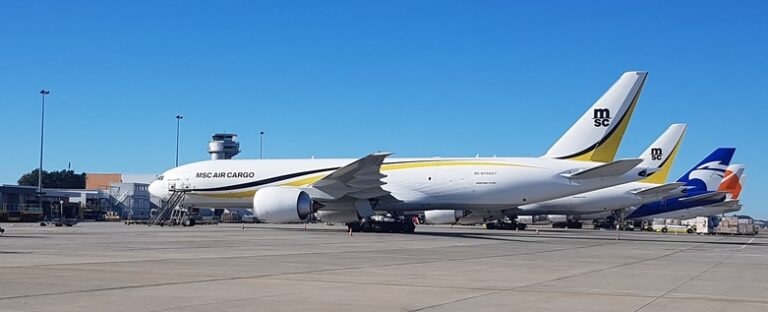
Lineup of freighter aircraft at LGG – Courtesy: Airport
Downward spiral Three years ago, it was three times as much. Since then, however, some carriers such as Egyptair Cargo, or Iceland’s Bluebird, have moved away, while others like MNG now fly less frequently to CGN. Canadian carrier, Cargojet, has disappeared completely due to a change in its business model, as has Amazon’s Prime Air, which preferred Liège to Cologne. This drain on capacity could not or only partially be compensated for and continuously drove down the tonnage handled in the cargo center. Ergo: ground handling agent DNATA incurred massive losses. A company manager declined to comment.
A multitude of factors There is no plausible explanation as to why standard cargo has steadily decreased at CGN. At least not an official one. Some people familiar with the local circumstances say that the airport is too expensive and the ground processes are too inflexible. Others criticize that CGN keeps a low profile and is not visible enough at air freight events and in the media, this way falling short of promoting its cargo opportunities. Some hold that management focuses primarily on the passenger business and the express sector, courting UPS, FedEx, DHL at alia but pays little attention to acquiring traditional cargo airlines. This said, the federal state of North Rhine-Westphalia, whose largest city is Cologne (1.1 million), is an industrial hotspot. According to official figures, goods and services worth around EUR 794 billion were produced there in 2022. This makes NRW the state with the strongest economy, ahead of Bavaria and Baden-Württemberg. The industrial economic output of its 18 million inhabitants beats those of Saudi Arabia, Poland, Sweden or Belgium.
Favorable conditions The geographical location is also favorable. This is because the two major European transport routes intersect here: the North-South axis between Scandinavia, London including the southern part of the UK, and northern Italy, and the East-West axis between Rotterdam and Antwerp at the North Sea, and dynamic eastern European countries such as the Czech Republic and Poland. The federal state is also home to international corporations such as Deutsche Post/DHL (logistics/transport), Thyssenkrupp (mechanical engineering), Bayer AG (chemicals/pharmaceuticals), Henkel (consumer brands/adhesive technologies), Rheinmetall (defense) and others. Against this background, the annual throughput of 30,000 tons of general cargo in Cologne/Bonn almost sounds like a joke. Most of the air freight produced in North Rhine-Westphalia is trucked to Amsterdam, Luxembourg, Frankfurt or Liège. Apparently, the conditions for air freight are more inviting there.
Former visions vanished into thin air “Alongside passenger traffic and express freight, general air freight is to become the third pillar of our business model,” trumpeted the former airport CEO and cargo-minded, Michael Garvens, at the colorful opening of the Cologne Bonn Cargo Center on 27MAR2009. This was certainly also what investor DNATA was hoping for when it took over the cargo handling business from operator Wisskirchen in 2015. It was the agent’s first step into the German handling market. As is now known, this turned out to be an extremely loss-making exercise that will end on 31DEC25. Until then, airport management must present a new operator to run the facility and secure jobs, otherwise the general cargo segment might disappear at CGN. Applicants are welcome.
Liège Airport (LGG) – Cargoland’s growth figures are impressive: From JAN25 to JUN25, its throughput was up 10% year-over year, totaling 626,690 tons, versus 568,776 tons in the first half of 2024. This means that the airport is already well ahead of expectations for the entire year, as the peak season is still to come in the third and particularly the fourth quarters of this year.
In terms of cargo throughput, Liège tops the European cargo airports. The Walloon airport’s stunning growth is based on a number of favorable factors, contrasting the situation of competitors: Liège’s management is focused on air freight and quickly removes hurdles that would otherwise torpedo development. Its masterplan sets a clear course for the proactive expansion of the ground infrastructure based on demand. This results in sufficient capacity for the handling of imports and exports and includes special services, symbolized by the Horse Inn, where race and competition horses are prepared for the flight by professional attendants and grooms. Added to this is the extremely favorable geographical location in the middle of the industrial triangle between the Benelux countries, Germany and northern France. The political support of the Walloon government, for whom Liège has become a logistical showcase project, is another extremely important factor for the advance of the site. And, last but not least, the airport also benefits from external factors beyond its influence, such as the discussion about slot cuts in Amsterdam, which has already led to the exit of some cargo airlines from Schiphol.
Lineup of freighter aircraft at LGG – Courtesy: Airport
Long-term vision inspires customers Hence, there are many favorable factors contributing to Liège’s ascent as a cargo airport. The recently founded Cargo Community “Liège Connect” (https://cargoforwarder.eu/2025/02/23/exclusive-Liège-establishes-cargo-community/ ) is another tool to further stimulate the location’s development. Against this backdrop, it is hardly surprising that management is looking ahead with great confidence, as Torsten Wefers, VP Sales & Marketing, says: “With our new brand “Cargoland” where “Freight meets Magic”, we are the air cargo place to be in Europe with new airlines (from 41 to 51) and new logistics providers (from 50 to 61). From MRO to e-commerce, pharma and perishables, to express cargo, Cargoland offers commodity-specific, tailored cargo processes based on advanced technology, whether it is strong digital tracking of shipments or GSE, optimum route planning, or real-time cargo movement management. Cargoland is offering multimodal solutions and will deliver a success and customer-oriented commercial approach that will leave a lasting imprint on the European logistics landscape.”
Mastering external challenges The fact is that LGG is not facing any weakness, despite geopolitical uncertainty, customs tariffs disputes, the U.S. dollar’s worst first-half-year performance since 1973, unrest in the Middle East and Russia’s ongoing war in Ukraine. So far, these negative factors have not affected Liège’s freight business. On the contrary,since JAN25, more than 101,000 tons of imports and exports transited through the freight terminals, representing a growth of 34.5% compared with the same period in 2024 (75,000 tons)! In view of these figures, a coherent business model and the optimistic outlook, CEO Laurent Jossart, Sales Chief Torsten Wefers and Co. can rightly say: “The sky is our limit.”
Each week, CargoForwarder Global’s ‘Spotlight On…’ focuses on a different function and segment of the air cargo industry. Without ground transportation, there would be no air cargo as all shipments first need to get to an airport before they can be flown (and at destination, a similar process happens in reverse). Trucking therefore plays a key role in our industry, and – with the different commodities being transported and set lead times needing to be met (as cargo is built-up and security screened, among other things, before being loaded into an aircraft and flown), road feeder services require professionalism, expertise, and excellent planning. Katie Griley (KG), President of Griley Air Freight, takes us through her responsibilities, views, and advice.
Surround yourself with people who aren’t afraid to challenge you. Image: Katie Griley
CFG: What is your current function and company? And what are your responsibilities? KG: I’m the President of Griley Air Freight. We’re a carrier based out of LAX, and we specialize in moving import/export cargo, about 2 million tons a year. I handle a little bit of everything: operations, customer relationships, compliance, team leadership, and overall strategy. I’m also leading our push into pharma logistics with new GDP-compliant equipment and processes.
CFG: What does a normal day look like for you? KG: There really isn’t a ‘typical’ day, and that’s what I love about it. Some days I’m on client calls or working on pricing strategy; other days I’m in team meetings, dealing with operations, or jumping in to help solve issues as they come up. It’s fast-paced and always changing.
CFG: How long have you been in the air cargo industry, and what brought you to it? KG: I’ve been in it for over 16 years. It started through family connections, but I stayed because I saw the potential to build something better… Something more organized, reliable, and people-focused.
CFG: What do you enjoy most about your job? KG: Honestly, I love solving problems. Whether it’s figuring out how to run more efficient, working through a staffing challenge, or coaching someone into a leadership role, it’s all about finding smart solutions and keeping things moving.
CFG: What do you see as the greatest challenges in our industry? KG: I’d say our biggest challenge over the past few years has been dealing with non-compliant competitors driving prices down. On top of that, customer expectations keep rising, sustainability is a growing pressure, and costs (especially insurance) just keep going up. The tough part is that we’re not able to pass those increases onto our clients. Meanwhile, a lot of our competitors aren’t even following state or federal regulations, and when they get caught in a lawsuit for example, they just shut down and reopen under a new name like nothing happened. It’s frustrating because our overhead is on a whole different level – we’re playing by the rules, and they’re not.
CFG: What advice would you give to people looking to enter into the air cargo industry? Any particular training they should aim for? KG: It’s a demanding industry, but if you’re the kind of person who takes ownership and thinks on your feet, you’ll go far. This industry moves fast, and if you want to succeed, you need to be adaptable. Markets shift, customer needs evolve, and you’ve got to be willing to adjust your business model when the time comes. Also: Keep learning, stay humble, and surround yourself with people who aren’t afraid to challenge you. Technical knowledge helps (things like compliance, hazmat, cargo security), but mindset and work ethic will take you further than any certification.
CFG: If the air cargo industry were a film/book, what would its title be? KG: “Always Rushed: The Untold Story of Air Cargo Transportation” because so much happens behind the scenes (and fast) to make transporting air cargo work, and most people don’t even realize it.
At the intersection of logistics, innovation, and sustainability, CIND Solutions is pushing the boundaries of what is possible in air cargo. With a clear focus on data-capturing through advanced software and sensor technology, the company’s mission is simple, yet ambitious: optimize ULD (Unit Load Device) handling to maximize load capacity, minimize climate impact, and streamline operations for cargo carriers worldwide.
CargoForwarder Global (CFG) spoke to Kerstin Meyer (KM), Country Manager Germany at CIND Solutions, about her journey into the world of air cargo, the transformative potential of CIND’s dimensioning and contouring tools, and how digitalization can drive meaningful change without compromising environmental goals.
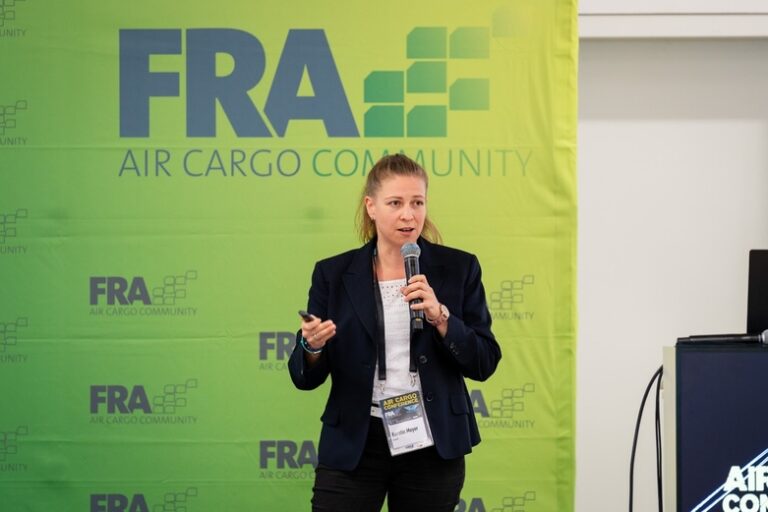
Kerstin Meyer, CIND Solutions, photo: company courtesy
CFG: You’ve been active in the logistics and aviation world for many years. What led you into air cargo, and what continues to motivate you today at CIND? KM: I entered logistics via classic export processes and moved into air freight relatively early on. I am particularly attracted by the combination of speed, internationality, and proximity to operational processes. At CIND, there is an additional attraction: We bring technologies to where they really make a difference – to the warehouses, to the ramps, to where it counts. Seeing how good tools can change processes in a very concrete way, is a strong motivation for me.
CFG: CIND’s dimensioning and contouring solutions aim to modernize ULD handling. Where do you see the biggest practical shifts once these tools are in place? KM:As soon as precise measurement data is automatically available, many things change: planning decisions become more reliable, coordination becomes more efficient, and air is no longer transported unnecessarily. One major practical shift is that estimates and assumptions are replaced by hard facts – and that helps on many levels, from internal reporting to real-time cargo space optimization.
CFG: Digital tools promise efficiency, but integration is often complex. What challenges have you observed when implementing CIND’s solutions within the existing IT ecosystems of handlers and airlines? KM:The systems themselves are rarely the real problem – it is the historically grown structures and the desire to intervene as little as possible in ongoing processes. This is why we rely on open interfaces and close coordination with IT and operations. It is important to understand at an early stage: Where is the data flow needed? And how do we create acceptance for new processes – not only technically, but also in human terms?
CFG: With growing expectations around both automation and sustainability, how can technology support efficiency without adding to the environmental burden or creating new dependencies? KM:Technology should not be a black box solution, but rather transparent, scalable, and practical. For example, if we can use more precise data to make better use of loading areas or avoid unnecessary transportation, this has a direct impact on emissions – without creating new dependencies. It is important that solutions not only convince technically but also perform both on paper and in everyday operations. And the great thing is that sustainability doesn’t cost extra with us – it’s a built-in by-product of more efficient processes.
CFG: Looking ahead, which two challenges in air cargo handling do you believe require the most urgent attention – and how far are we from resolving them through digital innovation? KM:The first major challenge is clearly the optimization of operational workflows. Many processes still rely heavily on manual work and habit rather than on objective, reliable data. There is an urgent need for practical solutions that really simplify everyday life. The second is – unsurprisingly – the “evil topic of digitalization”. By this I don’t mean the introduction of tools for their own sake, but the consistent availability of relevant information at the right time and in the right place. Initiatives like IATA’s ONE Record can be a powerful step in this direction.
CFG: And finally, what skill or mindset do you believe is most underrated when it comes to driving meaningful change in air cargo handling? KM:From my point of view, people often underestimate how important an open, solution-oriented attitude is – especially in change processes. You don’t need perfection from the outset, but the courage to get started and develop things together. Those who are prepared to embrace new things and pragmatically implement small steps, often achieve more than big strategies on paper.
CFG: Kerstin, thank you for your time and insights.
U.S.-based Air Lease Corporation (ALC) has pulled out of a contract with Airbus for the purchase of seven A350F. Instead, new customer, Avilease from Saudi Arabia, signed a purchase agreement for ten freighters of this series. All in all, this results in a plus of three freighter aircraft for the European manufacturer but points to tougher times ahead.
So far, there has been no direct confirmation from Airbus of ALC’s withdrawal from the contract. However, the step is evidenced by the fact that the order no longer appears on Airbus’ June order list. ALC’s step marks a complete turnaround from the lessor’s stance taken at the Dubai Air Show in November 2021. ALC was the first customer to sign a purchase agreement for the new Airbus freighter aircraft. The purchase was justified by the expected strong increase in e-commerce in the near future and the resulting demand from airlines for capacity. Shortly after agreeing the deal, Steven Udvar-Házy, ALC’s Managing Director, said that negotiations with potential operators were already underway, including airlines in Europe, North America and the Far East.
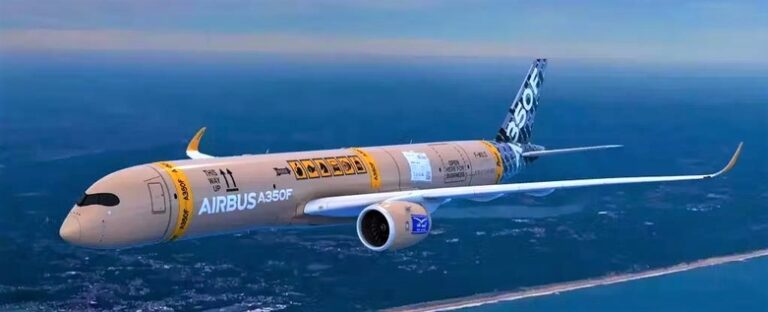
Airbus A350F – photo: courtesy Airbus
Seven down, ten up From the aircraft manufacturer’s perspective, Air Lease’s withdrawal is a setback for the A350F program, but it doesn’t kill it. Particularly since Avialease, backed by Saudi Arabia’s Public Investment Fund (PIF), stepped in, signing an order for ten A350 freighters. Due to this adjustment, the A350 firm order backlog increased by three – from 63 to 66 jetliners. Main operators and lessors with firm orders include CMA CGM Air Cargo, Air France-KLM Cargo, Singapore Airlines, Etihad Cargo, Silk Way West Airlines, Turkish Airlines, Emirates, and Latam Cargo. According to Airbus, the A350F offers up to 111 tons of payload, an 8,700 km nonstop range and burns 40% less fuel compared to other carriers of this size, such as the B747-400F.
The asset gamble ALC’s withdrawal comes at a time of increasing volatility in the global cargo market. This peaked in 2022–2023 as the market reacted to the supply chain disruptions and high e-commerce volumes, but rates have plummeted since then as lower deck capacity rebounded due to increased passenger traffic. The downward trend is illustrated in IATA’s latest cargo report, with cargo demand down 3.2% year-on-year, while capacity grew by +4% through MAY25 – putting pressure on cargo rates. This may explain why UPS and FedEx have recently postponed widebody freighter deliveries or retired older aircraft earlier than projected. Meanwhile, inflationary tendencies and rising interest rates are curbing the hunger for new capital-intensive assets. In addition, volatility in transpacific routes, influenced by unpredictable changes in U.S. tariff policies, generates uncertainty. This situation may have influenced the strategy of lessor ALC, which must ensure the long-term placement of its assets.
Lars Wagner, credit: MTU Aero Engines
Wagner climbs up the Airbus ladder In other news: Airbus announced the appointment of Lars Wagner as its new Commercial Aircraft Business CEO. He is currently Chief Executive Officer (CEO) of MTU Aero Engines AG, based in Munich. Wagner will become a member of the frame maker’s Executive Committee and succeed Christian Scherer as CEO of the Commercial Aircraft business, effective 01JAN26. The 50-year-old, who joined turbine producer MTU Aero Engines in 2015, held several management positions at Airbus including in Bremen, Hamburg and Toulouse. Lars holds a degree in mechanical and aeronautical engineering as well as an MBA.
At the TIACA Executive Summit 2025 in Hong Kong a couple of weeks’ ago, Hong Kong International Airport unveiled a “first-of-its-kind digital solution” called ‘HKIA Cargo Connect’ during a panel with the same name, subtitled ‘Powering Airline Partnerships at HKIA’, held on 25JUN25. There, Starlux Airlines, CMA CGM AIR CARGO, Hong Kong Air Cargo Carrier Limited, and Turkish Cargo, who were all among the HKIA Cargo Connect pilot partners, shared strategic insights and success stories highlighting how the solution “empowers collaboration and unlocks new business opportunities.” According to the brief, HKIA Cargo Connect was developed as an “innovative one-stop platform [to] foster interline transshipment collaboration among airlines and enhance operational efficiency, further consolidating HKIA’s position as an international cargo hub”. CargoForwarder wanted to know more about the platform and how airlines are experiencing working with it. It therefore put a number of questions to the Airport Authority Hong Kong (AAHK)’s Corporate Affairs department. Here are the answers.
Starlux Airlines, CMA CGM AIR CARGO, Hong Kong Air Cargo Carrier Limited, and Turkish Cargo discussed the benefits of HKIA Cargo Connect. Image: Airport Authority Hong Kong
CFG: HKIA Cargo Connect – how is this a ‘first-of-its-kind’ digital solution? What does it do? AAHK: HKIA Cargo Connect is the world’s first airport-led initiative to empower airline partnerships through an innovative, intelligent, and interconnected digital ecosystem of the air cargo industry. The platform enables intelligent airline partnerships, leveraging Hong Kong International Airport (HKIA)’s global aviation hub position and extensive network with around 140 airlines connecting to over 200 destinations worldwide.
CFG: What led to the digital solution being developed? What were the pain points? AAHK: As the world’s busiest cargo airport, it is always our goal to maximize and optimize our network and infrastructure to create more benefits for the air cargo community. HKIA Cargo Connect enables intelligent airline partnerships with enhanced visibility of carriers schedules and details, terminal, contact information, etc., accurately addressing airlines’ current pain points of fragmented and manual communications when establishing interline partnership. With the growing number of new airlines and new destination gateways, HKIA Cargo Connect serves as a common platform to bring together our airline partners to induce more business opportunities and collaborations for all.
CFG: Who participated in the development and who were the test pilots? AAHK: Airport Authority Hong Kong (AAHK) initiated this idea and formulated a discovery stage during which 9 pilot partners (including airlines, general sales agents, cargo terminal operator) have been interviewed to validate our concept before proceeding to the development stage. Most of these pilot partners have been supportive throughout the testing and launch phases, with some even co-creating successful business cases together.
CFG: What results has the solution brought about? Any figures that show saved time or number of transactions that can be completed in comparison to prior? AAHK: Prior to the official launch of the platform, we already completed various business cases to demonstrate its capability to fulfill airlines’ real business needs, cultivate relationships among airlines, effectively expand their network, optimize their load capacity, as well as reduce their administrative work in managing their business partners.
CFG: How was the reception of the news on 25JUN25? What were the main questions? AAHK: The platform is well-received by the community. In the month before its official launch, we introduced this platform to around 40 airlines, with over 90% of them providing positive feedback and expressing a keen interest in using our platform. There have been many enquiries from the industries (not limited to airlines), who are keen to explore and use our platform.
CFG: Has it now gone live properly, or what are the next steps? When will full implementation be complete? AAHK: The platform is now officially launched. We will continue promoting its usage to all airlines at HKIA and enhancing the platform with more value-added features to facilitate interline partnerships. We are looking forward to enriching its functions subject to users’ responses and experiences at a later stage. Subject to market feedback, the platform can further expand to serve other industry stakeholders, e.g. freight forwarders.
CFG: What challenges were encountered during the pilot phase and how were these overcome? AAHK: Since this is the first-of-its-kind initiative of AAHK, no reference of any kind can be gathered. We started with a smaller scale proof-of-concept to get initial feedback from the pilot partners before we expanded the scope and scale for the official launch. It is a challenging and adventurous journey for the team to initiate such an idea and put it into full implementation in less than a year.
CFG: Is the solution scalable and will it be made available for other AAHK: Yes, the solution is highly scalable. As the air cargo landscape continues to evolve, HKIA is committed to continuously expanding the ecosystem beyond the airline community to the broader logistic industry and beyond air freight to connectivity across all dimensions.
HKIA Cargo Connect has been well-received The unique digital platform created to facilitate interline freight transfers has met with positive reviews, as statements from two of the pilot partners prove: “We regard HKIA Cargo Connect as more than just a booking interface — it provides a foundation for flexible, collaborative solutions.” – Starlux Airlines “This platform allows our interline and sales teams to focus on what really matters, to unlock growth, which is exactly what we are planning, and we are looking forward to the official launch of the platform.” – Hong Kong Air Cargo Carrier Limited
Who will move into the CGN Cargo Center? Image: dnata [website]
Germany’s Aerotelegraph and Airliners.de both reported on 04JUL25, that Emirates’ subsidiary, dnata, is pulling out of Cologne Airport at the end of this year. Despite entering the German market in 2022, when it became exclusive operator of the 12,000 m² Cologne Bonn Cargo Center (a move that was intended to serve as the heart of its business in Germany, when dnata acquired Wisskirchen Handling Services), and then gaining a 6,000 ton/year cargo handling contract with Maersk Air Freight in NOV23, it would appear that the return on investment in trying to generate growth at the airport was not given. The rental contract at the airport and dnata’s cargo business there will cease on 31DEC25, according to local reports. The airport has been officially informed of the closure. dnata confirmed these reports to German media. A company spokesperson revealed that market conditions were limiting growth potentials, and that this had been the outcome of a comprehensive business analysis which had served as the basis for dnata’s withdrawal decision. This is unexpected news given that, by all accounts, the Emirates division is otherwise experiencing international growth, and even in Cologne, has been handling more than 85,000 tons/year, to date – for around 20 airlines. While dnata and the airport are cooperating to seek a successor for its cargo operations and it confirms that services will continue as usual until the closure, the move poses challenges. Around 90 employees are directly affected by the closure at the country’s third-largest airport. They, too, are being supported through the transition. It also throws up the question if dnata will continue to remain a member of VACAD (Air Cargo Handlers in Germany), which it joined in 2023? They otherwise lose a significant member. And it poses the question as to whether the decision of such an international player will affect other foreign investment considerations in the German air cargo sector?