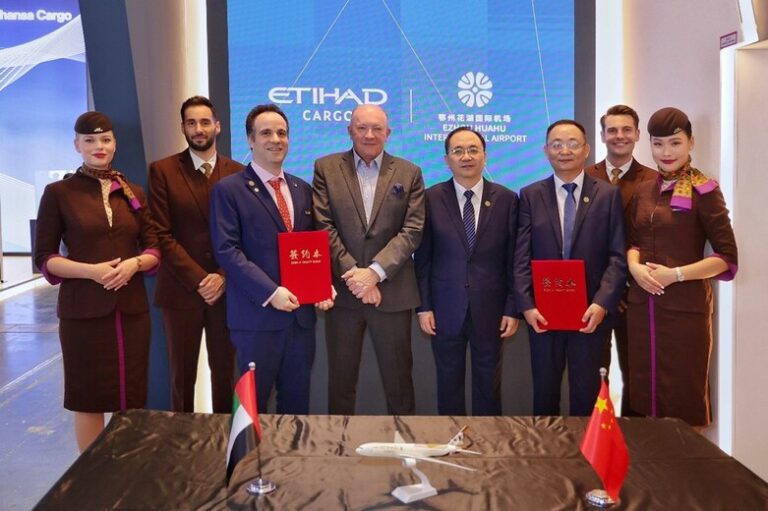
Etihad Cargo has signed a strategic cooperation agreement with Ezhou Huahu Airport, positioning the airport as a core hub in China and strengthening Etihad’s access across the Asia-Pacific region. The signing ceremony was held at the Etihad Cargo booth at the Air Cargo Europe in Munich, last week, and attended by Stanislas Brun, Chief Cargo Officer at Etihad Airways, Luo Guowei, Party Committee Member and Deputy General Manager of Hubei Airport Group Company and Chairman of Hubei International Logistics Airport Company, and Li Wei, Deputy General Manager of Hubei International Logistics Airport Company. The agreement is intended to enhance connectivity between China, the Middle East, Europe, and Africa, and Etihad plans on establishing the airport as a key hub. The two companies will work on increasing e-commerce, high value goods, and cold chain logistics capabilities, as well as augmenting flight frequencies and opening new routes. Ezhou Huahu Airport, Asia’s first dedicated cargo airport (CFG reported), offers extensive infrastructure and capacity, supporting Etihad Cargo’s ongoing operations in Shanghai and Shenzhen and providing nationwide coverage, and creating a seamless trade channel for Chinese exports and inbound logistics. Etihad Cargo operates four B777F/week to Ezhou.
Stanislas Brun, CCO at Etihad Airways, Luo Guowei, Dep. GM of Hubei Airport Group Company and Chairman of HILAC, and Li Wei, Dep. GM of HILAC. Image: Etihad Cargo
Stanislas Brun, Chief Cargo Officer at Etihad Airways, commented: “Ezhou Huahu Airport is already recognized across China for its outstanding capabilities and world-class logistics infrastructure. This partnership will amplify Ezhou Huahu Airport’s strengths across Europe, the Middle East and Africa. It represents an exciting opportunity to accelerate the development of more connected, efficient logistics solutions and those not yet engaging with this corridor risk being left behind.”
Luo Guowei, Party Committee Member and Deputy General Manager of Hubei Airport Group Company and Chairman of the Board of Hubei International Logistics Airport Company, stated: “This partnership is an important step in the airport’s global growth. Etihad Cargo’s strategic network and hub in Abu Dhabi offer new pathways for China’s exporters and we look forward to building stronger links across continents. We are also exploring opportunities to collaborate further with stakeholders in Abu Dhabi and identify areas for long-term, mutual benefit.”
Air cargo booking platform, cargo.one, has launched new functionality enabling Descartes’ transportation management system (TMS) users to quote and book air freight directly within their TMS. Thanks to the integration of cargo.one’s Air Freight Integration Module, TMS users benefit from streamlined workflows, greater efficiency, and they no longer need to manually enter data since booking details are automatically uploaded into Descartes’ system. With access to cargo.one’s network of over 65 live airline integrations, forwarders can instantly search, compare, quote, and book air cargo capacity from within Descartes’ TMS. They are offered a comprehensive, real-time overview of competitive rates and market options, allowing them to make bookings quicker and in better quality.
Smooth integration set-up between Descartes and cargo.one. Image: cargo.one
Kenneth Wood, Executive Vice President of Product Management at Descartes, said: “Integrating cargo.one’s global carrier connectivity within our TMS helps customers gain ground in delivery performance,differentiate themselves from competitors, and grow their revenue. Descartes TMS and cargo.one functionality working in unison is enhancing user experiences and helping forwarders to do their best work.”
Moritz Claussen, Founder & Co-CEO of cargo.one, commented: “Building advanced solutions with TMS leaders like Descartes is an important way forcargo.one to further contribute to a more connected supply chain. By leveraging cargo.one directly within their familiar Descartes TMS, forwarders will enjoy powerful operational and business benefits, combined with simplicity and convenience.”
Many employees, customers, long-time companions and guests followed Riege Software’s invitation and joined its 40th anniversary celebrations. Some of them came from very far away, like Jens Tubbesing from Dallas, Texas, CEO of the U.S. cargo sales agent, Airline Network Services (ANS).
“The trip took me and my colleague, CFO Ana Gerber, almost 24 hours due to technical issues of an American Airlines flight, but it was worth coming,” he commented at the end of the event. Riege Software, founded in 1985 by mathematician Johannes Riege, and now managed by the second generation of his five children, has become an institution in the global air cargo landscape. In four decades, it has developed from virtually nothing into one of the leading providers of logistics and freight forwarding software. The main product is ‘SCOPE’ which is now an integral part of digital process handling at many air and ocean freight companies and customs brokers.
Son Benjamin interviews father Johannes at the company’s birthday party. Image: Riege Software
Becoming an entrepreneur by accident Senior Johannes had never planned to found a company, he confessed when interviewed by his son, Benjamin. “I was interested in programming from a very early age,” he revealed. A young talent that also caught the attention of Bochum University where he graduated. So, they asked him to clear up the chaos in the library and develop a manageable system for the inventory of books and academic papers. Next, a local freight forwarder in North Rhine-Westphalia knocked on his door to see if he could create a data-based system for creating Air Waybills. As soon as this was done, invoicing was the next job to follow. ‘Procars’ was his initial product and Schenker the first major customer. This was followed by ‘Scope’, launched in 2006, which has meanwhile become the IT standard software for many companies.
Hands-on mentality In the meantime, his wife, Gabriele, gave birth to five children who now hold leading positions in the company. They have all inherited the hands-on mentality from their parents. The same applies, it would seem, to the other 131 Riege employees. The development of the Riege company is a success story based on energy, innovation and entrepreneurial spirit. To mark its 40th anniversary, the family invited employees, long-time companions and customers to an anniversary celebration in the ballroom of the Hotel Bauer in Munich Feldkirchen, on the fringes of the Air Cargo Europe trade fair. An honor also accorded to CargoForwarder Global as the only media representative among the 120 invitees. It was a lavish celebration.
At Transport Logistic 2025, the logistics industry presented itself as digital, efficient – and ready to invest. One trend stood out clearly: Artificial Intelligence. But in times of economic uncertainty, how wise is the push towards AI?
Despite ongoing geopolitical tensions and a slowing global trade environment, parts of the logistics sector are pushing ahead undeterred. Artificial intelligence has been the star of the show – something the industry has been talking about for over 20 years under the mantra “the future is digital”. Yet the question remains: Is this AI-driven future economically sustainable?
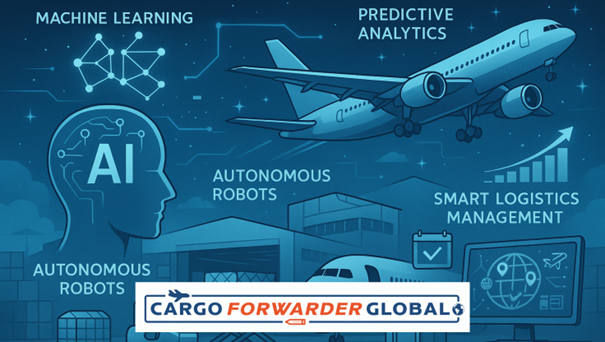
Artificial Intelligence stood high on the agenda of topics discussed at ACE – illustration/ CFG
AI as a Driver of Innovation Many companies revealed their latest AI-powered solutions for air cargo at this year’s trade fair in Munich – from automated loading systems and smart risk assessments to autonomous control technologies. The clear message: those who invest today will be competitive tomorrow. Still, a critical view is needed. With stagnant demand and high investment risks, it’s important to ask whether these large-scale AI investments are a real path out of crisis – or whether some companies risk digitalizing without ever seeing a return.
Government Support for Digitalization Federal Transport Minister, Patrick Schnieder highlighted the importance of digitalization for the logistics industry’s future in his opening speech: “We must seize the opportunities of digitalization. Together, we want to shape logistics that is future-proof, digital, and climate-friendly.” The government is backing this push by funding digital infrastructure and working to reduce bureaucracy to ease the transformation.
Balancing Innovation and Reality While the technology is impressive, not every AI investment will pay off quickly. Medium-sized air cargo companies face the challenge of balancing innovation pressure with economic sense. The market situation remains tough: Global cargo volumes aren’t growing as fast as digital adoption, and air freight from China is stagnating or shrinking due to geopolitical issues and supply chain disruptions. Meanwhile, political calls for digital transformation, backed by funding programs, increase the pressure on decision-makers. Location costs in air transport also remain a major competitive factor. Though there are ideas to reduce taxes and fees, progress is slow. What use is technological edge if freight volumes don’t cover the costs?
A Future Full of Questions Transport Logistic 2025 showed that AI has arrived – both as a technology and as a topic. But it’s not a cure-all. Many air cargo companies find themselves at a crossroads between economic reality and digital ambition. Innovation is essential, but whether AI alone will lead the way remains to be seen. Used wisely, AI can streamline processes and open new market opportunities. Yet in a fragile economic environment, caution is just as important as vision.
Every week, CargoForwarder Global’s ‘Spotlight On…’ focuses on a different area of the air cargo industry, illustrating just how varied the individual elements are that keep cargo moving on a global scale. The Yin to the Yang of physical necessities such as aircraft, warehouses, ULDs, and the like, is the equally important promotion of understanding, representation, diplomacy and resolution. With every country and business segment and size having its own regulations and requirements, one crucial element is trade facilitation. This week, Alina Fetisova, Trade Facilitation Programme Officer at the International Trade Centre (ITC), describes her function, shares her views, and delivers a film outline that is just begging to be made.
Air cargo sits at the crossroads of several critical areas. Image: Alina Fetisova
CFG: What is your current function and company? And what are your responsibilities? AF: I work as a Trade Facilitation Programme Officer at the International Trade Centre (ITC), a joint agency of the United Nations and WTO, focused on inclusive and sustainable trade. I specialize in project management and technical assistance in trade facilitation, and supply chain management, working across more than 15 countries in Central Asia, Southeast Asia, Africa, and Latin America. I lead multi-country projects, design policy tools and reform strategies, and deliver training for customs and border agencies. I also focus on gender-responsive trade facilitation reforms – supporting women entrepreneurs to strengthen their knowledge of cross-border trade, while helping customs officials integrate a gender perspective into trade procedures. In addition, I have opportunities to represent ITC at global events, including the recently concluded IATA’s World Cargo Symposium, and contribute to international publications on sustainable and inclusive trade.
CFG: What does a normal day look like for you? AF: There’s no real ‘typical’ day, each one brings its own mix of priorities. Some days I’m drafting policy briefs or developing project proposals; others I’m coordinating with national partners in the Philippines, Turkmenistan, Guatemala, troubleshooting implementation issues, or preparing for high-level events. I regularly travel to project countries to deliver workshops, lead consultations, and support national partners in implementing reforms on the ground. I spend a lot of time engaging with border agencies, development partners, and SMEs to ensure that our recommendations are both practical and impactful. My day often involves switching between highly technical discussions – say, on e-commerce customs procedures – and broader strategy conversations. And then there’s training delivery, stakeholder meetings, and contributing to international forums. It’s dynamic, intellectually demanding, and deeply rewarding as you get to see real impact firsthand.
CFG: How long have you been in the air cargo industry, and what brought you to it? AF: I’ve been working on air cargo-related issues for over three years, primarily through trade facilitation reform projects. What drew me to the sector was its central role in global connectivity – and the enormous potential for modernization. My background in trade policy and development gave me a systemic perspective, and air cargo sits at the crossroads of several critical areas: speed, regulation, digitalization, and inclusion. My involvement in the air cargo space grew organically at ITC, particularly through speaking engagements on trade and air cargo at the IATA World Cargo, the TIACA Executive Summit, and the World Cargo Summit. Since then, air cargo has become one of the key focus areas in our work on e-commerce and border management.
CFG: What do you enjoy most about your job? AF: I thrive on the combination of policy, strategy, and impact. I enjoy seeing how well-designed reforms – whether streamlining customs procedures or promoting gender-inclusive training – can create real opportunities for businesses and individuals. I also love the global nature of the work: collaborating with colleagues and partners from different cultural and institutional backgrounds always brings new perspectives. Working in air cargo adds another layer of complexity and excitement: the pace is fast, the stakes are high, and innovation is essential. When we manage to cut through red tape or help an SME access global markets faster, that’s a win I truly value.
CFG: What do you see as the greatest challenges in our industry? AF: In my opinion, the biggest challenges we face in the air cargo industry today lie in aligning digitalization, customs modernization, and a more inclusive approach to sustainability. On the digital side, there’s real momentum – e-AWBs, AI, Internet of Things are transforming operations. But fragmentation remains a major barrier. Poor data quality and lack of interoperability are driving cost increases of 10–20%, while customs-related delays are causing shipping times to rise by as much as 40%. This is especially problematic as customs rules tighten – like the de minimis changes in the U.S. and upcoming changes in EU, which now require faster and more precise data for even low-value shipments. Without smarter, integrated systems, we risk turning customs into a bottleneck rather than a facilitator of trade. Sustainability is also evolving – and it shall go beyond emissions. While environmental goals get a lot of attention, social inclusion often lags behind. Yet 80% of global e-commerce is driven by MSMEs, and in regions like Africa, women-led firms make up 75% of online exporters. A sustainable industry is one that supports these players, ensures access to digital tools, and builds policies that are fair, not just green. So, the real challenge and opportunity is to create an air cargo ecosystem that is efficient, digitally connected, and socially inclusive. That’s how we build long-term resilience.
CFG: What advice would you give to people looking to enter into the air cargo industry? Any particular training they should aim for? AF: My advice is to stay curious and interdisciplinary. Air cargo blends logistics, policy, and tech, so success often comes from understanding how they fit together. Whether your background is trade, law, IT, or development – there’s room for you. I’d recommend building a good foundation in air cargo and following industry bodies like IATA, but also look broader at gaining practical knowledge of customs procedures and trade facilitation. And don’t underestimate the power of soft skills: building relationships, listening across cultures, and finding common ground are just as important as technical expertise.
CFG: If the air cargo industry were a film/book, what would its title be? AF: Air cargo is such a technical, high-stakes industry that if I were to turn it into a movie, I would probably take an unexpected route – a fast-paced comedy. I’d call it “The Fast and the Freightious.” [Smiles] Think freight forwarders, customs officers and other air cargo industry players as the unlikely heroes – racing against customs deadlines, last-minute regulation changes, and the dreaded system outage five minutes before flight departure. There’d be adrenaline, suspense, a lot of coffee, and more acronyms than any viewer could possibly remember. Behind the chaos, though, it would highlight the incredible coordination, resilience, and innovation that keep global trade moving – one airway bill at a time.
Fantastic! Thank you, Alina.
If you would like to share your personal air cargo story with our CargoForwarder Global readers, feel free to send your answers to the above questions to cargoforwarderglobal@kopfpilot.at We look forward to shining a spotlight on your job area, views, and experiences.
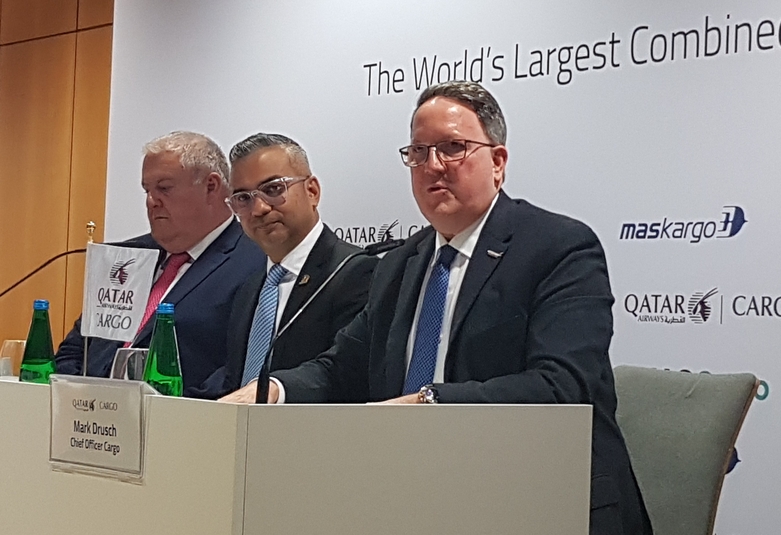
The three cargo carriers are preparing to launch a trilateral partnership which they say will be the biggest and most unique of its kind. Specifics of the pact were unveiled during a press meeting at the Air Cargo Europe in Munich last week. However, despite questions from media people, important aspects (partly referred to as “the magic sauce” by Mark Drusch of QR Cargo), remained vague or completely open in the end.
With their intended move, the cargo trio is breaking new ground. In part, at least, because air freight alliances such as WOW or SkyTeam Cargo – despite all their differences – have existed for some time. Although with limited (Sky) or zero (WOW) success, thus far. As Dr. Ludwig Hausmann, the involved McKinsey representative, possibly unwittingly punned in his opening speech at the press conference: “In the past, aircraft partnerships didn’t really take off, if we are honest!”
Informed the mediad about their new Global Cargo Joint Business (l > r): Dave Shepherd, IAG Cargo / Jason Thomas, maskargo / Mark Drusch, QR Cargo – photo: CFG/hs
New alliance, new opportunities? Yet, under the motto “It’s time to soar!”, a new attempt is now being kicked off by the triumvirate and is set to launch in the fourth quarter of this year. These are the known facts about this new club: By combining their resources, the three airline companies (which combine a total of seven airlines) want to jointly market the cargo capacities of their fleets which include 30+ freighter main decks and the belly holds of over 900 passenger aircraft. For freight forwarders and air freight shippers, it will not matter which of the three companies transports their respective shipment since standards and service will be aligned. “It’s like working with one airline,” Mark Drusch underlined. The collaborative advantage: three is more than one. Consequently, the combined available capacity is comparatively higher. In addition, transportation is faster thanks to improved connectivity, faster transit times, and new routing offerings across their six major hubs and combined global networks. “Booking shipments all the way through creates seamless operations and delivers additional value as well as service flexibility to our customers,” Dave Shepherd, CEO IAG Cargo, emphasized at the media briefing. At the same time, the trio is shaping harmonized safety and security standards for their clients, the three executives unanimously confirmed.
Corporate Responsibility component The Joint Business (as opposed to a Joint Venture – the difference was stressed during the press conference), is built on three pillars of which the first two are standard partnership goals: Network and Operational Efficiency. What does however make this particular partnership stand out, is the third element: that of ‘Returning to the Community’. As a result, the three companies have pledged to provide a combined 1,000 tons of free carriage to the UN World Food Programme (WFP) – the world’s largest organization in the fight against hunger. The WFP supports between 120 and 160 million people every year in over 120 countries across the globe. Though this will be the first global cargo partnership of its kind, the three carriers will each enter into individual agreements with the UN World Food Programme (WFP).
Key moment Jason Thomas, CEO at MASkargo, stressed that this combined strategic collaboration marks a pivotal moment for his carrier and the entire air cargo industry. “We are excited to partner with Qatar Airways Cargo and IAG Cargo, to deliver a new era of value and innovation to our customers. By leveraging our combined strengths and expertise, we will provide enhanced service offerings, expanded global reach, and cutting-edge solutions that address the evolving needs of the global market.” Mark Drusch, Chief Officer Cargo at Qatar Cargo, announced that the trio is investing in a common IT platform. This way, the market will be offered a seamless booking proposition leading to a very strong cord of commonality. “The single partnership platform will become a game changer,” IAG’s Dave Shepherd enthused.
No cross-shareholdings When asked by CargoForwarder Global whether financial cross-shareholding was intended, the three executives denied this. On the other hand, they confirmed, without naming any potential partners, that the trio could become a quartet or quintet in further steps. However, they brushed the question off the table raised by CargoForwarder Global, if LATAM Cargo would join the club as the next member. This issue is currently not on the agenda, they said. However, CargoForwarder Global has reliable first-hand information that negotiations with LATAM Cargo are in a well-advanced stadium.
Important issues were set aside Regulatory aspects also remained vague at the press conference: For instance, how will pricing be coordinated and executed without violating competition law? Who coordinates the operational processes and is responsible for claims if, for example, a pharmaceutical shipment gets spoiled due to temperature deviation during its journey – say from London, via Doha or Kuala Lumpur to its final destination in the Far East? These and similar aspects should be of interest to customers. But regrettably there was no word to this from the three cargo executives at their Munich press meeting.
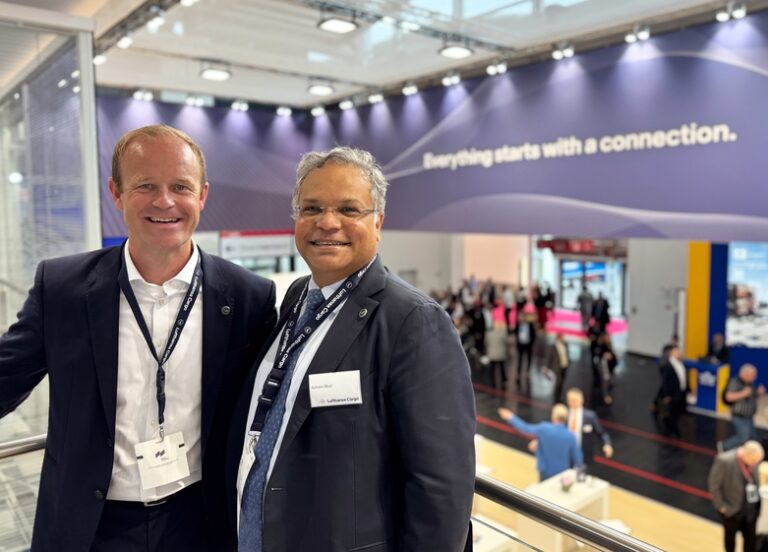
Aircraft, capacity, network and rates – these are the core topics in cargo. What has been neglected so far are emotional aspects, emphasized Lufthansa Cargo CEO, Ashwin Bhat during his company’s press conference at Air Cargo Europe last week in Munich. At the same time, he named a role model that his cargo airline could follow: Lufthansa Group member, Austrian Airlines (AUA).
This translates into the service that AUA offers its passengers. It is outstanding, lauded Mr. Bhat. “Their crew demonstrate a hospitality mentality that is second to none.” He could also have mentioned Brussels Airlines, managed by Dorothea von Boxberg, his predecessor at Lufthansa Cargo. On one of the airline’s advertising posters, a flight attendant with a tear in her eye, waves to passengers as they disembark from the plane, suggesting a kind of separation pain. The message of the passion poster: We loved having you on board. Too bad you’re leaving!
CFO Frank Bauer (left) and CEO Ashwin Bhat provided insights on the development of LHC – photo: company courtesy
Mix of empathy… That said, Lufthansa Cargo pilots should certainly not wave a container or a pallet goodbye as they are unloaded from a freighter aircraft. However, the mentality of making others feel valued, cared for and welcome would be a door opener for service partners, ground staff, customers or warehouse employees, especially at an airline whose employees are said to be somewhat snooty.
… and straight talk In addition to questions of empathy and emotional intelligence, the meeting focused on typical hard facts. For instance, Lufthansa Cargo’s successful first quarter with a growth rate in sales of almost 9% year-over-year. According to Frank Bauer, CFO and soon to become COO (01JUL25), key strategic targets have already led to positive results. For example, delivery notification in Q1, 2025 increased by 5% compared to the first quarter of 2024. Costs have been reduced, and productivity has improved. “We aim to get back to the top three carriers worldwide,” Bauer declared. Currently, the carrier is in sixth place but faces cut-throat competition from state carriers based in the Middle East. The magic formula for climbing further up the ladder of success is premium quality + operational reliability + capacity growth + increase in customers. The sought-after hospitality mentality is a key pillar of the latter aspect.
ITA’s network is an important addition to the LHC Group’s existing international route map, says Lufthansa Cargo’s executive, André Schulz – photo: CFG/hs
Concentrating on Italy Italy is the largest market for Lufthansa Cargo in Europe outside the German home market in terms of revenue and tonnage, added André Schulz, who heads Lufthansa Cargo’s Europe region. The integration of the ITA long-haul fleet has increased the group’s belly capacity by 20%, he stated. ITA complements the existing route map of the Lufthansa Cargo Group, especially towards Latin America, but also in Africa, emphasized the manager. Initially, sales on ITA’s inbound routes ex Buenos Aires, Sao Paulo and Rio de Janeiro, would be marketed by Lufthansa Cargo’s stations in Argentina and Brazil. In a further step, selling capacities in the opposite direction will follow. Lufthansa Cargo will set up a feed + de-feed system in Italy to be accomplished by the company’s own station in Milan.
Multi brand and hub strategy The integration of ITA into the Lufthansa Group was a major step for both sides. The Rome-based company operates with 99 jetliners, including 20 wide body passenger aircraft. “Their lower deck capacity equals the main decks of three freighters,” stated Ashwin Bhat. After Frankfurt, Vienna, Brussels and Munich, Rome becomes the fifth hub of the five airlines within the Lufthansa Cargo Group. He omitted Swiss and Zurich, as Swiss WorldCargo markets its capacity by itself.
Stepping up capacity Lufthansa Cargo will add a further seven B777 freighters to its own freighter fleet for long-haul routes by 2028, emphasized CEO Bhat. The four A321 P2F conversions in the regional fleet will also be expanded as soon as the market requires it. In addition, new long-haul passenger aircraft capacity will be added, further increasing the capacity available for cargo transportation. Bhat expressed concern about the situation in the USA and the uncertainty in the global markets caused by the Trump administration. As a result of the so-called Liberation Day, when the US president imposed high tariffs on many countries, air freight rates on flights across the North Atlantic have fallen by between 20% and 25%. However, this does not apply to tonnage, which has so far remained stable. He did not want to speculate on further developments in this important traffic region for the Lufthansa Group.
Judging by the general feedback given to CargoForwarder Global during the transport logistic/Air Cargo Europe’s four-day transport extravaganza, the event proved its worth and then some. Although it didn’t quite make it to the potential 80,000 attendee milestone this time around, the organizers nevertheless counted a record-breaking 77,000+ visitors from 130+ countries. Here are CargoForwarder Global’s impressions from the Air Cargo Europe 2025 which took place in Munich from 02-05JUN25.
“Day 2 has started on Day 1 already!”, CargoForwarder Global (CFG) was told on the Monday afternoon. Seasoned Air Cargo Europe (ACE) exhibitors reported unusually high footfall already on the first day, almost from when the doors opened. And the total of 12 halls (10 more than 2 years ago) over a 150,000 m² surface (logistics doesn’t get any bigger when it comes to trade fairs!) were buzzing with movement over all four days – as were the food areas between them, where attendees went to ease their feet a little and enjoy the unusually warm weather.
The lull before the 77,000-strong storm. Image: CFG/BG
Three days would be enough While the first three days were crammed with business appointments and company announcements, the clientele on the fourth day was markedly different – more one of “Giveaway Shopper” – as well as a notable increase in young people for whom special panels had been arranged to whet their appetite for a career in logistics. Interestingly, these panels were held only in German and this time there were no interpreters to provide English as had been on offer for most of the other transport logistic panels, many of which had been in German (except for those billed as Air Cargo Europe). This was surprising, given that the main language in logistics is English, the event had an exceptionally high international reach (two in three exhibitors were from outside Germany), and that because of its multicultural nature, there are surely non-German speakers among the young people looking to start out in the industry. On a positive note, the young people took what they had been advised by their young, working peers, to do: go around the booths and inquire as to internships, as some exhibitors confirmed to CFG. Perhaps, therefore, a point to consider for the next event in 2027: have an internship information or young talent attraction package available in case of inquiries – or even host your own talent acquisition event/panel/milkround. That said, one exhibitor told CFG that three days were likely enough for the trade fair – four days were a touch too long.
Big budget, big booths, big deal Exhibitions are always a huge expense for any company looking to promote its services and seek new leads, and some of the budgets quoted were eye-wateringly high*. From Fiats to Ferraris, the range of exhibition booths in size, quality, and creativity was amazing, with some opting for interactive games or even flight simulation to attract visitors. (Not to mention the many booth parties vying for attention every late afternoon, offering magicians or live music, for example.) Here again, records were broken: 2,722 exhibitors from 73 nations participated in the transport logistic, with Air Cargo Europe taking up two entire halls for the first time in its history, almost doubling its presence compared to two years ago. And, as already stated, the share of international exhibitors rose to 65% from 60% in 2023.
If you had to choose just one, ACE would be it Some companies had chosen to go for a booth for the first time, bringing larger employee teams than in the past, when they had attended as visitors. Exhibitors had the option of booth spaces of varying sizes or tables in group areas. One thing worth considering, is a quiet area for meetings – either in a closed off booth room, or on the second level of the booth, as some of the larger companies had done. Booths nearest the throughfares to the other halls, the food courts, or the toilets, as well as those in the center of the halls seemed to fare best. One exhibitor told CFG, “It’s getting to the point that, if you could only choose one of all the events in the year, ACE would have you covered. I have everyone I need to see in one place, and participation is more cost-effective than some of the other events around, which demand really high ticket prices.” Another said: “Everything is here now – all logistics stakeholders and even a huge tech component this year, compared to previous events. It is so much more international!”
Cargo vibes One very apparent thing was the incredibly positive atmosphere helped along by the humorous official opening (albeit also in German, and following a great jazzy musical intro by “Brass Twins”) at 11:00 on Day 1. Messe München GmbH’s Global Industry Lead transport logistic, air cargo & ceramitec exhibitions, Robert Schönberger, and Exhibition Director transport logistic, Caroline Thiemt, both gave off very convincing fake AI rappers, among other figures. (You had to be there.) Their optimistic, tongue-in-cheek energy set the pace of the show and even the new German Transport Minister, Patrick Schnieder, commented on the obvious passion he had noticed during his official tour of the trade fair, earlier that morning: “Da will man was bewegen!” [“People want to really move something” – I am not sure he intended for the pun, but he was not wrong.] Readers may be interested to learn that Schnieder is planning not only large investments in German infrastructure – road, rail, waterways, and air – but is also committed to reducing bureaucracy (could that spell the end to the ridiculous truck journeys across the border for customs reasons?), as well as pushing for autonomous trucks (who would have thought?). EV infrastructure and SAF also figured in his ACE address. Let’s see!
Official statement Stefan Rummel, CEO of Messe München’s official summary statement read: “transport logistic 2025 has impressively shown the central role that logistics plays in our connected world. It is the lifeline of the global economy. Without smooth supply chains, our everyday life would come to a standstill. I was especially pleased that the new Federal Minister of Transport, Patrick Schnieder, opened the trade fair. The significant increase in the number of participants led to a very lively and positive atmosphere. This underscores the importance of transport logistic as a world-leading trade fair.”
Yes, and… Yes, no doubt it was the largest of its kind, and there was much focus on digitalization, sustainability and artificial intelligence, with a great many partnership announcements as well as product improvements (often with digital components) being announced over the first three days. It was an excellent opportunity to meet company representatives and learn about their business. Panel discussions were interesting, though sometimes an acoustical challenge with all the other noises happening in the halls, also caused by constant announcements. As mentioned, many of these were in German and perhaps people were unaware that they could borrow headphones for live, English interpreting since only 10 to a maximum of 25 of the 50 headphones available were ever requested. The press event on the first day was a rather damp squib – more like a silent movie as a number of mainly German-speaking media trailed the new German Transport Minister around a total of 8 German company booths and stood in silence as he spoke with each booth representative, hearing nothing since no one wore a mic. CFG had been warned by fellow international journalists that this would be a waste of time, so only had herself to blame. (Plus, it actually began 25 minutes earlier than originally scheduled…). On the other end of the spectrum, Air Cargo Week’s World Air Cargo Awards 2025 on the evening of 03JUN25, drew in a large crowd with much celebration for all the winners. Having been an independent jury member and spent many hours at the start of this year assiduously vetting over 120 presentations – it was great to see the final results.
Tips and tricks With the amount of standing and walking over the four days – and the full tour of the 150,000 m² facility, wearing trainers was a lifesaver. It was interesting, too, to see that a couple of companies had incorporated corporate ID sneakers as part of their ACE uniform. The increasing number of crutches in use over the 4 days, also pointed to various trip hazards caused by slightly raised booths or sloping entrances – something to bear in mind for next time. From the tip to the trips to a possible trick: it was amusing to spot a certain company advertising its services on every second mirror in the Ladies’ toilets… Novel, yes. Effective? I’d be keen to hear how many ladies washing their hands, saw the ad and thought, “Oh yes! I ought to pop by their stand!” Maybe I’m wrong, but toilets are the last place I’d be placing a company ad that is not somehow related to the location’s functions.
See you there next time? It’s certainly worth visiting. If you’ve got a pencil at the ready, you may wish to note the dates for the next Air Cargo Europe/transport logistic in Munich in two years from now. It will take place a little earlier on in the year, next time: 26APR27-29APR27.*Just by the by: For just 1-3% of the money you spend on an exhibition booth to attract around 77,000+ people in the space of 3-4 days, you can also reach a good 25,000 on 4 consecutive Sundays. And you’d be supporting free journalism and a respected digital paper that regularly shares your news with the air cargo world. If you’d like to know more, just drop us a line at hs@cgofor.eu
Taiwan-based China Airlines is the latest addition to the digital cargo booking platforms, WebCargo by Freightos® and 7LFreight. As one of the world’s largest cargo carriers, listed in the top 15, China Airlines is a highly attractive addition, offering capacities on sought-after Asia-Europe-Americas routes, particularly in today’s volatile environment. The rollout of capacity offers begins this month and will include key hubs in the United States, Canada, Germany, Luxembourg, the Netherlands, and Japan, as well as 14 destinations throughout Mainland China, Hong Kong, Taiwan, and Southeast Asia including Malaysia, the Philippines, Vietnam, Singapore, Thailand, and Indonesia. In total, freight forwarders using WebCargo or 7LFreight will be able to see China Airlines’ real-time rates and space, and will have instant eBookings access to a network of 85 aircraft serving 192 destinations in 29 countries. They can opt to request quotes or book either via the respective platform or directly out of their own transportation management system (TMS) if it is already integrated with WebCargo. The airline also plans to accept WebCargo Pay instant payments for bookings so that forwarders can carry out bookings and payments in a single, streamlined workflow. This next-phase integration will include general cargo, express rates and contract rates
China Airlines goes digital on WebCargo and 7LFreight. Image: Freightos
Zvi Schreiber, CEO of Freightos, said: “We’re excited to bring China Airlines, a major player in Asia-Pacific air trade, to Freightos’ leading air cargo booking platform, including both WebCargo and 7LFreight. Our customers – airlines, freight forwarders and shippers – are currently grappling with fast-changing tariff uncertainties. The ability to instantly and transparently book air cargo is an important tool for maintaining agility during this time and to keep world trade flowing.”
Eddy Liu, Senior Vice President, China Airlines, commented: “Digital transformation is a key pillar of China Airlines’ strategy to better serve our forwarder partners through real-time access to our capacity and rates. By joining Freightos’ digital platform, we’re meeting our customers where they are, as part of our commitment to simplify air cargo and exceed customer expectations in a digital-first world.”
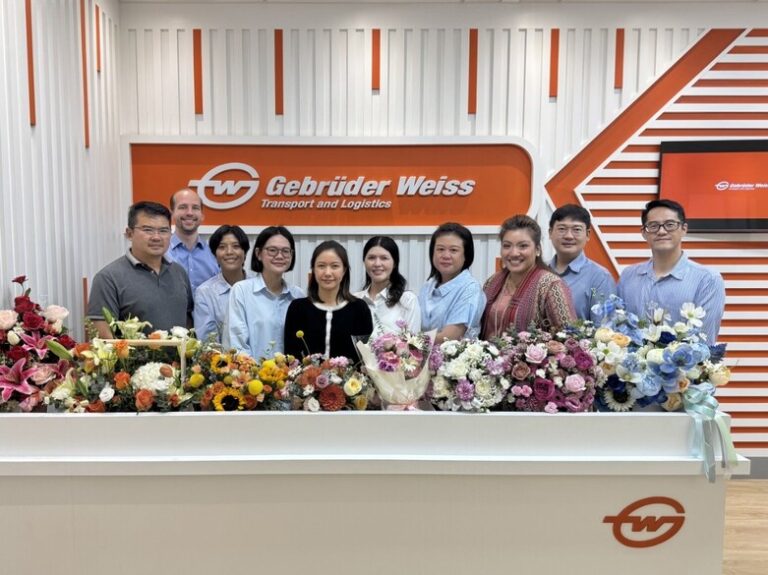
Global logistics provider, Gebrüder Weiss, is reinforcing its position in Southeast Asia with the launch of a new country organization in Thailand on 01JUN25. This strategic move deepens the company’s reach into one of the world’s fastest-growing economic regions. In 2024, Thailand’s exports surged to approximately USD 300 billion, marking a 5% year-on-year increase. The bulk of these exports – 86% – are industrial goods such as electronics, vehicles, machinery, and food products. A dedicated team of 20 professionals based in Bangkok will manage international air and sea freight, customs clearance, and both domestic and cross-border land transport operations.
Celebrating the launch of a new country organization in Bangkok. Image: Gebrüder Weiss
With its expansion into Thailand, Gebrüder Weiss now operates in nine countries throughout East and Southeast Asia as well as Oceania, including Australia, Greater China, Japan, Malaysia, New Zealand, Singapore, South Korea, and Vietnam. The regional network boasts 35 locations and a workforce of about 800 employees.
Lothar Thoma, Managing Director Air & Sea at Gebrüder Weiss, said: “The new country organization allows us to close a strategic gap and create direct connections to central Asia-Pacific markets for our customers. Thailand is an important export location with strong trade links to the USA, China, Japan, Australia, and Singapore – markets where we are also represented with locations of our own.”
Cristian Predan, Area Manager South-East Asia at Gebrüder Weiss, added: “Our employees have many years of experience in international transport management. In the medium term, we are aiming to expand our services in Thailand to include warehouse logistics, with a particular focus on the automotive and high-tech sectors.”