
Home Blog Page 87

time:matters expands ground handling network

The specialist for express transportation, which belongs to Lufthansa Cargo, operates its own handling terminals for express shipments at Frankfurt, Munich, and Shanghai Pudong. Its Courier Terminals deliver tailored services, speed up the flow of goods, and enhance reliability. This service sets it apart from other niche providers of ultra-fast air freight transportation.

The company’s own handling network will be further expanded, CEO Bernhard zur Strassen announced in an exclusive interview with CargoForwarder Global (CFG).

At the same time, agent Shanghai Pudong International Airport Cargo Terminal (PACTL) unveiled strategic initiatives that reinforce its ambition in global air cargo logistics. Lufthansa Cargo also holds a 29% stake in the Chinese ground handler.

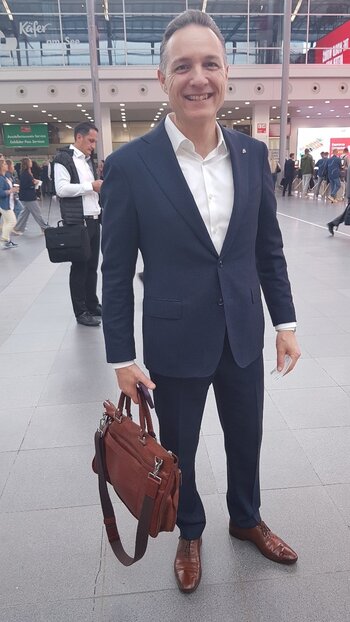
Bernhard zur Strassen, CEO time:matters  –  picture: CFG/hs

Instead of saying ‘the Sky is the Limit’, the motto at time:matters is: ‘The Globe is our Limit’. This is because following time:matters’ core markets across Europe, China and other regions, known growth markets in East and Southeast Asia, North America, and Europe feature prominently on the company’s expansion list,. “The geopolitical upheavals are rapidly changing supply chains. Hence, internationally active companies are forced to constantly reorganize their logistics processes,” says CEO Bernhard zur Strassen. “We connect the world every day to save time, money, and lives, and to keep the global economy running.”

Crises drive sales
Although he doesn’t say it literally, he hints that crises can be growth drivers, fueling his company’s business and spurring its geographical expansion. “If there is a bottleneck in the supply chain somewhere, we are there to help.” And these ‘bottlenecks’ are on the advance due to rampant political and economic uncertainties. “Our aim is to be an integral part of our customers’ supply chain,” the executive emphasizes.

Speaking about new horizons, time:matters puts a strong focus on Thailand and Malaysia. These are two countries, among others, that benefit from the China+1 strategy of global players looking to diversify their investments and reduce bottleneck risks. “We have already stationed our own staff in both Thailand and Malaysia, and will do so in other markets,” he states. The executive goes on to say: “This approach is further enhanced by collaborating with more than 500 courier partners and airlines worldwide – enabling us to respond to our customers’ specific needs with precision and flexibility.”

Its slogan is: fast, flexible, reliable
time:matters’ business model is based on the rapid supply of special niche products for which clients have to pay more than for regular air freight shipments. With direct apron access, dedicated on-site staff supervising freight loading, seamless global shipment monitoring, and proactive communication, the company claims to ensure complete control across every shipment. It has access to all major airlines and also leverages the capacities of the Lufthansa Group.

Speed and network offerings are the decisive criteria for awarding a transport order, as is reliability because errors are not tolerated by customers. The company has very strong expertise in many verticals – in particular in shipping time-critical and sensitive goods for the automotive, aftermarket, life sciences, high-tech and semiconductor industries. time:matters relies on a largely asset-free strategy. “Our assets are our own people in combination with our digital technology,” states Mr. zur Strassen. In total, 300+ employees are listed on the company payroll.

PACTL partners with Ethiopian Airlines
Meanwhile, growth strategies are also underway over at Lufthansa Cargo’s other business interest: PACTL and Ethiopian Airlines recently signed a Memorandum of Understanding (MOU) aimed at establishing a collaborative framework to strengthen the air cargo industry, optimize operational and logistics efficiency, and foster mutual growth opportunities between China and Africa. To strengthen logistics efficiency, the collaboration will streamline trade flows, prioritizing the transportation of high-demand e-commerce goods. By integrating upstream and downstream supply chains, the partnership aims to ensure faster and more reliable cargo handling, in this way streamlining trade flows. Both sides will also explore joint investments in freight facilities, exchange information in security service management, and promote the China-Africa air cargo corridor through coordinated marketing and promotional activities from multiple perspectives.

Executives from PACTL and Mexico-based LCSLM celebrate their strategic partnership to strengthen China-Mexico air cargo trade – photo: Courtesy PACTL / Lufthansa Cargo.

And a further MoU signed
In addition, PACTL and Lufthansa Cargo Servicios Logisticos de Mexico signed a Memorandum of Understanding to improve cross-continental connectivity, trade efficiency and logistics innovations. They jointly intend to increase freighter flight frequencies between China and Mexico, through multinational carriers, and explore synergies under the joint shareholder, Lufthansa Cargo. Enhancing export-import logistics between China and Mexico is another topic on the agenda. The aim is to enable more reliable cargo movement and support bilateral trade growth. Strengthening the e-commerce supply chain between the two countries and improving the handling of key imports such as perishables, pharmaceuticals, and other high-value goods to China, are other goals mentioned in the MoU. Finally, both players intend to cooperate and exchange expertise in cargo terminal planning, construction, and operations, and infrastructure development to improve ground handling efficiency and streamline ground processes at airports. The MoU may also be beneficial to time:matters, given the demand for time-critical and sensitive transport solutions between the two countries.

OLF: a fair approach to logistics digitalization

0

It’s time for the air cargo world to embrace a new acronym (and consider how it can benefit from getting involved): ‘OLF’. What may sound like a cute Scandinavian mascot is, in fact, a pioneering approach to facilitating the digitalization of the logistics industry. OLF stands for Open Logistics Foundation. What is it? Why did it come about? And how it is pioneering?

OLF COO, Carina Tüllmann (center) and Managing Director, Andreas Nettsträter (end, right) in eCMR panel discussion at transport logistic, 05JUN25. Image: CFG/bg

To answer the last question first: OLF is pioneering, because it functions a little like Robin Hood did. The idea, however, is not so much to ‘steal from the rich to aid the poor’, but instead magnanimously offer the open source of solutions developed by a community of experts (often fueled by more generous digitalization budgets from larger companies), for free to anyone, anywhere, via the OLF Open Logistics Repository platform. It can then be used however the person/company wishes, to develop their own products and solutions – even for commercial use, if so desired.

What is the OLF?
The Open Logistics Foundation (OLF) is a non-profit, independent foundation which was originally established in OCT21 in Berlin by four main founders – all leading logistics companies: Dachser, DB Schenker, duisport, and Rhenus, together with support from the Fraunhofer Institute for Material Flow and Logistics. Headquartered in Dortmund, Germany, the OLF is governed by a Board of Directors, which serves as its executive body and external representation. It also has a Board of Trustees made up of industry leaders and experts from foundation’s founding and member organizations. OLF’s day-to-day operations and coordination are managed by a Head Office team, led by Managing Director, Andreas Nettsträter, and COO, Carina Tüllmann. Their team is made up of professionals specializing in logistics, IT, project management, communications, and administration, who support members, facilitate working groups, and ensure smooth operations.

Currently, more than 50 companies in over a dozen countries are members of the foundation. These range from large logistics companies to SMEs. They all actively participate in working groups, steering committees, and project development, with the goal of shaping the foundation’s direction and open source solutions.

Where collaboration becomes innovation
So, why does OLF exist in the first place? It was born from the original pain point that developing IT solutions is often expensive, may only solve part of the problem because of the company’s limited role in the supply chain, and interfacing to other systems is frequently highly complex. Added to this, the fact that logistics companies mostly face the same problems, so rather than create a number of very similar yet individual solutions, it makes more sense for all involved stakeholders to pitch together, share ideas, and develop a solution as a community. OLF’s collaborative approach brings the industry together and results in greater innovation, reduced development costs, a far more usable product (which is made freely available to all stakeholders), and it does away with ‘vendor lock-in’, whereby companies are bound to certain software providers and tools which may or may not move with the times. OLF’s core mission as a neutral, community-driven platform, therefore, is to accelerate digitalization in logistics and supply chain management through open source solutions and the creation of de facto digital standards.

From road to air cargo
What started out tackling road transport issues in 2021, has now been augmented to include air cargo challenges. In fact, the Open Logistics Foundation formally launched its air cargo activities last year, already, when it partnered with IATA on the development of the NE:ONE server project. NE:ONE, as a foundational infrastructure for air cargo data exchange, first came into play at the MAR24 IATA Hackathon in Shenzhen. OLF also took part in the IATA ONE Record Hackathon in Dublin, in FEB25, as well as being present at the World Cargo Symposium in Dubai, in APR25, and now at the transport logistic in Munich, earlier this month.

An example of collaborative success
While the Air Cargo Europe took place in Halls A1 and A2, the OLF panel on 05JUN25, took place in Hall A3, and deserved better attendance and more awareness than it seems to have so far in our industry. It showcased the launch of the eCMR (electronic consignment note that is used in road transport as a digital version of the carriage of goods document – the road equivalent to the air waybill) – the result of 28 OLF member companies working together. As OLF states: “developed by companies, for companies”. Not only is the solution now freely accessible to everyone under an open source license, but it is also completely legally compliant (OLF takes care of certification and security), fully interoperable, and suitable for companies of all sizes.

The development of the eCMR has the potential to show how the entire industry can benefit when we work collaboratively,” said Markus Sandbrink, CIO at Rhenus. “Open source is about creating added value by enabling widespread adoption.”

The new eCMR standard shows that open source simplifies entry into digitalization and drives standardization of commodities across digital value chains,” Stefan Hohm, CDO at Dachser, added.

One solution, many potential applications
As discussed in the panel, the focus when developing the solution, was mostly on the user experience – the aim was a simple, common structure, easy to sign, and a process that allows for the signature to be legally binding. Also, common standards since truck drivers work with many different companies and the preference is therefore one solution rather than a multitude of differing processes. The solution that was developed for the eCMR as a result of mass collaboration, is now so fine-tuned that it can also serve as a blueprint for all kinds of other electronic document processes.

Further benefits: OLF guarantees the quality and security of its open source tools and maintains neutrality in their development, fostering trust and widespread participation. It also offers training and guidance to help companies integrate and benefit from open source solutions.

Get involved
The Open Logistics Foundation is transforming logistics by making digitalization accessible, collaborative, and standardized. Its open source approach enables companies to innovate, connect, and compete more effectively in a rapidly changing industry landscape. For air cargo, the benefits are manifold – cargo communities may collaborate with OLF for quicker, robust solutions. Software providers have access to products that have already been thought through and can build on these. Interns can adopt and expand existing solutions for any niche problems they may be researching, and the open source platform may encourage tech talent to enter the industry. There are working groups currently tackling all kinds of industry pain points from customs to electronic transport documents, to track & trace issues, digital air cargo, and decarbonization enablement, for example. More details can be found on www.openlogisticsfoundation.org

IATA’s ONE Record Engagement Manager, Arnaud Lambert, summarized the benefits of OLF in the newest edition of OLF magazine: “Open source enables us to master digital transformation, even with limited IT capabilities, and to advance networking, standardization, and automation with greater momentum. When industry players collectively develop open source software that is freely available to all, we can succeed in overcoming the industry’s fragmentation.”

Exclusive – Alain Chisari’s take on Swiss WorldCargo

0

Alain Chisari (AC) heads Swiss WorldCargo since 01OCT24. He succeeded Lorenzo Stoll, who left the company. Since taking the helm of the cargo division, the 53-year-old has not yet given an interview to any media. So, CargoForwarder Global (CFG) is proud to be the first publication given this opportunity.

Swiss World Cargo, headed by Alain Chisari, has become a benchmark in air cargo –  photo: CFG/hs

CFG: You have held various positions at SWISS since 2008. However, you have only had marginal involvement with air freight so far. How would you describe the learning curve since you have been responsible for Swiss WorldCargo?

Alain Chisari: It has been extremely strong so far and continues to be so. This is because the cargo business is very different from the passenger business in many respects. It is very complex because many players are part of the supply chain. You have to get to know this community and understand their needs. When comparing the two sectors, I have noticed that air freight lags behind passenger traffic in terms of technology, which is due to the complexity of the processes and the involvement of many different parties along the supply chain.

Small yet powerful

CFG: Swiss WorldCargo has made a name for itself as a quality carrier. “Cheap is cool” is not part of your pricing model. Apparently, this does not bother forwarders and shippers, as sales figures evidence.

AC: Our reputation for quality that has its price, precedes us. Since they fit our home and key markets, we have a strong focus on special products such as valuables, pharmaceuticals, works of art and express items, to name but a few. In a nutshell, ‘small yet powerful’ best characterizes our business model.

CFG: What is Swiss WorldCargo’s carbon footprint?

AC: To be honest, it is still too high, but we are highly committed to doing our homework. We adhere to the EU requirement that 1% of our kerosene must consist of green fuel, increasing to 2% next year. To this end, we participate in the Lufthansa Group’s kerosene pool. We also established a partnership with Climeworks, an innovative Swiss-based company that stores part of the emitted CO2 emissions underground through plants built in Iceland. In addition, we use containers from various providers which are lightweight. Furthermore, we use cardboard pallets (made of recyclable materials) to reduce weight on some routes as trial cases. Through various efforts for a more sustainable air freight industry, we intend to remain pioneers in sustainability, and we will continue, with our improvements, to meet our targets.

CFG: Freighters are still not an issue for SWISS – are they?

AC: No, we are marketing the lower deck compartments of our passenger fleet. Ten A350s are on the horizon for SWISS and Swiss WorldCargo – the first of which will be delivered in the second half of 2025. In return, four A340s will be retired. All in all, that’s an increase of six long-haul aircraft, with the corresponding underfloor capacity for cargo transportation.

There will be no cannibalization

CFG: What role do the Edelweiss bellies play in your concept?

AC: Our subsidiary, Edelweiss, is a leisure airline operating its own network. It therefore covers complementary markets than our core fleet. It focuses, for example, on destinations in Central America, the Caribbean, or Tampa, Denver, and Seattle in the USA, to name just a few. The lower deck capacity of its fleet is marketed by Swiss WorldCargo. In 2023, Edelweiss also introduced services to Bogota and Cartagena in Colombia. That said, flights to some other destinations will be increased as well.

CFG: In your previous role within the Lufthansa Group as Implementation Officer, you paved the way for the integration of ITA into the Group. What is your verdict on the outcome?

AC: It was a long start-up phase, but the processes have now been settled. With 99 aircraft, ITA’s fleet is approximately half as large as that of its predecessor, Alitalia, in 2012. Expanding the long-haul routes is interesting from the Lufthansa Group’s point of view and also from an air freight perspective.

Speaking about cargo: There will be no cannibalization. The customer in northern Italy or Tyrol, for example, decides whether a shipment is flown with Swiss WorldCargo, ITA, or Austrian Airlines, and whether this is done via Zurich, Vienna, Munich or Rome. The multi-hub, multi-brand strategy applies, from which shippers and consignors benefit equally

CFG: Alain, thank you very much for this interview.

Karaganda Airport on way to gaining hub status

Kara…. who? The airport in central Kazakhstan is still largely unknown internationally. However, that is likely to change when the development plans become reality. And they are very ambitious.

Erlan Ospanov is not one of the loudspeakers in the aviation industry. He is Chairman of the Board of Karaganda Sary-Arka Airport. This has an S-L of 3300m x 60m, passenger and cargo facilities, and is located in the geographical center of Kazakhstan. The operator is JSC Sary-Arka AG, a private company that has commissioned a master plan for the future of the airport as a cargo hub. The contract was awarded to Franz van Hessen, owner of the Cologne-based consultancy firm, ACG AirCargo Consultancy GmbH. According to him, an area of 350 hectares around the airport has been reserved for the construction of a free trade zone, the development of which is to begin once the master plan has been approved. This should be the case next November, according to Chairman Ospanov.

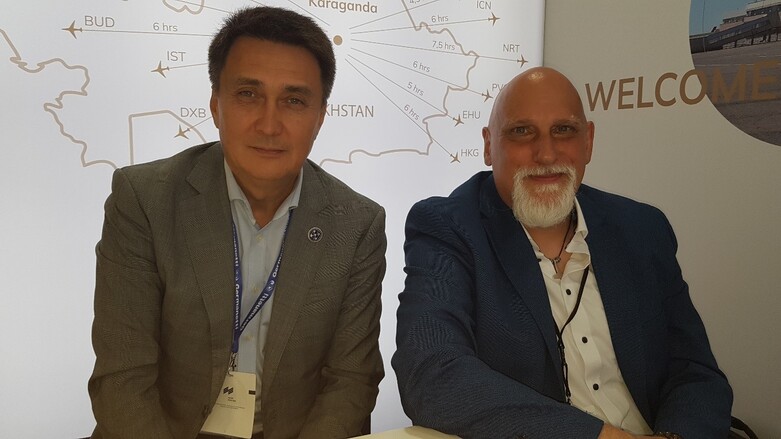
Erlan Ospanov (left) and Franz van Hessen jointly promoted Airport Karaganda at Air Cargo Europe. Image: CFG/hs

He has also announced a connection to the national Kazakh rail network in order to handle rail freight as well as air freight. The existing cargo terminal currently has a capacity of 150,000 tons per year. Franz van Hessen and Erlan Ospanov emphasize in unison that this is not the end of the story. However, they are not producing any castles in the air as far as the infrastructure is concerned. Instead, this is to be expanded depending on demand. Various air freight companies are already flying to the airport today. Andrey Andreev, Managing Director of Proactive Logistic Solutions GmbH for flower transportation, for example, is a charter flight client. His verdict: “Karaganda management understands the needs of the cargo industry and is very supportive. Particularly when it comes to handling time sensitive perishables, they provide state-of-the art services.”

The expansion of the airport will take place in three stages once the master plan has been approved. In the first phase, which will take 3 to 5 years depending on demand from the aviation industry, a new cargo terminal will be built. This also includes the construction of warehouse capacity and the expansion of the apron. The current cargo area might be incorporated or built anew.

Azerbaijan becomes a multi-modal logistics hub

Air, rail, road and sea: These key transport modes will be bundled south of the Azerbaijani capital, Baku, come 2026. The go-ahead for the mega project located at the crossroads of Europe and Asia was given last week at the Air Cargo Europe trade fair. For the realization of the masterplan, two strategic brands were kicked off at the event. These are SW AFEZCO (Silk Way Alat Free Economic Zone Company) and Alat Logistics Center. Both are partnering to implement the infrastructural mega-project, the country’s largest after industrial oil drilling activities in the Caspian Sea. Through the project, Azerbaijan expects to become a member of the top global league in logistics and cargo services. Responsible for the physical implementation of the facilities, is the Modern Construction Group, which signed a contract with SW AFEZCO in NOV24. Three key facilities that are part of the future Silk Way Cargo Village stand out: a large cargo terminal, Silk Way Group’s office building, and a shared freight forwarder facility. Modern Construction Group assures that the physical realization will align with the latest international standards for green and sustainable infrastructure.

Jack Delaney (3rd from left), Silk Way West Airlines and responsible for building the new airport, gave an overview of the new green cargo airport. Image: Silk Way Group

“The launch of SW AFEZCO and Alat Logistics Center marks a significant step forward in our ambition to turn Alat into a vital node in global trade,” stated Zaur Akhundov, President of Silk Way Group. The executive went on to say: “We are building more than infrastructure – we are creating a future-ready, sustainable logistics hub that reflects Azerbaijan’s strategic location and economic vision. Our goal is to provide global partners with world-class logistics services and a gateway to emerging markets.”

The Alat Logistics Center is the core logistics integrator within the Silk Way Cargo Village. It is designed to facilitate seamless cargo movement across Eurasia. Therefore, it will offer the cargo industry ground handling services and warehouse utilization, freight consolidation, rapid transfers of shipments from aircraft to aircraft, customs clearance, and e-commerce fulfillment operations. Its aim is to maximize efficiency in cargo flows, reduce transit times, and enhance the competitiveness of trade routes along the Middle Corridor stretching from China to western Europe.

At the Munich event, leading representatives of SW AFEZCO and Alat Logistics stressed that the project is scheduled for completion by JUL26.

Forget DisneyLand, Liège’s CargoLand is the future

The enthusiasm was palpable at the CargoLand booth in Munich – underscored with CargoLand label beer and fun Smurf sweets – among other things. Things are changing in Liège, completely for the better, the airport promises. With a €500 million investment going into state-of-the-art infrastructure and a detailed cargo project, Liège Airport is ditching its conventional name and shifting to CargoLand. The play on DisneyLand was made at the official stand announcement. CargoLand is set to “redefine air cargo handling on all levels – digital, equipment, scope, size, multimodal, and sustainable” once it becomes fully operational in 2040. And it should propel Liège’s position into the top three among Europe’s cargo airports. Not that the airport is currently far off, in fifth position, with its 24/7 operations and established LGG Connect cargo community among other cargo-friendly elements. Under its ‘Support, Share, Grow’ banner, it seeks to facilitate cooperation between all air cargo stakeholders at the airport, be they airlines, handlers, forwarders, logistics service providers, or public entities. And improved facilities will support this aim: CargoLand will offer 90 hectares of logistics facilities, 24 hectares for office development, a 38,000 m² first line warehouse, a 120,000 m², e-commerce and 180,000 m² landside warehouse, 15 new GSE parking stands, and its own MRO hangar. The result: smooth and fast operations on all levels.

Liège Airport’s new name and logo. Image: Liège Airport

Frederic Brun, Head of Commercial Cargo & Logistics at LGG, explained: “We have considered every detail within the supply chain to ensure that CargoLand delivers the ultimate in infrastructure and digital solutions to enable the smoothest and fastest cargo handling and turnaround times. We’re adding magic to cargo handling with CargoLand and are confident that it will deliver beyond expectations. After all, we are within a one-day truck drive to 75% of European GDP centers, and we will be strengthening our links to rail, road, and sea, maximizing on our unique geographical qualities. Seamless multimodal integration will play a major role in CargoLand.”

Torsten Wefers, Vice President Sales & Marketing at LGG, emphasized: “CargoLand is THE place to be, to have your cargo handled. That is the vision we have been working towards – that whenever people need to send freight to and from Europe, LGG’s fully sustainable CargoLand is the first place they think of. From MRO to e-commerce, pharma and perishables, to express cargo, CargoLand offers commodity-specific, tailored cargo processes based on advanced technology, whether it is strong digital tracking of shipments or GSE, optimum route planning, or real-time cargo movement management. CargoLand will deliver a success and customer-oriented commercial approach that will leave a lasting imprint on the European logistics landscape.

Smart ULDs – a leap forward for the industry

OnAsset Intelligence, Unilode Aviation Solutions, and Air Canada have launched a Smart ULD program, marking a significant step forward in air cargo technology. This collaboration draws maximum benefit from advanced digital readers which are installed on Air Canada’s entire aircraft fleet in an industry first. They provide real-time tracking and monitoring of Unit Load Devices (ULDs). By integrating Air Canada’s operational expertise, OnAsset’s aviation-compliant digital solutions, and Unilode’s global IoT network and digitized ULD fleet, the partnership creates a seamless, interoperable system for end-to-end data capture. Thousands of readers are now deployed across Air Canada cargo warehouses, airport locations, and aircraft, ensuring comprehensive network coverage. The shared digital infrastructure and in-depth data generated will deliver unprecedented visibility for ULDs, benefiting customers, ground handlers, and the broader supply chain. This strategic initiative not only enhances operational efficiency but also sets the stage for new use cases centered on real-time insights and increased transparency.

Demonstrating a hands-on network attitude. Image: Unilode

Janet Wallace, Managing Director, Cargo Operations and Transformation at Air Canada Cargo, explained: “Our customers want more control, more transparency, and more confidence in how their cargo is handled. With this combined relationship, we’re delivering a smarter cargo experience from start to finish. This isn’t just an operational improvement – it’s a leap forward for the industry.”

Unilode Chief Executive Officer, Ross Marino, agreed: “By aligning operational strategy with data intelligence, we’re enabling a smarter, more efficient cargo network. Until today, the ability to track and measure real-time performance allows us to deliver services and data insights that have not been possible until now.”

OnAsset Chief Executive Officer, Adam Crossno, added: “This program is a proof point for how IoT and aviation can come together to solve complex logistics challenges. This is true innovation and a real example of the power of sharing for the benefit of all. This is not just talk; this is action, and it’s only the beginning of what this combined relationship will deliver to the industry. From predictive analytics to environmental tracking, this is the future of air cargo – and with true collaboration and data through IoT, it’s now possible.”

Global GSA Group and Qantas create European cargo network

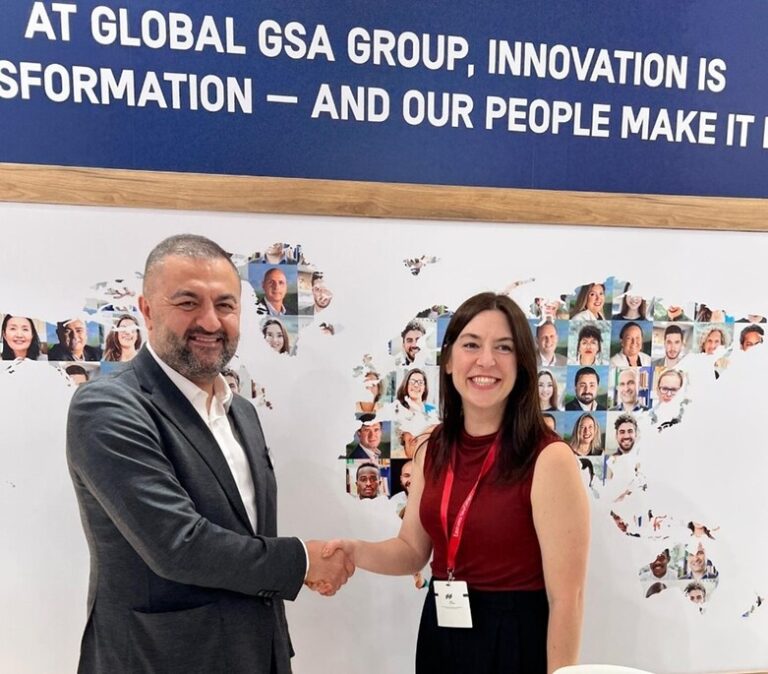
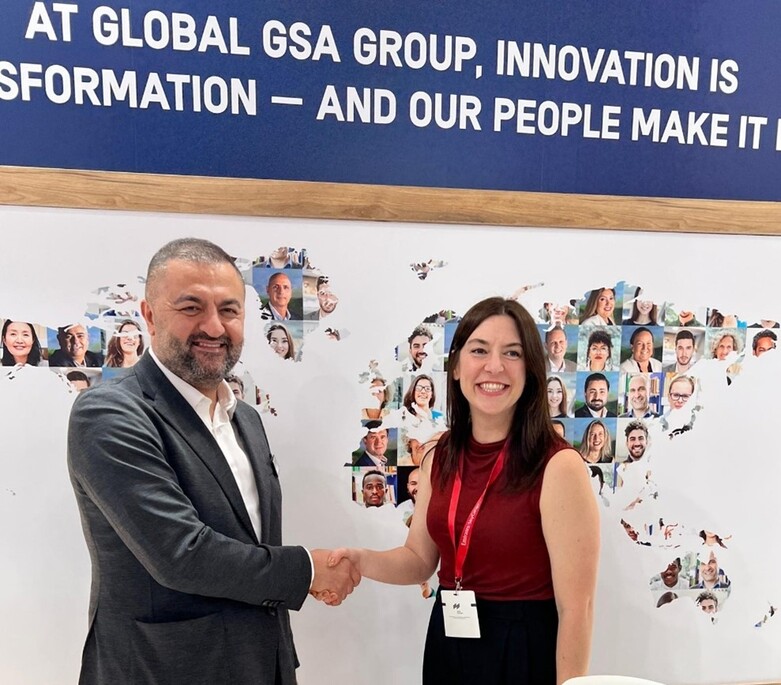
CargoForwarder Global witnessed Aytekin Saray, Global GSA Group’s Chief Executive Officer, and Mallory Logan, Head of Global Sales and Customer for Qantas Freight, sign a three-year partnership agreement at Air Cargo Europe,last week, appointing Global GSA Group as Qantas Freight’s GSA in Europe. Global GSA Group will leverage its extensive commercial network in 25 European countries and strong interline connections, to strengthen Qantas’ cargo footprint on the continent. Qantas operates direct flights from Paris year-round and seasonal services from Rome, both using Boeing 787-9 aircraft with significant cargo capacity (Weekly uplift of 45 tons ex Paris). The Rome-Perth-Sydney route will run three times weekly from 15JUN25-03OCT25 (QF6 departs Italy on Sundays, Wednesdays, and Fridays), while Paris-Perth-Sydney flights (QF34) operate every Tuesday, Thursday, and Saturday. These direct services, combined with Global GSA Group’s interline capabilities, will provide European freight forwarders with reliable, flexible access to Australia and onward destinations such as Melbourne, Brisbane, Auckland, and Nouméa. This partnership aims to support Qantas’ cargo expansion plans and enhance connectivity between Europe and the Asia-Pacific region.

Opening European gateways to Australia and vice versa. Image: Global GSA Group

Aytekin Saray, Chief Executive Officer of Global GSA Group, outlined: “As the only Australian carrier providing direct services from two European ports to Australia with connections to broader Oceania destinations, Qantas offers a huge network of opportunity for European freight forwarders to reach domestic and international destinations within Oceania. Global GSA Group looks forward to supporting Qantas as it expands its cargo offerings from Europe, leveraging our solid presence on this continent to provide a broad and long-term cargo network and increased online operations for the region.”

Igor Kwiatkowski, Executive Manager of Qantas Freight, said: “We are thrilled to partner with an experienced GSA like Global GSA Group to offer our customers more efficient and flexible air freight services from Europe. This strategic partnership allows us to make the most of cargo network in the region and make it easier for freight forwarders to access our capacity from Europe to Australia and meet continued global ecommerce demand.”

WestJet Cargo and Jettainer extend their contract again

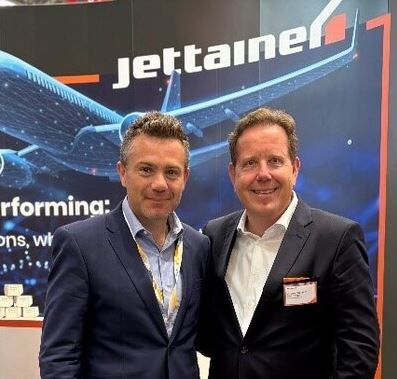
WestJet Cargo and Jettainer renew their ULD contract. Image: Jettainer

It’s been a decade-long partnership already, and is now heading into the next five years. WestJet Cargo and Jettainer used the backdrop of the Air Cargo Europe for a photoshoot to accompany the news that they have renewed their contract for a second time. “Jettainer remains the ULD partner of choice for WestJet Cargo in the coming years,” the release states. Thus, Jettainer will continue to manage the Canadian airline’s ULD fleet, including any necessary related support services as and when required. The airline’s fleet of almost 200 aircraft serves more than 100 destinations across North America, Central America and the Caribbean, Europe, and Asia, and relies on a ULD fleet of mostly light AKE containers. These are supplied byJettainer which also ensures that each unit flies as efficiently as possible and is a the right place at the right time.

Dr. Jan-Wilhelm Breithaupt, CEO of Jettainer, enthused: “The contract extension with WestJet Cargo is a great recognition. Our dedicated teams are committed to providing our customers with the best possible and most efficient ULD support on a daily basis. At the same time, innovative and digital solutions that provide more transparency along the ULD supply chain and thus enable further improvements are what we are constantly striving for with our customers.

Avianca Cargo and Amazon Air Cargo join forces

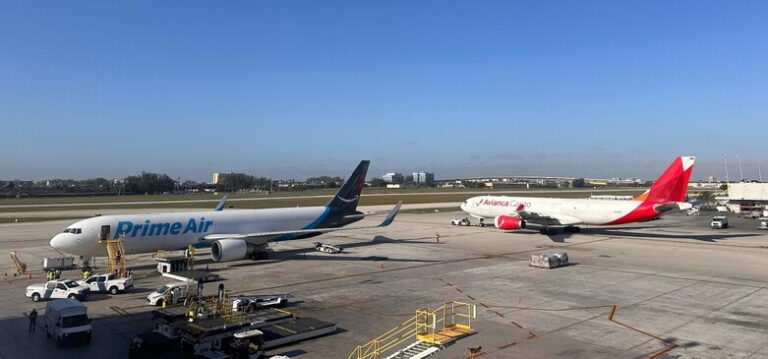
Avianca Cargo last week revealed its collaboration agreement with Amazon Air Cargo to boost air freight capacity and network connectivity between the United States and Latin America. Since 08APR25, the partnership has a daily Boeing 767-300F charter flight flying between Bogotá and Miami, enhancing cargo movement and providing customers with greater access to an extensive, interconnected network. This collaboration is designed to leverage Avianca Cargo’s regional expertise and Amazon Air Cargo’s global reach, enabling Amazon to expand its presence in Latin America. The agreement aims to improve service quality, reliability, and operational efficiency for both companies’ customers. Key commodities, such as flowers and other essential goods benefit from this enhanced air bridge, reinforcing Avianca Cargo’s commitment to advancing the cargo sector in the region.

Avianca to help Amazon gain reach in Latin America. Image: Avianca Cargo

Diogo Elias, CEO of Avianca Cargo, stated: “We are thrilled and proud to announce this partnership with Amazon Air Cargo. Steps like these contribute to the economic development and positioning of the region’s cargo industry. This milestone reflects our commitment to building long term partnerships that consolidate mutual benefit to both parties and our customers, extending our network and giving a consistent service.”

Tom Bradley, Director of Global Air Cargo for Amazon Air Cargo, added: “This new service agreement enables Amazon Air Cargo to bring our customer-obsessed approach to Colombia’s air freight market segment. We’re excited to deliver the speed, reliability, and high service standards that Amazon customers expect, while supporting the growing demands of cross-border commerce between Colombia and the United States. This dedicated air cargo service will help businesses of all sizes connect with customers across these important market segments more efficiently.”