Home Blog Page 91

QCS grows from big to bigger

Frankfurt Airport has something to look forward to. The logistics company, Quick Cargo Service (QCS) is planning to consolidate cargo shipments there, in future, and set up its first air freight hub. This was announced at the company’s annual meeting in Frankfurt last week, which was attended by representatives from all stations.

The forthcoming move is the result of the agent’s Europe-wide expansion, which includes 35 stations in 15 countries. Meanwhile, QCS, founded 1974 by Dieter Haltmayer, has become the third-largest family-owned logistics service provider in Europe. Further branches are being planned.
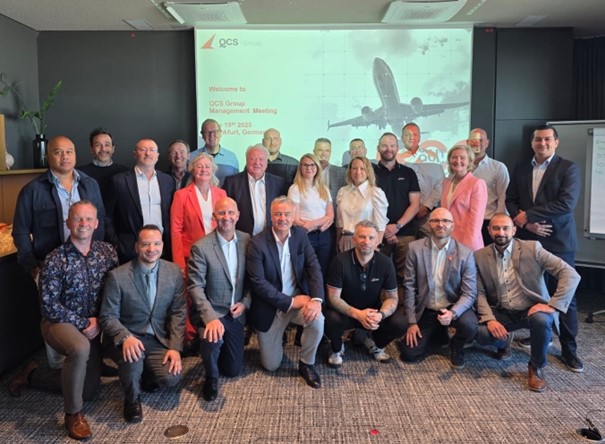
Annual meeting of the Haltmayer’s with their country managers  –  courtesy: QCS

Truck shuttles
According to QCS management, all stations in Europe will contribute air freight shipments to the upcoming consol services. The service will be kicked off very soon with road feeder shuttles between Bratislava, Slovakia, and Rhine-Main Airport. Further routes will soon be added to the network, announced CEO and Managing Director, Stephan Haltmayer. Due to the company’s recent expansion and the resulting increase in market presence, the decision to offer consolidation services was almost an inevitable consequence, said the manager. QCS plans to hire sub-contractors to carry out the operational business, instead of investing in its own trucking fleet.

Black figures
However, another aspect is more important to QCS than the number of offices: “All stations were in the black in Q1/2025,” said Stephan Haltmayer. And his father, Dieter Haltmayer, added: “Thanks to our expansion in Europe, we have not only created and maintained jobs in our core German market, but also in a large number of countries between Romania and the UK.” The logistics specialist is benefiting from near-shoring, i.e. the relocation of production from China to countries such as Mexico, Vietnam, Indonesia or the Eastern European region. “We recognized this trend early on and initiated a European expansion accordingly,” stated Stephan Haltmayer.

Decentralized sales concept
New nodes recently added to the existing network, are branches in Italy, Bulgaria, Austria, and the UK. In London, for example, QCS runs its own business after splitting from its former franchise partner. And local staff in Berlin moved into a larger office in the very spacious Segro Logistics Park, which is located 2 km from BER Airport.
Each station must set up its own sales department, is the Frankfurt-based management’s guideline. The Bratislava branch, under the guidance of Lubos Lukác, CCO QCS Group and Regional Managing Director Central Eastern Europe, is responsible for managing and evaluating data flows.

New product
In addition, Lubos also manages the new air freight product, ‘Time Definite’, for which 3 employees have been hired. “We will offer this transportation service to the market 24/7/365,” Lubos explained. It complements the product portfolio which includes a wide range of services such as Express Shipments, Temperature-Controlled air freight, Dangerous Goods Transports, Charter Flight solutions, customs clearance services or shipment tracking. According to Stephan Haltmayer, air freight accounts for 60% of sales, followed by Ocean Freight, Handling Services and Customs Clearing. Come 2026, the network will be further extended, the executive told CargoForwarder Global. Branches are then to be established in Belgium and France. However, he made it clear that France is a special candidate for any investor, due to official regulations. “But we are optimistic that we will soon be able to offer our logistics services to the market there, too,” he concluded.
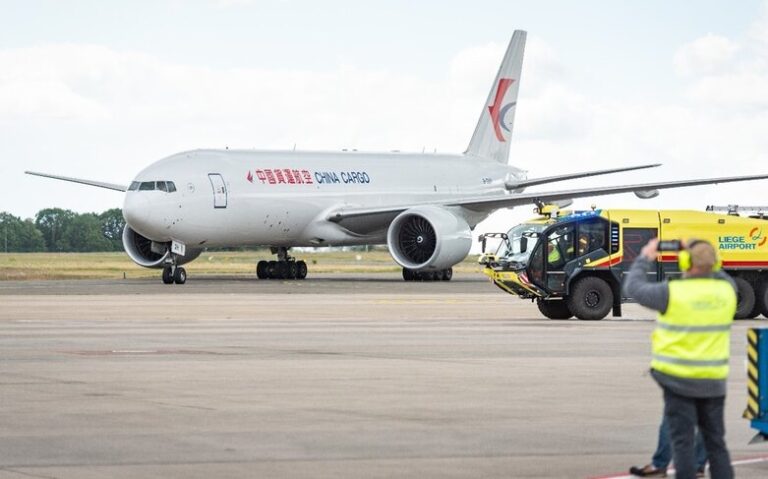
Liège Airport: What’s been and what’s coming?

There is far more to Liège Airport than meets the eye,” is the title of a press release this week, which outlines the Belgian airport’s solid freight focus and its many redeeming features. Whatever the airport is doing, it’s certainly working, since a second release on 23MAY25 also announced another new cargo airline customer. Meanwhile, Liège Airport’s own as well as Torsten Wefers’ LinkedIn pages are teasing about “something magical is coming in Munich”, with an amusing, perfectly pro-social-media-type video. What it is, we’ll need to wait and see.

What the release does reveal, however, is the airport’s focus on digitalization, sustainability, and its plans to create “a multimodal cargo paradise in the heart of Europe.” Liège has long been a ‘cargo-first hub’ – ever since it made the strategic decision back in the mid-1990s, to prioritize cargo. And its success is impressive. Over the past five years, it has consistently handled more than a million tons of freight annually, with 1.17 million tons passing through in 2024. It forecasts another 12% growth for this year.

China Cargo landed for the first time on 23MAY25. Image: Liège Airport

A cargo-first approach
One winning feature at Liège is its unrestricted 24/7 operations which offers a flexibility that is highly attractive for charter operators. In fact, charters account for nearly 40% of Liège’s flights – this is the highest cargo charter ratio in Europe. Over 60% of flights are scheduled, ensuring reliable service. Fast customs clearance, quick turnarounds, and Liège’s prime location at the continent’s crossroads, has resulted in Liège serving over 50 cargo airlines, these days. It also caters to a wide range of cargo commodities, from perishables and live animals to e-commerce.
Frederic Brun, Head of Commercial Cargo & Logistics at Liège Airport, explained: “When you’ve been in the cargo business as long as we have as an airport, there is nothing that is impossible to move. Our cargo first focus enables us to spot trends, adapt and optimize our processes, and tailor our infrastructure accordingly. We have created optimum conditions for the transport of perishables and live animals, for example. Around 730 tons of flowers pass through our warehouses every day, while our Horse Inn caters to 12,000 horses every year. And we were early adopters when it comes to e-commerce, too. These days, LGG already handles over 1000 million parcels every year, and we’re continuously improving our processes to remain at least three steps ahead of developments in this fast-moving commodity segment.”

Pandemic lessons and digital transformation
The COVID-19 pandemic tested Liège’s resilience. In 2021, despite reduced resources, it handled 1.41 million tons – its highest-ever volume. This experience accelerated digital transformation, with new systems for faster ULD handling and a clear aim of moving from Europe’s fifth-largest cargo airport into the top three by 2030.
Torsten Wefers, Vice President Sales & Marketing at Liège Airport, said: “There is only one other airport that will be able to match or even surpass LGG in its absolute top quality cargo focus in the next 5 years, and that will be our Digital Twin! We have already completed a number of milestones on our digitalization journey to full data and shipment transparency. This is now our first year of LGG CONNECT – our digital cargo community – and LGG TRACKING which offers real-time cargo movements, is in full swing. And there are exciting developments on the horizon as we begin to harness AI and Big Data to maximize our operational efficiency. Once our Digital Twin is fully live, we’ll be able to anticipate any operational issues and proactively work to minimize any disruptions or safety risks, for example. And it will support us in meeting our environmental goals, too.”

Expanding global reach: The China Cargo Airlines connection
On 23MAY25, Liège’s global role was also further strengthened. A new scheduled cargo route was launched between Liège and Hefei Xinqiao International Airport in China. China Cargo Airlines operates a Boeing 777 freighter on the route, boosting “capacity, efficiency, and reliability for cross-continental cargo,” the release states. It will carry out three flights per week from now on.
Headquartered in Shanghai, the China Eastern Airlines cargo subsidiary is one of country main all-cargo carriers and has a fleet of 15 wide-body freighters. They serve major hubs across Asia, Europe, and North America. This route not only expands Liège’s reach but also gives Hefei, “a rapidly growing industrial center in Eastern China” direct access to Europe.

Sustainability at its core
Sustainability is central to Liège’s strategy. The airport aims for zero carbon emissions by 2030. Already, all electricity for its buildings is generated on-site, and its fuel farm supplies Sustainable Aviation Fuel (SAF). Ground handlers are transitioning to electric airside fleets.
Frederic Brun revealed: “We have allocated more than €60 million to green initiatives in the short term, with almost six times that amount invested in long-term eco plans on all levels, from noise pollution reduction to protecting biodiversity in and around the airport, for example. And part of this solution involves making the most of our excellent multimodal infrastructure. There’ll be much more to say about that in the coming weeks. For now, we’re working towards a higher level in our environmental certification to enhance our ACI World standards, and are hoping to perhaps take home the Airport of the Year Air Cargo Week award in Munich, next week. Fingers crossed.” So, with just 7 days to go until the start of the Air Cargo Forum in Munich, we should soon learn what the magical element is that Liège Airport is alluding to, and we will find out if they will succeed in taking home a trophy from the Air Cargo Week awards.

BARIG sends SOS emergency call

The Board of Airline Representatives in Germany (BARIG) is demanding a U-turn in the Berlin government’s aviation policy. Aviation development is stagnating and bureaucratic regulations and exorbitant fees have caused an increasing number of passenger and cargo airlines to migrate to airports in neighboring countries. According to BARIG, this alarming trend must be stopped for the benefit of passengers, cargo services and the entire national economy, all of which are dependent on a dense air traffic network.

In Germany, the recovery of air traffic from the Covid-19 crisis is almost the slowest in Europe. The number of passengers at airports rose by only 8.7% to just under 212 million in 2024. That is 15% less than pre-Covid, in 2019. This puts Germany in 28th place on the European continent, where the pre-crisis level rose by 104% in comparison. Cargo traffic is also booming elsewhere, for example in Liège, Budapest, and Vienna. In view of this situation, BARIG has now appealed to the federal government to take a political U-turn and support the industry to grow again.

Where have all the aircraft gone? BARIG and the German Aviation Association demand a change of the government’s course to up air traffic figures again. Photo: Courtesy BARIG

Without cost reduction, no recovery
Michael Hoppe, BARIG Chairman and Executive Director, reasons: “The new federal government has taken up its work with the aim of leading Germany out of economic stagnation. Air traffic has a special role to play here, as it is regarded as an important economic engine. This has recently stuttered badly. The main reason for this is that location costs are far too high and continue to rise. As a result, Germany’s recovery as an aviation location is lagging far behind in a European comparison.”
This is in line with the demands of the German Aviation Association. Its Managing Director, Joachim Lang, points out another aspect: The unfulfillable power-to-liquid refueling quotas demanded by Brussels for reasons of climate protection. In the absence of an international level playing field, European airlines cannot meet the requirements of the Brussels policymakers. His counterproposal: The SAF surcharge should be included in the ticket price payable by a passenger for the entire journey – so from A to Z.

Level playing field urgently needed
Currently, the surcharge covers only the first part of a journey, say from Frankfurt to Istanbul, or Berlin to Doha. There, many passengers take a connecting flight which is exempt from any power-to-liquid surcharges. In contrast, Lufthansa, Condor, Swiss or Austrian Airlines fly nonstop from departure to destination, which increases the SAF price and therefore also the ticket costs.
Aviation remains committed to the goal of CO₂ reduction, assures Lang. “We fully support the climate targets, but we would like to be able to meet them.” Site costs, which have already doubled in the last five years in Germany, have risen to 4.5 billion euros per year due to “the cost explosions”, making them among the highest in Europe. As a result, foreign airlines are reducing their flights to and from Germany, and Lufthansa is increasingly concentrating on growth in Brussels, Vienna and, more recently, Rome, the Group’s European hubs, hence, outside its German core market.

Lufthansa Cargo markets ITA capacity

From 16JUN25 onwards, the German freight carrier will sell the lower deck capacity of ITA passenger flights from São Paulo (GRU), Rio de Janeiro (GIG), and Buenos Aires (EZE) to Rome. Transport in the opposite direction and on other ITA routes will follow in due time, subject to official approval. In addition, Lufthansa Cargo has announced important personnel decisions.

Lufthansa Cargo CEO, Ashwin Bhat (left) and ITA Chief Joerg Eberhard reach Cargo deal – photo: courtesy: Lufthansa Cargo

The die is cast. Since Lufthansa acquired a 41% stake in ITA earlier this year, it was unclear whether ITA Cargo would become part of Lufthansa Cargo or market the capacity of the ITA fleet on its own. Now it is clear that the first option applies. The transition of sales activities will take place gradually. This will initially affect the three routes from South America to Europe mentioned above. From mid-June, shipments booked on these routes will receive Lufthansa Cargo’s AWB 020 prefix. It replaces ITA’s 055 prefix. As soon as the authorities involved have given the green light, Lufthansa Cargo will also market the flights in the opposite direction, announces spokesperson, Katharina Stegmann. All other ITA routes will follow successively with the corresponding prefix changes. It is not yet possible to estimate when the process will be completed, due to the traffic law situation and official requirements, she states. The decision as to whether the ITA Cargo employees will become part of Lufthansa Cargo or are offered other job opportunities is also still an open issue.

Rome becomes Lufthansa Cargo’s 5th intercontinental hub
The takeover of the ITA cargo business will increase Lufthansa Cargo’s global capacity by almost 20%. With Rome Fiumicino Airport, the German freight carrier gains access to an additional international hub, its fifth after Frankfurt, Munich, Brussels, and Vienna.
“Our customers will benefit from even more reliable, faster connections to and from Southern Europe, and avail the known Lufthansa Cargo solutions and services via Rome,” explains Ashwin Bhat, CEO of Lufthansa Cargo.
Joerg Eberhart, CEO and General Manager of ITA Airways, states: “Thanks to the extensive Lufthansa Group fleet combined with ITA Airways capacity, our customers will benefit from an enhanced service and a broader network, leveraging the destinations offered by the Group and exploiting the high potential of Fiumicino, our hub.”

Lufthansa Cargo completes executive board
Currently, ITA Airways operates 99 aircraft, including 22 long-haul Airbus jetliners A350-900, A330-900neo and A330-200. ITA Airways serves around 70 destinations worldwide. At the beginning of this year, the Lufthansa Group acquired a 41% stake in ITA, with the aim of substantially increasing its equity interest.
Lufthansa Cargo also recently announced key personnel decisions. Frank Bauer, currently Chief Financial Officer and Labor Director of Lufthansa Cargo AG, will take over the position of Chief Operating Officer (COO) at the freight carrier on 01JUL25. Gregor Schleussner, currently Head of Finance, Controlling & Accounting at Eurowings, will join the Executive Board of Lufthansa Cargo as the new Chief Financial Officer (CFO), Chief Human Resources Officer (CHRO) and Labor Director from 01JUL25.

Aerion: quietly redefining air cargo with expertise

The air cargo world will be seeing a new headline appearing in the industry’s media outlets from tomorrow: AERION: A STRATEGIC THINK TANK FOR AIR CARGO. A new name with an entirely new approach to redefining cargo business and one that offers a more level playing field to airlines looking to maximize their air cargo operations and performance. But one, too, that emphasizes discretion and confidentiality.

It’s not often in the air cargo industry, that an entirely new concept comes along – most developments are simply a more polished version of something that has gone before. Air cargo functions as it always has done – a myriad of stakeholders at different stages of digitalization, with varying degrees of globalization, standardization, and access to resources. With the daily stress of ensuring that shipments all fly as booked on board of planes expected to leave as scheduled, it can be difficult, as an airline, to take a step back to look at the bigger picture and recognize where changes can be made for air cargo to function more efficiently.

A new name on the horizon with a completely new air cargo concept. Image: Lemon Queen/Aerion

AERION: Air cargo’s first Think Tank
What is needed for a bigger picture and a dedicated focus on process improvement, is a Think Tank. And that is how AERION markets itself – as “a new Think Tank designed to support airlines in managing and evolving their cargo business. Built as an agile and consultative structure, AERION brings together commercial, digital, operational, and support expertise within a single strategic framework to optimize performance and rethink traditional models.” It’s not simply a new Think Tank, but the first of its kind within – and dedicated to – the air cargo industry. Headed by Adrien Thominet as Chairman, AERION is supported not only by an Executive Board of Directors who oversee operational execution, but also has a separate Advisory Board composed of leading experts in the air cargo industry, which assists in “shaping strategic priorities and tracking market evolution”. This ensures, as it says, “balanced governance to drive long-term vision.” And, in fact, AERION’s name stems from its conceptual approach: AERION is a mix of Aerial (aviation-related, but you could also read into this as ‘viewing from the sky’ – ergo ‘bigger picture’) and Vision (of a long-term, successful, and efficient air cargo industry).

More than a service provider or consulting firm
So, is AERION basically a consulting firm? No, it goes far deeper than consulting and is quick, too, to point out that it is not a vendor or purely a service provider. AERION markets itself as an exclusive commercial partner, created as “a tailored strategic platform designed to help airlines structure, transform, and unlock the full value of their cargo operations.” Its aim is to discreetly support individual airlines by auditing their set-up and providing a tailored strategy designed to strengthen the airline’s approach and execution of its cargo business. AERION offers a modular pallet of measures or solutions in four specific business areas: commercial, digital, regulatory, or organizational – a selection of “levers without the need for internal expansion. The objective is simple: deliver sustainable performance, driven by profitability, modernization, service quality, and future-readiness,” the release states.

Use what you require
AERION draws on the proven expertise of several companies, aligned into four main performance streams:

  • Commercial: GSA services, market development, and flow management via ECS Group, Global GSA, Mail & More.
  • Tech: digital tools, platforms, data solutions, and automation via CargoTech.
  • Operations: supervision, quality, compliance, and on-the-ground excellence via TCE.
  • Support: legal, contractual, HR, billing solutions via Squair.”

It emphasizes that each of the four performance streams “operates independently but can be combined to deliver custom-built, high-performance strategies.”

Strategic depth and operational agility
The combination of an outside group of experts establishing the larger cargo picture for an airline, providing advice and suggestions for greater efficiency, and AERION’s access to experienced service and solution providers in four core business aspects, creates a “structure [that] ensures both strategic depth and operational agility”: a holistic approach to establishing greater operational efficiency in air cargo.
Adrien Thominet explains the spirit of AERION thus: “Imagine you’re leading an airline and you’re under pressure to do more with less – sell better, automate more, control costs, stay compliant. You don’t need another provider. You need a team that sees the whole picture, who can quietly and efficiently strengthen your cargo performance without the noise. That’s what AERION is. A strategic ally, discreet but decisive.” AERION looks to be the industry’s first omni-functional strategic partner capable of optimizing, managing and sustainably transforming an airline’s cargo operations to generate maximum business success. Or as AERION’s boiler plate succinctly puts it: ‘Cargo, redefined’.

LATAM increasing Europe freighter frequencies by 25% in winter

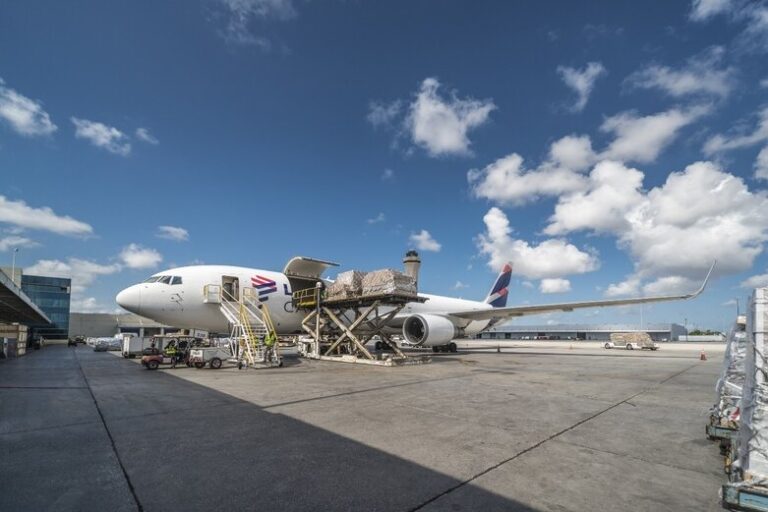
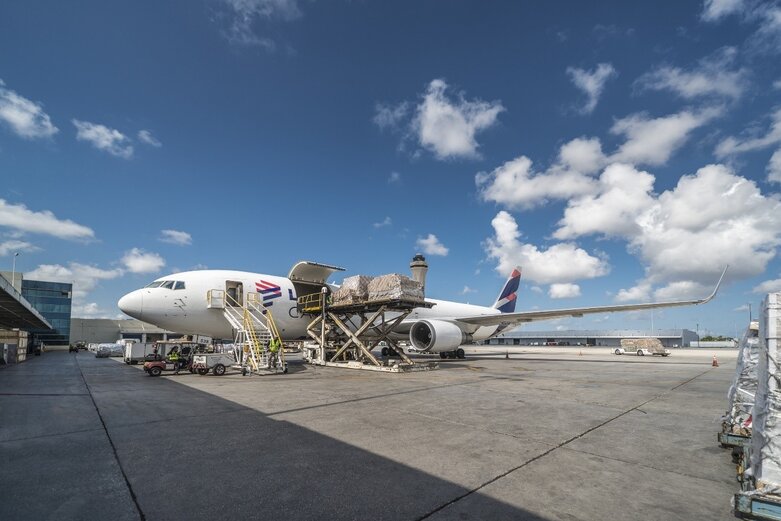
15 weekly Europe frequencies starting OCT25. Image: LATAM

LATAM Cargo Group announced this week that it will be increasing its freighter frequencies between South America and Europe, come the winter flight plan in OCT25. Its Boeing 767 freighters will connect the two continents 15 times per week, which translates into 25% more cargo capacity, each way. This underlines its position as the region’s largest cargo operator and illustrates its commitment to supporting international trade. In fact, the group’s growth has been phenomenal if you look back to CargoForwarder Global’s article from 10MAR24:
https://cargoforwarder.eu/2024/03/10/latam-cargo-ups-flights-from-europe-to-south-america/
The latest increase is in response to market demand and the airline group has planned the departure dates and times to best meet customer requirements on both ends. Departures have been planned for convenience and arrivals for efficiency when planning the last mile, thus “actively contributing to the strengthening of the region’s logistics ecosystem.” Three flights a day depart to South America from as yet undisclosed European airports (Brussels and Amsterdam are the usual contenders, though the press release does state “connecting multiple European origins”), on Mondays, Wednesdays, Thursdays, Saturdays, and Sundays. “The broadest portfolio of delivery destinations in South America,” is offered to European customers. Among them: “exclusive industry connections through [Latam Cargo Group’s] hubs in Campinas (Viracopos – São Paulo), Santiago de Chile, and Lima, as well as medium-sized destinations such as Rio de Janeiro, Curitiba, São José dos Campos, Florianópolis, Montevideo, and Buenos Aires.”.
Coming back, the three daily flights leave on Tuesdays, Wednesdays, Fridays, Saturdays, and Sundays. 10 existing frequencies departing from Quito will remain as they are. Brazil will see 5 new departures each week. “All flights will be operated by LATAM Cargo Group and/or its subsidiaries,” the release confirms. Andres Bianchi, CEO of LATAM Cargo Group, stated: “In a challenging and constantly evolving global environment, we remain committed to our strategic markets, strengthening routes where we can offer differentiated and reliable service. Today, together with our subsidiaries, we lead the cargo market between South America and Europe with a 23% share of total capacity.”

PIK welcomes first China Southern Air Logistics freighter

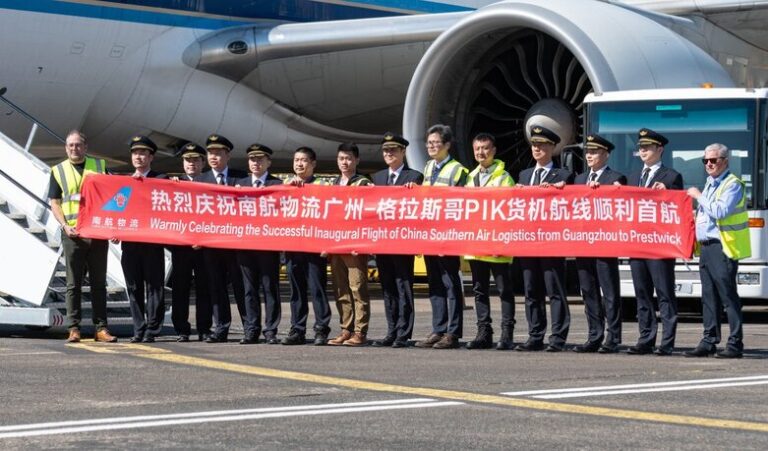
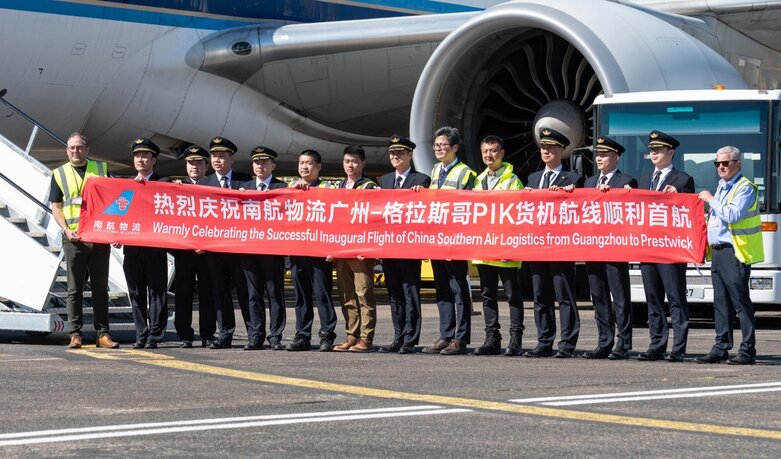
CSAL flight arrives at PIK, kicking off first ever direct scheduled China freighter services. Image: Meantime Communications

The 16MAY25 was an historic moment in Glasgow Prestwick Airport (PIK)’s history as it marked the arrival of the first ever direct scheduled freighter connection between China and Scotland. This is the result of an agreement that has been signed by China Southern Air Logistics (CSAL) and Glasgow Prestwick Airport and will see four scheduled cargo flights per week flying in from Guangzhou this month, eventually shifting to daily connections if things go as planned. With its latest cargo customer, the PIK will now enjoy double the number of scheduled freighters to before and is another step closer to its aim of convincing airlines and customers to see the airport as an alternative gateway to the UK. Over the past year, the airport has invested 2.3 million in ensuring it has the ground handling equipment, cargo and cool chain facilities, and trained staff to handle an increasing number of large freighters.
Glasgow Prestwick Airport Chief Executive, Ian Forgie, enthused: “This is welcome news. The airport team have been working hard over the last 12 months to showcase the Prestwick solution as an alternative Cargo Gateway into the UK, and the Board is delighted that a flagship carrier, China Southern Air Logistics, has established a scheduled service from China to Prestwick. We anticipate this new trade route will grow rapidly in 2025, as Prestwick delivers on its plans and the market responds to an alternative Cargo Gateway into the UK and a new direct export route to China from Scotland for high value Scottish seafood and whisky. We are in discussions with other airlines and expect to make further announcements soon.”
Colin Dai, Glasgow Prestwick Airport’s Country Sales Director for Greater China, said: “The airport has a long history and reputation for handling wide bodied freighters, providing fast aircraft turnaround and cargo handling, delivered through our in-house team. We are proud to announce this landmark agreement between China Southern Air Logistics and Glasgow Prestwick Airport, and I know there is a lot of excitement from both sides to see the success of these flights.”

Ensuring balls are kept in the air and reach their destination

No global sport without global freight. Image: Chapman Freeborn

Two companies issued press releases on their success in gaining or completing sporting contracts this week: Chapman Freeborn with its Six Nations Rugby charters, and Gebrüder Weiß scoring Austria’s Handball Federation as its customer.

For Chapman Freeborn, the deed is done and dusted. It successfully arranged charters on behalf of the Six Nations Rugby Championship, safely flying more than 2,000 rugby fans across Europe, as well as “one of the Six Nations’ rugby team’s players and staff,” though it doesn’t say which one. Was it England, France, Ireland, Italy, Scotland, or Wales? Chapman Freeborn demonstrated its own teamwork, too, collaborating with eight other airline partners to fulfil the mission. Fly4, Ascend, Jet2, Smartwings, Albastar, Voltea, Trade Air, and BA CityFlyer. Andy Hutchinson, Director of Passenger Charters – UK, commented: “Chapman Freeborn has over five decades of experience in safely transporting sports fans and players around the globe. The successful execution of these charter operations, involving eight airline partners, underscores our commitment to providing reliable, efficient, and tailored air travel solutions for both large groups and specialized needs.”
Meanwhile, in Austria, Gebrüder Weiss has been selected as the Austrian Handball Federation (ÖHB)’s long-term official logistics partner – transport and warehousing – having stepped in at short notice for the Women’s Handball EURO 2024 and thus proving its flexibility and reliability. It already supported the men’s national team during the qualifier’s earlier this month, where Austria secured a place at the European Championships in Scandinavia early next year. Gebrüder Weiss stores match/training equipment such as goals, boards, etc. at its Vienna site, and ensures that these are transported as required to all matches.
Karl Meiringer, Branch Manager Vienna at Gebrüder Weiss, announced: “We share the ÖHB’s delight at this sporting success [Austrian men’s 2026 qualifying] and are keeping our fingers crossed for a successful EURO 2026. We not only have the necessary experience, but also the right infrastructure – from a modern fleet of vehicles to optimal storage facilities – to flexibly adapt processes to the ÖHB’s wishes. Logistics thrives on dynamism and team spirit – just like sport. That’s what connects us.”
ÖHB Secretary General Bernd Rabenseifner, said: “We appreciate the personal commitment of Gebrüder Weiss employees and the professionalism with which even unexpected tasks are handled quickly and precisely. The fact that we can rely on flawless logistics is a decisive factor for the stress-free running of our games.”

HHN and Somon Air enter into strategic partnership

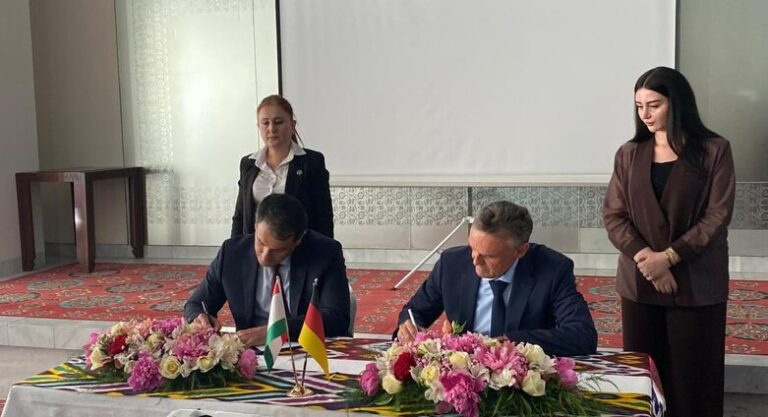
(Left:) Abdulkosim Valiev, CEO Somon Air, and Ruediger Franke, CEO Frankfurt-Hahn Airport, at MoU signing. Image: Dietmar Tuldi

Frankfurt-Hahn Airport and Somon Air have entered a strategic partnership, formalized by a Memorandum of Understanding (MoU) signed on 07MAY25, in Dushanbe, Tajikistan. The collaboration between TRIWO Hahn Airport GmbH and LLC Air Company Somon Air, aims to enhance both passenger and cargo traffic between Tajikistan and Hahn Airport, maximizing the strengths and resources of both parties. Specific terms of the agreement remain confidential, however.
Established in 2008 and an IATA member, Somon Air operates a fleet of six Boeing 737-800 and 737-900 aircraft. The airline runs regular flights connecting Tajikistan with Germany, the UAE, Turkey, China, Qatar, Saudi Arabia, Iran, India, Russia, Kazakhstan, and Uzbekistan.
Frankfurt-Hahn Airport, centrally located in Europe, has seen significant growth recently. It handled roughly 1.9 million passengers in 2024 (+12% up on 2023) and in the first quarter of 2025, this has already risen to 440,000 passengers (+30%) Air cargo throughput has also increased by 8% to 22,000 tons this year, so far. As one of Germany’s few airports with a 24-hour operating permit, Hahn is recognized for its cargo expertise and strategic location, offering rapid ground transport links to major European markets such as the Netherlands, Belgium, and France.
Ruediger Franke, Managing Director of Frankfurt-Hahn Airport, stated: “The cooperation with Somon Air fits seamlessly into our strategy of continuously expanding Hahn Airport’s route network and opening up new markets.”
Abdulkosim Valiev, CEO of Somon Air, said: “This strategic alliance is an important step for Somon Air to expand its presence in Germany.”

Nathan De Valck becomes the CEO of the Flemish airports

Nathan De Valck is a household name in the Benelux cargo landscape, credit: LinkedIn

Nathan De Valck, Cargo Account Manager Sales & Marketing Brussels Airport, Managing Director Belgium for WFS, will become the new CEO of the airports of Antwerp and Ostend-Bruges.
De Valck started his career as a management trainee at Aviapartner. He then moved to the cargo team of Brussels Airport Company, where he took the positions of Pharma & Life Sciences specialist, Cargo Development Manager, Cargo Business and Product Manager and Head of Product & Network Development. Since 2022, he has led the Belgian offices of WFS in Brussels and Liege. He was also the chairman of the association Pharma.Aero.
The Flemish Airports are owned by the Flemish regional government, which has handed over the operational management to the French group, Egis. In his new function as CEO, Nathan De Valck will succeed Eric Dumas, who himself had been succeeded by Bruno De Jaegher on 01SEP24. As De Jaegher stepped down on 28NOV24, Dumas had to return to his former function to fill the gap.
As a dyed-in-the-wool air cargo specialist, Mr. De Valck will have to put his shoulder to the wheel in reviving and upgrading Ostend-Bruges cargo business which, in 2024, dropped by 45.2% to a mere 18,124 tons. This was a far cry from the 62,056 tons noted in 2021. The departure of Qatar Cargo in APR23, added to the decline of the volume. Antwerp Airport is a general aviation and passenger airport mainly.
The economic viability of both airports has been contested for decades by residents in both Ostend and Antwerp, as well as environmental groups.
At the moment, Nathan does not yet have the authority to communicate about his cargo strategy, he told CFG. “I hope to be able to give more details about the commercial strategy very soon.” He will officially take the helm on 16JUN25. His mandate as the representative of the Brussels Airport handling business within Air Cargo Belgium, will pass to someone else.