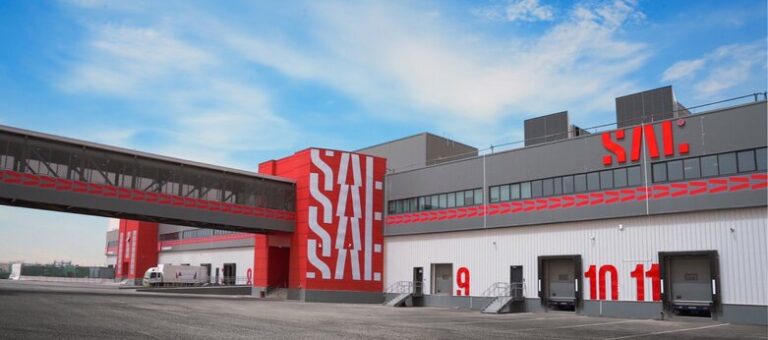
SAL has worked with Cargo iQ to create their membership roadmap and has already implemented the milestones (FIW) and (FOW) Image: SAL
Cargo iQ has welcomed SAL, Saudi Arabia’s largest logistics and supply chain provider, as a full member, significantly strengthening its presence in the EMEA region. This move aligns with Cargo iQ’s goal to increase its member numbers and enhance air cargo quality standards across the supply chain. The two partners are now developing SAL’s membership roadmap. SAL has already implemented the Freight Into Warehouse (FIW) and Freight Out of Warehouse (FOW) milestones, taking the first step to improving transparency in warehouse operations and having tangible data when discussing service level agreement (SLA) performance with airlines. Next up in further optimizing its operations according to Cargo iQ standards, is Exception Handling and Freight Waybill Performance (FWB). With defined and actioned milestones, SAL can proactively identify and address problem areas, collaborate on improvement initiatives and ultimately boost overall service efficiency. “Sal’s success is driven by its cloud-based enterprise system and integrated cargo community platform, which enable seamless multimodal and cross-border trade through a unified digital window. This platform provides real-time visibility and coordination across the supply chain, benefiting all stakeholders involved,” the release states. Marie Seco-Köppen, Executive Director, Cargo iQ, explained: “As handlers of 95% of Saudi Arabia’s inbound and outbound cargo, and drivers of quality and efficiency, SAL is an important addition to the Cargo iQ membership. Its ambitious plans to achieve better coordination, visibility, resource optimization, and rapid information exchange, will also enable industry stakeholders working with it to improve process quality.” Mohammed Shahahmad, IT Director Business Application, added: “Transparency and innovation are at the core of our logistics transformation. By focusing on process improvements and leveraging digital tools, we are creating more reliable, efficient, and customer centric solutions.”
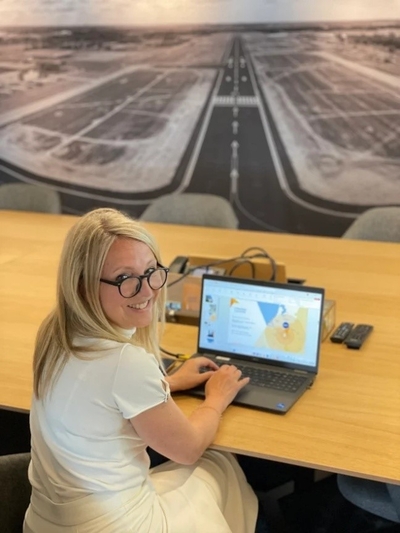
For cargo to flourish and get the recognition it deserves at an airport requires a key cargo responsible. Maastricht Aachen Airport (MST), which is serious about carving out its cargo future, has recognized this and appointed Pascale de Mieter as Cargo Sales Executive. One look at her LinkedIn profile and it is clear to see – not only the many 23+ years of air cargo experience (including senior roles at Air Belgium and CAL Cargo Airlines in Liège), that she brings to her role, but the necessary personality: “What does a Cargo Sales Executive at MST actually do? Well… imagine being part air traffic whisperer, part logistics matchmaker, part deal-closing ninja. I connect airlines with the right partners, spot opportunities where others see obstacles, and somehow always know when there’s space left in a belly hold. From freighters to flowers, pharmaceuticals to racehorses: if it flies, I’ll help find it a way,” she explains there. De Mieter will develop MST’s specialized, high-value and time-critical cargo segments, growing its perishables, pharmaceuticals, live animals, and vulnerable cargo business. The airport already handles flowers, dangerous goods and pharma and carries IATA’s CEIV Pharma certification which it recently renewed. Together with the Head of Commercial Development (responsible for cargo and passenger services) she will implement the airport’s specialist regional cargo hub strategy. De Mieter commented: “MST is a bold, forward-thinking airport with untapped potential, and for me, joining this team is a natural evolution. I’ve sat on nearly every side of the air cargo table: airlines, forwarding, charter brokerage, and most recently in a high-tech environment driving the digitalization of airfreight agreements. Now, it’s time to bring all that experience to the airport side. What sets MST apart is its agility, something you rarely find at airports. Pair that with its strategic location, and you have a powerful platform to meet complex cargo demands. I’m excited to build momentum here and push boundaries.” Dean Boljuncic, Head of Commercial Development at MST, stated: “With over two decades of experience spanning forwarding, ground handling, and airline operations, Pascale brings a 360-degree view of the cargo supply chain to Maastricht Aachen Airport. Her expertise in pharma and cold chain, and her proven ability to scale niche cargo operations, make her a valuable asset as we grow our position in high-value and time-sensitive markets. Pascale’s strong industry network, commercial drive, and hands-on mindset align perfectly with MST’s vision to deliver agile, direct cargo solutions to our customers.”
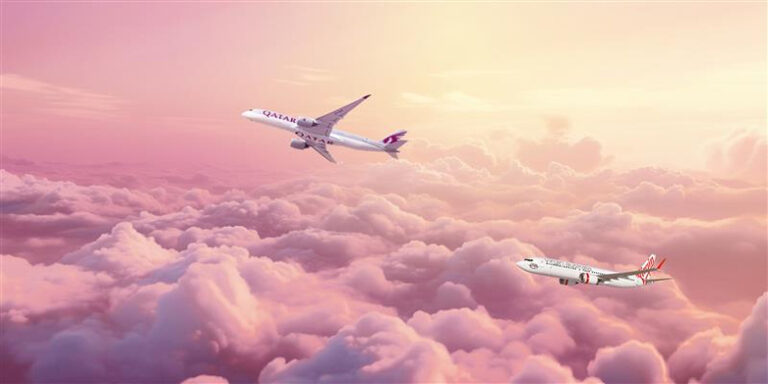
An additional 180 tons of cargo capacity each week from JUN25. Image: Qatar Airways Cargo
Qatar Airways Cargo has partnered with Virgin Australia to significantly boost airfreight capacity for Australian exporters. The two countries enjoy a strong trade partnership with exceeds AUD 3.4 billion (QR 8 billion) annually, placing Qatar among Australia’s top trading partners in the Middle East and North Africa region. In addition to the weekly 240+ tons of belly cargo capacity already available on Qatar Airways’ flights to Melbourne, Sydney, Brisbane and Perth, Virgin Atlantic’s flights will bring another 180 tons, increasing the total weekly cargo capacity to 400+ tons each way. From JUN25 on, Virgin Australia will operate daily Boeing 777 flights between Sydney, Brisbane, Perth, and Doha. “With 129 tons of cargo capacity each way between Doha and Perth, 30 tons each way for Brisbane and 21 tons each way for Sydney, these widebody belly-hold services will bring substantial uplift potential,” the release states. Virgin Australia will also operate to Melbourne from DEC25, offering daily Boeing 777 flights from Melbourne together with Qatar Airways. Already today, one in every 14 air cargo shipments from Australia flies with Qatar Airways Cargo via its Doha hub to end destinations in the Middle East, Europe, and the Americas. Mark Drusch, Chief Officer Cargo at Qatar Airways Cargo, stated: “Australia plays a pivotal role in global trade, and it is essential for us to empower its exporters with the best possible connectivity. Our proven expertise in safeguarding sensitive shipments such as perishables and pharmaceuticals positions us as the trusted partner for Australia’s trade ambitions. This partnership with Virgin Australia significantly increases capacity available to Perth, Brisbane, Sydney and Melbourne — a major improvement in global cargo capacity for exporters. With these new services, we are responding decisively to long-standing market demands. The addition of Virgin Australia’s Boeing 777s more than doubles the airfreight capacity on key routes. It is a bold move, reinforcing Qatar Airways Cargo’s leadership in connecting Australia’s economy to the world’s most dynamic markets.” Dimitris Politis, Head of Cargo at Virgin Australia, agreed: “We’re thrilled to partner with Qatar Airways Cargo, combining our strong domestic network with their global reach. This collaboration delivers significant new capacity for Australian exporters and strengthens our ability to connect Australian businesses with internationalmarkets.”
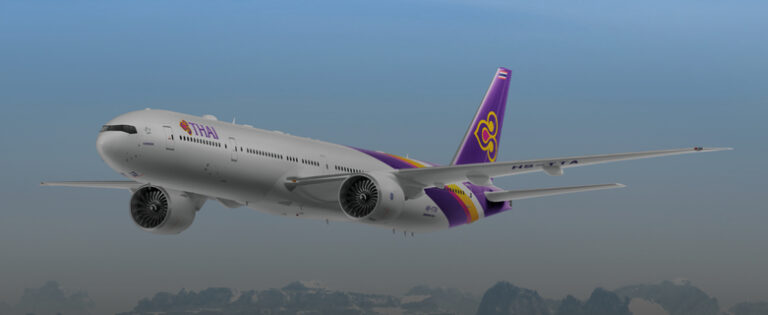
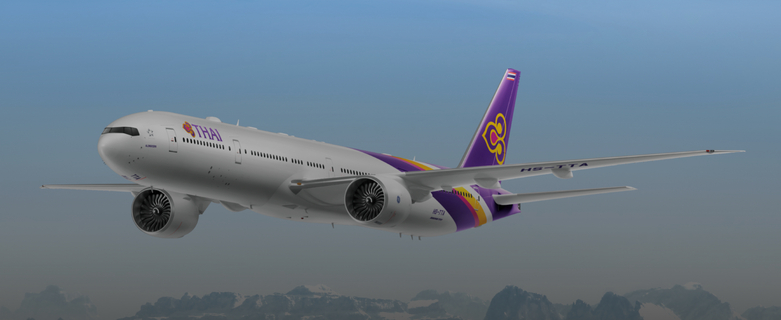
ECS Group subsidiary, HWF Scandinavia and Finland is Thai Airways’ GSSA. Image: Thai Airways
With effect 15MAY25, ECS Group subsidiary, HWF Scandinavia and Finland, as been appointed as Thai Airways’ exclusive General Sales and Services Agent (GSSA) in Sweden and Denmark. This decision reaffirms the airline’s trust in ECS Group’s expertise, extensive network, and strong local market knowledge, while marking a new phase of growth in Northern Europe. Thai Airways operates daily direct flights from Stockholm (Airbus A350) and Copenhagen (Boeing 777) to Bangkok, offering seamless onward connections to the Asia-Pacific, including Australia and major Southeast Asian destinations, for a broad spectrum of shipments, from pharmaceuticals and perishables to high-value and vulnerable goods. HWF has taken on the responsibility of all sales and customer service activities, yet provides more than just transactional support. Supported by ECS Group’s global infrastructure and CargoTech’s digital tools, HWF will deliver commercial insight and flexibly adapt tailored strategies to meet the diverse needs of Nordic shippers. Customers can look forward to an enhanced customer experience through smart pricing, real-time tracking, and performance analytics. According to the press release, this partnership demonstrates a shared commitment to excellence, combining local expertise with global reach to strengthen Thai Airways’ position in the Nordic air cargo market. A Thai Airways spokesperson commented: “ECS Group has been a valuable partner for Thai Airways across multiple markets, and this new chapter in Sweden and Denmark builds on years of mutual trust and collaboration. The combination of local knowledge, operational excellence, and strategic thinking that ECS brings through HWF gives us the confidence that we will continue to stand out in competitive Nordic markets – not just as a carrier, but as a true logistics partner.” Jean Ceccaldi, CEO of ECS Group, said: “This isn’t just another GSSA appointment. It’s a demonstration of how Thai Airways and ECS Group together deliver value far beyond capacity — through expertise, technology, and a deep-rooted commitment to customer success.” Torbjörn Lundblad, Managing Director of HWF Scandinavia and Finland, added: “Our team is deeply invested in this market. We know the customers, we understand their cargo, and we’re ready to bring Thai Airways even closer to their needs. We’re honored by the trust placed in us and excited for what’s ahead.”
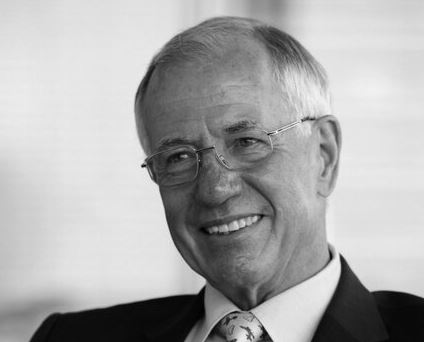
Christian Klick, the German Press Association’s (Luftfahrt-Presse-Club – LPC) Managing Director sent CargoForwarder Global the following obituary on Jürgen Weber. As former spokesman for Lufthansa and later the Star Alliance, Christian Klick personally knew the airline’s long-standing CEO from their many meetings and conversations. Here are his words:
“If we carry on like this, we’ll be bankrupt in eight weeks.” Words, spoken quite soberly by a deeply thoughtful Jürgen Weber, but they sounded like lashes to the addressees. Right after taking office in 1991, the executive had gathered Lufthansa’s top managers, following a Supervisory Board meeting.
Weber secured Lufthansa’s survival At the time, no attendee of the small circle, and hardly anybody within the company could really imagine that the proud Lufthansa was almost insolvent. After all, the state-owned carrier had weathered many crises, was headed by ex-state secretary, Heinz Ruhnau, and enjoyed many years of substantial political support. As did German railway company, Deutsche Bahn, that can’t go bankrupt either. “Too big to fail.”
Jürgen Weber, however, saw things differently. He knew that only immediate and tough cuts could stabilize the proud Lufthansa and keep it in the air. This said, he broke the major tasks down into simple, manageable structures. The move created transparency, making it easier for others to understand the context, and the teams knew what had to be done now and fast. He himself also set to work with relentless energy.
He persistently led the work on splitting the previously strict hierarchical organization into more flexible units with result responsibility. The resistance to these plans was enormous, and not just within the company.
From red to black figures To achieve a successful U-turn, he had to take along the proud and somewhat pampered workforce on a long, arduous journey. This he achieved by presenting small and convincing examples that everyone in the Group had to pull together and scale down personal ambitions. For example, the expensive BMW 7 Series that was granted to managers at a certain executive level, was immediately swapped for a slightly cheaper 5 Series car. He also kept a low profile when it came to his own expenses. When working in Frankfurt, Weber, who lived with his family in Hamburg, stayed overnight in Lufthansa’s spartanly furnished training center at nearby Seeheim, instead of booking a room in a five-star hotel.
Following the successful restructuring process, a new danger loomed. Globalization had picked up speed and Lufthansa, which was internationally not well enough positioned, was risking losing market share to competitors.
“Father” of the Star Alliance In 1996, Weber came back from the USA where he had joined a private meeting with international business leaders. On the fringes of this gathering, the heads of five international airlines agreed to bundle forces by founding the Star Alliance. It did not take him long to convince his team of this vision. Without much fanfare, the foundations for the new international cooperation were laid at all levels of the Group.
In May 1997, the Alliance concept, which was revolutionary for aviation at the time, was presented to the public in Frankfurt. The rest is history. With 25 globally active members, the Star Alliance has become a model for international business cooperation, and not just in aviation.
Once an engineer, always an engineer Jürgen Weber was a diplomat and tough negotiator in one person. Aircraft manufacturers, in particular, learned this lesson when they wanted to secure a major contract with Lufthansa. Weber, an engineer who made his way to the Executive Board via a career in technology, was prepared to go into the most thorough details in order to ensure the best solution for his airline.
Letting his employees gain experience on a long leash, challenging and encouraging them, characterized him as a highly respected manager. His strength was his ability to bring clarity to seemingly unsolvable problems. This enabled him to explain even difficult decisions in a credible manner and thus push through necessary changes. The touch of modesty that he demonstrated time and again helped immensely.
Even after his active time in management, this remained a trademark. Not so long ago, in an interview with the FAZ newspaper, he demanded that today’s company leaders should not lose sight of reality when it comes to their salary expectations.
Many of the LPC members will fondly remember the open relationship he maintained with the media in general over many decades – and with the Aviation Press Association in particular.
The German aviation industry mourns the loss of one of its icons: Juergen Weber passed away on Monday, 12MAY2025, at the age of 83. His name heads the list of outstanding Lufthansa executives.
“Mr. Lufthansa“ – Jürgen Weber. Photo: courtesy LH
The long-standing head of Deutsche Lufthansa joined the airline as an engineer and led Lufthansa as CEO from 1991 to 2003. His first task as chief executive officer of the airline, was a delicate one: he had to completely restructure the state-run airline, which was on the verge of bankruptcy. Due to a strong expansion course under his predecessor, Heinz Ruhnau, Lufthansa had piled up enormous debts. Weber’s countermeasure: he privatized the company and successfully streamlined the structures against strong resistance from the trade unions.
The father of two children and husband to Sabine, always advised his successors in the company not to give in to the pressure from the trade unions. “It’s better to let it come to a big bang before the company catapults itself out of the competition,” Weber once said.
Trends recognized at an early stage He combined the outstanding technical knowledge he obtained as an engineer, with visionary concepts that enabled him to identify trends in aviation at an early stage and he accordingly carved out a future-oriented strategy for Lufthansa. One striking example was his initiative to form the Star Alliance, which was founded on 14MAY97. He realized that seamless passenger and air freight transportation could not be achieved by one company alone, not least because of the complicated flight regulations. Instead, it requires partners who operate large networks with efficient hub structures. The alliance’s founding members were Lufthansa, Air Canada, Scandinavian Airlines, Thai Airways International and United Airlines. Today, the world’s largest airline alliance consists of 25 members. However, the five-pointed star logo, which symbolizes the quintet’s founding airlines, has remained.
Upon leaving the Executive Board, he moved to the Supervisory Board of the crane airline.He was also appointed to other supervisory boards such as Hapag-Lloyd, Deutsche Post or insurance group, Allianz.
Weber shaped and molded the airline “Jürgen Weber was rightly called ‘Mr. Lufthansa’,” the current Lufthansa CEO, Carsten Spohr paid tribute to him in a company press release. Weber had served Lufthansa his entire professional life and shaped the airline. “We Lufthansa employees owe Jürgen Weber a great debt of gratitude for his unparalleled scope of services which he has rendered to the Lufthansa Group.” Spohr, who himself holds a pilot’s license, began his own career at Lufthansa as Jürgen Weber’s assistant.
Nobody has shaped the soul of the company like Weber, emphasized Supervisory Board Chairman, Karl-Ludwig Kley. “Lufthansa, as we know it today, would be unthinkable without Jürgen Weber. During his years as Chairman of the Executive Board and Supervisory Board, he shaped and molded the company. He understood the unifying power of air travel. The founding of the Star Alliance and the expansion of Frankfurt Airport are largely his achievements. He had an equally strong impact within the company. No one else appealed to the hearts and minds of the employees as much as Jürgen Weber. No one else shaped the culture of Lufthansa as he did. We bow our heads in respect for the life’s work of an exceptional person. Jürgen Weber will always have a place of honor in the history of our company,” stated Karl Ludwig Kley, Chairman of the Supervisory Board of Deutsche Lufthansa.
It is not least thanks to the multiple initiatives of Jürgen Weber that the Lufthansa Group, which now includes Swiss Air Lines, Austrian Airlines, Brussels Airlines, ITA Airways, Air Dolomiti, Lufthansa Cargo and Lufthansa Technik as well as other units, is today Europe’s largest aviation group with the highest turnover.
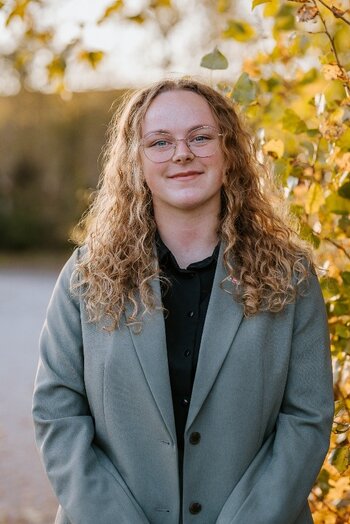
Every week, CargoForwarder Global’s ‘Spotlight On…’ brings a different part of the air cargo industry to the fore to show the multitude of careers that are possible here. With such a segmented industry where collaboration is key to ensuring the smooth and safe transport of cargo around the world, one initiative is increasingly starting to take hold: the launch of cargo communities at airports. Over at Brussels Airport, Air Cargo Belgium which will celebrate its 10th anniversary next year, was created to unite BRUcargo stakeholders – giving everyone a voice and collaborating to drive initiatives and topics for the benefit of the industry as a whole. Jolien Mussen, Project Coordinator at Air Cargo Belgium, takes us through her responsibilities and shares her views on the industry.
A universal approach is to feasibly implement big changes. Image: Jolien Mussen
CFG: What is your current function and company? And what are your responsibilities?
JM: I have been working at Air Cargo Belgium (ACB) for a year and a half, currently as a project coordinator. ACB is a community organization on the cargo side of Brussels Airport, dubbed ‘BRUcargo’. For our projects, we rely on community input gathered during our cluster meetings and steering groups. I am responsible for the Airline Cluster and Innovation & Sustainability steering group, and I’m involved in projects relevant to those.
CFG: What does a normal day look like for you?
JM: For me, there is no such thing! One day, I might be in a warehouse to see if the scanners for our project with RFID-tags are running, the next, I’ll be organizing a meeting regarding infrastructure for e-Trucks, looking into the results of our community sustainability assessment, or brainstorming with airlines and forwarders to set up a campaign regarding hidden dangerous goods.
The only thing I’m consistently doing is trying to spread awareness regarding sustainability!
CFG: How long have you been in the air cargo industry, and what brought you to it?
JM: Only for as long as I have been working for ACB!
I actually have a bachelor in Event and Project Management, which has nothing to do with logistics. After a year of working in event management, I wanted to do something different. Coincidentally the airport was close to where I wanted to live, and they had a lot of job vacancies. One job market later and I was given the opportunity to learn all about the air cargo industry as a part of the ACB team.
It still impresses me to this day what a warm welcome the industry has given me, community members welcoming me into warehouses and offices to teach me absolutely everything I know today. And they continue to do so, allowing me to keep learning every day, which I’m extremely grateful for!
CFG: What do you enjoy most about your job?
JM: That’s a difficult one. I love having a job that allows so much contact with different industry professionals, the variation of different topics in my agenda each week, and working together with colleagues at ACB.
Aside from that, sustainability is a topic that I believe is very important, but it is often a difficult subject in air cargo for different reasons. Even though it’s not always the easiest or most well-liked topic, I love being able to amplify the sustainability message and trying to work on practical improvements.
CFG: What do you see as the greatest challenges in our industry?
JM: Sustainability is definitely one of them, and arguably the one challenge I understand the most. As an industry, we need to reduce our emissions, which is difficult because while technology is already helping this along, it has not developed far enough yet to reduce emissions to zero in the foreseeable future. As a global industry, a universal approach is needed in order to implement big changes in a feasible way, making it even more challenging.
Reducing emissions is just one of the actions needed to become more sustainable as an industry, but other actions must also be taken. For example: the diversification of the workforce, the excessive use of paper, or the – for now – impossibility to find a sustainable alternative for some single-use packaging/wrapping.
Don’t get me wrong, there are already a lot of initiatives being developed and implemented, and companies that are genuinely committed to the cause. However, we need to recognize that we still have a far way to go and that the road to this particular destination will not be easy.
CFG: What advice would you give to people looking to enter into the air cargo industry? Any particular training they should aim for?
JM: As someone who doesn’t have a degree in logistics, never mind air cargo, I don’t feel particularly qualified to answer this question. However, with my limited experience, I’d advise everyone to be open to learning new things, to be passionate about their job, and to listen to those who have been working in the sector for a while. Those industry professionals are often open to sharing their knowledge with newcomers.
CFG: If the air cargo industry were a film/book, what would its title be?
JM: “Wingin’ it” (pun intended)
As an incredibly fast-paced, international sector, I’ve seen people find solutions for crazy things, and for seemingly insolvable problems in the blink of an eye. Definitely very impressive!
Many thanks, Jolien!
If you would like to share your personal air cargo story with our CargoForwarder Global readers, feel free to send your answers to the above questions to cargoforwarderglobal@kopfpilot.at We look forward to shining a spotlight on your job area, views, and experiences.
Allivate, a 50/50 joint venture between airport operator, Fraport, and IT provider, Dakosy, is running a trial aimed at digitalizing the import processes at Rhine-Main Airport. If tests are successful, it will be a further leap forward from the analog to the digital world. The trials will run over a period of two months, followed by an evaluation before the platform becomes standard.
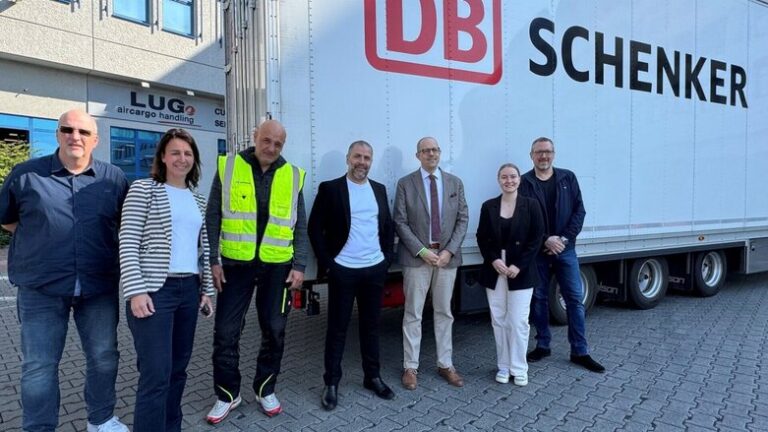
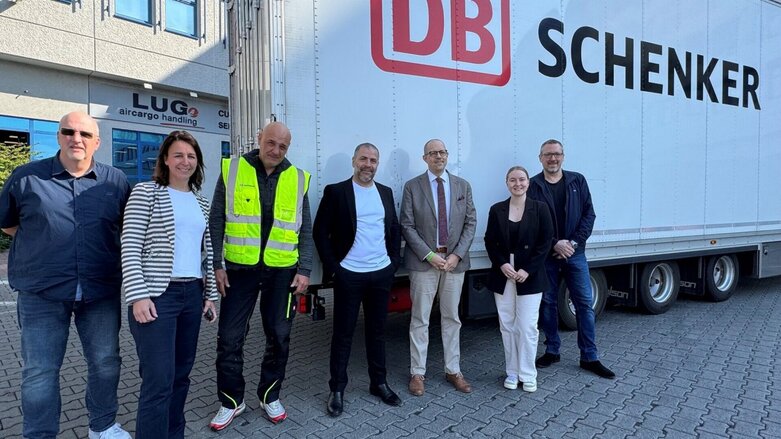
Allivate’s MD, Martina Schikorr(2nd from left) presented the new module Smart Pick-up together with forwarding and ground handling agents to the public – courtesy: Allivate GmbH
The days will soon be over when freight forwarders could only start their pick-up tours once the shipment status appeared in black and white on their printer. In the trials that have been running since 01MAY25, the former analog collection orders have been replaced by a ‘digital pick-up authorization’. In addition to Frankfurt Airport-based customs authorities, the players involved are Kuehne+Nagel, together with their service provider CHI, DB Schenker and the ground handling agent LUG.
Wide range of applications The smart platform was developed by IT provider, allivate. The ‘Digital authorization for Pick-up’ known as ‘Smart Pick-up’, is distributed through the Cargo Community System, FAIR@link, that has long been in use at Frankfurt Airport, which enables slot booking by truckers, among other electronic services. Thanks to the platform, users can spot immediately “when cargo is authorized for pick-up, what the customs status is and, if applicable, the dangerous goods status. Truck slot booking is also integrated. This enables the earliest possible scheduling and avoids wasted trips,” reports allivate Managing Director, Martina Schikorr.
Since trials began at the beginning of May, the transparency of the supply chain has increased considerably, and the import processes have accelerated significantly. For example, collectors receive the information about their shipments as early as two hours before on-block.
Faster and safer Since shipment data is available at a very early stage, it is clear whether customs release a consignment right after arrival or if it’s being held back for closer inspection to make sure that the entries on the accompanying documents match the contents of the packages.
There are also other positive aspects of the new import procedure, says allivate’s executive, Schikorr. Once given the digital greenlight in the system, the pick-up can start. Drivers no longer need to go to a warehouse desk to prove their identity by showing their ID. All they have to do is scan two QR codes and the truck driver’s ID is automatically matched with stored profiles. Herefore the driver needs to validate their ID in an app that functions as digital ID (trucker card).
Martina Schikorr also points out another advantage of the new procedure: it makes air freight more secure by providing information about the authorized collector for all involved parties, particularly when it comes to handing out sensitive items or valuable goods.
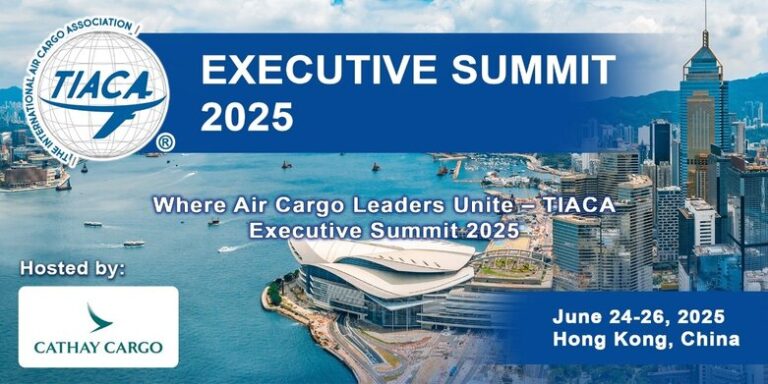
With June 2025 just around the corner, CargoForwarder Global (CFG) asked TIACA’s Director General, Glyn Hughes (GH) a few questions about the TIACA Executive Summit 2025. This time, the three-day event will be hosted in Hong Kong, from 24-26JUN25. Among the highlights will be the release of an industry white paper on e-commerce. What else can attendees expect?
Have you registered yet and will you be there? Image: TIACA
CFG: So, first off, Glyn: Why was Hong Kong chosen for this year’s TIACA Executive Summit?
GH: The TIACA Board has defined a clear process when it comes to selection of event locations, ensuring we operate in a transparent fashion. With TIACA holding ACF’s in the Americas and another in the Middle East, the Board guided us to look at Asia this year, and next year look at Europe and Africa as locations for the executive summit. We then reached out to many potential locations in Asia and invited key stakeholders to express interest in holding our event in their location. From the submissions received the events subgroup guided the Board on a preferred location. Hong Kong is right at the center of the growth of e-commerce and is a critical global air cargo hub with more cargo tonnage moving through the airport than any other.
CFG: How many attendees are expected and will IATA, FIATA, ICAO and the like be there?
GH: We are aiming for 300-350 attendees drawn from across the supply chain and across the globe. Initial registrations look like we are hitting that desired blend. We have invited representatives of many global, regional and local associations to ensure we provide an opportunity for their voices to be heard also.
CFG: What is the purpose and value of attending?
GH: The Executive Summit is primarily focused on action-based discussions. We want to raise the critical issues, such as trade challenges, balancing capacity and demand, e-commerce opportunities and obstacles, airport infrastructure and other critical issues. We are bringing industry leaders to engage, debate and challenge. We will then take the key outcomes and feed them into our Board discussions to identify how TIACA can support the industry, whether that is through advocacy, programs or solutions. This is how the BlueSky program and our other sustainability solutions were born, and another example was the call last year for an industry analysis of e-commerce obstacles and opportunities. We have been working on that through a dedicated Task Force and the output, in the form of a White Paper, will be presented in Hong Kong.
CFG: What can attendees expect from the Cathay Cargo Terminal tour? What will be the highlights? How many have been invited to it?
GH: We are very fortunate that this executive summit has two tours on offer. On the day prior to the conference, Cathay Cargo has kindly offered to host a by-invitation tour of its facilities, and the day after the event, HACTL has also kindly offered to host another tour of its facilities. I think both will be an eye-opening and inspirational insight into how such large volumes of cargo are processed via the use of the latest technology, automated systems and focus on quality. Each has specialized facilities aligned with the most sophisticated shipper demands and will serve as a great illustration as to how things should be done as they are being done.
CFG: Cathay Cargo Terminal presented an inspiring waste management project at the World Cargo Symposium in Dubai this year, whereby single-use plastics are recycled so that single-use plastic going out of HKG is now 50% generated from incoming material. Will attendees be shown this and other Sustainable BDPs, and will there be a focus on adoption at other companies across the world?
GH: Indeed, all parties operating cargo facilities in Hong Kong are very much focused on innovative and inspirational sustainability solutions. Last year’s TIACA’s Corporate Sustainability Award winner was AAT with their autonomous vehicle solution. HACTL have also showcased their amazing recycling programs and, together with Cathay Cargo Terminal solutions, demonstrate that collectively these organizations are inspiring each other to do better. We will have a session dedicated to sustainability to showcase best practices and create a wider discussion about what more can we do?
CFG: There are a few blank spots on the agenda – what topics are expected to fill them?
GH: I think all sessions have now been allocated, as we like to ensure the program is relevant to the key issues of the day. We have therefore added a session looking at safety in the supply chain.
CFG: It’s good to see a couple of experts presenting on international trade and tariffs. Do you expect the tariffs to affect travel/attendance/sponsorship in anyway?
GH: It’s always difficult to predict how global situations impact different organizations but we remain hopeful that those key speakers will still be available and that all those who would like to attend are able to attend. We also make pricing attractive compared to some other events, to make TIACA’s events accessible, and of course we continue to offer the ‘bring an under-30 free for all paid attendees’ as young professionals can really accelerate their network development by attending these events.
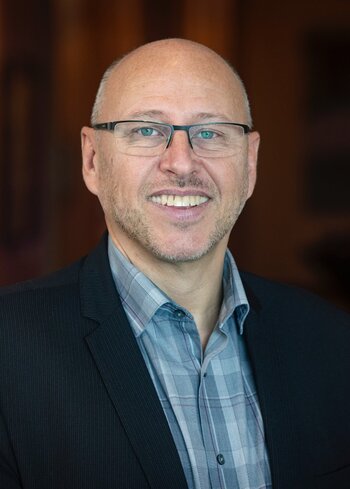
TIACA Director General, Glyn Hughes – picture: courtesy TIACA
CFG: e-commerce plays a prominent role on the agenda – what will be the main messages/topics of discussion in this regard?
GH: This is one of the sessions I am looking forward to most and rather than my surmising what may be covered, I think it’s a case of let’s see what the experts have in store for us. Last year during one of our events, there was a call for an industry analysis of e-commerce obstacles and opportunities. As mentioned already, we will be releasing and presenting our e-commerce white paper in Hong Kong, which has been under development by an amazing task force drawn from across the supply chain over the last 6 months.
CFG: How has the interest in this year’s Sustainability Awards been? What truly outstanding/eye-opening projects have there been? When can people expect to hear about the shortlist?
GH: I am always very impressed with every entry we receive in both the corporate and small business/start up categories. The independent jury will be evaluating over 20 different entries this year and we hope the short list will be announced within the coming week or so.
CFG: What makes this year’s summit different to previous ones?
GH: The industry is different because the world is different, as a consequence we are all different so the event must reflect that in its program, its speakers and its outcomes. Some topics may be similar, but the discussions will be very different. There will be many great speakers… all are key and all have unique perspectives. This Executive Summit promises to be engaging, stimulating, fun and instrumental in helping to establish what the key industry issues are and how we can collectively address them. We invite everyone to join us and help shape the future.
CFG: How will you know if the Executive Summit was a success?
GH: We know there are many industry events on the annual calendar, and we really appreciate that they choose to attend our event, and we hope they will look back afterwards and say I learnt something new, I shared my success, I met new colleagues, I forged new business relationships, my voice was heard, and I enjoyed my time. This, for us, is success.
The relocation of industrial production to locations outside of China has become a growth driver for DHL, stated CEO Tobias Meyer of logistics giant, DeutschePost/DHL, in a report published in the daily newspaper, Süddeutsche Zeitung. He mentions Mexico as one example where the integrator has grown very strongly lately. At the same time, DHL announced the construction of a Life Sciences & Healthcare (LSH) campus of enormous dimensions near Frankfurt, Germany.
Investment data evidence that an increasing number of global actors are diversifying their economic activities, thus making their supply chains more robust. Due to the uncertain political situation and mounting conflicts, the times are gone where many of them had put all their eggs in a single – Chinese – basket. Also, they tend to cooperate with a multitude of partners to avoid dependence on a single supplier. According to this trend, the DHL-operated global freighter network has also changed substantially. This concerns primary trans-Pac routes between China and the U.S., where transport volumes plummeted following Trump’s disruptive tariff policy.
SAF continues to be high on DHL’s agenda In the interview, CEO Meyer reaffirmed DHL’s goal of achieving an SAF fuel rate of 33% for the integrator’s air operations by 2030. However, he admits that this is a very ambitious target because the production of sustainable aviation fuel lags far behind demand, and the cost difference to traditional Jet A-1 fuel is still enormous. However, he stressed the positive fact that DHL has signed key SAF agreements with suppliers in coordination with the integrator’s customers, financed partially by shippers and other industrial partners. Meyer pointed out that the DHL freighter fleet is already the airline with the highest proportion of SAF burn, accounting for 3.5% in average.
Multibillion investment in pharma and healthcare facility Further to this, the company tabled plans on Thursday (15MAY25), to erect a gigantic Health Logistics campus in Florstadt, near Frankfurt, encompassing a size the equivalent of 14 soccer fields. Once fully operational, the complex will be the backbone of DHL’s global Health Logistics network, reads an announcement.
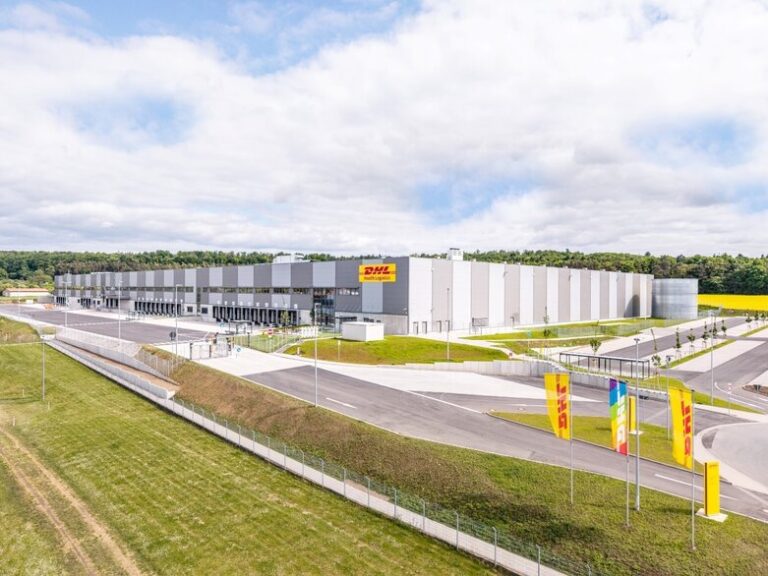
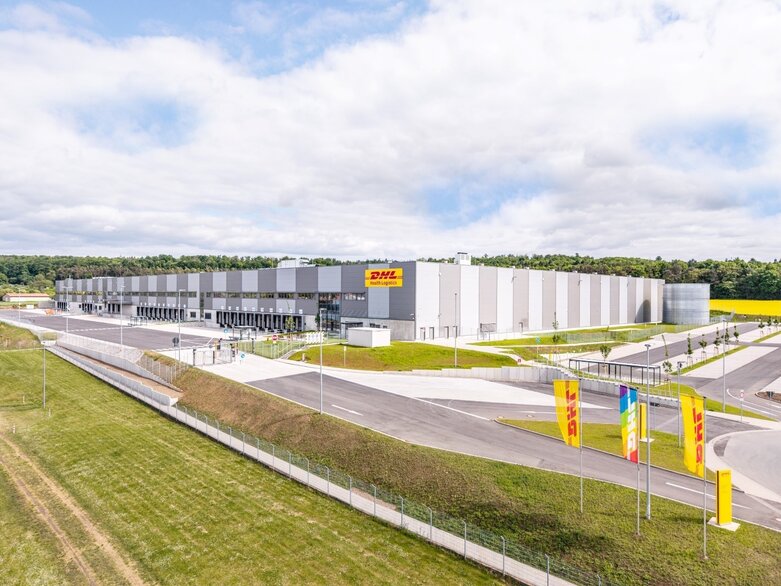
Image of DHL’s huge European pharmaceutical hub at Florstadt, featuring multiple temperature zones – courtesy: DHL
The integrator’s future European pharmaceutical hub is part of a global multibillion investment in DHL Health Logistics. With the addition of this state-of-the-art logistics center, the campus comprises a total of 100,000 square meters of warehouse space. It offers capacity for handling, transshipping or storing more than 140,000 pallets of pharmaceutical and medical items, serving international customers from the biopharma, specialty pharma, clinical research sectors and medical technology, with more than 600 highly qualified employees on site. The new climate-neutral “Florstadt 4” warehouse spans over 30,000 square meters and has been specifically designed for the storage and distribution of high-value pharmaceutical and medical products.
Flagship project It features multiple temperature zones, with the capability to turn the temperature down to minus 70° centigrade if needed. Focus is placed on the critical ranges of 2–8°C and -20°C, ensuring compliance with the highest standards for handling temperature-sensitive products according to provision. Rainer Haag, CEO DHL Supply Chain Germany & Alps, confirms the importance of the Florstadt location: “The Frankfurt Rhine-Main area is one of the most vibrant economic regions in Europe. The fact that we are consistently expanding our largest campus there, shows just how important the site is at the heart of our DHL Health Logistics strategy. As we expand, we are keeping an eye to sustainability and climate protection – the site is also a flagship project in terms of environmentally friendly operations.”
Based on climate-neutrality enabled by solar panels, heat pumps and a comprehensive energy concept with LED lighting control and its own photovoltaic system, DHL is pursuing a holistic approach as a green logistics provider of choice, is stated in a company release.