Home Blog Page 90

Saudia Cargo will double freighter fleet

The cargo division of the Saudi Arabian national carrier intends to up its freighter fleet from currently 7 units to 14 come 2028. The main decks are complemented by lower deck compartments offered the market by the fast-growing passenger fleet of the airline. This proactive asset policy goes hand in hand with strategic partnerships in jointly establishing a logistics bridge between the APAC region, the Middle East, Africa and Europe, explains CEO Eng Loay Mashabi (LM) in this exclusive interview in which he stresses operational expansions in Asia and Europe and e-Com initiatives. Specifics will be revealed to customers at the upcoming Air Cargo Europe trade fair in Munich, Germany.

Eng Loay Mashabi is Chief Executive Officer and Managing Director of Saudia Cargo since 01JAN2025 – pictures: courtesy Saudia Cargo

CFG: Saudia Cargo will have a booth at Air Cargo Europe. What are the motives behind this decision?
LM: Saudia Cargo’s presence at Air Cargo Europe is driven by a desire to amplify our brand visibility on a global stage, connecting with key decision-makers and showcasing our commitment to innovation. It’s a crucial platform for business development and networking, allowing us to explore new opportunities and solidify partnerships. Participation is also essential for staying ahead of industry trends and best practices. Ultimately, our presence supports Saudi Vision 2030, contributing to the Kingdom’s goal of becoming a leading global logistics hub.

CFG: What topics will Saudia Cargo be focusing on in meetings with customers and industry representatives during the Munich trade show?
LM: Air Cargo Europe serves as a key international platform for the air freight industry, offering valuable opportunities to connect with decision-makers, explore new innovations, and stay ahead of industry trends. Saudia Cargo will focus on highlighting its growth strategy; plans to expand our freighter fleet and enhance our infrastructure. Additionally, we will showcase our specialized services, including pharma, perishables and e-commerce solutions.
Strategic partnerships are key, and we’ll showcase collaborations like our continued agreement with Jan de Rijk Co., a leading European transportation and logistics company, to enhance our services and expand our reach in Europe. This agreement which started back in 2023 allows us to leverage Jan de Rijk’s extensive trucking network to bolster our operations and strengthen our presence in Europe.
We will also discuss our commitment to innovation, sharing insights into our investments in technologies like AI, IoT, and blockchain. Sustainability is a priority, and we’ll share our dedication to minimizing our environmental impact. Finally, we will outline our network expansion plans, including our direct flight route from Liège Airport in Belgium to King Fahd International Airport in Dammam, increasing our total weekly flights from Liège to eleven.

CFG: In 2024, Saudia Cargo transported 577,870 tons of air freight. At the presentation of the annual result, you said that the airline will “remain focused on growth, strengthening partnerships and providing advanced solutions” to the benefit of customers. Meanwhile, the first five months of 2025 have passed. On which of these three points have significant results been achieved so far?
LM: In the first five months of 2025, Saudia Cargo has made significant strides in all three strategic areas: growth, strengthening partnerships, and providing advanced solutions. We’ve continued to see strong growth in key sectors like e-commerce and perishables, particularly in our trade lanes with Asia. We’ve also made progress in expanding our network, with new destinations and increased frequencies planned for later in the year. Our recent MoU with China Henan Aviation Group (CHAGC) represents a major achievement in strengthening our partnerships. This strategic collaboration will establish a robust air logistics bridge between Asia-Pacific, the Middle East, Europe, and Africa, leveraging Zhengzhou and Riyadh as key interconnected hubs. We’ve also continued to deepen our relationships with existing partners like Cainiao, the logistics arm of Alibaba, serving as their largest partner in Saudi Arabia and contributing to the European supply chain. Furthermore, we’ve made significant progress in implementing our digital transformation strategy, leveraging AI, IoT, and blockchain, to enhance our efficiency, transparency, and customer experience. We’ve also continued to invest in specialized services, such as our top-tier pharma solutions and our innovative perishables handling.

CFG: Lately, Saudia Cargo has been very active in e-commerce. How much does e-commerce currently contribute to the carrier’s total volumes and sales, and has the recent tariff dispute between the U.S. and China (and most other countries) had any effect on Saudia Cargo’s business?
LM: E-commerce is a rapidly growing and increasingly important segment for Saudia Cargo, contributing substantially to our overall success. Last year, our e-commerce volumes improved by 23% to 64,107 tons. At present, we handle valuable and time-sensitive products, particularly for e-commerce, where we collaborate with major Chinese players. We’ve made major investments in infrastructure, technology, and strategic partnerships to support the growth of e-commerce, and we’re seeing positive results in our strong performance in this sector. Regarding the recent tariff disputes, while it’s still too early to fully assess the long-term impact, we are closely monitoring the situation and actively adapting our operations to mitigate any potential negative effects. Our strategy involves diversifying our markets and trade lanes, strengthening our existing partnerships, and providing flexible and reliable solutions to our valued customers.
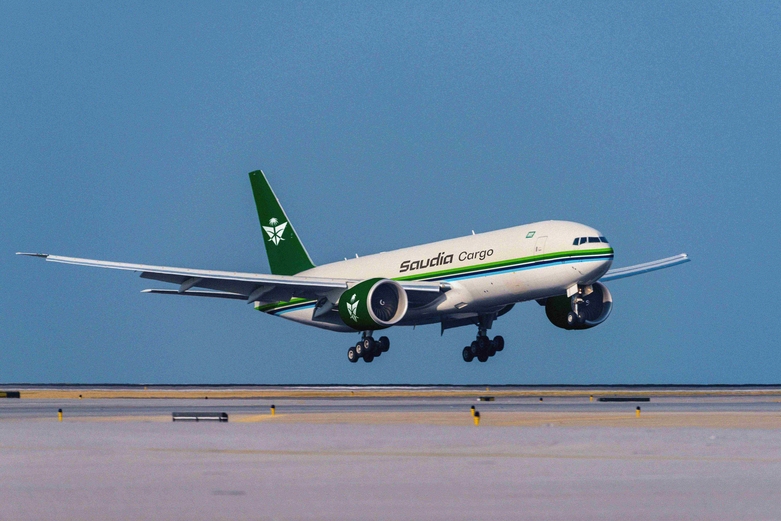
The B777F (pictured here) is the backbone of Saudia Cargo’s fleet.

CFG: Saudia Cargo operates a fleet of 7 freighter aircraft (mix of B747F and B777F) and markets the lower decks of 140+ passenger aircraft. In view of the growth plans announced by you, Mr. Loay Mashabi, are there any intentions to expand the freighter fleet by additional units or to increase capacity through wet lease contracts?
LM: Expanding our capacity is a key priority, and we are actively exploring all options to meet growing demand. This includes expanding our freighter fleet and optimizing belly capacity. We have ambitious plans to double our freighter capacity by 2028. We are also evaluating opportunities to increase capacity through wet lease contracts. Our goal is to ensure sufficient capacity to meet customer needs.  

CFG: Finally, what is the 2025 year-end target for transported tons and turnover?
LM: While we don’t disclose specific year-end targets, we are aiming for significant growth in both transported tons and turnover throughout 2025. We are confident that our strategic initiatives, investments in infrastructure and technology, and commitment to exceptional service will enable us to achieve our ambitious goals. We are focused on maximizing efficiency, optimizing our network, and expanding our market share in key sectors. Above all, we are deeply committed to contributing to the Kingdom’s economic success. Our profitability is strong, and we are focused on continuing to improve our performance.

CFG: Thank you for your time and input.
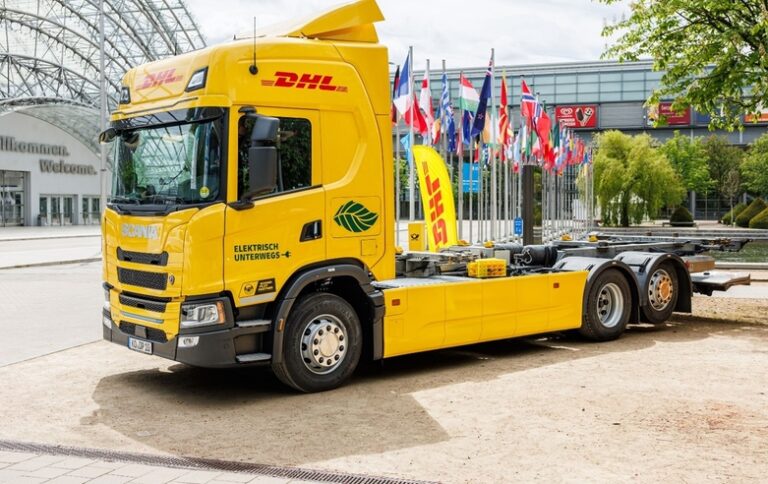
DHL goes electric – possibly

0

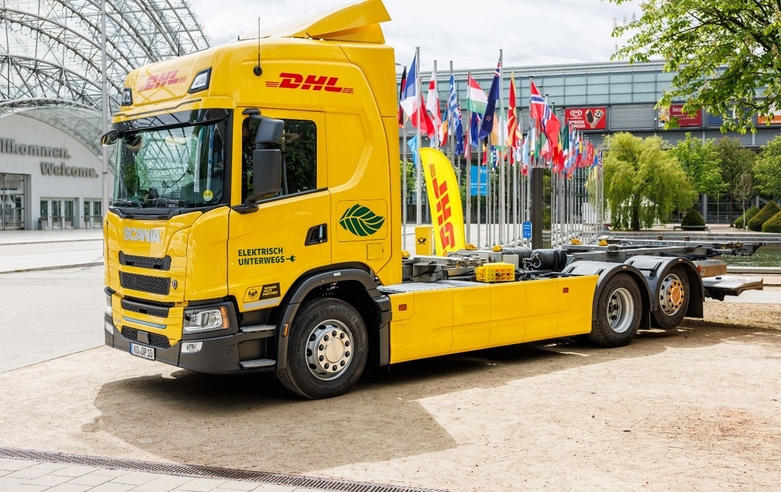
The test drives on the Hamburg-Berlin route lasted exactly 100 days (280+ km), and covered a total of 22,000 km. The trials were carried out using a new Scania-built e-truck which contains a built-in range extender – the only of its kind worldwide. The unique vehicle has now been presented to a specialist audience at the International Transport Forum in Leipzig. It increases the performance reliability of the integrator’s road network. However, Brussels has the last say.

DHL calls it a “bridging technology”. The ‘Extended Range Electric Vehicle’ (EREV), which has now been presented to the public under this unwieldy name, has proven its suitability for everyday use on the above route between Germany’s two largest cities. Scania speaks of a turnkey solution since the vehicle enhances operational flexibility by providing an additional energy reserve when no charging station is available. This increases its usability for operators, in contrast to a fully e-powered truck.

The Scania truck’s utilization by DHL depends on a new emission category to be introduced by the EU, photo: DHL

New CO2 category is needed
EREV represents a novel concept with great potential to support the transition to electrified transport. It saves more than 90% of CO2 emissions compared to a conventional diesel truck, the testing phase has proved. Critics may object that greenhouse gases still account for 10% of emissions. Scania counters the argument by stressing that 10% is an enormous CO2 saving rate compared to common diesel-powered trucks.
However, there are legislative stumbling blocks, as EU law does not currently include an emissions category to which this type of truck can be assigned. Hence, DHL is urging policymakers to introduce an additional emissions class that recognizes proportional CO2 emissions under road toll legislation, based on certified emissions data. This even more since practical tests of the EREV have evidenced that the vehicle’s environmental performance comes close to that of a full electric truck.

Pragmatic concepts are required
That said, DHL expressly welcomes the new German government’s coalition agreement, which includes support for EREVs, as a step in the right direction, and calls for timely implementation in applicable EU regulations.
‘We all, businesses, politics, and society – want fewer emissions through increased e-mobility in freight transport. At the same time, all experts know that the transition to fully electric trucks will take many years, primarily because the grid and charging infrastructures are still inadequate,” Tobias Meyer, CEO of DHL Group, said. Instead of waiting for a perfect technical solution, pragmatic concepts like the EREV are needed, flanked by quick political decisions, he stated. “We want to decarbonize the transport sector now and regulation should not hinder but support us to do so.”

Main novelty: the range extender
Since February, the EREV has been used in DHL’s Post & Parcel Germany division for transport between the parcel centers in Berlin and Hamburg. On colder days or when facing unpredictable charging difficulties (such as charging stations being occupied or malfunctioning) that led to requiring an additional range, the range extender was turned on. It serves as a backup, enabling additional miles. This facilitates reliable route planning – something that is indispensable in logistics.
In the trials, the EREV operated 92% on grid-charged energy, with only 8% of the power provided by the built-in range extender. Going forward, emissions could be further reduced by using fuel from renewable sources such as biodiesel, for the small share of energy provided through the generator.

Next steps
The energy of the 10.5-meter-long truck currently comes from a 416 kWh battery and a fuel-powered 120 kW generator. The next version is expected to feature a larger battery with 520 kWh. The truck’s maximum speed is limited to 89 km/h, and it has a capacity of about 1,000 packages, resembling the volume of a swap body. Additionally, the truck can tow a trailer with another swap body.
Whether DHL will acquire more EREV units depends on the recognition and support of the vehicle in the relevant European and national regulations such as the road toll legislation. The test results have been very positive and promising – the technology is fully ready, and so is DHL, the integrator stresses in a press release. Scania is one of the largest suppliers of heavy trucks in Europe (68.4% of all deliveries) and South America (19.3%). The Swedish company is part of the Volkswagen Group.

AFKLMP Cargo’s myCargo allows allotment customization

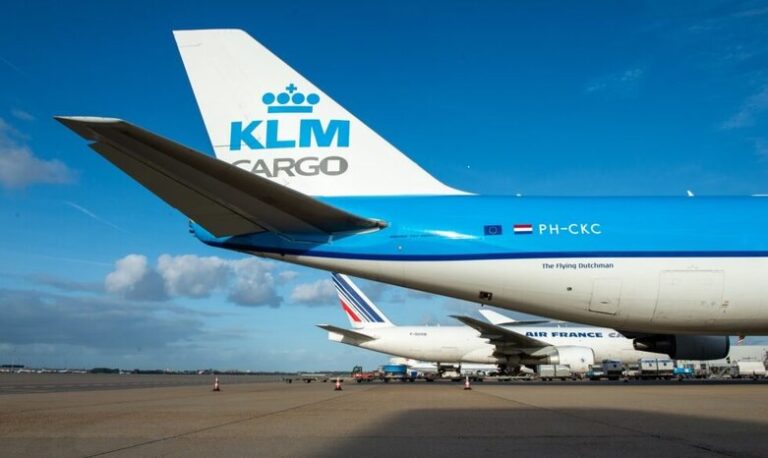
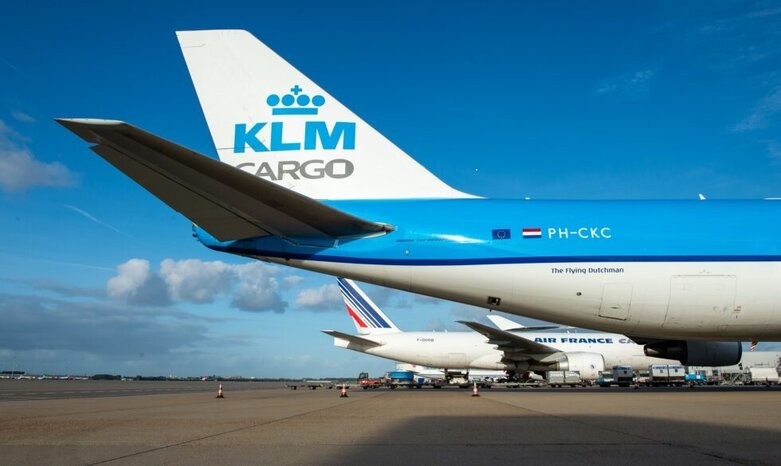
The airline’s customers can manage their business anytime, anywhere. Picture: courtesy KLM Cargo

In response to growing demand for a seamless, flexible, and fully digital cargo experience, Air France KLM Martinair Cargo has added an allotment customization feature to its myCargo platform. This is a “significant update” because it allows customers to have complete control over their allotment bookings. The release speaks of bringing “the autonomy of spot bookings to contracted capacity”.
The company is focused on facilitating the entire cargo experience, it says: “from quotation and booking through to tracking.” In giving authority to customers to customize their allotment bookings so that they meet contractual requirements, does away with manual intervention via a customer service representative, and is therefore a far quicker and more efficient process. The new feature allows users to select their own Air Waybill (AWB) numbers as well as define specific origin and destination points for shipments, ensuring routing requirements are met. Further, detailed cargo and handling information can be entered and shippers designated according to the respective contract terms and agreements. These enhancements deliver substantial benefits – mostly speed and control. Customers gain enhanced flexibility to manage complex contracts, including those involving multiple origins, destinations, or product groups. They are not bound by the limitations of pre-assigned AWBs, since choosing their own means accelerated booking and handling processes. And finally, a fully digital, self-managed booking experience brings convenience and independence. GertJan Roelands, SVP Commercial at Air France KLM Martinair Cargo, stated: “Empowering our customers to manage their business anytime, anywhere lies at the heart of our digital strategy. The new allotment customization option in myCargo is a game-changer, giving users full control over their allocations 24/7. This launch marks a key milestone in our commercial transformation and reaffirms our commitment to customer-centric innovation.”

CargoTech talks of digital capacity win-win for airlines

CargoTech’s Cédric Millet and Michael Teoh. Image: CargoTech

In today’s world with freighter delivery delays, limited capacities and aging fleets, partnerships are more important than ever, says CargoTech. Strategic partnerships can help to ensure that capacities are used more efficiently, since these have become increasingly constrained in the past five years. The lack of capacity is pitted against a massive increase in e-commerce business, but also maintenance, repair, and overhaul (MRO) bottlenecks. CargoTech’s digital solutions offer support to airlines when it comes to analyzing and sourcing available capacity, expanding interline networks, and optimizing space and load factors in real time – particularly since different partners often operate very different digital systems. Its press release illustrates three of its members and their tools: Rotate is first up. Its solution is capable of analyzing different scenarios regarding fleet, network, and partnership strategies. CargoAi’s Interline module enables airlines to cross-book capacities and combine offers from different carriers, simplifying the booking process and ensuring real-time data for all parties. Wiremind’s CARGOSTACK then optimizes all available capacity, manages rates, highlights exceptions, and supports efficient inventory management.
Cédric Millet, President of CargoTech, commented: “Any form of partnership or interline agreement looks good on paper but can pose large operational challenges since often more than one ground handler is involved in addition to the airlines’ own digital systems, and therefore differing software solutions need interfacing. Also, the cargo market seeks long-term capacity stability, and yet airline schedules, negotiations and allotments are usually done on a seasonal basis, which can be difficult to balance. Three points are important when it comes to optimizing available assets and delivering better revenue: smooth digital interaction, easy access to partner capacity, and ensuring optimum use of all available space. Three of our CargoTech members offer precisely those solutions.”
Michael Teoh, Head of Strategy at CargoTech, said: “Capacity optimization requires reliable, real-time information, excellent IT interfacing, and useful scenarios suggestions on which to base quick, commercial decisions. CargoTech delivers the digital framework and human expertise to fully support partnering airlines in maximizing on available capacities in the market. Our aim is an agile, responsive, and profitable air cargo industry – one with a future, despite its current space limitations.”

CEIV Pharma awarded to GSSA for first time: Kales Airline Services

Sebastiaan Scholte (left) and Brendan Sullivan at the certificate handover. Image: Kales

Kales Airline Services announced this week that it is the world’s first General Sales & Service Agent (GSSA) to secure the strict, industry-recognized quality stamp that is the IATA CEIV Pharma certificate. This was awarded for its operations in Italy, Belgium, and Switzerland following a long and structured audit by an independent validator. By achieving this certification, Kales has proven its ability to meet the most rigorous international standards for quality, safety, compliance, and operational efficiency – all crucial steps in a supply chain catering to the pharmaceutical industry, as failure to meet standards can have very costly if not fatal consequences. The GSSA is committed to top-quality handling of temperature-sensitive pharmaceutical shipments and the CEIV Pharma gives peace of mind to customers as they can trust that Kales is compliant, reliable, and understands their requirements and the relevant regulations around pharmaceutical transport. With the ever-increasing volumes of pharma being transported, those companies that can demonstrate their standards will be in a better position when it comes to tenders. How soon will other GSSAs follow?
Sebastiaan Scholte, CEO of Kales Airline Services, commented: “This is an important milestone as the first GSSA ever to certify for CEIV Pharma. Pharmaceutical shipments are increasing, and it is important not only to have the certification, but also the knowledge and the right mindset to handle these shipments properly. We are proud to lead the way in raising the standards for GSSAs globally.” Brendan Sullivan, head of cargo for IATA underlined: “Pharmaceuticals are among the most sensitive and time-critical cargo we transport, and CEIV Pharma helps ensure they are handled to the highest global standards. We congratulate Kales Airline Services on becoming the first GSSA to achieve certification. Their achievement is a notable step that reflects the growing recognition of quality across all parts of the air cargo supply chain.”

PLAY Selects Nordic GSA and Globe Air Cargo France as GSSAs

ECS Group subsidiaries to grow PLAY’s cargo business. Image: PLAY

Icelandic low-cost carrier PLAY has chosen ECS Group subsidiaries Globe Air Cargo France and Nordic GSA (Denmark) as its General Sales & Service Agents (GSSAs) for France, Denmark, and additional European markets. They will expand PLAY’s cargo operations using CargoTech digital tools, supporting its fleet of 10 A320neo/A321neo aircraft. PLAY launched in JUN24 and serves 37 destinations in 18 countries across North America, Europe, and Africa. Each flight offers up to 4.5 tons/10 m³ of bulk cargo space for general cargo, aircraft and ship parts, or vegetables. The airline’s Keflavík hub in Iceland connects to Europe, Africa, and North America – an attractive network for ECS Group’s forwarding customers.
Jean Ceccaldi, CEO of ECS Group, said: “Word of mouth is the best business card, especially in a people-centric industry like ours. Globe Air Cargo France and Nordic GSA won the tender for PLAY because of ECS Group’s success with one of PLAY’s partners. Our teams proved that they have the local expertise and advanced digital tools needed to support this new and ambitious leisure airline in building a stable and expanding belly cargo business almost from scratch. Paris Charles de Gaulle is currently PLAY’s leading destination by frequency, followed by Copenhagen, so our teams were a logical geographical choice for European GSSA headquarter operations. ECS Group welcomes PLAY to its customer portfolio and will be following its expansion with great interest.”
Franck Tordjman, Managing Director of Globe Air Cargo France, commented: “The potentials for cargo growth with such a young airline – PLAY began operating just four years ago – are very appealing and Globe Air Cargo is thrilled to be its first French GSSA and to develop a successful network together. We have devised a clear strategy that includes digital process enhancements and a vision to securely place PLAY and Iceland on the map, and fly cargo to and from as many of PLAY’s destinations as possible.” Thomas Frederiksen, Managing Director of Nordic GSA in Denmark, stated: “We already have regular flows of cargo on PLAY flights from Denmark to Tenerife (TFS) and Gran Canaria (LPA) in the Canary Islands. While these are primarily highly popular holiday destinations for passengers, Nordic GSA’s mission is to equally promote opportunities for cargo business on board of PLAY, and to generate excellent baseload revenue for the airline. Not just for these destinations, but also others within its network that may have never seen cargo before. We’re fortunate, as part of ECS Group, to have state-of-the-art digital support at our fingertips when it comes to reading and acting on market trends and establishing new cargo revenue streams.”

Coyne opts for Mondial in Germany

Mondial Airlines Services GmbH wins Coyne Airways’ Germany GSA tender. Image: Coyne Airways

Mondial Airline Services GmbH, a Global GSA Group subsidiary, has secured the GSA contract to represent Coyne Airways in Germany as of 17APR25. The agreement centers on Coyne’s scheduled B767 freighter operations from Frankfurt via Liège to the Caspian region (serving Tbilisi, Georgia, and Yerevan, Armenia), with flexible connections to the Middle East and Africa.
Mondial manages the road feeder services between Frankfurt and Liège for the regular shipments of automotive parts, healthcare products, pharmaceuticals, medical equipment, and foodstuffs. The contract also covers Coyne’s Gulf network, offering access to over 30 destinations across the Middle East and Africa via Sharjah (SHJ) and Dubai (DWC) hubs – including otherwise rarely served destinations such as Kabul (KBL), Baghdad (BGW), Basra (BSR), Erbil (EBL), Sulaimaniyah (ISU), Asmara (ASM), Juba (JUB), and Ndjamena (NDJ).
Larry Coyne, Chief Executive Officer of Coyne Airways, commented: “Local market expertise is the foundation for business success. With its offices in Frankfurt, Dusseldorf, Munich, Stuttgart and Hamburg, and proven sales excellence, we are confident that Mondial will deliver the high quality response times and customer service levels that our customers at Coyne Airways expect and deserve. And, as we continue to expand, Mondial will be able to provide the additional resources necessary to meet the increasing demand for our freighter services to the Caucasus region, the Middle East and Africa.”
Zafer Aggunduz, Chief Commercial Officer, Global GSA Group, said: “To count such an established and unique airline model as Coyne Airways as our latest partner is both an honor and an inspiration for us at Global GSA Group and Mondial Airline Services GmbH, in particular. Our GSA teams across Germany pride themselves in the entrepreneurial spirit, agility and product knowledge required to act as a perfect extension of Coyne Airways in their local markets. We look forward to contributing to Coyne Airways’ continued success.” Aytekin Saray, Chief Executive Officer of Global GSA Group, stated: “Coyne Airways is an outstanding example of how flexibility and reliability can be perfectly in tune. Its service covers the entire spectrum of cargo commodities from pharma to dangerous goods, and connects many of the more challenging and lesser-served destinations, so processes need to be expertly organized and all eventualities considered to ensure the quality expected by its customers. Mondial Airline Services GmbH is always ready to make the seemingly impossible effortlessly possible, in line with its airline partner’s philosophy.”

ATC gains Pfaff as advisor

Florian is back in business, photo: Courtesy ATC

The long-time Lufthansa Cargo executive, J. Florian Pfaff has become external advisor to ATC Aviation Services AG. As an independent consultant operating under the brand J. Florian Pfaff – Aviation Consulting, he will support ATC going forward with his expertise in the general sales agent’s business development. Ingo Zimmer, CEO ATC Aviation Services states: “We are more than happy that Florian is joining forces with ATC. We are confident that his in-depth market knowledge and global network will make a valuable contribution to the continued growth of our activities.” With 35 years of international experience in the air cargo industry, Pfaff a real airfreight veteran.
Throughout his career, he has been responsible for the markets Asia, Germany, Europe, Africa, as well as parts of North and Central America. On 01MAR25 the former Singapore-based head of Asia Pacific exited LH Cargo due to age reasons. Shortly before his retirement, he told CargoForwarder Global that although his career at Lufthansa Cargo was over, his professional activities in the airfreight industry were not. This has now been realized through the partnership with ATC. On the occasion, Pfaff stated: ”I am extremely excited to work with ATC – the leading GSSA worldwide. I look forward to supporting their business and growth.” Frankfurt-based ATC Aviation Services AG is one of the biggest and most experienced GSSAs worldwide. Approximately, 75+ cargo airlines belong to the agent’s overall portfolio. The list includes numerous well-known names like, ANA Cargo, Avianca Cargo, China Airlines, Ethiopian Cargo, Korean Air, Sichuan Airlines, Turkish Airlines, to name but a few. It runs 52 offices in 30 countries.

WestJet Cargo happy with TCE’s customs support

Florian is back in business, photo: Courtesy ATC

WestJet Cargo outsourced its customs processes to TCE on 18NOV24, citing TCE’s resource efficiency and expertise. TCE quickly developed a tailored customs monitoring and reporting solution for all WestJet Cargo’s international movements. Within just six weeks, TCE analyzed workflows, identified optimizations, and established a system for customs messaging, accessing WestJet’s SmartKargo ACMS and CHAMP portals to manage and action all customs communications. It now delivers comprehensive customs reporting, supporting all Advance Cargo Information (ACI) processes, including AMS, ACAS, PLACI, PACT, VUCEM, and ICS2. The dedicated customs team covers three key areas: Monitoring and Documentation (ensuring accurate, compliant data submissions), Reporting and Communication (providing timely updates and liaising with stakeholders), and Investigation and Corrective Action (analyzing penalties, investigating causes, and managing appeals). WestJet has already noticed reduced fixed costs, optimized resource use, and improved customer service.
Sarah Scheibe, Managing Director of TCE, described: “We tailored a bespoke solution for WestJet Cargo that aligns with the airline’s unique requirements and system configurations, ensuring seamless messaging synchronization. Following the setup phase, we conducted trial runs in a test environment to identify and address any potential gaps before going live shortly after these were successfully completed. We now have a dedicated TCE WestJet Cargo customs monitoring team in operation 24/7, with two main targets: to manage and maximize customs compliance, and to minimize customs fines.” Julius Mooney, Director – Cargo Commercial at WestJet Cargo, explained that the decision to outsource customs processes, to alleviate pressure on its Operations Control Center and allow them to focus on core responsibilities, had been taken in NOV24: “Given the increasing complexity the air cargo industry has seen in this area over the past four months, our decision could not have come at a better time. Customs training and understanding are a challenge for any airline as the rules often change and we are constantly working against the clock to ensure that our aircraft leave as scheduled, with all cargo correctly and safely declared and stowed on board. […] Judging by the money we have saved so far in customs fines, by the end of this year, we could be looking at having to pay out less than a fifth of what was paid in 2024. They say ‘money talks’: I can’t think of a better example to prove TCE’s efficiency and expertise, and would like to thank Sarah Scheibe and her amazing team, at this point. As far as I am concerned, the C in TCE stands for Total Customs Expertise – which I can ‘declare’ to be a total success for WestJet Cargo.”

Spotlight on… Nicole Moraes Sarno, Head of Freighter Marketing, Embraer Commercial Aviation

Every Sunday, CargoForwarder Global’s ‘Spotlight On…’ showcases a different element of the air cargo industry to illustrate the many diverse career options it provides. There is no air cargo without aircraft and, with e-commerce on the rise, demand for flexible and efficient regional aircraft is also increasing. Embraer, widely recognized for its E-Jet family, expanded its presence in the air cargo sector three years ago when it announced full freighter conversion programs of its popular E190 and E195 passenger jets. The E190F has since been tested and certified by major aviation authorities, and is now ramping up for commercial deliveries. This week, Nicole Moraes Sarno, Head of Freighter Marketing at Embraer Commercial Aviation, takes us through her responsibilities and shares her thoughts on the industry.

Enjoying the mix of technical, creative and interpersonal skills. Image: Nicole Sarno

CFG: What is your current function and company? And what are your responsibilities?
NS: Head of Freighter Marketing at Embraer Commercial Aviation. My activities range from market analysis, product development and marketing strategy to interactions with customers.

CFG: What does a normal day look like for you?
NS: When I work from home, my job is spent in analytical activities and online meetings.
At the company, I’m always close to the jets and also make the most of my time by meeting with the team in person. During my corporate travels, it is always very busy, with many hours spent at airports, events and dinners.

CFG: How long have you been in the air cargo industry, and what brought you to it?
NS: I started in aviation when I joined Embraer in 2018, but the last couple of years has been a steep learning curve into the air cargo industry. Embraer launched the Passenger-To-Service conversion program in 2022, and I joined Product Strategy at that time. Since then, I have had the opportunity to be involved in the whole E-Freighter development cycle.

CFG: What do you enjoy most about your job?
NS: It is a great opportunity to make the most of my skills. As an engineer by training, I get to be very technical if needed, but at the same time, I get to use my creative side and personal skills to go and talk to people around the world and learn about their cultures.

CFG: What do you see as the greatest challenges in our industry?
NS: Air cargo is a fundamental part of global trade and our daily lives. It is a vital service that provides aid relief, food, medicines, machinery and much more. This industry is challenged every day with thousands of different goods being transported worldwide, which have to arrive in time and at a competitive price.
Despite its resilience, air cargo is also being challenged by the lack of innovation, so much can still be done such as the digitalization of its systems and better integrations, as well as taking the opportunity to optimize fleets with more modern and sustainable aircraft.

CFG: What advice would you give to people looking to enter into the air cargo industry? Any particular training they should aim for?
NS: This industry is highly integrated and complex, filled with many different opportunities, whether you are working with airlines, OEMs, freight forwarders, airports, ground handling, logistics, and so on. The first step is to understand well how the ecosystem works. Doing that will help anyone to navigate this industry and find the right opportunity.

CFG: If the air cargo industry were a film/book, what would its title be?
NS: This question reminded me of a book I love, called “World Without End”. It tells the history of very resilient people, like the people that work in this industry. There is no end or distance to where this industry wouldn’t go to deliver goods to people.

Thank you, Nicole!


If you would like to share your personal air cargo story with our CargoForwarder Global readers, feel free to send your answers to the above questions to cargoforwarderglobal@kopfpilot.at We look forward to shining a spotlight on your job area, views, and experiences.