Home Blog Page 10

National Airlines test first of four B777-200F

The US carrier, National Airlines, check-marked a major milestone in its fleet modernization program, recently, when test flights began for the first of its four ordered Boeing 777‑200 Freighters. Registration N791CA is currently undergoing mandatory flight and performance evaluation, which – if successful – will result in the aircraft beginning commercial operations this MAY26. Its other three 777‑200Fs will complete their own flight test programs later this year, marking a pivotal step toward expanding the carrier’s long‑haul cargo capabilities. They will add to National’s existing fleet of nine Boeing 747‑400 freighters and three Airbus A330 passenger jets and position the airline for continued growth in an industry driven by e‑commerce and global supply chain needs.

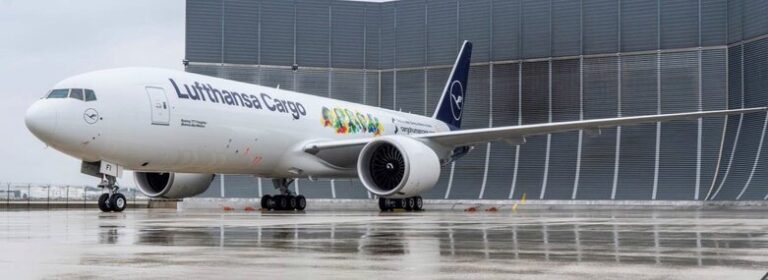
National Airlines’ Boeing 777-200F Aircraft (N791CA) during test flights. Image: National Airlines

The Boeing 777‑200F, one of the world’s most advanced and fuel‑efficient freighters, offers a payload capacity of over 102 tons and a range exceeding 9,000 kilometers. Its modern twin‑engine design and next‑generation avionics enhance precision, reliability, and sustainability on intercontinental routes, enabling National Airlines to meet growing global demand for fast, dependable air freight.

National Airlines Chairman, Christopher Alf, revealed: “We are excitedly waiting to see the Boeing 777-200 Freighter enter commercial operations, offering our customers an enhanced fleet option to support their evolving charter requirements. The induction of the B777-200 freighters marks a significant step in strengthening our global cargo network, enabling greater efficiency, reach, and operational flexibility. This milestone further reinforces our commitment to delivering world-class transportation solutions and consistently exceeding the expectations of our partners and customers worldwide.”

Latha Narayan appointed Chapman Freeborn’s President APAC

As it continues to invest in Asia Pacific as a key strategic region, and build up its global leadership, Avia Solutions Group’s air charter specialist, Chapman Freeborn announced last week, that it has appointed Latha Narayan to lead the region. As President APAC, effective 01APR26. Narayan will oversee strategic and commercial development in Asia Pacific, aiming to expand operations and harmonize the company’s cargo, passenger, and business aviation services.

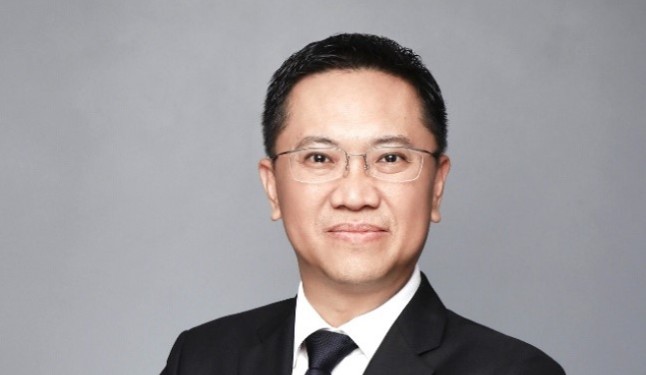
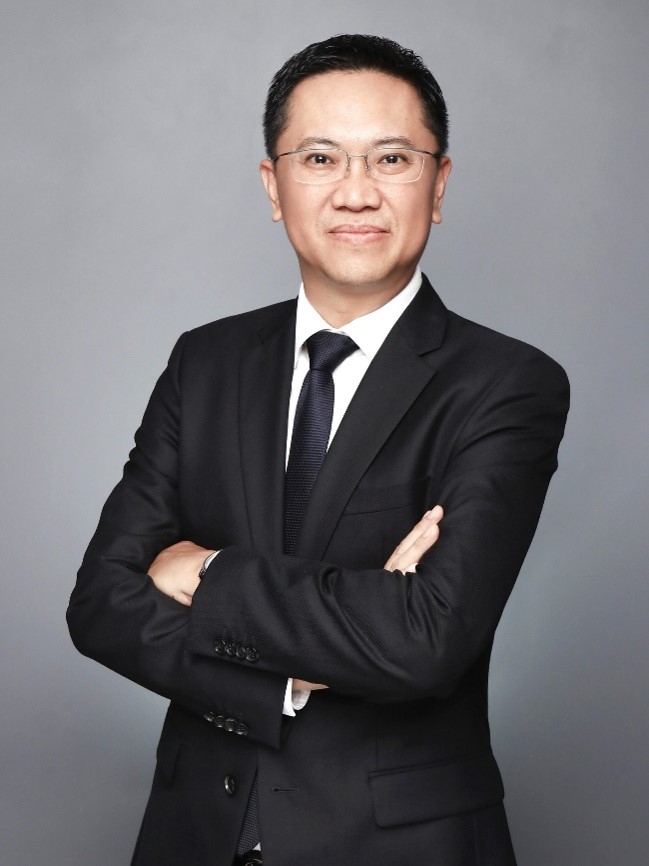
Latha Narayan is Chapman Freeborn’s new President APAC. Image: Chapman Freeborn

Narayan joined the aviation industry in 1990 – initially in airport operations and retail sales for British Airways. Since then, she has gleaned experience in all aspects of commercial air cargo management with a strong focus on Asia Pacific, throughout. After 19 years with British Airways, she held various senior management positions at Etihad for more than a decade, before acting as an independent air cargo and aviation consultant, more recently. Her skill set includes commercial strategy, revenue management, transformation programs, managing complex markets, strategic development, network optimization and digital transformation. “She is recognized for her strong commercial acumen and ability to deliver measurable business outcomes,” the release states.

Saska Gerasimova, Group CEO at Chapman Freeborn, explained: “Strengthening our leadership in Asia Pacific is a key priority as we continue to scale our global operations. Latha brings a unique combination of strategic insight and commercial expertise, along with a proven ability to lead transformation and deliver results across international markets. Her appointment positions us strongly for the next phase of growth in the region.”

Latha Narayan, President APAC at Chapman Freeborn, commented: “I am honored to step into this role and bring my experience to an organization recognized for its excellence, integrity, and leadership in aviation. In an industry evolving at an extraordinary pace, Chapman Freeborn’s legacy is built on the strength of its people, and I am truly excited to work alongside such a talented team. My focus will be on accelerating growth, deepening collaboration, and delivering best-in-class solutions across cargo, passenger, and business aviation in this next phase. I look forward to leading with purpose and impact, redefining what’s possible in this space.”

Royal Air Maroc Cargo enhances cool chain facilities

Royal Air Maroc Cargo is renovating and expanding its cold storage facilities at Casablanca Mohammed V International Airport (CAS), its main hub, after 13 years of operation. When the work is complete, the facility will have five temperature-controlled chambers – up from four – covering a total of 590 m² and split between three chambers for imports and two for exports. The chambers will offer a range of temperature zones to serve different cargo types: two chilled chambers (2°–8°C) for imports and exports measuring 240 m² and 140 m² respectively, two ambient-controlled chambers (15°–25°C) of 85 m² and 100 m², and one 25 m². frozen chamber for imports. This variety is aimed at meeting the needs of Morocco’s significant fresh produce and flower export trade, as well as growing pharmaceutical demand.

Royal Air Maroc Cargo meeting growing cool chain demand with enhanced facilities. Image: Royal Air Maroc

Beyond Casablanca, Royal Air Maroc Cargo maintains temperature-controlled storage across all six of Morocco’s commercial airports, Fès–Saïs Airport (FEZ), Oujda’s Angads Airport (OUD), Rabat–Salé Airport (RBA), Agadir–Al Massira Airport (AGA), and Marrakesh Menara Airport (RAK), providing end-to-end cold chain coverage nationwide. The airline’s Fresh Cargo product is specifically designed for perishable shipments, offering priority handling, specialist containers and temperature-controlled units to protect cargo quality throughout transit.

Rita Chraibi, VP Cargo at Royal Air Maroc, outlined: “Three key factors led to our substantial investment in upgrading the cold storage facilities at Casablanca Airport. Firstly, temperature-controlled facilities should be renovated at least every 15 years. Secondly, our strategic fleet expansion is already seeing a steady increase in volumes through our main hub, and thirdly, we are registering fast logistics growth in pharmaceuticals in Morocco and Africa due to improving healthcare infrastructures and rising demand – a trend which will continue for years to come.”

Hicham Kharbach, Head of Cargo Operations at Royal Air Maroc, added: “Our facilities were new when we moved into them in 2012, and have since successfully undergone many regular maintenance and system calibration checks. Yet, it is clear that Royal Air Maroc Cargo needs more and larger storage chambers to continue providing seamless, top-quality service as volumes grow. And as equipment and technology has developed since then, we stand to benefit from improved energy efficiency in our temperature-controlled warehouses, which will soon be alimented by solar energy.”

TCE’s Total Cargo Management alleviates airline workload

TCE’s Total Cargo Management (TCM) service offers airlines an intelligent extension of its workforce as and when required. Headquartered at Frankfurt/Main Airport, TCE’s certified team provides 24/7 operational and commercial cargo management support across over 230 airports, handling more than 150,000 tons of freight annually. Its experts cover all aspects of air cargo – from sales and supervision to audits, customs, and specialized commodities such as lithium batteries, pharmaceuticals, and high-value goods. TCM alleviates an airline’s workload by offering comprehensive support and solutions tailored to the carrier’s specific needs. The TCE team works alongside the airline’s organization, taking care of coordination, transparency, and continuous performance improvement on its behalf, where needed – be it in sales and market development all the way through to customs and final delivery. TCE staff are highly trained in compliance, safety, and quality, and serve to improve efficiency and commercial success for their airline partners. They have access to digitally enhanced tracking, monitoring and reporting processes, enabling them to proactively prevent incidents by reacting in real time. According to Managing Director Sarah Scheibe, TCE continues to develop its TCM offering by integrating digital visibility tools with structured supervision. While technology strengthens commercial decision‑making and predictive risk detection, she emphasizes that human expertise remains a cornerstone of operational reliability worldwide.

TCE means Total Cargo Management (TCM). Image: TCE

Sarah Scheibe, Managing Director of TCE, detailed: “At TCE, Total Cargo Management means ensuring intelligent sales decisions and active, end-to-end operational control from shipment acceptance to delivery. We liaise very closely with each airline to establish its standards and then adopt its business strategy and take on the responsibility for its cargo operations where required, bringing in greater efficiency and a more effective use of available resources. For example: we took on full customs reporting for one of our airline partners. Within the first year of implementation, providing ongoing 24/7 supervision and monitoring, TCE reduced the airline’s customs-related non-compliances by more than 95%.”

Most incidents begin during acceptance, build-up or ramp transfer rather than in flight. Errors typically originate from documentation gaps, segregation failures or time-pressure handling decisions. If supervision is weak, then routine processes such as ULD build quality, ramp exposure time, and segregation discipline, pose the highest risks. Therefore, on-site supervision is essential as we can arrange immediate correction before errors reach the aircraft. We recently handled the shipment of a rare one-of-one vintage vehicle from Frankfurt, a highly unique and sensitive piece of cargo. With our operations coordinators supervising on-site, the entire process was executed smoothly and without deviation.”

Quito Group strengthens financing for strategic development

Quito Group has refinanced its EUR 250 million debt and secured a new EUR 70 million investment facility through a financing agreement with Apollo, reinforcing its financial base and enabling faster global growth. The move strengthens investor confidence in Quito’s integrated business model and long-term strategy.

The Group brings together leading entities across the air cargo value chain, including ECS Group, Global GSA Group, CargoTech, TCE, Mail & More, Healthc’Air, and Squair. Together, they form a unique ecosystem combining global airline representation, digital innovation, operational management, and specialized cargo services. This structure offers airlines and logistics partners an end-to-end platform that unites commercial execution with technology-driven efficiency.

The new EUR 70 million investment facility will fund strategic expansions such as digitalization projects, infrastructure development, and enhanced logistics capabilities tailored to shifting market needs. A key initiative is the rollout of Aerion, Quito’s new commercial holding designed to integrate sales, technology, data analytics, and strategic consulting. Aerion redefines cargo representation by offering airlines a unified, performance-oriented partnership model.

With a stronger balance sheet and expanded investment capacity, Quito is entering a new phase focused on growing its ecosystem, accelerating innovation, and reinforcing support for global supply chains. The company aims to consolidate its role as a leading global cargo platform driving sustainable industry development.

Adrien Thominet, Chairman of Quito Group, concluded: “By reinforcing our financial base, we are giving Quito the means to accelerate the projects that will shape the next stage of our development. Our ambition is to continue strengthening the ecosystem we have built, combining commercial reach, technological innovation and operational expertise to support airlines and logistics partners worldwide.”

Riege consolidates

0

Riege Software International, a leading provider of digital logistics solutions, has acquired a majority stake in its Dutch subsidiary, Riege Netherlands. Until now, the German parent company held less than half of the shares, but after becoming majority owner, it plans to increase its ownership to 100% in a subsequent step, before the end of 2026.

Riege Software’s Dutch team – company courtesy

This move will have no direct impact on the company’s customers, says Riege CEO, Christian Riege. For market participants, virtually nothing will change in the SaaS provider’s service package. What is to be optimized, however, is better connectivity among users of Scope, the cloud-based software developed by Riege for air freight, ocean freight, and customs. “Our Dutch offices in Rotterdam and Bodegraven serve around 250 customers in the Benelux countries. These are primarily small and medium-sized enterprises (SMEs) that use our software solution Scope, but tend to do so in silo manner, without networking with one another to address comparable practical processes in transport logistics or customs matters,” the executive explains.

“Inside Scope” meeting in Rotterdam
To advance these processes, a conference for customers and interested market participants will take place in Rotterdam from 9–10JUN26, where experts and panelists will put the focus on collaboration and process optimization (for more information, see here).

According to Riege’s CEO, the Dutch subsidiary has developed into a successful and stable company since its inception. Co-Founder and former Managing Director, Henk Boorsma reflects on this: “What began 15 years ago as a joint project, has grown far beyond our expectations. Today, we serve more than 250 clients with thousands of users – small and large freight forwarders, in air and sea freight, as well as in customs.”

Co-Founder, Martin Bos sees the transformation as a logical next step: “After decades in which we have played a decisive role in shaping the industry through automation, the time is now ripe to pass the baton to the next generation.”

New leadership
Both managers will support the company during the transition phase and remain available if needed.

They will be succeeded by Matanja van der Wart, previously Operations Manager, who has been appointed the new head of Riege Netherlands. Her goal is to further expand the business in the region, deepen customer relationships, and drive strategic development in the Benelux market. “We have established a strong foundation here in the Benelux region, which I can build upon together with our team, our customers, and our parent company,” she states. This is confirmed by CEO, Christian Riege, who highlights Ms. van der Wart’s forward-driving initiatives that have played a major role in the Dutch branch’s upturn: “Matanja has contributed significantly to our success in the Netherlands. Together with our experienced team of ten local employees, she will shape the next phase for Riege Software in the Benelux region.” And Benjamin Riege, Chief Marketing Officer, adds to this: “In total, we have over 16,000 users, about a third of whom are from the Netherlands.”

Eastern Europe is the next area of growth
At the same time, Riege Software is also banking on increased growth in Eastern Europe. Its ‘partner’ is the European Commission that requires enterprises doing business in the 27 member states, as well as customs authorities and other agencies, to introduce electronic invoicing and digital reporting between 2026 and 2028. This way, structured data is transmitted in real-time, simplifying VAT and reducing fraud. Christian Riege comments: “For some time, we keep receiving inquiries from Eastern European players, specifically Poland, to develop electronic solutions for e-invoicing.” This topic is also part of Riege’s Rotterdam agenda.

Spotlight on… Kendy Choi, Founder, NEMplus

0

Each week, CargoForwarder Global’s ‘Spotlight On…’ picks out a specific segment of the air cargo industry, passing the mic to someone working there, to illustrate their function. In such a fragmented industry where so many different aspects need to seamlessly interact to ensure the smooth and safe transport of all kinds of commodities, it can be challenging to maintain an overview or completely understand another stakeholder’s requirements when working on improving process efficiency or designing new logistics solutions. That is where neutral input from outside can help. Bringing in independent consultants who have a solid understanding of process flows, industry developments, and change management, can facilitate process design and implementation. One such expert is this week’s Spotlight: Kendy Choi, Founder of NEMplus, explains her role, and shares views and advice on how to carve out a career in the air cargo industry.

A good logistician finds creative solutions, adapts to constantly changing situations, and brings structure to complexity. Image: Kendy Choi

CFG: What is your current function and company? And what are your responsibilities?

KC: I am the founder of NEMplus, where I work with airlines, airports, ground handling agents and logistics players on commercial growth and performance.

On one side, I originate and structure cargo flow, connecting capacity with demand and bringing the right partners together to create new business.

On the other, I focus on how those flows actually perform. That means looking at how commercial strategy, operations, and digital capabilities come together in practice.

What shapes my approach is my experience working close to the operational core of e-commerce. That’s where you really see the pressure on speed, execution, and data.

What became clear to me early on is that this doesn’t have to stay within e-commerce and in fact becomes a blueprint. The same principles (real-time visibility, tighter control, faster execution) are just as relevant in areas like pharma logistics, where reliability and transparency are critical.

A key focus of my work is helping organizations translate that into their own reality in a way that actually improves both performance and customer experience.

CFG: What does a normal day look like for you?

KC: A truly ‘normal’ day in logistics would be quite boring and wouldn’t really unlock what defines a good logistician: the ability to find creative solutions, adapt to constantly changing situations, and bring structure to complexity.

In practice, my days are shaped by working closely with stakeholders, understanding what they are trying to achieve, where things get stuck, and what would actually make a difference, whether commercially, operationally, or digitally. That can range from an airline looking for the right partner to launch a charter program, to a ground handling agent looking to attract e-commerce flows, or an airport exploring how digital innovation can strengthen its ecosystem.

What I appreciate in my work today is that I’m working directly with decision-makers. When there is alignment from the start, things move faster.

At the same time, I stay very close to execution. Because what I’ve learned over time is that something can make perfect sense in a meeting, but behave very differently once it hits operations and reality adds its own set of conditions.

That perspective comes from my earlier roles as a cargo airliner, and later moving closer to ground handling in a high-volume e-commerce environment.

You see very quickly how small misalignments translate into delays, costs, or missed opportunities.

CFG: How long have you been in the air cargo industry, and what brought you to it?

KC: You think you give air cargo a shot, with no expectations… and suddenly you’re 19 years in.

I grew up around aviation, as we had a travel agency in the family, but I had no connection to cargo whatsoever. That changed when I joined EVA Air. I started in an administrative role, but quickly moved into the cargo department – and that’s where it clicked. The pace, the urgency, the art of meticulous planning under pressure… what a kick!

I still remember early in my airline career, a forwarder once told me: “beggars can’t be choosers”. And at the time, that was the reality. Airlines and forwarders were competing for freight, and competing often meant winning on price.

Around 2019, a question that had been there for a while became impossible to ignore: what exactly is e-commerce, and how do we position ourselves around it? Many discussions were held, but few clear answers were given. For me, the only way to understand it was to experience it firsthand. That led me to join Alibaba’s Cainiao network in 2020, as part of the inaugural team building the eHub in Liège.

That environment introduced a very different way of thinking: a shipper-driven mentality, where speed, data, and end-to-end control define how logistics is designed and executed. And that’s where I saw the shift very clearly.

Because when you invest, not only in price, but in everything that builds trust with your customer, you are no longer just competing for freight. You become the one that gets chosen.

And in that sense, the “beggar” doesn’t stay a beggar. You can position yourself to become the chosen.

That evolution, from competing on price to being chosen on value, is what has defined my journey in this industry.

CFG: What do you enjoy most about your job?

KC: What I enjoy most now is the perspective. Running my own consultancy means I’m no longer looking at the industry from one angle, I’m constantly moving between different perspectives across the ecosystem. You start to see patterns, connect the dots, and understand how things really move beneath the surface.

The real energy, however, comes from working directly with decision-makers.

When there is alignment from the start, things just click. Conversations are sharper, decisions are faster, and you can actually move!

The ability to go from idea to execution without layers slowing it down, is something I really enjoy.

And yes, part of it was also about taking back control over my own agenda. Being able to decide what deserves my time and energy (and just as importantly, what doesn’t), has been a game changer for me. It allows me to focus on what truly matters, and to work in a way that feels intentional, and where I know I can make a real difference.

CFG: Where do you see the greatest challenges in our industry?

KC: The industry’s reluctance to fully engage with (= invest in) digital solutions. There are more tools, platforms, and providers than ever before, yet we are still operating in silos, with limited data sharing. And that’s not only between stakeholders. You also see it between solution providers themselves.

Even when services of two solution providers are complementary, there is still hesitation to share data, or it comes at a disproportionate cost with long lead times to get it done.

What holds the industry back is not the technology, but mindset.

The hesitation to invest, to change, or to take the lead is often driven by internal structures, risk aversion, or simply because the current way of working is still “accepted”.

At the same time, we see a very different dynamic in other parts of the world.

In China, for example, the customer is really king and its continuous demanding and pressing expectation level is, if not, the primary driver to force any customer serving industry to evolve much faster. That pressure has accelerated innovation in a way that is difficult to replicate without that same urgency.

In Europe, we are more cautious. We tend to observe, evaluate, and wait. But the risk of that approach is that you end up reacting to change, rather than shaping it. And once that gap becomes visible, it’s much harder to close.

CFG: What advice would you give to people looking to get into the air cargo industry?

KC: A logistics degree or relevant courses can get you into the industry.

If you want something more specific, certifications like IATA cargo training give a good foundation. But if you really want to give it a proper shot and grow in it, finding the right mentor can make all the difference.

In this industry, the people you learn from shape how you think and how you operate. The difference between someone who just tells you what to do and someone who takes the time to explain, challenge you, and share experience, is huge. So be intentional about that. Get close to people who inspire you, ask questions, and stay open.

As Alvin Toffler put it, “the illiterate of the twenty-first century will not be those who cannot read and write, but those who cannot learn, unlearn, and relearn”.

At the same time, don’t avoid the operational side.

Take on the less attractive tasks. Deal with complaints. Understand where they come from. That’s where you start to see what is really not working and where you can actually influence the outcome.

And don’t rely on just one perspective. What you hear from a desk is often very different from what’s happening on the shop floor.

CFG: If the air cargo industry were a film/book, what would its title be?

KC: ‘No Country for Old Processes’ [Smiles] It’s not the strongest that survive, but the ones willing to change!

Many thanks, Kendy!

ANA restructures its cargo business

0

Parent company, ANA Holdings has merged its separate freight units: Nippon Cargo Airlines (NCA), NCA Japan (NCAJ), and ANA Cargo (ACX), consolidating them as single entity to enhance ANA Group’s air cargo capabilities. The decision became effective on 01APR26, with Nippon Cargo Airlines continuing as the operating arm, thus maintaining its Air Transport Business License and Air Operator Certificate.

Operator ANA Cargo combines the specialized cargo expertise of NCA and NCAJ. Courtesy: ANA Cargo

The reorganization will speed up the integration of the different units, standardize international sales structures, and consolidate the warehouse operations of All Nippon Airways, and Nippon Cargo Airlines, stresses a release published by the Holding company. The key reason of the move is to strengthen the competitiveness of ANA Group’s cargo business, by combining the expertise of ACX as a combination carrier with the specialized cargo expertise of NCA and NCAJ as dedicated freighter operators. By further enhancing the synergy between its passenger flight network and freighter operations, the group will provide end-to-end solutions – integrating everything from sales to flight operations and cargo handling. This will allow the group to be more agile and responsive to customer needs and the rapidly changing market conditions, ultimately delivering even greater convenience and value to its customers, the announcement emphasizes.

Joint sales platform
Since the NCA Group joined the ANA Group in AUG25, both players have expanded collaboration through shared cargo capacity and codesharing, particularly across North America and Europe. This next phase of integration will enable greater efficiency and a more seamless customer experience, predicts the Holding company. The most significant novelty is that ANA and NCA will establish a joint sales platform in each market. Through these new platforms, freight forwarders will have access to both ANA’s and NCA’s flight capacities.

At the same time, both airlines will continue to operate their flights separately in their respective markets. Regarding the issuance of air waybills, the statement notes somewhat cryptically that this matter will depend on current operating conditions and applicable regulations.

On way to becoming Asia’s leading combi carrier
Thanks to unified sales structures outside the Japanese home market, customers will have a single point of contact across the entire network, regardless of the airline operating under the ANA roof. Furthermore, warehouse operations in Japan will be consolidated, and cargo handling outside Japan will be optimized.

ANA Holdings positions cargo as a core driver of long-term growth. The reorganization supports the group’s goal of achieving 30 billion yen (equivalent to more than 160 million euros) in integration and synergy effects outlined in its ‘ANA Group Medium-Term Corporate Strategy’. By combining NCA’s dedicated freighter network with ANA’s international passenger network, the group aims to become Asia’s leading combination carrier while delivering greater flexibility, reliability and value to customers.

Route JVs still remain dormant
When asked whether the restructuring of the cargo business would affect the route joint venture signed between Lufthansa Cargo and ANA Cargo, a Lufthansa Cargo spokesperson said that this was not the case. The agreement remains in place but continues to be suspended, with no firm date set yet for its resumption. This marketing and capacity agreement, signed in 2014, was put on hold following the merger plans between ANA and its competitor, NCA.

ANA Cargo and United Cargo entered into a similar agreement, which also remains inactive for the time being.

Happy 100th Birthday, United Airlines!

There are celebrations happening in every United Airlines office around the globe, today, 06APR26. Why? Because today is the day that the first ever flight took place, 100 years ago, of an enterprise that would soon develop into one of the world’s largest airlines – and a household name, recognized by travelers and freight forwarders, alike.

A flash livery to mark the occasion and UA’s literally biggest fan, Ernestine, in party mood. Images: United Airlines

The story began, 100 years ago, with a brief flight operated by a Laird Swallow open cockpit biplane carrying just under 100 kgs of mail (CFG reported). It took off from Pasco (WA) to Elko (NV) on that 06APR in 1926, initially under the name of Varney Air Lines, which was then renamed United Airlines in 1931. Over the following decades, the airline transformed from a tiny biplane fleet delivering airmail logistics, to a 1,100-strong fleet of varied jet engine/long-distance aircraft, that now serves a network of over 350 destinations all across the world. Today, passengers fill the main decks, and cargo is carried in the lower deck holds. Around 113,200 international employees ensure that schedules are adhered to, passengers are happy, and shipments reach their destinations safely and as planned. Among United’s current staff is even a descendant family member of the pilot, Leon Dewey ‘Lee’ Cuddeback, who flew that first ever flight, 100 years ago. And while that inaugural flight carried just airmail, United Airline’s 4000+ daily flights now transport all kinds of commodities, be they general cargo, pharmaceuticals, perishables, time-critical shipments, or high-value goods.

Innovative and pioneering
Paper and manual processes have given way to increasingly intelligent digital operations, which have – in turn – enhanced United’s performance in terms of punctuality, efficiency, and shipment visibility,” the airline’s press release states, going on to list ways in which United Airlines has shaped air travel and transport as we know it today: “from introducing the first flight attendants in 1930, and setting the template for modern cabin service, to being the first carrier to offer non-stop transcontinental flights without overnight stops, using a Boeing 247, to installing the first onboard flight kitchens and hot-meal services, for example. United was the first global airline to commit to net-zero greenhouse gas emissions by 2050 and is the U.S.’ largest purchaser and user of SAF. Its digital app is one of the most downloaded airline apps in the world and is often cited as a leading example of successful customer service technology. [Also] giving back to the community has been a strong focus since the beginning. In addition to environmental sustainability, the airline supports disaster relief flights, conservation projects, charities and volunteer programs such as United We Care.”

United Airlines’ biggest fan joins in celebration
Reasons enough to celebrate, therefore – which United’s teams are all doing in their own special way at airports and branch offices around the world, as they honor that first flight and reflect on their own company highlights over the past years.

And United Airlines’ biggest fan is in on the party, too. You could be forgiven for thinking that this refers to its recent VIP passenger, Hennifer (CFG reported), but while she is also no doubt toasting the airline on its centennial, the fan in question is, in fact, a completely different bird. Actually, not a bird at all, but a fiberglass Brachiosaurus replica who goes by the name of Ernestine, or Ernie for short. She found a new home in Chicago O’Hare International Airport’s Terminal 1, in 1999, after being evicted from Chicago’s Field Museum to make way for T-Rex Sue, at the time. (United Airlines’ main headquarters are in Chicago.) Since then, she has often been an active supporter of Chicago’s sports team, be it the Blackhawks, Cubs, Bears or Bulls and can be spotted wearing their jerseys. Ernie has added her own sparkle to United Airlines’ centennial celebrations, this time, all decked out in a tailored, one-off 100 Years’ Livery Look jersey – creating a very special photo opportunity for anyone passing through the terminal.

Today, United Airlines salutes and thanks its staff, its partners, and its customers, as it celebrates 100 years of success and embarks on the next 100 years,” the special press release commemorating the airline’s impressive anniversary, concludes.

EXCLUSIVE – Air cargo meets science at Amsterdam

0

Air Cargo Netherlands (ACN) has launched its Air Cargo Innovation Lab (ACIL), in partnership with the University of Amsterdam’s Startup Village. This initiative is intended to serve as a platform for innovation and process improvement within the air cargo sector.

ACL Chief Maarten van As pushes the button – the Air Cargo Innovation Lab is launched – courtesy ACIL

ACN, which owns the Smart Cargo Mainport Program (SCMP), has already been involved in digitization and supply chain collaboration for several years. With the addition of ACIL, a dedicated space for experimentation and development is now available, according to SCMP’s Program Manager, Fabian Haijenga (FH), and Startup Village Amsterdam’s Managing Director, Femmie Geradts (FG).

Short-Term Solutions and Long-Term Innovation
“The solutions we have been building and developing, have to be implemented in the community and checked on their workability. This is, however, all in the short term – working on problems that actually occur, but in the longer term, we also have to innovate and look forward,” says Mr Haijenga.

Innovation by young talent
“And that is where we step in,” Ms. Geradts adds. “We are part of the University of Amsterdam, and we bring in university-based knowledge and the input of start-ups. That is the driver for our collaboration. At Startup Village Amsterdam, we focus mainly on AI and Quantum, but we are not tied to a specific (industry) string. We have start-ups in Healthcare, Logistics, as well as local city administration, market research, etc.”

“The ultimate aim is to marry innovation by young talent to problem definition. This specific problem definition is provided by ACN, because they know this better than we do.”

Current Themes and Areas of Focus

Fabian Haijenga, Program Manager SCMP  – credit: ACIL courtesy

CFG: ACIL was launched some two weeks ago. Could you name some ideas that are gaining traction at the moment?

FH: “Certainly. In the meantime, some issues have already been identified. One is Expected Time of Arrival (ETA)/Geofencing. There is extensive planning required and it is necessary to know what goods are in transit. While incoming shipments via Road Feeder Services (RFS) are tracked, situations like traffic jams require the ability to anticipate and, where possible, take preventive action.

Another focus area is cargo dimensions. Although it may seem trivial, accurately knowing what is arriving is essential. This involves both data collection and measurement capabilities. Environmental responsibility is also a key consideration.

HR and labor are also in scope, with themes including robotization, staff flexibility, and the impact of implementations on the wider community. Stakeholder engagement is crucial, as the community comprises of different target groups – some are front runners, while others are smaller parties.”

FG: “Over the next three months, work will focus on these five themes, with students and start-ups invited to participate. Presenting the problems to specialists, the aim is to create a road map for the current situation and explore whether additional solutions can be introduced. The needs must originate with the market to ensure the right people are brought in.”

Femmie Geradts, Managing Director Startup Village Amsterdam  – ACIL courtesy

Challenge-Based Learning
Mr. Haijenga highlights the importance of involving a diverse group of stakeholders in the process. “We like to adopt the 80/20 rule, with the top 20 taking the lead and the opportunity to join for those who wish to do to. We need a good group of people who can clearly define what the problems are.”

“To students and start-ups, it will be a form of challenge-based learning, and cross-fertilization between the different parties. It is not a question of fundamental research, but exposing applicability,” Ms. Geradts adds.

Drawing inspiration from other industries
Although Startup Village Amsterdam does not have specific experience in the air cargo sector, there are parallels with industries such as Defense, particularly regarding security. Ms. Geradts notes that start-ups from other fields may also offer valuable inspiration.

A Measured Approach and Future Outlook
After the initial three-month set-up period, ACIL aims to share more concrete outcomes by the end of the year. “We take a measured approach, because the last thing you want is to put something down with which the community does not feel any connection at all,” Femmie Geradts concludes.