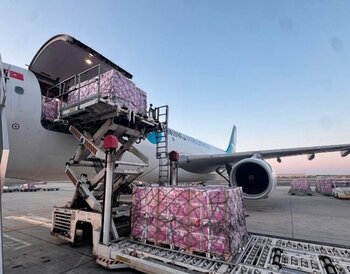
FIEGE has assigned the new business with Nø Cosmetics to its Emmerich facility, where the contract logistics expert operates two multi-user centers with a total of 64,000 square meters of logistics space – Photo: credit FIEGE
FIEGE has become the new logistics partner of German skincare brand Nø Cosmetics, taking over B2B and B2C fulfillment for the fast-growing beauty company. Since spring 2026, the contract logistics provider has been handling warehousing, value-added services, packaging, and nationwide distribution from its multi-user logistics campus in Emmerich.
The partnership supports Nø Cosmetics’ continued growth as demand for its vegan and cruelty-free skincare products increases. In addition to fulfillment for the company’s online shop and retail business, FIEGE also assisted with the launch of Nø Cosmetics’ TikTok Shop through its digital commerce subsidiary heyconnect.
According to FIEGE, its expertise in the FMCG and beauty sectors, combined with the flexible multi-user setup at its Emmerich facility, will enable it to efficiently manage seasonal demand fluctuations while supporting the brand’s future expansion plans.
Caroline Kroll, CEO and co-founder of Nø Cosmetics, explains: “Demand for innovative, high-quality, and affordable skincare is growing rapidly, which is why our skincare brand has experienced strong growth in recent years. As a logical next step, we reviewed our existing fulfillment structures and sought a logistics service provider with extensive expertise in the FMCG industry and, in particular, the beauty segment. We’re pleased to have FIEGE as a reliable partner at our side who can flexibly support our scaling plans.”
David Bothe, Managing Director of FIEGE’s Consumer Goods business unit, notes: “As an international logistics service provider with decades of experience in the FMCG industry, we have a deep understanding of the specific requirements of the beauty sector. A high degree of flexibility is essential to reliably handle B2B and B2C fulfillment and to respond quickly and successfully to seasonal fluctuations. With our well-coordinated team, the multi-user structure of our facility in Emmerich, and our customized transportation solutions, we can ensure the necessary adaptability at all times. We are grateful that Nø Cosmetics has placed its trust in us—and we look forward to working together.”
Christian Riege, the company’s former CTO, is taking over the leadership of the logistics software provider from his brother Tobias Riege. In his new role as CEO, his primary goal is to expand the Scope community and further develop the software from a transport management system into a network. Riege Software remains a family-owned business: Five second-generation siblings jointly lead the company, which was founded four decades ago.
Christian Riege takes the helm at Riege Software – photo: CFG/hs
Christian Riege has been in charge of Scope since its initial release in 2006 and, in close collaboration with his father Johannes and brother Tobias, has built up Riege’s software product from day one. Today, more than 750 companies in 52 countries use the cloud-based transport management system for air freight, ocean freight, and customs.
Creating communicate networks As Riege Software’s new CEO, he aims to further develop Scope beyond its current functionality by broadening its use. His focus is on better connecting the Scope community, something that previously happened mainly at industry gatherings. Instead, Riege Software is now moving onto a digital platform where freight forwarders working with Scope can directly exchange data and business information. Provided both partners agree, this should be possible with just one click. “We are currently working on this system expansion. So far, the process has been handled through us, and the technical configuration of the process took about two weeks – which is time-consuming and labor-intensive. Thanks to this planned innovation, the system – which is currently based on bilateral relationships – will evolve into a network, and we will lay the foundation for a global logistics community.”
CEO Christian Riege emphasizes that this does not represent a break with Riege Software’s previous approach, as the family continues to make fundamental business decisions collectively, as before.
A new role for the outgoing CEO Going forward, outgoing CEO Tobias Riege will take responsibility for the company-wide data strategy. His focus is on making data reliably available and increasing its value for customers, employees, and the company. “In logistics, many decisions are still made on experience and gut feeling. That has taken us a long way, but for global trade of this complexity it is no longer enough. We have the data to finally put these decisions on a solid footing,” states Dr. Tobias Riege.
Riege Software is led by five siblings. Alongside Christian as CEO and Tobias as CDO, Benjamin Riege is responsible for marketing and sales, Anna Riege for people and culture, and Johannes Riege Jr. for finance and controlling.
From Procars to Scope The digital manager of transport systems was founded in 1985 by Johannes Riege. He combined his university-level programming skills with an understanding of the need for a software solution to standardize logistics processes, and created a cross-industry system called Procars (Professional Carriage System). As the logistics industry advanced, so did the demand for a digital solution in the form of a holistic transport management system combining state-of-the-art technology with the industry’s growing requirements. The result is Scope, a tool which automates processes, communicates with third-party providers and portals, and has evolved into a digital manager of supply chains from beginning to end.
Since early July, most European airports have been handling significantly fewer e-commerce shipments compared to the months before. The reason for this slowdown is the EU’s decision to abolish the duty-free threshold for small shipments under €150 from non-EU countries. Instead, Brussels is imposing a flat customs duty of €3 per product category.
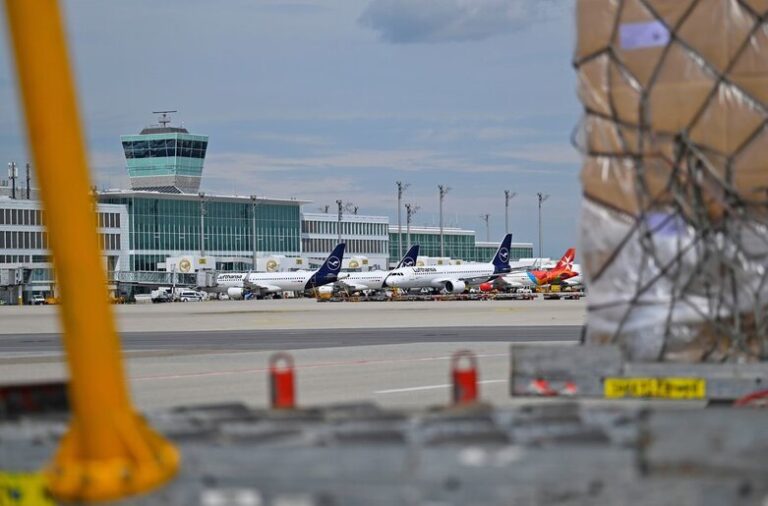
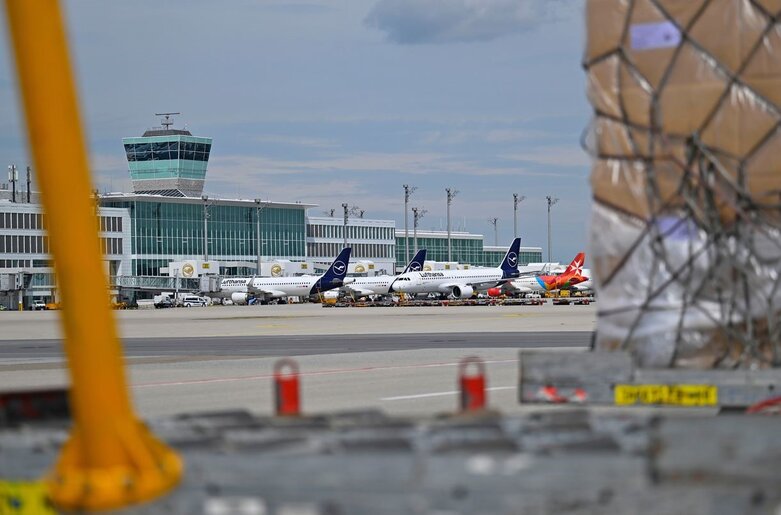
e-Commerce continues to perform well at MUC Airport, despite the new customs fees – image: courtesy of MUC
This is a transitional rule that will become mandatory in mid-2028. While most EU countries have implemented the €3 customs fee, other member states are hesitating, including several Eastern European countries; this discrepancy has already led to a shift in supply chains toward Romania and some of its neighboring states.
In 2025 alone, 5.9 billion low-value items in packages from third countries flooded the EU market without paying customs duties. Every day, more than 16 million packages are cleared by customs for consumers in the EU. The new regulation is intended to help ensure fair conditions for EU businesses and confident choices for consumers—in response to the surge of billions of low-value e-commerce goods entering the EU. Maros Šefčovič, EU Commissioner for Trade and Economic Security, explains the new customs rules as follows: “Open market, level playing field. The EU e-commerce market remains open—but this must not come at the expense of European consumers and businesses. Goods imported into the Union should meet the same standards of compliance and traceability as goods sold in our single market. Platforms and sellers that profit from European consumers must adhere to the same rules as European companies.”
… only to a minor extent When asked how the new customs regulations have affected the handling of small shipments at Munich Airport since 01JUL2026, Head of Cargo Markus Heinelt offered an initial assessment: “Munich Airport’s existing e-commerce business has also been affected by this contraction, though only to a minor extent compared to other eCom hubs. Since the beginning of July, we’ve seen a 3.9% decrease in tonnage on the main routes from Asia, which is primarily attributable to e-commerce.” The executive went on to say: “However, our share of exports to Asia rose by just under 10.8% during this period, bringing the total tonnage on our direct flights to and from Asia in July to a 2.1% increase. The figures indicate a more balanced trade flow between China and central Europe whereas the imbalance was significantly greater just a few months ago. The coming months will show whether this trend will continue.
Looking ahead, he believes that the current dip in imports of small shipments into the EU will level off again after a transitional and stabilization phase, and that the flow of small parcels will pick up once more.
At the same time, Heinelt points out that the cargo business in Munich is broadly diversified and that e-commerce represents only one of several pillars. “With approximately 386 weekly long-haul flights to around 51 destinations worldwide, we recorded an overall tonnage increase of just under 4.7% in July. Cumulatively from January to date, we are up by approximately 4.5%,” he concludes.
Hub of belly cargo Provided, the global economic situation remains moderately stable, MUC Cargo expects further growth in tonnage over the coming months driven by the extraordinarily strong cargo catchment area that stretches from the southern parts of Germany across Austria, the Czech Republic, the Balkan countries through northern Italy. Heinelt points out that in the months ahead, the number of long-haul passenger flights will increase, which will lead to additional lower deck capacity on offer to the market and cement MUC’s role as hub for belly cargo. With the start of the winter schedule at the end of October, Lufthansa will increase its long-haul services to Mexico, Johannesburg, and São Paulo by adding two weekly frequenciesto each of these routes. Simultaneously, Singapore Airlines and Thai Airways are increasing their service from daily to 10 flights per week to and from MUC.
Heinelt points out that the airport expects another Asian carrier to serve MUC including additional freighter services, but does not reveal any names yet.
LH and MUC benefit from long-term commitment Munich Airport has recently signed a memorandum of understanding (MOU) with Lufthansa aimed at mutual growth, including plans for a terminal expansion through 2035. A key factor will be the expansion of Lufthansa’s long-haul fleet in Munich. The agreement lays the strategic groundwork for further growth in air traffic, benefitting passengers and cargo clients alike.
“The partnership with Lufthansa enables us to significantly strengthen and expand the international hub. It is a milestone in the development of the airport hub,”, states Jost Lammers, CEO of Munich Airport. Market observers believe that in addition to enhanced passenger services, the Munich-Lufthansa pact will have a positive impact on medium- and long-term cargo growth. Markus Heinelt takes a similar view: “With our current innovation projects, such as Apron AI and autonomous freight transport, we aim to ensure that we remain the ‘gateway to growth’ with the fastest cargo processes among European cargo hubs.”
Despite many claims to the contrary, air cargo has never lacked innovation. Over the past decade, the industry has introduced digital booking platforms, eAWBs, real-time visibility tools, predictive analytics, API connectivity, Artificial Intelligence, and, most recently, IATA’s ONE Record standard. Almost every major conference features discussions about the next technological breakthrough, while airlines, freight forwarders, and technology providers continue to invest heavily in digital transformation. However, the challenge is no longer innovation – it is adoption.
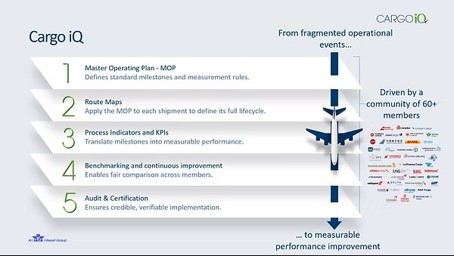
Illustration: Courtesy of Cargo iQ
Developing new technologies is only the first step. Their real value is unlocked only when thousands of organizations across the global supply chain adopt common standards, exchange data consistently, and integrate new processes into daily operations.
That is precisely why Cargo iQ’s latest Board restructuring deserves attention.
At first glance, the election of three new Board members and the re-election of four existing members appears to be routine governance. However, it reflects a much broader shift taking place across the industry. Cargo iQ is increasingly positioning itself not only as a developer of quality standards, but as an organization focused on driving their implementation across the global air cargo community.
From developing standards to driving adoption For many years, Cargo iQ has been synonymous with shipment quality management. Its operational milestones and performance measurements have helped airlines, freight forwarders, and ground handlers monitor service quality using a common framework. Today, more than 80 members, including airlines, airports, handlers, freight forwarders, and technology providers, use Cargo iQ standards to improve operational consistency across international supply chains.
Yet the organization’s priorities are evolving.
Rather than concentrating solely on developing new standards, Cargo iQ is now placing increasing emphasis on implementation. The rollout of its Tiers Implementation System gives members a structured pathway towards adopting Cargo iQ processes, while a new data-driven audit program measures how consistently those standards are being applied across participating organizations.
It is a subtle but important shift as standards only create value when they become operational reality.
Digital transformation requires common rules The same pattern can be seen across almost every major digital initiative in air cargo. Whether discussing ONE Record, AI-supported decision-making, API connectivity, or end-to-end shipment visibility, the underlying requirement remains remarkably similar: everyone must speak the same digital language.
Technology alone cannot solve fragmentation.
An AI application is only as reliable as the operational data it receives. ONE Record only delivers its full potential if airlines, freight forwarders, and technology providers exchange information using the same data model. Visibility platforms can only provide end-to-end transparency when every participant contributes standardized data.
The industry’s biggest obstacle is therefore no longer technical capability. It is collective implementation.
Collaboration is becoming operational infrastructure This reality is also changing how organizations collaborate. Historically, many digital initiatives were driven by individual companies seeking competitive advantage through proprietary technology. Today, competitive differentiation increasingly depends on how effectively businesses integrate into shared digital ecosystems.
This shift makes industry organizations such as Cargo iQ increasingly relevant.
Its current priorities illustrate this evolution: while expanding the adoption of its quality standards, the organization is at the same time working on supporting API-driven processes, promoting the integration of ONE Record, improving station route maps, and strengthening standards for road feeder services. Each initiative addresses a different operational challenge, yet all share a common objective: creating greater consistency across the air cargo supply chain.
The newly structured Board reflects that ambition.
With broader representation from airlines, freight forwarders, and ground handling companies, strategic priorities can be developed from the perspective of the entire logistics chain rather than a single stakeholder group. In an industry where shipment quality depends on every handover, this kind of balanced representation becomes increasingly important.
Adoption will define the next phase of digitalization Air cargo has reached an interesting point in its digital transformation. Most of the technologies needed to build a more connected, transparent and efficient industry already exist. The focus is gradually shifting away from inventing new solutions toward embedding existing ones into everyday operations.
This transition may ultimately prove more challenging than innovation itself.
Implementing common standards across thousands of organizations, legacy systems, and regional operating environments requires investment, trust, and long-term collaboration. Progress is often measured in incremental improvements rather than headline-grabbing announcements.
Yet those incremental steps are exactly what determines whether digital transformation succeeds. Cargo iQ’s latest Board elections may appear to be an internal organizational development, but they highlight one of the defining challenges facing air cargo today.
The future of the industry will not be determined by who develops the next digital solution. It will be determined by how quickly the industry adopts the ones it already has.
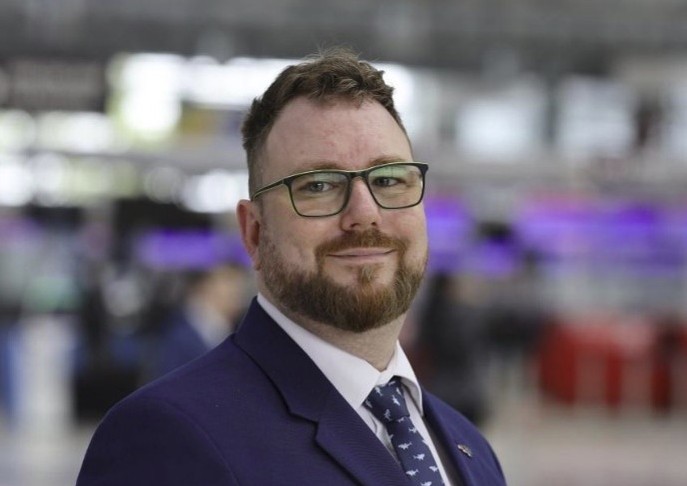
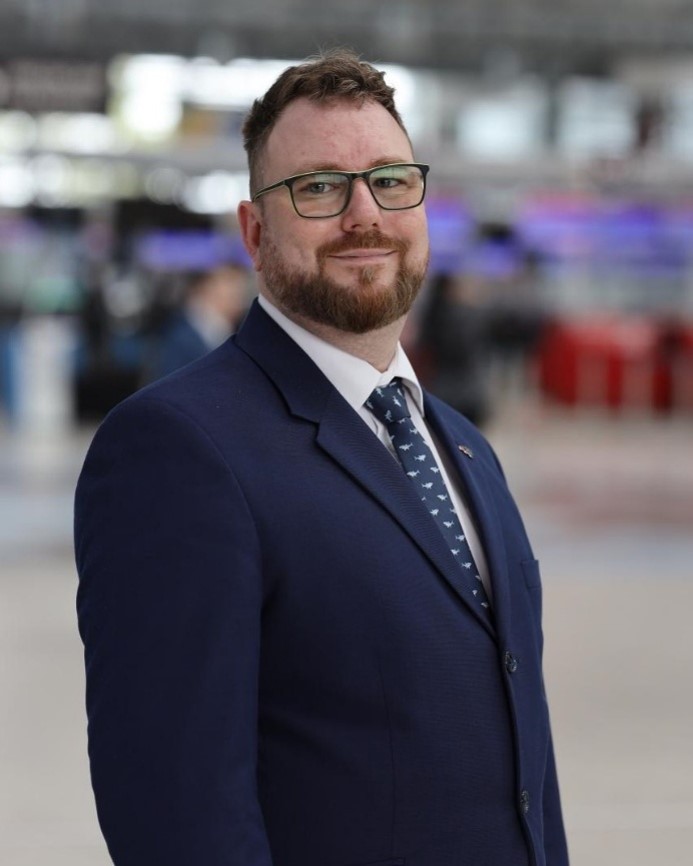
Every week, CargoForwarder Global’s ‘Spotlight On…’ looks at a different part of the air cargo industry, highlighting just how varied the careers are within it. Air cargo needs airports – most airports across the world are predominantly passenger-focused, but these, too, provide the infrastructure and connectivity that enables freight to move efficiently through the aviation network. They support belly-hold cargo on passenger flights, offer cargo terminals, bonded warehouses, customs processing, and apron access, and connect air shipments to trucking and distribution networks, making them an important logistics hub as well as a passenger gateway. Jindřich Zeman (JZ), Cargo Development Manager at Prague Airport, describes his role and shares his thoughts on air cargo.
Cargo is where miracles are made. Image: Jindřich Zeman
CFG: What is your current function and company? And what are your responsibilities?
JZ: I am Cargo Development Manager at Prague Airport. My main focus is to make sure that all cargo carriers flying to Prague have the right conditions in place for their operations to run smoothly. As part of Aviation Business department, I am responsible for anything cargo-related in the Route Development team. As we are mainly a passenger airport, the most significant part of my job is to provide insights and cargo potential to my colleagues in negotiations with carriers to open new routes, as well as leading negotiations with full-freighter carriers, myself. Cargo can make up to 20% to 30% of revenue on long-haul widebody passenger flights, and we need the carriers to see it. I also provide the link between the wider cargo community such as agents or forwarders, and the airport.
CFG: What does a normal day look like for you?
JZ: In the morning, I usually run through statistics and updates. I am always trying to be one step ahead. I am constantly looking for opportunities for our operating and potential carriers. For us, it’s not just the launch of new flights. We want carriers to thrive. I am in close cooperation with my passenger route development colleagues, looking out for possible synergies. I also maintain regular contact with the local cargo market.
CFG: How long have you been in the air cargo industry, and what brought you to it?
JZ: When I finished school and began looking for work, my brother told me about an opening in the sales team of Czech Airlines Cargo, where he was part of the operations team. I immediately fell in love with the business and air cargo in general. That was twenty years ago. Throughout the years, I was lucky to work in many positions within the cargo section of the airline. Three years ago, I joined Prague Airport and found new horizons in the industry.
CFG: What do you enjoy most about your job?
JZ: The variety and scale. As an airport, we work with more than 80 worldwide carriers, operating around 200 destinations. Each carrier is slightly different, has specific needs and opportunities. Every day, we are in touch with people from different cultures, backgrounds and different mindsets – all with just a single thing in common: the air cargo business.
CFG: Where do you see the greatest challenges in our industry?
JZ: The biggest challenge is uncertainty. Whether it’s trade disputes, tariffs, regional conflicts or airspace closures, events happening thousands of kilometers away can have an immediate impact on cargo flows in Prague. The air cargo industry is very resilient, but today we need to adapt much faster than ever before.
CFG: What advice would you give to people looking to get into the air cargo industry?
JZ: Never stop learning. We are in the business of moving products from one place in the world to another, where it is needed. Cargo will never stop moving. And as well as the subject of our industry, the business itself is moving forward very quickly. New barriers are made, new regulations are in place, new crises are there to overcome. But in the end the cargo must flow.
CFG: If the air cargo industry were a film/book, what would its title be?
JZ: ‘Beneath the Cabin Floor’. Belly cargo might not be the most glamorous and is sometimes overseen by the wider community but it’s often the most thrilling part of the business, where miracles are made.
Many thanks, Jindřich!
If you would like to share your personal air cargo story with our CargoForwarder Global readers, feel free to send your answers to the above questions to cargoforwarderglobal@kopfpilot.at We look forward to shining a spotlight on your job area, views, and experiences.
Or are companies looking for a ghost? The shortage of qualified candidates is a recurring topic across air cargo conferences. Whether the discussion focuses on attracting younger generations or experienced professionals, the conclusion is often “we need to do more”. But what if the talent is already there, yet the industry is overlooking it because of requirements that are unnecessary for the role? In many countries, especially in continental Europe, the local language is regarded as one of the main barriers for potential candidates, even though English is the lingua franca of communication in aviation.***
Our author, Cristina Toscano, asks the same question and concludes with some very critical findings. Image: courtesy of hrone.cloud
Self-created talent shortage “In a global industry such as air cargo, cross-cultural experience should be recognized as a business capability, rather than being viewed as a compromise employers must make or something a candidate needs to overcome,” Bradley Baker of Transform Coaching says.
He works with senior leaders in air cargo and the tension that he sees is that companies tend to mistake a self-inflicted talent shortage for a genuine skills shortage in the market.Regarding the hiring process, Baker adds: “When a candidate progresses successfully through several stages and a new language or cultural requirement appears late in the process, the question is no longer simply whether the candidate is qualified. It also raises questions about how clearly the organization understands the role it is recruiting for.” Fluency in the local language can be essential in some positions, for instance in logistics. Employers should therefore be specific regarding the context in which the language will be used, the level genuinely required and how that capability will be assessed. There is an important difference between testing a job-related skill on the one hand and selecting for familiarity with a particular local profile on the other.
Sometimes the recruitment process reveals a gap in the candidate’s skill set. At other times, it reveals that the employer’s stated international ambitions and its actual expectations are not yet aligned.
“While learning the local language is important for long-term integration, job announcements for positions that do not require advanced language skills should also be available in English. This would help companies attract a broader pool of qualified international talent,” says Tamar Chelidze, who advises cargo and supply chain experts.
Companies often underestimate the value that international professionals bring Several HR professionals declined to comment on this article, reflecting the sensitivity of a topic that sits at the intersection of recruitment, diversity, and business performance. Varvara Brandl, senior recruiter at a major international company shared these personal perspectives on the topic on condition of anonymity, emphasizing that these are their own views.
She explains “I don’t believe there’s a simple solution. Some roles genuinely require a very high level of language proficiency. However, I do think companies can better support hiring managers by making hiring decisions more evidence-based. Instead of relying on intuition or familiarity, they should define what effective communication actually means for each role and assess candidates against those expectations. At the same time, it’s worth asking ourselves: Are we evaluating the skills that matter, or are we letting uncertainty influence our decisions?”
Companies often underestimate the value that international professionals bring beyond their technical expertise. Moving to another country requires adaptability, resilience, and the ability to learn continuously. Those experiences often translate into creativity, fresh perspectives, and new approaches to problem solving.
Karolina Vikyol, an HR and talent professional based in Sweden, believes the challenge extends beyond language. Reflecting on her experiences working for international companies, she says that offering a different perspective or a more direct communication style was sometimes met with visible discomfort or resistance. “It’s possible to have a workforce that looks diverse on the surface while still expecting everyone to conform to the same cultural norms, communication style, and way of approaching work. In that sense, diversity becomes more about appearance than genuine inclusion.”
Perhaps the question shouldn’t only be, “Will this person fit our culture?” but rather “How could this person strengthen our culture?” The strongest teams are rarely built by hiring people who all think alike. They grow when different perspectives challenge assumptions, improve decisions, and help create a better culture for tomorrow.
International candidates get fewer opportunities U Ahmed, DRA, IT and BBN are international candidates who shared their recruitment experiences in Europe. They explicitly requested that they remain anonymous in most cases out of fear that their comments could backfire on them. While these experiences cannot be considered representative of the entire industry, they described remarkably similar hiring experiences.
U Ahmed came to the EU despite expecting a promotion in 4 months as EMEA supply chain manager. He hasn’t been able to secure interviews for months despite not requiring visa sponsorship. He is considering returning to his country of origin, but he knows the opportunities are less lucrative on paper. That is, assuming he can eventually find a job in Europe.
DRA came to Germany from Kenya on a jobseeker visa before switching to a language visa and later to a Chancenkarte. Her bachelor’s degree in Business Management, specializing in Purchasing and Supply Chain Management, was officially recognized during the visa process. She invested more than €13,000 to meet Germany’s financial requirements because she believed the country valued skilled professionals.
“Despite applying for many qualified positions, I have only secured two non-skilled jobs,” she says. “I have also worked in the United Arab Emirates, where the environment was demanding but I felt judged by my performance. In Germany, I have often felt that I had to overcome assumptions before my qualifications were considered.”
“In global processes, local processes don’t necessarily work,” IT explains. “The resistance to change and the fact that English is in many cases only spoken at the top don’t facilitate the entry of international candidates,” she adds.
BBN comes from Eastern Europe and has over 10 years of experience working in the Netherlands. She wants to move to another European country. However, she believes that Eastern European and Arabic names get rejected more often. She submitted identical CVs under different names: the CV with the Eastern European name was rejected while she was called for an interview with the CV submitted under a Western European name.
What’s the return on investment for the candidate? The Common European Framework of Reference for Languages (CEFR) splits proficiency into A1/A2 basic levels, B1/B2 independent levels, and C1/C2 proficiency levels. A B2 level allows the individual to understand main ideas of complex texts on concrete and abstract topics and requires a minimum investment of 500 hours; at most European universities it is a requirement for joining bachelor’s programs.
The current level required by many European air cargo companies is C1, which is estimated to be an investment of €6,000 as common practice shows. Reaching this level will take students a minimum of 700 hours of study, and depending on the student’s native language, age, and exposure more than 1000 hours are often required.
Experienced supply chain managers in Singapore, Brazil, India, South Africa, or the UAE already speak their first language and English. To become employable in Europe, they are expected to invest hundreds of hours of their personal time. The return on that investment is uncertain. From the employer’s perspective, it’s effectively shifting part of the recruitment cost onto the candidate.
Language standards which don’t help The air cargo industry continues to ask where the next generation of talent will come from. Yet before searching further afield, companies may first need to examine whether their recruitment practices are unintentionally excluding the very professionals they hope to attract.
Several international candidates interviewed for positions requiring proficiency at C1 level in three languages but were ultimately rejected. Although they met the stated language requirements, they believe their accent may have influenced the hiring decision.
Among the recruitment cases reviewed for this article, one stood out: a medium-sized company in Germany was looking to hire a candidate to take care of their customers in Munich, where speaking Bavarian, a distinctive dialect in southern Germany, was considered essential. Between 12 and 14 million people speak Bavarian, while approximately 480–500 million people live in the 20 officially Spanish-speaking countries globally. Approximately 554 million people live in nations where French is an official or major language.
Language matters until it doesn’t matter Magdalena moved from Germany to the UK around seven years ago and rebuilt her career from the ground up. Reflecting on her experience, she believes the UK employment market puts greater emphasis on potential and transferable skills. She hopes more organizations – particularly within the air cargo sector, where skills shortages remain a persistent challenge – will adopt a similar approach by recruiting for potential as well as experience.
Language matters. Integration matters. But so does the ability to distinguish between capabilities that are genuinely essential and those that have simply become long-standing assumptions. In a global industry built on international connectivity, this distinction may prove increasingly important.
***This article was prompted by discussions with professionals across Europe following two LinkedIn posts on language requirements in international recruitment.
Qualified logistics professionals are highly sought after by the industry. For young talent, a university degree (bachelor / master) is a welcome foundation to launch a career, as is a completed apprenticeship, such as in freight forwarding. However, there is a third option: retraining from a completely different field to become a specialist in air freight import/export, or a customs broker, to name just two job options. This opens up additional recruitment opportunities for companies looking to fill staffing gaps.
Can Han (CH) has taken this path. Thanks to participating in a training course at the Frankfurt Logistic Training Center (LTC), he now works as an expert in air freight import and export. We spoke to him about his journey to finding a new career and the experiences he gained along the way, which might encourage others to follow suit.
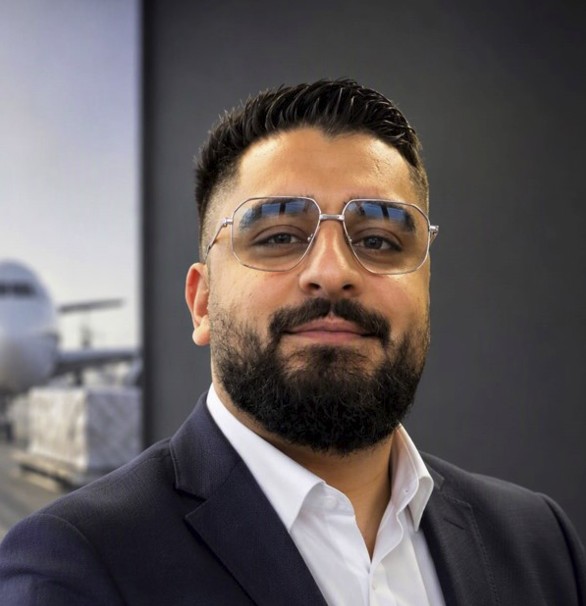
“My uncle encouraged me to pursue a career in logistics,” – photo: private
CFG: Can, welcome to the world of air freight. What motivated you to take this step?
CH: After earning my vocational high school diploma, I worked for various companies, including jobs in the meat wholesale and automotive industries. Then my uncle, who himself had completed retraining at the Logistics Training Center many years ago, recommended that I do the same. Through conversations with him, my interest in air freight and the broader logistics industry was piqued. To be fair, the better pay in logistics was also a motivating factor for me, compared to my previous jobs.
CFG: How did you manage the transition from your training courses at LTC – which included hands-on activities – to your current professional position?
CH: Fortunately, I didn’t experience culture shocks during the transition. Thanks to the technical and theoretical knowledge imparted by the LTC experts during my retraining, I was able to familiarize myself quite quickly with the operational processes in air freight and wider logistics. The technical knowledge I gained in class, and the practical case studies presented by the instructors, made it much easier for me to understand the real-world processes of day-to-day operations. It quickly became clear just how essential communication skills, flexibility, and organizational skills actually are in the day-to-day work of a cargo or freight forwarding company.
Following the LTC training, I found my footing after a relatively short time at my new employer and became an integral part of the team there. This was also due to the fundamentals taught at LTC being perfectly tailored to the demands of the workplace. As a result, my onboarding at the company went smoothly. Of course, the support and acceptance of my new colleagues helped a great deal.
CFG: Which phases during your training did you find most challenging, and how did you overcome them?
CH: I think that for many people, retraining represents a major turning point in their professional lives. After all, it’s a transition in one’s career: the transition from a familiar environment to a completely new job and industry. This requires courage, determination, and the willingness to go back to school and continuously acquire new knowledge. In my case, I benefited from the understanding and support of the instructors, as well as the regular and very open exchange with other course participants.
CFG: Were there any particularly positive or negative surprises during your vocational training?
CH: For me personally, the versatility and dynamism of cargo and logistics were a positive surprise – something I hadn’t expected. Today, I experience on a daily basis that the logistics world never stands still, which is what makes the industry so fascinating. Examples of this constant change include digitalization and the growing use of AI to make processes more efficient and optimize workflows. Personally, I find this very exciting, enriching my daily work. On the other hand, I can understand that some people might feel overwhelmed by this rapid change.
CFG: When looking back, how relevant to real-world situations was the training at LTC?
CH: The course instructors taught sound theoretical logistics fundamentals with a very practical connection to everyday work. Through self-discipline, regular studying, and constant interaction with other course participants I was able to overcome initial challenges and manage the large volume of teaching material, while the instructors provided us students with tailored support. Thanks to these experiences, my confidence grew even during the retraining program, which – at least for me – contributed significantly to my vocational success.
In particular, the combination of structured organization, forward-looking planning, and the independent solving of complex, practical tasks has raised my interest in this professional field.
CFG: If you were in a similar situation, would you choose this path again?
CH: Absolutely. That said, course participants are expected to be eager to learn and to take the initiative. Anyone who doesn’t have those qualities should pursue a different career path.
CFG: Can Han, thank you for your insights, and we wish you continued success as an expert in air freight imports and exports.
World Cup year, 2026 is also broadly being framed as The Year of the AI Agent – one that will see a shift from stand-alone proof-of-concept pilots just testing the waters, to actually training and embedding AI agents into daily business processes. And not just single agents working on automated individual tasks, but an intelligent team of multiple specialized agents collaborating on complex workflows, while ensuring human judgment is called in at critical decision points. This reality is already coming into play in the world of cargo – in particular, through a German start-up founded last year by Technical University of Munich graduates, Yagiz Abik and Fehmi Sener: 5U AI is an Agentic AI specialist that is scaling up a digital workforce platform for European freight forwarding teams. It recently raised USD 3.2 million in a pre-seed funding round led by London-based Emerge Capital. 5U AI Workers are capable of managing quotes, bookings, shipment tracking, data entry and more. CargoForwarder Global put a number of questions to 5U AI’s Founder and CEO, Yagiz Abik (YA), to find out how 5U AI came about and learn more about the people behind the technology.
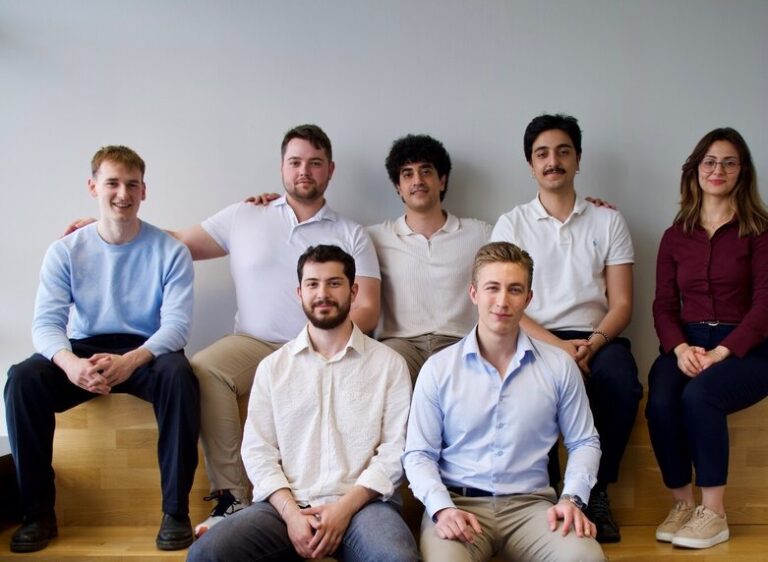
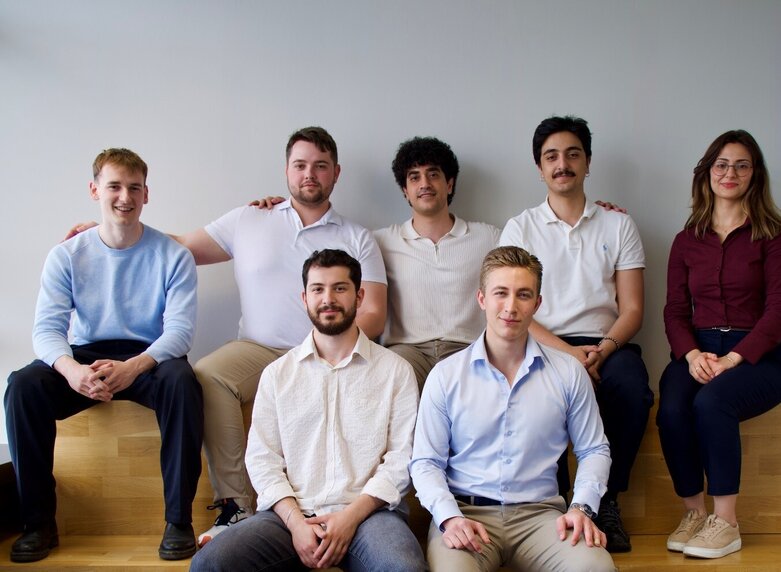
5U AI Team. Top left to right: Pascal Senft – Growth Associate / Max Azatian – Full Stack AI Engineer / Erhan Varlik – Founding Engineer / Tacettin Emre Bök – Software Engineer / Merve Abik – Marketing and Sales. BOTTOM left to right: Fehmi Sener – Co-founder/CTO / Yagiz Abik – Co-founder/CEO – image: courtesy 5U AI
CFG: How did the idea for 5U AI come about?
YA: I’ve been a physical-trade guy since the day I opened my eyes. At 18, I was importing consumer electronics from Shenzhen and selling them across Turkey – my first contact with freight was as a customer. Later, I worked at a B2B trade startup in Hamburg, where part of my day was chasing logistics companies about orders. By mid-2025, AI models had reached the point where agents could genuinely do work, and we knew that window wouldn’t stay open long. Our thesis was simple: agents only create real value if you go deep into one industry.
So, we did dozens of discovery calls with logistics operators and visited their offices. Everywhere, the same picture: two screens – email on one, a 20-year-old transport management system on the other – and people copy-pasting between them all day. Up to 70% of forwarding work is repetitive like that. An industry that runs on email and phone calls is exactly where AI agents belong. And honestly, we fell in love with the people. You cold-call a forwarder and they talk to you like they’ve known you for five years. I wanted to love my customers – these are my people.
CFG: How did you and Fehmi meet and decide to found the company?
YA: On a football pitch. We became friends at the Technical University of Munich – Fehmi organizes one of Munich’s biggest amateur football communities, about 150 players, matches every week. We always wanted to be on the same team, and before and after every game we talked about what we could build together. Fehmi was an engineer at BMW and, in his own words, the job was too easy for him. He also knew logistics: he wrote his graduation thesis with CEVA Logistics on machine learning and had worked with their road freight department. When I came to him with the 5U idea, a first prototype and pilot customers already lined up, he didn’t blink. He quit BMW and we started in late 2025. He’s the strongest technical mind I’ve ever met. People call us yin and yang: my urgency, his calm.
CFG: What does 5U stand for?
YA: Look closely at our logo – it’s a multi-agent system. That’s the name. We’re building the first multi-agent AI system of its kind for freight: no single AI can run logistics end-to-end. One quotation alone touches carrier rates, margin rules, customer preferences, the TMS, and sometimes a colleague who has to clarify a surcharge. Our agents communicate with each other to get the job done, the way a team of colleagues does – and bringing that to freight is exactly what 5U stands for.
CFG: How are the AI agents trained for operational tasks across air, sea and road?
YA: On real freight. Our AI Workers run on a combination of frontier models and small, specialized open-source models. Because we’ve found that a specialized small model often beats a generic one at narrow tasks: reading a rate sheet, extracting shipment data from a messy PDF, classifying what an email thread is actually about. The training material is the industry’s operational reality across air, sea and road, and it’s multi-modal by nature – emails, carrier documents, rate sheets, TMS entries, phone calls. Industry professionals annotate real cases for us to create ground truth: what the correct quotation, booking or invoice match actually looks like.
Every model and every change then runs through our evaluation platform, which simulates thousands of freight scenarios – an expired surcharge, a customs broker joining a thread halfway, a rush request at midnight – and scores the outcome before anything touches production. And before an AI Worker goes live, it gets fine-tuned on that specific customer’s own historical cases in shadow mode that stays with the customer: their margin rules, their carrier preferences, their formats. The models arrive knowing freight; then they learn the company and become more specialized to them over weeks.
CFG: How are they quality-controlled? Who checks, and how do corrections enter the memory?
YA: Every decision an AI Worker takes is captured as a record: what it decided, on what data, with what confidence. That’s our Decision Layer. On top of it sits a human approval flow. In the first days of deployment, nothing goes out without a person: for example, the AI Worker prepares a quotation and messages the operator on Teams or Slack – ‘Here’s my pricing, can I send it?’ The operator gives a thumbs-up or corrects it, and the correction is written into the AI Worker’s memory.
The memory even defends itself. In one of our regular check-in meetings, one Managing Director asked why the AI was calculating a margin a certain way – it turned out his own operations lead had taught it that rule, and the AI Worker asked: ‘Your colleague taught me this. Do you approve changing it?’
AI Workers also self-heal on the job. When something breaks mid-task – a carrier portal changes, a rate source stops responding, two systems disagree – the Worker notices, finds another route to finish the job and repairs its own flow instead of stopping or guessing. Then, it puts how to do this job in the new way to its memory and saves it. Only when it truly can’t, it escalates to a human with full context, and the fix is written into memory, so the same problem doesn’t come back.
As confidence builds, we remove the approval step for routine cases – live customers reach 85-95% automation on individual use cases, and every SOP change is regression-tested in simulation environment in our internal ‘Grader’ product before it touches production.
CFG: A use case: how do AI agents complement the human team at an average forwarder?
YA: Take a typical mid-sized European forwarder: 100 to 500 people, air and ocean. Operators sit in front of two screens – the inbox on one, a TMS that’s sometimes older than they are on the other. Two to three hundred quotation requests arrive every day; three or four people do nothing but answer them, and many still go unanswered.
Our AI Worker joins the team inside that same inbox and Teams. It pulls rates from the preferred airlines, applies the company’s margin rules, knows this account never ships via a certain carrier, asks a teammate when a rate sheet looks expired, sends the quote and logs everything in the TMS. A human needs around 15 minutes per quotation; the AI Worker needs about two, and answers tens in parallel. Requests arriving at midnight from Toronto are won while everyone sleeps – we see more than doubled win rates within weeks at selected customers handling high volumes of quotations. The new complaint becomes keeping up with the extra business.
CFG: Since when has 5U been commercially live, and how quickly can an AI team be set up?
YA: Our first AI Workers went live with paying customers towards the end of 2025. Once we agree with a customer on the first use case, we follow it with an in-person workshop – then normally go from workshop to live within our standard four weeks. Most customers add second and third use cases within weeks.
CFG: How will you invest the pre-seed USD 3.2 million?
YA: Three things. First, we are heavily investing into our go-to-market: we are confident in our market approach, and we will scale what we have been doing quietly. We’re across all commercial and generalist functions, and building an inbound engine; we’ve spent 0 marketing dollars so far. Second, engineering: we will double down on our R&D efforts – we realized that small, specialized open-source models are better at achieving some partial tasks than a generic model, so we are investing into our inference and R&D. Third, the Decision Layer: every job our Workers complete, generates decision data this industry has never captured, and that’s the long-term product that will benefit all of our customers. We’re frugal – we think twice before buying a meal – so the money goes into people and product, and most importantly, to keeping up with the demand we are seeing from the industry.
CFG: Why European forwarders first? What triggers and challenges do you solve here?
YA: Because Europe is the densest concentration of exactly our customer. More than a million people work in European forwarding, thousands of mid-sized forwarders running systems that are 20 or 30 years old. If you’re lucky, there’s a TMS that looks modern; in truth, the industry runs on email and phone. Margins are on the floor, the cost pressure is brutal, and experienced operations people are nearly impossible to hire. It’s also a relationship industry: we deploy on site, shake hands and stay close, which is why we started here.
CFG: How unique is the concept – and how do you differ from conventional chatbots?
YA: A chatbot is a portal you type into: stateless – it answers a question and the session dies. Our AI Workers are colleagues who do the work. They live where freight actually happens – the inbox, Teams, the phone – not in yet another tab. They’re stateful: a shipment thread can go quiet for three months, and when the customer writes ‘I need the proof of delivery’, the Worker picks up the exact same case with full context. That’s the nature of logistics, and generic tools can’t handle it.
They execute end-to-end – quote, book, track, enter data into the TMS – rather than drafting text for a human to finish, and they’re trained on logistics context and its edge cases: the customs broker joining an email thread halfway, the expired surcharge sheet, the dangerous goods request that must go to a person. Early on, we made a bet against rigid workflow automation – workflows are jails for agents, RPA 2.0 – because freight is too messy for if-this-then-that. If this were prompt engineering on a chatbot, we’d have been done in three months. The proof is in how customers treat them: they give our Workers names and a seat in the team channel.
CFG: Who are Yagiz and Fehmi outside work? How do you relax?
YA: Sports. It’s literally where 5U comes from, and it also determines our team mentality: “We are not a family, we are a sports team, and we are here to win.” As said, we met on the football pitch, and we still play every week. He’s a clever playmaker, I’m an attacker, which gives you hints about how we run 5U. I grew up playing tennis competitively, and I keep telling our investors that after a certain age, I’m going back to the court. Other than that, we value being the underdogs who are obsessed with the real economy and real people. It’s not very easy to relax when you are obsessed with the problems you are solving in this great industry.
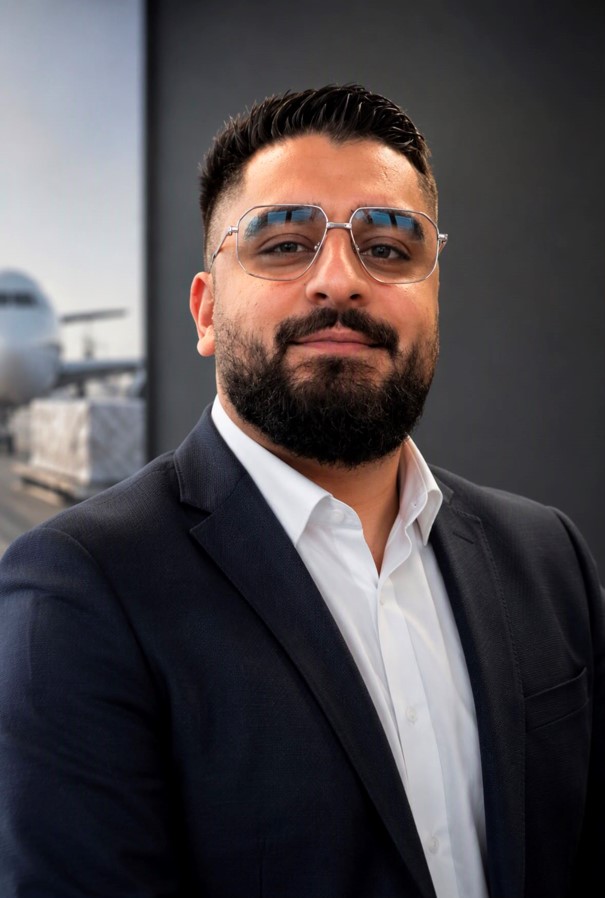
Mohamed Siraj, VP Air Direct / Global Gateways, DSV. Image: Meantime Communications
Chicago Rockford International Airport (RFD) continues to add to its international network – and particularly its Asian connections – with the launch, this week, of a scheduled DSV freighter service to South Korea’s Incheon International Airport (ICN). The weekly flight departs from RFD every Saturday. Just over half a year ago, the American airport began offering services to Shanghai Pudong International Airport (PVG), in cooperation with DSV, and last month, Luxembourg Airport (LUX) joined the network portfolio in line with the airport’s mission to position RFD as a strategic cargo gateway connecting Asia, Europe, and the Americas. And there is more to come: “RFD and DSV plan to introduce a new scheduled service connecting Rockford with Chennai International Airport later this year,” the press release reveals.
Zack Oakley, Executive Director, RFD, commented: “The launch of our Incheon service marks another important milestone in our long-term strategy to increase Rockford’s connectivity with Asia. Together with our Shanghai and Luxembourg services, we offer reliable, scheduled connections linking the United States with Europe and Asia through a dedicated cargo airport built around speed, efficiency, and operational reliability.”
Mohamed Siraj, VP Air Direct / Global Gateways, DSV, added: “Incheon is one of Asia’s most important cargo hubs, and with this new service, DSV can provide reliable capacity and connectivity via the network we are building through Rockford. The airport has consistently demonstrated the operational reliability and flexibility needed to support scheduled international freighter services, making it a natural choice as we continue developing our air cargo operations.”
With the news of the CharterDesk launch still ink-fresh on the table (CFG reported), the company has already completed its first two cargo charter missions and is thus fully operational. Both flights involved Istanbul Airport (IST) – this first time as a destination, the second as an origin. And, as usual with operations of this kind, the charters were organized in response to urgent problems. At the end of JUN26, it was a leading car manufacturer whose plant in Türkiye faced temporary shutdown if parts could not be delivered in time. So, when a major integrator contacted CharterDesk to arrange the transport of 11 tons of automotive parts from Cairo (CAI) to IST, the charter specialist set about putting everything in place. It booked an Airbus A321 freighter from BBN Airlines Türkiye, and then organized all the necessary permits and handling operations, completing the mission with 24 hours of the initial request.
CharterDesk completes first two cargo charter missions. Image: CharterDesk
Mid-JUL26, the second charter operation took place. This time on behalf of a Turkish agent looking to move 59 tons of perishables from IST to Ouagadougou (OUA) in Burkina Faso. An MNG Airlines’ Airbus 330 freighter was booked for this mission and arrangements made to ensure that the cargo remained at a steady temperature of between +15°C and +25°C. “The main challenge in this case, however, was the lack of JET A1 fuel at OUA airport at the time of booking. CharterDesk immediately reached out to its own fuelling contacts and successfully assisted the airline in arranging fuel uplift in Burkina Faso on the planned flight date,” the release reveals.
Emir Ozdabak, Managing Director of CharterDesk, detailed: “Cargo charters are usually booked during emergency situations, such as the risk of a factory shutdown or, as could become a more pressing issues these days, a fuel shortage situation. CharterDesk’s philosophy is to bring calm to potential chaos, by immediately mapping out what needs doing and then getting it sorted, quickly and smoothly, in collaboration with professional partners. Quick-thinking, speed and trust are the key ingredients to successful charter operations. Every charter differs in requirements and obstacles, both expected and unexpected ones. CharterDesk works to ensure the highest quality and performance every time, and we are proud of the positive feedback from our clients, following the successful completion of these initial two charters. The first of many yet to come.”