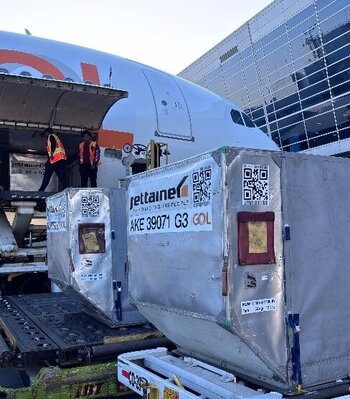
GOL Linhas Aéreas, one of South America’s fastest-growing airlines, has awarded the ULD management tender to Jettainer. The ULD expert will manage the Brazilian carrier’s containers and pallets and help support its strategic expansion. Later this year, GOL will add five widebody aircraft to strengthen its push into international markets, and these new planes will rely on a modern, flexible ULD fleet built to match GOL’s operational needs. “The combination of intelligent management systems and state-of-the-art tracking technology ensures maximum availability, enhanced reliability, and optimal efficiency,” the press release underlines, going on to state: “Jettainer’s role as ULD management provider for Abra Group airlines will further unlock synergies, streamline operations, and contribute to cost optimization.”
New airline on board of the ULD manager’s client portfolio. Image: Jettainer
The partnership with Jettainer began in JUN26, and covers ULD supply, equipment maintenance, and efficient management through Jettainer’s JettwareNG IT platform. Jettainer will also deploy its IoT tracking system to improve visibility and reduce operational blind spots.
25-year-old airline, GOL Linhas Aéreas runs a fleet of over 130 aircraft and offers a large domestic and international network. With more than 130 aircraft. GOLLOG, its cargo division, has become Brazil’s leading air freight company. GOL has been part of the Abra Group since 2023, alongside Avianca and a strategic investment in Wamos Air.
Patrícia Bello, General Director of GOLLOG, stated: “The partnership with Jettainer marks another important step for our new intercontinental operations, enabling the safe and efficient transport of cargo on our widebody aircraft. Jettainer brings the expertise, quality, and forward-thinking solutions needed to support us as we continue shortening distances and connecting people, opportunities, and businesses around the world.”
Shailendar Kothari, Managing Director of Jettainer Americas Inc, added: “We are delighted to support GOL in its ambitious growth journey with our efficient ULD management solutions. Welcoming such a dynamic airline – serving more than 30 million passengers per year and operating around 700 flights per day – is another major step forward for us. At the same time, it strengthens our presence in South America and enables us to deliver even greater value and synergies to all airlines within the Abra Group.”
AJ Abedin is ASG’s U.S. Based Board Director & Senior Strategic Advisor. Image: Avia Solutions Group
Avia Solutions Group has appointed AJ Abedin to its Board of Directors and named him Senior Strategic Advisor, effective 20JUL26. Based in the United States, Abedin will help strengthen the Dublin-based aviation services group’s links with U.S. capital markets and advise its asset management affiliate, Waypoint Operating Lease and Finance Holding. Together with the chairman, leadership team, and subsidiaries, he will focus on commercial growth and broader strategic value creation across the Group’s global ACMI platform and its aviation services ecosystem. Abedin brings more than two decades of experience in aerospace, aviation finance, aircraft leasing, and capital markets, including senior roles at Air Lease Corporation and earlier investment banking work at J.P. Morgan. Avia Solutions Group operates 136 aircraft and more than 250 subsidiaries worldwide.
Gediminas Ziemelis, Chairman and Founder of Avia Solutions Group, said: “I am delighted to welcome AJ to our Board and leadership team. His deep expertise in U.S. capital markets, aviation, and aircraft leasing aligns with our strategic trajectory. As we cement ACMI’s position as a cornerstone of modern airlines’ fleet strategy, AJ’s commercial acumen and track record in unlocking value will be instrumental in bolstering our global ambitions.”
AJ Abedin, Senior Strategic Advisor and Board Director, Avia Solutions Group, stated: “The strength of Avia Solutions Group lies in its unique ecosystem, which supports airlines and aviation businesses as a dedicated partner across the entire industry. At the heart of this ecosystem is our global ACMI model, which allows operators to swap capital-intensive expenditure for operational agility – adding capacity precisely when market demand dictates. This model of capacity management is an increasingly vital component of the commercial aircraft value chain, offering a flexible, asset-light solution that bridges orderbook delivery gaps, supports maintenance cycles, and facilitates everything from route testing to new airline incubation. To capitalize on these opportunities, I intend to draw on my experience to deepen our integration with global capital markets, building a robust financial framework that supports our growth ambitions. I am honored to help guide this next phase of the Group’s evolution as we build a future defined by collaboration with our industry partners and sustained, collective success.”
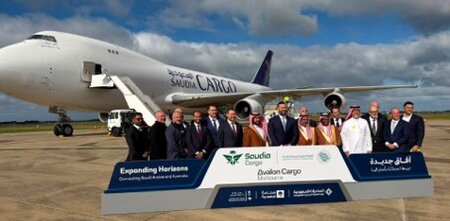
The launch of the Melbourne route comes in response to market demands, enhancing global supply chains and expanding the reach of Saudi exports to Australia, states Saudia Cargo in a release. The service reflects the cooperation between Saudia Cargo, the General Authority for Foreign Trade (GAFT), and the Saudi Export Development Authority (Saudi Exports). The carrier works closely with its partners to open promising horizons and new investment opportunities, in line with the Kingdom’s commercial aspirations. The route is serviced by A Boeing 747-400 freighter which provides cargo capacities exceeding 100 tons, in addition to nose-loading capabilities to accommodate heavy, oversized, and high-volume shipments.
The photo was taken on the occasion of the maiden flight RUH > MEL, which took place on 25JUL26 – courtesy of Saudia Cargo.
This new line will cater to diverse cargo requirements in both directions, including perishables, pharmaceuticals, industrial equipment, and e-commerce goods. To maximize the commercial impact of this logistics corridor, Saudia Cargo is working to elevate coordination with the Saudi-Australian Business Council to reach local logistics partners and provide faster and more efficient transit times, thereby strengthening bilateral trade ties and offering swifter, more flexible transport options.
The company recorded a strong performance last year, successfully transporting more than 570,000 tons of cargo across its extensive global destination network. The announcement of new routes comes alongside a series of practical steps to enhance the capabilities of the company’s fleet, including the recent announcement of a purchase agreement for four Boeing 777-200 freighters, which will strengthen the operational capacity of its dedicated fleet and support its growing presence across global markets.
Etihad Cargo is expanding its French operations and adding a second weekly freighter service to Paris Charles de Gaulle Airport (CDG), thus increasing capacity between France, Abu Dhabi, and major markets across Asia, Africa, and the Middle East. The increase is due to rising customer demand for specialized cargo services, giving shippers greater flexibility when it comes to high-value and time-sensitive freight. Paris is a key gateway in Etihad Cargo’s global network, handling products such as pharmaceuticals through PharmaLife, perishables through FreshForward, horses through SkyStables, and museum and cultural shipments through FlyCulture. The carrier has served French trade through Abu Dhabi for more than two decades and moved more than 26,000 tons of cargo between the UAE capital and Paris in 2025. Its French network now includes three daily passenger flights to Paris, two weekly freighter services to CDG, and a seasonal passenger route to Nice. Etihad says the added Paris capacity supports its broader European growth strategy, strengthens global supply chains, and reinforces Abu Dhabi’s role as a logistics and multimodal cargo hub.
Etihad Cargo adds 2nd weekly freighter service to CDG. Image: Etihad Cargo
Stanislas Brun, Chief Cargo Officer at Etihad Airways, commented: “France has long been an important market for Etihad Cargo. The introduction of a second weekly freighter service to Paris shows both the strength of customer demand and our long-term goals for the region. As trade flows continue to evolve, our customers need greater flexibility, additional capacity, and reliable access to global markets. By increasing our services to Paris, we are enhancing connectivity between Europe, Asia, Africa, and the Middle East, while further strengthening Abu Dhabi’s position as a leading global logistics and multimodal cargo hub.”
Cargo iQ has restructured its Board to better represent the full air cargo supply chain and accelerate adoption of industry quality standards. Three new members have joined: Jeanne-Mari Reardon, Vice President Air Product EMEA of CRANE Worldwide Logistics; Paul Glaser, Managing Director – Austria of Cargomind; and Calvin Hui Head of Cargo Customer Experience and Service Excellence at Cathay Cargo, while four existing members were re-elected for another 2 years: Christian Meyer, Vice President Global Airfreight Systems & Solutions Delivery, DHL Global Forwarding; Jussi Lemola, Vice President Global Head of Operations, Swissport Cargo; Hendrik Leyssens, Vice President Process, Planning and Project Delivery, Emirates; and Rutger Jan Pegels, Director Performance Management, KLM Cargo.
Jeanne-Mari Reardon, Vice President Air Product EMEA, CRANE Worldwide Logistics. Image: Meantime Communications
The Board will focus on completing and implementing projects developed over the past two years, including the phased Tiers Implementation System and a data-driven audit program launched on 01APR26. Priorities also include improving digital information exchange through ONE Record and API-based processes, expanding Road Feeder Services Business Cases, and developing Station Route Maps for ground handlers and airlines. The refreshed Board aims to strengthen collaboration and drive consistent quality practices across the air cargo industry.
Comments from the three new Board members:
Jeanne-Mari Reardon, Vice President Air Product EMEA, CRANE Worldwide Logistics: “The Board plays a key role to setting long term direction, and with our industry at a turning point, collaboration is crucial to manage the transition.”
Hendrik Leyssens, Cargo iQ Board Chair and Vice President Process, Planning and Project Delivery, Emirates: “These initiatives are designed to help move the industry forward collectively, and, as Board members, we are playing a key role in driving adoption and implementation across the membership.”
John Dowds, Senior Vice President Service Delivery EMEA, Worldwide Flight Services: “Cargo iQ’s benefit comes from both its strategic developments and the continuous development of existing standards, ensuring that all recommendations remain relevant and applicable.”
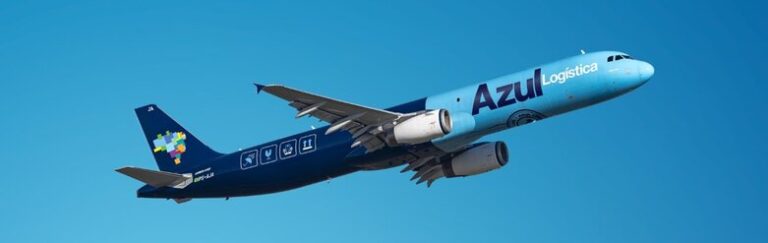
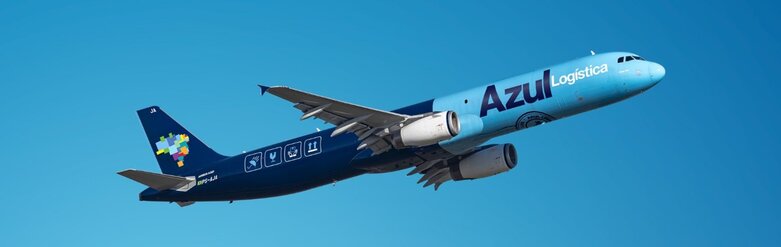
Azul Linhas Aéreas Brasileiras is due to take delivery of four more Airbus A321 freighters, to boost capacity out of Azul’s Viracopos hub, strengthen domestic services to Manaus and Belém, and support international growth across Latin America. New and planned scheduled routes include Santiago, Buenos Aires, Lima, and Montevideo, with weekly Campinas–Lima flights (via Viracopos) expected in the second half of 2026. Global GSA Group is at the Brazilian carrier’s side to aid in optimizing the enlarged fleet’s commercial performance and improving regional cargo connectivity, while Azul also continues to offer charter solutions for specialist shipments such as hatching eggs and touring-band equipment.
Global GSA Group prepares for four additional Azul Logística A321Fs. Image: Azul
Izabel Reis, Director of Azul Logística, said: “Our success story with the Airbus 321 freighter kicked off with the celebration of the first aircraft delivery at Campinas Airport, last year – and Global GSA Group’s market knowledge and network soon generated excellent load factors on its initial routes. This freighter type offers the ideal versatility and size, allowing Azul to flex and offer market solutions where they are most needed. So, it was an easy decision to expand and modernize our fleet with an additional four Airbus 321 freighters, going forward. They will replace our Boeing 737 F, resulting in more sustainable operations and a significant boost to intra–Latin American capacity. And that boost will continue to be fueled by Global GSA Group’s outstanding commercial support.”
Aytekin Saray, Chief Executive Officer of Global GSA Group, revealed: “Azul already operates over 800 domestic flights per day and handles more than 100,000 shipments each day. With four new freighters soon being delivered, we will be able to optimize Azul Logística’s operations using data analytics and other CargoTech software solutions to determine sustainable strategies for certain key routes currently operating at peak, while supporting business development, market expertise, and regional coordination across Latin America. Lima is a logical strategic addition to Azul Logística’s network, given the high demand that we see from Europe and strong business from Peru to domestic Brazil via the Viracopos hub. These new services will offer more connectivity and open up all kinds of opportunities for forwarders throughout the region. This new connection also reinforces our own Global GSA Group growth strategy in South America and expands the logistics possibilities between Brazil and the Andean region, especially for sensitive, industrial and high-value cargo.”
On 24JUN26, Venezuela was struck by devastating earthquakes – a magnitude 7.2 quake, roughly 160 km west of Caracas, was followed less than a minute later, by a magnitude 7.5 tremor along the San Sebastián fault system. The death toll has since climbed past 4,700, with widespread destruction across coastal and central states and severe damage to infrastructure, including the country’s main gateway, Simón Bolívar International Airport in Maiquetía. In the weeks that followed, the international community including key air cargo industry players, collaborated to bring relief supplies and aid to Venezuela in the aftermath, as it struggles to stabilize and rebuild. Recently, Avianca Cargo and DSV carried out one of these aid operations.
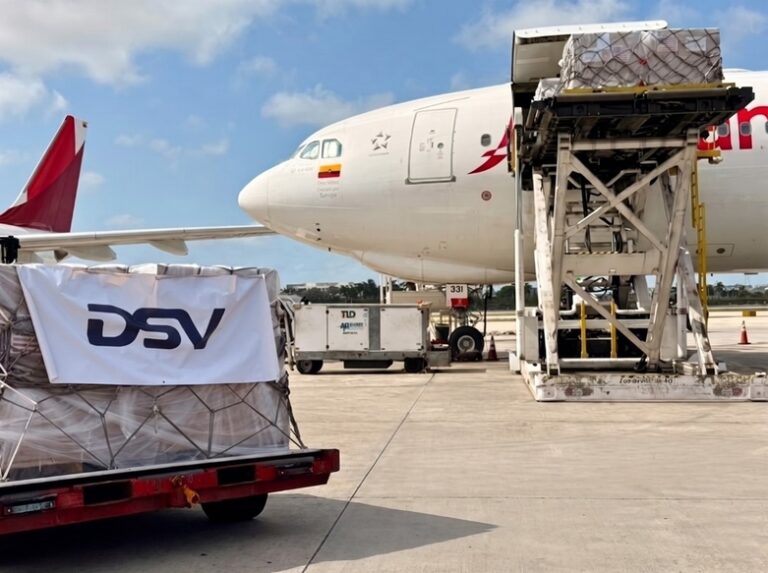
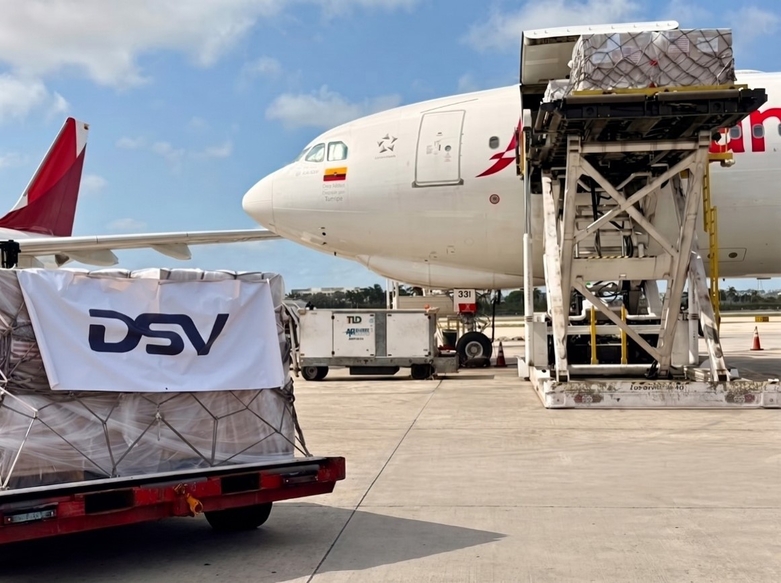
Avianca Cargo, the cargo arm of the Abra Group, partnered with global logistics giant DSV to operate a dedicated Airbus 330 freighter carrying 58 tons of humanitarian aid from Miami to Caracas. On board were medical supplies, food, hydration kits, personal hygiene products, and other essential relief items. The flight was coordinated with humanitarian organizations Direct Relief, Global Empowerment Mission, Heart to Heart International, and World Central Kitchen, to establish where the supplies were most urgently required.
The latest dedicated relief supplies flight to Venezuela. Image: Avianca Cargo
A shared commitment to making a difference
Juan Correa, Chief Commercial Officer of Avianca Cargo, commented: “This humanitarian mission, carried out together with DSV, reflects our shared commitment to making a meaningful difference when communities face extraordinary challenges. Our core priority is ensuring the seamless, efficient delivery of international humanitarian aid, which requires ongoing alignment with local authorities and our relief partners.” Stephanie Penarete, Vice President of DSV Air Product Americas, emphasized: “The greatest impact comes from what we achieve together with purpose and collaboration. We are proud to work alongside Avianca Cargo, combining our logistics expertise with their network and operational excellence, to deliver essential relief supplies to communities in Venezuela. Together, we demonstrated how a shared commitment can transform logistics into meaningful action and create lasting impact for the communities we serve.”
An airbridge to Venezuela
This was not an isolated gesture. Avianca earlier coordinated a joint approach with Wamos Air (also part of Abra Group), again operating a dedicated Airbus A330 freighter to carry 55 tons of supplies, this time from Bogotá to Maiquetía. The airline has, to date, moved over 150 tons of relief supplies in partnership with local foundations, and even adjusted its passenger network – running temporary flights between Bogotá and Valencia – to keep a transit corridor open while runway repairs continued at the main Caracas airport. “As part of its ongoing commitment to supporting communities in times of need, Avianca will continue to put its logistics network and operational infrastructure at the service of those affected by emergencies. Through its extensive cargo capabilities across the Americas, the company remains committed to delivering critical humanitarian assistance quickly, safely, and wherever it is needed most,” its press release underlines.
Coming together, to help
Alongside Avianca Cargo and DSV, other carriers have and continue to ferry aid to Venezuela. Amazon Air arranged its first-ever humanitarian air bridge, and DHL, LATAM Cargo, FedEx, Atlas Air, GOL, DP World, and specialists such as Air Charter Service all carried out relief operations in the aftermath of the earthquake disaster. Over in the European Union, the European Commission immediately activated its Civil Protection Mechanism, with eight member states – Czechia, Spain, Italy, France, Luxembourg, Germany, Portugal, and the Netherlands – sending rescue teams, medical staff, and telecommunications equipment. Since then, more than EUR 25 million in aid have been released, more than 750 responders and experts from 18 countries have been mobilized, and circa 80 tons of aid (shelter materials, water and sanitation equipment, and education supplies) delivered via the EU humanitarian air bridge out of Copenhagen.
Logistical challenges
The operations have not been simple. Damage to Simón Bolívar International Airport disrupted the country’s primary air gateway, forcing carriers to reroute through alternate airports and adjust schedules around repair work. Venezuela’s existing economic fragility – high inflation, currency instability, and years of underinvestment in infrastructure – complicates fuel supply, ground handling, ports, and last-mile distribution once cargo lands. Coordinating dozens of independent carriers, NGOs, and government agencies without duplicating shipments or creating bottlenecks at damaged facilities adds another layer of complexity. Yet, air cargo is indispensable in times of crisis. Widebody freighters like the A330F can move dozens of tons of aid in a single flight, and the speed of air transport compresses response times from weeks to days – often the critical window in which medical aid and clean water save the most lives. As the Venezuela earthquake response shows, air cargo is not simply about moving freight; in a crisis, it is the fastest bridge between the world’s willingness to help and the people who need that help most.
Leadership changes at airlines are rarely just about replacing one executive with another. They often reflect a broader strategic direction. The appointment of Lorenza Maggio as the new CEO of Brussels Airlines (SN) is therefore more than a management announcement. It highlights the continued transformation of European network airlines, where integration, operational efficiency, digitalization and strategic positioning within larger airline groups are becoming increasingly important.
Following the departure of Dorothea von Boxberg at the end of August 2026, Maggio will take over leadership of the Belgian carrier. The appointment still requires approval by the Board of Directors of SN Airholding. In addition to leading Brussels Airlines, Maggio will also assume the role of Executive Board Representative to the European Commission. Her background provides an indication of the priorities ahead.
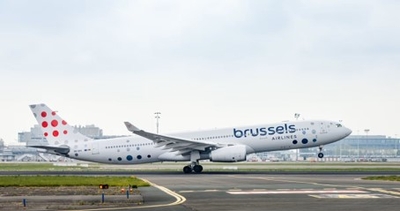
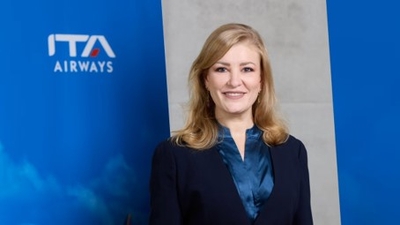
Former ITA executive, Lorenza Maggio, will become CEO of SN, succeeding Dorothea von Boxberg – pictures: courtesy of Brussels Airlines
A leader shaped by integration
Lorenza Maggio joins Brussels Airlines from ITA Airways, where she has served as Chief Strategy and Integration Officer since January 2025. Her responsibilities have included overseeing the Italian airline’s integration into the Lufthansa Group and supporting its strategic development. Before joining ITA Airways, Maggio held several leadership positions within Lufthansa Group, including Vice President Sales for the Group’s network airlines across Europe, the Middle East, and Africa. In addition, she previously managed brand and customer strategy at Eurowings and held a leadership role within the LSG Group. Her career reflects one of the defining themes currently shaping European aviation: the increasing importance of integration. Airlines are no longer operating only as individual brands competing through networks and products. Within large aviation groups, success increasingly depends on coordinated systems, shared infrastructure, operational synergies, and consistent customer experiences. That experience may become particularly relevant at Brussels Airlines.
SN operates a fleet of 11 A330-300 and will add two more for upping capacity on long-haul routes.
Brussels Airlines’ role within Lufthansa Group
Brussels Airlines holds a unique position within the Lufthansa Group. As Belgium’s national carrier and one of Lufthansa Group’s network airlines, it combines a strong European feeder network with a long-haul focus, particularly towards Africa. From its Brussels hub, the airline serves more than 90 destinations worldwide, including 18 destinations in Sub-Saharan Africa. This African network is strategically important not only from a passenger perspective but also for cargo operations. Africa remains one of the most complex and underdeveloped air cargo markets globally, with strong demand for pharmaceuticals, perishables, high-value industrial goods, and humanitarian shipments. Brussels has historically played an important role as a gateway between Europe and African markets. Maintaining and developing this position requires more than network expansion. It requires operational reliability, strong partnerships, and increasingly integrated digital processes across the logistics chain.
The next phase is about efficiency and connectivity
European airlines are entering a period where growth alone is no longer the primary objective. Rising costs, regulatory pressure, sustainability requirements and changing customer expectations are forcing carriers to improve efficiency while maintaining competitiveness. For network airlines, this means optimizing every part of the operation: fleet utilization, airport processes, customer experience, and digital infrastructure. This transformation is noticeable in cargo as well. The future of air freight depends increasingly on better data exchange, automation and closer cooperation between airlines, forwarders, handlers, and technology providers. Initiatives such as IATA’s ONE Record standard demonstrate the industry’s move toward more connected digital ecosystems. For airlines embedded in global groups, the ability to integrate systems and processes across multiple organizations will become a significant competitive advantage.
Regulation Becomes a Strategic Factor
Maggio’s additional role as Lufthansa Group Executive Board Representative to the European Commission also highlights another important development: European aviation is facing increasing regulatory complexity. From sustainability requirements and emissions reduction targets to competition policy and digital regulation, airline leadership is becoming increasingly connected to political and regulatory environments. For European network carriers, strategic decisions are no longer made purely based on market demand. They are increasingly influenced by regulatory frameworks that shape fleet decisions, operating models and investment priorities. Having leadership with experience across strategy, integration, and European markets therefore becomes increasingly valuable.
A New Chapter for Brussels Airlines
The appointment of Lorenza Maggio comes at a time when Brussels Airlines continues to evolve within the Lufthansa Group ecosystem. The challenge will be to balance multiple priorities at once: strengthening competitiveness, maintaining operational quality, developing strategic markets, and integrating further into a rapidly changing aviation environment. The airline industry has entered a phase where successful leadership is less about managing individual companies in isolation; it is about navigating complex networks of partnerships, regulations, and interconnected operations. Brussels Airlines’ leadership change therefore represents more than a personnel decision. It reflects the wider transformation of European aviation, where integration, collaboration, and strategic positioning will increasingly determine which airlines remain competitive in the decade ahead.
Each week, CargoForwarder Global’s ‘Spotlight On…’ looks at a different segment of the air cargo industry, to show just how varied the many careers can be within it. Freight forwarders come in all shapes and sizes – and size can make a difference when it comes to purchasing power and capacity access, which is why a group of medium-sized German freight forwarders came together and founded a cooperative freight forwarding alliance back in 1999: IGLU Air Cargo Gmbh. This week, its Managing Director, Nouri Neller, shares his experience, talks about his role, and gives advice to those looking to enter the industry.
In this industry, the unexpected is the norm, not the exception. Image: Nouri Neller
CFG: What is your current function and company? And what are your responsibilities?
NN: I am Managing Director of IGLU Air Cargo GmbH. IGLU is a community of independent, mid-sized freight forwarders, built around a simple but powerful idea: that companies who might otherwise compete, can achieve far more together than apart. Our mission is to generate tangible synergies for our members – from joint purchasing and procurement through to a shared digital platform and expanding cooperation opportunities with airlines. My role is to drive that mission forward across all its dimensions: strategy, business development, member relations, and the ongoing work of building something that genuinely makes our members stronger. In practice, that means I wear many hats, often simultaneously. Which, come to think of it, is not unlike air cargo itself.
CFG: What does a normal day look like for you?
NN: A normal day? After more than 20 years in this industry, I’m still waiting to meet one. Mornings usually start with a strong coffee and an inbox that has already been busy while I was sleeping – because air cargo, like the world it serves, never truly switches off. From there, each day brings its own combination of member conversations, operational puzzles, strategic decisions, and the occasional situation that requires thinking on your feet. That unpredictability is, honestly, a big part of what makes the job so energizing.
CFG: How long have you been in the air cargo industry, and what brought you to it?
NN: I have been in air cargo for over 20 years, though I didn’t arrive by the most direct route. Before this, I served in the Bundeswehr [German Armed Forces], where I learned that logistics, structure, and calm decision-making under pressure are not optional qualities – they are the job. After that, I spent time in the automotive industry, where time-critical supply chains are very much a way of life. Air cargo was the natural next step: it brought together everything I had come to value – speed, precision, international complexity – and then turned the dial up a few notches. I have never looked back.
CFG: What do you enjoy most about your job?
NN: The freedom to shape things. I genuinely thrive in an environment where no two days look the same and where the role demands both strategic thinking and hands-on problem-solving. There is real satisfaction in finding a workable solution when a situation looks impossible — and I’ve learned to equally value the moments when things don’t go to plan. Failure, handled well and reflected honestly, is one of the best teachers this industry has to offer.
CFG: Where do you see the greatest challenges in our industry?
NN: Two things stand out. First, talent: attracting the next generation to an industry that is genuinely fast-paced and fascinating, but perhaps not always visible to young people exploring their options. We need to tell our story better – and more loudly. Second, digitalization. Not the technology itself, which exists and keeps improving, but the cultural shift needed to truly modernize what is, at its heart, a relationship-driven and traditionally minded industry. That transformation requires patience, persistence, and tolerance for the occasional two-steps-forward-one-step-back moment.
CFG: What advice would you give to people looking to get into the air cargo industry?
NN: Come with curiosity and stay flexible – in this industry, the unexpected is the norm, not the exception. A grounding in logistics and supply chain management is a solid starting point, but I would not underestimate soft skills: the ability to communicate clearly across cultures, stay composed under pressure, and adapt quickly matters as much as any formal qualification. And don’t be put off if your background looks unconventional. Some of the best people I’ve met in air cargo started somewhere else entirely – the military, manufacturing, hospitality. The skills transfer. The mindset matters most.
CFG: If the air cargo industry were a film/book, what would its title be?
NN: ‘Mission Possible: Just Barely’ – a story of pressure, precision, and the occasional logistical miracle. [Smiles]
Thank you, Nouri!
If you would like to share your personal air cargo story with our CargoForwarder Global readers, feel free to send your answers to the above questions to cargoforwarderglobal@kopfpilot.at We look forward to shining a spotlight on your job area, views, and experiences.
Morocco has quietly built one of Africa’s most effective aviation assets: an open-skies framework with Europe that has turned Casablanca into a genuine cargo gateway. Most of the conversation around African aviation focuses on passengers. But the cargo story is where Morocco’s strategic advantage really shines.
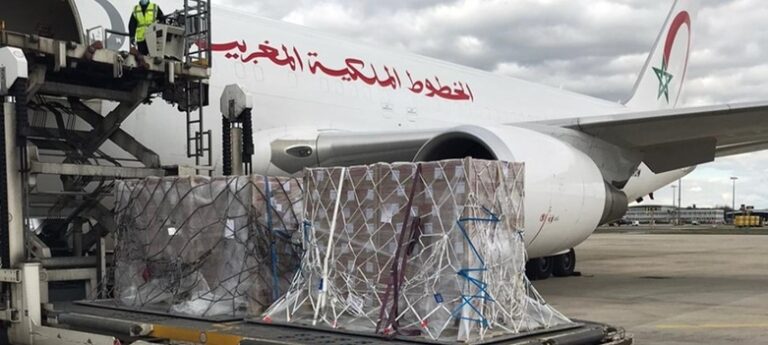
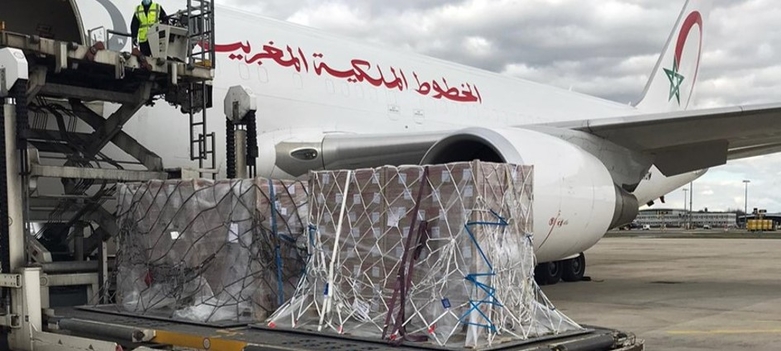
Royal Air Maroc operates a single B767-300F, while Casablanca Airport offers parking spaces for 64 aircraft, including 11 large jetliners – photo: courtesy of CMN
Casablanca’s rise as a cargo hub Mohammed V International Airport (CMN) has become the primary air freight hub for North and West Africa. This didn’t happen by accident; the ingredients are straightforward:
Geography – sitting at the narrowest point between Africa and Europe
Infrastructure – dedicated freight terminals and cold chain facilities
Liberalized traffic rights – thanks to the EU–Morocco aviation agreement
Royal Air Maroc Cargo – a carrier that has grown with the opportunity
The result? A hub that serves Morocco’s domestic economy and the broader West African market – moving goods from Dakar to Dubai, from Lagos to London, through a single efficient transit point. Open Skies delivers predictable market access to cargo players. Liberalized airspace replaces ad hoc permits with stable rules. For cargo operators, that means predictable scheduling and the ability to build long-term logistics partnerships. Seamless Africa–Europe connectivity avoids detours via other hubs such as in the Middle East. Today, there is no more need to route shipments through non-African hubs. Hence, particularly time-sensitive goods – fresh produce, pharmaceuticals, high-value electronics – move faster and at lower cost.
Cold chain logistics Africa’s agricultural export sector depends on reliable air freight. Morocco’s gateway status has made it a critical node for moving perishable goods to European supermarkets. This also applies to e-commerce, which is growing constantly. Cross-border e-commerce needs fast, reliable air cargo services. Morocco’s framework positions Casablanca as a natural sorting and redistribution hub for the entire macroeconomic region.
RAM Cargo: The carrier that makes it work Royal Air Maroc Cargo has been the primary driver of Morocco’s cargo strategy – and is its main beneficiary. The airline has:
Expanded its freighter fleet to meet growing Africa > < Europe demand
Built dedicated cargo routes to key West African markets
Formed partnerships with European and Middle Eastern carriers for seamless
interline connectivity
Invested in ground handling at Casablanca to support perishable, e-commerce, and high value cargo throughput, including the transfer and distribution of the goods to final destinations.
This alignment between the national carrier and Moroccan aviation policy is a model other African nations could learn from.
The Bigger Question for Africa Morocco’s success raises a structural question: If liberalized airspace with Europe has delivered such clear cargo benefits, why is the full implementation of the Single African Air Transport Market (SAATM) for intra-African cargo still lagging? The answer is not technical capacity, it’s political will – and the willingness to move beyond bilateral control for continental gain. African Continental Free Trade Area‘s vision (AfCFTA) of seamless intra-African trade will remain incomplete without an integrated air cargo framework to match. Morocco’s experience proves three things:
For cargo operators, financiers, and logistics providers, the message is clear: the routes exist, the demand is growing, and the regulatory frameworks are available. What remains is the decision to implement this opportunity and vision on a larger scale.
Bottom Line Morocco’s open skies framework is not just a passenger aviation success story. It’s primarily a cargo gateway strategy that has made Casablanca one of the most important freight hubs connecting Africa to Europe and vice versa. As the continent moves toward deeper integration under SAATM and AfCFTA, Morocco’s model offers a practical blueprint for what liberalized air cargo markets can deliver. The opportunity is now. The infrastructure is ready. The next move belongs to the policymakers and cargo operators who will build the next generation of African air freight networks.
UPDATE Royal Air Maroc enlarges European network
The Moroccan national carrier is adding four European destination to its current summer schedule. These areBilbao, Alicante, Verona and Lille. They will be served with Boeing 737 aircraft, offering up to 3 tons of cargo capacity in the lower deck compartments of the passenger jetliners per flight. The new services feed seamlessly into Royal Air Maroc’s long-haul widebody and freighter network out of its Casablanca hub.
The new routes strengthen the carrier’s role as a North–South logistics bridge between Europe and Africa and are in line with its goal of scaling toward a global hub model, combining regional narrow-body connectivity with intercontinental widebody and freighter operations.
“As a key strategic gateway into Africa, our focus at Royal Air Maroc is on connecting high-potential regional markets in Europe, that can generate consistent point-to-point demand and feed cargo flows through Casablanca to destinations across Africa and other international markets in the Americas and Asia,” Rita Chraibi, Vice-President Cargo, Royal Air Maroc, explains. HS
Author: Bernard Omboto Onguso
Bernard is the author of the Fueling African Aviation series, a two-volume (with a third volume due end 2026) practitioner guides to aviation fuel markets, first of a kind guides in infrastructure development, and continental integration, endorsed by aireg for use in European institutions and frontier markets. He presented on the Global SAF Perspective Panel at ILA Berlin 2026 and has worked across African aviation markets for over three decades.