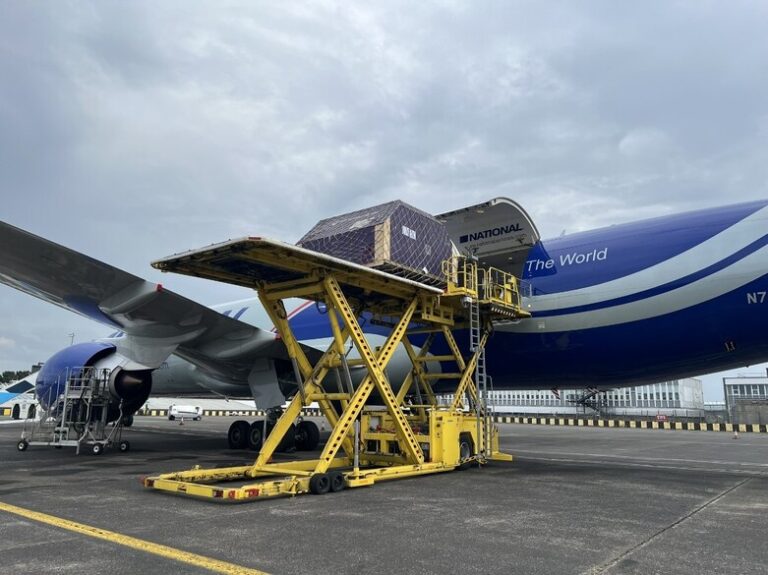
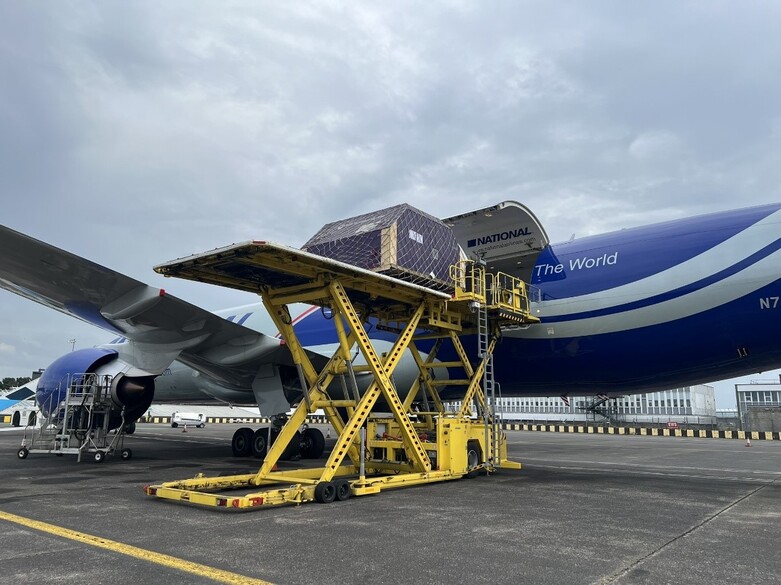
The flight in question was National Airlines’ record-breaking cargo flight which set off from Glasgow Prestwick Airport (PIK), headed for Melbourne (MEL), Australia, covering the 9,849 km distance without a single touchdown in between. That meant the aircraft flew for almost 20 hours solid. The reason for the operation was an AOG (Aircraft on Ground) – meaning an essential aerospace component was required, half-way across the world. Prestwick lent itself to the operation, given that it is close to the part provider (The press release underlines: “The airport sits at the center of the Prestwick aerospace cluster, which brings together aircraft manufacturing, maintenance, engineering, and air traffic management expertise”) and because it has 24-hour operations – no night-flight restrictions – and in-house cargo handling. National Airlines’ longest cargo charter was carried out using its new Boeing 777 freighter, brokered through Golden Aviation.
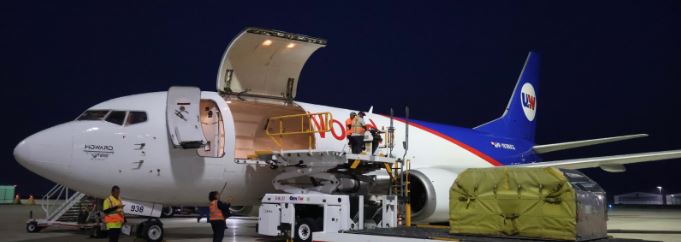
PIK loading National Airlines B777F. Image: PIK
Jules Matteoni, Chief Executive Officer, Glasgow Prestwick Airport, underlined PIK’s USPs and stated: “Congratulations to our valued partners at National Airlines on this impressive achievement. We believe this flight is also the longest commercial cargo flight operated by B777F anywhere in the world. We are proud to have played our part and stand ready to support urgent charter requirements whenever speed and flexibility are required.”
Alan White, Chief Growth Officer, National Airlines, thanked PIK, saying: “More than record setting, this historic mission further demonstrates the airline’s ability to deliver mission-critical cargo anywhere in the world, combining speed, operational excellence, and global reach. Our flight operations, maintenance, dispatch, and ground teams are equipped to position freighter fleet within hours of a such customer enquiry and execute unique, time-critical missions with exceptional precision.”
David Giles, Director of Operations, Golden Aviation, said: “This was essentially a ‘go-now’ B777F, something that can only be pulled off with all stakeholders coming together to arrange the landing, handling, parking, processing, loading, refueling and slots over the weekend enabling the flight to operate ASAP on the Monday with the aircraft positioning that very next morning. The team at Prestwick delivered a flawless operation from start to finish, ensuring the aircraft was handled efficiently and departed exactly as scheduled. They were a real safe pair of hands throughout, and this time-critical charter simply would not have been possible without their professionalism, responsiveness and willingness to move quickly across every aspect of the ground handling operation. A huge thank you to everyone involved for making this urgent charter a success.”
This month will see a total of eight charter flights taking off from Jinan Yaoqiang International Airport (TNA), China, destined for Chicago Rockford International Airport (RFD). Operated by Atlas Air, the flights are on behalf of Shanghai-based freight-forwarder, Rich Sale International, which is specialized in cross-border e-commerce services. From SEP26 onwards, these flights will become scheduled services, operating twice per week between China and the US. Once the goods arrive in the US, they are unloaded and dispersed across the Midwest using lowboy trailers (interesting information, given that these low bed semi-trailers are normally used for outsize, heavy cargo?) arranged by Gateway Sales and Solutions.
Mr. Jacky Wu, President, Rich Sale International. Image: RFD
Zack Oakley, Executive Director, RFD, announced: “China to North America is one of the largest lanes in air cargo, and e-commerce is its backbone right now. We are creating the premier operation for bringing e-commerce into the United States, continually developing our solutions and supporting them with a growing number of flights from China and Southeast Asia. Rockford’s capabilities are particularly well-suited to e-commerce, providing an efficient, reliable, and flexible operation without the congestion or restrictions found at many larger passenger hubs, with aircraft moving from wheels down to engines off in as little as five minutes.”
Jacky Wu, President, Rich Sale, added: “E-commerce requires fast and adaptable cargo operations, which cannot always be found at passenger hubs where cargo often plays second fiddle. When we assessed the best entry point for e-commerce cargo into the United States, Rockford stood out for offering the dedicated, cargo-focused operation we need to serve our customers effectively.”
Michael Duggan, Head of Cargo, Oman Air. Image: Oman Air
And those five new routes all went live in the same week as the airline focuses on expanding its Asian footprint and facilitating trade between Oman and Asia’s key markets. Hence, the latest network additions are Singapore (SIN – four times per week), Tashkent (TAS – twice a week), Sochi (AER – once a week), Abu Dhabi (AUH – daily flights), and a new, thrice-weekly Salalah (SLL) – Dubai connection. All routes are operated using Boeing 737 MAX8 aircraft. “The new Muscat-Tashkent service will operate twice weekly, creating additional capacity between Oman and one of Central Asia’s fastest-growing logistics markets,” the press release outlines, saying “The route is expected to support increased trade in perishables and other time-critical commodities between the two countries.” It also emphasizes the importance of the new Muscat-Singapore connection, since this offers forwarders in Oman a highly attractive service to one of Asia’s most important air cargo hubs, and therefore also onforwarding opportunities other Southeast Asian markets as well as further global connections.
Michael Duggan, Head of Cargo, Oman Air, commented: “The five new destinations strengthen the options available to our cargo customers, providing greater connectivity across Asia while supporting the efficient movement of time-sensitive and high-value shipments. We are particularly pleased the additions further expand Oman Air Cargo’s perishables capability, a key objective of the airline in response to our expanding customer base. As trade between Oman and Asia continues to grow, expanding our network enables us to offer customers greater flexibility, improved market access, and more efficient routing options.”
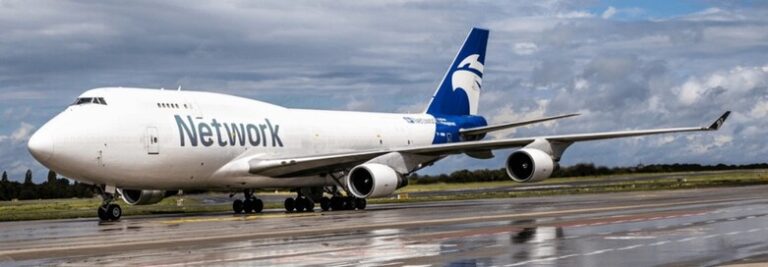
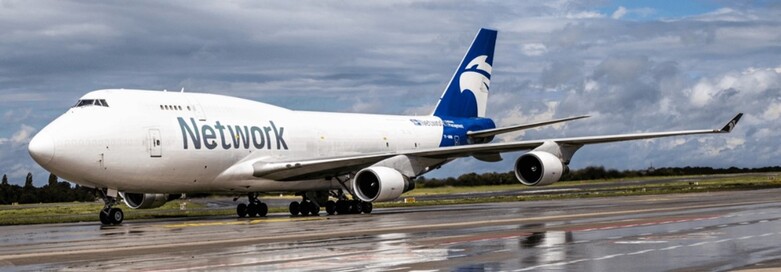
UK-based Network Aviation Group (founded in 1985 and specialized in two core activities: passenger/cargo GSSA, and freighter airline) announced that a Boeing 747-400BCF freighter joined the fleet of its airline subsidiary, Network Airline Management, at the end of JUL26, bringing its total freighter fleet of B747F aircraft to five. The airline is thus in an even better position to fulfil its mission of “providing robust, reliable capacity to the global air cargo market” as it concentrates on uplifting high-volume general cargo, outsize shipments and other specialized transport requirements in an international environment.
Network Airline Management operates mainly out of the Belgian cargo hub of Liège and offers charter and scheduled freighter services, with a particular focus on Africa. Its press release reveals that more aircraft are likely to come, as it concentrates on future fleet expansion and commercial growth.
Jonathan Clark, CEO of Network Aviation Group, stated: “Welcoming our fifth Boeing 747 freighter into active service is another major milestone for Network Airline Management. The B747 remains the undisputed workhorse of heavy-lift air cargo and adding another converted freighter to our fleet allows us to keep pace with strong customer demand. This expansion directly enhances our flexibility, frequency and overall service delivery for our charter and scheduled service customers worldwide.”
Royal Air Maroc has expanded its network to 81 global destinations, now, having recently added four new airports to its summer portfolio. They are Bilbao and Alicante in Spain, Verona in Italy, and Lille in France. With that, the airline has increased its footprint in Spain to four destinations, joining Barcelona and Seville an northern Spain. “Alicante targets the Costa Blanca tourist region and connects the local Moroccan diaspora,” the press release explains, going on to say that “in JUN26, Verona became Royal Air Maroc’s eighth destination in Italy, alongside Rome, Milan, Bologna, Naples, Catania, Turin and Venice. And [since] JUL26, Lille offers much-requested cargo capacity from northern France and also serves the Moroccan diaspora in the region.”
New destinations in Spain, Italy and France add valuable cargo capacity in both directions. Image: Royal Air Maroc
The additions, operated mainly by Boeing 737 planes, open up more opportunities for the transport of cargo in both directions. Each flight offers a cargo uplift of around 3 tons, connecting into and out of Royal Air Maroc’s Casablanca hub, and thus connecting Europe more closely with its international network – particularly its role as a gateway to Africa. The carrier maintains an expansive long-haul widebody and freighter network out of Casablanca. The expansion supports Europe-African trade and the transport of vital cargo such as industrial goods, pharmaceuticals and consolidations into Africa.
Rita Chraibi, Vice-President Cargo, Royal Air Maroc, illustrated: “As a key strategic gateway into Africa, our focus at Royal Air Maroc is on connecting high-potential regional markets in Europe, that can generate consistent point-to-point demand and feed cargo flows through Casablanca to destinations across Africa and other international markets in the Americas and Asia. While there is keen competition among leisure-focused carriers operating to these destinations, Royal Air Maroc’s ability to also deliver exceptional cargo services for a broad range of commodities, is what sets us apart. These new routes support both import and export flows and increase the efficiency of our growing international network through improved frequencies, greater flexibility and more attractive transit times.”
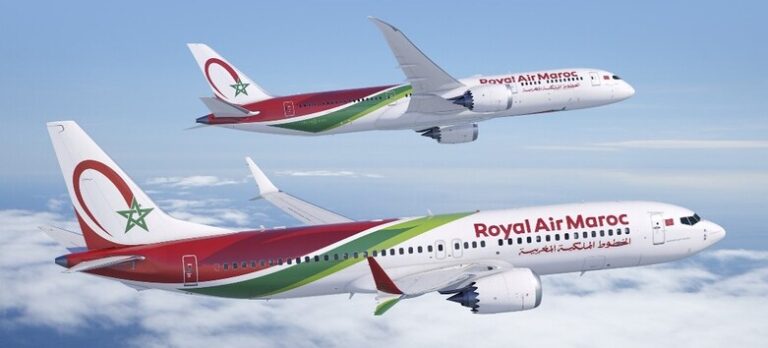
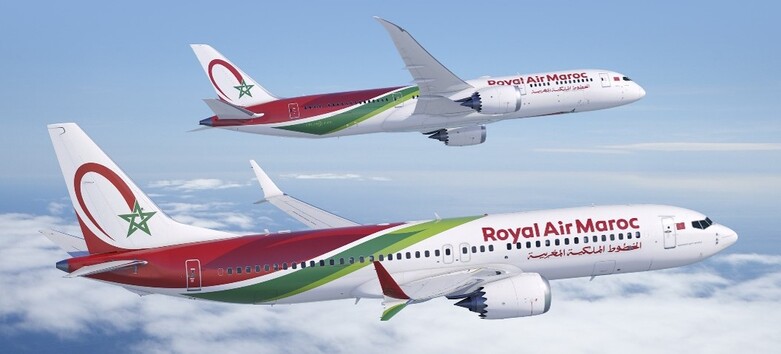
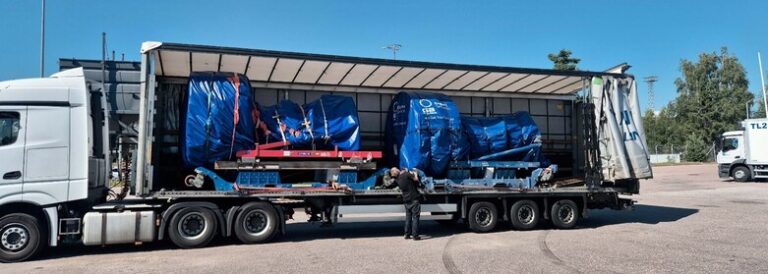
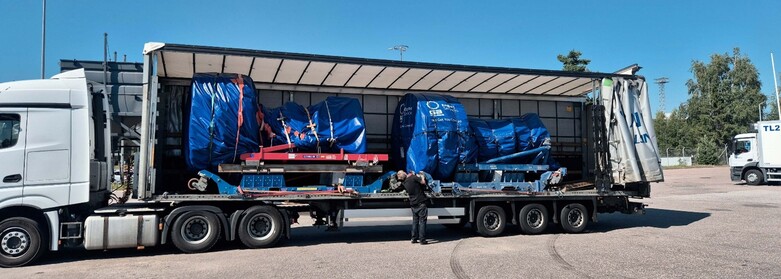
CharterDesk and ECS Group subsidiary, Aero Cargo International (ACI) France, recently arranged the quick transport of two large aircraft engines from Helsinki to Casablanca, for Royal Air Maroc. Sourcing and ordering a charter aircraft is just one part of the operation. Shipments of this size and complexity require particular care and planning – and all that under time pressure. This time-critical aircraft engine mission could have been jeopardized when it transpired that the origin airport did not have any 20-foot main-deck pallets. As soon as the charter request came in, CharterDesk worked out the best transport solution, including cost and availability, for ACI France to agree with Royal Air Maroc. Once confirmed, CharterDesk then sourced all required flight permits and ground handling operations. Upon discovering the lack of main-deck pallets, CharterDesk immediately coordinated delivery from an external supplier, arranging the last-minute transport from Amsterdam to Helsinki. “Close coordination between CharterDesk, Aero Cargo International France on behalf of Royal Air Maroc, the charter company, ULD supplier, RFS provider, ground handler, and relevant authorities, ensured the success of this urgent and complex weekend cargo charter operation,” the press release emphasizes.
CharterDesk and ECS Group subsidiary ACI France complete time-critical aircraft engine mission. Image: Lemon Queen
Emir Ozdabak, Managing Director of CharterDesk, said: “When the charter request came in from Aero Cargo International France, it was immediately clear that aircraft engines of this size would require loading onto the main deck of a wide-body aircraft such as a Boeing 777F or Boeing 747F. We soon secured a Boeing 777F, but then found that the required 20-foot pallets were not immediately available in Helsinki. We therefore quickly located two PGA pallets through our ULD supplier in Amsterdam and arranged emergency trucking to Helsinki, getting them there just in time to make the flight.”
Guillaume Tourneret, Managing Director of Aero Cargo International France, confirmed: “The engines and the pallets both arrived at Helsinki airport at the same time on Friday afternoon, which meant that the shipment could be built-up right away, and our charter departed on schedule on the morning of 18JUL26. Thanks to CharterDesk, we were able to have the engines delivered to Royal Air Maroc in less than 24 hours from the moment both were ready for shipment in Helsinki. It was great teamwork that enabled a truly smooth operation under serious pressure. Thank you to everyone involved for the excellent cooperation!”
Cargo operations at Caracas’ Simón Bolivar International Airport (IATA code: CCS) resumed last Wednesday (05AUG26) following its complete the closure caused by the earthquakes on 24JUN26.
UniWorld was the first cargo airline to resume flights to Caracas, credit of UniWorld
The devastations forced airlines to divert their passenger and cargo operations to alternate airports or to cancel their regular schedules until aviation authorities could once again guarantee safe conditions at the airport facilities. At least for freighter flights, the officials have now given the green light.
The 7.2- and 7.5-magnitude quakes were felt in Colombia, Venezuela and across the Caribbean and caused building to collapse in the Venezuelan capital Caracas. It severely damaged the South American country’s main air hub Simón Bolívar International Airport in Caracas Videos circulating on social media show travelers and airport staff, as they flee the building in a panic. Inside the passenger terminal collapsed, thick clouds of dust clogged the air within minutes and parts of the ceiling paneling fell on the floor. It’s almost a miracle that no one was badly injured.
As a precautionary measure, all flight operations were suspended immediately and halted until now.
IAIM gives the green light for cargo flights Through Circular IAIM-DG-2026-0000631, issued on 31JUL2026, the Maiquetía International Airport Institute (IAIM) formally confirmed the restart of cargo flights, directing cargo airlines, customs agencies, freight forwarders, and warehouse operators to reactivate concessions ahead of the forthcoming reopening. The Ministry of People’s Power for Transport subsequently announced that both arriving and departing cargo flights would resume under full compliance with Venezuelan civil aviation regulations, international operational safety standards, and aviation security (AVSEC) requirements.
Cargo comes first The local authorities decided to reopen cargo before passenger service as only the runway and cargo infrastructure are required, whereas passenger operations depend on fully functioning terminal facilities, security screening, immigration, and baggage sorting systems. Commercial passenger flights are scheduled to restart on 24AUG26, with a temporary terminal currently under construction. The phased reopening reflects a deliberate operational strategy that prioritizes infrastructure readiness and aviation safety rather than a simple return to everyday business.
Already before the double earthquakes, the Venezuelan cargo market had for years been served only to a very limited extent. Lately, however, international air freight companies have returned and expanded their activities in Venezuela, following the fall of the Maduro regime. Among the carriers that started serving the country since are Avianca Cargo, Cargojet, Amerijet, DHL and Latam Cargo.
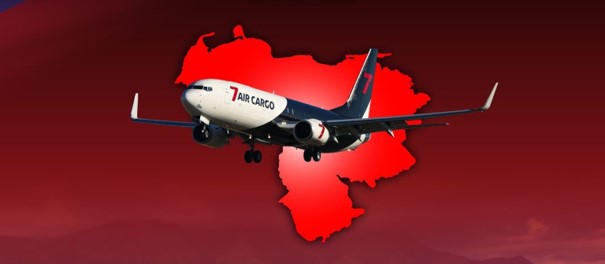
Miami-based 7Air Cargo is facing an uncertain future. Image: credit 7Air
Will 7 Air Cargo survive? As the latest capacity provider, on 08MAY26, Miami-based 7 Air Cargo planned to launch a charter chain to Caracas, deploying B737-800BCF aircraft. Their decision marks a significant milestone for the U.S. cargo airline and is seen as a signal for Venezuela’s cautious return to international logistics networks. The new connection announced by 7 Air underscores the growing interest in Venezuela as a gateway for north-south traffic within Latin America as well as for connections to the USA and the Caribbean. However, the quakes have so far prevented any flights from taking off.
Whether 7 Air’s plans will ever come to fruition is now questionable. A few days ago, lessor Aircastle filed a lawsuit seeking repossession of their two 737-800BCFs after the U.S. freight carrier missed over US$ 900,000 in payments.
No sooner had the group’s quarterly figures released last Tuesday (04AUG26) than the company’s stock price plummeted sharply – by more than 8% on a daily average, from €9.27 to €8.50. Even though the stock price is only one indicator of an actor’s situation, it does show that the airline urgently needs to take action to improve its outlook.
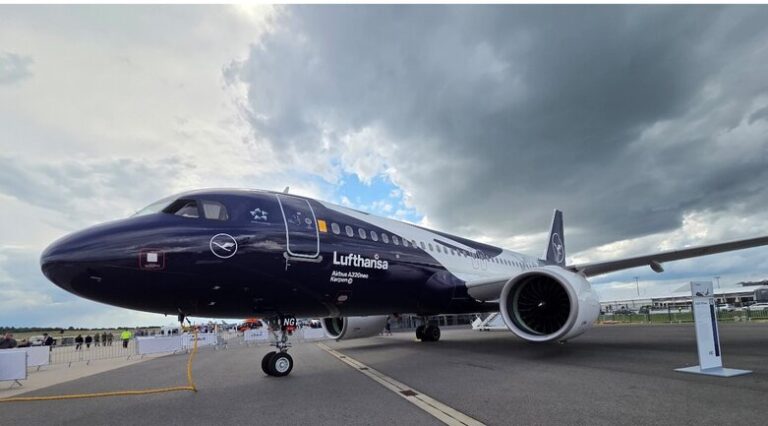
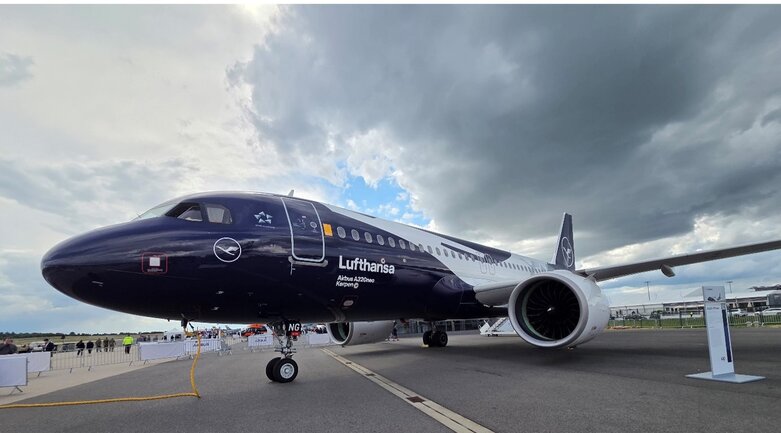
Dark clouds are gathering over Lufthansa Passage Airline regarding its financial situation – photo: CFG/hsDark clouds are gathering over Lufthansa Passage Airline regarding its financial situation – photo: CFG/hs
This is because the result is not solely attributable to unfavorable external factors, such as the skyrocketing fuel prices due to the Hormuz conflict. There are also significant internal reasons for the poor quarterly performance, particularly high operating costs. These are caused by a bloated administrative workforce, extremely high pilot salaries, very complex flight operations with multiple hubs in Europe, and – due to Boeing’s long-standing production and delivery problems – a passenger fleet that is, in part, outdated compared to Lufthansa’s competitors. Consequently, LH is losing market share to its main European competitors, the IAG Group (British Airways / Iberia) and Air France-KLM.
Losing market share IAG posted an operating profit of €1.41 billion (US$1.62 billion) in the second quarter. Despite a 25% decline from the first quarter, this result was significantly higher than the €1.37 billion analysts had expected.
Air France-KLM reported a second-quarter revenue increase 9.9% to €9.3 billion, while adjusted operating profit reached €484 million (down 250 million from Q1). The company’s passenger business remained the main driver of growth, with passenger unit revenues up 8.9% for the quarter. Cargo also performed strongly, with unit revenues up 26.7% and an estimated €100 million contribution to profitability.
Over in Frankfurt, Lufthansa Cargo contributed €116 million to its parent company’s balance sheet in fiscal Q2 (up 58% year-over-year). Klick here for Lufthansa Cargo story written by Anastasia)
Austerity program is under way To prevent further losses, the Lufthansa Executive Board has approved a turnaround program aimed at achieving annual savings of €2.5 billion by the end of 2028. At the earnings conference, CFO Till Streichert announced that non-essential projects will be canceled, which is expected to yield an additional €200 million in savings. In addition, the administrative structure will be streamlined, and a severance program is currently underway. Management has not disclosed how many jobs are to be cut.
In contrast to the parent company, however, the other members of the airline group – which include Swiss, Austrian Airlines, and Italy’s ITA, among others – are growing. The problem children are Eurowings and Sun Express, which specialize in European and Mediterranean routes, respectively. They reported an a combined or each? EBIT of minus €252 million for the first half of the year.
SN deepens losses Lufthansa subsidiary Brussels Airlines is also burning money. The Belgian carrier reports a loss of €70 million for the first half of the year, which is €24 million more than in the previous year.
The main reason, in addition to high aviation fuel costs, is the Ebola epidemic in the Congo and East Africa. This has hit the airline massively, which serves a multitude of routes between Europe and Africa. Due to this difficult market situation, the expansion of the fleet has been halted. Brussels Airlines was set to receive two additional A330-200 passenger aircraft from parent Lufthansa, complementing its existing fleet of eleven long-haul aircraft, which were to be operated primarily on African routes. This plan is currently off the table.
The Cargo Community Frankfurt (ACCF) conference, taking place September 2–3, offers a kaleidoscope of interesting topics. Of course, there will also be plenty of opportunities for networking, which plays a crucial role at the event alongside presentations and discussions on industrial topics. In addition, the exhibition area offers participants a firsthand impression of exciting technical innovations. Felix Toepsch (FT) explained to us why the industry shouldn’t miss the show. He heads the Air Cargo Community and is responsible for the event.
Felix Toepsch heads Frankfurt’s Air Cargo Community, courtesy of Fraport AG
CFG: This year’s ACCF focuses on international cooperation in the air cargo industry. One key topic will certainly be the new partnership between Fraport Cargo, Bangalore Cargo, and several other Indian airports. What assessment and update will be presented to the attendees?
FT: For the 11th year, the Air Cargo Conference is carefully curated with great effort and follows selected thematic blocks. This year, on the first day of the conference, we are focusing on “NEW HORIZONS – NEW INDIAN-EUROPEAN PARTNERSHIPS.” In this segment, we will bring together Indian and European perspectives on our industry. Our aim is not only to highlight the partnership between Bangalore and Frankfurt, but to take a holistic view of the Indian market, which is one of our central focus areas for the coming years.
During a dedicated panel, we will exchange expectations regarding trends, challenges, and market dynamics for the years ahead. Furthermore, we will discuss opportunities for joint growth and collaboration. Attendees can look forward to an in-depth update on our new partnerships and an assessment of how these initiatives will shape the future of air cargo between India and Europe.
CFG: The role of “Artificial Intelligence” in air cargo is not mentioned in the preliminary program. Why?
FT: In our thematic block “Reality Check: Future Technologies for Air Cargo,” we will take an in-depth look at several emerging technologies expected to shape the future of the air cargo industry. Artificial intelligence will be among the key topics, with this year’s focus placed specifically on its sustainability, anticipated technological breakthroughs, and a scientific assessment of its overall added value.
Alongside AI, we will also explore other innovative solutions that could become highly relevant to the air cargo sector. Moreover, some of these technologies will not only be discussed but can also be experienced firsthand in our exhibition area, offering attendees the opportunity to witness these advancements in action.
CFG: Speaking of security in air cargo: at the ACCF case studies will be presented and discussed. Do air cargo security systems need to be strengthened, especially following several attacks on DHL cargo planes and the latest drone assault at Leipzig Airport? In other words, in addition to traditional scanning and hand searching of packages, will a new perspective be discussed: defense against drone attacks?
FT: One of this year’s key topics will be “High Security in Cargo.” Our primary focus will be on the secure and confidential transport of highly valuable and sensitive shipments, such as diplomatic consignments. Attendees will gain exclusive insights into how these types of cargo are handled to ensure maximum security and discretion.
In addition, visitors can look forward to practical, real-world examples of how transport security can be enhanced, for instance in the shipment of consumer electronics. In this context, DHL and Fraport will present a joint case study, offering valuable perspectives from their operational experience.
And as for drone attacks, such as the one that recently occurred in Leipzig: Government agencies are responsible for consistently countering this threat. As an airport operator, we do our utmost to contribute to this effort, but we are not in a leading position.
CFG: This is already the eleventh ACCF. For the first time, the meeting is taking place at the Frankfurt Exhibition Center. Last year, the event was held at Eintracht Frankfurt’s soccer stadium; before that, it was a conference room at Gateway Gardens near the airport. It would be interesting to know if the ACCF will make the Exhibition Center its home, or do we meet at another location next year?
FT: With the remarkable growth and increasing popularity of our event in recent years, expectations for our venue have risen as well. Last year, we were delighted to welcome more than 450 guests, reflecting not only the growing scale but also the increasing international reach of the conference. Our anniversary celebration at Frankfurt’s soccer stadium was truly special and set a high standard for the future.
This year, we are excited to move to the Conference Center at Messe Frankfurt, a state-of-the-art venue that provides the ideal environment for the continued growth and evolution of our event. The new location offers plenty of space for our expanding program and is perfectly suited to potentially serve as the long-term home of the Air Cargo Conference.
The Conference Center brings together all the elements that make for a successful event: a dynamic conference atmosphere, dedicated exhibition areas, versatile networking spaces, and modern meeting rooms. Its prime location in the heart of Frankfurt and excellent accessibility, especially for our international guests, ensure a first-class experience for everyone attending.
There is no shortage of topics for discussion in air cargo these days. Geopolitical uncertainty, changing trade flows, digitalization, artificial intelligence and growing customer expectations continue to shape the industry’s agenda. Unsurprisingly, these issues will dominate the 11th Air Cargo Conference, organized by the Air Cargo Community Frankfurt (ACCF), on 02-03SEP26 at Messe Frankfurt.
According to the organizer, this year’s program is designed to combine strategic perspectives with practical experience. Keynote speeches, panel discussions and case studies will bring together airlines, airports, logistics providers, shippers and technology companies to discuss where the industry is heading and how it intends to get there.
Airline panel One discussion likely to attract particular attention is the C-Level Airline Panel, featuring executives from Lufthansa Cargo, Cathay Cargo, Ethiopian Airlines, LATAM Cargo and Delta Air Lines. Competitiveness and resilience remain recurring themes across the air cargo industry, although opinions on how to tackle them are likely to differ depending on airline strategy and market focus.
India in the spotlight Another session is scheduled to examine the growing trade relationship between Indian Airports and Frankfurt. As manufacturers continue to diversify supply chains, and new production hubs emerge, India is increasingly viewed as one of the markets with long-term growth potential for air cargo. Whether those expectations materialize will largely depend on future trade developments and global economic conditions.
AI and security matters stand high on the agenda Artificial intelligence also returns to the conference agenda. While AI has become one of the industry’s most frequently discussed topics, its practical implementation varies considerably across companies. The scheduled Reality Check session therefore promises a timely discussion on where automation and AI are already creating measurable value – and where expectations may still exceed operational reality.
Security is another key topic and the focus of a dedicated session on high-security shipments which will address cooperation between airlines, handling agents and other supply chain partners, reflecting the growing importance of secure and resilient logistics processes.
So do new trucking developments Cargo Forwarder will moderate a panel titled “Without Trucking, No Air Freight” which will feature prominent industry representatives presenting the latest developments in the road feeder sector and discussing them with the audience. According to statistics, trucking accounts for about 7% of total CO2 emissions in Germany. A key question will be how quickly the transition to “clean” trucking can be achieved while maintaining secure supply chains. The panel will address issues such as whether AI and consistent digitalization can accelerate the shift from the fossil fuel era to “clean” trucking, and what supporting measures are needed from policymakers to get the e-wheel turning faster. In short: This panel promises plenty of food for thought.
ACCF is worth attending Haus61 and Lufthansa Cargo are organizing startup pitches organized as part of their Innovation Award, providing young companies with an opportunity to present new ideas to an audience of established industry players.
Whether the conference produces concrete solutions or primarily identifies the industry’s next challenges, Frankfurt is once again set to become a meeting point for decision-makers looking to exchange views on the future of global air cargo.