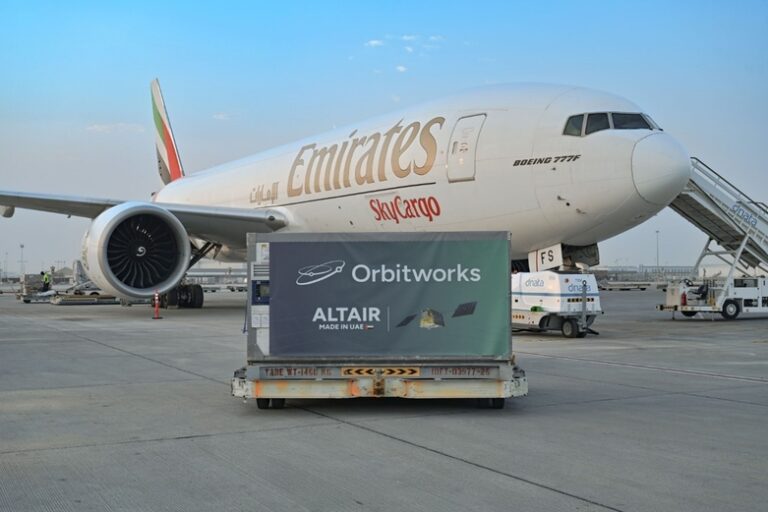
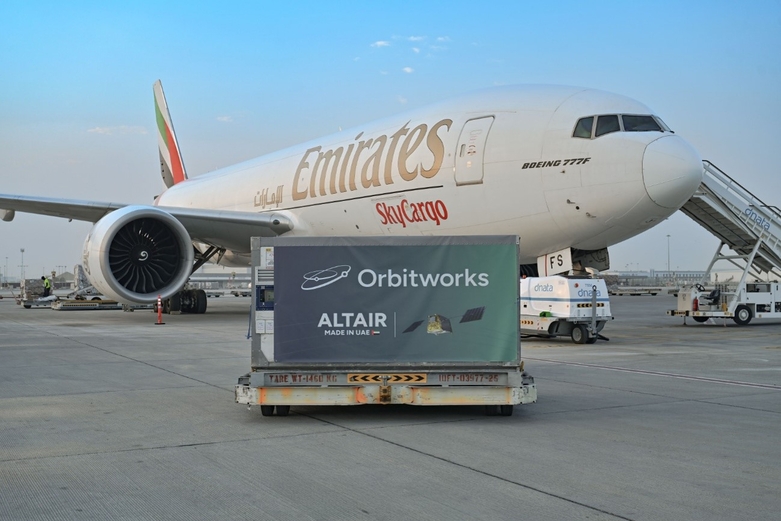
Made in the UAE – the first of 10 Altair constellation satellites. Image: Emirates SkyCargo
The UAE has vision of becoming a global leader in space and advanced technologies, and it is wasting no time in implementing that vision. Abu Dhabi-based Orbitworks is the Middle East’s first commercial satellite integrator, producing in the UAE, and building its own AI-enabled Earth observation constellation, called Altair. Equipped with optical, infrared, thermal and RF-sensing capabilities and onboard AI processing, Altair will offer analysis-ready intelligence for applications including environmental monitoring, disaster response, land and coastal-use analysis, maritime domain awareness, and resource and infrastructure assessment. Altair will be made up of 10 satellites. The first of these, Altair-1, was recently flown on an Emirates SkyCargo Boeing 777 freighter from Dubai (DWC) to Los Angeles (LAX), ready to be launched in OCT26. The carrier’s transport solution, Aerospace and Engineering, was developed precisely for this kind of fragile commodity, and is one of its fastest-growing products. A dedicated Emirates SkyCargo team ensures end-to-end transport and compliance with environmental and safety regulations. Emirates is well-versed in satellite transport, having already transported Khalifasat, the first satellite ever developed and built by UAE engineers, from Dubai to South Korea, eight years ago. Last year, it carried the Arab Satellite 813 from Dubai to Shanghai, China, from where it was launched on 10DEC25. So far, this year, the airline has transported more than 6,000 tons of aerospace and advanced engineering cargo.
Badr Abbas, Divisional Senior Vice President, Emirates SkyCargo, announced: “Emirates SkyCargo is proud to support Orbitworks at this significant moment and contribute to the UAE’s growing reputation as a global hub for innovation, advanced technologies and specialized logistics. Transporting highly sensitive and technologically advanced cargo requires precision and expertise and we are well positioned through decades of deep expertise to support this critical mission. The movement of Altair-1 from the UAE to the United States ahead of its launch also underlines the role of specialized air cargo solutions in supporting the global aerospace sector.” Schahan Sediqi, General Manager, Orbitworks, stated: “Altair-1 is the product of hard work by an incredible team, and today marks a historic moment, not just for Orbitworks, but for the UAE’s ambitions in space. We could not have reached this point without in-country partners like Emirates SkyCargo, whose care and expertise got Altair safely from Dubai to Los Angeles. We are incredibly proud of what our team has built, and we now look forward to October, when Altair-1 will launch into orbit and begin its mission.”
Maureva brings digital efficiency to Solomon Airlines. Image: Solomon Airlines Limited
Mauritian aviation software solutions provider, Maureva, has entered into partnership with Solomon Islands’ national carrier, Solomon Airlines Limited, where it will be implementing its Cargo Management System (CMS). Called MARGO, the system offers a fully integrated cargo platform from document issuance through to billing, reconciliation and financial control. Solomon Airlines can therefore look forward to improved air waybill management, cargo revenue accounting, and transaction traceability as it continues to digitize its main cargo operations across its South Pacific network. Solomon Airlines’ decision to use MARGO came from a recommendation by Australian air cargo and logistics provider, AIRWAY, which has long been a customer of the 25-year-old software provider.
Matthew Findlay, CEO, Solomon Airlines Limited, explained: “As we grow our cargo business across the Pacific, we needed a partner who could support our day-to-day operations as well as our long-term revenue objectives. MARGO gives us that foundation, and we’re confident it will serve us well as our network continues to expand.”
AIRWAY issued the following statement: “Currently using MARGO within our own operations, we’ve seen first-hand the benefits it delivers through improved visibility, efficiency and cargo management. We were hence comfortable recommending the Margo solution to Solomon Airlines, and it’s great to see the partnership come together to support their future growth.”
Romain Angella, Chief Commercial Officer, Maureva, concluded: “Solomon Airlines’ decision to adopt MARGO represents another important milestone for our Cargo business unit in the Pacific and further reinforces MARGO’s position as a comprehensive end-to-end cargo management platform. We are delighted to support Solomon Airlines in modernizing its cargo operations and particularly proud that this partnership originated from the confidence and recommendation of one of our long-standing customers. There is no stronger endorsement than the trust of an existing client.”
Maureva brings digital efficiency to Solomon Airlines. Image: Solomon Airlines Limited
Memphis International Airport was officially renamed Frederick W. Smith International Airport in honor of the founder and long-time chief of integrator FedEx. The ceremony, held on August 11 (what would have been Smith’s 82nd birthday), coincided with the first FedEx Day of Service, an initiative that highlights the founder’s commitment to community leadership and his visionary entrepreneurial hub and spoke conception.
The tribute recognizes Smith’s profound influence on aviation, global trade, and the city of Memphis itself, where FedEx concentrates its global operations. Smith founded the company in 1971 and flight operations began on April 17, 1973, with an initial fleet of 20 Dassault Falcon jetliners, which transported 186 packages to 25 cities from the Memphis hub during the first night of operations. His vision for the hub-and-spoke scheme, invented and implemented by him, transformed the global logistics industry.
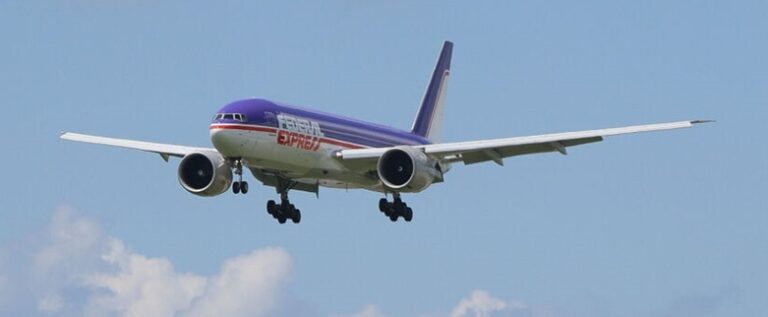
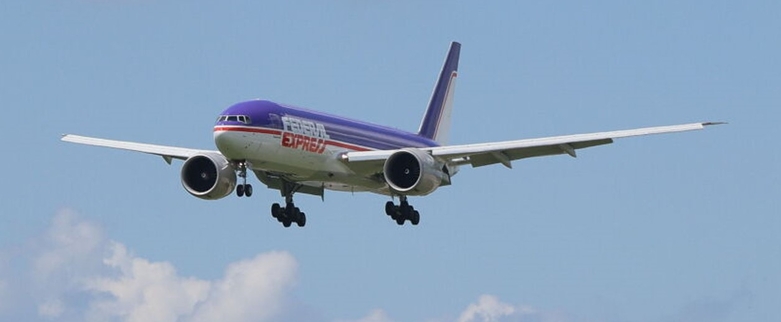
Among the first aircraft to land at the airport following the name change was the FedEx Boeing 777F with registration number N884FD, nicknamed “Rosie” after one of Smith’s granddaughters. The freighter has been given a retro livery inspired by Federal Express’s original visual identity, which was used on the company’s first Falcon 20s in 1973. According to FedEx, the aircraft also pays tribute to Fred Smith’s granddaughter and symbolizes the link between the company’s past and future.
The airport’s IATA code (MEM) remains unchanged, although the new name already appears in U.S. databases, aeronautical charts, and flight plans.
B777F “Rosie” painted in a retro 1973 color scheme shortly before landing at Fredrick Smith Airport – courtesy of Federal Express
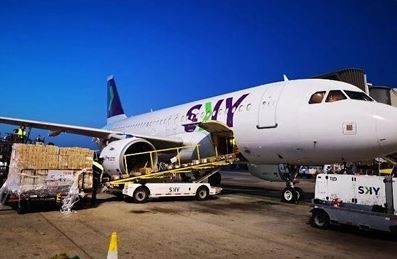
Following a second phase of evaluation, the Peruvian government approved the takeover while imposing limits on exclusivity. SKY Airline Perú, a capacity provider based in Lima, Peru, is the second largest airline in the Peruvian market. It is a subsidiary of Chile-based SKY Airline and operates scheduled domestic and international services from its main hub at Jorge Chávez International Airport at Callao (LIM). Brazil and Chile had already agreed to the deal, now Peru’s approving completes it.
The Peruvian Commission for the Defense of Free Competition authorized the takeover by the Abra Group, the parent of Colombia’s Avianca, Bazil’s GOL, and Spain’s Wamos Air. This decision is, however, still subject to contractual modifications. Green light for the transaction was given by the Peruvian authorities after determining that the original contract included clauses that limited the participation of other market players, and follows similar approvals already granted by regulatory authorities in Brazil and Chile.
In March 2026, the Peruvian agency had begun the second phase of its review of the transaction by closely checking potential effects on routes between Lima and Miami, as well as between Cusco and the U.S. city. During this phase, the watchdogs determined that business consolidation would not restrict competition on those routes.
Abra was already a creditor of SKY through a convertible loan of US$89.8 million maturing in October 2026, which allowed the debt to be converted into 41.04% of the shares. The negotiations included proposals for a share swap and but? concluded with an alternative transaction in which SKY’s majority shareholders would transfer shares in exchange for an equity stake in Abra. With this acquisition Abra is strengthening its market position in South America where Lima-based SKY serves Buenos Aires, Montevideo, Sao Paulo, Rio de Janeiro, and Florianópolis, among others.
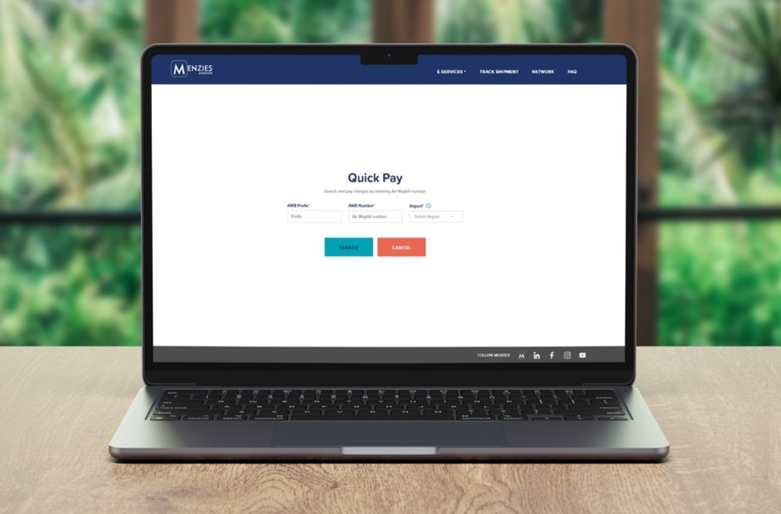
Payment just got a lot easier with Quick Pay on MACH.
Customers using the Menzies Aviation Cargo Handling (MACH) portal now have a quicker and simpler way to pay the charges linked to their air waybill. As the name says, ‘Quick Pay’ – a product offered by PayCargo – has been integrated in the platform. Easier cargo payments translate into quicker cargo release for customers. Quick Pay eliminates several manual steps in the payment process and requires no account creation. Instead, users can see all relevant charges linked to their shipment and can then settle these using PayCargo, either using an existing account or guest checkout. Menzies’ MACH portal was launched in 2023, and is now used at 49 airports across the world. To date, over 1.6 million air waybills have been processed by MACH. (To put that into perspective: Menzies Aviation’s global cargo network includes 73 warehouses and 79 freighter handling locations, which, together, handle over 2.4 million tons of cargo each year.) and Menzies is continuously looking to improve its digital capabilities. With Quick Pay as the newest addition, users can not only arrange payment, but can also track shipments using by their AWB, and access information on Menzies Aviation’s global cargo network. More capabilities are yet to come, according to the press release.
Rory Fidler, SVP Cargo Technology, Menzies Aviation, said: “The launch of Quick Pay is an important step in the evolution of the MACH customer portal and supports our wider digital transformation journey. By working with PayCargo, we are making it quicker and easier for customers to complete payments, helping reduce friction, improve visibility and keep cargo moving.” Eduardo Del Riego, Global CEO, PayCargo said: “Speed and certainty are critical in air cargo, and payments should never be the reason cargo is delayed. We’re proud to partner with Menzies Aviation to give their customers a simpler way to complete payments and accelerate cargo release. Together, we’re continuing to digitize the air cargo payment experience and help move cargo more efficiently around the world.”
Bringing even greater transparency to air freight. Image: CargoAi
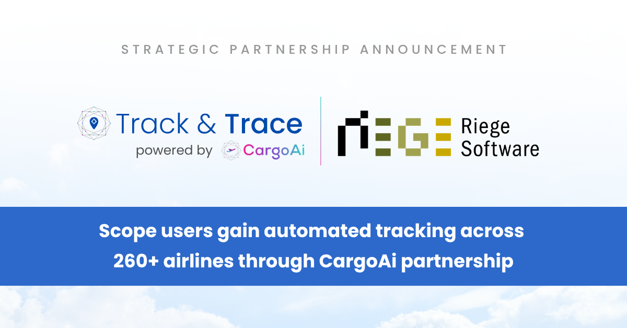
Riege Software has chosen to integrate CargoCONNECT’s Track & Trace API into its transportation management system, Scope. This follows on from its earlier move to integrate CargoAi’s Quote & Book API (CFG reported: https://cargoforwarder.eu/2025/01/26/rieges-full-scope-just-got-fuller-with-cargoai/ ) The latest integration will facilitate messaging and tracking, supporting Riege Software’s Airline Messaging Premium capability. Those using Scope will get see automated shipment milestones directly within the system, thus increasing communication efficiency including with customers, improving shipment visibility, and reducing the need for manual tracking. CargoAi’s Track & Trace API being integrated within Scope’s Airline Messaging Premium, is a further step towards seamless digital, data-driven cargo operations for the freight forwarding community. It enables them to directly monitor shipments across more than 260 airlines, and supports increasingly standardized messaging for import, export, consolidated, back-to-back and direct air shipments for all freight forwarders, regardless of whether they are IATA-affiliated or not.
“The integration addresses a persistent operational challenge in the industry. Incomplete shipment event coverage often requires operations teams to search airline websites for actual departures and arrivals, copy information from external sources and manually complete missing milestones within their transport management system. Furthermore, the integration improves shipment visibility by increasing data coverage for import flows, an area where forwarders have historically encountered tracking gaps,” the release reveals, going on to declare that Riege’s 2026 pilot manage to cover up to 91.3% export and 90.2% import events.
Matt Petot, CEO of CargoAi, said: “We are proud to support Riege Software with CargoCONNECT’s Track & Trace technology. By aggregating and standardizing shipment events from more than 260 airlines, the integration delivers more complete and consistent data directly into Scope. It demonstrates how API connectivity can close visibility gaps and strengthen the digital infrastructure behind air cargo operations.” Benjamin Riege, CMO, Riege Software, commented: “Our partnership with CargoAi enables freight forwarders to access airfreight rates and booking capabilities directly within Scope. With the Track & Trace API as the latest addition to this collaboration, we can now further enhance shipment visibility, improve milestone coverage and reduce manual flight research, helping our customers manage the full airfreight workflow more efficiently from their daily operational system.”
Each week, CargoForwarder Global shines its ‘Spotlight On…’ a different area of the air cargo industry and illustrates the wide variety of career opportunities available through the voices of those working in it. Airports are the physical and operational gateways that make air cargo possible. They provide the conditions (dealing with government agencies, for example), security, and handling infrastructure that enable all other air cargo stakeholders (airlines, freight forwarders, ground handlers, customs authorities, and road feeder services) to connect and ensure smooth, safe, commodity-specific cargo transport. This week, Magdalena Deitsche (MD), Senior Cargo Manager at Heathrow Airport, explains her role, shares her views and offers advice to anyone considering a career in air cargo.
Many people find their way into cargo almost by accident. Image: Magdalena Deitsche
CFG: What is your current function and company? And what are your responsibilities?
MD: I am a Senior Cargo Manager at Heathrow Airport, responsible for managing relationships with a broad range of cargo stakeholders, including airlines, cargo handlers, freight forwarders, and government agencies. My role focuses on working collaboratively with stakeholders to address challenges, identify opportunities, and drive improvements across Heathrow’s cargo operation. This includes supporting both operational and strategic initiatives, facilitating industry engagement, contributing to future infrastructure and development projects, and helping ensure Heathrow remains a leading gateway for international trade.
CFG: What does a normal day look like for you?
MD: A ‘normal’ day is hard to define in air cargo, and that’s exactly what makes it so interesting. My time can range from working on strategic projects and future infrastructure development plans to engaging directly with operational teams across the cargo estate to address day-to-day challenges. Depending on the day, I may be meeting with stakeholders, resolving operational issues, or representing Heathrow at international conferences and industry events. What makes the job particularly rewarding is the unique combination of strategic thinking and operational engagement, together with the opportunity to work with people from across the industry. There is always a new challenge to tackle, a different perspective to consider, or something new to learn, which keeps the work both engaging and fulfilling
CFG: How long have you been in the air cargo industry, and what brought you to it?
MD: I started my career in 2015, through a graduate program at Leipzig/Halle Airport in Germany, which gave me the opportunity to work across a variety of departments and gain a broad understanding of the airport ecosystem. It was during this time that I was first exposed to air cargo, and I quickly realized that it was the area that fascinated me most. What initially attracted me was the diversity, importance, and pace of the sector. Air cargo sits at the heart of global trade, connecting businesses, markets, and communities around the world. It is a dynamic industry where no two days are the same and where global developments can be reflected in operations almost instantly. From geopolitical tensions and supply chain disruptions to pandemics and changing trade routes, cargo is constantly evolving, requiring agility, resilience, and innovation. That combination of fast-paced operations and global significance is what drew me to the industry and has kept me engaged throughout my career. Working at Heathrow brings this into sharp focus. As the UK’s largest port by value, Heathrow plays a vital role in facilitating international trade and connecting businesses with global markets. Being part of it is both a privilege and a constant source of motivation.
CFG: What do you enjoy most about your job?
MD: What I enjoy most is the combination of people, purpose, and impact. Air cargo is a highly collaborative industry. Despite its global reach, it remains a close-knit community where success depends on aligning diverse stakeholders behind a common goal. Helping to build those connections, overcome challenges, and deliver tangible improvements is one of the most rewarding aspects of my role. I also value the sense of purpose that comes with the role. The work we do supports the movement of essential goods, facilitates trade, and helps keep supply chains moving through both routine operations and times of disruption. Knowing that our efforts contribute to keeping businesses, communities, and economies connected gives a real sense of meaning to what we do every day.
CFG: Where do you see the greatest challenges in our industry?
MD: One of the biggest challenges is attracting the next generation of talent. Many people benefit from air cargo every day without realizing it. Whether it’s receiving an online order, accessing life-saving medicines, or purchasing fresh produce in a supermarket, air cargo plays a vital role in making that possible. As an industry, we need to do a better job of telling that story and showcasing the exciting career opportunities available. Looking specifically at Heathrow, another key challenge is capacity. Demand for air cargo continues to grow, supported by global trade, e-commerce and the movement of high-value goods. Heathrow is the UK’s largest port by value and a critical gateway connecting businesses to international markets. However, the airport’s ability to accommodate further growth is constrained by runway and infrastructure capacity. To support future trade growth, expanding Heathrow’s capacity will be critical to unlocking additional trade opportunities, strengthening connectivity, and maximizing the airport’s contribution to the economy. At the same time, we must continue to modernize and embrace digitalization. While significant progress has been made, there is still considerable opportunity to improve data sharing, visibility, and process efficiency across the supply chain. The more we can leverage technology and collaborate across the industry, the better positioned we will be to meet future demands.
CFG: What advice would you give to people looking to get into the air cargo industry?
MD: One of the great things about air cargo is that there is no single route into the industry. In fact, many people find their way into cargo almost by accident. Personally, I think we should do more to showcase the opportunities it offers, especially to young talent. For anyone looking to join, my advice would be to stay curious, be open to opportunities, and never be afraid to ask questions. Some of the best learning comes from spending time with people across the supply chain and understanding how everything connects, from airlines and handlers to freight forwarders, customs authorities, and airports. Air cargo is full of experienced professionals who are passionate about what they do and willing to share their knowledge. While technical skills can be learned over time, curiosity, adaptability, relationship-building, and a genuine willingness to learn are what will really help you succeed. Above all, air cargo is a people-focused industry. If you are willing to learn, collaborate, and understand the bigger picture, there are tremendous opportunities to build a rewarding and meaningful career.
CFG: If the air cargo industry were a film/book, what would its title be?
MD: I’d probably call it ‘The World Behind the Air Waybill’. Most people are unaware of the complex network of people, processes, and partnerships behind the products they buy, the medicines they rely on, and the food they find on supermarket shelves. Every shipment tells a story of global trade, connectivity, and collaboration. Air cargo operates largely behind the scenes, yet it plays a vital role in supporting economies and keeping supply chains moving through both routine operations and times of disruption. It is one of those industries that quietly keeps the world connected, often without anyone ever noticing.
Thank you very much, Magdalena.
If you would like to share your personal air cargo story with our CargoForwarder Global readers, feel free to send your answers to the above questions to cargoforwarderglobal@kopfpilot.at We look forward to shining a spotlight on your job area, views, and experiences.
DHL Express has further expanded its air freight network to and from China by adding an additional cargo flight between Shanghai and Brussels. At the same time, the integrator announced the opening of a large hub in Shenzhen. Construction costs amounted to €177 million, DHL’s largest investment in mainland China to date.
To start with, the new Shanghai-Brussels flights are operated by DHL Air UK who provide the B767 freighter aircraft, offering a capacity of 50 tons. The route includes stopovers at Bangkok and Bahrain on way to Brussels. Does it stop in the same places on the way back, or is that leg direct? “Thailand is an important growth market in East Asia, so are Indonesia and Vietnam. That’s why it makes sense for us to integrate the country more closely into our flight network,” a DHL spokesperson emphasizes, responding to a query from CargoForwarder Global.
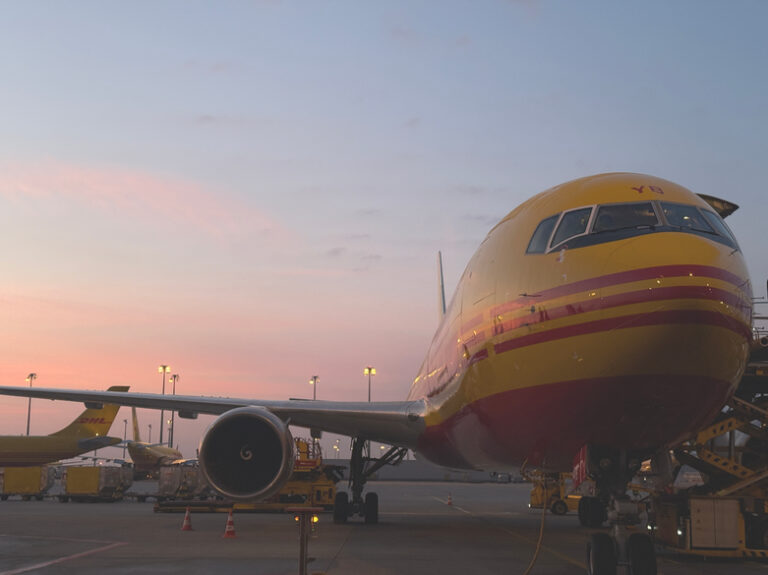
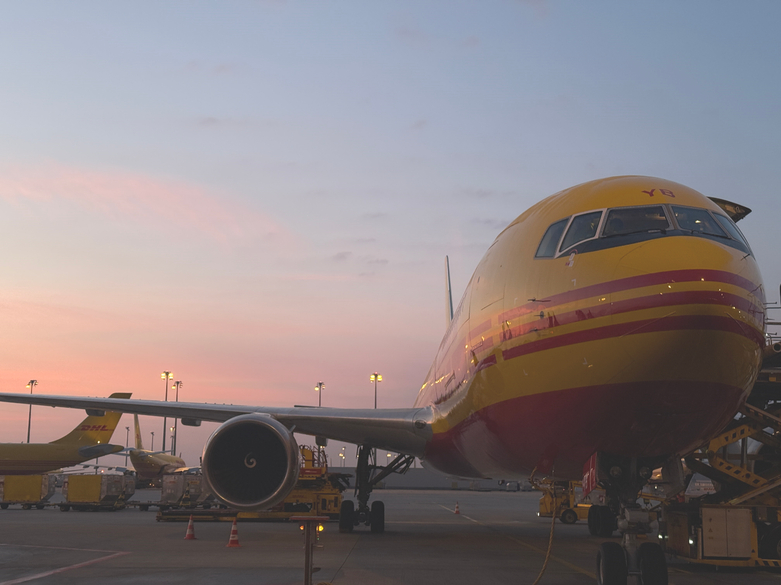
DHL operates a Boeing 767 freighter on the route Shanghai-Bangkok-Bahrain-Brussels – images: Courtesy of DHL Express
Diverse product portfolio
The freighter aircraft enables greater schedule flexibility and increases uplift opportunities for heavier shipments moving across key trade lanes. In addition, the cargo flights support the company’s growing Heavyweight Express offering, enabling customers to move larger shipments through the DHL Express international time-definite network with door-to-door visibility, customs clearance and predictable transit times. Demand is growing among customers in sectors such as technology, industrial manufacturing, semiconductors, healthcare, data center infrastructure, and new energy, many of which rely heavily on manufacturing and supplier networks in China and across Asia, reads a DHL release.
Cargo is like water. It always finds a way
“Global supply chains continue to adapt to changing economic conditions, geopolitical disruption and evolving customer requirements,” states John Pearson, CEO of DHL Express. The executive went on to say: “Our focus is on ensuring customers have the flexible, reliable and high-quality logistics networks they need to connect with suppliers, production locations and consumers around the world. These investments enhance the connections between China and global markets and reinforce DHL’s role as the logistics partner of choice for international e-commerce and fast-growing sectors such as data center and semiconductor logistics, life sciences and healthcare and new energy.” Although supply chains are becoming increasingly diversified, China remains an important hub for manufacturing, sourcing, innovation, and consumption, and continues to play a significant role in international trade and regional supply chains, the integrator stresses. Consequently, DHL Express has expanded its logistics infrastructure and air network in China, strengthening its ability to support customers operating in, and trading with, one of the world’s largest manufacturing and consumer markets.
€177 million – DHL’s largest investment in China to date.
Shipments travel from SZX to HKG and vice versa
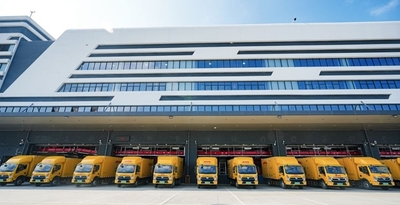
As part of this expansion,the integrator has grown its “Super Gateway,” located at Shenzhen Bao’an International Airport, by tripling its processing capacity to approximately 900 tons per day. Serving one of China’s most important manufacturing and export regions, the facility supports growing cross-border trade, e-commerce shipments, and time-definite international express services. The gateway will also create more than 1,000 jobs and further strengthen DHL’s network capabilities in Southern China. The flow of shipments to international destinations is routed through the neighboring Check Lap Kok Airport in Hong Kong (HKG), which is only 28 km away from Bao’an (SZX).
“China plus one (or two)”
Despite growing political concerns by Brussels and Washington, China remains an important hub for manufacturing, sourcing, innovation, and consumption, and continues to play a significant role in international trade and regional supply chains. However, the freighter’s stopover in Bangkok also shows that DHL doesn’t put all its eggs in one basket. Relying solely on China as a production center would be unwise given the ongoing geopolitical uncertainties and Beijing’s continued threats to invade Taiwan. To minimize risks, the integrator favors the “China plus one” strategy. The “ones” could be either Thailand, the Philippines, Indonesia, Malaysia or Vietnam.
The state-owned Rostec Corporation is moving forward with plans to consolidate various airlines under a single umbrella. Ilyushin Finance Co. is reportedly set to serve as the operator and administrator of the new holding company. Affected by the consolidation are the passenger airline Red Wings, its cargo subsidiary Sky Gates, the leasing company Aviacapital-Service, and various medical aviation assets. It is a step driven by hardship.
The operations of these carriers are at risk following Western sanctions, including the ban on spare parts and components for Boeing and Airbus jetliners. Consequently,the carriers’ ability to perform technical maintenance is severely hampered, if possible at all, as CargoForwarder Global previously reported: (https://cargoforwarder.eu/2026/07/19/russia-keeps-grounding-aircraft/). Other Russian airlines that are struggling commercially and operationally might follow suit and, should their situation deteriorate further, become part of the new holding. According to Rostec, the holding structure will make it easier to organize the exchange of components among the various airlines, thus reducing operational bottlenecks. Citing intelligence reports, Ukrainian media identify Red Wings as one of the clearest examples of the Russian aviation sector’s problems. According to the country’s Foreign Intelligence Service (SZRU), the carrier can no longer sustain its charter operations. Of its three Boeing 777 aircraft, only one remains in service, while another has been grounded and the third is effectively out of operation.
Rostec tabled a rescue scheme for Russian Airlines – photo: Rostec
Lower priority carriers play the third or fourth fiddle
The situation has reportedly been exacerbated by years of internal management disputes which have delayed key personnel decisions and contributed to the departure of experienced aviation specialists. According to the SZRU, creating a single holding company will not resolve the underlying problems. Instead, it will merely redistribute already scarce resources, including funding, personnel, and spare parts, among struggling operators. In practice, this means lower-priority carriers may be forced to sacrifice operations to keep more strategically important carriers in the air, predominantly the Aeroflot Group. The Ukrainian intelligence service concludes that no corporate restructuring can restore access to Western aircraft components, accelerate domestic aircraft production, or reverse the ongoing loss of skilled personnel after years of crisis management.
Russian airlines are victims of Russia’s international situation
Hard hit is also Russia’s cargo aviation sector which continues to contract amid shortages of engines and spare parts, extended maintenance cycles, and an aging fleet suffering from both a limited repair capacity and a shortage of qualified technicians. Since Russia’s Ukraine invasion, the industry has lost its cornerstone business of transporting cargo from the Far East to Europe via Russia, as evidenced by the decline of the once dominant freight carrier AirBridge Cargo. Another victim of Russia’s imperialist policy is Sky Gates Airlines. Following the Ukraine invasion, their two leased B747-400F aircraft were transferred to Baku and listed in the Azerbaijani Civil Aviation Aircraft Registry with Silk Way West Airlines as their new operator. The latter has ceased all commercial operations in Russia, including overflights of Russian territory.
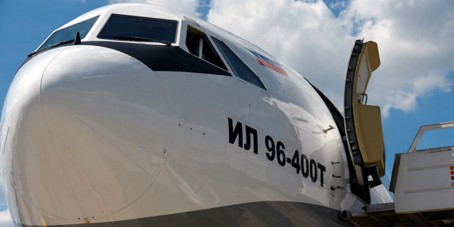
Due to the shrinking fleets, Russia is forced to fall back on older aircraft, such as this IL-96-400T, credit: Ilyushin Corp.
Ilyushin instead of Boeing freighters
After about 16 months of operational inactivity due to a lack of aircraft, Red Wings took over Sky Gates in the summer of 2023. Half a year later, in DEC23, Sky Gates received its first Russian-built freighter, a restored Il-96-400T cargo aircraft (tail number RA-96103). It is operational since DEC25. Compared to the Boeing Jumbos, however, the Ilyushin burns significantly more fuel and emits more greenhouse gases, operational records evidence. Since the two Ilyushin freighters were manufactured in Russia – that’s the good news – Sky Gates at least no longer has to worry about being cut off from the supply of components and spare parts.
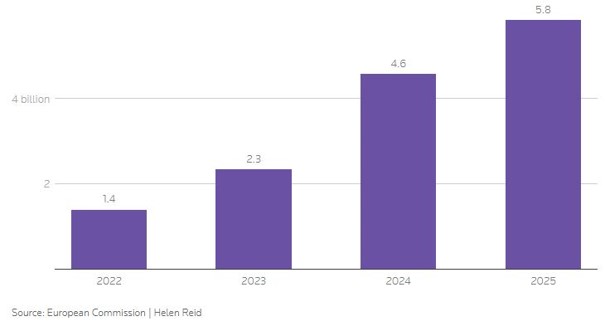
The first effects of the EU’s new rules for low-value e-commerce imports are becoming visible. Just weeks after Brussels introduced a €3 customs duty on consignments valued below €150, the first changes in China-Europe air cargo flows are emerging. Whether this will remain a short-term adjustment or develop into a more lasting shift remains open.
Since 01JUL26, low-value consignments entering the EU from outside the block have been subject to a temporary €3 customs duty per item. The measure replaces the previous duty exemption and is part of the EU’s wider effort to bring the rapidly growing e-commerce import flows under tighter customs control. The duty will apply until July 2028, when the EU’s new customs system for e-commerce is scheduled to take over (please view: https://cargoforwarder.eu/2026/08/02/munich-airport-bucks-the-e-commerce-downturn/ )
The possible impact on air cargo was already being discussed before the measure came into force. Air freight and logistics expert Steven Verhasselt told CFG in early July that e-commerce flows would likely see a short-term decline while logistics providers adjusted their processes and networks. He expected demand to pick up again towards the fourth quarter. (https://cargoforwarder.eu/2026/07/05/verhasselt-eu-e-commerce-fee-to-cause-brief-dip-only/)
Number of low-value e-commerce parcels coming into EU jumped by 26% in 2025 but are declining since 01JUL26 – Graphic: EU Commission
Markets reacted quickly
A few weeks on, there are now indications that the initial correction is indeed taking place. In a recent release published on 14AUG26, Liège airport states that the introduction of the European tax measure has profoundly altered the structure of imports. Consequently, the number of e-commerce parcels fell by 24% over the whole month of July compared with JUL2025 and by 41% compared with JUN2026: Reuters reported on 27 July that direct China-Europe freighter capacity fell by 18% during the first 48 hours after the new duty came into effect. The decline moderated to 14% in the first full week. According to aviation consultancy Rotate, the impact was particularly pronounced in Belgium and Hungary, two important entry points for e-commerce imports. At the same time, freighter capacity into London’s Stansted Airport, outside the EU, increased by 25%.
First signs of traffic shifts
The figures point to an interesting development. Rather than simply disappearing, some e-commerce traffic may be looking for alternative routes into the European market. The shift towards a non-EU gateway such as Stansted illustrates how quickly logistics networks can respond when the cost and regulatory conditions change. That does not necessarily mean that the EU measures will lead to a sustained decline in e-commerce-related air freight. In his interview with CFG, Verhasselt argued that the additional €3 cost and the end of the de minimis exemption would not have a long-term effect on volumes. Instead, he expected logistics providers and airports to use the summer months to adjust processes and prepare for the stronger demand traditionally expected towards the end of the year.
Brussels tightens its grip
The regulatory change is nevertheless significant. The €3 duty is only one element of the EU’s broader approach to low-value imports. Brussels has also been tightening customs controls and increasing scrutiny of goods entering the European market. The previous exemption had allowed consignments valued below €150 to enter the EU without customs duty; the new system removes that exemption and introduces the temporary flat-rate duty. For airports and logistics providers with a strong exposure to e-commerce, the consequences could therefore extend beyond the amount of duty collected. Routing decisions, customs processes and the location of fulfilment operations may all become more important. If traffic can be shifted between EU and non-EU gateways, the competitive landscape between European cargo hubs could change as well. The first weeks provide no final answer yet. But they do change the starting point of the discussion. What was still a forecast in early July is now beginning to show up in actual capacity adjustments. The question for the coming months is whether the market will absorb the change as expected – or whether the new EU rules will leave a more lasting mark on the China-Europe e-commerce supply chain.