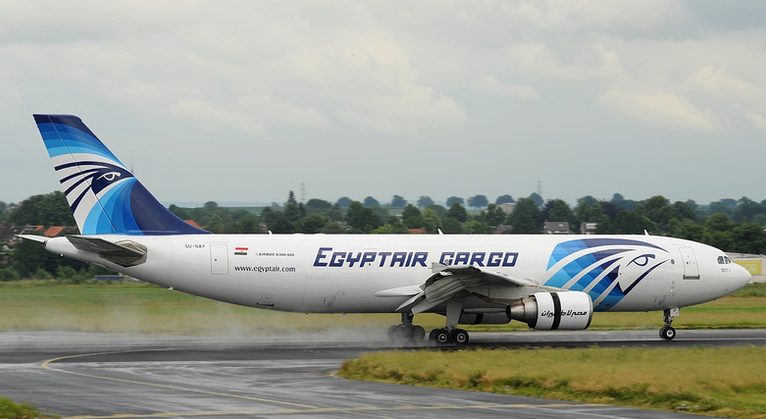
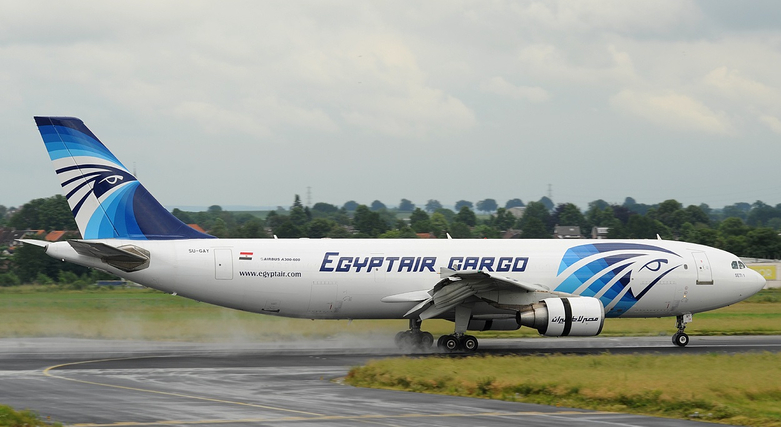
Globe Air Cargo charts EGYPTAIR’s freight success. Image: EGYPTAIR
EGYPTAIR’s Turkish GSA, Globe Air Cargo Türkiye, has actively been involved in the airline’s transition from operating belly cargo flights in the beginning, to today’s bi-weekly A330 freighter connections complementing its scheduled passenger flights. In total, Turkish freight forwarders have access to around 105 tons of cargo capacity to Cairo, Egypt, and beyond, every week. The flights carry a wide variety of shipments including pharmaceuticals, aerospace, grains, pulses, seeds, and general cargo. Where necessary, GAC Türkiye will arrange project and part charters on behalf of the airline, and the two companies reveal that the two weekly freighters could increase to four as demand grows. “Globe Air Cargo Türkiye takes care of tender management, operational support, import sales, charters, and complete commercial operations for EGYPTAIR within Türkiye.”
Over in France, GAC France has been representing EGYPTAIR since 2010, selling capacity on its daily Boeing 787 Dreamliner from Paris-Charles de Gaulle to Cairo, and the two to three weekly Cairo-destined Airbus 300 freighters out of Ostende, and securing record growth: 2500+ tons in 2024, 2,670 tons in 2025, with 2026 looking good, too.
Ersun Guven, Managing Director of Globe Air Cargo Türkiye, stated: “We are EGYPTAIR’s contracted GSSA in Türkiye since 2016, and operate a dedicated team of staff to ensure fast and smooth communication at all times. There is a strong strategic connection between our two national markets, particularly as many Turkish manufacturers are located in Egypt, so load factors are high in both directions – and demand continues to grow unabatedly.”
Franck Tordjman, Managing Director of Globe Air Cargo France said: “At Globe Air Cargo, we believe three things are essential for sustainable growth: the first is establishing long-term customer relationships by demonstrating reliability and mutual understanding. The second is intelligent product positioning such as pharmaceuticals, perishables, or live animals, for example. And the third is encouraging online bookings – something we have intensively pushed, particularly for shipments below 300 kg, these past few years. The more that is booked online, the faster and more efficiently we can optimize flights using our in-house digital tools.”
Jean Ceccaldi, Chief Executive Officer of ECS Group, concluded: “EGYPTAIR’s success in Türkiye and France is testament to what a professional GSSA can deliver. The combination of local market expertise, innovative digital solutions, and a dedicated partnership that has developed and matured over time, will unfailingly result in positive growth. Globe Air Cargo, as with all ECS Group subsidiaries, aims for the perfect symbiosis of commercial efficiency and customer-centricity.”
Delta Cargo has expanded its digital channels to include CargoAi, alongside cargo.one and WebCargo by Freightos. CargoAi announced its partnership with the American carrier, last week, stating that it will be supporting Delta Cargo in accelerating the digital transformation of its cargo capabilities. Via the CargoAi platform, Delta Cargo will be able to offer real-time rate visibility and eBooking capabilities to the more than 30,000 freight forwarders accessing CargoAi. Initially, Delta Cargo’s offer will be made available across 15 markets: the United States, including domestic services, Costa Rica, Czech Republic, Spain, the United Kingdom, Italy, Ireland, Germany, Portugal, Switzerland, Belgium, Greece, Denmark, Sweden and Malta. Forwarders there will be able to access and book General Cargo (GCR) and Express products across Delta Cargo’s network. Alongside capacity and rate information, forwarders will also be able to manage allotment bookings and support in arranging Built-Up Pallets (BUP). Whether they access the CargoAi marketplace directly or via their Transport Management System (TMS), the interaction with Delta Cargo will prove seamless and simple: “optimal visibility, automation, and reach across multiple booking environments”.
CargoAi chosen by Delta Cargo to power digital booking capabilities. Image: CargoAi
Peter Penseel, President of Delta Cargo, explained: “Digital innovation is a key pillar of Delta Cargo’s strategy. Partnering with CargoAi allows us to further enhance the digital booking experience for freight forwarders by providing greater visibility, efficiency, and seamless access to our global network. This collaboration supports our commitment to delivering reliable, customer-focused cargo solutions while continuing to modernize the way our customers interact with Delta Cargo.”
Matthieu Petot, CEO of CargoAi, announced: “We are proud to welcome Delta Cargo to the CargoAi ecosystem. This partnership highlights Delta Cargo’s vision to drive digital excellence while giving freight forwarders greater access and control through real-time booking and data. Together, we are simplifying the booking experience while strengthening Delta Cargo’s global reach and visibility.”
The 7.4 magnitude quake that shook the western part of Colombia on 10AUG26, devastating large areas, has killed at least 312 people with almost 300 still missing. In the meantime, a wave of aid shipments has arrived, transported by several airlines. Here is an overview of the most important relief flights.
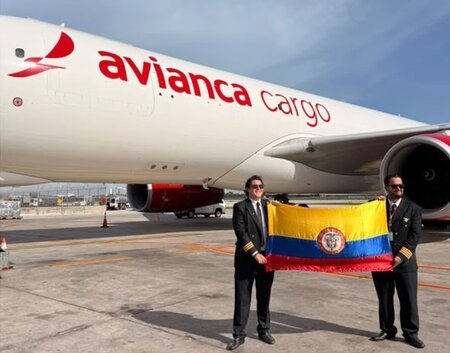
Avianca used freighters (pictured here) and passenger aircraft to transport relief goods to the affected regions in Colombia as did other carriers as well. Picture: Courtesy of Avianca Cargo
Bogota-based Avianca, transported more than 150 metric tons of aid in the first two days following the quake, using both its cargo division and the belly holds of passenger flights. The loads included backup generators, hygiene kits, and non-perishable food items, making full use of the A330F’s volume and tonnage capacity.
“At times like these, our operations serve a purpose that goes beyond connecting destinations: we want to help ensure that aid reaches where it is needed most. We thank the Ministry of Foreign Affairs and the GEM Foundation for trusting in our logistical capabilities and joining forces with us to support the affected communities,” exclaimed Diogo Elias, CEO of Avianca Cargo.
GEM’s humanitarian missions: First Venezuela, followed by Colombia The humanitarian response is based on speed, efficiency, and getting the right aid to families when they need it most. “We are deeply grateful to Avianca Cargo for leveraging its aircraft fleet, logistics expertise, and reach to make this mission possible. Colombia can count on GEM not only during these critical days, but throughout the entire journey toward recovery,” said Michael Capponi, Founder and President of Global Empowerment Mission (GEM).
The Poland-based organization has already responded to crises in 73 countries on almost every continent, conducting humanitarian activities in areas affected by earthquakes and other natural catastrophes.
Only weeks before, the organization’s disaster relief teams launched actions on the northern coast of Venezuela, following the 7.5 magnitude strong earthquake that caused extensive damage in the states Yaracuy, Carabobo, and La Guaira, as well as the capital city, Caracas.
Most relief flights landed at El Edén Airport Latam Cargo – South America’s other leading freight carrier alongside Avianca – and its Colombian subsidiary added additional flights to Cali and Armenia to meet the urgent demand for humanitarian supplies. Armenia is a city of 312,000 residents located in the heart of Colombia’s coffee region (Zona Cafetera), which was severely affected by the earthquake.
The Mexican government sent two Lockheed C-130 Hércules aircraft from its Air Force to Colombia, delivering 58.5 metric tons of cargo, distributed among 2,562 basic aid packages.
Combined mission And the Abra Group, which includes Avianca as well as the Brazilian airline, GOL, among others, dispatched B737 freighters from São Paulo to El Edén International Airport in Armenia, loaded with urgently needed relief supplies. The 40 tons of aid delivered through this airbridge, build on the more than 300 tons already transported by Avianca Cargo in response to this emergency.
“In this mission, we combined our logistics capabilities with Avianca Cargo’s experience to overcome an important operational challenge and transport more than 40 tons of humanitarian aid to the Coffee Region. We are proud to put our network, equipment and, above all, our people at the service of communities at such an important time for the country,” said Albert Pérez, President and COO of GOL.
Provider of the four aircraft is lessor, Dubai Aerospace Enterprise (DAE), which signed a purchase and leaseback contract with the Saudi Arabian flag carrier. The first of the four cargo planes will be delivered in OCT26, the last jetliner is scheduled to joining the fleet in MAY27. In addition, the airline has launched a new scheduled freighter route connecting Dhaka (DAC), with Frankfurt (FRA). The launch of the Dhaka–Frankfurt service aligns with Saudia Cargo’s continuous operational and global network expansion strategy in reaction to the rise of the national competitors, Riyadh Air.
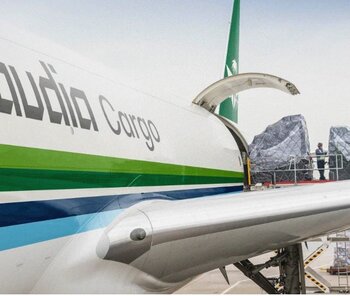
Saudia Cargo added Dhaka–Frankfurt freighter flights to its global network. Image: Saudia
Under the agreement, DAE has bought the aircraft and entered into long-term leases with Saudia, in this way supporting the Saudi carrier’s cargo and network expansion. Firoz Tarapore, Chief Executive Officer of DAE, said “We are pleased to announce a purchase-leaseback agreement for four Boeing 777F aircraft with Saudia. The transaction reflects our continued commitment to supporting our airline customers with high-quality, in-demand aircraft. These aircraft will support the airline’s expanding cargo operations and enhance its ability to serve key markets across its global network. We look forward to working with Saudia and wish them continued success.”
The lessor serves over 200 airline customers in over 80 countries, from eight office locations in Dubai, Dublin, London, Amman, Singapore, Miami, Seattle, and San Francisco. The lessor owns and manages a fleet of approximately 1,000 Airbus, ATR, and Boeing aircraft, with a total value of USD 35 billion. Recently, it acquired Sydney, Australia-based Macquarie AirFinance Limited (MAF), and announced the formation of two long-term co-investment programs which will add approximately USD 15 billion of new aircraft assets over the next five years to DAE’s current fleet.
Dhaka-Frankfurt nonstop The introduction of the Dhaka–Frankfurt route expands Saudia Cargo’s intercontinental reach, providing faster transit times for international shipments. Bangladesh serves as a key manufacturing and export hub in Asia – particularly for ready-made garments, textiles, and perishable goods – while Frankfurt represents one of Europe’s primary logistics hubs and financial centers. The new service offers commercial partners and freight forwarders seamless, streamlined access to major consumer and industrial markets across Europe, is stated in a Saudia Cargo press release. It facilitates the movement of high-demand commodities, including textiles, pharmaceuticals, industrial equipment, and e-commerce shipments between Bangladesh and central Europe. The twice-weekly frequency provides reliable capacity to meet growing market demand for swift cross-border delivery.
Riyadh Air commenced commercial flights: Courtesy of carrier.
External and internal competition is rising Saudia stresses that the Dhaka–Frankfurt service is supported by ongoing investments to enhance operational capacity and modernize the carrier’s dedicated cargo fleet. The reasons for this operational and strategic offensive include not only the disruptions to air traffic in the Middle East caused by the U.S. and Israel’s war against Iran and Iranian counterattacks on the Gulf region, but also growing international competition and the establishment of Riyadh Air, an internal competitor in Saudi Arabia.
On 10JUN26, a Boeing 787 operated by Riyadh Air landed at London Heathrow for the first time, arriving from the Saudi capital, Riyadh. The newcomer is initially scheduled to fly from Riyadh to London, Manchester, Madrid, Cairo, and Dubai, as well as to the Saudi coastal city of Jeddah. In the coming years, flights to 100 destinations are planned.
Riyadh Air is the country’s second state-owned airline alongside Saudia, and is intended to help advance the kingdom’s reform program known as ‘Vision 2030’.
This program calls for the expansion of tourism, trade, and logistics to reduce dependence on oil. In doing so, passenger and cargo airlines from Saudi Arabia are competing with established industry giants such as Emirates, Etihad, and Qatar Airways.
CargoForwarder Global usually hands the mic to a human every week, shining a ‘Spotlight On…’ their role the air cargo industry to demonstrate the enormous spectrum of career possibilities it offers. The extraordinary heat this summer has resulted in more than one kind of drought: tumbleweeds when it comes to CargoForwarder Global Spotlight invitation responses, and reduced footfall registered in high street shops as customers opt for online shopping as a cooler alternative. Yet why then, over in the EU, has there been a dramatic drop in e-commerce shipments since 01JUL26? The incredible air cargo boom over the past decade, has taken a bit of a knock in recent months – ever since the introduction of temporary €3 customs duty on import consignments whose total value does not exceed €150. This week, a low-value e-commerce parcel tells its story now that it is now longer duty free. One that might be topic for discussion at the upcoming EU CBEC, next month – and one that you might have an opinion on, that you would like to share with CargoForwarder Global.
To EUR 3 fee or not to EUR 3 fee… that is the question. Image: Canva free image/CFG
CFG: What is your current function and company? And whatare your responsibilities?
ES: I’m a low‑value e‑commerce shipment, usually priced at €150 or less, sold by a non‑EU retailer and shipped directly to a consumer in the EU. I don’t have one employer; I’m passed along a chain that starts with a marketplace or online shop in Asia, moves through a freight forwarder and airline, then lands with an EU customs broker and courier before a local driver places me on the buyer’s doorstep. My responsibility is simple in theory but demanding in practice: I have to arrive with the right data attached so I can quickly clear customs. That means my seller or platform has collected VAT at checkout under Import One-Stop Shop (IOSS), declared me correctly, and, since 01JUL26, accepted that I carry a €3 flat customs duty per line item. From 01NOV26, I will also require product identifiers so that customs can verify what I am without opening my box.
CFG: What does a normal day look like for you?
ES: There’s no such thing as a ‘normal’ day – my journey is a sequence of handoffs where data and timing matter more than distance. Before I even leave Asia, my seller enters my commercial detail – value, HS code, IOSS number – into the ICS2 Entry Summary Declaration so the EU’s Import Control System 2 can risk‑assess me before I’m loaded onto the aircraft. I spend hours strapped onto a ULD on a freighter or in a belly‑hold, then touch down at a major EU gateway where I’m presented under the simplified H7 declaration. Things were easier before 01JUL26, when I simply joined the short and quick duty‑free exit. Now, I pick up a €3 flat duty line on my record (and the VAT settled via IOSS). If my product identifiers and valuation match, I’m released within hours and sent to a local depot. If not, I’m held for inspection or re‑classification, and the promise of ‘express’ delivery evaporates. And if – worst case – I’m sent back, that €3 duty fee is non-refundable, so that changes how my seller feels about free returns.
CFG: How long have you been in the air cargo industry, and what brought you to it?
ES: While you could argue that e-commerce has its roots a good few decades back if we’re being pedantic, the 1990s were where some of today’s largest platforms were launched, though it’s really the past five to ten years that have seen me truly take off. The wave of e‑commerce parcels into the EU has doubled every year since 2022, driven by consumers who want their orders in days, not weeks. Online marketplaces have made it easy to buy a product from Asia, with the expectation of receiving it Europe within a handful of days. Airlines and forwarders have built dedicated lanes and capacity to serve that increasing demand. The sheer scale – 4.6 billion parcels in 2024, rising to about 5.8 billion in 2025, in other words, roughly 16 million parcels a day – has pulled me into the heart of air cargo operations and, inevitably, into the center of EU customs reform.
CFG: What do you enjoy most about your job?
ES: If I should enjoy anything, it would be speed with certainty. When my data is clean – IOSS in place, correct value and HS code, product identifiers ready – I clear within hours and reach the customer in two to four days from click to door. I like being part of a high‑frequency, high‑predictability network: daily flights, tight cut‑offs, automated clearance. That’s where air cargo shines for small, time‑sensitive goods, and it’s the moment I feel most useful.
CFG: Where do you see the greatest challenges in our industry?
ES: Data, cost, and capacity. Bad or missing product data, valuation, or identifiers trigger holds, and the EU is deliberately pushing responsibility upstream to the platforms and sellers who control that data. Costs are rising: the €3 flat duty from JUL26 plus an expected €2 handling fee from NOV26 can add up to €5 extra per line item for low‑value goods, squeezing margins on ultra‑cheap products and forcing pricing or checkout changes. Returns hurt because the €3 duty is non‑refundable, making free‑return promises more expensive. And then there’s volume: with around 16 million parcels a day in 2025, any spike in inspections or data errors creates congestion at EU gateways and missed delivery SLAs. Layer on a complex regulatory timeline – ICS2 full rollout, the €3 duty, product identifier rules, the handling fee, and the future Customs Data Hub in 2028 – and you have an industry constantly recharting itself mid‑flight. Oh, and who foots the initial bill for those extra costs? Thoughts?
CFG: What advice would you give to people looking to get into the air cargo industry?
ES: Sit at the intersection of data, operations, and compliance. Learn EU customs end to end: IOSS, H7 declarations, how duties and VAT work for e‑commerce, and what ICS2 requires before a plane is loaded. Get comfortable with HS classification and product identifiers – EAN, ISBN, GTIN – and how that data feeds customs risk engines. On the operations side, learn ULD build‑up, flight cut‑offs, and exception handling at hubs. Systems literacy helps: exposure to cargo community systems, customs platforms, and marketplace seller tools makes you immediately useful. Add strong communication skills so you can translate between sellers, forwarders, and customs brokers, and write clear SOPs and incident reports. For training, look at national customs broker courses or EU e‑commerce VAT modules focused on IOSS, IATA cargo and forwarding fundamentals, dangerous goods awareness if you’ll touch warehouse operations, and basics of data quality or master data management for product information.
CFG: If the air cargo industry were a film/book, what would its title be?
ES: I’d call it “Against the Clock: The Parcel That Crossed a Continent.” It’s a thriller about speed, data, and borders – where the hero isn’t a person but a small box with perfect paperwork, racing to beat a customs hold and a missed delivery promise.
Thank you, e-commerce shipment.
If you would like to share your personal air cargo story with our CargoForwarder Global readers, feel free to send your answers to the above questions tocargoforwarderglobal@kopfpilot.atWe look forward to shining a spotlight on your job area, views, and experiences.
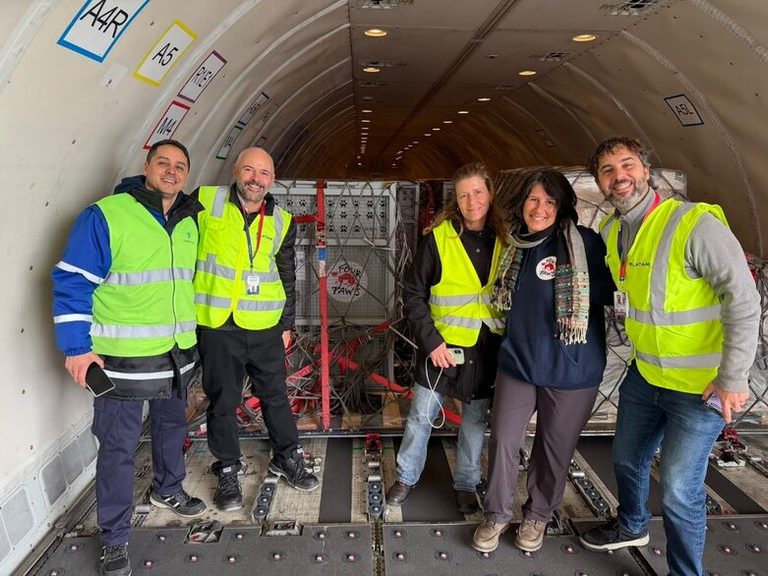
Or should that be 30 good causes – since the air cargo industry got involved in the rehoming of 30 lions and tigers, recently – carrying them on behalf of the animal welfare organization, Four Paws International, from Argentina to forever homes in the US and South Africa. LATAM Cargo transported the ‘lion’s share’ (pardon the pun!), of 15 lions and tigers to North America, whilst the other half, destined for South Africa, was split between Air France KLM Martinair Cargo, and – it is to be presumed, since Frankfurt was one of the two European hubs – Lufthansa Cargo.
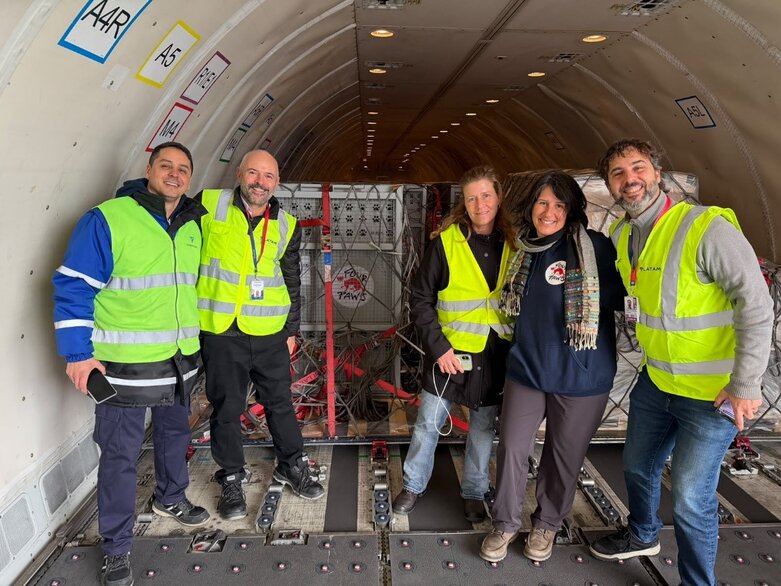
Some of the LATAM Cargo and Four Paws teams involved. Image: LATAM Cargo
The backstory is a terrible one. All 30 lions and tigers were rescued from a former Argentinian zoo. Luján Zoo, just outside Buenos Aires, was closed down by the Argentinian authorities back in 2020, already, because of safety and animal-welfare concerns. At the time, some 200 wildcats were still being held there. Four Paws became involved in 2023, by which time, just over half of the cats were still alive, and when it finally gained control of the facility in JUL25, there were just 62 lions and tigers left – all in a dreadful state of health, given the appalling, cramped conditions they had been held in. Following months of preparation, half of those have now been flown to a new and better life, while Four Paws is still looking for forever homes for the 20 or so animals still at the former Luján Zoo.
LATAM Cargo carries 15 lions and tigers Hailed by Four Paws as “the world’s largest relocation of wild cats”, the animals were split into two groups, ready for transport to sanctuaries on two separate continents. Care was taken to ensure that families and lifelong companions were kept together, and their various ailments registered to ensure the required treatment in their new home.
8 tigers and 7 lions were entrusted to LATAM Cargo for transport to The Wild Animal Sanctuary, in Keenesburg, Colorado, US. The big cats were flown on a dedicated charter aircraft from Buenos Aires, Argentina, to Denver, United States, via Santiago, Chile (technical stop).
Compliant and with the utmost care Daniel Leng, Senior VP of Operations at LATAM Cargo, explained: “Operationally, executing a charter for 15 big cats means coordinating a highly complex operation where there is no margin for deviation. It requires aligning multiple teams in strict compliance with IATA LAR [Live Animals Regulations], ensuring a controlled environment inside the Boeing 767 cargo hold, and ensuring efficient ground transfers. It is a high-precision logistics operation that demonstrates our technical capabilities and expertise in transporting live animals safely.”
Those multiple teams were LATAM Cargo in cooperation with freight forwarder DSV, Four Paws International, and the origin agent, Intermodal Logistics Services S.A.. All have collaborated on similarly sensitive projects before, so are used to ensuring smooth operations. Nevertheless, “given the scale of the challenge – involving 5.4 metric tons of cargo (2.5 tons corresponding to the animals and 2.9 tons to the specialized transport crates) – the operation required extensive planning that began weeks before takeoff. To support the operation, LATAM Cargo mobilized a multidisciplinary team of more than 15 professionals across Commercial, Products, Operational Standards & Procedures, Legal, Quality, Operations, Ramp, and Warehouse, among other areas. The teams worked in close coordination to ensure technical alignment, route feasibility, and regulatory compliance of the transport crates,” the release underlines.
Animal welfare above all else Every effort was made to ensure that the animals had as stress-free and smooth a journey as possible. Transportation was arranged in line with the IATA Live Animals Regulations (LAR), meaning care was taken to provide the correct hold pressure, temperature, and continuous ventilation inside the Boeing 767 freighter. Vets checked the animals and their documents before loading, during transit, and at destination. “The journey also included continuous monitoring by a dedicated specialist, who accompanied the animals on board and supervised ramp procedures. Every movement was planned in advance to minimize exposure, waiting times, and handling of the animals,” the release informs. “Finally, upon arrival in Denver, the animals were transferred directly and swiftly to specially equipped trucks provided by the sanctuary, minimizing the time spent on the ramp before beginning their final ground journey to Keenesburg.”
Air France KLM Martinair Cargo transports 6 lions Of the other 15 animals destined for South Africa, a LinkedIn post by Air France KLM Martinair Cargo, last week, briefly celebrated its part in the massive Four Paws-led relocation undertaking. It transported 6 lions from Buenos Aires, Argentina, to Johannesburg, via its Amsterdam hub. The animals are now safely delivered to LIONSROCK Big Cat Sanctuary.
“Bringing together animal welfare experts, veterinarians, and specialist logistics teams across the globe, this initiative shows what is possible when animal welfare, aviation, and expert wildlife logistics come together. At Air France KLM Martinair Cargo, we are proud to have contributed our global network and expertise to help make this journey possible,” it read, pointing out: “From Argentina to South Africa, this has been about more than transportation. It has been about giving these animals a new beginning.”
Four Paws mentions Frankfurt hub as one of the operation’s European gateways, so it is assumed that the remaining 9 tigers traveled on Lufthansa Cargo, though no press release or LinkedIn post was issued by the company.
A new start for the animals Luciana D’Abramo, Chief Program Officer at FOUR PAWS, stated: “Today [17AUG26 – start of the air cargo flights] marks a fantastic milestone for these lions and tigers and for animal welfare in Argentina. While we are proud of what we have achieved, our work is far from over. Our focus now is on securing sustainable, long-term solutions for the remaining big cats at the former Zoo Luján. And we keep working with the Argentine government to strengthen legal protections for big cats and prevent such suffering in the future.”
FOUR PAWS Veterinarian, Dr Amir Khalil, head of the emergency mission at Luján, declared: “Bringing 30 big cats out of Argentina has been far more than a simple relocation. It has been an enormous logistical undertaking, but seeing these animals begin their journey to a better future makes every effort worthwhile. After years of inadequate conditions, they finally have the chance to receive the specialized care and species-appropriate environment they deserve.”
… and return to 24/7/365 operation to give air traffic a much-needed boost? This question arises because air traffic growth in Germany has still not reached pre-COVID levels and is growing at a significantly slower pace than in other EU countries. CargoForwarder Global (CFG) asked Thorsten Hölser (TH) whether there is a realistic chance that the ban on night flights might be lifted as part of the government’s infrastructure reform package for Germany. He is the Managing Director of the Hesse/Rhineland-Palatinate Freight Forwarders Association.
Thorsten Hölser sits in the driver’s seat of the forwarding association since 2004 – courtesy of SLV
CFG: Due to high costs, bureaucratic hurdles and night flight restrictions, cargo traffic has shifted from German hubs to neighboring EU airports – such as Liège, Budapest and others. Wouldn’t it therefore be time to lift the night flight restrictions for air cargo, particularly at Frankfurt Airport (FRA) – Europe’s largest cargo hub – and return to 24-hour operations?
TH: I have my doubts as to how much a return to 24-hour operations would actually lead to a significant increase in volume. Large volumes are transported by rail and road today, and will continue to be so in the future. Regardless of this, I do not believe this project would currently receive political and, above all, public support. Considering the limited infrastructure resources, the air cargo industry should instead focus on achieving a more even and optimized distribution of traffic throughout the week. This is because there is still capacity available, while problems arise particularly during peak times at the weekend.
CFG: In the medium term, major airports such as FRA or MUC are reaching their infrastructural limits. Could smaller airports like Nuremberg or Hahn play a more significant role in the cargo business – that is, more than just a supporting role – by taking on a portion of the cargo volume from the major airports? After all, they have plenty of slots and – unlike FRA or MUC – operate around the clock (24/7).
TH: As is the case across the economy, small and medium-sized enterprises have opportunities for growth because of their specific structures, which allow for faster response times, more personalized customer relationships, etc. This also applies to smaller airports, which do not have a huge administrative structure and benefit from more cost-effective structures and more flexible operational processes. However, competition will ultimately determine who succeeds, and I do not believe that all regional airports will play a significant part in this growth.
CFG: A new large-scale facility is being built at Frankfurt Airport. Once completed, the project will lead to a massive increase in truck traffic. Is the surrounding road infrastructure capable of handling the additional traffic volume for incoming and outgoing shipments – including the transport of goods via the access roads between the airport’s various cargo facilities?
TH: If one were to evaluate only the current road infrastructure in relation to the volume planned for the final phase of CargoCity West, there would be reason for considerable concern. The transport infrastructure in the Rhine-Main region is already operating at full capacity during peak hours. Process optimization, improved and real-time control through digitalization and AI, the expansion and smarter use of transport infrastructure, and adjustments to the legal framework – such as exemptions from the Sunday driving restrictions – still offer potential for the future. To achieve this, however, politicians and the air cargo industry must work together to consider potential solutions at an early stage and implement them promptly.
CFG: According to Statista, the global online platform for statistics and market data, truck traffic accounts for 10% of global CO2 emissions. Although trucks and buses make up only 2% of the vehicles on European roads, they are responsible for 27% of CO2 emissions caused by road traffic. What measures is your association taking to encourage RFS (Road Feeder Service) members to meet the EU’s target of a 55% reduction by 2030?
TH: We have set up dedicated working groups both within our national association (www.dslv.org) and our regional association (www.slv-spediteure.de), to support and guide small and medium-sized transport companies through the transition to new driving technologies. However, I do not see any need to put pressure on our members, as I have noticed that they are consistently willing to engage with the issues of the drive system transition and the reduction of CO₂ emissions. The greater barriers at present are, rather, the political sphere – with its misguided regulatory framework and unsuitable funding programs – and the energy sector, with its insufficient and too-slowly-expanding charging infrastructure.
CFG: Finally, due to low water levels in the Danube, Rhine, and Elbe, inland waterway shipping in Central Europe has come to a near standstill. Is truck transport a viable alternative to freight transport by inland waterway vessel?
TH: A clear NO! One inland waterway vessel currently replaces around 150–200 lorry journeys. If we were to shift these volumes back to the roads, the road infrastructure would collapse. It is to be hoped that, in the context of the low-water crisis, politicians will finally wake up and allocate more and better-targeted funding to waterway infrastructure. However, these funds must then be planned and spent quickly, because infrastructure projects in Germany take decades – and we simply do not have that kind of time left!
Congratulations, Swissport! The Zurich-based service provider celebrated its 30th anniversary on16AUG26. Originally founded as a subsidiary of the Swiss airline, Swissair, the former ground handling agent has evolved over the past three decades into one of the world’s leading companies in ground operations, air cargo handling, and airport hospitality. Today, Swissport employs 63,000 people worldwide, whose expertise, commitment, and dedication enable safe and reliable aviation services every day. And it continues to expand and develop.
A harmonized blend of tradition… The company’s growth over the past three decades has been phenomenal.Today, Swissport serves approximately 850 airline customers across a network of more than 300 airports in 49 countries. Since its inception in 1996, the enterprise has evolved into the global partner of choice for airlines seeking reliable, efficient and innovative ground services. Swissport embodies quintessential Swiss values such as precision, reliability, and high-quality work, which enable the company to continue setting industry benchmarks for safety, quality, and operational performance, is stated in a release.
Across its global network, Swissport handles 4 million flights per year, serves 243 million passengers and processes 5.2 million tons of air cargo annually across 126 cargo warehouses. Its Aspire Pre-Flight Hospitality business has also achieved record performance, welcoming 6.4 million guests across 110 airport lounges worldwide.
… economic success The past five years have been particularly profitable. During that time, Swissport has doubled its revenue and increased its margins. Between 2023 and 2025, the company achieved a compound annual growth rate (CAGR) in revenue of 7.2%, with an increase in turnover of more than EUR 500 million over the period. This performance was underpinned by broad-based revenue growth across the portfolio, with a CAGR of 5.6% in ground handling (including fueling), 10.1% in cargo, and 20.8% in hospitality.
Swissport has continued to expand its global footprint in some of the world’s fastest-growing aviation markets. Investments in cargo infrastructure have supported the expansion of operations at Manchester, Amsterdam, Sofia, Liège and New York (JFK), among others, strengthening capabilities across a broad range of cargo segments, including e-commerce, pharmaceuticals, temperature-sensitive products and perishables.
As the company enters its fourth decade, the transformation of aviation services is a top priority. The goal is to integrate artificial intelligence, data analytics, robotics and automation into daily operations across its global network.
… and innovation When it comes to innovation, the cargo sector is at the top of the priority list. Under the TurnSmart label, Swissport has implemented AI-powered cameras to provide continuous visibility throughout aircraft turnarounds. Another innovation is the use of AI-enabled dashboard cameras across the North American vehicle fleet, reducing operational incidents by 60% within six months. This is complemented by a system called SmartGSE, thattracks ground support equipment across airports and thus reduces the time spent locating critical assets.
Swissport’s cargo terminal at Shanghai Pudong Airport is a prime example of the results that continuous process improvements can achieve. Thanks to its artificial intelligence-based workflows, the station can process 3,500 shipments per hour with 99% accuracy. This translates into speed as demonstrated by shipments sent to international destinations – they now arrive two days earlier than they would have in the past.
Currently, Swissport is pioneering the next generation of intelligent ground handling equipment through the trial of a fully autonomous baggage handling vehicle.
… coupled with a smart HR policy Finally, Swissport has also set an important course in recent months with regard to filling leadership positions. For example, Steven Polmans, a highly experienced logistics manager and former Head of Brussels Airport Cargo and President of the airline association, TIACA, has joined the Swissport cosmos. The same is true of Torsten Wefers, the former VP Sales and Marketing at Liège Airport.
Meanwhile, Torsten Wefers has become Head of Cargo Commercial for Europe, the Middle East, Africa and India (CEMEAI), while Polmans sits in one of Swissport’s key driver’s seats as Global Senior Vice President Cargo.
The Portuguese carrier’s cargo arm has been awarded the prestigious Logistics Efficiency accolade for the airline’s outstanding operational performance. It is already the third time in a row that TAP Cargo received the prize. The ceremony took place in Rio de Janeiro and brought together key players in the international supply chain who utilize the airport’s Tom Jobim cargo terminal.
Organized by RIOgaleão Airport, the Logistics Efficiency Program (PEL) recognizes companies in the sector that distinguish themselves with the exceptional performance of their processes, their operational reliability, and their contribution to a more agile, predictable, and integrated logistics chain.
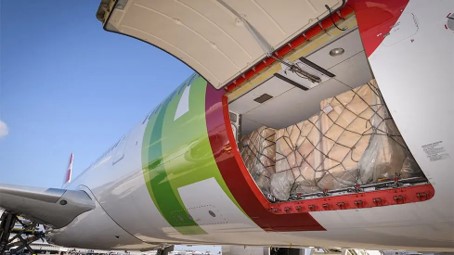
Rio de Janeiro airport applauds TAP Cargo for its outstanding performance – picture: TAP
Three in a row
TAP Air Cargo earned this distinction for the first time in 2024, and the recognition was renewed in 2025. In 2026, it once again took first place in the Airline category, solidifying a track record of continuous improvement and a strong focus on service quality. This recognition reflects the daily commitment of TAP Air Cargo’s teams to providing efficient, reliable, and customer-focused transportation solutions, contributing to the competitiveness of international trade and to the strengthening of air links between Portugal and Brazil, the laudator emphasized.
Brazil stands out
Brazil is the most important market for the Portuguese airline, both regarding passenger traffic between Portugal and South America and cargo transport. The airline offers 12 to 21 flights per week to Rio de Janeiro, depending on season. The service from its main hub in Lisbon includes 12 weekly nonstop flights to RIOgaleão, while, together with flights from Porto, the total number of weekly services reaches 21 or even more, depending on seasonality. Except for the Embraer 190 and 195 variants, the carrier operates a uniform fleet of Airbus aircraft, including 22 A330-900neos which it deploys on long-haul routes. In addition to Brazil and other destinations in Latin and North America, the network includes the Portuguese-speaking countries in sub-Sahara Africa. Flights between Lisbon and Curitiba were recently added to the itinerary, also served by A330-200. As of 26OCT26, the airline will connect Lisbon with São Luís do Maranhão. The city of 1.2 million in northeastern Brazil will then be served twice weekly by a long-range Airbus A321LR.
Too small to survive
In fiscal year 2025, TAP Air Portugal generated a net profit of €4.1 million, driven by their strong focus on passenger traffic (16.7 million pax) and the maintenance business. However, the annual results did not include the contribution from the cargo unit, nor was the total tonnage disclosed. Because TAP is too small in the long run to compete with the major players, the state owner has decided to sell up to 49.9% to a strategic airline partner, with 5% of that stake reserved for employees. Recently, both Air France-KLM and the Lufthansa Group have submitted binding bids. Regardless of the outcome, the Portuguese state will retain majority control. A final decision is expected later this year. Infrastructure Minister Miguel Pinto Luz said that a proposal of that nature was inherently complex and involved numerous factors. He did not elaborate on those factors, but the government has stated that bidders must commit to strengthening TAP’s operations and route network not only at its Lisbon hub but also across Portugal’s nine other airports, including Porto, Faro in the Algarve, and the archipelagos of the Azores and Madeira.
Forwarding agent Quick Cargo Service (QCS) has presented very encouraging half-year results. All modes of transportation saw growth, with ocean freight posting the largest increase. This volume increase was also reflected in the company’s cash flow through rising revenues.
Group revenue increased consistently throughout the first quarter, from €8.9 million in JAN2025 to €10.1 million in JAN2026, €10.4 million to €12.1 million in FEB26, and €10.9 million to €15.2 million in MAR26, demonstrating strong momentum across the business. This upward trend continued into the second quarter, defying negative economic and geopolitical trends triggered primarily by the conflict over the Strait of Hormuz and other disruptive developments. Here are the key figures for H2, 2026:
Air freight: 16.934 shipments (+7.0%)
Ocean freight: 3,914 shipments (+17.5%)
Single shipments (e-Com etc.) 5,298 consignments (also +17.5%)
Lubos Lukac, CCO QCS Group and Regional Managing Director Central Eastern Europe & UK – source: CFG/hs
Quick’s move to Eastern Europe is paying off The above figures are still being evaluated. “Even though the full results of H2 are not yet available, it is already clear that our stations in Central and Eastern Europe continue to deliver a solid and sustainable growth,“ Lubos Lukac notes, CCO QCS Group and Regional Managing Director Central Eastern Europe & UK. A glance at QCS’s performance in individual EU countries confirms this statement: Slovakia continued its positive development, achieving almost 16% growth in air freight shipments, while maintaining a stable position across other transport modes despite tough market conditions. Romania and Poland report similar positive trends, where Quick Cargo’s thriving businesses continue to strengthen the agent’s market position. The same applies to activities in specialized sectors, such as pharmaceutical logistics, defense & military logistics, and the air transport of time-critical items.
Growth will continue, says Lukac Simultaneously, QCS’s newer operations in Slovenia, Italy, Bulgaria, and the United Kingdom, which have been established over the past three years, continue to develop rapidly. Although these stations are still in the investment and tentative growth phase, they already deliver solid figures. “Our priority is to build strong local organizations, attract experienced logistics professionals and establish a sustainable company culture that will support long-term growth,” explains manager Lukac. By looking ahead, he says that QCS will continue its growth trajectory in H2, provided no major political or economic disruptions will happen. According to Managing Director Stephan Haltmayer, air freight accounts for roughly 60% of sales, followed by ocean freight, ground handling services, and customs clearing.
Safe havens Currently, QCS runs stations in 14 European countries, including the UK. Since 2022, the family-owned mid-sized player has predominantly expanded its footprint in Eastern Europe as the submarkets in Poland, Romania, and Bulgaria are growing faster than the mature markets of Western and Central Europe. The company is also benefitting from some of the global heavyweights that cooperate with QCS scaling back their business activities in China and investing in eastern EU member states instead. After all, countries like the Czech Republic, Austria, and Slovenia are considered safe havens compared to other conflict regions.