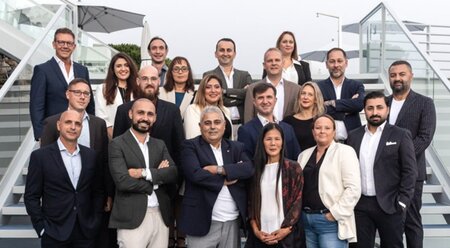
Global GSA Group conquistas cargo en la Argentina – credit GGG
Global GSA Group is expanding its footprint in South America and recently announced the opening on new offices in Buenos Aires, Argentina. Located 12 km from Ezeiza International Airport at Reconquista 1034, the team is there to support Argentinian customers and partners across both regional and international markets. The new facility is within convenient distance for in-person visits, and services are also offered online. “Argentina’s air freight demand is shaped by a broad export base, ranging from automotive, oilfield and agricultural machinery to medical equipment, food service products and pharmaceuticals. These goods are sent to key markets across Latin America, the United States, Europe, Asia, Africa and the Middle East, while perishables such as fresh meat, fruit and fish are mainly exported internationally, beyond Latin America,” the release illustrates, going on to reveal that e-commerce and industrial production equipment mainly make up the imports to the country. The global sales and services agent emphasizes its flexibility when it comes to arranging trucking, supervision, or providing advice on whatever special commodities require transportation.
Aytekin Saray, Chief Executive Officer of Global GSA Group, explained: “The winning factor in our GSSA business, and the Global GSA Group hallmark, are our people. In opening our new offices in Argentina, we are again bringing together that crucial combination of human touch combined with established partner relationships and extensive air cargo experience for the full benefit of all our customers and partners. We have tailored our Argentinian GSSA solution to the specific requirements of the local market, and it is further enhanced by Global GSA Group’s established international network. This facilitates integration and cooperation across our stations to maximize capacity usage and ultimately ensure greater operational profitability.”
Eric St Amand has been named as the new Chief Operating Officer Americas for ECS Group, as the GSSA grows its leadership team as well as its regional services. Drawing on 27 years of international experience in supply chain management, transportation and logistics, St Amand will be responsible for ECS Group’s operations across the Americas, liaising with regional teams, airline partners and the wider commercial network, with a view on further expansion and operational growth. He joins ECS Group from Geodis, where he was Americas Vice President and President of Geodis Supply Chain Optimization. ECS Group’s Americas focus is on expanding its footprint and acting on air cargo opportunities across North America, Latin America and the Caribbean. St Amand succeeds Paco Ortega, who will remain in Miami during the handover transition. Following that, Ortega will move to working on ECS Group’s strategic projects.
ECS Group appoints Eric St Amand as Chief Operating Officer Americas. Image: ECS Group
Eric St Amand, Chief Operating Officer Americas at ECS Group, commented: “I am delighted to join ECS Group at an important stage in its development. […] My priority will be to work closely with colleagues across the Americas to support our airline partners, strengthen operational excellence and develop the next phase of regional growth. The Americas are diverse and fast-moving markets, requiring both local expertise and a coordinated international approach. ECS Group is well placed to provide that combination, and I look forward to contributing to its continued success.”
Jean Ceccaldi, Chief Executive Officer of ECS Group, said: “Eric’s appointment represents an important step in the continued development of our business across the Americas. He brings an impressive combination of operational expertise, commercial understanding and international leadership experience [and has a] background in managing complex organizations and delivering sustainable growth […]. Eric will work with our talented local teams to build on the foundations already in place, improve operational performance and identify new areas in which we can create value for our customers. […] We would also like to express our sincere appreciation to Paco for his commitment and leadership over the past two years. As Regional Manager, he successfully assumed the combined responsibilities of Chief Operating Officer and Chief Commercial Officer, providing stability and direction during an important period for the business. Paco will continue to make a valuable contribution to ECS Group through his involvement in strategic projects across the Americas and the wider Group. His experience and understanding of our organization will remain an important asset as we pursue our long-term ambitions.”
Air China Cargo has chosen to make its digital debut with cargo.one, the digital distribution partner announced on 27AUG26. In doing this, the national flag carrier of China will be offering the freight capacity of its 24-freighter fleet and extensive passenger network to the thousands of forwarders using cargo.one’s AI-powered booking platform. They will gain instant access to the carrier’s flights on key trade lanes from Europe and North America to China and beyond. Aside from the airline’s global passenger network, Air China Cargo operates 30 all-cargo routes across 14 countries in Asia-Pacific, Europe, the Americas and the Middle East. It also offers more than 1,500 overland trucking connections. Forwarders in Europe and North America can now quote, book, and track general cargo (including Express, up to 5,000 kg) on Air China Cargo flights to major Chinese gateways — Shanghai Pudong, Beijing, Guangzhou, Shenzhen, Chengdu, Chongqing, and Hangzhou. More markets and capacity options are set to roll out in the coming months.
China’s national flag cargo carrier opts for cargo.one. Image: cargo.one
“The combination of cargo.one’s vast multimodal rate selection and its innovative AI workers helps forwarders to quote faster and more accurately, optimize their win rates and scale their operations more efficiently. As cargo.one powers thousands of forwarders worldwide, carriers like Air China Cargo benefit from their offers always being present within relevant quoting flows,” the release states.
Lei Wang, General Manager of Sales and Marketing at Air China Cargo, stated: “Launching global digital sales on cargo.one is an important milestone in Air China Cargo’s growth strategy and digitalization journey. As an innovative and proven partner, cargo.one helps to extend our presence to thousands more relevant freight forwarders worldwide, and continually guarantees the seamless end-to-end experience our customers rightly expect.”
Moritz Claussen, Founder and Co-CEO of cargo.one, said: “We are proud to be selected as the partner-of-choice by Air China Cargo. As Air China Cargo’s first global digital sales partner, we provide freight forwarders a valuable new gateway to its sought-after capacity to and from China, fully integrated within our AI-native operating system.”
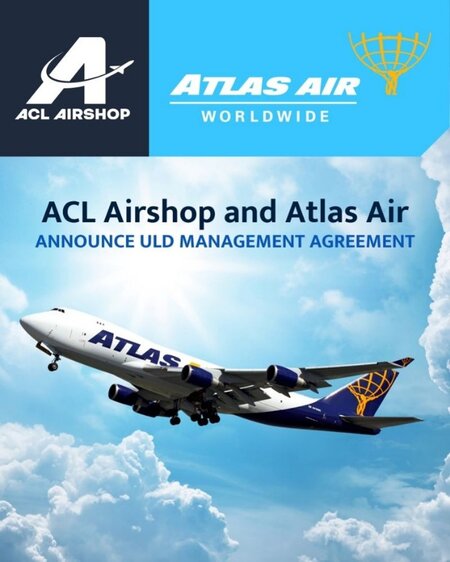
ACL Airshop scores long-term agreement. Image: Atlas Air
ACL Airshop has entered into a long-term ULD Management Agreement with Atlas Air, a subsidiary of Atlas Air Worldwide, to manage the carrier’s ULDs across its global network. The agreement covers end-to-end fleet availability, maintenance, repair and overhaul (MRO), IoT-enabled digital tracking, and worldwide logistics support. The latter two points in particular, will enhance Atlas Air’s efficiency and resilience, since IoT-based tracking in combination with ULD management software allows ACL Airshop to analyze and improve global ULD fleet utilization. They will offer real-time asset visibility, utilization analytics and performance insights. Continuous monitoring and proactive intervention where required, will improve customer experience. Better fleet performance, lower operating costs, proactive intervention in the case of any risk, are just some of the benefits the two companies will enjoy, going forward. “Together, the two companies aim to set a new standard for efficiency, customer focus and simplification of ULD management in the global air cargo industry,” the release reveals.
Bobby Wood, Vice President, Ground Operations, Atlas Air, commented: “Operational excellence depends on having the right resources in the right place at the right time. This agreement strengthens our global ULD capabilities through greater visibility, improved fleet management and a trusted partner that understands the complexity of our worldwide operation.”
James W. Harris, CEO, ACL Airshop, added: “Atlas Air is one of the world’s largest and leading cargo airlines, and we’re proud to continue building on a long-standing partnership founded on trust, innovation, and shared success.”
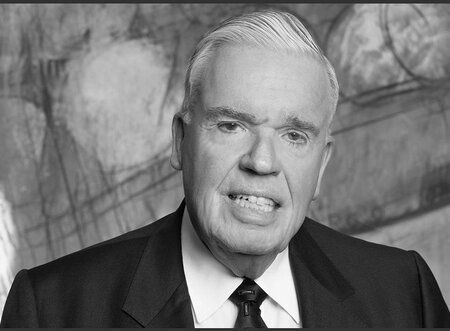
The 89-year-old logistics mogul died on Sunday 23AUG26 in Switzerland, after a long and serious illness. He was one of the wealthiest Germans. Through Kuehne Holding, he owned 53% of the shares in Kuehne + Nagel. His fortune, worth billions, is to be transferred to a foundation.
Klaus-Michael Kühne – *1937 +2026, photo: courtesy of Kuehne and Nagel
A native of Hamburg, he built one of the world’s most successful logistics companies, which set – and continues to set – standards every day: in air freight, ocean freight, contract logistics, and the transportation industry in general. He was born on 2 June 1937, as the only child of freight agent, Alfred Kuehne, and his wife, Mercedes Kuehne. At the age of 21, he joined his father’s company, becoming a personally liable partner and co-owner, five years later. Shortly thereafter, to finance the company’s expansion plans, he listed Kuehne + Nagel on the stock exchange. Today, Kuehne + Nagel is a global company with approximately 85,000 employees at 1,300 locations in more than 100 countries. Kuehne Holding, founded in 1993, holds a majority stake in the Kuehne + Nagel Group and a 30% stake in shipping line, Hapag-Lloyd. In addition, it holds a 20% share in Deutsche Lufthansa, as well as stakes in Brenntag and Bus and Train company, Flix SE. It also owns the luxury hotel, The Fontenay, which Kuehne had built in Hamburg, and holds a 14% stake in the soccer club, Hamburger SV (HSV). By contrast, Kuehne’s investment in the now-bankrupt Signa Prime construction group, led by Austrian, René Benko, turned out to be a flop, costing him a three-digit million sum.
Forbes magazine estimated his net worth at USD 44 billion. Kuehne, who was very unpretentious and shied away from the limelight, never confirmed such figures. After all, he once said that the billions existed only on paper, in the form of the stock prices of the companies in which he holds stakes – stocks that, as a strategic investor rather than a purely financial investor, he had no intention of selling to generate quick profits.
From Hamburg to Schindeleggi It was his father’s wish to relocate the company’s headquarters from Germany to Switzerland, primarily for tax reasons. Thanks in part to these fiscal advantages, the company was able to grow rapidly and become a global player.
Today, Kuehne + Nagel is the world’s second-largest freight forwarder, behind the Danish company, DSV, and its integration of DB Schenker, finalized on 30APR25. DHL Global Forwarding and Nippon Express rank next. “I am pleased that I was able to advance the Kuehne + Nagel company to the point where it is now among the world’s best, and is a nearly perfect logistics organization,” Kuehne told the Hamburger Abendblatt newspaper, when he received the prestigious Founder’s Award for his life’s work in SEP24. Against his doctor’s advice, he traveled from the company’s headquarters in Schindeleggi, Switzerland, to Hamburg to accept the award. The prize meant a great deal to him.
The childless entrepreneur leaves behind his wife, Christine, whom he married in 1989.
The company will not be left without leadership following the death of its senior figure. In APR24, Karl Gernandt, the long-time Executive Chairman, had already handed over operational management of Kuehne + Nagel to Dominik de Daniel, who assumed the role of Chief Executive Officer (CEO). Gernandt, however, remains Chairman of the Board of Directors. He also heads the supervisory board of the shipping company Hapag-Lloyd.
Obituaries
Kuehne and Nagel Today, we remember Klaus-Michael Kühne. With deep sadness and profound gratitude, we reflect on a life that shaped Kuehne+Nagel and inspired generations. Through his vision, entrepreneurial spirit and unwavering commitment, he left a lasting mark on our company, our industry and countless people around the world. We honor his extraordinary legacy and extend our heartfelt sympathies to his family and loved ones.
Rolf Habben Jansen, CEO Hapag-Lloyd Klaus-Michael Kühne had a very special relationship with Hapag-Lloyd. He followed our development with extraordinary interest and great conviction and stood by the company when it needed strong and reliable shareholders. “I greatly appreciated his clear views, his passion for our industry, and his sincere interest in Hapag-Lloyd’s long-term success. His contribution to our company will never be forgotten,” said Rolf Habben Jansen, CEO of Hapag-Lloyd AG.
Hamburger SV Hamburger Sport Verein mourns the loss of its longtime investor, supporter and donor, Klaus-Michael Kühne. “‘KMK’ was always there for HSV when the club needed him,” the club said. “HSV will honor Klaus-Michael Kühne. Our condolences and sympathy go out to his wife, Christine.” In honor of the investor, the HSV players will take the field wearing black armbands in tonight’s DFB Cup match against SV Verl.
TIACA – The International Air Cargo Association TIACA Today, TIACA remembers and pays tribute to Klaus Michael Kühne a true pioneer of the global logistics industry and a member of the TIACA Hall of Fame.
In 2008, TIACA honored Mr. Kuehne for his professional leadership and the innovative development of one of the world’s leading logistics companies, as well as for his extraordinary commitment to education and the development of future industry leaders. His impact extended far beyond business. Through the Kühne Foundation, he championed education, research and knowledge-sharing in transport and logistics, helping strengthen the industry for generations to come. Few leaders leave such a lasting imprint on both an industry and the people who will carry it forward. TIACA is proud to have recognized Klaus-Michael Kühne’s remarkable contribution to global logistics, and we honor his legacy with deep respect and gratitude. Our thoughts are with his family, colleagues and the entire Kuehne+Nagel community.
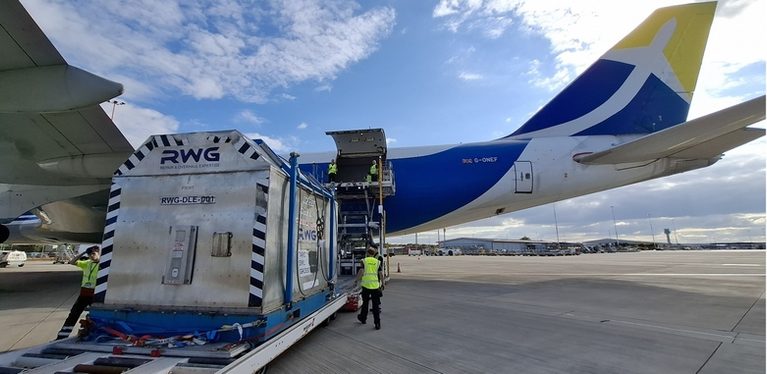
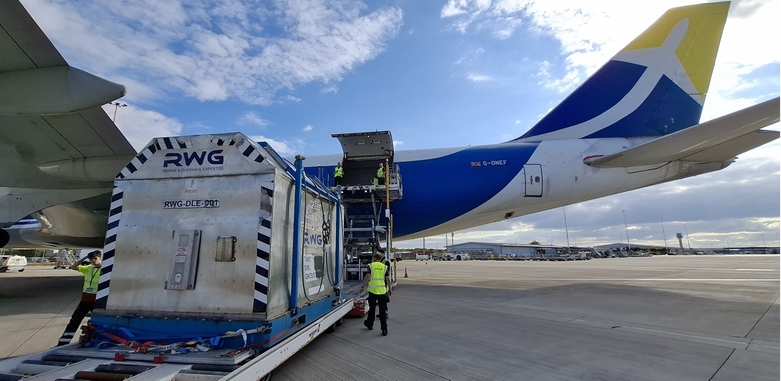
The large and heavy gas turbine being loaded into a B747F. Image: AIR ONE
As in many countries, Kazakhstan’s electricity consumption is on the increase – and because of this, the Kazakh Energy Ministry laid out a plan a few years ago, to develop its electric power sector by 2035. The construction of new energy facilities in Kazakhstan by then, also include combustion gas turbines which will be installed in 11 administrative centers across the nation. Usually, equipment of this kind arrives over land or sea, but recently one such outsize shipment was placed in the hands of global aviation group, AIR ONE, in cooperation with UAE, Dubai-headquartered Proactive Logistic Solutions FZCO (PLS). PLS is a relatively new company, having been founded just three years ago, but has a key specialization in outsize cargo (in addition to perishables and live animals). This particular gas turbine was transported for one of the world’s leading gas turbine maintenance, repair and overhaul specialists. Starting out in Aberdeen, the gas turbine was brought to East Midlands Airport in the UK, where it was flown to Kazakhstan’s Aktau International Airport, and then made its way to its final destination in the country, thanks to close cooperation between PLS and local partner, Aviation & Forwarding Solutions (AFS). AIR ONE arranged the One Air Boeing 747 freighter to transport the almost 3-meter-high shipment, weighing in at more than 8,400kgs.
Petr Novozhenov, Managing Director of Proactive Logistic Solutions FZCO, commented: “Moving shipments like this requires the full support of everyone involved, a great deal of expertise, and strong communication. We chose AIR ONE because of our confidence in their ability and their team truly delivered, especially the flight loadmasters whose thorough preparation turned what could have been a difficult exercise into a smooth flight and on-time delivery.”
Clair Gunn, AIR ONE’s Commercial Operations Director, said: “Our fleet of Boeing 777 and 747 freighters gives us a strong advantage for outsize shipments as well as considerable flexibility. Combining this with the knowledge and experience of AIR ONE’s in-house team of cargo transportation and loading experts means we can provide a fast response and reliable, secure deliveries of a wide range of out-of-gauge cargos, including those needing a nose-loading aircraft. This is an important and growing part of the aviation solutions we now offer.”
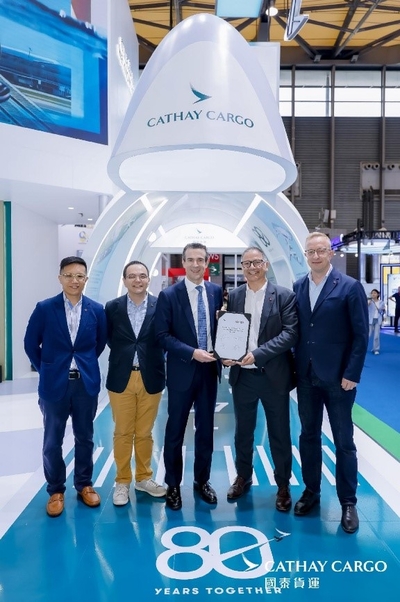
Hot on the heels of safety innovation. Image: Cathay Cargo
That Cathay Cargo is the launch customer for Unilode’s Fire Containment Cover Leasing Solution makes sound sense, operating out of the world’s busiest air cargo hub. The solution allows flexible access to certified Fire Containment Covers whenever and wherever they are required. It is the latest feature in the ULD manager’s growing service portfolio, which encompasses much more than pure container/pallet provision. Unilode offers complete aviation asset management including maintenance, repair, and logistics. The Fire Containment Cover Leasing Solution similarly removes the need for airlines to invest in their own assets, thus enabling easier global fleet optimization. Unilode provides the fire covers, ensures their certification, safety, compliance, maintenance and repair: lifecycle management offered as a single end-to-end service.
Tim Wong, General Manager Cargo Service Delivery at Cathay Cargo, commented: “Safety is at the heart of everything we do at Cathay Cargo, and we are continually looking for innovative solutions that strengthen our operations while delivering the highest levels of service to our customers. Unilode’s Fire Containment Cover Leasing Solution provides flexible access to certified equipment, backed by comprehensive global support and lifecycle management. We are pleased to be the launch customer for this initiative and look forward to continuing our long-standing partnership with Unilode as we work together to support safe, reliable and efficient cargo transport worldwide.”
Janis Balkens, Chief Operations Officer at Unilode Aviation Solutions, added: “We are delighted to welcome Cathay Cargo as the launch customer for our Fire Containment Cover Leasing Solution. Building on our extensive global repair and asset management network, this solution gives airlines immediate access to certified Fire Containment Covers without the cost and complexity of ownership. We are proud to support Cathay Cargo with a solution that enhances operational resilience while maintaining the highest standards of cargo safety.”
AI will automatically register cargo measurements and details. Image: Menzies Aviation
Menzies Aviation is testing AI-enabled cargo handling technology at London Heathrow as part of a proof-of-concept project with computer vision specialist CIND. The trial is designed to assess whether automated measurement, live cargo visibility and build-up verification can improve data accuracy, warehouse efficiency and operational decision-making from freight acceptance through to aircraft loading.
The first phase introduces CIND’s Dimensioner In-Motion, which automatically records cargo dimensions and shipment details as freight moves through the warehouse – no breaks in movement or additional handling required. Capturing information such as pallet dimensions, weight, stackability and shipment references early on, helps to reduce the need for manual entry and therefore the risk of errors. This enables better planning later on in the process.
Menzies is also trialing CIND’s ContourCheck during ULD build-up. This tool generates a real-time visual model of cargo during build-up, comparing this with the approved aircraft contour. Potential overhang or contour issues can thus be picked up sooner, and safer, more efficient use made of available space.
The two systems are expected to help streamline warehouse flows, improve load accuracy, increase ULD capacity use and strengthen flight safety, while giving operational teams more reliable cargo data. Results from the Heathrow deployment will decide whether Menzies expands the technology more widely across its cargo network as part of its focus on digitalization, operational excellence and continuous improvement.
Rory Fidler, Senior Vice President Cargo Technology, Menzies Aviation, said “Innovation is fundamental to how we are shaping the future of our cargo operations. This proof-of-concept deployment with CIND gives us the opportunity to test how reliable, real‑time data can transform the way we plan, load and manage cargo. The learnings from this pilot will help us assess the potential for wider application across our cargo network, supporting safer operations, smarter use of capacity and better decision‑making.”
Marcus Schelin, CEO of CIND, added: “Our solutions are proven and established in the market. Partnering with Menzies Aviation is an exciting and important step that reinforces our global rollout and our position as a market leader in automated measurement solutions for air cargo. This first phase deployment allows us to demonstrate real operational value while supporting safer, more efficient, and data-driven cargo handling.”
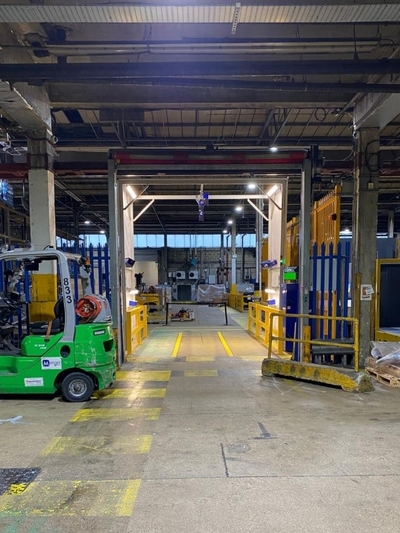
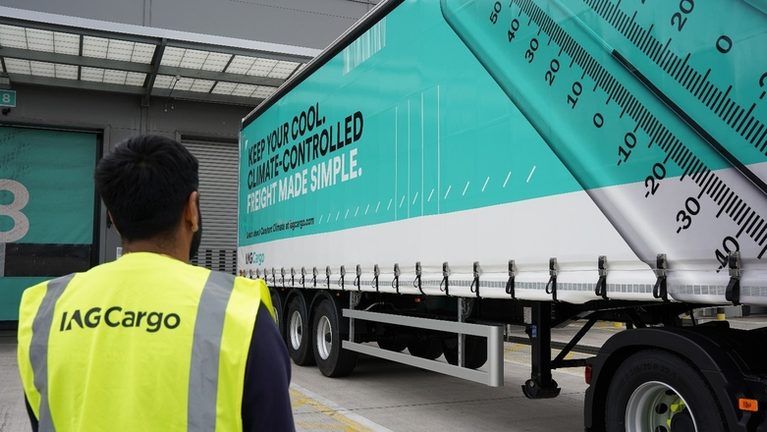
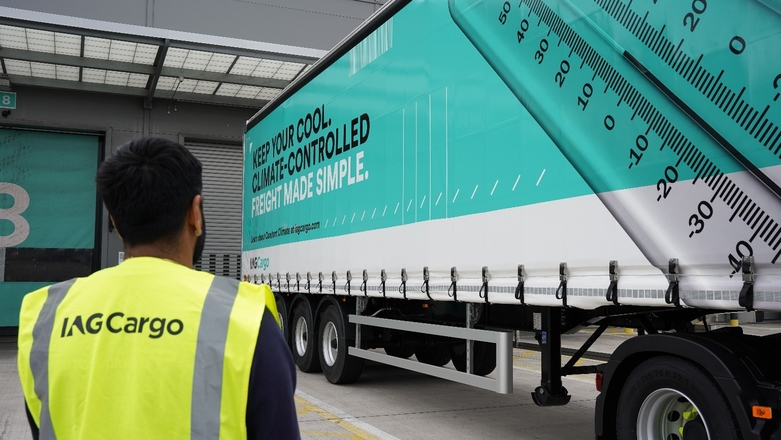
GDP-certified KUL is now an approved Constant Climate station. Image: IAG Cargo
With its latest Constant Climate station addition at Kuala Lumpur International Airport, IAG Cargo now operates a total of 13 such approved stations across the Asia-Pacific region, and around 100 cutting-edge pharma stations around the world. Its Constant Climate product is designed around the specific requirements of pharmaceuticals, such as vaccines, biotech products, and diagnostic samples, along with other temperature-sensitive pharmaceutical materials. The Kuala Lumpur station is GDP-certified and equipped to handle both active and passive temperature-controlled shipments. In continuously building up a quality-secured network of facilities capable of handling the increasing volumes of high-value time and temperature-sensitive shipments, IAG Cargo is maintaining its competitiveness as well as proving its reliability in offering quick, secure and commodity-specific transport. The airline operates daily flights between Kuala Lumpur and London Heathrow, opening up pharma shipping opportunities also for MASkargo out of London, for which it provides third-party handling, in line with the Global Cargo Joint Business agreement it holds with Qatar Airways Cargo and MASkargo, to offer one of the world’s largest combined air cargo networks.
Jordan Kohlbeck, Head of Pharmaceutical at IAG Cargo, said: “Adding Kuala Lumpur to our Constant Climate network further enhances IAG Cargo’s presence in Southeast Asia, strengthening both our origin and destination capabilities for pharmaceutical and healthcare shipments. It expands our regional coverage and offers customers greater flexibility when moving temperature-sensitive goods across the globe. With around 100 approved Constant Climate stations worldwide, and our state-of-the-art New Premia facility at our London Heathrow headquarters, IAG Cargo is ideally positioned to manage high-value, time- and temperature-sensitive shipments quickly and securely. This expansion reflects the growing demand for reliable cold chain solutions, driven by ongoing innovation in life sciences and the increasing need for fast, temperature-controlled transport of biologics, cell and gene therapies, and personalised medicines – all of which rely on the speed and precision that air cargo uniquely provides. The daily Kuala Lumpur-London Heathrow schedule has been optimized to enhance service quality and reliability. An early morning arrival into London Heathrow enables same-day connections to a number of key Constant Climate stations across the IAG Cargo network – helping ensure faster, more secure delivery of pharmaceutical shipments worldwide.”
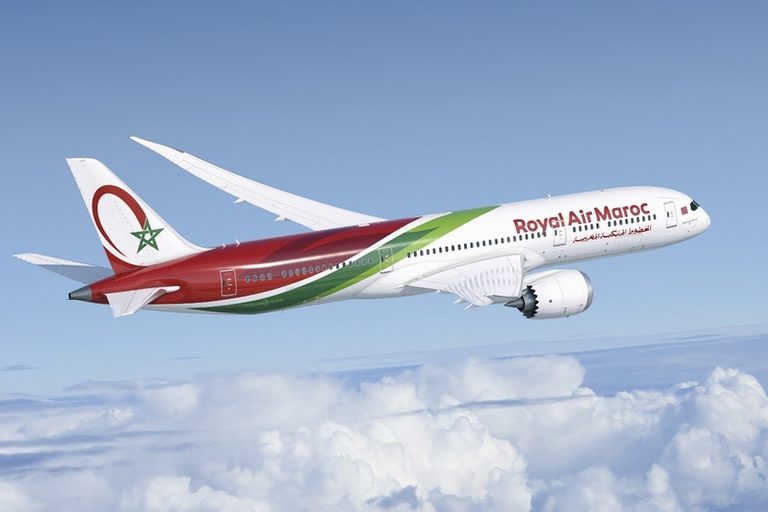
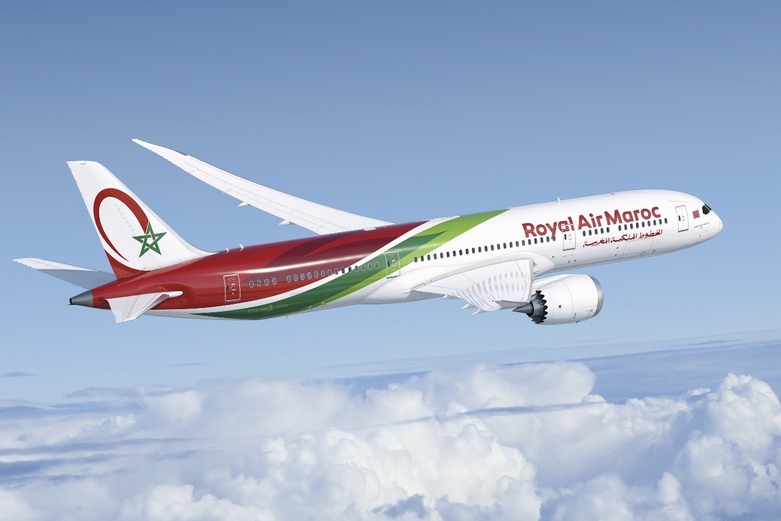
RAM Cargo: the only African carrier directly connecting Africa with the U.S. West Coast. Image: Royal Air Maroc
Since just over two months now, Royal Air Maroc Cargo has been operating three flights per week between Casablanca (CMN) and Los Angeles (LAX). It is the first and only African carrier to directly connect Africa with the U.S. West Coast. The first flight was launched on 01JUN26. The airline deploys a Boeing 787 Dreamliner on the route, which allows for generous belly cargo capacity to what is one of Royal Air Maroc Cargo’s most significant cargo markets: North America. The route adds to its global network and ambition of becoming a global cargo hub. It is an important step in facilitating the transport of high-value commodities and e-commerce by increasing connectivity on the underserved Africa–West Coast and Africa–Asia trade lanes. The new connection effectively offers a round-the-world route linking Los Angeles (LAX) with Beijing (PKX – in RAM’s network since early last year) via Casablanca.
“Los Angeles provides access to one of the world’s largest consumer markets and benefits from strong trade links across the Pacific. Royal Air Maroc Cargo’s service therefore supports a diverse cargo mix: Artisan products, textiles and perishables travel into the United States from Morocco and wider African markets, while electronics, e-commerce shipments and industrial products are flown in from China and greater Asia,” the release underlines.
Rita Chraibi, Vice-President Cargo, Royal Air Maroc, commented: “The launch of this Los Angeles service marks a significant milestone in our strategy to connect key international markets via our hub in Casablanca and further facilitate global trade connections. By linking the U.S. West Coast with Royal Air Maroc Cargo’s African and Asian network, our customers benefit from seamless, multi-leg connectivity, improved market access and enhanced routing options.”