TRIWO Hahn Airport and its former CEO, Rene Steinhaus, have parted ways “by mutual agreement” following the end of his probation period. It is likely to have been one of the shortest tenures of any airport CEO at a German airport, as Steinhaus had only assumed the position on 01APR26. HHN owner TRIWO AG has not yet decided on a successor.
Hahn Airport, located 120 km southwest of Frankfurt, has seen many leadership changes at the highest levels throughout its eventful history. Nevertheless, the departure of CEO, Rene Steinhaus, effective 31AUG26, after only six months on the job, comes as a surprise. This is especially true given that he is no newcomer but has many years of experience in the aviation and transportation industries. He gained this experience in various roles at Fraport AG, Luxembourg Airport and at the Swedish company Einride, a specialist in electric and autonomous truck developments (CFG reported: https://cargoforwarder.eu/2026/03/15/exclusive-steinhaus-to-become-new-ceo-of-hahn-airport) Local sources assured this online portal that a letter from TRIWO’s management to the staff refers to a “mutually agreed separation.” However, this is likely to be just a diplomatic phrase; no further explanation has been given.
The airport operator, TRIWO AG, is looking for a new CEO – illustration: Company courtesy
Traffic stagnation… Insiders claim that Steinhaus failed to acquire a single new passenger or cargo airline during his brief tenure. Others praise his friendly manner but argue that he got bogged down in minor details instead of setting clear priorities for stabilizing the company’s finances. This would include engaging in targeted discussions with key clients such as Ryanair, Wizzair, Egyptair Cargo and others to optimize business relationships. A revival of passenger traffic would have boosted retail and increased revenue from parking fees. The air cargo business also failed to gain real momentum during his tenure as CEO, even though data indicate that tonnage and flight movements rose by about 20% in 01HY26. While 258,640 metric tons were handled in 2021 – mainly due to the many irregular flights resulting from the COVID-19 pandemic – the volume dropped to 106,640 tons last year. Since Steinhaus took the helm at Hahn only this April, he is not responsible for the decline in volumes. But he failed to improve the figures notably, critics claim.
…despite attractive operating conditions HHN is one of the few German airports with a 24/07/365 operating license and has no slot restrictions. This makes the place particularly attractive to cargo airlines preferring flexible takeoff and landing times due to complex operations. There are, however, shortcomings in its marketing efforts, observers say. Steinhaus’s departure from airport management does not create a vacuum at HHN’s top deck as, in addition to airport owner Peter Adrian, two managers – Jan Glockauer and Robert Willems – are legally responsible for the airport’s business activities. However, as they have been heavily engaged in the highly diversified affairs of parent TRIWO AG who acquired Hahn in APR23, neither of them has so far been directly involved in Hahn’s operational activities. An inquiry sent by CargoForwarder Global last Thursday (03SEP26) to TRIWO management regarding the appointment of a new CEO and the stabilization of the airport’s business operations has thus far remained unanswered.
According to credible sources, German security authorities have identified two of the four perpetrators who carried out three drone attacks at Leipzig-Halle Airport. DNA evidence led to this breakthrough in the investigation. On 04AUG26, the four suspects operated three drones in the vicinity of the airport, two of which were loaded with highly explosive materials. The devices did not explode thanks to the courageous intervention of an airport employee and technical malfunctions.
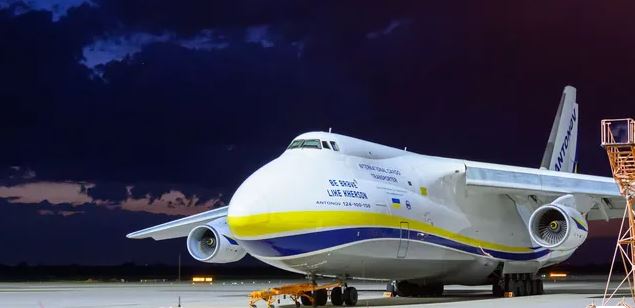
Since Russia’s invasion of Ukraine, Antonov Airlines uses LEJ as its core hub – picture: courtesy t-online
Right after the attempted attack, security experts expressed their belief that Russian sources initiated the hybrid attack. Their reasoning: one of the drones carried a device filled with 600 grams of highly explosive material. It was spotted and neutralized by an airport employee near two AN-124 transport aircraft belonging to Ukraine’s Antonov Airlines, parked on the apron. Further evidence pointing to the drones’ Russian origin was the plastic explosive material “Semtex” – known, to be commonly used be the Russian intelligence service, analyzed by German and foreign experts in specialized laboratories, known to be commonly used by the Russian intelligence service.
Crushing evidence EU Foreign Affairs Commissioner Kaja Kallas has now also publicly emphasized these facts on the sidelines of an EU defense ministers’ meeting in Wicklow, Ireland. There is crushing evidence that Moscow is involved in the explosive-laden drone incident, she said. The EU will determine the final steps to take against Moscow in consultation with the German government.
Meanwhile, German security services have identified two of at least four suspects involved in the Leipzig attack. According to consistent reports from various media outlets, they are a Russian-born individual with a Latvian passport and a Russian passport holder from Belarus. Investigators confirmed they had identified the Belarusian suspect’s DNA on pieces of evidence which enabled them to trace and reconstruct his travel itinerary. According to the findings, he entered the Schengen Area on an Italian visa. The second suspect is said to have played a key role in planning the attack. The mastermind of the assault reportedly landed at BER at the end of July, went on to the state of Saxony, and left Germany just two days before the failed attack.
As the tabloid Bild reports, investigators are searching for other individuals, traces of whose DNA authorities were able to detect, or whose cell phone signals were picked up by nearby cell towers.
Will the counter measures impress Putin? As a result of the drone attack and ongoing hybrid threats, the German government has ordered the closure of the Russian Consulate General in Bonn as of 18SEP26, as well as the Russian House in Berlin. Originally founded to promote cultural exchange, it has, according to intelligence reports, long since been transformed into a spy hub. In addition, the Berlin government has announced that it will add further individuals from Putin’s inner circle or allied organizations to EU sanctions lists and tighten entry controls for Russian nationals. Furthermore, Berlin, together with Brussels, wants to significantly step up pressure on the Russian shadow fleet. Moscow uses a substantial portion of the proceeds from oil sales to finance its war of aggression against Ukraine.
Ultimately, the German government, in consultation with the EU, has decided to significantly increase its military support for Ukraine in its struggle against the Russian militia. Germany is already Ukraine’s strongest supporter, following the U.S.’s withdrawal since Trump took office.
According to Reuters, EU Commission President Ursula von der Leyen described the drone attack in Leipzig as “a new level of escalation on European soil.” She stated that it was an attack carried out by Russian agents using military equipment. Had the attack succeeded, it could have been fatal.
NATO Secretary General Mark Rutte also sounded the alarm, stating that Russia is acting with increasing recklessness. He announced that the EU and NATO would therefore continue to increase pressure on Moscow.
Escalating hybrid attacks The recent drone assaults are part of a series of other attacks or attempted attacks on German institutions and individuals. For example, several executives of major defense contractors were spied on for weeks by informants to create a profile of their movements. They are now under constant police protection. Three attempted attacks on cargo planes operated by the parcel delivery service DHL were orchestrated on behalf of the Russian intelligence service, FSJ. A criminal trial against five suspects involved in the attempts is currently underway in Vilnius, Lithuania. They are accused of planning acts of terrorism and sabotage on behalf of Russian intelligence agencies. According to investigators, the defendants are alleged to have sent disguised incendiary devices via the parcel services DHL and DPD in JUL24 (CFG reported).
The Kremlin responds with threats Moscow reacted immediately to the sanctions imposed by the German government in response to the Leipzig drones and the ongoing hybrid warfare. The Kremlin ordered the closure of the German Goethe Institutes in Russia and announced that it would be taking further measures. Former Russian President Dmitry Medvedev accused Germany of having itself orchestrated the drone attack on Leipzig Airport as an example of its extremely russophobic policy. He denounced the current German government as “neo-Nazis” exclusively serving the interests of Ukraine. He also threatened Berlin with “punishment”. “You deserve a direct strike against all German military technology production facilities,” wrote the Kremlin politician – known for his inflammatory rhetoric – on Telegram.
The drone attack on Leipzig Airport is unlikely to have been the last of its kind on NATO territory.
The answer depends on the criteria used for the ranking. These could include profitability, geographic reach and network footprint, or the brand value that analysts attribute to each logistics provider. From this perspective, there is no clear number one in global logistics. What applies equally to all three, however, is that they are all facing headwinds – to varying degrees – due to U.S.-imposed tariffs, geopolitical tensions, and supply chain disruptions.
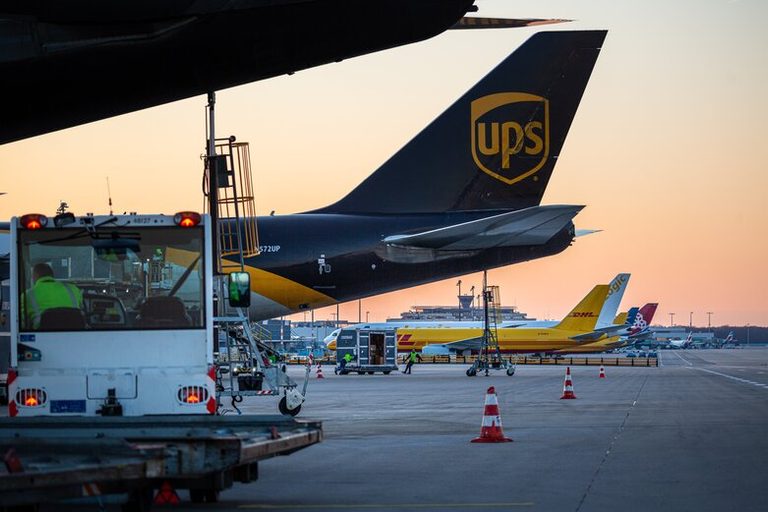
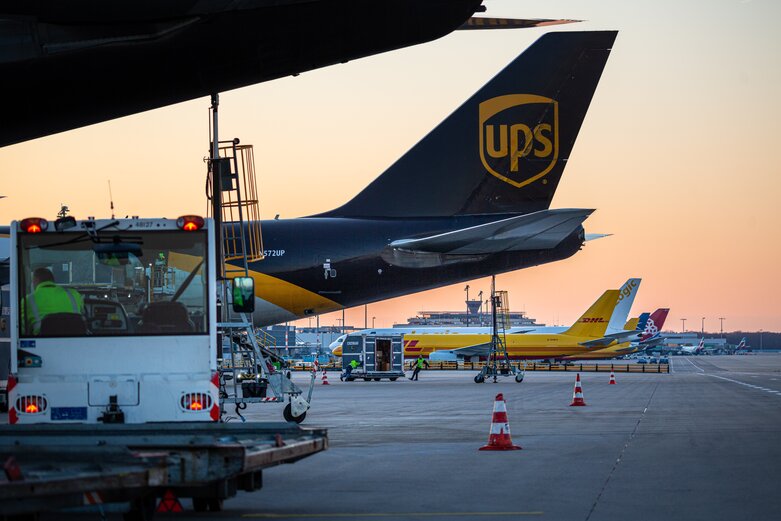
Lineup of freighters at CGN – picture: CFG/hs.
A renowned analyst that constantly keeps a close eye on the logistics industry, is London-based Brand Finance, one of the world’s leading brand valuation consultancies. According to its latest survey, U.S. integrator, UPS was able to defend its position as the most valuable logistics brand in the first half of 2026 – a title it has held continuously since 2015 – despite an 8% dip in brand value since JAN26. The decline stems primarily from the decision made by UPS management two years ago, to reduce its dependency on Amazon, by cutting down more than 50% of Amazon’s shipments since the parcels are high-volume but margin dilutive. The last-mile packages and parcels kept clogging its sorting facilities and generated lower profits than longer-range deliveries.
Profits come first Therefore, UPS was willing to sacrifice its near-term revenue to stabilize its long-term margins. Amazon has been UPS’s largest customer for nearly 30 years and contributes almost 11% of the integrator’s consolidated revenue. Meanwhile, the courier giant aims to focus more on profitable ventures such as healthcare logistics, which generated more than USD 11 billion in the brand’s 2025 revenue.
According to Brand Finance’s latest survey, UPS’s rival, FedEx ranks second in brand value. The company’s sustained performance can primarily be attributed to the success of its cost-efficiency strategy, which has enabled it to weather most of the headwinds facing the U.S. package delivery company and the industry as a whole. The cost-cutting program announced in JUN25, through which FedEx saved USD 5 billion, significantly improved the service provider’s financial situation, followed by a similar savings initiative in MAY26, that reduced costs by an additional USD 1 billion. At the same time, FedEx expanded its revenue channels and solidified its position within the industry as its spin-off brand, FedEx Freight, was established as a new publicly traded company on 01JUN26.
Yet, global presence is just as important In terms of reach, volume of shipments, and local presence, DHL remains clearly ahead of UPS and FedEx. Last year, the Deutsche Post subsidiary generated revenue of USD 96.9 billion (UPS: USD 88.7 billion, FedEx: USD 82.5 billion). DHL runs own stations in 220 countries and is the logistics provider with the highest revenue in its core markets Europe, Asia-Pacific, the Middle East, and Africa. Rivals UPS and FedEx, on the other hand, generate a significantly higher share of their revenue in the domestic U.S. market, where they offer large-scale coverage through their own stations.
Upstarts are knocking on the door However, the current ranking of logistics companies is likely to shift soon, as new heavyweights are emerging in China. Together, SF Express, China Post, and Jingdong Logistics already account for 14% of the sector’s total brand value. Particularly impressive is the upswing of SF Express (brand value: USD 6.3 billion), which has remained steadfast amid industry-wide headwinds this year. This is partly thanks to its partnership with cargo aircraft provider, AIR ONE, which enabled SF Express to expand its routes into Europe and broaden its global network. The partnership also streamlines transit times while supporting rising trade and logistics demand between the Far East and Europe.
Last, but not least, the Danish company, Maersk, and CEVA Logistics from Marseilles/France, must also be mentioned. In addition to their core maritime business, both now operate freighter fleets similar to their direct competitor, MSC from Switzerland. CEVA and Maersk, in particular, are on track to securing a place among the top five largest logistics companies, unless the global economy faces a fundamental crisis.
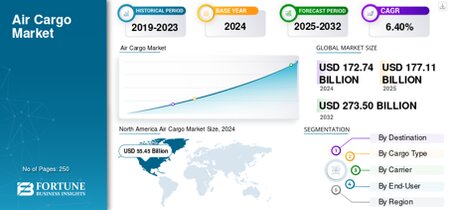
The global air cargo market is expected to expand significantly over the next six years. Fortune Business Insights forecasts revenues to increase from US$ 177.1 billion in 2025 to US$ 273.5 billion by 2032, corresponding to a compound annual growth rate of 6.4%. But the forecast also raises a more interesting question: which cargo segments will generate that growth? E-commerce remains an important driver, while healthcare, critical shipments and high-value commercial goods are becoming increasingly relevant.
Air Cargo Forecast. Source: Fortune Business Insights
E-commerce remains a key growth driver E-commerce has been one of the strongest growth engines for air cargo in recent years. The market study identifies the continued expansion of cross-border online trade as a major driver through 2032. At the same time, recent developments show that the segment is becoming more complex.
CargoForwarder Global reported in July that the EU’s new EUR 3 charge on low-value imports was expected to cause an initial dip in e-commerce-related airfreight demand. The first signs of this adjustment are now emerging, with changes to China-Europe cargo flows following the introduction of the new rules. https://cargoforwarder.eu/2026/07/05/verhasselt-eu-e-commerce-fee-to-cause-brief-dip-only/
This does not necessarily point to a long-term decline in e-commerce airfreight. Instead, the market could see a shift towards more consolidated shipments, European fulfilment centers and alternative gateways. The segment is therefore likely to remain important through 2032, although its growth model may look different from the one that drove volumes over the past few years.
Pharma and healthcare gain ground Healthcare is another segment identified by Fortune Business Insights as an important part of the future air cargo market. The growing importance of temperature-sensitive pharmaceuticals, biologics and other high-value products is also reflected in current industry investments.
The latest example comes from IAG Cargo. The carrier has added Kuala Lumpur International Airport to its Constant Climate network, expanding its pharmaceutical cold-chain offering in Southeast Asia. The network now comprises around 100 approved stations globally, including 13 in the Asia-Pacific region. The company says the expansion reflects growing demand for the transport of biologics, cell and gene therapies and personalized medicines.
The development fits a wider industry trend. IATA notes that pharmaceuticals are becoming increasingly value-dense and that biologics, reagents and cell and gene therapies require increasingly precise temperature control and monitoring throughout the supply chain.
AI creates another cargo opportunity Another segment attracting attention is high-tech cargo. The rapid expansion of artificial intelligence infrastructure is generating demand for semiconductors, processors, servers and other high-value components.
Reuters recently reported that AI-related shipments are reshaping Asian air cargo, with airlines adapting networks to accommodate increased flows of semiconductors and AI hardware. Korean Air, China Airlines and EVA Air have all reported strong demand linked to the sector.
Without a doubt, the industry is already moving from experimentation to operational deployment. CargoForwarder Global has reported on AI being used for booking, pricing, forecasting and customer service, while other applications are emerging in cargo tracking and operational control.
This development is particularly relevant for the 2032 outlook. Unlike low-value e-commerce parcels, AI hardware is compact, expensive and often time-critical. Characteristics that favor airfreight.
Asia-Pacific remains central Asia-Pacific is expected to remain a major growth region through 2032. Fortune Business Insights identifies the region as the fastest-growing market during the forecast period, supported by manufacturing, international trade and e-commerce.
Recent developments suggest that its importance will extend beyond consumer goods. Taiwan, South Korea, Japan and Southeast Asia are becoming increasingly important in semiconductor and high-tech supply chains. At the same time, pharmaceutical flows are generating demand for specialized cold-chain infrastructure.
A larger market with a broader cargo mix The forecast points to a significantly larger global air cargo market by 2032. But the growth is unlikely to come from a single source.
E-commerce will remain important, although regulation is forcing the sector to adjust. Pharma and healthcare create demand for specialized infrastructure, while AI and semiconductor-related shipments are adding another high-value cargo stream. General cargo and traditional industrial commodities will continue to form the backbone of the market.
Every week, CargoForwarder Global’s ‘Spotlight On…’ shows just how broad the air cargo industry is and the multitude of career paths and possibilities it offers. The industry’s diverse set-up is simply one aspect – the regulations and frameworks it needs to comply with, are just as varied and often complex. Independent consultants specialized in those fields advise, inform and guide companies in the implementation and compliance of required changes. This week, Moritz Hampel, Air Cargo Consultant at aeroconcept, shares insights into his role and his views on the air cargo industry.
The industry’s greatest challenges can be divided into 4 pillars. Image: Moritz Hampel
CFG: What is your current function and company? And what are your responsibilities?
MH: I work as an air cargo consultant at aeroconcept in Leipzig. I also lecture at the University of DHSN in Glauchau, Germany. At the moment, my primary focus is on the implementation of Safety Management Systems (SMS) in accordance with the new EU Regulation No 2025/20, which will come into force on 27MAR28. This regulation imposes significant new obligations on a wide range of organizations within the industry, from ground handling companies, cargo agents to catering companies and cleaning services. By 2028, companies must comply with the very same safety regulations that airlines and airports have been required to implement for several years now. This ensures a level playing field, and compliance with these regulations is monitored by the national civil aviation authority. Consequently, this regulatory framework is of immense importance to many businesses operating within the EASA/EU area. I support a diverse range of clients in preparing to meet these requirements and implementing them. In addition to working with individual clients, I am currently developing and leading this pan-European program designed to help businesses across the continent enhance safety in a structured and sustainable manner.
CFG: What does a normal day look like for you?
MH: To be honest, there’s no such thing as a ‘typical day’ in this role. Every client presents different challenges, a different level of sophistication in their security systems and a different organizational culture, so there simply aren’t any standard solutions that I can apply in every case. It’s this diversity that shapes the course of my days. I mostly work from home, which allows me to organize my schedule flexibly and adapt to the needs of a particular project on any given day. At the same time, a significant part of my work involves visiting clients in person, whether somewhere in Germany, elsewhere in Europe, or occasionally in more distant locations. So, although there is a certain rhythm to the work when it comes to research, analysis, writing reports and preparing training sessions, the actual course of each week can look completely different, depending on where clients need me.
CFG: How long have you been in the air cargo industry, and what brought you to it?
MH: I have been working in the air transport industry since 2019. I started out on a dual study Bachelor program in Air Transport Management and Logistics at DHL Hub in Leipzig (Germany), which included an international placement at DHL’s UK Hub in East Midlands. I then spent six months in the fleet management department at Lufthansa in Munich. Upon my return to Leipzig, I completed a Master’s Degree in Business Management, working as a student at DHL on operational projects at Leipzig/Halle Airport. At the same time, I started a Masters of Law (LL.M.) in Business and Economic Law, and spent a semester at Chongqing University of Political Science and Law in China. Since the start of this year, I have been working alongside James Wyatt at aeroconcept, advising clients on a wide range of topics relating to air cargo, with a particular focus on safety and security matters.
CFG: What do you enjoy most about your job?
MH: I’ve always loved to travel. As a child, I was fascinated by airplanes and for a long time I wanted to become a pilot myself. My parents played a big part in this; from a very young age, they showed me what it means to love travelling and exploring the world. What I like most about my current job is that it allows me to combine all of this. I work in the aviation industry, have found my niche in air cargo, and advise international clients all over the world, which means I’m constantly discovering new markets and new ways of working. What’s more, the job gives me a great deal of freedom. I’m independent; I can organize my time in whatever way suits me best and fits the project in question, and I value this flexibility immensely.
CFG: Where do you see the greatest challenges in our industry?
MH: The classic challenges facing our industry are well known and have been extensively described in the literature. However, from my generation’s perspective, I believe that the greatest challenges can be divided into four pillars. Firstly, sustainable development. In this area, airlines, ground handling operators and cargo agents alike still have enormous scope for improvement. Secondly, regulatory frameworks, which concern both sustainability and safety, and which are currently my main focus. Companies, particularly small and medium-sized ones, which often lack the resources to keep pace with EU regulations, are facing a host of new requirements. Thirdly, artificial intelligence and digitalization. Air cargo is and remains a people-centered industry, but it cannot afford to cut itself off from technological progress; otherwise, it risks falling behind on the international stage. And fourthly, a shortage of young talent. Logistics does not seem particularly attractive to many people, even though it involves forward-looking, exciting challenges to be solved, something that also appeals to my generation.
CFG: What advice would you give to people looking to get into the air cargo industry?
MH: My advice would be to just try it out. Especially for young people doing an apprenticeship or studying, I would recommend an internship at an airport, since cargo operations exist almost everywhere in the world, given that every commercial passenger aircraft also carries cargo in its lower deck. You can get a taste of it almost anywhere, and dual study programs like mine certainly are not unique to Germany. Dedicated air cargo degree programs are rare, and in my view, not strictly necessary either. What matters most is hands-on experience, having worked on the ramp or in a cargo warehouse, talking to people on the ground, and letting yourself get excited about the industry. The barrier to entry is low, you just need to see it live once.
CFG: If the air cargo industry were a film/book, what would its title be?
MH: ‘The Invisible Backbone.’
To me, that is the most fitting title. A personal anecdote to go with it: during Covid, as a 20-year-old, I had just started in the cargo division at DHL, Leipzig/Halle Airport. In the middle of the lockdown, we received an A4 sheet from the government, certifying that we were ‘systemically relevant’, and while almost everyone else had to stay home, I could keep going to work, because this industry keeps world trade moving. Air cargo is not just contracts and documents, it is vital shipments such as medicines and lab samples, all the things people depend on. At the end of the day, it is about human lives, and that is what makes this job so valuable. Few people realize that every aircraft taking off is not just carrying passengers, it is carrying all of that too. And it’s precisely for all these reasons that this industry is so special, so important and, for me personally, so rewarding and fulfilling to work in, making it a little bit better every day, somewhere in the world.
Thank you, Moritz!
If you would like to share your personal air cargo story with our CargoForwarder Global readers, feel free to send your answers to the above questions tocargoforwarderglobal@kopfpilot.atWe look forward to shining a spotlight on your job area, views, and experiences.
If everyone involved does their job, how is it that air cargo still breaks down from time to time? Irma van Buuren, this week’s guest author for CargoForwarder Global, explores this phenomenon in more detail.Cargo does not respect organizational boundaries, she says. The Executive Advisor and Founder of Executive Control draws on three decades of experience across aviation, working at the intersection of strategy, governance and operations. Having held senior leadership roles dealing with complex environments where operational success depends on multiple organizations and functions working together, she offers insight into the bigger picture – beyond the one illustrated by performance indicators and process responsibilities.
Cargo does not respect organizational boundaries. Image: Irma van Buuren
A shipment is booked. The forwarder delivers the cargo on time. The handler receives it within the agreed cut-off. The airline has accepted the booking. The truck arrives as planned. The documentation is complete.
And yet the shipment misses the flight.
Who failed? The obvious answer is to look for the organization that did not do its job. But what if every organization performed within its agreed responsibility and the shipment still failed?
Then the problem is what happened between those responsibilities.
Air cargo is built around multiple organizations, each with its own processes, systems, contracts, service levels and KPIs. That creates clarity about who is responsible for what.
However, the shipment does not experience those boundaries. It experiences one continuous movement: A booking becomes a physical shipment. Information becomes a handling decision. One organization’s timing becomes another organization’s constraint, and a decision in one part of the chain can remove the options available in another.
Everyone can do their job and yet the shipment can still fail.
And that raises a more difficult question:
What is actually producing the outcome? The organization is not the operation. A process can be perfectly clear and still depend on conditions that nobody owns end-to-end.
The cargo has to arrive. The documentation has to be correct. The shipment has to be visible in the system. The right people and resources have to be available. Information has to arrive at the right moment. The handover has to happen before the available time disappears.
While each condition may sit comfortably within someone’s responsibility, the outcome depends on all of them being true at the same time.
Information arriving late can delay a decision.
A delayed decision can leave cargo waiting.
Cargo waiting can consume the margin available for the next handover.
Nothing necessarily went wrong within an individual process. The conditions simply stopped lining up.
We are very good at asking: Who was responsible for this step?
We are much less accustomed to asking: What did the shipment depend on to move successfully?
The shipment experiences one system. The organizations experience their parts of it.
The work nobody measures. The most important intervention may be the one that keeps the KPI green.
The system says one thing, but someone knows not to trust it blindly. A shipment looks ready, but someone knows that something is missing. A connection is still technically achievable, but someone calls ahead because they know how quickly the margin can disappear.
In all these situations, a problem has not yet occurred, but someone intervenes because they have seen it before. And when that happens, the exception never becomes visible. The KPI stays green. Nothing appears to be wrong.
A problem has been avoided but was not identified by the formal process. The KPI did not flag it. The data did not capture it.
Experience did.
The value and pitfall of experience. Experienced people adjust, anticipate and connect things that the formal process does not. They know where to look twice, when to intervene, and whom to call. And because they do, the weakness remains invisible.
That creates a dangerous possibility: The organization may believe it has a resilient process when it actually has a human dependency. And the consequences of this may only become visible when the people, volume or conditions change.
What happens when volume grows? The mechanism that keeps an operation stable at one scale can become the source of fragility at another.
Growth does not simply add shipments. It adds interactions. More shipments create more handovers, which then create more dependencies. More dependencies create more opportunities for variability, and more variability creates more need for coordination.
At lower volumes, experienced people can often absorb that complexity. They know where to intervene. They know what matters, and they know whom to call. The operation continues to perform.
But the underlying dependency grows with the volume, as there are more situations to anticipate, more exceptions to absorb, more decisions to make, and more informal coordination to sustain.
And then people leave. Those who remain absorb more of the load. They carry more of the knowledge, make more interventions, and become more critical to keeping the operation moving.
The KPI may remain green, however, the dependency has increased.
Eventually, the question is no longer whether experienced people can keep up. It is whether the operating model can function without requiring them to. What worked before may simply no longer work at the next level.
That is when an organization discovers that the capability it relied on may not scale at all.
Accountability is not the same as control An organization can own the outcome without controlling everything that produces it.
When something goes wrong, we naturally ask: Who was responsible?
But accountability is distributed while the outcome is shared. Accountability tells us who owns a responsibility. It does not necessarily tell us who controls the conditions required for the outcome.
Leadership can therefore see every organization performing acceptably while the system connecting them becomes increasingly fragile.
That is a very different risk.
Look beyond the organizational boundaries If the outcome crosses organizational boundaries, looking only inside each organization will always leave part of the story out. So, the questions have to change.
Not only: Who is responsible?
But: What does this outcome depend on?
And perhaps the most revealing question: What are experienced people doing every day that the organization has never formally accounted for?
These questions expose what conventional performance reporting can easily miss. That is where much of the real performance is being produced, and it may also be where much of the real exposure sits.
Everyone can do their job. The system can still fail The most dangerous weakness in an operation may be the one its performance indicators are successfully hiding.
Air cargo has become increasingly sophisticated at defining roles, processes, standards and responsibilities. That is necessary. However, clarity of responsibility does not create end-to-end control.
The shipment still has to cross the boundaries those structures create – and that is where the real test lies. Not in whether each organization can perform its part, but in whether the parts continue to work together under the conditions in which the operation actually runs. Because the interfaces are not simply where things go wrong. They are where the system reveals itself.
So, perhaps the industry question is not: How can we improve air cargo performance?
Perhaps the more important question is: What does your operation depend on, that your performance reporting cannot see?
Because that may be where the real exposure begins.
Dangerous goods require particular care when it comes to safe, efficient air transportation, and for years the industry has relied on manual, paper-based checks to keep them compliant. IATA’s DG AutoCheck was built to close that gap by automating the compliance process. Its slowly growing rollout across airlines and ground handlers recently celebrated another new milestone: LATAM Cargo’s announcement that it was going live in the Americas. Here’s a quick look at how the tool came about, why it matters, how quickly the industry is adopting it, where the friction points remain, and what LATAM Cargo’s recent integration means for the region.
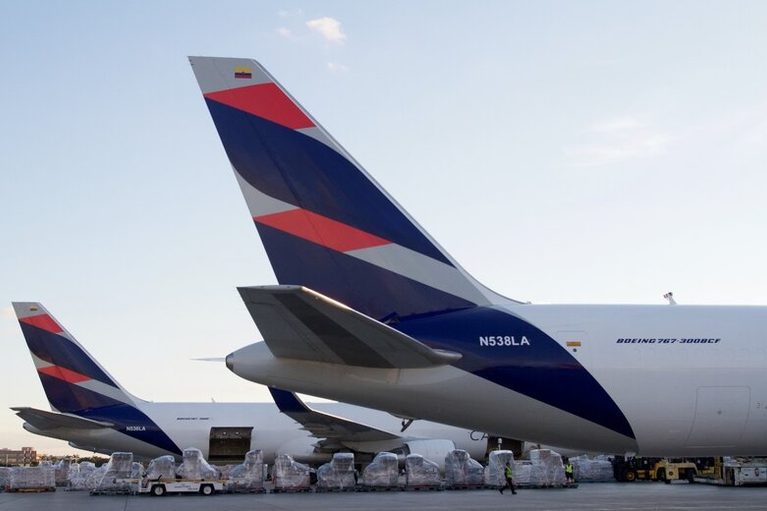
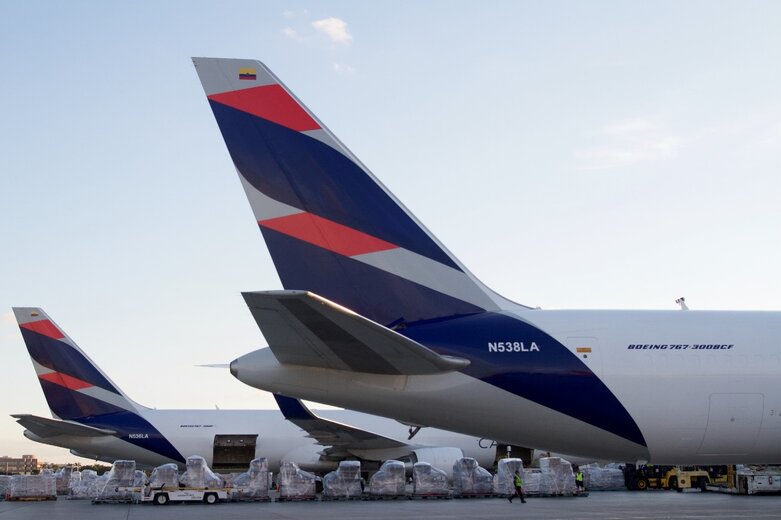
Less errors, faster flows: LATAM has rolled out DG AutoCheck across the Americas – picture: courtesy LATAM Cargo
Shipping dangerous goods by air has always been a paperwork-heavy business. Every lithium battery pallet, chemical drum, or aerosol shipment travels with a Shipper’s Declaration for Dangerous Goods (DGD) that has to be checked, line by line, against the IATA Dangerous Goods Regulations before an airline will accept it. For decades that check has been done by hand – and it mostly still is. IATA estimates that roughly 95% of DGDs are still submitted on paper, requiring agents to scan, convert, and manually cross-reference each form.
Built for change and efficiency DG AutoCheck was built to change that. Unveiled by IATA around 2018 and launched commercially in 2019, it is a digital rules engine that accepts a DGD – either scanned via OCR or submitted as structured electronic data – and automatically checks it against the current DGR, including State Variations, Operator Variations, and Special Provisions. It calculates Q values, flags non-compliance with the specific regulation cited, and produces a package preview showing the marks and labels inspectors should expect to see on the physical shipment. The tool was developed by IATA’s Dangerous Goods Solutions team in consultation with airlines, ground handlers, and freight forwarders, and has continued to expand – most recently with DG Digital, launched in MAR26, which digitalizes the declaration itself to avoid paper altogether, and uses a Connect API to push validated data into airline and ground-handling systems, including automated NOTOC generation.
Why it matters, and the benefits The case for DG AutoCheck rests on safety and speed. Manual checks are prone to human error, and a missed detail on a hazmat declaration is a real safety risk. The automated compliance check reduces the chance that an unsafe or non-compliant shipment gets accepted. At the same time, it speeds up the traditionally slow acceptance time. For airlines and ground handlers, this translates into fewer rejected shipments, less rework, and better visibility into where problems recur – the system’s reporting tools let operators see rejection patterns and identify which shippers need support. For shippers and forwarders, it means fewer delays and more predictable acceptance.
How fast is the industry adopting it Adoption has been steady rather than swift, but it is accelerating. Since its 2019 launch, DG AutoCheck has processed over one million Dangerous Goods checks, with more than a third of that volume completed in 2025 alone – a jump that also reflects a 17.5% year-on-year rise in dangerous goods shipments, largely driven by lithium battery demand. Air France-KLM was the first airline group to adopt the tool, and it has since been taken up by Japan Airlines, All Nippon Airways, IAG Cargo, and ground handler, dnata, which now runs it at more than 20 stations worldwide and has connected it to its warehouse management system.
The main barriers to faster adoption are structural rather than technological. The 95% of declarations still arriving on paper reflects how deeply manual habits are embedded across a fragmented global shipper base, many of whom lack the systems or incentive to switch. Integrating DG AutoCheck into an airline’s own core operating system – rather than using it as a standalone checker – also requires real IT investment and cross-functional coordination, which explains why most rollouts have started at a single hub or station before expanding.
LATAM Cargo’s milestone That pattern is exactly how LATAM Cargo has approached its own rollout. LATAM has become the first airline in the Americas to integrate DG AutoCheck directly into its core operating system, Croamis, following a successful launch at its Miami station, with adoption set to expand gradually across the network. The integration, built in collaboration with IATA and Wipro, validates DGD information in real time and automatically alerts customers to discrepancies, allowing corrections before they cause delays. It also gives cargo acceptance agents an interactive checklist for physical inspection and automates NOTOC creation.
For LATAM, the payoff is fewer acceptance rejections, a more consistent and reliable service for customers shipping hazardous cargo across its network, and a stronger safety position – all while reinforcing its standing as a digital leader in a region where dangerous goods volumes, driven in large part by lithium batteries, are only growing.
As commented on by those involved Daniel Leng, VP of Operations at LATAM Cargo, said: “Being the first airline in the Americas to achieve this integration demonstrates our commitment to driving digitalization for our customers’ benefit. We are not only prioritizing safety; we are also simplifying a complex process to give them valuable time back through a far more efficient operation for everyone.”
Frederic Leger, IATA’s Senior Vice President of Products and Services, commented: “LATAM Cargo’s integration of DG AutoCheck into its core operational systems marks an important milestone in the digital transformation of dangerous goods handling. By enabling the seamless flow of validated data in compliance with IATA Dangerous Goods Regulations and automating key processes, it enhances safety, operational efficiency and the customer experience by reducing acceptance rejections. The integration with Croamis streamlines compliance verification, reduces manual processing and improves critical safety information, including the automated creation of the NOTOC. This is a strong example of industry collaboration delivering tangible benefits for airlines, customers and the safe transport of dangerous goods.”
The slower-than-expected transition to ONE Record could be partly because the existing digital infrastructure continues to work. Cargo-IMP and Cargo-XML may have technical limitations, but they are deeply embedded, widely understood, and already integrated into operational systems. For many companies, ONE Record represents an additional investment before it represents a replacement or a saving. The lack of governmental regulation also reduces the urgency to change.
Graph: Courtesy IATA
How an EDI connection works EDI stands for Electronic Data Interchange and enables companies to exchange standardized electronic business documents between their systems.
IATA documentation describes PIMA (Participant Identification and Message Addressing) as one of the addressing mechanisms used for electronic connectivity in air cargo. Common messages are FWB (Air Waybill Data Message), FHL (House Waybill Data Message), and FSU (Status Update Message). PIMA addresses are issued and maintained by Cargo Community System (CCS) providers.
The format behind the message Cargo-IMP remains in use, although its 34th edition, effective JAN15, was the last one published. Subsequent development of IATA cargo messaging standards shifted to Cargo-XML.
CHAMP introduced cargoJSON in 2017, as an air-cargo data-interchange format interoperable with Cargo-IMP and Cargo-XML through its Traxon cargoHUB. In 2020, Lufthansa Cargo’s then e-commerce subsidiary, heyworld, implemented Traxon cargoHUB using cargoJSON and an API interface.
The cost behind the communication A forwarder does not simply buy the Cargo-IMP manual and then magically communicate with 100 airlines. It normally connects through CargoWise, CHAMP, Descartes, CCN, or another provider which can provide the messaging connectivity and, where applicable, issue and maintain the PIMA. Even if a user decides to use the free cargoJSON format, the relevant costs for their communication come from the messaging and network charges. That provider can charge for connectivity, transactions, messages, subscriptions, integration, and associated services.
If ONE Record is supposed to reduce those transaction and maintenance costs, we should look for actual evidence that a company moving from Cargo-IMP/XML to ONE Record has measured savings. So far, publicly available production use cases highlight operational benefits, but CFG found no implementation costs, measured savings, or payback periods.
From use cases to production In 2024, IBS Software published a white paper describing several ONE Record use cases. Lufthansa Cargo also lists shipment tracking, shipment records, accompanying documents and external references.
One of the strongest examples comes from Cathay Cargo, which has published real operational implementations rather than just proposed use cases. Together with CHAMP, Swissport and WFS, Cathay put a ONE Record use case into production to exchange shipment pre-advice and booking information between the airline and ground handlers.
Cathay has also used ONE Record to provide customs-status information to forwarders. The question is whether those benefits are sufficiently different from, or better than, existing electronic exchanges to justify the investment required from each participant.
Operating with parallel systems Despite these use cases, ONE Record can initially represent an additional cost rather than a replacement, as existing systems may need to continue operating in parallel.
IBS explicitly says in its white paper, that partners will not migrate simultaneously and that ONE Record servers therefore need to continue interfacing with legacy standards. The resulting legacy workarounds are likely to be labor-intensive and costly. IBS recommends operating ONE Record in parallel with existing systems until the new system is validated.
Benefits and regulations ONE Record does solve problems that EDI does not: common semantics beyond individual messages, distributed data ownership, richer shipment information, standardized APIs, security and access control, and potentially better real-time data availability. Those benefits are real. But are they sufficiently valuable today, to justify the switching cost for each individual participant?
Companies do not ask whether regulations such as PLACI (Pre-Loading Advance Cargo Information) produce an attractive ROI before complying with them. If they operate in jurisdictions with PLACI requirements, compliance is mandatory. ONE Record, by contrast, has largely had to win investment through its business case. No country or regulation currently forces companies to adopt it. Without that regulatory push, each participant has to decide whether the benefits justify the cost of migration.
The transition may therefore depend on reaching a point where maintaining the legacy environment becomes less attractive than moving away from it. Until then, the question for individual companies remains the same: what measurable benefit do they receive from making the investment now?
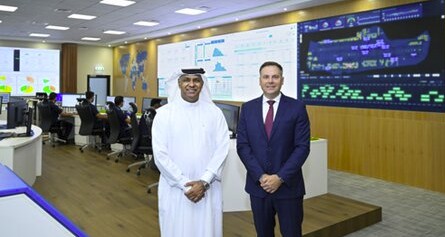
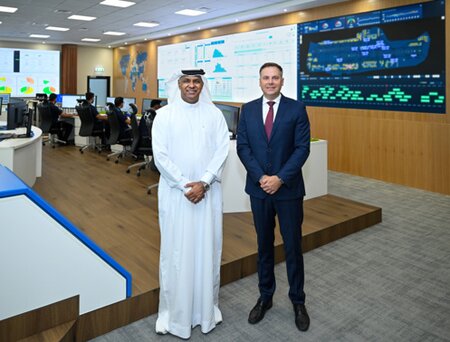
dnata has given its Dubai cargo operations a major tech upgrade, transforming its existing cargo control center into a new Cargo Integrated Command Center (CICC) at Dubai International Airport (DXB). The result is a centralized hub that gives teams a near real-time view of everything happening across both DXB and Dubai World Central-Al Maktoum International (DWC), with data refreshing every 10 seconds.
dnata’s Nabil Sultan Al Murr, Group CEO, and Guillaume Crozier, CCO. Image: dnata
The scale of what’s being monitored is impressive. In the 2025-26 financial year, the operation handled more than one million tons of cargo, 189,000 flight movements, and 46,000 truck movements. That kind of volume is exactly why the upgrade matters – and it comes at a time when Dubai is doubling down on its ambitions as a global cargo hub, with global air cargo demand up 3.4% year-on-year in 2025, according to IATA.
At the core of the CICC is a dashboard that pulls together three of dnata’s key systems: One Cargo, which tracks operational activity in real time; the Appointment and Dock Management system, which monitors truck movements at DXB and DWC; and Calogi, which covers landside activities plus last-mile delivery. Combining these gives the CICC team a full picture of the cargo journey, making it easier to spot bottlenecks before they cause delays, and to coordinate quickly across teams and facilities.
Nabil Sultan Al Murr, Group Chief Executive Officer, dnata, said: “Cargo operations involve thousands of interconnected activities every day, making operational visibility essential to maintaining performance at scale. Our enhanced cargo command center is part of our ambition to continuously evolve our operating model and infrastructure to strengthen Dubai’s position as a leading global logistics hub. The integration of our people, systems and operational data into a single operating environment gives us a stronger foundation to manage increasing complexity and support future growth.”
FedEx will be developing a new integrated air cargo hub at GMR Cargo City, Delhi’s Indira Gandhi International Airport, investing around USD 150 million long-term in the project. The groundbreaking ceremony took place on 25AUG26, attended by India’s Civil Aviation Minister, Shri Kinjarapu Rammohan Naidu.
Strengthening Delhi’s position as a global air cargo hub. Image: FedEx
Covering about 230,000 ft² (21,400 m²), the fully automated facility will combine international gateway operations with pickup-and-delivery services under one roof, boosting efficiency and speeding up shipment handling. It’s expected to significantly increase processing capacity – from 600 to 5,000 packages per hour – with room to scale further. Planned features include an advanced auto-sorter, next-generation X-ray scanners, upgraded security systems, and smart package-handling technology, all aimed at improving reliability and customer experience while strengthening network resilience.
The hub will improve North and East India connectivity as strengthen Delhi’s role as a key air cargo gateway, connecting regional businesses to FedEx’s global network. It forms part of the broader GMR Cargo City development – a 50-acre, airport-based logistics ecosystem with total potential of 1.5–2 million square feet. Its first phase spans about 1 million square feet across nearly 30 acres, with design finalized and construction set to begin soon.
Kami Viswanathan, president, FedEx Middle East, Indian Subcontinent and Africa (MEISA), said, “India is a critical market in our global network, with North and East India playing an important role in the country’s growing trade and economic opportunity. Strengthening our presence in Delhi will enhance connectivity across these markets and support businesses as they grow and expand. It reflects our long-term confidence in India and our commitment to investing in the capacity and capabilities needed to support the country’s evolving trade needs.”
Rajesh Arora, President & CEO – Commercial & Growth, GMR Airports Ltd., said: “FedEx’s decision to develop its new integrated air cargo hub at GMR Cargo City is a strong endorsement of Delhi Airport’s growing stature as a strategic global logistics gateway. GMR Cargo City is being developed as an integrated ecosystem that brings together world-class infrastructure, technology and leading logistics partners to enable faster, smarter and more seamless cargo movement. This facility will further strengthen Delhi’s role in connecting businesses across North and East India with global markets, while supporting the country’s expanding trade and e-commerce ambitions. We are proud to partner with FedEx in this significant development and look forward to enabling the next phase of growth in India’s air cargo and logistics ecosystem.”