The start of an ambitious conversion project. Image: STS Aviation Services
“We are thrilled to announce the arrival of the first B777-200LR from Mammoth Freighters at our Manchester facility. This marks the beginning of an ambitious project to convert the aircraft from a passenger plane to a state-of-the-art freighter, setting a new standard in the aviation industry,” STS Aviation Services’ LinkedIn post this week, enthused. “Our Manchester facility is fully equipped to handle this complex conversion, showcasing our commitment to innovation and excellence. Follow our journey as we transform these aircraft and deliver exceptional value to our client.” In fact, the first B777-200LR aircraft was delivered by Mammoth Freighters to STS Aviation Services’ Manchester, back on 22JUN24, already. “This aircraft will undergo a comprehensive transformation, converting it into a long-range freighter that promises to be both productive and economical.” It is a very complex conversion process, by one that the STS Aviation Services team is thrilled to be a part of. Over in Manchester, “The Hub of Conversion Excellence, STS Aviation Services” facility in Manchester, UK, was created. STS’ Manchester site is its third largest in the UK, and the plan is for it to be recognized as a center of excellence for passenger-to-freighter conversions. STS not only converts for Mammoth Freighters, but also supports the airline with AOG support, product support, and spares provisioning across Europe. “The multi-year agreement between STS Aviation Services and Mammoth Freighters covers the conversion of both the 777-200LR and 777-300ER aircraft. This partnership leverages STS’ extensive expertise in aircraft modifications and Mammoth Freighters’ vision of creating the most efficient freighters in the market. The first B777 conversion is a significant step in this collaboration, showcasing the meticulous work and precision that STS Aviation Services brings to every project,” the release states.
(Left to right) David York, MD, Logik Logistics International and Lars Ryssel, MD Director, Western Europe, DANX Carousel. Image: Meantime Communications
DANX Carousel Group continues its spending spree. Hot on the heels of its recent acquisition of Denmark-based TLS, a logistics specialist in technical equipment, on its quest to become the leading provider of time-critical logistics solutions across Europe, the group has now announced another acquisition: that of Logik Logistics International. With this move, Carousel has augmented its network and now offers round-the-clock on-demand logistics across Europe. Carousel is also interested in gaining access to response call-outs. Logik specialize in the following industry sectors: including automotive, aerospace, carbon composite, retail, pharmaceutical, publishing, and marine. Its customers are like original equipment manufacturers (OEMs), as well as companies requiring urgent medical shipments and ship spares. It offers on-demand / ad-hoc cross-border logistics, including express road and air freight, and aircraft charters, as well as On Board Courier (OBC) services, and the specialized handling of time-critical shipments. Lars Ryssel, Managing Director, Western Europe, DANX Carousel, announced: “This acquisition not only expands our time-critical logistics capabilities but also strengthens our on-demand / ad-hoc service platform, enabling us to better serve our customers’ needs. Logik’s expertise and round-the-clock availability will enable us to deliver even greater value and efficiency to our clients across Europe, regardless of the time or urgency. We welcome Logik Logistics International to the Carousel family.” David York, Managing Director (MD), Logik Logistics International, is staying on to ensure a smooth transition and drive, and continued growth across the expanded group. He stated: “Joining forces with Carousel Logistics opens up exciting opportunities for our team and our clients. We look forward to leveraging our combined strengths to deliver unparalleled service to customers across Europe, whenever they need us”.
CargoForwarder Global’s ‘Spotlight On…’ series takes a look at the many functions involved in keeping the air cargo industry running. From jobs with airlines, airports, forwarders, software providers, customs, truckers, ground handlers, all the way through to ULD management companies. The latter is the focus of this week’s ‘Spotlight On…’, as CargoForwarder Global hears from Adeliya Sofina (AS), Strategic Procurement Manager at Jettainer GmbH, as to what her job entails, how she came to the industry and what advice she has for those looking to join it.
Air cargo is a very dynamic and challenging industry. Image: Jettainer/Adeliya Sofina
CFG: What is your current function and company? And what are your responsibilities? AS: I work as a Strategic Procurement Manager at Jettainer GmbH, now based in Abu Dhabi, UAE, and previously in Raunheim, Germany. I am specialized in the procurement of ULDs and loading accessories with a focus on sustainability. Contract negotiations, tender management and supplier relationship management are my key responsibilities besides the ISO 14001 audit.
CFG: What does a normal day look like for you? (Or is there such a thing?) AS: There is no such thing as a normal day which makes my job very unique, and I definitely love it! Since Jettainer is an international company based in different countries and being a central point of contact for many colleagues and suppliers from all over the world, I must ensure that all the processes run smoothly. Additionally, we run various procurement-related workshops, meet our suppliers, and visit conferences and exhibitions, which requires a lot of travelling.
CFG: How long have you been in the air cargo industry, and what brought you to it? AS: I started my career in the MRO industry at the Lufthansa Group. The Lufthansa Group is large and provides many opportunities to explore the aviation industry in different areas. So, I was no exception and joined the air cargo industry in 2019, as a quality manager. A coincidence brought me into procurement, and over the past years, I have developed my skills in this field which I am very happy about.
CFG: What do you enjoy most about your job? AS: The best part of my job is meeting new people and new cultures. Being a part of Jettainer and such an international airline group, gives you a lot of new opportunities to expand your network and knowledge. And overall, the combination of strategic thinking, negotiation skills, and the opportunity to make a tangible impact on Jettainer’s bottom line makes procurement a fulfilling and enjoyable profession for me.
CFG: Where do you see the greatest challenges in our industry? AS: Our industry is very male-dominated, and women are underrepresented in many roles. Promoting inclusivity and breaking down barriers to entry for women is crucial for tapping into a broader talent pool and fostering innovation.
CFG: What advice would you give to people looking to get into the air cargo industry? Any particular training they should aim for? AS: Be open-minded, willingness to learn will help you a lot since this industry is very dynamic and challenging. Don’t give up if something goes wrong. We all started without experience and did not know how to do certain things. Patience and hard work should become your best friends.
CFG: If the air cargo industry were a film/book, what would its title be? AS: ‘Air Freight Chronicles: Mastering the Crisis’. I just think of the times of corona and some other events when the whole supply chain was literally destroyed, and everyone was struggling to keep the business going. But, as an industry, we made it!
Thank you, Adeliya, for sharing your insights.
If you would like to share your personal air cargo story with our CargoForwarder Global readers, feel free to send your answers to the above questions to cargoforwarderglobal@kopfpilot.at We look forward to shining a spotlight on your job area, views, and experiences.
Think UAE, think Air Cargo, and those in the industry will immediately drop a couple of three-letter codes: DWC and DXB, denoting the United Arab Emirates’ buzzing cargo hubs. And now, where plans have been revealed to soon transform Dubai from the UAE’s largest into the world’s largest airport for passengers and freight, the point that it was in fact the lesser-known Emirate next door, Sharjah (SHJ), that was once the heaving hub of cargo traffic, slips further into oblivion. Yet, one particular group of people keeps the memories alive in regular, international get-togethers. CargoForwarder Global heard from Shailendar Kothari and Rohan Lobo – two of the original Lufthansa Cargo team responsible for setting up freighter operations way back in 1993.
Well before air cargo at Dubai Airport was even a tiny glimmer in the Sheikh’s eye (it literally slowly began taking off there with the humble beginnings of Emirates in the mid-1980s), trusty Sharjah Airport was already on the scene – an established, well-functioning and well-run international airport. Having had an RAF airbase since 1932, the new Sharjah Airport was inaugurated on 31DEC76. Though but a very young child resident in the Emirate at the time, I remember that Concorde landed there in AUG77, and have a celebratory vinyl single commemorating the fact.
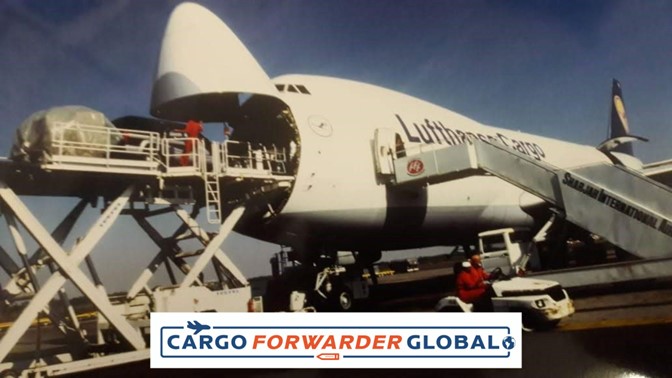
Back in the good old Nose-Door days. Image: SHJ Team Private Collection
30 years since Lufthansa Cargo founded its SHJ Hub “SHJ was already on the Lufthansa route map from the German Cargo times, well before Lufthansa Cargo was founded in 1994,” Shailendar Kothari explains, going on to reveal its rapid development: “SHJ Hub came into being in APR93, with the debut of German Cargo DC8F operations to the Indian Sub-Continent. Starting with 60 flights a month, traffic reached a peak of almost 450 freighter flights per month. These included not only Lufthansa Cargo and Lufthansa Cargo India flights, but also those of Singapore Airlines, Cathay Pacific, UPS and Eva Air, to name but a few which were handled by Lufthansa Cargo in SHJ.” Kothari, along with Rohan Lobo, Eustace D’Souza, John Mampilli, Suzannah Pinto, Klaus Holler and Wolfgang Kobitz, were the first to make up the SHJ Hub team in APR93. Very soon, that team was to grow to 12 employees plus another 20 seconded staff from Sharjah Airport Authority. Rohan Lobo illustrates the initial challenges in creating the LCAG cargo hub: “Recruitment of qualified workforce was the initial challenge and we relocated team members primarily from Delhi (DEL) and Mumbai (BOM), in the early days. Training and qualification were mainly carried out on the job as the hub was constantly running and active. And the perseverance to work in 50°C temperatures in the afternoons, with 6-8 freighters being handled simultaneously per shift, were challenging conditions. We had to recruit staff from Sharjah Airport Authorities and Lufthansa staff from Dubai (DXB) to help out with the initial station opening.”
In its heyday – 1993-2000 “SHJ connected all the main airports of the Indian Sub-Continent,” Kothari says. Here, Lufthansa Cargo India (flying as Hinduja Cargo Services – a joint venture between Hinduja Group and Lufthansa Cargo, founded in 1996 and closing in 2000, following an accident) operated with B727F aircraft “Commodities were mainly garments from the Indian subcontinent and sea-air traffic from the Far East.” Yet, SHJ also excelled in special loads: “Horse charters during the SHJ Hub times, was the forte of LCAG. SHJ was the go-to airport for all special loads like cattle charters, Formula 1 cars, to name but a few. Large overlapping cargo and center loads also became a routine to be handled every other day.” For Lobo, the biggest highlight in terms of shipments through SHJ, was the fact that it was the only airport at that time to handle ‘Interchange flights’: “These were soon nick-named ‘Macarena’ flights,” he smiles. “Lufthansa Cargo (LCAG) would operate with B747F out of Frankfurt (FRA) to SHJ while Singapore Airlines (SQ) would fly a B747F from Singapore (SIN) to SHJ. Both flights arrived at the same time, and we would interchange the full load within the given two hours’ ground time. They would then return to FRA and SIN respectively. A few months later, we even began handling ‘Double Macarena’ flights. In addition to the SQ-LCAG interchange, we started having Eva Air-LCAG interchanges with an MD11 freighter arriving at the same time as the SQ operations.”
So much more going on Apart from being a customer of Sharjah Airport Authority (SAA – which leased dedicated warehouses to Lufthansa Cargo, adding more warehouses as the demand increased), Lufthansa Cargo was also a GHA providing aircraft and warehouse handling for a number of airlines, and was the biggest player at SHJ Airport for a long time. It handled B747F, MD11F, DC8F, and B727F aircraft. “The cost, flexibility, geographical location and, last but not the least, the support of the decision makers of SHJ airport, were the key reasons for the success of SHJ Hub,” Kothari reasons. “Great support from Sharjah Airport Management, fast decision-making, and the willingness to get things done quickly, added to the success.” For Lufthansa Cargo, too, the hub played an important support role to its Frankfurt base. “We built thru-ULDs for FRA and beyond,” Lobo showcases – a move that helped to reduce both workload and handling costs at the mother hub. “Due to the flexibility that SHJ airport provided, most of the flight training (Touch and Go) for new crew or new aircraft was done at SHJ. The favorable weather and low cost of aviation fuel and handling, also helped.”
All good things come to an end Lufthansa Cargo ceased to exist at SHJ airport in 2020. Due to the extended range of its 777F fleet enabling it to fly nonstop between Europe and Asia, SHJ Hub began losing its importance. There was no longer a need for transit/fuel stops in the Middle East and thus SHJ slowly disappeared from Lufthansa Cargo’s destination map.
Many happy memories often relived – in person. Image: SHJ Team Private Collection
Keeping the memories alive Every now and again, the Lufthansa Cargo colleagues involved in the SHJ Hub meet up informally to remember the Good Times – often ad hoc when their paths cross during trainings and meetings in Frankfurt (FRA). The first get-together took place in JUN15, when Kothari relocated to Frankfurt. However, a very special SHJ Reunion was arranged for the first time in the backwaters in Cochin Kerala, India, at the start of this year: 06-08JAN24, to commemorate the meanwhile 30th Anniversary of the cargo airline’s hub creation back in 1993. A smaller, 25-year celebration was held in Hallstatt, Austria in 2018.
What’s the situation today? This time last year, Ali Salim Al Midfa, Chairman of Sharjah Airport Authority, announced a 2.4 billion Dirham Sharjah Airport expansion project due to be completed by 2026, aimed at attracting more airlines and “further reinforcing its reputation as a reliable and efficient cargo hub in the region.” To put things into perspective, however, it has to be pointed out that while the total cargo volumes handled through Sharjah Airport during the year 2023 was more than 141,000 tons, Dubai Airport (even with a slight decrease on previous year, of 4.5%), handled 1,805,898 tons of cargo in the same period. The glory years for SHJ were those between 1993 and 2000, the original SHJ Hub team believes, and they are unlikely to return.
The Austrian logistics company, cargo-partner, joined Japanese transport giant, Nippon Express Holdings, 7 months ago. Since then, both companies have been working on synchronizing their business activities. The claim made to CargoForwarder Global by various sources, that there has been an exodus of leading employees since the merger, is vigorously refuted by cargo-partner’s top management.
In this case, Martin Schenzel, Managing Director of cargo-partner Austria. He speaks of a fluctuation rate of between 2.5% and 3% at his company. This is well below the market average, which statistically stands at 7%-8%. “There are always many rumors in the case of mergers, perhaps because competitors want to take advantage of the situation to poach staff by deliberately spreading unproven allegations,” the executive reasons.
cargo-partner is omnipresent in Eastern Europe. This closes a large gap in the global network of Nippon Express, says Martin Schenzel, MD cargo-partner Austria
Loyal employees He goes on to say that the working atmosphere could hardly be any better; the company has expanded considerably in recent years, and the merger with Nippon Express opens new market opportunities for cargo-partner. Schenzel, himself, is an example of company loyalty, as he started at cargo-partner after leaving school in 1991, and is still with the company today, with a brief interruption. “In the past few days, we have just said goodbye to a colleague who has been part of the workforce since the company was founded at Vienna Airport in 1983,” he adds as proof of the loyalty of the majority of the company’s staff.
Focus on Africa In total, cargo-partner currently has around 4,000 employees standing on its payroll. And the increase in personnel is likely to continue, as key markets have been identified together that are to be developed in close coordination with Nippon Express. This applies, for example, to Africa where air freight and maritime activities will become a focal point of interest flanked by the setting up of numerous branch offices. So far, Africa is a white spot in cargo-partners international network. Its ally, Nippon Express runs stations in Kenya and Morocco. In North America, the Canadian market stands high on the duo’s list, as do Brazil and Mexico in Latin America. “We offer potential customers end-to-end package solutions. It depends on the product, the market expertise and the industries, if Nippon experts or our own salesforce take the lead in the negotiations with potential customers,” explains Mr. Schenzel.
Air and ocean are key revenue contributors Due to the punitive tariffs imposed on China by Washington’s Biden administration, but also the higher taxation demanded by the EU on imported electric cars made in China, supply chains are out of balance and harbors jammed. This is aggravated by the fact that major shipping lines are avoiding the Suez Canal for security reasons and sailing around Africa instead. This significantly extends delivery times on routes between the Far East and Europe, and causes rate hikes. The air and sea freight business segment contributes between 80% and 85% of cargo-partner’s annual turnover. In contrast, European land transportation and contract logistics play the third and fourth fiddle. “This, we intend to change by pushing these sectors forward,” announces the manager.
Vienna’s role as cargo hub will be fortified In ocean freight, Nippon Express and cargo-partner transported one million TEU last year, securing them a rank among the ten largest sea freight companies worldwide. In Hong Kong, both companies are in the pole position in air freight exports. Worldwide, they are ranked 6th. At Vienna Airport, where cargo-partner’s ascent began, the agent tops the list in cargo imports. This hub will continue to play a key role for the logistics company in future, the management told CargoForwarder Global. So, what can cargo-partner learn from its majority shareholder Nippon Express? “The discipline, clarity and streamlining with which our partner handles business processes on a global level,” applauds Martin Schenzel. And conversely, what does cargo-partner bring to this marriage as a dowry? “Our market expertise and market dominance in Eastern Europe, where we are represented practically everywhere with offices, warehouses, transport competence and our customer orientation as a strong link. And not to forget, our extremely loyal and experienced staff,” he adds.
The British carrier has decided to terminate its London-Shanghai flights operated with Boeing 787 jetliners, due to external factors. The last flight will take place on 25OCT24, marking the end of an era that has lasted a quarter of a century. Shanghai is the only destination serviced by Virgin in China.
Virgin’s B787 can accommodate a variety of unit load devices in their lower deck compartments, making air cargo an important contributor to the overall efficiency of a route – courtesy: Virgin Atlantic
Competitive disadvantages Virgin Atlantic is the latest victim of Putin’s war against Ukraine. As a result of the subsequent sanctions imposed by democratic countries against Russia, the Siberian airspace remains closed to Western airlines, while Russian carriers are no longer permitted to fly to Europe or North America. Since the double embargo entered into force, Virgin, BA, KLM and many others need to circumvent the vast Russian landmass on East-West air sectors, taking detours via the Caspian region and Kazakhstan. Compared to the past, this considerably increases flight times to and from China, and drives up fuel consumption. In addition, the above-mentioned airlines and more are facing unfair competition, as carriers such as Ethiopian Airlines Cargo take advantage of the situation by continuing to use Russian airspace on routes linking China with Europe, because they rejected embargoing the Putin regime’s war on Ukraine for violating international law. In comparison to Virgin, BA, or Lufthansa, they save about two hours when navigating their aircraft through Russian airspace en route from Shanghai to London, Amsterdam, Paris or Liège.
The flights have become unmaintainable Negatively affected by the forthcoming suspension of flights are not only Virgin’s passengers, but also its cargo services. A Virgin spokesperson emphasized the importance of air freight transportation which substantially contributes to the carrier’s revenue generated on the Shanghai-London sector. The route is currently operated daily with Virgin’s Boeing 787 Dreamliners. Depending on the number of passengers and their luggage, this Boeing variant can carry up to 70 m3 per flight. She also pointed at “significant challenges and operational complexities resulting from the Russian airspace closure”, forcing Virgin to circumnavigate the country’s national boundaries. These unfavorable external circumstances have put financial pressure on the Shanghai flights, making them commercially unmaintainable, she argued.
Focusing more on India Initiated by Air France-KLM’s CEO, Ben Smith, a debate has now begun in the EU about withdrawing traffic rights from airlines that continue to fly across Russia and thus take the shorter route between China and Europe. These carriers, primarily Chinese airlines, would have a clear competitive advantage over their European competitors, but also airlines from South Korea or Japan, which support the sanctions regime against Russia due to its international laws violating war in Ukraine. Virgin only resumed Shanghai flights in MAY23 after a two-year break due to coronavirus. Following the carrier’s pullout, London-Shanghai will continue to be served daily by British Airways, Air China (Gatwick), and China Eastern. The withdrawal from Shanghai was linked to Virgin’s announcement that it would focus more on the Indian market in future and increase its services there.
The next consolidation in European air traffic is on the horizon with the privatization of the Portuguese airline, TAP. There are two potential applicants for the takeover: the Air France-KLM alliance and its transatlantic JV partner Delta Air Lines, and the Lufthansa Group. Both competitors have long expressed a fundamental interest in adding the state-owned Portuguese airline to their assets. Analysts expect a decision to be made before the end of this year.
According to its 2023 financial results, TAP generated a net profit of €177 million, vs €112 million a year before. It is a remarkable turnaround because the carrier presented consecutive losses in the decade from 2012 to 2022. However, the layoffs of around 2,000 employees during the coronavirus pandemic, combined with wage cuts for the remaining 6,600 employees, the introduction of new Airbus aircraft and higher punctuality rates have put the perennial patient back on its feet. And the restructuring will continue unabated, promises airline boss, Luis Rodrigues. As a result of this upturn, the figure on the price tag that the Lisbon government might present to a potential buyer, is likely to be significantly higher than it was two or three years ago. Further decision criteria which are part of the package, are fleet alignments, joint marketing and product strategies, network considerations ,and job guarantees for TAP’s workforce at home and abroad.
Where is TAP flying to – Air France-KLM or Lufthansa? Photo: company courtesy
Strong in Brazil The Lisbon-based carrier’s main market is the EU (37% share of traffic), followed by South America (33%), North America (22%), and Africa (9%). Charter missions complement the operations. Scheduled flights to and from South America are almost entirely accounted for by connections between Portugal and Brazil. Currently, TAP serves 10 destinations there, and operates 63 weekly rotations across the South Atlantic. These are complemented by two weekly flights taking off from Porto to Rio de Janeiro and Sao Paulo.
Loyal Airbus customer The long-haul fleet consists of A330-900 neos and A330-200 ‘Tech Specs’, with the latter able to uplift 37 tons of freight per flight. This corresponds to about 50% of the capacity that an MD-11 freighter offers the market. The airline operates 14 units of each of the two A330 variants. What Lufthansa’s Investor Relations Department is most likely to be looking at is TAP’s performance in the Sao Paulo market, the economic heart of the country. The city has become a hot spot for German investments, as shown by Siemens, Volkswagen, Bosch, or the chemical giant, Bayer, which each chose Sao Paulo as the site for their South American headquarters. Some statistics list 900 German companies, others speak of 1,200 that have settled there. According to official surveys, they generate a total of 10% of Brazil’s industrial gross domestic product. This spurs passenger and cargo demand on routes across the Atlantic. In comparison, French and Dutch companies are less well-represented in Brazil. Unlike AF-KLM or Lufthansa, the BA/Iberia controlled International Airlines Group (IAG) has no chance in a bidding process for TAP. With Iberia, Vueling and soon presumably also Spanish carrier, Air Europa under its wings, IAG already controls the Iberian aviation market by passenger numbers and cargo volumes. Brussels would likely veto an IAG takeover of TAP on competition grounds.
It’s the package that counts Ultimately, TAP’s final decision will not only depend on the financial offers submitted by AF-KLM or Lufthansa, but the accompanying package they are wrapped in, such as fleet issues, product philosophy, network policy, or job considerations. The most convenient date for a TAP decision is 20DEC24. This is when the third and final installment of the capital increase by the sole shareholder of TAP S.A., Portugal’s Directorate-General of the Treasury and Finance, is due. Incidentally, the buyer would not only acquire the airline, TAP, but would also take over 49.9% of the ground handling company, Serviços Portugueses de Handling, S.A. (SPdH). The majority (50.1%) is held by Menzies Aviation Portugal – Serviços de Carga.
Mexico City-headquartered cargo carrier, AeroUnión, has received an A330 passenger-to-freighter converted aircraft which will be operated on behalf of its Colombian partner, Avianca Cargo. The aircraft will replace a nearly four-decades-old Boeing 767-200F. According to a joint AeroUnión / Avianca Cargo release, three additional A330P2F conversions are to follow between this year and 2025.
Mexican Cargo carrier, AeroUnión, has received its first passenger-to-freighter-converted Airbus A330 as a first step in modernizing the aging freighter fleet. The announcement was preceded by a decision of Mexico’s Federal Economic Competition Commission (Cofece), published on 11FEB23, paving the way for the requested merger between Tampa Cargo (Avianca Cargo), and Aero Transporte de Carga Unión (AeroUnión). Following the official authorization of their pact, both carriers were allowed to integrate their operations, jointly market their transport capacities and serve a harmonized network, provided their merger would not harm free competition and not lead to monopolistic pricing structures. That would be an abuse of market power, forcing Cofece to intervene, warned the regulator.
The arrival of the first A330P2F heralds a new era for Aero Union. Source: Avianca Cargo/AeroUnion
Integrated expansion strategy A year and a half after getting the green light for their merger, AeroUnión and Avianca Cargo have implemented operational standards, developed new business opportunities, started modernizing AeroUnión’s fleet, and have taken steps to consolidate their offerings in the Colombian, Mexican, and North American freight markets. A visible sign of this growing together is the introduction of the A330P2F that offers 60% more transport capacity compared to the aging B767F belonging to the Mexican carrier’s fleet so far. In their press announcement, both airlines emphasize that the fleet rollover is part of an integrated expansion strategy, particularly benefitting customers located on the West Coast of the U.S.
Diogo Elias praises the A330P2F “Freight transportation has shown significant improvement in recent years compared to pre-pandemic levels. Latin American exports have increased by approximately 16%, while imports have seen a 10% recovery. The A330 is an ideal aircraft due to its higher volumetric capacity and lower environmental impact, attributed to enhanced fuel efficiency per ton,” remarked Diogo Elias, Senior Vice President and Head of Avianca Cargo. Currently, Avianca Cargo has six A330 freighter aircraft in its fleet, while AeroUnión has added five more units. The new A330P2F will primarily transport perishable products such as fruits and flowers, as well as oversized cargo for automotive, mining, and the oil sectors, along with e-commerce and smaller parcel shipments.
Right freighter at the right time Avianca Cargo’s network connects to more than 68 destinations, 56 of which are online. It operates 220 cargo flights and utilizes the lower deck capacity of more than 1,800 weekly passenger flights for cargo transport. This solidifies its position as the main capacity provider serving one of the region’s largest networks, operating cargo aircraft with limited greenhouse gas emissions. Further to this, Avianca Cargo stresses that it is the first airline in the Americas to obtain IATA CEIV certifications in all four categories: Pharma, Fresh, Live, and Lithium Batteries. “We are happy to receive the new A330 P2F; an aircraft that comes to reinforce our service and reliability offer, increasing our volumetric capacity and improving our connectivity to the West Coast markets in our region,” exclaimed Danilo Correa, AeroUnión’s CEO, upon delivery of the A330P2F on 10JUL24. “Avianca Cargo has a long history of initiating innovative air cargo solutions, and the commercial agreement with AeroUnión is a testament to this legacy, as well as its commitment to creating economic opportunities,” said Doug Webster, Interim Chief Operations & Maintenance Officer, Los Angeles World Airports (LAWA).
Matthew Phillips Chief Commercial Officer, Breeze. Image: Breeze
Whereas the main digital marketplaces facilitate real-time booking, capacity and rate checks, WebCargo by Freightos has now gone one step further. Partnering with digital cargo insurance platform, Breeze, it has integrated a function to enable instant price and purchase insurance quotes for their shipments. With that, Breeze’s functionalities are directly accessible within the WebCargo air cargo platform. The collaboration once again shaves off time in the booking process and facilitates it, since users no longer need to leave the system to seek, compare, and purchase insurance elsewhere. Instead freight forwarders have instant access to an attractive insurance quote at the time of booking. In the first instance, Breeze’s insurance offers are available to users in the United States and the United Kingdom. “Breeze’s data-driven platform uses technology and data to automate and optimize, not only quote generation, but also policy binding, and claims processing. This technology reduces the time and effort needed to provide accurate cargo insurance to shipments it processes, and expands the protection provided to a shipper’s freight,” the release explains.
Manuel Galindo, Chief Revenue Officer of Freightos, revealed: “Forwarders rely on WebCargo to book hundreds of thousands of shipments every quarter. By partnering with outstanding companies like Breeze, we’re excited to add more services to our platform. This allows forwarders to focus on what matters most – customer relationships – rather than time-consuming pricing calls for services like insurance.”
Matthew Phillips, Chief Commercial Officer of Breeze, stated: “Between 60% and 80% of global cargo is estimated to be un- or under-insured. Our collaboration with Freightos empowers its customers to make informed decisions about insuring their cargo in a cost-effective and timely manner. We are on a mission to digitize the cargo insurance process and we share Freightos’ vision to make international shipping faster, more cost-effective, embedded, and more reliable using a data-driven approach powered by technology.”
Joost Meijs, CEO of Maastricht Aachen Airport, come 01OCT24. Image: Meantime Communications
Early days yet, as he will not take on his role until 01OCT24, but the CEO of Maastricht Aachen Airport is now clear: Joost Meijs will be the man succeeding interim CEO, Jonas van Stekelenburg, as Director of NV HBLM – the group that includes Maastricht Aachen Airport BV and Maastricht Aachen Airport Management & Infra. The Supervisory Board announced the appointment earlier this week, and the decision has met with support from shareholders and the works council. Not least, because Joost has proven his worth in earlier roles – notably at neighboring Eindhoven Airport NV, where he served as CEO from OCT08 to JUL19, setting the Dutch airport on a solid footing. Similarly, in his current position as CEO of Aruba Airport, he demonstrated his leadership skills and vision in steering it through the pandemic. Here, he was also responsible for implementing a new corporate strategy aimed at making Aruba one of the safest, sustainable, and future-proofed airports in South America and the Caribbean. Alongside the delivery of the first phase of Gateway 2030 – a USD300+ million investment program, Meijs was instrumental in creating the Dutch Caribbean Cooperation of Airports (DCCA), focused on improving safety, connectivity, and sustainability at the region’s airports.
“Meijs’ appointment comes after a successful start of the year for the airport, including new (cargo) airlines like Pegasus Airlines and ROM Cargo, Airport Carbon Accreditation level 3, and facilitating Europe’s first ever international electric flight for members of the public,” the release states.
Frans Weekers, Chairman of the Supervisory Board of NV HBLM, said: “Joost Meijs, brings great experience and we are confident that he will build on the airport’s reputation as a high-performing and innovative airport. Joost has a first-class track record of airport management, having previously worked at Eindhoven Airport, and Aruba Airport where he played a pivotal role in implementing long-term growth strategies. We welcome Joost and look forward to him continuing Jonas van Stekelenburg’s good work in ensuring Maastricht Aachen Airport’s future direction and sustainable credentials.”
Joost Meijs stated: “I am looking forward to start working on the ambitions as have been formulated in the strategic plans and doing this in a joint effort with all colleagues and the external stakeholders of the airport. Maastricht Aachen Airport has the potential to become a healthy, future oriented and sustainable airport. I have every confidence that it will work.”
Jonas van Stekelenburg, interim CEO since 01SEP23, will continue to serve as an advisor to Maastricht Aachen Airport until early 2025.