50% off for current students and university staff. Image: WestJet Cargo
Not just students, but also university staff – all across Canada – now have access to economic cargo rates. Since the beginning of this month, WestJet Cargo’s new Campus’Air product is available for purchase on domestic, Canadian routes. Its claim: “affordable shipping solutions for students and university staff.” Students going off to study at university are often on a very tight budget, and therefore, the airline which has a strong affinity to its community, has developed a product to support the country’s future talent potential. A number of Canadian universities are already included on the airline’s list, and students of those still unlisted are encouraged to propose them for inclusion. To benefit from the Campus’Air program, current students and employees of the registered Canadian universities are given a 50% discount on the published freight rates applicable to the shipment of personal effects on the respective domestic routing. “This significant discount ensures that the service remains accessible and economical, helping students and faculty staff manage their shipping needs with ease,” the release explains. It points potential customers in the direction of the WestJet Cargo contact center, to arrange a quote, and confirms that the majority of shipments will usually arrive within 24 hours, “subject to flight availability and connecting options.”
Kirsten De Bruijn, Executive Vice President of WestJet Cargo, commented: “At WestJet Cargo, we recognize the unique challenges faced by students and university staff in transporting their personal belongings. Campus’Air is our way of supporting the academic community, providing them with an affordable, reliable shipping solution that underscores our commitment to fostering education and community development across Canada.”
Keeping an eye on temperature conditions. Image: Envirotainer
Before you put a product on the market, you need to be sure that it fulfils its purpose – particularly when the commodities it protects are worth large sums of money and priceless when it comes to human life. To that end, Envirotainer has invested in three new testing chambers to enable rigorous testing of container performance in all kinds of temperatures. It has in effect doubled its testing capacities at its Rosersberg testing facility. Located to the north of Stockholm, the facility is now equipped with six chambers. Four are medium-sized chambers, one is a large chamber capable of maintaining temperatures of between -40°C and +60°C, and the sixth is a small chamber for freezing conditions down to -70°C. These rooms enable tests in a wide range of temperatures and humidity, whilst an accompanying EMC (Electromagnetic Compatibility) chamber allows Envirotainer to verify that its containers continue to meet stringent electromagnetic compatibility standards. “The company can currently certify emissions for its containers below one gigahertz, which speeds up the approval process and benefits customers with faster delivery of compliant solutions. Future plans include investment to enhance testing capabilities up to 6 GHz and potentially assess how radiation affects packaging solutions,” the release explains. Just one of a number of scenarios to make sure that precious pharma cargo is kept intact during its entire journey, reaching the patient in a safe and optimum condition. With the expanded testing facility, Envirotainer can carry out in-house testing, thus bring new, improved products to market more quickly.
Camilla Engbrink, Chief Technology Officer at Envirotainer, said: “These advancements mean our customers can transport their sensitive pharmaceuticals with greater confidence. Our enhanced testing capabilities allow us to simulate extreme conditions, ensuring that our containers perform reliably no matter where they are shipped. This translates to fewer risks and more consistent protection for valuable medical products, ultimately helping to safeguard patient health.”
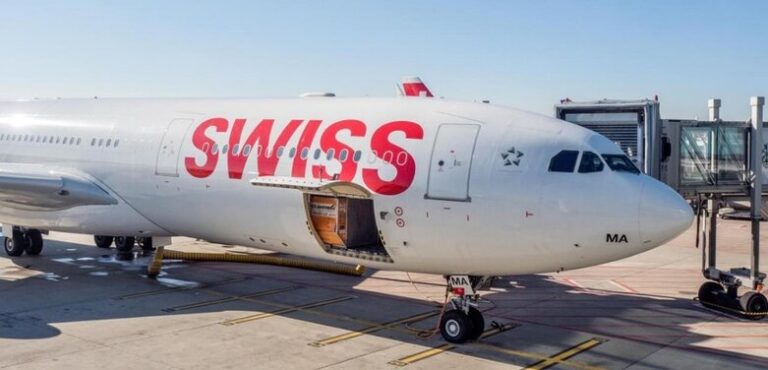
First-ever EMAS/ISO 14001 certification and more. Image: SWISS
EMAS stands for Eco-Management and Audit Scheme (EMAS) and is a voluntary-membership framework, created by the European Union to support companies in improving their environmental performance. Validation is subject to a strict audit where external auditors examine the company’s capabilities in meeting the standards of the ISO 14001 international environmental management norm, as well as table plans to further improve. “EMAS is regarded as the world’s most demanding environmental management system,” the press release underlines, proudly announcing that both SWISS & Swiss WorldCargo succeeded in achieving recognition for their 2023 environmental management system along with ISO 14001 certification, following the audit conducted in Zurich and Geneva, by state-accredited environmental verifiers in the second quarter of 2024. “As a result, SWISS will now be publishing an annual environmental report to further underline its commitment to sustainable and responsible business management.”
Lorenzo Stoll, Head of Cargo at Swiss International Air Lines, stated: “I’m very glad that our consistent sustainability efforts at SWISS and Swiss WorldCargo are being validated with the EMAS quality seal. One of our key responsibilities remains to always operate to the highest standards and this applies to the sustainability field as well, where we constantly strive to progress and act for a more sustainable air cargo industry.”
In other news, Swiss WorldCargo began a 3-year cargo handling contract with Worldwide Flight Services in Milan Malpensa Airport, where it operates 28 narrowbody Airbus A320/321 and Embraer aircraft flights per week. 2,000 tons per annum are forecast on board of the flights and WFS will also handle the RFS connecting Milan and Zurich on six days per week.
Christian Wyss, Head of Cargo Offering Development & Steering at Swiss International Air Lines, said: “With a significant number of weekly flights and tons of cargo transported between Milan and Zurich, we need an air cargo ground handling partner that knows our business well and can operate to the high-quality standards that we provide our customers globally. WFS can do that.” Massimiliano Introini, WFS’ Managing Director Italy, added: “In support of our service offering, as well as investing in our warehouse terminal, we have implemented digitalized processes in our warehouse and will be adding extra equipment to enhance our ULD and Pharma Handling capabilities.”
Chiara Venuti, Vice President, Global Drug Distribution at MARKEN. Image: Meantime Communications
The Cool Chain Association (CCA) announced the appointment of Chiara Venuti, Vice President, Global Drug Distribution at MARKEN, to its Board in a press release earlier this week. It also spoke of new programs which are yet to be revealed (the release promises “soon”), and pointed to the Airfreight Pharma conference in Istanbul, Türkiye, at the end of OCT24, which will again be chaired by CCA Chairman, Stavros Evangelakakis of Cargolux Airlines.
Chiara Venuit is the latest in recent appointments to the Board, the list of which includes Natalie Niers, Chief Operating Officer, Validaide, Ian Buck, Head of Business development, AEROTURF, and Vijan Chetty as new treasurer.
Now with MARKEN since FEB24, Venuti looks back on two decades of temperature-controlled supply chain experience. Prior to Market, she spent seven years at SkyCell AG, mainly involved in Strategic and Airline Partnerships, and before that, held various posts with Kuehne+Nagel, including Global Key Account Manager for a major UK FMCG/Perishable manufacturer. “Chiara brings a wide pharmaceutical supply chain perspective to the panel of experts leading the group,” the release emphasizes, going on to say: “Venuti joins the Association leadership team as the CCA plans new projects with like-minded groups in the temperature-controlled supply chain, including launching a study with pharma.aero.” Chiara Venuti, Vice President, Global Drug Distribution at MARKEN, stated: “I am looking forward to further supporting our industry by joining the Board of Cool Chain Association. We are committed to help drive strategic initiatives in the Cool Chain space that will bring value to the many stakeholders involved.”
Pay as you book – without the bureaucracy. Image: CargoAi
Matt Petot, CEO of CargoAi, declared: “We are thrilled to collaborate with MASkargo to bring our innovative CargoWALLET solution to a broader audience. This partnership underscores our commitment to streamlining the airfreight process, reducing transaction costs, and facilitating global trade. By integrating MASkargo’s services into our solution ecosystem, we are providing our common users with enhanced access to a vast network of destinations and seamless payment options at the lowest cost.”
Chief Executive Officer of MASkargo (the cargo airline and subsidiary of Malaysia Aviation Group), Mark Jason Thomas, commented: “This collaboration signifies a resounding success for us in simplifying customer transactions through the CargoWALLET platform. Not only does this partnership elevate MASkargo’s position in today’s digital world and technology era, it also streamlines the process for customers, enabling them to easily track from the initial stage to acceptance within an incredibly innovative ecosystem. Our joint solution promises to make processes easier, faster, more cost-efficient, and ultimately deliver maximum value to our customers’ experience.”
Both companies are thrilled with their decision to implement CargoAi’s CargoWALLET and speak of a revolution in air freight transactions thanks to the tool. Yet, it can be expected that the platform’s users are even more relieved, since CargoWALLET enables them to not only access and book all of MASkargo’s freight capacity offers online but also pay directly. And that can be done in nigh on 100 countries across the globe, in a swift, fully automated, non-bureaucratic, cost-effective process. “CargoWALLET’s advanced capabilities include instant payment processing, eliminating the need for bank guarantees, and offering a variety of preferred payment methods, such as local transfers and credit card payments. This not only removes the reliance on cash payments but also ensures secure and efficient financial transactions,” the release states.
Emirates SkyCargo’s new Divisional SVP of Image: Badr Abbas
The all-male list of 12 new top management appointments recently published by Emirates, includes the successor to the previous Divisional Senior Vice President of Emirates SkyCargo, Nabil Sultan. Badr Abbas, a long-standing employee at the airline, having totaled 24 years thus far, has been promoted to the post, filling a gap that has existed since MAR24, when Nabil Sultan was named Executive Vice President, Passenger Sales and Country Management, Emirates. Abbas assumed his new position on 08JUL24. For the past almost five years, he held the role of Senior Vice President – Commercial Operations (Africa) at Emirates, having rotated internationally since completing his Commercial Management Traineeship in 2001. His appointments have taken him to Pakistan, Cyprus, Yemen, Libya, Tunisia, Saudia Arabia, and UAE.
Emirates Group Chairman and Chief Executive Sheikh Ahmed bin Saeed Al Maktoum, upon announcing the appointments, said: “These appointments reflect the expanded scale, breadth, and ambition of our business. I’m heartened that we have been able to fill these roles with internal talent, including UAE nationals. The Emirates Group will continue to invest in being an employer of choice for the best talent in the industry, to deliver world-leading products and services, and reflect Dubai’s vision to be number one in everything we do.” In other news, in STAT Times, last week, Nadeem Sultan, Senior Vice President, Freighters & Cargo Planning for Emirates, revealed that the airline was planning to increase its freighter fleet to five B747Fs and eleven B777F by the end of the summer, with the addition of two more B747-400F (also on ACMI as the existing three of that aircraft type). The reason behind the move are the ongoing delivery delays of Boeing production freighters and a ten conversion freighters on order at Israel Aerospace Industries. Emirates SkyCargo speaks of a 4–6-month delays on its orders and 4-5-year waits should any new freighter orders (Airbus and Boeing) be placed from now on. It therefore wants to be prepared in order to secure reliable long-term capacity for its customers, as it pursues its growth strategy. Regarding its 2022 order of five production B777Fs, Sultan revealed: “The first of those five remaining aircraft is being delivered last week of JUL24. We have a firm date for that. And then the remaining three aircraft are going to be delivered in SEP24, OCT24, and NOV24. And then the last one, we’re looking at FEB25.”
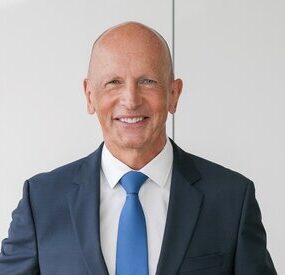
Greenhouse gas emissions should be taxed for an entire journey, from origin to destination, advocates J. Florian Pfaff (JFP), VP Asia Pacific of the German cargo carrier. This would enable a level playing field in aviation worldwide and concurrently allow the scaling up of SAF production, financed by the levies.
The executive tabled this demand at a conference held by LH Cargo in Singapore on 02JUL24, titled #TogetherForSustainability. Most of the 600+ participants came from neighboring Asian countries. What role do climate change, sustainability and the net-zero discussion play today for airlines, forwarders and the shipping industry in the geographical region around Singapore? These were the topics standing on the agenda. We spoke with J. Florian Pfaff about the event and his initiative to impose levies on CO2 emissions on a global scale.
CO2 emissions caused by aviation should be taxed on a uniform global scale, advocates Lufthansa Cargo’s J. Florian Pfaff – photos: courtesy LCAG
JFP: The high number of participants at our event and similar events in the region show that the topics you just mentioned are highly relevant to the industry. In particular, I believe that the reduction of CO2 emissions has become an increasingly important issue in recent years for the entire logistics business. In general, sustainability topics such as the cutback of plastic waste in waterways and particulate air pollution, in major metropolitan areas, have long been in the spotlight.
CFG: Lufthansa Cargo is pursuing a clear strategy for a more sustainable future and, together with the Lufthansa Group, has set itself ambitious climate protection targets. Please specify: JFP: We want to achieve a 100% neutral CO2 balance by 2050 and halve net CO2 emissions by 2030 compared to 2019. This we will do through a coordinated program of CO2 reduction measures which is coupled with increased operational efficiency. I talk about this in every meeting I have with customers, partners and suppliers, and I sense a great willingness on their part to take responsibility together.
CFG: The EU targets to blend 2% SAF with traditional aviation fuel from 2025 onwards. Singapore wants to make 1% mandatory come 2026. These are laudable initiatives, but shouldn’t there be uniform standards, i.e. a level playing field, in order to avoid cost differences and thus distortions of competition between airlines? How did the conference react to this point? JFP: Sustainable Aviation Fuel (SAF) of biological and in future of non-biological sources is a critical technological key to up sustainable flying and essential to the energy transition from carbon to a cleaner ecosystem in aviation. Lufthansa Cargo therefore supports the Sustainable Air Hub Blueprint kicked off by the Singaporean government. This example vividly demonstrates how the ramp-up of SAF can be financed and distortions in global aviation be mitigated. Singapore recently decided on a passenger levy based on the distance of a flight taking off at Singapore. The revenue will then be used to purchase SAF, which will ensure a more stable supply. A similar strategy has so far been lacking in the EU. A climate fee based on the entire journey from origin to the final destination, charged to close the price gap between conventional kerosene and SAF and to ramp up SAF production, would create a level playing field. This would also prevent carbon leakage.
Left to right: J. Florian Pfaff, Kayoko Yamamoto, LH Cargo, Mngr Sales + Handling, Central Japan, and Bruce Lam, LH Cargo, Business Dvlpmt Exect., Hong Kong, presented the sharkskin technology at the Singapore event, allowing aircraft to glide through the air with less friction, reducing fuel consumption and cutting emissions.
CFG: Lufthansa Cargo has gained several customers in Asia who book SAF for the transportation of their goods. Among them is a Chinese company. Are these exotic isolated cases or are they the spearhead of a broader trend? JFP: Lufthansa Cargo is leading the way in the Asia-Pacific region when it comes to utilizing SAF. For example, DB Schenker and Lufthansa Cargo piloted the concept of a fully SAF-covered intercontinental freighter rotation between Frankfurt and Shanghai. Today we have agreements with Japanese and Chinese forwarders. Last week, during this year’s Shanghai-held trade fare “transport logistic China”, Best Services International Freight (BSI) became our first customer in China who committed to finance more than 100 tons of SAF. Examples like this help reduce our CO2 emissions and promote the use of SAF worldwide. Every customer who takes advantage of this opportunity is making a significant contribution to the decarbonization of logistics. The increasing interest in this option to reduce greenhouse gas emissions in cargo shows that there is great potential, especially in Asia. I am sure it will inspire and motivate more companies to follow suit.
CFG: Finnish SAF producer Neste and the Singapore Airlines (SIA) Group have just inked an agreement for the purchase of 1,000 tons of SAF, produced at Neste’s refinery near Changi Airport. The plant’s production capacities are significantly higher. Could this motivate other airlines to refuel their jetliners in Singapore with SAF made from 100% renewable waste and residue raw materials and blend with Jet-A1 fuel? Were there any signs of this at the conference? JFP: There were no other airlines participating at our conference. We do not comment on agreements of other airlines.
CFG: Lufthansa sources SAF exclusively on the German market. This is significantly more expensive than purchasing SAF in the USA, for example. Doesn’t your airline need to rethink this strategy? JFP: The SAF currently available and in regular use at Lufthansa Group consists of biogenic residues. We obtain these from established manufacturers in Europe, such as Neste. The Lufthansa Group has also signed letters of intent with energy suppliers such as OMV, Shell and Varo Energy to purchase large quantities of SAF.
CFG: The goal of net zero can be achieved by using hydrogen-powered aircraft, fueling current jetliners with SAF and replacing older aircraft with modern, fuel-saving models. What is Lufthansa Cargo’s path to net zero? JFP: As a leading international cargo airline, our mission is to enable global business and connect economies and markets in a more sustainable way. Lufthansa Cargo is pursuing a clear strategy for a more sustainable future and, together with the Lufthansa Group, has set itself ambitious climate protection targets: we aim to achieve a neutral CO2 balance by 2050 and to halve net CO2 emissions by 2030 compared to 2019 through reduction and compensation measures. In addition to SAF, sustainable aviation also requires major efforts for a modern fleet and efficiency improvements in flight operations. Since October 2021, we have switched our long-haul fleet completely to the Boeing 777F – today’s most modern freighter with the best environmental performance. With all our measures, we are working to be the most efficient cargo airline in the world and the leader of the pack when it comes to cutting greenhouse gas emissions.
CargoForwarder Global’s ‘Spotlight On…’ series highlights the very varied job areas within the air cargo industry. When it comes to smoothly transporting air cargo from one part of the globe to the other, technology plays a huge role, and one that is growing and changing along with market requirements and regulations. This week, Radhesh Menon, VP Product Management and Strategy for Air Cargo at IBS Software, takes us through his daily work, industry experience and offers advice for those looking to forge a career in air cargo.
You can truly make a difference in the air cargo industry. Image: IBS Software
CFG: What is your current function and company? And what are your responsibilities? RM: I am VP Product Management and Strategy at IBS Software. My role is primarily on the forward-looking aspects of IBS Software’s cargo and logistics business such as leading the product management function as well as the product roadmap of our industry leading iCargo solution, product-based consulting, identifying and fostering growth initiatives and commercial aspects (such as pricing) for our offerings.
CFG: What does a normal day look like for you? (Or is there such a thing?) RM: The question is very apt – what is a ‘normal’ day, I wonder? When I am not travelling, my day starts pretty early. I am a slow starter, and this helps me get into the day’s work smoothly. My working day – nowadays (thankfully) back in office all days of week – is a mix of daily chores (chasing up emails, to-do’s, meetings, etc.), some ‘me time’ where I catch up on industry news, work on things that are important but not urgent and, of course, some office networking – including the customary cups of coffee with colleagues. I try to mix things up as much as possible, so that I can get a little bit of a lot of things done in a day.
CFG: How long have you been in the air cargo industry, and what brought you to it? RM: I have spent pretty much my whole working life (around 2 decades) in air cargo – not directly, but in software-related roles. I joined IBS Software when the company was making the quantum leap from being a software services house to a product driven business. We had identified a set of business verticals within travel and logistics that were underleveraged in terms of technology and set out to create innovative software products on new gen technology. One of them happened to be cargo and I was fortunate enough to be part of the very first cargo team in IBS Software.
CFG: What do you enjoy most about your job? RM: I love problem solving and developing new ideas from scratch and seeing them mature into solutions that solve real world problems. In that sense, I couldn’t have asked for a better job profile as every day presents unique opportunities to do just that. Of course, everything is not always great – it wouldn’t be a job otherwise, I’d be having too much fun. But I do believe that I am guilty of enjoying doing what I do.
CFG: Where do you see the greatest challenges in our industry? RM: I think the complexity of the industry is its greatest challenge. From the outside, you would not be blamed for thinking of air cargo as a fairly simple business of moving boxes from A to B. But the process is quite complex due to the industry’s highly fragmented nature – every shipment journey involves several touch points spanning multiple stakeholders. Keeping all these stakeholders in sync and perfectly tuned to the shipment transportation plan is no simple task. This is also an industry that is subject to a lot of regulatory compliance scrutiny, and this adds another layer of complexity. Add to this, the extremely volatile nature of the business and dependency on factors like geopolitics, trade climate and state of the global economy, and you have got a business that needs to be on its toes all the time. The good news is that there is always a good problem to solve – and there is a growing appetite for innovative solutions using technology to bring greater efficiencies, to optimize asset utilization, enable effective partnerships, bring in better yields and to speed up the process. These are what drive IBS Software’s product roadmap and we use every tool at our disposal – digital connectivity, analytics and AI, customer experience enablers and so on to deliver these innovative solutions.
CFG: What advice would you give to people looking to get into the air cargo industry? Any particular training they should aim for? RM: I think first, is to realize the immense potential for doing innovative things. Air Cargo is such a volatile business and its constantly changing business landscape offers immense opportunities for creating new solutions – it’s perpetually like a greenfield startup. My advice would be to walk into this industry with eyes wide open and you will find a lot of things that you can truly make a difference in – be it in technology, business process or any specific business function.
CFG: If the air cargo industry were a film/book, what would its title be? RM: Never Say NeverThank you for your views, Radhesh.
If you would like to share your personal air cargo story with our CargoForwarder Global readers, feel free to send your answers to the above questions to cargoforwarderglobal@kopfpilot.at We look forward to shining a spotlight on your job area, views, and experiences.
Ok, so Germany is out of the running in the EURO 2024, but over at Lufthansa Cargo, the ‘sportspersonship’ is still strong, reflecting the nation’s grace as the games’ host this time around. On the one hand, its social media is full of best wishes for Finals between The Three Lions and La Furia Roja, tonight – may the best team win! On the other, the company has scored a couple of goals of its own these days with a few milestone events.
One such milestone was the cargo airline’s Sustainability Conference Asia in Singapore, recently. Check out CargoForwarder Global’s interview with its Head of Asia Pacific, J. Florian Pfaff, in this week’s newsletter edition, to find out more.
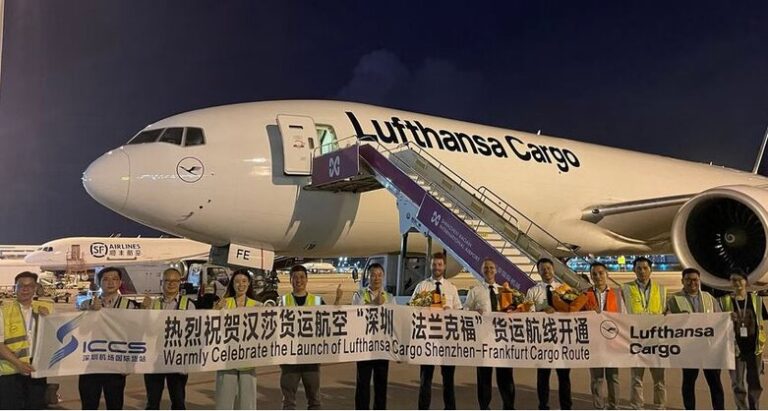
Lufthansa Cargo’s B777F was warmly welcomed in Shenzhen by ground handler ICCS and the carrier’s own personnel at the airport – photos: LH Cargo
Asia-Pacific network expansion and focus With the Sustainability Conference Asia following hot on the heels of the international Air Cargo China event in Shanghai and the news of another SAF partner in China, Lufthansa Cargo this week also announced the expansion of its network, highlighting two new Chinese freighter destinations ex its Frankfurt/Main (FRA) hub: Shenzhen Boa’an International Airport (SZX) will soon see a twice-weekly B777F service, while Zhengzhou (CGO) is being flown to three times per week. The cargo airline now offers 47 frequencies to a total of 19 destinations in Asia, consciously aiming to satisfy the eCommerce sector in collaboration with its two subsidiaries: heyworld and CB Customs Broker, for comprehensive eCommerce transport solutions. Ashwin Bhat, CEO of Lufthansa Cargo, explained: “In the Chinese market, the e-commerce business segment in particular, is growing steadily and we continue to see high demand, especially to Europe. Accordingly, additional air freight capacity is needed to transport goods quickly, compliantly, and safely. With the expansion of our Asian network, we can now serve even more important freight destinations in China for our customers. This will be possible thanks to the new B777F freighter, which we expect to receive in the course of this summer. This will not only mean enabling global business for our customers in a sustainable way, but also growing as a company in an important cargo region.”
Anand Kulkarni is Head of Global Markets Another major milestone this week, was the creation of the post of Head of Global Markets, bringing the company’s physical sales regions and digital sales channels together under one responsibility. And the person for the job was announced at the same time: logistics veteran, Anand Kulkarni, will take up the new position on Monday 15JUL24. Reporting directly to Ashwin Bhat, CEO of Lufthansa Cargo, Kulkarni’s responsibilities include leading and managing Lufthansa Cargo’s sales regions [Germany, Austria & Switzerland, Europe, Middle East, Africa, South Asia & CIS, Americas and Asia Pacific], as well as its Digital Sales department. With a Master’s in Finance from the London Business School, UK, and another in Transportation Engineering from the University of Connecticut, USA, Kulkarni also brings along 25 years of experience in logistics. He joins the cargo airline over from GLS [General Logistics Systems], where he was Head of Global Expansion for the past two years, developing and implementing its global growth strategy. Previous positions include more than 14 years with DHL, with a focus on Pricing, Profitabiltiy, and Performance of Global Customer Solutions in Asia Pacific and EMEA. “He was also part of DHL’s Global Aviation Strategy project which led to the creation of AeroLogic,” the release points out a very company-relevant fact. And he has otherwise carried out consultancy work in aviation strategy and finance.
Anand Kulkarni is LCAG’s new Head of Global Markets.
Shaping the digital future of air cargo On LinkedIn, Anand Kulkarni’s digital focus is clear as he commented: “Very excited to join Lufthansa Cargo as the Head of Global Markets. Looking forward to embarking on this journey with the amazing Lufthansa Cargo team to help deliver on our focus areas: customer centricity, sustainability, innovation. We and our partners are shaping the digital future of the air cargo industry. With our extensive global freighter- and belly-networks; coupled with our portfolio of air cargo related companies, we are very well positioned to meet the dynamic requirements of our customers.”
The next Oktoberfest is never too far away And certainly not now, with the start of A321 freighter services out of Munich – though the cargo airline might want to expand its catchment area at some point. Initially, the short/medium-haul freighter will serve Istanbul twice per week. The first flight bearing the number LH8351, arrived in Munich at 16:49 on Saturday 06JUL24, to a welcome ceremony attended by the airline’s Munich management division. Allegedly, the commodity focus is mainly on pharma, and the company’s hashtag is #EnablingGlobalBusiness. Given the location, however, would not #EnablingGlobalBier[Beer]ness be an idea?
The Supreme Court in The Hague has rejected the reduction in take-offs and landings at Amsterdam Airport Schiphol (AMS) from 500,000 to 460,000 per year. This had been ordered by the former Dutch government and submitted to the EU in Brussels for review. The background to this is a new, binding traffic regulation that must come into effect in nine months.
The political and legal wrangling over the number of aircraft movements at Schiphol Airport is probably only understood by experts. The city of Amsterdam, for example, is advocating a reduction in annual movements to a maximum of 450,000 (https://cargoforwarder.eu/2024/07/07/amsterdam-old-conflicts-or-new-solutions/), while the airport itself is campaigning for an upper limit of 460,000 movements in order to protect local residents from noise. The EU in Brussels, on the other hand, has received a proposal from the former Dutch government in favor of 470,000 movements, with a request for approval from the responsible Commission.
The Supreme Court of the Netherlands is proud of its tradition, as evidenced by the statues of former judges in front of the court’s seat – credit: de Hoge Raad
Total confusion In summary: everyone opposes everyone, and each party involved in Schiphol traffic matters is fighting its own battle. It is a mess and total chaos that make long-term operational planning impossible. However, binding traffic rules are badly needed by Schiphol, by far the most important passenger and cargo hub in the Benelux countries. The same accounts for its customers: the airlines operating to and from AMS. With the ruling of the Dutch Supreme Court, at least a certain degree of legal certainty is now guaranteed. However, a final slot and traffic solution still needs to be carved out by the parties involved. This is unlikely to happen without conflict, given the very different players involved. In any case, the reduction from 500,000 to 460,000 aircraft movements per year, is off the table.
Taking action against its own customers At the same time, the ruling is a resounding defeat for the Amsterdam Schiphol’s airport operator, which was already preparing plans to implement flight reductions, presumably at the expense of slots currently used by cargo carriers, insiders suspect. Schiphol Airport, which has taken legal action against its own customers, the airlines and the international airlines’ umbrella organization, IATA, said it would comment at a later date, writes the daily newspaper de Telegraaf, in its Friday edition (12JUL24). “We assume that the Dutch government will respect the court ruling and proceed according to the prescribed procedure, which is internationally recognized,” IATA’s CEO, Willie Walsh told the Dutch daily in a first reaction. Already months ago, the IATA helmsman had warned that the slot cuts planned by the former government would violate applicable international traffic rights, such as those of the AF-KLM-Martinair-Delta Air Lines alliance on transatlantic flights. Following the judge’s ruling, the official will feel confirmed in his view.
No flight, but noise cuts KLM applauded the court’s decision in a first reaction. “We have an alternative plan to reduce traffic noise, which can be achieved without slot cuts,” a spokesperson of the airline told de Telegraaf. According to the paper, KLM’s alternative proposals had been ignored by the previous government. Supposedly, Air Cargo Netherlands (ACN) is also pleased with the judge’s decision. Its director, Maarten van As, told CargoForwarder Global just a week ago, that the 500,000 aircraft movements should be maintained, while at the same time the main task is to gradually reduce the noise level for Schiphol’s residents. This could be achieved by the airport management through a smart charging policy combined with the banning of particularly noisy aircraft by 2026, or 2027 at the latest, he suggested.
Kales advocates long-term legal framework Barry Madlener, the new minister responsible for aviation and member of the right-wing party, PVV, announced that he is determined to oppose any slot-shrinking plans affecting Schiphol as intended by his predecessor, Markus Gerardus Jozef Harbers. Sebastiaan Scholte, CEO of Amsterdam-based Kales Group, told CargoForwarder Global that Schiphol, as the air traffic center of the Netherlands, needs a long-term perspective, independent of periodically changing governments in The Hague. This includes a binding legal framework that provides security for all parties involved. The Dutch economic prosperity and the consumers’ wellbeing depend on a functioning transport infrastructure flanked by a policy that must balance diverging interests, advocated the helmsman of the General Sales & Service Agent (GSSA) that markets cargo capacity on behalf of dozens of airlines worldwide.
Trade unions also get involved Reinier Castelein from the Dutch trade union De Unie argues along similar lines. “It is time for a more positive approach to aviation, with a sustainable path to a sustainable aviation hub. That is what the Dutch economy needs. KLM needs to know where it stands, and so does Schiphol Airport. If the negative approach to Schiphol continues, judge after judge will show that policymakers in The Hague are out of touch, while Dutch aviation is grounded.” KLM is one of the largest private employers in the Netherlands, and aviation accounts for more than 100,000 direct and indirect jobs.