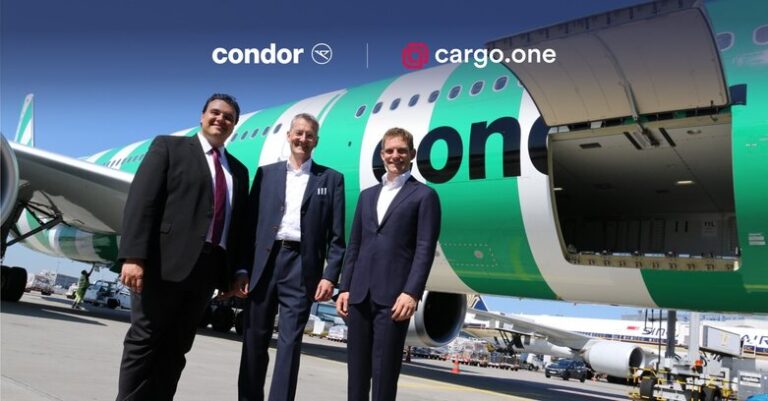
Where cargo gets to go to holiday destinations. Image: cargo.one
Whilst its passengers look forward to starting their holidays in distant lands, this month also sees Condor’s belly capacities become available for booking on cargo.one. From July 2024, freight forwarders using cargo.one can start booking Condor capacity to destinations in Europe, USA, and Canada, initially. Other Condor regions across the world will subsequently be added to the platform. More than 100 destinations across Europe, Africa, the Middle East, Indian Ocean, North America and the Caribbean, are served by the airline’s 50+-strong fleet. Its A330neo wide-body planes are particularly attractive for cargo operations, given that they are in keeping with environmental targets when it comes to noise and fuel-efficiency. “Condor is a key carrier in the DACH aviation sector,” the press release points out, as the airline operates out of Frankfurt, Dusseldorf, and Zurich. It also emphasizes its 70-year cargo experience. That cargo experience in general cargo, passive temperature controlled and perishables, is now open for immediate, 24/7 online booking, as part of its digital cargo growth strategy. In partnering with cargo.one, Condor opens its capacity up to the thousands of freight forwarders using the digital booking channel, thus expanding its global customer reach across 121 countries – and particularly in popular markets such as the Americas, Asia and Africa.
Thilo Schäfer, Head of Cargo at Condor, underlined: “It is imperative to our digital cargo strategy that Condor services are present on the most popular and relevant booking platforms. Benefiting from our long-standing cooperation, cargo.one can guarantee that every Condor customer receives an excellent experience. We value the commercial expertise that cargo.one brings in supporting Condor to best target market potentials.” Moritz Claussen, Founder & Co-CEO of cargo.one, concurred: “We have great pride and affection towards our collaboration with Condor. Having kicked off Condor’s digital distribution with its cargo partners back in 2020, we are excited to now be supporting the airline directly to accelerate its digital sales trajectory, and fully capitalize upon its many market potentials.”
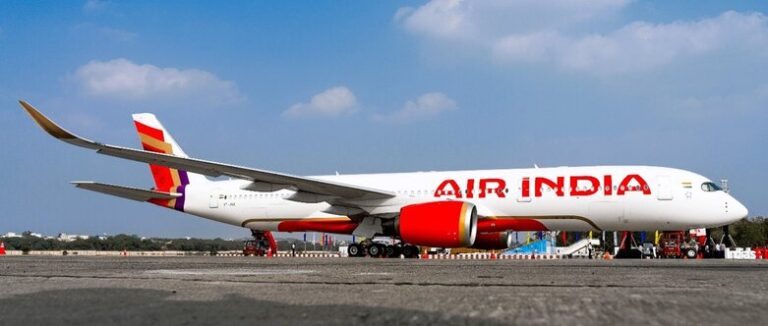
Opting for a strong software provider to support its growth. Image: Air India
One of India’s largest airlines, Air India, has opted to implement IBS Software’s iCargo solution as it focuses on its global air cargo operations growth strategy. A large part of that strategy includes digital transformation across its core business areas: passenger services, fleet, and cargo operations. Regarding the latter, it is here that iCargo will support in streamlining and digitizing the airline’s end-to-end cargo management, enabling seamless integration of numerous cargo operations from sales to billing within a single, integrated platform. With greater digital transparency and control, Air India will be in a better position to make commercial and strategic decisions.
The kick-off has begun and iCargo’s first end-to-end implementation is planned for delivery within nine months from the project’s start. Air India can expect immediate business benefits, the software solution provider promises. “Subsequent phases will introduce incremental value-added capabilities, further enhancing Air India’s cargo capabilities as it endeavors to meet India’s ambitious target of handling ten million tons of air cargo per year by 2030,” the press release states.
Nipun Aggarwal, Chief Commercial and Transformation Officer at Air India, explained: “Air India is on a transformation journey to not only reaffirm its position as a global leader in aviation, but to also establish foundations for future growth. Air cargo is one of the key drivers of our roadmap for future growth, and technology will be at the core of it.”
Somit Goyal, Chief Executive Officer at IBS Software, added: “As one of the most iconic airlines in the world, partnering with Air India is a proud moment for IBS Software. The Indian aviation market is on a major upswing, and we are excited to be partnered with a company that is dedicated to driving this growth. We are proud that our market-leading digital platform for the air cargo industry will support the ambitious transformation goals of Air India’s cargo offering and take it from strength to strength.”
ICL team outside their new cold storage facility in Heathrow. Image: Meantime Communications
Heathrow-headquartered forwarder, International Cargo Logistics (ICL) celebrated the inauguration of its cold storage extension at London-Heathrow Airport recently. Its cold storage facility previously measured 153 m², and now comes in at a cool 300 m². The investment was made in view of the fast-growing customer demand for temperature-sensitive handling solutions. It is also a part of the international freight forwarder’s goal to achieve British Retail Consortium Global Food accreditation this summer. The augmented facility, ICL Site Unit 13, comprises five chambers offering a variety of temperature ranges, X-ray and external temporary storage facilities (ESTF), and temperature-controlled vehicles set to transport goods across the UK. Inspection areas for the Department for Environment, Food & Rural Affairs (DEFRA) as well as a control point for Customs checks and clearances complete the set-up.
Heathrow is just one of a number of locations across 207+ countries and part of a growing network, as the forwarder focuses on offering comprehensive supply chain and Customs solutions on a global scale. Additional office locations are planned for this year, with the first focus being on Southeast Asia, beginning with a new office in Vietnam. Rotterdam in the Netherlands also recently joined the ICL network, as it implements its perishables operations growth strategy. Coming back to the UK, ICL also expanded its temperature-controlled air freight capabilities by going into partnership with FreshLinc, and collaborating on final-mile delivery, earlier this year.
Nick Finbow, Perishables Sales Director, ICL, commented: “This expansion, which comes as we celebrate our 20th anniversary this year, greatly enhances our ability to deliver high-quality logistics services from our Heathrow site. Our clients from the perishables sector can now benefit from centralized, round-the-clock logistics services as well as access to an efficient and reliable national distribution network, saving them valuable time and resources while allowing for fresher products to enter the UK food chain. Additionally, ICL is preparing to be BRC-accredited by the end of the summer, which means we will be able to deliver to a wider range of retailers and wholesalers.”
Rory Ward is new Business Development Manager for US Midwest. Image: DoKaSch
Six years into the history of DoKaSch subsidiary, California-based DoKaSch Americas Inc., the temperature-controlled active packaging solutions company now has a new Business Development Manager for the U.S. Midwest. Rory Ward has been appointed to increase DoKaSch Temperature Solution’s presence in the U.S. – a country whose pharmaceutical market has a revenue value of more than 630 billion USD and is the largest in the world. The Midwest, in particular, is home to many pharmaceutical and biotech companies and is experiencing significant growth. “Illinois aims to enhance its reputation as a key hub for biomedical research, with Chicago leading the initiative due to its dense concentration of biotech and pharma firms. Contributing to this dynamic growth is Chicago O’Hare Airport, which significantly boosts the region’s economic dynamics by handling approximately 2.2 million metric tons of cargo in 2022, making it a pivotal cargo hub in the United States,” the release details.
Rory Ward, who joins from Airport Logistic Services Group, where he was Operations & Sales Manager, will be responsible for growing the sales of the company’s FAA-certified Opticooler® RKN and RAP containers.
Rory Ward commented: “DoKaSch Temperature Solutions’ Opticooler® provides high-quality and reliable temperature-controlled packaging solutions. I see significant business opportunities in the Midwest Region and am excited to expand the DoKaSch TS network.”
Andreas Seitz, Managing Director of DoKaSch Temperature Solutions, stated: “Rory Ward, a Chicago native, has an in-depth understanding of the Midwest Region market. He is an excellent contact for customers seeking to transport their temperature-sensitive products with our Opticooler®. With Rory Ward as the new Business Development Manager, DoKaSch Temperature Solutions is strengthening its global network and enhancing its engagement in the U.S. pharma market.”
Joe Hickey, Global Business Development Manager, Hermes Logistics Technologies. Image: HLT
Hermes Logistics Technologies announced the appointment of its new Global Business Development Manager, this week. Joe Hickey joined the software solutions company in APR24, and is tasked with heading its global business development strategy, expanding its customer base, and driving growth. Hickey comes over from digital agency, Ratio, where he spent two years as Sales Director. Here, he successfully established a sales function and team from scratch and grew the company’s SaaS market reach and product portfolio. Prior to that, he worked with Move Mee, Heavy Lift & Project Forwarding International, and IMSM. His responsibilities international market development and commercial growth across Europe, North America, the Middle East, Africa, and Asia. Alongside logistics and supply chain, Joe’s experience also spans sales and business development in travel and hospitality, education, automotive, and financial services.
“Hickey will drive HLT’s global sales strategy, help expand its reach, and maximize growth opportunities for the logistics technology business and its customers,” the release states.
Yuval Baruch, CEO of Hermes Logistics Technologies, said: “We are pleased to welcome Joe Hickey to the HLT team. His proven track record in new business generation, combined with his expertise in the SaaS market and logistics industry, make him the ideal candidate to drive our global business development efforts. We have invested heavily in developing our product ecosystem over the past 24 months, and our expanded range of solutions can drive real business benefits for our customers.”
Joe Hickey commented: “I am excited to join Hermes Logistics Technologies at such a pivotal time. There is immense potential to extend HLT’s market presence, and with an enhanced focus on business development, I am confident we can continue to achieve significant success. I look forward to leveraging my experience in logistics and SaaS to drive HLT’s growth.”
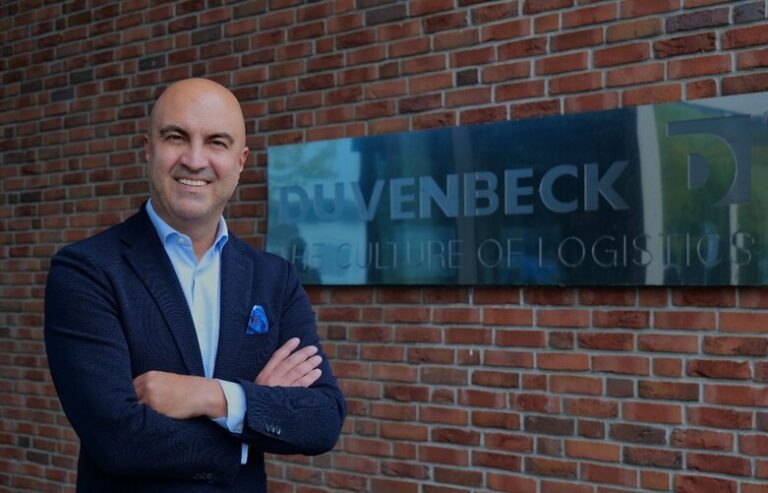
Hakan Bicil, the CEO of Duvenbeck. Image: Duvenbeck
Since the start of this month, the Bavarian family-run freight forwarding company, Erich Haslbeck, has become part of Duvenbeck. Founded in 1971 and headquartered in Niederviehbach near Dingolfing, Haslbeck’s focus is on providing factory logistics for the Bavarian automobile industry and cargo services for Fast-Moving Consumer Goods (FMCG) and the construction industry. It operates full and less than truck loads across Bavaria and the rest of Germany. The company’s assets include 75 tractor units and 140 trailers, 1,000 m² of covered warehouse space and 2,000 m² of outdoor space. “Parts of the logistics building will probably be made available for other haulage companies to rent space there,” the press release reveals. Haslbeck’s 90 employees will be taken on by Duvenbeck, and its two managing partners, Bernhard and Christian Haslbeck, will continue to serve and accompany the integration process to the Duvenbeck Group.
The acquisition is part of Duvenbeck’s strategy to expand its presence in southern Germany, as well as diversify its product offering. It is the second such acquisition this year. In FEB24, Duvenbeck took over the Dutch transport and logistics company, Schotpoort Logistics, in line with its planned growth in the Benelux region. Duvenbeck’s CEO, Hakan Bicil, explained: “The scope of the company’s services and its excellent location between Landshut and Dingolfing, ideally complement our business activities in the fields of transport and contract logistics. We’re combining two advantages through the takeover: we‘re not only moving closer to the Bavarian automobile industry, but Haslbeck also offers us access to new industrial sectors and we can now offer them full logistical services, including warehouse and contract logistics, in southern Germany.”
Lars Bo Larsen, Managing Director Denmark, DANX. Image: DANX
Danish logistics company, DANX, continues its expansion spree with the acquisition of the Scandinavian 3PL specialist, TLS. The also Denmark-based full-service logistics company is a specialist in the transport, preparation, and installation of new technical equipment. It is DANX’s third acquisition in the past year, following two similarly regional companies: Forslund & Malmström (FOMAB), and Tromsø Budbil Sentral (TBS). The strategy behind this expansion is to expand DANX’s warehousing, fulfilment, and installation product offering, as it fortifies its final mile reach and product offering across Europe.
TLS was founded in 1999, and has specialized in the transport, assembly and disassembly of different kinds of technical equipment throughout Denmark and Sweden. In addition, it runs five ‘storage hotels’ in Aarhus, Copenhagen, Stockholm, Gothenburg, and Malmö where customers can store inventory ready for dispatch around the clock. As the company now becomes part of DANX, Claus Huss, one of the former owners of TLS, will remain to accompany the transition with Bo Larsen and continue to steer business afterwards.
Lars Bo Larsen, Managing Director Denmark, DANX, said: “We welcome Claus Huss and the TLS team to the DANX Carousel Group. This strategic acquisition allows us to offer more comprehensive logistics solutions across the Nordics. Integrating TLS’s expertise enables us to meet our customers’ needs by providing them with enhanced value and efficiency. We look forward to our combined efforts delivering excellent results.”
With effect from 01JUL24, the terminal and infrastructure activities of the shipping company, Hapag-Lloyd, are consolidated in an independent business unit. The name of the company registered in Rotterdam: Hanseatic Global Terminals. “With the company name ‘Hanseatic’, which symbolizes a great tradition, namely that of the historic Hanseatic League, we want to point to the roots of our company,” explains CEO, Dheeraj Bhatia, who is also a member of the Executive Board of Hapag-Lloyd.
New Delhi-born Dheeraj Bhatia is heading newcomer Hanseatic Global Terminals – photo: CFG/hs
Let’s start with a brief historical review. The Hanseatic League was an association of around 300 port cities in northern Europe. It existed from the 12th to the 17th century and extended from Novgorod (Russia) in the East, via Riga (Latvia), Gdansk (Poland), Lübeck, Hamburg, Cologne (Germany), and Bruges (Belgium) – from where the name ‘stock exchange’ / ‘bourse’ originates – to London (UK) in the West. The aim was joint business and mutual protection. In this sense, the Hanseatic League was a kind of forerunner to today’s EU, in the Baltic and North Sea regions.
Both benefit: Hapag-Lloyd and its customers Even back then, a well-working port infrastructure was a key prerequisite for the functioning of the maritime economy. This has not changed to this day, even if the current facilities are hardly reminiscent of their 400 or 500-year-old predecessors. “Hanseatic Global Terminals strengthens our commitment to quality, efficiency, and sustainability,” Indian-born Dheeraj Bhatia emphasizes in a press release. And he wraps up: “Our customers and partners will enjoy significant benefits such as even more reliable and efficient services. In addition, the improved controllability supports our sustainability measures.”
As part of its infrastructure strategy, Hapag-Lloyd has successively invested in the terminal sector. The expansion was mainly financed by the exorbitant profits made during the pandemic, when rates for sea and air transportation shot through the roof.
Source: Hapag-Lloyd
Building a terminal empire The shipping company’s portfolio currently includes 20 terminals at ports in 11 countries, run and managed by its subsidiary, Hanseatic Global Terminals, says Rolf Habben Jansen, CEO Hapag-Lloyd. This comprises a 49% stake in the Italy-based Spinelli Group, stakes in Wilhelmshaven’s JadeWeserPort Container Terminal, Terminal TC3 of the Moroccan port of Tangier, and Container Terminal Altenwerder in Hamburg. In taking over the terminal business of Chile-based SM SAAM, the shipping company acquired 10 terminals across six North, Central and South American countries, with around 4,000 employees and a combined container throughput of 3.5+ million TEU, in one fell swoop. This is rounded off by a 40% stake in the Indian company, J M Baxi Ports & Logistics Limited, which also makes the shipping company a shareholder in several freight train lines in India. When asked by CargoForwarder Global in a call with journalists last Tuesday (02JUL24), as to whether Hapag-Lloyd now also wants to offer door-to-door transport services to the market by operating trains as done in India, Habben Jansen brushed the question off, stating: “Our core business consists of port-to-port transportation. And we want to keep it that way.”
Hapag-Lloyd subsidiary, Hanseatic Global Terminals intends to run more than 30 terminals in key ports come 2030 – courtesy: Hapag-Lloyd
More terminal investments intended He pointed out that the terminal business would also benefit the forthcoming Gemini alliance with Moeller-Maersk, as the Maersk fleet calls at a number of ports where subsidiary Hanseatic Global Terminals operates facilities. At the same time, he made it clear that Hapag-Lloyd would continue to invest in port infrastructure. “By 2030, more than 30 terminals will be managed by our new Hanseatic offspring.” He did not name any harbors, but PortMiami could be a candidate due to its outstanding strategic location. In addition, the shipping company is currently building a new terminal in Egypt, which will have a hub function. The aim is to operate a network of terminals along key maritime trade routes at strategically located ports in Europe, the Americas, the Middle and Far East, and Africa. Once accomplished, the Hanseatic name, its business ethics and values will be global in scope.
The Doha-based state carrier has added Hamburg (HAM) as a fifth Destination in Germany, following Berlin (BER), Dusseldorf (DUS), Frankfurt (FRA), and Munich (MUC). The inaugural flight was operated by an Airbus A350, but the route will normally be served by a slightly smaller Boeing 787-800 jetliner. The aircraft can accommodate 8 tons of cargo in its lower deck compartments. The new route was warmly welcomed by local shippers and the forwarding community.
Local VIPs together with QR managers, flanked by QR flight attendants welcomed the airline’s first flight to Hamburg – photo: courtesy HAM Airport
This is because the Doha hub gives them access to a dense flight network that Qatar Airways offers to passengers and cargo customers alike. The airline serves more than 170 destinations. The north German economy is particularly interested in transportation to and from Africa, Southeast Asia, and Oceania via Doha. Typical export products are ship spare parts, aircraft components, instruments, machine parts, and high-tech goods. Imports are dominated by textiles, agricultural products and general cargo.
No cannibalization expected According to Alexander Müller, Head of Cargo at Hamburg Airport, cargo throughput at the airport will increase by 11% thanks to the Qatar Airways flights. He expects between 5,000 and 5,500 additional tons per year, with exports and imports likely to balance each other out in terms of volume, which suggests a high-capacity utilization of Qatar Airways’ Dreamliners on this sector.
He does not see any cannibalization of Emirates or Turkish Airlines flights. This has not happened in Dusseldorf, where the three airlines also compete directly for passengers and freight volumes. Müller anticipates minor shifts at best, but these are unlikely to be relevant, although the three carriers operate a similar network worldwide. The manager also points to another effect: thanks to the new Qatar Airways flight connection, there is no need for trucking services from northern Germany to Dusseldorf or Frankfurt, to feed the Qatar Airways capacity offered there. This will shorten the supply chain and reduce CO2 emissions.
Ground handler Swissport benefits The ground handling agent for Qatar Airways Cargo in Hamburg is Swissport, which is based at the Hamburg Airport Cargo Center (HACC) with direct access to the apron.
Following the arrival of the inaugural flight, Qatar Airways Group Chief Executive Officer, Engr. Badr Mohammed Al-Meer, said: “Qatar Airways warmly welcomes the beautiful city of Hamburg as the latest destination in its extensive route network and the fifth gateway to Germany, a key market for the airline. As the bilateral relationship between Qatar and Germany continues to strengthen, we are delighted to add this route, which will further strengthen the important economic and trade ties between the two countries. With our centrally located hub in Doha, we are well positioned to facilitate exports from East to West and vice versa.”
No good flight connections – no economic progression The city’s First Mayor, Peter Tschentscher, thanked him for the statement and replied: “Hamburg is an international city with centuries-old trade relations with all continents. Good flight connections via Hamburg Airport Helmut Schmidt are important for the economy, science and culture of the Hanseatic city. Qatar Airways is one of the best and most modern airlines and is now adding Hamburg to its network of over 170 destinations with daily flights to Doha. I would like to thank everyone involved in the cooperation between our airport and Qatar Airways and wish them every success with the new flight connections from Hamburg to the rest of the world.”
Finally, Christian Kunsch, Chairman of the Executive Board of Hamburg Airport, warmly welcomed Qatar Airways to HAM, as well, stating: “As the largest commercial airport in northern Germany, our aim is to be well connected internationally. The new air link between Hamburg and Doha, one of the most important and fastest-growing aviation hubs, greatly increases connectivity between Hamburg and the world.”
Tonnage up, revenues down For fiscal 2023/24, Qatar Airways Cargo reports a 12.9% increase in tonnage, reaching 3 million tons. However, revenues went south 25.8% year-on-year, totaling QAR15.3 billion (3.88 billion EUR). According to the carrier, the drop reflects an overall market decrease in air freight rates last year, as demand weakened, and extra passenger capacity entered the market following the Covid-pandemic. Meanwhile, volumes have increased again as the airline re-introduced belly capacity following the end of the Covid-19 pandemic.
During the 12-month period, Qatar Airways Cargo launched new freighter services including Algiers, Algeria / Bogota, Colombia / Dallas Fort Worth, USA / Dammam, Saudi Arabia / Miami, USA / Sharjah, UAE / and Warsaw, Poland. Currently, Qatar Airways Cargo operates to more than 170 belly-hold and over 70 freighter destinations, utilizing more than 200 passenger aircraft and a total of 28 B777 freighters.
CargoForwarder Global’s ‘Spotlight On…’ series brings the many different facets of the air cargo industry to the fore, inviting a different individual each week, to share their job insights, experiences, and advice. Customer global logistics providers build a supporting network between shippers and all the required transport partners to ensure that air cargo shipments get from origin to international destination, reliably and on time. This week, CargoForwarder Global hears from Jenni Frigger-Latham (JFL), Owner and Board Member of EMO Trans (Corp).
Keep your perspective broad and see the opportunities. Image: Jenni Frigger-Latham
CFG: What is your current function? And what are your responsibilities?
JFL: I am an Owner and Board Member, having transitioned from Sales & Marketing to focus on the Board, ownership and governance.
CFG: What does a normal day look like for you? Or is there such a thing?
JFL: My days are quite changeable, I could be discussing sales development in Chile, or supporting the restructuring of the team in Canada. We also have big infrastructure investments across the globe that we discuss. For example, we are opening a number of new markets (Romania and Poland); we are investing in a new ops system which everyone knows is challenging but will bring us big rewards; and we are investing in staff who are focused on our global efforts rather than only one country.
CFG: How long have you been in the air cargo industry, and what brought you to it?
JFL: I was born into it, although I only started actively working when I was 14 in the summers. It is wonderful to have family connections in a such an interesting, far reaching dynamic field.
I started out in accounting, reconciling numbers and learning from people who are still close friends and allies. My father and I were extremely close (I was even his assistant for a period of time). I learned a lot from him, and he made me run a P&L because it’s the best way to learn about business. After starting in accounting, doing sales and running a branch, I had the broad strokes of what it takes to be a forwarder. The nuances of how to create a good dynamic in a company, how to negotiate so everyone wins, are best learned through osmosis by just being around people who are good at that. Jo and his chosen collaborators were all very good at doing this.
CFG: What do you enjoy most about your job?
JFL: We’re like engineers integrating dynamic systems and solving complex problems, and along the way we meet some amazing people who really share space in the life raft.
CFG: Where do you see the greatest challenges in our industry?
JFL: Geopolitical global forces have become quite unstable. This means we cannot predict what the climate in business will be like in some key markets. Technology is also both a boon and a source of pressure for our industry. AI, and pricing algorithms are reframing how competition works in gaining business and carrier space. We need well trained knowledgeable personnel to keep up.
CFG: What advice would you give to people looking to get into the air cargo industry? Any particular training they should aim for?
JFL: I think someone who is able to toggle between a macro framing and micro framing of global economic issues would be well suited to do this job. As an entry level person, it could be harder these days to gain overall context in a world where training and job experience has become quite specialized. Be sure to look up every once in a while to keep your perspective broad and to see both challenges and opportunities coming.
CFG: If the air cargo industry were a film/book, what would its title be?
JFL: I’d say it’d be more of a 5 season show. You could call it “Weight Break”
Thank you, Jenni, for your insights.
If you would like to share your personal air cargo story with our CargoForwarder Global readers, feel free to send your answers to the above questions to cargoforwarderglobal@kopfpilot.at We look forward to shining a spotlight on your job area, views, and experiences.