Home Blog Page 152

Ukraine: Ex-Antonov managers sabotaged rescue of AN-225

Ukraine’s domestic intelligence service has completed its investigation into the destruction of the Antonov An-225. The public prosecutor’s office accuses former Antonov General Director Serhii Bychkov, of being responsible for the loss of the iconic An-225. He is accused of failing to act in time and not ordering the evacuation of this and other aircraft after Russian troops seized Antonov’s Hostomel airfield near Kyiv. Bychkov is currently under arrest. The damage caused by the shelling is said to amount to the equivalent of over 200 million euros.

The indictment against Bychkov also states that the Mrija was in good technical condition, the crew was ready and there was enough fuel on site for flying the aircraft off in time. “All this indicates that all options existed to evacuate the aircraft and fly it to Leipzig Airport in Germany,” it says. It is also mentioned that 6 other aircraft could have been evacuated but fell victim to the assault. Numerous wrecks, including that of the AN-225, were left behind.

After months of intensive investigations, the Ukrainian General Prosecutor’s Office has come to the following conclusion:

On the eve of the Russian invasion, Bychkov and some other Antonov officials had denied the Ukrainian National Guard access to Hostomel airport. Although the Guard was in the process of preparing its defense, Bykov and parts of the management had blocked Ukrainian military from entering the premises. In a public statement, the prosecutor’s office stated that during the investigation, “indisputable evidence was gathered, which prove the culpable behavior of Bychkov and some former Antonov officials, including the head of the aviation security department.” If convicted, Bychkov and other defendants face up to 15 years in prison for collaborating with the Russian invaders.

Thorsten Riekert becomes CCO of ULD manager Jettainer

Thorsten Riekert climbs up the career ladder at Jettainer – photo: company courtesy

Lufthansa Cargo subsidiary, Jettainer, has appointed Thorsten Riekert as Chief Commercial Officer. In this newly created position, he will be responsible for the ULD manager’s commercial strategy aiming at taking the company’s global growth ambitions to the next level.

The manager’s CCO appointment is an integral part of Jettainer’s strategic reorganization, which emphasizes the company’s commitment to customer-centricity, future readiness and market leadership.

The first measure was to setup a structure with General Managers designed to facilitate direct customer relationships in the different regions where Jettainer services airlines, respond to their specific needs and oversee both sales and operational activities. General Managers in the Americas and the Middle East & Africa region have already been established, APAC and Europe are set to follow.

The new CCO setup with Riekert in charge will further enhance Jettainer’s operational efficiency and ensure that regional initiatives are closely aligned with the company’s commercial strategy, announces the company in a release. In addition, Riekert will continue to drive the development of Jettainer’s flagship ULD management solution “ULD Select”.

“Thorsten Riekert has played a central role in Jettainer’s management team, demonstrating outstanding commitment and profound aviation and market knowledge”, remarked Thomas Sonntag, CEO of Jettainer. “His contributions have significantly enriched our global network and product portfolio. In his new role as CCO, his expertise will be of high value as we continue to expand our presence and strengthen our market position.” Mr. Riekert joined Jettainer in 2015. In his time with the company, he played a pivotal role in expanding Jettainer’s extensive customer network and product offer of customer centric ULD management solutions. Before joining Jettainer, he held various impactful positions within the Lufthansa Group, where he strengthened his skills and expertise in sales and management.

2023 business results please Gebrüder Weiss

In fiscal 2023, Gebrüder Weiss generated net revenues amounting to 2.47 billion euros – image: Geb. Weiss

The Austria-based international transport and logistics player, Gebrüder Weiss ended its 2023 fiscal year with a net revenue of 2.47 billion euros (2022: 3 billion euros). Despite this decline, the company remains above its growth trend seen between 2015 and 2020. The coronavirus-related effects of the two previous years did not persist in 2023. At 774 million euros, net revenue in the Air & Ocean business segment subsequently returned to levels seen in previous years. Given the higher freight rates charged by shipping lines and airlines, Gebrüder Weiss generated 1.27 billion euros in this segment in the previous year.

Surface transportation and the logistics unit also report robust sales, totaling 1.45 billion euros (2022: 1.48 billion euros), with declining energy and fuel prices. The equity ratio increased to 63% (2022: 60%), ensuring the company’s ability to handle crises and positioning it as an important employer.

“Despite the challenges posed by the global economic conditions, we have been able to assist the sales efforts of our customers in their respective markets with our first-rate service, Wolfram Senger-Weiss,” CEO of Gebrüder Weiss stated. Simultaneously, the company expanded its global reach by establishing new stations in the USA and Germany. “This is due first and foremost to the wholehearted dedication shown by our employees. Geopolitical conflicts and weaker global economic output had a negative impact on revenue and transport volumes. Our stable financial situation meant that, in 2023, we were still able to implement a comprehensive investment program to expand both locations and services,” explained Mr. Senger-Weiss. Many projects that had to be postponed during the pandemic were accomplished in 2023.

Touching sustainability efforts, the company reports successful steps aimed at decarbonizing its own business activities. Three-quarters of the electricity requirements in the DACH region are already provided by its own solar panels. In addition, the management is increasingly focusing on its on its own fleet of vehicles as part of its goal to achieve operational climate neutrality by 2030. Two battery-powered trucks will be launched in Germany this year, and further e-trucks and e-delivery vehicles will be purchased in Austria. To manage the transition period to e-mobility, the company is converting a large part of its own truck fleet in Austria to hydrogenated vegetable oil (HVO).

For H2, 2024, Gebrüder Weiss expects a slight economic upturn, thereby translating into revenue growth fed by the success of individual national companies. Wolfram Senger-Weiss concluded: “We are now benefiting from the fact that we have a global position and can swiftly respond to economic upturns in individual regions with the necessary local logistics services. At the same time, we see confirmation of our “best of both worlds” strategy. The last few years in particular have shown how important it is to invest in both the development of the operational network and the company’s digital expertise.”

Alaska Airlines’ door woes continue

Alaskam Airlines can’t escape the negative headlines – photo: courtesy AirLive

Alaska Airlines suffered a new major safety problem caused by an aircraft door. In this case it was the front cargo door of a Boeing 737-900ER (registration: N402AS). It was bent and slightly ajar when the aircraft landed in Portland. Flight 1437, operated on 01MAR24, took from Los Cabos, Mexico to Portland. The incident became officially known only this weekend. Initial reports indicate that pets were on board the jetliner, traveling in the cargo compartments of the aircraft. The pets belonged to passengers with no harm or injuries reported.

Alaska Airlines confirmed the incident in a statement issued last Friday (08MAR24), saying: “Upon landing at PDX on March 1, Alaska Airlines flight 1437 was discovered to have the forward cargo door unsealed.” The release further reads: “There was no indication to the crew that the door was unsealed during flight and all indications point to the door partially opening after landing. Our maintenance teams inspected the aircraft, replaced a spring in the door, tested the door, and reentered it into service.”

The open cargo door incident has sparked safety concerns, particularly following a separate incident with Alaska Airlines shortly before where passengers on another flight reported cabin fumes. Before that, in another case, one of the airline’s Boeing 737 MAX 9’s mid-cabin exit door blew out en route with no pax injured because the seats next to the door were left empty.   

Meanwhile, the U.S. Department of Justice has launched a criminal investigation into the Boeing jetliner blowout that left a gaping hole on the carrier’s plane this January.

Citing documents and people familiar with the matter, the Wallstreet Journal said investigators have contacted some passengers and crew — including pilots and flight attendants — who were on the 05JAN24 flight. The Boeing MAX 9 aircraft operated by Alaska Airlines suffered the blowout seven minutes after takeoff from Portland, Oregon, forcing the pilots to make an emergency landing. Boeing has been under increased scrutiny.

Azeri carrier Silk Way West intend to up flights to Germany

0

The Baku-based freight airline is optimistic about reaching a bilateral agreement to increase its flights on the Baku-Hahn route. Today, the operations are limited to five services per week. A new accord, allowing more air transports, would significantly contribute to the economic prosperity of both nations, stated Wolfgang Meier, the CEO and President of Silk Way West Airlines.

Silk Way West Airlines welcomed a delegation of 50+ leading German industry managers  – courtesy: Silk Way West

The executive said this at Heydar Aliyev International Airport in Baku, on the occasion of welcoming a delegation of over 50 business leaders organized by the German Eastern Business Association alongside the German-Azerbaijan Chamber of Commerce. This significant gathering underscored the robust economic partnership between both nations, highlighting the mutual commitment to expanding trade and fostering economic growth.

Silk Way West bridges East and West
Germany is the fourth-largest trading partner of Azerbaijan, contributed 4.6% of the Caspian state’s total trade volume as of 2022. Bilateral engagements extend beyond commerce, however, and encompass environmental sustainability, climate protection initiatives, and cultural exchanges, reinforcing Azerbaijan’s status as Germany’s foremost partner in the wider Caucasus region.
Mr. Meier, who introduced and presented his airline to the members of the delegation, emphasized the important role Silk Way West plays for securing the German industry’s global supply chains particularly on trade lanes between Europe and the Far East. By operating air freight services from and to Frankfurt-Hahn, the airline efficiently connects German exporters to key Asia-Pacific markets, including India, Singapore, and Japan, among others. All flights are routed via the carrier’s strategic Baku hub. This connectivity not only enhances trade facilitation but also underpins the dynamic economic relations between the two nations, is stated in a press release published by the organizers in consultation with the airline.
The discussions following Meier’s presentation included specifics concerning Silk Way West Airlines’ planned development and market strategies, fleet and route policies.

Caspian powerhouse
Tobias Baumann, the Managing Director of the German-Azerbaijan Chamber of Commerce, reflected on Azerbaijan’s emerging significance as an energy powerhouse and a reliable transit hub linking European and Asian markets, stating: “The growing prominence of Azerbaijan as a crucial energy source and a key logistical nexus for both European and Asian markets undeniably amplify the strategic role of Silk Way West Airlines as an essential transportation provider. As the airline’s significance in facilitating seamless connections continues to ascend, we are eager to see Silk Way West Airlines emerge as a leading force in catering to increasing supply chain demands,” the official said. This development would not only align with commercial objectives but would also play a crucial role in enhancing the bilateral ties between both nations, fostering an ever-deeper economic and strategic partnership, he added.

Even if this topic did not stand on the agenda – for diplomatic reasons – but it became clear that Silk Way West benefits from the sanctions imposed by the West on Russia. The Azeri freight carrier is increasingly filling the gap left by the ban on AirBridgeCargo flights between the Far East and Europe.
Ultimately, the industry doesn’t care whether their goods are traveling via the Baku Heydar Aliyev hub or Moscow Sheremetyevo International Airport. The main thing is that the shipments are flown, punctually and reliably, said one participant on the sidelines of the visit.

Spotlight on… Paul Newton, Cargo Aircraft Loadmaster, NAVI Enterprise

0

CargoForwarder Global’s ‘Spotlight On…’ series highlights a specific function within the air cargo industry every week. There are so many different stakeholders involved in ensuring that cargo flies from A to B safely, efficiently, and on time. However, there is limited awareness of most of these roles among the general public.
In an effort to illustrate the broad spectrum of possible careers, CFG welcomes personal insights from those currently working in air cargo. Paul Newton of NAVI Enterprise, takes us through his main role as Cargo Aircraft Loadmaster, and shares his views advice to those considering the air cargo industry as a career field.

CFG: What is your current function and company? And what are your responsibilities?

Long hours and an ever-changing environment. Image: Paul Newton

PN: My current function within the Aviation Industry is Operating on a freelance basis within my newly established Sole Trader company NAVI Enterprise, serving as a service provider towards Airlines (PAX & CARGO) & supporting business establishments relating to the industry, focusing on both ground & onboard operational coverage requirements on behalf of the customer.

My main operational role is as a Cargo Aircraft Loadmaster, operating and flying onboard the aircraft around its dedicated routes, performing Weight & Balance Calculations, Load Control & Planning, alongside managing global GHA teams under load/offloading sequencing, safe operations & Aircraft Ground Servicing requirements.

Effectively being responsible for the Airframes ground, flight & MX turnaround operations to ensure correct SOP standards are met for longevity OTP KPI Performance Analysis.

As a freelance service provider, I also operate differential ground, aircraft turnaround and management roles globally, as required and agreed via the customers.

CFG: What does a normal day look like for you? (Or is there such a thing?)

PN: As all industry professionals will be aware, regardless of position or sector industry operated within, Aviation provides a minute by minute, ever expanding, ever evolving challenging environment, therefore there is no such thing as a “normal” day when working within the Aviation Industry.

Every day, every operational SOP guideline (great & small) presents new challenges, problem solving matters & instantaneous decision making towards its demands, therefore ensuring operating within the time critical and safety orientated environment keeps you aware, responsive, and adaptive in your work ethic.

In relation to a normal day/routine of rotation, being an Aircraft Loadmaster involves long hours, high detail planning and supervision/management to ensure high levels of safety awareness & customer service are provided to the customers, airlines and GHAs.

All of this accompanied by long flying hours, frequent travel globally and being away from friends & family for long periods of time.

CFG: How long have you been in the air cargo industry, and what brought you to it?

PN: Having always held a passion for Aircraft since a very young age alongside aspiring to be a pilot when in adult years (which never has happened), I entered the Aviation Industry when I hit the legal age of adult years, being 18.

I started working with ramp/baggage operations within the PAX Sector of Aviation, and dedicated myself to operating as efficiently as I can, in and around the aircraft.

Over several years, I completed as much training as I could within PAX operations to understand the industry and demands held by Aircraft Ground Management.

I achieved a high skill set within the role including, ADPs/Operating all ground equipment and performing both pushback and headset operations.

After reviewing my career and researching into a desired pathway, I decided to aim my goals towards being a Cargo Ground/Flying Aircraft Loadmaster.

As then, holding experience of “coverage” requirements involving a few cargo operating airlines within the airport I worked at, I set my goals on entering Cargo full time.

I was then selected and offered employment by such a company who operated within the airport on a large network scale, starting my cargo career in January 2015.

By September 2015, I managed to secure myself the position of Senior Aircraft Loader within the airline and managed ground operations with teams differing between 10-40 personnel at any one time, to ensure SOP and OTP Aircraft Turnaround Management. Within the following year, I progressed my desired pathway with the airline, attending, studying, and qualifying as a Ground Operational Loadmaster for B777 Operations.

After 3 years of completing this role in 2019, I left the airline to further progress my career as a flying Loadmaster with another airline.

I haven’t looked back since…

Since operating as a flying loadmaster, I have also completed a “specialist area role” within outsized cargo & special loads.

I have also qualified on 2 airframes of the queen herself, the B747, 400 & 800 models and have been lucky enough to work with full Freighters, BCF, SPF, P2F & Combi Airframes.

I am now also qualified within Dangerous goods, CAT6 & CAT10 alongside Live Animal Regulations (LAR).

CFG: What do you enjoy most about your job?

PN: I would say the most enjoyable part of my job (having held a passion for aircraft since a young age) is being lucky enough to work with, operate and fly on these amazing machines! I don’t see my role as a “job”, as I thoroughly enjoy the roles I perform, therefore the personal sense of satisfaction and being part of the industry operationally gives me a sense of pride.

As all careers within all industries, Aviation has its upsides and downsides, but being an adaptive, proactive, reactive and passionate person for the industry, I will always stick by saying that “if you work within an area of an interest, no day will feel like work.”

CFG: Where do you see the greatest challenges in our industry?

PN: I think the industry in its entirety holds many challenges within each sector of Aviation.

A challenging area of interest to myself, however, is “post covid operational volumes & Operator Sustainability”.

We all are aware that during the “Covid” Pandemic, the industry saw a huge spike within demand, creating a high number of export/import requirements by air commercially on a global scale. Although within a restricted economic and poor living environment at the time, due to very unfortunate events occurring globally, this was great for all existing cargo airlines, operators, upcoming new airlines & industry support companies to either boost their operational presence, kick-start their operational presence or branch their existing business model with the inclusion of Cargo Operations,

However, it is very interesting to me as to why economic operational presence has reduced dramatically since the return to normal living conditions around the world, with the demand dipping quite low to the current day within the market requirements & needs.

I feel very privileged to still be working within the position I am in, as the role over the last couple of years has either become redundant for some airline operators or recruitment for such a role is few and far between.

I believe on a global scale, this needs to be rectified and addressed via economical support, value and financial investments alongside agreements between political parties of country relations.

This would then boost the global economy, partly rectifying the current low demand of global trade.

CFG: What advice would you give to people looking to get into the air cargo industry? Any particular training they should aim for?

PN: On a grounded starter basis, I would advise person/s wanting to enter the cargo industry sector to be both adaptable and proactive in their career approach. Learn as much as possible, invest yourself into areas of the industry that you might not think are beneficial to you, as well as research the industry market, understanding and keeping up with the constant changes and developments throughout the industry.

Always follow your passions or areas of interest, set yourself goals and never give up! There will be a lot of brick walls in the way of development, however all can be overcome with a dedicated approach to succeed.

Course-wise within Cargo: Dangerous goods courses are always the way forward, to upskill and progress yourself within areas of the industry.

Skill-set-wise operationally: put yourself forward for all training offered to you.

CFG: If the air cargo industry were a film/book, what would its title be?

PN: I’ve never really thought about a book in relation to the industry of Cargo… However, I have often thought about an autobiography style read from a career point of view.

I, myself, have suffered many low points, brick walls, career/personal challenges over the span of work life. Although I am proud of where I have taken myself to this point, it has been a long, hard and challenging road to navigate.

So, on the subject of a book, I would make it in the form of a career perspective and call it: “The Rise, Fall & Spiral of an LM”

Thank you for showing us your part of the industry, Paul.If you would like to share your personal air cargo story with our CargoForwarder Global readers, feel free to send your answers to the above questions to cargoforwarderglobal@kopfpilot.at We look forward to shining a spotlight on your job area, views, and experiences.

LATAM Cargo ups flights from Europe to South America

0

This was announced by the carrier during the Intermodal South America, held from 5-7MAR24 in Sao Paulo, Brazil. However, it is still undecided as to whether the freighters will depart from Amsterdam or Brussels, due to the current slot uncertainties at Schiphol Airport.
CargoForwarder Global (CFG) spoke with Jorge Carretero (JC), Sales Director LATAM Cargo Central Europe, about his impressions of the Intermodal and what he gleaned from it.

CFG: Jorge, LATAM Cargo ran a stand at the Intermodal. What significance does this specific exposition have for your airline, and what was the response of the trade audience to your presence?

Attending the Brazil-held Intermodal has paid off for LATAM Cargo in many ways, resumes Jorge Carretero  –  photo: courtesy LATAM Cargo

JC: Held annually, Intermodal South America is the largest and most complete event for the logistics, intralogistics, technology, freight transport and foreign trade sectors in Latin America. Covering all modes of transport, the event offers solutions for the entire logistics chain, from end to end. Hence, as a leading Latin American cargo carrier, attending the trade show is an absolute must.

The market’s response to our participation was very positive, since we met and discussed business with many shippers and forwarders during the three days of the Intermodal, coming from the domestic South American market as well as the European and North American markets where we operate.

In addition, the announcement of new routes and the presentation of new sustainability projects at a special environmental stand at the fair, reinforced LATAM Cargo’s role as a freight carrier that is determined to closely link business opportunities and green initiatives.

CFG: Upping your weekly European frequencies from currently 7 to 10, once the summer flight schedule comes into effect, was a main announcement made by LATAM Cargo at the Intermodal. Will these be seasonal flights or operated all year round?

JC: At the Intermodal, we announced more frequencies to Curitiba and new cargo destinations in South America, served from Europe. These include Florianópolis, Brazil, and Montevideo, Uruguay. Both routes will begin operating in April. Including these routes, we offer the market 10 cargo frequencies from Europe to South America, enabling us to strengthen the connectivity between the two continents to the benefit of our customers. The Florianópolis and Montevideo routes will be served the entire year, so including the next winter schedule which starts at the end of October 2024. This gives our customers long-term planning security.

CFG: Will the new flights be operated from AMS or BRU?

JC: At the moment, we cannot yet confirm the places of origin of these services as we are still awaiting confirmation of slots. Once we have that certainty, we will communicate it immediately, so within the next few weeks.

CFG: How many frequencies do you operate on your two new South American routes?

JC: Both are serviced twice weekly. The two destinations are of great interest to our customers, market studies have shown. They will enable us to continue connecting Europe with South America in a more direct way. We are particularly excited about Florianópolis, located in the southern Brazilian state of Santa Catarina, as it is an absolutely new destination for cargo service from Europe. Hence, it will be the very first cargo route ever to connect both points. Montevideo is a route that we already operate, but with an intermediate stop in Miami. Soon, we will offer a direct service to South America to connect with Uruguay’s capital city.

CFG: According to your market studies, which products will be at the top of the list of goods that will fly to the two new destinations?

JC: Since we operate B767F and B767BCF capable of flying nonstop to South American destinations, we have the flexibility to explore new markets and, in this case, can offer the industry to transport pharmaceutical products or general cargo from Europe to Florianópolis in Brazil, and Montevideo, in a more direct and efficient way. From there, the freighters will continue their journey to our homebase, Santiago de Chile. In addition, we are increasing our presence in Curitiba, Brazil’s Paraná state, with a new weekly frequency.

CFG: Jorge, agradecemos la información.

Vestager may torpedo two airline mergers

0

The EU Commission’s Margrethe Vestager, a Danish national, is world-renowned for taking up the fight against tech giants. Meanwhile, the EU’s transport industry could be added to her list. In 2019, the Commission prohibited the merger of the two leading European rail companies, Siemens and Alstom. These dogmatic antitrust norms ended all efforts to create a European rail champion. Now, Ms. Vestager is taking action against the planned fusion of IAG and Air Europa, as well as ITA and Lufthansa, for competition reasons.

Europe is not an island. That’s true geographically, but not economically. Ms. Vestager sees this differently. Her yes or no to mergers is only based on the question of whether the results will impair competition within Europe. This became very clear in 2019, when she prohibited the intended merger of the two rail companies, Siemens and Alstom. Their going-together would violate competition rules, she argued. The fact that the China State Railway Group is twice the size of the two merged European market leaders, played no role in her considerations.

Margrethe Vestager from Denmark is the second most powerful woman in Brussels, after EU Chairperson Ursula von der Leyen  – source: @Euronews

First IAG and Air Europa …
Now, she has taken on British IAG and Spanish Air Europa. According to the Commission, the airline’s merger would impair competition on Spanish domestic routes to the Balearic and Canary Islands, and on short-haul routes between Madrid and main European cities. This also applies to flights to Israel, the UK, Switzerland, and Morocco. Other airlines could also be squeezed out of the market by the British-Spanish duopoly on long-haul routes from Madrid to South and North America, the EU competition watchdogs speculate. IAG offered 400 million euros for the takeover of Air Europa’s passenger and cargo business. Now the entire package is on hold, halted on 09FEB24, on the initiative of Ms. Vestager and her team.
The concessions made by the two airlines are not sufficient for okaying the merger, holds the Commission. Originally, the issue was supposed to be decided by 07JUN24, but has now been stopped for an indefinite period of time.

…followed by Lufthansa and ITA
Two thousand kilometers further east, in Italy’s capital, Rome, there is a similar scenario. Lufthansa and ITA are planning to merge, with Lufthansa acquiring 41% of the Alitalia successor in a first step. However, this project also remains poised on a knife-edge, as Lufthansa does not want to bow to the tough conditions demanded by the EU Competition Commission. Among other things, these stipulate severe slot cuts for the duo in Rome and Miland, jeopardizing long distance flights. As justification for her tough conditions, Ms. Vestager included flights operated by Air Canada and United Airlines between Italy and North America, two members of the Star Alliance group, like Lufthansa. If their flights are added to the package, a certain market dominance of the Star group cannot be denied. Market experts, however, speak of an arbitrary calculation to put pressure on Lufthansa and ITA to agree to certain conditions demanded by Brussels.

Lufthansa – ITA deal at stake
Currently, the parties involved are trying to find acceptable solutions fitting all sides. However, if the Brussels required traffic limitations are too far reaching and the costs exceed the benefits, Lufthansa has signaled to the Vestager team that it would step out of the ITA deal. If so, ITA would need a new, financially strong partner or else bankruptcy looms. It would blow the Commission advocated policy to consolidate the European aviation landscape and create three or four champions capable of successfully competing state supported carriers from the Gulf region or China. In the rail sector, as Siemens and Alstom demonstrate, Ms. Vestager has successfully prevented an Airbus on rails.

Freight flies First Class with Swiss WorldCargo

0

… soon also to Washington, Toronto, and Seoul. These three new international/long-haul destinations in Swiss WorldCargo’s network have now been announced to CargoForwarder Global (CFG) by Lorenzo Stoll, Head of Cargo at Swiss International Air Lines. Although very important from a passenger point of view, all three are very attractive for air freight, too. In addition to fine-tuning its product offering and solidifying high operational reliability, the air freight division of SWISS is stepping up its sustainability efforts, Stoll emphasized in a video conference with CFG.

Lorenzo Stoll heads Swiss World Cargo since 01APR21  –  courtesy: Swiss WorldCargo

Seoul, Toronto, Washington are new destinations
“Our Washington flights connect the two oldest democracies in the world, Switzerland and the USA,” the executive proudly emphasized. However, this politically noteworthy confession is more of a side note, because the focus is on commercial aspects. Mr. Stoll makes this clear straight away. The Washington metropolitan area is an interesting market for the pharmaceutical and high-tech industries, he says, indicating the manifold market opportunities for his freight division.
The Zurich-Washington route will be served by an A330 and will be operated daily from the end of March onwards.
A similar frequency applies to Toronto (daily flights except Mondays and Wednesdays), Canada’s economic and financial center. The city has also made a name for itself as a place with an attractive arts and cultural offering alongside a relevant pharma landscape for which the airline offers a matching premium product portfolio including SWISS Valuables, SWISS Vulnerables, and SWISS Pharma & Healthcare.
The Zurich-Toronto flights are operated by an Airbus A330, and will commence in MAY24.

MAY24 also applies to the upcoming Seoul flights, served with a passenger A340. From an air freight perspective, the transportation of high-tech products such as microchips, IT equipment and electronic components, is of particular interest there. Korea is a well-known territory for Swiss WorldCargo because “during the pandemic, we conducted 35 cargo-only flights between Incheon Airport and Zurich with our passenger fleet,” Lorenzo Stoll states.

Edelweiss adds to cargo sales
With regard to the global network, Stoll draws attention to leisure carrier Edelweiss, a subsidiary of Swiss International Air Lines. Its lower deck capacities are managed entirely by Swiss WorldCargo, as are all other freight related activities. Edelweiss serves more than 30 countries and 90 destinations, among them Vancouver, Mauritius, Punta Cana, and Tampa Bay. Others such as Cape Town, Bogotá, Denver, Cap Verde, or Kilimanjaro Airport, are seasonal.
The Edelweiss flights to Costa Rica are of particular interest from a cargo perspective. “There is a large chip factory, that is relevant for special care shipments through Edelweiss capacity,” explains Lorenzo Stoll.

Premium service
For all Edelweiss flights, the product promise to customers is that their shipments will be transported at premium conditions, which of course also applies to Swiss WorldCargo, adds the executive.
This said, Mr. Stoll indirectly confirms the headline to this article, according to which all Swiss WorldCargo shipments, without exception, belong to the Premium category. What initially may sound like a bold advertising slogan is reality when taking a closer look. Switzerland is a high-price country, leaving no niche space for cheap solutions in the aviation and air cargo industry. Meeting these self-imposed high standards at all times is also a matter of attitude from the management and the entire staff. “Our employees are simply outstanding; without their constant commitment and enormous willingness to innovate, we would not be able to maintain this high level of service we have achieved,” Stoll lauds the involvement of the freight division’s 310 employees worldwide.

High-value cargo share is continuously increasing
Touching on the new product offering introduced on 10JUL23, he reveals that it has gained a remarkable level of acceptance in the market. It is based on a modular structure and sub-divided into various layers from which the customers can choose the offers best fitting their specific needs. For instance, not every shipment is ultra-urgent, requiring high speed transportation, so shippers and forwarders can select different transportation solutions for the journey of their consignments, which translates into more options and flexibility for the customer. The new product structure also allows customers to book additional services where required, such as the re-icing of pharmaceutical shipments during transits. “From high-value goods to temperature-sensitive shipments and everything in between, we handle every commodity with expert care and precision. At Swiss WorldCargo, we extend the same level of quality and dedication to all types of shipments, ensuring excellence across our entire product pallet,” Lorenzo Stoll stated at the introduction of the new product structure in JUL23. Today, nine months later, he notes that “the ratio of high-value, care-intensive cargo is increasing continuously.”

Driving sustainability efforts forward
An increasingly important topic, given high priority in all decisions, is sustainability. Like the product philosophy, this is based on a multi-layered approach. It includes investments in modern aircraft such as the fuel saving Airbus A350, which burns 2.5 liters of kerosene per pax/100km, complemented by operational optimization whereby pilots are trained to operate aircraft as efficiently as possible, including when taxiing at airports. Powering the fleet with synthetic fuel produced by solar energy on an industrial scale is the next step in the airline’s journey to minimizing greenhouse gas emissions wherever and whenever possible. “It’s very promising technology but requires massive investment to deploy it on a larger scale,” says Lorenzo Stoll. “We will receive the first tranche of solar fuel by the end of 2024/beginning of 2025,” he announces. However, freight customers can already book SAF for the transportation of their shipments today, and thus contribute to lower greenhouse gas emissions. SWISS has set itself the goal of achieving 50% CO2 reductions by 2030, compared to 2019 levels.

Cooperation with booking portals will be intensified
Another task listed on the carrier’s agenda, is the endeavor to generate more freight shipments via electronic booking platforms. The carrier already collaborates with the booking platform, cargo.one, in three local markets (Switzerland, Germany, and USA), and this looks as though it may be expanded. The portal allows customers to book volume freight of up to one cubic meter or weight shipments below 300 kg. “The booking process via an online portal is attractive for those customers whose shipments don’t require as many additional details and conditions as other more complex consignments,” shares Mr. Stoll.

Management changes at SWISS
Of the 4 members of the Swiss International Air Lines’ Executive Board, two are leaving: These are CEO, Dieter Vranckx, and CFO, Markus Binkert. While Vranckx is moving to the Executive Board of Lufthansa Group, Binkert is leaving the Group altogether and will take over the position of CEO at SV group.
Oliver Buchhofer will become Chief Operating Officer (COO), and Dennis Weber will take over the role of Chief Financial Officer (CFO). Heike Birlenbach was named new CCO of SWISS earlier this year.
The question is still open as to who will take over Vranckx’ seat and head the Swiss carrier…

Lufthansa Cargo: Adjusted EBIT tumbled in 2023

0

In fiscal 2023, the freight arm of the Lufthansa Group generated an adjusted EBIT of 219 million euros, compared to 1.6 billion euros in the year before. The carrier explains the significant slump by the exceptionally high demand for air freight during 2020 to 2022, combined with skyrocketing rates. Despite the sharp decline in EBIT, the financial and traffic results in 2023 are very encouraging when measured against the figures from the pre-Covid year 2019, says management.

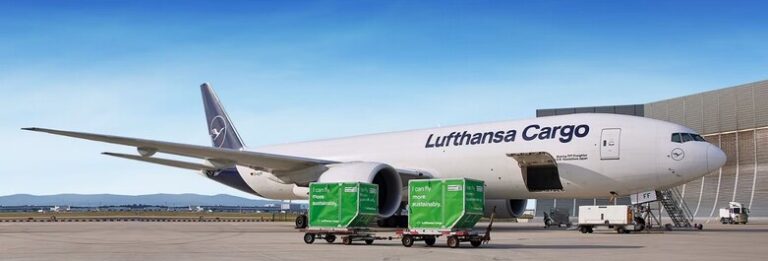
Lufthansa Cargo operates 17 B777F, soon it will be 18.  –  courtesy: LHC

In summary, Lufthansa Cargo speaks of a normalization of the rate structure in 2023, following the cargo hype in the corona period. That said, the cargo airline’s management is content with the results achieved.

Thumbs up or down. It’s a matter of interpretation
However, measured against 2022, the figures look rather sober: Revenue fell by 36% to 2.98 billion euros (previous year: 4.6 billion euros). The average load factor decreased 1.9 percentage points year-on-year to 59.2%. The sharp slump in EBIT is already mentioned above. On the positive side of the balance sheet are sales that were slightly higher year-on-year, reaching 7.5 billion euros vs 7.2 billion in 2022, while the capacity offered to the market increased by 7% to 12.6 billion available freight ton-kilometers. The flooding of the global markets with main deck and belly capacity did not harm Lufthansa Cargo’s yields which significantly increased compared to pre-pandemic times.

Consolidating its leading role
Rounding things off, CEO Ashwin Bhat speaks of a challenging market environment in which Lufthansa Cargo managed to cement its leading role: “Despite a volatile business environment which was influenced by global tensions last year, Lufthansa Cargo was able to successfully maintain its position. We owe this above all to the trust of our customers, and to our employees, who mastered the year with great commitment and determination. However, the development also shows that we must not slow down. We need to continuously work on improving our quality, our network, and our service promise to remain attractive,” the Lufthansa Cargo helmsman declared.

Three main fields of activity
The carrier’s to-do list for 2024 includes fleet expansion, the modernization of the Cargo Center at FRA, and increased efforts to reduce greenhouse gas emissions. As Lufthansa Cargo announces, an eighteenth B777F will be added to the freighter fleet. This will allow the carrier to operate 87 global routes and service 300+ destinations during the course of the summer flight schedule. In addition, the freight carrier manages the lower deck capacity of parent Lufthansa Airlines, Austrian Airlines, Brussels Airlines, Discover Airlines, and SunExpress. No changes are planned to the A321F sub-fleet, consisting of four units, which covers short and medium-haul routes in Europe, North Africa, and the Middle East.

Upgrading Lufthansa Cargo’s ground infrastructure at FRA
Another focus will be put on modernizing the Cargo Center at Rhine-Main Airport. CEO Ashwin Bhat explains: “Around 80% of our global freight traffic is handled in Frankfurt. In order to continue to meet the needs of our customers in the future, we are investing in the modernization of our Cargo Center at our FRA hub in 2024.” The price tag for this major project is 500 million euros. Once accomplished, the freight terminal will enable higher handling speeds, smooth transport processes and an improvement in service quality, thanks to state-of-the-art technologies in the infrastructure.

Reducing kerosene burn
As far as environmental enhancements are concerned, the focus is on AeroSHARK technology. It is a surface film inspired by the skin of a shark, that reduces the frictional resistance of the aircraft in the air and thus lowers kerosene burn. It is successively being applied to the entire freighter fleet until the end of 2027, reads the Lufthansa Cargo press release. Other initiatives listed on the 2024 schedule include the increased use of sustainable aviation fuel, in consultation with shippers and their logistics service providers.

Slight growth expected
As far as market development is concerned, Lufthansa Cargo expects demand to grow slightly in 2024. Adjusted EBIT will presumably reach the previous year’s level. However, this forecast is tainted with insecurities. Frank Bauer, CFO and Labor Director of Lufthansa Cargo, sums up: “We are making ambitious investments in our future – for this, we need a solid, long-term earnings base. This also includes anticipating the development of our market at an early stage, enabling us to making short-term adjustments to our network and services in order to meet our customers’ needs.”

Lufthansa Group generated stark 2023 figures
Together with its cargo unit, the Lufthansa Group published its annual results. According to the figures, the Group generated an operating profit of 2.7 billion euros; the third best result in the history of the Lufthansa Group. Revenues increased by 15%, totaling 35.4 billion euros, whilePassenger numbers increased significantly by 20% to over 120 million travelers.

The 2024 operating result is expected to be at the level of 2023, forecasts management, adding that the internationalization of the Group will be accelerated.