Airbus’ commercial aircraft division is cutting its non-industrial and headquarters expenses by 10%. This savings measure aims to mitigate the financial impact of global supply chain disruptions that affected the manufacturer negatively. Major cost driver was the shortage of Pratt & Whitney GTF engines, caused by metallurgical defects in powder-metal-printed components. This led to a backlog of engine-less aircraft (gliders) at the plane maker’s largest production plants in Toulouse and Hamburg.
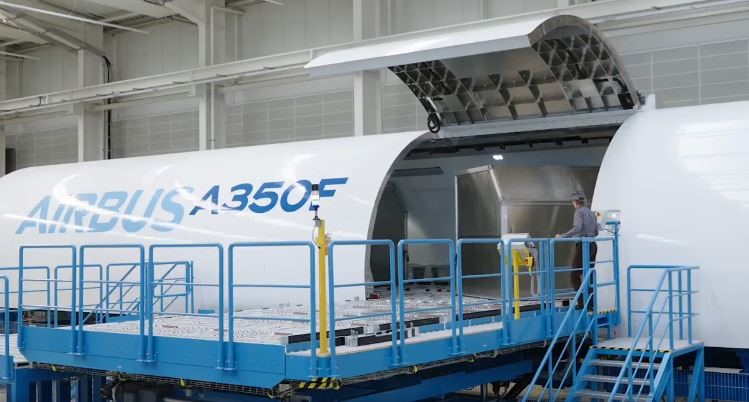
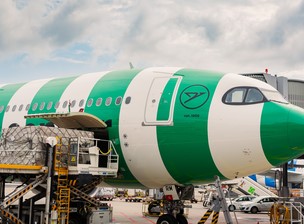
Aircraft manufacturing is not affected by cost cutting measured: Pictured is the cargo hatch of the future A350F – courtesy of Airbus
No finished aircraft – no money Budget constraints directly affect external contractors and the administrative departments at the company’s headquarters. This adjustment complemented the performance optimization program known as LEAD, which was implemented two years ago following the first downward revisions to annual aircraft delivery targets. Company management opted to keep the main assembly lines intact to safeguard the production pace of its most in-demand models. The main factor limiting Airbus’s operational capacity is the lasting shortage of engines, particularly Pratt & Whitney GTF – Geared Turbofan. These turbines were severely hit by durability failures due to metallurgical issues affecting their internal components This anomaly forced the extension of technical maintenance periods at specialized workshops and slowed the delivery of newly built aircraft to their owners.
Sobering financial results for Q1, 2026 Airbus’s financial indicators reflect the impact of this logistical bottleneck. During the first three months of the year, the company delivered 114 commercial aircraft, down from the 136 units handed over to customers in the same period of 2025. Of the total jetliners delivered, 81 aircraft were narrowbodies from the A320neo family. In addition to this, revenue fell 7% year-over-year, coming in at 12.7 billion euros.. Adjusted EBIT (earnings before interest and taxes) contracted by 52%, reaching 300 million euros. The commercial aircraft division contributed just €81 million to this figure. Free cash flow before customer financing closed with a negative balance of €2.5 billion due to an increase in fixed inventory.
Remarkable backlog Despite these unfavorable quarterly results, the backlog remains strong at 9,037 commercial aircraft. The company decided not to revise its financial projections for the end of the year, maintaining a target of 870 total deliveries in 2026 and an adjusted EBIT of 7.5 billion euros. Delays in the global logistics chain directly impact the capacity planning of many Airbus clients. This includes Airlines in the Far East, Middle East and Latin America. This forced carriers to reschedule their networks since fuel prices went through the roof and regional as well as medium-haul routes require very fuel-efficient jetliners to be profitable. Since some of the aircraft they ordered Airbus was unable to deliver, these routes were temporarily canceled since they turned out to be loss-making if operated with older, fuel-thirster aircraft compared to newbuilds. The cutting of non-industrial spending aims to protect the manufacturer’s resources to accelerate these pending aircraft deliveries to its customers.
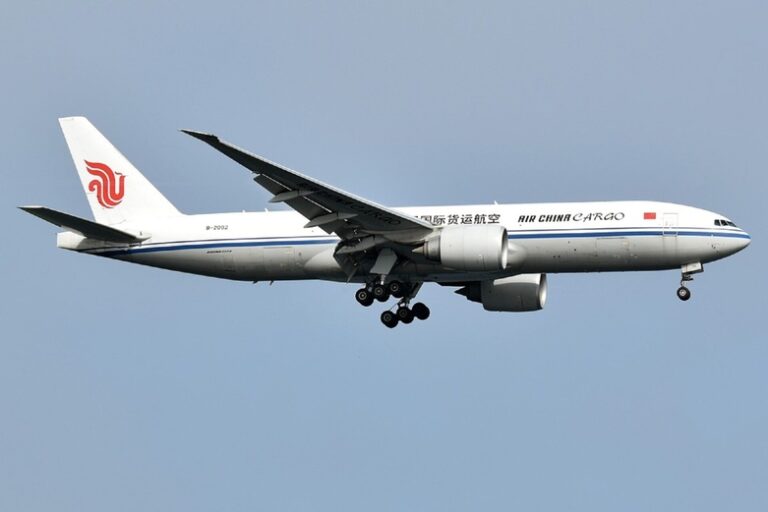
Air China Cargo is a loyal customer of Globe Air Cargo, photo: courtesy of Air China Cargo.
Globe Air Cargo France, the French subsidiary of ECS Group, and Air China Cargo are celebrating three decades of cooperation, underlining the long-term development of Air China’s cargo presence across the European market. Since the partnership began in the mid-1990s, both companies have expanded their collaboration from managing cargo capacity agreements to supporting a broad network of passenger and freighter operations linking Europe and China.
What began with cargo capacity agreements on Air France-operated services has since developed into a broader commercial and operational partnership spanning multiple European gateways. Today, Globe Air Cargo France supports cargo sales not only for Air China’s passenger operations from Paris Charles de Gaulle to Beijing and Chengdu, but also for the carrier’s daily freighter services from Amsterdam, Frankfurt and Liège. The cooperation mirrors Air China Cargo’s wider transformation into a major global freight operator with a growing long-haul freighter fleet.
Jean Ceccaldi, Chief Executive Officer of ECS Group, described the partnership as a relationship built on long-term trust, operational consistency and shared growth ambitions. Franck Tordjman, Managing Director of Globe Air Cargo France, added that close coordination between both companies over the years has helped maximize load factors and strengthen Air China Cargo’s market presence across Europe. The carrier currently operates a fleet of 24 freighters, including Boeing 777Fs, Boeing 747Fs and Airbus A330-200 passenger-to-freighter conversions, with Airbus A350 freighters scheduled to join the fleet from 2029 onward.
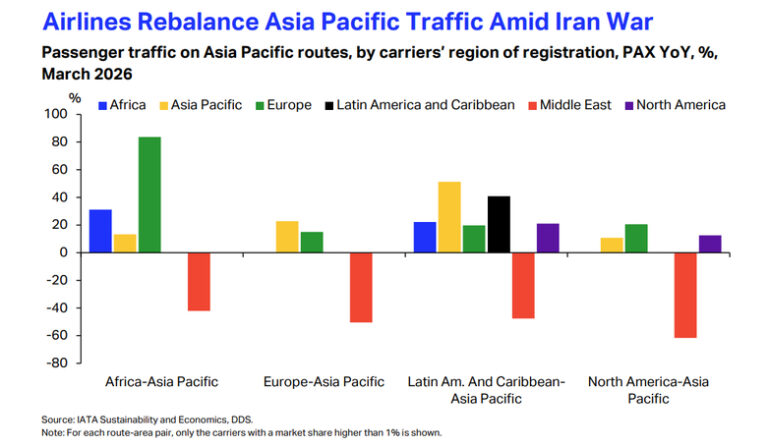
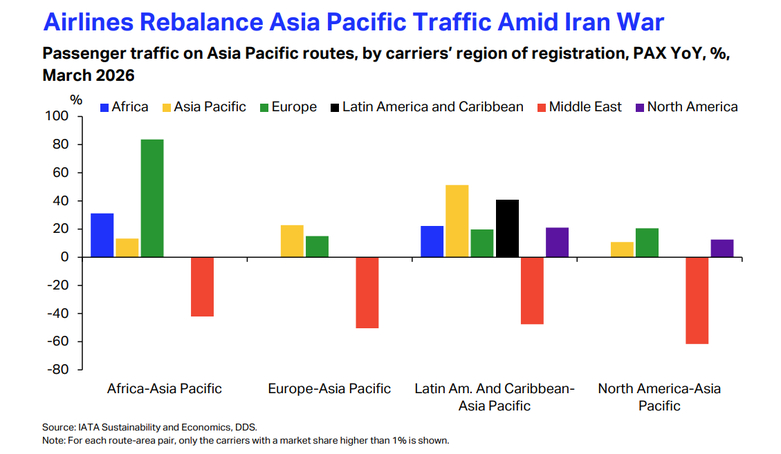
Air traffic flows across major intercontinental corridors have been significantly rebalanced following widespread disruption to Middle East carrier operations, highlighting the region’s structural importance as a global transfer hub. The Middle East traditionally plays a central role in connecting Asia Pacific with Europe, Africa, North America and Latin America, with Europe–Asia Pacific representing the largest share of connecting traffic routed through the region.
Recent operational interruptions, linked to geopolitical tensions and flight cancellations by Middle Eastern carriers, have triggered a noticeable redistribution of demand across alternative airline networks. European, Asia Pacific and African carriers have increasingly absorbed displaced traffic, particularly on Africa–Asia Pacific routes, where European airlines recorded year-on-year growth of more than 80% from a low base. On Europe–Asia Pacific corridors, both Asia Pacific and European airlines expanded traffic by around 15–23% year-on-year, reflecting a rapid reallocation of capacity.
Despite the shift in connectivity patterns, overall passenger demand to and from Asia Pacific remained resilient, increasing by 3.6% year-on-year in March 2026. However, capacity constraints outside the Middle East have led to record-high load factors, indicating that alternative networks have not fully replaced lost transfer capacity. The data suggests that the current market disruption is primarily supply-driven rather than demand-related, with airlines outside the region increasing capacity but still falling short of fully compensating for the reduction in Middle East hub connectivity.
Condor is continuously expanding its cargo activities, credit: DE
Frankfurt-based Condor Flugdienst GmbH is significantly expanding its cargo offering with the introduction of a new “Express” product, designed to meet the growing demand for ultra-fast and reliable transportation of time-sensitive shipments. The service is available immediately across Condor’s entire passenger flight network and is aimed at customers for whom minimal transit times are essential to safeguard production processes, prevent supply chain disruptions, and ensure on-time delivery to end customers.
The new product features reduced booking cut-off times, guaranteed capacity allocation, and priority handling throughout the end-to-end transport chain. Combined with a fully digital booking process and instant confirmation, “Express” provides customers with enhanced transparency, planning reliability, and operational efficiency.
“Speed, reliability, and digital accessibility are key drivers in today’s air cargo market. With our new Express product, we are strengthening our ability to support customers with highly urgent shipments by offering fast, prioritized transport solutions across our global network. At the same time, we are further enhancing the digital customer experience to ensure seamless and efficient cargo management,” said Thilo Schäfer, Director Cargo at Condor.
Condor Cargo does not operate freighter aircraft but utilizes the belly capacity of its growing passenger fleet, connecting key markets across Europe, North America, the Caribbean, Africa, and Asia. In addition to general cargo, the airline also transports pharmaceuticals and temperature-sensitive goods, reinforcing its role in supporting critical global supply chains.
With the launch of “Express,” Condor is further strengthening its position in the international air freight market and responding to increasing customer demand for high-speed, digitally integrated logistics solutions. The service is available via major cargo booking platforms as well as through Condor Cargo’s online channels.
Gebrüder Weiss has announced the appointment of Goran Susak as the new Managing Director of its Land & Logistics Germany division, effective 01JUL2026. The experienced logistics executive joins the company from Kühne + Nagel and will be responsible for the strategic and operational development of the company’s German land transport and logistics business in a challenging market environment.
According to the company, Susak’s priorities will include further stabilizing the organization while expanding integrated logistics services and contract logistics capabilities across the German market.
Susak brings more than 25 years of experience in the transport and logistics sector. Most recently, he held senior leadership roles at Kühne + Nagel, overseeing multiple regions with responsibility for road freight, contract logistics, as well as air and sea freight operations.
He began his logistics career at Dachser before taking on various management positions in sales and contract logistics. The graduate transport management specialist is regarded as highly connected within the German logistics industry.
“Gebrüder Weiss stands for reliability, entrepreneurial thinking, and a strong commitment to quality,” said Susak. “I look forward to working with the team to further develop the company’s business activities in Germany.”
Gebrüder Weiss also described the appointment as an important strategic step for its German operations. “With Goran Susak, we are gaining an experienced leader with an in-depth understanding of the German market,” said Jürgen Bauer, Member of the Management Board at Gebrüder Weiss.
Germany remains one of the Austrian company’s most important markets in Europe, and Gebrüder Weiss plans to continue strengthening its structures and expanding its service portfolio in the region.
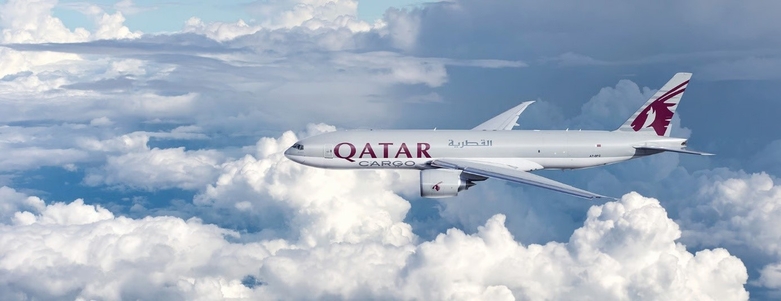
QR Cargo performed well in 20025 but is suffering a setback in 2026, photo: Qatar Airways
Qatar Airways Group reported strong financial results for the 2025/26 financial year, with Qatar Airways Cargo continuing to play a major role in the company’s overall performance despite ongoing geopolitical tensions and economic uncertainty impacting global supply chains.
According to the group’s latest annual results, Qatar Airways Cargo transported more than 2.8 million tons of cargo during the financial year, including over 1.43 million tons of chargeable freight. The carrier accounted for approximately 12% of the global air freight market during the period, underlining its position as one of the world’s leading cargo operators.
Cargo revenues reached US$4.45 billion in FY26, compared with US$4.92 billion in the previous financial year. The airline said its cargo division remained a key contributor to operational stability as demand for international freight connectivity continued across major global markets.
Qatar Airways Cargo maintained services to more than 160 destinations worldwide through its hub at Hamad International Airport in Doha, which continues to serve as a strategic gateway linking Asia, Europe, Africa, and the Americas.
“It is not often that a single financial year asks an organization to demonstrate both the best of what it can achieve and the depth of what it can withstand,” said Badr Mohammed Al-Meer, Group Chief Executive Officer of Qatar Airways Group. “The 2025/26 financial year did both, and the Qatar Airways Group rose to each in turn.”
The group added that it is continuing to rebuild and strengthen network capacity in response to sustained demand for both passenger and cargo transport services. As part of its long-term growth strategy, Qatar Airways Group also signed agreements with Boeing and GE Aerospace covering up to 210 aircraft and 400 engines to support future expansion across its global network. However, the airline has recently suffered setbacks due to the Middle East crisis. As a result of the hostilities in the Gulf region, QR management canceled many flights to intercontinental destinations, losing market shares to Asian and European competitors in passenger and cargo traffic.
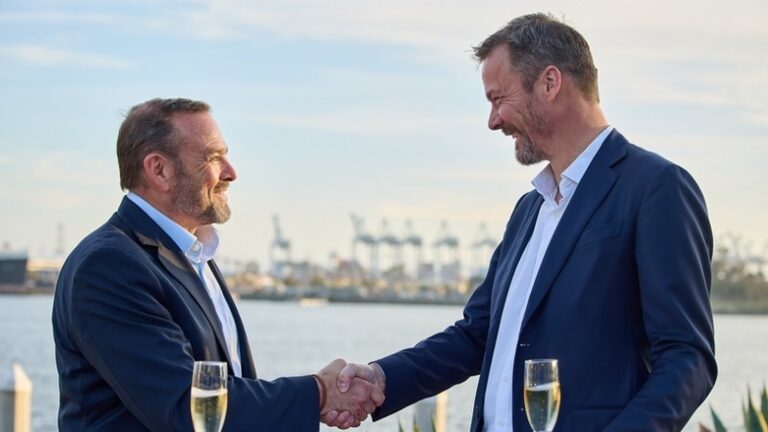
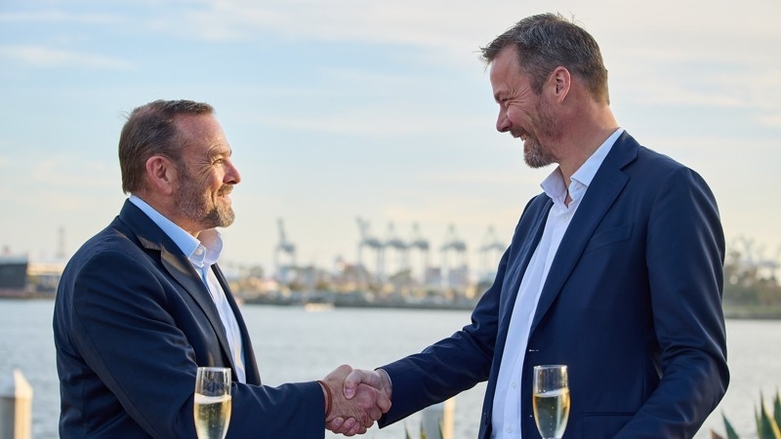
Handshake: Ashley Skaanild (standing left), Principal Advisor Carrier Integration and Transformation at WiseTech Global with Thomas Bagge, CEO of the Digital Container Shipping Association. Picture: credit CargoWise
The Digital Container Shipping Association (DCSA) has announced that WiseTech Global has joined its DCSA+ partnership program to help accelerate the adoption of open digital standards across global container shipping.
WiseTech, developer of logistics and supply chain platforms including CargoWise and e2open, supports many of the world’s largest logistics providers and freight forwarders. Through its participation in DCSA+, the company aims to support greater interoperability and scalability through standardized integrations and open APIs.
DCSA’s standards are designed to simplify core shipping processes such as bookings, shipment instructions, bills of lading, track and trace, customs documentation, and freight invoicing. The initiative seeks to reduce inefficiencies caused by fragmented systems, manual workflows, and inconsistent data exchange across the supply chain.
WiseTech has been implementing DCSA standards since 2019 and has become one of the largest users of DCSA-based carrier APIs in the industry. According to the company, its operational experience across global carrier-forwarder integrations provides practical insight into how standards can be adopted efficiently at scale.
“Managing and monitoring logistics flows across the globe relies on clean and complete data,” said Ashley Skaanild, Principal Advisor Carrier Integration and Transformation at WiseTech Global. “Standardized integrations help our customers and their carrier partners achieve their goals faster and more effectively by removing friction at critical data handover points.”
Mariana Bock-Losada, Chief Growth Officer at Digital Container Shipping Association, said the partnership would help strengthen the adoption and real-world implementation of digital standards across the shipping ecosystem. With WiseTech joining DCSA+, the association continues expanding collaboration between carriers, technology providers, and logistics companies to support end-to-end digitalization in container shipping.
Every week, CargoForwarder Global’s ‘Spotlight On…’ hands the mic to an individual working in a particular segment of the air cargo industry, to demonstrate just how varied careers here can be. For example, did you know that much of what happens in air cargo actually takes place on the ground? Sovereign Speed describes itself as an ‘airline on the road’ and operates a dense European road feeder network, ensuring that air cargo continues to move between airports or on to destinations that cannot be reached by plane. And aside from that, it also manages cargo handling stations at major German hubs, maintaining an important role at the intersection of ground handling, road feeder services, express transport and digital connectivity. This week, Louisa Wittenbecher, Director Corporate Communication, Marketing & Events, Sovereign Speed GmbH, talks about her responsibilities, experiences and advice for people considering a career in the air cargo industry.
“Logistics? That sounds… efficient.” Image: Lousia Wittenbecher
CFG: What is your current function and company? And what are your responsibilities? LW: As Director Corporate Communication, Marketing & Events at Sovereign Speed, I’m responsible – together with my team – for how the company communicates, how it is perceived, and how the Sovereign brand comes to life internally and externally. That includes everything from corporate communications, PR, internal communication and social media to crisis communication – which, in logistics, usually means staying calm while everyone else discovers the meaning of urgency. On the marketing side, I develop strategies to position both our services and the company in a visible and relevant way. This covers campaigns, branding, digital channels, content, lead generation and market positioning. And then there’s the events side – from customer events and trade fairs to executive formats and internal events. For me, events are never just about organization. They’re about creating experiences, strengthening relationships and making the brand tangible.
CFG: What does a normal day look like for you? LW: Honestly, there’s no such thing as a ‘normal’ day – and that’s exactly what I enjoy about the role. Some days are very strategic: developing communication concepts, marketing campaigns or preparing executive messaging. Other days are about event planning, quick decision-making or topics that suddenly become top priority within minutes. My calendar usually starts with a plan. The day itself often has other ideas. What I really like is the mix of strategy, creativity and dynamics. In communications and marketing – especially in logistics – you constantly switch between long-term positioning and topics that need attention immediately.
CFG: How long have you been in the air cargo industry, and what brought you to it? LW: I’ve been in the air cargo and logistics industry for about seven years now, but it wasn’t an industry I originally set out to work in. At the time, I was working in agencies on lifestyle and food brands, so when a headhunter first approached me with a logistics role, my initial reaction was probably what many people outside the industry think: “Logistics? That sounds… efficient.” Coming from a very emotional and consumer-focused environment, logistics initially felt a bit less glamorous from a brand perspective. What changed my perspective quickly was the reality of the industry itself. The level of complexity, the international setup and how central logistics is to almost everything we use in daily life – even if it usually happens out of sight. From a communication perspective, I actually found that even more exciting. Because in logistics, you’re not just marketing products – you’re building trust, explaining complexity and giving visibility to an industry that literally keeps global business moving.
CFG: What do you enjoy most about your job? LW: What I enjoy most is that the role never feels one-dimensional. I like the combination of creativity and structure – having strategic discussions one moment and then turning ideas into something tangible the next. For me, communication is at its best when it connects people, not just information. That’s also why I really enjoy internal communication. You’re not only communicating messages; you’re helping create culture, transparency and a sense of connection across very different teams and locations. Especially in logistics, where many people work operationally and under time pressure, good communication can genuinely make a difference. I also appreciate that Sovereign has an environment where new ideas are welcomed instead of immediately being overanalyzed. A good example was our internal podcast. It actually started as a spontaneous conversation with our CEO about finding a more personal and authentic way to communicate internally. The idea gained momentum very quickly, people really connected with it – and a year later, we’re still producing it. Those are the moments I enjoy most: when an idea starts small, people get excited about it and suddenly it becomes part of the company culture. And I personally find it very rewarding to create something that simply didn’t exist before.
CFG: Where do you see the greatest challenges in our industry? LW: One of the biggest challenges right now, is the gap between rising expectations and an increasingly complex operating environment. Customers today expect speed, transparency, flexibility and sustainability all at once. At the same time, supply chains are becoming more complex. Geopolitics, regulation, capacity constraints and volatile markets are no longer exceptions; they are part of everyday business. So, the industry is constantly in a mode where it has to adapt while still being expected to perform with full reliability. Closely linked to this is perception. Logistics and air cargo are incredibly important and highly sophisticated industries, but they’re still often underestimated from an employer branding perspective. Many young professionals don’t immediately associate them with innovation, international environments or real career opportunities – even though that’s exactly what they are. As I said, I actually had a similar perception myself before entering the industry.
CFG: What advice would you give to people looking to get into the air cargo industry? LW: My first advice would be: don’t over-engineer your entry into the industry. Be open to it first – and let the industry convince you, not the other way around. Air cargo is one of those industries that really reveals itself once you’re inside. It’s fast-paced, international and incredibly interconnected, and that’s exactly what makes it so interesting to work in. In terms of background or training, there isn’t one single path that leads into it. Of course, logistics or supply chain knowledge is valuable for operational roles. But just as importantly, the industry thrives on people bringing in different perspectives – communication, marketing, digital, data, customer experience or engineering. That diversity is often where real innovation starts. What matters most, in my view, is curiosity and the ability to work with complexity without losing the bigger picture. Things are rarely linear in this environment – but that also means there’s a lot of room to learn, grow and shape things. So, my advice would be: come in with an open mind, stay curious, and don’t worry too much about having the ‘perfect’ background. The industry is very open to people who want to contribute and learn – and it offers a lot of opportunities once you’re part of it.
CFG: If the air cargo industry were a film/book, what would its title be? LW: ‘The Art of Making Things Arrive.’ And sometimes, that’s harder than it sounds.
Thank you, Louisa.
If you would like to share your personal air cargo story with our CargoForwarder Global readers, feel free to send your answers to the above questions to cargoforwarderglobal@kopfpilot.at We look forward to shining a spotlight on your job area, views, and experiences.
How far should Artificial Intelligence be allowed to influence operational decisions without weakening human oversight? AI is no longer a futuristic discussion topic in air cargo. It has arrived in everyday operational reality. In our two-part report we examine the growing role of AI in air cargo operations, analyze how intelligent systems are already reshaping decision-making, and influence workforce structures across global cargo networks.
Whether at major trade fairs such as the Munich-held Transport Logistik, within cargo digitalization platforms, or in increasingly automated operational environments, AI has become one of the industry’s dominant strategic themes. The discussion is no longer centered on whether air cargo companies should invest in AI, but rather on how deeply these systems should be integrated into operational decision-making. The timing is hardly surprising. The industry continues to operate under enormous pressure. Geopolitical instability, fluctuating demand, fragile supply chains, capacity volatility, labor shortages, and growing customer expectations are forcing airlines, freight forwarders, handlers, and logistics providers to rethink traditional operating models. In this environment, AI promises something the industry needs: faster, more intelligent decision-making that goes far beyond simple process automation. Part One focuses on AI as an operational “co-pilot”, while Part Two of this report will be published next week. Please stay tuned.
Picture is AI generated
From Digitalization to Decision Intelligence Air cargo has spent years digitizing its processes. Electronic air waybills, automated customs filing, booking portals, and cargo visibility platforms have already transformed large parts of the industry. AI, however, represents something fundamentally different. Traditional digital systems organize and distribute information. AI increasingly interprets information and recommends actions. In many operational environments, it effectively functions as a “cognitive co-pilot” capable of supporting real-time operational control.
Predictive decision making This development is particularly relevant because cargo networks have become too complex for purely manual decision making. A delayed freighter in Asia can affect trucking schedules in Europe within hours. A weather event in North America may disrupt pharmaceutical transfers in the Middle East. Capacity shortages, airport congestion, labor disruptions, and political instability create operational volatility that changes by the minute. AI systems can evaluate these variables simultaneously and generate alternative operational scenarios within seconds. Instead of reacting to disruptions after they occur, operators are increasingly moving toward predictive decision environments where systems anticipate operational problems before they escalate. The industry has discussed this transition for years. What is different now is that AI capabilities are finally becoming operationally usable at scale.
The real debate begins when AI starts prioritizing Automation itself is not controversial anymore. Most companies already accept automated workflows in areas such as documentation processing, shipment tracking, or customer communication. The real debate begins when AI starts influencing operational priorities. Which shipments should receive limited capacity during disruptions? Which cargo should be rerouted first? Should profitability outweigh urgency? How should systems prioritize humanitarian shipments, temperature-sensitive cargo, or high-value freight? These decisions are no longer purely operational. They involve judgment, responsibility, and sometimes even ethics. This creates a growing tension between operational efficiency and human oversight.
Contextual comprehension is AI’s weak spot The air cargo industry has historically been built around clearly defined accountability structures. Human operators remain responsible for operational outcomes, especially in safety-sensitive environments. Yet AI systems are increasingly influencing decisions that were once entirely dependent on human experience and intuition. And while AI is exceptionally good at pattern recognition and optimization, it still lacks contextual understanding. An experienced cargo operator understands things that rarely exist inside datasets, such as political sensitivities, customer relationships, local operational culture, or the practical realities behind a disruption. This is one reason why many industry experts continue to emphasize the importance of “human in the loop” operational models. The future of air cargo may become highly automated, but it is unlikely to become fully autonomous.
At least for now The industry currently describes AI as a “co-pilot”, an intelligent operational assistant supporting human decision-making rather than replacing it. Even CFG uses AI to create graphics similar to the one illustrating this article. Yet every co-pilot traditionally still operates under the authority of a captain responsible for the final decision. In our case, we had to try several prompts and different approaches to create the right graphic. The critical question, however, is whether the balance between AI decision making, and human oversight will remain permanent. As AI systems become faster, more predictive, and increasingly capable of optimizing operational scenarios in real time, the line between operational support and operational control may gradually begin to blur. Air cargo may therefore be approaching a future in which humans no longer make every operational decision themselves but increasingly supervise systems that have already proposed, optimized, or effectively pre-selected the decision beforehand.
The industry’s defining question Artificial Intelligence offers enormous opportunities for air cargo. It can improve resilience, optimize capacity usage, accelerate operational reactions, and strengthen decision-making in an increasingly unstable global environment. But the deeper AI becomes integrated into operational control, the more important transparency, accountability, and human oversight become. Because ultimately, the defining question is not whether AI can make operational decisions. The real question is: Which decisions should the industry ever allow machines to make? That answer may ultimately shape the future structure of global air cargo operations far more than the technology itself.
Outlook to Part Two Artificial Intelligence will undoubtedly become one of the defining technologies, shaping the future of air cargo. The operational advantages are too significant to ignore, and the competitive pressure to adopt AI-driven decision environments will only continue to increase. At the same time, the industry is approaching a critical turning point: The deeper AI becomes integrated into operational control, the more urgent the questions become concerning responsibility, governance, transparency, and power. Part Two of this report, published next week, will therefore focus on the broader strategic implications of AI in air cargo, including:
Governance and operational oversight
Regulation and emerging legal frameworks
Liability and accountability for AI-driven decisions
Concentration of technological power
Safety, security, and control in increasingly autonomous logistics systems
Ultimately, the future of AI in air cargo will not only be defined by what technology can do, but by how much control the industry is willing to hand over to its fast-emerging co-pilot. This said, the question arises as to whether the co-pilot will be sitting in the driver’s seat in the foreseeable future. If so, a fundamental shift in the human-machine relationship would take place. Time will tell.
For over 30 years, pharma operations managed by DHL GF were not fully harmonized and often fragmented across business units across different countries and borders. Dedicated pharma corridors and end-to-end cold chain solutions are part of a more recent strategic build-up to connect key healthcare markets with standardized logistics processes, connecting technology, processes and solutions to deliver continued visibility and limiting break in cold chain, and improving a reduced carbon footprint.
Meanwhile,DHL Global Forwarding has expanded its air freight network for temperature sensitive products and strengthened its end-to-end cold chain capabilities on the Europe – North America trade lane. Following the introduction in 2026 of a dedicated temp-controlled Boeing 777 freighter operating a 6/7 schedule, DHL has further enhanced its GDP-compliant end-to-end cold chain process with specialized ground handling technology and facilities. These changes will ensure resilient and compliant transportation and storage of sensitive healthcare shipments on this flagship route, reads a release.
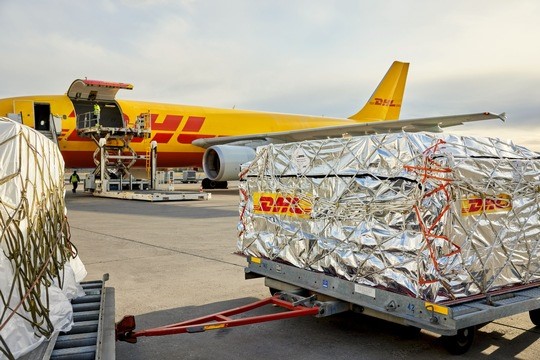
Life Science and Healthcare products are a key growth segment for DHL – picture: courtesy of DHL
Comprehensive service solutions Additional investments in the infrastructure on this lane are planned throughout 2026, including the expansion of DHL-owned cold-chain capabilities on- and off- airport at Cincinnati. DHL is also introducing multiple temperature-control dollies, mobile refrigeration units that transport air freight containers and pallets between the aircraft and warehouse, ensuring that shipments always remain within the required temperature range. DHL has further validated the use of multi-layered thermal blankets in combination with developments in materials sciences (e.g., phase-change materials that can adapt to fluctuations in heat to maintain the desired temperature) to offer more efficient passive packaging solutions.
Shipments get smaller but volumes grow Life Sciences & Healthcare is a key growth segment for the integrator, supported by significant ongoing investments, emphasizes DHL-GF in a statement. However, the company declined to reveal fixed percentage figures, nor did it unveil the scale of sales activities in the pharmaceutical/healthcare segment. All it says is that demand for healthcare logistics is growing rapidly, particularly for biopharmaceuticals, cell and gene therapies, and clinical trial materials, amongst others. Shipment volumes are expected to increase further, with an estimated double-digit growth. Each lane or route shows a unique growth pattern, based on customers on both inbound and outbound lanes. This is emphasized by Annette Naude, Global Head of Life Sciences & Healthcare at DHL Global Forwarding: “The market for biopharmaceuticals, gene and cell therapies, and clinical trial materials is growing at an above average rate. The typical shipment is becoming smaller, and almost all of these products require strict temperature control – typically between 2 and 8 degrees Celsius. At the same time, a significant number of pharmaceutical patents are set to expire in the coming years, which will drive a rapid increase in shipment volumes. To illustrate: for every pallet of an original drug, up to eight pallets of generics are typically shipped once the patent expires. We are making these targeted investments to ensure that our customers have the capacity and specialized logistics support they need to manage this unprecedented growth. Our Brussels-Cincinnati end-to-end solution is an effective blueprint for other major trade as we continue to build out our DHL pharma airfreight network.
BRU-CVG serves as a blueprint Although Brussels is a key European pharma gateway, DHL is not limited to only using Zaventem Airport (BRU). The network strategy is based on broader growth anticipated from various regions. This said, the Brussels-Cincinnaticorridor approach serves as a blueprint for scaling similar developments worldwide, DHL told CargoForwarder Global upon request. We asked the integrator if their Tripple Seven freighters operated on this transatlantic route are powered by Sustainable Aviation Fuel (SAF)? Here is the answer: “Sustainability is a core focus for DHL: beyond fuel considerations, we emphasize optimized routing and reusable/reduced packaging solutions to reduce emissions and waste. Our cold chain solutions are designed to minimize breaks, improve efficiency, and lower the overall carbon footprint.” The first air freight connection between DHL’s hubs in Brussels (BRU), Belgium, and Cincinnati (CVG), United States, is now fully operational – linking a leading European pharma gateway with a rapidly growing U.S. life sciences and logistics hub. Following the introduction in 2026 of a dedicated temperature-controlled Boeing 777 freighter operating a 6 day per week schedule, DHL has further enhanced its GDP-compliant end-to-end cold chain process with specialized ground handling technology and facilities. These changes will ensure resilient and compliant transportation and storage of sensitive healthcare shipments on this flagship route.