Home Blog Page 55

FRA and PVG seal strategic partnership

0

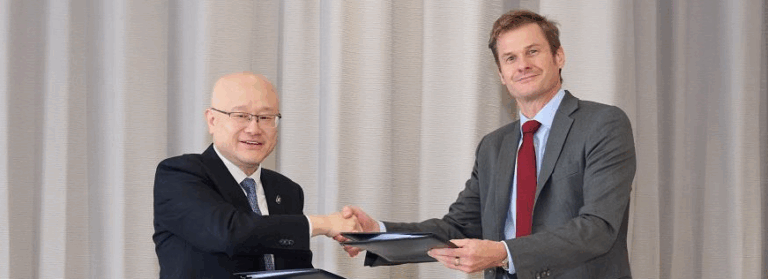
Frankfurt Airport operator Fraport AG and the Chinese state-owned Shanghai Pudong Airport have agreed on a strategic partnership in the cargo segment. According to the MoU signed by both sides in Shanghai, the existing cooperation between the partners in their respective airport communities is to be expanded, regulatory processes optimized, and market potential jointly developed.

Lyu Yaodong of Shanghai Airport Authority and Alexander Laukenmann, Fraport AG, signed the deal in Shanghai – courtesy: FRA/PVG

The MoU is a visible result of the roadshow organized by Fraport AG in Shanghai around a year ago. Since then, there has been a constant exchange of information concerning cargo issues between the two sides, with the current MoU as a partial result.

Global online trade is going through the roof as it does in Frankfurt, where around 5 million e-commerce shipments are currently handled every single month. Whether Shein, Temo, or Alibaba, most of the packages originate in China. The pulling together of the two airports in cargo matters, that has now been sealed, is intended to further optimize cross-border processing on the basis of common standards. Frankfurt operator Fraport adds to this that its partnership with Shanghai Pudong is part of the comprehensive CargoHub Frankfurt master plan which provides for new cargo buildings and warehouses in order to further strengthen FRA’s competitiveness within Europe in air freight matters.

In a joint statement, both airports emphasize that they see the opportunity for deeper cooperation to make international freight traffic between East Asia and Europe even more efficient and future-oriented. Joint projects include a coordinated rapid response and communication mechanism to accelerate customs and regulatory processes, as well as further joint roadshows to build a more connected freight ecosystem.

To better understand the scope of the agreed cooperation and to learn more about the next steps planned, we spoke with Alexander Laukenmann (AL), Senior Executive Vice President Aviation at Fraport AG:

Standardizing e-commerce flows

CFG: Frankfurt and Shanghai announced to expand their long-standing cooperation. What exactly did and does this ‘long-standing cooperation’ consist of? And how will the cooperation of the airport communities take shape in practical terms?

AL: Our collaboration is founded on the conviction that together we are stronger, also reflected in Frankfurt Airport’s guiding principle, “Creating the Future of Cargo. Together.” In addition, both airports have agreed to organize regular expert exchanges, including site visits, management internships, and working groups focused on optimizing cargo flight frequencies and slot allocation. There will be coordinated efforts to engage with customs authorities, aimed at accelerating regulatory processes and ensuring seamless cargo operations.

Further to this, joint roadshows and industry events will be held in both Frankfurt and Shanghai, creating platforms for airlines, freight forwarders, cargo owners, and related industries to develop new market opportunities and establish shared standards. These initiatives will be complemented by collaborative projects in innovation and digitalization, such as the development of digital cargo community systems and standardized processes for e-commerce shipments.

CFG: In your press release you indicate plans to set up a coordinated rapid response and communication mechanism to accelerate customs and regulatory processes within a better-connected cargo ecosystem. Where exactly do cargo clients benefit from this intent?

AL:  A more connected cargo ecosystem means creating an environment where all relevant stakeholders – airlines, freight forwarders, cargo handlers, regulatory agencies, and technology partners – work together in an integrated way. Specifically, we plan to establish a rapid response mechanism between Frankfurt and Shanghai for direct communication and problem-solving. This will lead to faster, more predictable clearance processes for cargo shipments.

Joint roadshows and industry events will foster stronger relationships and shared standards, encouraging innovation and the adoption of digital solutions for tracking, documentation, and data exchange. For cargo clients, this translates into reduced lead times, greater transparency, improved reliability, and enhanced product safety – key advantages for time-sensitive and high-value sectors such as e-commerce, pharmaceuticals, and industrial goods. By leveraging digitalization and close cooperation, we’re improving delivery times, digital traceability, and compliant processing, ensuring our customers benefit from efficient and secure cargo flows.

CFG: The MoU marks the start of further international cooperation in strategically important markets.  Which are the important cargo markets and which airports are suitable for cooperation in the cargo sector from Fraport’s point of view?

AL: Currently, China is one of Fraport’s top-priority strategic markets, as outlined in our Cargo Masterplan, with Shanghai Pudong International Airport identified as offering a great potential for developing new trade lanes and increasing air cargo traffic between Europe and Asia. Looking ahead, India is another focus market, given its rapid growth in cargo volumes and evolving logistics infrastructure. We have already organized roadshows in India, bringing together stakeholders to discuss future opportunities and strengthen our partnerships in the region. While we do not comment on specific future partnerships at this stage, our strategic goal is to strengthen collaboration with airports in markets that play a pivotal role in global supply chains and offer the best prospects for mutual development.

CFG: Presumably, a financial cross-shareholding between the airports of Frankfurt and Shanghai Pudong is not an issue – is it?

AL: This is correct. Financial cross-shareholding is not part of this agreement. The partnership is built on mutual benefit, knowledge exchange, and joint initiatives to enhance operational efficiency and service quality. Each party remains fully independent and bears its own costs while cooperating within the agreed framework.

CFG: Alexander, thank you for these explanations.

Spotlight on… Saskia Hoensch, General Manager, W. Niemann Überseetransporte

0

Each week, CargoForwarder Global’s ‘Spotlight On…’ brings a different individual to the fore to showcase their role in the air cargo industry. There are so many different actors involved in safely getting shipments from A to B by air. Freight forwarders play a key role, acting as expert intermediaries between shippers and airlines (and other modes of transport) to ensure the efficient, cost-effective, and compliant movement of goods across the world. One such company is W. Niemann Überseetransporte, particularly specialized in dangerous goods and temperature-sensitive shipments, which will be celebrating its centenary next year. This week, its General Manager, Saskia Hoensch, shares her experiences, thoughts and insights.

What started as a leap of passion turned into a purpose. Image: Saskia Hoensch

CFG: What is your current function and company? And what are your responsibilities?

SH: I am currently managing Imports and the execution of the future at W. Niemann Überseetransporte, a Hamburg-based freight forwarding company with a long-standing family tradition. I am responsible for driving our digital transformation, building smart strategic alliances, and ensuring sustainable growth across our operations. My focus and passion are on connecting innovation with tradition – I love to find unused potential and see how we can constantly become greater.

CFG: What does a normal day look like for you?

SH: Whether I’m deep-diving into customer strategy, optimizing import workflows, or working on a new partnership, each day brings fresh opportunities to learn and grow.

I integrate daily sport sessions into my routine, which helps me to clear my mind and build space for new ideas.

CFG: How long have you been in the air cargo industry, and what brought you to it?

SH: I entered the industry by joining my grandfather’s company, initially without pay, simply to learn and contribute. What started as a leap of passion turned into a purpose: I saw the huge potential for transformation in our industry and knew I wanted to be part of shaping that. The combination of global dynamics, people-driven relationships, and operational excellence deeply resonates with me.

CFG: What do you enjoy most about your job?

SH: I enjoy building bridges – between generations, between tradition and digital innovation, and between people and their goals. I’ve found a passion in connecting to likeminded people – whether in business, travel or sport – it’s incredible how you can feel connected to someone even though you have completely different lives. I love that my work allows me to evolve constantly, both as a businesswoman and as a human being.

CFG: Where do you see the greatest challenges in our industry?

SH: The biggest challenge – and opportunity – is Collaboration. In a globalized and fast-moving environment, success will come to those who think beyond silos. Unlike other industries, where 80–90% of the market is owned by a handful of big players, two-thirds of the logistics sector is made up of SMEs. This creates diversity – but it also shows how essential strong, intelligent partnerships are to creating impact at scale. That’s why collaboration isn’t just a ‘nice to have’ – it’s a strategic necessity. We need smarter, faster, and more collaborative ways of working to prepare the company for the future.

CFG: What advice would you give to people looking to get into the air cargo industry?

SH: Don’t wait until you feel ‘ready’ – get involved early, stay curious, and be proactive.

Be open to learning from experienced mentors and accept that it’s ok to not be perfect at something from the beginning.

Practical experience is the best teacher. The industry is incredibly diverse and dynamic – it needs both analytical minds and emotional intelligence.

And no matter what background you come from: bring your full self. Authenticity is a superpower.

CFG: If the air cargo industry were a film/book, what would its title be?

SH: Logistics Unleashed – Full Speed. No Limits.

Thank you, Saskia.

If you would like to share your personal air cargo story with our CargoForwarder Global readers, feel free to send your answers to the above questions to cargoforwarderglobal@kopfpilot.at We look forward to shining a spotlight on your job area, views, and experiences.

ASUR becomes leading airport operator in Latin America

0

The Mexican Grupo Aeroportuario del Sureste, S.A.B. (ASUR), has acquired concessions for managing 20 airports in Brazil, Ecuador and the Caribbean region, for EUR 808 million (USD 937 million). The licenses are being sold by Companhia de Participações em Concessões (“CPC”); a subsidiary of Brazilian infrastructure manager, Motiva Infraestrutura de Mobilidade S.A. (Motiva). This acquisition makes ASUR one of the largest airport network operators in Latin America and the Caribbean.

Almost simultaneously with this development, the Venezuelan government revoked the traffic rights of six international airlines amid growing tensions with the Trump administration. 

ASUR joins the top league of airport operators – image: courtesy ASUR

The deal between ASUR und Motiva represents a steppingstone in ASUR’s expansion strategy in Latin America, adding more than 45 million passengers to the Mexican company’s 71 million reported in 2024, and consolidating ASUR as the leading airport concessionaire between the Rio Grande in the north and Tierra del Fuego in the south of the American continent. Out of the 20 airports, 17 have more than 15 years remaining in their concession life.

The deal includes some major airports
Most of these are regional airports, but Quito in Ecuador, San Juan in Puerto Rico, San José in Costa Rica, and Belo Horizonte in Brazil, are destinations for international scheduled and charter flights, and play an important role not only in passenger transport, but also in freight matters such as flower shipments from Ecuador to Europe.

ASUR expects to fund the transaction with cash in hand and committed debt financing provided by JPMorgan Chase Bank. J.P. Morgan Securities LLC serves as exclusive financial advisor. Brown Lawyers, BMA Advogados, CorralRosales, Deloitte, De Cuba Ormel and Noordhuizen are the legal advisors to ASUR.

Motiva streamlines its portfolio
Seller of the concessions, Motiva Infraestrutura de Mobilidade S.A. (Motiva), is the largest mobility infrastructure company in Brazil, operating in the Toll Road, Railways, and Airport segments. Its railway platform, which manages subways, trains, and VLT, transports 750 million passengers per year. In airports, with 17 units in Brazil and three abroad, it serves roughly 45 million customers annually.

In addition to this commercial decision in the Latin American aviation sector, a political measure also made headlines in the middle of last week: the Venezuelan government’s withdrawal of traffic rights for six airlines: Iberia, TAP Portugal, Gol, Latam Colombia, Avianca, and Turkish Airlines.

Airlines ignore Maduro’s threats
Caracas, in a statement, said the carriers had “joined actions of state terrorism promoted by the United States” by “unilaterally” halting commercial flights. In doing so, they reacted to FAA warnings of a “potentially hazardous situation” when using Venezuelan airspace or landing at one of its airports due to a “worsening security situation and heightened military activity in or around” the country.

In response to this warning, several international airlines stopped flying to the country in recent days, ignoring country ruler, Maduro’s threat that they would permanently lose their traffic rights if they did not immediately resume flights to Venezuela.

Iberia said it wished to restart operations to Venezuela as soon as full safety conditions were met. Avianca announced its intention to reschedule canceled flights to Caracas for 05DEC25.

Portuguese Foreign Affairs Minister, Paulo Rangel called Venezuela’s decision to revoke the airlines’ operating rights “totally disproportionate”. He said the European nation – headquarters of carrier TAP – had tried, through its embassy in Caracas, to persuade Venezuelan authorities to reinstate operating rights.

Air Europa and Plus Ultra had suspended flights but did not have their permits revoked.

GGG: 30 years of People, Passion and Purpose

0

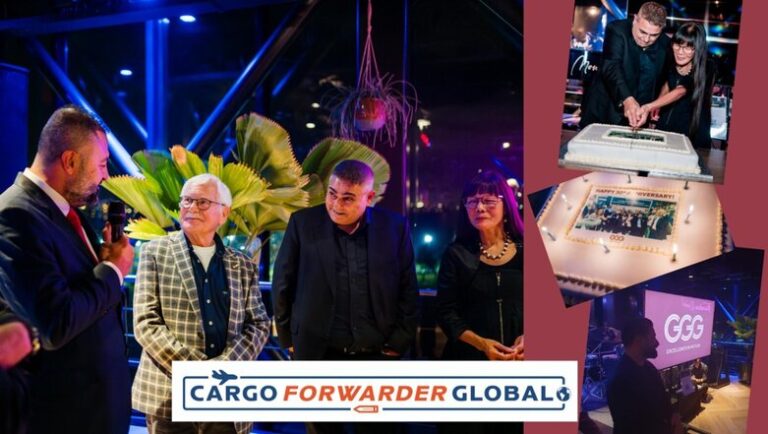
Global GSA Group (GGG) went completely local on the evening of 20NOV25, as representatives from its 47 countries around the world, descended upon Amsterdam to celebrate a unique milestone: 30 years of success, growth and – listening to its 85-year-old founder’s heartfelt speech – defying the odds. At the time of its launch in 1995, the rest of the Schiphol Airport community had been very skeptical of what it considered an unusually diverse little team. Yet, what began as a grass roots project, has flourished into an international network where people not only come to work, but also to stay. GGG is the exemplary proof that Cargo is truly a People Business.

From left: Aytekin Saray, Jos Busscher, Ismail Durmaz, Kitty Liao – Zafer Aggunduz – Images: Charles Poorter/GGG/CFG

The atmosphere was buzzing, food and drink plentiful, and the many guests – among them Global GSA Group employees, long-standing customers, and Aerion representatives, including ECS Group and CargoTech members – were engaged in animated discussions all around the Mondi Skybar on the 9th floor of the Corendon Hotel near the airport (an unmissable fact, given the brightly decorated Boeing 747 parked up around the back of the hotel). For some, it was actually the first time they were meeting people they otherwise knew from emails and phone calls. In fact, it was the first time in the company’s history that everyone had come together to celebrate an anniversary. A point that Zafer Aggunduz, Global GSA Group’s Chief Commercial Officer, urged to change, in his address that evening: “It took 30 years to throw a party like this – don’t wait another 30 years!

The right people at the right time
What does this 30th anniversary evening mean to you?” I asked Ismail Durmaz, Chairman, Global GSA Group. “We survived!” he laughs. “I have delivered a healthy company to Aytekin [Saray] as our new CEO. It has been a happy adventure and a success. We brought Global GSA Group to a certain level and have become part of a bigger organization [Aerion]. All the people on this journey are still here, still part of it and have a future in this company,” he emphasizes. And those people have built the company – beginning with company founder, Jos Busscher, who, aged 85, drove 200 km to Amsterdam to participate in the celebrations. “My first boss, my mentor, and my other father,” Ismail explains. Jos tells me “I saw the potential he had – everyone, men and women, enjoyed working with him.” A fact that Ismail consciously nurtured to everyone’s advantage over the years: “When I look back, I really started from zero. I didn’t have an air freight industry education.”

Ismail began working in a warehouse, back in 1988, building pallets, offloading trucks, delivering documents. “During that time, I was very social,” he said, talking about a network of friends he built up, who did similar jobs for different companies. As his career grew, so did those of his friends and they supported him as the GSA took shape. “I put a lot of energy and friendship in people around me, who helped me,” he continued, emphasizing social skills and the importance of relationships. “You always need to not only look up to people but also care about those below you in the hierarchy, because those people will become the managers of the future.”

Jos Busscher’s initially “crazy idea” in 1995, of “putting a Turkish boy [Ismail Durmaz] and a Chinese girl [Kitty Liao]” in a small team with a GSA vision, very quickly bore fruit. Within the year, Turkish Airlines – now a leading carrier – and key Chinese carriers were on Global GSA Group’s customer portfolio: one that today numbers 62 airlines.

Secrets of success?
What advice would you give to other GSAs or air cargo businesses striving for similar growth and resilience?” I asked Ismail. “If you are number 15 today, and you do the same as everyone else, you will always remain number 15. To become number 1, you need to think differently, find new growth areas and innovation. If you follow, you will always be behind. You have to find a shortcut!” he underlines.

And, if your budget was limited to investments in just one area, which of the following would it be and why? Sustainability, Digitalization, Network expansion, People?” I wanted to know. “Always People!” he immediately responds “because all the other points require people. The right people to fix, bring, develop or explain. I put a lot of energy into social skills. The people who are here tonight – most of them are with me from the beginning. That has everything to do with the social value that we have and we invest in. I give as a human, pay attention and am there when needed.”

And they give back. During the evening event, every staff member came up to Kitty and Ismail and presented them each with a flower by way of a Thank You for their three decades of dedication to Global GSA Group. Talking to individuals during the evening, many have been with the company for more than 15 years. “We really are like a family!” I am told on more than one occasion. Another tells of Ismail’s easy-going attitude to empowering his team to try out new ideas: “If it works, great! If it doesn’t, we at least tried,” she says.

A fresh start and modern outlook
Pride, joy, and love” are the three words Aytekin Saray, CEO of Global GSA Group since MAY25, replies to my question of what the evening’s event means to him. “I am proud to be part of this company for 28 years,” he expands. “We built a network from scratch, with just 3-4 people. And now we have almost worldwide coverage, and I have written something on every page of our story.” He lauds the great, experienced team that he has spent much of the past half year visiting at their locations, in his new function. “It has been a rollercoaster, but a lot of fun,” he admits, talking about the busy travel schedule. “Now, I am steering the company, and I want a fresh start. I want to do things differently, more modern, expanding the network further for true worldwide coverage.”

Among his plans are combining the company’s human touch with today’s digital opportunities. He mentions working with the sister company, CargoTech, to find ways of making life easier with digital tools and customized solutions, likely also using the potential that AI has to offer when it comes to email management or claims handling, for example. Network expansion areas of interest are the Indian Subcontinent, the Far East, and South America, where Global GSA Group may double or even triple the number of countries in each case.

Sustainability remains a priority in all its facets, he says, illustrating the many ways in which Global GSA Group acts sustainably – from paperless working to EVs, better lighting, ensuring suppliers have similar values, various forms of green energy, and charity work. The latter is demonstrated that same evening at the event. Zafer Aggunduz mentions the 1990s photobooth (a great success – where people could dress up as gangsta rappers, complete with bucket hats, glasses and gold chains), and a wandering polaroid camera, and states: “For every picture pinned onto the canvas [positioned in the room], €20 will be donated to the Rainbow Foundation [https://stichting-rainbow.com/]” – one of a number of charitable causes created by Jos Busscher, which supports underprivileged children in third world countries.

A new logo in a new color
The 30th anniversary event is also used as a backdrop to unveil Global GSA Group’s new logo and corporate identity. Zafer Aggunduz introduces the topic with a corporate video that starts with 1995 and speaks of ‘one vision, one team, one legacy’, highlighting Global GSA Group’s attributes: trusted expertise, global reach, proven performance , the strength of its people. With the words: ‘the world changed, so did we’, the formerly blue corporate color changes to a deep Bordeaux red, as the video then talks of ‘adapting, innovating, delivering’, illustrating the necessary changes to remain ahead in today’s air cargo industry: digitalization, high value partners, and people who grow and make the difference. The video ends with the new logo impressively unfurling across the large screen: three solid, interlinked letter Gs, in red and white. ‘New symbol, same strength,’ is the video message, and a motto accompanies the image: ‘Excellence in motion’.

GGG – three letters, all linked,” Zafer Aggunduz explains. “Every G symbolizes something – our team, our partners, our services – all seamlessly connected. Bordeaux symbolizes the loyalty of 30 years’ heritage, the trust in our industry, and the quality of our service. Our new slogan: ‘excellence in motion’, gives two messages: 1) the quality of the service we provide and 2) that we are not stopping there. We are committed to developing our services further, and then there is the energy of our staff – in action, every day.”

Congratulations, Global GSA Group!
Adrien Thominet, Chairman, AERION, summarizes the significance of the 30-year milestone: “30 years in this industry is not a given. Congratulations on what you have done. And you are unique. When we invested in this group, we really discovered people values,” he says in his evening address. Global GSA Group stands out, he tells me. It is dedicated to each of its customers on an emotional level. “Ismail’s own personality represents these values,” he says, “and Aytekin is maintaining them. Performance and excellence in motion.”

CEVA Logistics and Lufthansa Cargo sign SAF treaty

0

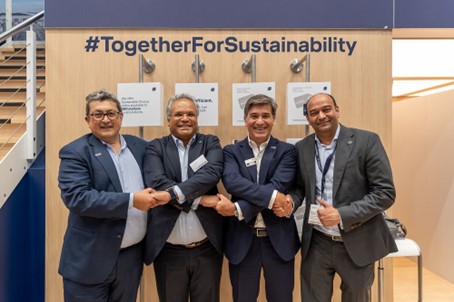
The Memorandum of Understanding signed by the German freight carrier and Switzerland-based Ceva Logistics on 07AUG25, has now been converted into a binding agreement. Under this long-term framework which runs until 2028, the use of SAF aviation fuel is expected to save 8,000 tons of greenhouse gas emissions by the end of this year – compared to burning traditional Jet A-1 kerosene to transport goods by air.

From left: Jérôme Petit, Global Air & Ocean Leader at CEVA Logistics, Ashwin Bhat, CEO at Lufthansa Cargo, Loïc Gay, Global Air & Ocean Products Leader at CEVA Logistics, Anand Kulkarni, Head of Global Markets at Lufthansa Cargo – courtesy: LHC

The SAF agreement is an expression of a cooperation between both partners that has grown over many years and is based on trust, openness, continuous exchange, and mutual learning, stresses a release issued last Wednesday (26NOV25). It is “a significant step in our partnership with Lufthansa Cargo and enables us to measurably reduce our CO₂ emissions and make our supply chains more sustainable. It is particularly important to us to do this with a partner who is committed to maximum transparency, clear sustainability standards, and reliable certifications,” explainsLoic Gay, Global Air & Ocean Products VP at CEVA Logistics.

Palm oil-free biofuel
In their joint release, both companies emphasize that the SAF used comes exclusively from waste and residual materials. It is palm oil-free and meets the highest international standards. The emission reductions are transparently confirmed to CEVA Logistics via audited ‘Emission Mitigation Certificates’ and are based on an audited ‘Proof of Sustainability’ (PoS) at Lufthansa Cargo. A PoS is an official document that verifies the sustainability credentials of biofuels, ensuring that they are produced, sourced, and delivered in line with strict environmental and regulatory standards. The agreement sends a clear signal for verifiable CO₂ reduction and strengthens CEVA’s and Lufthansa Cargo’s long-term cooperation in the field of climate friendly logistics solutions. Lufthansa Cargo speaker Jan Paulin told CargoForwarder Global that the CEVA-LHC deal paves the way for additional SAF quantities which are not specified yet. In addition to LH Cargo’s own freighter flights, the agreement includes flights by the entire group, like passenger services by Austrian Airlines or Brussels Airlines that transport cargo consignment in the lower decks of their jetliners. Previously, LHC had already signed a memorandum of understanding with the Chinese online fashion and lifestyle retailer, SHEIN on 19AUG25, to promote the transition to renewable and lower-carbon energy sources for air transport operations.

Together is better than alone
This is confirmed by Lufthansa Cargo that lauds the close and constructive collaboration with CEVA Logistics, which has proven particularly valuable in strategic future-oriented topics such as sustainability, reads a release published by the carrier, following the signing of the agreement. Both companies are committed to open exchange and to promoting solutions that have a real impact on fossil gas reductions in the air transport sector. “CEVA Logistics’ decision to make extensive use of SAF demonstrates its clear commitment to making an effective contribution to the decarbonization of air freight. Climate protection requires strong partnerships and decisive action. This agreement creates a solid foundation for achieving further progress together,” comments Anand Kulkarni, Head of Global Markets at Lufthansa Cargo.

The SAF agreement is the latest element of a broader sustainability partnership between CEVA Logistics and Lufthansa Cargo. Other areas of cooperation include joint innovation and research initiatives, knowledge sharing and circular economy solutions.  

A350F is on track

Even before the European frame maker launched the A350F program, Crawford Hamilton, Head of Freighter Market at Airbus, emphasized in an interview with CargoForwarder Global, that his company had plans to achieve at least a solid 50% market share in the category of cargo aircraft with a payload of over 80 tons. This was a bold announcement for the manufacturer, for whom freighters had previously played only a minor role and whose archrival, Boeing, had been flying high for decades with its B747F and B777F variants. But now the tide is turning, as the latest orders show.

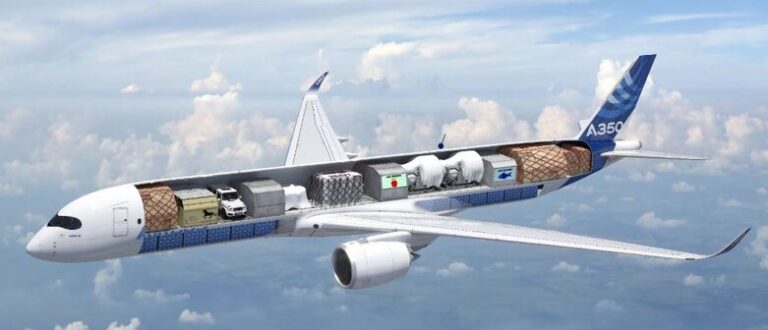
The “one (freighter)-fits-all” cargo solutions – courtesy: Airbus

There are now 82 firm orders for the Airbus A350 freighter, from 15 different airlines or leasing companies. “This already represents a global share of 58% in this market segment,” the manager summarized in a team call with trade journalists on Tuesday, 25NOV25. In comparison, the competing model from Seattle, the B777-8F, has so far only received 59 firm orders from 6 customers, Hamilton remarked.

For the times ahead, the executive sees further high sales potential due to the remarkable diversity of previous buyers. Traditional cargo carriers such as Korean Air, Cathay Cargo, and Air France-KLM Cargo have ordered the freighter, as have newcomers such as CMA CGM Cargo and Taiwanese Starlux Airlines, which was founded in 2018.

A small step from A350 to A350F
In addition to the growing market demand for air lift, the commonality of the A350F is a particularly strong argument for further orders. Many airlines already have passenger versions of the A350 in their fleets, which is why adding the large freighter makes sense for some of them. Neither he nor the other three Airbus experts participating in the Teams call, named any potential customers, but Hamilton hinted that Ethiopian Airlines could be a possible candidate, becoming the first African operator. He also sees great potential in India, as demonstrated by the recent large orders for passenger aircraft placed by local carriers, spurring sales figures at Boeing and Airbus.

Similar freighter demand predictions
In terms of global freighter demand, the figures presented by Boeing some weeks ago, are very similar to those now tabled by Crawford Hamilton. Airbus anticipates global demand for around 2,600 additional freighters by 2044, of which 935 will be newbuilds (Boeing: 955) and 1,670 (conversions (Boeing 1945). Of these, 1,120 units belong to the small category (10t – 40t), 855 to the mid-size widebodies (40t-80t) and 630 to the larger category of widebodies (>80t).

The A350F offers users a payload of around 110 tons per flight. The temperature on its main deck can be set to a range of 4-26 degrees Celsius, depending on the type of products flown. Cockpit crews also benefit from innovation. They will be supplied with segregated fresh air so that they are not exposed to any odors from animals or products loaded on the main deck of the aircraft.

The A350F could set new standards
In terms of market demand, the freighter could set new standards on transpacific routes between East Asia and North America, where freight volumes are expected to grow by an average of 3.2% annually until 2044, say Airbus’ market observers. Flows between the APAC, CIS and Europe will see a plus of 2.6% while APAC > < Africa increases 4.4% but based on a much lower level. Africa < > Europe/CIS is expected to grow 3.5%, followed by +3.4% on routes connecting APAC and Latin America.

However, these figures could prove worthless if political or new military conflicts break out in the next 20 years and disrupt global trade and supply chains.

AirMaster masters strawberry capacity squeeze

0

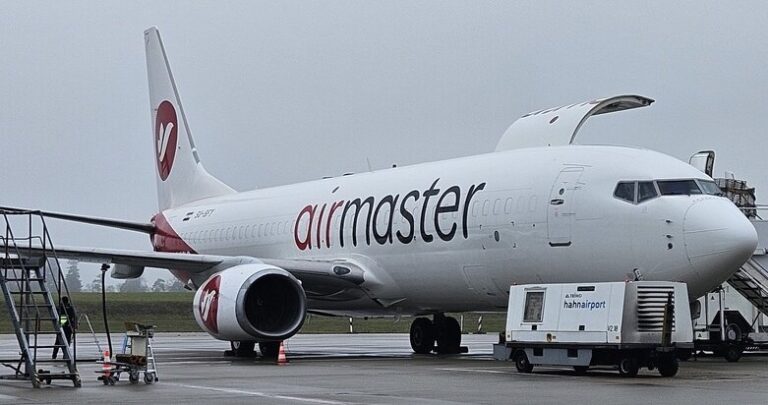
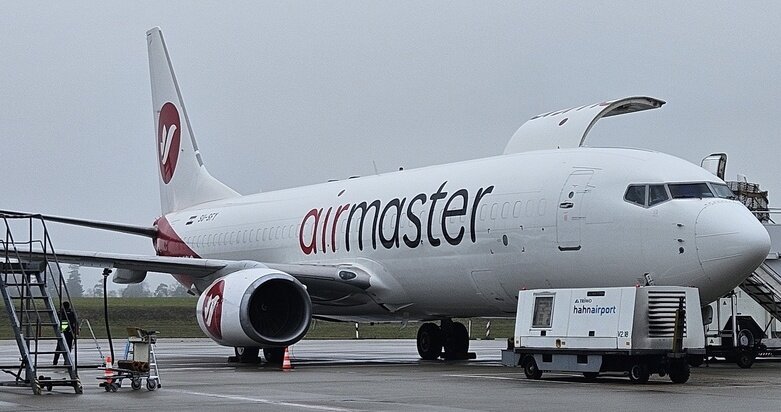
The Egyptian charter company, AirMaster (IATA: MR), began flying perishables from Cairo to Hahn Airport, last week. It operates two B737-800BCFs, which can uplift 22 tons per flight. Most shipments are addressed to DHL Food Logistics and the Belgian Tulpin Group. While DHL supplies German wholesalers such as the Rewe and Edeka supermarket chains, the Tulpin Group’s trucks travel from Hahn across the Channel to the UK, to supply local wholesalers. In addition, Egyptair Cargo’s A330F land twice a week at Hahn or Ostende airport, supporting AirMaster’s strawberry shuttles. According to Tulpin CEO, Alain Tulpin, this year the strawberry season in Egypt started around two weeks earlier compared to last year. In addition, crops are already looking more promising than in 2024.

Hahn Airport has welcomed newcomer, AirMaster. Image: Knud Vieth / Lotfi Zekkour – HHN

That has spurred the demand for main deck capacity to transport the perishables from the fields to the consumer markets in Central and Western Europe. While in the past, Egyptair utilized its own freighter fleet to transport the goods, this season the carrier can only use a limited number of freighter aircraft to complete the task, as part of its fleet is contractually bound to fly e-commerce shipments from China to Europe. The early strawberry season came as real surprise to retailers and air carriers, explains Alain Tulpin. However, from DEC25 onwards, Egyptair will provide more main deck capacity again.

Due to the challenging situation, the carrier has decided to charter freighters from newcomer AirMaster. According to Lotfi Zekkour, COO of handling agent, Hahn Cargo, the MR shuttles will continue until Christmas, serving HHN at least once, mostly twice a day.

The contact between both sides was established during a telephone call. Cairo’s Egyptair Cargo HQ contacted him and asked whether ground handling agent Hahn Cargo could manage the perishables business without any hiccups. “Since I was born in North Africa and therefore speak Arabic, there was a linguistic and cultural tie between us right from the first phone call,” he recalls, which obviously helped to establish the strawberry chain. Following further calls, landing at another airport in Germany or the Benelux countries was off the table for the AirMaster management, Lotfi told CargoForwarder Global. “This is also because our handling speed is extremely high. Even on very cold days, there is no risk of frost damage, which guarantees product integrity. We also achieve high throughput speeds because the local plant protection agents provide us with tremendous support.”

Around 60% of the shipments unloaded at HHN remain in Germany, while the Tulpin Group transports a substantial portion to the UK via the Channel Tunnel. This is rounded up by a smaller number of strawberry shipments that are brought from Hahn Airport to France by French forwarding agent, Sotracom.

Swissport adds 5,500 m² of e-commerce imports space at LGG

0

Swissport is almost doubling the warehousing space it dedicates to e-commerce import handling at Belgium’s Liège Airport (LGG), with the addition of a 5,500 m², second-line warehouse. Both Swissport and the airport, which is among Europe’s fastest-growing cargo hubs, are well equipped to handle the increasing numbers of incoming e-commerce parcels. The warehouse has been designed specifically for parcel processing at volume, enabling fast-turnaround operations, sustainable cross-border e-commerce logistics (paperless processes and otherwise full recycling of cardboard, wood and plastics) and “fully integrated import handling, from cargo collection and airport-to-warehouse shuttling, through breakdown, scanning and sorting, to final loading for last-mile delivery”. The release states that it has a throughput capacity of up to 300 tons per day, and that, with it, Swissport’s total e-commerce footprint in Liège grows to 9,000 m². “Swissport’s Liège operation integrates customers’ Warehouse Management Systems (WMS) directly with its CargoSpot platform for real-time visibility, accuracy and data integrity. The site is fully bonded and optimized for cross-dock operations focused on safety, efficiency, and timeliness.”

Up to 300 tons of import e-commerce can be handled by Swissport at LGG. Image: Swissport

Wilfried Jans, Managing Director of Swissport Belgium, explained: “Our expanded footprint allows us to process higher volumes while maintaining the reliability and precision our customers expect. The setup gives us the flexibility to manage complex, piece-intensive flows with full digital integration and a highly skilled team.”

Dirk Goovaerts, CEO Continental Europe, Middle East, Africa, India & Global Cargo Chair, Swissport, said: “Liège has established itself as one of Europe’s most important cargo hubs, particularly for online retail. With this investment, we are enhancing our ability to deliver fast, data-driven, and sustainable logistics solutions for our airline and integrator partners. It’s another step in building scalable capacity where our customers need it most.”

Frédéric Brun, Head of Commercial Cargo & Logistics at Liège Airport, added: “We are delighted to see Swissport expanding its operations at Liège Airport, further reinforcing Liège’s position as a leading European hub for e-commerce and express logistics. Swissport is a key partner in our cargo ecosystem, and its continued investment here reflects both the confidence in Liège’s strategic role and our shared commitment to providing efficient, innovative, and sustainable logistics solutions for global customers.”

WebCargo welcomes Pattaya Airways to its platform

0

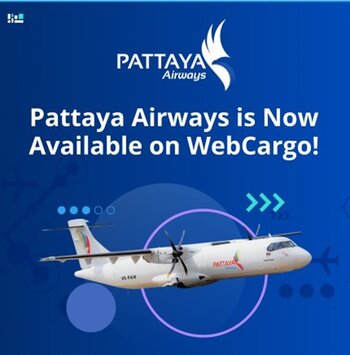
Pattaya Airways is a relatively new Thai cargo airline headquartered in Pakkret. It was founded as part of the Pattaya Group, a leading Thai aviation services company specializing in ground handling, cargo, passenger services, and aviation solutions across more than 20 airports in Thailand. In 2023, it received its air operator certificate from the Civil Aviation Authority of Thailand, and officially begin its air cargo operations in Asia on 21AUG24, focusing initially on routes between Bangkok and Yangon, later expanding to key ASEAN markets including Cambodia and Vietnam. The airline operates ATR 72-500 freighters. Its aim is to enhance regional cargo connectivity and efficiency across Southeast Asia.

New cargo kid on the WebCargo block. Image: WebCargo

That connectivity includes digital connections as indicated by its move to now join the WebCargo by Freightos’ platform, thus enabling freight forwarders to digitally access, book and pay for cargo capacity across its network. In the first step, bookings will be possible on flights between Bangkok to Ho Chi Minh City. Later, connections in Thailand, Myanmar, Cambodia, Vietnam, and Laos, will be added.

Zvi Schreiber, CEO of Freightos, commented: “Welcoming Pattaya Airways to our platform is another step toward making global trade smoother and more responsive. As Thailand strengthens its position in global trade networks, having instant digital access to regional freighters like Pattaya Airways, allows freight forwarders to build more responsive supply chains for their customers.”

Nat Boonyavichkanont, CEO of Pattaya Airways Company Ltd, stated: “For us, this isn’t just about going digital – it’s about keeping up with how freight really moves today. Pattaya Airways is proud to collaborate with WebCargo by Freightos to enhance digital air-cargo accessibility across Southeast Asia. This partnership reinforces our commitment to delivering faster booking capabilities, greater transparency, and seamless regional connectivity for our customers. Forwarders, today, want to compare routes, book in minutes, pay for cargo, and keep their customers happy. Expanding our access on WebCargo by Freightos, lets us meet them where they already work – and that’s good for everyone: from small local shippers to big regional players.”

DP World’s Searates ERP partners with CargoAi

0

Searates ERP, part of DP World’s digital logistics ecosystem, has partnered with CargoAi to integrate CargoAi’s CargoCONNECT APIs and bring digital airfreight services to its users. This collaboration equips the more than 300 forwarders using Searates ERP, with real-time tracking on over 230 airlines, instant quoting and booking confirmations from over 105 airlines covering in excess of 680 schedules and 2.5 million dynamic rates, plus automated FHL/FWB message management ensuring eAWB compliance with more than 120 airlines. The integration streamlines air cargo workflows, boosts shipment visibility, and facilitates quicker, more accurate bookings and document handling. The partnership supports Searates’ mission to provide end-to-end, tech-enabled logistics solutions that enhance transparency, agility, and value across transportation modes. The decision to proceed was taken following the successful completion of a pilot with Al Eid International and LLK Customer, who gave positive feedback regarding productivity and user experience.

CargoAi’s CargoCONNECT brings airline capacity to Searates ERP users. Image: CargoAi

With this integration, Searates ERP reinforces its commitment to a digital and transparent supply chain, while optimizing its customers’ experience thanks to CargoAi’s innovative solutions. This partnership illustrates the determination of both companies to support the digital transformation of the airfreight sector,” the release states.

Matt Petot, CEO of CargoAi, commented: “The integration of CargoCONNECT with Searates ERP System represents a major step forward in the digitalization of airfreight. Our solutions will optimize operational processes and bring tangible added value to freight forwarders worldwide.”