Etihad Cargo has launched ‘SmartTrack’, a premium real-time shipment visibility service designed to offer customers unmatched transparency, control, and reliability across the supply chain. First introduced at Air Cargo Europe 2025 and now globally available via the Etihad Cargo website, SmartTrack makes Etihad Cargo the first air cargo carrier to deliver such an advanced smart tracking solution to market. The service uses GPS, Wi-Fi, and cellular connectivity combined with advanced sensor technology to provide live monitoring of shipment conditions, including temperature, humidity, shock, tilt, and light exposure. Customers benefit from instant alerts, allowing proactive risk management and greater shipment security. To support this, a dedicated 24/7 SmartTrack Control Centre has been established, ensuring continuous monitoring, alert prioritization by severity, and the ability to intervene in real time to mitigate issues.
Etihad launches its SmartTrack visibility solution
In addition, the newly developed customer dashboard offers a single, intuitive interface accessible on both web and mobile. This dashboard enables real-time shipment tracking by AWB, origin, or product type, provides live sensor data and SLA notifications, and gives full custody chain visibility along with instant alerts for milestone delays or geofence breaches. Developed in partnership with Tag-N-Trac, SmartTrack integrates booking data with sensor insights to create a seamless customer experience. The launch underscores Etihad Cargo’s wider digital transformation strategy, which emphasizes innovation, operational excellence, and customer-centric service delivery, reinforcing its leadership in global air cargo digitalization.
Stanislas Brun, Chief Cargo Officer at Etihad Airways, declared: “SmartTrack marks a major step forward in the way we support our customers. By integrating simplicity, intelligence and automation, we are providing greater confidence and control over shipments while setting a new benchmark for transparency in the industry. This innovation reflects Etihad Cargo’s broader vision: to harness digital transformation in order to deliver smarter, more resilient, and more customer-centric logistics solutions.”
Swissport has appointed Ajay Barolia as Executive Vice President Cargo for North America, where he will lead the company’s regional cargo operations and report to CEO Nelson Camacho. Barolia, who joined Swissport in June 2024 as Senior Vice President, has already made a strong impact, and his new role reflects the company’s commitment to strengthening leadership and enhancing service standards across the region.
Swissport appoints Ajay Barolia as Exec. VP Cargo North America. Image: Swissport
Barolia brings over 30 years of industry experience with him and is particularly respected for his expertise in global cargo operations, logistics optimization, and adherence to international standards. His background spans operational management, innovation-driven digital transformation, and raising benchmarks in quality, health, safety, and environmental performance. These skills are central to Swissport’s strategy of advancing next-generation cargo handling while prioritizing customer satisfaction.
Barolia will be supported commercially by Peter Weir, SVP Commercial Cargo North America, and a regional leadership team of four Vice Presidents covering East, West, Express, and Canada. Together, they oversee sales, operations, and QHSE functions, ensuring Swissport delivers customized solutions to diverse clients. His appointment underscores Swissport’s dedication to placing experienced leaders in key markets. Barolia’s focus will be on modernization, sustainable growth, and driving innovation while maintaining a safety-first culture.
Ajay Barolia revealed: “In the long term, I envision Swissport becoming synonymous with digital, green, and resilient cargo operations, leveraging technology and automation to deliver unmatched reliability for our airline customers and freight partners. I’m privileged to lead Swissport Cargo and work alongside a world-class team driven by professionalism, innovation, and a shared dedication to sustainable growth. Our priority over the next 12 months will be to expand our footprint through joint ventures and strategic acquisitions, while investing in CAPEX to modernize and automate our key gateways.”
The U.S. Department of Transport has ordered Delta Air Linesto null its joint venture accord with Aeromexico come 01JAN2026. The decision ends a 20-months lasting quarrel between the two carriers and the U.S. government which significantly aggravated since Trump’s inauguration last February. As consequence of the DOT’s decision, multiple routes between Mexico City and the U.S. might be cancelled, affecting passenger flights and cargo transports negatively.
DOT drives a wedge into the partnership of DL / AM – CFG archive
Washington’s decision ends a dispute between Delta (DL) and Aeromexico (AM) on the one hand and the U.S. government on the other, which began in early 2024 under the former Biden administration. The dissent was triggered by the opening of the new Felipe Angeles Airport (AIFA), located 35 km north of Mexico City. Once operational, the Mexican aviation authority gradually reduced the number of slots at the centrally located Aeropuerto International Ciudad de Mexico (AICM). The aim was to shift traffic to the new airport, primarily cargo flights, but also passenger traffic.
DOT speaks of one-sided advantages The slot cuts at AICM affected all airlines, including Mexican carriers, but it keeps benefitting Aeromexico’s cargo business disproportionally since Aeromexico is the only network carrier that was allowed to remain at AICM. All the others were forced by the country’s aviation authority to move their operations to the newly built AIFA. This fuels the U.S. view that, behind an appearance of fairness, lies an anti-competitive strategy. In a statement released on 25SEP25, the DOT argues that the DL-AM JV created an unfair advantage for both airlines over their competitors, distorting the U.S.-Mexico air traffic market, particularly in the capital region of Mexico City. This advantage stemmed from factors including the airlines’ coordination on pricing and capacity, as well as allegedly unfair slot allocations at AICM. DOT reasoned that this situation distorted competition and caused harm to consumers.
Poorly communicated decision In a conference call, Willie Walsh, Director General of the International Air Transport Association (IATA), expressed some understanding about Washington’s decision. “The industry was angry with the measures that were taken by the Mexican government in relation to the forced transfer of flights,” the IATA official exclaimed. “It doesn’t surprise me that the U.S. administration would take these measures to try and encourage the Mexican government to reevaluate the decisions that they had taken.”
Walsh emphasized that the Mexico government’s decision to reallocate operations between airports was very poorly communicated at the time, and thus he considers the DOT’s action a “natural progression of geopolitical issues.”
Despite the termination of their JV, both carriers will still be able to collaborate on codeshare, marketing, and frequent flyer programs.
DL and AM fear adverse effects for their customers Approached by U.S. media, Delta management regretted the DOT decision and expressed its disappointment by the ruling. It would cause “significant harm to U.S. jobs, communities and consumers traveling between the U.S. and Mexico.” It is not clear yet whether the two airlines intend to file an appeal.
Since the signing of their JV eight years ago, the two carriers have constantly expanded their cross-border flying between the U.S. and Mexico.
According to data from aviation analytics firm Cirium, in 2025, Aeromexico’s total seats to and from the U.S. were set to be up nearly 33% compared with 2019 figures, while Delta grew its seats to Mexico by 17% during the same time span.
Delta owns 36.2% in Grupo Aeromexico and holds options to acquire an additional 12.8% stake in the Mexican Aviation Group.
Traffic figures and freight tonnage at Budapest Airport have been rising for years. In fiscal 2025, cargo handling is set to reach a new all-time high, with growth figures forecasted to exceed 30% compared to 2024. The reasons for this surge in the container, pallet, and, above all, parcel business – which is significantly above the global and European trend – will be a core topic at the upcoming BUD Cargo Day. High ranking officials of TIACA and IATA will attend the event.
The event will take place on 09OCT25, in the Airport Center of Budapest Ferihegy Airport’s historical Terminal 1. CargoForwarder Global will be present and will report on this, the eighth edition of the airport’s now established trade show.
Focus on Central and Eastern Europe The agenda is packed with exciting topics. The program includes challenges and opportunities of the air cargo market, particularly in Central and Eastern Europe. An interim assessment will be provided on cargo developments at BUD, along with an update on the results achieved so far by the Aviation Working Group of the Association of Hungarian Forwarders. Its members have announced that they will provide information on the contribution of their organization to foster collaboration and data exchange among stakeholders in the air cargo value chain – these include airlines, freight forwarders, customs authorities, and ground handlers. Collaboration helps enhance transparency, reduce delays, and improve overall operational efficiency, they claim. And, of course, e-commerce is listed high on the agenda, with a focus on innovation and the development of technologies in e-commerce as well as its underlying logistics processes.
Key event This will be followed by a panel discussion on e-commerce, and rounded off with the meanwhile traditional networking reception at the conference, in combination with the presentation of the cargo awards, which will conclude the day. Since its kick-off, BUD Cargo Day has established itself as a key event for the industry in Central and Eastern Europe and is gaining growing recognition beyond this geographical area. This makes it increasingly easier for the organizers to attract high-ranking experts from multiple countries and business sectors, to table the latest trends in cargo, participate in panels or deliver keynote messages.
Ambitious topics Attendees can expect a variety of valuable takeaways. For example: What operational consequences does BUD Cargo expect from new digital solutions such as IoT, AI, machine learning, robotic applications and big data analytics? In what way are they transforming BUD’s air cargo value chain and beyond? Where does the airport’s cargo division stand in this regard? In what way do customers benefit from these new industrial developments? It can be expected that experts will deliver answers to these questions and present concepts and visions. Needless to say, in addition to technical topics, there will also be plenty of opportunities for bilateral discussions and networking. After all, inspiring presentations and in-depth discussions are just one side of the coin. Admission to the event is free of charge, but subject to registration.
Each week, CargoForwarder Global turns its ‘Spotlight On…’ a specific segment of the air cargo industry and brings it to life through the voice of someone working there. Cargo is a people industry and whilst aircraft carry shipments from one part of the world to the other, conferences and industry-specific events are what bring people and their companies together. Networking leads to ideas, which lead to collaboration. Oftentimes the trigger for initiatives driving the industry forward are those connections made in person at an industry event. This week, one of the organizers behind air cargo and aviation conferences, Fowler Wang (FW), Founder of Summit Asia Events, illustrates his field and shares his views on the air cargo industry.
Conferences play a strong part in bringing industry stakeholders together. Image: Fowler Wang
CFG: What is your current function and company? And what are your responsibilities?
FW: As the founder of Summit Asia Events, my current function centers on event management and sales. Since establishing the company, I have guided its growth over the past 20 years, expanding our portfolio to four flagship conference brands: the Annual China Air Cargo Summit, the China Low-Cost Carrier Summit, the China Airport Passenger Experience Summit, and the China ATM Summit. My responsibilities include shaping the overall strategy and planning of each conference, while leveraging my specialized expertise and international network to foster innovation and bring global perspectives to the air cargo and broader civil aviation markets.
During the COVID era, when public events were put on hold, I pivoted to air capacity sourcing through charter brokerage. Leveraging a strong network of professional GSAs, I successfully managed over 1,000 cargo charter flights across three years, directly working with the owners of China’s largest freight forwarders and charter companies. This unique experience not only deepened my industry insights but also strengthened high-level partnerships that continue to support my role in bridging international aviation stakeholders with China’s market.
Summit Asia Events is a premier civil aviation intelligence provider and trusted organizer of high-level conferences and exhibitions in China. Since 2004, it has built a strong reputation for creating world-class platforms that connect Chinese airlines, airports, regulators, and global industry leaders. With deep industry ties and a dynamic team, Summit Asia Events delivers cutting-edge insights, fosters international collaboration, and drives innovation across the aviation ecosystems.
CFG: What does a normal day look like for you?
FW: I usually start my day early by reviewing my schedule and setting priorities. Much of my time is devoted to planning and preparing for our annual portfolio of conferences, such as the China Air Cargo Summit and the China Low-Cost Carriers Summit. This involves coordinating with local airport authorities, airline partners, forwarders, GSSA and so on, reaching out to international speakers, and working closely with my team on logistics, sponsorship, exhibition, and marketing details.
Throughout the day, I often have calls or meetings with stakeholders – airlines, airports, regulators, and solution providers – to ensure alignment and progress. I also spend time reviewing proposals, checking conference agendas, and monitoring deadlines. No two days are exactly the same; some are focused on strategic planning, while others are about troubleshooting and making sure every small detail is covered to deliver a seamless event experience. In short, my role requires a balance of foresight, coordination, and adaptability, which keeps every day both challenging and rewarding.
CFG: How long have you been in the air cargo industry, and what brought you to it?
FW: I first entered the air cargo industry in 2004. At that time, following China’s accession to the WTO, air cargo was emerging as a critical component of airlines’ business portfolios. My interest in the sector grew as competition from abroad intensified. International operators were bringing in advanced technologies, equipment, and management practices, often supported by staff acquisition and investment in training. In contrast, China’s air cargo industry was still facing challenges such as under-developed infrastructure, limited technology penetration, and a shortage of experienced management.
This contrast inspired me to see the value of creating a unique platform where local and international air cargo executives, consultants, technology providers, and solution partners could come together to share knowledge, exchange ideas, and explore sustainable development. That vision became the driving force behind my journey in the industry and continues to guide my work today.
CFG: What do you enjoy most about your job?
FW: What I enjoy most about my job is the opportunity to connect with people. Every conference allows me to network with executives, regulators, and solution providers from different countries and regions, and these exchanges of ideas are always inspiring. I particularly value the diversity of perspectives – hearing how others approach challenges and innovate in their markets helps broaden my own understanding.
At the same time, it is deeply rewarding to witness the industry evolve. Over the years, I’ve seen the global air cargo value chain become more integrated and complete, with stronger collaboration between airlines, airports, technology providers, and logistics players. Knowing that our conferences play a part in bringing these stakeholders together – and in facilitating meaningful dialogue that drives industry progress – gives me a strong sense of accomplishment and purpose.
CFG: Where do you see the greatest challenges in our industry?
FW: At present, the air cargo industry is navigating through a period marked by significant uncertainty and complexity. One of the foremost challenges lies in the constantly shifting policy environment, particularly trade regulations and tariff implementations, such as those recently impacting the US–China corridor. These unpredictable changes create volatility in global trade flows and make long-term planning increasingly difficult.
Beyond policy, the fragility of global supply chains continues to weigh heavily on the industry. Issues such as labor shortages, delays in the delivery of freighter aircraft, and capacity mismatches highlight the ongoing struggle to align supply with rapidly evolving demand. Furthermore, while digitalization and AI-based solutions hold great promise for transforming efficiency and visibility, the industry still faces a shortage of skilled professionals capable of integrating and scaling these technologies effectively.
In short, volatility – whether in policy, supply chain resilience, or technological adaptation – has become a defining challenge for the air cargo sector. Addressing these issues will require closer collaboration across governments, regulators, and industry stakeholders, alongside continued investment in innovation and workforce development.
CFG: What advice would you give to people looking to get into the air cargo industry?
FW: For those aspiring to enter the air cargo industry, my first piece of advice is to embrace curiosity and adaptability. Air cargo is a dynamic field where no two days are alike – policy shifts, supply chain disruptions, and technological breakthroughs can reshape the landscape overnight. Cultivating a mindset of continuous learning is just as important as formal training.
From a practical standpoint, I recommend building a foundation in logistics and supply chain management, while also keeping an eye on emerging fields like digitalization, data analytics, and sustainability. Certifications such as IATA’s cargo and logistics programs are valuable, but so are skills in AI, blockchain, and green logistics – areas that will define the future of our industry. Above all, people skills – communication, collaboration, and cultural intelligence – remain indispensable, because air cargo is truly a global business that thrives on relationships.
CFG: If the air cargo industry were a film/book, what would its title be?
FW: Wings of Change: The Unwritten Journey.
Thank you, Fowler!
If you would like to share your personal air cargo story with our CargoForwarder Global readers, feel free to send your answers to the above questions to cargoforwarderglobal@kopfpilot.at We look forward to shining a spotlight on your job area, views, and experiences.
Scrolling on LinkedIn this week, it was the post of a video originally attributed to @niccruzpatane/X, of a driverless truck, that made me stop – and feel uneasy, if I’m honest. Why? Because as you can see in the image, the developer and manufacturer, Jiushi (Suzhou) Intelligent Technology Co., Ltd, has done away with the driver’s cab altogether, and what looks more like the backend of a truck, is actually an abrupt, vertical front.
Front of an autonomous truck in China. Image taken from video shared by niccruzpatane/X
No hands on steering wheels involved, and no human safety back-up sitting in the vehicle… In the not-too-distant future, we could be seeing far more autonomous trucks on our roads. Particularly in China, where this is already on its way to becoming the norm.
A little research uncovered another video with one of these trucks dragging a toppled scooter along by a wheel in an accident the details of which are not known, but illustrative of teething problems robo trucks may still be having. How much safer a human driver distracted by their smartphone, fatigue, or over the alcohol limit may be, could be a point of discussion, here. Fact is: there is an ongoing and growing shortage of drivers in most countries across the world. (In Europe alone, according to The International Road Transport Union, that shortage will stand at around 745 000 truck drivers by 2028 – 17% of the total required workforce.) And fact is that, according to StartUs Insights’ Autonomous Vehicle Market Report 2025, there are currently 1,162 startups and more than 6,140 companies around the world, involved in the autonomous vehicle industry – an industry that is growing in double-figures. The Autonomous Truck segment is today valued at around USD 39.51 billion, and set to increase to USD 65.72 billion in 2030, Mordor Intelligence predicts. It also points out that while North America is the largest market (accounting for one-third of the global autonomous truck market), the fastest-growing one is Asia Pacific.
China going for driverless heavy-duty trucks China, too, has a truck driver shortage with around 16% of positions remaining unfilled (circa 2.9 million vacancies), and it has taken steps to mitigate that by increasing the upper age limit for large and medium truck license from 60 to 63 years, and letting drivers over 63 continue to work if they pass health assessments. However, it also has a much higher cost issue when it comes to logistics, as Rong Li, the CEO of Suzhou/Jiangsu-based Zhijia Technology (the first Chinese startup to obtain a license to conduct open-road tests for its driverless heavy-duty trucks in China), explained to China Daily, earlier this year: “Compared with developed countries, logistics costs make up a much higher proportion of China’s GDP. Road freight comprises the largest share of China’s logistics industry, and long-haul logistics makes up a trillion-yuan market in China.” China Daily reports that while logistics costs in developed countries account for less than 10% of their GDP, in China, the figure stands at 14.4%.
So, if three self-driving vans can be hired for the same amount as one driver’s salary (according to a BBC report on self-driving Rino.ai e-commerce delivery vehicles already in operation around China), it stands to reason that autonomous trucks are an attractive solution all round.
Reasons for robo trucks Other reasons for China’s drive towards autonomous trucks are safety and environmental goals (fewer emissions and fewer accidents caused by human error), efficiency and competitiveness (autonomous trucks optimize fuel usage, increase vehicle utilization, and enable 24/7 operation, enhancing supply chain efficiency and reducing freight costs),- and last but not least: the clear “Made in China 2025” push by the government, which seeks to make China more self-sufficient in all technology areas, for example. It has actively promoted autonomous vehicle testing and commercialization of domestic innovation in this field and fosters rapid market growth.
Robo trucks “Made in China” No wonder, then, that China has more than 40 companies actively developing and deploying autonomous trucks. Major players are Pony.ai (its autonomous freight network already serves core areas such as Beijing-Tianjin-Hebei, the Pearl River Delta, and the Yangtze River Delta), Zhijia Technology (concentrating on heavy-duty autonomous trucks – and first to receive testing license), Inceptio Technology (this time last year, it completed the largest global delivery of self-driving heavy-duty trucks: 400 vehicles were delivered to Chinese company, ZTO Express), Shanghai Automotive Industry Corporation’s UTOPILOT subsidiary (it recently made history, becoming the first in China approved to operate fully unmanned large cargo trucks), Baidu Apollo, and Jiushi Intelligent Technology, for example.
Meanwhile, as of mid-2025, China operates the largest population of autonomous trucks globally, with about 2,090 autonomous heavy-duty trucks in operation (out of an international 3,832) – up from 562 in 2024. The majority are used in mining, port logistics, and industrial settings. Autonomous trucking on highways and urban roads is rapidly expanding with companies conducting cross-provincial expressway tests and logging millions of autonomous kilometers annually.
Booming business According to Mobility Foresights, the autonomous truck market in China is valued at approximately USD 4.25 billion this year, and is projected to grow to USD 14.73 billion by 2031, with a compound annual growth rate (CAGR) of around 23.1%. (The broader autonomous vehicle market including trucks is even larger, with forecasts reaching USD 170 billion by 2033 in China alone.) The same report predicts that by 2031, autonomous trucks will be widely adopted across the country in long-haul freight corridors, port-to-warehouse routes, and high-volume logistics networks. While continued investment, innovation, clear regulations and public acceptance will influence the pace of deployment, China is set to become a – if not the – global leader in autonomous freight transportation.
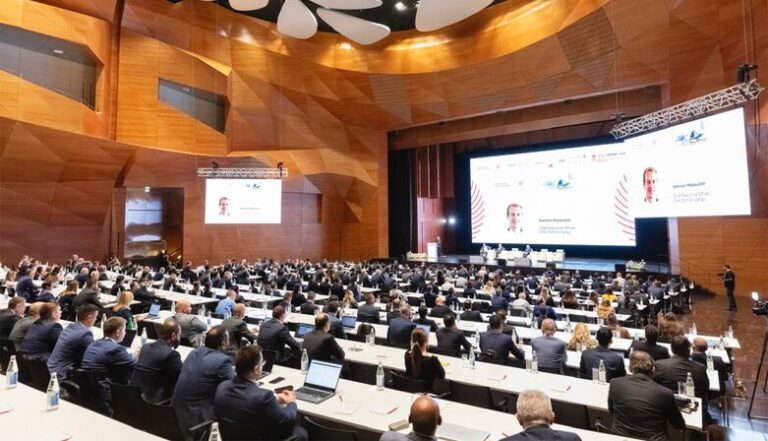
The 10th Caspian Air Cargo Summit, hosted by Silk Way West Airlines at the futuristic Baku Convention Center, cemented Azerbaijan’s position as a fast-evolving logistics hub on the Middle Corridor, connecting the Far East and Europe. Orchestrated by Natalie and Lars-Gunnar Comén of Swedish event manager, Euroavia International, the trade show offered an attractive program and a wealth of information.
In addition to a plethora of inspiring presentations and networking opportunities, the framework program was also impressive, culminating in a gala dinner at Buta Palace. It also included a visit to the construction site of the new airport and, alternatively, a sightseeing tour of Baku. A total of 420 attendees took part in this anniversary event.
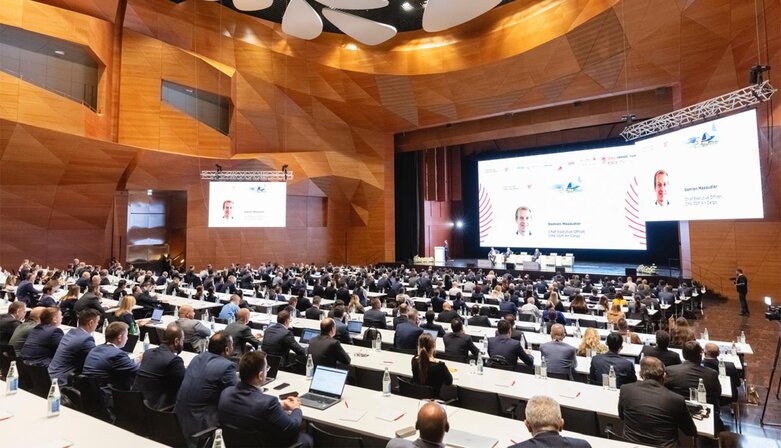
Full house at Baku – courtesy: MaR
Compared to previous Caspian shows, the large number of visitors from Azerbaijan and neighboring Central Asian states was striking. This is further evidence of Baku’s growing importance as a logistics hub in the CIS countries.
On the sidelines of the event, CargoForwarder Global asked participants about their reasons for attending and what their impressions of the trade show were. Here is a selection of comments that are not representative but are likely to be shared by the vast majority of participants:
Sebastiaan Scholte, CEO Kales Group The Caspian Air Cargo Symposium was worth attending. The speakers were of high quality, a wealth of exciting topics were tabled, and it was important to learn details first-hand about the Alat Free Economic Zone, the future Cargo Airport, and the Cargo Village Project in direct exchange with experts. As part of the Middle Corridor and located at the crossroads of Europe, Central Asia, and the Far East, the geographical location of the future multimodal hub, which also includes shipping, road, and rail services, is excellent.
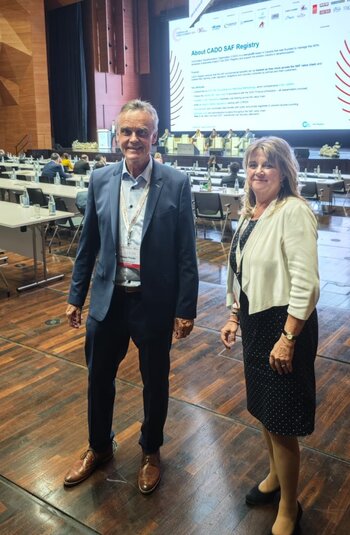
Sebastiaan Scholte – photos: CFG/hs
Those responsible at the Silk Way Group and the Azeri government have recognized that a strong airport can only go hand in hand with a strong home carrier. This is the global rule, with Liège being the only exception in Europe. From this perspective, the new airport south of Baku, which will serve as Silk Way West Airlines’ hub once it becomes operational in 2026, will play a key role in the airline’s further development as a connector between China and Europe. It will be equipped with state-of-the-art technology which will ensure efficient ground processes, as highlighted by experts at the Symposium, and it will be managed digitally. For Silk Way West, such a home base will be a quantum leap. The carrier’s growing international role is also reflected in the airline’s fleet policy. In addition to its fleet of Boeing 777F, 747-8F, and 747-400F aircraft, it will add 10 Boeing 777F and 4 Airbus A350F aircraft to its fleet by 2030, to meet global cargo demand as its CEO, Wolfgang Meier, emphasized in his presentation. I would like to add that the economy in the Central Asian hinterlands is constantly growing, so is the population in Azerbaijan and the neighboring region. All in all, I am convinced that the prospects for the infrastructure project and the development of Silk Way West are very positive.
Bernhard Kindelbacher
Bernhard Kindelbacher, CEO ACL Airshop The Caspian Air Cargo Symposium could be titled: “The Middle Corridor Up Close”. The multimodality of air, sea, road, and rail transport was clearly illustrated, along with the associated business opportunities for Azerbaijan and the entire transport industry. Geographically, Baku is extremely well positioned within the Middle Corridor, which will get a further boost by the new airport and the surrounding economic free zone, where manufacturing industries will settle. It can be expected that this will further bolster the reputation of Baku and the country as an emerging transport hub on the Far East-Europe axis. Silk Way West is making an important contribution to this, signaling the market a spirit of optimism far beyond Azerbaijan’s borders, combined with high quality standard in daily processes.
These contexts were emphasized repeatedly by speakers and panelists at the conference. However, it is also clear that a lot of work still needs to be done to achieve the infrastructure and transport goals that have been set. Those responsible will certainly not overlook the competition from the Istanbul hub, which is a serious competitor in the greater region, especially in air traffic, thanks to its new airport at the Black Sea and the broad global network offered by home carrier, Turkish Airlines, and other players serving the airport.
Almas Kulibayev, CEO Mercury Energy LLP As a Kazakhstan-based energy provider, our main business consists of refueling aircraft, among other services provided by our company. We decided to attend the Caspian Air Cargo Summit, to personally experience how our local industrial partners have developed lately. After all, Baku is a key point of the Middle Corridor where business is developing quite rapidly. Our company, Mercury Energy, is a future partner of the new airport, providing an important chunk of fuel that will be needed there to secure daily air and ground operations. Our aim is to contribute to the development of the logistics companies that intend to settle in ALAT Free Zone after the groundwork is completed, and the infrastructure is in place. In addition, our holding will manage a warehouse and the upcoming railway terminal. So, we had plenty of reasons to show up in Baku to attend the Caspian trade show excellently orchestrated by event manager, EuroAvia International.
Almas Kulibayev
Ruediger Franke / Isabella Zoerner-Schmelz, TRIWO Hahn Airport Ruediger: Hahn Airport has had fruitful business relations with the Central Asian region and some of the airlines based there, for quite some time. This applies particularly to Silk Way West, whose freighters regularly land at Hahn Airport. Therefore, it made sense for us to seize the opportunity to present ourselves in Baku, deepen existing contacts, and engage in direct talks with business partners. Another important aspect was to get a first-hand impression of the new airport and learn how construction work is progressing. What we experienced is that there is a needs-based infrastructure policy. Countries like Azerbaijan but also Kazakhstan and others in Central Asia, recognize economic opportunities and unleash growth. It is fascinating to see how quickly decisions are put into practice without lengthy discussions, and by removing bureaucratic hurdles. We are proud that Silk Way West freighters land at our airport and that we have been part of our customers’ supply chain for a long time.
Ruediger Franke / Isabella Zoerner-Schmelz
Isabella: I have actively accompanied the development of Silk Way West at Hahn Airport over a long period of time. The airline is a very consistent and reliable partner, open to discussions and new ideas. A striking feature is that its management has always strived, and continues to strive, to deepen its relationships with shippers and their forwarding agents. In addition to meetings with the Silk Way management, the attractive program of the Caspian Cargo Summit also motivated us to attend the event in Baku in person.
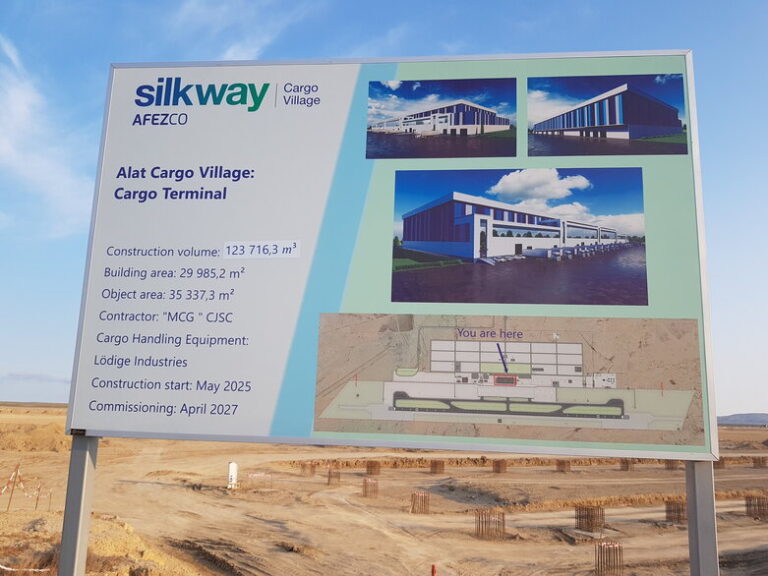
About a 90-minute drive south of Baku, a major cargo airport is currently being built on a 750-hectare site. According to plans, it will cost around USD 500 million, at least in the initial phase. The centerpiece is the 4,000 x 60 m runway. If a second runway is added, should it become necessary for traffic reasons, the costs will increase accordingly. ALAT Airport, as it has been officially named so far, is scheduled to go into operation in mid-2026, after a construction period of around 2.5 years.
The billboard will soon be replaced by real buildings – illustrations: CFG/hs
The initial impression is of the endless line of trucks driving onto the site of the future airport. Building materials are being brought in, along with equipment, steel pipes, and prefabricated concrete parts. The first results are visible: pylons and steel girders rise from the gray-yellow ground – unmistakable structural evidence of the future warehouse. It will be managed by Dubai-based ground handler, dnata, as was contractually agreed last week between the operating company and the agent.
Launching date: less than a year ahead The outlines of the air traffic control center and the future fire station building are already clearly visible. The floor slab and foundation for the future tower have been poured. Work ends at 6 p.m. and begins again early the next morning. Equipment supplier, Loedige Industries, secured a major contract. The German company was commissioned by Silk Way to supply the entire system, including the software, to ensure the operation of warehouses, automated guided vehicles, and other driverless transport systems. Installation of the systems is scheduled to begin early March 2026. This should also apply to the countless stackers that are stored a little further away and will ensure the fast throughput of e-commerce shipments in its dedicated warehouse.
Benefitting from Leipzig equipment The equipment originates from Leipzig, where Amazon no longer required it after removing the Saxon airport from its flight schedule. Its relocation from Leipzig to Baku was certainly a bargain for the Silk Way Group. The racking system will be installed in a 20,000 m² warehouse, specifically dedicated to e-commerce sorting and throughput. Globally, this segment will continue to grow strongly and is likely to exceed the 5-million-ton mark worldwide in 2025, speakers and panelists at the Caspian Air Cargo Summit agreed. However, the flows are beginning to shift noticeably, with volumes declining to the U.S., contrasting strong growth on routes between China and Europe as well as within the APAC region. Marco Bloemen, head of aviation and logistics strategy consulting firm, Aevean, predicted that these trends will not only continue but accelerate.
Construction work on the future warehouse for general cargo is progressing
Silk Way West Airlines will become the main user of the ALAT airport. Once it is operational, its fleet will be relocated from the current Heydar Aliyev International Airport to the new ALAT hub.
AZAL is spreading its wings This move will benefit the national airline, Azerbaijan Airlines (AZAL), which is growing rapidly to support tourism and improve the country’s transport accessibility. Its strategy focuses on network expansions enabled by a growing fleet of passenger aircraft. Once Silk Way West moves to ALAT, the country will have two civil aviation hubs at its disposal.
Under the leadership of Wolfgang Meier, Silk Way West Airlines has become the largest cargo carrier in the CIS region.
According to Wolfgang Meier, President and CEO of Silk Way West Airlines, ALAT Airport and the surrounding Free Economic Zone, located on the shores of the Caspian Sea, will become a multi-modal hub for air, land, and sea transport, and a freight gateway for the entire greater region. At the same time, the manager emphasized that environmental criteria were a high priority in the project. “We are building a green airport with solar panels on the roof of the facilities, providing power to run the e-vehicles used for ground processes.” He also confirmed that his airline would receive ten additional freighters by 2032, including four A350F alongside Boeing Triple Sevens. “We go for production freighters, not conversions, due to their higher efficiency, lower operational costs and fewer greenhouse gas emissions compared to P2F aircraft. During the last couple of years, we have seen a market trend in favor of production freighters,” Meier concluded.
Strongest cargo airline in the CIS region Silk Way West Airlines currently serves over 40 destinations in the Middle East, India, Asia, Europe, and North America. In addition, it offers customers charter flights. In 2024, more than 500,000 tons of air cargo passed through the Baku hub.
Zaur Akhundov, the Founder and President of the Silk Way Group, and Chairman of the Supervisory Board at Silk Way Airlines, lauded that Silk Way West Airlines, with its young and highly efficient fleet, has become the strongest cargo airline in the Central Asian region.
The airline’s business model is similar to that of the former AirBridge Cargo: flying cargo from China to Europe, with a stopover halfway – in this case in Baku. According to the airline, 95% of shipments on the east-west route are transit goods. Conversely, this means that the local Azerbaijani market plays only a minor role in the Silk Way West network. At least until today.
An “Alliance for New Flying” was founded last week at Stuttgart Airport, located in the southwestern German state of Baden-Württemberg. The aim is to scale up the use of sustainable aviation fuel (SAF) to reduce greenhouse gas emissions in air traffic and ground operations. The new alliance, headed by Transport Minister, Winfried Hermann (The Greens), includes leading representatives from the aviation industry, R&D, trade associations, and enterprises from various sectors.
The core objective of the alliance is to significantly increase the voluntary use of SAF beyond mandatory blending quotas. It will initially focus on business flights and seek out companies that are willing to voluntarily pay a surcharge for using SAF. This could be for their managers’ business trips when using corporate aircraft or when they book a ticket with commercial airlines and pay a SAF surcharge, or when sending products by air. In paying a SAF surcharge, they would jointly be promoting the ramp-up of SAF. In a second step, the alliance will then also extend its commitment to private travelers. While kicking off the alliance, Transport Minister Winfried Hermann reminded that “mobility is part of our lives – and that includes responsible flying. SAFs are an important building block for intensified climate protection. With this initiative, we want to become pioneers in climate-neutral flying.” It sends a strong signal that industrial heavyweights, trade associations, and scientific institutions supported by the state’s policymakers are taking joint responsibility. “We can only achieve our goal of Baden-Württemberg becoming climate-neutral, by working together,” the politician stressed. It may be worth mentioning, as occurred during the event, that the U.S. state of Washington has taken a similar leading role within its country, promoting SAF production with the support of local offtake contracts by corporations and individuals.
From left: B-W Transport Minister Winfried Hermann / Carsten Poralla, MD Airport Stuttgart / Volker Ratzmann, Executive VP Corporate Public Policy & Regulation Management, DHL Group – photo: Ministry of Transport, B-W.
Reducing emissions directly Compensation measures are not part of the initiative’s agenda. This is because they are, at best, a retrospective and long-term repair of climate damage that has already occurred. Instead, the alliance focuses on the direct use of climate-friendly fuels to avoid greenhouse gas emissions before they are blown into the atmosphere. Further to this, the pact members are committed to promoting the benefits of sustainable aviation fuels, raising public awareness, and providing a platform for stakeholders to exchange experiences and network for pilot projects. They also advocate for better regulatory frameworks at the national and European levels. At the kick-off event, representatives of the alliance emphasized the key requirements for enabling SAF to be ramped up at airports in Baden-Württemberg, particularly Stuttgart. These include, above all, clear, standardized processes for the crediting and certification of SAF. Another important factor is a transparent book-and-claim system that is compatible with existing regulations. This makes it possible to credit sustainable aviation fuels regardless of where the actual refueling takes place – a decisive lever for accelerating demand for SAF. As one of the top global players in air freight, DHL Group, represented in the alliance by EVP Corporate Public Affairs, Volker Ratzmann, acknowledges its responsibility in progressively integrating SAF usage into its business model, and thereby cooperating with its customers who share the road to decarbonization. Ratzmann explained that DHL Group has already committed to using 13% of the global SAF production. In response to a question from the audience, he agreed that the numerous air freight customers in Baden-Württemberg could join the alliance and thereby openly support the scale-up of SAF economics in the region. Another candidate that might join the alliance, is Stuttgart-based car maker, Mercedes, which has purchased large quantities of SAF (https://cargoforwarder.eu/2025/03/12/db-schenker-and-mercedes-ink-big-saf-deal/). Air freight heavyweight, Kuehne+Nagel even operates a weekly B747-8 freighter from Stuttgart airport, making Kuehne+Nagel and its customers other suitable candidates to enter the alliance.
Political tailwind from the reFuels action plan During the presentation of the “Alliance for New Flying,” Minister Hermann also presented his state’s reFuels action plan. In it, Baden-Württemberg formulates concrete proposals coordinated across departments, for adapting European regulations to promote electricity-based fuels. The aim is to enable the market ramp-up of these fuels in order to advance defossilization in areas where alternatives are lacking – such as aviation, shipping, and parts of industrial production. The “Alliance for New Flying” is an important building block in the implementation of this strategy in aviation. The state-supported initiative consists of twelve members and associated parties and is open to other committed partners – for example, from business, research, civil society associations, or other relevant areas. Interested companies and organizations can jump on the bandwagon at any time. Coordinator of all activities in the initial phase is the federal state’s Ministry of Transport.
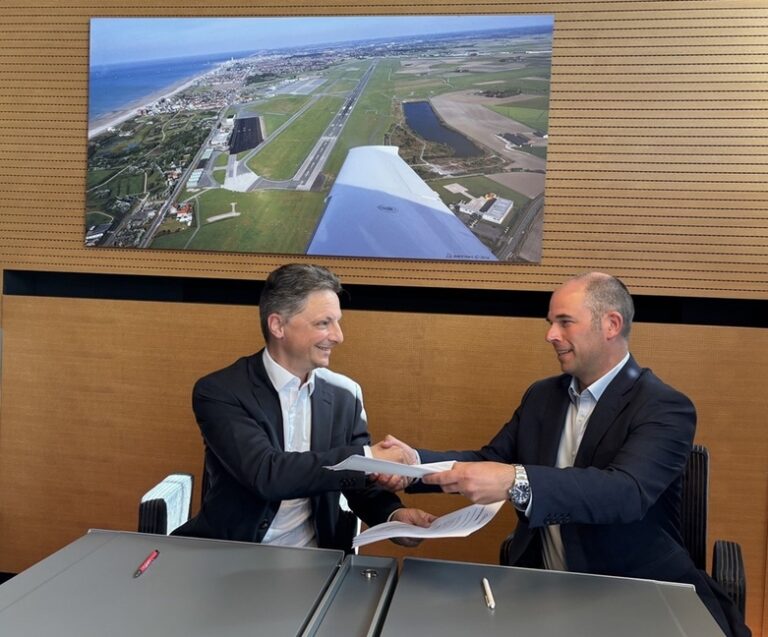
Ostend-Bruges International Airport and Chunnel operator, LeShuttle Freight, have set up a strategic partnership to streamline UK-bound air cargo flows from the coastal airport. Its geographical proximity to Coquelles near Calais is an advantage that Ostend Airport can leverage. Coquelles is home to the entrance of the Eurotunnel, which connects France with Folkstone in the UK. With a length of 50 km, it is the longest underwater tunnel in the world. Shuttle trains take 35 minutes to pass through. Operator Le Shuttle offers 87 crossings per day.
“Strategically located just 95 km from the LeShuttle Freight terminal in Coquelles, France, Ostend-Bruges Airport enables cargo to reach the UK in approximately 2 hours and 30 minutes after arrival under optimal conditions. By combining each other’s strengths and expertise, this partnership establishes a seamless logistics corridor for time-sensitive goods,” both parties claim in a joint press release.
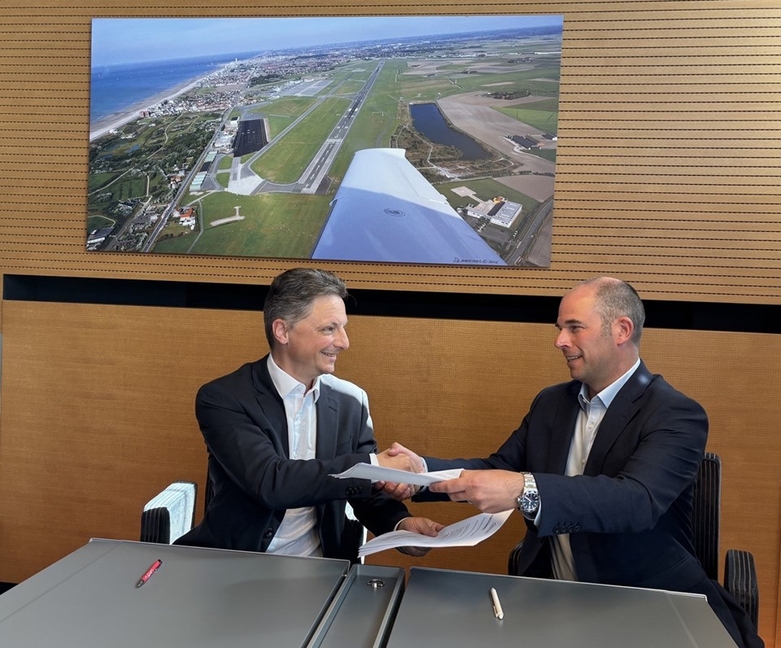
Nathan De Valck, CEO Ostend-Bruges Int’l Airport (left) and Peter Roberts, Freight Commercial Strategy Director at LeShuttle Freight – courtesy: OST
Strong UK ties Ostend-Bruges’ contribution to this collaboration agreement is its 24/7 operation with no slot restrictions. “That positions the airport as one of the most efficient cross-Channel gateways for urgent freight, offering unmatched speed and access,” the press release points out. “Ostend has always had a strong UK customer base, so the cargo is already there,” says the airport’s CEO, Nathan De Valck, who took the helm of the Flemish regional airports on 16JUN25. https://cargoforwarder.eu/2025/05/18/nathan-de-valck-becomes-the-ceo-of-the-flemish-airports/“There are the perishables, mainly coming from our long-standing Egyptair traffic, of which even today the largest part is shipped to the UK.” “We also want to incorporate this collaboration into our future growth, by attracting more carriers and volume. Our growth is also LeShuttle Freight’s growth. In this respect, we would like to focus on sustainability and products needing speed, such as the aforementioned perishables, as well as e-commerce and urgent consignments.”
Dyed-in-the-wool Customs Authority Since Brexit, exports to the UK are subject to more complicated compliance processes regarding customs clearance, veterinary and food safety, but that has basically always been the case, Mr. De Valck adds. “Our Customs Authorities are set up for these processes. In fact, the entire Customs apparatus along the Belgian coast, including the ports of Zeebrugge and Ostend, has always been tailored to UK transit.” According to Peter Roberts, Freight Commercial Strategy Director at LeShuttle Freight, speed, efficiency, and customer care are at the core of his company’s services. “Partnering with Ostend-Bruges Airport allows us to move cargo seamlessly to and from the UK, while optimizing the flow between road and air transport. Together, we are creating a logistics corridor that is both agile and resilient,” he says.
Decreasing volume In 2024 Ostend-Bruges International Airport handled a total of 18,124 tons, a 45% drop against 2023’s 33,051 tons. The decrease was due to the discontinuation of the Qatar Cargo operation in APR23 and the closure of the runway between 25JAN24 and 27MAR24. Over the first 8 months of 2025, the volume was 13,552 tons, compared to 18,277 tons over the same period in 2024 (-25.8%). The airport’s all-time record year was 1999, when 107,984 tons were reached.