Home Blog Page 95

FedEx ups Liège flights

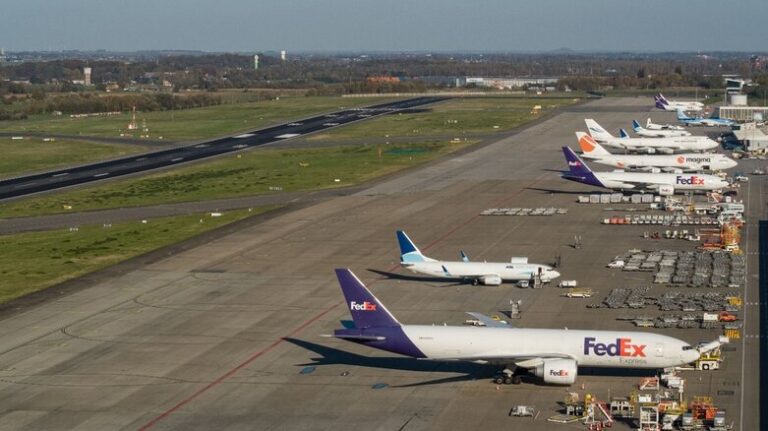
U.S. integrator, FedEx, has upped its weekly Liège-Memphis services from 5/7 to 8/7. With this step, FedEx strengthens its footprint in Wallonia and the role of Liège Airport as an intercontinental cargo hub within its global network. The first flight, Liège-Memphis dates back to April 2017, following FedEx’s USD 4.8 billion acquisition of Netherlands-based TNT Express-NV, a former provider of mail and courier services.

Historically, FedEx’s new focus on Liège is a strategic U-turn. Following the acquisition of TNT in 2015, the U.S. integrator relocated two-thirds of TNT’s cargo flights from Liège (LGG) to Paris Charles de Gaulle, (CDG) the central European gateway of Federal Express. Thanks to numerous investments, it subsequently became the package delivery company’s most important EU hub and the second largest location worldwide after Memphis in Tennessee, USA. A further advantage of CDG is that the airport is connected to FedEx’s road feeder hub in Marly-la-Ville, 10 km away from CDG, which links France with the rest of the European road network.

The importance of Liège for FedEx has steadily grown  –  courtesy: LGG.

Three products
Last year, however, the FedEx Board of Directors gave the green light for a strategic repositioning. Since then, FedEx offers the market three products: Purple, Orange and White. While Purple covers the classic express business, Orange stands for standard air freight shipments, i.e. pallets, containers and larger units. The White label applies to FedEx Freight Cargo shipments that are transported by third-party providers on behalf of FedEx, such as Air France Cargo, Air Canada Cargo, IAG Cargo or LATAM Cargo, among others.

Improving network utilization
FedEx has adapted its global network to this realignment, with the result that Liège’s role has been strengthened. This is emphasized in a press release published by the integrator, in which Liège is categorized as a “dedicated intercontinental freight hub and a cornerstone of the package delivery company’s reshaped air network,” aimed at improving density and network utilization.

LGG plays a paramount role
This new understanding is also stressed by Rudi Loontiens, Managing Director, hub operations at FedEx: The increased frequency of the Liège-Memphis air route underscores the strategic role Liège hub plays in our global air network, being the intercontinental freight hub for Europe. This development reflects our commitment to a strong and sustainable presence in Wallonia. We are proud to continue supporting Liège, both in infrastructure and in people, while strengthening Belgium’s role at the heart of international trade flows.”
Meanwhile, FedEx has become the largest employer at LGG, with 1,300 team members, more than half of whom come from nearby communities. Since the TNT takeover ten years ago, the company has invested significantly in LGG’s infrastructure to ensure the fast throughput of shipments. In addition to the Memphis flights, FedEx also offers cargo services across the Atlantic between Liège, Indianapolis and Oakland. On eastbound routes, the integrator’s presence is also growing as shown by the number of flights connecting Liège with the Middle East and East Asia, all operated by B777 freighters.

And the first Mammoth Freighter 777-200LRMF is going to… Qatar Airways Cargo!

Along with another four after that. The cargo airline, the aircraft convertor, Mammoth, and aircraft lessor, Jetran, LLC, announced the news this week: Qatar Airways Cargo will be the launch customer of the long-range freighter version which saw its initial and successful test flight take place on the first day of this month.

Aircraft registration N705DN took to the skies in the early evening of 01MAY25, at Fort Worth, for a test flight that lasted 1 hour and 48 minutes The Mammoth Freighters 777-200LRMF (long range Mammoth Freighter) prototype used to belong to Delta Air Lines, having entered into service in MAR09 as a passenger plane, and remained in its fleet until the pandemic. During that time, on 10FEB22, it was delivered to Mammoth Freighters for conversion, and would have originally been intended to fly for Cargojet Airways, had it not retracted its FEB22 order to purchase and convert four Boeing 777-200LRs, in JAN24, among fears of a ‘soft’ market. And so, instead, the freshly-converted aircraft will soon be delivered to Qatar Airways Cargo, which is now the official launch customer.

The official launch customer for the 777-200LRMF. Image: Qatar Airways Cargo

Five of a kind
In fact, it will be one of five such aircraft that Qatar Airways Cargo has agreed with Texan aircraft leasing, sales, and aviation services company, Jetran, LLC. The airline already has 28 Boeing 777 freighters complementing the bellies on its 230-strong passenger fleet, and is the second largest operator of this freighter type after FedEx. Mark Drusch, Chief Officer Cargo at Qatar Airways Cargo commented: “As the launch customer of the Mammoth 777-200LRMF converted freighter, Qatar Airways Cargo proudly continues to lead global trade as the world’s largest air freight carrier. This additional freighter capacity will be instrumental in advancing our fleet growth and expanding the premium cargo services we provide to customers worldwide. The growth of our fleet with the Mammoth 777s reflects our commitment to operating the largest freighter network and fleet in the industry.
Already the world’s largest cargo airline, Qatar Airways Cargo is also the launch customer for the Boeing 777-8F (next-generation freighter expected to be the most efficient and environmentally friendly twin-engine widebody freighter in the industry), with a firm order for 34 planes of this type, as well as options for a further 16 aircraft.

An exceptional freighter
Offering a payload capacity of just under 106 tons, and a range of 4,900 nautical miles at maximum payload, the 777-200LRMF will be one of the highest-capacity long-range freighters on the market. It features an advanced Collins Aerospace cargo loading system which has been specifically developed over the course of three years, and optimized for the 777 passenger-to-freighter market. Its main deck can take up to 22 96-inch pallets/ULDs, and 10 in 96-inch pallets/32 LD3 ULDs in the lower deck.
Mammoth’s flagship freighter product has been carefully developed and undergone extensive and rigorous conversion at Mammoth’s modification partner facility, Aspire MRO, in Fort Worth, Texas.
Bill Tarpley, CEO of Mammoth, stated: “This milestone is the culmination of years of dedicated engineering, collaboration, and innovation. Our mission is to deliver one of the world’s most productive and economical long-range freighters, and today’s achievement is a testament to the hard work and expertise of our entire team and partners. We are also thrilled to announce Qatar Airways Cargo as the launch customer for our 777-200LRMF freighter. Their commitment reflects the long-term value and capabilities this aircraft offers.”

35 firm freighter orders
The result of all this dedication and collaboration is an aircraft that “offer[s] airlines a modern, high-capacity, and cost-effective alternative to factory-built freighters,” and one that scores high in terms of payload, range, and operational efficiency. No wonder then, that Mammoth holds firm orders for 35 freighter conversions from a variety of interested parties, and that it is currently working on the conversion of seven 777-200/-300 aircraft (five at Aspire MRO in Fort Worth, Texas, and two at STS Aviation Services in Manchester, UK).

Final words from Jetrans
Jetran’s CEO, Jordan Jaffe, said: “Witnessing the successful completion of the 777-200LRMF’s initial test flight was both exciting and reassuring. The aircraft exceeded expectations and reinforced our confidence in Mammoth’s engineering and conversion capabilities. We’re proud to have Qatar Airways Cargo play such a prominent role as launch customer for this groundbreaking program and look forward to its certification and entry into service.”

Moscow orchestrated integrator attacks

Express services are victims of sabotage! This or something similar was the headline in much of the media in the summer of 2024. Since then, the topic has largely disappeared from the public stage as security measures by DHL, DPD and the relevant authorities have been stepped up. Meanwhile, facts prove that the series of attacks was carried out on behalf of the Russian military intelligence service, GRU.

To recap: it began in JUL24, when a DHL air cargo container filled with dangerous goods burned on the apron of Leipzig-Halle Airport. This was followed by fires at the DHL freight center in Birmingham and a parcel from integrator DPD that burnt to cinders in Jablonowo, Poland. A security check revealed that an incendiary device containing magnesium was hidden in another shipment. Particularly perfidious: magnesium continues to burn even under water, as evidenced by using magnesium torches to provide light during dives. The above-mentioned DHL shipment had been handed over to the integrator’s station at Vilnius Airport, with reference to a Russian e-mail contact as sender. Despite routine security checks, the detonators and incendiary devices remained undetected at Vilnius Airport. Accompanying documents listed massage cushions, cosmetics and sex toys as the contents of the packages. They were addressed to fictitious recipients in the UK and Canada, although the Canadian shipment did not contain any incendiary devices in contrast to the UK bound packages. Apparently, their role was to test transcontinental transport chains.

DHL Express has repeatedly been the victim of sabotage carried out by Moscow’s proxies  –  photo: CFG/hs.

GRU is the culprit
What was already suspected by experts following the parcel’s ignitions in Leipzig and Birmingham, has now been confirmed through investigations jointly conducted by security authorities in Poland, Lithuania, Germany, the UK and Canada: The Russian military service Glawnoje Raswedywatelnoje Uprawlenije (GRU), Russian: Главное разведывательное управление (ГРУ), is responsible for the series of parcel attacks. This is the result of the evaluation of numerous posts on relevant online portals by a research group of several renowned German media, including WDR, NDR and daily Süddeutsche Zeitung, supported by statements given in court by the saboteurs and their arrested backers, especially in Poland and Lithuania.

Single use agents
And this is what is known so far: Around ten people were involved in the specific attacks on DHL and DPD courier shipments. In the investigators’ report, their names are indicated: Mastermind was GRU agent, Denis Smolyanin, a specialist in psychological warfare. He recruited accomplices in various EU countries via his Telegram channel. They were told that after the crimes had successfully been committed, they would be paid in cryptocurrencies. Two of the perpetrators, Vladislav D. and Alexandr S. are now imprisoned in Lithuania and Poland respectively. The head of a Bulgarian group of GRU agents, Alexandr B., was arrested in Bosnia.

Criminal triangular relationship
For the sabotage operations, the GRU, Putin’s special unit for terrorism, used so-called local single use agents, i.e. people who were prepared to carry out assassinations for a reasonable material reward. Since petty criminals did the dirty jobs, the GRU hoped to conceal its role as the mastermind of the sabotage operations. After all, the purchased actors were not members of Putin’s secret service club. The close interrelation between the Kremlin, perpetrators and backers, was proven by the Europe-wide arrest of more than 50 saboteurs and their middlemen at the instigation of the Lithuanian secret service, VSD. According to findings, the suspects are easily replaceable middlemen, but not key figures in the sabotage operations.

Ringing the alarm bell
The Lithuanian investigators now have numerous documents and statements from suspects detained in Poland and Lithuania on file, that clearly prove that the disposable agents were acting on behalf of the Kremlin. The coordinated sabotage actions show that “they are part of Putin’s hybrid war against Western civilization. We must wake up and finally understand this connection,” says Darius Jauniškis, ringing the alarm bells. He was head of the Lithuanian secret service, VSD, until last March. Since 29APR25, the 56-year-old is Permanent Representative of Lithuania to the North Atlantic Treaty Organization (NATO).

Court okays Air Belgium takeover by CMA CGM

0

This court decision was expected: The Brabant Wallon Commercial Court has given green light for the acquisition of Air Belgium’s Cargo business by the CMA CGM Group. The losing party in this bidding battle is the Dutch consortium Air One International Holdings and Peso Aviation headed by cargo veteran Peter Scholten. Hehad offered EUR 800,000 for the takeover of a controlling stake of 51% of the carrier.

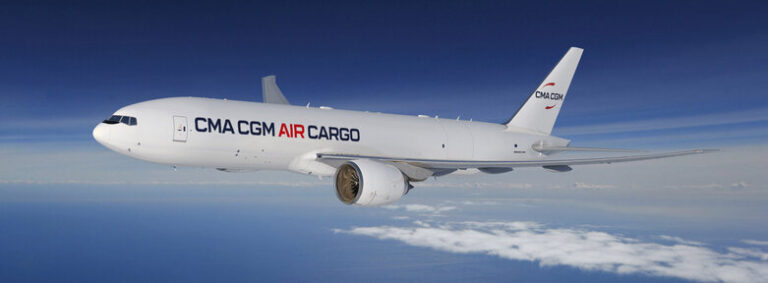
CMA CGM CARGO’s freighter fleet grows constantly. Pictured here is one of their Triple Seven freighter aircraft – company courtesy.

The court decision upgrades the cargo business of the French shipping line, making it a major player in European air freight matters. Part of the deal is the takeover of two Airbus A330-243F and two Boeing 747-8F so far operated by the Belgian airline. In total,CMA CGM AIR CARGO now operates a freighter fleet of nine aircraft: four Boeing 777F, three Airbus A330F, and two Boeing 747Fs. Soon, an additional B777F will be added to the fleet which will be further expanded from 2027 onward, when eight Airbus A350F will be delivered successively. Thanks to the court decision, 124 jobs will be preserved, including 72 cockpit personnel. At the same time, the new owner announced that the company name of the Belgian cargo airline will be maintained within the CMA CGM Group’s specialized air cargo division.

Important  step
Based in Belgium, the Air Belgium freighter aircraft will allow CMA CGM to offer forwarders, shippers, and the broader logistics ecosystem tailored solutions. This emphasizes Damien Mazaudier, Executive Vice President of the Air Division at CMA CGM Group.“The acquisition of Air Belgium Cargo marks an important step in the expansion of the CMA CGM Group’s air freight operations in Europe and worldwide. It immediately strengthens our air capacity while addressing current logistical challenges. By preserving skilled jobs and accelerating the development of our network, this operation demonstrates our commitment to our customers and our ability to anticipate market evolutions.”

The takeover complements CMA CGM AIR CARGO capacity offered to the market at its homebase, Paris-Charles de Gaulle Airport. Currently, CMA CGM AIR CARGO operates regular services with two Boeing 777F aircraft to Hong Kong and Shanghai and one Airbus A330F to Zhengzhou.

Multi-modal strategy
Together with itsEuropean expansion, CMA CGM Group has established an air freight hub in Chicago. This hub currently hosts two Boeing 777F aircraft operated by Atlas Air under the CMA CGM AIR CARGO brand, with three additional aircraft to be added soon. The jetliners will strengthen the Group’s presence on routes connecting the U.S. with the Fareast and support the expansion of its cargo activities in the North American market.

Thanks to its air freight division launched 2021, CMA CGM has turned into a multi modal company by offering the market comprehensive maritime, road, air, and logistics services and solutions. This integrated approach enables the Group to provide tailor-made transport solutions to its customers, including last-mile delivery services.

The freighter aircraft operate from strategic hubs in France, the United States, and Belgium, ensuring optimal connectivity across key global air cargo routes.

DSV finalizes Schenker acquisition

The Danish logistics giant DSV has taken over the Deutsche Bahn (DB) subsidiary, DB Schenker, for EUR 14.3 billion. The completion of the transaction was announced today (30APR25). This creates the largest global logistics group by far in terms of turnover and market share. Deutsche Bahn intends to use the Schenker billions to pay off part of its debts of EUR 33 billion. Conversely, the state-owned rail company is losing one of its few profitable subsidiaries. In fiscal 2024, DB Schenker channeled around EUR 1 billion in surplus into DB’s coffers. 

The sale of Schenker was highly controversial in German politics. This is because the country is losing an extremely profitable logistics pearl with thousands of employees and stations around the globe. The rebranding is to be completed in 2027. By then, the name of the well-known forwarding agent incepted 1872 by Gottfried Schenker in Vienna, Austria, will be history. A fate that has happened to UTI Worldwide, Agility, J. H. Bachmann, DFDS, and Panalpina, which were all taken over by the Danish Forwarder Alliance De Sammensluttede Vognmaend (DSV), and whose names have meanwhile vanished.

Customers will benefit, predicts DSV
With the acquisition, valued at EUR 14.3 billion, DSV is doubling its size and establishing the foundation for future sustainable growth, reads a press release. The combined company will have a revenue of approximately EUR 41.6 billion and a workforce of close to 160,000 employees across more than 90 countries.

The takeover of Schenker is a “transformative event” in the history of his company, stated Jens H. Lund, Group CEO, DSV: “With the acquisition, we bring together two strong companies, creating a world-leading transport and logistics powerhouse that will benefit our employees, customers and shareholders.” He went on to say that the competitiveness of all three divisions will be improved: Air & Sea, Road, and Solutions. Customers can expect to be provided with even higher service levels, innovative and seamless solutions, and flexibility for their supply chains.

Following the consolidation, air freight volumes will grow to 2.4 million tons, with DSV contributing 1,4 million tons and Schenker 1 million tons. Annual revenue is expected to exceed 41 billion and the jointly managed warehouse capacity will reach 17,7 million square meters.

Fiercer competition in trucking
For leading European trucking companies such as Wallenborn, Jan de Rijk or Georgi, in particular, the new market giant is likely to significantly increase road feeder competition. This is because the combined truck fleet of DSV and Schenker is now by far the largest in Europe.

Jochen Thewes, the current Schenker CEO, will not be appointed to the Management Board of the Danish Group. Instead, the 54-year-old is to be elected to DSV’s supervisory board at an extraordinary general meeting. On the occasion of the takeover, Thewes stated: “The recent years have been the most successful in our company’s history and we have proven that DB Schenker is fit for the future.” This future will now take place within DSV.

Strong quarterly results
In Q1 2025, DSV’s Air & Sea Division continued its positive earnings growth driven by higher gross profit per unit, due to more value-added services per shipment. Gross profit per unit increased 5% in Q1, 2025 compared to the same period in 2024. Air and Ocean freight are expected to contribute 46% of the joint enterprise’s revenues, followed by Road (40%) and Contract Logistics (14%)

LATAM and Delta augment JV to include Argentina

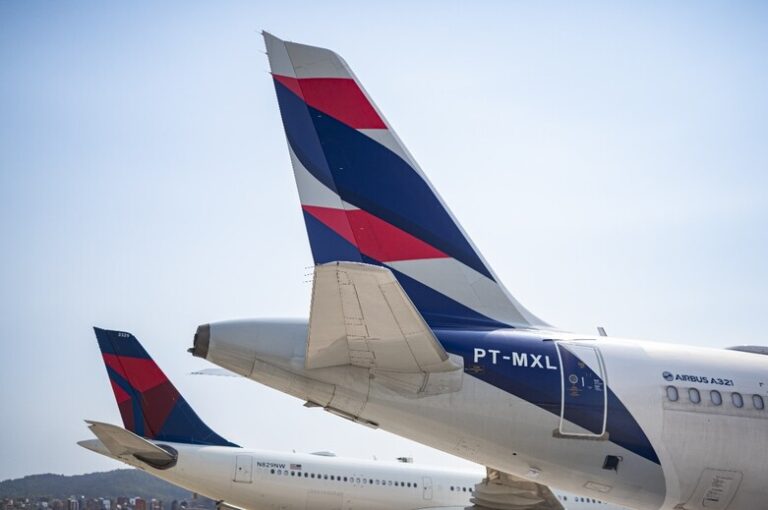
Delta Air Lines and LATAM Airlines Group have expanded their Joint Venture (JV) to include Argentina, unlocking new opportunities for passengers as well as air cargo transport between North and South America. This milestone comes just two years after the launch of the JV and strengthens the integrated cargo and passenger operations between the United States, Canada, and Argentina.

JV two years old and now growing to include Argentina. Image: LATAM

The expansion provides cargo customers with improved access to a broader, more efficient network spanning over 200 destinations. Shippers in Argentina will benefit from enhanced connectivity to key markets across North America, supported by a combination of passenger belly capacity and dedicated freighter services. The JV enables better coordination, more flight options, streamlined services, and therefore likely improved transit times for cargo moving across the region.

While passengers will enjoy enhanced benefits such as mileage accrual and redemption across both airlines’ loyalty programs, access to VIP lounges, and reciprocal elite status perks, similar benefits may result for cargo. The expansion should also allow for more reliable and flexible logistics solutions, thus supporting a wide range of industries with growing cross-border transportation needs. The increased frequency and connectivity between Delta and LATAM’s networks should lead to smoother cargo flows – possibly particularly attractive for time-sensitive and high-value goods.

With all required regulatory approvals secured, Delta and LATAM have formally notified Argentina’s National Commission for the Defense of Competition for post-implementation evaluation.

LOT Cargo deploys CHAMP’s eCommerce solution

LOT Cargo has implemented CHAMP’s Traxon Global eCommerce (TGE) platform to automate US ACAS pre-load filing. This not only enhances its e-commerce logistics capabilities but also ensures that it complies with U.S. ACAS regulations that were implemented toward the end of last year and pertain to e-commerce shipments. As it is a centralized and automated compliance solution, LOT Cargo gains greater control over regulatory compliance while at the same time minimizing operational risk when planning cross-border shipments.

CHAMP’s TGE enables faster e-commerce processing at LOT. Image: LOT

Since CHAMP’s TGE platform automates ENS (Entry Summary) Declarations, this leads to easier and faster e-commerce processing. ENS declarations must show each item’s detailed history and data archives to ensure legal compliance and are required for the pre-loading submission of goods and cargo declaration data. The benefits of swifter and more efficient e-commerce processing are a reduction in potential delays, greater customer satisfaction, and improved operational processes. Since e-commerce volumes continue to grow, every improvement has a big impact on ensuring successful operations in the future, also. All freight forwarders in LOT’s customer portfolio can use the TGE platform enabling automatic filing of crucial data, and smooth operations through most of the shipment’s journey.

Maciej Radzik, Support and Sales System Development Manager at LOT, announced: “The successful implementation of Traxon Global eCommerce is a transformative milestone for LOT Cargo. This platform empowers us to navigate US ACAS pre-load filings with absolute confidence, driving both compliance and operational excellence.”

Jerome Lorig, Head of Product – Regulatory Compliance for CHAMP, stated: “CHAMP Cargosystems is pleased to support LOT Cargo in their commitment to regulatory compliance and operational excellence. Traxon Global eCommerce simplifies regulatory demands, allowing our clients to concentrate on their core business while maintaining seamless global trade.

Air Charter Service open 4th German office, in Cologne

Aircraft charter specialist, Air Charter Service, has chosen Cologne as its fourth German location and recently celebrated the inauguration of its new office there. It already runs charter offices in Frankfurt and Munich, as well as its ACS Time Critical headquarters, also in Frankfurt. Commercial Jets Director, Melanie Hentschel has been appointed to head the new office. She brings a decade of charter experience with her, having previously worked for Air Partner and Chapman Freeborn Airchartering in Cologne. She joined ACS in FEB22, initially as Commercial Jets Assistant Director, but quickly moved to Commercial Jets Director just half a year later. Cologne was chosen since it is a strategic location for the German aerospace industry. It is close to both the headquarters of the German Aerospace Center (DLR) as well as the European Union Aviation Safety Agency (EASA)

Melanie Hentschel. Image: Air Charter Service

Caroline Werf, CEO of ACS Germany, commented: “We have been looking for some time at opening an office in Cologne – it’s a key hub for the aircraft industry in Germany. Not only are there a great deal of professionals in charter aviation in the city and the surrounding area, but both the headquarters for the German Aerospace Center (DLR), and the European Union Aviation Safety Agency (EASA) are based here. ACS has always had a strong partnership with Cologne Airport and, with this new office, we are looking forward to even closer cooperation in the future.”

Melanie Hentschel, Commercial Jets Director ACS, stated: “I’m excited to get going here in Cologne, the city in which I’ve spent most of my career. Together with Caroline we’re already looking to grow the team, over the coming months, and make Cologne another successful German ACS office.”

Envirotainer published positive Sustainability Report 2024

All large EU companies with more than 250 employees, a net turnover of EUR 50 million or more and/or possessing assets to the value of over EUR 25 million, are obliged to publish an annual Sustainability Report. Swedish cool container expert, Envirotainer, is well above those thresholds and has just issued its 2024 Sustainability Report. And it reveals a number of positive results, proving that its sustainability initiatives are on the right track. Not only does it take “decisive, science-backed climate action on its path to net-zero,” as the press release underlines, but it also does this in partnership with customers – such as its SAF collaboration with Air France KLM Martinair Cargo and United Airlines, for example: “Despite the increasing supply chain uncertainties, Envirotainer’s commitment to collaboration and meeting sustainability targets remained strong, with new partnerships presenting a united front on green ambitions.” Its headline achievement is a 12% reduction in its Scope 3 emissions in just one year. It already generated 100% renewable electricity at its production site more than ten years ago, and has kept this up all that time. The full company manages 92% renewable generation.

Focusing on a better climate. Image: Envirotainer

Envirotainer has made significant steps, including reducing scope 3 emissions by almost 12%, making good headway on its 2023 baseline and marking an important milestone in its sustainability journey. It has also maintained 100% renewable electricity at its production site since 2014, and manages 92.7% of renewable energy usage across the entire Envirotainer Group. Another improvement is on the focus of filling containers on the return leg: “In 2024, 75% of shipments were made through one-way leases, and 71% of these were returned via an order, avoiding empty container movements and supporting circular logistics practices.”

David Simonsson, CEO of Envirotainer, commented: “The progress we continue to deliver is driven by our ambition and accountability. In 2024, we set the industry’s most ambitious Science Based Targets (SBTs) which have been approved by the Science Based Target Initiative (SBTI). We are taking decisive, science-backed climate action, creating a clear roadmap to achieving net-zero GHG emissions by 2050. One key initiative in our approach to sustainability is our strategic integration with va-Q-tec, meaning we can offer our customers the best-in-class solutions from active and advance passive cooling technologies. This, alongside the introduction of our RelEye RKN solution, shows our continued dedication to making sure our strides today lead to a healthier, more sustainable future.”

Royal Air Maroc Cargo is focused on growth and innovation

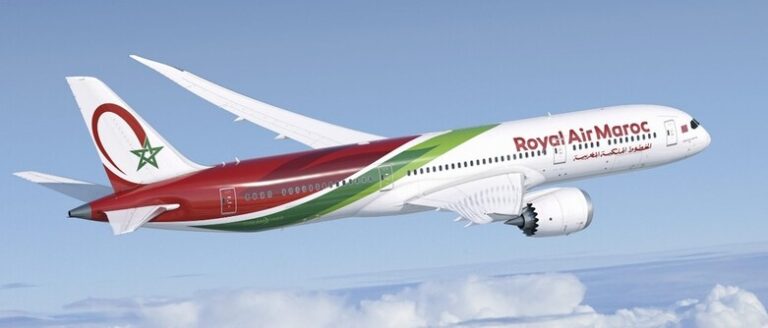
Royal Air Maroc Cargo has outlined its direction for the future and is setting on growth through a strong focus on global expansion, digital transformation, and sustainability. Fleet modernization forms the basis of its strategy. It is investing in next generation widebody aircraft so as to enhance operational efficiency, cargo capacity, and environmental performance. Alongside a dedicated B767 freighter and a 30-strong narrowbody fleet, the new widebody additions will enable the airline to connect more high-growth markets across Africa, Asia, and the Americas through its network of 82 global destinations, including key hubs in the U.S., Canada, Brazil, and the Middle East – serving them with a flexible mix of loose and palletized cargo.

Ambitious goals to ensure a strong and sustainable future. Image: Royal Air Maroc

Royal Air Maroc Cargo’s Casablanca hub which includes 200,000-ton-capacity cargo terminal and specialized zones for pharmaceuticals, perishables, and high-value goods, will continue to form the pivotal base of its global operations. Digital innovation and sustainability are two further strategic pillars. The airline aims to enhance customer service through partnerships with digital marketplaces such as cargo.one and CargoAi which enable 24/7 booking and real-time tracking. Automated documentation and enhanced digital communications are planned to come. Sustainability efforts include fuel-efficient fleets, solar energy systems, biodegradable packaging, and collaboration with IATA’s Eco Hub initiatives. Royal Air Maroc also supports humanitarian missions, delivering medical supplies across Africa in partnership with organizations such as AIRLINK.

Yassine Berrada, Vice-President Cargo at Royal Air Maroc, explained: “Our vision is to expand Royal Air Maroc Cargo’s global network, connect emerging and established markets, and strengthen Morocco’s position as a trade and logistics hub. With the introduction of the new generation widebodies, we are not only increasing our operational capacity but also reducing our environmental impact—helping us build a future that is innovative, responsible, and customer-focused.”