Bloomberg started the rumors off in an article it published on 20AUG24. According to this, the Saudi Public Invest Fund (PIF), has approached both Boeing and Airbus to discuss their B777F and A350F aircraft versions. The aim: to bolster the Kingdom’s logistics services so as to rival neighboring Dubai and Doha air cargo hubs – an ambitious project, particularly given the plans for the world’s mega-hub for Dubai announced earlier this year – and Doha, too, is again expanding. Not to mention the region’s two world-leading cargo airlines: Qatar Airways Cargo (28 freighters) and Emirates (14 freighters growing to 17 by end 2025).
It was only in MAR23 that investor PIF announced the planned launch of Riyadh Air as a wholly owned subsidiary. Next to come is a cargo airline fully financed by PIF
Nevertheless, according to anonymous insiders speaking to Bloomberg, “the cargo-hauling operation would serve flag-carrier Saudia and startup Riyadh Air [and] talks are at an early stage. No final decisions have been made and the fund may ultimately decide to delay or scrap the plans.” CFG approached Saudia’s communication agency for comment, but was told that Saudia Cargo was not involved in the PIF/Bloomberg news article. Interesting, since Bloomberg News also reported that Saudia’s ownership could be transferred to the PIF as soon as 2025. Riyadh Air [also a PIF initiative] recently started a huge recruitment campaign, but features no cargo openings on its website, so no confirmation there as to whether this will go ahead or not. Bloomberg reported that Boeing and Airbus both stated that they would not comment on talks with potential customers.
The Arabian Post, this week, however, reported on the topic with greater conviction: “Saudi Arabia’s Public Investment Fund (PIF) is advancing plans to launch a new cargo airline as part of its strategic expansion in the logistics sector. This initiative is aimed at bolstering the country’s position as a major global logistics hub, enhancing its transport infrastructure and boosting economic diversification efforts. […] The new airline is expected to serve as a critical link in the country’s logistics and transport infrastructure, potentially transforming Saudi Arabia into a central logistics node connecting East and West. […]The logistics sector’s expansion is expected to create new job opportunities and stimulate further economic activity within the country. As the new cargo airline begins to take shape, stakeholders are eager to see how it will integrate with existing infrastructure and what impact it will have on regional logistics dynamics.”
Both publications point to Saudi Arabia’s Vision 2030 and its aim to diversify its economy beyond traditional oil revenues. Regarding air cargo, which has seen consistent double-figure growth over the past half-year, Saudi Arabia is clearly benefiting from its strategic location at a global crossroads connecting Europe, Asia and Africa.
Qatar Airways announced this week that it has acquired a 25% stake in Airlink, an independent regional carrier in South Africa. While there is currently no mention of cargo in the press release, Airlink also has a cargo division, Airlink Cargo, which serves 35+ destinations across the country with a cargo network. Airlink Cargo’s website states: “Through its diverse network and strategic partnerships Airlink Cargo has the ability to provide its customers with the freedom to connect cargo to numerous destinations domestically within South Africa, internationally across Southern Africa and internationally to the world from its outstations.” Given that Qatar Airways’ motivation for investing in the carrier was to firmly position itself as “a key driver in realizing economic and business potential on the African continent,” it can be expected that this will eventually also include its cargo business. For now, the partnership between Qatar Airways and Airlink will see codeshares to Airlink’s 45+ destinations in 15 African countries, as well as an alignment of their respective passenger loyalty programs.
A strong foot on the African continent. Image: Qatar Airways
Qatar Airways currently serves 29 African destinations and has been expanding its foothold on the continent, most recently adding Abidjan, Abuja, Accra, Harare, Kano, Luanda, Lusaka, and Port Harcourt, and resuming its flights to Cairo and Alexandria post-pandemic.
Engr. Badr Mohammed Al-Meer, Qatar Airways Group Chief Executive Officer, said: “Our investment in Airlink further demonstrates how integral we see Africa being to our business’ future. This partnership not only demonstrates our confidence in Airlink, as a company that is resilient, agile, financially robust and governed on sound principles, but also in Africa as a whole, showing huge potential that I am delighted we are able to help start realizing.”
Rodger Foster, CEO of Airlink, stated: “Having Qatar Airways as an equity partner is a powerful endorsement of Airlink and echoes our faith in the markets we currently serve and plan to add to our network. This transaction will unlock growth by providing efficiencies of scale, increasing our capacity and expanding our marketing reach. By bolstering Airlink and its business, this investment will strengthen all of the existing airline partnerships Airlink has nurtured over the years.”
Where is DB Cargo heading – perhaps to the siding? This is a valid question because Deutsche Bahn’s loss-making freight transport division may no longer receive cross-subsidies from its parent company come 2025, following a decision by EU competition watchdogs. In the first half of 2024, the rail freight unit accumulated a deficit of EUR 261 million. It is unclear as to what strategy DB Cargo boss, Sigrid Nikutta has for a financial turnaround. The only thing that is clear is that quick decisions are needed to keep the division, which is highly important for the German economy as a whole, operating beyond 01JAN25.
Parent DB is no longer allowed to subsidize its cargo arm. A hard blow for the already highly loss-making rail company – courtesy: DB Cargo
“Close to collapse” According to a profit and loss transfer agreement inked in 2012, parent Deutsche Bahn covers annual losses of DB Cargo should they occur. And this has happened, year after year, resulting mainly in lost market shares but also caused by infrastructural deficiencies in the entire railroad system, into which far too little money has been invested by the respective governments in Berlin over the past two decades. In addition to DB Cargo, passenger transport also suffers from this deficiency, as was evident during the recent European Soccer Championship, where trains full of spectators were severely delayed or did not run at all. “We are close to collapse,” as a leading trade union secretary aptly put it.
Growing deficits hamper operations Asked about the red card shown to DB Cargo by the EU competition commission, Deutsche Bahn did not immediately respond. A DB Cargo spokesperson said that the termination of the profit transfer agreement will be “essential for the conclusion of the (EU) proceedings”. In plain language: if nothing essential happens, the deficits will gradually pile up into a gigantic mountain. A spokesperson for the European Commission said an investigation is ongoing and that it would not further comment on the outcome or the timing of a final decision at this point. “We are in close and constructive contact with German authorities,” she told news agency Reuters.
Vague transformation plans Asked about solutions, a spokesperson of Berlin’s transport ministry agreed that the long-lasting crisis at DB Cargo had to be brought to an end – the faster, the better. She indicated, without going into detail, that “a comprehensive transformation program had already been drawn up, which must now also be implemented in accord with the state aid procedure in order to ensure a legally and financially secure future for DB Cargo.” The German government was probably not really surprised by the decision of the Brussels competition authorities to stop subsidizing DB Cargo. After all, the EU had already launched an investigation into state aid for DB Cargo in 2022, to the detriment of competitors. However, nothing has happened to date. The consequence of this inaction is now the ban on cross-subsidization by Brussels, which has shaken DB Cargo’s management to the core.
Questionable austerity policy This also applies to political Berlin. After all, DB Cargo is a pillar in the government’s efforts to reduce CO2 emissions by shifting traffic from road to rail. This plan, too, is now being jeopardized as policymakers continue their almost dogmatic course of austerity pursued by various governments for more than a decade. That course still has an impact today – with disastrous results for the country’s rail, road and air traffic infrastructure, harming its competitiveness. Now DB Schenker, the only profitable division of the state-owned rail group, is to be sold. A fatal political mistake, claim critics and experts. It is comparable to an impoverished king selling his crown jewels.In the meantime, Danish logistics giant, DSV, and a financial consortium headed by CVC Capital Partners, have submitted binding offers for DB Schenker, both estimated at totaling EUR 14 billion. A final sales decision is not expected until summer 2025, at the earliest.
This year, the charity organization Cargo Human Care (CHC) celebrates its tenth Office City Run. The event will be kicked off next Thursday (29AUG) at Hahnstraße in Frankfurt Niederrad, Germany. The net proceeds will be used to finance CHC projects in Kenya, in collaboration with the local Anglican Church. There, the organization houses orphans, and offers education and vocational training for children and teenagers. CargoFowarder Global (CFG) spoke with CHC President, Fokko Doyen (FD) about the upcoming anniversary.
City Run initiator Fokko Doyen motivates almost every runner and cyclist – photos: courtesy CHC
CFG: Next Thursday (29AUG24), the Frankfurt Office City Run will start in support of Cargo Human Care for the tenth time. Is there anything special planned for the anniversary event? FD: It is indeed an anniversary: the tenth run and organized as a ‘hybrid’ event for the third time – live in Frankfurt and virtually, worldwide. We are delighted to be back this year with the two runs over distances of 5 and 10 km, which will take place at the well-known sports facility on Hahnstraße in Frankfurt Niederrad. All in all, everything should be very similar to last year – although we hope for better weather than in 2023, when we had to cancel the 10 km race at very short notice due to a severe thunderstorm.
CFG: How many participants are you expecting this year? FD: We hope to break the 2,000 mark and are well on the way to doing so. We currently have more than 1,800 registrations for the various disciplines. 70 participants alone want to become superheroes, i.e. run 5 and 10 km and cycle 30 and 50 km. Registrations for the virtual run are still possible in the next few days and candidates can also register for the live event on August 29 in Frankfurt.
CFG: Which major project in Kenya is to be financed by the net proceeds of the event? FD: This year, we intend to build a large Vocational Training Center in Nairobi for our school leavers. So far, we have already been organizing small training workshops for tailoring and leather processing, carried out under the responsibility of two former residents of our Mothers’ Mercy Home, who we employed as coaches. Now we want to broaden our base and offer even more young people solid vocational training in other professions. The main reason for this is the exploding cost of all types of vocational training in Kenya, not to mention the lack of quality. So, with our initiative we want to give young people a solid foundation for self-responsibility and an independent life.
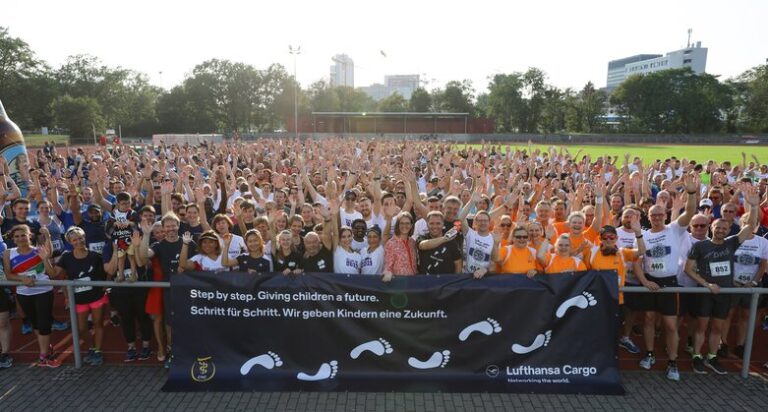
In 2023, many took part in the City Run, as the illustration shows. But maybe there will be even more this year.
CFG: As an initiator of the Office City Run, did you expect ten years ago that the event would turn out to become such a success? FD: The success is amazing, measured by participants and sponsors. Christopher Biaesch, Uwe Schnier and I would never have dreamed that this event would one day be so rewarding. At the outbreak of Covid 19, the entire show was at stake due to the lockdowns. That’s when we came up with the idea of carrying out the Office City Run as a virtual event. The ‘hybrid’ solution was kind of a life saver. The photos we receive from so many places, evidences the enthusiasm of runners, cyclists, and spectators. At the end of the day, the combination of joy and personally doing something to support orphans and other young people in need in Kenya, is extremely rewarding and keeps us going. That said, I would like to emphasize that Cargo Human Care ensures that all donations actually reach people in need in Kenya. In 2023, our administrative costs were 0.3%. We expect a similar figure this year.
CFG: How much money and which important projects have been raised through the running donations so far, and which have been initiated in the meantime? FD: In total, we raised more than 600,000 euros through entry fees and sponsorship money in the first nine years. Each year, the proceeds have been used to initiate or completely finance a unique project. These include the construction of the Happy Child School in Nairobi, located in the Kabiria slum; the construction of our John Kaheni Residence for vocational training; the financing of the operational costs of our Mothers’ Mercy Home for 120 children, and our own Medical Center. Further to this, we set up a desalination plant in Bubisa/Northern Kenya; constructed and expanded our Wings Academy school in Karare/Northern Kenya; and, in 2023, the funds obtained though the Office City Run were used to finance a secondary school for girls, also located in Karare. The facility was built in record time and is now in operation, enabling 53 female students to get a sound education. Formal education and vocational training are two sides of the same coin of our humanitarian aims, supplemented by medical care for the community surrounding our facilities, who are unable to pay a doctor when in need of treatment. Just to illustrate our support with data from our Medical Center: In 2023, our doctors and local staff carried out 41,000+ treatments on 13,000 patients, at an average cost of €17 per patient/year. This is something we can really be proud of, and increases our acceptance among the local people.
CFG: Are CEO Ashwin Bhat and his fellow board members, Frank Bauer and Dietmar Focke, actively involved in the Office City Run? And have they ever been to Nairobi to get a personal impression of CHC’s activities there? FD: All Cargo board members fully support the commitment of CHC, not only the current ones, but also their predecessors of the past years. They have always taken part in the run, either as active runners or simply by giving the starting signal. This year, Ashwin Bhat and Frank Bauer will also be running. All three have announced a visit to Nairobi, and we will be very happy to introduce our projects to them. Incidentally, many of the board members have also taken the opportunity to visit the homes and schools in person in the past – most recently Dorothea von Boxberg in JAN23.
CFG: Many Lufthansa Cargo employees working abroad are taking part in the Office City Run, be they in the Americas, the Far East or Africa, thereby promoting the goals of CHC. Which branches stand out? FD: That’s right. The virtual version of the Office City Run has become a very popular team event for Cargo employees and their customers at various destinations. Whether in Chicago, Shanghai, Beijing, Hong Kong or Singapore, large groups have taken to the course for a good cause in recent years. Last week, Florian Pfaff, VP Asia Pacific, probably set the provisional record in Singapore with 225 participants. Really amazing! Lufthansa Cargo customers are also increasingly getting involved by organizing their own events. Courier Network’s (CNW) President & Founder, Elazar Grinstein, for example, has motivated his employees worldwide to take part. This year, over 300 CNW runners from 23 nations are taking part. We already have registrations from 32 countries standing on our list – another new record. That said, another event stands out this year: Zlatko Zlatic, the station manager of Lufthansa Cargo in Nairobi, and his team have organized their own sports event for the 120 children at our Mothers’ Mercy Home. Pure enthusiasm for the kids, the fastest receives a medal and everyone gets a certificate. This is exactly the group of children and young people who will benefit from the proceeds of the Office City Run.
CFG: Running and cycling. Will there be additional participation categories in future? For example, a kind of “Ironman” CHC variant or a balcony run, where participants cover 5 or 10 km by running forth and back at home? FD: We have, in fact, already thought about expanding the event. Swimming would certainly be a logical addition to the offering. However, adding disciplines to the existing ones ups the complexity, which poses major challenges for the organizational team. Even running and cycling already demands an enormous amount of time and administrative and physical effort from the responsible team members. That’s why we are sticking to running and cycling for the time being.
CFG: Fokko, thank you for your insights and congratulations on CHC’s Office City Run anniversary.
Nota bene:
Before retiring in 2021, Fokko was fleet commander of Lufthansa Cargo’s MD-11 freighters, which regularly took him to Nairobi. In view of the poverty many children and young people were exposed to, he decided to incept Cargo Human Care (CHC) in 2007. Today, the organization is known worldwide for the voluntary commitment of many, thousands of sponsorships benefitting orphans and the support of medical staff to improve the health situation of children and residents living in the vicinity of CHC facilities, who cannot afford to pay a doctor due to lack of money. The Frankfurt Office City Run helps to fund many projects.
CargoForwarder Global’s ‘Spotlight On…’ series highlights a different aspect of the air cargo industry every week to illustrate its many career opportunities. This week, Denis de Farias Duarte (DD), Senior Manager Sales at FCS Frankfurt Cargo Services GmbH takes us through his experiences – what his responsibilities are, how he came to the industry, and what he advises to those considering becoming a part of it. His story alone showcases the very varied and international opportunities available if you happen to be ‘in the right place, at the right time’.
A chance encounter led Denis to the industry. Image: Denis Duarte
CFG: What is your current function and company? And what are your responsibilities? DD: Since April 2024, I work as Senior Sales and Marketing Manager at Frankfurt Cargo Services GmbH, a joint venture between Fraport AG and Worldwide Flight Services (WFS). I am responsible for the commercial management of China Airlines, Etihad Airways, IAG Cargo, Egypt Air Cargo, Asiana Cargo, Qatar Airways Cargo, Singapore Airlines Cargo and Saudi Arabian Cargo. Besides the airlines, I am responsible for business development with freight forwarders and other members of the air cargo community. And to conclude my responsibilities, I am leading the project to enable FCS to handle eCommerce. This project has a higher priority for our organization, because we aim to serve the eCommerce with a robust procedure and mitigation plan. These last aspects will allow us to identify our maximum capacities to handle eCommerce without jeopardizing our core business – air freight.
CFG: What does a normal day look like for you? DD: The exciting part of my job is that I do not have a normal day. Through the interactions with such different client portfolios (airlines, freight forwarders, and eCommerce players), not even a Monday has a classical path. I can state that, daily, I over-do my goal of 10,000 steps (FCS Warehouse is over 55.000 m²), and I have meetings with clients in all the languages I speak: Portuguese, English, German, French, and Spanish. And I hope I can soon add Mandarin, too. The contact with our Chinese clients and colleagues motivates me a lot to embark on this challenge.
CFG: How long have you been in the air cargo industry, and what brought you to it? DD: This journey started on 1st March 1998, over 9672 days ago. And the initiator of this career was an encounter with Juliano Graf at a student party in my University – Unicamp, in Brazil. I was at the beer stand on a cold July day (yes, South Hemisphere! [Winks]) so not so many people were buying beer, and he was a friend of a friend. We engaged in a conversation about Germany, and he told me that he worked for Lufthansa Cargo and that the company would open a position for intern. I still remember the day of the interview: I wanted to wear a tie. In my family, nobody ever wore ties. Only my neighbor knew how to knot a tie. I remember how careful I was to keep my tie. Then I arrived at the interview, and Michael Nicholson start explaining the business, and destinations Lufthansa Cargo covered. Then he turned to me and asked: ‘If we have to land in Mauritania, what would be an alternate airport?’ And I said ‘Nouakchott’. At the time, he didn’t know that my birthday present when I turned 8, was a world map poster. And whenever a place was reported on the news, I would run to the map and look for that place.
CFG: What do you enjoy most about your job? DD: The air freight industry offers different positions with completely different scopes. I have been lucky enough to experience all types of activities from Pricing to Warehouse Management, from Sales Planning to Designing and establishing KPIs. I was sometimes simply in the right place at the right time: Working for the Eastern and Southeastern European Region, when the EU started adding the new members and establishing Euro as single currency. Working for Qatar Airways in the year of the move from the old to the new airport. Working for Lufthansa Consulting at Rio Galeao assisting the airport to cope with the recently added new Terminal and the Olympics.
CFG: What do you see the greatest challenges in our industry? DD: The major challenge for the air freight industry is to gain total transparency. In the months when I worked for Hellman Worldwide Logistics, one of my responsibilities was the roll out of cargowise: a software that should support the freight forwarders with their activities. To my surprise, there were not a single standard among the users. The same applies to the airlines, where some use a different definition for the milestones established by IATA. And moving to the industry, then the aspects of purchase order and transport request gain nanomolecular nuances. Seeing some of the barriers of transparency for all members of the supply chain, I have greater admiration for the ONE Record IATA initiative. And I do hope that its implementation in a transport chain can open ways for all others.
CFG: What advice would you give to people to get into the air cargo industry? Any particular training they should aim for? DD: I studied Molecular Biology and Anthropology. That was my initial background for my carrier. And I believe if the industries would apply the principle of diversity in their recruitment, they would see enormous growth in their business, because the responsible actors bring different approaches to solving a problem. And students of other subjects different to Business Administration will have more alternatives in their career path. So, my advice is to embrace the goal and try different strategies to enter the industry. If you are learning Geography, add new languages or start working in the industry as external data entry support. The most pleasant part of this industry is that once you are in, you are part of a big family. And there will always be someone to give you the right advice in the most difficult moment.
CFG: If the air cargo industry were a film/book, what would its title be? DD: Daruma. Now please google it and find out about this powerful Japanese legend [Smiles!]
Thank you for sharing your experiences, Denis!
If you would like to share your personal air cargo story with our CargoForwarder Global readers, feel free to send your answers to the above questions to cargoforwarderglobal@kopfpilot.at We look forward to shining a spotlight on your job area, views, and experiences.
At Frankfurt Airport, CB Customs Broker digitally clears tens of thousands of shipments every day. This success story is now set to continue at Schiphol Airport (AMS), the first station outside of its German home turf. More locations are to follow as the Lufthansa Cargo subsidiary has plans to establish offices at those European airports reporting a high throughput of eCommerce.
Customs Broker was incepted in 2006 and started clearing eTail shipments in 2018 by automating and digitalizing the processes. “We are following the global eCommerce flows. The opening of the new office in the Netherlands at Schiphol Airport was a logical first step, as the location is a strategically important hub for eCommerce imports in Europe,” explains Uwe Glunz, Managing Director CB Customs Broker. The executive adds to this that “further European locations are planned.”
Image: Courtesy CB Customs Broker GmbH.
Eyeing the Belgian market next The management further emphasizes that it has already established a robust network of local partners at Schiphol Airport, and its team will be accommodated in the premises of sister company time:matters, allowing it full access to the airport infrastructure. However, a spokesperson stresses that eCommerce flows were not the sole factor for its pro Amsterdam decision. A comparison of the total import clearance volumes (not only eCommerce shipments) at AMS and LGG, has revealed that the two airports are similarly attractive for offering brokerage services. This said, Liège (LGG) stands next on the expansion list come 2025, when CB intends to penetrate the Belgian market.
One EU but different customs schemes The top priority currently is to integrate CB Customs Broker’s software with the Dutch DECO system. In Germany, the software is already certified for the equivalent of DECO, ATLAS IMPOST. Both systems are designed for customs clearance of shipments valued at less than 150 EUR, but they are not entirely identical despite EU regulations. However, the customs requirements for eCommerce imports in both countries are very similar, emphasizing the need for transparent, secure, and efficient transfer of shipment data to customs authorities before the imports arrive. CB Customs Broker’s software can digitally clear up to 20,000 shipments per hour, provided that the data is properly structured. CB Customs Broker emphasizes in a statement that onboarding teams offer support in structuring the avalanche of data.
Targeting Munich Asked what volumes CB expects to customs clear in AMS, either daily, weekly or monthly, the company says that it hopes to replicate the Leipzig (LEJ) figures (50 million digitally processed shipments in 3 years) or even the current Frankfurt (FRA) figures, where 70,000 shipments are cleared on average every single day. Next to Amsterdam and Liège, CB is targeting Munich Airport (MUC). “This aligns with our strategy of focusing on locations where our customers require our services and where we have established partner networks,” illustrated a spokesperson. Asked how the company earns money, she said that “we are a customs agency, which means we sell brokerage services. We earn money from every declaration we carry out on behalf of our customers.” Currently, 80 employees are listed on CB’s payroll, with two of them based in AMS. However, the Schiphol office is set to grow to 4+ employees.
Customer-centric solutions Why should a customer switch from his current customs agency partner to CB Customs Broker? Here comes the management’s answer: “In Germany, we are leading in automating, digitizing and providing customized customs solutions. We aim to be Europe’s leading digital customs broker. Innovation is very important to us. For example, with our software, we were the first customs broker in Germany to be certified for the ATLAS IMPOST scheme. We are investing heavily in the automation of processes. This reduces costs and error rates for our customers. Additionally, we prioritize a customer-centric approach. Our competitive advantage lies in our unique combination of deep customs expertise, innovation, and exceptional customer service.”
Missing a specific vocational education Given the above figures for customs clearing low-value eCommerce shipments, more and more companies seem to be willing to rely on CB Customs Broker’s services. However, despite the highly differentiated and demanding nature of customs brokerage,a dedicated Customs Agent vocational training program does not exist in Germany. Therefore, service providers such as CB Customs Brokers have no choice but to coach candidates themselves and finance the training courses out of their own pockets in order to have enough in-house experts who understand their demanding tasks from A to Z.
Last week, CargoForwarder Global took a look at the negative impacts of periods of intense heat on aircraft, shipments, and – last, but certainly not least – staff. This week, we examine the various measures that can and should be in place to mitigate heat impact on all these operations. After all, the aviation’s credo of Safety First can only be maintained if employees, fleet and cargo are protected and performing at their best.
There are plenty of measures that can and should be implemented during periods of extreme heat to ensure that aircraft, shipments, and staff are all kept safe, and operations continue to run efficiently. Let’s start with a focus on aircraft safety. As pointed out last week, high temperatures reduce air density, which in turn decreases lift. Thus, aircraft operations need to be adjusted accordingly. This may mean limiting cargo loads to reduce the aircraft’s take-off weight and ensure a safer take-off. Longer take-off runs may also be necessary due to reduced lift in hot conditions. Lastly, because extreme heat can stress aircraft engines, plan for more regular engine performance monitoring to check for overheating and allow for adequate cooling during operations. Also, conduct preventive maintenance to ensure the engines are always operating within safe parameters.
Things warp in the heat – and that includes AI’s interpretation of a freighter. Image: Illusionist/CFG
Ground control to Major Tom Similar rules apply for ground equipment. Whenever not in use, Ground Support Equipment (GSE), should be kept out of direct sunlight wherever possible – or at least covered in thermal blankets where shade is not available. High temperatures otherwise can cause Lithium-ion batteries to overheat, or pressure-buildups in gasoline or diesel fuel systems, and all vehicles with rubber tires can be at risk of heat-induced tire blowouts, which should preferably be avoided when it comes to heavy equipment such as pushback or fuel trucks. Whenever possible, the maintenance and refueling of all GSE should be scheduled for cooler parts of the day, such as early morning or late evening, also to reduce the strain on staff. During regular maintenance, particular attention should be paid to cooling systems, batteries, and tires, given their vulnerability to heat-related damage.
Keep the cargo safe and limit exposure For highly sensitive cargo such as live animals, pharmaceuticals, dangerous goods and perishables, there are already a number of mitigation measures in place to protect their integrity – these include temperature-controlled storage areas (equipped with reliable cooling systems and backup generators to maintain consistent temperatures even during power cuts), special containers with built-in temperature regulation and control, temperature sensors delivering real-time information, thermal or reflective covers, special temperature-controlled airside vehicles, and limited ramp exposure during loading/unloading. The latter depends on well-coordinated teamwork between ground handlers and cargo handlers is crucial to ensure quick transfers. Once in the aircraft, Auxiliary Power Units (APUs) or Ground Power Units (GPUs) can be used to maintain appropriate air conditioning in the cargo holds while on the ground. Some airlines, where the flexibility of their freighter planning allows, will ensure that aircraft due to transport animals, for example, are parked as close to the warehouse as possible, and scheduled to loading/departure during the night or cooler parts of the day. All cargo departing or heading to regions subjected to high temperatures benefit from the heat-resistant, quality packaging, and should be stored in shaded areas or temporary shelters during transit, before being loaded as quickly and efficiently as possible.
Hydration, clothing… Heat stress prevention among staff is an absolute must, since safe operations are otherwise at risk. There are plenty of ways in which an employer can make a difference. For instance, ensuring that employees have easy access to drinking water. Hydration stations should be set up near work areas and staff encouraged to ensure regular water intake to prevent heat-related illnesses. Likewise, air conditioning systems should be installed where possible, and workers allowed frequent, regular cooling breaks in shaded or air-conditioned areas to recover from heat exposure – breaks are particularly necessary during peak heat hours. Uniforms, too, play an important role in supporting staff in combating the heat. Their work clothes should be made from lightweight, breathable materials that reflect sunlight and allow sweat to evaporate. PPE designed for extreme heat conditions, such as cooling vests, can also help manage body temperature. When working outside, staff should be encouraged to use sunscreen and wear hats to protect against direct sunlight.
Training and the right working conditions It is important that employees are trained on the effects of heat stress and about heat-related illnesses, such as heat exhaustion and heat stroke. They should know how to recognize these symptoms in themselves and others and understand the importance of seeking immediate medical attention if needed. Companies should establish clear emergency procedures for dealing with heat-related incidents, including quick access to medical care and first aid. Staff should be instructed on how to contact medical personnel and what first aid they can administer while they wait for the medical staff to arrive. Regarding working conditions – aside from appropriate workwear and air-conditioned facilities, companies can also adjust the length and contents of shifts, so that more strenuous activities occur during cooler parts of the day. This and possibly shorter shifts can help reduce the risk of heat-related injuries. Similarly, staff should be rotated between outdoor and indoor tasks to limit their exposure to extreme heat. This reduces the amount of time any one worker spends in potentially hazardous conditions.
Talk to the customer! In all cases where measures may restrict or change operations in such a way that customers are affected, ensure that you are transparent in explaining the reasons why, being proactive in your communication and offering clear advance planning wherever possible. Always keep customers informed about potential delays or risks due to extreme heat and work with them to adjust shipping plans, such as opting for premium services that offer better protection against heat.
Be prepared As discussed last week, extreme heat significantly impacts air cargo operations by reducing aircraft performance, compromising cargo integrity, and increasing operational costs. Yet, with careful planning and the adoption of advanced technologies and strategies, these challenges can be mitigated. Adjusting flight schedules, enhancing ground handling procedures, and using specialized equipment all help to safeguard people, shipments, and equipment during periods of extreme heat.
This Sharkskin technology optimizes the aircraft’s aerodynamics, thus reducing greenhouse gas emissions by roughly 1%. Registration B-16786 is the first of the EVA Air B777 freighters to have already undergone this comprehensive modification at the airline’s homebase at Taipei Taoyuan International Airport. Eight other freighters will successively follow.
The lower the frictional resistance of an aircraft in the air, the lower the fuel burn. EVA Air is now putting this age-old insight into practice, as AeroSHARK (brand name) provides the ultimate answer to improving the aerodynamics of current aircraft variants.
EVA Air technicians cover a B777 with sharkskin foil – company courtesy
Small measure, great effect The eco-friendly solution was jointly developed at the beginning of this decade by chemical giant BASF and Lufthansa Technik (LHT). It was first launched in the fall of 2022, when a passenger B777-300ER of Swiss International Air Lines took to the air, coated with the riblet foils. By MAY24, Swiss’ entire fleet of B777-300ER had been modified with the new technology. Austrian Airlines, too, published a press release this week stating that it will be the first airline in the world to equip its fleet of four Boeing 777-200ER aircraft with the innovative surface technology from DEC24 onwards. The film significantly reduces frictional resistance, leading to lower CO2 emissions. Meanwhile, Lufthansa Cargo has coated five of its twelve B777 Triple Seven freighters with the foil and will continue doing so until the entire fleet is modified. At AeroLogic, a 50/50 DHL and LHC JV, management has not yet decided if and when the aircraft will be equipped with the sharkskin technology.
Savings of over 8000 tons of CO2 On the freighter side, Lufthansa Cargo began modifying its first B777F with the Lufthansa Technik/ BASF sharkskin, in FEB23. In its press release, the carrier announced that its entire freighter fleet will have been equipped with Sharkskin riblets by 2027. When the release was published, CEO Ashwin Bhat received angry calls from people complaining that sharks were being killed so that their skin could be stretched over the carrier’s aircraft to reduce drag. “This example shows that we need to communicate our measures to protect the environment much more clearly to the public,” was his takeaway from the shitstorm.
Win, win, win situation If several hundred square meters of the fuselage and engine nacelles are covered with the foil, the frictional resistance of the aircraft is reduced so significantly that fuel consumption and the resulting CO2 emissions are greatly lowered, improving the environmental footprint of any given airline. Extrapolated to EVA Air’s nine 777F aircraft, this translates into annual savings of 2,500+ metric tons of kerosene and more than 7,800 metric tons of CO2 emissions. “EVA Air is continually progressing towards its goal of achieving net-zero carbon emissions by 2050, constantly seeking the latest technologies to reduce our carbon footprint,” said Albert Liao, Executive Vice President Corporate Planning Division at EVA Air. The executive went on to say: “We are delighted to collaborate with Lufthansa Technik in applying the fuel-saving AeroSHARK surface technology to our 777F freighters. […] EVA Air will continuously monitor the actual fuel-saving benefits and further evaluate additional aircraft to be equipped with this technology.” According to the airline, all nine Triple Seven freighters will be sporting the sharkskin foil by 2027.
Inspired by nature “EVA Air is well known for both its pioneering spirit and its technical expertise; hence we are all the more pleased that we succeeded in convincing them about the benefits of AeroSHARK, the world’s most advanced sharkskin product for the commercial aviation industry,” said Dr. Wassef Ayadi, Senior Director Customer Relations OEM & Special Engineering Services at Lufthansa Technik. “We are proud that with AeroSHARK, we can provide international pioneers like EVA Air with a real quick-win measure to reduce the environmental footprint of their operations.” The development of the product was inspired by nature. The surface structure consisting of riblets measuring around 50 micrometers, imitates the properties of sharkskin and therefore optimizes the aerodynamics on flow-related parts of the aircraft.
EASA certified Exterior surfaces used in aviation are exposed to factors such as strong UV radiation as well as temperature and pressure fluctuations at high altitudes, among others. BASF and Lufthansa Technik have therefore focused the sharkskin development on achieving extreme durability and weather resistance. The key criteria for use in aviation operation include simple application and handling, as well as ease-of-repair. Prior to the products launch in 2022, Lufthansa Technik obtained a Supplemental Type Certificate (STC) for the 777F from the European Union Aviation Safety Agency (EASA), which is required for operation.
On Saturday (17AUG24), the freight carrier welcomed an additional Boeing 777F upon the aircraft’s arrival from the Boeing production site in Everett at its main hub Frankfurt Airport. It is the 18th B777F to join the cargo airline’s fleet, with 6 of this Boeing variant being operated by AeroLogic, a Leipzig/Halle-based, 50/50 joint venture between DHL Express and Lufthansa Cargo.
“¡Hola Argentina!” is emblazoned on the aircraft’s fuselage. This welcome greeting is part of a long-standing naming campaign. The program was initiated in 2013, when Lufthansa Cargo kicked off an international ideas contest, encouraging anyone to participate. Today, all of Lufthansa Cargo’s B777Fs have a baptismal name such as “Konnichiwa Japan”, “Buenos días México” or “Jambo Kenya”, to name just three examples. Ashwin Bhat, CEO of Lufthansa Cargo, welcomed the arrival of the latest freighter at its new home base Rhine-Main with these words: “We are delighted to welcome another efficient freighter to our fleet. This will allow us to provide our customers with additional capacity, continue to grow in the air freight market, and enable global business. This means that we can align our network even more closely with our customers’ needs and also offer solutions to market changes at short notice. In addition, the B777F remains the most efficient and modern freighter in its class. Our latest aircraft is therefore another important investment in our modern long-haul fleet and contributing to making air cargo more sustainable.”
¡Hola Argentina! has arrived in Frankfurt – courtesy: Lufthansa Cargo
Operational flexibility is increased The aircraft has a range of 9,000 km, reaches a cruising speed of 900 km/h, and offers the market a standard loading capacity of 103 tons. The B777F is currently the best-selling cargo aircraft in the world but is facing increasing competition from the Airbus A350F. Lufthansa Cargo has ordered seven factory-built B777-8Fs for delivery from 2027 onwards, assuming there are no production delays as with most of U.S. manufacturer Boeing’s jetliner programs. The new Triple Seven freighter can be used to consolidate existing routes or develop new ones. It enables Lufthansa Cargo to react quickly to changing market situations by shifting or increasing transport capacity, which ups its network flexibility.
Lufthansa Cargo’s network comprises 350 destinations Lufthansa Cargo’s global network is supplemented by four P2F-converted A321 freighters operated on short and medium-haul routes. In addition to Frankfurt, they also connect Munich with Istanbul, offering the market 28 tons of capacity per flight. Furthermore, Lufthansa Cargo manages the lower deck capacities of jetliners belonging to the Lufthansa Passenger Airline, Discover, Brussels Airlines, Austrian Airlines, and leisure airline, SunExpress. This way, the freight carrier covers a global network encompassing 350 destinations: a number that is soon due to further increase once the belly capacities of Italian’s ITA fleet are included. In contrast, Lufthansa Group member, Swiss International Air Lines manages its own cargo business, including the belly hold capacity of its subsidiary, Edelweiss.
A gap doesn’t stay unfilled for long. LATAM Cargo, last week confirmed again this age-old insight by deciding to increase its flights between the EU and destinations in South America from currently 10 to 12 per week, effective 01OCT24. CargoForwarder Global reported exclusively on 04AUG24. This decision follows the partial withdrawal of Martinair Cargo and Qatar Airways Cargo from these markets.
Will LATAM Cargo succeed in what two renowned freight carriers appear not to have or only partially managed to do? Making cargo flights between the EU and South America profitable in the long term? That is the essential question. Andrés Bianchi, Head of Freight at LATAM Cargo, provided the answer in an online call with CargoForwarder Global. His caveat: the conditions have to be right.
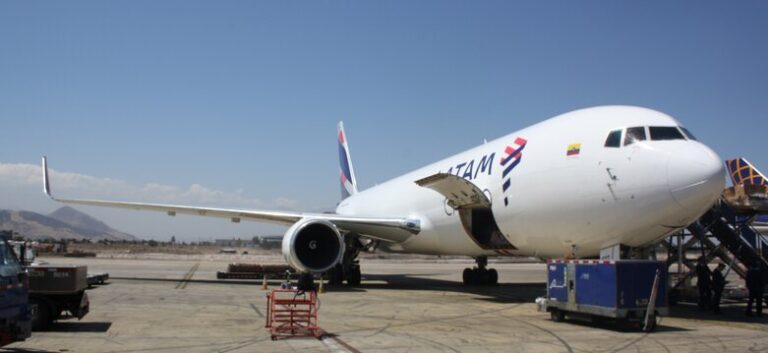
B767F of LATAM Cargo parked at Santiago de Chile’s Aeropuerto de Pudahuel, the country’s busiest by passengers and cargo – Picture: Courtesy LATAM Cargo
It’s all about the conditions The most important prerequisite: The shipment volume must roughly correspond to the available capacity. A B777F which can carry 100+ tons per flight, is too large, at least for routes between Europa and South America. In contrast, the much smaller B767-300F, which can carry around 50 tons per flight, fits better. The average load factor on westbound flights is very high, whereas the return flights from South America to Europe are moderately booked. However, when looking at the entire rotation, the B767F operation generates a surplus. This too, because its operation is cheaper compared to a B777F or even the B747-400 cargo jumbos used by Martinair to date, each of which can carry 120 tons per take-off. On routes to and from South America, this doesn’t match market demand and thus generates losses.
Right-sized freighter aircraft Hence, the right fleet utilization determines if a route can be operated profitably in the longer term – or not. This factor influences the overall calculation of the air transports on routes across the South Atlantic. Against this backdrop, LATAM Cargo decided already in mid-2017 to phase out its B777Fs and rely entirely on the smaller B767-300F, which have meanwhile grown to twenty units, confirms Cargo Chief, Bianchi. He also points to another cost advantage: his company offers the market a dense network within South America. This is an important sales argument for customers, including belly transports of shipments transferred at core hubs like Sao Paulo, Curitiba, Buenos Aires, or Santiago on commuting flights.
Interline agreements instead of route joint ventures Asked about route joint ventures with partners based on metal neutrality, i.e. with coordinated transport rates, such as those agreed between Lufthansa Cargo and United Cargo or Cathay Cargo, he said that his company prefers interline agreements. This is backed by a figure: LATAM has signed around 80 such agreements with partner airlines, six to eight of which exist between LATAM and airlines from Japan, China, Hong Kong, and Taiwan. LATAM itself does not operate own flights across the Pacific.
1,700 tons per week Upcoming tasks include the consolidation of the cargo network, the executive announces, combined with an even closer integration of passenger and freighter flights, i.e. belly and main deck cargo. “Our goal is to transport 1,700 tons per week in our freighter’s main decks and the holds of our passenger fleet,” he says, delivering a precise figure. However, instead of tonnage or capacity issues, the stricter customs regulations in Brazil are currently at the top of his agenda. A new system demands that customs duties are to be levied even on small consignments which were so far exempt from such taxes. This ups the government’s budget but loads a lot of bureaucracy on the shoulders of airlines, handling agents, and customs inspectors. The system is still in its infancy but will become mandatory sooner or later.