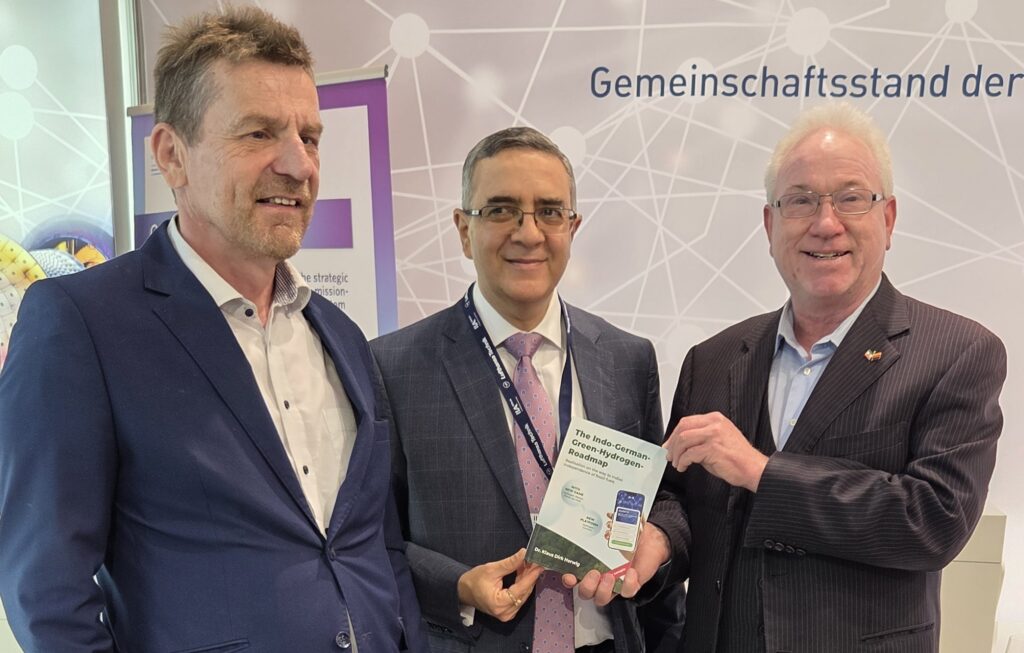
Roland Beason, Chief Operating Officer, Global K9. Image: Global K9
The recent Air Cargo Conference 2026, held in Orlando, Florida, on 15-17FEB26, and hosted by the Airforwarders Association, the Air and Expedited Motor Carriers Association, and Airports Council International – North America, included a panel on Dangerous Goods, which also look at regulatory issues around the screening of lithium batteries. Panelists were Sandy Gregory of Gregory Logistics, LLC, Jim Powell of Transportation Development Group, LLC, Jennifer Kirkland of AllTransPack, Inc, Christopher Garcia of the Federal Aviation Administration, and Global K9’s Chief Operating Officer, Roland Beason. He used the platform to urge the Transportation Security Administration (TSA) to clarify regulations around its Third-Party Canine-Cargo (3PK9-C) Program. The 3PK9-C program is part of TSA’s Certified Cargo Screening Programs (CCSP) and was initially developed to focus on the detection of explosives. Meanwhile, with the increase in lithium batteries and the risks they pose to air cargo, more dangerous goods need to fall under the 3PK9-C program, which itself requires greater detail and less room for confusion or misinterpretation. “The goal of these programs should be to harmonize screening operations across the board, making sure that every canine team for every screening provider is operating to the same standard,” he said, adding: “From a dangerous goods standpoint, the 3PK9-C Program is not clearly defined. As items, such as lithium batteries, continue to be prolific in air cargo shipments, it is only becoming more important that we have clearly defined, indisputable regulations tailored to specific items – it is paramount to ensuring compliance and safety. We are hopeful that later this year, changes to the 3PK9-C program will be confirmed in line with our recent edits and comments, of which the TSA has accepted the vast majority.”
400 tons of blueberries were urgently needed in NY. Image: ACS
Or at least the raw materials for them. Air Charter Service handles all kinds of interesting shipments, including saving the day during an apparent blueberry drought. It was tasked with the urgent transportation of 400 tons of blueberries, last year, and arranged for them to be brought from Peru to New York. Ana Benavente, CEO of ACS São Paulo, commented: “Peru’s main blueberry harvest runs from August to November, peaking in September and October. The country is one of the world’s top blueberry exporters and, during these months, export volumes spike sharply — too much for regular passenger belly capacity to handle, especially on the Lima to New York route. Supermarkets and distributors in the U.S., especially on the East Coast, require fresh produce to be delivered within 24–36 hours of harvest. When a supplier’s yield exceeded the expected capacity during peak harvest season we were asked by one of our clients if we could arrange the urgent transportation of 440 tons of the fruit from Peru up to New York over a two-week period. Perishable cargo rarely flies on full charters, but the sheer volumes dictated that they were needed this year. We sourced four Boeing B747-400Fs, that were able to carry out the flights, each with 110 tons on board, with a few days in between each rotation. One of our team flew with the first aircraft to ensure everything ran smoothly, and he coordinated with the warehouse when the aircraft arrived, to ensure the cargo was properly broken down and successfully delivered to the trucks in as swift a time as possible.”
Global GSA Group has partnered with Alaska Airlines as its General Sales & Service Agent (GSSA) to support the airline’s new direct flight connections from Rome-Fiumicino to Seattle, starting late April. Global GSA Group will be responsible for developing Alaska Airline’s freight operations from Italy, helping to strengthen its Seattle hub as an international gateway. Daily Boeing 787-9 services will provide Italian forwarders with connections to over 100 destinations in the U.S., Asia-Pacific, South Pacific, and Latin America, and will likely be loaded with commodities such as aircraft parts, high fashion, pharmaceuticals, food, and machine parts. As the fifth-largest U.S. carrier and 15th largest globally, Alaska Airlines views cargo as a crucial revenue stream amid its European expansion and Asian-focused growth.
Aytekin Saray, Chief Executive Officer of Global GSA Group, said: “At Global GSA Group, we enjoy a very close cooperation with our Italian forwarders and will ensure that we maximize the benefit of this new cargo connection both for the community and Alaska Airlines. Rome-Seattle is a particularly attractive routing as it offers an additional, direct service into the Pacific Northwest and beyond, for the great variety of high value, special goods that Italy exports and Global GSA Group are experts in dealing with. We are proud to call Alaska Airlines our newest partner and customer.” Ian Morgan, Alaska Airlines Vice President of Cargo, commented: “Alaska Airlines and Hawaiian Airlines are two carriers with tremendous histories – more than nine decades apiece – placing them at the forefront of commercial aviation. Now we’re creating a brand-new carrier with that legacy of almost 200 years of history. We are building the foundation for future growth, and our global expansion out of Seattle is leading the way. Our partnership with Global GSA Group allows us to establish exciting new shipping connections between Rome and Seattle – and up and down the West Coast, where we serve more destinations than any other carrier. We have such a unique destination mix, which includes Alaska and Hawaii, of course, but also the 115+ destinations we serve around the world. With Global GSA Group, we are uniquely positioned to be an important new partner for the forwarding community.”
For sure, it’s not the only airport to handle flowers during the Valentine’s Day season, however, given CargoLand by LGG’s geographical location and its total cargo focus (including all the mod-cons needed for temperature-controlled, commodity-specific handling), it offers a bouquet of interesting statistics around this emotion-heavy commodity. For example: “Valentine’s Day represents one of the most demanding logistics peaks of the year for the global flower industry,” the release states – one that CargoLand by LGG is well-prepared for. “Each year, hundreds of tons of fresh flowers arrive within a matter of days, requiring flawless coordination, strict temperature control and absolute reliability. At this scale, speed, temperature control and coordination make all the difference. Built around a cargo-first, 24/7 operational model, CargoLand by LGG has established itself as a leading European gateway for time-critical perishables, with flowers accounting for nearly 20% of total annual cargo volumes. This year, 13,850 tons of flowers were handled during the four-week Valentine’s campaign, supported by 45 additional charter flights on top of regular scheduled operations, demonstrating the platform’s scalability during extreme peaks.”
Preparation is crucial, and that begins far ahead of the actual event, with all cargo community players (ground handlers, freight forwarders, trucking companies, airlines and public authorities) coming together to plan resources and procedures – particularly with regard to any new regulatory requirements supported by the AFSCA-FAVV (Belgian Federal Agency for the Safety of the Food Chain). The optimum mix of people and real-time digital communication is what ensures smooth processes in the end, and the safe and swift transfer of millions of flowers coming in from Kenya, Ecuador, Colombia, Ethiopia, and other Latin American gateways such as Quito and Bogota. Frédéric Brun, Head of Commercial Cargo & Logistics at CargoLand by LGG explained: “Flowers are far more than a commodity; they carry value, emotion and trust. Every shipment deserves absolute care. We thank AFSCA-FAVV and the customs authorities for their unwavering 24/7 support during this peak. Through anticipation, close cooperation and robust cold-chain and digital processes, we ensure speed, reliability and peace of mind for growers, exporters and buyers worldwide on Valentine’s Day and beyond.”
Alain Tulpin leads an enviable life, one might think. He works for six months, then spends the other half of the year basking in the Spanish sun or tending to his newly-acquired farm in Flanders. Sounds like a healthy work-life balance. At least at first glance. But the reality is a little more complex, as he explained in an interview with CargoForwarder Global at the recent Fruit Logistica trade fair in Berlin.
Hard work, not laziness, is his credo. It took him years to become one of Europe’s largest strawberry importers. Though, on his way up, it certainly helped that his family has been in the fruit business since 1912. Today, the Tulpin Group operates 45 refrigerated trailers, but rents additional ones if needed. This season, 30 more were needed.
Alain Tulpin pictured at the Fruit Logistica in Berlin. He heads the Tulpin Group, founded in 1975 – photo: CFG/hs
Widespread network Nowadays, the strawberry specialist operates branches at the airports of Ostend, Brussels, and Liège. Tulpin is also present at eleven other European airports (through local representatives), including Frankfurt, Luxembourg, Paris-CDG, and Amsterdam. In addition to strawberries, the range of imports includes flowers, plants, asparagus, fish, and meat stemming from Colombia or Honduras. November to March is traditionally strawberry peak season. This delicious fruit accounts for 80% of the Group’s total turnover. As soon as the season is over in late winter or early European spring, and the last shipment has been delivered to the consignees, preparations begin for the new harvest in November. Capacity agreements with airlines must be negotiated early on, and charter contracts agreed upon. In some cases, the Tulpin Group also rents the cargo holds of passenger aircraft to transport its own shipments when demand exceeds available capacity.
Fruitful year Tulpin says that the ‘25/’26 strawberry season was particularly successful. His group imported 20,000 tons – most of them from Egypt. (An increase on the previous year’s 15,000 tons). The majority was flown in via Ostend Airport in Belgium, with other shipments also arriving via Hahn Airport (HHN) or Maastricht (MST). Tulpin’s key contractual carrier is Egyptair Cargo, which flew to Ostend several times a day during the peak season, operating widebody A330F complemented by smaller A321P2F aircraft. Due to Egyptair Cargo’s e-commerce commitments, Cairo-based AirMaster jumped in and secured the air transport of strawberries to European destinations, from the end of November until Christmas. Royal Jordanian flights completed the supplies.
Strawberry accord However, in mid-January, Ostend suddenly became a bottleneck for the strawberry flows. Local farmers blocked the airport in protest of the Mercosur agreement between the EU and four Latin American countries. This meant that strawberry-loaded trucks bound for the UK were temporarily unable to leave Ostend and travel via the Channel Tunnel to deliver the goods to wholesalers in or around London. As this fresh produce is very temperature-sensitive and therefore a perishable commodity, the strawberries were at risk of spoiling if the blockade at the airport continued for a longer time. However, a ‘strawberry agreement’ negotiated by Ostend’s Mayor, John Crombez, and representatives of the local farming community, saved them from this fate. After lengthy consultations, Tulpin’s trucks were finaly allowed to pass the blockade. In an average season, Tulpin operates between 15 and 18 trucks a day, loaded with strawberries, from continental Europe to the UK.
Armyworm endangers crops Danger always lurks on the horizon, as the armyworm has taken root in North Africa. The pest originates from the USA, but has made its way across the Atlantic and is spreading rapidly. In addition to corn and wheat, it also infests strawberry plantations, causing considerable damage. It is therefore important to permanently monitor the fields in order to detect the worm at an early stage. Plant protection agencies in Belgium, Germany, and the Netherlands are meanwhile on alert to stop the further advance of the invasive pest. “During inspections of our imports, professionals detected only a single armyworm in a strawberry shipment we imported,” Alain sums up. He hopes it stays that way.
The integrator branded a Boeing 777 freighter to function as a flying ambassador of its focus on Life Science and Healthcare Logistics (LSH). The move is part of DHL’s cold chain network expansion, designed to reshape the supply of temperature-sensitive medicines, vaccines, pharmaceutical products and cell & gene therapies.
The B777 freighter sports DHL livery but belongs to Michigan-based Kalitta Air. Last week, it began operating flights between the pharma hotspots Brussels (BRU) and Cincinnati (CVG), with additional routes in Europe, the Middle East, Asia, and Latin America to follow soon. The BRU-CVG corridor links the U.S. Midwest, home to leading pharma companies, directly with one of Europe’s most advanced life sciences ecosystems in Belgium. By avoiding coastal congestion, the lane provides a seamless, temperature-controlled pathway for high-value biologics and time-critical cell and gene therapies. At the Brussels end, the route is supported by BRUcargo’s 45,000 m² of pharma-only zones, delivering clinical-grade integrity end to end. Together, this infrastructure establishes a resilient connection between two of the world’s most important healthcare markets, emphasizes DHL in a release.
The DHL branded freighter belongs to Kalitta Air’s fleet. Courtesy of DHL
No sub-fleet for cool products Depending on network requirements, the aircraft will also be deployed on other global routes in line with DHL’s expansion of its logistics capacities in the life sciences and healthcare sectors. A spokesperson confirmed to CargoForwarder Global that there are no plans to establish a separate sub-fleet for cool products. Instead, DHL is improving uplift flexibility across the entire network by optimizing routes and prioritizing capacity on high-demand lanes to better support the transport of temperature-critical life sciences and healthcare items. He added that the aircraft does not only transport these kinds of sensitive products but also carries other express and general cargo shipments as part of the larger DHL network.
30+ GDP-compliant hubs Countries prioritized for further expansion of the Airfreight Cold Chain Network include India, Brazil, Singapore, Germany, Japan, South Korea, the United States, and Ireland. These routes are designed to meet strict regulatory requirements and maintain product quality throughout the entire supply chain. Once established, the expanded network will include more than 30 GDP-compliant aviation hubs and gateways. It will support DHL’s mission to strengthen global health logistics and meet rising demand for fast, reliable, temperature-controlled transport of pharmaceutical products and medical supplies. Patient safety remains central to the service, stresses DHL. Combined with significant investments in temperature-controlled ground infrastructure, the network reduces reliance on heavy, costly packaging and refrigerated air freight containers, offering an economical service focused on quality and minimizing temperature excursions.
Every Sunday evening, CargoForwarder Global publishes a ‘Spotlight On…’ a particular contributor to air cargo, to illustrate the many different careers and roles this industry offers. Alongside traditional stakeholder posts at airlines, airports, freight forwarders, handling agents, ground service providers and the like, is a growing number of aviation technology startups designing solutions to bring about a cleaner, more efficient sector. Aerovect is one such company. It develops autonomous driving systems for airport ground support equipment and is focused on automating ramp and cargo operations for airlines and ground handlers. This week, its Co-Founder, Eugenio Donati (ED) takes the spotlight to talk about his role and share his views and experiences of the air cargo industry.
Don’t hesitate! Reach out and show up. Image: Eugenio Donati
CFG: What is your current function and company? And what are your responsibilities? ED: I’m the Co-Founder of AeroVect, a company that develops and deploys autonomous ground support equipment (GSE) solutions for airlines and airports. Together with my co-founder, Raymond, I’m responsible for setting the company’s vision, leading our global go-to-market efforts with airlines and airports to deploy our solutions at scale, building our team, and managing our operations.
CFG: What does a normal day look like for you? ED: There really isn’t such a thing! Some days I spend most of my time working directly with our customers on current or upcoming deployments. Other days are focused on meeting with our team and prospective hires we want to bring on board. I travel quite a lot (100+ flights in 2025!), as spending time in person with our customers and being boots on the ground in the operations where we’re deployed is something I consider exceptionally important.
CFG: How long have you been in the air cargo industry, and what brought you to it? ED: We started AeroVect about five and a half years ago, right after graduating from college. Two things drew us in. First, a genuine passion for aviation, airlines, and airports – it’s an incredibly dynamic and exciting industry. Second, we saw an opportunity to have meaningful impact. Especially post-COVID, airlines faced growing demand alongside significant workforce constraints. We wanted to build solutions that could help the industry unlock its next phase of growth by empowering teams on the ground to do more with the resources they have.
CFG: What do you enjoy most about your job? ED: Two things stand out. First, the people I get to work with – both our customers, many of whom bring years or decades of aviation experience, and our own team, whose energy and passion for what we’re building is truly the biggest highlight of this journey. Second, the reward of seeing our technology deployed in live operations with some of the world’s largest airlines and airports. There’s nothing quite like watching something you’ve built make a real difference at scale.
CFG: Where do you see the greatest challenges in our industry? ED: I’d highlight two. The first is the lack of cohesive, harmonized policy and regulation around automation across geographies. Some regions are meaningfully more advanced and flexible in setting frameworks that allow airlines and airports to benefit from new technology, and I think there’s a real opportunity for the industry to work toward greater alignment globally. The second is that demand for aviation – whether commercial or cargo – has outpaced the industry’s labor supply. There simply aren’t enough people to meet the growing needs, and even with automation, attracting and retaining talent remains a meaningful challenge for the industry.
CFG: What advice would you give to people looking to get into the air cargo industry? ED: I’d say the industry is so much more welcoming than you might think. When we started AeroVect, I was 22 years old. I didn’t have previous experience in air cargo or aviation, and I didn’t have any real connections to this space. And yet the industry welcomed me with open arms – that warmth and generosity truly motivated me to keep building in this space. So, my advice would be: don’t hesitate. Reach out, show up, and you’ll find a community that’s genuinely excited to bring in new perspectives and new energy.
CFG: If the air cargo industry were a film/book, what would its title be? ED: ‘Everything Flies’ – because the sheer breadth of what air cargo moves around the world is extraordinary.
Many thanks, Eugenio!
If you would like to share your personal air cargo story with our CargoForwarder Global readers, feel free to send your answers to the above questions to cargoforwarderglobal@kopfpilot.at We look forward to shining a spotlight on your job area, views, and experiences.
How does selling cargo IT for the big incumbents differ from working with a team like Awery, for instance? It’s a question that deserves a deep dive, and one that CargoForwarder Global’s publisher, Heiner Siegmund, asked me recently at the Fruit Logistica event. This question gets straight to the heart of the tech divide. After over a decade of working in the sector, Chris Gessner joined Awery and found a platform that covers everything mid-size airlines and GSSAs need, but with a modern, cloud-native architecture that isn’t held back by decades of old code. Here is what the air cargo and IT expert has to say:
For more than the last decade, I have been selling cargo management systems for the big names that dominate this industry. I know the pitch decks and the standard RFPs by heart. I also know something that rarely made it into those conversations: most airlines buy these platforms and pay for capabilities they will never use. Tier-one carriers with complex global networks need what large IT providers offer. But tier-two and tier-three carriers routinely buy the same product, and I mean the same architecture, same cost structure and the same 12-month implementation – not because it fits, but because there was no credible alternative. Today, there is.
Sometimes small fish outsmart bigger rivals in the competition pool – courtesy: dreamstime
Overserved and underserved at the same time The paradox of mid-size carriers working with big CMS providers is that they get more platform than they need and less attention than they deserve. They absorb the cost of complexity built for the world’slargest airlines while their own change requests sit in a backlog behind higher-priority accounts. Consider a carrier running belly cargo across forty destinations supported by two or three freighters. Its requirements are real: booking, rating, warehouse, ULD control, revenue accounting, e-AWB and now ONE Record. But those do not demand the overhead of a system built for a carrier processing two million tons across six continents. Getting support means jumping through hoops with different managers. Plus, the real decision-makers are buried under too many layers of management. For a mid-size carrier trying to grow, this becomes a strategic disadvantage.
What the right fit looks like First, interoperability. Awery is compatible with all major cargo management systems. It does not demand that you rip and replace your ecosystem. For carriers with ground-handler integrations or passenger-side systems like Amadeus Altéa, that compatibility is often why the conversation starts. Awery doesn’t try to own all the data. Instead, it plugs you straight into the best sources for schedules and market info. This way, you aren’t stuck using just one provider. Second, scope. Awery is not merely a CMS. It is a full airline ERP [Enterprise Resource Planning] with crew management and flight operations integrated directly alongside cargo, commercial, finance, and maintenance. And yes, all on one single platform. For a mid-size carrier operating two or three freighters alongside belly cargo, this changes everything. Instead of juggling half a dozen different systems for cargo, crew, and finance, you get everything in one place. Your flight plans and revenue data finally talk to each other in real-time, a setup that used to cost the biggest airlines millions of dollars and years of custom work. Awery delivers it out of the box.
The AI advantage of being agile Legacy platforms carry decades of technical debt that makes integrating AI slow and expensive. Retrofitting machine learning onto a system designed a decade ago is fundamentally different from building it in from the ground up. At Awery, AI capabilities are native. eMagic uses AI and OCR [Optical Character Recognition] to convert unstructured email booking enquiries into standardized cargo data in seconds. vMagic handles voice-based enquiries across multiple languages, turning verbal requests into structured, actionable data. These are production tools, not roadmap items. The intelligent automation once reserved for carriers with dedicated data-science teams now deploys in weeks, not years.
Earning trust without the legacy brand Cargo is mission critical. Airlines need a provider that treats cybersecurity seriously, aligns with IATA standards, and will still be there when ONE Record becomes the norm. But familiar names are not immune to disruption. The shift is already happening. Major tier-one carriers are leaving the ‘big name’ legacy providers they’ve used for decades. Despite years of expensive custom builds and added modules, these traditional systems are failing to solve core issues like capacity management. Legacy is no longer a safety net; it’s a bottleneck.
The new standard of trust Awery, as an active IATA partner and the developer of PHP:ONE, the open-source ONE Record server that has won four consecutive IATA hackathons, is proving that technical leadership isn’t reserved for the old guard. Even industry leaders like Etihad Cargo have integrated Awery’s charter module into their ERP operations. When you are a challenger, trust isn’t inherited, it’s earned with every successful go-live, every uptime report, and every support call answered by someone with the power to help.
The inflection point Major shifts in air cargo IT, like cloud migration, digital AWB mandates, ONE Record, and AI, favor agility over incumbency. For tier-two and tier-three carriers, the fundamental question has changed. It is no longer: “Can a challenger handle my operations?” It is: “Is staying on an oversized, under-responsive platform costing me more than the comfort of familiarity is worth?” Smart money already knows the answer. This was, in a nutshell, my conclusion in the discussion with CargoForwarder Global at Berlin’s recent Fruit Logistica.
The Star Alliance Partner airlines signed a Memorandum of Understanding as starting point for a comprehensive Joint Business Agreement. This will include the airlines of the Lufthansa Group, Air India and Air India Express. However, the group’s air cargo daughter, Lufthansa Cargo is left out of the MoU, at least for the time being. This is rather surprising given that India is an increasingly important market for the freight carrier, and is firmly anchored in its intercontinental network, as Lufthansa Cargo’s communications department emphasizes when approached by CargoForwarder Global. With its growing economic role as producer and/or importer of pharmaceuticals, automotive and high-tech items, demand for reliable air freight connections between India, Europe, and other regions of the world is growing. “Through our own freighter capacities and the belly capacities of the Lufthansa Group Airlines, we offer stable transport solutions and thus support the growing trade relations between India and Europe – in line with our mission of enabling global business,” states spokesperson, Jan Paulin.
Image: Courtesy Lufthansa Group
FTA – big door opener This became evident on 27JAN26, when the EU and India signed a free trade agreement (FTA). The deal is expected to strengthen economic and political ties between the world’s second and fourth largest economies, spurring passenger and cargo traffic. India will grant the EU massive tariff reductions (-96.6%) that are forecast to double EU exports to India by 2032, while the Indian agri-food sector but also its fast-growing chemical, IT or pharmaceutical industry will greatly benefit from the deal. Overall, the trade liberalization will save around €4 billion per year in duties on European products imported by India. Though Lufthansa Cargo is not part of the MoU, the flight frequencies demonstrate how important the Indian market is for the cargo carrier. Lufthansa’s freight arm offers the market daily B777F operations to and from Frankfurt. The freighters serve BOM, DEL, HYD, MAA, and BLR alternately. Its parent, Lufthansa Passenger Airlines, serves India 44 times a week, with 25 flights departing in FRA and 19 in MUC. In addition, its group members, Swiss and ITA Airways, also operate flights to India. The lower decks of the aircraft, filled with pallets and containers, contribute to high cargo loads.
25% of the world’s GDP The Memorandum of Understanding, signed by Lufthansa CEO, Carsten Spohr and Campbell Wilson, his counterpart at Air India, is aimed at capitalizing on new growth opportunities arising from the recently concluded free trade agreement between India – the world’s most populous country – and the European Union (EU). The EU states are India’s largest trading partners for goods. Bilateral trade currently totals €180 billion per year. Both economic powers account not only for a quarter of the world’s population, but also for a quarter of the world’s gross domestic product (GDP). The latest agreement creates nothing less than the world’s largest free trade area.
From black sheep to desired partner For many years, Star Alliance member, Air India, was considered the unloved black sheep of the airline association due to poor service, minor and major scandals, and numerous passenger complaints. But that has changed. Since 2023 at the latest, Air India and the Star Alliance intensified their relations, following a multitude of service improvements initiated by management, combined with the order for 470 Airbus and Boeing aircraft. This was supplemented a year later by adding a further 100 Airbus jetliners to the orderbook. These initiatives also improved the airline’s reputation in aviation circles.
New chapter in aviation During the MoU signing ceremony, Carsten Spohr, Chairman of the Executive Board of Deutsche Lufthansa AG and Chief Executive Officer of the Lufthansa Group stated: “Today’s agreement […] is a strong signal of our mutual determination to open a new chapter in aviation between the EU and India, following the landmark trade agreement between both economic regions. Together with Air India, we will strengthen our access to the aviation market with the highest growth rates worldwide. The Lufthansa Group is already the most successful and most popular European airline group among customers in India. In the future, we will contribute to deepening economic and cultural relations between India and Europe with even more connections. With our new long-haul aircraft and Lufthansa Allegris and SWISS Senses on board, we are offering a significantly improved premium travel experience in all classes on more and more routes, including to India.”
Unlocking greater value Campbell Wilson, Chief Executive Officer and Managing Director, Air India, responded to this: “This milestone in our deepening relationship with the Lufthansa Group is great news for travelers and enterprises alike between India and Europe. As Air India continues to expand its global footprint with a fast-modernizing fleet and transformed product and service offerings, this framework enables us to explore closer cooperation on multiple fronts to meet the growing trade, commerce, and people-to-people ties between our respective regions. This would unlock greater value for our common customers and respective shareholders, and we look forward to progressing these initiatives together with the Lufthansa Group.”
Strengthening the ties Both executives spoke of an initial step and emphasized their intention to expand the collaboration. The focus will be on further coordination of flight schedules and route networks in selected markets so that passengers can benefit from better connections and shorter transfer times. In addition, both partners want to combine their sales and marketing activities for flights between the Lufthansa Group’s European home markets and India, better integrate frequent flyer programs, and optimize airport processes for improved customer comfort.
Long-standing relationships Lufthansa can look back on more than 60 years of shared history with India. The airline first landed in Delhi as early as 1959. This connection has been continuously expanded. A codeshare agreement with Air India has existed since 2004, and in 2014 the Indian airline joined the Star Alliance co-founded by Lufthansa. In FEB25, the Lufthansa Group and Air India announced the expansion of codeshare agreements between Lufthansa, SWISS, Austrian Airlines, and Air India.
The Hinduja JV In this context, it should also be noted that Lufthansa Cargo once had close ties to India. Together with the Hinduja Group, it founded its own cargo airline in 1996, called Hinduja Cargo Services, with Hinduja holding 60% and Lufthansa Cargo 40% in the airline. The fleet included three B727-200 freighters, which served routes between Lufthansa Cargo’s local hub, Sharjah in the UAE, and destinations in India. In APR00, the company was dissolved because the forecast traffic results had proved too optimistic. And thanks to its then-new MD-11F freighter fleet, Lufthansa Cargo was able to fly nonstop to India, eliminating the need for Sharjah as a hub.
The first of January, this year, saw Pauline Dhillon (PD), step into the role of Chief Executive Officer of Cargojet. For over two decades, Dhillon has contributed to Cargojet’s journey – from its inception, through to it becoming Canada’s leading all-cargo airline, known for dependable service and a strong customer focus. Having held increasingly senior roles in corporate marketing and government affairs, and later overseeing a broad range of corporate and operational functions – most recently as Chief Corporate Officer and co-CEO – Dhillon brings a deep understanding of the company’s values and operations to her latest leadership role. Her appointment signals both continuity and renewal – a natural next step for someone who has shaped so much of Cargojet’s story from the very beginning.
In interview with CargoForwarder Global (CFG), Pauline Dhillon reflects on the company’s evolution, the lessons learned along the way, and how Cargojet is preparing for the next phase of growth in a rapidly changing logistics landscape.
Pauline Dhillon, Cargojet CEO. Image: Cargojet
CFG: You are a founding member of Cargojet and now officially became CEO of the airline on 01JAN26. What aspects of the business received your immediate attention at the start of this year and what important decisions are forecast for 2026? PD: Since officially becoming CEO on 01JAN26, my immediate focus has been on ensuring continuity of Cargojet’s operational performance, which has been central to the company since its founding. I have also prioritized supporting the next phase of international expansion, including the operation to Europe. Equally important has been maintaining our people-first ‘ONE TEAM’ culture, with over 2,000 team members driving 24/7 operations.
CFG: Regarding the Cargojet fleet: The average age of your 44 freighters is around 30 years. When are you planning a rollover, given that older B767 and B757 freighters generate higher greenhouse gas emissions? And what freighter variants is Cargojet planning to purchase or lease? PD: As of 30SEP25, Cargojet operates a fleet of 41 freighter aircraft, 24 Boeing 767s and 17 Boeing 757s. We believe our current fleet size is sufficient to meet our growth needs for at least the next 12 months. Boeing 767 and 757 aircraft are the workhorses of the air cargo industry, and are operated by many major air cargo airlines, including major carriers like UPS and FedEx. We expect these aircraft types to be mainstays of the air cargo industry for some time, and our fleet has years of safe, efficient, and profitable service ahead of it. We focus on reducing our emissions through fuel-efficiency initiatives using our existing fleet and are actively pursuing a number of opportunities to reduce our overall fuel burn and therefore greenhouse gas emissions, including optimizing our fuel levels with flight plans and optimizing certain maintenance activities to ensure engines are performing at their maximum efficiency.
CFG: In Europe, Liège (LGG) is the only airport served by Cargojet. Are additional destinations in the EU block an option that Cargojet considers serving? PD: At present, Liège (LGG) serves as Cargojet’s primary gateway into Europe, providing a reliable foundation for our international expansion. While additional EU destinations are being evaluated, any future service will be guided by market demand, operational feasibility, and alignment with our existing network.
CFG: What are the main commodities that Cargojet carries and where do you see its USP in air cargo? PD: Cargojet specializes in transporting key commodities such as e-commerce, seafood, automotive parts, live animals, and AOG shipments. The airline’s unique selling point is its industry-leading on-time performance, consistently exceeding 98%. Its coast-to-coast overnight domestic network enables the shortest cut-off times in the Canadian market. With a cargo-only operating model, Cargojet is purpose-built to handle time-critical logistics with reliability and precision.
CFG: You mention Cargojet’s 98+% on-time reliability – what is the secret to this success? PD: Our on-time reliability depends on our people – our team – supported by disciplined execution and a culture built around consistency. What has made Cargojet truly successful is our team; we would not be who we are or what we are without them. With a singular focus on air cargo, we’re able to provide our customers with the personal attention they deserve and the dependable service they expect, night after night. That focus, reinforced by our culture, drives our operational excellence and ultimately our success.
CFG: What has remained the same and what has changed within the airline, since its founding? And where do you see Cargojet in 2030? PD: Since its founding, Cargojet’s core focus on reliability, customer trust, and people-driven performance has remained unchanged. What has evolved is the scale of the business, growing from a single aircraft operation to a global network spanning North America and Europe. The airline has also expanded beyond domestic overnight operations to offer international and charter services across more than 47 countries. Looking ahead to 2030, Cargojet aims to continue building on this foundation, further expanding its global reach while maintaining the operational excellence and customer focus that have defined the company from the start.
CFG: How would you end this sentence: Running a cargo airline is like… PD: “Running a cargo airline is like orchestrating a 24/7 symphony – every detail matters, and reliability is earned, not claimed.”