The Union Customs Code (UCC), the legal framework governing the EU’s customs system, is heading for a major reform. To update economic operators on what lies ahead, Air Cargo Belgium (ACB) organized a two-hour seminar.
Werner Rens, Advisor-General of the Belgian Administration of Customs & Excise, outlined what the reform could mean for the EU’s logistics sector. He noted that although the current UCC came into force in 2016, the so-called customs ‘union’ still does not operate as a single system. “The main reason is that each administration still carries out its own risk analysis using its own tools,” he said.
In her State of the Union of 2019, EC President Ursula von der Leyen had pledged to take the customs union to its next level. “I will propose a bold package for an integrated European approach to reinforce customs risk management and support effective controls by the member States,” she said at the time.
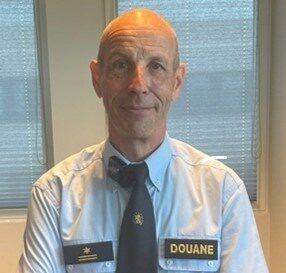
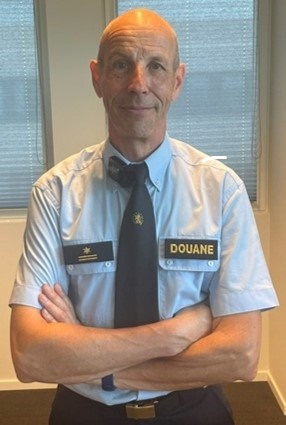
Werner Rens, Advisor-General of the Belgian Administration of Customs & Excise – picture: CFG/ms
The Commission steps in The first reform proposal emerged in 2023, without any feedback from the trade industry, whatsoever. However, as the process continued, the European Commission came forward with a draft of its own. The EC did not bother to consult experts, even though it later took specialists more than a year to fully understand the document. This time, however, some feedback from the trade sector was taken into account. Mr. Rens cautioned that this proposal should not yet be seen as binding legislation. “The text is still under review. It is very interesting to see the difference between the current text and what was proposed three years ago.”
European Customs Authority The reform is driven by two main pressures: increasing demands on customs authorities and businesses, and the rapid growth of e-commerce. In 2023, the reform was built around creating a simpler as well as a stronger customs union. Today, businesses must deal with up to 27 national customs administrations, complex procedures, unclear responsibilities, multiple interfaces, and 111 separate IT systems. Under the reform, customs data would be submitted through a single EU-level interface, turning customs into a 24/7 one-stop shop. The changes would also clarify importer and exporter liability, while trusted partners would benefit from a Trust & Check system. A European Customs Authority employing 250 to 300 people, will be set up in the French border city of Lille. Under the 2023 roadmap, the full system would become operational by 2038.
Bye-bye declarations One of the big changes will be in the abolition of declarations, which will be replaced by login data in a central EU database. Interesting to note is the definition of ‘importer’. In certain cases, the carrier who brings the goods into the customs territory can be considered as such – and is responsible for data provision even if he is not the owner of the goods. In principle, there are two sets of data: transaction (sale) related data and data known by the importer. The crux of the matter is who will provide this data, said Werner Rens. “In most cases this will be the logistics operators and the carriers.” Customs representatives, both direct and indirect, will have their work cut out in the years to come. “Three years ago, there was one single liable party. In the new proposals, that is not clear anymore,” said Werner Rens. On the positive side, the EC’s proposal moves the eventual full implementation of the UCC Reform up to 2034. Until then, the cargo communities in the EU’s air, sea and other main ports, will have to keep their members informed and aligned.
Every week, CargoForwarder Global’s ‘Spotlight On…’ shines a light on a different contributor to the industry to illustrate the many varied careers it offers. One aspect that contributes to the industry’s development in many areas from process efficiency improvements across its various stakeholders, through to emerging technologies such as drones, digital twins and artificial intelligence, is Academia. Academic institutions bring rigorous, evidence-based research methods that industry players often cannot undertake alone, and the resulting studies can support industry decision-makers in their longer-term investments and strategies. This week, Floris de Haan, University Lecturer and Researcher at Erasmus UPT (a research and education institute based at Erasmus University Rotterdam) talks about his function and his views on the industry.
Air cargo is where it is really happening! Image: Floris de Haan
CFG: What is your current function and company? And what are your responsibilities?
FDH: I work for Erasmus university, lecturing air transport economics and I’m specialized in the economic side of air cargo. Apart from lecturing, I also research the air cargo industry from a strategic perspective. For instance, we annually research employment and added value of air cargo activities at and around Amsterdam Airport Schiphol. Recently, we have also been looking into the utilization of available belly and full freighter capacity that operates into and from Schiphol airport.
CFG: What does a normal day look like for you?
FDH: Obviously, I read a lot, from scientific articles to industry news. For my research, I often conduct interviews and visit trade shows from time to time. Working for a university, we value sharing knowledge both through education for our students but also tailored in company masterclasses. And we present our research to industry professionals and policy makers.
CFG: How long have you been in the air cargo industry, and what brought you to it?
FDH: My first introduction to air cargo took place in 2005, being appointed Cargo Marketing Director for Amsterdam Airport Schiphol, attracting airlines and freight forwarding companies to grow cargo volumes handled at Schiphol. So, already more than 20 years ago. Having experience in commercial positions on the passenger side at both airlines and airports, I was immediately thrilled by the dynamic environments that air cargo brings.
CFG: What do you enjoy most about your job?
FDH: The people, but also the complexity and how people deal with that in their day-to-day work. I try to contribute by providing insights into this multi-faceted industry and with that, making their work a little easier. For instance, through data analysis, we were able to provide insight into commodity groups handled at airports.
CFG: Where do you see the greatest challenges in our industry?
FDH: I think a combination of both technology and changing work culture with new generations makes it very challenging. Young people in the field are typically very technologically savvy and have a very different approach to, for instance, customer interaction, as compared to people who have been around for some time (like me).
CFG: What advice would you give to people looking to get into the air cargo industry?
FDH: Come on board. Although new people think that passenger aviation will give them a great working environment, it’s air cargo where it is really happening. With regards to training: apart from the necessary training requirements and dangerous goods, I recommend people to take courses that allow them to really understand the dynamics of the air cargo industry. And with that, better understand the interests of the different companies in that transportation chain.
CFG: If the air cargo industry were a film/book, what would its title be?
FDH: I think Moneyball is a great movie, about the statistics behind baseball. Unconventional until someone comes up with a whole different approach to winning sports games. I like it, because it quantifies what many describe as a ‘belly feeling’. And no one believed the first mover, but it turned out to be a great hit.
Thank you, Floris.
If you would like to share your personal air cargo story with our CargoForwarder Global readers, feel free to send your answers to the above questions to cargoforwarderglobal@kopfpilot.at We look forward to shining a spotlight on your job area, views, and experiences.
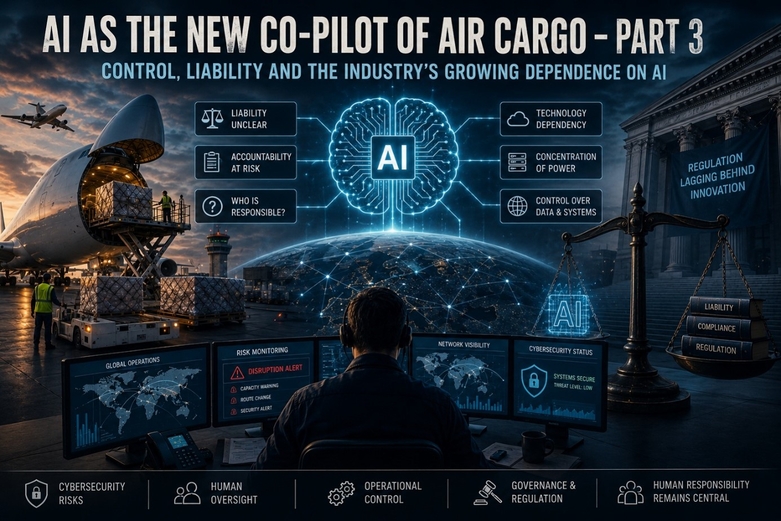
In Part 2 of this series, we examined how Artificial Intelligence is beginning to reshape operational decision-making inside the air cargo industry. AI is no longer limited to automation or process optimization. Intelligent systems are increasingly influencing disruption management, operational prioritization, forecasting, and real-time cargo control. In Part 3 we examine how AI is increasingly changing the role of human operators.
Operational expertise is gradually evolving from direct execution toward supervision, validation, and control of machine-supported environments. The deeper AI moves into operational workflows, the more important governance, transparency, and human oversight become.
But this development also creates entirely new strategic risks.
As AI systems gain operational influence, questions surrounding accountability, liability, cybersecurity, and technological dependency are becoming impossible for the industry to ignore.
Liability remains one of the industry’s biggest unresolved issues The deeper AI moves into operational decision-making, the more sensitive the issue of liability becomes. AI-supported systems are increasingly influencing decisions connected to routing, shipment prioritization, compliance management, and operational recovery processes. In highly sensitive cargo environments involving dangerous goods, pharmaceutical shipments, sanctions compliance, or security-sensitive freight, these decisions carry significant operational and financial consequences. At present, however, legal and regulatory responsibility structures remain unclear in many AI-driven scenarios. Advanced machine-learning systems often operate inside highly complex environments that are difficult to fully explain, even for their developers. Recommendations are frequently generated through probabilistic modeling processes that cannot easily be reconstructed afterward in complete detail.
Structural challenges increase The industry has historically been built around traceability, accountability, and clearly assigned operational responsibility. AI increasingly complicates this model because intelligent systems themselves become part of the operational decision chain. As operational dependence on AI grows, the gap between technological capability and legal clarity may also continue to widen. Industry experts increasingly expect future regulations to focus heavily on defining accountability structures surrounding AI-supported operational environments. The issue is no longer theoretical. It is becoming operational reality.
The Industry Is becoming increasingly dependent on technology ecosystems Another development receiving growing attention across the logistics sector is the concentration of technological power. Historically, air cargo has operated as a fragmented ecosystem consisting of airlines, handlers, freight forwarders, airports, GSAs, trucking companies, and specialized logistics providers spread across decentralized global networks. AI changes competitive dynamics because AI development strongly favors scale. The organizations controlling the largest data environments, cloud infrastructures, and AI ecosystems are gradually gaining increasing influence over operational intelligence itself. This creates new strategic dependencies throughout the logistics sector. Many companies are no longer dependent solely on physical infrastructure and transportation assets. Operational visibility, forecasting capability, dynamic pricing, and network optimization are increasingly linked to external digital ecosystems and technology providers. As AI expands into booking systems, operational control towers, customs integration, and digital cargo marketplaces, the influence of large technology companies continues to grow. This shift may fundamentally reshape competitive structures within air cargo over the next decade. Operational advantage may increasingly depend not only on network size or transportation assets, but on access to operational intelligence, data ecosystems, and AI-driven infrastructure. Control over information is gradually becoming as important as control over physical cargo capacity itself.
Safety continues to define the boundaries of automation Despite growing enthusiasm surrounding AI, aviation remains fundamentally different from many other industries because operational safety remains non-negotiable. Efficiency may drive innovation and investment decisions, but safety continues to define the limits of acceptable automation. AI systems are becoming exceptionally effective at identifying operational patterns, forecasting disruptions, optimizing routing scenarios, and accelerating response times. Nevertheless, highly automated environments also introduce new forms of operational risk. Cybersecurity concerns surrounding connected AI-driven systems are increasing rapidly. As cargo systems become more interconnected and autonomous, exposure to cyberattacks, data manipulation, and operational interference also grows. At the same time, aviation experts continue discussing the long-term impact of automation on human situational awareness. Extended supervision of highly automated systems may gradually weaken operational intervention capability during critical situations. This challenge is already well documented in other highly automated industries and is becoming increasingly relevant for aviation logistics. The industry therefore faces a delicate balancing act: increasing operational automation while preserving human competence, oversight, and intervention capability. This balance may ultimately determine how far AI integration can safely progress within air cargo operations.
Human oversight Is becoming more important – not less One of the biggest misconceptions surrounding AI is the assumption that human involvement will automatically decrease as systems become more advanced. The opposite may prove true. The more operational influence AI systems gain, the more important human oversight becomes. Humans remain responsible for contextual judgment, escalation management, ethical prioritization, and strategic accountability. Operational environments are therefore evolving toward models in which professionals increasingly supervise intelligent systems operating at speeds far beyond normal human processing capability. This fundamentally changes the operational role of cargo professionals. Future operational teams may function less as traditional process managers and increasingly as supervisors, validators, risk evaluators, and escalation authorities overseeing AI-supported environments. In that context, the “co-pilot” analogy discussed in Part 1 becomes even more relevant. AI may increasingly support operational control, optimize decision environments, and influence network management. Yet the industry still expects humans to remain responsible for final accountability, operational trust, and strategic authority. The technology may continue advancing rapidly. But human responsibility remains firmly embedded at the center of aviation operations.
The industry is entering a defining phase Artificial Intelligence will almost certainly become one of the defining technologies shaping the future of global air cargo. The operational and competitive advantages are too significant for the industry to ignore. AI-driven operational environments will continue expanding across logistics networks, airlines, handling operations, and cargo control structures. However, the next phase of AI adoption will no longer be defined purely by technological capability. It will increasingly be defined by governance, regulation, operational trust, accountability, cybersecurity, and the industry’s ability to maintain meaningful human oversight within increasingly autonomous environments. Because ultimately, the future of air cargo will not only depend on how intelligent AI systems become. It will depend on how effectively the humans inside the industry remain capable of controlling them.
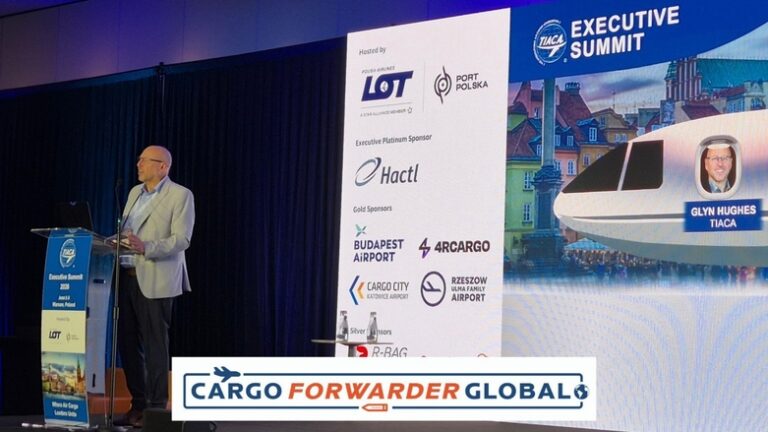
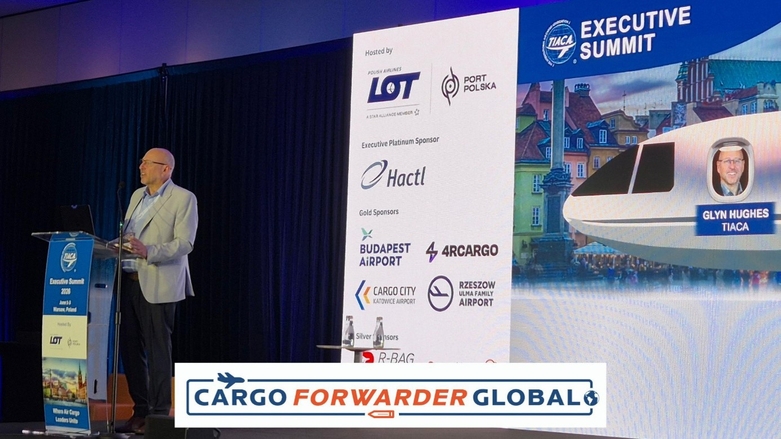
This year’s TIACA Executive Summit took place in Warsaw’s Hilton Hotel, bringing a resilient, positive and forward-looking Central European attitude to an air cargo industry continuing to navigate volatile geopolitical obstacles alongside the usual topics of digitalization, sustainability, and talent attraction. 325 participants had registered for the 3-day event in Poland, from 01-03JUN26, which combined an exclusive freighter tour with a full agenda of topics and two excellent networking evenings.
From geopolitical disruption and digital transformation to LOT Cargo’s 30th anniversary reflections and TIACA’s sustainability honors, this year’s summit highlighted an industry balancing uncertainty with ambition. The event’s discussions, panels and keynote sessions showed that air cargo is proving resilient, but resilience alone is not enough. The industry has to become even more agile, more connected and more intentional about how it responds to geopolitical volatility, changing trade flows, digital disruption, customer expectations and sustainability pressures.
Glyn Hughes: “As an industry, we can be either reactive or adaptive.” Image: CFG/bg
Power of movement That tone was set early in the summit. Following TIACA Chair, Roos Bakker’s opening speech, where she spoke of the “power of movement” and emphasized once more that the sector must invest not only in innovation but also in people, Poland’s Secretary of State and Minister of Infrastructure, Maciej Lasek, as well as the CEO of Port Polska, Dr Filip Czernicki, and LOT’s CEO, Michal Fijol, all underlined the host country’s growing importance as a logistics gateway for Central Europe. Come 2032, Port Polska will offer Poland and the greater Central Europe catchment area substantial cargo capacities in a multimodal environment connecting airport, rail and road: “We aim to take advantage of being right in the middle of Europe – the perfect gateway linking East and West and North and South”, said Dr. Filip Czernicki. Central Europe’s drive and growth factors were highlighted in more detail in a dedicated and very well-attended panel in the late afternoon of 02JUN26, featuring airline LOT Cargo, GSA 4RCargo, Budapest Airport and airport in spe, Port Polska.
Cargo always finds a way Across multiple sessions, speakers returned to a common set of themes. One was the sheer scale of disruption now facing the industry. Data presentations from WorldACD and other contributors showed that although global cargo demand has remained positive overall, the market is increasingly shaped by conflict, shifting trade routes, rate volatility and regional realignments. The Middle East crisis, changes in e-commerce policy, tightening widebody freighter supply and the redirection of flows out of China all featured prominently. Yet speakers also pointed to the sector’s ability to respond quickly, reroute capacity and continue serving customers under pressure. The message was not that complexity will disappear, but that the winners will be those who can manage it best.
Coming clean with AI Digital transformation, which was another major thread running through the program, is one major tool to help manage that complexity. AI was mentioned in leadership, airline, ground handling and technology sessions alike, but always with the urge to carefully consider its application and to ensure that the data feeding is accurate. As Kai Domscheit, CHI, warned: “Without clean data, AI is worthless!” Data quality, workflow design and human adoption will determine whether AI delivers real value. “30% of efficiency comes from tech, 70% from people-related action,” keynote speaker, Olivia Kinghorst revealed. AI is an enabler of better planning, visibility and decision-making but is not a substitute for people. That perspective echoed a wider mood at the summit: progress depends not just on better tools, but on better cultures, clearer communication and stronger collaboration across the supply chain. HACTL’s Joanna Li stressed a sentiment shared by many: “AI and tech can help in terms of special processes but will not replace people.”
Michal Grochowski: LOT Cargo has built a business model designed for growth AND endurance – photo: CFG/hs
An insight into LOT Cargo’s success One of the most engaging sessions came in the fireside chat marking 30 years of LOT Cargo. In conversation with TIACA Director General, Glyn Hughes, the airline’s Head of Cargo & Mail, Michal Grochowski reflected on how LOT has built a business model designed not just for growth, but for endurance. His central argument was that LOT’s current strength is rooted in lessons learned during the 2020 crisis: “We didn’t waste the 2020 crisis – we created mechanisms of protection and are ready for any crisis today.” LOT’s adaptive operating culture and preparedness allows the carrier to face current and future shocks with more confidence. Grochowski also gave a clear sense of how LOT sees its future: “Growth comes not only from fleet growth but also optimization of the network,” as well as strong partnerships and deeper specialization. He highlighted LOT’s achievement in being the fastest airline to secure the full CEIV portfolio, its early move into digital dangerous goods processes, and its commitment to pharma and other specialist products. Perhaps the strongest note of all came on partnerships, including seeing other airlines as partners, too, not competition. For Grochowski, strong cargo relationships are built on shared values, loyalty, communication, taking responsibility, and making partners feel part of the same family rather than treating them as transactional counterparts.
People, people, people The People theme was one of the defining subjects of the entire summit. Olivia Kinghorst’s keynote on leadership urged companies to create psychological safety, invest in durable skills and become better storytellers. Later sessions on next-generation talent reinforced the idea that air cargo still struggles with visibility as a career destination, even though it sits at the center of global trade. Speakers called for stronger outreach, more structured development pathways and more confidence in giving younger professionals meaningful responsibility.
When Orange threatens Green Sustainability was another major strand, and the shocking consensus (highlighted by example) was that the issue has become harder rather than easier “thanks to the White House”, one of the panelists admitted. Speakers acknowledged a real gap between long-term ambition and current operational reality. Rising costs, fuel pressure, geopolitical disruption and policy fragmentation are making decarbonization more difficult, even for companies that remain committed. Still, there was no sense that sustainability has disappeared from the agenda. Instead, the discussion shifted toward practical collaboration, lighter materials, smarter routings, better fleet decisions and more realistic thinking about where SAF fits within a broader decarbonization strategy.
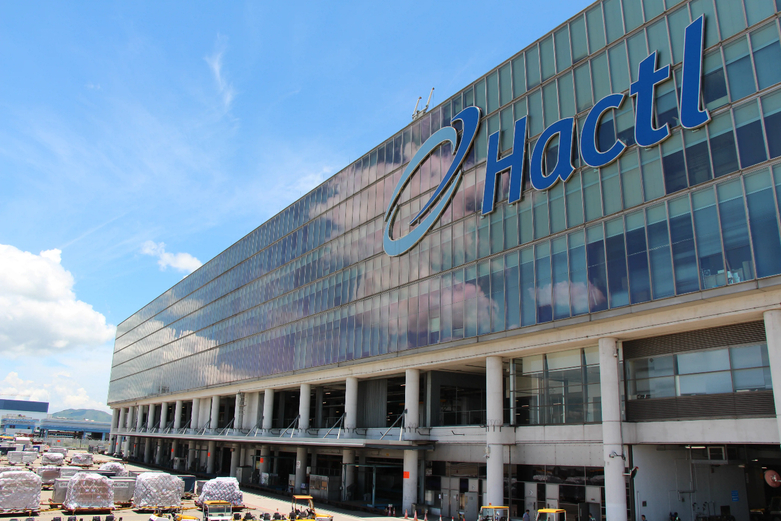
Recognition of excellence and innovation The summit also made time to celebrate achievement. In the 7th edition of the TIACA Sustainability Awards, the corporate winner was HACTL, recognized on stage with Winnie and Joanna Li. Following shortlisted Start-Up/Small Business Sustainability presentations by BioNatur Plastics, CargoAi, and GOODS2LOAD, the audience cast its votes and main prize was awarded to BioNatur Plastics. The event program also included TIACA Honors for Hall of Fame (Cargo Jet’s Dr. Ajay Virmini), Inspirational Leader (Air Canada Cargo’s Janet Wallace) and Rising Star (Awery’s Anna Balan).
Who and where next? With the announcement in March of this year, that Glyn Hughes would be stepping down as TIACA’s Director General after 5 years in the role, the expectations were that his successor would be announced at the Warsaw summit. This did not happen and Glyn assured CargoForwarder Global, that he would be remaining for as long as it takes for a successor to be found and smooth handover made. What was disclosed, however, were the location and dates of next year’s Executive Summit. It will take place in Singapore from 21-24JUN27.
Ostend-Bruges Airport (OST), known primarily for its perishables segment and leisure flights, is significantly growing its scope of operations. In addition to these core areas, e-commerce is emerging as a new key pillar of the business. Further to this, OST is expanding its MRO activities, while a dedicated special mission and border-control unit will also be based at the airport.
On 03JUN26, CEO Nathan De Valck celebrated his one-year anniversary as helmsman of the Belgian regional airports of Ostend-Bruges and Antwerp. However, he didn’t have time for a leisurely celebration that day. The reason: his schedule is packed with issues that need to be addressed step by step, one of them being the expansion of OST’s traditional perishables business. So far, this has primarily consisted of strawberry imports from Egypt, which are flown by EgyptAir Cargo from Cairo (CAI) to OST each fall, following the start of the harvest season. Although the airline’s Airbus freighters also land at Hahn Airport in southwestern Germany, the bulk of the shipments is handled at OST. There, they are customs-cleared and transported by truck via the nearby Eurotunnel to a warehouse in London, from where they are immediately distributed to local wholesalers.
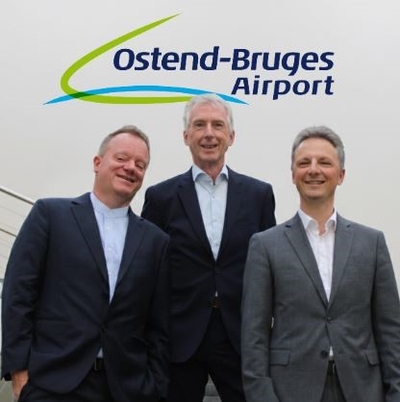
(left to right): Steven Verhasselt, head of Egis air freight network strategy / Johan Leunen, cargo business development director, OST Airport / Nathan De Valck, CEO OST Airport – photos: credit OST
London’s easternmost runway Although Nathan – a polite man – does not wish to comment on competitors, he at least does not dispute the claim that this routing via OST and the Eurotunnel is faster compared to direct flights to London-Heathrow (LHR) and customs clearance of goods coming from an Arabian exporter. From this perspective, OST is London’s easternmost runway. Next, OST intends to step into the cut-flower business, for example through flights from Nairobi, Kenya. Pharmaceuticals are another target segment for the airport. After all, Belgium is a European hotspot of this high-value industry.
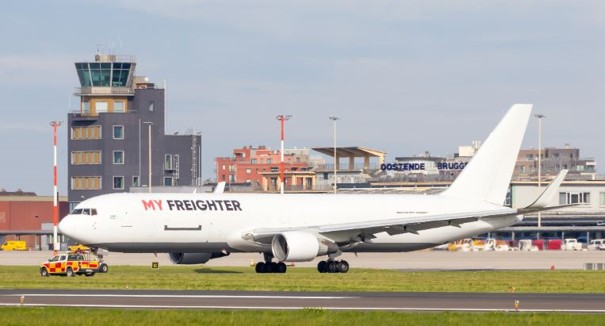
Focusing on e-commerce In addition, management aims to drive e-commerce revenue. Negotiations with a Chinese supplier are in the final stages. Operations commenced in mid-APR26 with two weekly flights but have been stepped up since then to 5/7. OST has chosen not to disclose the name of the Chinese partner at this stage, pending final approval. The flights are operated by Uzbek carrier, MyFreighter, which deploys B767F equipment on the route China-Ostend, with a stopover in Tashkent. Discussions are underway to identify suitable export cargo for the eastbound leg of the operation.
MyFreighter is a new kid on the Ostende block.
Enhancing ground infrastructure Also on the airport’s to-do list is the construction of two hangars offering a combined 5,000 m² of MRO facilities. For instance, for maintaining the EASP Air fleet that will be based at OST. “This MRO business segment will create numerous new, highly skilled technical jobs at our airport,” enthuses De Valck. Thanks to the investments in apron upgrades, OST can accommodate six wide-body freighters at the same time on a dedicated cargo apron.
Facilitator of business When asked what sets the cargo activities at OST apart from neighboring competitors, management responds: “We see our role as an enabler or facilitator of logistics activities, working closely with local partners to offer the market a comprehensive portfolio of logistics services. Selling traditional airport services to airlines is old school.” Further to this, OST emphasizes that it is not an airport where goods are handled in transit. Instead, what lands there is moved directly into local distribution channels, following customs clearance at the airport. A look at the process confirms this statement. Various partner companies have set up facilities at the airport, operated by their own staff. OST provides real estate and the framework for their business and enables the community to develop the processes required.
Support from government and the private sector The airport management’s progressive approach is supported by stakeholders, particularly its shareholder, Egis, and approved by the Flemish Government, which holds a financial stake in the airport. The political body has indicated that the environmental permit – which has recently been the subject of controversy – will be updated shortly, thereby cementing the legal framework for aviation activities at OST. Final question to CEO Nathan de Valck: Is OST profitable or does it rely on government subsidies? “We have been in the black every year since 2016 (apart from the 2020-2021 Covid years), although the annual profits were modest. In 2025, we generated a net profit of EUR 75,000, with a significant portion of the cash flow reinvested directly back into the airport.”
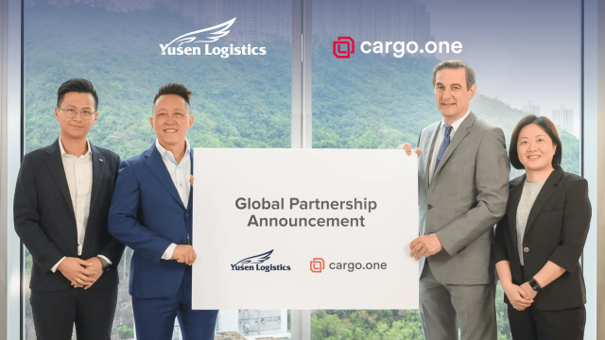
Pictured are (l > r): Keith Yung, Mrg Yusen / Kevin Chia, Deputy Head of Air Freight Forwarding, Yusen / Fabrice Godeau, VP Global Enterprise, cargo.one / Joanne Fu, Enterprise Director APAC, cargo.one – courtesy: cargo.one
Yusen Logistics has partnered with cargo.one to deploy an AI-powered operating system across its global air freight sales and procurement operations, marking a significant step in the company’s ongoing digital transformation strategy.
Under the partnership, Yusen Logistics will implement cargo.one’s AI-native platform across its global pricing, procurement, quoting, and booking processes, including inter-branch transactions. The system is designed to centralize air freight capacity management and provide access to live, static, contract, and consolidation rates alongside local and trucking charges within a single standardized platform.
According to the companies, the new infrastructure will support faster quotation processes, more competitive pricing, and improved data-driven decision-making across Yusen Logistics’ international operations. Integration with the company’s Transport Management System (TMS) is also planned to further streamline workflows and operational efficiency.
As part of the collaboration, more than 100 Yusen Logistics branches worldwide will be connected through a managed network powered by cargo.one, enabling real-time access to rates and service options across the company’s global network. The companies said the system has been designed to improve visibility, consistency, and connectivity between regions while enhancing the customer quoting experience.
“Implementing cargo.one’s AI-powered operating system represents an important step in Yusen Logistics’ journey towards pricing digitalization and broader procurement modernization,” said Eisuke Fukagawa, Head of Air Freight Forwarding Unit at Yusen Logistics Global Management Co. Ltd.
Moritz Claussen, Founder and Co-CEO of cargo.one, said the partnership would help Yusen Logistics strengthen its global procurement and sales infrastructure through AI-driven technology and market intelligence. By adopting cargo.one’s platform, Yusen Logistics also aims to establish a centralized and reliable data foundation to support future AI-enabled processes such as automated quoting, booking, sales, and customer support as digitalization initiatives continue to expand across the organization.
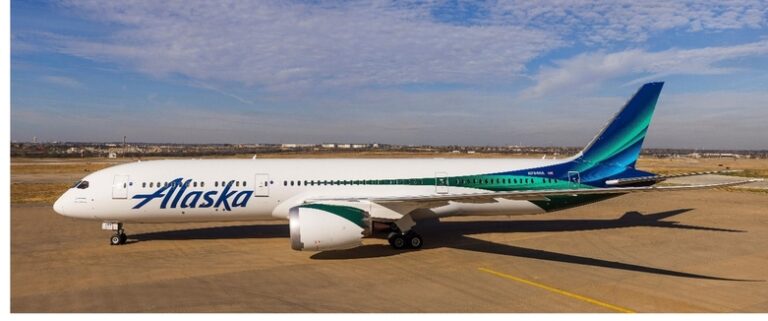
Alaska Airlines operates five Boeing 787-Dreamliners – Picture: courtesy of Alaska Airlines
Alaska Airlines and Hawaiian Airlines have unified their cargo operations on a single digital platform following the migration of Hawaiian Air Cargo into IBS Software’s iCargo system.
The move brings both airlines onto one integrated cargo management platform, replacing Hawaiian Airlines’ legacy system and extending Alaska Airlines’ use of iCargo, which began in 2022. According to the companies, the integration standardizes cargo policies across the combined network while simplifying billing, shipment management, and freight tracking processes.
Customers now have access to a consolidated online portal that enables cargo booking, shipping, and tracking across the airline’s entire network. The unified system also provides consistent real-time shipment visibility, supporting faster operational decision-making and improved service reliability for freight forwarders and logistics partners.
Operational workflows for export, import, and warehouse handling have also been aligned across both carriers, reducing manual processes and minimizing the risk of errors associated with disconnected systems. Teams from both airlines now operate using shared data and standardized procedures, improving coordination and response capabilities across the network.
The integration additionally allows Alaska Cargo to expand its GoldStreak Package Express service across the Hawaiian Islands for the first time. The next-flight-out product is designed for highly time-sensitive shipments, including medical supplies and urgent legal documents.
“Bringing Hawaiian Air Cargo onto iCargo was a logical and necessary step following the combination,” said Ian Morgan, Vice President of Alaska Cargo. “With iCargo as our single platform, we have a consistent, reliable foundation that supports how we operate today and gives us the scalability to grow.”
Radhesh Menon, Vice President and Head of Cargo and Logistics Solutions at IBS Software, said the project demonstrates the platform’s ability to support airlines through complex post-merger integrations and operational consolidations.
The deployment further strengthens IBS Software’s presence in the North American air cargo market and its position as a technology provider for large-scale airline cargo operations.
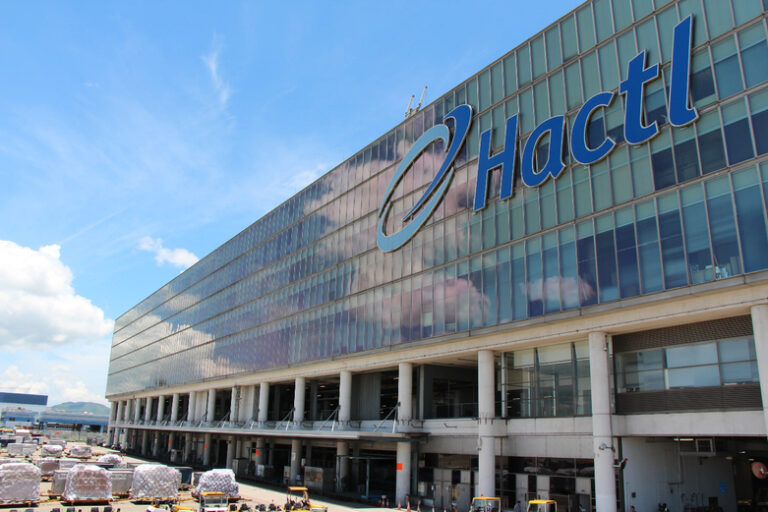
Picture: courtesy of Hong Kong Air Cargo Terminals Ltd.
The International Air Cargo Association (TIACA) has announced Hong Kong Air Cargo Terminals Limited (HACTL) as the winner of the Corporate Category at the 2026 Air Cargo Sustainability Awards, held in partnership with CHAMP Cargosystems.
HACTL received the award for its project “Redefining Cargo Packaging Through Circular Materials,” which focuses on reducing single-use plastic waste in air cargo operations through the development of aviation-grade polyethylene cargo films produced from post-consumer recycled materials.
According to TIACA, the project successfully achieved laboratory validation of what is described as the industry’s first 100% post-consumer recycled cargo film capable of meeting aviation-grade operational and mechanical requirements.
The initiative combines material innovation, operational deployment, and closed-loop recycling processes aimed at reducing reliance on virgin plastics while supporting circularity across cargo handling operations. At full implementation, the project could divert around 700 tonnes of plastic waste annually from landfill while also reducing lifecycle carbon emissions linked to cargo packaging.
“HACTL’s project demonstrates how innovation and collaboration can create practical sustainability solutions with real industry impact,” said Manuel Galindo, Chief Executive Officer of CHAMP Cargosystems. “Their work not only advances circularity in air cargo operations but also establishes a scalable model that can inspire broader adoption across the global logistics sector.”
Glyn Hughes, Director General of TIACA, said the initiative stood out for addressing a long-standing operational challenge with a practical and scalable solution for the wider air cargo industry.
TIACA also announced the finalists in the Start-Up/Small Business Category, including BioNatur Plastics, CargoAi, and Goods2Load. The finalists will present their projects during TIACA’s Executive Summit in Warsaw, where attendees will select the winner of the US$10,000 prize. The official presentation of the 2026 Air Cargo Sustainability Awards will take place during the TIACA Executive Summit in Warsaw from June 1–3.
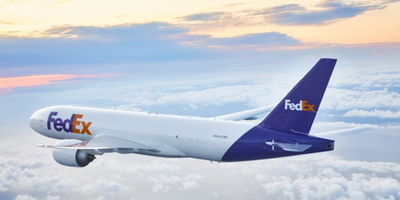
FedEx is expanding its major road hub in Duiven, Netherlands, with a €46 million investment aimed at increasing freight capacity and supporting future growth across its European network.
The project includes the acquisition and development of a neighboring facility, significantly enlarging the site’s operational footprint. Once completed, palletized freight handling capacity at the hub will rise by more than 50%, while the number of dock doors will increase from 200 to 265.
FedEx said the expansion is intended to improve network efficiency and strengthen its ability to manage rising parcel and freight volumes, particularly during peak shipping periods. The additional capacity will also allow more shipments to move directly through the hub, reducing pressure on regional first- and last-mile facilities.
Located in the eastern Netherlands, the Duiven site serves as one of the company’s central road hubs within Europe and is fully connected to the broader FedEx road network. The facility plays an important role in supporting the company’s integrated truck–fly–truck model, which combines road transport with international air freight services.
“The Duiven hub is one of the largest and most technologically advanced FedEx road hubs within the European Road Network,” said Safia Ladhari, Managing Director Network Operations at FedEx. “This expansion ensures we are well positioned to support our customers through continued growth.”
FedEx sees further opportunities in the premium international freight market, where demand for time-sensitive and reliable transport solutions continues to grow. According to the company, the upgraded hub will help improve operational flexibility while supporting more efficient cargo flows across Europe.
The expansion will be implemented in several phases, beginning with operational readiness of the new facility, followed by additional optimization projects and enhanced connectivity between the existing and newly developed buildings.
Loading cargo in the holds of a passenger aircraft – Picture: CFG
International Air Transport Association (IATA) reported continued growth in global air cargo demand in April 2026, despite increasing geopolitical tensions and ongoing disruption across key international trade corridors.
According to the latest market data, total air cargo demand rose by 4.0% year-on-year in April. International operations also recorded a 4.0% growth compared with the same period last year. At the same time, available cargo capacity declined slightly by 0.4%, while international capacity fell by 0.9%.
IATA states, the growth was largely driven by strong trade flows linked to Asia, although the operating environment remained increasingly complex due to the ongoing conflict in the Middle East and its impact on major Gulf cargo hubs.
“Air cargo demand grew 4% year-on-year in April, driven by strong Asia-linked trade flows,” said Willie Walsh, Director General of IATA. “But this positive news masks a more complex operating environment.”
Regional performance varied considerably. Asia-Pacific carriers recorded the strongest growth globally, with demand increasing by 10.5% year-on-year, followed by Africa at 7.7% and Europe at 6.0%. North American airlines posted 5.0% growth.
In contrast, Middle Eastern carriers reported the weakest performance, with cargo demand falling by 18.2% as regional instability continued to disrupt operations and trade routes. Latin American and Caribbean carriers also recorded a decline of 2.8%.
IATA additionally pointed to rising operational costs as another challenge for the sector. Jet fuel prices increased sharply in April, rising by more than 121% year-on-year, while crude oil prices climbed nearly 78%.
Despite these pressures, manufacturing activity and export demand remained in growth territory during April, with global Purchasing Managers’ Index (PMI) indicators continuing to support air cargo demand.
Among global trade lanes, Africa-Asia recorded the strongest growth during the month, followed by Asia-Europe and intra-Asia markets, while Gulf-related corridors remained heavily affected by the conflict in the Middle East.