Home Blog Page 84

Efficient customs clearance is the key to fast supply chains

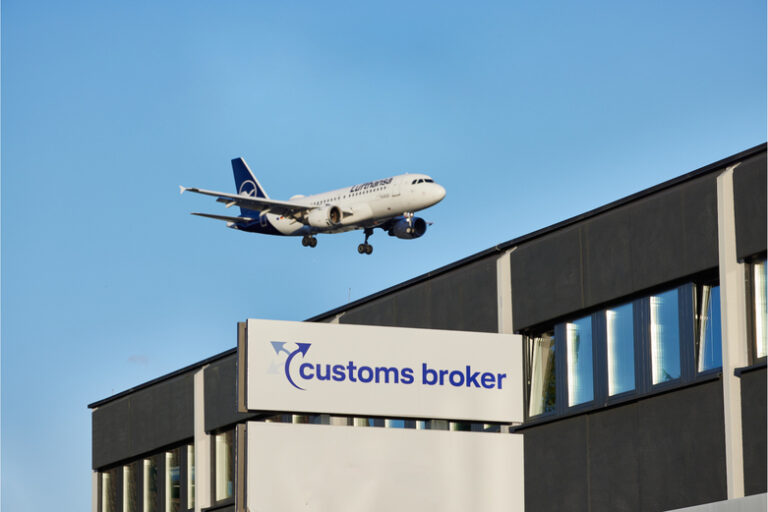
If performed exceptionally well, customs clearance resembles a precise Swiss clockwork mechanism. If not, it is like an old wind-up clock that frequently stops running. Seen from this angle, customs procedures can either be a bottleneck or an additional accelerator of imports or exports passing through airports or seaports. One reputable service provider, enabling the fast flow of goods, is the Frankfurt-based agency CB Customs Broker GmbH. The agent has been part of Lufthansa Cargo Group since 2018.

And these are the rules of the proceedings: For all items, coming from third countries and entering the EU, a customs declaration must be submitted. However, duties must only be paid for goods whose value exceeds €150. Imports with a lower value are exempt from duties under the de-minimis rule, which applies in particular to e-commerce shipments. But whatever the value, customs officials must register the items first, followed by their clearance.
What sounds easy at first sight is highly complicated in everyday practice. This is because the EU harmonized Customs Tariff Code demands that each individual product must be clearly identifiable by the authorities based on accompanying documentation. The Code begins with HS and consists of eleven digits that indicate the category of goods in order to assign them to specific tax rates.
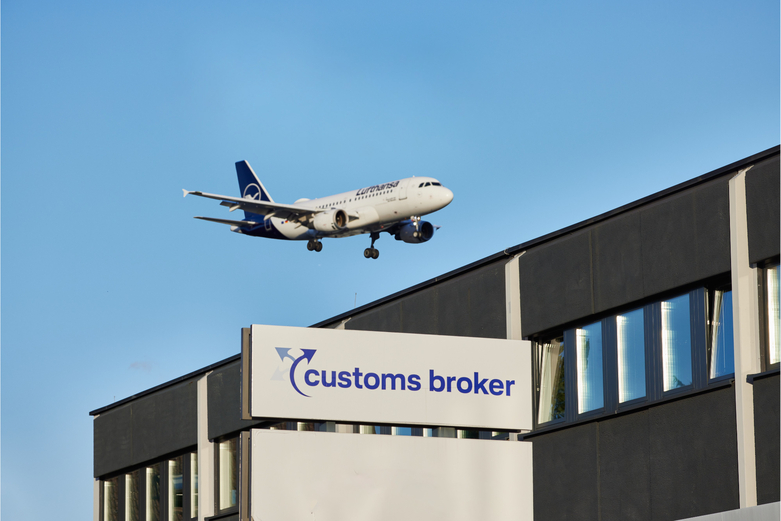
Lufthansa Cargo is CB customs broker’s core client – photo: company courtesy

Highly complex matter
These are the basic rules that apply to all parties involved in customs procedures. The list of participants ranges from forwarding agents, trading firms, airlines or specialized agencies such as CB Customs Broker, for instance. In reality, customs matters are highly complex. This applies particularly to a broker like CB that clears 25+ million e-com shipments a year, a volume handled in 2024. But the field of responsibilities is even more complex, because in addition to e-Com items, there are also perishables, dual-use goods, medical products and dozens of other consignments passing the EU borders that require the expertise of specialist for being cleared by customs officials.  The hurdle is, however, that not every customs department, such as that of a small or medium-sized freight forwarder, for instance, is familiar with all the different categories and allocation of goods, be it customs value issues, the exact origin of a product, dual-use goods, perishables or the EU’s new Import Control System 2 (ICS2).

Precise product allocation is key
For example, Chapter 12 of the European Customs Portal illustrates how complex and demanding the daily practice is. The products listed there include items like oilseeds and oleaginous fruits, plants for industrial or medicinal use, straw and fodder. Brief comment from Alla Franjkovic, Marketing + Communication Manager: “Customs laws and regulations are a highly complex subject, it changes frequently, and mistakes can be expensive,” she summarizes the pitfalls.
When addressed by CargoForwarder Global she says that around 75% of all eCommerce clearances carried out by CB Customs Broker in Frankfurt are for goods flown by Lufthansa Cargo, and 25% by other airlines. Their share is steadily growing but not by leaps and bounds.
The digital eCommerce tool developed by the agent and introduced in 2020 complement Lufthansa Cargo’s supply chain from the moment the aircraft lands to the last mile, rounding off the services rendered. As a member of the Lufthansa Cargo Group, additional contacts and market opportunities result from this link, CB Managing Director, Uwe Glunz stresses. “For new customers in particular, being part of the Group is strong proof of our reliability and quality. Both sides benefit from the synergies – and ultimately the customer above all,” he states.

Eyeing new horizons
A total of 300 company names stands on the agent’s list of clients. In addition to processing 2.5 million eCommerce shipments per month in Frankfurt, the company handles approximately 15,000 other import and export declarations. These are transported not only by air, but also by sea, rail, and road.
In addition to Frankfurt, CB Customs Broker has established a second office at Amsterdam Airport Schiphol. Its employees are currently examining the Belgian market for further expansion, confirms Alla Franjkovic: “We continue to pursue a European internationalization strategy. A first step was the establishment of our location in Amsterdam, where we are now represented by a dedicated team. The local team is also examining Belgium as a possible further location.” This will be decided by the end of the year with other markets to follow. “We consistently focus on the needs of our customers and go exactly where our customers need us,” says the manager.

More is upcoming
In our next issue, we will report on the professional requirements needed to become a customs agent. At the same time, we will shed light on why customs agents have an unjustified public reputation for being bureaucratic and how the attractiveness of this extremely responsible field of work could be increased. So please stay tuned.

Spotlight on… Ginevra Mutti, Senior Manager Cargo, Condor

0

Each week, CargoForwarder Global’s ‘Spotlight On…’ looks at a single individual and segment of the air cargo industry, thus highlighting the many different careers on offer. Without airlines, cargo would not fly, and around half of the world’s air cargo traffic travels on board passenger aircraft. Yet, passenger airlines vary in their interest in offering belly capacity up for cargo shipments. One leisure airline that has significantly increased its focus in this regard – particularly within the last couple of years – is Condor. This week, Ginevra Mutti, Senior Manager Cargo at Condor, explains her role and shares her views and advice to those looking to enter the industry.

The wave of innovation grows stronger every day. Image: Ginevra Mutti

CFG: What is your current function and company? And what are your responsibilities?
GM: As Senior Manager Cargo at Condor, I am leading the expansion of the Cargo Product Portfolio, as well as continuously optimizing existing products such as Healthcare and Perishables. I coordinate Marketing and Communication activities, e.g., press, social media, and events. Along with that, I am responsible for the strategic development of eBooking platforms, and for enhancing various Innovation Initiatives and Digital Transformation Projects.

CFG: What does a normal day look like for you?
GM: I’m happy to say that since I joined Condor, no two days have looked the same. This makes the journey incredibly interesting and challenging at the same time. On a daily basis, I work with colleagues from other departments, such as Strategy or Marketing, as well as with our Sales Partners around the globe. The industry is constantly changing, and so are we — which is why, at the moment, “normal” is not part of my Cargo vocabulary.

CFG: How long have you been in the air cargo industry, and what brought you to it?
GM: I joined Condor’s Cargo Team at the beginning of 2025, so exactly six months ago. As a person and professional, I’m drawn to fast-developing environments and industries where you can drive change through your work. After three years in the public transport sector, also focused on technology and innovation, I decided to take the next step and move closer to aviation and logistics, where the wave of innovation grows stronger every day.

CFG: What do you enjoy most about your job?
GM: What gives me a lot of energy is the passion people have for their job – whether we’re talking about colleagues, customers, or partners. The positive attitude and spirit of everyone I’ve met so far make the work easier, and I feel like I’m in the right place. At the same time, I’m passionate and curious myself, which is why the time invested in research and implementing new projects are two key elements that make the job extremely interesting.

CFG: What do you see as the greatest challenges in our industry?
GM: Over the past few months, during the first events I attended, I’ve noticed that innovation – or more precisely, integrating innovation into traditional processes – is still not universally embraced. Technology and AI are changing the paradigms of how we do business and how we approach, for example, sales. This may pose a challenge for some companies that struggle to adapt quickly to change. However, my past experiences have also taught me that even if slowly, all companies eventually find their own way to work with new tools and adapt to emerging trends.

CFG: What advice would you give to people looking to enter into the air cargo industry? Any particular training they should aim for?
GM: “Learning by doing” is my motto – the advice I like to give most is to never stop being curious. Read, research, watch videos on different topics, and explore LinkedIn pages. Something very important to remember is that, no matter whether you’re starting with a trainee program, internship, or junior position, your ideas, impact, and proposals are valued. So, give it a try – you won’t be disappointed.

CFG: If the air cargo industry were a film/book, what would its title be?
GM: Since reading is one of my main passions, the air cargo industry would definitely be a book – and its title would be “Around the World in the Blink of an Eye”. The industry is constantly moving, traveling, flying. And we, who work in it, are part of the journey, with the opportunity to travel along with our products and services.

Thank you, Ginevra!


If you would like to share your personal air cargo story with our CargoForwarder Global readers, feel free to send your answers to the above questions to cargoforwarderglobal@kopfpilot.at We look forward to shining a spotlight on your job area, views, and experiences.

Cargo keeps running strong at Budapest Airport

0

From 01JAN to 31MAY25, Budapest Airport, part of the VINCI Airports network, handled 164,000 tons of air freight. An increase of 51% year-on-year, mainly due to soaring e-Com volumes. Budapest is increasingly becoming a preferred Eastern and Central European destination for airlines involved in trade flows from and to China besides the increasing regional airfreight gateway role of the airport in the CEE region.

The actors are the usual suspects such as Air China, Cargolux, China Cargo Airlines, Longhao Airlines, Sichuan Airlines, Hongkong Air Cargo, SF Airlines, YTO Airlines, Fly-Meta, Ethiopian Airlines, China Southern, Ethiopian Airlines, RomCargo, Atlas Air, Uzbekhistan Airways, Georgian Airways andor Hungary Airlines. The latter operates an A330-200 freighter that the Hungarian state bought from Qatar Airways during the pandemic to ensure the supply of masks and other protection equipment to the Hungarians and operated at the beginning by The new cargo carrier, Hungary Airlines is registered in Budapest,owned in majority by Hungarian owners and in minority by UTL (Beijing) Digital Logistics Co. Ltd, which is based in Beijing. The lists of cargo carriers utilizing BUD includes other prominent air freight carriers such as Qatar Cargo and Turkish Airlines Cargo with continuously expanding capacities, among others. The lineup is rounded off by the three leading integrators DHL, UPS and FedEx which serve the airport frequently with daily connections..

Strong industrial belt
A glance at the brands of automotive companies that have established plants there confirms this. They include well-known names like Mercedes, Audi, Suzuki or BMW. Hence, correspondingly broad is the network of their suppliers, pronounces Markus Klaushofer, Chief Commercial Officer at Budapest Airport Ltd. They range from producers of battery modules for electric cars to component providers like Bosch, ZF, Continental, Thyssenkrupp and Schaeffler. This is rounded off by industrial players from the USA, Canada, France, South Korea and China that have also been active in Hungary for some time.
Due to the dense industrial landscape, air freight supplies are vital for the companies doing business there and for the Hungarian economy as such. Nevertheless we have to emphasize that thanks for the gateway role of Budapest Airport, more than half of its cargo volumes are originated or destined cross border, therefore the air cargo linked economic development of the neighboring countries supports Budapest Airport in air cargo too.

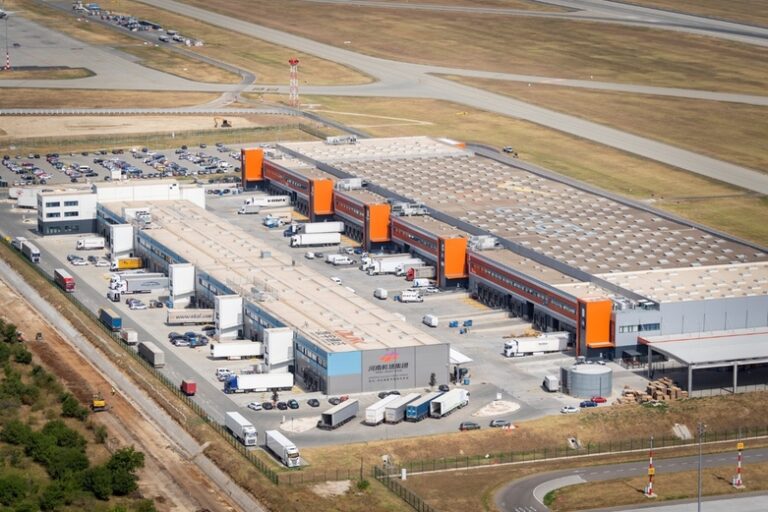
Budapest Airport offers industry ample growth opportunities – photo: credit BUD

Budapest Airport offers industry ample growth opportunities
In the case of rising demand from freight airlines and forwarding agents, the airport offers sufficient facilities in its large BUD Cargo City to accommodate additional volumes. “We can easily handle up to 420,000 tons per year in the freight terminals of our Cargo Center, and we are working continuously on further cargo capacity enhancements via our great cargo community ” pronounces Cargo Chief, Jozsef Kossuth. This is supplemented by more 100.000 m2 additional logistics facilities in the neighborhood of the airport, built by private investors over the past 3-4 years, the executive stresses.

BUD is located in the center of an industrialized belt –  courtesy: Budapest Airport

Strict but highly professional customs environment
Customs control of airfreight has been always quick, strict (high control ratio) but also collaborative at Budapest Airport, with almost 100% digitized clearance ratio, 24/7 customs control service and direct offices in the cargo facilities. Customs operate interfaceable e-customs system for the IOSS and H7 processes and prepared on time, years ago for the ecommerce boom. The control capacities of control software systems and also the manpower have been increased following the market demand, due to the high growth rates of e-com volumes, in 2025 their management has set up a Customs dedicated e-commerce team at the airport. Hungarian Customs visit also the customs authorities in China, and established information change and collaboration in the interest of the efficient and seamless control procedures.
With about 260 million shipments flown from China to Hungary in 2024, the customs collaboration helps speeding up the flow of goods and facilitates the clearance upon arrival. For the current year, market expects to surpass the threshold of 300 million consignments.
Next to e-Com, following the global trends another product is likely to climb up the ranking of air freight items handled at BUD, components of e-cars and products containing lithium batteries. Cargo helmsman Kossuth comments: “We started the IATA CEIV Li-batt implementation program as first airport in a community approach in Europe.” The certification program enables shippers and freight forwarders of lithium battery products to meet safety obligations and comply with regulations.

New ownership but no change in high importance of air freight
On 10JUL24, the Hungarian state acquired an 80 percent stake in the airport operator and the French company and world’s leading private airport operator, VINCI Airports a 20 percent share. The French airport operator, VINCI Airports had acquired a 20% stake in the airport for EUR 620 million. Since then, VINCI Airports has been responsible for Budapest Airport’s operation.  The airport visibly keeps high focus on the air freight after the change in ownership. The majority shareholder is the Hungarian state, which acquired the shares from the seller group AviAlliance, GIC and CDPQ and had the investment financially settled via a state bank. The Orban government paid the previous owners EUR 2.49 billion for the 80% majority stake.

Cargo handler CHI climbs to a higher level

This is probably a record in the cargo handling sector: leading to profitability in just five months is a strong achievement. The CHI Cargo Group, which has owned 74.9% of Munich Airport’s handling subsidiary Cargogate since 01JAN25, has achieved this.  Hence, the targets standing in a business plan stretching until mid-2026 were fully achieved a whole year earlier than planned.

The Cargogate team at Munich Airport  –  company courtesy

And the good news is that no jobs were axed. “We committed to this when we took over Cargogate,” emphasizes Kai Domscheit, CEO of the CHI Cargo Group. And Dominik Mißkampf, Managing Director of the cargo handling agent, adds:“We’re proud that we have improved operational and economic performance in a short period of time. The development of Cargogate is further proof for our strong management approach in new terrains and strengthens us for new ventures.”
But how was it possible to achieve the financial turnaround in this short period of time and present a positive result for Q1? “We eliminated unnecessary costs immediately.” says Domscheit, citing one reason. Another is the introduction of an expanded product portfolio that includes value-added services such as trucking, customs, and forwarding solutions. In addition, the CHI Cargo Group’s own IT landscape will be installed at the Munich branch to streamline all data processes to enhance administrative and operational workflows.
Last but not least, experience also plays a key role in the turnaround of the cargo service provider. For example, shortly after CHI had taken over the handling subsidiary of Nuremberg Airport in summer 2023, the unit became profitable. Some of the innovations introduced there were also transferred to Munich-based Cargogate following its integration into the CHI Cargo Group. Another success factor that should not be underestimated is that the family-run company “acts according to the principles of a medium-sized business,” says Domscheit. This aspect is also emphasized in a company press release: „The Cargogate partnership blends the strengths of a globally connected airport operator with the agility and flexibility of a family-owned logistics company.”
The CHI Cargo Group, which has its headquarters at Frankfurt Airport, has become the majority owner of Munich Airport subsidiary Cargogate at the beginning of this year. The group employs roughly 1,000 people and runs – beside Frankfurt and Munich – branches at Hamburg, Nuremberg and Amsterdam airports.  “Additional stations are to be added soon. We are looking at various places within the EU, for example in Belgium, the Czech Republic, Poland and other opportunities in Eastern Europe,” indicates Domscheit. The fact that well-known airlines and freight forwarders are already CHI customers, such as Emirates, Cargolux, Qatar Cargo and Turkish Cargo, should help spurring the planned expansion. In addition, there are logistics companies such as Schenker, Kuehne+Nagel and Maersk and integrators such as FedEx that rely on CHI’s handling services as well. Airport bosses will certainly be pleased to hear those brand names when considering to partner with CHI.

The Strait of Hormuz: Europe’s Foreign Trade Caught in Geopolitical Crossfire

As violence escalates in Gaza and tensions between Israel and Iran remain, Europe’s economy is facing a dangerous side effect: The Strait of Hormuz, one of the world’s most critical trade arteries, is becoming a strategic flashpoint. Whoever controls this narrow waterway holds a key to Europe’s trade power. And right now, that key is turning into a weapon.

Roughly 25% of globally traded oil and over a third of the world’s LNG shipments pass through this 50-kilometer-wide sea route daily. Europe, having shifted away from Russian energy in recent years, now relies heavily on imports from the Gulf region. Any escalation in this strategic zone could lead to massive impacts on trade balances, energy prices, including transport and production costs across the EU.

The Persian Gulf, the Strait of Hormuz and the Gulf of Oman in an undated satellite image provided by NASA.

Europe’s Trade Exposure via Maritime Routes
According to the Financial Times, more than 30% of Europe’s LNG imports pass through the Strait of Hormuz, a choke point that also handles around 25% of the world’s oil shipments. The following graphic shows how much of Europe’s trade, and strategic vulnerability, is tied to critical shipping routes like the Strait of Hormuz.

Graphic: CargoForwarder Global

Strategic Blindness with Economic Consequences
Despite repeated warnings, Europe continues to act with alarming restraint. While the EU does participate in the EMASoH naval mission to monitor Hormuz, it has yet to develop any real strategy to reduce exposure or build viable trade alternatives.
And that’s the real issue: global economic relevance doesn’t just require competitive goods, it demands geopolitical resilience. Europe, entangled in liberal trade ideals, has ignored the hard truth that free trade needs secure routes.
Meanwhile, others act: China is investing heavily in its “Maritime Silk Road,” the U.S. strengthens its domestic energy independence. And Europe? Europe waits.

Liège hosts ACE Air Cargo Event 2025

From 8 to 11 September, over 300 delegates and panellists will gather in Liège to explore the future of the air cargo logistics and freight forwarding industry sectors, cross-border e-commerce, and supply chain innovation. The program will showcase expert insights across key industry sectors and verticals, including SME Forwarders & Consolidators, Pharma, Perishables, eCommerce, FinTech, AI, and Airline-GSSA partnerships. Confirmed participants include prominent voices from IATA, TIACA, FIATA, leading airlines, top forwarders, and next-generation solution providers.

Christos Spyrou – courtesy: Meantime Communications

“Liège has firmly established itself as a leading European air cargo hub,” said Frederic Brun, Head of Cargo at Liège Airport. “From major cargo airlines and global eCommerce giants like Amazon, Alibaba, Temu, and Shein to specialized sectors such as Pharma and Live Animal logistics, LGG continues to grow with excellence. We’re proud to host ACE 2025 and look forward to welcoming the international logistics community to our home base.” 

Organizer ACE Air Cargo Events emphasizes that for the first time, OpeneX, the annual conference of the NeX eCommerce Logistics Hub, will be fully integrated into the ACE program, culminating with a dedicated eCommerce Day on Sep 11.

“ACE is not your typical trade show,” said Christos Spyrou, co-organizer of the event. “It’s where freight forwarders, airlines, tech innovators, air cargo solutions providers, and eCom disruptors meet face-to-face to build partnerships and do real business. With OPENEX joining us this year, the opportunity for collaboration has never been greater.”

Embraer reveals E-Freighter launch customer

… and it is Bridges Air Cargo (part of Bridges Worldwide) via its lessor, Regional One, as was announced on 18JUN25. The airline won’t have long to wait, as the first of a total of two passenger-to-freight (P2F) conversions that it plans to operate, will likely begin flying in the third quarter of this year – ergo, a few months’ time. The E-Freighter E190F conversion that CargoForwarder Global reported on in October last year is a response to the rapid rise of e-commerce in recent years. It fills a niche in the market, combining ideal size and range for routes that are more decentral, to smaller, lesser-served destinations. And, of course, it allows for more efficient, sustainable operations, offering “over 40% more volume capacity, three times the range of large cargo turboprops, and up to 30% lower operating costs than larger narrowbodies,” the release states. Each aircraft can take a maximum structural payload of 13,500 kg. As Bridges Air Cargo is primarily concerned with international logistics for the courier and express community, working with companies such as FedEx, DHL, and UPS, it perfectly matches the ideal customer profile for this new aircraft type.

The first of two E190F is due to fly for Bridges Air Cargo this year. Image: Embraer

Guy Bridges, Managing Director of Bridges Air Cargo, announced: “It’s fitting that Bridges becomes the launch customer for the E-Freighter as we celebrate 35 years of operations and over a billion kilograms moved for the express market. The aircraft’s size fills a unique and under-served space in the cargo segment. It strengthens our operational capability and paves the way for the development of promising new routes. We are excited to partner with Embraer and Regional One on what we see as a pivotal advancement for regional air cargo.”

Hank Gibson, President of Regional One, said: “As the first E190 P2F conversion, this milestone underscores Regional One’s dedication to innovation in the regional aviation market. Together with Embraer and our valued partners, we are setting a new benchmark for regional cargo transport – transforming one of the world’s most efficient regional jets into the next-generation freighter. Today, we’re delighted to welcome Bridges Air Cargo as our newest partner in this transformative journey, reinforcing our shared vision for the future of regional logistics.”

Arjan Meijer, President and CEO Embraer Commercial Aviation, stated: “We are excited to announce Bridges Air Cargo as the launch customer for the E190F so soon after achieving triple certification for the aircraft with FAA, EASA and ANAC. We look forward to supporting a smooth entry into service for the first E-Freighter, and wish Bridges every success.”

MNG Airlines invests in two Airbus A350F

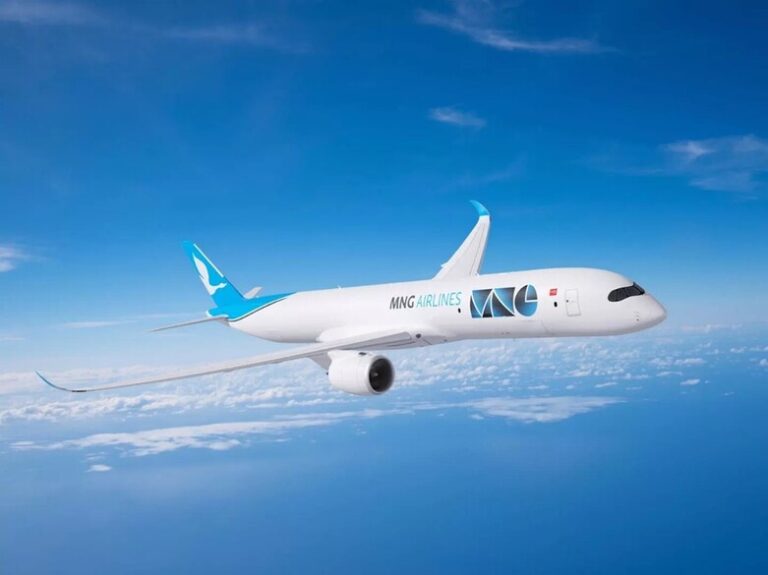
At the start of this month, CargoForwarder Global reported on the completion of the first A350F wingset. Now Airbus has announced that MNG Airlines is among the airlines interested in operating this pioneering freighter type. The Turkish airline, which has a strong focus on e-commerce and global logistics, recently signed a Memorandum of Understanding for the purchase of two “all new A350F”. The release does not reveal when they will be delivered to MNG, however the airline can look forward to “the world’s most advanced freighter aircraft” with its payload of up to 111 tons and a range of 8,700 km. Its Rolls-Royce Trent XWB-97 engines ensure far more efficient operations (they will be 50% SAF capable initially, rising to 100% in 2030, and allow for a reduction of up to 40% in fuel consumption and CO₂ emissions compared to previous generation aircraft). It is also around 46 tons lighter than its counterparts, given that it is “made of over 70% advanced materials”. Add the fact that it “will feature the industry’s largest main deck cargo door” and is the only freighter to fully meet ICAO’s 2027 CO₂ standards, and it is clear that MNG is onto a winner.

What the MNG A350F will look like. Image: Airbus

Murathan Doruk Günal, CEO of Mapa Group and Chairman of MNG Airlines, commented: “This agreement for two A350F deepens a partnership with Airbus across its full range of freighter programs. This move strengthens our position across key trade lanes, including Europe, the Middle East, Asia, and a growing footprint in North America. It will support both our scheduled and charter operations and give us added flexibility to meet evolving cargo demands, from e-commerce to high-value freight and express logistics.”

Benoît de Saint-Exupéry, Airbus EVP Sales of the Commercial Aircraft business, said: “We are delighted to welcome MNG Airlines as the latest customer for the A350F, underscoring the strong market appeal for this game-changing freighter. The A350F will bring new generation efficiency and performance as well as new levels of capacity and unprecedented loading flexibility. We look forward to ensuring a seamless integration into MNG’s operations.”

ITA takes off with Lufthansa cargo shipments on board

Lufthansa Cargo started the week celebrating its first cooperation flights with ITA Airways on 16-17JUN25. What was previously communicated by CargoForwarder Global, became reality that day as a total of four ITA Airways flights departed from South America with Lufthansa Cargo shipments on board, and headed for Rome-Fiumicino (FCO). First up was flight AZ 681 from Buenos Aires (EZE), followed by AZ 675 and AZ 679 from São Paulo (GRU), and rounded off with flight AZ 673 from Rio de Janeiro (GIG). All four arrived in the early hours of Tuesday, 17JUN25, and were ceremoniously greeted by Lufthansa Cargo employees and a delegation from Aeroporti di Roma.

One of four initial flights marketed by Lufthansa Cargo. Image: Lufthansa Cargo

Despite all the excitement, the original press release did not include any quotes to mark the occasion, so it is unclear as to who made up the Lufthansa Cargo welcoming party and what their thoughts were. Its LinkedIn page revealed that the shipments on board of all flights were mainly general cargo, along with pharmaceuticals and perishables. And it made sure to include “A huge thank you to the teams on both sides for making this happen and ensuring smooth first operations!”

With that, the first phase of the Lufthansa Cargo – ITA Airways cooperation has been properly kicked off, placing Rome firmly into the German airline’s freight network as its fifth cargo hub. It awaits further regulatory approvals and will then expand its belly-capacity marketing services to all other routes in the ITA Airways network.

One of the first customers to use the new routings was JAS Worldwide, booking its shipments together with the airline’s ‘Sustainable Choice’ Add-on Service, therefore offsetting its CO2 footprint by way of Sustainable Aviation Fuel.

CargoAi brings instant Quote & Book to Magaya

Did you know that the word “Magaya” belongs to the language of the Yanomami tribe from Northern Brazil and Southern Venezuela? And that it refers to the net used to hold cargo when they are on the move? Neither did I? It is also the name of a freight management platform, headquartered in Miami, that has been around since 2001 – having begun life in an appartement (rather than the usual garage), and meanwhile well established among freight forwarders. It includes functionalities for freight forwarding, warehouse management, eCommerce, exporters, and other logistics professionals. And – since last week – has expanded even further, having partnered with CargoAi to significantly enhance air cargo booking processes for Magaya Supply Chain users. Thanks to CargoAi’s Quote & Book API, Magaya customers can now instantly search, compare, and book airfreight with more than 105 airlines, all without leaving their familiar Magaya workspace. This seamless integration means no more juggling between systems or re-entering shipment details, making workflows quicker and error-free.

Stepping up to the next level in digital processes. Image: CargoAi

With this move, Magaya users get real-time access to airline capacity, over 680 schedules, and an incredible 2.5 million live rates. Fully integrated, the booking and tracking process allows for updates even after bookings are approved. Plus, IATA/CASS support streamlines payments and booking, while shipment statuses and events are visible directly in Magaya, giving users complete control and visibility. Overall, a far swifter, better quality process.

Matt Petot, CEO of CargoAi, explained: “The integration of our Quote & Book API directly within Magaya Supply Chain marks a new milestone in the digital transformation of logistics. We are thrilled to bring real-time booking, visibility, and automation to Magaya users, enhancing their ability to serve their customers efficiently.

Gary Nemmers, CEO at Magaya, stated: “At Magaya, we’re laser-focused on helping our customers work smarter, faster, and with less friction. By integrating with CargoAi, we’re enabling seamless access to global airfreight capacity, directly within the Magaya Supply Chain platform, so every booking becomes an opportunity to move with even greater precision and speed.”